Home Blog Page 63

The German Duo – Two Germans Making History in the Far East

Photo by Tobias Flyckt on Unsplash

While many European football professionals and coaches seek success in Europe’s top leagues, Michael Skibbe and Tolgay Arslan have written new chapters of their careers in Japan. Both have not only established themselves in the J-League but have taken on pivotal roles – Skibbe as the head coach of Sanfrecce Hiroshima and Arslan as a key player in one of Asia’s most exciting leagues.

This article delves into the journey of two Germans who, far from home, have excelled through their dedication and expertise, strengthening the bond between German and Japanese football cultures.

Michael Skibbe – A Success Story with Sanfrecce Hiroshima

Since taking over as head coach of Sanfrecce Hiroshima on February 1, 2022, Michael Skibbe has achieved an outstanding track record. Over the course of 1085 days in charge, he has managed 144 matches, leading the team to 80 victories, 28 draws, and 36 losses. With an impressive points-per-game (PPG) ratio of 1.86, Sanfrecce Hiroshima stands as the most successful chapter of his coaching career.

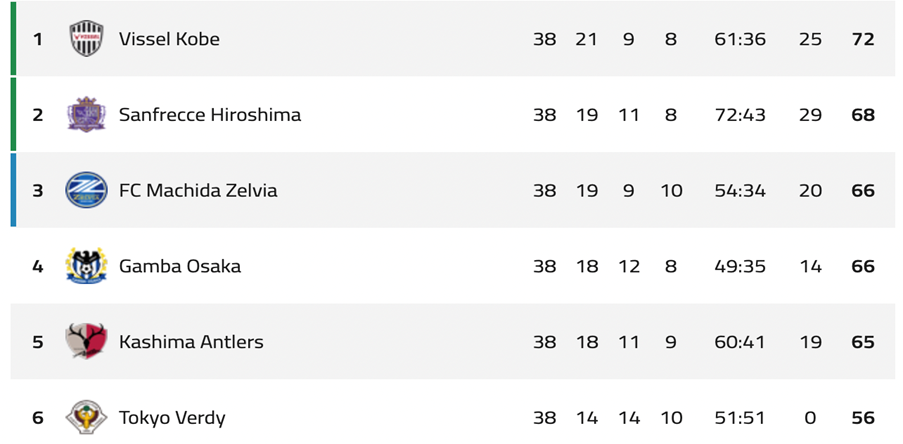
Before Skibbe’s arrival, Sanfrecce Hiroshima struggled in the J-League, finishing in 6th, 8th, and 11th place in the three seasons prior. Under his leadership, the team transformed into a true powerhouse, finishing in 3rd place in both the 2022 and 2023 seasons, before achieving an impressive 2nd place finish last season – their best result in years. Skibbe also led the team to their first-ever J. League Cup title, marking a historic moment for the club and cementing his legacy as one of its most successful coaches.

Skibbe employs a flexible 3-4-2-1 system that strikes an ideal balance between attack and defense. His approach emphasizes attractive, attacking football that not only excites fans but also delivers consistent results.

Tolgay Arslan – Thriving in the J-League

Since joining Sanfrecce Hiroshima, Tolgay Arslan has demonstrated his versatility and class as a midfielder in the J-League. In the J1 League, he has so far played 14 matches, scoring an impressive 8 goals. During these games, the team secured 28 out of a possible 42 points, underlining Arslan’s significant influence on their performances.

Arslan’s contributions extend beyond league play. In the J. League Cup, he scored 1 goal in 2 appearances, while in the Emperor’s Cup, he shone with 1 goal and 1 assist in 2 matches. Additionally, during the ongoing 2025 season, Arslan has continued to impress in the AFC Champions League Two, scoring 1 goal and providing 1 assist in 3 matches. These achievements highlight not only his attacking prowess but also his consistency across multiple competitions.

Remarkably, Arslan has achieved all of this at the age of 34. His fitness, experience, and footballing intelligence have made him an indispensable figure for Sanfrecce Hiroshima.

Looking Ahead

The accomplishments of Michael Skibbe and Tolgay Arslan are more than individual triumphs – they showcase how European expertise and Japanese football culture can perfectly complement each other. With Sanfrecce Hiroshima currently topping their AFC Champions League group and advancing to the Round of 16, Skibbe’s impressive work continues to bear fruit.

Similarly, Tolgay Arslan remains a key player whose experience and goal-scoring ability will continue to be critical for the team’s success. Their stories serve as proof that Japanese football provides a platform where European professionals can thrive and set new standards.

It will be fascinating to see how this “German Duo” continues to shape the J-League and Asian football in the years to come.

Making a Deal Doesn’t Mean You’ll Get Paid as an Agent: The harsh reality of unpaid commissions in football

Photo by Allef Vinicius on Unsplash
The Illusion of Guaranteed Payment

Football agents are often portrayed as individuals who earn millions in commissions, but the reality is quite different for the vast majority. While the top 5% of agents working on blockbuster deals with elite clubs in the Premier League, Bundesliga, La Liga, or MLS receive their payments on time, the remaining 95% struggle to collect their fees, sometimes waiting months or even years, and in many cases, never getting paid at all.

Even when an agent successfully negotiates a transfer, finalizes the paperwork, and facilitates the deal, their commission is not always guaranteed. Many agents are left chasing payments from clubs that delay or outright refuse to pay, leveraging their power to pressure agents into silence.

The Tactics Clubs Use to Delay or Avoid Payments

Agents frequently hear the same excuses from clubs:

  • “We’ll pay you as soon as possible.”
  • “We’re facing financial difficulties right now, but we’ll settle it soon.”
  • “If you sue us, you’ll never work with us again.”
  • “Your player is still at our club—do you really want to risk the relationship?”

These tactics put agents in a difficult position. They fear that taking legal action could damage their future business relationships with the club or even negatively impact their players’ careers. Clubs know this and use it to their advantage, making agents the last in line for payments, if they get paid at all.

While a deal in the Bundesliga, Premier League, or MLS usually ensures timely payment, agents operating in other parts of the world face an entirely different reality. Delays, disputes, and outright non-payment are common, especially in markets with weaker legal protections.

International Deals: A Legal Nightmare for Agents

The problem is even worse in international transfers. If a deal is done between a club in, say, South America and another in Asia, the legal complexities of different jurisdictions make it difficult for an agent to pursue their claim. Many agents lack the financial resources to engage in costly legal battles in foreign courts, especially when dealing with clubs in countries where football governance is weaker or less transparent.

Unlike players, who have FIFA-mandated protections ensuring they receive their wages even if clubs struggle financially, agents have no such guarantee. If a club refuses to pay, agents are left with only one option, suing, a process that can take years and may still not result in payment.

The FIFA Agents’ Chamber: A Promised Solution That Never Came

When FIFA introduced the new FIFA Agent Regulations (FFAR), one of the key promises was the establishment of the FIFA Agents’ Chamber, a dedicated dispute resolution body that would handle cases of unpaid agent commissions in international transfers. This was a much-needed mechanism, as it would have provided agents with a structured, enforceable way to claim their rightful earnings without having to go through costly and complex international legal battles.

However, despite being included in the regulation, the FIFA Agents’ Chamber has been suspended. FIFA put the chamber on hold along with several other disputed aspects of the new agent regulations, but what’s puzzling is that this specific provision was something that had widespread support. Unlike other controversial rules, there was no significant opposition to the chamber’s creation, so why has it been suspended?

As it stands today, agents dealing with international transfers remain vulnerable. Without a central FIFA mechanism, they must resort to local courts or dispute resolution bodies in different countries, often leading to years of legal struggles and additional financial burdens. This disproportionately affects smaller agents and those working in markets where legal enforcement of contracts is weak.

The Darker Side: Corruption, Threats, and Intimidation

In certain countries, the problem goes far beyond financial struggles, agents face corruption, intimidation, and even threats for simply trying to claim their rightful earnings.

There are cases where organized crime structures, corrupt politicians, or individuals with close ties to political figures threaten agents and pressure them not to take legal action. Agents are often told, “If you take us to court, there will be consequences.” This creates an environment of fear where local agents with no major legal backing or support system are forced to abandon their claims rather than risk their safety.

If an agent is working in such a market, where can they turn? If FIFA does not enforce strict regulations, how can these agents, who have worked for years on deals, secure their payments? Without a secure, independent dispute resolution system, these agents are left powerless against the forces controlling certain clubs.

What Needs to Change?

The football world needs stronger, enforceable regulations that ensure agents are paid on time. Some potential solutions include:

1. Stronger FIFA enforcement – FIFA must ensure that the Agents’ Chamber functions effectively, with real consequences for clubs that fail to pay agents.

2. Automatic payment structures – Similar to how FIFA distributes solidarity payments and training compensation, agent commissions could be processed through a centralized system to ensure timely payments.

3. Stronger domestic regulations – National federations should implement stricter guidelines to ensure clubs honor their contracts with agents.

4. Collective representation – Agents should push for stronger unionization or industry-wide advocacy groups to protect their rights.

Conclusion: The Reality for 95% of Agents

While the top 5% of agents working on major deals with elite clubs in the Premier League, Bundesliga, La Liga, or MLS usually receive their payments on time, the remaining 95% face constant struggles to get what they are owed. These are agents who have invested time, energy, and financial resources to build their careers, only to be left chasing commissions for deals they have already completed.

It’s time to change the narrative. Football always focuses on the success stories of superstar agents, but the majority of agents operate in a system where making a deal doesn’t necessarily mean they’ll get paid. In some cases, they don’t just face financial difficulties, they face intimidation, threats, and political or criminal pressure that makes it impossible to fight back.

Until FIFA enforces proper structures and protections, agents, especially those working in international markets, will continue to be treated as disposable middlemen rather than respected professionals with a right to fair compensation.

The FIFA Agents’ Chamber must be reinstated and activated, and football’s governing bodies must take agent payments as seriously as they take player wages. Without real reform, the industry will continue to exploit the very people who make so many deals happen.

While clubs wouldn’t dare delay player wages without severe repercussions, they often see agent fees as optional or negotiable post-deal. The industry needs to move toward a system where agent payments are just as structured and enforceable as player salaries.

Until that happens, the reality remains: making a deal as an agent doesn’t mean you’ll get paid.

Women’s Football in Türkiye & How to Make a Deal in This Country

TFF.org

Women’s football in Türkiye has a long and dynamic history, shaped by pioneering efforts, setbacks and the tireless dedication of many stakeholders. Today, it continues to evolve, drawing increasing international attention. For football agents aiming to place players in Türkiye or collaborate with clubs, understanding the structures, regulations and unique characteristics of Turkish women’s football is essential. This article provides a comprehensive overview of the history, league structures, contractual details and critical factors for successful transfers.

1. The History Of Women’s Football In Türkiye

The beginnings of women’s football in Türkiye date back to 1969, with the establishment of the first unofficial women’s football team, Kınalıada Spor Kulübü. In 1972, the club was renamed Dostlukspor Kız Futbol Kulübü and became the first official women’s football club in the country in 1973. Despite these early successes, women’s football development stagnated in the following decades. Between 2002 and 2003, the women’s league was suspended by the Turkish Football Federation (TFF) due to perceived inefficiency. It was only in 2013 that the league was permanently revived, laying the foundation for today’s growth.

2. The Role of Clubs: Major Teams and Ambitious Projects

The advancement of women’s football in Türkiye has been significantly boosted by the entry of major clubs and ambitious projects:

  • Beşiktaş: Since 2014, Beşiktaş has been a trailblazer in women’s football, fostering talent and popularizing the sport through its professional structure.
  • Fenerbahçe and Galatasaray: Both clubs entered women’s football in 2021. Galatasaray made history in the 2024/25 season by becoming the first Turkish club to reach the group stage of the UEFA Women’s Champions League.
  • Konak Belediyespor: A dominant force in women’s football for years, Konak represented Türkiye multiple times in the UEFA Women’s Champions League qualifiers.
  •  ALG Spor: Based in Gaziantep, ALG Spor exemplifies how investments by entrepreneurs can lead to success. Founded and led by Ali Gözcü, the club has won multiple Süper Lig championships and established itself as one of the strongest teams.
  •  Fomget GSK: Fomget GSK has quickly gained prominence through a focus on youth development and strategic investments.
  •  Beylerbeyi Spor Kulübü: Backed by entrepreneur Tahir Kıran and led by his daughter Dilanaz Kıran, this clubs combines strong financial support with a clear ambition to compete nationally and internationally.
3. Structure of Turkish Women’s Leagues

Women’s football in Türkiye is organized across four league levels:

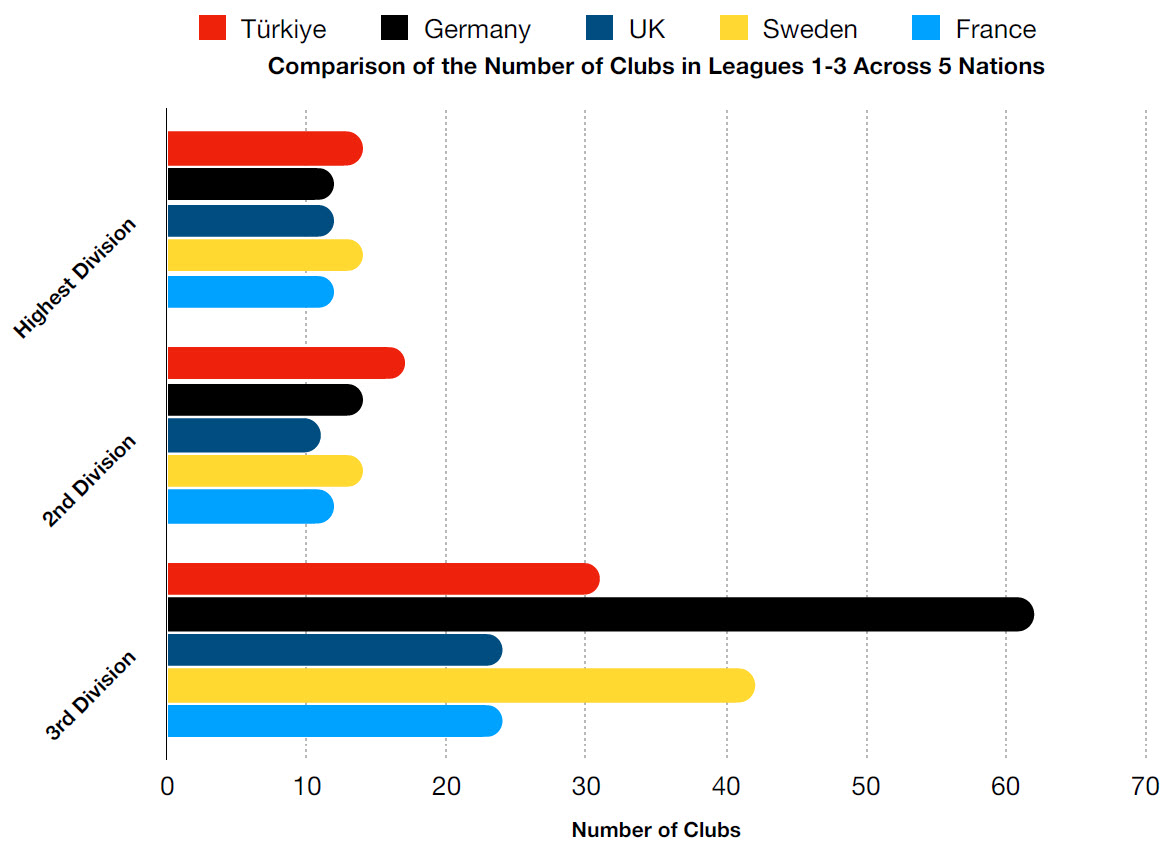
  •  Turkcell Kadın Futbol Süper Ligi: The top division with 14 teams.
  •  Kadınlar 1. Lig: Comprising 17 teams in two groups.
  •  Kadınlar 2. Lig: Featuring 31 teams in four groups.
  •  Kadınlar 3. Lig: The largest division with 112 teams across 16 groups.

A crucial aspect is that all women’s leagues in Türkiye are amateur, meaning players do not enjoy the rights and protections afforded in professional leagues. There are plan to professionalize the leagues in the upcoming years.

4. Salaries and Contractual Conditions

4.1 Salaries

Turkish players are generally paid in Turkish Lira, which can lead to financial instability due to exchange rate fluctuations. For foreign players, receiving salaries in Euros or US Dollars ensures stability and predictability. Clear contractual agreements regarding payments in foreign currencies are essential to avoid complications.

Top players earn competitive salaries starting at €2,000 net, although the average pay for many players, particularly in lower leagues, remains relatively low.

4.2 Season Planning and Contract Extensions

One challenge in Türkiye is the late season planning by clubs. While European clubs often finalize their squads for the next season during the current one, Turkish clubs typically start planning and extending contracts only after the end of the previous season. This creates difficulties for agents and players, as transfer options may already be limited due to the late decisions.

4.3 Transfer Windows

One advantage in Türkiye is the extended duration of transfer windows, offering more flexibility for player movements. This allows players and agents to secure opportunities even late in the season or during the summer and winter transfer periods. However, timely negotiations are crucial to avoid last-minute issues.

5. Transfer System and Training Compensation

5.1 Training Compensation

Türkiye has a structured transfer system designed to financially support clubs that develop players:

  • 18-25 years: Standard fee: 80,000 TL (approx. €2,700). For national team players: 200,000 TL (approx. €6,700).
  •  26-30 years: Standard fee: 50,000 TL (approx. €1,700). For national team players: 120,000 TL (approx. €4,000).
  • Over 30 years: Players can transfer freely without requiring club consent.

5.2 Rules for Foreign Players

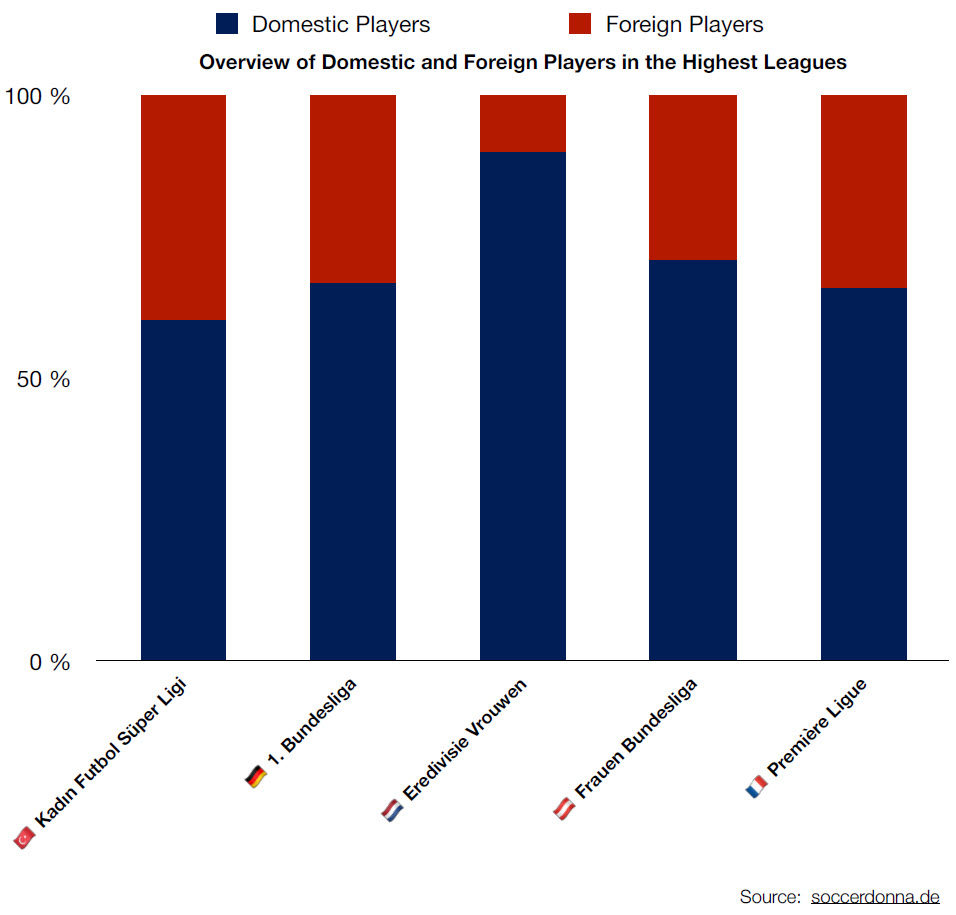
  • Teams can register a maximum of 13 foreign players, with only 8 allowed on the field simultaneously.
  • International transfers require an International Transfer Certificate (ITC).
  •  Non-Turkish players must obtain a residency permit, facilitated by their clubs.

6. Coaches and Staff

The TFF enforces strict licensing requirements for coaches in women’s football. In the Turkcell Kadın Futbol Süper Ligi, head coaches must hold a UEFA A License, while lower divisions require a UEFA B License. Clubs often employ comprehensive coaching teams, including assistant coaches, goalkeeper trainers and performance specialists. In the Süper Lig, professionalism in management is a growing focus.

7. National Team Success

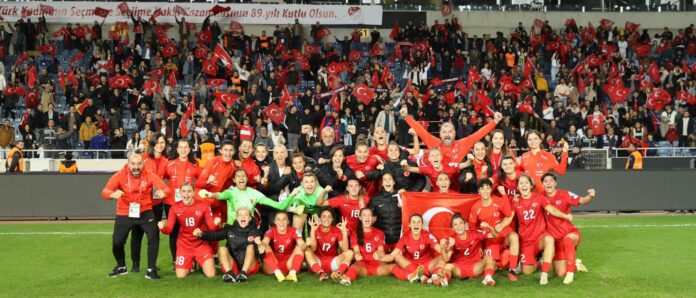
The Turkish women’s national team achieved a significant milestone by securing promotion to League B of the UEFA Nations League. This success was guided by head coach Necla Güngör Kırağası, who has led the team since 2020. Before her current role, she gained extensive experience in both men’s and women’s football, showcasing her versatility and expertise.

Her strategic decisions, combined with the efforts of her experienced coaching staff, have played a pivotal role in strengthening the team’s competitiveness on the international stage. The collaborative work of the staff has laid the foundation for the national team’s recent achievements.

8. Opportunities, Challenges and Established Players

8.1 Opportunities and Challenges

  • The league is becoming increasingly attractive internationally, especially for players looking to make a name in Europe.
  • Players with dual nationality or migration backgrounds offer fresh perspectives and strengthen the Turkish national team.
  • With support from investors, sponsors and targeted talent development, the league continues to grow steadily.
8.2 Established Players and International Careers

Established players like Busem Şeker, Meryem Cennet Çal, Büsra Kuru, Melike Pekel and Ebru Uzungüney exemplify the impact of migration backgrounds on the national team and clubs. Additionally, players like Dilan Bora, who transferred to Glasgow City during the 2022/23 season, as well as Birgül Sadıkoğlu, currently playing in Spain, represent Turkish women’s football on the international stage.

9. Media Presence and Audience Engagement

Women’s football in Türkiye is experiencing a surge in popularity. In 2023, a record 12,300 spectators attended the national team’s match against Luxembourg in Çorum. Many Turkcell Kadın Futbol Süper Ligi matches are broadcast live on YouTube channels or club owned TV platforms, expanding the league’s reach.

Conclusion

Women’s football in Türkiye offers exciting opportunities, but the amateur status of the leagues requires thorough preparation. Football agents must be aware of the 10-month salary structure, training compensation and league-specific rules to facilitate successful transfers. With support from major clubs like Beşiktaş, Fenerbahçe, Galatasaray and ambitious projects such as ALG Spor, Fomget GSK and Beylerbeyi Spor, women’s football in Türkiye is on an upward trajectory.

NCAA Player Sues U.S. Citizenship and Immigration Services (USCIS)

Photo by TJ Dragotta on Unsplash

Last-Tear Poa, an Australian national and Louisiana State University (LSU) women’s basketball player, has filed a lawsuit against the USCIS after her P-1A visa application was denied. Poa is originally from Melbourne, Australia and joined LSU in 2022. She is currently a legal resident in the United States by holding a F-1 student visa.

As a F-1 visa holder, Poa is restricted from participating in non-work-study employment. This specifically includes active NIL work being prohibited. F-1 visa students are still allowed to participate in passive NIL work, which requires no labor, such as licensing NIL rights to a merchandiser producing jerseys. But the most money when it comes NIL employment comes from active work- where the student is required to work to earn her NIL income. Poa has amassed nearly 159,000 Instagram followers and has a strong social media presence. Due to the restrictions set forth by the F-1 visa, she has an inability to use her athletic brand and social media presence to enhance her NIL income. It leads to her missing out on potentially lucrative NIL income likely in the millions.

Poa, who wanted to fully participate in NIL activities, decided to apply for a P-1A visa. This visa is meant specifically for an applicant who is an internationally recognized athlete who demonstrates they are coming to the United States to compete at a major level. Despite Poa helping guide LSU women’s basketball team to its first national championship title in 2022-23- she was denied the P-1A visa. Hence, Poa filing the lawsuit in the U.S. District Court for the Middle District of Louisiana.

There has been a constant frustration between international student-athletes and the USCIS in their inability to generate income through NIL for the past three years. International student-athletes compromise nearly 12% of all NCAA Division I student-athletes and the USCIS continues to provide no guidance or reform to help these students benefit from NIL. It is an issue that needs to be addressed due to several high-profile student-athletes like Poa or Zach Edey- last year’s national men’s basketball player of the year from Purdue University who was a Canadian national. If these great international athletes can impact the NCAA game at such a high level, then they should also be allowed to benefit from the NIL era like their United States domestic counterparts.

Case Study: David Raya and Rosa Blanca – Alcoholic Commercial Partnerships

Photo by George Bakos on Unsplash

In the world of football, commercial partnerships between players and brands are an essential part of the modern game. These collaborations not only provide players with an additional revenue stream but also help brands leverage the athlete’s influence to connect with fans. The latest example comes from Arsenal goalkeeper David Raya, who recently entered into a commercial partnership with Rosa Blanca, a Spanish beer founded in Mallorca in 1927. While such collaborations can be mutually beneficial, they also raise critical questions about the appropriateness of partnerships between footballers and alcohol brands.

The Pros

David Raya’s partnership with Rosa Blanca is rooted in authenticity. As a Spanish player, associating with a historic Spanish brand like Rosa Blanca allows Raya to promote something that reflects his heritage. It’s a connection that resonates with fans, particularly in Spain, where football and local pride often go hand-in-hand.

For Rosa Blanca, partnering with a prominent player like Raya provides visibility in an international market, leveraging his role at Arsenal to reach audiences far beyond Spain. This collaboration underscores the power of football as a platform for national brands to make a global impact.

Additionally, partnerships with brands in sectors often considered taboo, such as alcohol or gambling, can be more lucrative for players. These brands frequently pay a premium to partner with high-profile athletes, compensating for the fact that such deals may deter collaborations with other industries, like healthy lifestyle brands, which often avoid players associated with alcohol.

However, this premium comes at a cost. Players must carefully evaluate whether the immediate financial gain outweighs the potential long-term sacrifices, such as missing out on opportunities with family-friendly or health-conscious brands. Such deals might also devalue the player as a commercial entity overall. Therefore, the decision to enter into these partnerships requires careful consideration to ensure it aligns with both the player’s values and career strategy.

The Cons

Despite the benefits, partnerships with alcohol brands can be a double-edged sword for players. Footballers are role models, particularly for younger fans, and endorsing alcoholic beverages can conflict with the ideals of a healthy lifestyle that players are expected to embody. The association with alcohol may lead to criticism, especially in a sport where professionalism and fitness are paramount.

Moreover, there are legal and ethical considerations to account for. In the UK, guidelines such as ‘Think 25’ prohibit individuals under 25 from promoting alcohol. While David Raya meets this criterion, younger footballers considering similar deals must tread carefully. Clubs and players must also ensure there’s no clash with their existing partnerships. In Arsenal’s case, their

collaboration with Athletic Brewing Company, a non-alcoholic beer brand, sets a clear tone for the club’s stance on alcohol. For Raya, aligning with an alcoholic brand like Rosa Blanca could lead to questions about mixed messaging within the Arsenal ecosystem.

Key Considerations for Alcohol Partnerships in Football

When footballers enter into partnerships with alcohol brands, they must navigate a complex landscape of ethical, legal, and strategic concerns. These partnerships can offer significant financial and branding opportunities, but they also carry inherent risks. Here are the key factors players and clubs must consider:

1.  Authenticity Matters

A successful partnership hinges on its authenticity. Players should only associate with brands that align with their personal identity, values, and cultural background. For David Raya, his Spanish heritage and Rosa Blanca’s roots in Mallorca create a natural connection, adding credibility and emotional resonance to the partnership. Authenticity strengthens the partnership’s appeal, both to fans and to the broader market, as it feels genuine rather than purely transactional. Players considering such deals should ask: Does this brand genuinely align with who I am and what I represent?

2.  Youthful Appeal and Responsible Advertising

Footballers are role models for millions of young fans, and advertising alcohol requires extra vigilance to avoid inadvertently targeting underage or impressionable audiences. Adhering to regulations like the UK’s ‘Think 25’ guidelines is crucial, which prohibit alcohol advertising featuring individuals who appear under the age of 25.

For younger players or those with a youthful appearance, such deals may not be legally permissible, and even if allowed, they may draw criticism. The player and the brand must work together to ensure that marketing materials are responsible and comply with advertising laws in all relevant markets. Missteps in this area can result in backlash, fines, and reputational damage for both the player and the brand.

3.  Club Alignment and Conflict of Interest

Footballers must ensure that their personal endorsements do not conflict with the partnerships held by their club. For example, Arsenal’s collaboration with Athletic Brewing Company—a brand specialising in non-alcoholic beverages—reflects a commitment to promoting

health-conscious choices. If a player like David Raya partners with an alcohol brand, it could create perceived or actual tensions with the club’s values and partnerships.

Moreover, some clubs have clauses in player contracts limiting their ability to sign deals with competing or conflicting brands. Players should engage legal and marketing advisors to thoroughly review potential deals and ensure compliance with their contractual obligations. Maintaining harmony between personal and club endorsements is critical to preserving relationships and avoiding disputes.

4.  Public Perception and Long-Term Brand Impact

A footballer’s image is a key component of their commercial value. Alcohol partnerships, while

potentially lucrative, can carry negative connotations that may harm the player’s reputation. Fans, particularly those with health-conscious or family-oriented values, may view such endorsements as contradictory to the image of a professional athlete committed to peak physical performance.

Additionally, these deals can have ripple effects on future endorsements. For example, healthy lifestyle brands or sponsors catering to family audiences may hesitate to associate with a player endorsing alcohol. Before entering into such a deal, players should weigh the potential financial gains against the risk of alienating other markets or sponsors. Strategic planning is crucial to ensure the partnership aligns with the player’s long-term career goals and public image.

5.  Ethical Responsibility and Role Modeling

Beyond legal and financial considerations, footballers have an ethical responsibility to act as role models. Promoting alcohol requires sensitivity to societal challenges, such as underage drinking and alcohol misuse. A thoughtful approach to messaging is essential, emphasising moderation and responsible consumption rather than glamorising or trivialising alcohol use. Players should consider whether the values of the brand align with their role as an influencer and public figure.

Striking the Right Balance

Commercial partnerships can be a significant asset for players and brands alike, but they must be approached with care. David Raya’s collaboration with Rosa Blanca is a celebration of Spanish culture and offers an authentic connection between a footballer and a beloved national brand.

However, the broader implications, particularly around the association of footballers with alcohol, must always be weighed carefully.

In the end, the success of such partnerships depends on transparency, alignment with personal and club values, and a thoughtful approach to public perception. By keeping these principles in mind, footballers can navigate the complexities of commercial deals while maintaining their standing as role models on and off the pitch.

Stay tuned for the next episode of Beyond the Pitch, where we continue to explore the evolving dynamics of football’s commercial landscape.

Boosting Performance: Active Listening Techniques for Young Athletes on the Field

Photo by Alliance Football Club on Unsplash

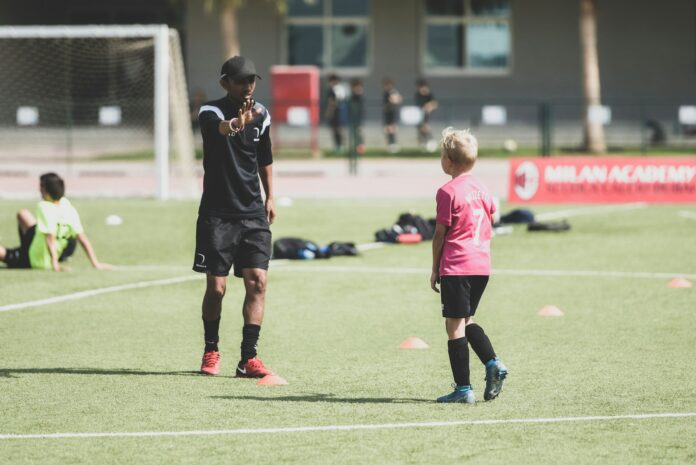
Active listening is a critical skill for young athletes, especially in team sports like football, where clear communication and understanding are essential for success. When players actively listen, they not only absorb instructions and strategies more effectively but also develop stronger connections with coaches and teammates. As parents, you have a unique opportunity to help your child cultivate this skill, both on and off the field.

By teaching and modeling active listening, you can empower your young athlete to become more focused, collaborative, and responsive—qualities that will benefit them not just in football, but in every area of their life. Here are practical techniques to encourage active listening and enhance their ability to understand and execute instructions during the game.

  1. Teach the Basics of Active Listening

Active listening starts with giving full attention to the speaker, whether it’s a coach explaining tactics or a teammate sharing ideas. Encourage your child to face the speaker, maintain eye contact, and show they are engaged through nodding or small verbal cues like “Okay” or “I understand.” These simple habits signal respect and help them focus on the message being conveyed.

You can reinforce this skill at home by modeling it yourself. When your child talks about their day or a recent game, put away distractions, listen attentively, and respond thoughtfully. By demonstrating active listening, you set an example they can emulate on the field.

  1. Practice Paraphrasing

A great way to ensure comprehension is by paraphrasing instructions or ideas. Encourage your child to repeat back what they’ve heard in their own words. For example, if a coach says, “Stay on your mark and block their forward,” your child might respond, “So, I need to stick close to my opponent and stop them from advancing, right?” This technique not only confirms their understanding but also helps reinforce the message in their memory.

At home, you can practice this skill during casual conversations. After giving them instructions for a task, ask them to repeat it back. This habit trains them to process and confirm information, making them better prepared to absorb instructions under pressure on the field.

  1. Encourage Questions

Sometimes, young athletes hesitate to ask questions out of fear of seeming unsure or disruptive. However, asking clarifying questions is a vital part of active listening. Remind your child that it’s always okay to ask for more details if they don’t fully understand something. For example, they can say, “Can you explain where I should position myself during that play?” This shows they’re engaged and eager to perform correctly.

You can help normalize asking questions by encouraging curiosity at home. Whether it’s about a new concept at school or a family plan, make it clear that asking questions is a strength, not a weakness. This confidence will translate to better communication on the field.

  1. Focus on the Present Moment

Active listening requires full attention in the present moment, which can be challenging for young players when they’re feeling nervous or distracted during a game. Teach your child techniques like taking a deep breath or repeating a key word silently to themselves (“focus”) to stay centered. When they’re grounded, they’re more likely to process and act on instructions effectively.

You can also practice mindfulness activities together, such as simple breathing exercises or games that encourage focus, like memory challenges. These practices build mental clarity and train them to stay present under pressure.

  1. Strengthen Nonverbal Communication Awareness

Listening is not just about words; it’s also about picking up on nonverbal cues like tone of voice, body language, and gestures. Encourage your child to pay attention to a coach’s demeanor or teammates’ expressions. For example, noticing a teammate’s frustrated gesture might indicate they need support, while a coach’s urgency might signal a critical adjustment.

At home, you can play observation games that teach your child to interpret nonverbal signals. For example, you might ask them to guess how someone is feeling based on their tone or body language in a movie scene. This skill helps them become more attuned to the subtle dynamics of communication on the field.

  1. Reinforce the Importance of Respectful Communication

Active listening isn’t just about understanding instructions; it’s also about fostering respect and teamwork. Teach your child the value of giving their full attention to others, whether it’s a coach, a teammate, or an opponent. Listening respectfully builds trust and shows that they value everyone’s contributions.

When you’re at a game, demonstrate this by listening carefully to coaches or players, even during casual interactions. Your child will pick up on these habits and carry them into their own interactions.

  1. Reflect After the Game

Reflection is an essential part of learning and growth. After a game or practice, take time to ask your child about their listening experience. Questions like, “Did you feel like you understood the coach’s instructions?” or “Was there anything confusing during the game?” encourage them to think critically about their communication skills. This reflection helps them identify areas for improvement and reinforces the importance of active listening.

The Bigger Picture: Building Life Skills Through Football

Active listening isn’t just a skill for football—it’s a life skill that will serve your child in relationships, academics, and future careers. By helping them focus on understanding and responding thoughtfully, you’re teaching them how to collaborate, solve problems, and build meaningful connections with others.

When young athletes learn to listen actively, they become better teammates, stronger players, and more confident individuals. And as parents, your guidance, encouragement, and example are the keys to making that happen. Through your support, your child can unlock the full potential of both their game and their personal growth, one conversation at a time.

Players’ Right to Free Movement vs. Clubs’ Right to Training Compensation: A Debate Worth Revisiting

In the world of football, two fundamental rights often find themselves at odds: the players’ right to free movement and the clubs’ right to receive training compensation. This tension has sparked heated discussions, particularly in recent years, as complaints from players, parents, and agents worldwide highlight the challenges posed by these regulations.

Having received numerous complaints from these groups about the burdens and obstacles created by training compensation, I believe it’s time to dissect this issue. Let’s explore both the legal and ethical dimensions of training compensation and question whether it’s fit for the modern era of football.

Free Movement: A Right Under Threat

The concept of free movement is not new to football. The Bosman ruling in 1995 enshrined this principle, ensuring that players in the European Union could move freely to new clubs once their contracts expired. It was a landmark decision that reshaped football, empowering players and removing arbitrary financial barriers to their careers.

Yet, training compensation undermines this freedom. While it’s designed to reward clubs for developing young talent, in practice, it often acts as a financial roadblock. Imagine a young player in Europe or South America eager to sign their first professional contract, only to be told the deal can’t go through because the clubs can’t agree on a training compensation fee.

This situation is not hypothetical, it’s a reality affecting players worldwide, from Europe to Asia, from Africa to the Americas. It’s leaving talented players and their families in limbo, frustrated that an opportunity to progress their career has been blocked by financial disputes between clubs.

Why should a system meant to support youth development become a tool that hinders young players’ careers? It’s a question that echoes the concerns raised during the Bosman case, and one that deserves a thorough reevaluation.

The Ethical Dilemma: Players vs. Clubs

On the ethical front, training compensation raises even more questions. While it’s fair for clubs to seek recognition for their role in developing players, should this come at the expense of the players themselves? A player’s career is short, and opportunities are fleeting. Denying them the chance to sign a professional contract because of unresolved financial disputes feels fundamentally wrong.

The current system prioritizes the financial interests of clubs over the dreams and rights of individual players. Many argue that this is a necessary trade-off to incentivize investment in youth development, but is it fair to place this burden on the shoulders of players who had no say in the matter? Shouldn’t their right to pursue a career come first?

This sentiment is echoed by parents, who often feel powerless as their child’s career progress is stalled due to disputes they have no control over. Agents, too, express frustration as they fight to broker solutions that allow players to move forward without alienating clubs.

The Solidarity Contribution: Why Is Training Compensation Needed on Top of It?

A key argument against training compensation is that FIFA already has a system in place to reward clubs for developing players, the Solidarity Contribution. This mechanism ensures that when a player transfers internationally for a fee, a percentage (up to 5%) of that fee is distributed to the clubs that contributed to their development.

So the question is: Why do we have training compensation on top of this system?

If the logic behind training compensation is to financially support clubs that develop young players, the Solidarity Contribution already serves that purpose—without restricting a player’s movement at the crucial stage of their career. Unlike training compensation, which acts as a barrier for players signing their first professional contracts, the Solidarity Contribution allows clubs to be rewarded without limiting player freedom.

Instead of burdening young players and their potential new clubs with upfront training compensation fees, wouldn’t it be fairer to expand and optimize the Solidarity Contribution model to ensure that clubs still receive adequate compensation?

Agents: Caught in the Middle of Club Disputes

One of the biggest frustrations I hear from agents is that they are constantly caught between the battle of clubs when it comes to training compensation. Instead of being able to focus on securing the best contract for their player, they are forced into negotiations between clubs that are fighting over money.

In some cases, clubs find creative solutions to resolve these disputes. When a training compensation fee is too high, some clubs agree to a reduced fee, while others negotiate an alternative structure, such as a sell-on clause instead of an immediate payment. This allows the developing club to still benefit financially in the long term without blocking the player’s career move.

These case-by-case negotiations highlight the inconsistencies in the current system. If training compensation is supposed to be a standard rule, why do so many clubs find ways around it? And if alternatives like sell-on clauses are acceptable solutions, why not build them into the system officially instead of forcing endless negotiations that delay transfers?

This uncertainty only reinforces the need for a clearer, more structured approach that ensures clubs receive fair compensation without obstructing players’ career progress.

Finding a Way Forward

There’s no denying that clubs deserve recognition and support for their investment in youth development. But the current system is not the answer. Instead, football’s governing bodies should explore alternative models that balance the interests of clubs and players.

One potential solution could involve the creation of centralized funds for youth development, financed through broader league or federation contributions. Such funds could ensure clubs are fairly compensated without restricting players’ freedom to move.

Another option might involve abolishing training compensation altogether, in favor of strengthening and expanding the Solidarity Contribution model. If the issue is about rewarding clubs that develop talent, why not use a system that already exists, without causing harm to players?

Conclusion: Time for Change

The tension between players’ right to free movement and clubs’ right to training compensation is a debate that won’t go away anytime soon. But as the game evolves, so too must its regulations. It’s time to ask ourselves whether training compensation, as it stands, aligns with the values of fairness, opportunity, and freedom that football should represent.

Let’s ensure the game works for everyone, players, parents, clubs, and the wider football community, by rethinking how we approach youth development and player movement. After all, football is about more than just business, it’s about people and their dreams.

A Glimpse Into Japanese a Football Club: Eva Pires’ Journey With FC Tokyo

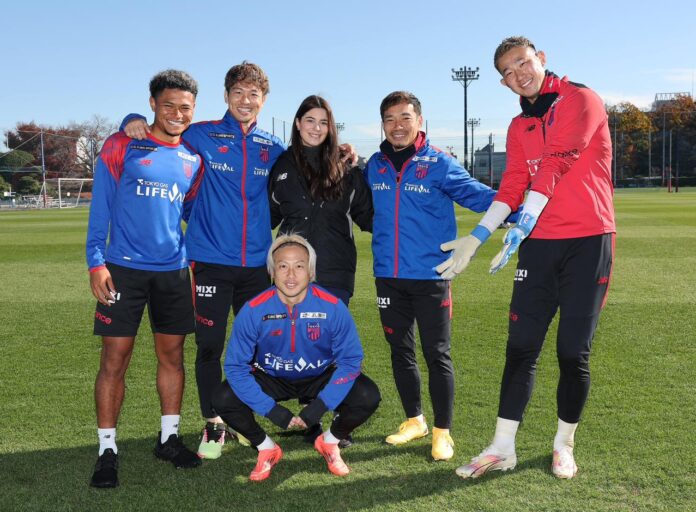
Eva Pires, a 24-year-old graduate from the European Sport Business School, has already accomplished something truly groundbreaking. Hailing from France, where her father has long been involved in the football industry, Eva grew up surrounded by the sport. This upbringing nurtured her passion for football and shaped her global outlook. As the first foreign intern to work with FC Tokyo, she immersed herself in the heart of Japan’s vibrant J.League. Her journey is further defined by diverse experiences spanning the USA and Europe, allowing her to gain a unique global perspective on the football industry. From managing international public relations in Tokyo to learning firsthand about the culture of Japanese football, Eva has developed a multifaceted understanding of what sets Japan apart in the world of sport.

Comparing Japan and Europe

One of the most striking differences Eva observed during her time at FC Tokyo was the disciplined and structured working culture within Japanese football clubs. “In Japan, everyone is highly focused on their responsibilities and executes them with precision,” she explained. This contrasts sharply with the often more relaxed and flexible approach seen in European football clubs, where operations allow for greater spontaneity.

The marketing strategies in Japan also stood out to Eva. “Japanese clubs, like FC Tokyo, are deeply connected to the community. Their branding is everywhere—you see the mascots walking around the city, and even the areas near the stadium are completely immersed in the club’s colors. It’s like the club is part of the city’s identity,” she said. This deep-rooted integration creates a sense of belonging that Eva found truly inspiring.

Football as a Community: The Role of Respect and Passion

In Japan, football extends beyond just winning. Eva reflected on how football in the J.League fosters a unique sense of community. “Even after a tough loss, players are warm and approachable. They don’t just walk off the field; they take time to connect with the fans,” she shared. This mutual respect is mirrored in the fans, who remain passionately dedicated despite any disappointments.

Merchandise also plays a significant role in Japanese football culture. “The fans love to show their loyalty through merchandise, and it’s everywhere. It’s not just about the game; it’s about creating a lifestyle around supporting the team,” Eva observed. The consistent turnout of nearly 30,000 fans at matches highlights the unwavering bond between clubs and their supporters.

Atmosphere and Unique Moments

The atmosphere in J.League stadiums left a lasting impression on Eva. “It’s so different from what I’ve seen elsewhere—there’s an incredible level of respect among fans and players,” she noted. A moment that particularly stood out to her was Diego Oliveira’s retirement match. “Both the home and opposing fans came together to applaud him. It was such a beautiful and emotional moment—something you rarely see in other leagues,” she recalled.

Eva also highlighted the shared use of venues in Japan, such as the National Stadium being utilized by both FC Tokyo and Verdy. “Even as guests, FC Tokyo fans were incredibly passionate and supportive. That kind of dedication is amazing to witness,” she added.

Challenges and Adaptation as a Foreigner in Japanese Football

Adapting to life in Japan presented its own set of challenges. “I was the only foreigner at FC Tokyo, and I didn’t speak Japanese, so it was definitely intimidating at first,” Eva admitted. However, the kindness and curiosity of her colleagues, especially the players, helped her feel welcome. “They were so intrigued to see a young woman in this role. Their support made all the difference.”

Professionally, managing such a diverse and global community was a unique experience for Eva. “One of the biggest surprises was how important it was to attract tourists to games. I hadn’t realized just how large and international the FC Tokyo community was,” she explained. Overcoming language barriers and adapting to cultural nuances taught her invaluable lessons in communication and engagement.

Lessons to Share: Japan and Europe Learning From Each Other

When asked what European leagues could learn from Japan, Eva didn’t hesitate. “The stadium experience in Japan is phenomenal. Games are often held during the day, so fans can spend an entire day at the stadium, enjoying food, drinks, and activities. It’s very family-friendly, and you see a lot of women attending matches,” she said.

At the same time, Eva recognized opportunities for Japan to learn from Europe. “European football is so advanced when it comes to training methodologies and using technology for data and analysis. The tactical preparation and player development in Europe are on another level,” she explained. By integrating these elements, Japan could elevate its football system even further.

Advice for Dreamers

As our conversation drew to a close, Eva shared a piece of advice for those who share her passion for football and are considering taking bold steps toward their dreams.

“Thanks to my curiosity, I discovered a unique market. If people want to have such an experience, they should take the leap—it will be greatly appreciated. Staying curious is key, and having the courage to explore is just as important,” she said.

Eva’s story is a testament to the power of curiosity, courage, and passion in navigating the global football industry. Her experiences in Japan serve as a reminder that stepping out of one’s comfort zone can lead to incredible growth and unforgettable opportunities.

New Era for NWSL: Abolishing the Draft and Embracing Free Agency

On August 22nd, 2024, U.S. sports entered a new era when the National Women’s Soccer League (NWSL) and its Players Association (NWSLPA) fi nalized a transformative Collective Bargaining Agreement (CBA). This agreement eliminated the college draft system, making the NWSL the fi rst major U.S. professional league to abolish an existing draft. The CBA, which will be in eff ect until 2030, signifi es a shift toward player autonomy and modernized recruitment practices.

How Will College Players Be Signed?

College players now enter the league as free agents, eligible to negotiate with any of the 14 NWSL clubs. To sign a professional contract, they must either graduate or relinquish their remaining college eligibility. Freshmen and sophomores remain ineligible unless they forgo their NCAA status.

This change has already seen notable names like Trinity Byars (Texas) and Quincy McMahon (UCLA) sign free-agent contracts with the San Diego Wave. These moves highlight how clubs must now actively court top talent rather than relying on draft placements.

How Did the Draft System Work?

Previously, players had to declare for the NWSL Draft to join the league. Skipping the draft meant waiting a full year for eligibility, often prompting players to seek opportunities abroad. The draft assigned players to teams without considering their preferences, leaving them to accept the assignment, request a trade, or explore options outside the league.
Under the new system, players gain control over their careers, choosing clubs based on factors like location, culture, and contract terms. This forces teams to improve scouting and negotiate more competitively to attract top talent, potentially driving up initial salaries for promising players.

What About League Parity?

In the draft system, the lowest-ranked teams gained fi rst pick, ensuring access to top college talent. With free agency, this mechanism is gone. Now, elements like playing style, coaching, and fi nancial off ers will infl uence where players choose to sign. Ambitious clubs with strategic approaches may dominate in securing multiple high-profi le players.
While the league’s salary cap—set at $3.3 million for 2025 and rising to $5.1 million by 2030—prevents runaway spending, it also challenges players to assess their market value carefully. As NWSLPA president Tori Huster noted, “Players can now choose the team environment that fi ts their needs and maximizes their opportunities. Teams will need to step up to create environments that appeal to Players.”

Key Dates to Watch
  • December 13, 2024: The NWSL transfer window opens, allowing teams to sign college players and make transfers.
  • December 20-26, 2024: A transaction freeze halts league business temporarily.
  • December 27, 2024: Business resumes, enabling signings and trades.
  • January 1, 2025: The European transfer window opens, creating additional opportunities for player movement.
  • January 31, 2025: European window closes, but NWSL business continues until April.

Instead of the draft, the league might introduce a “signing day” to generate excitement during the off season. Many players will fi nalize deals in January, while others could secure preseason trials to compete for roster spots in February training camps.

Looking Ahead

This monumental change prioritizes player freedom and sets a precedent in professional sports. However, it also introduces challenges. Smaller-market teams might face diffi culties attracting top talent unless they create compelling environments. Clubs will need to balance pursuing marquee players with fostering young talent and managing salary cap constraints.

As the NWSL embarks on this uncharted path, it has the opportunity to redefi ne talent recruitment and enhance its global appeal. Whether this move establishes the league as a trailblazer or presents unforeseen hurdles, it undoubtedly marks a turning point in the evolution of women’s soccer.

KI im Fußball: Chancen, Herausforderungen und die Rolle des Trainers

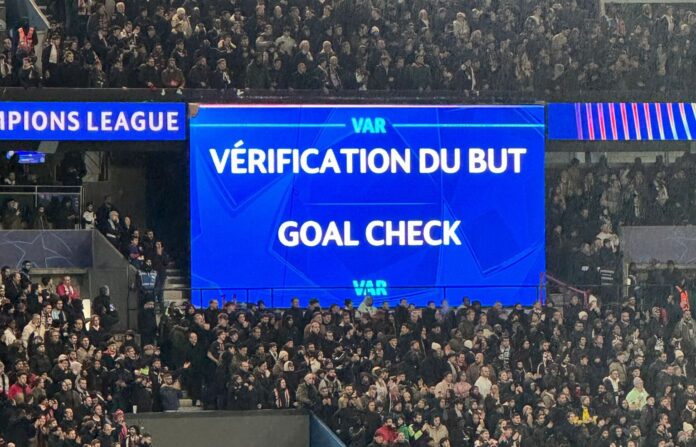
Stadium screen displays VAR goal check during a Champions League match as fans await the decision
A VAR review displayed in stadium highlights the growing need for clear communication in football. Moments like this shape fan perception and trust in officiating decisions.

Die zunehmende Integration künstlicher Intelligenz (KI) im Fußball hat in den letzten Jahren eine Revolution ausgelöst. Als Trainer mit einer Affinität zu Datenanalyse und Mathematik habe ich diese Entwicklung hautnah erlebt. Dabei bleibt eine Erkenntnis zentral: Trotz aller technologischen Fortschritte ist und bleibt der Mensch unersetzlich – vor allem, wenn es um Gefühle, Emotionen und die zwischenmenschliche Komponente geht.

Datenflut und deren Bedeutung für die Spielphilosophie

Seit 2017 sammle ich händisch Daten mithilfe von Videos, analysiere sie und entwickle daraus meine eigene Spielidee weiter. Diese Arbeit hat mein Training nachhaltig beeinflusst. Durch die Kooperation mit einer deutschen KI-Startup-Firma konnte ich mein Verständnis für datenbasierte Ansätze erweitern. Heute stehen uns eine Fülle an Daten zur Verfügung, doch der Schlüssel liegt darin, diese an die eigene Spielphilosophie anzupassen.

Daten allein bringen keinen Erfolg. Ein Trainer muss verstehen, wie sie entstehen, welche Kriterien hinter einem bestimmten KPI (Key Performance Indicator) stehen und wie diese Werte interpretiert werden können. Ein einfaches Beispiel: Wurde ein Pass in den Fuß gespielt oder in den Raum? Dieser Unterschied kann entscheidend sein, wenn es darum geht, taktische Entscheidungen zu treffen.

Spieler als „gläserne“ Athleten

Mit der zunehmenden Datenanalyse werden Spieler „gläsern“. Ihre Laufwege, Passgenauigkeit oder Zweikampfverhalten können kaum noch verborgen werden. Dies eröffnet neue Möglichkeiten, stellt Trainer jedoch auch vor Herausforderungen. Es geht nicht nur darum, das Potenzial eines Spielers zu erkennen, sondern ihn auch dazu zu bringen, dieses auf dem Platz abzurufen. Hier kommt die intrinsische Motivation ins Spiel. Ein Trainer muss die Spieler inspirieren, nicht nur die von der KI vorhergesagten Leistungen zu erbringen, sondern ihre Grenzen zu überschreiten.

Zwischenmenschliche Komponenten im Fokus

Die zwischenmenschliche Beziehung zwischen Trainer und Spieler bleibt unverzichtbar. Kein Algorithmus kann die emotionale Intelligenz eines Menschen ersetzen, der auf die Gefühle und Motivationen seiner Spieler eingeht. Ein Trainer, der Vertrauen aufbaut, Empathie zeigt und Spieler individuell fördert, kann KI-Unterstützung optimal nutzen.

KI als Werkzeug – nicht als Ersatz

Manche Experten behaupten, dass ohne datenbasierte Spielanalyse keine Spitzenmannschaft der Zukunft auskommen wird. Diese Annahme mag zutreffen, doch sie verändert die Arbeit eines Trainers grundlegend. KI sollte wie ein weiteres Mitglied des Trainerstabs betrachtet werden: ein Werkzeug, das hilft, objektive und subjektive Wahrnehmungen näher zusammenzubringen.

Dabei gilt es, die KI nicht als Herausforderung oder Bedrohung zu sehen, sondern als Chance. Wie ein Handwerker sein Werkzeug kennt, muss auch ein Trainer wissen, wie und wann er KI optimal einsetzt. Sie macht die Arbeit nicht einfacher oder schwieriger, sondern anders. Der entscheidende Faktor bleibt der Mensch, der sie steuert.

Fazit

Die Zukunft des Fußballs wird ohne Zweifel stark durch KI geprägt sein. Doch die Basis für Erfolg bleibt die menschliche Interaktion, die Förderung von Motivation und das Verständnis der eigenen Spielphilosophie. KI ist ein wertvolles Werkzeug – aber eben nur eines von vielen. Der Umgang damit entscheidet darüber, ob sie zum Gamechanger wird oder nicht.