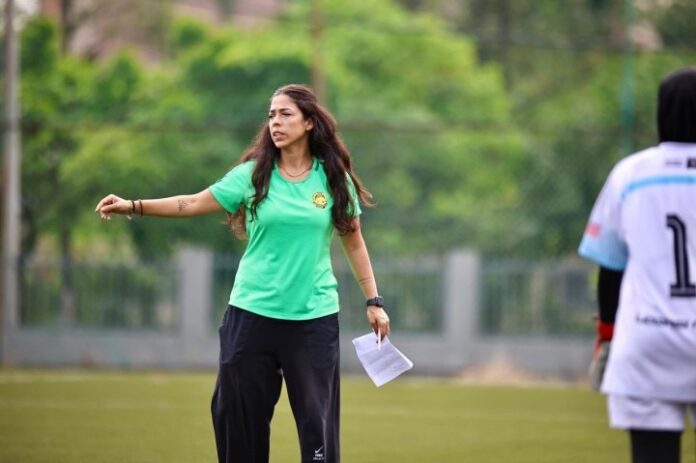
At The Football Week, we honor those redefining the future of football. Today, we spotlight Soleen Al-Zoubi, a transformative figure whose leadership has elevated women’s football from local programs to global platforms.
Roots and Academic Journey
Born on July 23, 1986, in Jordan, Soleen pursued a degree in Biological and Medical Analysis at The University of Jordan. While her academic foundation was in science, her true passion for football would ultimately guide her professional path.
Shaping Women’s Football in Jordan
Between 2014 and 2022, Soleen was instrumental at the Jordan Football Association, advancing from Deputy Technical Director to Head of Women’s Football. She championed major initiatives, including launching Jordan’s first women’s professional league, implementing national safeguarding frameworks, and leading teams during global tournaments like the FIFA U-17 Women’s World Cup 2016 and the AFC Women’s Asian Cup 2018. Her vision also led to the founding of Finaa NGO, promoting sports as a tool for women’s empowerment.
Driving Growth in Malaysia
In 2022, Soleen expanded her impact by joining the Football Association of Malaysia. As Head of Women’s Football and later Women’s Football Technical Director, she built player development pathways and established Malaysia’s first semi-professional women’s league, driving participation and visibility at every level.
Influencing Global Standards with FIFA
Since January 2025, Soleen has worked as a FIFA Technical Leadership Expert, contributing to the creation and delivery of high-level education programs for technical leaders around the world, shaping the next era of football leadership.
The Legacy of Soleen Al-Zoubi
Soleen stands as a powerful example of how vision, resilience, and strategic leadership can transform the sport. From grassroots innovation to global influence, her work continues to inspire a new generation, setting higher standards for women’s football worldwide.
Our Exclusive Interview with Soleen Al-Zoubi
What initially inspired you to dedicate your career to developing women’s football in Jordan and Malaysia?
My deep love and passion for football, coupled with the many struggles I faced as a player, have made me feel that my journey in the sport is far from over. I never imagined myself doing anything in life but football. Understanding and experiencing the challenges that women’s football encounters has equipped me with valuable insights on how to address these issues in Jordan and Malaysia, where we share similar cultures, mindsets, and obstacles
How did your transition from coaching into technical leadership roles shape your vision for the women’s game?
My experience as a coach taught me about the importance of strategic planning. Its difficult to see immediate results without having a clear vision, and strategy, However I can now advocate for long-term initiatives that prioritize the growth of women’s football. Ensure the access, provide opportunities, create proper player pathway at all levels, This includes promoting diversity within coaching staff, investing in facilities, and supporting research on women’s health in sport
What were the biggest challenges you faced in launching Jordan’s first women’s professional league, and how did you overcome them?
The primary challenge came from the clubs’ management. Transitioning the team from an amateur to a professional level requires significant resources and commitment, which proved difficult for clubs, particularly those with financial constraints. As a result, initial participation was low, and attracting sponsors for the league was tough due to skepticism surrounding the viability and growth potential of women’s football. We had to maintain ongoing communication with the clubs, players, parents, media and sponsors to highlight the importance of this transition and find strategies to draw more fans to the games
How has founding Finaa NGO influenced your approach to football development and advancing gender equality?
The concept behind Finaa NGO stems from my personal journey with football, which mirrors the experiences of many girls who share a deep passion for the sport but lack the necessary access to participate. One of the primary challenges facing women’s football today is the disparity in access and opportunities available to female players.
In my view, if we truly aim to develop and expand women’s football, it is essential to increase the number of girls involved in the sport. To accomplish this, we must ensure that all girls who wish to play, coach, or engage in administrative roles within football have equal access and opportunities to do so. Equal opportunity is crucial for fostering a more inclusive and diverse environment in women’s football, thereby encouraging its growth and sustainability
In your view, what are the key ingredients for building a sustainable player pathway from grassroots to elite levels in women’s football?
First, easy access is essential; football should be available to as many girls as possible, regardless of their age, location, or social barriers. Second, quality coaching is crucial; girls should have access to high-quality coaching in a safe environment to develop their skills. Third, there should be structured competitions; players of all ages need opportunities to play and showcase their talents in order to maintain their motivation and growth. Lastly, proper talent identification and development are important, which includes scouting, development programs, and scholarship opportunities for talented individuals.
How do you balance your responsibilities across FIFA, FAM, and Finaa while maintaining a long-term impact focus?
I have never felt any issue here, I believe that everything is interconnected. And when I’m passionate about something, it doesn’t feel overwhelming. However, it’s crucial for me to set priorities each quarter to ensure I stay on top of my tasks. Additionally, one of the key factors that helps me manage my responsibilities is the support of my team members, particularly in FAM and Finaa. I prioritize building strong communication, trust, and delegation within the team to facilitate our work together.
Behind every goal and every victory in a football club lies a coordinated effort that extends far beyond the pitch. The functioning of the front office (administration, marketing, communication, finance, logistics, customer service, and operations) is key to the club’s day-to-day sustainability. But for that engine to run smoothly, one essential ingredient is needed: internal communication.
When the Board of Directors communicates clearly and consistently with the front-office staff, it fosters alignment, engagement, and responsiveness. And when the front office operates with the right information, the positive impact is immediately visible externally: in the fan experience, operational efficiency, and the club’s reputation.
Clear direction for all areas
Clubs are dynamic organizations, with multiple projects running simultaneously. Without clear communication from senior leadership, different departments can operate in isolation, pursuing goals that don’t always complement one another.
Strategic alignment: Front-office staff need to understand the club’s vision and objectives in order to make aligned decisions. For example, if the focus is on developing young talent, marketing campaigns, digital content, and events should reflect that identity.
Agile decision-making: When information flows smoothly, bottlenecks are reduced. Teams can anticipate needs, act with greater autonomy, and respond more quickly to changes.
Coordination between all areas
Club decisions often impact multiple areas at once. A new signing, a coaching change, or the organization of an home match all require synchronized actions across communications, logistics, commercial, and institutional relations.
Interdepartmental meetings and information sharing: Regular meetings between departments help ensure key information is shared, duplication is avoided, and synergies are created.
Digital management tools: Collaborative platforms, tracking dashboards, and internal communication channels help keep everyone informed and focused.
Organizational culture and sense of belonging
Internal communication is not just about sharing information, it also builds culture. When staff feel part of the project, they work with more motivation and commitment.
Recognition and feedback: Celebrating milestones, sharing successes, and creating space for feedback strengthens belonging and improves the workplace atmosphere.
Consistent messaging: What is communicated internally should align with what the club projects externally. This consistency strengthens the club’s credibility.
Direct impact on the fan experience
A well-informed and aligned front office has a direct impact on the fan experience, from a seamless ticket purchase to empathetic, efficient customer service.
Matchday coordination: Ticketing, stadium access, security, and fan engagement all require integrated and well-communicated operations.
Multichannel communication: Social media, club apps, newsletters, and customer service platforms must deliver consistent and up-to-date messaging.
Success Starts from Within
A football club cannot shine outwardly if it is not well-connected internally. Internal communication with the front office is not just an administrative concern, it is a strategic tool for building identity, improving operations, and delivering meaningful experiences.
When everyone within the club rows in the same direction, success follows on and off the pitch.
Ndenge mpe molongo ya épreuve ya agent ya football ya FIFA
FIFA ebongisaki mingi molongo ya épreuve ya agent ya football, oyo ekoyamba kosala na mokolo ya 4 mars 2025. Mbongwana yango ezali kolakisa passage na ba évaluations ya liboso, oyo esalaka na liboka mpe na esika, kino na ndenge oyo ezali na intenet mpe na mibeko ya kotalela oyo ekangami mingi mpe ba exigences ya bileko ya mosala oyo ebongwanaka. Mbongwana yango ezali na nia ya kosala ete bosembo, polele mpe molongo moko ezala mingi, mpo na kosala ete bato nyonso oyo bazali na kati ya épreuve, atako bazali wapi, basala épreuve na ndenge oyo ezali na bosembo mpe kotalela makasi.
Na ndenge ya kala, bato oyo bazali na kati ya épreuve balandaka kokende na esika ya épreuve na liboka, na ba lieux oyo lisanga ya football ya mokili na bango ekomisaki. Atako ndenge yango ebatelaka ndenge ya épreuve, ndenge ya épreuve ezalaka na mbongwana mingi, na ba lisanga mosusu oyo epesaka lisalisi ya bileko ya mosala, accès na intenet mpe ba équipements oyo ezalaka na nivo mosusu. Na koluka, mibeko na tina ya bileko oyo bilandamaka ezalaka na bosembo te: ba lisanga ya mokili mosusu epesaka bato oyo bazali na kati ya épreuve kolata ba notes ya étude oyo ekomama (ezala na ba copies papier oyo bakomaki yango na maboko), kasi mosusu epesaka mibeko oyo ekangami mingi.
Sikoyo FIFA eyokaki épreuve nyonso ya liboka mpe esalaki yango na ndenge oyo ezali na intenet. Bato oyo bazali na kati ya épreuve sikoyo balandaka kosala épreuve na esika ya ntwala mpe oyo bango bato basala yango. Mbongwana yango epesaka bato oyo bazali na kati ya épreuve bokengi mingi: balandaka kosala ete bazala na bileko ya mosala oyo elingi, connexion ya intenet oyo ekangami mpe esika ya mosala oyo ezali malamu. Ndenge ya sika mpe esangisaki ba mesures ya bokengi oyo ekangami, lokola accès obligatoire na caméra mpe microphone na ordinateur ya moto oyo azali na kati ya épreuve, mpe kotalela ya mibale na nzela ya smartphone. Na kokesana na ba épreuves ya liboso ya liboka, FIFA sikoyo esalelaka bileko ya kotalela oyo esalaka na IA mpo na kolanda mikolo ya bato mpe koyeba mosala oyo ezali na likama na ntango ya solo.
Mbongwana mosusu ya ntina ezali koyoka pause nyonso na ntango ya épreuve ya miniti 60. Na kala, bato oyo bazali na kati ya épreuve balandamaka kozwa pause ya toilette na kotalela, kasi sikoyo oyo elingi te. Soki épreuve ebandaki, bato oyo bazali na kati ya épreuve balandaka kofanda mpe kotangana na caméra kino na nsuka ya ntango oyo epesamaki. Soki moto abimaka na position na ye, atalaka mosika na ntango molayi to azwaka connexion ya intenet, tentative na ye ekoyokama na mbala moko mpe akolanda kosala lisusu na session oyo elandaka.
Na koluka, FIFA esangisaki mibeko oyo ekangami mingi na tina ya mikolo mabe na ntango ya épreuve. Na ndenge ya kala, ba infractions lokola sango oyo elingi te, accès na ba documents ya libanda to kosalela ba appareils électroniques ekoki kosala ete moto ayokama na session yango. Kasi, bato oyo bazali na kati ya épreuve bakoki kosala lisusu na mokolo ya épreuve oyo elandaka na ndingisa te. Na mibeko ya sika, mikolo mabe makasi, lokola kobuba, kosala capture d’écran to kobongisa makambo ya épreuve na bato mosusu, ekoki kosala ete moto ayokama na ba épreuves oyo elandaka. Na ba cas makasi, bato oyo bazali na kati ya épreuve bakoki mpe kopekama na ntango nyonso na kozwa licence ya agent ya FIFA.
Na ba mbongwana yango, FIFA elingi kosala ndenge ya épreuve oyo ezali na bosembo mpe kotalela makasi, mpo na koyoka ba incohérences na ndenge ya épreuve mpe kopekisa ba libaku oyo elingi te. Bato oyo bazali na kati ya épreuve sikoyo balandaka kosala nzetela ya ntina, na plan ya bileko ya mosala mpe na boyebi ya mibeko, mpo ete kobukaka ba exigences ekoki kosala ete candidature na bango eyokama.
Ndenge ya épreuve mpe ba conditions ya kolonga
Epreuve ya agent ya football ya FIFA sikoyo esalaka na internet, mpo na kobongola ndenge ya kala ya liboka. Mbongwana yango epekisaka bato oyo bazali na kati ya épreuve kokende na ba lieux ya épreuve oyo ekomisamaki mpe epesaka bango bokengi mingi : balandaka kosala ete bazala na ba équipements ya mosala oyo elingi mpe esika oyo ezali na distraction te. Epreuve ezali na miniti 60 mpe bato oyo bazali na kati ya épreuve balandaka kozwa score ya minimum 75 % mpo na kolonga.
Test ezali na ba questions oyo bato basengaka kopona moko kati na mingi oyo etalela boyebi ya bato na mibeko ya FIFA, lokola ba transferts ya ba joueurs, ba accords ya contract, bokengi ya ba intermédiaires mpe bokonzi ya football nyonso. Ba questions ezali na nia ya kotala boyebi ya solo, kasi mpe makoki ya bato oyo bazali na kati ya épreuve ya kosalela mibeko ya FIFA na ba situations ya solo oyo ba agents bakoki kokutana na yango na ntango bazali kolakisa ba joueurs mpe ba clubs.
Moko na ba mbongwana ya mibeko oyo ezali na ntina ezali ndelo ya kanga pause na ntango ya épreuve. Na kala, bato oyo bazali na kati ya épreuve bakoki kosenga pause ya toilette na kotalela, kasi na ndenge ya sika, pause nyonso, ezala ndenge nini, elingi te. Oyo elingi ete soki épreuve ebandaki, bato oyo bazali na kati ya épreuve balandaka kofanda, kotangana na caméra mpe kosala épreuve kino na nsuka ya miniti 60. Kobima na session mpo na ntina nini to nini, ezala mpo na problème ya bileko, mposa ya moto to kobungisa connexion na ndenge ya kokamwa, ekosala ete moto ayokama na mbala moko mpe akolanda kolindaka mokolo ya épreuve oyo elandaka mpo na kosala lisusu.
Na tina ya ndenge oyo ekangami mingi, FIFA etinda mingi bato oyo bazali na kati ya épreuve kosala nzetela ya ntina liboso ya kobanda épreuve, na kosala ete bazala na connexion ya intenet oyo ekangami, ba équipements nyonso oyo elingi mpe esika ya kimya mpe oyo ezali na interruption te mpo na kosala test na bosembo.
Ba exigences ya bileko ya mosala mpe kobongisa
Lokola épreuve esalaka na internet, FIFA esangisaki ba exigences ya bileko ya mosala oyo ekangami mpo na kosala ete esika ya test ezala na bokengi, molongo moko mpe kotalela makasi. Bato oyo bazali na kati ya épreuve bango moko balandaka kosala mpe kobatela ndenge ya bango ya épreuve, FIFA epesaka lisalisi ya bileko ya mosala te na ntango ya épreuve.
Mpo na kosala épreuve, bato oyo bazali na kati ya épreuve balandaka kozala na yango :
Ordinateur portable to ya bureau oyo ezali na caméra mpe microphone oyo esalaka, oyo nyonso elandaka kofanda mpe kosala na ntango nyonso ya épreuve. Ndenge ya kotalela ya FIFA esalelaka ba appareils yango mpo na kolanda mikolo ya bato mpe koyeba mwa mokuse oyo ezali na kati.
Smartphone ekosala mpo na kotalela ya mibale. Bato oyo bazali na kati ya épreuve bakoki kosengama kopona téléphone na ndenge oyo ekopesa motango ya zoli na esika ya mosala na bango. Téléphone moko ekoki kosalelama mpo na ntina mosusu na ntango ya épreuve.
Connexion ya intenet oyo ekangami mpe oyo esalaka malamu. FIFA elobaki na polele ete interruption nyonso ya connexion ekoyoka tentative ya épreuve, na possibilité te ya kobanda lisusu. Soki moto abungaka connexion na ye, session na ye ekokatwa mpe akolanda kosala lisusu na mokolo ya épreuve oyo elandaka.
Na tina ya ntina ya ba exigences ya bileko ya mosala, FIFA etinda mingi bato oyo bazali na kati ya épreuve kotala ba appareils na bango, vitesse ya intenet mpe kosala ya webcam na bango liboso ya mokolo ya épreuve. Soki problème ya bileko ekokaki na ntango ya épreuve, ezala na connexion ya intenet, panne ya matériel to logiciel, moto oyo azali na kati ya épreuve akozwaka ntango ya kombo to reprise na session moko. Akolanda kolindaka mokolo ya épreuve oyo elandaka mpe kosala lisusu.
Bato oyo bazali na kati ya épreuve mpe balandaka kosala ete bazala na esika ya mosala oyo ezali na kimya mpe na mwinda malamu, na distraction te, mpo ete mosala nyonso oyo ebimi na cadre, kobungisa visibilité to mikolo oyo ezali na likama ekoki kosala ete tentative na bango esengelama to ayokama.
Esika mpe kosala ya épreuve
Atako épreuve esalaka na intenet, FIFA esengaka bato oyo bazali na kati ya épreuve kosala yango na esika oyo ezali na kimya mpe ntwala, na distraction te mpe lisalisi ya libanda. Ndenge ya épreuve elandaka kozala pene na ya épreuve ya molongo, mpo na kosala ete bosembo mpe bosembo ezala na bato nyonso, na esika nyonso na mokili. Mpo na kolanda ba normes yango, FIFA esangisaki ba mesures ya kotalela oyo ekangami mpo na koyeba mpe kopekisa ndenge nyonso ya kobuba to kobukaka mibeko.
Ndenge ya kotalela ezali na yango:
Kotalela ya vidéo na direct na caméra ya ordinateur portable to ya bureau ya moto oyo azali na kati ya épreuve, oyo elandaka kofanda mpe kozala na liberté na ntango nyonso ya épreuve.
Kotalela ya mibale na kosalela smartphone obligatoire, oyo ekoki kosengama mpo na kopesa motango ya motango ya zoli na esika ya mosala ya moto oyo azali na kati ya épreuve. Oyo esalaka ete épreuve esalaka na lisalisi te oyo elingi to ba documents ya référence ya libanda.
Kotalela ya mikolo na IA, oyo eyokaka ba mouvements oyo ezali na likama, ba mouvements ya miso oyo ezali na mingi, ba bruits ya fond oyo ezali na ndenge ya kokamwa to mwa mokuse oyo ekoki kolakisa mikolo mabe. Soki ndenge esengaka yango, session ya moto oyo azali na kati ya épreuve ekoki kotalelama lisusu, oyo ekoki kosala ete ayokama to ayokama na ba épreuves oyo elandaka.
Bato oyo bazali na kati ya épreuve balandaka kofanda, kotangana na caméra mpe kotala na concentration na miniti 60 ya épreuve. Kotala mosika na écran na ntango molayi, sango na ndenge nini to nini to nia ya kosalela bileko oyo bilandamaka te ekoki kosala alerte ya molongo. Atako ba infractions moke, lokola kobongisa position na ntango mingi to kolakisa lokola alobaka na mongongo, ekoki kosala ete kotalela ya makasi esalaka mpe disqualification potentielle.
Mpo na kopekisa likama oyo elingi te, FIFA etinda mingi bato oyo bazali na kati ya épreuve kosala esika ya bango ya épreuve liboso, na kosala ete mwinda ezala malamu, fond ezala neutre mpe distraction potentielle ezala te. Interruption nyonso, lokola bato oyo bakoyela na sale, bruit ya fond to coupure ya connexion ya intenet, ekoki kosala ete moto ayokama na mbala moko mpe akolanda kosala lisusu na mokolo ya épreuve oyo elandaka.
Bileko oyo bilandamaka mpe oyo bikangami
FIFA esalaki ba directives polele na tina ya nini bato oyo bazali na kati ya épreuve bakoki kozala na yango mpe nini bakoki te na esika ya bango ya épreuve. Mwa mokuse oyo elingi te oyo ekoyebama na esika ya mosala ekoki kosala ete moto ayokama na mbala moko mpe, na ba cas makasi, ayokama na ba tentatives ya nsima ya épreuve.
Bileko oyo bilandamaka
Bato oyo bazali na kati ya épreuve balandamaka kozala na yango:
Ba supports ya étude, soki kaka bazali na numérique na ordinateur portable to ya bureau ya moto oyo azali na kati ya épreuve. Ba documents oyo ekomama, ba notes oyo ekomama na maboko to mwa mokuse mosusu ya stockage externe oyo ezali na ba ressources ya étude bikangami mingi.
Lunettes ya miso, soki elingi mpo na correction ya miso.Stylo mpe feuille blanche mpo na kokoma ba notes na ntango ya épreuve. Kasi, feuille elandaka kolakisama na caméra liboso mpe nsima ya kosalelama mpo na kosala ete ezala na ba notes te oyo ekomamaka liboso.
Calculatrice oyo ezali na plateforme ya épreuve ya intenet ya FIFA. Ba calculatrices ya libanda bilandamaka te.
Bileko oyo Bikangami
Bileko oyo bilandaka bikangami mingi na ntango ya épreuve :
Ba téléphones portables, longola oyo esengami mpo na kotalela. Téléphone yango elandaka koponama na ndenge ya ba instructions mpe ekoki kosalelama mpo na ntina mosusu na ntango ya test.
Ba montres oyo ekonectaka, écouteurs to mwa mokuse mosusu ya smart oyo ekoki kokonecta na internet.
Accès na ba sites web ya libanda longola plateforme officielle ya épreuve ya FIFA. Nia nyonso ya kokende na intenet to kofungola ba onglets oyo bilandamaka te ekosengelama lokola infraction.
Ba documents oyo ekomama, ba notes oyo ekomama na maboko to mwa mokuse mosusu ya étude physique. Na kokesana na ba épreuves ya liboso oyo bato oyo bazali na kati ya épreuve bakoki kolata mibeko oyo ekomama, ndenge ya sika elandaka kaka ba supports ya étude numériques na ordinateur portable oyo esalelama mpo na épreuve.
Ba calculatrices physiques. Ba calculs nyonso oyo elingi esalaka na kosalela calculatrice oyo ezali na plateforme ya FIFA.
Mikolo mabe na épreuve mpe ba conséquences
FIFA eyambaki ndenge ya kopekisa mikolo mabe na épreuve na ndenge ya ndelo zéro. Bato oyo bazali na kati ya épreuve balandaka kolanda ba directives mpe ba mibeko nyonso, na likama ya ba conséquences makasi, oyo ekoki kino na kopekama na ba épreuves ya nsima na ntango nyonso. Mikolo oyo ilandaka bikangami mingi:
Kobuba: Nia nyonso ya kozwa libaku oyo elingi te, lokola kosalela bileko to ba outils oyo bilandamaka te, to kozwa lisalisi ya libanda (ezala na moto mosusu to na esika ya numérique), ekosala ete mayamboli ya discipline esalaka na mbala moko. Oyo ezali na kati, kasi ekomi te na yango, kosalela ba notes, ba livres to ba ressources ya intenet oyo bilandamaka te.
Kokoma to kobongisa makambo ya épreuve : Ezali na ndelo ya bato oyo bazali na kati ya épreuve kosala capture d’écran, kokoma to kobongisa mwa mokuse ya makambo ya épreuve. Oyo ezali na kati ya kobongisa sango na capture d’écran, vidéo to ndenge mosusu ya sango numérique. Kobongisa nyonso to mwa mokuse ya makambo ya épreuve ezali kobebisa mibeko ya FIFA.
Sango oyo elingi te : Ezali na ndelo ya kolobela na moto nyonso, ezala na liboka to na nzela ya électronique (exemple, téléphone, applications ya chat to réseaux sociaux), na ntango ya épreuve. Oyo ezali na kati ya sango nyonso oyo ekoki kosalema lokola nia ya kozwa lisalisi to kobongisa sango.
Kobima na épreuve na ndingisa te : Bato oyo bazali na kati ya épreuve balandaka kofanda na sale ya épreuve kino na nsuka ya yango ya ndingisa. Kobima na sale ya épreuve to na session na ndingisa te ezali mbeba makasi.
Kolakisa lokola moto mosusu: Nia nyonso ya kolakisa lokola moto mosusu to kosala épreuve na esika ya moto mosusu ekokutana na kotalela makasi mpe ekoyambolama. Oyo ezali na kati ya kolakisa lokola moto mosusu mpe ndenge nyonso ya kosangisa nguya oyo moto moko asalaka mosala na nkombo ya mosusu.
Soki moto moko abebisaka moko na mibeko yango, FIFA ekoki koyoka ye na kotalisa na épreuve oyo elandaka mpe, na makambo makasi, ekoki kompeka ye kotala épreuve ya FIFA na ntango nyonso. Makasi ya mayamboli ekotangana na ndenge ya mbeba, mpe bato oyo babukaka mbala mingi bakozwa mayamboli makasi.
Na koluka, FIFA esangisaki na épreuve na yango ba systèmes ya kotalela ya haute technologie oyo esalaka na IA mpo na koyeba mosala oyo ezali na likama. Bileko oyo ya IA bikoki koyeba ba schémas oyo bizali kolakisa kobuba to bosembo te, mpe oyo esalaka ete bato babuka ndenge na ndenge ya kokoma te. Innovation oyo ya technologie ezali na nia ya kobatela bosembo ya ndenge ya épreuve mpe kosala ete esika ya konkurrence ezala ya bosembo mpo na bato nyonso.
Bato oyo bazali na kati ya épreuve batindamaka kolanda mpe kosalela na ntina mibeko ya épreuve mpo na kopekisa likama. Kobukaka mibeko yango ekoki kobebisa mpenza kolonga na épreuve, kasi mpe ekoki kobebisa nkombo ya moto mpe ndingisa na ba opportunités ya nsima na FIFA.
Mitindo mpe ndenge ya kosenga lisusu
Bato oyo bazali na kati ya épreuve bakozwa mitindo na courriel na mokolo 14 nsima ya nsuka ya test. FIFA mpe esangisaki ndenge ya kotalela lisusu oyo eyokaka bato kotala balobeli na bango mpe koyeba mabunga na bango. Kasi, ekoki lisusu te kokende na nsima na mitindo ya épreuve.
Soki moto abungaka, akolindaka mokolo ya épreuve oyo elandaka mpo na kosala lisusu. Ezali na ndelo te mpe FIFA epesaka kotalela lisusu ya moto moko.
Likanisi ya nsuka
Mibeko ya sika ya épreuve ya ba agents ya football ya FIFA ezali na mbongwana makasi mpo na ndenge ya kotalela oyo ezali na bosembo, ya molongo mpe ya polele. Na kotalela makasi, na kopekisa interruption mpe na ndelo zéro mpo na mabunga, bato oyo bazali na kati ya épreuve balandaka kosala nzetela ya ntina liboso ya kokende na épreuve.
Mpo na kosala ete chance ya kolonga ezala mingi :
Tala état ya ordinateur portable, smartphone mpe connexion ya internet ezali na ba exigences ya FIFA.
Zwa bosepeli na mibeko na kosalela ba supports ya étude numériques oyo bilandamaka.
Landa na ntina mibeko nyonso ya kosala mpo na kopekisa disqualification.
Na koyeba mpe kosalela na ba directives oyo ebongwanaka, bato oyo bazali na kati ya épreuve bakoki kokende na confiance na ndenge ya sika ya épreuve mpe kosala mosala mpo na kozwa licence ya agent ya football ya FIFA.
Welcome to the 11th edition of The Players Week, your ultimate digital source for the latest and most impactful stories in the world of football players.
This week we explore:
Club Buy-In is one of the essential Quality Areas defined by the European Club Association that youth academies must provide
Training your brain to pay attention
Financial Planning for Life After Football – Part V: Education & Skill Development
Why development doesn’t come from opinions, but from honest reflection, communication, and collaboration.
A Day on the Pitch – and the Same Old Conversations
It’s a sunny day in southern Germany. I’m standing, as I often do, on the sidelines of a football pitch. Youth match, ambitious level, engaged spectators, tense atmosphere. As a player advisor, I’m regularly on-site. I don’t just watch the game, I listen. I talk to players, parents, coaches. And every time, I encounter the same patterns.
After the game, the conversations start. A player is disappointed because he didn’t play, or only played briefly. A father comes to me, looking for answers. The mother looks at me and asks, “What else should he do?”
Then I hear things like:
“I don’t get it—even my teammates said I should have played.”
“My dad says I was the best in training.”
“The coach just doesn’t see it.”
“That’s not fair—you can’t explain that.”
I understand the disappointment. But it’s exactly at this moment that a decision is made: Will the player remain stuck in judging others, or will he reflect honestly on his own role?
Because development doesn’t start with applause, but with honesty. And it only succeeds when everyone involved is willing to take responsibility.
Honestly Assessing One’s Role – Instead of Fooling Oneself
Many players rely on feedback from their surroundings, parents, teammates, agents, social media. But this is rarely objective.
And agents carry responsibility too:
When an agent constantly tells a player he’s “due” or “clearly better than the others,” it creates a distorted self-image. It may feel good in the moment, but it can massively block development. Not every push is helpful.
Questions for self-reflection:
How was my training week? Was I focused, consistent, resilient?
Did I implement what was tactically required of me?
How was my body language, communication, team behavior?
Were there other things on my mind, an upcoming exam, relationship stress, family tensions, or personal pressure?
This too is part of reflection. Sometimes external circumstances influence our behavior without us realizing it. Recognizing this allows us to respond consciously, seek help, or communicate more clearly.
Only those who are honest with themselves can learn and grow.And those who truly want to grow need honest guides—not just people who validate them.
Parents – Mirrors Instead of Shields
Parents want to protect their children. But when they take sides instead of offering reflection, they take away the player’s chance for genuine development.
Instead of:
“You’re better than the one who played.”
Better would be:
“How did you feel this week?”
“What went well—and where did you feel uncertain?”
Parents who create space for reflection, instead of pointing fingers, foster strength, not dependence.
Coaches – Clear Communication Instead of Silent Decisions
Coaches make decisions that are often hard to understand, for players who didn’t play, and their parents.
Those who play rarely question things.
They feel validated, get game time, recognition, attention. But those on the bench seek answers—and often don’t get them. Or only in passing.
And it’s exactly this group that most urgently needs communication: Those who are fighting, wanting to grow, but don’t know where they stand.
Good coaches are transparent. They speak not only with those who play, but especially with those who don’t (yet).
Because: A coach is only as good as his “weakest link.”
If you only focus on your top performers, you miss the greatest development potential.
Those who are currently struggling, falling behind, or lacking confidence must be moved to the front, not the fringes. That’s where a team’s depth, stability, and real strength is formed.
Players must also learn to communicate and ask questions:
“What was the deciding factor?”
“What can I work on specifically?”
“What am I still missing to be considered for the starting eleven?”
These questions show: I want to understand, I want to grow, I take responsibility.
This builds trust, even without game time.
Because those who learn to speak up respectfully are heard, and develop not just on the pitch, but as people.
“Communication isn’t a talent, it’s a skill to be trained.”
And this is where parents, agents, and coaches can help, not by speaking for the player, but by encouraging them to speak for themselves.
Feedback Isn’t a Bonus – It’s the Foundation
Development needs direction.
Regular, structured feedback conversations are the key:
Every 4–6 weeks
With strengths, areas for growth, and specific next steps
Documented and clear
This allows players to know where they stand, and what they’re working on. Parents can support purposefully instead of guessing.
Agents – Career Companions or Illusion Builders?
We as agents also bear responsibility.
Those who only push and demand playing time weaken long-term growth.
Those who constantly say “you’re up next” without honest analysis feed false expectations.
A strong agent:
Gives honest feedback
Focuses on development potential, not just market value
Addresses uncomfortable truths
Supports real dialogue with coaches, not behind their backs
Agents can do harm if they push one-sidedly, create pressure, or stir up expectations that aren’t yet justified.
True support means: Holding up a mirror, not fueling a fantasy.
Changing Perspectives – So That Development Stays Child-Friendly
Especially in youth football, perspective is everything. Too often, parents or coaches want more than the child does.
They talk about pro careers, scouting programs, academies, when all the child wants is to play, have fun, and feel included.
Development starts with the child, not with the expectations of adults.
Coaches should ask: “Am I the coach I would have wanted as a kid?”
Parents should honestly reflect: “Does my child really want this—or do I want it for them?”
And one thing is essential: The path to becoming a professional is long, tough, full of setbacks, and never guaranteed. Those who succeed need inner motivation, not parental ambition.
A change in perspective helps everyone involved:
Focus on what really matters
Reduce pressure
Keep real joy and motivation alive
Because:Without passion, there’s no perseverance. And without perseverance, there’s no progress.
Clubs & Agents – Fostering Development Together
Clubs and agents must not be opponents.
They must work together to support young players in their development.
That means:
Regular check-ins with players
Regular check-ins with agents
Transparent communication about progress and perspective
Feedback processes that involve all parties
Clear agreements on shared goals
Unfortunately, the reality often looks different: Agents are left out, even though they’ve supported the player for years, emotionally and mentally, and know them deeply off the field.
But this isn’t about interfering in tactical or coaching decisions. It’s about one essential question: How can we strengthen the person behind the player – together?
As an agency, we aim to be present in these conversations, not to control, but to understand where the player stands and how we can help emotionally, practically, and personally, never above the coach.
That’s why we often anchor in contracts with clubs and players that feedback meetings take place with the head coach, sporting director, player, and agent present.
Because: True development is a team effort.
Final Thought: Development Doesn’t Start With Playing Time – But With Attitude
The key question is not:
“Why am I not playing?”
But rather:
“What do I need to be ready?”
Whether player, parent, coach, agent, or club, those who listen, reflect, and take responsibility create real development.
Because: Those who learn to look in the mirror will one day stand exactly where they belong.
FIFA Procedural Rules Governing the Football Tribunal
pp.251-283
Parties; Time limits; Claims; Costs; Adjudication; Training rewards
FIFA Clearing House Regulations
pp.284-319
Training compensation; Sanctions; Disputes; Electronic Player Passport; Registration
FIFA Football Agent Regulations
pp.320-358
Licensing; Service fee; Representation; Disciplinary matters
FIFA Guardians Child Safeguarding Toolkit and Essentials
pp.359-499
The five principles; The five steps; Identifying risks; Codes of conduct
FIFA Circulars
pp.500-604
A break down of all relevant FIFA Circulars and documents
FFAR FAQs
pp.605-660
Frequently asked questions for the FFAR document
Information on the licensing process and the FIFA Football Agent Exam
pp.661-681
A breakdown of all the key regulations and exam conduct
Here is a brief overview of each key section from chapter 1 of the Study Materials.
FIFA Statutes
The FIFA Statutes are a foundational document within the FIFA Study Materials, beginning with two pages of key definitions crucial for comprehending the entire body of work. Following these definitions, the document comprises over 100 articles that outline the statutes, accompanied by sections detailing the regulations for their application and the orders of the congress. As the largest document in the study materials, it is imperative to methodically review each component to grasp the statutes, their applicability, and how they may be examined.
The statutes, as defined in Article 2, aim to protect the integrity of the game. Key articles include:
Article 7: Identifies IFAB (International Football Association Board) as the lawmakers of the game.
Articles 10-19 and 24-34: Name key decision-making bodies within football, such as the FIFA Congress and the FIFA Council, detailing their roles, powers, and the rights granted to national associations.
Part Four (Articles 22-23) outlines the rights and obligations of the six different confederations recognised by FIFA. Significant individual figures such as the FIFA President, the Secretary General, and the FIFA General Secretariat are covered in Articles 35-37, detailing their distinct tasks and responsibilities, which are crucial for candidates to understand within the context of the study materials.
Articles 39-53 enumerate various committees recognised by FIFA. Among these, the judicial bodies; Disciplinary, Ethics, and Appeal Committees, are particularly important, though candidates must also recognise the relevance of other committees. Additionally, Articles 48-58 cover the different chambers of the FIFA Football Tribunal, the Court of Arbitration for Sport, and the elements of dispute resolution and jurisdiction.
For thorough preparation, candidates should pay special attention to these sections, ensuring a comprehensive understanding of the roles, responsibilities, and regulations outlined in the FIFA Statutes.
FIFA Disciplinary Code (FDC)
The FIFA Disciplinary Code document starts by outlining key general provisions, including its scope of application, possible disciplinary measures, the purpose of the FIFA Disciplinary Committee, and other essential clauses. However, the bulk of the content is found in Parts 2 and 3 of the document.
Part 2 details various offences that trigger action under the FDC, such as infringements of the laws of the game, discrimination, misconduct, sports doping, and risk management. Chapter 4 of Part 2 is particularly important, as it covers how disciplinary measures against these offences are enforced and implemented.
Part 3 explains FIFA’s organisation and competence in investigating, prosecuting, and sanctioning misconduct. It includes information on the composition of different judicial bodies, their independence, impartiality, confidentiality, and meeting processes. This section also covers the burden of proof, provision of evidence, time limits, liability exemptions, financial implications for different parties, and the appeal process.
The annexes of the FIFA Disciplinary Code are valuable for consolidating knowledge. They provide tables clarifying the extent of sanctions, fines, and disciplinary measures that can be imposed on offending parties. For a comprehensive understanding, candidates should focus on these annexes alongside the main sections of the document.
FIFA Code of Ethics
The FIFA Code of Ethics shares many similarities with the FIFA Disciplinary Code regarding scope, applicability, and purpose. However, each document covers distinct areas relevant to the FIFA Football Agent Exam.
Part 2 of the Code of Ethics outlines the substantive law provided by FIFA. It details various types of sanctions, breaches, and the implementation of Ethics Committee decisions. This section also covers the most important duties and rules of conduct for parties bound by the Code. Notably, it includes offences such as bribery, discrimination, threats to physical and mental integrity, forgery, abuse of position, corruption, misuse of funds, match-fixing, and gambling.
Part 3 focuses on the organisation and procedures of the Ethics Committee, highlighting its competence, independence, and composition procedure. Chapter 2 of Part 3 is crucial as it details procedural rules, including general processes, investigation, adjudication, decisions, and appeals. This section mirrors the equivalent section in the Disciplinary Code, covering representation, the burden of proof, time limits, compliance, legal proceeding costs, and the appeal process.
Understanding these elements is essential for candidates, as the details within the Code of Ethics are likely to be examined by FIFA.
FIFA Regulations on the Status and Transfer of Players (RSTP)
The RSTP is one of the most complex documents within the FIFA Study Materials, containing heavy material and intricate details that are crucial for the exam as it comprises a large proportion of the question pool FIFA uses. The document is divided into 10 parts with 29 clauses and includes 7 annexes. It is essential to read the annexes and link them with the different topics covered within the RSTP to refine your understanding of its difficult areas. Here are the key points to focus on:
Section 2: Differentiates the status of players between amateur and professional.
Section 3: Outlines key regulations and restrictions for registering players with clubs, including FIFA IDs, the ban on bridge transfers, player passports, international transfer certificates, loan transfers, and the lengths and implications of registration periods. Annexe 3 is crucial for understanding the FIFA Transfer Matching System (TMS).
Section 4: Relevant for questions on contractual matters between players and clubs, particularly regarding the termination of contracts with or without just cause. Annexe 2 is also important for questions involving contracts with coaches.
Section 5: Covers the strict regulations and restrictions on third-party influence and third-party ownership, which are vital for agents to understand and comply with.
Section 6: Pertinent for questions about female players, especially those mentioning pregnancy. Annexe 1bis is relevant here.
Section 7: Articles 19, 19bis, and 19ter are crucial for questions concerning minors, including trials and the protection of minors during international transfers.
Section 8: Addresses training compensation and the solidarity mechanism, covered in Articles 20 and 21. These topics often require mathematical calculations and are common concerns for candidates. Annexes 4 and 5 will help prepare you for questions on these topics.
The Annexes: No these are not just extra bits you can skip past sadly… we cannot overstate the importance of the annexes as they contain some absolutely vital information that is not only likely to be examined in the FIFA Agent exam but also, the answers cannot be found anywhere else in the study materials. So if you haven’t already, make sure you spend time checking all of the important information the annexes have to tell us and consider how FIFA may incorporate questions that test your knowledge on them.
By focusing on these sections and their associated annexes, candidates can effectively navigate the RSTP’s complexities and be better prepared for the exam.
FIFA Procedural Rules Governing the Football Tribunal
The FIFA Football Tribunal is a crucial component mentioned throughout the FIFA Study Materials, providing insight into its applicability and relevance to other FIFA rules and regulations.
Sections 1 and 2: These sections cover key general details for the Football Tribunal, including relevant parties, time limits, scope of application, jurisdiction, and composition. Candidates must distinguish between the Dispute Resolution Chamber, Players’ Status Chamber, and the Agents Chamber, as each handles different types of disputes.
Section 3: This section details the rules and regulations for claims, disputes, appeals, costs, adjudications, and mediation related to the Football Tribunal’s procedures.
Section 4: In addition to the training compensation and solidarity mechanism articles (20 and 21) in the FIFA RSTP, this section provides procedural rules for the Dispute Resolution Chamber to resolve issues related to these matters and disputes involving Electronic Player Passports.
Additionally, the annexe attached to this document is important for understanding the advance of costs and procedural costs associated with the Football Tribunal.
By comprehensively studying these sections and the annexes, candidates will better understand the FIFA Football Tribunal’s function and its integration with other FIFA regulations.
FIFA Clearing House Regulations (CHR)
The FIFA Clearing House Regulations overlap with other parts of the FIFA Study Materials, but they deserve careful analysis as a separate document. This document provides extensive details on the payment of training compensation and expands on the Electronic Player Passport. Additionally, it covers sanctions and disputes related to Clearing House payment processes. Candidates must thoroughly understand these aspects to ensure a comprehensive grasp of the regulations and their applications.
FIFA Football Agent Regulations (FFAR)
The FIFA Football Agent Regulations (FFAR) are arguably the most crucial part of the FIFA Study Materials for candidates to master, as they encompass all regulations for agents in the football industry. We will cover this in far more detail in its dedicated chapter!
While it is essential to understand every aspect of the FFAR, certain elements are most frequently examined:
Representation (Articles 12 and 13): Covers the rules and requirements for representing players and clubs.
Service Fees (Articles 14 and 15): Details the regulations on service fees charged by agents. At the time of writing, this is not currently examined as they are suspended!
Disciplinary Matters (Article 21): Outlines the disciplinary procedures and consequences for violations.
Candidates should also focus on understanding multiple representation restrictions, the contents of representation agreements, and the overall engagement of football agents. Thoroughly mastering these areas will be key to success in the exam.
FIFA Guardians Child Safeguarding Toolkit and Essentials
The FIFA Guardians Child Safeguarding Toolkit for Member Associations and the FIFA Guardians Safeguarding Essentials Course are two individual documents within the FIFA Study Materials but cover related examinable content.
FIFA Guardians Child Safeguarding Toolkit for Member Associations:
Section 4: This section is crucial as it outlines the five principles governing stakeholders’ conduct towards safeguarding children in football. These principles are elaborated into five steps to achieve and protect them, which can be examined in the FIFA Football Agent Exam.
FIFA Guardians Safeguarding Essentials Course:
This course is useful for exam preparation as it helps apply and refine knowledge from the toolkit. The practice questions within this document can simulate the types of questions that may appear in the exam.
By working through both documents, candidates can gain a comprehensive understanding of child safeguarding principles and practices, which are essential for the exam alongside applying common sense.
Welcome to the 61st edition of The Agents Week, your digital source for the latest and most impactful stories in the world of football agency.
This week we dive into:
The Gatekeepers of Football: How certain agents control access to clubs and what you can do about it.
Agent Spotlight: Introducing Eustache Imani Kibukila, a FIFA-licensed football agent with a deep commitment to talent representation and career development within the global football landscape.
FIFA Football Agent Mock Exam 2025: Test your knowledge with three mock exam questions.
Mexico: The Missed Opportunity Where Passion, Culture, and Football Unite
Mexico is more than just numbers or financial data—it’s a country steeped in rich cultural traditions and a deep passion for football. Each city offers distinct cuisine, festivals, and customs, creating a vibrant atmosphere that is deeply intertwined with the nation’s football culture. This emotional connection to the sport runs through generations, with club loyalty being a powerful, longstanding tradition.
This passion translates into one of the largest football fan bases in the world. Liga MX, the country’s top professional league, is the most-watched football competition in North America, surpassing Major League Soccer (MLS) and even competing with some European leagues in terms of television audience. With over 70 million fans, Mexican football has become a highly attractive product for sponsors and television networks.
Liga MX’s agreements with various national and international broadcasters have expanded its reach, strengthening its presence in strategic markets such as the United States, where more than 36 million Latinos actively follow Mexican football. This impact has bolstered club revenues through sponsorships and broadcasting rights, creating a more robust financial ecosystem. Despite its massive audience, Liga MX remains an underdeveloped asset in the global sports investment landscape. Its dominance among the Hispanic market in the U.S. places it ahead of both the Premier League and MLS in this key demographic, making it a largely untapped opportunity for investors.
More than just a competitive league, investing in Liga MX means becoming part of a culture that blends passion, music, food, and football. This combination of cultural depth and sporting commitment makes Mexico an unparalleled environment for growth, where the market is not only lucrative but also deeply engaging. Today, factors such as political shifts, the upcoming 2026 World Cup, international investment, and Mexico’s rich football culture are aligning to make Liga MX one of the best sports investment opportunities of the decade. The recent offer by Apollo Global Management to acquire a stake in the league’s international broadcasting rights further underscores its attractiveness to global capital.
The World Cup Effect (2026)
As one of the host nations for the 2026 FIFA World Cup, Mexico is undergoing significant upgrades in stadium infrastructure, logistics, and tourism facilities. These improvements not only enhance the tournament experience but also strengthen Liga MX’s long-term commercial appeal, making it a more valuable asset for investors and stakeholders.
CITY
STADIUM
X INVESTMENT (USD$)
Mexico City
Estadio Azteca
$150M
Guadalajara
Estadio Akron
$80M
Monterrey
Estadio BBVA
$70M
Political and Economic Context: A Stable Investment Landscape
The election of Claudia Sheinbaum as Mexico’s president in 2024 has reinforced economic stability and investment confidence, ensuring continuity in infrastructure development and market growth. Her administration promotes public-private partnerships, attracting global companies like Toyota, Volvo, and Intel, while fostering economic zones and talent hubs.
These companies are investing heavily in Mexico, with Toyota committing 1,450 million dollars to modernize its plants, Volvo investing 700 million dollars in a truck factory in Monterrey, and Intel dedicating 20,000 billion to expand semiconductor production in Chihuahua, strengthening Mexico’s role in the automotive and tech industries.
The “Plan México”, a joint initiative between the government and the private sector, aims to boost industrial development, nearshoring, and economic competitiveness by enhancing strategic sectors and facilitating foreign investment.
Additionally, major infrastructure projects, such as the Interoceanic Corridor of the Isthmus of Tehuantepec, are strengthening trade connectivity between the Pacific and Atlantic, while the national railway expansion plan is revitalizing freight and passenger transport, reinforcing Mexico’s logistics network.
With a stable macroeconomic environment, an evolving regulatory framework, and increasing foreign investment openness, Liga MX stands at the center of a thriving industry, poised for unprecedented growth and international capital inflows.
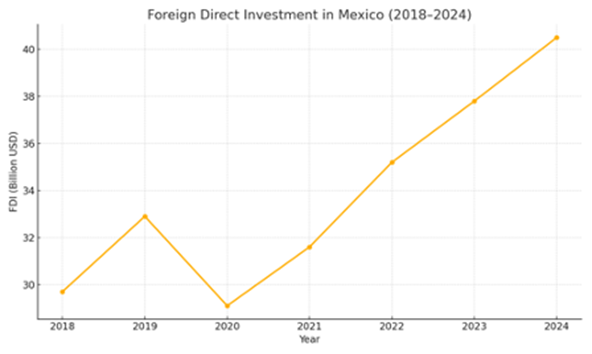
Graph: Foreign Direct Investment (FDI) in Mexico (2018-2024)
The TV Rights Goldmine: Centralization and Growth Potential
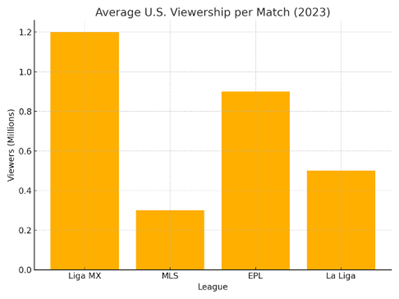
Liga MX continues to dominate U.S. television, especially among Hispanic and bilingual audiences, with clubs like Chivas and Club América regularly breaking viewership records. This audience has made Liga MX one of the most-watched leagues in North America, surpassing even the Premier League and MLS in key demographics. Yet, despite its massive reach, the league’s broadcasting rights remain fragmented – leaving major revenue on the table.
The Mexican Football Federation (FMF) is working toward centralizing broadcasting rights by 2028, aiming to unify the rights for Liga MX, the Mexican national team, and sponsors. This centralization effort seeks to create a more streamlined and financially advantageous model for all stakeholders. By consolidating rights, the federation believes the commercial potential will increase, making the overall market more attractive and lucrative for investors.
The shift toward centralizing broadcasting rights is expected to equalize revenue distribution among clubs, allowing teams to reinvest in their infrastructure and improve their competitive standing. This move will not only enhance financial stability but also position Liga MX for future growth, increased sponsorship opportunities, and a stronger presence in the global football market. The push for streaming innovation and consolidated broadcasting rights further strengthens Liga MX as one of the most valuable untapped football properties worldwide.
Bar Graph: Average U.S. Viewership per Match (2023)
Toward a Regional Powerhouse: The Role of Leagues Cup and the Path to Integration
The effort to centralize Liga MX’s broadcasting rights is not just a domestic reform—it’s a strategic move aligned with broader regional ambitions. As Liga MX solidifies its media structure and enhances its commercial appeal, it becomes a more viable partner in the ongoing integration with Major League Soccer (MLS) and the Canadian Premier League.
One of the clearest examples of this growing synergy is the Leagues Cup, a tournament that has quickly evolved into a high-stakes, high-reward competition. With a prize pool of approximately $40 million, the tournament offers significant incentives:
$200,000 per group stage match, split equally between club and players.
$50,000 bonuses for each group stage victory.
Up to $2 million for the champion, combining match earnings and final-stage bonuses.
These figures demonstrate the competition’s serious economic impact and growing prestige. But more than just prize money, the Leagues Cup serves as a testing ground for what many see as the future of North American football: a regional league that brings together the best of MLS, Liga MX, and Canada under a unified competition model.
A cross-border league would not only enhance competitiveness but also dramatically expand commercial and broadcast opportunities. With centralized rights and joint ventures, the region could attract unprecedented media deals, sponsorships, and investment. For clubs, this means greater financial stability, improved infrastructure, and enhanced player development pathways. For fans, it promises higher-quality football and a more immersive experience.
As the 2026 World Cup approaches—hosted jointly by the U.S., Mexico, and Canada—the momentum toward a regional football ecosystem is undeniable. The Leagues Cup, with its rising popularity and financial incentives, may well be the blueprint for the next era of the sport in North America.
Recent Success Stories: How Foreign Investors Are Transforming Liga MX
Necaxa and Atlético San Luis stand out as prime examples of the growing influence of foreign investment in Liga MX. In 2021, NX Football USA LLC acquired a stake in Necaxa, bringing with it an innovative management model that has strengthened both the sporting and commercial structures of the club. This investment has enabled Necaxa to enhance its infrastructure, expand its marketing strategies, and form valuable connections with MLS and Premier League executives and investors. Notable investors in Necaxa include Eva Longoria, Mesut Özil, and Al Tylis, underscoring the international appeal of Liga MX clubs.
Necaxa has undergone a rebranding process, positioning itself as a modern and data-driven club. It has placed a strong emphasis on youth development, using advanced data analytics to identify and nurture young talent, ensuring long-term sustainability and competitiveness.
Similarly, Atlético San Luis, owned by Atlético de Madrid, leverages a strategic talent pipeline, facilitating the movement of promising players between Mexico and Spain. The club also benefits from synergy with its parent club, applying European methodologies in player development, tactical planning, and scouting.
Both clubs are reshaping their commercial strategies and embracing international best practices, demonstrating that Liga MX is an increasingly attractive market for foreign investors. The success of Necaxa and Atlético San Luis signals the potential for further modernization and global expansion within Mexican football.
A Natural Fit for Global Multi-Club Ownership Models
Given the current state of Mexican football—characterized by increased openness to foreign investment, regulatory flexibility, and a growing need for modernization—it would not be surprising if globally recognized multi-club ownership (MCO) groups, such as Red Bull and City Football Group, which have already acquired clubs in this region, or Eagle Football Holdings and the Pozzo Group, which have yet to acquire any, were to invest in a Liga MX club in the near future.
Liga MX offers an ideal environment for these groups to expand their networks: a large, passionate fan base, strong media presence in the U.S. and Latin America, and clubs seeking strategic partnerships to elevate their sporting and commercial models. The conditions are aligned, and the opportunity is ripe.
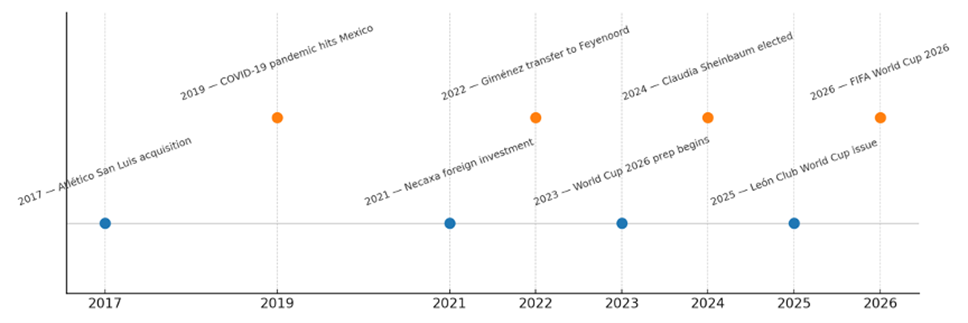
Timeline of Key Investment Milestones in Liga MX
Liga MX’s rise as a prime investment opportunity has been shaped by several pivotal moments. Below is a timeline that outlines the key milestones in its evolution:
A Growing Market with Flexible Entry Points
The Liga MX franchise market has experienced consistent growth, with valuations starting at approximately $140 million, including full club assets.. However, structured acquisition models, such as phased investments or strategic partnerships, provide investors with entry opportunities starting at $30 to $40 million. These flexible investment frameworks enable capital partners to gradually expand their ownership stake while leveraging the commercial and sporting potential of one of the most dynamic and commercially viable football leagues in the Americas. Additionally, acquiring a franchise grants voting rights in the league’s decision-making processes, allowing investors to actively shape the league’s strategic direction and governance.
Discussions are underway regarding the potential expansion of Liga MX to 20 teams by 2026. Reports suggest that two new Liga MX’s franchises could be sold to the highest bidder, signaling a possible shift in the league’s approach to growth and governance. While not yet confirmed, this development could open new investment opportunities, reinforcing Liga MX’s appeal as a dynamic and financially evolving football market. Investors should closely monitor these changes as the league continues to explore ways to strengthen its financial ecosystem.
A recent incident involving León’s disqualification from the Club World Cup due to paperwork issues has sparked a wider conversation about governance in Liga MX. This situation has prompted a reassessment of risk management and compliance practices, opening opportunities for investors to bring more sophistication to club operations. For more details on this case and its broader impact on Liga MX, check out our detailed article here.
The likely exclusion of Club León from the FIFA Club World Cup over ownership structure issues reinforces FIFA’s hardline stance against multi-club ownership. This development pressures Liga MX to accelerate governance reforms and pushes clubs like Atlas, Santos, Querétaro, and Puebla—currently part of shared ownership groups—into the spotlight as potential acquisition targets.
For investors, this marks a strategic moment: as regulatory shifts demand greater transparency and independence, new capital partners have a unique opportunity to enter the Mexican football market, acquire majority stakes, and help lead the professionalization of club operations in one of the most commercially promising leagues in the Americas.
Young Development Expertise: The Strength of Liga MX’s Youth Academies
Liga MX is home to some of the most robust youth development systems in the world, with clubs investing heavily in state-of-the-art facilities, training complexes, and clubhouses that nurture young talent. These infrastructures include world-class sporting facilities, academy housing, and dedicated operational and coaching staff, all aimed at developing players who can compete at the highest levels. Clubs like CF Pachuca, Club Santos Laguna, and CF América have long invested in these infrastructures, ensuring that young players receive top-tier coaching, medical care, and training. Facilities like those of Pachuca and Santos Laguna are so advanced that they will host international teams during the 2026 World Cup. These institutions are no longer just training grounds; they are high-performance incubators capable of producing world-class talent.
For investors, youth development is not just an expense—it’s a high-potential asset in a growing global market. Take this development path as an example:
1 year in U13: $15,000
1 year in U15: $15,000
2 years in U18: $20,000
2 years in U23: $34,000
Total investment: $138,000
This figure covers coaching, nutrition, medical care, housing, and travel. Recently, a mid-tier club sold one of its academy players for $6 million USD—yielding a remarkable 44x return on investment (ROI).
The focus on youth development is evident in the increased emphasis on providing young players with access to elite-level coaching and exposure to first-team environments. The combination of high-quality facilities and specialized staff offers a clear path for young talent to rise through the ranks and eventually break into professional football.
As a result, this structured development not only benefits domestic clubs but also reinforces the growing confidence European teams have in Liga MX’s academies. In recent years, several young Mexican players have transferred to European clubs after completing their youth development in Mexico, often with little
first-team exposure in Liga MX. This underscores the effectiveness of these academies in producing high-potential talent that can immediately attract interest from international markets.
Case Example: Stephano Carrillo, developed at Santos Laguna and sold to Europe for $4M USD in last winter transfer market, exemplifies this trend. His transfer is part of a new wave of talent proving that Liga MX academies are not only competitive in player development but also financially valuable in the global market.
Historic Transfers: The Rise of Mexican Talent in European Football
In recent years, several Mexican players have made the jump from Liga MX to top European clubs, demonstrating the league’s ability to develop exportable talent. This table highlights some of the most notable transfers during this period.
PLAYER
FROM CLUB
TO CLUB
Fee (€M)
Santi Giménez
Cruz Azul
Feyenoord
6
Edson Álvarez
América
Ajax
15
Diego Lainez
América
Real Betis
14
Raúl Jiménez
América
Atlético Madrid
10.5
César Montes
Monterrey
Espanyol
8
Hirving Lozano
Pachuca
PSV
12
Cesar Huerta
Pumas
Anderlecht
2.5
Rodrigo Huescas
Cruz Azul
FC Copenhagen
2
Mexican football has immense talent, yet player exports to Europe remain limited compared to countries like Brazil and Argentina. While recent transfers indicate progress, Mexico must refine its strategy to become a consistent talent pipeline. One of the key challenges to overcome is the high transfer fees, which discourage European clubs from pursuing Mexican players. Additionally, the limited international visibility of Mexican football reduces scouting opportunities, and development gaps leave players unprepared for the demands of Europe’s top leagues. To foster growth, it is crucial to adopt more flexible negotiations that facilitate transfers, strengthen partnerships with European clubs for greater exposure, and enhance scouting and training programs to ensure players meet elite football standards. Furthermore, providing more playing time for young talent in Liga MX is essential to give them the experience needed to succeed at the highest levels.
Mexico has the talent to compete globally, but structural improvements are needed. By aligning with international best practices, Liga MX can become a top exporter of world-class players.
Dual Nationals in Liga MX: A Long-Term Opportunity, Not a Short-Term Solution
While the model of integrating Mexican-American dual nationals into Liga MX clubs is not currently a viable or proven strategy, it remains a concept with considerable long-term potential. Presently, key limitations—such as a lack of integration infrastructure, low conversion rates from prospect to impact player, and uncertain financial returns—have prevented widespread adoption. However, the growing pool of U.S.-developed talent with Mexican heritage, combined with the advantage of registering them as domestic players, suggests that with proper investment in scouting, adaptation programs, and institutional planning, this approach could evolve into a competitive and profitable pathway. As it stands, this is less of a short-term solution and more of a forward-looking strategy—one that will require vision, commitment, and structure to unlock its full value.
Liga MX: A Strategic Bridge to Global Football Markets
Liga MX has established itself as a vital stepping stone for foreign players aspiring to reach top international leagues. Mexican clubs have built a strong reputation for scouting, developing, and showcasing talent—particularly from Central and South America—often acquiring players at relatively low cost and selling them later at a significant profit. This dynamic has positioned Liga MX as a strategic intermediary within the global transfer ecosystem.
Now, the league is uniquely positioned to go a step further by spearheading the development of a regional “bridge league” model. Through strategic alliances and feeder systems with clubs across the Americas, Liga MX could formalize a talent pipeline that connects emerging players from Central and South America with opportunities in the U.S. and Europe.
Such a structure would allow clubs to identify and nurture young talent earlier, offering them development in a competitive and commercially visible environment before facilitating their move abroad. It would also enhance Liga MX’s role as a hub for talent circulation in the Western Hemisphere, reinforcing its sporting relevance and financial potential.
In today’s interconnected football landscape, Liga MX has the infrastructure, visibility, and market influence to lead the creation of a sustainable, cross-border development system—one that benefits players, clubs, and investors alike.
The following table showcases notable examples of foreign players who transitioned from Liga MX to clubs abroad.
PLAYER
LIGA MX CLUB
Acquisition Cost Fee (€)
FOREIGN CLUB
Transfer Fee (€M)
Enner Valencia
Pachuca
3.2 m
West Ham United
15
Julian Quiñones
América
9.1 m
Al-Qadisiya
13.8
Mateus Uribe
América
5 m
FC Porto
9.5
Jackson Martínez
Jaguares de Chiapas
2.8 m
FC Porto
8.8
Guido Pizarro
Tigres UANL
3 m
Sevilla FC
8.7
Brian Fernández
Necaxa
600 k
Portland Timbers
9
Alberth Elis
Monterrey
300 k
Houston Dynamo
2.2
Stars in Liga MX: A Global Stage for Football Talent
Liga MX has evolved into a premier destination for international superstars, boosting the league’s global stature. High-profile players like Sergio Ramos, who joined Monterrey, and James Rodríguez, who signed with León, have elevated the league’s visibility and engagement, particularly in Latin America. This influx of talent has not only enhanced the league’s profile but also increased its competitiveness, as demonstrated by 17 Liga MX players being called up to their national teams during a recent FIFA break. The arrival of these stars underscores Liga MX’s growing relevance in the global football landscape.
Geographic and Climate Advantage: A Strategic Hub for International Football Activity
Beyond its football infrastructure, Mexico’s temperate climate represents a strategic advantage for both domestic and international clubs. The country’s geographic diversity offers optimal conditions for preseason camps, friendly matches, and training sessions virtually year-round. This ability to host uninterrupted football activity supports the continuous development of players and enables the organization of tournaments throughout the calendar.
Mexico becomes an attractive destination not only for players and fans, but also for clubs from Europe, North America, and other regions that may consider the country a reliable base for their off-season activities. In addition to boosting the local economy, this dynamic opens doors to global marketing opportunities and enhances Liga MX clubs’ international visibility through high-profile events and cross-market engagement strategies.
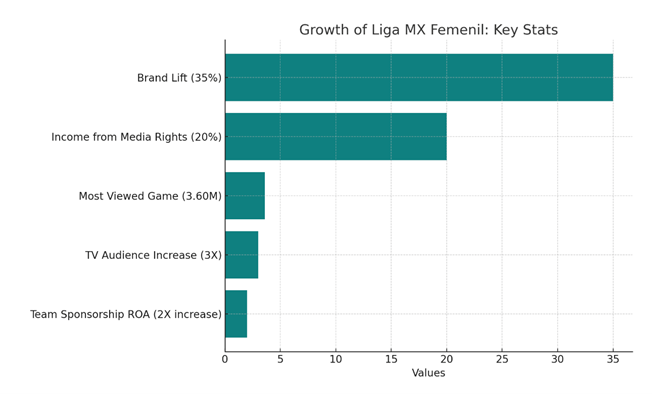
Expanding Investment Opportunities in Liga MX Femenil
Liga MX Femenil has rapidly grown into one of the most competitive women’s leagues in the region. Unlike other markets, every Liga MX club is required to have a women’s team, making franchise ownership even more attractive for investors.
This structure not only enhances the league’s competitiveness but also opens new revenue streams through sponsorships, broadcasting rights, and merchandise sales. Additionally, the increasing presence of Mexican players in top international leagues boosts the league’s credibility and marketability. For investors, Liga MX Femenil offers both financial potential and a chance to contribute to gender equity in sports.
A Defining Moment for Investment in Liga MX
Liga MX stands on the edge of a historic opportunity, as it combines a rich football culture with dynamic growth prospects. With the 2026 FIFA World Cup on the horizon, the league is poised for global exposure, increased revenue streams, and an enhanced reputation. Structural reforms are modernizing governance, while the influx of foreign investment is improving club management and infrastructure, propelling the league to new heights.
The unique binational market of Mexico, coupled with its unwavering football passion, makes Liga MX a prime destination for investors seeking high-return opportunities in a rapidly evolving sports market. This is not just a regional powerhouse; it is a global football market in the making.
For those looking to make a significant impact in the sports industry, Liga MX offers a fertile ground for strategic investment. Now is the moment for visionary investment to drive Mexican football to its full potential. The opportunity to shape the future of the league and tap into its growing influence on the global stage has never been clearer.
FIFA ti ṣe àtúnṣe tó ṣe pàtàkì sí ìlànà àti ìtòlẹ́sẹẹsẹ ìdánwò fún àwọn Aláṣẹ Bóńbólù, tí yóò bẹ̀rẹ̀ sí ṣiṣẹ́ láti ọjọ́ kẹrin, oṣù kẹta, ọdún méjìlélọ́gọ́rin-un-dín-marùn-ún. Àwọn àtúnṣe yìí túmọ̀ sí pé ìdánwò náà yóò yà kúrò nínú fífi ibi pàtó ṣe é gẹ́gẹ́ bí ìlànà kọ́kọ́, tí wọ́n ti ń lò tẹ́lẹ̀, sí àyẹ̀wò lórí ayélujára, pẹ̀lú ìlànà tuntun àti ààbò tó muna. FIFA fẹ́ kí gbogbo akẹ́kọ̀ọ́, láìka ibi tí wọ́n wà, ni àǹfààní tó dọ́gba — kó má sí ẹni tí yóò ní àǹfààní tàbí ìdínkù.
Bí ó ṣe rí tẹ́lẹ̀
Tẹ́lẹ̀, àwọn akẹ́kọ̀ọ́ gbọdọ̀ lọ sí ibi ìdánwò tí Ẹgbẹ́ Orílẹ̀-Èdè wọn bá yàn. Àwọn ibi wọ̀nyí yàtọ̀ síra, pẹ̀lú ànfààní àti ìdènà tó dá lórí ipò àti àkópọ̀ wọn. Níbi kan, wọ́n gba kí wọ́n lo àwọn ìwé àtẹ̀jáde tí wọ́n ti ṣe akọsilẹ̀ sí, níbi míìràn, wọ́n kọ̀ gba bẹ́ẹ̀.
Àtúnṣe Títún
Báyìí, FIFA ti yọ gbogbo ibi ayélujára kúrò — gbogbo ìdánwò yóò wáyé lórí ayélujára. Ẹni kọọkan yóò ṣe ìdánwò níbi tí ara rẹ̀ bá yàn, ṣùgbọ́n pẹ̀lú àbojútó tó muna:
Kamẹ́rà àti gbohungbohun kọ̀m̀pútà rẹ gbọ́dọ̀ ṣiṣẹ́ ní gbogbo àsìkò.
Fóònù rẹ yóò jẹ́ apá pataki fún àbojútó àfikún, tí yóò fi hàn àyíká rẹ.
Kò sí ìsinmi: Ìdánwò yóò lọ títí di ìparí rẹ. Tí o bá dákẹ́ tàbí tí intanẹẹti rẹ bá yà, ìdánwò rẹ yóò parí.
Ìtòlẹ́sẹẹsẹ Ìdánwò
Àkókò ìdánwò jẹ́ ìṣẹ́jú mẹ́rìnlá.
Kò sí ìsinmi.
Ìbéèrè yóò kà lórí òfin FIFA: ìbáṣepọ̀ agbábọọlu, àdéhùn, ojúṣe aláṣẹ, àti àkóso agbáyé.
O gbọ́dọ̀ gba kéré tán ogójìlélọ́gọrin-un láti kọja.
Àwọn Ìbéèrè Imọ̀ Ẹrọ
Kọ̀m̀pútà pẹ̀lú kamẹ́rà àti gbohungbohun tó péye.
Fóònù fún àbojútó àfikún.
Asopọ intanẹẹti tó péye àti tó dájú.
Yàrá tó mọ́, tó ní ìmọ́lẹ̀ dáadáa, tí kò ní jẹ́ kí ẹlòmíì wọ̀lé.
Ohun tó lè wà nínú àyíká ìdánwò rẹ
Tí a gba:
Ìwé-ẹ̀kọ́ tó wà lórí kọ̀m̀pútà rẹ.
Dígi àfọwọ̀sowọ́.
Kọ̀pìrá àti iwe àtọkànwá kan (tó ṣofo), tí o gbọ́dọ̀ fi hàn sí kamẹ́rà kí o tó bẹ̀rẹ̀ àti lẹ́yìn tó parí.
Kálíkúlétọ̀ FIFA tó wà lórí pẹpẹ àyẹ̀wò wọn.
Tí a kò gba:
Fóònù mìíràn yàtọ̀ sí ohun tó ń ṣiṣẹ́ gẹ́gẹ́ bí kamẹ́rà.
Aago ọlọ́gbọ́n, etí-gbọ́, tàbí ohun èlò gbohungbohun.
Kálíkúlétọ̀ ara ẹni.
Ìwé àtẹ̀jáde tàbí akọsilẹ̀.
Fifọ àpòṣìnwí, fíìmù, tàbí pín ìdánwò lórí ayélujára.
Ìhùwàsí àìtọ̀ àti Ìyà tó wúlò
FIFA ní àkànṣe àdúrà tó muna lórí ìhùwàsí àìtẹ́lórí:
Ẹ̀tan: Gbigba ìrànlọ́wọ́ láìfúnni ní aṣẹ, lilo ohun èlò tó kọ́ yẹ, tàbí fi ẹlòmíì dá sílẹ̀.
Fifọ àkópọ̀ ìdánwò síta: Gbogbo ìgbìyànjú láti pín àkópọ̀ ìdánwò yóò yọrí sí ìdènà.
Ìbánisọ̀rọ̀ tí kò bófin mu: Fóònù, ìjíròrò, tàbí fífi ẹ̀rọ ayélujára ṣe àkópọ̀.
Kíkúrò ní ibi àyẹ̀wò: Jẹ́ kó dá lójú pé o dúró títí di ipari.
Ìyàràpọ̀: O gbọ́dọ̀ ṣe ìdánwò fúnra rẹ.
Ìhùwàsí àìtọ̀ yìí lè yọrí sí ìdènà kúrò ní gbogbo ìdánwò FIFA, tàbí àìfúnni ní àǹfààní lórí iṣẹ́ ni ọjọ́ iwájú.
FIFA ti fi ẹrọ ọlọ́gbọ́n ayélujára sílò láti tọ́pa gbogbo àkíyèsí àti ìhùwàsí tí ó yẹ kí wọ́n fura sí.
Abajade àti Àṣekára
FIFA yóò fi abajade ranṣẹ́ sí apamọ́ rẹ nípasẹ̀ ọjọ́ mẹ́rìnlá.
Wọ́n yóò jẹ́ kí o mọ ibi tí o ṣe aṣìṣe, ṣùgbọ́n kò sí ẹ̀tọ́ láti bẹ̀bẹ̀ tàbí ṣàlàyé èso náà.
Tí o bá fàyà, o gbọdọ̀ dúró de àkókò tí FIFA yóò fi ṣe ìdánwò lẹ́ẹ̀kansi.
Ìsọ́rọ̀pọ̀
FIFA fẹ́ kí gbogbo ẹni tó fẹ́ di Aláṣẹ Bóńbólù ṣe àkíyèsí:
Ṣètò ẹrọ rẹ dáadáa: kọ̀m̀pútà, fóònù, àti asopọ tó péye.
Ṣe àyẹ̀wò àwọn òfin FIFA pẹ̀lú àkọọ́lẹ̀ lórí kọ̀m̀pútà rẹ.
Má ṣe kó ara rẹ sínú ìhùwàsí àìtọ̀, kó má bàjẹ́ fún àkókò rẹ àti ọjọ́ iwájú rẹ.
Nípasẹ̀ ìmọ̀, àdúrà, àti ìmúlòlùfẹ́, o lè kọ́ja ìdánwò náà, kí o sì di Aláṣẹ Bóńbólù pẹ̀lú ayọ̀.
It’s a phrase whispered in conversations between agents and parents all over the world. It sounds harmless, friendly even. But behind that casual reassurance lies one of the fastest-growing trends in football: the rise of pre-representation contracts.
FIFA’s regulations are clear. Agents cannot officially represent a player until six months before the player is eligible to sign a professional contract. In England, that’s at 17 and a half. In other countries, it can be as early as 15 or 16. But in the ever-competitive world of football agency, many agents aren’t willing to wait.
Let’s Just Do a Commercial Deal
This is the new trick: instead of waiting for the appropriate age to sign a representation contract, agents approach families with what seems like a softer, safer offer — a commercial agreement. They say: “Let’s just do a commercial deal. We’ll help with your brand. We’ll talk to Nike, Adidas, maybe get you a boot deal. No pressure.”
But that commercial deal is often just the backdoor entry into a long-term relationship. From that point on, the agent begins acting as the player’s full-time representative, introducing them to clubs, managing appearances, negotiating quietly behind the scenes. To the outside world, they’re already the agent. But on paper? It’s just “marketing support.”
The Boot Deal Bait: How Agents Hook Families Early
Agents know how to build trust quickly — and often, it starts with shiny promises. They offer to arrange a boot sponsorship or get the player a photoshoot with a brand. Sometimes they even offer free kits, social media guidance, or connections to influencers.
These gestures can feel supportive — even generous — to families. But beneath the surface, they’re calculated plays to win early loyalty. In reality, many of these agents are already acting as if they own the player’s future, long before any formal agreement is allowed.
Commercial Contracts: A Loophole or a Long Game?
These pre-representation contracts give agents a powerful edge. They build influence while staying technically within the rules. Signing a 10-, 12-, or 14-year-old on a marketing contract makes it almost certain that when the legal age comes, the family won’t look elsewhere.
It’s a smart move in a cutthroat industry. But it also blurs the lines between mentorship and manipulation.
“I’m Just Your Commercial Agent”… Until I’m Not
The language is clever. Agents avoid calling themselves “representatives” but take all the actions of one. They introduce players to clubs, speak on their behalf, and negotiate future scenarios without having formal rights to do so. In effect, they’ve signed the player in spirit, even if not in law.
The Ethics of Early Engagement
This practice raises uncomfortable questions. Are agents providing a real service or using commercial deals as bait? Are families fully informed? Do they understand the long-term implications? And most importantly, are young players being protected or being pre-signed in disguise?
The current system doesn’t regulate these commercial contracts. That’s why it’s critical to focus not just on legality but on ethics. A commercial agreement should be transparent, fair, and serve the best interest of the player, not just the agent’s pipeline.
What Parents and Players Must Know
If you’re a parent of a young player, be vigilant:
Understand what you’re signing. A commercial contract can still bind you in practice, even if not in law.
Get independent legal advice. Don’t rely solely on the agent’s word.
Ask the right questions. Is this truly a marketing arrangement, or is it something more?
Be aware that the agent who gets in first often gets the long-term deal. Make sure that trust is earned, not manipulated.
Don’t be afraid to walk away from offers that feel rushed, unclear, or overly aggressive. No opportunity is worth compromising your child’s long-term freedom.
From Commercial Promise to Career Control
This isn’t just a trend — it’s a structural issue. Some agents are effectively building pipelines of talent long before they’re legally allowed to. And the line between ethical support and strategic entrapment is thin.
Families often feel obligated or emotionally invested, especially after months or years of “help.”
But help isn’t help if it comes with invisible strings attached.
Conclusion: Time for Transparency and Reform
Football’s agent landscape is evolving fast and FIFA’s regulations are struggling to keep up. In the meantime, it’s up to families, clubs, and the footballing community to be more informed and more protective of young talent.
This new wave of pre-representation contracts disguised as commercial agreements needs closer scrutiny.
Because when someone says, “I’m not your agent… yet,” you should know exactly what that really means.