
Home Blog Page 50

Applying U.S. Sports Revenue Tactics to European Football

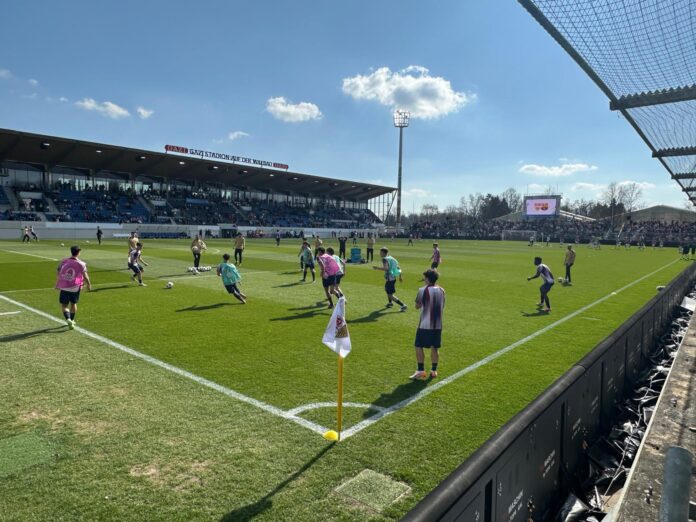
Photo by Ferdinand Stöhr on Unsplash

Top European clubs can unlock new revenue by borrowing from North American leagues. Fan spending is enormous when properly engaged – one Deloitte survey notes U.S. sports fans shell out roughly $50 billion annually when teams maximize engagement. Meanwhile the global sponsorship market is booming (projected from ~$92 B in 2022 to ~$190 B by 2030). Given that, European football can learn from American leagues’ playbook in sponsorship, ticketing, and fan engagement. Below we detail strategies (with examples and data) and actionable takeaways for club executives and marketers.

Sponsorship Strategies

NFL games dominate the U.S. TV (93 of the top 100 live events), so brands pay a premium for in-stadium signage. American stadiums are plastered with sponsor branding: e.g. the Cincinnati Reds’ 1978 scoreboard above carries a Coca-Cola ad. In the U.S., the NFL’s massive audience (93 of last year’s top 100 live TV events) translates into huge exposure for sponsors, driving lucrative deals. Europe’s clubs can tap this logic: pitch global broadcast reach to secure stadium naming rights and category-exclusive partnerships. Indeed, the sports sponsorship industry is on a tear (nearly doubling by 2030), so integrating brands into every touchpoint is key. For example, American leagues tie in tech partners on digital platforms (the NFL’s new Adobe AI partnership personalizes fan content) and run high-profile co-branded activations. European clubs can emulate this by co-creating content with sponsors (e.g. custom social media campaigns) and by highlighting star players in ads. Notably, top franchises (Dallas Cowboys, Manchester United) maintain sponsor value regardless of performance – a reminder to leverage clubs’ global brands in deals.

  • Leverage premium assets. Sell stadium and kit naming rights and exclusive category deals, capitalizing on the league’s media footprint (e.g. NFL’s Nike/Pepsi deals). For instance, league-wide partners and stadium sponsors benefit from huge audience reach.
  • Activate creatively with tech. Collaborate on digital fan experiences: use sponsor-backed apps or AR to engage supporters. The NFL–Adobe tie-up lets fans remix team-branded content and receive personalized updates. European clubs can offer similar branded app features or online platforms (e.g. co-branded fan-editable graphics).
  • Integrate on-site promotions. Run sponsor-led game-day activities. The NBA’s “Fan of the Game” (Toyota) award energizes crowds by giving prizes to an excited fan. Clubs could stage halftime contests or giveaways co-sponsored by partners to heighten the atmosphere.
  • Target marquee clubs. Focus on flagship teams with enduring appeal: brands pay more for top clubs whose fan bases are global. As Brand Finance notes, dynastic teams (Cowboys, Yankees, Manchester United) retain sponsor value despite results. Pitch these legacy brands for long-term deals that emphasize both awareness and loyalty.
Ticketing Strategies

European clubs traditionally use flat ticket pricing, but U.S. teams often dynamically price tickets by game. Studies confirm this drives revenue: once NFL teams could vary prices by matchup, the primary market saw about a +1.6% sales bump per game. Clubs that set wider price ranges (premium for big games, discount on low-demand games) saw larger gains. European clubs might trial caps or partial dynamic pricing for high-profile fixtures (derbies or Champions League nights) while communicating clearly with fans to avoid backlash. Even small flexibility can boost income without upsetting core supporters.

On the tech side, U.S. teams have moved to all-digital ticketing. For example, the Seattle Seahawks app integrates Ticketmaster so fans enter via smartphone and immediately get customized content (stadium map, replays, live stats). European clubs should likewise adopt mobile ticket platforms (eliminating paper passes) and enhance them with real-time features (e.g. food pre-ordering, seat upgrades). This not only modernizes the experience but creates data on fan behavior for targeted offers. Many American teams also maximize premium sales: expansive suites and hospitality packages bundled with catering or sponsor perks significantly lift non-ticket revenue. Top clubs with new stadiums (Tottenham, Bayern Munich) already do this, but others can expand corporate suites and themed premium seating by packaging tickets with F&B and sponsor logos.

  • Apply variable pricing. Experiment with tiered game pricing to match demand. Research in the NFL found teams that vary prices generate more ticket sales (e.g. a ~1.6% increase when pricing freely). Even modest surcharges on high-demand matches can raise revenue. Adjust carefully for market and income levels.
  • Enhance digital convenience. Roll out mobile ticketing and dynamic seat maps. Let fans enter via smartphone QR codes and browse seat upgrades or add-ons in real time, as Seattle’s system does. Offer loyalty points or discounts for mobile transactions to encourage app adoption and reduce scalping.
  • Create flexible packages. Introduce multi-game bundles or flex plans (like the NFL’s “flex” schedules) so casual fans can buy a half-season. Provide discounted family or group tickets early to build attendance. These models boost fill rates while giving budgeting certainty to fans.
  • Expand premium offerings. Sell and market more VIP experiences. American sports fill luxury suites and club seats by bundling game tickets with catering, hospitality rooms, and sponsor meetups. European clubs should ensure they maximize corporate and tour-group sales, packaging experiences that overseas sponsors will underwrite.
Fan Engagement Strategies

U.S. teams treat games as entertainment spectacles (free rally towels, music, etc.). American franchises even give early-arriving fans caps and towels to amp excitement. In North America, the stadium experience is a revenue driver. NFL games open with tailgates, music, and visuals; teams hand out free caps, towels or bobbleheads to early arrivers. NBA and NFL apps use beacon technology to welcome fans in-venue – Miami Heat’s Microsoft partnership actually sends arriving fans mobile messages about nearby food deals. European clubs can take note: giveaways and in-seat perks (even something as simple as a free scarf) can heighten early-match engagement. Apps can recognize ticket-holders and push custom notifications (and sponsor coupons) as fans enter.

Off the pitch, U.S. leagues build festival-like atmospheres around games. For example, Belgian supporters in a World Cup fan park (above) flocked to watch screens together and participate in sponsor contests. Similarly, NFL teams host giant parking-lot tailgate parties and open-training fan fests. These gatherings give sponsors extra exposure and deepen community ties. Investing here pays off – Deloitte finds that engaged fans spend on average ~$50B a year on their teams. European clubs should thus stage more fan events (watch parties, fan zones, meet-and-greets) under sponsor banners to activate supporters beyond the 90 minutes.

  • Elevate game-day atmosphere. Make each match an event: play music, use light shows, and involve fans in chants or sponsor-led contests. NFL games routinely hand out freebies (towels, caps) to pump up the crowd. European clubs can emulate this by co-branding giveaways or halftime skills challenges with sponsors.
  • Personalize via mobile apps. Deploy club apps that greet fans on arrival, offer live stats, and send targeted offers. The Seattle Seahawks and Miami Heat show how an app plus stadium Wi-Fi can deliver on-demand replays and concession deals. Tailor notifications and promotions (for merchandise or sponsor coupons) to registered fans’ interests.
  • Host fan festivals. Organize pre- and post-match fan zones, open training sessions, or watch parties. These community events extend the match experience and let sponsors engage outside the stadium. They also attract casual fans and families, opening new revenue via food, merchandise and branded entertainment.
  • Leverage players and content. Use star players and social media to energize the fan base. Brands often align with top athletes (e.g. Bose used NFL MVP Patrick Mahomes to promote headphones) – European clubs can similarly feature players in co-branded activations. Encourage user-generated content: give fans easy-to-use social templates or AR filters for big games, as the NFL does with its Adobe-powered graphics, and then share the best fan posts through club channels.
  • Build loyalty programs. Reward repeat engagement with points or tokens. American franchises often have loyalty apps or fan tokens (e.g. NBA, NFL rewards). Clubs could launch point systems where attending games, buying jerseys, or engaging on social media earns credit toward discounts or unique experiences. This data-driven approach (common in the U.S.) deepens the fan–club connection and unlocks add-on sales.

By blending these lessons with the local culture, European clubs can unlock fresh revenue streams. For instance, tying hospitality packages to sponsor events or slowly introducing flexible ticket tiers could drive significant gains. Overall, embracing North American tactics – from tech-enhanced fan apps to dynamic pricing – offers actionable ways to grow sponsorship, matchday, and fan-engagement income in European football.

Futbol Menajerleri Nasıl Para Kazanır? Komisyon, Sponsorluk ve Gelir Modelleri

Photo by Ümmü Gülsüm Ergin on Pexels

Futbol menajeri olmak son derece kazançlı bir kariyer olabilir. Ancak gelir kaynaklarını ve komisyon sistemlerinin nasıl çalıştığını anlamak çok önemlidir. Bu yazıda, menajerlerin futbolda nasıl para kazandığını, kimi temsil edebileceklerini ve komisyon yapılarının nasıl şekillendiğini adım adım açıklıyoruz.

Bölüm 1: FIFA Lisanslı Bir Menajer Olarak Kazanmak

Bu bölümde FIFA lisansına sahip menajerlerin gelir elde etme yollarına odaklanıyoruz. FIFA kuralları, oyuncular, kulüpler ve antrenörlerle resmi sözleşme görüşmelerinde temsil hakkı için lisans şartı koşar.

Bir Menajer Kimi Temsil Edebilir?

FIFA düzenlemelerine göre bir menajer şunları temsil edebilir:

  • Oyuncular – En yaygın temsil türüdür. Sözleşme ve transfer görüşmelerini yürütür.
  • Transfer Eden Kulüpler – Oyuncu transferinde kulübe yardım eder.
  • Oyuncu Satan Kulüpler – Oyuncunun başka bir kulübe transferini kolaylaştırır.
  • Antrenörler / Teknik Direktörler – Sözleşme görüşmeleri ve iş bulma süreçlerinde temsil eder.
  • Futbol Federasyonları – Antrenörleri milli takımla yapılan görüşmelerde temsil edebilir.
  • MLS ve Tek-Yapılı Ligler – Örneğin MLS’te işlemler kulüple değil lig ile yapılır. Menajer ödemeyi ligden alır.

Bu aktörler FIFA lisanslı menajerlerin her gün iş yaptığı paydaşlardır ve birçok gelir fırsatı sunarlar.

FIFA Menajerleri Nasıl Ödeme Alır?

Sektörde en yaygın kabul gören standart, menajerin oyuncunun brüt maaşının %10’unu yıllık olarak almasıdır. Ancak ödeme yapıları farklılık gösterebilir:

  • Yıllık veya Bölünmüş Ödeme – Bazı kulüpler yılda bir ödeme yaparken bazıları Mart/Nisan ve Eylül/Ekim olarak ikiye böler.
  • Peşin Ödeme – Uzun vadeli sözleşmelerde menajerler peşin ödeme alabilir.
  • Garanti Ödeme – Menajer, sözleşme süresi boyunca ödeme alacağına dair madde koyabilir.

Eğer menajer dört yıllık bir sözleşme ayarlarsa ama oyuncu iki yıl sonra başka bir menajere geçerse, ilk menajer sözleşme süresi bitene kadar komisyon almaya devam eder. Ancak oyuncu yeni bir sözleşme imzalarsa, yeni menajer bu sözleşmeden komisyon alır.

Kulüp transferlerinde, oyuncuyu satan kulübü temsil eden menajer genellikle transfer ücretinin %10’unu alır. Transfer yapan kulübü temsil eden menajer ise oyuncunun maaşından pay alabilir. Menajerler genellikle iş birliği yapar ve komisyonları paylaşır.

Bölüm 2: Ticari ve Sponsorluk Anlaşmaları

Çoğu menajer sadece sözleşme görüşmelerine odaklansa da, ticari anlaşmalar büyük bir kazanç potansiyeli sunar. Ve en güzel yanı:

Bu anlaşmaları yapmak için FIFA lisansına ihtiyacınız yok.

Çoğu menajer kulüp sözleşmelerine odaklansa da, sponsorluklar çok daha kârlı olabilir. Oyuncu sözleşmelerinde komisyon %10 civarında iken, sponsorluklarda bu oran %20’ye veya daha fazlasına çıkabilir.

Menajerlerin Yapabileceği Ticari Anlaşmalar:

  • Oyuncu Sponsorlukları – Krampon anlaşmaları, marka elçiliği vb.
  • Antrenör Sponsorlukları – Eğitim, iş birlikleri, medya anlaşmaları
  • Kulüp Sponsorlukları – Forma sponsoru, antrenman kiti sponsoru
  • Federasyon/Lig Sponsorlukları – Turnuva sponsorluğu, altyapı desteği

Menajerlerin çoğu temsil sözleşmelerine ticari hakları dahil etmeyi unutur. Oyuncuyu temsil ediyorsanız, sözleşmede sponsorluk anlaşmalarını da yapma hakkınız açıkça belirtilmelidir.

Ayrıca doğrudan temsil etmedikleri oyunculara sponsorluk anlaşmaları getirebilir ve komisyonu o oyuncunun menajeriyle paylaşabilirler.

Bölüm 3: FIFA Maç Menajeri Olarak Kazanmak

FIFA Maç Menajeri, kulüpler veya milli takımlar arasında hazırlık maçları ve turnuvalar düzenlemekten sorumludur.

FIFA Maç Menajeri Ne Kadar Kazanır?

  • Maç başına alınan ücretin %10 ila %20’sini kazanabilirler.
  • Büyük maçlarda tek maçtan milyonlar kazanmak mümkündür.

FIFA Maç Menajeri olmak, oyuncu menajeri olmaktan çok daha kolaydır. Sadece çevrimiçi bir başvurudur, sınav yoktur.

Bölüm 4: Yönetici İşe Alım Anlaşmalarıyla Kazanmak

Çoğu menajer oyunculara ve antrenörlere odaklansa da, büyüyen başka bir pazar daha var: futbol yöneticileri.

Yönetici İşe Alım Anlaşması Nedir?

Sportif direktör, baş scout, yönetici gibi kişileri yeni kulüplere veya federasyonlara yerleştirmeyi içerir.

Kazanç Potansiyeli:

  • Yöneticinin ilk yıl maaşının %25 ila %35’i
  • Bu ücret sadece bir kez alınır.

Bu sistem İngiltere, ABD ve Avrupa’da yaygındır. Ancak diğer bölgelerde daha yeni yeni gelişmektedir.

Bölüm 5: İş Ortağı, Hissedar ve Aracı Olarak Kazanmak

Bazı menajerler yalnızca oyuncu sözleşmeleriyle değil, kulüp satın alımlarında da önemli rol oynar.

Neden Bu Büyük Bir Fırsat?

  • Menajerler kulüp sahipleri ve yatırımcılarla bağlantılıdır.
  • Yatırımcılar futbol kulübü almak isteyebilir ama nasıl başlayacaklarını bilmeyebilir.
  • Kulüp sahipleri satmak isteyebilir ama doğru alıcıyı bulmakta zorlanabilir.
  • Menajerler iki taraf arasında köprü kurarak anlaşmadan pay alabilir.

Kazanç Potansiyeli:

  • Anlaşmalar on milyonlarca, hatta yüz milyonlarca dolar olabilir.
  • Menajerler sabit ücret ya da yüzdelik kazanç alabilir.
  • Ayrıca girişimlerde hisse, gayrimenkul ortaklığı veya spor teknolojisi yatırımlarıyla da para kazanabilirler.
Son Söz: Bilgi ve İlişkilerin Gücü

Futbolda sıkça “Kimi tanıdığın önemlidir” denir. Ama gerçek şu ki:

Kimi tanıdığınla ne bildiğini birleştirirsen, sektörde öne çıkarsın.

  • Sadece bilgi yetmez.
  • Sadece çevre de yetmez.
  • Ama ikisi birlikte seni durdurulamaz yapar.

Bu yüzden bilgini geliştir ve ilişkilerini güçlendir. İkisine de hakim olursan çok sayıda anlaşma yaparsın, çok para kazanırsın ve futbolda kalıcı bir etki bırakırsın.

“Show Me the Money!” – Menajerin Zenginliğe Giden Yolu

Sadece transferlere odaklanan menajerlerin ötesine geçenler, gerçekten kazançlı ve sürdürülebilir bir kariyer inşa edebilir.

Futbol sadece sözleşmelerden ibaret değildir; küresel bir iş dünyasıdır ve sayısız fırsat içerir.

En iyi menajerler? Oyunun her yönünü görebilenlerdir.

Who is Mustafa Eröğüt?

Mustafa Eröğüt

Mustafa Eröğüt is a seasoned football executive with over 17 years of experience in sports management, both domestically and internationally. His career spans key leadership roles in club and federation settings, marked by a commitment to innovation, education, and strategic development in football.

Education & Early Career

Eröğüt holds a Bachelor’s degree in Business Administration from Ithaca College (USA), a Master’s in Sports Management, and a PhD in Sports Administration from Marmara University. He began his career in 2007 as Administrative Coordinator at Istanbul Metropolitan Municipality Youth Academy, later serving as Administrative Manager for the municipality’s professional football team. His early roles laid a strong foundation in youth development and club operations.

Roles at the Turkish Football Federation (TFF)

From 2012 to 2014, Eröğüt held several key positions at the Turkish Football Federation, including Acting Director of the Football Development Department and Deputy Director-General of Football. In these roles, he managed administrative operations for the senior national team under coaches Fatih Terim and Abdullah Avcı, coordinated with FIFA and UEFA, and oversaw development programs for women’s, futsal, and beach soccer national teams.

Leadership at İstanbul Başakşehir FK

Eröğüt joined İstanbul Başakşehir FK in 2014, serving as Executive Director, CEO, and eventually Vice President until 2023. During his tenure, the club achieved its first Süper Lig championship and became a model for sustainable football management. He spearheaded the launch of the Professional Football Management Certificate Program (PFYSP), Turkey’s first club-led football management education initiative, which, as of 2024, operates with the official support of the European Club Association (ECA).

Vice Presidency at the Turkish Football Federation

From June 2023 to July 2024, Eröğüt served as Vice President of the Turkish Football Federation. In this role, he oversaw FIFA and UEFA relations and led the UEFA Euro 2032 Bid Process Committee, playing a pivotal role in Turkey’s successful joint bid with Italy to host the tournament. He also championed the implementation of technological advancements such as the semi-automatic offside system and increased transparency in VAR decisions.

International Representation & UEFA Involvement

Eröğüt has been actively involved with UEFA for nearly a decade. He served on the Youth and Amateur Football Committee from 2015 to 2024 and has been a member of the UEFA Football Committee since February 2024. He also acted as a UEFA delegate during the UEFA U17 European Championship in Croatia in 2017. Additionally, he contributed to the European Club Association’s Youth Working Group between 2019 and 2023.

Broader Contributions & Governance

Beyond football, Eröğüt has been a member of the Board of Directors and the Audit and Risk Management Committee at Acıbadem Healthcare Group since 2017. He also served as Deputy Secretary General of the Turkish Clubs Association (Kulüpler Birliği) from 2016 to 2017, where he was involved in key initiatives such as the Super League Media Tender Commission and the introduction of VAR technology.

Vision & Leadership Style

Eröğüt is recognized for his strategic foresight, commitment to education, and ability to foster international collaborations. His leadership style emphasizes transparency, innovation, and inclusivity, aiming to elevate Turkish football on the global stage while nurturing the next generation of football professionals.

Our Exclusive Interview with Mustafa Eröğüt

Who is Mustafa Eröğüt outside of football?

Outside of football, I’m someone who is deeply curious—about people, systems, and how we grow as individuals and communities. I’ve always believed that learning shouldn’t stop with formal education. I enjoy reading across disciplines, traveling to experience different cultures, and spending time reflecting on how we can do things better, not just in sport, but in society.

While football is my professional passion, I try not to let it define all of who I am. I care about ideas, conversations, and causes that bring people together. I’m especially drawn to topics like leadership, psychology, history, and education—areas that connect what we do with why we do it.

I also value balance. The pace of football can be relentless, so I make time for quiet moments, whether it’s a walk, a book, or time with my family. These are the moments that recharge me and give me the clarity I need to lead with purpose.

In short, I see myself as someone who tries to contribute meaningfully wherever I am. Football gives me a platform—but I hope my impact goes beyond it.

What philosophies or principles guide your leadership in football administration?

I believe in leadership that is grounded in integrity, collaboration, sustainability, and resilience. Success isn’t just about quick results, it’s about building something that lasts and can adapt over time. That means making decisions aligned with a long-term vision, trusting the people you work with, and staying consistent even when challenges arise.

For me, resilience is about holding steady during difficult times and learning from setbacks. There’s a quote by Rumi that I often think about: “The wound is the place where the light enters you.” It’s a powerful reminder that growth often comes from the hardest moments.

At its core, leadership is not about control, it’s about creating an environment where trust, initiative, and learning can thrive.

How do you balance long-term strategy with the daily demands of running a football club?

It’s always a balance, and it requires both discipline and adaptability. Every day brings its own set of urgent decisions—logistics, staff issues, player needs, unexpected challenges. At the same time, if you only focus on the day-to-day, you lose sight of where you’re going. That’s why I try to live by a mindset that blends both: to act with urgency today, but always think with tomorrow in mind.

There’s a philosophy I relate to deeply: “Work as if you’ll live forever, plan as if today is your last.” In football management, that means putting full energy into the present without sacrificing long-term vision. We set clear goals, empower teams to act

independently, and ensure that daily actions contribute to a bigger picture. But I also stay hands-on enough to catch small issues before they become big ones.

You have to care about both timelines what needs to happen now, and what you want to build over years. That’s how sustainable progress is made.

Who has had the biggest influence on your journey so far?

I like to start with international examples because they helped me see football through a broader, more strategic lens. Working directly with Ferran Soriano during the Başakşehir–Manchester City collaboration was a defining learning moment. His ability to think long-term, to combine business intelligence with football logic, and to build a sustainable structure across multiple clubs taught me what modern football leadership can look like. He showed that clarity and consistency can scale across countries and cultures.

I also had the chance to work closely with Hans-Joachim Watzke during the EURO 2024 process. What impressed me most was his ability to lead with calm authority. He balances financial discipline with a deep emotional connection to the club and its values. Watching him represent Dortmund with stability and integrity gave me a real-world example of value-based leadership that’s not afraid of pressure or complexity.

And of course, Sir Alex Ferguson a reference point for anyone interested in leadership. His ability to reinvent, stay hungry, and lead teams with both structure and emotional intelligence has shaped how I think about people and performance. What stood out to me was not just his success, but his longevity, and the way he adapted without losing his identity.

Each of these figures, in their own way, helped shape how I think about leadership: not just as a title, but as a responsibility to build trust, culture, and something that lasts beyond your own time.

What kind of books or subjects do you enjoy reading?

I’m a collector at heart. I have over 300 match-worn shirts from around the world, but my biggest passion is my personal sports library of more than 500 books in Turkish and English, focused on football, leadership, and performance.

I’ve always been drawn to books that go beyond results. I enjoy exploring how football works behind the scenes, tactics, club structures, psychology, culture. Titles like Inverting the Pyramid by Jonathan Wilson and Soccernomics by Simon Kuper and Stefan Szymanski helped shape my thinking around how strategy and data influence the game. They opened my eyes to football as a system, not just a sport.

I also enjoy reading about leadership and mindset. The Captain Class by Sam Walker gave me a deeper appreciation for leadership that happens quietly but consistently. Legacy by James Kerr taught me that culture, humility, and discipline are the backbone of sustainable success. Edge by Ben Lyttleton explores how small mental edges make a big difference in performance.

More recently, I’ve read How to Win the Premier League and Succeed Under Pressure. These books were timely. One focuses on the practical strategies that helped managers lift titles, the other on how top athletes and coaches manage stress, pressure, and critical moments. Both reinforced how mental clarity and emotional balance matter just as much as tactics.

Reading, for me, isn’t just about gaining knowledge, it’s about staying connected to the deeper meaning of what we do. Books help me reflect, stay open to new ideas, and grow as both a person and a professional.

Describe your daily routine when you’re working inside a club.

My day usually starts early with a check-in on the team and staff. I have meetings with department heads, review key updates, and try to stay connected with everything going on. I also keep some time for reading or quiet thinking, which helps me stay focused and make better decisions.

How was the experience of participating in the UEFA Champions League for the first time with İstanbul Başakşehir, from a sports professional’s perspective?

It was a defining chapter in my career. Competing in the UEFA Champions League is something every club dreams of, but for a club like İstanbul Başakşehir founded only

in 2014, it was especially meaningful. It proved that with clear vision, consistent work, and belief, even young clubs can reach Europe’s top level.

Hosting teams like Manchester United, Paris Saint-Germain, and RB Leipzig was surreal at times. These are clubs with global history and deep resources and yet we stood on the same stage, not as spectators, but as competitors. It pushed us to operate at the highest professional standard and tested every part of our organization.

One moment that still stands out was our away match in Paris. When both teams left the pitch in protest of a racist incident involving the fourth official, it was no longer just a football match it became a statement. That act of solidarity, in front of a global audience, showed that football can be a platform for principle and unity. I’m proud we were part of that moment.

The whole Champions League experience taught me that growth doesn’t happen only in success it happens in how you prepare, how you respond, and how you carry your identity onto the world stage.

It reminded us and hopefully others that Turkish clubs are capable not just of competing at the highest sporting level, but also of leading with integrity, ethics, and values when the moment demands it.

What’s next for Mustafa Eröğüt in your career journey within football and beyond?

I’m committed to continuing my journey in football with purpose and vision. In the short term, I want to keep contributing to institutional excellence whether that’s at club level or through national and international football structures. I believe football can and should be more than a game. It can be a platform for education, inclusion, and positive change.

Looking further ahead, I’m interested in leadership roles where I can help shape how football is governed and how the game serves people. I also care deeply about mentoring the next generation of professionals, sharing what I’ve learned, but also learning from them.

Whether in football or beyond, I want to be part of building systems that prioritize values, people, and long-term thinking. For me, that’s the kind of legacy worth working for.

FC Basara Mainz: Eine Brücke zwischen Kulturen im deutschen Fußball

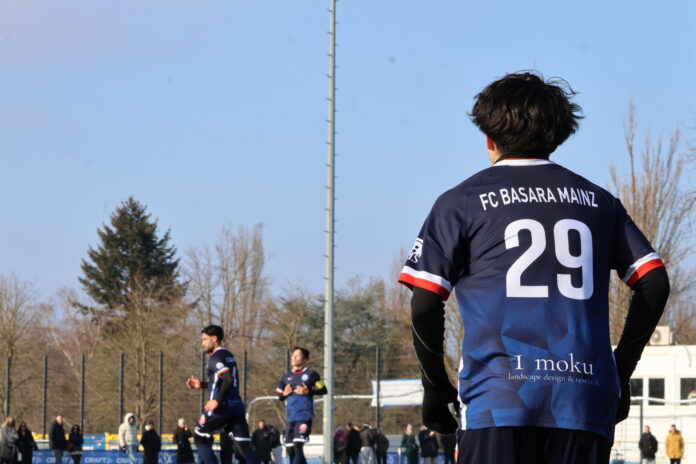
In der lebendigen Fußballlandschaft Deutschlands hat es ein Verein geschafft, eine einzigartige Identität zu schaffen – eine Mischung aus Ehrgeiz, kulturellem Austausch und reiner Fußballleidenschaft. FC Basara Mainz, aktiv in der Verbandsliga, ist heute weit mehr als nur ein Team: Er ist ein Symbol dafür, was Fußball erreichen kann, wenn Leidenschaft und Vision aufeinandertreffen.

Bescheidene Anfänge mit großen Träumen

FC Basara Mainz wurde aus einem Traum von Shinji Okazaki und Takashi Yamashita heraus gegründet. Ihr Ziel: die japanische und die deutsche Fußballkultur zusammenzubringen. Angefangen an der untersten Stufe der deutschen Fußballpyramide, stand der Verein vor enormen Herausforderungen. Ressourcen waren knapp, und es war alles andere als leicht, Spieler für dieses ungewöhnliche Projekt zu begeistern. „Am Anfang waren wir nur zu zweit aus Japan“, erinnerte sich einer der Gründer. „Ich musste sogar als Spielertrainer einspringen, um den Betrieb am Laufen zu halten.“

Trotz aller Schwierigkeiten wuchs das Team nach und nach. Die Entschlossenheit der Gründer inspirierte andere, und so begann FC Basara Mainz langsam, die Ligen nach oben zu klettern – ein Beweis dafür, wie weit Leidenschaft und harte Arbeit ein Team bringen können.

Verschmelzung zweier Fußballkulturen

Was FC Basara Mainz wirklich besonders macht, ist der einzigartige Ansatz, zwei verschiedene Fußballkulturen miteinander zu vereinen. Die frühe Verpflichtung japanischer Spieler prägte die Identität des Vereins. Statt auf traditionelle Wege zu setzen, rekrutierten die Gründer Spieler über persönliche Netzwerke in Japan, wodurch Disziplin und Ausdauer ins Team eingebracht wurden.

„Die Sprachbarriere war anfangs eine Herausforderung“, gab Takashi Yamashita zu. „Aber Fußball ist eine universelle Sprache. Das gemeinsame Ziel, Spiele zu gewinnen, hat uns geholfen, kulturelle Unterschiede zu überwinden.“

Auf dem Platz wurde diese kulturelle Fusion zur Stärke: Die japanischen Spieler bringen Disziplin und taktisches Verständnis ein, während die deutschen Spieler Physis und Direktheit hinzufügen. Das Ergebnis ist ein Spielstil, der das Beste aus beiden Welten vereint – und die Fans begeistert.

Leben in der Verbandsliga

Das Spielen in der Verbandsliga, der sechsthöchsten Liga im deutschen Fußball, bringt seine eigenen Herausforderungen mit sich. Ressourcen sind begrenzt, und die Balance zwischen Ehrgeiz und den Realitäten des Amateurfußballs ist ein ständiger Spagat. Dennoch hat FC Basara Mainz nie aufgehört zu träumen.

„Unser Ziel war es immer, die Oberliga zu erreichen“, erklärte Takashi Yamashita. Die Ankunft von Shinji Okazaki – Premier-League-Sieger und einer der bekanntesten japanischen Spieler – hat dem Verein neue Ambitionen verliehen. Seine Rolle als Trainer und Mentor inspiriert das Team, noch höhere Ziele anzustreben.

Eine starke Verbindung nach Japan

Die Verbindung des Vereins nach Japan ist tief verwurzelt. FC Basara Mainz unterhält eine Partnerschaft mit FC Basara Hyogo, einem Verein der japanischen fünften Liga. Diese Partnerschaft stärkt nicht nur die Rekrutierungswege, sondern fördert auch einen einzigartigen Austausch von Ideen und Talenten.

„Unsere Partnerschaft mit Basara Hyogo ist entscheidend für uns“, erklärte Yamashita. „Wir profitieren von ihrer Disziplin und ihrem besonderen Spielstil, während die japanischen Spieler die Möglichkeit bekommen, sich an das schnellere und körperlichere europäische Spiel zu gewöhnen.“

Diese Partnerschaft bleibt nicht unbemerkt: Mittlerweile wenden sich auch deutsche Vereine an FC Basara Mainz, um Rat bei der Rekrutierung japanischer Spieler einzuholen – ein klares Zeichen für den wachsenden Einfluss des Vereins.

Talente für die Zukunft entwickeln

FC Basara Mainz hat sich nicht nur dem sportlichen Erfolg verschrieben, sondern sieht sich auch als Entwicklungsschmiede für Talente. Ein Beispiel dafür ist der ehemalige Spieler Yokota, der mittlerweile für den 1. FC Kaiserslautern aufläuft.

„Für uns bedeutet Erfolg mehr als nur Siege“, betonte Yamashita. „Es geht darum, Spielern Möglichkeiten zu bieten, sich zu entwickeln und den nächsten Karriereschritt zu machen.“

Die Trainingsphilosophie des Vereins spiegelt diese Mission wider: Mit einem vielfältigen Trainerteam erhält jeder Spieler individuelle Förderung – nicht nur sportlich, sondern auch in Bezug auf Selbstvertrauen und Anpassungsfähigkeit.

Der Shinji-Okazaki-Effekt

Die Verpflichtung von Shinji Okazaki war ein echter Meilenstein. Als Premier-League-Champion mit Leicester City bringt er nicht nur Erfahrung und Glaubwürdigkeit, sondern auch eine enorme Strahlkraft mit.

„Shinjis Präsenz inspiriert alle“, sagte Yamashita. „Er ist nicht nur ein Trainer – er ist ein Symbol dafür, was wir erreichen können.“

Okazakis Engagement hat auch Sponsorengelder und neue Fans angezogen und dem Verein zusätzlichen Auftrieb gegeben. Sein Einfluss ist sowohl auf dem Spielfeld als auch abseits davon deutlich spürbar.

Aufbau einer nachhaltigen Zukunft

Obwohl der Fokus klar auf dem Fußball liegt, setzt das Management unter Tomoho Maekawa auf nachhaltige Strukturen. Mit seiner Unterstützung werden die Geschäftsprozesse des Vereins professioneller gestaltet – als Grundlage für langfristiges Wachstum.

„Wir wollen etwas schaffen, das Bestand hat“, so Yamashita. „Mit Shinji und Tomoho an unserer Seite sind wir überzeugt, dass wir einen wettbewerbsfähigen und nachhaltigen Verein aufbauen können.“

Fazit: Ein Traum, der sich zu verfolgen lohnt

FC Basara Mainz ist weit mehr als ein Fußballverein: Er ist eine Brücke zwischen Kulturen, eine Plattform für Talente und ein Beweis dafür, was Vision und harte Arbeit bewirken können. Von bescheidenen Anfängen bis zu großen Ambitionen – der Weg des Vereins erzählt eine Geschichte von Durchhaltevermögen, Innovation und der verbindenden Kraft des Fußballs.

Während der Aufstieg in der Verbandsliga weitergeht, bleibt FC Basara Mainz ein leuchtendes Beispiel dafür, was möglich ist, wenn man Träume mit Leidenschaft und Entschlossenheit verfolgt. Ihre Geschichte ist noch lange nicht zu Ende – und für Spieler wie Fans sieht die Zukunft vielversprechend aus.

How Football Managers Are Building Personal Brands and Unlocking Commercial Value

Photo by Jeffrey F Lin on Unsplash

In football, the spotlight has long belonged to the players. Their goals, their celebrations, their brands. But a shift is underway. Managers, once confined to the technical area and post-match interviews, are beginning to understand their commercial potential. They’re building personal brands, entering endorsement deals, and in some cases, launching businesses of their own. It’s not just about the game anymore. It’s about image, influence, and income.

The Rise of the Manager-as-Brand

Managers today are public figures as much as they are tactical leaders. They speak to millions in press conferences, appear regularly in viral media clips, and in many cases, have careers that span decades across Europe’s biggest clubs. That kind of visibility is valuable. And smart managers are beginning to leverage it.

Jürgen Klopp is a prime example. Known for his emotional intelligence, sharp humour, and authentic personality, Klopp has built a reputation as one of the most likeable figures in world football. He hasn’t just relied on his success with Liverpool or Borussia Dortmund to carry his legacy, he’s actively expanded his commercial footprint. His partnership with Trivago, the travel booking platform, was a strategic move. The brand benefits from Klopp’s trustworthy, down-to-earth image, and in return, Klopp diversifies his income and builds a brand that can outlive his time in football management.

A slightly different approach is that of José Mourinho, perhaps less universally adored, but unquestionably iconic. Mourinho has fully embraced the persona he created nearly two decades ago when he famously introduced himself as “The Special One.” He’s taken that identity and built a commercial platform around it. In 2023, he launched “Special One” wine, capitalising on his Portuguese heritage and refined image. It’s not a random endorsement, it’s a product that ties directly into the way Mourinho has always presented himself: as cultured, elite, and unique.

How Managers Can Build a Personal Brand

For managers looking to follow suit, it starts with clarity. What do they stand for? What tone do they set in interviews? What emotions do they consistently evoke, trust, excitement, inspiration, controversy? A personal brand is not created in a boardroom, it’s shaped through behaviour, communication style, public moments, and even failure.

Once that identity is established, commercial opportunities begin to align. A manager with a family-man image might appeal to lifestyle or automotive brands. A fiery, outspoken figure might work well with edgier partners in fashion or media. The key is alignment, between personality and product. Fans can spot inauthenticity quickly, and in football, trust is everything.

Social media can be a powerful tool in this space. While many managers still shy away from platforms like Instagram or X (formerly Twitter), others have embraced them. Mikel Arteta, for instance, has a polished digital presence, often sharing behind-the-scenes content with Arsenal fans. That level of visibility opens doors, not just to commercial deals, but to broader storytelling and fan engagement.

Even retired managers are getting in on the act. Sir Alex Ferguson, once famously averse to personal publicity, has entered the speaker circuit, published memoirs, and become the face of selective campaigns, including financial and insurance services. Carlo Ancelotti has also authored books and engaged in commercial partnerships that suit his calm, wise mentor-like image.

Treading Carefully: The Risks of Overexposure

But this isn’t a free pass to cash in. In football, where results dictate legacy, the court of public opinion can turn quickly. Fans will forgive a manager for launching a wine brand after winning the league. They’ll be less generous if it comes during a losing streak. The perception, right or wrong, is that anything off the pitch is a distraction.

That’s the balance modern managers must strike. Build the brand, but never let it interfere with performance. Or at the very least, don’t let it look like it’s interfering. In a results-driven sport, a misjudged endorsement can backfire. Think of how quickly fans call out players for off-field ventures when their performances dip, managers are now entering that same territory.

Journalists Join the Game

Interestingly, it’s not just the players and coaches. Even football journalists are becoming brands. Fabrizio Romano is a textbook case. Once a relatively unknown reporter, he’s built a global following through consistent reporting, a unique tone, and catchphrases like “Here we go.” But Fabrizio didn’t stop there. He leveraged that profile into brand partnerships, most notably with Heineken, aligning with Champions League campaigns, and more recently, becoming an ambassador for Visit Maldives, promoting the tourism board through his massive social reach.

Romano’s success is a reminder that in the modern football media ecosystem, anyone with attention and credibility can monetise it. Podcasts, newsletters, YouTube channels, and social accounts are all platforms where journalists build influence, and brands are paying attention.

Final Thoughts

The game has changed. Managers are no longer just tacticians, they’re public figures, storytellers, influencers. And while the primary goal will always be to win football matches, the opportunity to build a personal brand and tap into commercial partnerships is real, and growing. The key is doing it with authenticity and timing. When done well, it can elevate a manager’s profile, extend their career beyond the sidelines, and create financial independence that lasts long after the final whistle.

In the modern football economy, the pitch is only part of the business. For managers and journalists alike, the brand is the new frontier.

Who is Nikki Fairbairn?

Nikki Fairbairn

​At The Football Week, we celebrate individuals who are reshaping the landscape of football. Today, we highlight Nikki Fairbairn, a dedicated professional whose efforts are enhancing inclusivity and support within the sport.​

Educational Background and Early Career

Nikki Fairbairn holds a BSc (Hons) in Sports & Exercise Performance, providing her with a solid foundation in performance analysis. Her academic background has been instrumental in her approach to football operations and player care.​

Professional Role at Charlton Athletic Women’s Football Club

Since June 2024, Nikki has been serving as the Women’s Operations and First Team Player Care Lead at Charlton Athletic Women’s Football Club. In this capacity, she oversees the logistical and welfare aspects of the team, ensuring that players receive comprehensive support off the field. Her role is pivotal in maintaining the team’s operational efficiency and player well-being.​

Founder of This Girl’s Ability

Beyond her club responsibilities, Nikki is the founder of This Girl’s Ability, an East London-based non-profit organisation. The organisation is dedicated to encouraging and supporting girls and young women, particularly those with disabilities, to engage in physical and social activities through football. This initiative reflects Nikki’s commitment to using sport as a vehicle for empowerment and social inclusion.

Impact and Vision

Nikki Fairbairn’s work exemplifies the transformative power of football when combined with a commitment to inclusivity and player welfare. Her dual focus on professional operations and community engagement positions her as a significant contributor to the sport’s development. Through her efforts, she continues to inspire and facilitate positive change within the football community.

Our Exclusive Interview with Nikki Fairbairn

What initially sparked your interest in inclusive sports, and how did that lead you into the world of football operations?

After a career change and a passion for continuous learning, I began my journey into disability sports following the completion of my sports science degree in 2019.  My interest in inclusion grew after studying the government’s sport strategy for an active nation, ‘Sporting Future’. While researching activities available to young people through the local council, I was introduced to disability sport. Working closely with grassroots programs gave me a strong understanding of sports operations — from event organisation to athlete support — and led naturally into a career in football operations, where I could combine my passion for inclusion with my management and coordination skills.

How have your early experiences—both in sport and personally—influenced your approach to player care and community engagement?

My early experiences in sport, especially working with young girls and women with disabilities, taught me that true care is about building confidence and promoting independence. That mindset naturally shaped how I support professional athletes today. My goal is to be someone they trust for support — from onboarding and accommodation to personal matters, match tickets, player appearances, and medical appointments — so they can stay focused on their performance and life beyond football.

Was there a defining moment or a particular person who inspired you to launch This Girl’s Ability?

I worked as a community engagement officer for a local disability charity. The charity’s sports programs were popular with boys, but not with girls. Asking, why aren’t girls coming to these sessions, became the catalyst for the This Girl’s Ability initiative. While the charity, led predominantly by a male board, had limited focus on creating dedicated sessions for girls, I recognised an opportunity for positive change. This inspired me to establish my own organisation, where I could better meet the needs of young girls. It was clear that girls experience the challenges of adolescence differently from boys — they often become more self-conscious about their appearance, drop out of sport, and, for girls with disabilities, face even more barriers.

How have challenges throughout your career shaped your leadership style and your commitment to accessibility in football?

Throughout my career, challenges have taught me to lead with empathy, resilience, and a real focus on inclusion. Early on, I saw how easy it was for girls, especially those with disabilities, to be overlooked in sport. That shaped my leadership style to always make sure every voice is heard, and every barrier is addressed. I lead by creating supportive environments where people feel valued and confident to participate. My commitment to accessibility in football is personal — it’s about making sure young people have the opportunities I know they deserve, no matter their background or ability.

Who has been a key mentor or influence in your professional journey, and what impact did they have on your path?

I knew breaking into a football career would be tough because of the high competition. I was lucky that the team interviewing me at Charlton saw that my skills, built through previous roles, were just as important as direct experience. I had immersed myself in the industry by reading books, following news articles, listening to podcasts, and attending events like the Women in Football Be Inspired Conference and the Women’s Health Summit, which gave me valuable insights across a wide range of topics. I would like to sincerely thank Sue Prior, our Women’s Secretary at Charlton Athletic, for her unwavering support. Sue has been a valued member of the club for over twenty years, and from my very first day, she has been a constant source of encouragement and guidance. Her incredible wealth of knowledge and experience has helped me find my feet.

How do you balance the demands of running a non-profit organisation with leading operations at a professional football club?

I’m highly skilled at managing my time and prioritising tasks. Although I work long hours, I’m incredibly grateful for the strong support I receive from one of my daughters, who takes care of the day-to-day administration of This Girl’s Ability. Her help has been invaluable to me and the organisation.

I coach all our fun football sessions in the evenings and on Saturdays when Charlton Athletic’s women’s team isn’t playing. I’m backed by a brilliant team of disabled volunteers — many of whom started as members and show a real passion for supporting their peers. Even after a long day and a 7 a.m. start in the office, being out on the pitch and seeing the impact we make — physically and socially — makes it all worthwhile. I wouldn’t have it any other way.

What passions or activities outside of football help you stay grounded and energised?

Traveling with my daughters helps keep me grounded and energised. Although football plays a big part in my work life, following women’s football as a supporter gives me the chance to explore new places and experience different cultures. Over the past year, we’ve travelled to France to watch the women’s Olympic football and flew to Australia for a week to support West Ham Women — the team we love — at the Perth International Football Cup. This year, we’re looking forward to trips to Portugal for the World Sevens Football and Switzerland for the UEFA Women’s EURO. Visiting Portugal is even more special for me, as my family live there and I always make time to see my Aunt and 93-year-old Grandad. Those moments with them, along with exploring new places, give me the balance and perspective I need away from the busy world of football. And while it’s not always a complete break, we always make sure our hotels have a pool or spa to squeeze in some proper relaxation too.

If you weren’t working in football or inclusive programming, what alternative path do you think you might have pursued?

If I weren’t working in football or inclusive programming, I would have used my sports science degree and experience working with older generations in the gym to support people managing health conditions. I would have focused on exercise prescriptions to improve health and quality of life. Helping people build strength, confidence, and independence would still have been at the core of what I do — just in a different setting.  I’ve always loved working with different people and being part of the community, and that passion would have continued to guide my work.


Possesso Palla nel Calcio Moderno: Strategia, Analisi e Impatto sui Risultati

Il compito principale di un allenatore è portare la propria squadra a un livello competitivo, tale da poter vincere le partite.

Per raggiungere questo obiettivo, ogni tecnico deve sviluppare strategie e metodi per gestire efficacemente le due fasi fondamentali del gioco: fase di possesso palla e di non possesso palla. Si tratta di due scenari distinti che richiedono alla squadra atteggiamenti diversi. Sarà poi la coerenza metodologica dell’allenatore a determinare quanto questi due approcci siano quanto più interconnessi.

Concentriamoci oggi su una di queste fasi: il possesso palla.

Per vincere le partite, è fondamentale riuscire a portare il pallone nella porta avversaria. Trovare il modo migliore per finalizzare le azioni con un gol, saper gestire la palla con efficacia sono aspetti importanti della fase di possesso palla.

Tuttavia, la ricerca del risultato ha progressivamente attribuito al possesso palla anche una valenza difensiva. In altre parole, per impedire all’avversario di giocare o di poter attaccare, talvolta si preferisce mantenere il possesso il più a lungo possibile, cercare di risolvere le situazioni con calma e con il passaggio “sicuro” anche a scapito di una giocata più rischiosa che ne faccia perdere il possesso e dover fare una fase difensiva senza palla. Si attua così una sorta di difesa preventiva attraverso il mantenimento del pallone. Questo approccio è esso stesso una strategia per ottenere il risultato, seppur in modo indiretto, poiché impedisce all’avversario di avere la palla e, di conseguenza creare occasioni per segnare.

Ciò va in controtendenza rispetto all’opinione secondo cui chi privilegia un possesso prolungato sia meno orientato al risultato nell’immediato.

Va detto che le squadre che adottano costantemente questo approccio sono relativamente poche, sebbene molte squadre lo utilizzino in momenti specifici della partita.

A questo punto, la domanda cruciale è: esiste una correlazione diretta tra possesso palla e risultato finale? Indubbiamente sì, almeno in parte, poiché senza un buon controllo del pallone nelle diverse situazioni di gioco è difficile creare occasioni e segnare.

Tuttavia, a livello mediatico e nel dibattito comune, per “possesso palla” si intende spesso il mantenerlo per una percentuale di tempo superiore all’avversario, un possesso finalizzato al dominio territoriale e del gioco. Quindi, la domanda diventa: mantenere il possesso più a lungo dell’avversario aumenta davvero le probabilità di vincere?

In questo articolo proveremo a esplorare questa questione.

Uno dei luoghi comuni più diffusi nel calcio degli ultimi vent’anni recita: “È meglio vincere che giocare bene”. Questo solleva un’altra domanda: è davvero così facile vincere giocando male?

O addirittura, si vince più spesso giocando male?

Ma cosa si intende, allora, per “giocare bene”, termine spesso quasi demonizzato? Un altro mito da sfatare è l’equazione secondo cui la squadra che mantiene maggiormente il possesso palla sia automaticamente quella che “gioca bene”.

Secondo questa visione comune, il “bel gioco” coinciderebbe con il dominio del possesso, indipendentemente dall’efficacia offensiva.

Sorge spontanea un’ulteriore domanda: mantenere il possesso è di per sé sufficiente per definire una squadra come praticante del “bel gioco”?

Sicuramente riuscire a gestire il pallone coinvolgendo nelle azioni offensive il maggior numero di giocatori e mantenere la palla per lunghi tratti della gara è un lavoro importante e non facile da realizzare per nessuna squadra.

Indubbiamente, Pep Guardiola ha influenzato profondamente il calcio degli ultimi vent’anni, combinando elevate percentuali di possesso palla con la conquista di risultati importanti; o meglio, raggiungendo tali risultati attraverso l’importanza data alla gestione del pallone e al suo recupero immediato.

È ormai un concetto largamente accettato da allenatori e addetti ai lavori che il pallone vada preservato e gestito con cura. Lo si osserva a molti livelli: ad esempio, la crescente tendenza a costruire l’azione dal basso, evitando lanci lunghi e duelli proprio per non perdere il controllo della sfera.

Tuttavia, il calcio è in continua evoluzione: le pressioni offensive sono diventate più aggressive rispetto a qualche anno fa, aprendo spazi alle spalle della prima o seconda linea che possono essere attaccati più direttamente, portando a una riconsiderazione anche delle strategie di costruzione.

Lasciamo in sospeso le domande precedenti, invitando ogni lettore a riflettere e trovare le proprie risposte, e concentriamoci sulla questione principale: il possesso palla è un fattore determinante per i risultati?

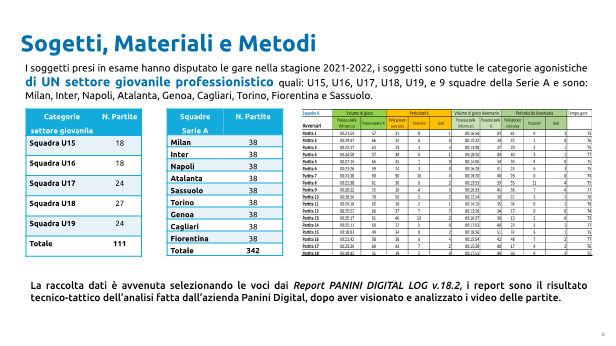
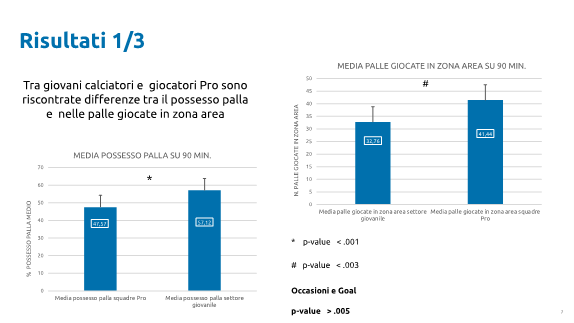
Per approfondire, condividerò alcuni dati emersi dalla mia tesi di laurea magistrale in Scienze Motorie, discussa presso l’Università Statale di Milano con la supervisione dei professori Domenico Gualtieri e Athos Trecroci. In questo studio, abbiamo analizzato la relazione tra la percentuale di possesso palla e alcuni indici chiave di pericolosità offensiva; Palle giocate in area di rigore avversaria, Occasioni ed i Goal, esaminando un campione significativo di 342 partite di Serie A e 111 partite di un settore giovanile professionistico.

Si è deciso di prendere in esame squadre che hanno avuto stili di gioco differenti tra loro e diversa posizione finale nella classifica punti, scegliendo così squadre di alta, media e bassa classifica.

Figura 1

I risultati ci mostrano:

Figura 2
Figura 3

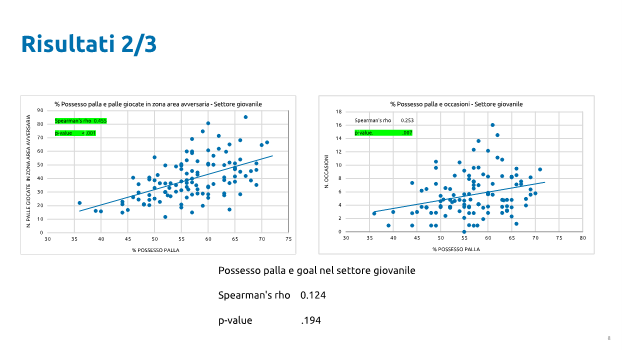
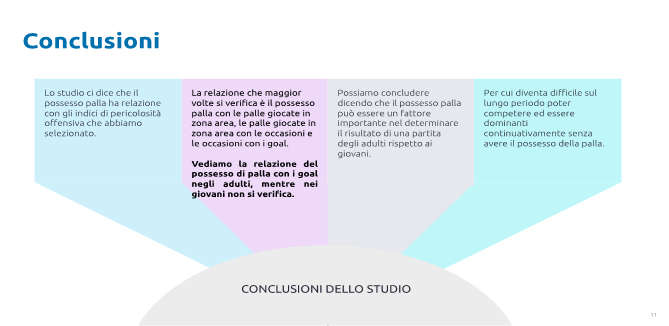
Dalle analisi fatte sul complessivo dei dati delle squadre giovanili professionistiche si è evidenziato che una correlazione diretta del possesso palla e goal non c’è, mentre la correlazione che si presenta su altri dati presentati come possesso palla e occasioni esiste; esiste per altro una correlazione indiretta tra possesso palla e goal, dove i goal hanno una correlazione diretta con le occasioni e le palle giocate in zona area e il possesso palla ha una correlazione diretta con palle giocate in zona area cosi come il possesso palla con le occasioni.

Figura 4

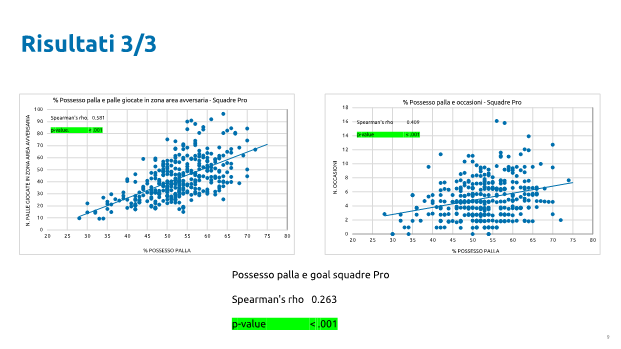
Nella tabella soprastante (4), vediamo come nelle squadre di Serie A analizzate il possesso palla sia un indice di pericolosità offensiva, con una relazione diretta con il goal seppur in modo più debole, oltre che avere una relazione diretta con le palle giocate in zona area e le occasioni create.

Le altre correlazioni sono tra i palloni giocati in area e le occasioni create, ed una correlazione tra occasioni ed i goal.

Figura 5

{ * p-value  < .001  }

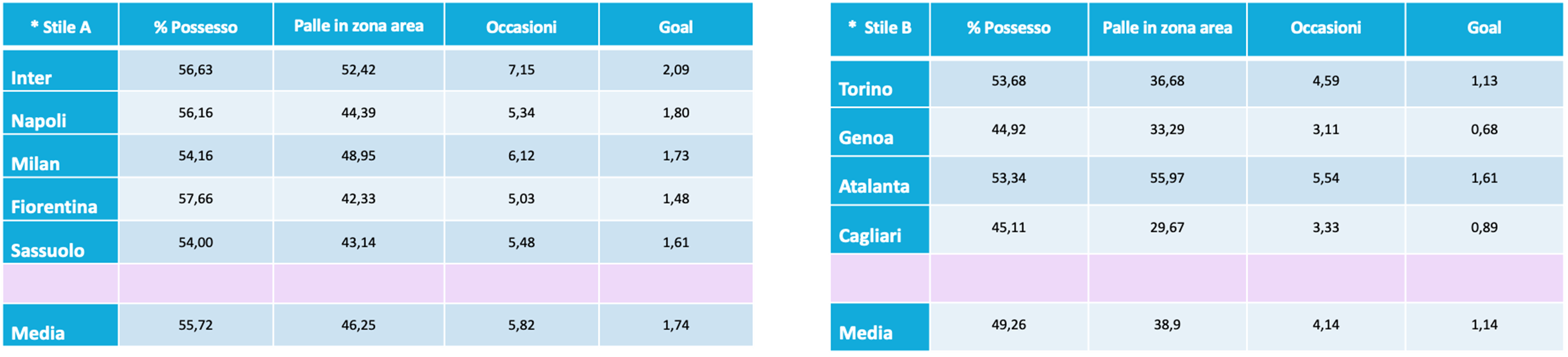
Invece quando abbiamo diviso per stili di gioco (5), dove le squadre con media possesso palla oltre il 54% e le altre con le medie più basse, c’era una differenza di pericolosità in tutti gli indici, dove lo stile con una percentuale di possesso più alta ha avuto, maggior quantità media di palle giocate in zona area, maggior numero di occasioni media per partita, maggior numero di media goal per partita.

Analizzando anche le avversarie delle squadre usate come campione, si è visto la correlazione tra il possesso palla e gli indici di pericolosità offensiva, andando nel dettaglio abbiamo riscontrato una correlazione con tutti gli indici di pericolosità osservati, c’è correlazione con i goal.

I dati stabiliscono che le squadre di successo sono caratterizzate da uno schema di gioco offensivo con maggior possesso e più presenza nella zona centrale offensiva (CASAL et al., 2017)

I risultati del nostro studio hanno fornito indicazioni significative riguardo alla domanda di ricerca. I dati hanno evidenziato diverse correlazioni importanti. In particolare, è emersa una sorta di “catena causale”: una maggiore percentuale di possesso palla tende a correlarsi con un maggior numero di palloni giocati nell’area di rigore avversaria; questi ultimi, a loro volta, sono correlati a un maggior numero di occasioni da gol create, e, infine, le occasioni da gol sono correlate ai gol effettivamente segnati.

Analizzando specificamente il campione relativo al settore giovanile, abbiamo riscontrato una correlazione significativa tra possesso palla e palloni giocati in area, e tra possesso palla e occasioni create.

Indagare le ragioni di eventuali differenze rispetto ai dati della Serie A (ad esempio, una correlazione meno diretta tra occasioni e gol nel settore giovanile) meriterebbe uno studio più approfondito.

Le cause potrebbero risiedere in una diversa capacità dei giovani calciatori nel riconoscere il momento giusto per finalizzare l’azione, in una minore efficacia nella conclusione rispetto al volume di gioco prodotto, o in altre specificità dei contesti giovanili analizzati che andrebbero ulteriormente esplorate anche con altri settori giovanili.

Di conseguenza, appare evidente l’importanza di sviluppare metodologie di allenamento mirate a migliorare l’efficacia dei giovani calciatori nell’ultimo terzo di campo, integrandole nei percorsi formativi.

Poiché il possesso palla si rivela un fattore così rilevante nella determinazione del risultato, è cruciale che i giovani calciatori migliorino costantemente e acquisiscano le competenze tecniche tattiche e psicologiche necessari per gestire il pallone con la sicurezza necessaria.

Imparare a riconoscere e risolvere le diverse situazioni di gioco in un calcio sempre più rapido e tecnicamente evoluto è la sfida dei settori giovanili.

Oggi questo sport è diventato più esigente: richiede basse percentuali di errore nel trattamento del pallone in ogni zona del campo. La velocità con cui si susseguono gli eventi impone una maggiore abilità nel prendere decisioni rapide ed efficaci. Non è più sufficiente saper giocare semplicemente in verticale quando si è sotto pressione; riconoscere e adattarsi alle mutevoli situazioni tattiche è una competenza fondamentale del calciatore moderno – basti pensare all’evoluzione del ruolo del portiere e a cosa gli viene richiesto oggi anche in fase di costruzione per comprenderne l’importanza.

Chiaramente, realizzare un possesso palla efficace (sia in termini di qualità che di quantità) dipende da numerosi fattori interconnessi, come evidenziato da diversi studi.

Tra questi elementi figurano: la lunghezza e la velocità dei passaggi, la qualità tecnica individuale e collettiva dei giocatori, l’andamento del punteggio durante la partita, il fattore campo (giocare in casa o fuori), la disposizione tattica della squadra al momento della riconquista del pallone, la specifica zona di campo in cui si sviluppa il possesso, la durata media di ogni sequenza di possesso, nonché le strategie adottate dalla propria squadra e dagli avversari.

In definitiva, la capacità di coniugare un possesso palla quantitativamente e qualitativamente valido con un’elevata efficacia offensiva emerge come uno degli indicatori più rilevanti per raggiungere la vittoria.

L’efficacia del possesso nel generare pericolosità dipende criticamente da come viene gestito in relazione a diverse variabili: la zona di campo (un possesso sterile a centrocampo ha un impatto diverso rispetto a uno sviluppato nella trequarti avversaria), il timing delle giocate (capire quando è opportuno mantenere il controllo e quando invece accelerare o verticalizzare), la qualità tecnica dei propri giocatori rapportata a quella degli avversari, la precisione dei passaggi nelle zone nevralgiche del campo (specialmente nell’area di rifinitura) e l’intesa (le relazioni tecniche e tattiche e socio affettive) tra i giocatori e l’organizzazione di gara della propria squadra e degli avversari.

Tutti questi fattori interagiscono e influenzano la capacità di trasformare il volume di gioco prodotto in concrete occasioni da gol e, quindi, in risultati positivi.

Das Spiel hinter dem Spiel – Wie Transfers im Verborgenen entschieden werden

Photo by JESHOOTS.COM on Unsplash

Transferverhandlungen entscheiden über Karrieren, bevor der Ball überhaupt rollt.

Der Ball liegt längst nicht mehr nur auf dem Rasen. Entscheidungen über Spieler, Millionen und Perspektiven fallen leise am Verhandlungstisch. Doch was passiert dort wirklich?

Einleitung

Ein Wechsel, ein Vertrag, ein neues Trikot und am Ende das Foto für die Öffentlichkeit. So sehen Transfers von außen aus.

Was davor passiert, bekommt man in der Öffentlichkeit kaum mit. Es wird gesprochen, Interessen werden abgeglichen, Gespräche vorbereitet. Vereine positionieren sich, Berater erkunden Möglichkeiten, Spieler müssen Entscheidungen für ihre Zukunft treffen.

Genau hier beginnt die entscheidende Vorbereitung, die nicht nur die Laufbahn eines Spielers beeinflusst, sondern auch die strategische Planung und wirtschaftliche Entwicklung eines Vereins.

Dieser Artikel gibt Einblick in die Abläufe, die Transferentscheidungen prägen.
Er zeigt, worauf es in Verhandlungen wirklich ankommt und warum ein klarer, professioneller Umgang am Tisch den Unterschied macht.

Vor dem ersten Angebot: Die unsichtbare Phase

Verhandlungen beginnen lange bevor ein offizielles Angebot formuliert wird. Noch bevor Zahlen auf dem Tisch liegen, formt sich ein erstes Bild. Nicht laut, nicht offiziell, aber spürbar.

Scouts sammeln Eindrücke, Berater führen erste Gespräche im Hintergrund, Verantwortliche im Verein tauschen Einschätzungen aus. Selbst kleine Signale wie ein Interview, eine Geste auf dem Platz oder ein Beitrag in den sozialen Medien werden wahrgenommen, eingeordnet und mit Bedeutung verknüpft.

Die Ausgangslage für spätere Gespräche entsteht nicht auf einen Schlag. Sie entwickelt sich schrittweise durch Beobachtung, Deutung und Erwartung.

Und genau an diesem Punkt beginnt das Verhandeln bereits, subtil und indirekt.

Drei psychologische Mechanismen spielen in dieser Phase eine zentrale Rolle:

Priming

Dieser Begriff stammt aus der Psychologie und beschreibt, wie früh platzierte Informationen unser Denken und unsere Erwartungshaltung beeinflussen – ohne dass wir es bewusst merken.
Wenn ein Berater zum Beispiel beiläufig erwähnt, der Spieler habe „in letzter Zeit viel Interesse aus dem Ausland auf sich gezogen“, verändert das automatisch die Wahrnehmung des Gegenübers. Auch ohne konkrete Angebote wird der Spieler als „gefragt“ eingestuft. Das kann sich positiv auf Gesprächsdynamik, Verhandlungsposition und Einschätzung des Marktwerts auswirken.

Framing

Beim Framing geht es um die gezielte Rahmung einer Information. Die Botschaft bleibt inhaltlich ähnlich, aber ihre Wirkung hängt stark davon ab, wie sie formuliert wird.
Beispiel: Der Satz „Er ist offen für eine neue Herausforderung“ klingt positiv, konstruktiv, entwicklungsorientiert. Derselbe Inhalt, negativ gerahmt, würde lauten: „Er möchte unbedingt weg.“
Beide Aussagen drücken den gleichen Wunsch aus, doch die erste Variante vermittelt Offenheit und Gesprächsbereitschaft, während die zweite Druck erzeugt und Ablehnung hervorruft.
Gute Verhandler wählen ihre Worte bewusst, nicht manipulativ, sondern situationssensibel.

Subtext

Subtext meint all das, was nicht ausgesprochen wird, aber dennoch kommuniziert wird, etwa durch Tonfall, Körpersprache, Blickkontakt, Pausen oder bewusstes Schweigen. Beispiel: Wenn ein Sportdirektor bei einem Gespräch mehrfach stockt, lange über eine Frage nachdenkt oder bewusst zögert, kann das Unsicherheit signalisieren oder taktische Zurückhaltung.
Umgekehrt kann auch gezieltes Schweigen von Spielerseite Druck erzeugen oder Stärke vermitteln. Wer in der Lage ist, solche Signale zu lesen und gezielt einzusetzen, führt das Gespräch mit mehr Tiefe, oft ohne es formell zu dominieren.

Erfahrene Verhandler wissen: Wer früh Einfluss auf Kommunikation, Stimmung und Erwartungshaltung nimmt, verschafft sich eine strategisch vorteilhafte Ausgangsposition. Nicht selten werden zentrale Weichen gestellt, bevor formale Angebote überhaupt formuliert sind.

BATNA: Die unterschätzte Quelle echter Verhandlungsmacht

In jeder Verhandlung stellt sich dieselbe Grundfrage: Wer braucht den Deal dringender?

Hier kommt ein Konzept ins Spiel, das in der Praxis zu wenig beachtet wird: BATNABest Alternative to a Negotiated Agreement.

Kurz gesagt: Was ist meine beste Alternative, wenn ich diese Einigung nicht erreiche?

Ein Beispiel:

  • Ein Spieler mit laufendem Vertrag, Stammplatz und mehreren Optionen für die kommende Saison kann Angebote in Ruhe vergleichen und notfalls auch bleiben.
  • Ein Verein, der für eine vakante Position bereits mit mehreren Spielern in fortgeschrittenem Kontakt steht, muss kein Angebot um jeden Preis durchdrücken.

In beiden Fällen ist eine starke BATNA vorhanden, also eine gute Alternative zur Verhandlung. Das schafft Gelassenheit, Verhandlungssicherheit und Handlungsspielraum, eine innere Stärke, die am Tisch deutlich spürbar wird.

Wer seine eigene BATNA kennt und idealerweise auch die des Gegenübers einschätzen kann, verhandelt mit mehr Ruhe, Klarheit und Flexibilität. Denn er weiß: Ich habe Optionen.

Und genau das verändert die Gesprächsdynamik. Wo vorher Druck herrschte, entstehen Klarheit und Struktur. Emotion wird durch Strategie ersetzt. Stärke zeigt sich nicht in Lautstärke, sondern in echten Optionen.

Warum viele Verhandlungen scheitern und wie man es besser macht

Trotz guter Voraussetzungen platzen viele Deals und oft liegt das nicht an Zahlen, sondern an Verhalten.

Ein typisches Szenario: Ein Angebot wird abgelehnt, verbunden mit Empörung oder Abwertung. Der andere fühlt sich nicht wertgeschätzt. Die Atmosphäre kippt. Die Tür ist zu.

Dabei wäre es so einfach gewesen, anders zu reagieren:

„Vielen Dank für die Übermittlung des Angebots. In der aktuellen Form spiegelt es noch nicht den Wert und die Perspektive wider, die wir in dieser Konstellation sehen. Wir sind aber offen für weitere Gespräche.“

„Vielen Dank für das Angebot. Aus unserer Sicht passt es noch nicht zu den Rahmenbedingungen die wir uns vorstellen, aber wir bleiben gern im Gespräch.“

Gute Verhandler wissen: Nicht jede Absage ist ein Ende. Sie kann auch ein Anfang sein, wenn sie mit Haltung, Klarheit und Wertschätzung kommuniziert wird.

Verhandlungen scheitern selten an den Inhalten. Viel häufiger scheitern sie daran, wie in entscheidenden Momenten mit Differenzen umgegangen wird.

Psychologische Hebel gezielt nutzen

Erfolgreiches Verhandeln bedeutet, Führung zu übernehmen. Der Verlauf einer Verhandlung lässt sich gezielt beeinflussen durch psychologische Prinzipien, die von guten Verhandlungsführern bewusst eingesetzt werden.

Gute Verhandler überlassen Gespräche nicht dem Zufall. Sie wissen, welche psychologischen Mechanismen in entscheidenden Momenten wirken und setzen sie gezielt ein, um Verläufe zu steuern, Vertrauen aufzubauen und Entscheidungen zu beeinflussen. Dabei geht es nicht um Manipulation, sondern um bewusste Führung mit Fingerspitzengefühl. Die folgenden Prinzipien gehören zu den wirksamsten Werkzeugen in der Verhandlungspraxis.

Anker setzen

Der erste Zahlenvorschlag in einer Verhandlung wirkt wie ein Anker. Er setzt einen mentalen Rahmen, innerhalb dessen sich das weitere Gespräch bewegt. Selbst wenn später über ganz andere Summen gesprochen wird, bleibt der erste Wert als stiller Referenzpunkt im Raum. Wer diese Zahl nennt oder zulässt, dass sie zuerst auf dem Tisch liegt, beeinflusst die Wahrnehmung und Orientierung des Gegenübers von Beginn an. Je bewusster dieser Anker gesetzt wird, desto stärker wirkt er – strategisch und psychologisch.

Reziprozität

Wer in einer Verhandlung ein Entgegenkommen zeigt, sei es durch ein sachliches Zugeständnis oder eine kluge Geste, löst beim Gegenüber oft den Impuls aus, ebenfalls auf etwas zuzugehen. Diese wechselseitige Bereitschaft schafft Vertrauen und Bewegung. Reziprozität gehört zu den wirkungsvollsten Dynamiken im Verhandlungsgeschehen, wenn sie gezielt und authentisch eingesetzt wird.

Verlustaversion

Menschen empfinden potenzielle Verluste stärker als gleich große Gewinne. Das kann dazu führen, dass objektiv gute Angebote subjektiv als Risiko empfunden und abgelehnt werden. Wer versteht, wie Verlustängste Entscheidungen beeinflussen, kann Angebote so formulieren, dass sie Sicherheit und Entwicklung betonen statt möglichen Verzichts.

Timing und Stille

Nicht jede Wirkung entsteht durch Argumente. Manchmal sind es bewusst gesetzte Pausen, die das Gespräch lenken. Ein Moment des Schweigens, ein kurzes Innehalten oder gezieltes Zögern können mehr Wirkung entfalten als viele Worte. Gerade in sensiblen Verhandlungsphasen zeigt sich: Präsenz entsteht nicht nur durch das Gesagte, sondern auch durch das bewusst Ungesagte.

Diese Mittel sind keine Tricks, sie sind Werkzeuge. Und wie jedes Werkzeug wirken sie nur dann gut, wenn sie richtig eingesetzt werden: bewusst, dosiert und mit Integrität.

Der Vertrag – mehr als Laufzeit und Gehalt

Ein Vertrag ist nicht nur ein Ergebnis. Er ist ein Instrument. Richtig konzipiert, ist er ein Karriereplan in juristischer Form.

Was heute auf der Tagesordnung steht, geht weit über klassische Elemente hinaus. Neben Gehalt, Prämien und Vertragslaufzeit werden zunehmend maßgeschneiderte Bestandteile verhandelt, sowohl im Profibereich als auch bei jungen Talenten.

Gängige und professionelle Beispiele sind:

  • Leistungsbezogene Boni für Tore, Assists, Einsätze oder Aufstiege
  • Klauseln zur automatischen Verlängerung bei einer bestimmten Spielzeit
  • Buy-out-Optionen oder festgeschriebene Ausstiegsklauseln
  • Buy-back-Klauseln, vor allem bei verliehenen oder wechselnden Talenten
  • Matching Rights, das Recht, ein externes Angebot gleichzustellen
  • Weiterverkaufsbeteiligungen für den abgebenden Verein
  • Prämien für Nationalmannschaftsnominierungen oder U-Kader-Einsätze
  • Leihverträge mit garantierten Spielzeiten oder Rückrufrechten
  • Zusätzliche Betreuungspakete für Familie, Schulplatz, Sprachkurse, Visum

Und das sind nur einige Beispiele.

In Wahrheit kennt die Vertragsgestaltung kaum Grenzen, zumindest dann nicht, wenn man kreativ denkt, Erfahrung mitbringt und über den Tellerrand hinaus verhandelt.

Gute Verhandler erkennen, wo individuelle Vereinbarungen echten Mehrwert schaffen, für den Spieler und für den Verein. Sie kombinieren sportliche Perspektive, wirtschaftliche Planung und persönliche Lebensrealitäten zu einem Vertragswerk, das nicht nur rechtlich solide ist, sondern strategisch wirkt.

Wer nur auf Standards setzt, verpasst Chancen. Wer kreativ, vorausschauend und taktisch geschickt verhandelt, holt das Beste heraus.

Die Perspektiven aller Beteiligten verstehen

Transferverhandlungen folgen keinem festen Ablauf. Sie sind ein Zusammenspiel unterschiedlicher Interessen, Rollen und Dynamiken:

  • Spieler denken an Entwicklung, Spielzeit und Anerkennung.
  • Eltern wollen Sicherheit, Betreuung und Vertrauen.
  • Trainer suchen Charaktere, die ins System und in die Kabine passen.
  • Sportdirektoren jonglieren mit Budget, Kaderstruktur und langfristiger Planung. Dabei steht immer auch der sportliche und wirtschaftliche Erfolg des Vereins im Fokus.
  • Vereinsführungen betrachten Image, Sponsorenwirkung und Medienresonanz.
  • Berater gestalten Karrieren – strategisch, schützend und mit Weitblick.

Wer all diese Perspektiven erkennt, ernst nimmt und integriert, führt nicht nur eine Verhandlung, er moderiert eine Entscheidung.

Kommunikation: Das Spiel außerhalb des Tisches

Verhandlungen enden nicht im Raum. Sie setzen sich fort in der Öffentlichkeit, in den Medien, in der Kabine.

Ein Interview zur falschen Zeit, ein geleakter Gesprächsinhalt oder ein polarisierender Social-Media-Post können mehr Schaden anrichten als jedes abgelehnte Angebot.

Deshalb gehört zur Verhandlungsführung auch:

  • Kommunikationsstrategie
  • Medienmanagement
  • Klarheit nach innen und außen

Wer nicht bewusst kommuniziert, überlässt die Deutung anderen.

Fazit: Verhandeln heißt gestalten und entscheidet über viel mehr als Zahlen

Transferverhandlungen gehören heute zum strategischen Kern des Profifußballs. Sie sind ein entscheidender Hebel für Karriereplanung, Teamentwicklung und vor allem für die sportliche wie wirtschaftliche Ausrichtung eines Vereins.

Gute Verhandler auf beiden Seiten – beim Verein wie beim Spieler – machen den Unterschied.

Sie holen nicht nur bessere Ergebnisse heraus, sondern schaffen Lösungen, die tragfähig sind.

Wer unvorbereitet oder unstrukturiert verhandelt, lässt enorme Potenziale liegen, sowohl finanziell als auch strategisch und sportlich. Oft liegt es an der Qualität der Verhandlung, ob ein Wechsel den nächsten Schritt ermöglicht oder ob sich im Nachhinein zeigt, dass Potenzial verschenkt wurde.

Denn am Ende gilt: “You don’t get what you deserve. You get what you negotiate.” Chester L. Karrass

La Nouvelle Structure de l’Examen des Agents de Football FIFA

Photo by Rafael Garcin on Unsplash
Format et Structure de l’Examen des Agents de Football FIFA

La FIFA a introduit d’importants changements structurels dans l’examen des agents de football, qui entreront en vigueur à partir du 4 mars 2025. Ces modifications marquent une transition des examens en présentiel, organisés dans des centres d’examen désignés, vers un format entièrement en ligne, avec des protocoles de surveillance renforcés et des exigences techniques révisées. L’objectif est d’accroître l’équité, la transparence et la standardisation, garantissant ainsi que tous les candidats, quel que soit leur lieu de résidence, passent l’examen dans des conditions uniformes et strictement contrôlées.

Dans l’ancien système, les candidats devaient se rendre en personne dans des centres d’examen désignés par leur association nationale de football (NA). Bien que cette approche garantisse un certain contrôle des conditions d’examen, des disparités existaient en matière de support technique, d’accès à Internet et d’installations. De plus, les règles concernant le matériel autorisé variaient : certaines associations permettaient d’apporter des notes imprimées et annotées, tandis que d’autres imposaient des restrictions plus strictes.

Désormais, la FIFA a supprimé tous les examens en présentiel au profit d’un format exclusivement en ligne. Les candidats doivent passer l’examen dans un cadre privé et autogéré, ce qui leur impose la responsabilité d’assurer leur propre installation technique, la stabilité de leur connexion Internet et un environnement adapté. Ce nouveau système introduit également des mesures de sécurité renforcées, notamment l’accès obligatoire à la caméra et au microphone de l’ordinateur du candidat, ainsi qu’une surveillance secondaire via un smartphone. Au lieu d’un surveillant en personne, la FIFA utilisera des outils de surveillance basés sur l’IA pour détecter toute activité suspecte en temps réel.

Un autre changement clé est la suppression de toutes les pauses durant l’examen de 60 minutes. Auparavant, les candidats pouvaient demander une pause sous supervision, mais cela n’est plus autorisé. Une fois l’examen commencé, ils doivent rester visibles à la caméra et assis jusqu’à la fin du temps imparti. Toute absence, regard prolongé hors écran ou perte de connexion Internet entraînera l’invalidation immédiate de la tentative, nécessitant une nouvelle inscription pour une session ultérieure.

De plus, la FIFA a renforcé les règles en matière de fraude. Dans l’ancien système, les infractions comme l’utilisation de matériel non autorisé ou la communication avec d’autres personnes pouvaient entraîner une disqualification temporaire, mais les candidats avaient souvent la possibilité de se réinscrire rapidement. Désormais, des infractions graves comme la tricherie, la capture d’écran ou la divulgation du contenu de l’examen peuvent entraîner une suspension prolongée, voire une interdiction permanente d’obtenir une licence d’agent FIFA.

Avec ces nouvelles mesures, la FIFA vise à instaurer un processus d’examen uniformisé et strictement réglementé, éliminant toute disparité dans les conditions d’examen et empêchant les avantages injustes. Les candidats doivent donc être pleinement préparés, tant sur le plan technique que réglementaire, sous peine de voir leur tentative annulée.

Format de l’Examen et Critères de Réussite

L’examen des agents de football FIFA se déroule désormais entièrement en ligne, remplaçant le format en présentiel. Cette modification élimine la nécessité de se déplacer vers des centres d’examen et impose aux candidats la responsabilité de garantir un cadre technique optimal et un environnement sans distractions. La durée de l’examen reste de 60 minutes, avec un score minimum requis de 75 % pour réussir.

L’examen consiste en une série de questions à choix multiples évaluant la connaissance des règlements FIFA, notamment sur les transferts de joueurs, les contrats, les responsabilités des intermédiaires et la gouvernance générale du football. Les questions visent non seulement à tester les connaissances factuelles, mais aussi la capacité des candidats à appliquer les règles de la FIFA à des scénarios concrets auxquels un agent peut être confronté.

L’une des modifications les plus importantes concerne l’interdiction stricte des pauses durant l’examen. Auparavant, les candidats pouvaient demander des pauses surveillées, mais ce n’est désormais plus possible. Une fois l’examen lancé, les candidats doivent rester assis, visibles à la caméra et concentrés sur le test jusqu’à la fin du temps imparti. Toute interruption, qu’elle soit due à un problème technique, un besoin personnel ou une déconnexion accidentelle, entraînera une disqualification automatique et l’obligation de s’inscrire pour la prochaine session disponible.

Compte tenu de ces nouvelles exigences, la FIFA recommande vivement aux candidats de bien se préparer en amont, en s’assurant d’avoir une connexion Internet fiable, l’équipement nécessaire et un environnement calme et sans interruptions.

Exigences Techniques et Configuration

Étant donné que l’examen se déroule désormais entièrement en ligne, la FIFA impose des exigences techniques strictes pour garantir un environnement de test sécurisé, standardisé et étroitement surveillé. Les candidats sont seuls responsables de la mise en place et du bon fonctionnement de leur installation, car aucun support technique ne sera fourni par la FIFA pendant l’examen.

Pour passer l’examen, les candidats doivent disposer des éléments suivants :

  • Un ordinateur portable ou de bureau avec une caméra et un microphone fonctionnels, qui devront rester activés durant toute la durée de l’examen. Le système de surveillance de la FIFA utilisera ces dispositifs pour détecter tout comportement suspect.
  • Un smartphone qui servira à une surveillance secondaire. Il devra être placé de manière à fournir une vue supplémentaire de l’espace de travail du candidat. L’utilisation du téléphone pour toute autre fonction durant l’examen est interdite.
  • Une connexion Internet stable et fiable. Toute interruption de connexion invalidera immédiatement la tentative, sans possibilité de reprise. Si un candidat perd la connexion, son examen sera annulé, et il devra s’inscrire pour la prochaine session disponible.

En raison de ces exigences strictes, la FIFA recommande vivement aux candidats de tester leur matériel, leur vitesse Internet et le bon fonctionnement de leur webcam avant la date de l’examen. En cas de problème technique durant l’épreuve (connexion instable, panne matérielle, dysfonctionnement logiciel), aucun temps supplémentaire ne sera accordé, et la session ne pourra pas être reprise immédiatement.

Les candidats doivent également veiller à organiser leur espace d’examen de manière optimale : un lieu calme, bien éclairé et sans distractions. Tout mouvement hors champ, toute perte de visibilité ou comportement suspect pourra entraîner une disqualification ou un signalement pour enquête approfondie.

Environnement d’Examen et Conduite

Bien que l’examen soit désormais entièrement en ligne, la FIFA exige que les candidats le passent dans un environnement privé et exempt de toute distraction. Les conditions doivent être similaires à celles d’un examen officiel, garantissant l’équité et l’intégrité de l’épreuve pour tous les candidats à l’échelle mondiale. Pour faire respecter ces standards, la FIFA a mis en place un système de surveillance avancé destiné à détecter toute tricherie ou violation des règles.

Ce système inclut :

  • Une surveillance vidéo en direct via la caméra de l’ordinateur, qui doit rester activée et dégagée tout au long de l’examen.
  • Une surveillance secondaire avec le smartphone, qui peut être exigé pour fournir un angle de vue supplémentaire sur l’espace de travail du candidat. Cela permet d’empêcher toute aide extérieure ou l’utilisation de matériel non autorisé.
  • Un suivi comportemental basé sur l’IA, qui détecte les mouvements suspects, les regards trop fréquents hors écran, les bruits de fond inhabituels ou tout autre signe de fraude potentielle. Toute activité suspecte signalée peut entraîner une disqualification ou une suspension d’examen.

Les candidats doivent rester assis, visibles à la caméra et engagés dans l’examen durant toute la durée de l’épreuve. Regarder ailleurs trop longtemps, parler à voix haute ou tenter d’utiliser des documents non autorisés peut entraîner un signalement automatique. Même des infractions mineures, comme des mouvements excessifs ou des ajustements fréquents de posture, peuvent être scrutées de plus près.

Afin d’éviter tout problème, la FIFA recommande aux candidats de préparer leur espace en amont : un éclairage suffisant, un fond neutre et aucun élément perturbateur. Toute interruption (bruit, intrusion dans la pièce, perte de connexion) peut entraîner une disqualification et la nécessité de s’inscrire pour la prochaine session d’examen.

Articles Autorisés et Interdits

La FIFA a établi des directives claires sur les objets que les candidats peuvent ou ne peuvent pas avoir dans leur environnement d’examen. Tout objet non autorisé trouvé dans l’espace de travail peut entraîner une disqualification immédiate et, dans les cas graves, une suspension des futures tentatives d’examen.

✔️ Articles Autorisés

Les candidats sont autorisés à avoir les éléments suivants :

  • Des supports d’étude, mais uniquement s’ils sont enregistrés numériquement sur l’ordinateur portable ou de bureau du candidat. Les documents imprimés, les notes manuscrites ou tout périphérique de stockage externe contenant des ressources d’étude sont strictement interdits.
  • Des lunettes de prescription, si elles sont nécessaires pour corriger la vision.
  • Un stylo et une seule feuille de papier vierge pour la prise de notes pendant l’examen. Cependant, cette feuille doit être montrée à la caméra avant et après utilisation afin de vérifier qu’elle ne contient pas de notes pré-écrites.
  • La calculatrice intégrée à la plateforme d’examen en ligne de la FIFA. Les calculatrices externes ne sont pas autorisées.

Articles Interdits

Les éléments suivants sont strictement interdits pendant l’examen :

  • Les téléphones portables, sauf celui requis pour la surveillance. Ce téléphone doit être placé selon les instructions et ne peut être utilisé à aucune autre fin pendant l’examen.
  • Les montres connectées, écouteurs ou tout autre appareil intelligent capable de se connecter à Internet.
  • L’accès à des sites Web externes autres que la plateforme officielle de l’examen de la FIFA. Toute tentative de navigation sur Internet ou d’ouverture d’onglets non autorisés sera considérée comme une infraction.
  • Les documents imprimés, les notes manuscrites ou tout matériel d’étude physique. Contrairement aux examens précédents où il était parfois possible d’apporter des règlements imprimés, le nouveau système n’autorise que les supports d’étude numériques sur l’ordinateur utilisé pour l’examen.
  • Les calculatrices physiques. Tous les calculs nécessaires doivent être effectués à l’aide de la calculatrice intégrée à la plateforme FIFA.

La FIFA insiste sur le fait que toute tentative d’accès à des ressources non autorisées, de communication avec d’autres personnes ou d’utilisation d’appareils interdits sera considérée comme une infraction grave. Les candidats surpris en violation de ces règles risquent une disqualification immédiate et peuvent être interdits de participation aux futurs examens. Afin d’éviter tout problème, les candidats doivent soigneusement vérifier leur espace de travail avant de commencer l’examen et s’assurer qu’ils respectent toutes les réglementations relatives aux articles autorisés et interdits.

Fraude à l’Examen et Conséquences

La FIFA applique une politique de tolérance zéro en matière de fraude aux examens. Les candidats doivent respecter toutes les directives et réglementations, sous peine de conséquences sévères, pouvant aller jusqu’à une interdiction permanente de participer aux futurs examens. Les comportements suivants sont strictement interdits :

  • Tricherie : Toute tentative d’obtenir un avantage déloyal, comme l’utilisation de matériaux non autorisés, d’outils interdits ou de recevoir de l’aide extérieure (qu’elle provienne d’une personne ou d’une source numérique), entraînera des sanctions immédiates. Cela inclut, mais ne se limite pas à, l’utilisation de notes, de livres ou de ressources en ligne non autorisées.
  • Enregistrement ou Partage du Contenu de l’Examen : Il est interdit aux candidats de prendre des captures d’écran, d’enregistrer ou de partager tout contenu de l’examen. Cela comprend la diffusion d’informations via des captures d’écran, des vidéos ou tout autre moyen de communication numérique. Partager tout ou partie du matériel d’examen constitue une violation directe des politiques de la FIFA.
  • Communication Non Autorisée : Parler à qui que ce soit, que ce soit en personne ou par tout moyen électronique (téléphone, applications de messagerie, réseaux sociaux, etc.), pendant l’examen est interdit. Cela inclut toute forme de communication pouvant être perçue comme une tentative de recevoir de l’aide ou d’échanger des informations.
  • Quitter l’Examen Sans Autorisation : Les candidats doivent rester dans leur session d’examen jusqu’à son achèvement officiel. Quitter la salle ou la session d’examen sans autorisation constitue une violation grave du règlement.
  • Usurpation d’Identité : Toute tentative de se faire passer pour un autre candidat ou de faire passer l’examen par une autre personne sera traitée avec la plus grande sévérité. Cela inclut l’usurpation directe d’identité ainsi que toute forme de collusion où un candidat soumet l’examen au nom d’un autre.

Si un candidat est pris en violation de l’une de ces règles, la FIFA a le pouvoir de le suspendre de l’examen suivant, et dans les cas les plus graves, d’imposer une interdiction définitive des futurs examens FIFA. La gravité des sanctions dépendra de la nature de l’infraction, les récidivistes étant passibles de peines plus strictes.

De plus, la FIFA a intégré des systèmes avancés de surveillance basés sur l’intelligence artificielle pour détecter toute activité suspecte. Ces outils peuvent identifier des schémas suggérant une tricherie ou un comportement frauduleux, rendant de plus en plus difficile toute tentative de contourner le système. Cette innovation technologique vise à préserver l’intégrité du processus d’examen et à garantir un environnement équitable pour tous les participants.

Les candidats sont fortement encouragés à examiner et à respecter attentivement les règles de l’examen pour éviter toute complication. Enfreindre ces règles met non seulement en péril leur réussite à l’examen, mais peut aussi nuire à leur réputation et à leur éligibilité à de futures opportunités au sein de la FIFA.

Résultats et Processus d’Appel

Les candidats recevront leurs résultats par e-mail dans un délai de 14 jours après la passation de l’examen. La FIFA a également mis en place un processus de révision permettant aux candidats de consulter leurs réponses et de comprendre leurs erreurs. Cependant, les appels contre les résultats ne sont plus autorisés.

Si un candidat échoue, il devra attendre la prochaine session d’examen disponible pour retenter sa chance. Aucune exception ne sera accordée, et la FIFA ne proposera aucune réévaluation individuelle.

Conclusion

Les nouvelles règles de l’examen des agents de football FIFA marquent un tournant vers un processus d’évaluation plus sécurisé, standardisé et transparent. Avec une surveillance accrue, l’absence de pauses et une politique de tolérance zéro face aux fraudes, les candidats doivent se préparer minutieusement avant l’examen.

Pour maximiser vos chances de réussite :

✅ Vérifiez que votre ordinateur, votre smartphone et votre connexion Internet répondent aux exigences de la FIFA.
✅ Familiarisez-vous avec les règlements en utilisant uniquement les supports d’étude numériques autorisés.
✅ Respectez strictement toutes les règles de conduite afin d’éviter toute disqualification.

En comprenant et en respectant ces nouvelles directives, les candidats pourront naviguer sereinement dans ce nouveau format d’examen et obtenir leur licence d’agent de football FIFA.

Zwischen Bank und Besserwisser

Hinweis: Zur besseren Lesbarkeit wird im Text die männliche Form („Spieler, „Trainer“ etc.) verwendet. Gemeint sind n alle Geschlechter.

Wie Spieler, Eltern, Trainer, Berater und Vereine echte Entwicklung fördern können. Warum Entwicklung nicht durch Meinung, sondern durch ehrliche Reflexion, Kommunikation und Zusammenarbeit entsteht.

Ein Tag am Platz – und die immer gleichen Gespräche

Es ist ein sonniger Tag in Süddeutschland. Ich stehe, wie so oft, an einem Fußballplatz. Jugendspiel, ambitioniertes Niveau, engagierte Zuschauer, gespannte Stimmung. Als Spielerberater bin ich regelmäßig vor Ort. Ich beobachte nicht nur das Spiel – ich höre hin. Ich spreche mit Spielern, mit Eltern, mit Trainern. Und jedes Mal wieder begegnen mir dieselben Muster.

Nach dem Spiel kommen die Gespräche. Ein Spieler ist enttäuscht, weil er nicht oder nur kurz gespielt hat. Ein Vater kommt auf mich zu, sucht Erklärungen. Die Mutter schaut fragend: „Was soll er denn noch machen?“

Und dann höre ich Sätze wie:

  • „Ich versteh’s nicht – auch meine Mitspieler sagen, ich hätte heute spielen müssen.“
  • „Mein Vater meint, ich war im Training der Beste.“
  • „Der Trainer sieht’s einfach nicht.“
  • „Das ist nicht fair – das kann man doch nicht bringen.“

Ich verstehe die Enttäuschung. Aber genau an diesem Punkt entscheidet sich, in welche Richtung es geht: Bleibt der Spieler in der Bewertung anderer oder geht er in die Reflexion seiner eigenen Rolle? Denn Entwicklung beginnt nicht mit Applaus, sondern mit Ehrlichkeit. Und sie gelingt nur, wenn alle Beteiligten bereit sind, Verantwortung zu übernehmen.

  1. Die eigene Rolle ehrlich einschätzen – statt sich blenden zu lassen

Viele Spieler orientieren sich an Rückmeldungen aus dem Umfeld – Eltern, Mitspieler, Berater, Social Media. Doch das ist selten objektiv.

Und auch Berater tragen Verantwortung: Wenn ein Berater dem Spieler ständig sagt, er sei „eigentlich dran“ oder „klar besser als andere“, entsteht ein verzerrtes Bild. Das fühlt sich im Moment gut an, kann aber Entwicklung massiv blockieren. Nicht jeder Push ist hilfreich.

Fragen zur Selbstreflexion:

  • Wie war meine Trainingswoche, war ich fokussiert, konstant, belastbar?
  • Habe ich taktisch umgesetzt, was verlangt wurde?
  • Wie war meine Körpersprache, Kommunikation, Teamverhalten?
  • Hatte ich andere Dinge im Kopf, B. eine anstehende Klausur, Herausforderungen in der Beziehung, familiäre Spannungen oder persönlichen Druck?

Auch das gehört zur Reflexion: Manchmal beeinflussen äußere Umstände unser Verhalten, ohne dass wir es direkt merken.Wer das erkennt, kann bewusst damit umgehen, sich Hilfe holen oder Dinge klarer ansprechen.

Nur, wer ehrlich mit sich ist, kann lernen und wachsen. Und wer wirklich wachsen will, braucht ehrliche Begleiter – keine Bestätiger.

  1. Eltern – Spiegel statt Schutzschild

Eltern wollen ihre Kinder schützen. Doch wenn sie Partei ergreifen statt zu spiegeln, nehmen sie ihnen die Chance auf echte Entwicklung.

Statt: „Du bist besser als der, der gespielt hat.“,

Besser:

  • „Wie hast du die Woche erlebt?“,
  • „Was lief gut – und wo hast du selbst Zweifel gespürt?“

Eltern, die Raum für Reflexion geben statt Schuldige zu suchen, fördern Stärke – nicht Abhängigkeit.

  1. Trainer – klare Kommunikation statt stiller Entscheidungen

Trainer treffen Entscheidungen, die für viele nicht spielende Spieler – und ihre Eltern – schwer nachvollziehbar sind.

Wer spielt, hinterfragt selten. Er fühlt sich bestätigt, bekommt Spielzeit, Anerkennung, Aufmerksamkeit. Doch wer draußen sitzt, sucht Erklärungen und bekommt sie oft nicht, oder nur zwischen Tür und Angel.

Dabei ist genau das die Zielgruppe, die Kommunikation am dringendsten braucht:
Diejenigen, die kämpfen, sich entwickeln wollen, aber nicht wissen, wo sie stehen. Gute Trainer machen ihre Entscheidungen transparent. Sie sprechen nicht nur mit denen, die spielen – sondern besonders mit denen, die (noch) nicht spielen.

Denn: Ein Trainer ist nur so gut wie sein „schwächstes Glied“ in der Mannschaft.

Wer sich nur auf die Leistungsstärksten konzentriert, verpasst das größte Entwicklungspotenzial. Die, die gerade hadern, kämpfen oder noch Rückstand haben, gehören an die erste Stelle, nicht an den Rand. Dort entscheidet sich, wie belastbar, wie tief und wie tragfähig ein Team wirklich ist.

Spieler sollten lernen zu kommunizieren und zu fragen:

  • „Was war ausschlaggebend?“
  • „Woran kann ich gezielt arbeiten?“
  • „Was fehlt mir aktuell noch zur Startelf?”

Diese Fragen zeigen: Ich will verstehen, ich will wachsen, ich übernehme Verantwortung.

So entsteht Vertrauen auch ohne Spielzeit. Denn wer lernt, sich respektvoll mitzuteilen, wird gehört und entwickelt sich nicht nur sportlich, sondern auch persönlich.

Kommunikation ist kein Talent – sie ist Trainingssache.
Und genau hier können Eltern, Berater und Trainer unterstützen, nicht, indem sie für den Spieler sprechen, sondern indem sie ihn ermutigen, es selbst zu tun.

  1. Feedback ist kein Extra – es ist die Grundlage

Entwicklung braucht Orientierung. Regelmäßige, dokumentierte Feedbackgespräche sind der Schlüssel:

  • alle 4–6 Wochen
  • mit Stärken, Lernfeldern, konkreten Maßnahmen
  • nachvollziehbar und verbindlich

So wissen Spieler, woran sie sind und woran sie arbeiten. Eltern können gezielt begleiten, statt zu spekulieren.

  1. Berater – Karrierebegleiter oder Illusionsverstärker?

Auch wir Berater tragen Verantwortung. Wer nur pusht und Spielzeit fordert, schwächt langfristig. Wer immer sagt „Du bist dran“, ohne ehrliche Analyse, verführt zur Selbstüberschätzung.

Ein starker Berater:

  • gibt ehrliches Feedback
  • zeigt Entwicklungspotenzial statt nur Marktwert
  • spricht auch unbequeme Dinge an
  • fördert echte Gespräche mit Trainern und Vereinen – nicht Gespräche über sie

Auch Berater können schaden, wenn sie einseitig pushen, Druck erzeugen oder Erwartungen wecken, die (noch) nicht gerechtfertigt sind. Wirkliche Begleitung bedeutet: den Spiegel vorzuhalten, nicht das Wunschbild zu füttern.

  1. Perspektivwechsel – damit Entwicklung kindgerecht bleibt

Gerade im Kinder- und Jugendbereich ist der Blickwinkel entscheidend. Zu oft wollen Eltern oder Trainer mehr als das Kind selbst. Sie reden von Profikarriere, Förderplänen und Leistungszentren, obwohl das Kind einfach nur spielen, Spaß haben und dazugehören möchte.

Entwicklung beginnt beim Kind und nicht bei den Erwartungen der Erwachsenen.

Trainer sollten sich fragen:

  • Bin ich gerade der Coach, den ich mir selbst als Kind gewünscht hätte?

Eltern dürfen ehrlich prüfen:

  • Will mein Kind das wirklich – oder will ich es für mein Kind?

Und ganz wichtig:
Der Weg zum Profi ist lang, steinig, voller Rückschläge und nie garantiert.
Wer langfristig bestehen will, braucht inneren Antrieb – keinen elterlichen Ehrgeiz.

Ein Perspektivwechsel hilft allen Beteiligten:

  • sich auf das Wesentliche zu konzentrieren
  • den Druck zu reduzieren
  • echte Freude und Motivation beim Kind zu erhalten

Denn: Ohne Begeisterung kein Durchhalten. Und ohne Durchhalten keine Entwicklung.

  1. Vereine & Berater – Entwicklung gemeinsam tragen

Vereine und Berater dürfen keine Gegenspieler sein. Sie müssen Hand in Hand arbeiten, wenn es um die Entwicklung junger Spieler geht.

Das bedeutet:

  • regelmäßige Austauschgespräche mit Spielern
  • regelmäßige Austauschgespräche auch mit Beratern
  • transparente Kommunikation über Entwicklung und Perspektive
  • Feedbackprozesse, an denen alle beteiligt sind
  • klare Vereinbarungen über gemeinsame Ziele

In der Praxis sieht das leider oft anders aus: Berater werden aus Entwicklungsgesprächen außen vor gelassen, obwohl sie die Spieler oft über Jahre begleiten, mental unterstützen und einen entscheidenden Einfluss außerhalb des Platzes haben. Dabei geht es nicht darum, sich in sportlich-technische Entscheidungen einzumischen, sondern um die Frage: Wie können wir gemeinsam den Menschen hinter dem Spieler stärken?

Als Agentur versuchen wir, bei Feedback- oder Entwicklungsgesprächen dabei zu sein, um den aktuellen Stand und das Standing des Spielers im Verein zu verstehen. So können wir gezielt unterstützen: emotional, kommunikativ, organisatorisch, aber nie über den Trainer hinweg.

Deshalb lassen wir in Verträgen mit jungen Spielern und Vereinen häufig fest verankern, dass Feedbackgespräche im Beisein von sportlicher Leitung, Trainer, Spieler und Berater stattfinden. Weil echte Entwicklung Teamarbeit ist.

  1. Fazit: Entwicklung beginnt nicht mit Spielzeit – sondern mit Haltung

Die große Frage ist nicht: „Warum spiele ich nicht?“, sondern: „Was brauche ich, um bereit zu sein?“

Ob Spieler, Eltern, Trainer, Berater oder Verein – wer ehrlich spiegelt, wer zuhört, wer Verantwortung übernimmt, der schafft Entwicklung.

Denn: Wer lernt, in den Spiegel zu schauen, wird irgendwann genau dort stehen, wo er hingehört.