Home Blog Page 5

Who is Bartosz Barnaś?

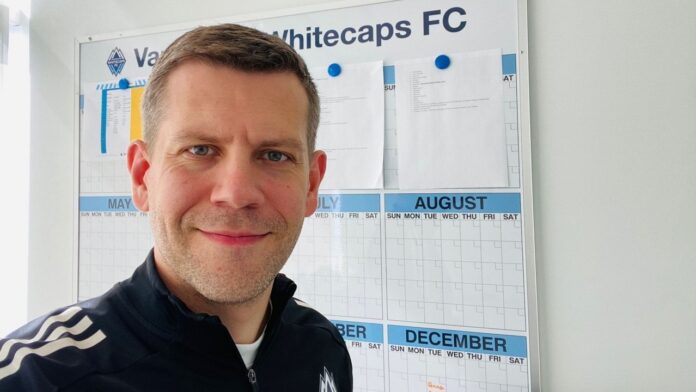
Bartosz Barnaś at Vancouver Whitecaps FC reviewing scouting schedules and recruitment plans
Bartosz Barnaś leads global scouting at Vancouver Whitecaps, combining data and insight to shape recruitment strategy. His work reflects the evolving demands of modern football scouting.

Profile

Role: Chief Scout at Vancouver Whitecaps

Specialisation: global player identification and data-supported recruitment

Experience: Poland, England, Denmark, the Netherlands and Canada

Focus Areas: player identification, recruitment strategy, undervalued markets and sustainable scouting models

Biography

Bartosz Barnaś (born 1988, Tarnów, Poland) is the Chief Scout at Vancouver Whitecaps, overseeing global player identification in Major League Soccer. His work combines data-supported recruitment with traditional scouting, operating within MLS’s complex system of salary caps, trades, and multiple acquisition pathways.

Before joining Vancouver, Barnaś worked as Chief Scout for Raków Częstochowa, helping build the club’s scouting structure during a period in which Raków won the Polish league and competed in Europe. Notable recruitment successes included Ante Crnac, signed for €1.3 million and later sold for €11 million, along with key players such as Stratos Svarnas, John Yeboah and Gustav Berggren.

His work combines data-supported recruitment with traditional scouting, operating within MLS’s complex system of salary caps, trades, and multiple acquisition pathways.

Earlier, Barnaś spent five years scouting for Willem II, identifying talent early and exploring undervalued markets such as the lower tiers of German and Spanish football. The club signed young talents including Vangelis Pavlidis, Mike Trésor and Derrick Köhn before they became widely recognised, while also qualifying for European competitions. He credits much of his development to working with Gerard Wielaert, a Willem II legend and mentor.

Today, Barnaś focuses on identifying emerging global talent and building sustainable recruitment models to help Vancouver Whitecaps compete for major honours. He has also expressed admiration for the football philosophy of Ajax Amsterdam.

Key Insights

  • Bartosz Barnaś leads global scouting at Vancouver Whitecaps in MLS.
  • His career spans multiple countries and recruitment models across Europe and North America.
  • He combines data, video and live scouting to build sustainable player recruitment systems.

Our Exclusive Interview with Bartosz Barnaś


You’ve worked in several countries and clubs. How did your journey into football scouting begin?

It started with curiosity. I wanted to understand why some players succeed while others don’t. As a teenager, I was already watching games from different levels, making notes on players and trying to figure out what made them good or not. That curiosity eventually became my profession.

Before I turned 20, I was already contacting Ekstraklasa clubs offering help, even as a volunteer, because professional scouting barely existed in Poland at that time. One day, the sporting director of Cracovia answered my call – and that moment changed everything.

That curiosity eventually became my profession.


You transferred from Cracovia in the Ekstraklasa to scouting youth football for Tottenham Hotspur. How was your experience joining a big institution like Tottenham? What was your recruiting strategy?

I met Tottenham’s academy director at a youth tournament, and shortly afterwards I joined the club as a scout for Eastern Europe. It was my first experience inside a truly elite football organisation.

Working for such a large club gives you perspective. When you are one of many scouts worldwide, the visible outcome of your work may appear only once every few years, and only exceptional players eventually progress to the first team in the Premier League.

At academy level, recruiting is all about projection. Physical advantages can be misleading, so we prioritised football intelligence, learning capacity, and mentality. The key question was always: what will this player look like in five years within an elite environment?


You then made the move to FC Copenhagen, who are known for their heavily data-focused recruiting strategy. What did you learn during your time there?

FC Copenhagen was my first real exposure to a data-supported recruiting model. I was responsible for scouting markets such as Poland, Czechia and Slovakia, while recommended players were later evaluated internally through deeper analytical assessment.

At that time, it was still a part-time role alongside a regular job, but shortly afterwards I joined Willem II full-time, which became a major milestone in my career.


You then went on to scout for Willem II for five years. What were the biggest challenges and lessons during your time there?

At Willem II we had one of the smallest budgets in the Eredivisie, but limited resources force smart decisions. We simply had to identify talent earlier and explore undervalued markets, such as lower German or Spanish leagues.

We signed players like Vangelis Pavlidis, Mike Trésor and Derrick Köhn before they became widely known, while qualifying for European competitions – a huge achievement for a club of Willem II’s size.

I was also fortunate to work closely with Gerard Wielaert, a club legend and my mentor, who had a massive influence on my professional development and remains an inspiration to this day.

limited resources force smart decisions.


Raków Częstochowa is one of Poland’s biggest clubs. How did it feel to return to Poland and how has the Ekstraklasa improved over the years?

Returning to Poland was very rewarding because I could apply my experience from international markets at home. Raków had a clear ambition: to win the league for the first time in the club’s history and compete in Europe – and we achieved it.

It was also my first role as Head of Scouting, where I was responsible for building structures and improving recruitment processes. We signed key players such as Stratos Svarnas and Gustav Berggren, while the transfer of Ante Crnac showed how smart recruitment can quickly bring results and return on investment.

The Ekstraklasa has improved significantly in terms of professionalism, infrastructure, and openness to analytics in recent years, which is reflected in UEFA rankings and stronger performances of Polish clubs in European competitions.


You are now at the Vancouver Whitecaps. What makes scouting for MLS different from scouting for European leagues? What motivated your move to Canada?

MLS is growing rapidly. It is no longer a retirement league but a global talent market where you can find players with enormous potential from all over the world. Players like Sebastian Berhalter, Édier Ocampo and Kenji Cabrera are great examples within our squad.

Vancouver presented a clear sporting vision built around smart recruitment and long-term sustainability. The hiring process was extremely professional, and the opportunity to work with sporting director Axel Schuster and technical director Quinn Thompson was very attractive. They have built a strong international team with ambitious people across the organisation.

MLS recruitment operates within very specific mechanisms – salary caps, roster rules, trades, and multiple acquisition pathways, including college soccer. For someone coming from Europe, it can honestly feel overwhelming at first. You realise very quickly that understanding the league rules is almost as important as identifying the right player.


How do you filter thousands of players to find the right profile for your club? How do you balance statistics and watching the player live?

Everything starts with clarity about the club’s identity and positional profiles. Once you know exactly what you are looking for, data reduces the pool, video builds context, and live scouting confirms the decision.

Our data science team developed powerful analytical tools that support the scouting process. We strongly believe in our methodology and process while constantly working to improve it.

Once you know exactly what you are looking for, data reduces the pool, video builds context, and live scouting confirms the decision.


What are your ambitions for the upcoming seasons?

My ambition is clear – to help Vancouver compete for trophies while building a sustainable recruiting model.

After losing both the MLS Cup and CONCACAF Champions Cup finals last season, we are extremely motivated to take the next step. I believe we are creating a unique project in North America and proving that a well-managed underdog can compete with bigger clubs.

On a personal level, one of my long-term dreams would be to work for Ajax Amsterdam – a club I have supported since childhood. I have always admired its identity and history, and I hope to see Ajax return to Europe’s elite in the near future.


FAQ

Who is Bartosz Barnaś?

Bartosz Barnaś is the Chief Scout at Vancouver Whitecaps, overseeing global player identification in Major League Soccer.

Which clubs has Bartosz Barnaś worked for?

He has worked for Cracovia, Tottenham Hotspur, FC Copenhagen, Willem II, Raków Częstochowa and Vancouver Whitecaps.

What is Bartosz Barnaś known for in football recruitment?

He is known for combining data-supported recruitment with traditional scouting and identifying talent in undervalued markets.
2026 FIFA 축구 에이전트 시험 준비 가이드

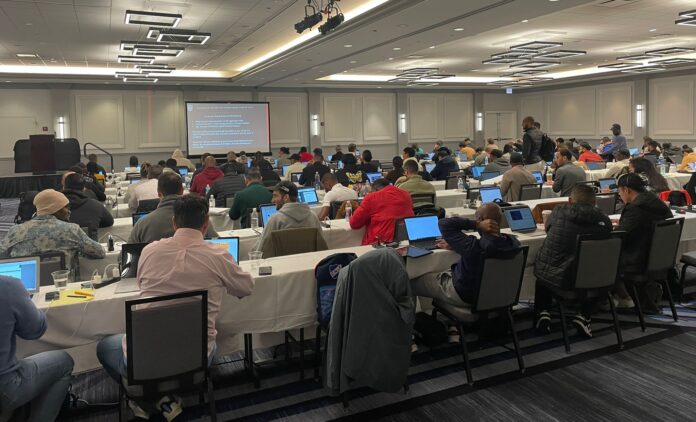
Candidates taking the FIFA Football Agent Exam in Chicago during the 2024 in person exam session.
Candidates sit the FIFA Football Agent Exam during the 2024 in person session in Chicago. Passing the exam is the key step to becoming a licensed football agent under FIFA regulations.

2026년 FIFA 축구 에이전트 시험 신청 기간이 마감되었습니다. 2026년 3월 6일을 마지막으로 신청 마감일이 지나면서, 신청서를 제출한 응시자들은 이제 시험 준비 과정에 본격적으로 돌입하게 됩니다.


예비 에이전트들에게 FIFA 축구 에이전트 시험은 축구 산업에서 전문가로 활동하기 위한 중요한 첫 관문입니다. Sports Agent Academy와 The Football Week는 차세대 스포츠 에이전트 및 스포츠 변호사들을 교육하고 지원합니다.


아래에서 2026년 시험에 관한 주요 정보와 준비에 도움이 될 포괄적인 리소스를 확인해 보세요.

2026 FIFA 축구 에이전트 시험 주요 일정

FIFA측에서 확정한 타임라인:

  • 신청 시작: 2026년 1월 20일
  • 신청 마감: 2026년 3월 6일
  • 시험일: 2026년 4월 28일 ~ 30일 (추가 세션이 이어질 수 있음)
  • 결과 발표: 2026년 6월 4일


시험은 FIFA Agent Platform을 통해 진행되며 구성은 다음과 같습니다.

  • 시험 시간: 60분
  • 문제 형식: 20문항 객관식 (Multiple-choice)
  • 합격 기준: 75% 이상 득점


후보자들은 FIFA 축구 에이전트 규정 (Football Agent Regulations – FFAR) 을 포함하여 축구 이적 시스템을 관장하는 FIFA 규정에 대한 깊은 이해도를 증명해야 합니다. 라이선스 취득 절차에 대한 자세한 내용은 FIFA 공식 홈페이지에서 확인하실 수 있습니다.

FIFA 에이전트 시험 준비하기


신청 단계가 마무리됨에 따라, 후보자들에게는 4월 말 시험까지 약 한 달 남짓한 준비 기간이 주어집니다.


효과적인 준비를 위해서는 체계적인 학습, 주기적인 모의 시험, 그리고 FIFA 규정에 대한 심도 있는 이해가 필요합니다.


지난 수년간 많은 예비 에이전트들이 Sports Agent Academy와 The Football Week의 리소스를 활용해 합격의 발판을 마련해 왔습니다.

준비에 도움이 되는 추천 자료


The Agents Week 매거진

꾸준함을 유지하는 가장 좋은 방법은 매주 학습과 실전 연습을 병행하는 것입니다. 매주 금요일, 업계 분석과 함께 모의고사 문제들을 이메일로 받아보실 수 있습니다. 여기서 구독하세요.


온라인 리소스

  • Sports Agent Academy (LinkedIn): 최신 시험 업데이트, 퀴즈, 업계 통찰력을 제공합니다. 여기서 팔로우하세요.
  • The Football Week 웹사이트: 선수 대리 및 고객 관리, 구단 비즈니스 전략 및 협상 관련 포스트 및 기사들을 접할 수 있습니다. 여기서 읽어보세요.
  • Sports Agent Academy 유튜브 채널: 스폰서십, 축구화 계약, 협상 전략 등 영상 기반의 깊이 있는 학습이 가능합니다. 여기서 구독하세요.


추천 도서

  • How to Pass the FIFA Football Agent Exam: The Workbook: 체계적인 연습 문제와 학습 활동이 포함된 워크북입니다. 여기서 구매하실 수 있습니다.
  • How to Become a Football Agent: The Guide (3rd Edition): 업계의 기초부터 선수 대리의 현실까지 다루는 종합 가이드북입니다. 여기서 읽어보세요.
  • DEADLINE: 축구 에이전트 세계를 배경으로 한 범죄 스릴러 소설로, 흥미로운 서사를 통해 업계를 색다르게 바라볼 수 있습니다. 여기서 더 알아보실 수 있습니다.


축구 에이전트라는 커리어


오늘날 축구 에이전트의 역할은 그 어느 때보다 복잡해졌습니다. 선수 및 구단 대리인들은 다음 영역들을 반드시 잘 이해해야 합니다.

  • FIFA 규정 및 법적 구조 (Regulations & Frameworks)
  • 계약 협상 (Contract Negotiations)
  • 선수 육성 및 커리어 개발 (Player Development)
  • 상업적 기회 및 스폰서십 (Sponsorships)
  • 국제 이적 시스템 (International Transfer Systems)


FIFA 축구 에이전트 시험은 공인 에이전트가 현대 축구 산업에서 활동하는 데 필요한 지식과 전문성을 갖추었는지 검증하는 장치입니다. 올바른 준비와 자료로 무장한다면 이 시험은 축구에서 가장 역동적인 직업으로 나아가는 완벽한 첫걸음이 될 것입니다.

마지막으로

이제 모든 초점은 4월 시험에 맞춰집니다. 꾸준히, 꼼꼼히 준비하셔서 2026년 FIFA 공인 축구 에이전트로서의 첫발을 잘 떼시길 바랍니다. 2026 FIFA 축구 에이전트 시험을 준비하는 모든 분들의 합격을 기원합니다!

Who is Pavla Satrapova?

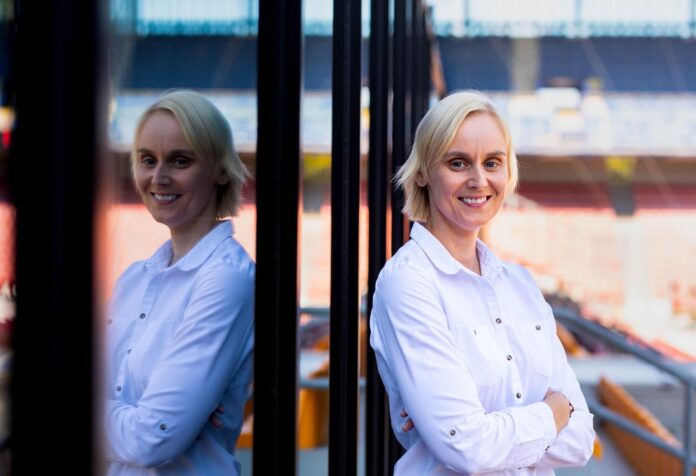
Pavla Satrapova standing at Sparta Praha stadium reflecting leadership in women’s football development
Pavla Satrapova, Head of the Women’s Section at AC Sparta Praha, leading the development of a high performance environment in women’s football. Her work combines structure, innovation and long term vision.

Profile

Role: Head of the Women’s Section at AC Sparta Praha

Specialisation: strength and conditioning coach, academic researcher, and leader

Experience: nearly a decade at Sparta

Focus Areas: elite sport, progressive thinking, performance, structure, and women’s football development

Biography

She has a doctorate, a UEFA licence, and a list of certifications that reads longer than most coaches’ entire careers. But what defines Mgr. Pavla Satrapová is not what is on paper, it is what she is building on the pitch.

As Head of the Women’s Section at AC Sparta Praha, Satrapová sits at the intersection of elite sport and progressive thinking. A strength and conditioning coach, an academic researcher, and a leader. She has spent nearly a decade at Sparta quietly reshaping what women’s football in the Czech Republic can look like. Her early research into the use of virtual reality to enhance performance revealed a clear capacity for innovation and forward-thinking something her work since has consistently reinforced, establishing a sustained record of creativity and intellectual curiosity.

She has spent nearly a decade at Sparta quietly reshaping what women’s football in the Czech Republic can look like.

This is a woman who studied the sport, then went out and changed it!

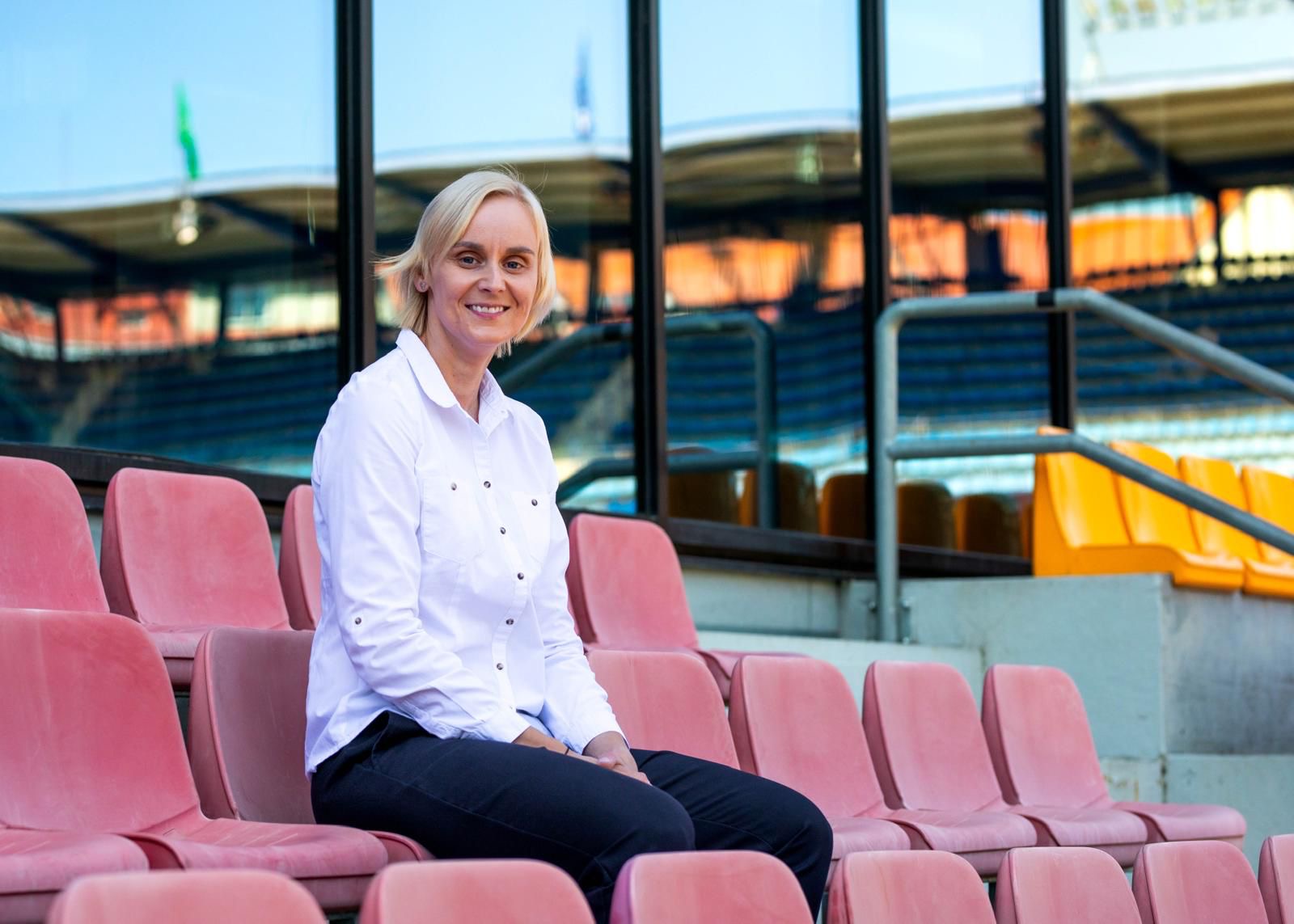
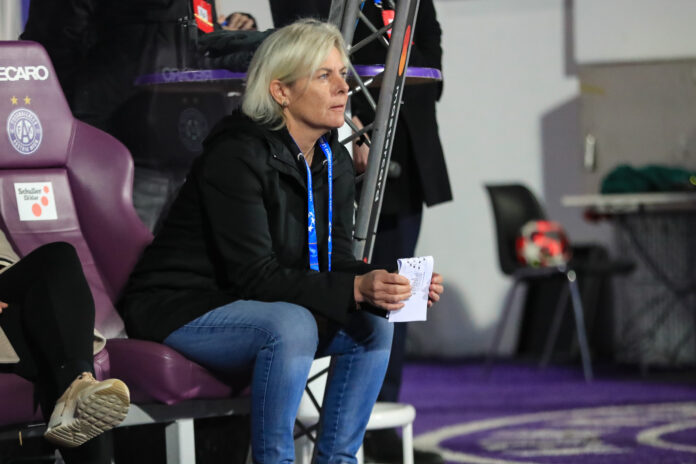
Pavla Satrapova seated in stadium stands at Sparta Praha reflecting leadership in women’s football development
Pavla Satrapova at AC Sparta Praha, where she leads the women’s section with a focus on performance, structure and long term development. Her work continues to shape the future of women’s football in the Czech Republic.

Key Insights

  • Pavla Satrapová leads the women’s section at AC Sparta Praha across performance and structure.
  • Her background combines elite sport, academia, rehabilitation, and leadership.
  • She focuses on long-term development, innovation, and systemic growth in women’s football.

Our Exclusive Interview with Mgr. Pavla Satrapova


You are Head of the Women’s Section at AC Sparta Praha. How do you define your mandate, and what defines success in this role?

My role is role is to oversee the full structure of the women’s section, ensuring it remains competitive at both domestic and international levels over the long term. That responsibility lies and spans into the sporting direction, staffing, and the connection between each age group, from the academy through to the first team. The majority of my work centres around the first team where I contribute to building the playing identity, squad composition, and the functioning of the coaching staff, alongside the day-to-day operations and communication both inside and outside the club.

Though I do not define solely by league position. What matters the most is the ability to develop capable of performing at the highest level for top level football, consistently bringing them through into the first team, and sustaining both performance and a high-quality environment over time.

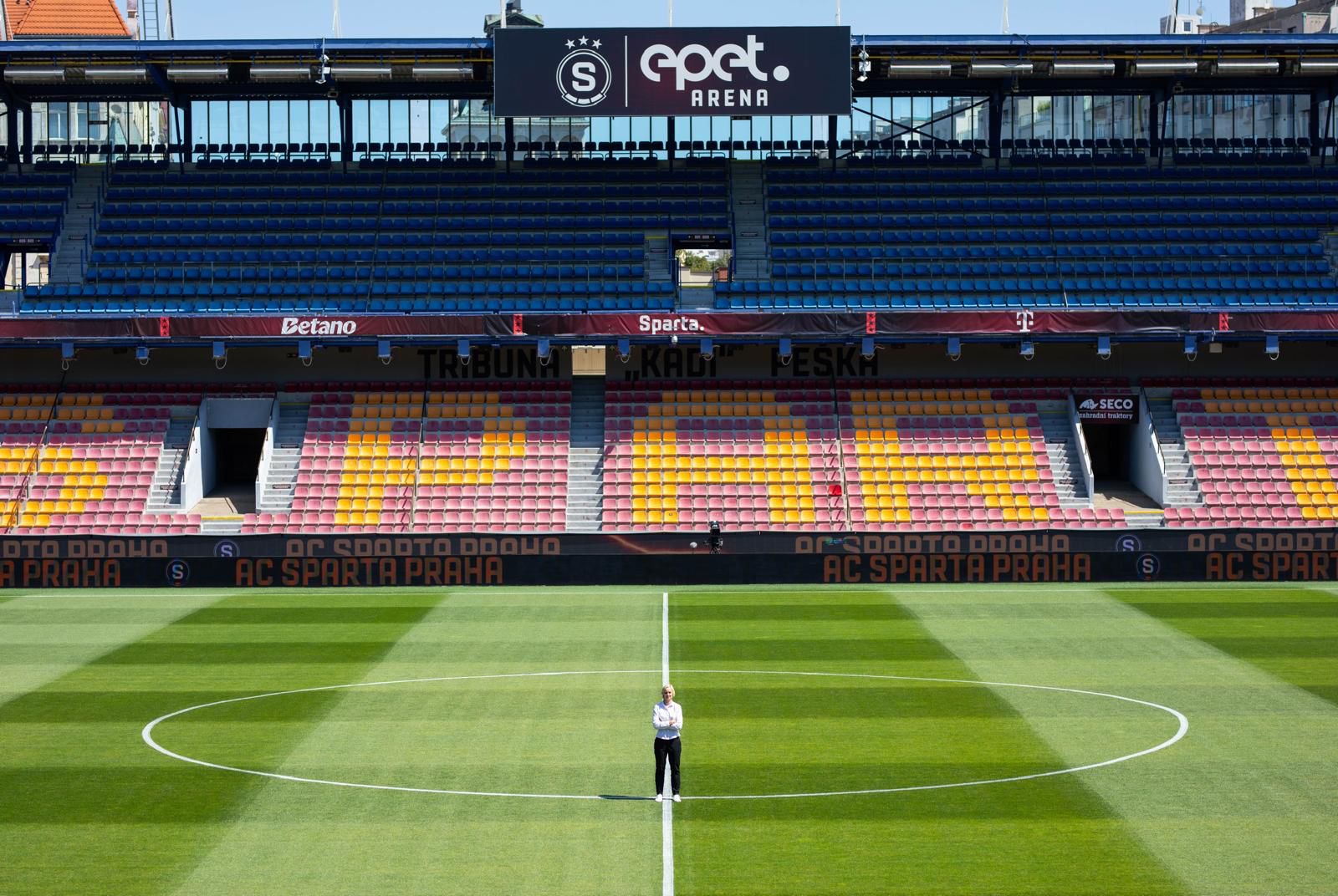
Pavla Satrapova standing at centre pitch at AC Sparta Praha stadium highlighting leadership in women’s football structure
Pavla Satrapova at the heart of AC Sparta Praha, leading the development of a structured and high performance women’s football program. Her role connects the academy, first team and long term vision of the club.

Your career began in physical education and rehabilitation. How has this pathway shaped your perspective as a ⁠ coach and as a leader?

My education and early application have built a strong foundation across several areas that are pivotal and the centrepiece of my work today. Understanding how the body functions, injury prevention, load management and the psychological components and areas of working with athletes. It has also taught me and shaped my approach to planning, communication, motivation, explain goals and inspire others. I believe that these experiences gained during these early years fed directly and were later applied.


You worked across multiple age groups at Sparta as both S&C coach and assistant coach. What did this experience ⁠ teach you about player development and structural needs in women’s football?

I am truly grateful for the experience, going through the entire structure of Sparta’s women’s section and getting to know the environment and the daily needs of players, coaching staff, and parents. I am not someone who makes decisions from behind a desk, but someone who knows the practice and is often still part of it.

I am not someone who makes decisions from behind a desk, but someone who knows the practice and is often still part of it.

I place emphasis on meeting with players and staff in their natural daily environment in order to better understand the overall functioning and the challenges they face.

From a sporting standpoint, I came to understand just how critical continuity is to player development

Each age category has its specifics, its own demands and it is crucial that the individual phases is built logically.

Working with girls and young women has made me aware that their mental and emotional needs require specific attention. Working with girls and young women also brought a particular awareness, that their mental makeup requires specific attention.

It is partly why we introduced mental coaches across all categories at Sparta, supporting not only the players but the parents as well. At the same time, I realized how important a systemic setup of the entire club is. Everyone working at Sparta should identify with this system and uphold the values we stand for.


Your background spans elite sport, academia, and leadership. How has this shaped your approach to building a women’s football program?

At first glance, these topic look very different or like they don’t belong together but is quite the opposite. The academic environment gave me theory and an evidence-based perspective. Managing people and teams within academia built my managerial skills. Elite sport showed me the practical side. Together, they led me to one belief I will always stand by.

Theory is valuable and necessary, and we should rely on it, whether that data analysis in women’s football, injury and rehabilitation, or data within scouting.

However, practice is often different as a result of many variables and that is why understanding the details, the daily challenges, and adapting everything to the real environment and the club is essential. At the end of the day, we work with people, not machines or theory.

At the end of the day, we work with people, not machines or theory.


You hold a doctoral background and extensive qualifications in performance and sports science. How do you ⁠ translate this knowledge into practical decision making, and where is the gap between research and coaching practice?

In certain areas, I try to make decisions based on data and verified information areas. It gives me a solid foundation for further steps. But the gap between research and practice often comes down to application.

Not everything from science translates easily into daily training and finding that balance matters. In practice, ideal conditions simply do not exist, whether it’s the environment, available equipment or match conditions. The pitch will never be perfect, the grass perfectly cut, the ideal weather, or the balls correctly inflated. In a squad of twenty-eight players, not everyone will have slept well, feel fully prepared, or be at one hundred percent in every respect.

As mentioned, before you work with people. For players, that means accounting for mental state, circadian rhythms, mood, and personal life. For staff, it is much the same. People often carry difficult situations with them, and part of the job is supporting them through that.

I am a strong advocate of science, and we should absolutely rely on it. But we must never lose sight of practice, common sense, and humanity.


You have researched virtual reality in performance development. How transferable are these insights to women’s ⁠ football, and what role will technology play in player development?

Virtual reality holds genuine potential in football, especially in improving decision-making, understanding and interpreting game situations, and analysing as well as evaluating tactics. It is a useful tool for developing the cognitive component of performance, particularly for injured players, who can continue to train their “brain.” This can be a game changer when it comes to returning from injury. Our club emphasizes the development of cognitive abilities and neurotraining as part of a broader framework. In women’s football, virtual reality is not yet widely used, but it could play an important role going forward. Several studies have already been carried out across football as a whole, although it remains an area that requires further exploration.


You are responsible for both performance and structure at Sparta. What does building a high-performance women’s program require in practice?

It demands daily hard work, passion, sharp communication, decisive thinking, and the ability to anticipate what comes next. Complacency is not an option. You can never slow down too much or stop, the season never truly stops.

It is like a train that never stops; it only slows slightly in the off-season, but you hardly notice it. Central to building such an infrastructure are the people around you. Surrounding yourself with individuals who inspire and challenge one another and have driven and determination to constantly become industry, this is a non-negotiable players coaches and staff have to be alike.

That collective drive to improve, combined with strong communication and cooperation across the entire club, is what sustains a winning environment. Sparta is an environment set up for success and growth. Its values are tradition, ambition, courage, and respect. These are also the values I uphold in my position and instil across the women’s section.


ACL injuries remain a major challenge in women’s football. In your view, is this primarily a knowledge issue, a ⁠ resource issue, or a structural problem?

That is a great question. I addressed this topic in both my bachelor’s and master’s theses. I had the opportunity to observe over several years and have followed closely as research and understanding have developed over the years.

several risk factors and areas influencing ACL injuries in girls and women have been identified. At the same time, I have personally witnessed these injuries in players who did not show or meet these risk factors and yet the injury still occurred. It is never one thing in isolation, but a combination of factors. At our club, rather than focusing primarily on identifying risk factors, we focus on prevention. Strength training is an essential part of that.

When we still see the absence of strength training and the persistent myth that children should not do it, I truly do not understand it. We also emphasize nutrition, load management, and mental well-being. We regularly educate fitness coaches, physiotherapists, and coaches. ACL injuries have been, are, and will continue to be a reality in women’s football. We have to accept that. But accepting it does not mean resigning to it. It means doing everything possible to reduce the risk.


How do you build a competitive and sustainable program within the financial realities of Central European ⁠ women’s football?

Two years ago, we transitioned the first team into a professional structure. That means more than just salaries, it encompasses infrastructure, facilities, and the right people supporting the squad day to day.

Alongside that, we continue to invest heavily and emphasize the robustness of the academy, with a clear focus on developing our own players. None of this would be possible without the backing of the club’s management and owner.

This season, the new UEFA Women’s Europa Cup has given us an important benchmark. We have confirmed that our players can compete at a European level, against a range of clubs from across the continent.

Whether signing new players or developing academy talent, we offer genuine career progression, a clearly defined plan, and a gradual pathway into the first team, with each step naturally leading to the next.

The proof is already on the pitch. Our regular starting goalkeeper is a 17-year-old academy product. Another 17-year-old is pushing for a place in the starting lineup. Those are the moments that mean the most and truly makes us happy


Looking ahead, what should a world⁠-class development pathway look like, and how can clubs like Sparta Praha shape that future?

I do not think I am fully competent to define a single clear pathway or say how it should be. It largely depends on the club’s philosophy, the direction it chooses, and the path it takes.

As I mentioned earlier, we focus on developing our own players. This also involves strong regional scouting within the Czech Republic and identifying talent. It is then our responsibility to further develop that talent and potential.

As Sparta, we can therefore offer a pathway for development and progression in a player’s career.


FAQ

Who is Mgr. Pavla Satrapova?

Mgr. Pavla Satrapová is Head of the Women’s Section at AC Sparta Praha, with a background in coaching, sports science, and leadership.

What is Pavla Satrapová’s role at AC Sparta Praha?

She oversees the full structure of the women’s section, from the academy through to the first team, while supporting performance, staffing, and sporting direction.

What areas does Pavla Satrapová focus on in women’s football?

Her work focuses on player development, performance, structure, innovation, and creating a high-quality long-term environment.

TFF Dispute Resolution Board UCK Jurisdiction Guide

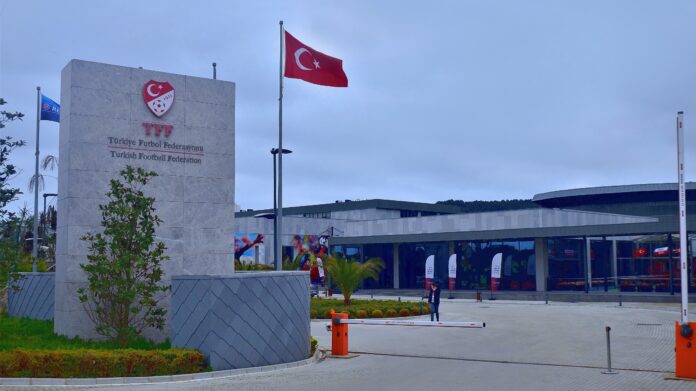
Turkish Football Federation headquarters in Riva, Istanbul representing the institutional structure behind football governance
The Turkish Football Federation headquarters in Riva, where key regulatory and dispute resolution bodies operate. The UÇK sits within this institutional framework shaping football law in Turkey. CeeGee, CC BY-SA 4.0, via Wikimedia Commons.

Introduction

In Turkey, disputes arising out of professional football are resolved within a distinct legal framework shaped by federative regulations, the need for swift sports adjudication, and the influence of international rules. At the center of this framework is the Dispute Resolution Board (UÇK), which serves as one of the first-instance legal boards of the Turkish Football Federation (TFF) pursuant to Law No. 5894 on the Establishment and Duties of the TFF. The working principles of this chamber are determined in accordance with the TFF Statute and the UÇK Instruction. Therefore, the UÇK should not merely be considered an intra-football arbitral tribunal, but rather a specialized first-instance adjudicatory mechanism within the Federation, operating under predetermined rules and subject to review by the TFF Arbitration Board.

However, in recent years, a significant transformation has occurred regarding the UÇK’s jurisdiction and its constitutional basis. The primary catalyst for this shift is the Constitutional Court’s (AYM) decision dated 18.01.2018, numbered E.2017/136, K.2018/7. Following this decision, the former approach which dictated that all football related disputes must compulsorily be resolved before federation boards is no longer sustainable. Consequently, in disputes of a contractual and financial nature, the mutual consent of the parties, written acceptance, and the right of access to a court have regained prominence.

The primary catalyst for this shift is the Constitutional Court’s (AYM) decision dated 18.01.2018, numbered E.2017/136, K.2018/7.

The Current Status and Institutional Structure of the UÇK

Pursuant to the fourth paragraph of Article 5 of the current Law No. 5894, first-instance legal boards are composed of members elected by the Board of Directors. Following the enactment of Law No. 7405, the same provision stipulates that the term of office for these boards is four years, independent of the Board of Directors’ term. It also regulates the implementation of guarantee mechanisms regarding independence and impartiality, as well as the recusal regime in cases involving a conflict of interest. Thus, the primary impact of the post-7405 reform was not necessarily altering the electing body but rather strengthening the boards’ term of office and their foundation of independence.

Reading Article 55 of the TFF Statute and Article 3 of the UÇK Instruction together reveals that the UÇK consists of a chairman, six principal members, and six substitute members, all elected by the Board of Directors. It is mandatory for the board members to be legal professionals. The UÇK Instruction further requires the chairman, as well as the principal and substitute members, to have at least ten years of professional experience, an archived criminal record certificate, a declaration of wealth, and to meet specific independence criteria. Individuals actively employed in clubs, professional football players, coaches, medical staff, football agents, and those serving in other boards and organs of the TFF cannot serve as UÇK members.

The conclusion drawn from this structure is as follows: The current design of the UÇK is a first-instance legal board model that is institutionally situated within the TFF, yet its judicial appearance has been fortified through tenure security, a recusal regime, and declarations of independence. For this reason, when evaluating the UÇK’s structure, it is more accurate to analyze the debate on independence through the lens of tenure security, the prohibition of conflicts of interest, and the autonomy of the decision-making process, rather than focusing solely on the electing body.

Jurisdictional Regime: Contractual Disputes, Exclusive Areas, and the Post-2018 Constitutional Landscape

Pursuant to Article 56 of the TFF Statute and Article 2 of the UÇK Instruction, the UÇK examines and resolves all contractual disputes relating to football among clubs, players, coaches, and football agents, provided that the parties accept its jurisdiction. This provision clearly indicates that in the current system, the general rule for contractual disputes is the mutual consent of the parties. In other words, for contractual claims such as salaries, bonuses, termination compensation, representation fees, or similar items, the UÇK’s jurisdiction does not arise automatically as a rule but rather based on written consent.

the general rule for contractual disputes is the mutual consent of the parties.

However, the same normative texts also state that disputes concerning sporting sanctions and training compensation shall be resolved exclusively before the UÇK. The explicit wording of the positive TFF legislation remains in this direction today. Yet this topic is a highly debated area that requires careful interpretation on a constitutional level. This is because the Constitutional Court, in its decision 2018/7, emphasized that the mandatory arbitration regime set forth in Article 59 of the Constitution only holds valid constitutional grounds for decisions regarding the management and discipline of sports activities by sports federations, whereas receivables and financial rights arising from contracts fall outside this core area.

Therefore, in a definitive legal assessment, two separate planes must be considered simultaneously. The first plane is the current wording of the TFF Statute and the UÇK Instruction; these texts maintain the formula of exclusive jurisdiction regarding sporting sanctions and training compensation. The second plane involves constitutional review and the right of access to a court; the AYM decision established that the scope of mandatory arbitration cannot be limitlessly expanded by the federation’s sub-regulatory norms.

Why the AYM Decision No. 2017/136 E., 2018/7 K., Dated 18.01.2018 is a Turning Point?

The Constitutional Court’s decision dated 18.01.2018 annulled the section of Law No. 5894 that delegated the determination of the jurisdiction of first-instance legal boards to the TFF Statute and other TFF instructions and regulations. The significance of the decision goes beyond merely reiterating the limits of Article 59 of the Constitution. The Court also explicitly stated that leaving the scope of disputes to sub-regulatory norms, which can be altered by the TFF at any time, is incompatible with the principles of the rule of law and legal certainty; it renders individuals unable to foresee which disputes are closed to judicial review, thereby undermining the right of access to a court.

the scope of mandatory arbitration cannot be expanded in an ambiguous manner through sub-regulatory acts.

In particular, the Court assessed together the principle of the rule of law under Article 2, the requirement under Article 13 that fundamental rights may be restricted only by law and in a proportionate manner, the right to seek legal remedies under Article 36, and the sports arbitration regime under Article 59 of the Constitution. According to the Constitutional Court, the scope of mandatory arbitration cannot be expanded in an ambiguous manner through sub-regulatory acts. This approach shows that the UÇK’s jurisdiction over contractual and financial disputes can only be recognized on a more predictable, limited, and consent-based legal foundation.

The point to note here is this: The AYM decision did not render the UÇK dysfunctional; rather, it put an end to the notion that the UÇK is the automatic and mandatory authority for every football-related dispute. The primary impact of the decision has been to redraw the constitutional boundaries of federative dispute resolution and to bring written consent and the right of access to a court back to the forefront in the contractual domain.

Formal Requirements for Application, Written Consent, and Transitional Regime Processes

Article 6 of the UÇK Instruction details the mandatory elements of an application petition. The petition must include the parties’ details, the relief sought, the material facts, the evidence, the amount in dispute, and a signature. Additionally, a receipt showing the payment of the application fee and an agreement indicating the acceptance of the UÇK’s jurisdiction must be submitted. This systematic approach indicates that the UÇK’s jurisdiction in contractual disputes is essentially established based on written consent.

An important point here is that written consent is not necessarily required to be in the form of a separate agreement executed after the dispute has arisen. The Instruction utilizes the phrase “an agreement indicating the acceptance of the Dispute Resolution Chamber’s jurisdiction.” Therefore, consent can arise either from an explicit jurisdiction clause within the principal contract or from a separate arbitration agreement concluded after the dispute. Hence, a narrow interpretation suggesting that only post-dispute agreements are valid does not strictly align with the current text.

Regarding the transitional regime, Provisional Article 2 of the UÇK Instruction is of significance. Accordingly, if disputes relating to contracts signed before 02.03.2019 are brought before the UÇK after this date, and the respondent fails to object to the UÇK’s jurisdiction within seven days from notification, they are deemed to have accepted the chamber’s voluntary jurisdiction. This provision illustrates that an explicit tacit acceptance mechanism has been normalized specifically for a certain transitional period. Consequently, this tacit acceptance regime should not be presented as a universally applicable and unlimited rule for all cases automatically.

Procedural Rules

As a rule, UÇK proceedings are conducted based on the case file. However, if deemed necessary, the chamber may request information and documents, conduct further examinations, and hold a hearing; it may also decide to conduct the hearing via video conference, teleconference, or other methods. Decisions are taken by an absolute majority of the attending members; abstention is not permitted. The UÇK must render its reasoned decision within four months at the latest from the date of application; in the presence of justifiable reasons, this period may be extended for one-month intervals.

Another topic as crucial as procedural economy is the notification regime. According to Article 14 of the UÇK Instruction, the statement of claim is primarily sent to the respondent’s e-mail address or fax number registered in the TFF records. Notifications sent to the e-mail address are deemed to have been served at the end of the fifth day following the date of dispatch, regardless of whether the recipient has read it. This rule makes tracking deadlines extremely critical in football disputes. Furthermore, the failure of the parties to report changes in their contact information creates an additional risk of forfeiture of rights.

As regards the costs regime, the correct term is “application fee”, not “court fee”. According to Article 19 of the UÇK Instruction, in monetary disputes, a 3% application fee based on the value of the claim must be paid in advance. If the dispute has no monetary value, a fixed application fee determined at the beginning of the season is applied. This distinction shows that the UÇK system operates within a federative application regime that differs from the classical judicial fee logic.

The Arbitration Board, Finality, and Annulment Proceedings

The period for appealing against UÇK decisions is seven days from the notification of the decision to the parties. This appeal is made before the TFF Arbitration Board. UÇK decision becomes final either if it is not appealed to the Arbitration Board in due time or upon the Arbitration Board rendering its decision. This stage represents the completion of internal federative review; however, in terms of legal consequences, not every Arbitration Board decision can be said to possess the same degree of finality.

Pursuant to the sixth paragraph of Article 6 of Law No. 5894, the decisions of the Arbitration Board regarding the management and discipline of football activities are final. In contrast, decisions outside this scope may be subject to an annulment lawsuit filed within one month from the notification of the decision, pursuant to Article 439 of the Code of Civil Procedure (HMK) No. 6100. This distinction is extremely important. Because in the federative structure, the statement “The Arbitration Board is the final authority” does not yield the same outcome in every case file; the nature of the dispute, specifically whether it falls under the management-discipline domain or the contractual-financial domain, determines whether judicial review is closed or open.

International Scope: The Boundary Between the TFF System and the FIFA System

When a dispute involves a foreign element or is connected to an international transfer structure, the issue cannot be evaluated solely on the plane of TFF boards. In FIFA’s current structure, the Football Tribunal consists of three distinct chambers: the Dispute Resolution Chamber (DRC), the Players’ Status Chamber (PSC), and the Agents Chamber.

Employment disputes of an international dimension between a club and a player, as well as training compensation and solidarity contribution disputes between clubs affiliated with different federations, fundamentally fall within the jurisdiction of the DRC. Employment relationships with an international dimension between a club and a coach or a federation and a coach, along with certain inter-club disputes, are examined by the PSC. The Agents Chamber may also step in concerning the portions of football representation agreements that entail specific international elements.

This landscape is highly significant in practice. Because not every foreign element automatically establishes FIFA jurisdiction; conversely, the mere fact that one of the parties is Turkish does not lock every dispute into the TFF system either. The parties to the dispute, the subject of the contract, the international nature of the transfer transaction, and the applicable FIFA regulations must be evaluated collectively. Particularly, if the boundary between the jurisdiction of the UÇK and the chambers of the FIFA Football Tribunal is not accurately delineated, applying to the wrong authority can result in serious procedural setbacks, missed deadlines, and loss of time.

Conclusion

The current legal landscape indicates that the UÇK can neither be evaluated as a purely mandatory arbitral tribunal in the classical sense nor as an ordinary internal administrative board. The UÇK is a specialized, first-instance legal board situated within Law No. 5894 and the TFF Statute, operating under unique procedural rules. However, following the Constitutional Court’s decision No. 2018/7, the constitutional boundaries of this structure have become more visible; particularly in contractual and financial disputes, the mutual consent of the parties, written acceptance, and the right of access to a court have gained decisive importance.

In this context, a sound legal conclusion must be drawn as follows: The UÇK’s jurisdiction in current positive TFF texts and the boundaries set by constitutional review must be read together. Although TFF texts maintain the exclusive jurisdiction formula regarding sporting sanctions and training compensation, an automatic and boundless concept of mandatory jurisdiction in the contractual sphere is no longer defensible. Likewise, it cannot be said that all decisions of the Arbitration Board are absolutely closed to judicial review. On the contrary, failing to correctly identify the nature of the dispute can lead to erroneous conclusions regarding both jurisdiction and legal remedies.

For this reason, UÇK cases are won or lost not merely at the statement of claim stage; but much earlier, while the contract is being drafted, when the jurisdiction clause is being written, as notice processes are being designed, and when determining whether the dispute is national or international. In football law, a precise jurisdictional analysis is often just as decisive as the substantive right itself.

Bibliography

  • Law No. 5894 on the Establishment and Duties of the Turkish Football Federation.
  • Statute of the Turkish Football Federation.
  • Dispute Resolution Board Instruction.
  • Judgment of the Turkish Constitutional Court dated 18.01.2018, Case No. 2017/136, Decision No. 2018/7.
  • TFF UÇK Frequently Asked Questions Document.
  • FIFA Football Tribunal webpage and relevant current publications.

Who is Paulo Noga?

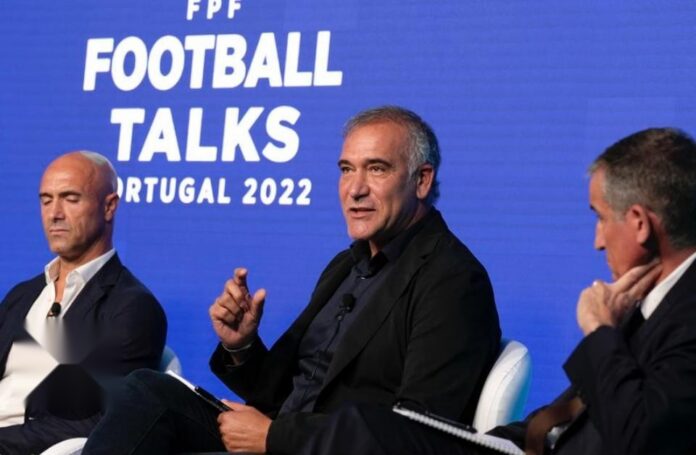
Paulo Noga speaking at a football leadership conference, discussing strategy and player development in elite environments
Paulo Noga sharing insights on football strategy and player development at an international conference. His work reflects a leadership approach built on structure, alignment and long term vision.

Profile

Role: Sporting Director at CSKA Sofia

Specialisation: modern player development, academy leadership, and club organization

Experience: elite European football environments, international academies, and top-level strategic roles

Focus Areas: strategy, evaluation, talent, academy excellence, and structural clarity

Biography

Paulo Noga represents one of the most experienced and structurally driven football executives when it comes to modern player development, academy leadership, and club organization. With a career spanning elite European football environments, international academies, and top-level strategic roles, he embodies a profile that combines technical expertise, organizational leadership, and long-term vision in football development.

Holding the Portuguese citizenship, Noga built his professional foundation both academically and practically. He has a strong sporting background, having played professional football for 12 years in the Portuguese first and second divisions. Alongside his playing career, he developed a robust academic profile with a university degree in Sport and Physical Education Sciences, specializing in high-performance football. He further strengthened his expertise through a Sports Director qualification and postgraduate studies in technical direction, creating a solid theoretical base that complements his extensive practical experience.

His career reflects a rare combination of academy excellence and executive leadership at top clubs. At FC Porto, one of Europe’s most respected talent development institutions, he served as Academy Director, leading the full restructuring and strategic direction of the club’s youth system. His work included implementing development models, scouting structures, coaching education, and international partnerships, contributing to one of the most efficient player production systems in European football.

“DEFINE WHAT WE WANT. UNDERSTAND WHAT WE HAVE. KNOW WHAT WE NEED. TEACH WHO MATTERS. EVALUATE WHAT WE DO. NURTURE WHAT WE CREATE.”

He later brought this expertise to the global stage through roles such as Academy Director at Shandong Luneng Taishan in China, where he built and coordinated large-scale development structures, and as Technical Coordinator at Paris Saint-Germain, where he developed the strategic plan for implementing the academy’s technical model and elite player development framework.

Most recently, at Sporting Clube de Portugal, Noga operated at executive level as Head of Strategy, Evaluation and Talent. In this role, he was responsible for organizing, training, and evaluating a structure of 370 staff members, including scouts, coaches, team managers, and sports psychologists. He oversaw national academy structures, evaluation models, and long-term player development strategies, focusing on aligning scouting, training methodology, performance analysis, and organizational processes into one unified system. His work reinforced Sporting’s position as one of Europe’s leading talent factories.

His work reinforced Sporting’s position as one of Europe’s leading talent factories.

In 2025, he took on the role of Sporting Director at CSKA Sofia, further expanding his leadership scope to the full club structure, strategy, and performance alignment. His responsibilities included building a highly competitive professional team, maximizing the potential of existing players, and helping them reach their full capacity. Recognizing that team performance is closely linked to organizational structure, he also led a broader restructuring of the club. This included creating clear career pathways within the organization, implementing strategic planning processes, and integrating sporting operations across all levels. His work emphasized establishing a culture of excellence, passion for success, and meritocracy across every department.

“I BELIEVE THAT THE LEVEL OF AN INSTITUTION CAN BE ASSESSED BY THE QUALITY OF ITS ORGANIZATION!”

What distinguishes Paulo Noga is not only the breadth of his experience but the consistency of his methodology. His approach is built on the belief that the quality of a football institution is defined by the effectiveness of its people, processes, and structure. He focuses on creating environments where talent is developed systematically, departments operate in alignment, and decisions are driven by both data and long-term strategic thinking.

Throughout his career, he has contributed to the development of high-level players such as Diogo Dalot, Vitinha, Diogo Costa, and Warren Zaïre-Emery, highlighting his impact within elite player pathways.

In addition to his operational roles, Noga has been active as an international speaker and contributor to football education. He has participated in UEFA and ECA programs, as well as international seminars across Europe, Asia, and the Middle East. His involvement in the ECA Academy Management Program further reflects his position within the highest level of strategic football leadership.

Across all stages of his career, a clear identity emerges. Paulo Noga is not only a football executive but a system builder with a holistic view of both the player and the process. He is a leader who understands that sustainable success in modern football is created through structure, alignment, and the continuous development of both players and people within the organization.

“I BELIEVE IN CONTINUOUS REGULATION!”

With his combination of international experience, academic foundation, and executive leadership, he represents a profile capable of shaping football institutions at the highest level, particularly in environments seeking long-term identity, academy excellence, and structural clarity.

Key Insights

  • Paulo Noga combines academy leadership with executive football management.
  • His work is centered on structure, alignment, and long-term player development.
  • He has led strategic football projects across Europe and Asia.

Our Exclusive Interview with Paulo Noga


You have worked in some of the most respected development environments in world football, including FC Porto, PSG, and Sporting CP. What are the fundamental structural elements that differentiate elite academies from average academies?

There is a connection between these three major clubs, and I can say that the same applies to all the world’s leading organizations: the vision and ambition to truly be the best.

There are different development models and philosophies, but generally there is a triangle that reflects this vision: concept, staff, and structural conditions. I had the privilege of experiencing and building upon different concepts throughout my career.

This includes both physical and human structural conditions. On one side, the quality of infrastructure such as training fields, gyms, and facilities. On the other side, the quality of human resources, including coaches, technical staff, and support services. The concept itself is typically linked to the club’s culture.

All clubs face challenges and limitations. Sometimes they are financial, sometimes related to the internal structure or the early stages of a project, and sometimes connected to the competitive environment, which may not allow players or teams to reach their full potential.

What truly differentiates organizations is how they solve these challenges, how consistently the model is applied, and how well the process is respected. Creativity, combined with a results-oriented mindset, is essential to finding the right solutions and achieving defined KPIs.

Success is directly linked to the objectives and the club’s philosophy. Ultimately, the key difference lies in the ability to achieve the goals defined within each development project.

For some organizations, team performance is the main benchmark. For others, the focus is on maximizing individual player potential, even if short-term results are not the priority. Increasingly, and often driven by financial realities, there is a stronger emphasis on promoting academy players into professional football. Clubs that achieve this consistently tend to position themselves at the highest level.


Your career combines academy leadership and executive roles such as Sporting Director. How do you ensure alignment between long-term player development and short-term first-team performance demands?

This is an excellent question, and I believe it represents one of my key strengths. I understand the full lifecycle of a player, from early development to professional football and even life after a sporting career, as I have personally experienced each stage.

Using both practical experience and academic knowledge, I define structured pathways for each phase of a player’s career. This involves stratifying the development process, ensuring that every stage is clearly planned and aligned.

Even players approaching the end of their careers require a strategic approach. Clubs and sporting directors must always consider this phase, as it is important for both the individual and the organization.

From youth development to first-team integration and post-career transition, every stage should be supported by a clear strategy tailored to the individuality of each player.

At the same time, I believe youth development should not be driven by the volatility of professional football, which is heavily influenced by results. Instead, we must develop players who can adapt to different tactical models, as well as coaches and staff who are capable of understanding and applying multiple playing styles.

There is an important distinction between development models and playing models, and this is a topic that deserves deeper reflection.

The challenge is to separate these concepts without disconnecting them. A clear strategy for integrating players into the first team during the final phase of development is essential. Ultimately, each player should represent one of three outcomes: a sporting asset for the first team, a financial asset through transfer value, or a social asset as an individual with strong values who can contribute to the game in other roles.


At Sporting CP, you were responsible for strategy, evaluation, and talent across the entire system. How do you design a unified football identity that connects scouting, coaching, and performance departments?

In my view, the creation of this department was a very positive step.

I joined at a time when the board and president had a clearly defined objective, which I consider one of the fundamental pillars of success: knowing exactly where you are going. The club was emerging from a turbulent period and needed restructuring, particularly in its core identity as a talent development institution.

The department included 370 staff members, making it the largest within the club. I understood that if properly structured and organized, it could become the driving force of the entire organization, which ultimately proved to be the case.

I implemented seven hierarchical levels and four communication layers, introduced job grading aligned with the wider club structure, and defined maturity stages within the organization.

Working closely with the board, sporting director, and academy leadership, the academy once again became a central pillar of the club. This is clearly reflected in the number of young players reaching the first team.

Designing processes also means developing the people responsible for executing them. It is essential to understand both strengths and limitations. Tools such as SWOT analysis support decision-making and strategic planning.

If different departments can align their strengths toward a shared objective, it represents a major step forward. Adaptability within human resources plays a key role in implementation speed. Open and flexible structures allow for more agile organizations.

Misalignment between departments creates uncertainty and inefficiency. While shared decision-making is important, it is equally important that leadership is prepared to make final decisions when necessary.

Clear communication and process transparency allow for better understanding of both individual and team performance. Planning, collaboration, and integration between departments are essential, particularly when managing players transitioning to professional football.


You have built development structures across Europe and Asia. How do cultural and organizational differences influence the way you implement football methodologies?

This is a very common mistake in football: ignoring culture.

I do not believe in copying and applying concepts directly. In most cases, it does not work. Instead, I believe in adapting concepts while maintaining the same ultimate objective.

Even within the same country, differences can be significant. My experiences at FC Porto and Sporting CP clearly showed this. Two clubs in the same country, yet with very different models.

Respecting these differences is essential. Even small variations in work habits can lead to major challenges if not properly understood.

The correct approach is to fully understand the context, including the club’s philosophy, social environment, and competitive structure. Based on this understanding, and aligned with the vision of ownership or leadership, the strategy should be designed to maximize existing strengths and introduce necessary structural improvements.

In my view, the project should not adapt to human resources. Instead, human resources should adapt to the project. This distinction is critical.

Transitions must be carefully managed, as changes often create uncertainty. People need time to adapt to new processes, and this must be considered in any transformation strategy.


Modern football requires the integration of data, performance analysis, and human development. How do you balance analytical frameworks with the human side of leadership?

Technology is essential in modern football, and it is impossible to ignore its role in improving processes and performance. Players themselves are increasingly integrated into digital environments.

However, we must be careful in how we use data. Simplicity in interpretation is key. Data should support decision-making, not complicate it.

If data is not understood or used by coaches, it loses its value. Technology still lacks human sensitivity, which remains essential in leadership and player development.

Data should be used as a support tool, not as the final decision-maker. Performance can only be fully understood when data is contextualized.

Data storage and sharing platforms should be adapted to the user, providing clear and timely information. I strongly advocate for the individualization of these tools to maximize their effectiveness.


Having led large-scale projects at executive level, what type of environment would allow you to create the greatest long-term impact in your next role?

This is a difficult question, as many variables are involved. However, the vision I carry for my next project can be summarized clearly:

“A football club in the world of football, for the football world.”

In other words, a project that not only aspires to be among the best but also seeks to contribute to the development of the game itself.


FAQ

Who is Paulo Noga?

Paulo Noga is a football executive and Sporting Director with extensive experience in academy leadership, strategy, evaluation, and talent development.

Which clubs has Paulo Noga worked for?

He has held roles at FC Porto, Shandong Luneng Taishan, Paris Saint-Germain, Sporting Clube de Portugal, and CSKA Sofia.

What is Paulo Noga known for in football?

He is known for building structured football environments focused on player development, organizational alignment, and long-term strategic planning.

How Much Does Lego World Cup Campaign Cost

Lego football minifigures on display, representing collectable World Cup themed merchandise and sports marketing strategy
Lego football minifigures showcasing the brand’s approach to collectible sports merchandising. Campaigns like these highlight the commercial power of combining football icons with premium products. Photo by Markus Spiske on Unsplash.

When Lego unveiled its latest campaign ahead of the 2026 FIFA World Cup, it instantly created an insanely viral movement, collecting over 5m likes in the first couple of hours. Featuring minifigure versions of Cristiano Ronaldo, Lionel Messi, Kylian Mbappé and Vinícius Júnior, alongside the real ones themselves in a playful setting, the campaign quickly spread across social media, generating millions of impressions within hours.

This was the result of a carefully constructed commercial strategy that combines licensing, athlete partnerships, nostalgia, and digital distribution.

Turning Footballers Into Collectables

Most World Cup merchandise follows a predictable pattern. Replica kits, scarves, and generic souvenirs flood the market during the tournament and quickly lose relevance once it ends.

Lego has taken a different approach. By transforming the game’s biggest stars into detailed, premium collectables, it has positioned its products closer to memorabilia than merchandise.

By transforming the game’s biggest stars into detailed, premium collectables, it has positioned its products closer to memorabilia than merchandise.

The “Football Legends” sets, built around players like Ronaldo and Messi, are not aimed at children alone. With 800+ pieces, custom poses, and display-ready packaging, they target adult fans who have followed these players for over a decade. This is a crucial change. Instead of chasing volume at low price points, Lego is operating in a higher-margin, collector-driven space.

At price points that can reach around £200 for flagship sets, Lego is effectively competing with signed shirts, framed prints, and limited-edition memorabilia. The difference is longevity. A Lego set does not expire with the tournament cycle. It can sit on a shelf for years, even decades, retaining both emotional and financial value. The collectible element of this World Cup edition will have an incredible longer term value for avid Lego collectors.

A Lego set does not expire with the tournament cycle.

The Power of Bringing Icons Together

One of the most commercially powerful elements of the campaign is the combination of players involved. Ronaldo and Messi have defined football for more than 15 years, yet they have rarely appeared together in commercial campaigns.

The most notable exception came in a 2022 campaign by Louis Vuitton, where they were photographed playing chess. Even then, the execution was tightly controlled and limited.

Lego has effectively brought them into the same product universe, alongside the next generation represented by Mbappé and Vinícius Júnior. This creates a narrative that spans eras.

From a commercial perspective, this increases perceived value instantly. Scarcity and rarity are key drivers in collector markets, and the idea of owning a product that unites these players is inherently appealing.

How Much Would This Cost?

Campaigns of this scale are not cheap, they’ve rarely been seen before for a reason. While exact figures are not public, it is possible to estimate the investment based on industry benchmarks.

First, there is the licensing agreement with FIFA. World Cup licensing deals typically involve multi-million-pound guarantees, often running into tens of millions for global rights, plus royalties on every unit sold. For a brand like Lego operating at global scale, this would likely sit at the higher end of that range.

Second, there are individual image rights. Players like Ronaldo and Messi command some of the highest endorsement fees in sport. A single global campaign featuring either player can cost several million pounds. Bringing four elite players together, even in minifigure form, would require complex negotiations and significant financial outlay. A conservative estimate would place combined talent costs in the £10-20 million range, potentially higher depending on usage rights and duration.

A conservative estimate would place combined talent costs in the £10-20 million range, potentially higher depending on usage rights and duration.

Third, there is production and distribution. Designing, manufacturing, and shipping premium Lego sets globally is a major operational investment. Add to that the marketing spend across social media, digital platforms, and retail activation, and the total campaign cost could realistically exceed £50 million when all elements are combined.

Social Media as a Force Multiplier

A key reason this investment makes sense is distribution. The campaign was designed for platforms like Instagram, where both Lego and the players have enormous followings.

Ronaldo alone reaches hundreds of millions of users. When content is shared across multiple athlete accounts, brand channels, and fan pages, the reach multiplies exponentially. The first 12 hours of the campaign generating millions of impressions is not surprising. It is built into the strategy.

This is where modern sports marketing has evolved. Brands are no longer reliant on traditional advertising alone. They are tapping into the audiences that athletes have already built. The players become distribution channels as much as ambassadors.

A Different Approach to World Cup Merchandising

What separates Lego from most World Cup partners is its long-term thinking.

Traditional merchandise is tied to the tournament window. Sales spike during the event and then decline rapidly. Lego products, by contrast, are designed to outlast the competition. Limited availability and collectability mean they can appreciate in value over time, particularly in secondary markets.

This creates a different revenue model. Instead of short-term spikes, Lego builds sustained demand. It also strengthens brand loyalty, as consumers associate the product with both football history and personal nostalgia.

Why This Campaign Matters

This campaign highlights a broader transition in sports marketing. It shows how brands can move beyond simple logo placement or short-term activations and create products that carry cultural weight.

By combining global football icons, premium product design, and social media amplification, Lego has created something that sits at the intersection of sport, culture, and commerce.

It is about owning a piece of football history in a format that feels tangible, collectible, and enduring.

It is about owning a piece of football history in a format that feels tangible, collectible, and enduring.

For brands looking at the World Cup, the lesson is clear. The real value is in creating something that people actually want to keep.

South America U-20 Women’s Football Championship Analysis

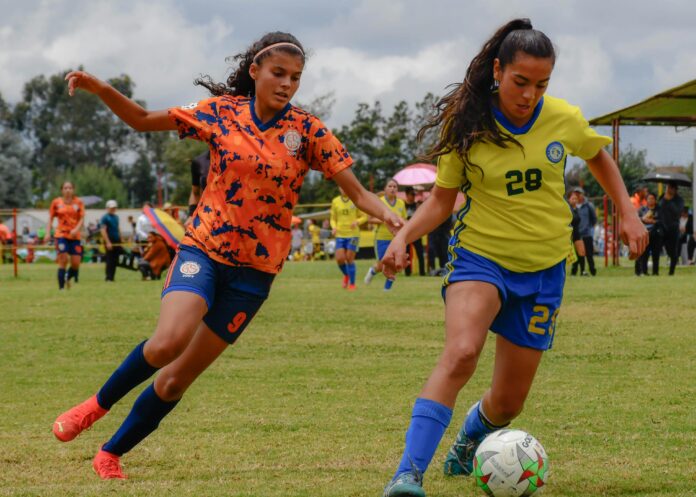
South American youth women football players competing in a match, reflecting U-20 development and emerging talent
Youth players competing in South America, representing the next generation of women’s football talent. Development at this level remains key to the region’s future success. Photo by Laura Rincón .

Women’s football is growing all around the world (finally) and it is time to take a closer look at our youth categories, simply because they are the future of the sport. Today we are talking about the South American Under-20 Women’s Football Championship.

Paraguay was the chosen host for the 12th edition of the championship, where 10 national teams competed, representing their home countries. In Group A were Paraguay, Colombia, Venezuela, Chile and Uruguay; and in Group B Brazil, Argentina, Peru, Ecuador and Bolivia. From 4 to 28 February, 35 games were played in total and 96 goals were scored.

Brazil claimed the title with a 2-0 win against Venezuela in the final round of the hexagonal stage, continuing their dominance in the tournament’s history. Since the first edition in 2004, Brazil has been crowned champions 11 times, while Colombia won once, in 2010. The four best teams in the competition, Brazil, Ecuador, Colombia, and Argentina are qualified to represent South America at the 2026 FIFA U-20 Women’s World Cup, which will take place from 5 to 27 September in Poland.

Brazil has been crowned champions 11 times, while Colombia won once, in 2010.

The U-20 Calendar Scenario in South America

How about we take a look at the U-20 calendar scenario in these countries?

Brazil: There is a very well-structured U-20 national competition: the Campeonato Brasileiro Feminino Sub-20. The tournament features 24 clubs divided into six groups from all over the country, with a total of 86 matches played. The group stage begins in March and the finals take place at the end of May. In addition, some of these players also compete in the senior national league, the Campeonato Brasileiro de Futebol Feminino, gaining valuable experience at the adult level.

Colombia: The country has a professional women’s league, the Liga BetPlay DIMAYOR Femenina, but there is currently no widely publicized or fully structured U-20 women’s club competition calendar. For players in this age category, the primary focus is often the continental tournament and the transition into professional senior teams.

Argentina: The Primera División A Femenina is the main national championship in the country. As a result, many young players compete directly in the senior competition throughout the season, accelerating their development by facing adult-level opposition.

Ecuador: Although there is an organized U-20 men’s championship, a structured national U-20 women’s competition has not yet been fully implemented or consolidated.

Overall, with the exception of Brazil, youth development in these countries tends to be integrated into the senior calendar and professional leagues rather than supported by structured and independent U-20 competitions. Therefore, the CONMEBOL South American Under-20 Women’s Championship represented the most significant and competitive tournament for players in this age group in South America.

youth development in these countries tends to be integrated into the senior calendar and professional leagues rather than supported by structured and independent U-20 competitions.

Latin American teams, especially Brazil and Colombia, already have a strong history of participation and competitive performances at the FIFA U-20 Women’s World Cup. The expansion of qualification spots and the gradual structural development of the women’s youth system indicate a clear trend toward even stronger performances in the coming years. However, much like the broader landscape of women’s football worldwide, the region still requires greater investment, long-term planning, and institutional commitment to fully unlock its potential. The talent is undeniable, now it is a matter of providing the structure, resources, and seriousness that the women’s game truly deserves.

The talent is undeniable, now it is a matter of providing the structure, resources, and seriousness that the women’s game truly deserves.

References

  • Brasil consolida domínio na CONMEBOL Sub-20 Feminina – CONMEBOL
  • CONMEBOL SUB 20 Femenino. Tabla de posiciones – CONMEBOL
  • CBF divulga tabela do Brasileirão Feminino Sub-20 2026, que começa em 7 de março

Who is Fatah Abdirahman?

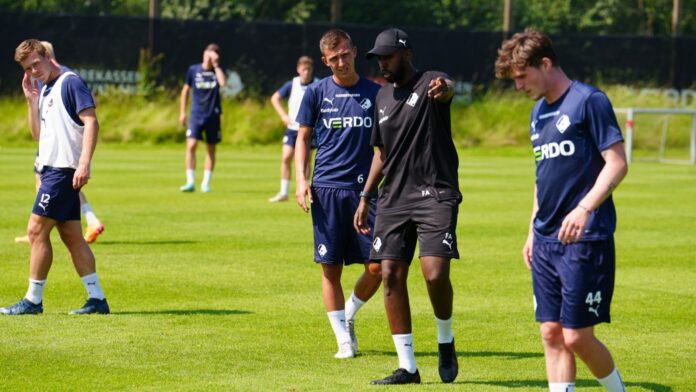
Fatah Abdirahman at Randers FC stadium with colleague, highlighting his role in Danish professional football
Fatah Abdirahman at Randers FC, where he works as Assistant Coach in the Danish Superliga. His journey reflects a strong foundation in youth development and elite football environments.

Profile

Role: Assistant Coach at Randers FC

Specialisation: integrating youth players into the first team while competing in a results-driven senior environment

Experience: elite senior football and global youth development

Focus Areas: coach education, talent identification, youth development, and player progression

Biography

Fatah Abdirahman, born 23 December 1991, is an Assistant Coach at Randers FC with experience across elite senior football and global youth development. Formed in the Danish football system, he has held academy leadership and talent identification roles, including Technical Director at the Right to Dream Academy in Ghana, and is also a licensed mental health counselor.

At Randers FC, Abdirahman works in the Danish Superliga, focusing on integrating youth players into the first team while competing in a results-driven senior environment. The role allows him to apply years of youth development experience at elite level, balancing performance with long-term player progression.

Before returning to Denmark in 2023, Abdirahman spent two years in Ghana as Technical Director at the Right to Dream Academy. The experience proved both professionally and personally demanding, underlining the importance of cultural adaptation on and off the field. His main objectives were coach education and accelerating player readiness for European football. Rich in raw talent, the teams competed in local leagues, against senior opposition, and through R2D’s International Academy, which selects the top players from across their academies, to face top European academies in international tournaments.

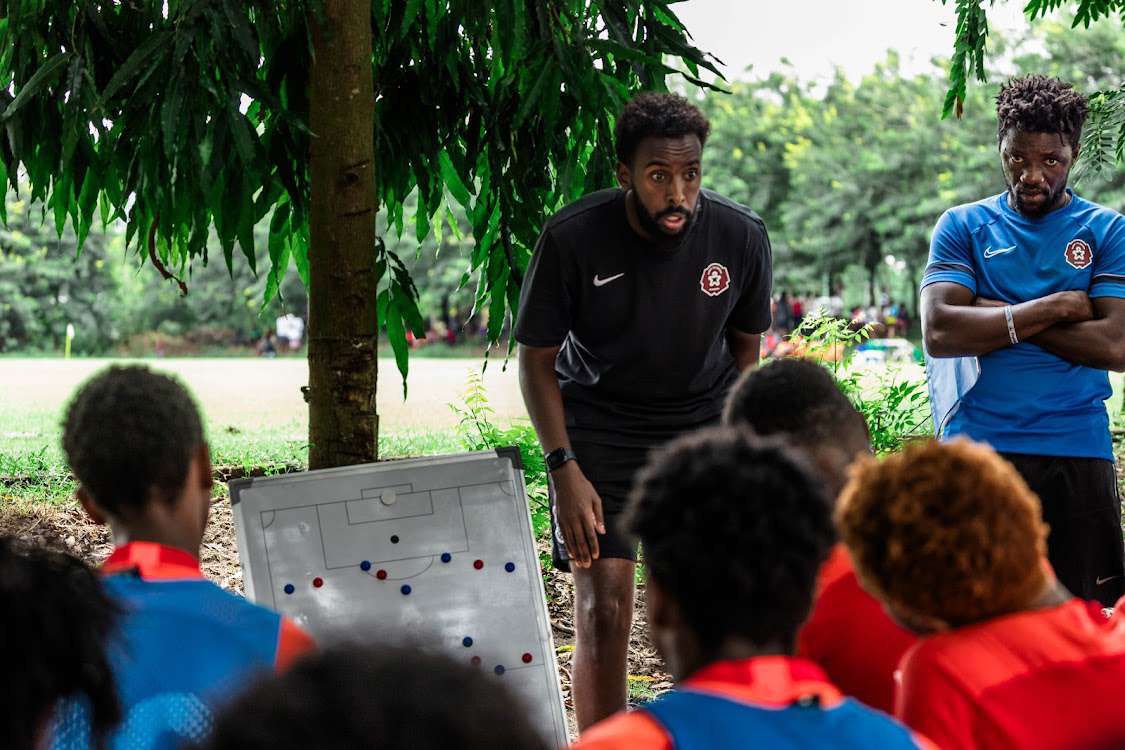
Fatah Abdirahman coaching players in Ghana at Right to Dream Academy during a training session
Fatah Abdirahman working with players at the Right to Dream Academy in Ghana. The experience shaped his approach to development and cultural adaptation.

The experience proved both professionally and personally demanding, underlining the importance of cultural adaptation on and off the field.

Prior to that, he spent five and a half years at Aarhus GF (AGF), progressing from U17 coach to Technical Director. During this period, he played a key role in strengthening the club’s academy culture, development pathway, and recruitment strategy, including the early identification of Adam Daghim, later sold to RB Salzburg.

Abdirahman’s first professional role came in 2014 at FC Midtjylland, where he worked as an Individual and Youth Coach. Having started coaching at just 14 years old, inspired by his own youth coach, he has been shaped by Denmark’s development-focused football system. His career is defined by curiosity, adaptability, and a strong commitment to developing both players and coaches.

His career is defined by curiosity, adaptability, and a strong commitment to developing both players and coaches.

Key Insights

  • Fatah Abdirahman has built a career across Danish elite football and international youth development.
  • His work has centred on coach education, talent identification, and player progression.
  • At Randers FC, he is applying youth development experience within a senior results-driven environment.

Our Exclusive Interview with Fatah Abdirahman


How did you start in coaching? What is your background?

I started coaching at 14 and a half. I played a bit growing up, and I had brothers who played (at a higher level than me, unfortunately) and my coach said to me one day that he thought I would make a great coach, and one of the youth teams needed one. That’s where it started, and I came to the realization that I was giving back and helping. Then I became more and more curious. I always loved helping and interacting with other people, and helping them develop.


You’ve worked across youth academies and senior clubs in Denmark. How would you describe the Danish football system?

It’s a very good system. The population is not huge (about 6 million), but we compete well at youth, senior, and national levels. We are strong in youth development, with high knowledge and education standards. The Danish league is becoming more recognised as a development league and is also good at developing coaches, for example Thomas Frank at Tottenham. Many scouts come to watch the league. It’s a good development system, and clubs are good at giving players first-team opportunities and then selling them on.

It’s a good development system, and clubs are good at giving players first-team opportunities and then selling them on.


You began your pro coaching career as an Individual Coach at FC Midtjylland Youth in 2014/15. How did you get that role?

At the time, I was a U13 coach at Randers. It was part-time, almost volunteer work, but the club helped me obtain my UEFA B, B2, and A licences. That’s when FC Midtjylland approached me. When I was in my early 20s, they came with a very detailed report on me as a coach, outlining my strengths and weaknesses and how I would fit into their organisation.

I had just finished my A licence, and a big club wanted me as a full-time coach, so they made a plan to introduce me to their environment as an individual coach and then give me a team as well. Due to family matters, my time at the club couldn’t continue at that moment, but I really enjoyed my experience there.


Looking back at your time at Aarhus GF, how did working with youth shape your coaching identity?

I arrived at a time when there was a lot going on at the club. I was there for five and a half years, with two or three sporting and academy directors, so you got a feeling for how quickly football can move. At the same time, you were part of developing a culture, a style of play, and a training methodology so you could see the full process, including the transition of youth players into the first team. It was a great experience where I had a lot of responsibility, making mistakes and learning from them.


In 2020, you were promoted to Technical Director at Aarhus GF. What were your initial objectives, and what challenges did you face transitioning into that role?

I started as U19 coach and then took charge of the pro pathway, helping to create a programme for youth players to integrate into the first team, and ensuring the development of future generations. I also had scouting responsibility, bringing players into the academy.

One example is Adam Daghim, who later moved to RB Salzburg for a fee and is now at Wolfsburg. At the time, there were several Danish clubs interested in him. We didn’t have an academy yet, so he had to stay with his other family in Aarhus.. but I could see that his style fit well with our system, so we made it work! (Plus he came for free.)


In 2022, you joined the renowned Right to Dream Academy as Technical Director. What motivated you, and what were the key lessons?

This was one of the experiences where I learned the most. Getting out of Denmark and out of my comfort zone, without friends and family, was a big learning experience. The project attracted me because I had always said that when the opportunity was right, I wanted to give back to Africa in a meaningful way.

They had approached me before, but when I stopped at AGF, they came again. It’s a top-class organisation, from how they treat people, to the structure, the staff, the style of play, and the way they view development. The first couple of months felt like going back to school because so many things they do are very different to what I had learned in other clubs. It was a totally different approach and one of the best decisions of my life.

It was a totally different approach and one of the best decisions of my life.


Where were you based at that time?

I was based in Ghana for two years. It was about adapting, taking responsibility, and sharing knowledge. You learn that you can’t just arrive as a European and expect people to adopt your process. You have to adapt to the culture you enter, embrace it, and then gradually introduce improvements. You can’t expect another country to operate the same way as Europe.


What about the sporting side of R2D?

We often played matches against men’s teams, which was different to my experiences before. One key objective for me was preparing players for Europe and helping them compete earlier than expected, by improving their understanding of the game. I also worked on developing the coaches, which is essential, as I always say better coaches lead to better players.


Did the teams play in local leagues?

Yes, in the local league, but we also had the International Academy (IA), which played tournaments and friendly matches outside Ghana. In Europe, they competed against top academies such as Ajax, Bayern, and Manchester United. The IA is a selection from all academies within the organisation and those players are closest to taking the next step, both because of their age and visibility.


How is the talent in Ghana?

It’s huge. Many people know there is talent, so the competition is intense. Right to Dream has a strong reputation and has been scouting for many years there. They know the areas well and are very clear about the type of player and person they want in their academies.


You were appointed Assistant Coach at Randers FC in 2023. What has the experience been like?

It’s been fantastic. I’ve always had the ambition to work at the highest level possible, and the Danish Superliga is the highest level here. I get to see how my youth football experiences and how it translates to senior football. The biggest difference is that the senior level is more black and white when it comes to results.


Have there been mentors who influenced your journey?

Fatah Abdirahman leading a training session with players in Denmark during a coaching session
Fatah Abdirahman leading a training session in Denmark. His work reflects the country’s strong focus on development and coaching education.

Yes, definitely. You can always learn something from others, it depends on how open-minded you are and the growth mindset you have. You can take something from everyone, but the key is how you filter it and decide how to use it. That’s something I’ve focused on throughout my career. I enjoy working with people and staying curious about current trends and what football might look like in the next 5 years.


What long-term goals do you have at Randers FC, both for the club and personally?

At Randers, my objective is still to develop young players, integrate them into the first team, and sell them on. We aim to be more regularly in the top six. Although the club has achieved this for many years, our budget is not that of a traditional top-six club.

Increasing the budget is one of the club’s objectives, allowing us to continue competing in the top six. Personally, my goal is to keep developing, stay curious, work hard every day, and remain adaptable, because in football, you never know what will happen.


FAQ

Who is Fatah Abdirahman?

Fatah Abdirahman is an Assistant Coach at Randers FC with experience across elite senior football and global youth development.

What roles has Fatah Abdirahman held before Randers FC?

He has worked at FC Midtjylland, Aarhus GF (AGF), and the Right to Dream Academy in Ghana, including roles as Individual and Youth Coach and Technical Director.

What is a key focus of his work at Randers FC?

His focus is on integrating youth players into the first team while competing in a results-driven senior environment.

Women’s Football in Germany: New League Structure Debate

FC Bayern Campus in Munich during a Frauen-Bundesliga match with fans, reflecting growth in German women’s football
FC Bayern Campus in Munich during a Frauen-Bundesliga match. Venues like this highlight the growing infrastructure supporting women’s football in Germany.

On December 4, 2025, the Deutscher Fußball-Bund (DFB) published a statement on its official website that could mark an important turning point for the future of women’s football in Germany. Yet the announcement also raises several questions that deserve closer examination.

According to the statement, the 14 clubs competing in the Frauen-Bundesliga are moving toward establishing their own league association. This structure is expected to become the foundation of a planned joint venture the creation of an FBL GmbH that would organize and commercially develop the league. From the DFB’s perspective, the initiative is a natural and necessary step toward the professionalization of women’s football.

But the real question is: Is it that simple?

The real question is: Is it that simple?

Women’s football is no longer a romantic side story in the global football landscape. Across Europe, stadium attendances are growing, broadcasting interest is increasing and commercial investments are accelerating. England, Spain and France have already taken significant steps in transforming their women’s leagues into strong commercial platforms. Germany, with its deep football culture and strong club structures, cannot afford to fall behind.

In this context, it is also encouraging that these developments have received considerable attention in the media. Public discussion and media visibility are essential for the growth of women’s football.

Especially after the remarkable interest generated by the UEFA Women’s Euro 2025 hosted in Switzerland, the momentum around the women’s game in Europe has clearly increased. Stadiums filled, television audiences grew, and the tournament once again demonstrated that women’s football has become a powerful and attractive product for fans, sponsors and broadcasters alike.

Women’s football has become a powerful and attractive product for fans, sponsors and broadcasters alike.

Against this backdrop, the latest discussions in Germany can be seen as a very positive development. If managed correctly, the steps being discussed today could produce constructive and tangible results in the coming months.

For this reason, I felt it was important to bring this topic back into the spotlight and write about it once again as a reminder, and to help keep public attention alive. Developments like these should not fade away quietly. They deserve to remain visible, to be discussed openly and to build a stronger public awareness especially in the name of women’s football and the thousands of women who dedicate their lives to this sport.

The Governance Question

However, the proposed structure also opens an important debate. If the league is to be organized and driven primarily by the clubs, what will the future role of the DFB actually be?

DFB Secretary General Holger Blask emphasized that the federation remains committed to its promises and investments related to the joint venture. Yet the same statement also reveals that negotiations are far from complete. Club representatives have reportedly submitted extensive amendments and additional demands to the draft agreements.

In other words:

The real negotiations are still happening behind the scenes.

Several crucial questions therefore remain unanswered:

  • Will the league truly operate under club leadership, or will federation influence continue to shape key decisions?
  • How will broadcasting rights, sponsorship deals and commercial revenues be distributed?
  • Could smaller clubs lose influence within this new governance model?
  • And most importantly: will this structure actually improve the economic conditions for the players themselves?

Beyond Structural Reform

The development of women’s football cannot rely solely on administrative reforms. Real progress requires sustainable investment in youth development, improved salaries and working conditions for players, higher professional standards across the league, and long-term strategic planning by clubs and governing bodies.

Germany has long been one of the most respected football nations in the world. But in the modern era of women’s football, success will no longer depend only on strong federations — it will depend on strong league economies.

Opportunity or Test?

The planned new structure could therefore become a major opportunity. But it could also become a major test.

Because in modern football the question is no longer simply: “Is a new league structure being created?”

The real question is: “Is this structure truly being built for the players and the future of the game — or is it merely creating another layer of administration?”

The coming weeks and months of negotiations will reveal the answer. But if the current momentum continues, the developments we are witnessing today may soon be reflected as a positive transformation for women’s football in Germany.

One thing, however, is already clear: The future of women’s football is increasingly being decided at the negotiation table, and every decision made there will shape the future of thousands of young girls chasing their dreams on the pitch.

Who is Tanja Schulte?

Tanja Schulte observing a match from the bench, reflecting leadership and tactical focus in women’s football
Tanja Schulte watches closely from the bench, embodying strategic leadership and attention to detail. Her presence reflects years of experience at the highest level of women’s football. Photo credit: Tom Seiss.

Profile

Role: Sporting Director and Managing Director at SKN St. Pölten Frauen

Specialisation: Strategic leadership, club building, sustainable success in women’s football

Experience: Player at second division level in Germany, head coach, Sporting Director, Managing Director, UEFA Women’s Champions’ League group phase, promotion to the 1. Bundesliga with three different clubs

Focus Areas: Institutional vision, squad planning, leadership, recruitment, long-term competitiveness

Biography

In women’s football, there are managers who win titles and then there are those who transform clubs entirely.

Tanja Schulte watches closely from the bench, embodying strategic leadership and attention to detail. Her presence reflects years of experience at the highest level of women’s football.
Tanja Schulte alongside her team, reflecting leadership and unity at elite level. Her role extends beyond results into building strong football environments. Photo credit: Tom Seiss.

Because sustaining success at the highest-level demands far more than tactical knowledge. It requires strategic leadership, institutional vision, and the proven ability to build organizations that compete, season after season, on the domestic and European stage. Tanja Schulte has done both, repeatedly, and at every level of the game.

Tanja Schulte has done both, repeatedly, and at every level of the game.

She began her journey as a player, competing at second division level in Germany before stepping into coaching, where she wasted little time making her presence felt. Over the course of her career, she has achieved promotion to the 1. Bundesliga on three separate occasions, with three different clubs. Not once. Not twice. Three times. As Sporting Director and Managing Director at SKN St. Pölten Frauen, she has taken a club to the UEFA Women’s Champions’ League group phase for four consecutive seasons, establishing an Austrian side as a genuine force on the European stage. She is a builder. A strategist. A leader who has spent over two decades proving that sustainable success in women’s football is not a matter of luck, it is a matter of vision, structure, and an uncompromising commitment to excellence.

She is a builder. A strategist. A leader who has spent over two decades proving that sustainable success in women’s football is not a matter of luck, it is a matter of vision, structure, and an uncompromising commitment to excellence.

Key Insights

  • Tanja Schulte has built sustainable success across coaching and executive leadership in women’s football.
  • Her work at SKN St. Pölten Frauen reflects strategic planning, resilience, and long-term institutional vision.
  • She believes trust, authenticity, and realistic targets are central to leadership and club development.

Our Exclusive Interview with Tanja Schulte


Running a club at this level sounds amazing and easy from the outside. Take us inside a typical day. What does it really demand of you? Are there any parts that still surprise you, and what are the pressures people never, see?

Running a club is far from a one-dimensional role, and it is certainly not delivered on individual effort alone. It is driven by a small, dedicated team of Michaela Rydl, Mike Kraaibeek as Team Manager, and me. Without support from other departments or specialist roles, all responsibilities and tasks inevitably fall to one of us.

Running the club is a constant demand with no real time to reset and with no quiet periods. Licensing runs from December through to March and demands close attention to detail throughout. As soon as it ends, the focus shifts straight to squad planning, assessing the current group, identifying gaps, and handling player registrations. It’s a demanding phase that requires strong organisation and clear, long-term thinking.

Then comes the season itself and organising the season, which brings a layer of complexity. Coordinating fixtures, match preparation, managing travel logistics and delivering the critical behind-the-scenes administration that underpins the entire competitive structure.

With the format of UEFA competition now incorporating multiple qualification rounds before reaching the league phase, we can be looking at as many as 24 matches before Christmas alone. So, when people ask whether it ever gets boring or whether there are quiet periods to recover, the answer really is no.

Running the club is a constant demand with no real time to reset and with no quiet periods.


You were released twice as a head coach, at Wattenscheid and Herforder SV, yet each time you returned and built something stronger. Those moments are rarely discussed publicly in football. How did those experiences shape your approach to leadership and decision-making.

Football has always been a results business, which is not a new reality. What has changed drastically is the speed, not just of the game itself, but of the decisions being made and how quickly judgments are formed, justified, and concluded. This accelerated pace is not limited to the women’s game. Patience is shorter than ever, which means you have to be clear from the start about what is realistically achievable and the timeframe to deliver it.

I accepted both dismissals without resentment because they were honest outcomes. We had not reached our sporting targets. When results do not come, the consequences follow.

In a results-driven environment, there’s no room for unrealistic targets or not staying true to yourself. What matters is clarity, honesty, and leadership that reflects who you truly are. For me, this experience presented me with a clear and obvious message: which was to set achievable and realistic targets and stay authentic.


You’ve won promotion to the Frauen-Bundesliga three times with three different clubs. There must be a clear method behind it. What does it take to build a team capable of promotion, and why do so many clubs struggle despite having similar ambitions.

If there is a method, relationships are at its core. With around 95% of the players I’ve worked with, the connection has been one of genuine, mutual trust. Enjoyment, fulfilment, and resilience drive them to fight not just for their own goals, but for the collective.

Many players have told me that they didn’t just enjoy playing, but that fulfilment came from fighting for the coaching staff. Fight, grit, resilience and enjoyment are key factors for a team that fights for each other; it is stronger than one that fights only for itself. Of course, relationships and resilience are not the whole picture. In decisive moments, you also need a bit of luck and recognising both realities is essential.


You transitioned from head coach to sporting director and now managing director. What did you have to sacrifice at each stage, and is there a moment from the dugout you still miss and carry with you?

The first transition was when I moved from head coach to sporting director in Germany. It meant appointing someone to take on the role I had occupied, and the person I chose was Imke Wübbenhorst, who at that time was still an active player, holding only an A-Licence. By most conventional measures I trusted what I saw and made a decision. She managed to get her UEFA Pro Licence and has since won titles in Switzerland. Moving into squad planning and organisational responsibility required me to let go of the direct involvement I had become accustomed to.

As managing director, the scope has expanded further, but the essential nature of the work is not entirely different. What has changed most profoundly is perception. I still sit on the bench. But from a different angle, I see the game in a way I simply did not when I was coaching. The view is clearer, more neutral, more complete. You notice things from a different lens. It is a perspective that cannot be taught, only earned through making the transition, and once you sit in that position, you truly understand this sensation and viewpoint. And once you experience it, you truly understand the profound difference that stepping back can make, not just in how you see the game, but in how you lead.


Before football became your full-time career, you spent nearly two decades in pharmacies, healthcare administration, and insurance. What did those years teach you that football alone never could, and where does it show up in the way you lead a club today?

Working with people has always been central to everything I do, no matter the industry. Accountability in these environments is a must, especially within such industries; getting things right truly matters.

Through all of this, I have led authentically. I don’t know if a harder approach, or if there is a more concrete style and method that would have delivered more success on paper or in reality, maybe it would. But I’ve never had to be someone I’m not, always sticking to who I am, and that has given me a sense of morality, authenticity and confidence. No matter the outcome, I can always look at myself in the mirror, and for me, that has always mattered more than anything else.

I’ve never had to be someone I’m not, always sticking to who I am, and that has given me a sense of morality, authenticity and confidence.


SKN St. Pölten faces European giants every season with far more resources. How do you build a squad and a structure that can compete on that stage? And what have you learned about smart recruitment that many bigger clubs seem to ignore?

For many years, SKN St. Pölten had the enormous advantage of Wilfried Schmaus as president, a genuinely strategic thinker. In his final years, I learned a great deal from him.

What we have built here, without serious financial backing, is something genuinely exceptional. Every season we battle through multiple UEFA qualification rounds while simultaneously meeting all the compliance and infrastructure requirements that European competition demands. If you simply compare the number of staff operating at our level internationally, the disparity is enormous, and that is before you even begin to look at budgets.

We have no financial umbrella to fall back on. Every euro this club spends is a euro this club has first had to earn. That is the reality we operate within, every single day.

Established clubs with deep roots and real financial power, the likes of Austria Wien being the obvious example, are fully committing to their women’s sections. We have always been clear about what that means for us: once that happens, competing for the same players and the same standards becomes extraordinarily difficult.

The market is moving too. Players are leaving earlier, drawn to leagues where the financial rewards are significantly higher. The pool we have always recruited from is shrinking, and the competition for what remains is intensifying. The pressure is coming from every direction at once. The question is no longer if things get harder, but how long we can maintain this level.


You hold a DFB A-Licence and have coached at every level. Yet the pathway for women in football leadership remains narrow. What needs to change most, and what would you say to a young woman aspiring to follow your path?

I have always had a straightforward view on quota systems, and the current FIFA coaching regulations are no different. The best person should get the job irrespective of gender. If the person is not the strongest candidate, then a quota should not be the thing that decides it. Merit is that standard and should be the only standard of justification. Quotas should never substitute for quality. This approach ensures quota systems are fair, non-discriminatory, and that every judgment upholds credibility and legitimacy. That is my view, it always has been, and it will not change.


You took a full sabbatical in 2020. What prompted that break, what did you discover about yourself, and did you return as a different person or simply with a clearer sense of purpose?

The pause in 2020 came as a result of COVID, rather than any professional issue or need to step back.

During the lockdowns, I spent extended periods away from my family. And over time, you recognise that something important has been missing, which made it a challenging period personally.

When restrictions eased, I made a conscious decision to address I took the time to reconnect and restore time lost. What I gained was that It provided an opportunity to reset, and I returned with renewed energy and a full tank. Stepping away fully, without compromise, allowed me to come back completely present and ready.


FAQ

Who is Tanja Schulte?

Tanja Schulte is Sporting Director and Managing Director at SKN St. Pölten Frauen and a long-standing leader in women’s football.

What is Tanja Schulte known for?

She is known for leading clubs to promotion, building sustainable structures, and establishing SKN St. Pölten Frauen on the European stage.

What defines Tanja Schulte’s leadership approach?

Her leadership is defined by authenticity, realistic target-setting, strategic thinking, and long-term institutional vision.