Home Blog Page 4

Who is Ognjen Zarić?

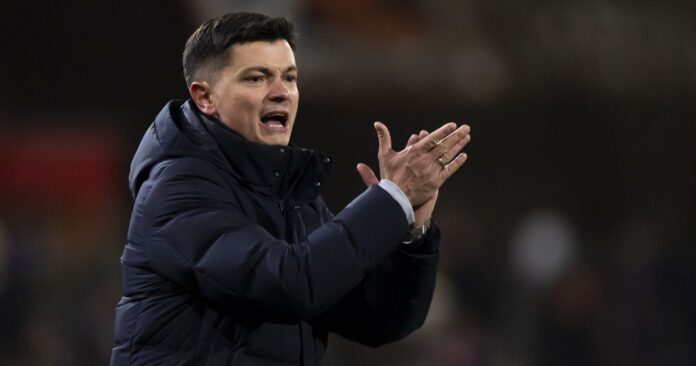
Ognjen Zarić coaching on the touchline, giving instructions during a professional football match
Ognjen Zarić leads from the touchline with intensity and clarity, reflecting his modern coaching philosophy. His approach combines structure, energy, and strong communication in competitive environments.

Profile

Role: Head coach of SCR Altach in the Austrian Bundesliga

Specialisation: modern, tactically disciplined coaching, intensity, structure, and player development

Experience: Austria, Germany, and Switzerland

Focus Areas: tactical clarity, strong organization, collective strength, player development, and long-term sporting development

Biography

Ognjen Zarić, born 1989, is a Serbian-Austrian football coach and the head coach of SCR Altach in the Austrian Bundesliga. Known for his modern and tactically disciplined approach, he emphasizes intensity, clear structure, and player development, with coaching experience across professional and youth levels in Austria, Germany, and Switzerland.

Zarić joined SCR Altach attracted by the club’s strong organization and the people behind the project. He believes the club has the potential to grow further in the Austrian Bundesliga and aims to support its long-term sporting development by building a competitive and well-structured team.

Known for his modern and tactically disciplined approach, he emphasizes intensity, clear structure, and player development, with coaching experience across professional and youth levels in Austria, Germany, and Switzerland.

Earlier in his career, Zarić gained valuable experience at FC Basel, one of Switzerland’s most successful clubs. He worked as an assistant coach with the first team, gaining exposure to senior international players and European competition, while also coaching the U18 and U21 teams and helping develop some of Switzerland’s top young talents.

He later coached FC Winterthur, where his first season was highly successful with the team exceeding expectations. The following season was more challenging due to several squad departures, but the experience further shaped his development as a coach.

Zarić promotes an active, intense style of football based on tactical clarity, strong organization, and collective strength, while allowing players the freedom to express themselves. His ambition is to help build a stable and successful future for SCR Altach, moving beyond survival battles in the Austrian Bundesliga. Reaching the Austrian Cup final for the first time in the club’s history already stands as an important milestone.

Zarić promotes an active, intense style of football based on tactical clarity, strong organization, and collective strength, while allowing players the freedom to express themselves.

Key Insights

  • Ognjen Zarić is the head coach of SCR Altach in the Austrian Bundesliga.
  • His coaching philosophy is based on intensity, tactical clarity, structure, and collective strength.
  • His experience includes SCR Altach, FC Basel, and FC Winterthur across senior and youth football.

Our Exclusive Interview with Ognjen Zarić


How did your football journey begin?

As a child and teenager, I was a good football player. Like many others at that age, I dreamed of becoming a professional footballer. However, after graduating from high school, my path led me to study law. At the same time, I started working as a coach, with the goal of helping players improve and bringing them closer to achieving their own goals in football.


You are currently Head Coach for SCR Altach in the Austrian Bundesliga. What attracted you to the project?

What impressed me about the club is the organization itself, but above all the people who work here. From the very beginning, it felt like a very good fit. I also believe that together we can continue to develop the club, and I want to contribute my part to that process.


How would you describe your football philosophy?

I stand for an active style of football. Intensity is very important in our game, and I think you could already see that in the first few weeks. For me, it’s about having clarity in all phases of the game. We want to be tactically well structured. I believe in a strong collective in which individuals can develop and express themselves. And, as in life in general, I believe that courage is essential.

I believe in a strong collective in which individuals can develop and express themselves.


You have coached at FC Basel and FC Winterthur. How would you describe your experience in the Swiss Super League?

Basel was a great experience for me. I had the opportunity to work with the first team, which included around 20 senior international players from many different countries. At the same time, as U18 and U21 coach, I was able to train some of the best young players in the country. My time in Basel, playing in front of an incredible crowd and being involved in international matches, was very formative for me.

In Winterthur, our first year was very successful and we clearly overperformed. The second year, however, became much more challenging due to many departures from the squad, and that was certainly a negative experience for me personally. But even that added to my experience and enriched my journey as a coach.


Who have been some of the key mentors or influences in your coaching career so far?

I have had the opportunity to meet many interesting people. I have always been, and still am, open and willing to learn. I’m interested in the best coaches in the world, but I’m also inspired by sports outside of football and by successful business leaders. People who have to make decisions and are willing to stand by them with all the consequences, who remain clear in their thinking and approachable as human beings – those are the kinds of people who inspire me, no matter which field they come from. In the end, it’s also true that my wife does everything for us as a family – she is my key mentor.


What are your ambitions and goals for the upcoming seasons?

I want to do my part in helping to build a successful future for SCR Altach. Fighting for survival until the very last matchday, as in previous seasons, cannot be the goal here. We are on a very good path to changing that. Reaching the cup final for the first time in the club’s history makes all of us very proud and will remain a special moment forever.


FAQ

Who is Ognjen Zarić?

Ognjen Zarić is a Serbian-Austrian football coach and the head coach of SCR Altach in the Austrian Bundesliga.

What is Ognjen Zarić’s coaching philosophy?

He promotes an active, intense style of football based on tactical clarity, strong organization, and collective strength.

Which clubs has Ognjen Zarić coached?

He has coached at SCR Altach, FC Basel, and FC Winterthur.

World Cup 2026 and Coaching Evolution in the USA

FIFA World Cup trophy on display, symbolising the ambition for America to win football’s biggest prize.
The World Cup trophy represents the ultimate target for every football nation. This article explores what the US must build to compete for it.

The FIFA World Cup 2026, hosted by the United States, Canada and Mexico, is often described as a historic opportunity for soccer in North America. From a coaching perspective, however, the key question is not whether the World Cup will create attention, it certainly will. The real question is whether it will lead to sustainable evolution in coaching, player development, and football identity.

Because tournaments do not develop players. Coaches do.

Because tournaments do not develop players. Coaches do.

Beyond Infrastructure: The Missing Link

When we look at the United States today, one thing is immediately clear: The country has built an impressive football infrastructure.

Facilities, academies, college programs, sports science departments (in many areas), the US system is already operating on a very high professional level. From my experience working internationally and engaging with coaches in different environments, I would even say that in terms of organization and resources, the USA is ahead of many European countries. But infrastructure alone does not produce top players.

But infrastructure alone does not produce top players.

What is often missing is a clear football identity, driven by coaching philosophy and long-term development thinking. In Europe, especially in countries like Germany or the Netherlands, coaching education has been shaped over decades. It is deeply connected to a philosophy of how the game should be played and how players should be developed.

This is where the World Cup 2026 can become a catalyst. Not because of the matches themselves, but because it creates urgency: the need to define how American soccer wants to play and develop.

The Role of the Coach: From Instructor to Developer

In modern football, the role of the coach has fundamentally changed.

When I started my coaching journey, the focus was often on organizing training sessions and preparing for the next match. Today, the coach must be much more than that. He must be a developer of players, a leader of people, and a creator of learning environments.

With my background in sports science, psychology and pedagogy , I have always believed that coaching is not only about tactics. It is about understanding how players learn, how they make decisions, and how they perform under pressure.

coaching is not only about tactics. It is about understanding how players learn, how they make decisions, and how they perform under pressure.

This is especially relevant in the United States.

American players often grow up in a system that emphasizes structure, discipline and physical performance. These are strong foundations. However, at the highest level, the game is decided by something else:

  • speed of decision-making
  • perception of space
  • creativity under pressure

These qualities are not trained through structure alone. They are developed through intelligent coaching and game-realistic training environments.

The World Cup will highlight this difference. And it will force the question: How do we train players who can compete at the highest level?

Coaching Education: The Real Gamechanger

If there is one area where the impact of the World Cup can be truly transformational, it is coaching education.

In my career, I have worked in different countries, coached youth and professional teams, and been involved in coach education programs worldwide. One thing remains constant: The quality of players is directly linked to the quality of coaches.

For the USA, this means:

  • investing not only in players, but in coaches
  • developing a clear methodology across all levels
  • creating a culture of continuous learning

The challenge is not to copy European systems. The challenge is to adapt global knowledge to the American context.

This includes understanding the unique structure of the US system, especially the connection between academies, high schools and college soccer. It also means recognizing that American players often bring different strengths, physically, mentally and culturally.

The goal should not be to become “European”. The goal should be to become the best version of American soccer.

Individual Development in a Collective Game

Another key opportunity lies in the growing focus on individual player development. Modern football is increasingly about details. Small improvements in decision-making, positioning or timing can make the difference between average and elite performance.

In my coaching work, especially in youth development at clubs like Borussia Dortmund or Bayer Leverkusen, the focus was always on developing players individually within a team context.

This means:

  • understanding each player’s strengths and weaknesses
  • creating individualized training stimuli
  • connecting technical, tactical and cognitive development

The USA, with its strong sports science background and openness to innovation, is in a very good position to lead in this area. The World Cup can accelerate this trend by increasing investment, attracting international expertise, and raising the overall standard of development programs.

The International Exchange: A Key Opportunity

One of the biggest advantages of the US market is its openness. Coaches, experts and ideas from all over the world come together in this environment. This creates a unique opportunity for international exchange and knowledge transfer.

From my experience conducting coaching clinics in different countries, including the United States, I have seen how valuable this exchange can be. But it only works if it is done with clarity. Bringing in international coaches is not enough. The key is to integrate their knowledge into a coherent system. Otherwise, you end up with a mixture of ideas without direction.

The World Cup 2026 will attract global attention and expertise. The question is whether this will lead to long-term learning or only short-term inspiration.

Conclusion: A Moment of Decision

The World Cup 2026 is not the end goal for US soccer. It is a moment of decision.

A decision about:

  • how coaches are educated
  • how players are developed
  • how the game is understood and played

From a coaching perspective, the opportunity is enormous. The United States has the resources, the ambition, and the growing football culture to take the next step. But this step will not be defined by infrastructure or events. It will be defined by coaching quality.

Because in the end, football development is always built on the same foundation:

Better coaches create better players.
Better players create better football.

And that is where the real legacy of the World Cup 2026 will be decided.

What is The Agents Week Summit?

The Agents Week Summit event graphic with date April 30, 2026 and online timing 16 to 21 CEST.
The Agents Week Summit brings together football agents and industry professionals for a focused online event on April 30, 2026. Join leading voices from across the game for insight, networking, and practical learning.

In an increasingly complex and competitive football industry, the role of the agent and the wider ecosystem surrounding player representation has never been more important. The Agents Week Summit is designed as a dedicated platform to explore this evolving landscape, bringing together professionals from across the game for a focused, high-value online experience.

Taking place on April 30, 2026, the first online edition of The Agents Week Summit will gather football agents, club representatives, legal experts, commercial leaders, and aspiring professionals for five hours of insight, discussion, and connection.

More than just an event, The Agents Week Summit is a space built to educate, inspire, and connect those shaping the future of football.


A Focus On Modern Player Representation

At its core, The Agents Week Summit is centred on the realities of modern player representation. The role of an agent today extends far beyond contract negotiation, requiring expertise across legal frameworks, data, performance, branding, and commercial strategy.

The Summit reflects this shift by bringing together speakers from different areas of the industry, offering a multi-dimensional perspective on how the game operates behind the scenes. From recruitment and scouting data to sponsorship and personal branding, the discussions are designed to provide a clear view of the opportunities and challenges within the profession.


Insight, Tools, And Practical Application

The programme combines panel discussions with hands-on workshops, ensuring that participants gain not only insight but also practical tools they can apply in their own work.

Panels will feature leading voices from across football, including agents, club executives, legal professionals, and specialists in areas such as performance and mental health. These sessions aim to break down complex topics and provide actionable perspectives grounded in real-world experience.

Workshops will complement this by offering direct, practical takeaways, helping attendees develop skills and strategies relevant to the modern football landscape.

The Summit is designed to provide practical insight for those who want to understand, navigate, and shape the future of football.


A Global Network

One of the defining features of The Agents Week Summit is its focus on meaningful connection. By bringing together participants from different regions and backgrounds, the event creates an environment where ideas can be exchanged and relationships can be built.

The online format allows for a diverse and international audience, enabling agents, clubs, and professionals at different stages of their careers to engage with one another in a structured and accessible way.

This combination of insight and interaction positions the Summit as more than a learning experience. It is a platform where conversations can develop into long-term professional relationships.


Who Should Attend?

The Agents Week Summit is designed for a wide range of participants within the football industry.

This includes FIFA licensed agents, player representatives, club executives, sporting directors, scouts, lawyers, and commercial professionals, as well as students and individuals looking to build a career in football.

Whether you are already established in the industry or at the beginning of your journey, the Summit provides access to knowledge, perspectives, and networks that are essential in today’s game.


Looking Ahead

As the football industry continues to evolve, the need for platforms that combine education, practical insight, and meaningful networking becomes increasingly important.

The Agents Week Summit represents a step in that direction, offering a focused environment for those who want to understand, navigate, and shape the future of football.

Further announcements regarding speakers, panels, and workshops will continue in the lead-up to the event.


Register For The Agents Week Summit

Join football agents, club representatives, and industry professionals from across the global game.

Date: April 30, 2026
Time: 16:00 – 21:00 CEST
Location: Online

Register here

The Parents Week – Edition 100

Featuring a foreword from Dr Erkut Sogut.

Delivered every other Wednesday.

Subscribe

Who is Dr. Erden Or?

Dr Erden Or seated in a lecture room reflecting football leadership and education

Profile

Role: Academy Coordinator at Acıbadem Sports Academy

Specialisation: football leadership, educational design, and institutional transformation

Experience: Turkish Football Federation, UEFA advisory roles, FIFA projects, and university lecturing

Focus Areas: coaching education, referee development, women’s football, sustainable football development, and governance

Biography

Dr. Erden Or represents one of Turkish football’s most academically grounded, well connected and structurally experienced sporting leaders. With a Doctorate in Business Administration and Organization from Istanbul University and a specialized Football Management Diploma from the UEFA Academy and the University of Lausanne, he combines executive governance, academic rigor, and field-level football expertise into a rare hybrid profile.

Currently serving as Academy Coordinator at Acıbadem Sports Academy, Dr. Or is responsible for designing and implementing education programs while providing consultancy services to clubs and federations. His work reflects a career-long commitment to structured football development, leadership education, and institutional transformation.

His work reflects a career-long commitment to structured football development, leadership education, and institutional transformation.

Before joining Acıbadem, he held several high-impact executive roles within the Turkish Football Federation (TFF). As Director of the Referees Academy (2023–2024), he redesigned referee education systems, developed talent identification and retention strategies, and implemented performance measurement frameworks. Previously, as Technical Coordinator of the Football Development Department (2019–2023), he oversaw the restructuring of coaching education programs, youth development initiatives, and coordinated futsal and beach soccer national structures.

Dr. Or also played a key role in the creation and management of the Sporting Director Certification Program, reinforcing professional standards within Turkish football leadership. His earlier work in women’s football, both domestically and as a UEFA Women’s Football Expert (2013–2018), contributed to structural growth models, league organization, and long-term development planning.

Beyond federation leadership, Dr. Or has been deeply involved in education. He has lectured at multiple universities on subjects such as Sports Marketing, Club Management, Sports Economics, and Organizational Leadership, reinforcing his belief that modern football governance requires academic foundation alongside practical execution.

modern football governance requires academic foundation alongside practical execution.

A UEFA A licensed coach with additional certifications in match analysis and scouting, Dr. Or represents a profile that bridges theory and practice. His career reflects consistent engagement with structural reform, educational design, institutional leadership, and sustainable football development. He has also acted as a coach educator in the UEFA Pro, UEFA A, UEFA B, Tutor, TFF Match Analysis, and TFF Scouting courses.

In a football environment increasingly shaped by governance quality, educational standards, and long-term planning, Dr. Erden Or stands out as a leader who understands that sustainable success begins with institutional clarity.

sustainable success begins with institutional clarity.

Key Insights

  • Dr. Erden Or combines executive football leadership with strong academic foundations.
  • His work has focused on educational design, structural reform, and sustainable football development.
  • He has led projects across referee development, coaching education, women’s football, and academy strategy.

Our Exclusive Interview with Dr. Erden Or

Education, Governance and Sustainable Football Development


You have worked at federation level, in UEFA advisory roles, and now lead educational structures within Acıbadem Sports Academy. How has this multi-layered experience shaped your philosophy of football leadership?

I characterize my 16-year tenure at the Turkish Football Federation as a comprehensive journey through every facet of football’s developmental evolution. Throughout this period, I operated both as a strategic executive and a hands-on practitioner across the core pillars of the game. From coach education and youth player development to grassroots initiatives, women’s football, and refereeing. This allowed me to translate my domestic expertise into a global vision through pivotal roles in UEFA and FIFA projects and specialized international programs.

This multi-layered experience has fundamentally anchored my philosophy of football leadership. I consider my greatest competitive advantage to be the ability to analyze challenges and needs on a macro-strategic scale while delivering precise, micro-operational solutions. Having actively served within every department has instilled in me a unique professional reflex: to move beyond theoretical analysis and produce comprehensive, actionable results that resonate with every gear in the system.

Today, this remains my primary mission as I lead the educational structures at Acıbadem Sports Academy: bridging high-level international standards with the practical realities of local dynamics. To me, leadership is the art of identifying structural gaps in developmental processes and the capacity to bridge them through a holistic, 360-degree perspective.


At the Turkish Football Federation, you were responsible for restructuring coaching education and referee development systems. What structural weaknesses do federations most commonly face, and how can leadership transform them into long-term strengths?

I assert that the most fundamental structural challenge facing federations is sustainability. Strategic initiatives launched through extensive effort are often discarded abruptly following electoral changes. I can provide two remarkable examples:

First, we established a Referee Academy, backed by significant investment, to create a reliable, scientific, and objective development model. Our primary objective was to recruit young individuals interested in refereeing, provide them with high-quality training and development opportunities, and establish a fair developmental pathway which is most importantly.

Second, we launched the National Club Academies project to standardize youth development in Turkey! A multi-faceted initiative designed to train academy directors and coaches in the Süper League and TFF 1. League, followed by a comprehensive institutional audit of the clubs.

Regrettably, both projects were discontinued shortly after a change in the federation presidency, without any assessment of their impact or potential.

The second critical issue is meritocracy. When appointments from executive management to operational units are made without the requisite expertise, it creates a paralysis that hinders organizational effectiveness. I firmly believe that sustainable success in football is not dependent on individuals, but on resilient institutional systems and a merit-based workforce.


The Sporting Director Certification Program was one of the most significant professionalization steps in Turkish football. Why is executive education essential in modern football governance?

Football management is a distinct field of expertise. Success in the corporate world does not automatically guarantee success in football administration. Specialized education in this field is vital; however, it must be followed by granting qualified professionals the authority and strategic responsibility they deserve.

The Sporting Director Certification Program was a milestone in this regard. A key driver in bringing this project to life was Fatih Terim, who served as the Football Director of the TFF at the time. Thanks to his vision, we launched an initiative whose impact is now clearly visible, as many of our graduates currently hold key positions across major clubs.

The continuity of such programs is essential. Beyond training new participants, it is crucial that alumni remain current through CPD (Continuous Professional Development) programs specifically focused on football management. This ensures they can keep pace with the rapidly evolving global dynamics of the industry, from financial fair play and digital transformation to strategic talent identification.


At Acıbadem Sports Academy, you are designing and implementing education programs for clubs and federations. What distinguishes a high-performance academy model from a traditional football school?

Fielding youth teams for competition is not the same as having an academy. A true academy model begins with a defined football philosophy and a strong organizational culture. Traditional football schools are often driven by participation and revenue; elite-standard academies, however, are distinguished by a strategic focus on long-term player development.

An authentic academy requires a convergence of three pillars: fit-for-purpose facilities, a strong technical and administrative organizational structure, and a scientifically-grounded player development plan.

At Acıbadem Sports Academy, we reject generic, pre-packaged templates. Our approach is to analyze a club’s existing framework and deliver tailor-made solutions that align their current reality with elite performance standards. We apply the same principle to our services for federations regarding national youth development; our solutions are meticulously designed to reflect the unique conditions of the country, the federation, and the clubs.


You have combined academic research, including your doctoral work on service quality and fan satisfaction, with practical football leadership. How important is academic rigor in shaping modern club and federation strategies?

Bridging the gap between theory and practice is essential. There are highly respected academics who produce valuable research and train quality professionals for the game. Naturally, these individuals hold a privileged position in the football world as effective practitioners.

However, we also see many studies that fail to reflect the actual realities of football. Unfortunately, these works often serve to meet academic promotion criteria rather than providing functional insights for the game.

As an academic, I always ask a simple question: ‘How does this research translate into practice, and what specific need does it actually meet?’ For me, academic activities only find their true value when they deliver meaningful practical benefits.

Modern football is inherently a multidisciplinary field; it requires a convergence of diverse expertise. Ranging from economics and administrative sciences to sports sciences, from law to medicine. In today’s industry, the analytical discipline provided by academia is an indispensable guide for solving complex challenges that experience alone can no longer address and for making data-driven, rational decisions.


Looking ahead, what is your long-term vision for football development in Turkey and internationally? Where do you believe the biggest structural improvements must occur?

For the long-term development of football, we need models where on-the-pitch performance and off-the-pitch management act as mutual catalysts. Sporting success is fragile without economic stability; conversely, financial growth remains unsustainable without results on the pitch.

Youth development is the cornerstone of this strategy. Producing homegrown talent solves a technical problem on the field and an economic one in the books. It is the purest application of the reinforcement model I advocate.

We must also look beyond the 90 minutes. By leveraging football’s global appeal, we can unlock value in sectors like gaming, tourism, fashion, and education. It is about transforming the game into a multi-dimensional platform.

The future belongs to strategically structured, hierarchical networks. Exclusive domestic and international partnerships grounded in mutual benefit and clearly defined roles will be the key differentiator. This collaborative framework must extend to national associations and international confederations to streamline the flow of knowledge and resources.

My vision boils down to a single concept: ‘Coopetition’. It means competing with everything we have on the pitch (competition), while collaborating as strategic partners to elevate the game itself (cooperation).


FAQ

Who is Dr. Erden Or?

Dr. Erden Or is a Turkish football leader and academic currently serving as Academy Coordinator at Acıbadem Sports Academy.

What is Dr. Erden Or known for in football?

He is known for his work in coaching education, referee development, women’s football, academy strategy, and sustainable football governance.

What is Dr. Erden Or’s long-term vision for football development?

He advocates a model where sporting success, economic stability, youth development, and strategic cooperation work together to drive sustainable growth.

FIFA Agent Mock Exam 4

Empty exam room with desks prepared for FIFA agent exam candidates
The FIFA Agent Exam demands focus, preparation, and discipline. Mock exams help simulate real conditions and build confidence ahead of test day. Photo by Bima Rahmanda on Unsplash.

1. Following the Regulations on the Status and Transfer of Players, under which of the following circumstances can a contract between a professional and a club be terminated? Select one:

a. At any time without any conditions

b. If the club faces financial difficulties

c. Upon expiry of the contract term or by mutual agreement

d. Only if the player decides to leave


2. Which currencies can an allocation statement be generated in? Select one or more:

a. CHF and EUR only

b. USD

c. GBP

d. EUR


3. Club A wishes to engage a player from Club B. Club B requires a transfer fee of EUR 20 million. Club A offers to pay Club B EUR 5 million and to agree on a sell-on clause corresponding to 60% of the fee received by Club A for a possible future transfer of the player. Is this option in line with the FIFA RSTP? Select one:

a. No. Because a third party would be entitled to receive compensation in relation to the future transfer of the player.

b. No, because sell-on clauses are abusive and therefore prohibited by the FIFA RSTP.

c. Yes. Sell-on clauses are not prohibited by the FIFA RSTP.

d. Yes, but only if club A and club B use the same football agent.


4. Your client, a young promising goalkeeper named Lenny, is being scouted by several clubs across different leagues. Lenny’s current contract with his club is set to expire in six months, and he’s eager to explore his options. What is your role as Lenny’s agent in this scenario? Select one:

a. Advise Lenny to publicly express his desire to leave the club to put pressure on the management.

b. Wait until Lenny’s contract expires and then, in his best interest, approach interested clubs for potential deals.

c. Advise Lenny to terminate his contract prematurely to expedite the transfer process.

d. Negotiate directly with the interested clubs without informing Lenny.


5. On 1 March 2023, the Court of Arbitration for Sport (CAS) issued an award by means of which it ordered club X to pay the football agent Mr Z the amount of CHF 100,000 as compensation for breach of contract. On 1 June 2023, after several rounds of negotiations, club X and Mr Z reached an agreement on the amounts specified in the CAS award. In particular, the amount of CHF 100,000 was divided into ten payments of CHF 10,000 to be paid on the first of each month from July 2023 onwards. It is 15 November 2023 and Mr Z has not received any payments from August to November 2023. In this scenario, Mr Z is entitled to: Select one:

a. lodge a complaint before the FIFA Disciplinary Committee against club X.

b. lodge a complaint before the FIFA Ethics Committee against club X.

c. lodge a complaint before the Agents Chamber against club X.

d. None of the answers are correct.


6. Anthony is an American professional football player who plays at Cáceres FC in Spain. His football agent, Casimiro, reminds Anthony to make the payment of the service fee agreed under the representation agreement they signed before Anthony was signed by Cáceres FC, which falls due tomorrow. The service fee amounts to USD 10,000 and Anthony, who does not have that amount in cash at the moment, offers Casimiro his car as payment of the service fee or to pay him by the end of the season. Are the alternative payment methods offered by Anthony valid? Select one or more:

a. Yes, as payments in kind can be accepted if the value equals or exceeds the value of the service fee

b. No, because only the payment of the service fee agreed under the representation agreement can be accepted

c. No, because Anthony cannot unilaterally delay the payment of the service fee.

d. Yes, because they are reasonable


7. Which of the following stakeholders is not considered a third party? Select one or more:

a. A football agent

b. The player’s former club

c. The player in the context of their own transfer

d. The player’s new club


8. According to the Regulations on the Status and Transfer of Players, how long can a club delay a due payment without a prima facie contractual basis before facing potential sanctions? Select one:

a. 30 days

b. 45 days

c. 15 days

d. 60 days


9. Rio is a 22-years-old player that was born in Brazil. Four years ago, he played two matches in an official competition at “A” international level for the Brazilian national team, but now he wishes to play for Portugal. The player’s paternal grandmother was born in Portugal, and he was granted Portuguese nationality at birth. Which of the statements below apply in the context of the FIFA Regulations Governing the Application of the Statutes (RGAS)? Select one or more:

a. The player fulfils the exception under article 9 paragraph 2 c) of the RGAS, but only if he has never participated in any kind of football at “A” international level in the final tournament of the FIFA World Cup or a final tournament of a confederation competitions

b. The player is currently tied to the Brazilian sporting nationality.

c. The player fulfils the exception under article 9 paragraph 2 c) of the RGAS.

d. The player is already eligible to play for Portugal because he has had Portuguese nationality since birth


10. Can a bridge transfer take place if the two consecutive transfers occur in a time span longer than 16 weeks? Select one:

a. Yes, and regardless of whether the transfers are permanent or on loan.

b. Yes, but only if the transfers have an international dimension.

c. No, unless there is a football agent involved.

d. No, never.


11. Marston is a football agent who is celebrating the fact that he has secured Gavin as his new Client. Gavin is a talented player with a bright future, so Marston is confident that he will earn a small fortune from the three-year exclusive representation agreement he has signed with Gavin. Marston will earn 2% of Gavin’s remuneration for each professional contract negotiated, even after the expiry of the representation agreement, as well as secure a penalty payment in the event that Gavin negotiates a contract on his own. What are the issues with this representation agreement in the context of the FIFA Football Agent Regulations? Select one or more:

a. The length of the representation agreement is beyond the maximum permitted term

b. Marston cannot charge a service fee for contracts he negotiated before the expiry of the representation agreements

c. Marston cannot charge Gavin a penalty for representing himself

d. Marston can only charge Gavin fixed service fees.


12. Which of the following events will lead to the automatic suspension of the licence of a football agent? Select one or more:

a. The non-payment of the annual licence fee to FIFA within the deadline stipulated on the platform

b. Not exercising representation services during 24 consecutive months

c. Non-compliance with their reporting obligations

d. Having been sued before of the Agents Chamber of the FIFA Football Tribunal for noncompliance with a representation agreement


13. What are the three steps required to manage risks? Select one:

a. Identify a risk, talk to players, change the policy

b. Identify a problem, talk to the person in charge, change the management

c. Establish there is a risk, ask children how they are affected and then tell their parents to take the relevant action

d. Identify a risk, assess how serious it is, respond to minimise it


14. Disciplinary proceedings may be closed when: Select one or more:

a. the parties reach an agreement.

b. a club is relegated.

c. the alleged violation has not been proven

d. a club is disaffiliated from its association.


15. Choose the correct(s) statements): Select one or more:

a. As a principle, the registration information contained in the first final EPP of a player is binding on any future final EPP of a players

b. A final EPP may be appealed before the FIFA Disciplinary Committee.

c. A final EPP stays available in TMS for a period of one year after the notification of its determination

d. Every time the Dispute Resolution Chamber takes a decision in relation to an EPP, this decision will not affect any other future final EPP of the same player.


16. Which player registration information is to be maintained accurate and up to date by each member association in its electronic player registration system and the FIFA Connect ID Service at all times? Select one or more:

a. The category of the club(s) with which the player is registered

b. The type(s) of football (11-a-side football, futsal and/or beach soccer) that the player is registered to participate in

c. All sponsorship endorsements of the player

d. The status of the player in accordance with article 2 of the Regulations on the Status and Transfer of Players


17. Which of the following statements is not correct about bridge transfers? Select one or more:

a. A bridge transfer is any two transfers, whether national or international, of the same player connected to each other that are done with the purpose of circumventing the application of the relevant regulations and laws

b. A bridge transfer can only occur with players over the age of 18

c. Unless established to the contrary, it will be presumed that a bridge transfer has taken place if two consecutive transfers of the same player occur within a period of 16 weeks.

d. A bridge transfer takes place only if there are professional clubs involved


18. Which of the following is an eligibility requirement for a FIFA football agent? Select one:

a. Having a clean criminal record

b. Passing the FIFA football agent exam

c. Providing evidence of professional indemnity insurance

d. Being a former professional football player


19. A training club that fails a first compliance assessment must: Select one or more:

a. be sanctioned with a fine.

b. not be sanctioned, considering that the training club can pass on the second compliance assessments

c. be sanctioned with its disaffiliation.

d. be sanctioned with a reprimand.


20. What stops players from speaking out about an abuse? Select one or more:

a. Fear of being dropped from the team

b. Being worried that they will get their abuser into trouble

c. Wanting to become famous

d. Fear that they will not be believed

Answers

1. C
2. BCD
3. C
4. B
5. A
6. AD
7. BCD
8. A
9. AB
10. A
11. AC
12. AC
13. D
14. ACD
15. A
16. ABD
17. BD
18. A
19. AD
20. ABD

How to Pass the FIFA Football Agent Exam: 2025 Edition.

How did you get on? Still some work to do? You can prepare with the How to Pass the FIFA Football Agent Exam workbook, a practical and comprehensive guide designed to help you master the exam content.

This workbook combines theoretical knowledge, practical cases and mock exams to prepare you in a structured and effective way, based on the latest official FIFA materials.

Follow the Sports Agent Academy on LinkedIn to get the latest exam content, practice questions and successful strategies.

What is Football Conference Baku?

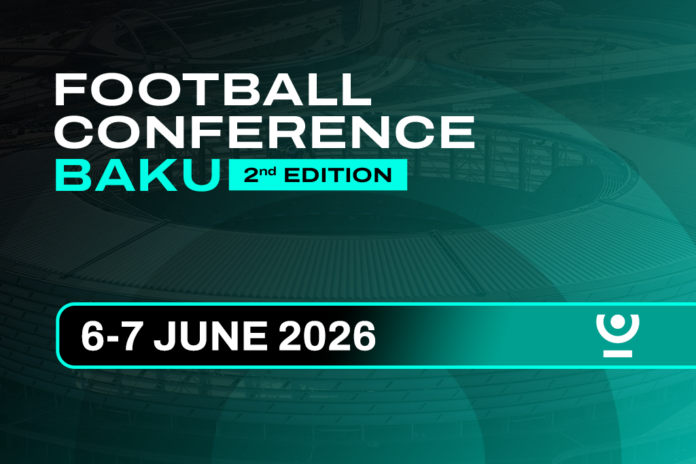
Football Conference Baku 2026 event banner with dates and second edition announcement
Football Conference Baku returns on 6–7 June 2026 for its second edition. The event brings together global football professionals to share knowledge and build connections.

On June 6–7, Baku will once again host one of the region’s most important football industry event. The Football Conference Baku, which is organized by QOLAT Sport Service in collaboration with its official partners as, Association of Football Federations of Azerbaijan, Comparisonator, Acıbadem Sports Academy, IFFA, The Football Week, and DJEVO Sport. The conference continues to strengthen its position as a bridge between global expertise and regional ambition.

More than just an event, Football Conference Baku is a strategic platform designed to bring together local and international football professionals.

More than just an event, Football Conference Baku is a strategic platform designed to bring together local and international football professionals to explore the evolving landscape of modern football. It highlights the game not only as a sport played on the pitch, but as a complex and dynamic industry shaped by scientific, strategic, and managerial perspectives.

A Diverse and Global Audience

The conference welcomes a broad spectrum of football stakeholders, including club executives, sporting directors, FIFA licensed agents, player representatives, coaches, investors, sponsors, and individuals aspiring to build a career in football. This diversity creates a unique environment where different perspectives intersect, encouraging meaningful dialogue and collaboration.

This diversity creates a unique environment where different perspectives intersect, encouraging meaningful dialogue and collaboration.

Knowledge, Networking, and Opportunity

Participants can expect a comprehensive program designed to deliver both insight and opportunity. The conference will feature presentations by international experts, offering valuable perspectives on the global and regional football market. At the same time, it offers high-level networking opportunities, bringing together organizations and key industry representatives, while enabling direct interaction with regional clubs from Azerbaijan, Georgia, Turkiye, Kazakhstan, Uzbekistan, and across the global football landscape.

This combination of knowledge sharing and relationship-building positions Football Conference Baku as a space where ideas evolve into partnerships.

Driving Football Forward

At its core, the mission of Football Conference Baku is to elevate football standards by connecting expertise across key areas of the game, from sports management and leadership to coaching, scouting, player development, performance, and football business strategy.

At its core, the mission of Football Conference Baku is to elevate football standards by connecting expertise across key areas of the game.

Through structured discussions and strategic networking, the conference empowers professionals to collaborate, innovate, and contribute to the sustainable growth of football ecosystems.

As Azerbaijan continues to expand its presence in the international football landscape, Football Conference Baku stands out as a catalyst for progress, reinforcing the country’s ambition to become a regional hub for football knowledge, innovation, and professional exchange.


Exclusive offer for The Football Week readers: Use code FCB/TFW90 to receive 18% off registration.

FIFA Agent Mock Exam 3

Study materials and books arranged on a shelf for FIFA agent exam preparation
Preparation is key for success in the FIFA Agent Exam. Structured study and familiarity with the materials can make a decisive difference. Photo by Jessica Ruscello on Unsplash.

1. As a general rule, between what ages does a player receive training that may be used for the calculation of training compensation? Select one:

a. 12-21

b. 12-23

c. 10-23

d. 10-21


2. Golden FC are a professional club known for recruiting top talent from around the world. They would like to sign Gabby and have provided her with a contract stipulating the following: “The validity of this contract is strictly subject to a successful medical examination and the granting of a work permit.” Which of the following apply? Select one or more:

a. The contract would remain valid regardless of the results medical examination, but the player would be required to obtain a work permit in order for the contract to be valid

b. The contract would be valid and binding regardless of the results of the medical examination

c. The whole contract would be considered null and void

d. The clause would be considered null and void


3. On which of the following laws do FIFA’s judicial bodies primarily base their decisions? Select one:

a. European Law

b. Swiss Law

c. FIFA Statutes and regulations

d. Law chosen by the parties


4. Which of the following clauses in a Representation Agreement is null and void when representing players? Select one:

a. Requirement for the service fee to be paid in EUR

b. Statement that the service fee is 1%

c. Automatic extension of a Representation Agreement in the case of a new employment contract with a club

d. Statement that the Representation Agreement will be drafted in Arabic


5. Outside the EU/EEA, the final calendar year of training may occur before the calendar year of the player’s 21st birthday if: Select one or more:

a. It is established that the player no longer attends training sessions

b. It is established that the player completed their training before that time

c. It is established that the player terminated their academic education

d. The player has obtained a recognised coaching diploma


6. Which situations are not subject to a decision of the Players’ Status Chamber of the FIFA Football Tribunal Select one or more:

a. International transfer of a national player who is a minor

b. First registration of a nine-year-old player

c. First registration of a non national player who is a minor

d. First registration of a national player who is a minor


7. Which of the following would be considered an Approach to a player? Select one or more:

a. A meeting with a player’s brother

b. A message to a player on social media

c. An email to a player

d. None of the answers listed


8. If a player fails to comply with a financial (or non-financial) decision issued by a competent decision-making body within the relevant association, which body is competent to enforce that decision? Select one or more:

a. The Court of Arbitration for Sport

b. The association of the body that has issued the decision

c. The player’s new association if the player has, in the meantime, registered with a club affiliated to another association

d. The FIFA Disciplinary Committee


9. Florian is a new Football Agent from Austria who was contacted by Kemoh, the father of a 13-year-old named Flastoh, who is currently playing in Malaysia. Kemoh would like Florian to represent Flastoh and get him an employment contract in Footballia, a country which has recently won the FIFA World Cup™ and is very well known for its development of young players. In his e-mail, Kemoh mentions that Florian would be paid EUR 50,000 if he managed to secure a trial and contract for Flastoh in one of Footballia’s top clubs. After checking the relevant regulations of Footballia, Florian establishes that a professional contract in Footballia may only be signed at the age of 16 and that all Football Agents representing minors must have a national certificate for child safeguarding. What may Florian do to represent Flastoh? Select one or more:

a. Complete Footballia’s national certificate for child safeguarding

b. Nothing, Flastoh is too young to be represented in Footballia

c. Represent Flastoh for trials but not for contract negotiations and charge EUR 25,000

d. Complete the FIFA CPD for representation of minors


10. In order to maintain their licence, what does a football agent have to do, among others, on an annual basis? Select one or more:

a. Comply with the continuing professional development requirements

b. Pay the licence fee to FIFA

c. Ensure that their insurance policy is valid

d. Retake the FIFA Football Agent Exam


11. In the context of the first registration of a professional, training compensation is due… Select one:

a. to every club with which the player has previously been registered in accordance with the player’s career history as stated in the player passport) and that has contributed to their training, starting from the calendar year of their 12th birthday

b. to every club with which the player has previously been registered (in accordance with the player’s career history as stated in the player passport) and that has contributed to their training, starting from the calendar year of their 15th birthday

c. to every club with which the player has previously been registered (in accordance with the player’s career history as stated on Transfermarkt) and that has contributed to their training, starting from the calendar year of their 12th birthday

d. to the last two clubs with which the player was previously registered (in accordance with the player’s career history as stated in the player passport) and that has contributed to their training starting from the calendar year of their 12th birthday


12. Which of the following items or pieces of information regarding a Football Agent needs to be included in a transfer agreement where one of the parties has been represented by that Football Agent? Select one:

a. Photograph

b. Copy of passport

c. Letter from confederation

d. Licence number


13. Who needs to provide a copy of a club’s Representation Agreement when requested to do so by a Client? Select one:

a. FIFPRO

b. A Football Agent

c. The association to which the club is affiliated

d. Nobody


14. Which of the following sanctions may not be appealed before the FIFA Appeal Committee? Select one or more:

a. A fine of CHF 50,000

b. A suspension of one match

c. A suspension of ten matches

d. A warning


15. Who needs to approve a Client to represent themselves in a Transaction? Select one:

a. Nobody

b. Football Agent with an exclusive Representation Agreement

c. The association with which the Client was last registered

d. FIFA


16. How may a Football Agent provide Football Agent Services? Select one or more:

a. As an employee of a club

b. As a freelancer/on a self-employed basis

c. As an employee of an Agency

d. As a youth coach of a club


17. Failure to safeguard: Select one or more:

a. undermines the integrity of the member association, academy or club

b. hurts children

c. undermines the growth and integrity of football

d. hurts no one


18. Which of the following activities constitute Football Agent Services? Select one or more:

a. Representing Clients before the FIFA Football Tribunal

b. Negotiating with a coach for a Client to be called up to their respective representative team for the FIFA World Cup™

c. Organising trials with clubs

d. Negotiating the termination of a professional contract


19. Amongst other requirements, how many monthly salary instalments need to be outstanding in order to have just cause to terminate the contract in accordance with article 14bis of the FIFA Regulations on the Status and Transfer of Players? Select one:

a. At least two monthly salary instalments

b. A fixed amount of USD 10,000

c. At least one monthly salary

d. A fixed amount of USD 5,000


20. Two individuals, Cain and Meshif, have registered a company called The Line Agency in Jordan with the aim of representing local players and finding opportunities for them in other parts of the world. They have decided that Cain will be the CEO of The Line Agency and Meshif will obtain a Football Agent licence. Their employee, Drew, is a scout who has identified Kana as a prospective young player with the potential to continue playing professionally abroad. Kana is currently under a one-year exclusive Representation Agreement with Sufi, her Football Agent. Who may make an Approach to Kana to propose that she be represented by The Line Agency before the transfer window closes in one week? Select one or more:

a. Drew

b. Nobody

c. Meshif

d. Cain

Answers

1. A
2. BD
3. C
4. C
5. B
6. BD
7. ABC
8. BC
9. B
10. AB
11. A
12. D
13. B
14. BD
15. A
16. BC
17. ABC
18. CD
19. A
20. B

How to Pass the FIFA Football Agent Exam: 2025 Edition.

How did you get on? Still some work to do? You can prepare with the How to Pass the FIFA Football Agent Exam workbook, a practical and comprehensive guide designed to help you master the exam content.

This workbook combines theoretical knowledge, practical cases and mock exams to prepare you in a structured and effective way, based on the latest official FIFA materials.

Follow the Sports Agent Academy on LinkedIn to get the latest exam content, practice questions and successful strategies.

Who is Matthias Heidrich?

Matthias Heidrich speaking on player development and academy leadership in professional football
Matthias Heidrich shares insights on long term player development and leadership in football. His approach reflects a balance between structure, honesty, and sustainable success.

Profile

Role: Director of Football

Specialisation: elite player development, academy leadership, and sustainable development

Experience: professional player, coach, academy leader, and Director of Football

Focus Areas: structural clarity, long-term thinking, player development, and leadership

Biography

Elite player development is rarely the result of isolated decisions. It is shaped by long-term thinking, structural clarity, and leadership that understands both the individual and the system. Matthias Heidrich represents that perspective, combining experience across all levels of the game with a clear focus on sustainable development.

Elite player development is rarely the result of isolated decisions.

Matthias Heidrich has built his career across multiple layers of professional football, from his time as a professional player to roles as coach, academy leader, and Director of Football. His work is defined by a holistic understanding of player development, balancing individual progression with structural demands. Through his experience in German football, he has contributed to the development of high-level talents and established himself as a leader focused on clarity, honesty, and long-term impact.

His work is defined by a holistic understanding of player development, balancing individual progression with structural demands.

Key Insights

  • Matthias Heidrich combines experience as a player, coach, academy leader, and Director of Football.
  • His approach to development is built on structural clarity, honesty, and long-term thinking.
  • He emphasises individual pathways, strong coaching, and alignment across the whole club.

Our Exclusive Interview with Matthias Heidrich


Over your journey from professional player to coach, academy leader, and Director of Football, how has each role reshaped your understanding of the game?

As a player, your perspective is naturally focused on your own position and the specific demands of your role. Once you move into coaching and later into leadership roles such as academy management, the focus shifts significantly towards collective structures and team dynamics. Over time, the ability to see the bigger picture becomes increasingly important. Understanding processes, workflows, and how different elements of the organisation interact has shaped my view of the game more than anything else.


There is often tension between short-term first-team performance and long-term player development. How do you navigate this balance?

I have experienced this tension from both perspectives, and it is a natural part of professional football. The key is not to eliminate it, but to manage it. Transparent communication and mutual understanding are essential. When all stakeholders understand both the immediate demands and the long-term objectives, it becomes easier to find a workable balance.

The key is not to eliminate it, but to manage it.


You have worked with players across a wide age range. Does your philosophy change depending on the age group?

Over the years, individual development has become increasingly important in my approach. Every player requires a tailored pathway, which also means greater investment in staff and more detailed work with each individual. At the same time, certain principles remain constant across all age groups. Reliability in communication and honesty in dealing with players are fundamental and do not change.


The UEFA Pro Licence is the highest coaching qualification in football. How did it influence your methodology?

The Pro Licence helped me structure my understanding of the game. Many of the experiences I had gained on the pitch were placed into a clear conceptual framework. It improved my approach to tactical and physical periodisation and allowed me to define development priorities in a more precise and targeted way.


Talent retention is a major challenge in academy football. How do you approach it?

Building trust is fundamental, especially with young players. In most cases, parents are the key partners in this process. It is important to communicate realistic pathways and clear next steps rather than creating unrealistic expectations. Even if this means losing a player, honesty and transparency are essential for long-term credibility.


Managing coaches is as important as managing players. How do you approach this?

The coach is the most important figure for the players. A good coach must combine strong interpersonal skills with high-level technical expertise and the ability to communicate effectively. Without a strong relationship with players, meaningful development is not possible. Responsibilities must be clearly defined before any appointment and remain binding throughout the collaboration.


Data is increasingly shaping academy work. How much do you rely on it?

Data collection has become highly advanced, even at academy level. However, young players are subject to significant fluctuations and have not yet reached their full performance potential. It is therefore essential to complement data with a strong understanding of non-measurable factors such as mentality, attitude, resilience, and social competence. These elements often play a decisive role in development.

These elements often play a decisive role in development.


Some players follow every step of the pathway and still do not make the breakthrough. What does that tell us?

Player development is rarely linear, but decisions are always made at specific moments, such as transitions into the U19 or senior level. At those points, a player may not be ready, even if they have completed every step. This highlights the importance of resilience, mindset, and the willingness to continue working through setbacks.


As football continues to professionalise, strong academy structures are becoming more important. What must clubs get right?

Coaches are the key drivers of development. They must be both age-appropriate and technically strong. In addition, there must be strong alignment between school and football, as time is a limiting factor. Clubs need to create an optimal learning environment that allows for different development speeds and encourages patience. Equally important is building a culture that provides a genuine pathway into the first team.


Which players made the biggest development steps under your guidance, and who was the most complete player you worked with?

Florian Wirtz stands out as the most complete player I have worked with. Even at a young age, he combined creativity, ambition, and exceptional talent. In terms of development, players such as Kevin Schade, Maximilian Beier, Jens Castrop, Tim Lemperle, and Jonas Urbig made significant progress. In many cases, well-timed loan moves and consistent playing time at the right level were decisive in helping them maximise their potential.


FAQ

Who is Matthias Heidrich?

Matthias Heidrich is a football leader with experience as a professional player, coach, academy leader, and Director of Football.

What is Matthias Heidrich known for in player development?

He is known for combining structural clarity, honesty, and long-term thinking with a holistic view of player development.

Which player does Matthias Heidrich describe as the most complete he has worked with?

He identifies Florian Wirtz as the most complete player he has worked with.

The 5 Most Common Mistakes Made in the FIFA Football Agent Exam

Candidate writing answers during exam preparation for the FIFA Football Agent Exam
Focused preparation is essential for success in the FIFA Football Agent Exam. Avoiding common mistakes begins with disciplined study and practice under pressure. Photo by Ben Mullins on Unsplash.

Common Mistakes in the FIFA Football Agent Exam and How to Avoid Them

The FIFA Football Agent Exam is a difficult test designed to ensure that only prepared and knowledgeable candidates earn their licence. Unfortunately, many aspiring agents fall short, not because they lack the knowledge or desire, but because they make avoidable mistakes during the exam. This is part of the reason why the pass rate for the FIFA Agent Exam is typically very low. In this blog, we’ll explore the most common mistakes made in the FIFA Football Agent Exam and how you can avoid them.

Not Reading the Question Properly

One of the most frequent and costly mistakes candidates make during the FIFA Football Agent Exam is not reading the questions carefully. The exam questions are often nuanced and designed with subtle key words or phrases that significantly impact the correct answer. For example, some questions might ask you to “select one or more” options, yet many candidates overlook the possibility that more than one answer could be correct. This oversight can be particularly damaging because if you select only one correct answer but miss the others, you won’t receive any credit for the question. Even if you know the material well, failing to catch these small but crucial details can lead to incorrect answers, costing you valuable points.

The exam is structured to assess not only your knowledge but also your attention to detail, so even a minor misunderstanding of the question can have significant consequences.

Another common pitfall is misinterpreting specific terminology or instructions, which can lead to choosing an incorrect answer or overlooking the need to reference certain sections of the study material. The exam is structured to assess not only your knowledge but also your attention to detail, so even a minor misunderstanding of the question can have significant consequences.

Tip: Always take a few extra seconds to carefully read the entire question and any accompanying instructions before answering. Pay close attention to keywords and specific terminology, as these can guide you toward the correct answer or, at the very least, point you in the right direction within the study materials. When a question allows for “one or more” correct answers, carefully evaluate all options to determine whether multiple choices might be correct. However, be mindful that “select one or more” does not always mean there is more than one correct answer, so don’t let this phrase mislead you. Taking the time to fully understand each question will greatly improve your chances of selecting the correct answers and maximising your score.

Poor Time Management

The FIFA Football Agent Exam consists of 20 multiple-choice questions that must be completed within an hour, giving you just three minutes per question. This tight time constraint is one of the most significant challenges of the exam, and poor time management can quickly lead to incomplete answers or rushed decisions. Many candidates fall into the trap of spending too much time on particularly difficult or complex questions, meticulously analysing every detail in hopes of finding the right answer. While this approach might help with a challenging question, it can leave you with insufficient time to address the remaining questions, many of which might be easier and quicker to answer. Conversely, some candidates may rush through the exam too quickly, skimming through questions and missing key details in those that appear easier but may contain subtle nuances that are crucial to identifying the correct answer. Both of these time management issues can significantly impact your overall score.

Effective time management is crucial to success.

Tip: Effective time management is crucial to success, and the best way to achieve this is through practice under conditions that closely mimic the actual exam. Begin by taking mock exams with strict time limits to get a realistic sense of the pace you need to maintain. This practice will help you build a rhythm and improve your ability to judge how much time to spend on each question. During the actual exam, remember that you can move back and forth between questions. If you encounter a question that is especially challenging, time-consuming, or involves lengthy scenarios, consider flagging it and moving on to other questions that are quicker and more straightforward to answer. This strategy allows you to secure as many points as possible from the easier questions before returning to tackle the more difficult ones. By doing so, you reduce the risk of running out of time and ensure that you don’t miss out on potential points by getting bogged down early on. Balancing your time effectively is essential for maximising your score and managing the pressure of the exam’s time constraints.

Over Reliance on the Open Book Nature of the Exam

The FIFA Football Agent Exam is open-book, allowing candidates to refer to the nearly 700-page study material during the test. While this may seem like a significant advantage, it often lulls candidates into a false sense of security. Many assume that because the exam is open-book, they can easily locate answers within the text during the exam. However, with only three minutes allotted per question, this strategy can quickly backfire. The sheer volume of information contained in the study materials means that unless you are extremely well-prepared and can quickly pinpoint the relevant sections, you will likely run out of time. Searching through hundreds of pages for each answer is simply not feasible within the tight time constraints, and relying on the open-book format as a crutch can lead to poor performance.

Searching through hundreds of pages for each answer is simply not feasible within the tight time constraints.

The complexity of the exam questions often requires not just finding a specific piece of information, but also understanding how different regulations and guidelines interconnect. If you’re spending too much time flipping through the study material, you may not have enough time to process and apply the information correctly, leading to rushed or incomplete answers. Additionally, some questions may test your ability to apply knowledge rather than simply recall facts, making it even more important that you have a strong grasp of the material before the exam begins.

Tip: While the exam is open-book, do not rely on this feature as your primary strategy for success. Thorough preparation is essential. Well before the exam, familiarise yourself with the study materials so that you have a solid understanding of where key information is located. This familiarity will allow you to quickly and efficiently reference crucial sections if needed. Develop a system for navigating the materials, such as using bookmarks, sticky notes, or creating a detailed index. Practice using this system during mock exams to ensure you can find the information you need quickly under timed conditions. By mastering the layout and content of the study material in advance, you can save valuable time during the exam and improve your ability to answer questions accurately and confidently.

Inadequate Preparation

Perhaps the most common mistake of all is simply not preparing enough. The FIFA Football Agent Exam is not something you can wing. The questions are designed to test your deep understanding of the material, as well as your ability to apply it in real-world scenarios. Without adequate preparation, you may find yourself overwhelmed by the breadth and depth of the questions.

Tip: At a minimum, read through the study materials at least once before the exam. Take advantage of the mock exam provided by FIFA, as well as those offered by organisations like the Sports Agents Academy. These mock exams will give you a sense of the style of questions you’ll encounter and help reduce surprises on exam day. Reviewing past exam questions can also help identify areas where you may need to focus your study efforts.

Failing to Understand the Distinctions Between Closely Related Concepts

Another common mistake that trips up candidates in the FIFA Football Agent Exam is not fully understanding the distinctions between closely related concepts. The exam often tests your ability to differentiate between national and international regulations, or the specific roles of various FIFA committees, such as the FIFA Disciplinary Committee and the FIFA Ethics Committee. These distinctions are crucial, as confusing them can lead to incorrect answers even when you might generally understand the broader topic.

For instance, national regulations may apply differently than international regulations in certain scenarios and candidates forget that this exam is focused on FIFA regulations alone, and the responsibilities of the FIFA Disciplinary Committee, which deals primarily with violations of FIFA statutes and disciplinary matters, are different from those of the FIFA Ethics Committee, which focuses on ethical breaches within the football community. Mistaking one for the other or misunderstanding their scope can lead to errors that might cost you valuable points.

Tip: To avoid this mistake, make sure you have a clear understanding of the differences between these related concepts. During your preparation, take the time to study how national and international regulations interact and where their boundaries lie. Similarly, review the specific functions and responsibilities of various FIFA committees. Creating comparison charts as we have done in previous blogs can help reinforce these distinctions in your mind. If you encounter a question on the exam that involves these topics, take an extra moment to consider the specific context and ensure that you’re applying the correct regulation or committee role to your answer. Understanding these subtle but important differences will improve your accuracy and confidence during the exam.

Conclusion

Passing the FIFA Football Agent Exam is no small feat, but by avoiding these common mistakes, you can increase your chances of success. Pay close attention to the details in each question, manage your time effectively, don’t rely too heavily on the open-book format, and ensure you prepare thoroughly. With the right approach, you can pass the exam and become a licensed football agent.

We’d also recommend checking out our How to Pass the FIFA Football Agent Exam Workbook to help you to be successful in the exam.