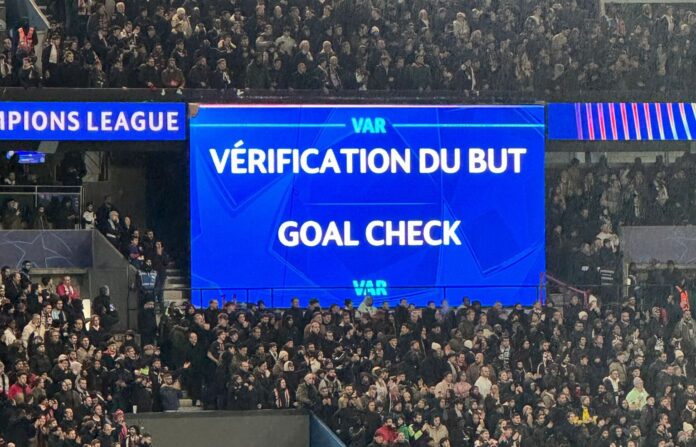
A VAR review displayed in stadium highlights the growing need for clear communication in football. Moments like this shape fan perception and trust in officiating decisions.
Since its introduction, VAR (Video Assistant Referee) promised fairness, accuracy, and transparency in officiating. Yet in many cases, it has caused more confusion than clarity — not because of the technology itself, but because of the way its use is communicated.
In a sport ruled by emotions and built on trust in the referee, VAR’s communication strategy is falling short. There’s a lack of clarity, education, and openness, which directly impacts the soul of the game: the fan’s trust.
There’s a lack of clarity, education, and openness, which directly impacts the soul of the game: the fan’s trust.
VAR: A Modern Tool with Outdated Communication
VAR was created to assist, not replace. But the main issue isn’t the tool — it’s the communication around it.
Why review some plays and not others?
Why does it take so long?
What is the referee saying in the booth?
What was the reasoning behind that disallowed goal or penalty call?
These questions are asked week after week, and rarely receive clear, timely, or official answers. This lack of transparency fuels mistrust, conspiracy theories, and unnecessary noise across media, social platforms, and stadiums.
The Problem Isn’t the Technology, It’s How Decisions Are Communicated
Modern refereeing is under constant scrutiny. Every decision is dissected from multiple camera angles, in high definition, with instant replays and global commentary. And yet, refereeing communication feels stuck in the past.
While sports like rugby or American football allow fans to hear referee decisions live or provide detailed explanations post-match, football continues to lag behind:
VAR decisions are rarely communicated clearly during matches.
Referees aren’t allowed to publicly explain controversial calls.
Refereeing bodies take days to provide explanations.
Press conferences from referees are rare exceptions.
In some countries, referees announce decisions through stadium speakers, but often without context or explanation. This creates a sense of secrecy, even when the decision is technically correct. And in communication, what isn’t explained becomes suspect.
And in communication, what isn’t explained becomes suspect.
The Consequences: Silence Undermines Trust
Poor communication has serious consequences: fans think VAR is “rigged”, players and coaches lash out publicly due to confusion, referees lose credibility not just for bad calls, but for the lack of institutional support and the media fills the silence with speculation, controversy, and clickbait.
This doesn’t just damage the image of referees, it hurts the perception of football as a fair and trustworthy sport.
What Needs to Change: Communication Strategies Football Must Adopt Now
Ongoing Fan Education: Regularly explain the rules, VAR protocols, and interpretation criteria through official, accessible channels. Not just during controversy — make it part of fan education.
Real-Time (or Near Real-Time) Transparency: Follow models like the 2022 FIFA World Cup, where referees used microphones to explain decisions after reviews. Even simple graphics or speaker announcements during matches could make a huge difference.
Public Post-Match Referee Reports: Brief official explanations of controversial decisions. Not to justify errors, but to show the rationale behind key calls.
Trained Referee Spokespersons: Train select referees or officials to act as media spokespersons. Not everyone needs to speak, but someone must — and they must be well-prepared.
Unified Criteria Across Leagues and Competitions: VAR shouldn’t be interpreted differently in every country or tournament. Inconsistent communication across leagues only confuses fans and weakens referee authority.
Examples That Reveal the VAR Communication Crisis
Controversies happen every weekend, but some stand out as proof of the system’s failure to communicate.
Premier League (2023): Liverpool had a goal disallowed due to a “human error” by VAR. The issue wasn’t just the mistake — it was that the press leaked the story before any official statement. Days later, fans still lacked clear answers.
Liga MX (2022): A controversial penalty in the playoffs followed a long VAR review. Fans left the stadium not knowing what had been called. The explanation came two days later — too late, too disconnected.
Copa Libertadores (2023): Boca Juniors and Palmeiras players only realized a red card had been given through the referee’s gesture — no further explanation, as cameras captured visible confusion on the bench.
Without communication, there is no justice.
Without Communication, There Is No Justice
VAR is a powerful tool. But when poorly communicated, it becomes a source of chaos. Football needs to embrace transparency, not just in rules, but in how it speaks to those who live and love the game: players, coaches, fans, and the media.
Modern refereeing cannot hide behind institutional silence. It must speak, explain, and educate. Because in football, perception is just as powerful as the decision itself and a poorly communicated truth can be just as damaging as a lie.
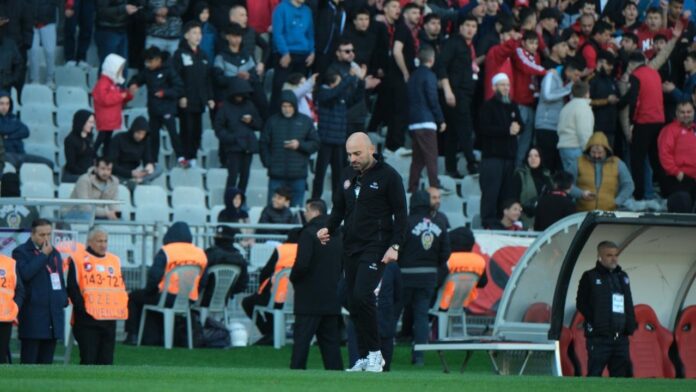
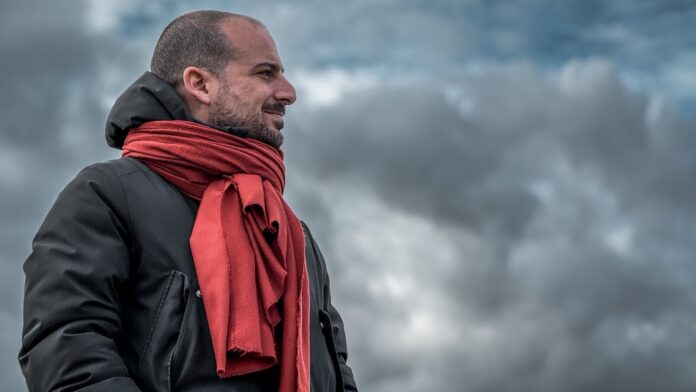
Onur Can Korkmaz leads from the touchline, combining tactical awareness with calm decision making. His presence reflects modern coaching under pressure.
Profile
Role: Football Coach and Former Head Coach at Fatih Karagümrük
Specialisation: Player development, tactical analysis, training science integration
Experience: Galatasaray Academy, Fatih Karagümrük Academy and First Team, Süper Lig and 1. Lig
Focus Areas: Performance environments, data-driven coaching, long-term player development
Biography
Onur Can Korkmaz represents a new generation of Turkish football coaches defined by analytical thinking, leadership under pressure, and a strong commitment to player development. Based in Istanbul, he has built a profile that combines elite academy experience, professional first-team exposure alongside international coaching staff, and a solid academic foundation in sports science.
His coaching journey began at Galatasaray Academy between 2013 and 2017, where he worked across multiple age groups and contributed to national and international successes. Several players he worked with have since continued their careers at professional level and within national team structures.
From 2019 onward, Korkmaz continued his development at Fatih Karagümrük, playing an active role in the restructuring of the academy. He took responsibility for various youth age groups and focused on building a clear game philosophy, implementing modern training methodologies, and developing long-term talent pathways. His work during this period helped produce players who progressed to the first team and national teams, integrating technical, tactical, and physical aspects of the game in a coherent way.
A decisive turning point in his career came during the 2024 to 2025 season, when he joined the first-team technical staff at Fatih Karagümrük as assistant coach to David Sassarini. Following Sassarini’s departure, Korkmaz was appointed head coach. Competing in the Trendyol 1. Lig, he led the team to promotion to the Süper Lig via the play-offs and achieved the highest points-per-game average in the league. At 34 years old, he became the youngest head coach in Turkish football history to promote a team to the Süper Lig, drawing significant attention within the football community.
At 34 years old, he became the youngest head coach in Turkish football history to promote a team to the Süper Lig.
After promotion, he continued working at Süper Lig level, initially serving as assistant coach to Marcel Licka. This period gave him deeper insight into tactical preparation, match planning, and daily management at top-flight level. Following Licka’s departure, Korkmaz once again took charge of the team and became the youngest head coach in the 2025 to 2026 Süper Lig season. During that period, he managed to collect more points than the previous experienced technical staff.
Alongside his coaching career, Korkmaz has consistently invested in his education. He holds a UEFA A Licence and is currently pursuing a PhD in Movement and Training Sciences at Istanbul University. He also holds multiple master’s degrees in sports science and sports informatics. This academic background allows him to integrate data analysis, training science, and modern technology directly into his coaching methodology.
Throughout his career, Onur Can Korkmaz has demonstrated the ability to combine theory and practice effectively. His profile reflects continuous learning, adaptability, and a clear determination to build performance environments that support both team success and individual player development.
Key Insights
Korkmaz combines academic research with practical coaching to enhance performance.
He became the youngest coach to achieve promotion to the Süper Lig.
His leadership approach is based on trust, clarity, and adaptability under pressure.
Our Exclusive Interview with Onur Can Korkmaz
You have experienced a journey from academy coaching to becoming the youngest head coach to achieve promotion to the Süper Lig. How has this process shaped your identity and confidence as a modern head coach?
This process actually covers a long period of time. I did not have a successful playing career. Due to a knee injury at a young age, I had to undergo several surgeries and my playing career ended early. However, I always had the idea of becoming a head coach. The misfortune I experienced perhaps turned into my opportunity, because I was able to start coaching at an early age. I have been coaching for 15 years, which has given me the chance to gain significant experience compared to my age.
In Turkey, transitioning from academy coaching to professional team coaching is very difficult. Generally, clubs prefer to work with coaches who have a popular playing background. Therefore, you have to climb step by step from the bottom to the top. To achieve that, you must be well equipped and open to constant development. In order to exist within competition and move upward, you must acquire versatile skills. From the very first day, I have been aware of this reality, so I have tried to gain knowledge in every area of football. I continuously work on improving myself in physical performance, team and individual analysis, in-game coaching, communication, and leadership.
Winning promotion from the 1. Lig to the Süper Lig and becoming the youngest coach in Turkish football history to achieve this is first and foremost a source of pride for me. However, you can only achieve such success together with all stakeholders within the organization. As a head coach, your influence on the team is significant, but the main share of success belongs to the players and the entire staff. For success, all stakeholders must work in harmony and with high efficiency. In football, one individual being successful alone means nothing.
Reaching one of the goals you set years ago motivates you to strive for more. It makes you feel that you can achieve the other goals you have set for yourself.
For success, all stakeholders must work in harmony and with high efficiency.
You combine academic research in training science with daily on-field coaching. How do you translate scientific concepts into practical and understandable solutions for players and technical staff?
The staff I work with are experts in their respective fields. Being able to speak the same language with the team while preparing training plans becomes a great advantage for a head coach. Knowing what we are doing and why we are doing it, understanding which objective it serves, and being able to measure performance and track development allows you to clearly see your strengths and weaknesses. Winning a single match does not mean everything is going well. It may only create a temporary illusion, but it does not change the fact that long-term issues will eventually appear.
Let me briefly explain how we use scientific data. There are many parameters under many topics, but I will give one example. Imagine that in an upcoming match you aim to press and win the ball in the final third against your opponent. If the press is broken, you want to stay compact defensively and launch fast attacks through your wingers with the balls you recover. This game plan requires your wingers to perform a high number of high-intensity sprints both defensively and offensively. If your physical measurements show that your wingers do not have sufficient sprint performance for this plan, it is highly unlikely that your intended game model will work effectively. For me, scientific knowledge helps ensure that you play the right game with the right player profile at the right time.
You achieved promotion to the Süper Lig as a young head coach. Then you worked as an assistant at Süper Lig level before returning as head coach. How did this multi-level experience influence your dressing room management and relationships with players?
At the beginning of the season, I started as assistant coach alongside David Sassarini, who had previously worked at Karagümrük together with Francesco Farioli. During my time at Galatasaray, I had the opportunity to observe many high-level head coaches. Working with Sassarini allowed me to learn about the Italian defensive tactical approach and Farioli’s possession-based concepts.
After his departure, I was appointed head coach. It is not easy to be an assistant one day and stand in front of the players as head coach the next day while the league is ongoing. At that moment, the most important thing for me was to ensure that although my role changed, my attitude and communication style did not. I believe that trust between players and coach is built not through titles, but through consistency and fairness.
Instead of creating additional distance from the players, I chose to communicate more clearly and transparently. We clearly explained both responsibilities and expectations. Since I had already been assistant coach, I knew the player group, their dynamics, and the delicate balances within the squad. This made the transition natural and healthy. As a result, we achieved great success and were promoted to the Süper Lig.
At the start of the Süper Lig season, my decision to continue as assistant coach was related to both the club’s needs and the healthy management of the transition process, as well as my own development as a head coach. We believed that working with an internationally experienced coach could benefit the team and the process. I did not see this as a step back, but as an important development phase to better understand the Süper Lig level.
I began the season as assistant to Marcel Licka, who had twice achieved promotion in the Russian Premier League and was named coach of the year. Working with him helped me improve particularly in high-intensity training models and team discipline.
After ten league matches, Licka left the club and I once again took charge of the team, completing the first half of the Süper Lig season as head coach. At that point, the team had four points in ten matches and was bottom of the table. In seven matches, we collected five points. Ultimately, I concluded that the situation was not sufficient for both myself and the club, and I decided to resign.
Within a short period, I experienced managing a team celebrating promotion in the 1. Lig and managing a team fighting relegation in the Süper Lig. Experiencing these two completely different psychological environments back to back gave me a deeper and more balanced perspective on dressing room management.
Going through different roles helped me better understand player psychology, expectations, and reactions under pressure. Today, I build leadership in the dressing room not by creating distance, but through clarity, consistency, and trust. These experiences taught me that maintaining the same values under different circumstances and building healthy relationships with players are the most critical factors for sustainable success.
I build leadership in the dressing room not by creating distance, but through clarity, consistency, and trust.
Final matches often come with intense pressure and expectations. What leadership and tactical principles guided you successfully through the play-off process?
Since we finished the league in third place, it was clear that we would play a single-match play-off final to determine promotion. Naturally, this creates serious pressure, and as head coach, you are one of the people who feel it most. One of the most important parts of this profession is being able to work under pressure and not allowing that pressure to negatively affect your decisions. Once you achieve that, you take a step forward on the pitch.
We had nineteen days to prepare for the final. While waiting for our opponent to be determined, we took the team into a training camp. From the first day, we began analyzing potential opponents and preparing our training plans and match scenarios. Our aim was to ensure that when our players stepped onto the pitch, they felt prepared for every possible situation.
To prepare them mentally for the atmosphere of a final, we placed large speakers around the training pitch to simulate crowd pressure. We also considered the possibility of a penalty shootout. During the camp, each player took seventy-five penalties, and we recorded all statistics to determine potential penalty takers.
The match went into extra time but did not reach penalties. However, I knew that we were fully prepared both psychologically and technically. In my opinion, the most important task of a coach is to ensure that when a player steps onto the field, he feels ready and confident. Football is constantly evolving, and there is no perfect or unchanging game plan. You can prepare the team as best as possible in defense, attack, and transitions, but ultimately it is the players who must make correct decisions and produce solutions on the pitch. Therefore, a player’s belief and self-confidence directly influence both individual performance and team success.
You achieved significant success in a short time, raising expectations around your career. How are you shaping your long-term career planning now?
This period without working at a club offers an important opportunity to further develop my game plans and analyze world football in greater detail. When you are actively working, your focus is naturally on your own team and opponent analysis, which can limit the time needed for deeper long-term development.
I am consciously using this time to analyze different leagues and the game models of various head coaches. I am clarifying my own game principles and strengthening my portfolio. Both tactically and methodologically, this has been a very productive period for me.
I do not want to rush my next step. I am still at the beginning of my career. For that reason, the right project, the right structure, and the right timing are very important to me, including potential international opportunities. Rather than making short-term decisions, I want to make choices that will ensure sustainable development and move me forward in the long term. I believe this approach will allow me to take stronger and more lasting steps in my career.
FAQ
Who is Onur Can Korkmaz?
Onur Can Korkmaz is a Turkish football coach known for his work in player development and achieving promotion to the Süper Lig.
What is his coaching style?
He combines scientific research, data analysis, and practical coaching to build performance environments.
What makes his profile unique?
His combination of academic expertise, early coaching experience, and leadership under pressure distinguishes him.
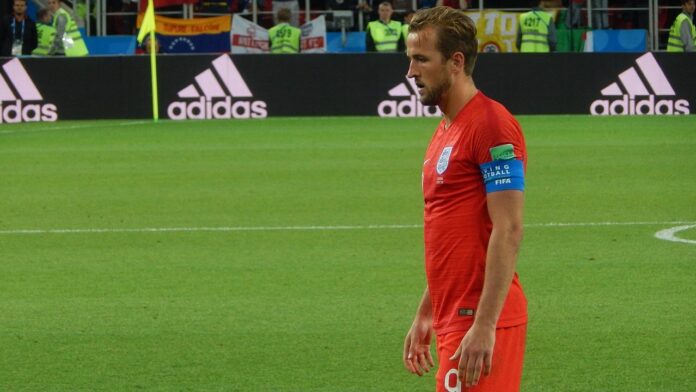
Moments of stillness during competition often reveal a player’s internal state. Composure, breathing and decision-making remain closely linked in high-pressure environments. Voltmetro, CC BY-SA 4.0, via Wikimedia Commons.
Introduction
There’s a moment before every game where something shifts. You see it in the tunnel, in the warm up, in the first few touches.
In the high-stakes world of professional football, performance is often measured in metrics: speed, accuracy, and endurance. But beneath these visible markers lies something less obvious.
An invisible thread that connects them all. The breathline.
An invisible thread that connects them all. The breathline.
What is the Breathline?
The breathline is the invisible thread that connects a player’s breath, emotional state, and actions. It is always present, whether the player is aware of it or not. When a player is composed, their breath is steady, their movement fluid, their decisions clear. When pressure builds, the breath becomes shallow, the body tightens, actions become reactive.
Why it matters
The breathline is not just about performance. It is about coherence. It is the foundation of self-regulation, adaptability, and resilience. Players who recognize their breathline can stabilize themselves under pressure, recover from mistakes, and maintain clarity in chaos.
The breathline is not just about performance. It is about coherence.
Observational cues
The breathline is not just about performance. It is about coherence. It is the foundation of self-regulation, adaptability, and resilience. Players who recognize their breathline can stabilize themselves under pressure, recover from mistakes, and maintain clarity in chaos.
How to support without overcomplicating
Instead of giving more information, guide awareness. Before a game, ask: “How do you feel in your body right now?” After a game, ask: “What did you notice in those big moments?” You are not trying to fix anything. You are helping the player become aware of what is already happening. And that awareness is what allows change to take place.
From awareness to consistency
Over time, players who develop this awareness begin to recognize their own patterns. They notice when pressure affects them. They understand what calm feels like in their body. And they begin to find their way back to that state more quickly.
Over time, players who develop this awareness begin to recognize their own patterns.
Final thought
The breathline is not something to add to a player’s routine. It is something to become aware of within it. For agents, parents, and coaches, it offers a quieter way of supporting development. Not by doing more, but by seeing more clearly. Because when a player learns how to stay connected to themselves under pressure, everything else has a stronger foundation to build on.
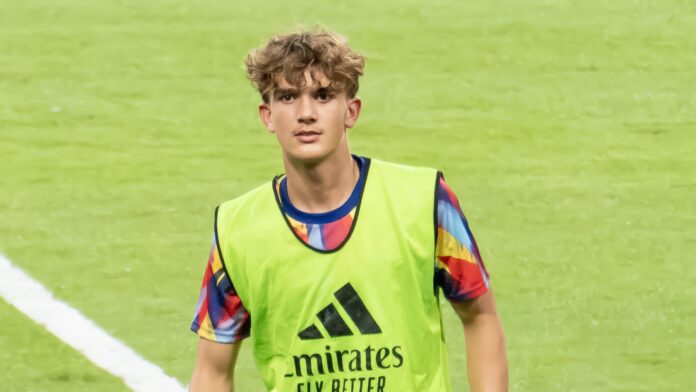
Max Dowman training with Arsenal wearing a bib, highlighting his development as a young attacking talent. Chensiyuan, CC BY-SA 4.0, via Wikimedia Commons.
Max Dowman’s journey is a great example of what can happen when talent meets the right development environment.
Max Dowman’s journey is a great example of what can happen when talent meets the right development environment.
As a versatile attacker who can play both as a midfielder and a winger, Max is known for his technical skill, vision and ability to impact games. His numbers back that up too.
At the end of January 2026, Max Dowman signed a pre-contract agreement with Arsenal, that will lead him to signing professionally when he turns 17 on 31. December 2026.
Following the signing of his pre-agreement, Max said: “This means everything to me and my family. We all support Arsenal and I really feel like I belong here. I’d like to thank all my coaches, teammates and, most importantly, my family and friends, who have got me to where I am today.’’
A few milestones
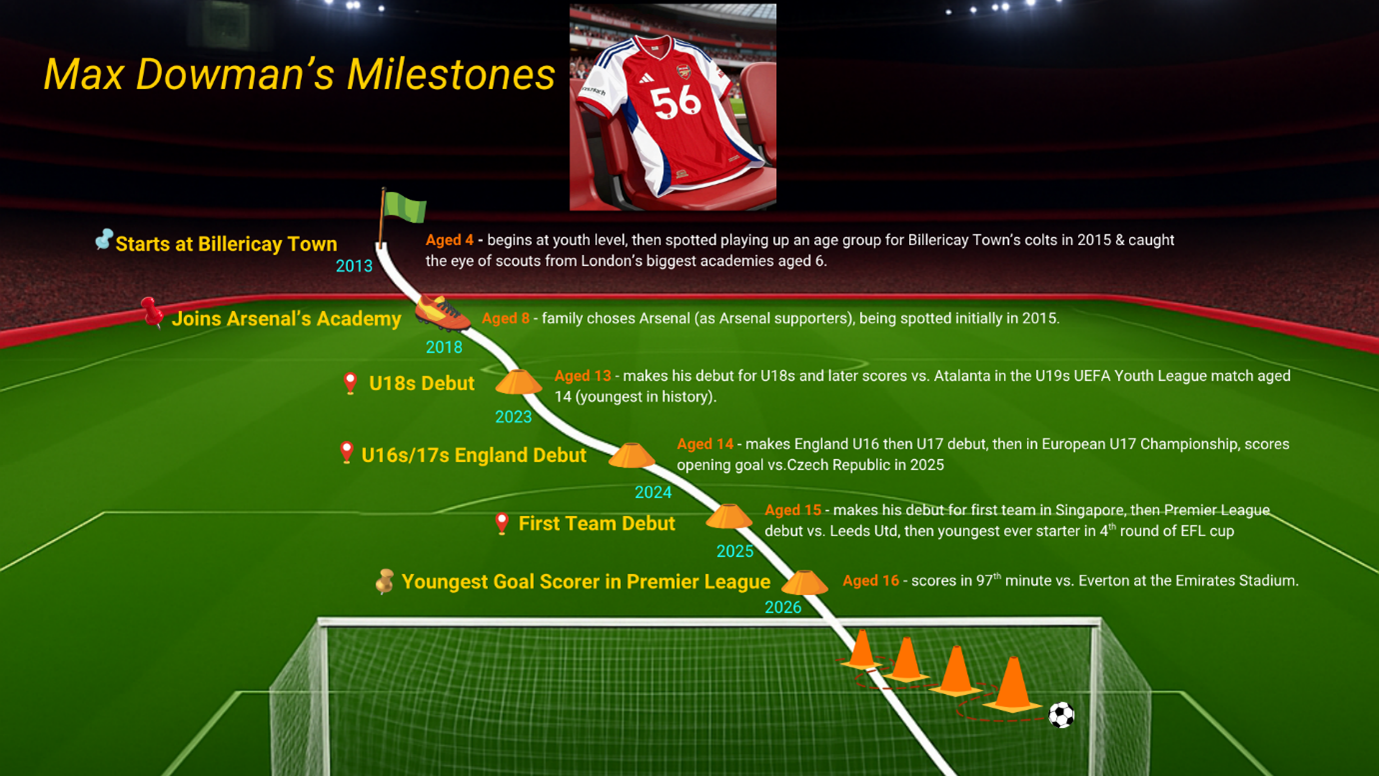
Here’s a look at what he’s achieved in a short space of time, which started at Billericay Town, back in 2013:
A visual timeline of Max Dowman’s rapid progression highlights key milestones in his development. From grassroots football to Premier League history, his journey reflects elite pathway success.
Aged 4: Max plays for Billericay Town
Aged 8: Max joined Arsenal’s Academy
Aged 13: Max later made his U18 debut
Aged 14: Max then became UEFA Youth League’s youngest scorer
Aged 16: Max became the youngest goal scorer in Premier League history
Max has been called into U19 England squad. Lee Carsley feels that Max will have a fantastic career at international level, but it’s important that his career is not rushed. He states “One thing he has got is time on his hands.’’ Lee Carsley also remains confident in Max’s trajectory, praising his attitude and intent: “He’s very enthusiastic, very dedicated, and highly motivated to be involved with the Under-21s, get minutes, and help drive the group forward. With the quality he possesses, we’re excited to see him in action against Andorra. Any player competing regularly in the Premier League or at a high senior level will naturally be on Thomas’ radar and Max is no exception.”
He’s made just 7 Arsenal appearances. Graham Stack former goalkeeper from Arsenal between 1998 and 2006 (now as a coach), says ‘’The kid is special and reminds me of Jack Wilshere but with more power… the way he drives the ball is like a Gazza… He has confidence on the pitch. I’m sure he’s got an incredible family around him, a great support network, but there needs to be no outside interference as we’ve seen time and time again, with young English talent…. He’s in good hands at Arsenal. But if you’re good enough, why not play him?’
What does a typical week look like for an U16 at Arsenal’s Academy?
Here is a snapshot of what a typical training week may look like for Max at Arsenal:
Day
Structure
Tasks
Monday:
Recovery & Review
Post-match recovery (light gym, mobility work)
Video analysis sessions breaking down weekend games
Individual feedback with coaches (position-specific)
Tuesday
Technical Development
High-repetition technical drills (passing, receiving under pressure)
Small-sided games to sharpen decision-making
Position-specific work (e.g. full-backs on overlaps, midfielders on scanning)
Wednesday
Tactical Focus
Shape and structure work (team formations, pressing triggers)
Match scenario training (e.g. breaking down a low block)
Thursday
Physical & Competitive Edge
Strength and conditioning sessions (gym + pitch)
High-intensity drills and transitions
11v11 or large-sided competitive matches
Friday
Match Preparation
Set pieces (attacking & defending)
Tactical walkthroughs
Lighter intensity to stay fresh
Weekend
Weekend
Competitive fixtures (U18 Premier League / Premier League 2)
Players assessed on: Decision-making, Tactical discipline, Mental resilience, not just performance
Thoughts on Arsenal’s Academy set up
Arsenal’s academy, primarily based at Hale End, is a world-renowned talent pipeline focusing on technical proficiency, mental fortitude, and holistic player development from U9 to U23 levels. It has been home to elite talents like Bukayo Saka and Emile Smith Rowe, with a family culture, strong scouting, and a clear pathway to the first team under Mikel Arteta. Here are some key features which stand out:
Arsenal’s academy, primarily based at Hale End, is a world-renowned talent pipeline focusing on technical proficiency, mental fortitude, and holistic player development from U9 to U23 levels.
Structure: Players move through the ranks from U9 to U23, with a strong focus on individual development and position-specific coaching to ready them for the professional game.
Key Focus Areas: The programme places equal importance on physical conditioning, tactical understanding, and mental resilience, equipping players to perform in high-pressure environments.
Education: Alongside football, the club prioritises academic development, encouraging players to remain in education and grow as well-rounded individuals.
Scouting & Recruitment: A wide-reaching scouting network across London and overseas underpins recruitment, identifying emerging talent such as recent additions Michelle and Duka, as well as Ecuadorian twins Edwin and Hula Quantero.
First-Team Pathway: The progression from Hale End to the senior squad is well established, reflected in the emergence of talents such as Bukayo Saka, Emile Smith Rowe, Eddie Nketiah, and Reiss Nelson.
Team Culture: A strong emphasis is placed on togetherness, with players encouraged to back one another in a close-knit, supportive environment that fosters growth.
Recent Progress: Across 2024 and 2025, a number of academy prospects committed to professional deals, while the club also strengthened its pipeline by attracting highly regarded young talent from both domestic and international pathways.
Arsenal can choose many players and they can afford to put Max on when they can. He seems to be at the right club, right team and with the right manager who will play him when it suits both parties, according to Ashley Williams (former Welsh player).
At the same time, Max’s Arsenal teammate Myles Lewis-Skelly has stepped into the Under-21 fold. Now aged 19, Myles, who was involved in Thomas Tuchel’s first senior camp, will be eager to rebuild momentum after a recent spell of limited minutes under Mikel Arteta.
On the flip side, Arsenal has faced criticism for limited first-team minutes for academy graduates, with studies showing they provided fewer top-flight minutes to teenagers than most Premier League rivals, relying heavily on Bukayo Saka and sparingly on emerging talents like Ethan Nwaneri, despite high, immediate competitive demands and title-contention pressures.
During 2023-24 season, Arsenal gave its teenagers just 13 minutes in the Premier League as Mikel Arteta tends to focus on established, senior players for consistency. This led to youth talent such as Chido Obi Martin move to Manchester United, for better opportunities.
Ethan Nwaneri joined Olympique Marseille on a six-month loan in January 2026 to secure regular first-team football, as his playing time was restricted. Mikel Arteta deemed the move necessary for his development after the teenager struggled to break into the starting XI.
Notably, Max wasn’t asked to play at the EFL Cup final vs. Man City, following the Everton game this March.
This season has marked an exciting step up, as he made his senior debut in a 5–0 win against Leeds United, becoming one of the youngest players ever to appear in the Premier League. He has continued to make history since, earning a starting spot in a cup match at just 15 and even featuring in the UEFA Champions League shortly after.
An England youth international, Max is set to become a scholar this summer and is already showing he can compete at the highest level. He credits his development to the support of his coaches, teammates, and family, as well as the clear pathway provided by the club’s academy system.
Max’s family and life off the pitch
Max has been described as very mature, laid-back and has worked incredibly hard at his football. His mum, Caroline, and father Rob, keep Max grounded. They are humble and community-focused, playing a key role in his development to date, according to Nick Hutt, the chair of Billericay’s youth section, who saw four-year-old Max play.
Football has very much been a family affair.
The Dowman family share deep-rooted ties with Billericay Town F.C., who compete in the Isthmian League Premier Division, the seventh tier of English football. Max’s father once represented the club as a youth goalkeeper before later moving into a coaching role.
The club itself briefly stepped into the national spotlight when Essex businessman Glenn Tamplin oversaw a high-profile spell in charge, recruiting former professionals such as Jamie O’Hara and Jermaine Pennant. After Glenn Tamplin’s exit in 2019, Max’s father, Rob Dowman, joined the consortium that took control of the club, playing a pivotal role in expanding the youth section to 55 teams before later leaving to launch his own insurance company.
Football has very much been a family affair. Max’s mother, Caroline, regularly helped out in the club shop, while his older siblings, Ethan and Imogen, worked behind the bar. Growing up immersed in that environment, Max was a constant presence around the club. Even after joining Arsenal, he would return during the summer break to train with his former teammates at Billericay, and on occasion, he was even invited to step up and train with the first team.
Max Dowman’s story off the pitch is just as thoughtful as his progress on it. Rather than signing with a major agency, his family has chosen to take an active role in managing his career. His father and older brother have both earned FIFA agent licences, allowing them to guide his future and handle contract negotiations.
Despite strong interest from agents since his debut at 15, the family has focused on stability and long-term development over quick commercial gains. Max recently became the youngest goalscorer in Premier League history at just 16.
Importantly for parents, education and balance remain a priority. Alongside his football progress, Max is working toward his GCSEs, with his family making sure his overall development comes first. Whilst he has begun to attract commercial attention, including a boot deal with Adidas and media appearances, such as with Ian Wright, there is no rush to expand those commitments.
Robert Dowman, is Chief Executive of the insurance company Pantheon Speciality along with his brother Ethan’s academic and professional experience, as a broker and having an economics degree from Nottingham University, has helped create a strong support system around him.
For parents, this highlights a key lesson: having trusted, knowledgeable people involved and keeping a young player grounded in education and personal growth can be just as important as success on the pitch.
Premier League History in the Making vs Everton
14th March 2026, will forever be etched in Max, his family and all Arsenal and football fans mindsets. The last 10 minutes of the match created euphoria. Max came in for Martin Zubimendi at the 74th minute and 15 minutes later, Viktor Gyokeres scored a tap in thanks to a stunning cross from Max. The noise from the Emirates Stadium, was of pure joy!
Max’s efforts didn’t stop there, it was in the 7th minute of added time, Arsenal were to break from an Everton corner and Max then accelerated beating two defenders before passing into an empty net to set the stadium alight. With it, he made the record books as he broke the record of former Everton player James Vaughan, who was 16 years, 270 days when he scored against Crystal Palace in 2005 to score his Premier League inaugural goal.
Last November, Max became the youngest player in Champions League history at 15 years, 308 days when he entered as a second-half substitute against Slavia Prague.
Mikel Arteta was beaming from ear to ear, as he began his post-match interview with Sky Sports “It was not only the goal, he changed the game. Every time he got the ball, he made things happen and we looked more of a threat. To do it at that age in this context with the pressure and expectation to win the game, it’s just not normal.”
Thierry Henry’s Verdict
Arsenal legend Thierry Henry has warned that Max Dowman needs to be “protected” if Max is to make good on what appears to be generational talent and potential.
‘’Even if you’re not an Arsenal fan, I think at that particular moment, everyone could relate and were happy for him. And (even putting) the Arsenal thing on the side… he gave me goosebumps.”
He went on to say: “But let’s not get over-excited, we also need to protect him, and I saw Mikel Arteta also saying he needs protection.. we need to be patient, to guide him”.
Gary Lineker also says he loves watching Max and Liverpool winger Rio Nguomha play. “The two of them, Dowman and Ngumoha, are players we’ve been crying out for that will beat players, go past people and don’t want to regurgitate the ball and knock it around…These sorts of players, on occasion, it won’t happen for them, but I love that, be brave enough and hopefully they’ll continue to be encouraged to attack and take people on.’’
His tender young age, reminds us, that Max was unable to celebrate with his teammates in the dressing room afterwards, as he must abide by Premier League regulations for players under 18. Max has to change into his Arsenal kit for training sessions and matches in a separate locker room from his senior teammates.
For parents, Max’s story highlights the importance of patience, strong support networks, and giving young players the opportunity to develop in a structured, nurturing environment.
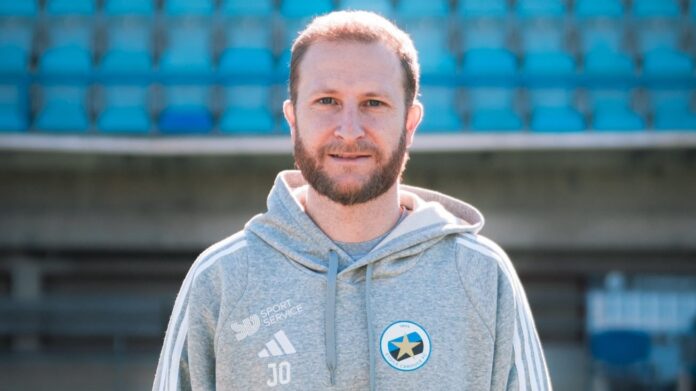
Jordi Ortola plays a key role in shaping recruitment strategy at Étoile Carouge FC. His holistic approach combines scouting, analysis and long-term player development.
Profile
Role: Head of Scouting at Étoile Carouge FC
Specialisation: Recruitment, player development, opponent analysis
Experience: Spain and Switzerland, video analyst, scout, technical coordinator, youth head coach
Focus Areas: Sustainable recruitment, young player development, long-term competitiveness in Swiss professional football
Biography
Jordi Ortola, born 29 June 1991, is a Swiss-Catalan football executive and Head of Scouting at Étoile Carouge FC, combining experience across Spain and Switzerland with a holistic approach to recruitment and player development in Swiss professional football.
Who Is Jordi Ortola? – A 360-Degree Football Profile
Jordi Ortola’s journey into professional football has been shaped by patience, versatility, and a holistic understanding of the game. While studying in Barcelona, he immersed himself in youth and lower-division football, attending UEFA Youth League matches and gradually building a network that led him to collaborate with semi-professional clubs and agents, recommending players and gaining early recruitment experience.
Jordi Ortola’s journey into professional football has been shaped by patience, versatility, and a holistic understanding of the game.
Across Spain and Switzerland, Jordi has held roles as a video analyst, scout, technical coordinator, and youth head coach. These diverse experiences shaped his belief in a 360-degree vision of football, combining coaching, tactical understanding, and recruitment. His coaching experience, particularly at youth level, strengthened his ability to understand and communicate football ideas, while working alongside experienced professionals refined his decision-making and analytical approach.
Now Head of Scouting at Étoile Carouge FC, Jordi plays a central role in the club’s second season in the Swiss second division. In a compact organisational structure, he combines recruitment with opponent analysis, balancing video scouting, live match observation, and close collaboration with the sporting department. The focus has shifted toward consolidation and long-term sustainability at this level.
Jordi views Swiss football as an efficient system that consistently performs above its size. At Étoile Carouge FC, his priority is to build long-term stability by consolidating the club’s position in the league, developing young players with strong game intelligence, and applying a sustainable recruitment model aligned with the club’s resources. The project focuses on coherence, continuity, and gradual growth, aiming to establish Étoile Carouge FC as a club for long-term competitiveness within Swiss professional football. At the same time, he remains committed to his own development, with the long-term ambition of working in the Swiss first division or abroad.
The project focuses on coherence, continuity, and gradual growth, aiming to establish Étoile Carouge FC as a club for long-term competitiveness within Swiss professional football.
Key Insights
Jordi Ortola combines scouting, analysis, coaching, and recruitment in one holistic football profile.
His work at Étoile Carouge FC focuses on league consolidation, sustainability, and young player development.
He believes Swiss football succeeds through organisation, professionalism, and smarter player development.
Our Exclusive Interview with Jordi Ortola
You are currently the Head of Scouting for Étoile Carouge FC. What are your objectives for this season, and what does your day-to-day (week) look like?
This year is our second season in the second division. After an incredible first year, where we finished third — just one spot away from the playoffs — the second season is always the most challenging, and our main objective has always been to stay in the league.
Because we are a small organisation, I also handle opponent analysis. From Monday to Wednesday, I focus on analysing our next opponent, and for the rest of the week I concentrate on recruitment: scouting players on Wyscout, watching live matches, updating our database, meeting with the sporting director, and staying in contact with agents.
Where and how did your football journey begin?
Even though I’ve always been a football fan, from a young age I loved building squads in different video games and learning about as many players as possible. During my studies in Barcelona, I started attending UEFA Youth League matches as well as games in the third and fourth divisions. Little by little, I met people and built my network. From there, I began collaborating with semi-professional clubs and agents, recommending players to them, which eventually led me to where I am today.
Little by little, I met people and built my network.
You’ve held a wide range of positions: video analyst, scout, technical coordinator, and head coach, in both Spain and Switzerland. How have these diverse experiences shaped your vision and understanding of the game?
My goal has always been to work within a scouting or sporting director’s department, and for that it is essential to have a full 360-degree vision. Having experience as a coach — even at youth level — has helped me understand how to convey ideas effectively.
Working as a scout and learning the tactical side alongside top coaches such as Adrian Ursea, and now Pedro Nogueira, as well as my current sporting director, Fabrice Sanches, has allowed me to refine my expertise and make better decisions. As the French philosopher Edgar Morin said, hyper-specialisation is a major risk of modern science: it fragments knowledge and makes it impossible to integrate different forms of understanding to fully grasp the complex problems of life and the world — and the same applies to football.
On top of that, my Catalan roots and my experience working with an agency in Spain, alongside experienced Laliga scouts, have given me a different perspective and a distinct set of beliefs about the game.
You’ve been coaching and scouting for many years now. What advice would you give to someone who wants to break into a professional club’s scouting department?
I became a full-time professional scout this year, which means I spent nearly ten years preparing myself to make a living in this field. I believe determination, resilience, and self-confidence are essential. Surrounding yourself with competent people is the best way to grow, and building and maintaining your network is just as important.
What are your thoughts on the Swiss football system and the new generation of players coming through?
Switzerland is a small footballing country, but it works extremely well in an organised and professional way. The proof is that, despite having far fewer registered players and less infrastructure than the major nations, we still manage to be highly competitive at the international level.
I believe we should help players develop a better understanding of the game, beyond their technical and physical abilities, as this would allow us to reach another level. There are talented players, but I feel that some clubs or coaches are too conservative when it comes to giving them opportunities.
What ambitions or long-term goals do you have for the next seasons?
Our first objective this season is to stay in the league in order to secure the long-term stability of the project. At the moment, the club does not have the infrastructure or the budget to aim higher — we are in the lower range in terms of salaries.
I believe we can find a balance by continuing to develop young players, giving them their debut in the first team, and selling them, as we have done over the past two seasons, while surrounding them with a few more experienced players.
Personally, I would like to continue developing and eventually work in the Swiss first division or abroad.
FAQ
Who is Jordi Ortola?
Jordi Ortola is a Swiss-Catalan football executive and Head of Scouting at Étoile Carouge FC.
What is Jordi Ortola’s role at Étoile Carouge FC?
He leads scouting and also contributes to opponent analysis within the club’s sporting structure.
What is Jordi Ortola’s long-term ambition?
He aims to continue developing professionally and eventually work in the Swiss first division or abroad.
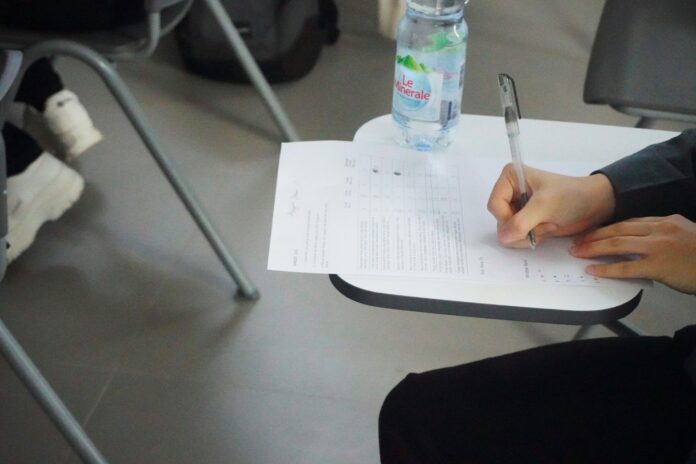
The FIFA Agent Exam demands precision, focus and strong knowledge of regulations under timed conditions. Preparation and familiarity with the format are key to success. Photo by Billy Albert on Unsplash.
A FIFA introduziu mudanças estruturais significativas no Exame de Agente de Futebol, que entrarão em vigor a partir de 4 de março de 2025. Estas atualizações marcam a transição do modelo anterior, baseado em avaliações presenciais em locais específicos, para um formato totalmente online, com protocolos de monitorização mais rigorosos e requisitos técnicos revistos. O objetivo das alterações é reforçar a equidade, a transparência e a padronização do exame, garantindo que todos os candidatos, independentemente da sua localização, realizem a prova em condições consistentes e rigorosamente controladas.
No sistema anterior, os candidatos tinham de comparecer presencialmente aos locais de exame designados pelas respetivas Associações Nacionais de Futebol. Embora este modelo permitisse algum controlo, havia grandes variações nas condições de aplicação, com algumas associações a oferecerem diferentes níveis de suporte técnico, acesso à internet e infraestrutura. Além disso, as regras relativas aos materiais permitidos eram inconsistentes — algumas associações autorizavam o uso de anotações impressas (incluindo cópias com marcações pessoais), enquanto outras impunham restrições mais severas.
O objetivo das alterações é reforçar a equidade, a transparência e a padronização do exame.
Agora, a FIFA eliminou completamente os exames presenciais e adotou um formato exclusivamente online, exigindo que os candidatos realizem a prova num ambiente privado e autogerido. Esta mudança transfere uma maior responsabilidade para os candidatos, que devem garantir que dispõem da tecnologia necessária, de uma ligação estável à internet e de um espaço adequado. O novo sistema também introduz medidas de segurança reforçadas, incluindo o uso obrigatório da câmara e do microfone do computador, bem como uma monitorização secundária através de um smartphone. Ao contrário do modelo anterior, com supervisão presencial, a FIFA utilizará ferramentas de monitorização baseadas em inteligência artificial para detetar comportamentos suspeitos em tempo real.
Outra alteração importante é a eliminação de qualquer tipo de pausa durante os 60 minutos de exame. Anteriormente, era permitido sair para ir à casa de banho sob supervisão; agora, isso já não será possível. Assim que o exame começa, o candidato deve permanecer visível na câmara e sentado até ao final. Se o candidato abandonar o local, desviar o olhar durante um período prolongado ou perder a ligação à internet, a sua tentativa será automaticamente invalidada, obrigando a uma nova inscrição para outra data.
Assim que o exame começa, o candidato deve permanecer visível na câmara e sentado até ao final.
Adicionalmente, a FIFA implementou regras mais rígidas para casos de má conduta. No modelo anterior, infrações como comunicação não autorizada, acesso a materiais externos ou uso de dispositivos eletrónicos podiam levar à desqualificação da sessão, mas os candidatos tinham a possibilidade de refazer o exame na data seguinte disponível. Com o novo regulamento, infrações graves — como copiar, capturar e partilhar o conteúdo do exame — podem resultar na suspensão de futuras participações no exame e, em casos extremos, no banimento permanente da licença de agente FIFA.
Com estas atualizações, a FIFA procura estabelecer um processo de exame uniforme e estritamente regulamentado, eliminando inconsistências e prevenindo vantagens injustas. Os candidatos devem estar totalmente preparados, tanto em termos técnicos como no conhecimento das regras, uma vez que qualquer falha pode resultar na perda da tentativa.
Formato do Exame e Critérios de Aprovação
O Exame de Agente de Futebol da FIFA passa agora a ser realizado inteiramente online, substituindo o modelo presencial. Esta mudança elimina a necessidade de deslocações e aumenta a responsabilidade dos candidatos em garantir um ambiente técnico adequado e livre de distrações. O exame mantém a duração de 60 minutos e exige uma pontuação mínima de 75% para aprovação.
O exame é composta por questões de escolha múltipla que avaliam o conhecimento dos regulamentos da FIFA, incluindo transferências de jogadores, acordos contratuais, responsabilidades dos intermediários e governança do futebol. As perguntas são concebidas para testar não só o conhecimento teórico, mas também a capacidade de aplicar as regras da FIFA em situações práticas.
O exame mantém a duração de 60 minutos e exige uma pontuação mínima de 75% para aprovação.
Uma das alterações mais significativas é a proibição total de pausas durante o exame. No modelo anterior, era permitido solicitar pausas para ir à casa de banho; agora, qualquer interrupção é proibida. Uma vez iniciado o exame, o candidato deve permanecer sentado, visível na câmara e concentrado até ao final. Qualquer saída da sessão, por motivo técnico, pessoal ou desconexão acidental, resultará na desqualificação imediata.
Dada a maior rigidez das novas condições, a FIFA recomenda fortemente que os candidatos se preparem com antecedência, garantindo uma ligação estável, todos os equipamentos necessários e um ambiente silencioso e sem interrupções.
Requisitos Técnicos e Configuração
Uma vez que o exame passa a ser 100% online, a FIFA estabeleceu requisitos técnicos rigorosos para garantir um ambiente padronizado e seguro. Os candidatos são inteiramente responsáveis pela configuração do ambiente de prova, uma vez que a FIFA não fornecerá suporte técnico durante o exame.
Os requisitos incluem:
Computador (portátil ou de secretária) com câmara e microfone funcionais, que devem permanecer ativados durante toda a prova.
Smartphone para monitorização secundária, posicionado para fornecer uma visão adicional do ambiente de exame. O telemóvel não pode ser utilizado para qualquer outro fim.
Ligação à internet estável. Qualquer interrupção invalidará automaticamente a tentativa de exame, exigindo nova inscrição.
A FIFA recomenda testar previamente os dispositivos, a velocidade da internet e a funcionalidade da câmara. Problemas técnicos durante a prova (como falhas de hardware, software ou conexão) não darão direito a tempo adicional ou a uma nova tentativa na mesma sessão.
O local do exame deve ser silencioso, bem iluminado, com fundo neutro e livre de distrações. Movimentos fora do enquadramento da câmara, perda de visibilidade ou comportamento suspeito podem levar à desqualificação.
Itens Permitidos e Proibidos
A FIFA estabeleceu diretrizes claras sobre os itens autorizados e proibidos durante o exame.
✔️ Permitidos:
Materiais de estudo, desde que armazenados digitalmente no computador utilizado para o exame.
Óculos graduados.
Caneta e uma única folha em branco para anotações, que deve ser mostrada à câmara antes e depois.
Calculadora integrada na plataforma do exame (calculadoras externas são proibidas).
❌ Proibidos:
Telemóveis (exceto o utilizado para monitorização).
Smartwatches, auriculares e outros dispositivos inteligentes com acesso à internet.
Acesso a sites externos ou separadores não autorizadas.
Materiais impressos, anotações manuscritas e dispositivos de armazenamento externo.
Qualquer forma de comunicação com terceiros.
Resultados e Processo de Apelo
Os resultados serão enviados por e-mail até 14 dias após a realização do exame. A FIFA permite que os candidatos revejam as suas respostas e consultem os erros, mas não será possível recorrer do resultado.
Em caso de reprovação, o candidato deverá aguardar a próxima data disponível para refazer o exame— sem exceções ou reavaliações individuais.
Considerações Finais
As novas regras do Exame de Agente de Futebol da FIFA representam uma mudança significativa para um processo mais seguro, padronizado e transparente. Com monitorização rigorosa, ausência de pausas e uma política de tolerância zero para infrações, os candidatos devem estar completamente preparados.
Para aumentar as hipóteses de sucesso:
Verifique se o seu computador, telemóvel e ligação à internet cumprem os requisitos.
Estude com materiais digitais permitidos.
Cumpra rigorosamente todas as regras de conduta.
Com a devida preparação e conhecimento das novas diretrizes, os candidatos poderão realizar o exame com confiança e dar um passo importante na obtenção da Licença de Agente FIFA.
Experience: Italy, United States, ACF Firenze, Fiammamonza, Inter Milan, Florentia, Napoli Calcio Femminile, Venezia FC, Issaquah SC, AC Seattle, OSA XF, OSA Seattle FC, FC Como Women, Genoa CFC
Focus Areas: Club operations, marketing and communication, team management, women’s football development
Biography
Alessandra Nencioni is a former professional footballer with a strong background in marketing, communication, and sports management. Football has shaped her life from an early age, offering both personal growth and professional direction. During her playing career, she competed in Italy’s top leagues with clubs such as ACF Firenze, Fiammamonza, Inter Milan, Florentia, Napoli Calcio Femminile, and Venezia FC. Internationally, she represented Italy at the U-17 and U-19 levels and also played in the U.S. WPSL for Issaquah SC, AC Seattle, and OSA XF, where she served as captain.
Beyond the pitch, Alessandra has been proactive in building experience across various club operations. She began at OSA Seattle FC, playing a key role in the club’s foundation and growth, later serving as Team Manager, Players Coordinator, and Responsible for Marketing and Communication. She continued combining her on-field and off-field contributions at CF Florentia and later held roles with Severino Becagli s.r.l., FC Como Women, Genoa CFC, and currently serves as Club Manager at Napoli Calcio Femminile.
Football has shaped her life from an early age, offering both personal growth and professional direction.
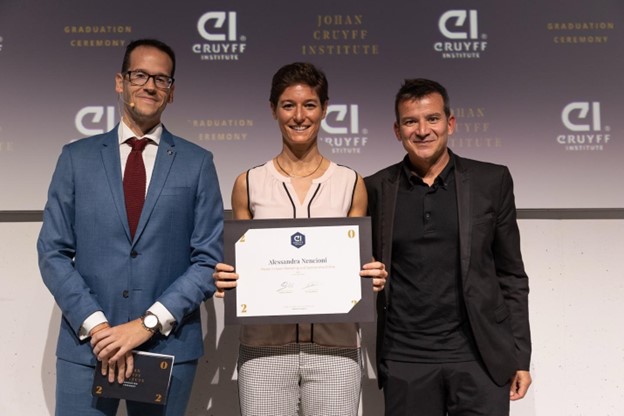
To complement her hands-on experience, Alessandra pursued academic training in sport business. She holds a Master in Sport Marketing and Sponsorship from the Johan Cruyff Institute in Barcelona, a Postgraduate Diploma in Sport Marketing, and completed a course in Digital Marketing in Sport. She also earned certifications in sport management and team coordination from SDA Bocconi and CONI.
Fluent in English, with working knowledge of Portuguese and German, Alessandra brings a dynamic, solution-oriented approach to her work. She is skilled in digital tools, social media, and design platforms. Her leadership, communication, and adaptability, shaped by her playing days, continue to define her career off the field.
Alessandra is passionate about creating long-term value in the world of sport, especially in advancing women’s football. Whether managing operations, leading communication strategy, or supporting club growth, she brings vision, energy, and commitment to every role.
Alessandra is passionate about creating long-term value in the world of sport, especially in advancing women’s football.
Key Insights
Alessandra Nencioni combines elite playing experience with leadership roles in club management.
Her career bridges on-field performance and off-field operations including marketing and communication.
She is focused on driving long-term growth and development in women’s football.
Our Exclusive Interview with Alessandra Nencioni
Who is Alessandra Nencioni outside of football? How would you describe yourself beyond your professional and athletic identity?
Outside of football, I’m someone who’s deeply curious, empathetic, and committed to personal growth. I enjoy exploring different cultures, learning languages, and challenging myself in new environments, both personally and professionally. I’ve always believed that life is about evolving, and for me, that means continuously developing new skills, seeking meaningful relationships, and staying grounded in my values. Football has shaped so much of who I am, but beyond the sport, I’m passionate about music, cinema and books, discovering new countries and food.
How do you see the current state of women’s football in Italy, and what steps do you believe are needed to support its growth?
Women’s football in Italy has made significant strides, especially in the last five years, with increasing visibility, investment, and professionalization. However, we still face structural and cultural challenges, especially in the South. There’s a need for more sustainable development models, greater media coverage and – I do think – stronger grassroots programs to fuel long-term growth.
What I believe is most important for the growth of the movement is to break away from the men’s model, not economically nor financially, but conceptually. Women’s football is a different story, and it should not simply follow the path carved out by the men’s game. By nature, men and women are different, physically, psychologically, and consequently in how they experience things, therefore the sport. That’s why, in my opinion, it is essential we build our own journey, guided by our values, without constant comparison to the men’s side.
Women’s football is a different story, and it should not simply follow the path carved out by the men’s game.
We also could use greater female representation in leadership roles, people with real expertise, passion, and commitment, both on and off the pitch. And crucially, we must invest in marketing and storytelling to establish women’s football as a central part of Italy’s sporting culture. The potential is there—we just need to nurture it with vision and consistency.
You’ve worked across various departments from communication to team management. Which role challenged you the most and why?
Every role I’ve taken on has been a challenge in its own way, because I’ve learned by doing. I didn’t start with all the answers, instead, I grew through hands-on experience, supported by colleagues and supervisors who believed in me and helped me develop along the way.
That said, the last two years in Naples — as team manager first and then as club manager — have probably represented my biggest phase of personal and professional growth. The environment we work in is complex and demanding, and I’ve come to realize that what you learn in theory, such as during my studies at the Johan Cruyff Institute, rarely matches the reality on the ground.
This job requires constant adaptation. It’s full of unexpected situations, and you need to be able to learn something new every day and quickly apply it in future challenges. It’s a continuous process of evolving and refining your approach.
What makes the football atmosphere in Naples unique, and how does it influence your work at Napoli Calcio Femminile?
Naples is a city that lives and breathes football, it’s more than just a game here: it is culture, identity, and emotion. That passion can be overwhelming, but it’s also incredibly powerful. Working at Napoli Femminile means being part of a community that deeply cares, and that fuels a sense of responsibility and pride in what we do.
I first learned all of this years ago, when I played here. I am from Florence, but right away I felt the weight of the responsibility that comes with wearing these colors and representing this jersey. But I did accept it with both pride and a certain sense of reverence.
Even more now that I am a manager: this atmosphere pushes me to always strive for excellence, not just in results but in how we represent the club, engage with fans and grow the women’s game in a city with such strong traditions. It’s about honoring the passion of the people while building something that reflects the future of football in Italy.
How has your international experience, both as a player and professional, shaped your approach to club management?
Living and playing abroad, especially in the U.S. broadened my perspective. I was exposed to different models of sport organization, fan engagement and club culture. Being part of multicultural teams taught me adaptability and the value of inclusive leadership.
Having gone through it myself, I gained firsthand insight into the challenges players face when transitioning to a new country, culture and environment. Experiencing it personally made me deeply aware of how important it is to properly welcome international players, helping them feel comfortable from the very beginning, so they can settle in and perform at their best.
What are your future goals in football and beyond, and where do you hope to make the most impact moving forward?
My first and main goal is to contribute meaningfully to the growth of Napoli Femminile. I truly believe my work here isn’t finished yet. Through this, I also hope to play a role in advancing women’s football more broadly, especially in Italy. I want to help build environments where players and professionals feel valued, supported, and empowered, places where they know they belong, and where they have the opportunity to grow and learn every single day.
In the long term, I hope to become a key reference point in the world of women’s football, but only after I’ve further expanded my expertise and deepened my understanding of areas I’m still exploring. I believe that real impact comes with knowledge, experience, and a continuous willingness to learn. That’s why my current focus is on growing as a professional, broadening my perspective, and building the skills needed to contribute meaningfully to the development of the game, both on and off the field.
Beyond football, I have a wide range of interests and remain open to pursuing a completely different career path, perhaps in the food industry, for example.
FAQ
Who is Alessandra Nencioni?
Alessandra Nencioni is a former professional footballer and current Club Manager at Napoli Calcio Femminile with experience in marketing, communication, and sports management.
What is Alessandra Nencioni known for?
She is known for combining her playing career with leadership roles in football operations, marketing, and club management.
What is her focus in football today?
Her focus is on advancing women’s football, developing club structures, and creating long-term value within the sport.
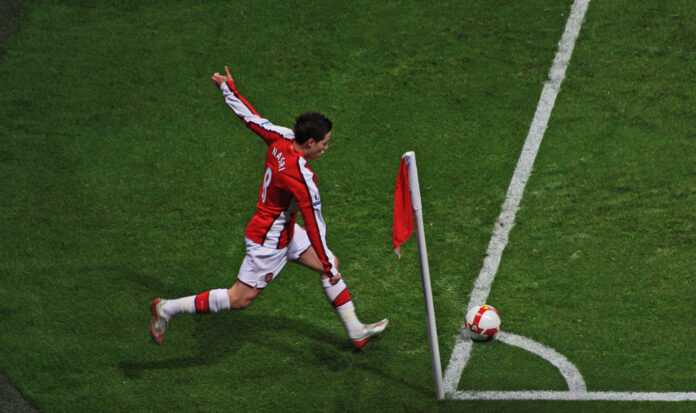
Samir Nasri delivers a corner for Arsenal, reflecting the growing strategic importance of set pieces in modern football. Dead ball situations are now a key battleground for creating high value scoring opportunities. jonnyr1, CC BY 2.0, via Wikimedia Commons.
Modern football is constantly evolving, and in recent seasons one tactical trend has become increasingly visible across the top European leagues: the growing importance of set pieces as a decisive attacking weapon.
Clubs across Europe are investing heavily in specialized set-piece coaching, data analysis, and rehearsed routines designed to create advantages inside the penalty area. The results are clearly visible in professional competitions.
A well-known example is Arsenal FC, who have become one of the most dangerous teams in Europe from corners. Since the 2023–24 season they have scored over 30 Premier League goals from corners, often through carefully designed blocking movements and rehearsed delivery patterns.
Across Europe’s top leagues, a growing percentage of goals now originate from corners, free kicks, and long throw-ins.
Across Europe’s top leagues, a growing percentage of goals now originate from corners, free kicks, and long throw-ins. Some analyses even suggest that over one-fifth of goals in certain leagues come from set-piece situations, highlighting their growing tactical importance.
A specific emerging tactical development is the use of heavy crowding inside the six-yard box. Attacking teams intentionally create physical traffic around the goalkeeper to restrict movement and visibility, a strategy sometimes described as the “meat wall.” This tactic has contributed to a noticeable rise in set-piece goals and has forced goalkeepers to adapt their positioning and decision-making.
Because of these developments, defending set pieces is no longer simply about winning the first header. Modern routines are designed to create second-ball opportunities, deflections, and close-range finishing chances inside the most dangerous area of the goal.
For goalkeepers, this shift has major implications. The modern goalkeeper must be prepared not only for the initial delivery but also for the chaotic moments that follow.
The Rise of Zone Defense for Goalkeepers
With attacking routines becoming more organized, defensive structures have also adapted. Many teams now combine zonal and man-marking systems when defending corners and wide free kicks.
Goalkeepers must develop the confidence to dominate their space. The ability to read the cross early and make decisive actions can eliminate danger before it develops.
The ability to read the cross early and make decisive actions can eliminate danger before it develops.
Preparing for the Second Phase
Another major trend in modern football is the focus on the second phase after a set piece. Even when the first ball is cleared or deflected, attacking teams are often positioned around the penalty area ready to attack rebounds or loose balls.
This is where goalkeeper training must evolve. Sessions should simulate:
Deflections in crowded areas
Rebounds inside the six-yard box
Quick reactions to shots from close distance
Rapid recovery movements after the initial action
These scenarios force goalkeepers to react under pressure, just like they would during a real match.
Close-Range Goal Defense Remains the Core Skill
While modern goalkeepers are often praised for their distribution and ability to play with their feet, the most important and most impactful responsibility remains the same: protecting the goal.
Set pieces frequently lead to close-range shots, chaotic rebounds, and quick finishing attempts. In these moments, a goalkeeper’s fundamentals become critical. To prepare goalkeepers for the modern game, training sessions should include realistic set-piece scenarios. Effective goalkeeper training should integrate:
Zonal control exercises: Simulating corner kicks with specific target zones.
Cross decision-making: Working on claiming, punching, or staying based on delivery type.
Chaos drills: Introducing deflections, blocked shots, and unpredictable rebounds.
Close-range reaction saves: Simulating the final shot after a second ball.
These exercises help goalkeepers build the instincts needed to deal with real match situations.
Set pieces have become one of the most strategically important moments in football.
Final Thoughts
Set pieces have become one of the most strategically important moments in football. As attacking teams invest more time and creativity into these situations, goalkeepers must evolve alongside the game.
Modern goalkeeper training today must even more emphasize zone control, decision-making under pressure, and elite goal-defense reactions. Because at the end of the day, no matter how the game changes, the goalkeeper’s ultimate task remains the same: Protect the goal. And in the chaos of set pieces, that responsibility is more important than ever.
Mirco Papaleo brings a modern, data-informed approach to scouting, combining live observation with tactical insight. His work reflects the evolving demands of recruitment and player development in today’s game.
Profile
Role: International scout for Scouting Department
Specialisation: Recruitment, scouting, and individual tactical analysis
Experience: Switzerland, Germany, Austria, SC Austria Lustenau, Clermont Foot, FC Biel, FC Luzern, Grasshopper Club Zürich
Focus Areas: Player identification, performance evaluation, long term potential assessment, individual video analysis, tactical coaching
Mirco Papaleo is a modern football scout and sporting professional whose profile uniquely combines recruitment and scouting expertise with individual tactical analysis. Based in Switzerland, Mirco has built a career across scouting, sporting management, and individual player development in international football environments.
He is currently active as an international scout for Scouting Department, where he focuses on player identification and evaluation in Switzerland, Germany, and Austria. He combines live observation, video scouting, and data analysis to assess talent for clients. In this role, his focus lies on objective player profiling, performance evaluation, and long term potential assessment within competitive markets.
He combines live observation, video scouting, and data analysis to assess talent for clients.
In parallel, Mirco works with professional and youth players through Pro Player Lab and Football Leverage, helping them make better decisions on the pitch through individual video analysis and tactical coaching.
Previously, Mirco served as Sporting Director and Scouting Coordinator at SC Austria Lustenau under the Core Sport Capital group. Alongside his day to day responsibilities as Sporting Director acting as a key interface between the coaching staff and management and taking responsibility for squad planning within budget frameworks he also structured scouting processes across the Core Sport Capital network, including Clermont Foot in France and FC Biel in Switzerland.
His scouting background further includes experience with FC Luzern and Grasshopper Club Zürich, where he evaluated players for both first teams and elite youth squads across the Swiss Super League and Challenge League. Across all roles, Mirco is known for combining traditional scouting methods with data driven validation.
Across all roles, Mirco is known for combining traditional scouting methods with data driven validation.
Beyond that, Mirco is also active as an educator. As a speaker for the Goaltrades Academy, he delivers workshops on modern scouting, recruitment strategy, and talent identification translating complex processes into practical football knowledge.
A defining element of Mirco’s profile is his combination of scouting, recruitment, and player development. Supported by a background in human resources and recruitment consulting, UEFA C Licence qualifications, and fluency in English, German, and Italian, Mirco represents a holistic, modern football profile.
Today, Mirco Papaleo stands out as a football professional who connects scouting, recruitment, and individual development, offering clubs and players a comprehensive perspective on performance, growth, and long term success.
Today, Mirco Papaleo stands out as a football professional who connects scouting, recruitment, and individual development, offering clubs and players a comprehensive perspective on performance, growth, and long term success.
Key Insights
Mirco Papaleo combines scouting, recruitment, and individual player development in one profile.
His work blends live scouting, video analysis, and data to build reliable player evaluations.
He brings club experience, budget awareness, and educational leadership to modern recruitment.
Our Exclusive Interview with Mirco Papaleo
You are active both as a scout for Scouting Department and as individual tactic coach with ProPlayer Lab. How does working in these two environments shape your overall understanding of modern football performance?
It shapes my understanding by linking recruitment with development.
Scouting gives me the macro view transferability tactical fit intensity and repeatable behaviours across contexts. ProPlayer Lab gives me the micro view how decisions are produced and how they can be trained. Together it improves my ability to evaluate true performance drivers and a player’s realistic ceiling.
Modern recruitment relies on live scouting video analysis and data. How do you personally balance these tools to build a clear and reliable player profile?
Modern recruitment only works if you combine all three tools data video and live scouting because each one answers a different question.
I usually start with data to filter the market and define the right pool. It helps me spot trends reduce bias and build a first shortlist based on role specific indicators. Then I use video to go deeper. I validate whether the numbers match the player’s behaviour and I also use video to challenge my first impression. For example are the actions repeatable are they context driven is the player benefiting from a dominant team.
But for me nothing replaces watching the player live. Only on the pitch you get the true 360 degree view the rhythm of the game communication intensity scanning reactions after mistakes and most importantly everything he does without the ball. Live scouting is where you really understand the context and how the player influences the team beyond the highlights.
So my balance is a loop.
(1) Data to filter then (2) video to understand and test then (3) live to confirm and capture the full context and(4) back to data and video to validate and document.
That is how I build a player profile that is clear reliable and transferable to the next level.
With Scouting Department you offer a high profile all inclusive service to all those entities that cannot afford to structure a reliable scouting data analysis and recruitment department or those who wish to enhance their existing one. Why do you think a club should work with you?
Football is a global sport, and the talent landscape is like uncharted territory: if you want to recruit well, you need a clear view of a large part of it—not only your local market, but also the leagues and profiles that can realistically fit your club. Building that level of coverage in-house is expensive and takes time.
With Scouting Department, we give clubs that coverage faster. We work in depth in selected markets and can provide both a detailed view of those leagues and a broader overview of where the best opportunities are.
For me, scouting a player is like completing a puzzle: the more pieces you collect, the clearer the picture becomes. That’s why we don’t rely only on video. We follow players live, build a full performance picture—including what they do without the ball—and add crucial context such as personality, adaptation potential, and feasibility. The goal is simple: support the club in making the right decision and reduce the risk of a wrong transfer.
On top of that, our team is made up of people who have worked inside clubs as Chief Scouts, Sporting Directors, and recruitment professionals. So we’re not here just to send reports—we work as consultants who understand the real constraints clubs face: budgets, timing, squad balance, coaching needs, and decision-making processes.
That’s why a club should work with us: broader market coverage, deeper player understanding, and a practical, low-risk recruitment partner.
During your time as Sporting Director and Scouting Coordinator you worked under clear budget frameworks. What principles guide you when building competitive squads with limited resources?
When resources are limited, the margin for error is very small. That’s why it’s essential to do your homework: define the non-negotiable profiles for each position, scout proactively, and maintain a deep shortlist so you’re not forced to react under pressure.
In my experience, you often win by being clearer and faster than the market—knowing exactly what you need, where to find it, and moving early when the right opportunity appears.
On top of that, strong relationships with agents and other clubs are crucial. They help you gain insights, understand availability and character, and identify inefficient markets and situations—such as contract expiries, underused players, or leagues that are still undervalued.
You are also active as a speaker and educator in football scouting. Why do you believe knowledge sharing and education are becoming increasingly important in modern recruitment?
I never played professional football, so I had to learn everything myself. Over time, many people have reached out to me because they want to build a career in football—and I understand exactly where they are and what they’re looking for. That’s a big reason why, together with Goaltrades Academy, we offer scouting courses: to give motivated people a structured pathway, practical tools, and a realistic understanding of what modern recruitment requires.
I also believe education is becoming more important because recruitment is evolving quickly. The best outcomes come when people in the ecosystem—scouts, analysts, coaches, sporting directors, and agents—share a common language and a better understanding of profiles, context, and decision-making. That reduces noise, improves collaboration, and ultimately leads to better, more informed decisions.
And personally, teaching is not a one-way process. It gives me the opportunity to learn from others and continuously improve. In our courses, we also have agents, sporting directors, and youth coaches joining, which creates valuable exchange and helps me grow my network and stay connected to different perspectives in the game.
FAQ
Who is Mirco Papaleo?
Mirco Papaleo is a football scout and sporting professional based in Switzerland, active in scouting, recruitment, and individual tactical analysis.
What does Mirco Papaleo specialise in?
He specialises in player identification, performance evaluation, recruitment strategy, and individual tactical coaching.
What makes Mirco Papaleo’s profile distinctive?
His profile is distinctive because it connects scouting, recruitment, player development, and education within a modern football framework.
Football Forum Hungary brings together industry professionals from across the global game, creating a dynamic environment for networking and collaboration. The event serves as a key meeting point for decision-makers shaping the future of football.
Football Forum Hungary 2026: Budapest, April 20–22, 2026
Introduction
Hosted at the Puskás Aréna one month before the UEFA Champions League Final, the event will gather over 1,000 decision-makers from clubs, federations and the football business ecosystem.
Football Forum Hungary 2026 will take place in Budapest between 20 and 22 April 2026, hosted at the iconic Puskás Aréna. Over three days, the region’s leading football business event will bring together key stakeholders from across the global football ecosystem to exchange knowledge, build partnerships and explore the future of the industry.
The forum connects decision-makers from across the professional and commercial sides of the game, including club executives, sporting directors, coaches, player agents, sponsors, analysts and industry experts.
The choice of venue adds a special dimension to the 2026 edition. The Puskás Aréna will host the UEFA Champions League Final just one month after the conference, placing Football Forum Hungary at the heart of one of the most significant moments in European football.
Football Forum Hungary 2026 will take place in Budapest between 20 and 22 April 2026, hosted at the iconic Puskás Aréna.
Football Forum Hungary 2026 In Numbers
The 2026 edition of Football Forum Hungary is expected to further strengthen the event’s international position within the global football industry. The forum will bring together more than 1,000 participants from over 60 countries, alongside 80 speakers, representatives from 60+ European clubs, and more than 40 partners supporting the event.
The programme will address the most important trends shaping modern football, including digital innovation, data-driven decision-making, advanced scouting strategies, fan engagement, and the evolving role of media and sponsorship within the global football ecosystem.
The forum will bring together more than 1,000 participants from over 60 countries, alongside 80 speakers, representatives from 60+ European clubs, and more than 40 partners supporting the event.
Practical Workshops Focused On Football Business And Development
Alongside keynote discussions and panel sessions, Football Forum Hungary 2026 will introduce a series of focused workshops designed to provide practical insights and immediately applicable strategies for football industry professionals.
The Gamechanger Lab will focus on sustainable squad building and long-term sporting strategy, encouraging clubs to move from reactive transfer activity toward more structured team development models adapted to the realities of Central and Eastern European football.
The Marketing Monetization Lab will examine how football organisations can turn visibility and fan engagement into measurable revenue through structured commercial strategies and performance metrics.
The LaLiga Grassroots Lab will highlight structured player development pathways, presenting practical tools and methodologies for building sustainable systems from grassroots football to the professional level.
Women’s football will be explored through the Her Next Move Lab, which looks at how the growing momentum around the women’s game can translate into sustainable business models, stronger structures and long-term ecosystem development.
Alongside keynote discussions and panel sessions, Football Forum Hungary 2026 will introduce a series of focused workshops designed to provide practical insights and immediately applicable strategies for football industry professionals.
A Meeting Point For The International Football Industry
Football Forum Hungary 2026 is designed not only as a conference, but as a major international meeting point for football business professionals. A central objective of the event is to strengthen collaboration across the industry while reinforcing the forum’s role as a bridge between Eastern and Western European football markets.
A diverse range of side events will complement the professional programme and expand networking opportunities. Highlights include the FFH Elite League football tournament, where scouts, sporting directors and analysts compete together on the pitch; an invitation-only welcome reception at the newly opened Puskás Museum; a high-quality afterparty combined with a football shirt contest celebrating football culture; and the Extra Time speed networking event on 22 April, a focused 3–4 hour programme designed to facilitate fast and effective business meetings.
Football Forum Hungary 2026 is designed not only as a conference, but as a major international meeting point for football business professionals.
“Over the past years, Football Forum Hungary has established itself as a true international meeting point in the region. In 2026, with the unique setting of the Puskás Aréna, an expanded professional programme and experience-driven side events, our ambition is to take the event to the next level and create even more value for the global football industry.” — The organisers of Football Forum Hungary