

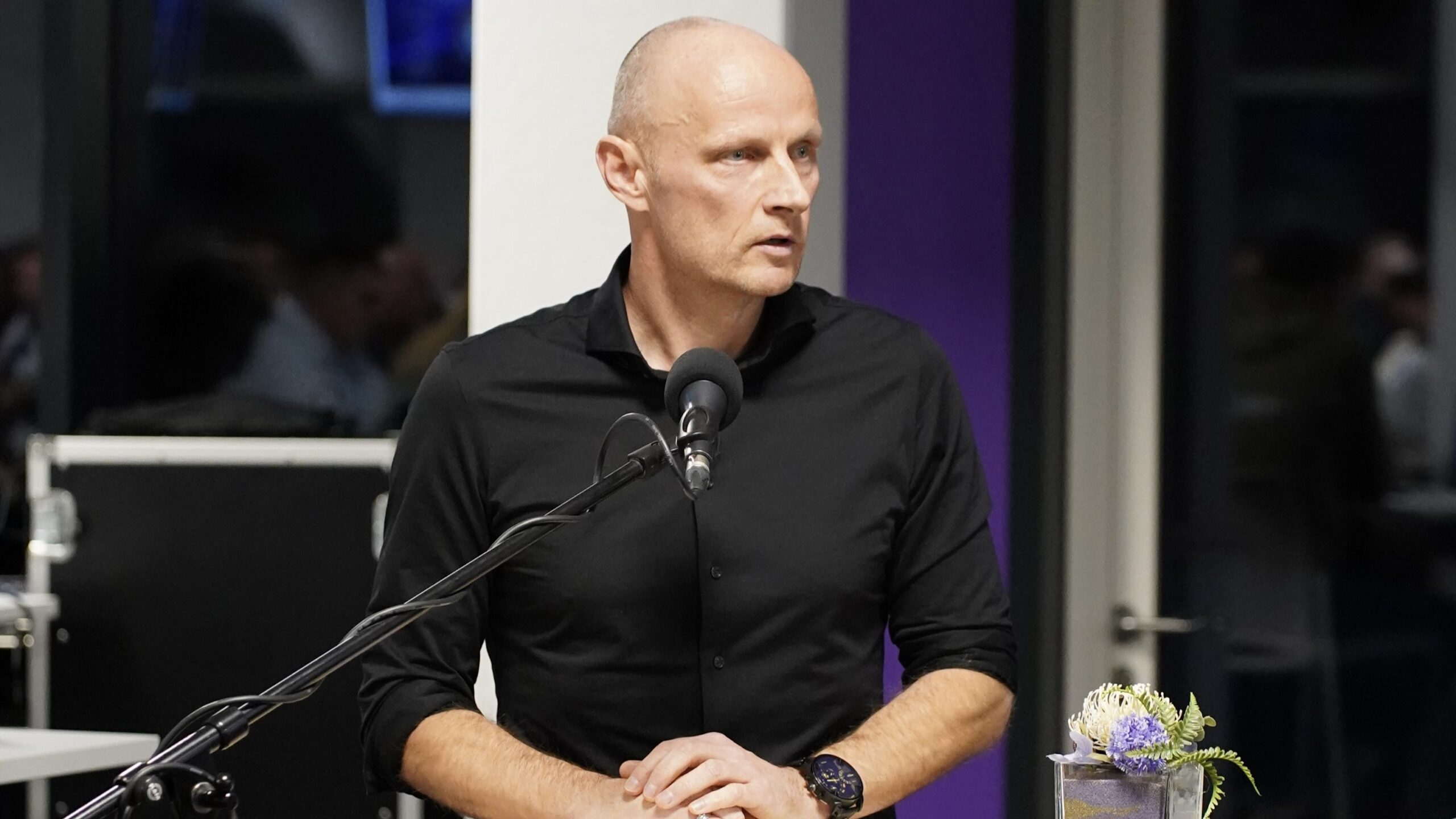
Profile
Role: Director of Football
Specialisation: elite player development, academy leadership, and sustainable development
Experience: professional player, coach, academy leader, and Director of Football
Focus Areas: structural clarity, long-term thinking, player development, and leadership
Biography
Elite player development is rarely the result of isolated decisions. It is shaped by long-term thinking, structural clarity, and leadership that understands both the individual and the system. Matthias Heidrich represents that perspective, combining experience across all levels of the game with a clear focus on sustainable development.
Elite player development is rarely the result of isolated decisions.
Matthias Heidrich has built his career across multiple layers of professional football, from his time as a professional player to roles as coach, academy leader, and Director of Football. His work is defined by a holistic understanding of player development, balancing individual progression with structural demands. Through his experience in German football, he has contributed to the development of high-level talents and established himself as a leader focused on clarity, honesty, and long-term impact.
His work is defined by a holistic understanding of player development, balancing individual progression with structural demands.
Key Insights
- Matthias Heidrich combines experience as a player, coach, academy leader, and Director of Football.
- His approach to development is built on structural clarity, honesty, and long-term thinking.
- He emphasises individual pathways, strong coaching, and alignment across the whole club.
Our Exclusive Interview with Matthias Heidrich
Over your journey from professional player to coach, academy leader, and Director of Football, how has each role reshaped your understanding of the game?
As a player, your perspective is naturally focused on your own position and the specific demands of your role. Once you move into coaching and later into leadership roles such as academy management, the focus shifts significantly towards collective structures and team dynamics. Over time, the ability to see the bigger picture becomes increasingly important. Understanding processes, workflows, and how different elements of the organisation interact has shaped my view of the game more than anything else.
There is often tension between short-term first-team performance and long-term player development. How do you navigate this balance?
I have experienced this tension from both perspectives, and it is a natural part of professional football. The key is not to eliminate it, but to manage it. Transparent communication and mutual understanding are essential. When all stakeholders understand both the immediate demands and the long-term objectives, it becomes easier to find a workable balance.
The key is not to eliminate it, but to manage it.
You have worked with players across a wide age range. Does your philosophy change depending on the age group?
Over the years, individual development has become increasingly important in my approach. Every player requires a tailored pathway, which also means greater investment in staff and more detailed work with each individual. At the same time, certain principles remain constant across all age groups. Reliability in communication and honesty in dealing with players are fundamental and do not change.
The UEFA Pro Licence is the highest coaching qualification in football. How did it influence your methodology?
The Pro Licence helped me structure my understanding of the game. Many of the experiences I had gained on the pitch were placed into a clear conceptual framework. It improved my approach to tactical and physical periodisation and allowed me to define development priorities in a more precise and targeted way.
Talent retention is a major challenge in academy football. How do you approach it?
Building trust is fundamental, especially with young players. In most cases, parents are the key partners in this process. It is important to communicate realistic pathways and clear next steps rather than creating unrealistic expectations. Even if this means losing a player, honesty and transparency are essential for long-term credibility.
Managing coaches is as important as managing players. How do you approach this?
The coach is the most important figure for the players. A good coach must combine strong interpersonal skills with high-level technical expertise and the ability to communicate effectively. Without a strong relationship with players, meaningful development is not possible. Responsibilities must be clearly defined before any appointment and remain binding throughout the collaboration.
Data is increasingly shaping academy work. How much do you rely on it?
Data collection has become highly advanced, even at academy level. However, young players are subject to significant fluctuations and have not yet reached their full performance potential. It is therefore essential to complement data with a strong understanding of non-measurable factors such as mentality, attitude, resilience, and social competence. These elements often play a decisive role in development.
These elements often play a decisive role in development.
Some players follow every step of the pathway and still do not make the breakthrough. What does that tell us?
Player development is rarely linear, but decisions are always made at specific moments, such as transitions into the U19 or senior level. At those points, a player may not be ready, even if they have completed every step. This highlights the importance of resilience, mindset, and the willingness to continue working through setbacks.
As football continues to professionalise, strong academy structures are becoming more important. What must clubs get right?
Coaches are the key drivers of development. They must be both age-appropriate and technically strong. In addition, there must be strong alignment between school and football, as time is a limiting factor. Clubs need to create an optimal learning environment that allows for different development speeds and encourages patience. Equally important is building a culture that provides a genuine pathway into the first team.
Which players made the biggest development steps under your guidance, and who was the most complete player you worked with?
Florian Wirtz stands out as the most complete player I have worked with. Even at a young age, he combined creativity, ambition, and exceptional talent. In terms of development, players such as Kevin Schade, Maximilian Beier, Jens Castrop, Tim Lemperle, and Jonas Urbig made significant progress. In many cases, well-timed loan moves and consistent playing time at the right level were decisive in helping them maximise their potential.
FAQ
Who is Matthias Heidrich?
Matthias Heidrich is a football leader with experience as a professional player, coach, academy leader, and Director of Football.
What is Matthias Heidrich known for in player development?
He is known for combining structural clarity, honesty, and long-term thinking with a holistic view of player development.
Which player does Matthias Heidrich describe as the most complete he has worked with?
He identifies Florian Wirtz as the most complete player he has worked with.