Originalmente, la Liga MX (la máxima categoría) y la segunda división de México (ahora llamada Liga de Expansión MX) tenían el sistema tradicional: al final de cada temporada, los equipos con peor rendimiento de la Liga MX descendían y los mejores equipos de la segunda división ascendían.
En 2020, en medio de la pandemia de COVID-19 y sus consecuencias económicas, se llegó a un acuerdo que suspendió los ascensos y descensos durante seis temporadas. El objetivo era dar tiempo a los clubes de ambas categorías para estabilizarse financieramente, construir infraestructura y adaptarse a la incertidumbre causada por la pandemia.
Como parte de este acuerdo, los clubes de la segunda división recibieron apoyo financiero (“estabilización”) y ciertas garantías, aunque con la desventaja de que no podrían ascender a la máxima categoría durante el período acordado.
“El objetivo era dar tiempo a los clubes para estabilizarse financieramente, construir infraestructura y adaptarse a la incertidumbre causada por la pandemia.”
La lucha por recuperarlo
Un grupo de clubes de la segunda división (Liga de Expansión) comenzó a presionar para que se restableciera el ascenso/descenso con anterioridad; argumentaron que la promesa o expectativa era que la suspensión sería temporal y que necesitaban saber cuándo y cómo terminaría para poder planificar (financieramente, en infraestructura, etc.).
El 19 de mayo de 2025, 10 clubes de segunda división presentaron un recurso ante el Tribunal de Arbitraje Deportivo (TAS) contra la Federación Mexicana de Fútbol (FMF), buscando restablecer el ascenso/descenso antes del final del período original de seis temporadas. Algunos de estos clubes se retiraron posteriormente, dejando a seis (Atlético La Paz; Atlético Morelia; Cancún FC; Mineros de Zacatecas; Venados; Leones Negros de la U. de G.) para continuar.
Decisión del TAS
El TAS dictaminó que los ascensos y descensos no volverán en la temporada 2025-26, ya que la FMF había dejado claro en los acuerdos originales (la suspensión de 2020) que la pausa de seis temporadas duraría hasta ese período, finalizando en la temporada 2025-26. El TAS confirmó que los ascensos y descensos deben restablecerse para la temporada 2026-27. Por lo tanto, tenemos certeza: la temporada 2026-27 es la fecha de inicio para el regreso de la liga profesional/relativa.
“El TAS confirmó que los ascensos y descensos deben restablecerse para la temporada 2026-27.”
Condiciones y requisitos clave para el ascenso
Si bien los ascensos y descensos regresarán, es probable que no se vean idénticos a cómo funcionaban antes de la suspensión. Algunos de los requisitos o cambios importantes que se están discutiendo son:
Criterios de certificación/elegibilidad: Los clubes de la Liga de Expansión MX que deseen ascender deberán cumplir con ciertos estándares. Históricamente, esto ha incluido aspectos como estabilidad financiera, capacidad adecuada en los estadios, infraestructura adecuada, planificación empresarial, etc.
Solvencia financiera: Se informa que los clubes aspirantes necesitarán un respaldo financiero significativamente mayor; por ejemplo, algunas fuentes sugieren requisitos mínimos de capital (activos/patrimonio neto), posiblemente líneas de crédito revolventes y demostrar que pueden mantener operaciones a un nivel superior.
Requisitos de infraestructura/estadio: Los recintos deben cumplir con ciertos requisitos de tamaño y estándares (por ejemplo, capacidad e instalaciones) para albergar partidos de primera división. Asimismo, las prácticas organizativas y comerciales podrían ser auditadas.
Tamaño y estructura de la liga: Se está discutiendo la posibilidad de ampliar la Liga MX de 18 a 20 equipos, lo que puede afectar la cantidad de equipos que ascienden o descienden, y posiblemente moderar el impacto en los clubes al distribuir el período de ajuste.
Conclusión
La decisión del TAS garantiza el restablecimiento del sistema de ascensos y descensos a la Liga MX para la temporada 2026-27. Sin embargo, no se tratará de una simple reinstauración del antiguo sistema: los clubes de segunda división deberán cumplir con estándares importantes, y habrá cambios estructurales (tamaño de la liga, certificación, requisitos financieros y de infraestructura).
Tras la pausa de 2020, pasando por batallas legales y negociaciones, el panorama está cambiando hacia una versión de ascensos y descensos más regulada y basada en el mérito, pero también más exigente. Clubes, aficionados y federaciones tendrán tiempo en la próxima temporada para prepararse para lo que promete ser un ecosistema del fútbol mexicano más competitivo y dinámico.
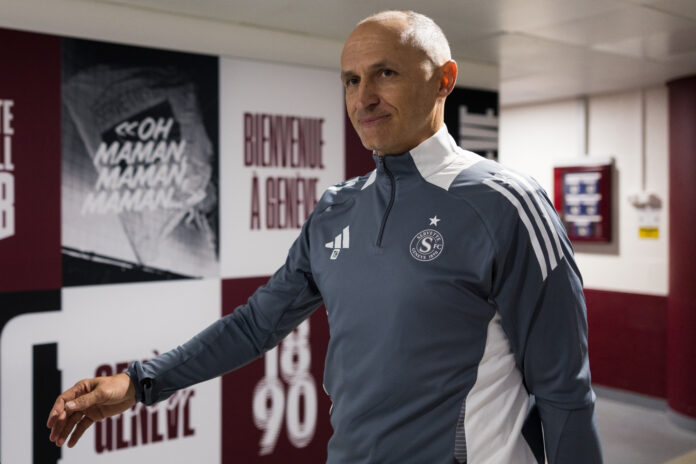
Thomas Häberli, head coach of Servette FC, embodies the values of Swiss football: discipline, humility, and long-term vision.
When Thomas Häberli returned to Swiss club football in 2024 to take charge of Servette FC, it marked another chapter in a career built on discipline, tactical structure, and long-term vision. After several years abroad, including a notable spell as head coach of the Estonia national team, he came back to Geneva with clear objectives: build stability, integrate young players, and maintain European ambitions despite limited resources.
“Geneva is a great city, and Servette is a big name with a rich tradition,” he says. “Expectations were high, top four, European qualification, and integrating young players despite a limited budget.”
Pressure, of course, comes with the territory. “When you coach a first team, you’re always under pressure. Everything is subordinated to success. The good results brought calm, even though we were eliminated by Chelsea, which is no disgrace.”
“When you coach a first team, you’re always under pressure. Everything is subordinated to success.”
Swiss Super League: Balanced and Competitive
Having experienced Swiss football both as a player and a coach, Thomas offers an informed view of its evolution. He sees the Swiss Super League as competitive, balanced, and focused on player development.
“The league is very balanced. Some see that as negative, but I see it positively, it raises performance,” he explains. “Champions League is almost impossible now, but Swiss clubs belong in the Europa and Conference Leagues.”
He remains proud of how Switzerland develops players. “The infrastructure and coaching are excellent. The ‘Education league’ model pushes clubs to invest in youth, and that’s something to be proud of.”
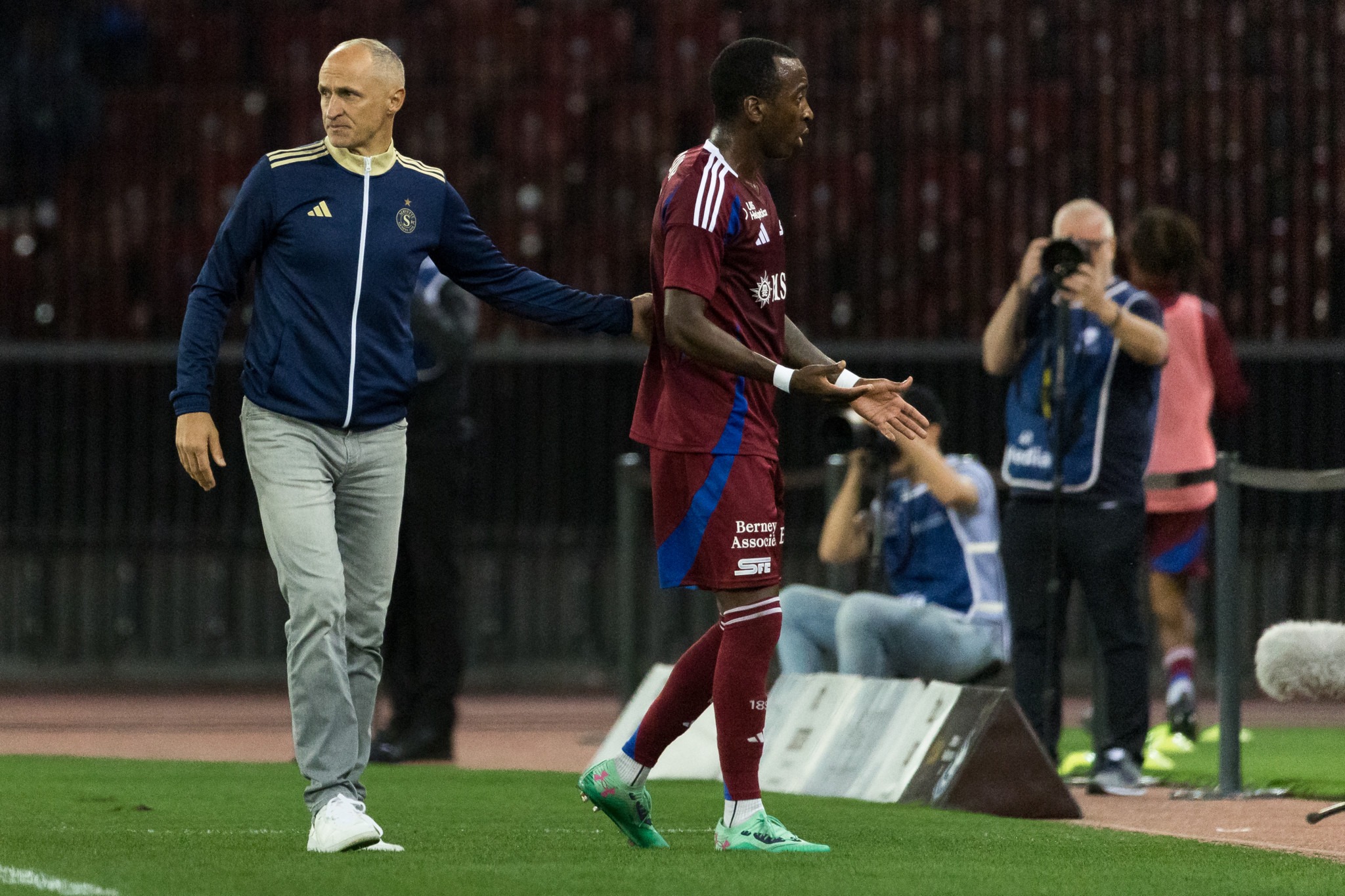
On the sidelines, Häberli is known for his calm authority and ability to balance tactical discipline with player freedom.
Lessons from Coaching Estonia’s National Team
Between 2021 and 2024, Thomas took on the challenge of managing the Estonia national football team, a period he describes as transformative.
“I wanted something new, a different country, a new culture. As a national coach, you put the team together and focus entirely on results. It was a great experience.”
Results eventually came. “We lost tough games, but we won the Baltic Cup after 80 years, beat Finland twice, and got promoted in Nations League C. That meant progress.”
“We won the Baltic Cup after 80 years, beat Finland twice, and got promoted in Nations League C. That meant progress.”
Coaching Philosophy: Team Spirit and Adaptability
Thomas’s coaching philosophy emphasizes team spirit, adaptability, and player responsibility. His background in the youth academies of Young Boys and FC Basel shaped his developmental approach.
“Every culture is different; you have to adapt. I focus on team spirit, reducing egos, and taking responsibility.”
This human-centered leadership style continues to define his work both in Switzerland and abroad.
Pride in Swiss Football and Future Ambitions
Despite his international experience, Thomas remains deeply attached to the values of Swiss football: precision, work ethic, and humility.
“We criticize our league too much,” he reflects. “Comparisons with big nations aren’t fair. Switzerland will qualify for its sixth World Cup in a row, that’s success. We should value that.”
Grounded and forward-looking, Thomas represents the modern Swiss coach: internationally experienced yet deeply rooted in his country’s football identity.
Our exclusive interview with Thomas Häberli
You returned to Swiss club football by taking the role at Servette in 2024. What were your first impressions of the club, its infrastructure, ambitions, culture, and expectations?
Geneva is a great city. Servette is a big name in Switzerland with a rich tradition. The team was good, and expectations were high, as everywhere. The goal was to reach the top four and compete in Europe. Young players also had to be integrated, as the investment budget was very limited. High ambitions.
Servette had high ambitions in recent years. How did you manage short-term pressure (results, European qualification) with your medium/long-term plan for the club?
When you coach a first team, you’re always under pressure and have to deliver results. Subordinate everything to success, spread joy and trust, and work with focus. The good results came and helped to bring calm. We were eliminated from international competition by Chelsea, which is no disgrace.
How do you assess the competitive level of the Swiss Super League currently?
The league is very balanced. Some see this as a negative, but I see it as a positive aspect. It’s difficult to win games. This increases competition and performance. Internationally, it’s almost impossible for a Swiss club to compete in the Champions League anymore. The level is too high. We have to be represented in the Europa League and the Conference League.
What motivated you to accept the Estonia national team job in 2021, and how did that differ from coaching at club level in Switzerland?
It’s a long story. I was fired from Luzern shortly before the coronavirus pandemic, and there was hardly any movement in the coaching market in 2021. I was looking for something completely new. A different country, a new culture.
As a coach of a national team, you put the team together. The work on the field is almost nonexistent. It’s all about results. It was a great challenge. I extended my contracts early twice and was happy with the job and the people around me.
Estonia is a smaller footballing nation, what were your main objectives when you started, and to what extent do you feel you achieved them?
Results, what else. The team hadn’t won in over 18 matches. There was a period of change, and the young players weren’t yet 20 years old. We lost the playoff game against Cyprus, which meant relegation to Nations League D, and suffered 0-5 defeats against Sweden and Belgium. These results were the negative highlights. Otherwise, we won the Baltic Cup for the first time after 80 years, beat our big neighbor Finland twice, celebrated our 10th win in 2023, were promoted back to Nations League C with maximum points, and qualified for the playoffs for Euro 2024 against Poland.
What lessons did you bring from your time with Estonia when you returned to Switzerland, especially in terms of player development, organization, and mentality?
I worked in the youth academy at Young Boys Bern and FC Basel, was a talent manager, and had a wealth of experience in player development at the highest level. That helped both in Estonia and in Geneva. Organizationally, you constantly have to adapt. The culture and circumstances at a club are and should be more important than the coach. Of course, as a coach you optimize wherever possible. The mentality of an Estonian and a Genevan is naturally different, just as every person is unique. I have to adapt. Ultimately, like always, I work on building a good team spirit, parking the egos, and taking responsibility from the players.
You played during a time when Swiss football was evolving rapidly. What were the major differences in the Swiss system (youth academies, club infrastructure, financial aspects) when you were a player vs today?
The opportunities and infrastructure in Switzerland are very good. Anyone can play football. Excellent work is being done at the grassroots level. The pyramid up to the elite is top, and the quality of the trainers is much better than in my time. With the “talent manager” model as the final step to becoming a professional – the Suisse Football Association has been created a great and important job. Financially, of course, things are difficult for Swiss clubs, as television funding is limited and we can’t compete with other countries. We say that the Swiss Football League is an “Education league”. That boosts the clubs to invest even more in young talent, which they are doing.
Given your experience now as a coach and having seen Swiss football over decades, what would you like to see change, if anything?
I wish our own work was more appreciated in our country. We criticize our league, our football, too much. Comparisons with major football nations, which have many more licensed players, bother me and are inaccurate. Perhaps this negativity is a zeitgeist or part of Swiss culture. It’s inappropriate. I think Switzerland will qualify for the World Cup 2026 for the sixth time in a row. We can be proud.
Adidas’ Superstar Campaign: Where Football Meets Culture
For more than five decades, the adidas Superstar has been more than just a sneaker. First launched in 1969 as a basketball shoe, it quickly transcended its sporting roots to become a global streetwear icon. Worn by rappers, skaters, and cultural pioneers, the shoe has constantly reinvented itself, staying relevant across generations.
The latest adidas Superstar campaign builds on this legacy, showing exactly why the line continues to matter. By uniting some of the biggest names from sport, music, and entertainment, adidas is proving that the Superstar is an icon of the shoe world.
Football at the forefront
The campaign features rising football stars like Jude Bellingham, Jules Koundé, Florian Wirtz, David Alaba, and Moise Kean. These are not just athletes but global personalities with influence far beyond the pitch. Their presence in the campaign highlights football’s growing role in shaping culture, fashion, and lifestyle.
For adidas, this is about placing the Superstar at the intersection of sport and identity. Bellingham, for example, has become one of football’s most marketable young figures, combining elite performances at Real Madrid with a distinct style and personality that resonates with Gen Z. Pairing him with adidas Originals is a strategic play that reinforces both his personal brand and the timeless relevance of the Superstar.
“For adidas, this is about placing the Superstar at the intersection of sport and identity.”
A cross-cultural lineup
But football doesn’t carry the story alone. Alongside Bellingham and his peers, adidas has brought in major names from other industries: Stormzy, Barry Keoghan, Angele, Olivia Dean, Nina Chuba, ShyGirl, and Rose Villain, among others. By blending football with music, acting, and wider culture, adidas is demonstrating the universal appeal of the Superstar.
This cross-industry strategy mirrors the way today’s consumers see the world. A teenager who follows Bellingham might also listen to Stormzy or watch Keoghan on screen. Adidas is positioning the Superstar as the common thread running through all these passions.
Why this matters
Campaigns like this reveal the power of aligning sport with popular culture. Footballers are no longer confined to their performances on the pitch; they are cultural leaders with global audiences. According to Nielsen, football players are among the most influential figures on social media, with stars like Bellingham and Alaba reaching millions of engaged followers. For adidas, tapping into that influence allows the brand to build authentic connections with young consumers who value both performance and style.
It also highlights the growing role of lifestyle in sports marketing. The modern consumer is buying into a story, an identity, a community. Adidas understands that the Superstar is not defined by one sport, one culture, or one era—it’s defined by the ability to move across them all.
“Footballers are no longer confined to their performances on the pitch; they are cultural leaders with global audiences.”
The power of longevity
Perhaps the most impressive aspect of this campaign is that it builds on more than 50 years of history. The Superstar has already been embraced by everyone from Run-DMC to NBA legends to skaters and streetwear enthusiasts. Adidas is now ensuring that a new generation claims it too, with footballers at the heart of that evolution.
Star power is essential, but longevity is what makes campaigns like this truly resonate. Adidas’ campaign celebrates a symbol of reinvention and cultural crossover. And in putting footballers front and center, the brand is reaffirming how sport continues to be one of the most powerful entry points into popular culture.
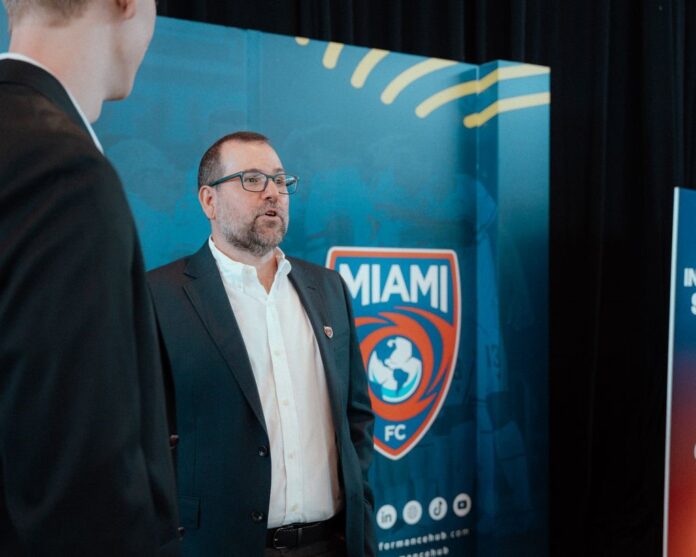
Mario Roitman, President of Miami FC, discusses the club’s long-term vision and leadership direction during a team event.
Mario Roitman is a seasoned sports executive and attorney with nearly two decades of legal experience and a deep track record in football operations. For almost 10 years, he has worked at the intersection of legal, compliance, and executive management, first serving as Chief Legal Officer of Miami FC before being appointed the club’s President in May 2024. As CLO, he oversaw all legal and compliance matters and was part of the team that challenged FIFA and the U.S. Soccer Federation at the Court of Arbitration for Sport to implement promotion and relegation in U.S. football.
When former CEO Michael Williamson departed for Wrexham AFC, Roitman stepped in to lead Miami FC through a pivotal transition. As President, he managed day-to-day operations while the club secured new investors, advanced plans for a new training center, and finalized land acquisition for a future stadium in Homestead, Florida.
Born in Birmingham, Alabama to parents from Uruguay, Roitman’s love for football runs deep. Before practicing law, he built experience in sports administration, marketing, and communications, working with an NHL team and in NCAA Division I athletics. A graduate of the University of Kansas School of Law, he began his legal career in intellectual property, helping companies protect and monetize patents, trademarks, and copyrights.
Our exclusive interview with Mario Roitman
Who is Mario Roitman outside of the world of football, and what experiences or values have shaped you as a person?
As the son of immigrant parents raised in the American south and having lived and worked in various parts of the U.S. from Miami to DC to Kansas, as well as a brief time in Brussels, I understand the importance of adapting to different cultures and communities. With this background and whenever I travel, I see the value of community and culture in each place I go and try to experience that community and culture, sometimes through my passions in sports and music, to learn and appreciate a place and its people. End of day, whether in our personal lives or through our careers, it’s always about connecting with people.
How did your career in the sports industry first take shape, and what were the early experiences that influenced your path?
Before law school I worked in various roles in marketing, communications, and sponsorship sales with minor league hockey, Washington Capitals in NHL, as well as administrative roles at university athletics department. Therefore, I started to understand all areas and departments that go into running a professional sports organization. It was sports law class while I was getting my masters in sports management at George Washington University that influenced my decision to attend law school and one day work in legal and compliance within the sports and entertainment industry.
What inspired your transition from practicing law into senior leadership roles within football, and how did that shift unfold?
The shift was that the club needed someone to replace outgoing CEO and through all the years of knowing the club’s history, as well as being involved with club’s player operations, communications, and marketing strategy to my expertise in league and federation compliance – our club owner felt the easiest transition would be to appoint me as President. Initially, I was hesitant as someone coming from an in-house legal role trained to put out fires to people making day-to-day decisions and managing a larger staff. However, despite challenges and difficulties on and off pitch during this period of transition in the club’s history, it has been rewarding managing a hard-working and terrific staff who have stayed through difficult times with the goal to make this club successful in the long term.
“it has been rewarding managing a hard-working and terrific staff who have stayed through difficult times with the goal to make this club successful in the long term.”
Looking back on your time in the game, what moments or projects stand out as the most meaningful and rewarding to you?
The highlight on the pitch was the amazing US Open Cup run in 2017 when we beat two MLS clubs on the way to the Quarterfinals including beating Orlando City in Orlando and then beating Atlanta United in front of a raucous home crowd. Off the pitch, the biggest accomplishments have been securing the club’s USL franchise rights back in 2020 and then voting yes to implement promotion/relegation within USL – something that club and myself have advocated for in the U.S. in the last decade.
Who are some of the people who have had the biggest influence on your professional journey, and what lessons did you take from them?
I will go with someone very recent in Michael Williamson. First, he was one of few, if only, CEOs to get me more involved with the club’s mission and strategy along with budget, marketing, and communications plan. Many legal and compliance staff within a business, including football clubs, can operate in a silo and advise executives and staff based on rules or laws instead of guiding them to the right solution that aligns with the club’s culture and mission. It is fundamental to understand the club’s mission and culture first to guide them. I’ll use this analogy – legal/compliance should not just exist to apply the brakes but to navigate the best route to take on a club’s journey. The other lesson I learned from Michael is about managing people – at minimum, the culture of a club should be about respect and kindness whether among the employees and staff to fans and supporters. There should be accountability and humility in any leadership role especially while having to make difficult decisions at times but always do it with respect and kindness.
As you look ahead, what goals or ambitions are you most focused on achieving in the next chapter of your career?
First, I’m excited about the future of Miami FC as it moves to a new home in Homestead, Florida with a new training ground and stadium. This move and transition will allow the club to not just survive but thrive for the next decade. I’m happy with that being my lasting legacy with the club. Whether in a legal or executive role, I look forward to being part of a club or organization that values its community and people and also being a part of the evolution of women’s professional football.
There was a time when one head coach and his assistant carried the entire weight of a club. From training sessions to tactical analysis, from player development to match preparation, everything rested on two shoulders.
Today the game has changed. We now have zone marking coaches, counterattack analysts, offside line coordinators and set piece specialists. As football has become more complex, the structure of coaching has become more specialized.
In the past, one or two scouts were enough to run a recruitment department. Now every age category has its own scouting team. It is not only about more people, but about a deeper football intelligence.
Clubs that still rely on individual decisions rather than a collective system are falling behind. Modern football is no longer about intuition; it is about structure and synchronization. Those who integrate technology, data and new training methods are the ones creating real difference.
Even private trainers are now experts in specific muscle groups or injury types. Detail knowledge has become more valuable than general knowledge.
Resource management and sustainable growth
Many clubs still spend their resources on expensive transfers. But true growth begins with a well-structured foundation. A team that is not planned properly can only buy time, not success.
Star coaches and star players can create excitement for a moment, but without a long-term plan they often leave behind nothing but financial debt. History is full of examples proving that success belongs to those who plan, not to those who improvise.
Thomas Frank and Bernardo Cueva – the minds behind the model
Brentford’s success was never a miracle. It was a methodology. Thomas Frank was an obsessive leader who lived for details. Bernardo Cueva was the analytical mind who turned data into intuition. Together they created modern football’s new weapon: the engineered set piece.
During the 2022–23 season, Brentford scored 22 goals from set pieces. Those numbers were not a coincidence but the reflection of a philosophy. Every corner, every free kick, every throw-in was treated like a project. It was planned, tested and analyzed.
Many clubs try to copy Brentford’s statistics, but few understand the thinking behind them. Because success is not a tactic. It is a mindset. And in Brentford, that mindset lived in two people: Thomas Frank and Bernardo Cueva.
They were the locksmiths of the new football era. They used engineering instead of intuition to unlock defenses.
“They were the locksmiths of the new football era. They used engineering instead of intuition to unlock defenses.”
The European revolution – the rise of set piece culture
The silent revolution of football began in Europe. Led by Brentford, many clubs embraced the idea that the ball being still does not mean the game has stopped.
Arsenal (England): Mikel Arteta brought Nicolas Jover from Manchester City to make set pieces a core part of Arsenal’s identity. Between 2021 and 2023, Arsenal doubled their goals from dead ball situations. As Arteta said, “We do not train corners. We train decisions.”
FC Midtjylland (Denmark): Champions in 2014–15 after scoring 25 set piece goals. They were the first club to build a data-driven set piece system using Opta analytics.
Liverpool (England): With Thomas Grønnemark, the club introduced the idea of a throw-in coach and turned even restarts into tactical weapons.
AZ Alkmaar (Netherlands): One of the first academies to apply set piece programs at every age level.
These teams share a common belief: that the game can be rebuilt every time the ball stops.
“The ball being still does not mean the game has stopped.”
The American potential – the next step for MLS
Most MLS clubs have yet to fully embrace this revolution. For many, a set piece coach is still considered optional. But the numbers tell a different story. Ten additional goals from set pieces can mean a difference of twenty points over a season. That is often the gap between playoffs and relegation.
The next evolution of American soccer will come from the clubs that invest in this area. A good set piece coach does not only design plays; he can design a club’s destiny.
From luck to identity – the discipline of repetition
Team sessions are not enough to master set pieces and dead balls. At least three designated players must work individually and consistently.
You can admire a free kick or a perfectly executed corner and call it brilliant. The first time it is luck. The second time it is coincidence. When you do it every week, it becomes your identity.
This consistency requires repetition without compromise. Because while you are training to execute them, your opponents are training to defend them. Football is one of the most interactive professions in the world. You must always be ready to surprise your rival and captivate your audience.
Roughly thirty percent of all goals come from set pieces. Putting extra effort into that thirty percent of the game can change the entire direction of a season. Sometimes those thirty goals mean ten extra points. Sometimes forty. And often, that is the difference between failure and success.
The new identity of a coach
The modern coach is no longer just a game manager. He is a designer of moments. Set piece and dead ball trainings define this new generation of coaches.
The modern coach is a locksmith. He finds solutions when the game is frozen. He turns luck into design.
O futebol profissional tem há muito sido visto como o bilhete dourado, um caminho para a fama, a fortuna e o reconhecimento global. Para muitos jovens atletas, assinar um contrato profissional representa a concretização de sonhos de infância. Contudo, por detrás das manchetes glamorosas sobre contratos multimilionários e transferências recorde existe uma verdade sóbria: demasiados futebolistas terminam as suas carreiras arruinados, desorientados e despreparados para a vida pós-carreira. O paradoxo é doloroso: como é que pessoas que ganham, numa semana, mais do que muitos ganham num ano acabam por não ter nada?
A resposta reside nos alicerces frágeis de uma carreira futebolística: durações curtas, riqueza súbita, aconselhamento financeiro deficiente e falta de educação. Enquanto o futebol exige um compromisso total dentro do campo, negligenciar a educação fora dele pode revelar-se catastrófico. A educação académica, financeira e pessoal não é apenas um plano de recurso; é uma ferramenta crítica para a resiliência, o empoderamento e o sucesso a longo prazo.
“A educação académica, financeira e pessoal não é apenas um plano de recurso; é uma ferramenta crítica para a resiliência, o empoderamento e o sucesso a longo prazo.”
A dura realidade da vida depois do futebol
A carreira profissional no futebol é surpreendentemente curta. A carreira média na primeira divisão em França dura cerca de quatro anos. Lesões, quebras de rendimento ou a não renovação de contratos podem encurtar ainda mais essas carreiras. A cada verão, até 25% dos jogadores encontram-se sem clube.
Para muitos, as consequências financeiras são devastadoras. Investigação da XPro revelou que 60% dos ex-jogadores da Premier League declararam-se insolventes dentro de cinco anos após a reforma; estimativas mais recentes fixam o valor mais próximo dos 40%. Em França, as taxas de desemprego entre ex-futebolistas ultrapassam os 15%. Jogadores que antes gozavam de riqueza e fama vêem-se confrontados com dívidas, insegurança laboral e perda de identidade.
As histórias são tão dramáticas quanto tristes. David James, antigo guarda-redes de Inglaterra, terá ganho cerca de 20 milhões de libras ao longo da carreira, mas declarou insolvência em 2014, leiloando memorabilia para pagar dívidas. Lee Hendrie, médio ex-Aston Villa, perdeu cerca de 10 milhões de libras em investimentos falhados e excessos, sofrendo depressão e declarando insolvência. Ronaldinho, outrora um dos futebolistas mais “marketable” do mundo, tinha alegadamente apenas £5 na conta bancária apesar dos ganhos na casa de dezenas de milhões. Diego Maradona, amplamente considerado um dos melhores de sempre, faleceu com poupanças modestas e dívidas fiscais significativas.
O colapso financeiro é frequentemente agravado por problemas de saúde mental. Estudos mostram que mais de um terço dos jogadores em atividade apresenta sintomas depressivos. Para os atletas aposentados, o risco é ainda maior, com muitos a apontarem a preocupação financeira como o principal fator a afetar a sua saúde mental. Alguns recorrem a mecanismos destrutivos para lidar com as circunstâncias: jogo, álcool e abuso de substâncias. O fim da carreira pode significar não só ruína financeira, mas também uma crise pessoal profunda.
Por que a educação importa
Num contexto tão adverso, a educação emerge como um salvaguarda essencial. Oferece aos futebolistas as ferramentas para navegar a vida tanto durante a carreira como depois dela:
Literacia financeira como proteção: Ganhar milhões pouco vale sem saber como os gerir. Muitas insolvências resultam de investimentos desastrosos, esquemas fiscais falhados ou gastos imprudentes. A educação em finanças básicas, fiscalidade, investimentos e planeamento orçamental pode proteger os jogadores da exploração e garantir que a riqueza a curto prazo se converta em segurança a longo prazo.
Transição de carreira e identidade: A identidade de um futebolista está frequentemente ligada exclusivamente ao desporto. Ainda assim, a maioria admite não saber o que fará após a reforma. A educação alarga horizontes, oferecendo percursos para treino, gestão, negócios ou áreas completamente novas. Constrói-se, assim, a confiança de que a vida depois do futebol pode continuar a ser gratificante e com propósito.
Resiliência mental: Os jogadores que investem em educação estão muitas vezes melhor preparados para a transição inevitável. Atletas com níveis mais elevados de formação parecem menos propensos à depressão durante mudanças de carreira. A educação fomenta adaptabilidade, pensamento crítico e um sentido de controlo — amortecedores essenciais contra o impacto psicológico da reforma.
Empoderamento e independência: Um futebolista instruído é menos dependente de agentes, consultores ou entourage. O conhecimento traz consigo a capacidade de escrutinar propostas, tomar decisões informadas e resistir a esquemas predatórios. A educação confere agência: a capacidade de moldar o próprio destino em vez de ser moldado pelas circunstâncias.
“A educação confere agência: a capacidade de moldar o próprio destino em vez de ser moldado pelas circunstâncias.”
Lições de programas internacionais
Apesar das estatísticas serem sombrias, vários países e organizações estão a pioneirar soluções ao integrar a educação na cultura futebolística.
Países Baixos: o esquema de ponte do CFK Os futebolistas neerlandeses beneficiam de um sistema de pensões único, onde uma parte do salário é poupada no fundo CFK durante os anos em atividade. Na reforma, recebem prestações anuais, proporcionando estabilidade financeira enquanto transitam para novas carreiras. Crucialmente, o esquema é acompanhado por apoio educativo do sindicato dos jogadores neerlandês, permitindo que os atletas frequentem cursos e formações profissionais enquanto jogam.
Dinamarca: o programa 4player da Spillerforeningen O sindicato dinamarquês oferece apoio holístico através do 4player, orientando os atletas desde as carreiras iniciais até à reforma. Os serviços incluem aconselhamento de carreira, planeamento educativo, colocação profissional e recursos de saúde mental, bem como uma linha de apoio anónima para quem estiver em dificuldades.
Reino Unido: a PFA (Professional Footballers’ Association) Em Inglaterra, a PFA fornece um dos sistemas de apoio ao jogador mais abrangentes do mundo. Cada membro tem uma bolsa vitalícia de educação até £7.500, que pode cobrir licenciaturas, formações profissionais ou qualificações de treinador. A PFA gere também uma linha de aconselhamento confidencial 24/7 e oferece aconselhamento financeiro, reconhecendo que a riqueza súbita frequentemente conduz a decisões económicas pobres. Para os jogadores dispensados, existem fundos adicionais e programas de recolocação, atenuando o impacto das interrupções de carreira.
Iniciativas globais da FIFPRO Enquanto sindicato mundial dos jogadores, a FIFPRO lançou projetos como o Mind the Gap, que equipa os atletas com ferramentas para a transição de carreira. Colabora também com universidades para criar programas académicos à medida, como a HBO Academy nos Países Baixos, que oferece licenciaturas em regime parcial desenhadas para atletas ativos.
Academias de futebol: estabelecer padrões desde cedo Vários clubes integraram a educação nas suas academias. O Sporting CP em Portugal mantém um Departamento Psicopedagógico, garantindo taxas de sucesso escolar acima dos 90% entre os jovens atletas. O Benfica gere um departamento escolar com apoio pedagógico e centros de estudo, integrando a educação no quotidiano de treino. O FC Porto oferece subsídios e aulas de apoio a jogadores de origens desfavorecidas, enquanto o SC Braga chegou a construir a sua própria escola no local. Fora de Portugal, o Altınordu FK na Turquia combina ensino académico com competências de vida como agricultura e línguas, enquanto o Independiente del Valle, no Equador, inaugurou um liceu bilingue dentro do seu campus de treinos.
Estas iniciativas demonstram que futebol e educação não precisam de estar em conflito. Com estruturas adequadas, os jovens jogadores podem sobressair tanto no campo como na sala de aulas.
Casos de estudo: sucesso vs. fracasso
O contraste entre falhanço e êxito nas carreiras futebolísticas é evidente. Ronaldinho e Maradona, apesar dos enormes rendimentos, servem de advertência sobre gastos descontrolados e falta de planeamento. As suas histórias sublinham como a fama e a fortuna podem evaporar sem literacia financeira ou disciplina.
Por outro lado, jogadores como o capitão do Rio Ave, Vítor Gomes, exemplificam os benefícios de priorizar a educação. Vítor Gomes concluiu uma licenciatura e um mestrado enquanto jogava profissionalmente. A sua trajetória mostra que o sucesso académico não só é compatível com uma carreira futebolística, mas pode também potenciá-la, oferecendo estabilidade, equilíbrio e opções para o futuro.
A mensagem é clara: a educação faz a diferença entre ser uma manchete trágica e um modelo de sucesso sustentável.
Carreira dupla: criar uma nova cultura no futebol
O desafio não reside apenas em oferecer oportunidades educativas, mas em integrá-las na própria cultura do futebol. Durante demasiado tempo prevaleceu a narrativa de que o futebol exige compromisso total, sem espaço para estudos. Esta falsa dicotomia custou o futuro a inúmeros jogadores.
Ao invés, a educação deve ser normalizada como parte integrante da carreira futebolística. Academias, clubes e sindicatos devem cooperar com escolas e universidades para proporcionar percursos de aprendizagem flexíveis e acessíveis. O sucesso não deve ser medido apenas por troféus, mas também pelo número de jogadores que fazem a transição para vidas pós-carreira estáveis e gratificantes.
Além disso, os próprios jogadores têm de encarar a educação como um investimento, não como uma distração. A mudança de mentalidade — de “futebol ou educação” para “futebol e educação” — é vital. Programas em Portugal, Dinamarca e Países Baixos mostram que essa mudança cultural é possível e de grande impacto.
Conclusão
O futebol é mais do que um jogo; para muitos, é um meio de subsistência. No entanto, sem educação, essa subsistência é perigosamente efémera. As estatísticas sobre insolvência, desemprego e depressão entre futebolistas reformados não são acasos. São o resultado previsível de um sistema que privilegia o desempenho a curto prazo em detrimento do bem-estar a longo prazo.
A educação oferece o antídoto. Equipa os jogadores para gerir riqueza, transitar de carreira e manter a saúde mental. Empodera-os para tomar as rédeas do seu destino, garantindo que o fim de uma carreira futebolística não signifique o fim da estabilidade ou da dignidade.
Para clubes, sindicatos e órgãos reguladores, investir em educação não é caridade, é uma necessidade. Ao incorporar percursos de carreiras duplas no futebol, o desporto pode proteger os seus jogadores e preservar a sua integridade. Para os jogadores, abraçar a educação é a forma mais poderosa de assegurar que a glória de hoje não se torna no arrependimento de amanhã.
O futebol será sempre sobre golos, mas talvez o mais importante seja marcado fora do relvado, na sala de aulas, onde o jogo da vida realmente se ganha.
Branthlete is redefining how women’s sport is seen and celebrated through creativity, storytelling, and purpose-driven strategy.
In the constantly evolving landscape of modern football, few agencies have captured the spirit of change as precisely as Branthlete. Based in Amsterdam, the creative agency has positioned itself at the heart of women’s sport and is driven by a clear mission: to give women’s sports the stage they deserve.
The vision: redefining how we see women’s sport
Branthlete was founded by Frederique de Laat and Derk van Kleeff with a simple yet powerful belief. Despite women’s sport becoming increasingly popular, the way it is marketed and communicated has not kept pace with its cultural rise. Too often, women’s sport is treated as an extension of men’s competitions rather than its own universe with distinct audiences, emotions and values.
“At Hera United, I noticed how many organizations still use the same approach for men and women,” says founder Frederique de Laat. “But women’s sport attracts a different audience, with different values and cultural codes. That is exactly why we started Branthlete – to put the women’s sport fan at the center of everything.”
“But women’s sport attracts a different audience, with different values and cultural codes. That is exactly why we started Branthlete – to put the women’s sport fan at the center of everything.”
From that conviction, Branthlete has grown into a creative powerhouse exclusively dedicated to women’s sport. The agency combines strategy, insight and creativity to build stories that move fans and brands alike.
Inside Branthlete’s approach
Branthlete’s strength lies in its ability to merge strategic insight with authentic storytelling. Rather than treating campaigns as mere marketing exercises, the agency creates narratives that connect deeply with audiences and reflect the real culture of women’s sport.
Their work spans strategy and insights, branding, player communication and creative campaigns. Whether for a football club, a league, a sponsor or an individual athlete, the agency begins by asking a simple question: who are the fans, what drives them and how can a brand earn their loyalty?
The answer is almost always rooted in authenticity. “Women’s sport is not a trend,” explains co-founder Derk van Kleeff. “It is the future of sport. Eighty-four percent of sports fans say they are interested in women’s sport, but they rarely get to see it. Our job is to make sure they are seen and felt.”
“Women’s sport is not a trend. It is the future of sport.”
The Aston Villa Women project
One of Branthlete’s most recognized projects was its collaboration with Aston Villa Women in England’s Women’s Super League. Ahead of the new season, the agency was invited to help design the club’s fan and community engagement strategy.
Branthlete began by developing detailed fan personas, studying not only demographics but also motivations and barriers that influence attendance. They explored how supporters consume content and which local communities they engage with.
The result was a new model of engagement that not only increased visibility but also deepened the emotional connection between players and supporters. Aston Villa’s women’s side entered the new season with a stronger sense of identity and a fan base that felt closer to the team than ever before.
#TheNapoliFamily: giving Naples a new football voice
In Italy, Branthlete turned its attention to Napoli Women, launching the campaign #TheNapoliFamily to shine a light on the club’s unique culture. Naples is a city where football borders on religion, yet the women’s team had long lived in the shadow of the men’s success.
Branthlete sought to change that. Over eleven weeks, the campaign told the story of Napoli Women through the people who make the club what it is – the players, the fans, the families and the staff. The message was simple but powerful: pride, dedication and ambition define Napoli Women just as much as any Serie A team.
“With #TheNapoliFamily, Napoli Women and Branthlete are creating a new narrative for women’s sport in Italy,” says de Laat. “It is a tribute to the city, the club and a generation of women claiming their place at the highest level.”
The campaign became a defining cultural moment for women’s football in southern Italy, positioning Napoli Women not just as a team, but as a symbol of identity and belonging.
Our exclusive interview with Branthlete
Branthlete has quickly positioned itself at the center of women’s sport. What do you believe makes your agency’s approach stand out compared to traditional sports marketing firms?
We’ve built Branthlete around one clear belief: women’s sport deserves its own space, its own language, its own strategy, its own spotlight.
Most sports marketing agencies still treat women’s sport as a side project, or they approach it with the same lens they use for men. We do the opposite. We live and breathe this world every day, we know the players, the trends, the audience, and what’s needed to make the whole ecosystem stronger.
We’ve also become the thought leader in this space. We don’t just have the knowledge, we actively share it. Whether it’s through strategy sessions, talks or collaborations, we make sure the insights we gather help move the industry forward.
That’s why our work never just benefits the brand, it also helps grow the sport. We connect brands to stories that make a real difference, and I think that’s why we’ve grown so quickly. We’re not just selling visibility, we’re building relevance.
You often speak about the emotional connection between fans, players and brands. Can you share how this philosophy translates into your day-to-day creative work and what results it has brought?
Sport is emotion, but in women’s sport that emotion feels more personal. Fans don’t just admire female athletes for what they do on the pitch, they want to know who they are. Think about it — how much do we really know about Lionel Messi as a person, compared to how much we know about Serena Williams? With Serena, we know her story, her struggles, her values. That makes the connection so much deeper.
That’s the starting point for everything we do, connection. Every campaign begins with a question, what’s a real challenge in women’s sport, and how can we help solve it with a brand?
For example, we’re working with one of the biggest supermarket chains in the world on a project that creates more visible female role models in sport. It’s not about ticking a box, it’s about changing what people see when they think of “athlete”. We also create campaigns that inspire younger girls to dream bigger and stay in sport, and that feels incredible to do.
When you build from emotion and purpose, you create work that people actually remember, and that’s what moves both fans and brands.
Branthlete has already worked with clubs like Aston Villa Women and Napoli Women. What kind of partners or projects are you most excited to collaborate with next, and what values should those partners share?
We love working with brands that want to create change, and that choose to do it in women’s sport. The ones that see the opportunity to be pioneers instead of following the crowd.
Many of our current partners are active in sports but not yet in women’s sports, and that’s where we see the biggest potential. The only thing we ask from partners is that they’re in it for the long run. Women’s sport isn’t a quick campaign, it’s a movement that grows through consistency and care.
The brands that understand that, and that genuinely want to make an impact, will get so much more out of it.
Looking ahead, how do you see Branthlete shaping the future narrative of women’s sport in Europe and beyond – not just as a marketing agency, but as a movement for cultural change?
We want to help shape how people see women’s sport, not as the smaller version but as its own world full of talent, creativity and opportunity.
We want to keep fighting for equal rights in the sports industry. We want to inspire people through the work we create together with brands, and help move the sport forward by finding new solutions, like how to build female fandom in a way that truly connects.
There’s still so much space to build, experiment and reimagine things, and that’s what makes this work exciting. We want to create the change, together with the brands and organisations that have the power to do so.
If in a few years we can look back and see that we’ve helped more girls stay in sport, more fans connect with female athletes, and more brands show up in meaningful ways, then we’ve done our job.
Hannes Anger, FC Carl Zeiss Jena’s Content Creator, captures the emotion and energy of women’s football from the touchline.
In November 2022, behind his camera on a cold afternoon in Jena, Hannes Anger captured a moment that would shape his career. The FCC women’s team had just suffered a narrow defeat to Nürnberg, yet what stayed with him was not the scoreline but the energy, camaraderie, and belief he saw on the pitch. From that day, he knew he wanted to tell the stories of women’s football.
Hannes Anger, 24, is one of the emerging media professionals in German women’s football. Since October 2022, he has served as Content Creator at FC Carl Zeiss Jena, now entering his fourth season with the club. Following the team’s promotion to the Bundesliga for the 2024/25 season, he also took on the role of Media Officer for Women’s Football.
His work includes developing the club’s digital and media strategy, producing content around matches and daily activities, and guiding communications during and after the promotion campaign. Alongside his work with the senior team, he also covers the club’s youth sides, such as the U17 team competing in the DFB Junior Cup.
Beyond football, Hannes is also active in basketball, contributing voluntarily to women’s basketball in Jena, where he helped document the team’s rise to the second division.
A graduate in Applied Media and Communication Science from TU Ilmenau, where he also worked as a research assistant in media psychology, Hannes combines creative media skills with analytical insight. His goal is clear: to make women’s and youth sport more visible, emotional, and relatable.
Our exclusive interview with Hannes Anger
Hannes, you have been working with FC Carl Zeiss Jena for several years. How did you become a Content Creator, and why did you choose women’s football?
I have always had a camera in my hand. From school projects to university assignments, I taught myself most of what I know. I have always been fascinated by how you can tell stories through images and connect people emotionally with sport.
During my studies, I needed to complete a mandatory internship and applied to FC Carl Zeiss Jena, initially in the youth department. Very quickly I also started working with the men’s first team, which gave me valuable insight into how a professional club operates. Then, almost by coincidence, I was asked to cover the women’s team one weekend because no one was managing their social media presence at the time.
My first match was against Nürnberg in November 2022. Despite the defeat, I was struck by the atmosphere, the passion, and the collective spirit. It was the perfect environment to be creative and try new ideas. What made the difference was the trust I received from the coaches, players, and staff right from the beginning. I was welcomed as part of the team, which allowed me to develop my own creative style.
Over time, I took on more responsibility, especially in social media. I built a more modern, emotional, and fan oriented communication strategy. The club’s Instagram account grew from around 6,000 to over 14,000 followers, a sign that interest in women’s football and our work is steadily increasing.
Women’s football has fascinated me for years. As a teenager, I followed the national team closely and admired its progress. I never imagined I would one day contribute to that growth myself, but now I can, and it feels incredibly rewarding.
“What made the difference was the trust I received from the coaches, players, and staff right from the beginning.”
The FCC women’s promotion to the Bundesliga in 2024/25 was a milestone. How did you experience and document that moment?
From the start of the season, we felt something special developing. When coach Florian Kästner took over, there was a new sense of energy. I had worked with him before in the youth setup, so there was already trust.
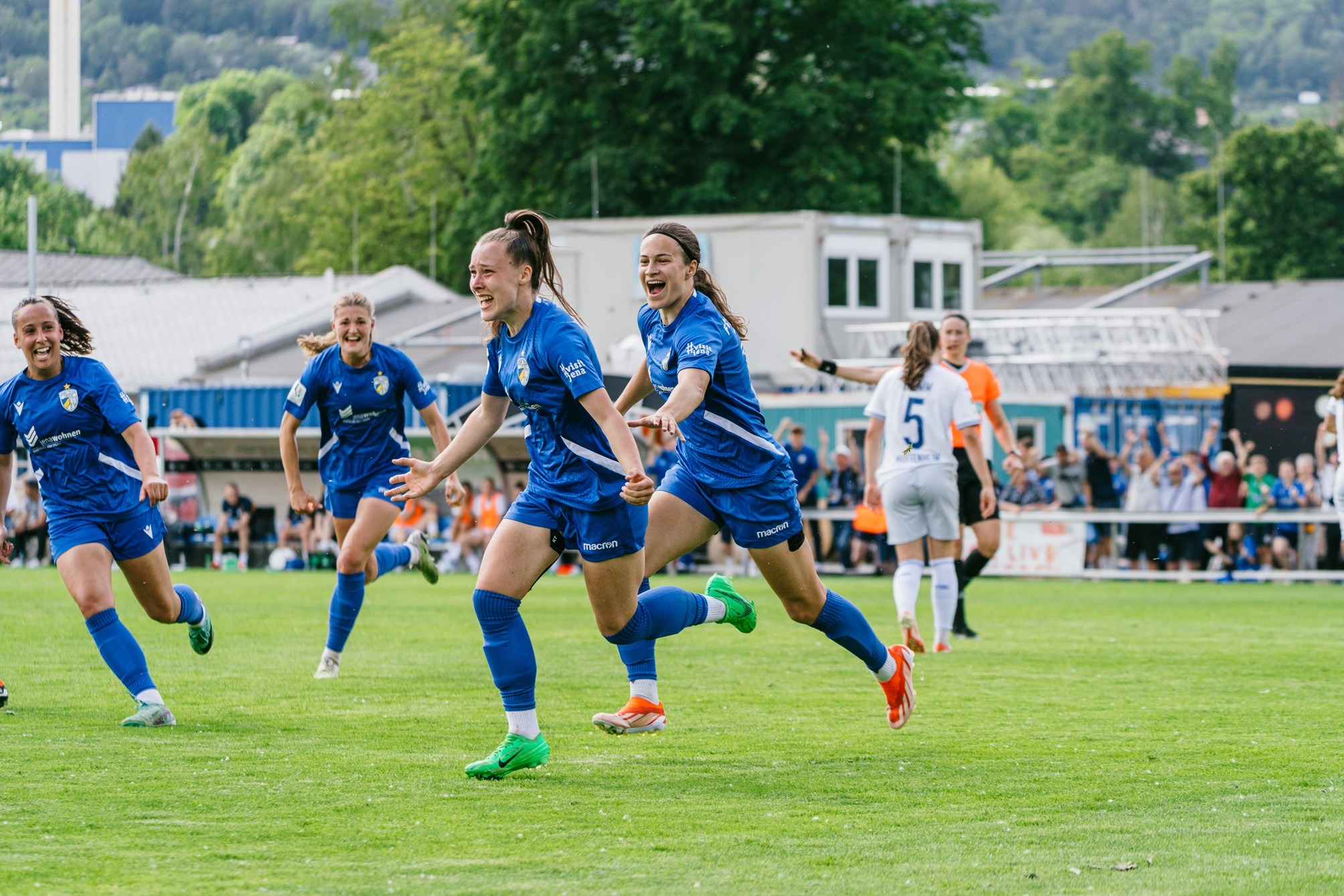
The final matchday against Hoffenheim II was full of tension. Other results had gone against us, and it was still 0 to 0 late in the game. Then, in the 84th minute, our youngest player, Felicia Sträßer, a hometown girl from Jena, scored the decisive header. The timing was perfect. The day before, I had celebrated my birthday at the men’s team’s cup final win. That goal felt like the best birthday gift imaginable.
One photo from that moment will always stay with me: Felicia running straight toward my camera after scoring, her face full of joy and disbelief. It captured everything, relief, pride, and emotion.
FC Carl Zeiss Jena players erupt in celebration after scoring the goal that secured their promotion to the Frauen-Bundesliga. Credits / Hannes Anger.
Covering that day was both a privilege and a challenge. I knew I could not afford to miss a single moment. Every player had earned her place in that story, and I wanted to make sure it was told authentically. When the final whistle blew, everyone, players, coaches, staff, stormed the pitch. It was chaos, but the best kind of chaos.
Later that night, we celebrated together in a local restaurant. That time the camera stayed at home. For me, the promotion was not just a professional highlight but a deeply personal one. Having accompanied the team throughout the season, being part of that success was unforgettable.
You also cover the club’s youth teams. What are the main differences between working with junior and professional players?
I love working with the youth teams. It is about giving young players visibility and confidence. Every girl dreams of playing for the first team one day, and media coverage can be a great motivation.
In youth football, you often need more sensitivity. Many players are shy at first, but when they see their photos or videos online, they are proud and excited. The essence, however, is the same at every level, passion, teamwork, joy. Those emotions are identical whether it is the Bundesliga or the U17 Cup.
A real highlight was our U17 team’s run to the semifinal of the newly introduced DFB Junior Cup last season.
Your studies in media psychology surely influence your creative work. How do scientific insights help you with content production in sport?
Before my degree, I taught myself the technical side, how to shoot, edit, and tell stories visually. University helped me understand why certain content works and how people respond to media.
Media psychology offers fascinating tools. For example, agenda setting theory, deciding which topics to highlight and how to frame them, plays a big role in sports storytelling. In every piece of content, I ask myself: what emotion do I want to evoke? Which narrative connects the team and its fans?
I try to apply these insights subtly, never in a forced way. Ultimately, it is about creating authentic emotions that reflect what happens on and off the pitch.
Women’s football in Germany is growing fast but still faces challenges. How do you see the opportunities and hurdles in media work for women’s teams?
The growth of women’s football in recent years is incredible. Media interest and fan engagement are rising, and that creates huge opportunities. People want authentic insights into the teams and players, not just results but human stories.
Social media is perfect for that. It allows us to share emotions, behind the scenes moments, and genuine connections between players and fans. Storytelling is key: showing who the players are, what drives them, and how they develop.
At the same time, there are challenges. Many clubs still have limited resources for professional media work, and building reach takes time. Smaller clubs or youth setups cannot always produce consistent, high quality content. And of course, in an increasingly crowded digital landscape, it is harder to stand out.
For me, the biggest opportunity lies in creativity and authenticity. I see it as my job to give players a stage, present their achievements, and tell stories that make people care about women’s football, step by step, game by game.
You also work in women’s basketball in Jena. What similarities and differences do you notice between media work in football and basketball?
Women’s basketball in Jena has existed for years but does not yet get the same attention as football. It is a sport I personally love because I play basketball myself.
Last year, the team achieved promotion to the second division, which marked the beginning of an exciting new chapter. I got involved through my football work, people noticed what I was doing and reached out. Since then, I have been helping them, especially at home games.
Basketball requires a different rhythm, faster actions, different camera angles, and timing. But the principles are the same: capturing emotion, performance, and teamwork. Ultimately, both sports share the same goal, showing the passion of athletes and giving their efforts the visibility they deserve.
Looking ahead, where do you see yourself in the coming years? Would you prefer to stay in club media work or move toward a broader role in sports communication?
I want to keep evolving. Sport changes constantly, and that is what makes it so exciting. I definitely see my future in women’s football, it is where my passion lies. I want to continue growing with the team, the players, and the opportunities that come our way.
In the long run, I can imagine leading a media department or working as a press officer, building a creative team to produce content at an even higher level. But I am not in a hurry. I believe in taking things step by step, just like a team approaching each match.
For now, I am focused on the next season, on telling stories that matter, and on helping make women’s football in Jena and beyond more visible than ever.
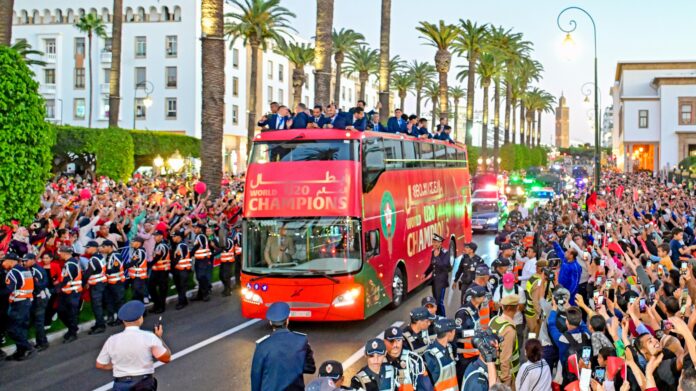
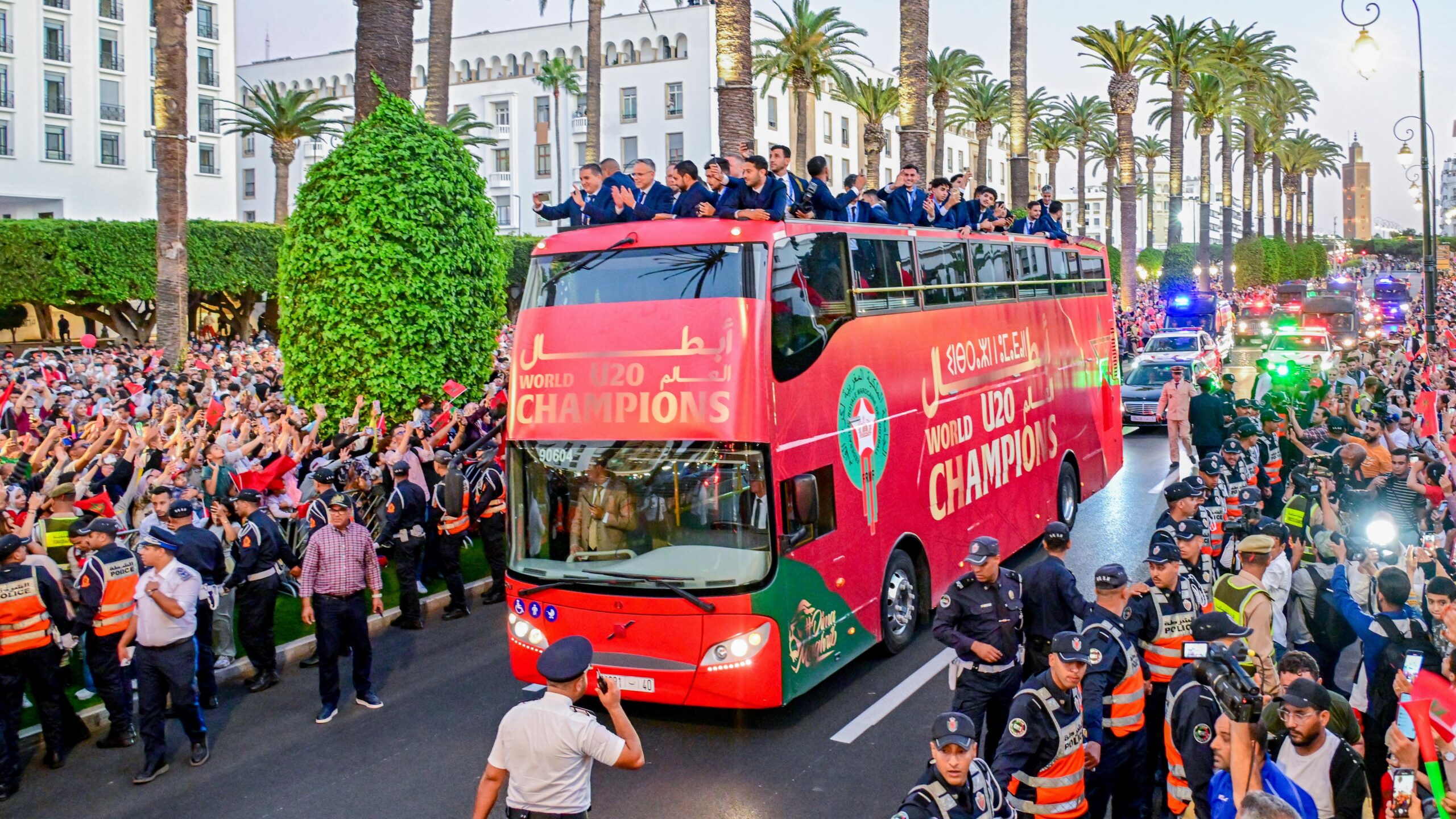
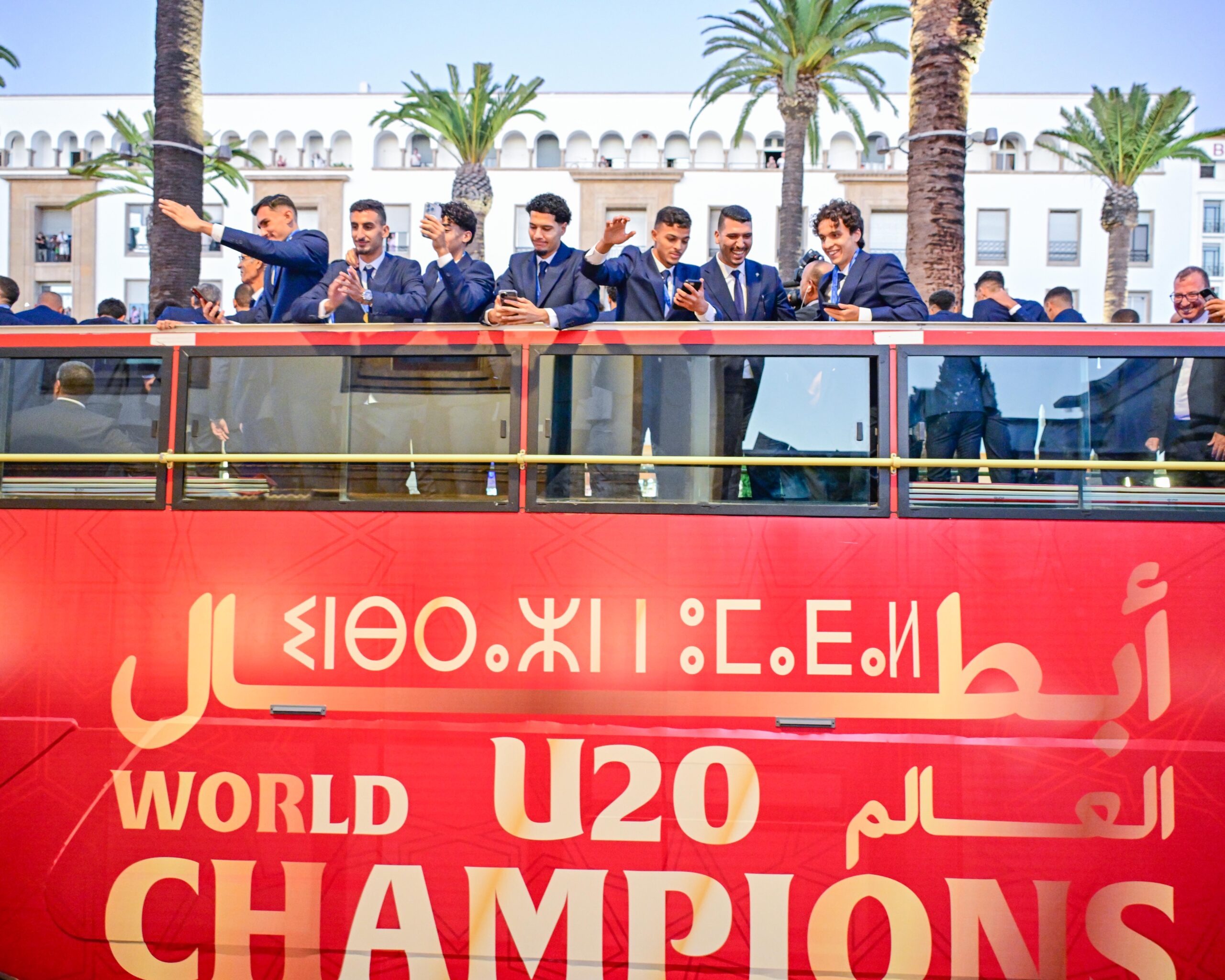
Morocco U20 team celebrates their historic World Cup triumph with a victory parade through Rabat. Image courtesy ofAbdelmajid Rizko.
A historic first for the Atlas Cubs
History was made in Santiago, Chile. Morocco national team defeated Argentina in the FIFA U20 World Cup final, claiming the country’s first-ever World Cup title in all its age categories. Entering the pitch as underdogs, the Atlas Cubs (the name by which they go by in Arabic – أشبال الأطلس), sealed the win in the first half. They left Chile with the trophy, received a heroic welcome back home, and were honored in a Royal ceremony hosted by the Crown Prince of Morocco.
Morocco national team defeated Argentina in the FIFA U20 World Cup final, claiming the country’s first-ever World Cup title in all its age categories.
Fans line the streets of Rabat to welcome the Atlas Cubs home after their historic U20 World Cup win. Image courtesy ofAbdelmajid Rizko.
The road to glory: conquering football’s elite
In their first U20 World Cup participation in 20 years, the journey to glory was nothing short of spectacular. Morocco demonstrated their quality by defeating football powerhouses like Spain and Brazil in the group stage, topping what was widely regarded as the group of death.
Their knockout campaign continued with impressive victories over South Korea in the round of 16, then the United States in the quarterfinals, and France in the semis. The latter proved to be a dramatic affair, with three Moroccan goalkeepers featuring in the same game, and the team winning 5-4 on penalties after a 1-1 draw.
Throughout the tournament, the Atlas Cubs displayed exceptional tactical discipline, mental fortitude, and unwavering determination, amongst many other qualities. Their character shown on the pitch allowed them to overcome Europe’s and South America’s most established footballing nations.
Building excellence: the Mohammed VI academy imprint
This triumph represents the culmination of years of strategic investment and visionary planning by Moroccan football authorities. The Mohammed VI football academy in Salé, inaugurated by King Mohammed VI in 2009, came to reshape national football and produce the next generation of elite players.
Among the players called up for the U20 World Cup, five regular starters came through the academy: Fouad Zahouani, Houssam Essadak, Taha Majni, Yassir Zabiri, and Yassine Khalifi. A further fact demonstrating the institution’s success in nurturing homegrown talent to compete at the highest international level.
Together with players born and trained overseas, this symbiotic blend of locally-trained and internationally-developed talent was a fundamental part of this historic campaign.
This triumph represents the culmination of years of strategic investment and visionary planning by Moroccan football authorities.
Mohamed Ouahbi: the patient architect of success
Beyond the academy’s work, the Royal Moroccan Football Federation had also a role to play in the journey leading to the triumph. They pursued an active scouting strategy internationally, recruiting talented players and staff with Moroccan heritage from top European academies.
Coach Mohamed Ouahbi, the mastermind behind this achievement, is one of those who answered the country’s call a few years ago. Born in Brussels to Moroccan immigrants, he spent 17 years at Anderlecht’s academy, coaching various age groups from U9 to U21.
During his tenure at Anderlecht, he trained future stars including Youri Tielemans, Romelu Lukaku, Adnan Januzaj, Jérémy Doku, and Leander Dendoncker, and reached the Final Four of the UEFA Youth League in 2015, an unprecedented achievement for the Belgian club.
Appointed to lead Morocco’s U20 team in March 2022, Ouahbi faced early setbacks. However, he carried on with a philosophy centered around discipline, values, patience, and what he calls “breaking the glass ceiling.” His four years of patient work, nurturing young talents and building a cohesive team, despite early criticism, ultimately delivered Morocco’s greatest youth football achievement.
From outsider to contender
This U20 World Cup victory marks a defining moment for Morocco, confirming the nation’s status as a serious contender on the global stage. Following the senior team’s historic run to the 2022 World Cup semifinals in Qatar, this youth triumph demonstrates that Morocco’s football renaissance is not a fleeting moment but a sustained transformation.
Fans and players unite in celebration, marking a new era for Moroccan football. Image courtesy ofAbdelmajid Rizko.
As Ouahbi himself noted, what Walid Regragui achieved in Qatar “paved the way for future generations,” breaking mental barriers and proving that Moroccan teams belong amongst the world’s elite, a football nation definitely to be reckoned with.
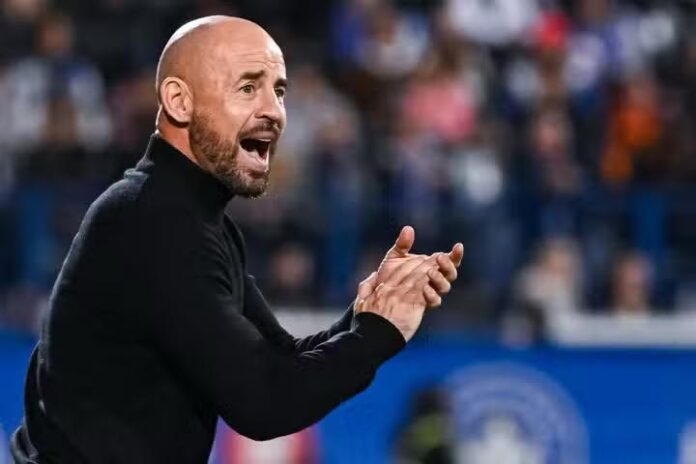
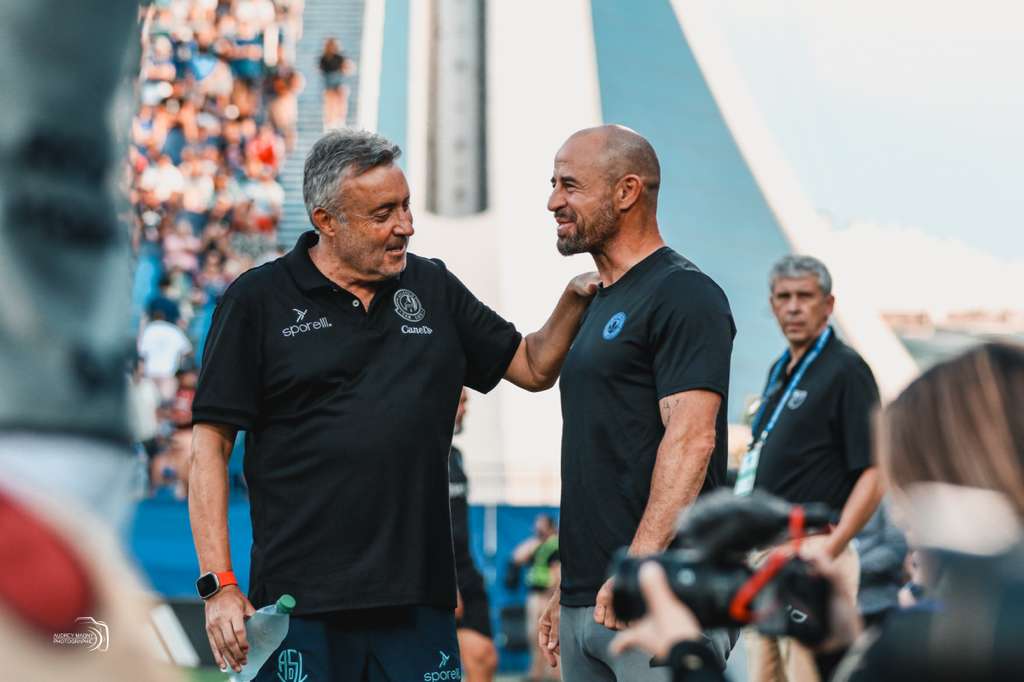
Laurent Courtois, head coach of CF Montréal, guiding his team during an MLS match.
Lyon Roots and Coaching Foundations
Laurent Courtois, head coach of CF Montréal, was born in Lyon and shaped by one of France’s most respected football academies, Olympique Lyonnais. Street football and OL’s emphasis on technical repetition, duels, and intensity forged his philosophy early. “Lyon is a fantastic pool of talent,” Courtois says. “We learned skill, competition, and mental toughness.”
After his playing career in Europe and the U.S., he moved into coaching at Lyon’s academy. There, he learned the importance of communication, structure, and supporting players beyond the pitch. “It’s not about me performing anymore; it’s about helping every player be seen at their best,” he explains.
“It’s not about me performing anymore; it’s about helping every player be seen at their best.”
Coaching Growth and Move to North America
Driven by curiosity and ambition, Courtois left France to explore new challenges in Major League Soccer. He worked across the U.S., from California to Ohio, gaining experience managing diverse rosters. “We had about 13 nationalities,” he recalls. “Players want to play, and fans want to make the playoffs, that’s the same everywhere.”
Courtois was attracted by MLS’s commitment to player development. “In North America, athletes are recognized and valued,” he notes. “In Europe, they can sometimes be stigmatized by opinion.”
CF Montréal and Coaching Philosophy
When Courtois joined CF Montréal, he quickly adapted to the club’s unique environment, and the challenges of the Canadian winter. “We had to take the bus to train on turf and waited a long time to see grass,” he laughs. “But I liked the club’s identity and the city’s passion.”
Promoted to first-team head coach, Courtois applied his developmental principles at the professional level. Despite a young roster, injuries, and international call-ups, he guided Montréal to eighth in the Eastern Conference, emphasizing adaptability and intelligent pressing. “I couldn’t press as vertically as I wanted, so we set up more pressing traps,” he says.
Tactical Identity and Methodology
Courtois’s teams are known for an aggressive, possession-based style focused on tempo control and collective intensity. His training sessions mirror real match conditions, using repetition and situational drills to prepare players for decision-making under pressure.
He believes in synchronized development across all club levels, a “one-identity” model ensuring tactical alignment from academy to senior team. “It’s about structure but also about allowing players to express themselves,” he says.
“It’s about structure but also about allowing players to express themselves.”
Vision and Future Goals
After years in Europe and North America, Courtois sees himself as part of MLS’s evolution. “Infrastructures here are exceptional,” he notes. “Even reserve teams have incredible tools.” He remains open to future challenges in Europe but stays focused on MLS. “I’m an American citizen now, and with the World Cup coming, I want to be here.”
A Modern Coach for a Modern MLS
Laurent Courtois’s journey from the youth academies of Lyon to Major League Soccer reflects a new generation of coaching, one built on identity, development, and intelligence. His blend of European methodology and North American innovation continues to shape CF Montréal and the next wave of MLS talent.
CF Montréal head coach Laurent Courtois before a match at Stade Saputo, reflecting his collaborative and respectful approach to coaching.
Our exclusive interview with Laurent Courtois
What were your first impressions upon joining CF Montréal, the club structure, ambitions, and football culture in Canada?
I wasn’t expecting such a long winter, which forced us to take the bus to train on turf whenever we weren’t playing away. It took a long time before we could finally see grass. The infrastructure is actually a former firefighters’ building; I liked it! Montréal soccer is caught between the city’s hockey legacy and the star system created when Didier Drogba made a lot of people dream.
What drew you to take the CF Montréal manager role (senior team) after years of working with youth and reserves? How did you adjust your coaching style or expectations in that transition?
I was excited to apply my concepts at the MLS level. I was proud to finish 8th in the Eastern Conference, being among the top teams despite having a very young roster, injuries, and many players away for the Gold Cup. I couldn’t press as vertically as I wanted, so we set up more pressing traps instead.
What are some cultural or logistical adjustments you’ve had to make coaching in the US/Canada versus what you were used to in France/Europe?
We had one of the most diverse rosters, about 13 nationalities. I’m used to managing players from all over the world now, with experiences in Europe, California, Ohio, and now Quebec. At the end of the day, it’s the same everywhere: players want to play, and fans want to make the playoffs.
You were born in Lyon and spent part of your playing (and coaching) beginnings there. What aspects of Lyon’s football culture have most influenced your philosophy as a coach?
Lyon is a fantastic pool of talent. We played in the streets and learned to dribble. OL taught us technical repetition, duels, intensity, and the mental toughness required to handle competition.
How did your experiences in Lyon’s youth academy (both as a player and later as a youth coach) teach you about developing talent?
As players, we all wanted to play and take care of our loved ones. A lot of internal pressure can come from that. Nowadays, with social media and agencies, it’s even more intense. Our role as coaches is to support mental health and provide a sense of safety.
What were the biggest lessons or challenges you faced when shifting from player at Lyon to working with youth or reserve sides?
It’s not about me performing well anymore; it’s about helping every player be seen at their best, making sure each staff member is heard, and synchronizing all departments while managing media, fans, and ownership. It’s a 24/7 job.
What motivated you to move from coaching in Europe and working in Lyon to coaching in the United States? Were there specific opportunities that drew you?
Growth and curiosity made me want to discover something new. MLS was appealing because of its efforts to bridge the gap in player development. Also, athletes are valued here, whereas in Europe they can sometimes be stigmatized by public opinion.
How did the coaching landscape in the US compare with that in France when you arrived, in terms of player development, facilities, culture, or expectations?
People like Fred Lipka and Jérôme Meary at MLS, or Didier Chambaron and Barry Pauwels at US Soccer, have changed the game for coaches, sporting directors, and academy leaders. In terms of infrastructure, North America is far ahead; even reserve teams have incredible tools and resources.
After gaining experience in both Europe and North America, what do you see as your next step in coaching? Do you aspire to return to Europe, stay in MLS, or explore another challenge?
I want to coach at the highest level. Of course, MLS is my priority; I’m an American citizen now, and with the World Cup coming, I want to be here. With my UEFA Pro License soon validated, I want to be ready if an opportunity arises in Europe one day.



.jpg)

