
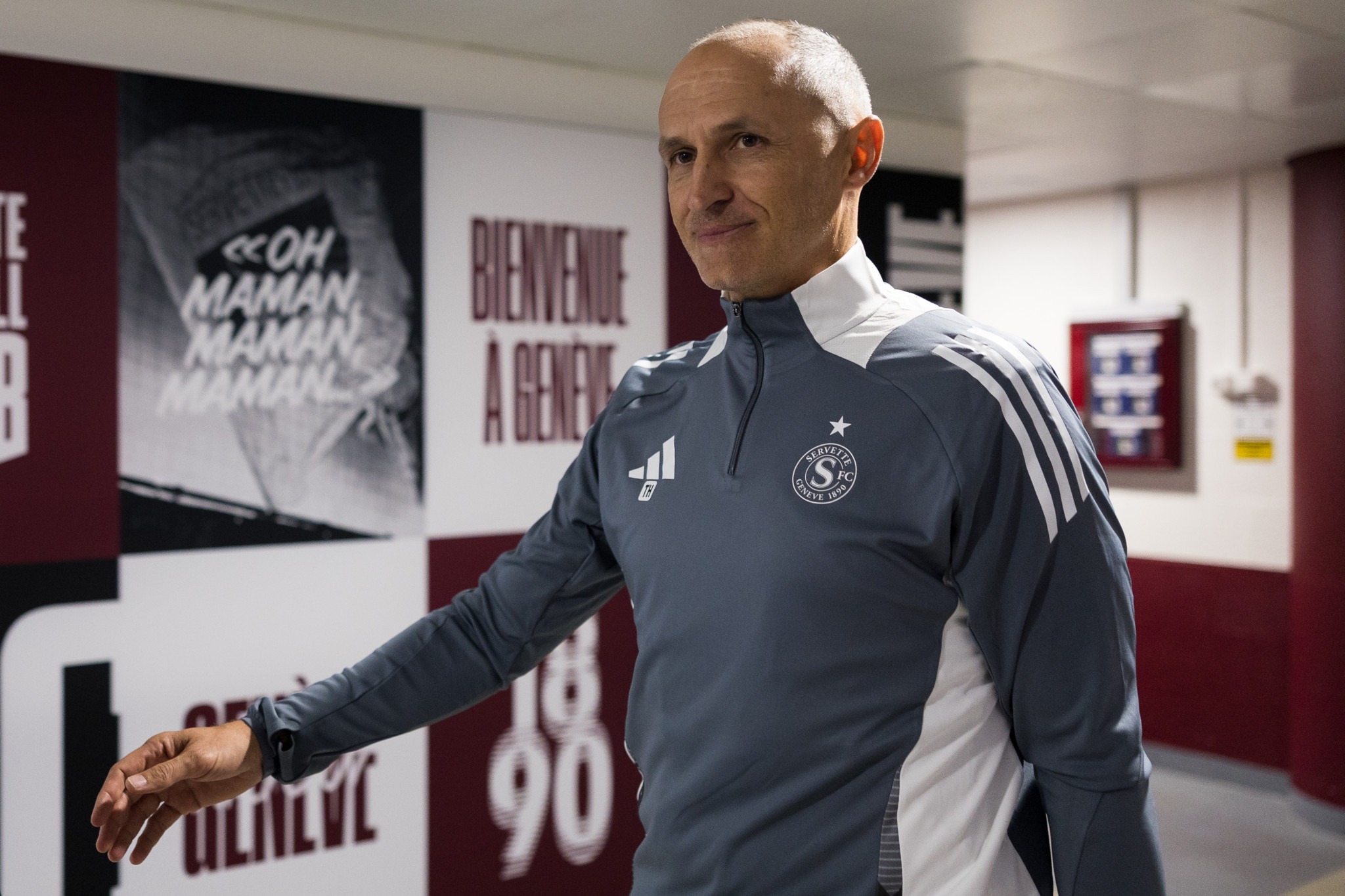
When Thomas Häberli returned to Swiss club football in 2024 to take charge of Servette FC, it marked another chapter in a career built on discipline, tactical structure, and long-term vision. After several years abroad, including a notable spell as head coach of the Estonia national team, he came back to Geneva with clear objectives: build stability, integrate young players, and maintain European ambitions despite limited resources.
“Geneva is a great city, and Servette is a big name with a rich tradition,” he says. “Expectations were high, top four, European qualification, and integrating young players despite a limited budget.”
Pressure, of course, comes with the territory. “When you coach a first team, you’re always under pressure. Everything is subordinated to success. The good results brought calm, even though we were eliminated by Chelsea, which is no disgrace.”
“When you coach a first team, you’re always under pressure. Everything is subordinated to success.”
Swiss Super League: Balanced and Competitive
Having experienced Swiss football both as a player and a coach, Thomas offers an informed view of its evolution. He sees the Swiss Super League as competitive, balanced, and focused on player development.
“The league is very balanced. Some see that as negative, but I see it positively, it raises performance,” he explains. “Champions League is almost impossible now, but Swiss clubs belong in the Europa and Conference Leagues.”
He remains proud of how Switzerland develops players. “The infrastructure and coaching are excellent. The ‘Education league’ model pushes clubs to invest in youth, and that’s something to be proud of.”
Lessons from Coaching Estonia’s National Team
Between 2021 and 2024, Thomas took on the challenge of managing the Estonia national football team, a period he describes as transformative.
“I wanted something new, a different country, a new culture. As a national coach, you put the team together and focus entirely on results. It was a great experience.”
Results eventually came. “We lost tough games, but we won the Baltic Cup after 80 years, beat Finland twice, and got promoted in Nations League C. That meant progress.”
“We won the Baltic Cup after 80 years, beat Finland twice, and got promoted in Nations League C. That meant progress.”
Coaching Philosophy: Team Spirit and Adaptability
Thomas’s coaching philosophy emphasizes team spirit, adaptability, and player responsibility. His background in the youth academies of Young Boys and FC Basel shaped his developmental approach.
“Every culture is different; you have to adapt. I focus on team spirit, reducing egos, and taking responsibility.”
This human-centered leadership style continues to define his work both in Switzerland and abroad.
Pride in Swiss Football and Future Ambitions
Despite his international experience, Thomas remains deeply attached to the values of Swiss football: precision, work ethic, and humility.
“We criticize our league too much,” he reflects. “Comparisons with big nations aren’t fair. Switzerland will qualify for its sixth World Cup in a row, that’s success. We should value that.”
Grounded and forward-looking, Thomas represents the modern Swiss coach: internationally experienced yet deeply rooted in his country’s football identity.
Our exclusive interview with Thomas Häberli
You returned to Swiss club football by taking the role at Servette in 2024. What were your first impressions of the club, its infrastructure, ambitions, culture, and expectations?
Geneva is a great city. Servette is a big name in Switzerland with a rich tradition. The team was good, and expectations were high, as everywhere. The goal was to reach the top four and compete in Europe. Young players also had to be integrated, as the investment budget was very limited. High ambitions.
Servette had high ambitions in recent years. How did you manage short-term pressure (results, European qualification) with your medium/long-term plan for the club?
When you coach a first team, you’re always under pressure and have to deliver results. Subordinate everything to success, spread joy and trust, and work with focus. The good results came and helped to bring calm. We were eliminated from international competition by Chelsea, which is no disgrace.
How do you assess the competitive level of the Swiss Super League currently?
The league is very balanced. Some see this as a negative, but I see it as a positive aspect. It’s difficult to win games. This increases competition and performance. Internationally, it’s almost impossible for a Swiss club to compete in the Champions League anymore. The level is too high. We have to be represented in the Europa League and the Conference League.
What motivated you to accept the Estonia national team job in 2021, and how did that differ from coaching at club level in Switzerland?
It’s a long story. I was fired from Luzern shortly before the coronavirus pandemic, and there was hardly any movement in the coaching market in 2021. I was looking for something completely new. A different country, a new culture.
As a coach of a national team, you put the team together. The work on the field is almost nonexistent. It’s all about results. It was a great challenge. I extended my contracts early twice and was happy with the job and the people around me.
Estonia is a smaller footballing nation, what were your main objectives when you started, and to what extent do you feel you achieved them?
Results, what else. The team hadn’t won in over 18 matches. There was a period of change, and the young players weren’t yet 20 years old. We lost the playoff game against Cyprus, which meant relegation to Nations League D, and suffered 0-5 defeats against Sweden and Belgium. These results were the negative highlights. Otherwise, we won the Baltic Cup for the first time after 80 years, beat our big neighbor Finland twice, celebrated our 10th win in 2023, were promoted back to Nations League C with maximum points, and qualified for the playoffs for Euro 2024 against Poland.
What lessons did you bring from your time with Estonia when you returned to Switzerland, especially in terms of player development, organization, and mentality?
I worked in the youth academy at Young Boys Bern and FC Basel, was a talent manager, and had a wealth of experience in player development at the highest level. That helped both in Estonia and in Geneva. Organizationally, you constantly have to adapt. The culture and circumstances at a club are and should be more important than the coach. Of course, as a coach you optimize wherever possible. The mentality of an Estonian and a Genevan is naturally different, just as every person is unique. I have to adapt. Ultimately, like always, I work on building a good team spirit, parking the egos, and taking responsibility from the players.
You played during a time when Swiss football was evolving rapidly. What were the major differences in the Swiss system (youth academies, club infrastructure, financial aspects) when you were a player vs today?
The opportunities and infrastructure in Switzerland are very good. Anyone can play football. Excellent work is being done at the grassroots level. The pyramid up to the elite is top, and the quality of the trainers is much better than in my time. With the “talent manager” model as the final step to becoming a professional – the Suisse Football Association has been created a great and important job. Financially, of course, things are difficult for Swiss clubs, as television funding is limited and we can’t compete with other countries. We say that the Swiss Football League is an “Education league”. That boosts the clubs to invest even more in young talent, which they are doing.
Given your experience now as a coach and having seen Swiss football over decades, what would you like to see change, if anything?
I wish our own work was more appreciated in our country. We criticize our league, our football, too much. Comparisons with major football nations, which have many more licensed players, bother me and are inaccurate. Perhaps this negativity is a zeitgeist or part of Swiss culture. It’s inappropriate. I think Switzerland will qualify for the World Cup 2026 for the sixth time in a row. We can be proud.