Home Blog Page 14

Who is André Vale?

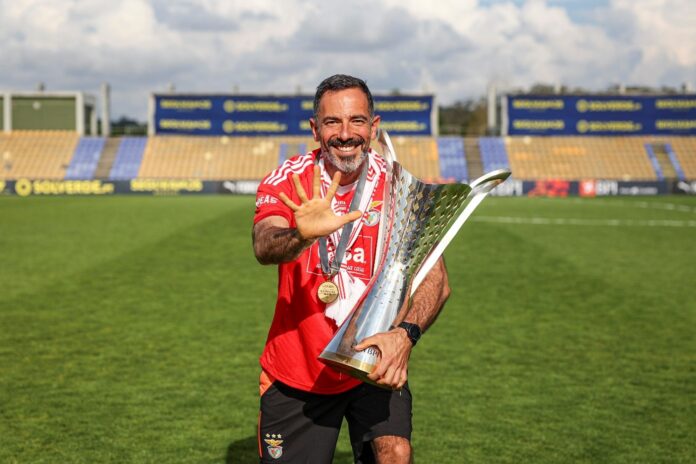
André Vale celebrates with a trophy on the pitch, highlighting his leadership journey in elite football coaching.
André Vale’s coaching journey is built on joy, clarity, and high standards. His leadership story offers lessons for coaches working at every level of the game.

André Vale is a Portuguese football coach, mentor, and educator, known for his principled and holistic approach to developing both players and teams. With over a decade of experience at Sport Lisboa e Benfica, Vale has played a pivotal role in building one of the most successful women’s programs in Europe. As Head Assistant Coach of Benfica Women’s First Team since 2020, and after several roles as headcoach both in male and female football, he has helped lead the team to five consecutive league titles, multiple cup victories, and a historic UEFA Women’s Champions League quarter-final, most notably, the match that ended FC Barcelona’s 32-game winning streak.

Vale’s coaching philosophy is rooted in clarity, adaptability, and player-centered development. He believes in simplifying the chaos of the game through principle-led coaching, game-based learning, and fostering mental, emotional, and spiritual growth alongside tactical excellence. His tactical identity is defined by flexibility, high pressing, and bold attacking football, with a focus on turning complexity into solvable moments on the pitch.

Central to Vale’s work is the creation of environments where players from different cultures, ethnicities, and experience levels can grow together. He places strong emphasis on trust, open communication, and shared principles, ensuring every player feels seen, valued, and challenged. By aligning individual backgrounds with collective goals, he promotes mutual respect, accountability, and learning, transforming diversity into a competitive and human strength within the team.

Beyond coaching, Vale is a tutor on UEFA license courses across Portugal, a frequent guest on Benfica TV, and a published author. His book Coaching Football to Inspire (2025) reflects his mission to develop players and teams who make a difference, on and off the pitch. He is also the creator of Who Coaches the Coach?, a 7-hour online course aimed at empowering coaches at all levels.

Fluent in Portuguese and English, and with experience living in Italy, Ireland, the Netherlands, and the UK, Vale brings a global mindset to his work. Whether leading elite players or mentoring young coaches, André Vale is committed to football not just as a game, but as a tool for education, joy, and lasting impact.

Our exclusive interview with André Vale

Who is André Vale outside of football?

I’m someone who has always been fascinated by people, dreams, and what makes us come alive. I’m a family person, a husband, a dog and cat parent, and someone who finds peace in early mornings, nature, journaling, training and yoga. My background is in engineering, but my heart was always on the pitch. I’ve lived in several countries, worked many jobs, and coached across different environments, but who I am, has always been shaped by my core values which are respect, honesty, justice, and empathy. I try to live simply, give generously, and stay grounded in joy, curiosity and adventure.

I’m someone who has always been fascinated by people, dreams, and what makes us come alive.

You have been pivotal in leading Benfica Women to five straight league titles and a Champions League quarter-final, among other Cup’s titles. What has been the secret behind such consistent success?

First of all, it was always a multidisciplinary team effort together with amazing players with a huge will to win, but to improve, to shine and develop. If there is a secret that was the secret. Just a lot of clarity, consistency, and collective commitment. We focused not only on how we play but on why we play. Success came because we created a culture where players feel joy, responsibility, and freedom at the same time. We don’t just train tactics, we develop people. We built a process rooted in principles that allowed us to adapt, evolve, and perform. And most importantly, we respected the players’ dreams every step of the way.

You often speak about emotional intelligence, spiritual balance, and joy. How do you bring these values into the high-pressure world of elite football?

For me, pressure is not the enemy. Disconnection is. When players feel connected to themselves, to the team, and to something bigger than just the scoreboard, pressure becomes fuel. I try to help to create an environment where there is emotional safety and high challenge. We talk about mindset, values, and self-awareness as much as we talk about tactics. I meditate, I journal, and I encourage the same in players if they’re open to it. Joy is not a soft word. It’s a powerful force in high performance. We are never afraid to lose; the only thing we’re really scared of is to lose ourselves.

You’ve coached both youth players and senior professionals. What are the biggest lessons you’ve learned from those different contexts?

One of the biggest lessons is that coaching isn’t about age or level. It’s about connection. A seven-year-old and a Champions League player both want the same thing: to be seen, understood, and guided. I normally say we’re all children stuck in adult’s bodies, so being with youth, where you plant seeds, with seniors, you help shape the tree, but both require trust, clarity, and presence. Also, with youth you must be extra mindful because that’s the golden age of learning, and your words can shape not just their game, but their character.

You describe football as “chess in motion” and talk about simplifying the chaos. How do you do that in practice?

Football is chaotic by nature, it’s 22 people inside the pitch plus coaches trying to manage the game from the outside, so it’s 22 brains processing information at the same time, it will be chaotic, question is who can manage that chaos better, who is better equipped to understand chaos and lead that chaos into moments of organization and brilliance that will hopefully result in amazing plays and goals! So a big part of my job is to develop a methodology that puts the players to the small games that the game gives over and over in training sessions, so that when on the pitch they can automatically and subconsciously recognise those moments and have the best and fastest decision making they can to unblock it. When those moments happen in a match, players feel like they’ve already lived them 100 times. That’s where the freedom comes from. Structured repetition that leads to spontaneous, intelligent action. We train situations, not just drills.

What excites you most about the future of women’s football globally?

Women’s football is one of the most exciting movements in global sport right now. For me it’s not just sports, it’s expression of freedom. The talent, the hunger, the growth, it’s inspiring. What excites me most to have a part on it is the opportunity to build something meaningful, not just successful. To create environments where players are treated as professionals, where pathways are clear, and where fans feel part of something transformative.

You created a course called “Who Coaches the Coach?” What is one mindset shift you hope to spark in those who learn from you?

I want coaches to remember that they matter. Not because of the formations they choose, but because of the impact they can have on lives. I want them to stop obsessing over being right and start focusing on being helpful. Coaching is not about control. It’s about guidance. And your best tool is who you are, not just what you know. I always say: you fulfil your dreams by helping others fulfil theirs. That’s the mindset I try to share.

How do you define success in your coaching journey?

Success, for me, comes in many forms. Of course, I celebrate trophies and milestones. But some of my proudest moments are messages from former players telling me how I helped them become better players and individuals. Or watching someone I believed in overcome a huge personal challenge. Success is when a team plays with joy and identity. Success is when a quiet player finds their voice. It’s not just the Champions League. It’s the little victories that no one sees but change everything.

Joy is not a soft word. It’s a powerful force in high performance.

You’ve lived in several countries. How has that international experience shaped your actual football and your leadership?

Living abroad taught me to listen more and judge less. It showed me the hardships of being away from loved ones, habits, and routines—but also how to discipline and motivate yourself to discover strengths you didn’t even know you had.

Those experiences allow me today to better understand player adaptation. Whether it’s players coming from different countries with language barriers, or players moving within the same country, the emotional and cultural challenges are very real.

Living abroad also taught me that if you want to thrive in a foreign environment, you have to be available to blend in. That means observing, understanding, being curious, and opening yourself to different experiences. This is probably the main reason why I love working in multicultural environments and fostering the sharing of experiences within the group. It shortens adaptation time for new players and helps build a genuine family feeling within the squad.

Football is a universal language, but understanding the people behind the players is what truly makes the difference.

What’s one lesson or philosophy that you carry with you on and off the pitch?

One lesson I carry with me is that growth comes from discomfort, but purpose comes from helping others grow. Early in my journey, I chased success and happiness for myself. Over time, I understood that real fulfillment only exists when it’s shared. When you invest in people, when you help them believe, improve, and overcome obstacles, you create impact that goes far beyond results.

On the pitch, that means demanding excellence while caring deeply about the person behind the player. Off the pitch, it means showing up with humility, empathy, and consistency. Success fades, but the way you help others grow stays with them for life, and that’s the standard I try to live by every day.

Why PSG Must Pay Kylian Mbappé €60m After Court Ruling

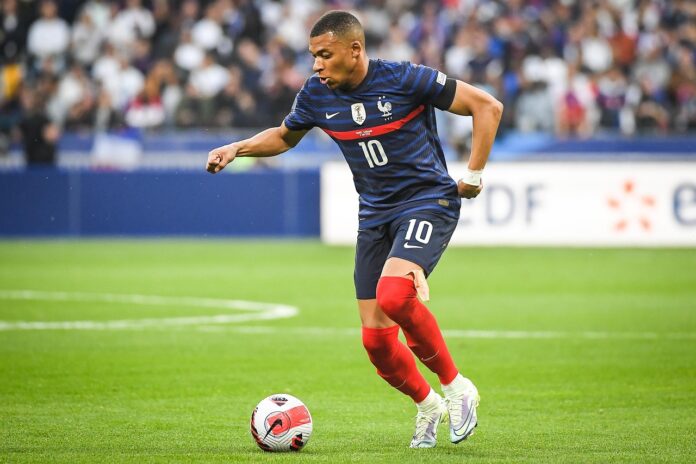
Kylian Mbappé in action for France during an ongoing legal dispute with PSG over unpaid wages.
Kylian Mbappé, now at Real Madrid, remains at the centre of a high-profile legal dispute after a French labour court ordered PSG to pay €60m in unpaid compensation. Image by u_goppxlsc6c from Pixabay.

After leaving Paris Saint-Germain (PSG) for Real Madrid on a free transfer in the summer of 2024, Kylian Mbappé has continued to be embroiled in a legal battle with his former club regarding unpaid wages. On 16 December 2025, this battle reached a provisional conclusion with the player partially successful in his claims as PSG was ordered to pay Mbappé €60m in compensation by a Paris labour court.

After leaving Paris Saint-Germain (PSG) for Real Madrid on a free transfer in the summer of 2024, Kylian Mbappé has continued to be embroiled in a legal battle with his former club regarding unpaid wages.

The Frenchman and his former club experienced a fractured relationship for most of the 2023-24 season, and some months preceding it, as Mbappé was ejected from the first team squad amid press reports of contract negotiations, and a later proposed transfer to the Saudi Pro League, both breaking down. Mbappé was excluded from PSG’s 2023 pre-season tour of Asia and missed the first game of that season before later being recalled to the first team.

A key component of their issues involved the player’s new contract agreed at the end of the previous season. It was announced in May 2022 that Mbappé had signed a new three-year contract with PSG. However, in reality, this was a two-year deal with the option of extending for a further year. A letter from Mbappé later emerged indicating that the player had no intention of exercising that extension option. According to PSG, this letter was received on 12 June 2023 but backdated to 15 July 2022, just two months after Mbappé signed his contract extension.

As a result of the frayed relations between the player and club, Mbappé filed a complaint in June 2023 regarding mistreatment and moral harassment by PSG before filing a formal claim with a Paris labour court (Conseil de prud’hommes). On 10 April 2025, Mbappé’s legal representatives obtained a court order to freeze €50m including tax obligations but this was reportedly overturned by PSG a month later. Both parties appeared before the court on 17 November 2025.

The Dispute

Mbappé and his legal representatives alleged that the player’s salary was withheld over April, May and June 2024 (before he moved to Real Madrid on a free transfer) in breach of his player contract. The value of this claim amounted to just over €260m (£227m).

PSG argued, with reference to the player’s letter, that Mbappé concealed his intention to run down his contract with the club for approximately a year and therefore, the club counterclaimed up to €440m (£385m) in damages for alleged breaches of contract and loss of opportunity due to the player’s free transfer. This amount partly included the deal-in-principle for Mbappé to move to Al Hilal in the Saudi Pro League for approximately €300m, which fell through.

PSG also alleged that Mbappé’s reintegration into the first team squad was on the basis of an agreement between the parties that the player would waive his entitlement to certain salary payments for the 2023-24 season to compensate the club for their significant investment in the Frenchman should he leave on a free transfer. Mbappé and his advisers vehemently denied this claim.

PSG also alleged that Mbappé’s reintegration into the first team squad was on the basis of an agreement between the parties that the player would waive his entitlement to certain salary payments for the 2023-24 season.

The Court’s Judgment

On 16 December, a Paris labour court ordered PSG to pay Mbappé €60m (£52.6m). This figure was calculated based on three months of unpaid wages, an ethics bonus and a signing bonus owed to him under his player contract with the club.

The court found that there was no legally effective evidence of an agreement indicating that Mbappé had waived his right to receive player wages. It is also understood that the court noted the salary awarded had been recognised by the French Professional Football League/Ligue de Football Professionnel (LFP) in September and October 2024.

The court dismissed PSG’s claims that Mbappé should forfeit his unpaid wages and pay the club compensation but, on the other hand, did not order the club to pay sums related to the player’s additional claims of concealed work, moral harassment and breach of the employer’s duty of safety. It was decided that Mbappé’s fixed-term contract should not be re-classified as a permanent one accordingly limiting the value of compensation available to the player.

What Next?

In an official statement following the ruling, PSG confirmed that the club will comply with the court’s order but reserves its right to appeal. It remains to be seen whether the club will file an appeal.

According to reports, PSG has also been ordered by the court to publish the judgement on its official website for a month once it is ready.

There is also a connected ancillary dispute between the parties relating to the LFP’s intervention in 2024, which upheld Mbappé’s asserted entitlement to additional salary payments. PSG challenged the LFP’s jurisdiction to decide the civil matter and it is understood that a preliminary hearing has been scheduled for 23 February 2026.

This case is another in recent times which challenges the specificity of sport. Whilst each case is decided on its own merits, a potential pattern emerging from recent disputes indicates that sport, most notably football, remains subject to EU-wide frameworks (such as EU labour laws) irrespective of sport’s unique social and economic standing.

Emotional Mastery in Football: The Hidden Performance Edge

Empty stadium tunnel leading to the pitch, symbolising the pre-game walk that has become a fashion showcase in modern football.
Emotional mastery starts before you step onto the pitch. Photo by Nelson Ndongala on Unsplash.

In the high-stakes world of professional football, physical conditioning and tactical intelligence are essential. But there is another dimension that quietly shapes performance, consistency, and longevity: emotional mastery.

This article explores how learning to face, feel, and let go of emotions can enhance performance, resilience, and mental clarity, both on and off the pitch.

The Emotional Game

Football is not just a physical contest; it is an emotional environment. Players regularly navigate pressure, expectation, uncertainty, criticism, and comparison. Yet many are conditioned to suppress emotions rather than understand and process them.

Over time, suppression takes a toll. Unprocessed emotion can lead to mental fatigue, poor decision-making, loss of confidence, breakdowns in focus, and even physical injury. What is often labelled as a “mental issue” or “dip in form” is frequently an emotional backlog that has never been addressed.

Football is not just a physical contest; it is an emotional environment.

The Three-Step Process: Face It, Feel It, Let It Go

Face It

The first step is acknowledging what is present without judgement. Whether it is fear, frustration, disappointment, or doubt, naming the emotion reduces its unconscious grip. Awareness creates choice.

Feel It

Feeling an emotion does not mean acting on it. It means allowing it to be experienced in the body without resistance. Emotions are energy in motion. When they are allowed to move, they resolve naturally. When they are resisted, they accumulate.

Let It Go

Once an emotion has been fully felt, it no longer needs to be carried. Letting go creates space for clarity, calm, and renewed focus. This is where players often report feeling lighter, freer, and more present.

This process is not therapeutic in a clinical sense. It is practical, repeatable, and deeply relevant to performance. Players who understand their internal world gain a genuine competitive edge.

Emotional intelligence is not softness. It is self-leadership.

Personal Insight

As a former academy player, I experienced the highs of progression and the challenges of setbacks, injury, and identity uncertainty. Like many players, I initially tried to push emotions aside and stay strong.

What I learned over time is that resilience is not built by ignoring emotions, but by developing the capacity to meet them honestly. Emotional intelligence is not softness. It is self-leadership.

Why This Matters for Footballers

Improved Focus

When emotional noise is reduced, attention naturally sharpens. Players make clearer decisions under pressure and stay connected to the present moment.

Injury Prevention and Recovery

Chronic emotional stress often shows up physically. By processing emotions, players reduce unnecessary tension and support more effective recovery.

Consistency and Confidence

Confidence becomes less dependent on external outcomes and more grounded in self-trust and regulation.

Team Dynamics

Emotionally aware players communicate more clearly, respond rather than react, and contribute to healthier dressing-room environments.

For Parents and Coaches

Parents and coaches play a powerful role in shaping how young players relate to their emotions. When adults model emotional awareness rather than emotional suppression, players learn that feeling does not equal weakness.

Teaching and embodying the Face It, Feel It, Let It Go approach gives young athletes tools they can use for the rest of their lives, far beyond football.

Further Reading

This article is based on principles explored in the book Face It, Feel It, Let It Go by Simon Rogers and Erkut Sogut. The book explores emotional mastery as a practical life skill and its relevance to performance, leadership, and wellbeing.

For a deeper dive into the process and how to apply it in football and beyond, explore the book here.

Who is Patrice Gheisar?

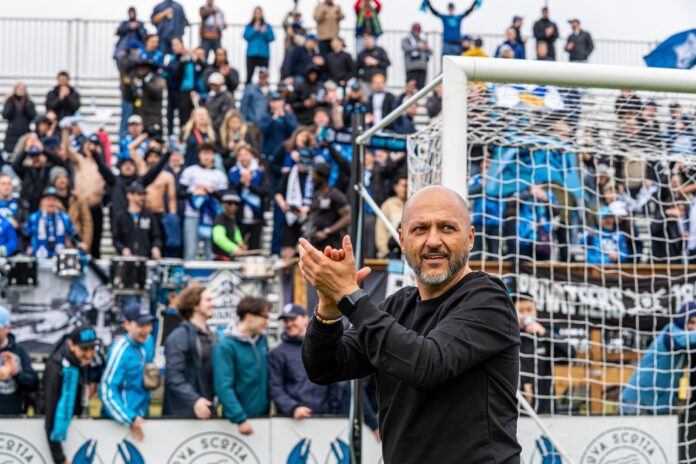
Patrice Gheisar applauds supporters during a matchday moment in the Canadian Premier League.

A highly respected Canadian head coach with a proven track record

Patrice Gheisar, born 1975, is a highly respected Canadian Head Coach with a proven track record of developing young Canadian talent to the international level. Deeply rooted in Toronto, a hotbed for national team talent, he built his reputation through elite youth development before progressing to the professional game.

Gheisar spent three seasons as Head Coach of the Halifax Wanderers in the Canadian Premier League, leading the club through the most successful period in its history. Under his leadership, Halifax broke multiple records for wins, points, goals scored, goals conceded, and away performances, while establishing a clear playing identity, strong standards, and a culture deeply connected to the community. Player development remained central to the project, highlighted by Tiago Coimbra being named CPL Under-21 Player of the Year.

In 2024, Gheisar assisted the Canadian Men’s National Team during a national team camp. Working alongside an experienced staff and observing Jesse Marsch firsthand further shaped his approach to leadership, preparation, and high-performance culture. The experience was a full-circle moment, having previously coached several of the Ontario-based players in the camp during their youth.

Prior to his role in Halifax, Gheisar played a key role in Ontario’s development system. At Vaughan Azzurri, he worked within a high-performance youth environment that produced players who progressed to NCAA programs, European professional football and national teams. Trusting young players in senior competition, particularly in League1 Ontario, was central to accelerating their development. He also coached at the men’s university level, supporting players through the university pathway and preparing them for the demands of professional football.

Now entering the next phase of his career, Gheisar is focused on finding the right project, one with clear vision, strong leadership, and a commitment to purposeful development. Culture and positive environments are core to his coaching identity. He remains open to head coaching roles, senior technical positions, or long-term sporting projects where identity, culture, and growth are central.

Now entering the next phase of his career, Gheisar is focused on finding the right project, one with clear vision, strong leadership, and a commitment to purposeful development.

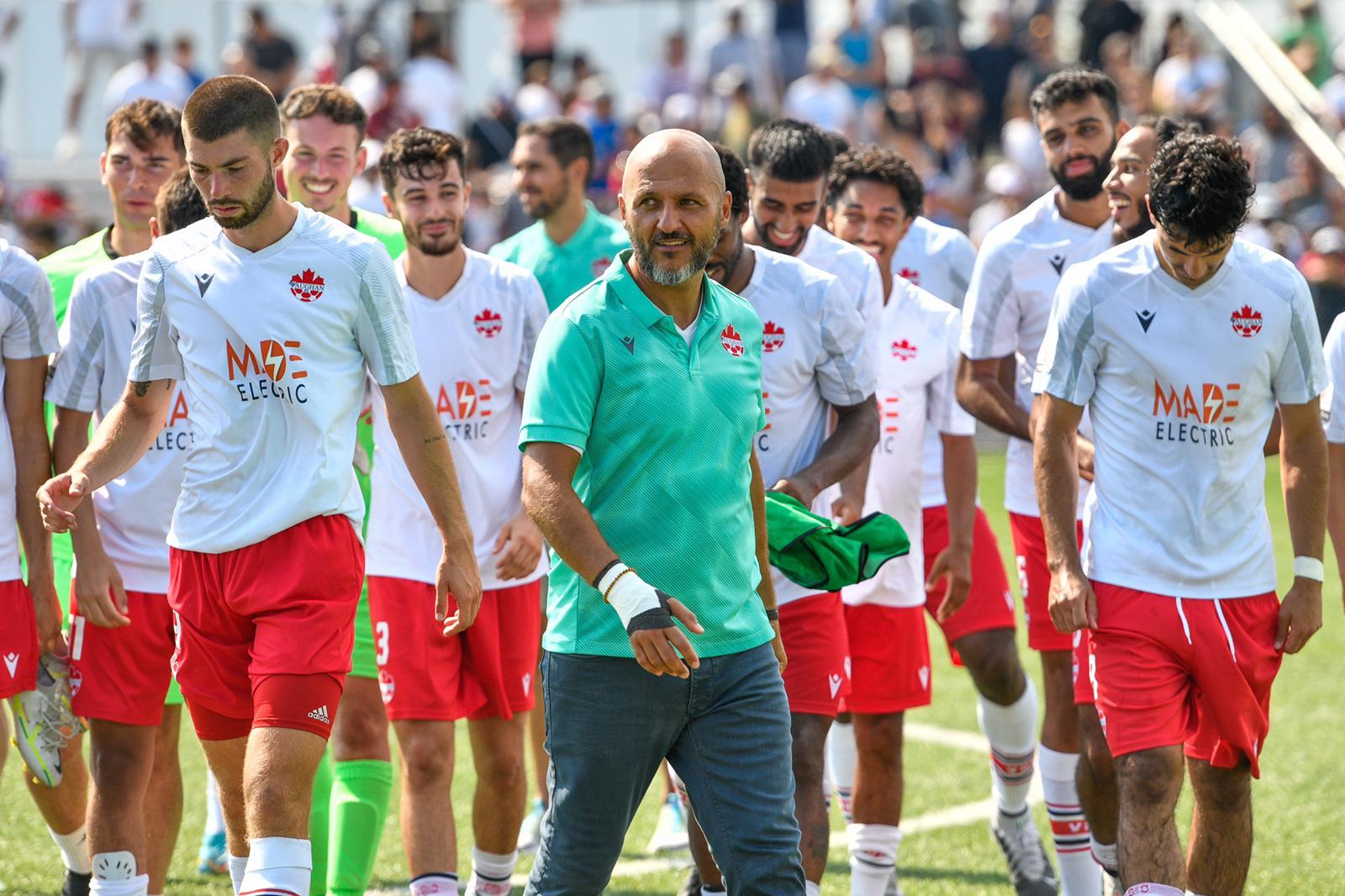
Patrice Gheisar walks with his players after a match, highlighting his leadership and team-first culture.
Gheisar’s coaching style is built on clarity, trust, and daily standards. His influence is visible in how teams carry themselves on and off the pitch.

Our exclusive interview with Patrice Gheisar

You spent three seasons as Head Coach of the Halifax Wanderers in the Canadian Premier League. How would you reflect on that experience and the league’s growth?

My time in Nova Scotia with the Halifax Wanderers was an extremely meaningful chapter of my career. Over three seasons, we focused on building more than just a team—we established a clear identity, strong standards, and a culture that connected deeply with the community. The support in Halifax is exceptional and allowed players to grow with confidence and responsibility.

From a performance perspective, we broke several club records, including most wins, goals scored, goals conceded, away points, and total points. We also had several players nominated for major awards, and seeing Tiago Coimbra named Under-21 Player of the Year was particularly special.

At the same time, the Canadian Premier League has matured significantly. The level of play, tactical understanding, and professionalism has improved each year, and Canadian players are now being challenged in more demanding environments with clearer pathways to MLS, Europe, and the national teams. The league is fulfilling its purpose by providing meaningful minutes and accelerating player development.

You also assisted with the Canadian Men’s National Team coaching staff in 2024. What did that experience mean to you?

Being part of the national team camp in 2024 was a career highlight. It was also a full-circle moment, as several players in the environment were individuals I had coached earlier in their development. The experience provided valuable insight into an elite international setting where preparation, clarity, and attention to detail are non-negotiable.

Working alongside experienced staff and top Canadian players reinforced the importance of alignment between game model, training methodology, and player roles, especially when time together is limited. Being around Jesse Marsch offered a clear example of dedication and positive leadership, and the lessons from that camp continue to influence how I structure teams, manage staff, and develop players in my day-to-day work.

Working alongside experienced staff and top Canadian players reinforced the importance of alignment between game model, training methodology, and player roles, especially when time together is limited.

Where and how did your football journey begin?

My journey began with my family and my father’s passion for football. I started playing the game at a very young age, but it truly took shape when I transitioned into coaching. Early exposure to different football environments challenged me to think beyond results and focus on development, culture, and identity. Working across youth, academy, and professional settings helped shape my belief in purposeful football, strong relationships, and long-term player growth—principles that continue to guide my work today.

Many of Canada’s top talents come from Ontario, particularly the Toronto area. Tell us about your time at Vaughan Azzurri and the players you developed.

Ontario has consistently produced some of the country’s top football talent, and the growth of the game in the Toronto area has been significant. My time at Vaughan Azzurri was instrumental in my development as a coach and in learning how to work within a high-performance youth environment. I began with the 1991 age group, and from there things quickly progressed.

The club has a strong culture built around player development, training intensity, and competitive standards, which allowed players to be challenged daily. During that period, several players moved into professional pathways, including opportunities in Europe, while others progressed to NCAA, professional, and national team environments. A key focus was giving young players exposure to high-level competition, particularly in League1 Ontario, and preparing them mentally and tactically for the demands of professional football.

As you move on from Halifax, what do you see as your next step?

At this stage, my focus is on finding the right environment where I can continue to grow and contribute at a high level. My experiences across youth development, professional club football, and the international game have reinforced the importance of working within a setting that has a clear vision, strong football leadership, and a commitment to purposeful development.

More than simply the next role, I’m looking for the right project—one where I can be challenged, add value, and work alongside positive, focused individuals while continuing to evolve as a coach and leader.

Why Footballers Are Not Overpaid

YantsImages, CC BY-SA 4.0, via Wikimedia Commons
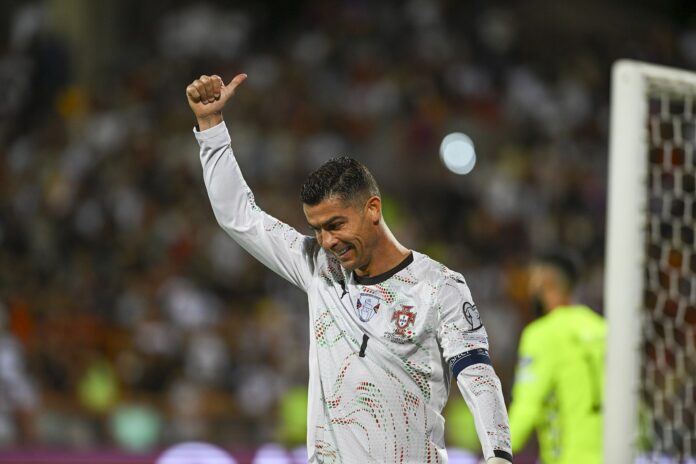
Cristiano Ronaldo’s global influence reflects why top players are valued far beyond matchday performance. Footballers are paid for the scale of attention, revenue, and impact they generate. YantsImages, CC BY-SA 4.0, via Wikimedia Commons.

What our discomfort with footballers’ salaries reveals about how we misunderstand value

The issue of footballers’ salaries is often framed as a moral dilemma: How can someone earn tens of millions of euros to play a game, while professionals in fields like healthcare or education earn a fraction of that for their essential work? It’s a question that seems to have a simple answer, but as we dig deeper into the economics of sport, it becomes clear that our discomfort with footballers’ pay reflects a deeper misunderstanding of value, scarcity, and the way modern markets function.

The 90-Minute Myth

One common misconception is that footballers only work for 90 minutes a week, that their job is just about showing up for a match on the weekend. This idea is easy to believe if you’ve never considered the unseen hours that go into professional sport. Let’s break it down:

  • Training: approximately four hours a day, six days a week, totaling around 24 hours.
  • Tactical meetings and planning: around 10 hours a week.
  • Recovery, physiotherapy, and fitness: an additional 10 hours.
  • Traveling, matches, media obligations: another 15 hours or so.

In total, that’s 60 hours per week. And this doesn’t include the years of training and sacrifices that athletes make from a young age, often before their teenage years. Add the constant pressure of public scrutiny, the physical risk of injury, and the mental strain of performing at an elite level, and you begin to see that footballers are far from part-time workers.

In total, that’s 60 hours per week.

The Value of Entertainment

Another common rebuttal is that football is “just entertainment,” as if entertainment doesn’t have an economic impact.

Think about it: the revenue generated by global football is staggering. When Cristiano Ronaldo transferred to Juventus, the impact was immediate. Shirt sales surged. Social media engagement exploded. Match attendance increased. Even Juventus’ stock price saw a jump.

Cristiano Ronaldo, for example, didn’t just play football. He generated economic value, bringing millions of euros in additional revenue to his club. Juve’s value on the stock market lifted by a staggering 37%, from around €660m on 28 June, when rumours of Ronaldo’s move to Italy started surfacing, to €905m on 10 July when the transfer was confirmed in the media. Ronaldo officially signed for Juventus on July 10 and in the rest of that month the club gained on social media:

  • 3.5 million Instagram followers
  • 1.7 million Facebook likes
  • 344,000 Twitter followers
  • 71% increase on YouTube engagement

This is not accidental. Football is a billion-dollar industry, and the players who captivate its audiences are directly responsible for its financial success. Their salary reflects the economic value they create, much in the same way that top-performing executives are compensated based on the value they help generate.

The Fallacy of Salary Caps

It’s also common to suggest implementing salary caps in football, to prevent what some view as unsustainable pay levels. But this misses the point entirely. In fact, it’s a strategy that could ultimately hurt the sport.

If top players are restricted in what they can earn, they will likely move to leagues or clubs that offer more competitive wages. As the best talent leaves, the quality of play declines, leading to a drop in TV ratings, attendance, and commercial deals. Lower revenue means less money for youth development programs, fewer jobs, and a diminished footballing ecosystem.

The idea of limiting footballers’ earnings does not make the sport fairer. It simply reduces the overall economic value the sport can create, impacting everyone involved: from players to fans to local communities.

Understanding the Economics of Market Value

The crux of the misunderstanding about footballers’ salaries lies in the difference between social worth and market value.

It’s easy to argue that doctors, teachers, and nurses (those who provide essential services) should be compensated more. They perform jobs that society cannot function without. But the reality is, their salaries are not determined by the global market in the way that footballers’ salaries are.

Football is a massive global entertainment industry, with billions of viewers, corporate sponsorships worth hundreds of millions, and media rights deals that run into the billions. The players at the top of their game, who can attract millions of eyes to a broadcast and drive sponsorship dollars, are entitled to a share of the revenue they generate.

To bring up an example: As revealed by El Chiringuito TV, between Real Madrid’s official store and website, over 7,000 custom Kylian Mbappé kits were sold on day one of his announcement even before his official presentation as new Real Madrid player in the Bernabeu stadium. This alone gave rise to around €800,000 worth of revenue for the club.

When a player like Kylian Mbappé brings in €500 million in added revenue for a club, does it make sense to pay them a fraction of that amount, or is €50 million a fair share of the value they help create?

The idea that they are “overpaid” is based on a flawed understanding of how value is created and rewarded. Footballers are compensated in proportion to the revenue they generate. If they’re earning tens of millions, it’s because they’re creating hundreds of millions.

Footballers are compensated in proportion to the revenue they generate.

The Discomfort with Visible Wealth

A key factor in the public discomfort with footballers’ salaries is the transparency of their earnings. While it’s easy to look at a footballer’s salary and think it’s excessive, we rarely see the compensation packages of corporate executives, bankers, or media moguls… and yet, they often earn far more.

Consider that the CEOs of major corporations can earn 200 times the salary of an average employee. Bankers often receive multimillion-dollar bonuses, even in years when their companies perform poorly. Inherited wealth creates billionaires with no clear link to actual economic productivity. Yet, we rarely question these disparities.

Footballers’ earnings are public, and that transparency makes their wealth uncomfortable for some to digest. But we have to recognize that footballers’ pay reflects their role in a global economy of sport, one where they’re performing at the highest level of competition and entertainment, and generating immense value in the process.

Rethinking Value and Merit

The real issue isn’t about whether footballers are overpaid. The real issue is about how we value different types of excellence in society.

We live in a world where we often accept vast disparities in income, provided we can’t see the full picture. CEOs, bankers, and billionaires are often rewarded in ways that are more difficult to understand, but we rarely question the systems that allow such inequality. Footballers, on the other hand, have transparent salaries, and their value is directly linked to their skill, marketability, and the revenue they generate. It’s uncomfortable, but it’s also market reality.

At the end of the day, the question isn’t whether footballers deserve their salaries. The question is: why do we find it so hard to accept the meritocratic logic behind them? If we truly valued excellence across all sectors (whether in sport, business, or the arts) we might see a world where the value of talent is more transparently and fairly distributed.

The Game Beyond the Game: When Winning Isn’t Everything

Youth football players talking on the pitch during a match, with one holding a ball.
Photo by Adrià Crehuet Cano on Unsplash

In a Result Driven World, Who Still Remembers the Journey?

Modern football has glorified winning. Coaches are judged by points, players by stats, clubs by trophies. But behind the numbers lies something less visible: How you win. Because a goal may be celebrated today but tomorrow, we’ll ask what it cost to score it. In 2006, Juventus was winning. Titles, dominance, trophies. But then came the Calciopoli scandal. It showed the world that winning without integrity is just an illusion. Success earned unfairly doesn’t last it erodes everything beneath it.

Football’s True Field Is Measured by Values, Not Just Victories

It’s a game where a player’s impact is shaped not just by skill, but by conduct. Where a club isn’t just an investor, but a builder of identity. Where federations don’t just make decisions. They shape trust. At the 2022 World Cup, Japan reminded the world of this. They beat giants like Germany and Spain but what captured global admiration was their respect. Players cleaned dressing rooms. Fans stayed to clean the stands. They didn’t just win matches. They elevated the spirit of the game. Football is more than a game. It’s a culture. And culture is built not on results, but on character.

Some Wins Look Like Success But Aren’t

Winning doesn’t make everything right. If systems aren’t transparent, if merit comes second, if strength is rewarded over fairness what we call success may be nothing more than a polished illusion. A true victory leaves a mark not just on the scoreboard, but on the conscience.

Is It Possible to Win With Values?

It might sound idealistic, but the answer is simple: Yes. Ethics aren’t the opposite of competition. They’re the foundation of it. Respect, courage, fairness. These don’t weaken the game. They elevate it. Players lead by example. Coaches draw the line in tough moments. Like Marcelo Bielsa once did. In a match with Leeds United, his team scored a controversial goal while an opponent was down. Instead of defending it, Bielsa told his players to allow the other team to score back deliberately. He showed that a coach can protect the soul of the sport, even if it means risking the result. Executives protect the soul of the club in every decision. Fans know, instinctively, what’s worth cheering for. And when that happens, football becomes more than watched. It becomes felt.

If We’re Building a System, Let’s Measure the Path Too

What will a youth player admire? Only those who lifted trophies? Or those who reached them without losing their way? The ones who leave a legacy aren’t just the top scorers. They’re the ones who carried principles with them.

Without Trust, Football Is Just Noise

No system survives long without trust. When the sense of justice fades, scores no longer satisfy. Reputation doesn’t come from winning. It grows from consistent integrity. Today’s young player seeks direction, not just performance. Today’s supporter looks for meaning, not just goals. And today’s football is more than a competition. It’s a platform.

Final Thought: Football Needs More Examples, Not Just More Champions

Trophies stay in glass cases. But the soul of a club lives in the choices it makes. It’s not when you win, but how you act when it’s hard that defines who you are. And that’s where the true story begins. So yes… Winning right might take longer but it always lasts longer. Playing football is a skill. Protecting it is a responsibility.

Remember the value. Choose what’s right. Honor the journey.


How America Can Win The World Cup

FIFA World Cup trophy on display, symbolising the ambition for America to win football’s biggest prize.
The World Cup trophy represents the ultimate target for every football nation. This article explores what the US must build to compete for it.

Why America Struggles to Produce World-Class Players

For years, the question has been asked the wrong way. Why doesn’t America produce enough world-class players? Why does the talent pool not translate into elite outcomes Why does soccer still lag behind Europe despite massive investment?

The answers are often emotional: culture, mentality, patience, identity. But the real problem is far more structural. America does not suffer from a lack of talent. America suffers from a lack of access.

The Illusion of Growth

Over the last decade, soccer in the United States has undeniably grown.
MLS is stronger. Academies are more organized. Youth participation numbers are high. On paper, progress looks real. On the ground, reality looks different.

In most major metropolitan areas, especially where population density and competitive ambition are highest, field access is the primary bottleneck. Not coaching licenses. Not scouting. Not motivation.

Fields

Where there are people and teams, there are no fields. Where there are fields, there are not enough people or teams. And where both exist, access is locked.

The Silent Crisis: Fields and Time

In the U.S., public fields are controlled by municipalities and state agencies that still treat soccer as a recreational youth activity, not as a long-term development ecosystem.

Permit systems reward:

  • longevity, not quality
  • renewal history, not development output
  • administrative scale, not player impact

As a result, a small number of large clubs hold disproportionate control. Some operate 3–5 affiliated clubs. Some create parallel non-profit entities. Some do both.

Legally. Quietly. Efficiently.

The outcome is a soft monopoly over public infrastructure. Young players are not competing for places on teams. They are competing for training hours. And elite football is not built on talent alone. It is built on repetition, space, and time.

America does not suffer from a lack of talent.
America suffers from a lack of access.

Europe’s Advantage Is Not Talent, It’s Architecture

When people compare the U.S. to Germany, the Netherlands, or England, they often focus on football culture. That is a mistake. The real difference is infrastructure philosophy.

In Europe:

  • Fields are considered public development assets
  • Clubs are local engines of talent production
  • Federations regulate access, not just competition

In the U.S.:

  • Fields are treated as scarce commercial resources
  • Clubs compete to secure space, not to develop players
  • Federations talk about pathways but do not control entry points

This is why pay-to-play survives. This is why late developers disappear. This is why talent density never converts into elite concentration.

Coaching in Compromised Environments

Many American clubs are not failing because they lack good coaches. They are failing because they are forced to train:

  • on undersized fields
  • with fragmented schedules
  • under constant time pressure

Development becomes survival. When sessions are shortened, shared, rotated, or improvised, players do not accumulate the volume required to reach world-class levels.

You cannot manufacture elite players without consistent, high-quality repetition. Football does not forgive shortcuts.

So How Does America Win the World Cup?

Not by copying Europe’s formations. Not by importing foreign coaches. Not by rebranding academies or changing logos. America wins the World Cup only if it fixes access.

The problem is not knowledge. The problem is not ambition. The problem is infrastructure governance. To change outcomes, the system must change how time, space, and opportunity are distributed.

Separate Development From Commerce

Public field permits must be divided into two distinct categories:

  • Development Permits
  • Commercial Permits

Development permits should be reserved for clubs that:

  • operate with capped player fees
  • demonstrate clear age-group pathways
  • provide minimum guaranteed weekly training hours

Commercial entities can still exist. But development cannot compete with business for the same oxygen. Without this separation, talent will always lose to money.

Cap Field Control Per Organizational Structure

No single organization should be allowed to control unlimited public field hours through:

  • multiple affiliated clubs
  • parallel non-profit entities
  • administrative loopholes

Whether for-profit or non-profit, field access must have a ceiling. Growth should force sharing — not consolidation.

Integrate Schools Into the Development Ecosystem

The United States already has what most countries lack: thousands of school fields that sit unused after 3 p.m. The solution is not building more fields. It is unlocking existing ones.

Municipalities must formalize:

  • school–club partnerships
  • shared maintenance models
  • guaranteed after-hours access for development programs

Redesign Fields for Volume, Not Optics

Elite development does not require full 11v11 fields at every session. It requires:

  • repetition
  • decision density
  • spatial problem-solving

Fields must be designed and permitted to:

  • split into multiple small-sided environments
  • maximize player touches per hour
  • increase total weekly repetitions

Make Access a Federation Responsibility

If federations speak about elite pathways, they must regulate entry points. That means:

  • minimum access standards for academy recognition
  • field-time benchmarks, not just competition licenses
  • accountability tied to infrastructure, not branding

Without control over access, pathways remain marketing language.

Fix the Economics of Development

Youth clubs in America are not greedy. They are cornered. Clubs carry:

  • field rental costs
  • coaching and staff salaries
  • insurance
  • marketing and administrative expenses

Yet their primary revenue stream is pay-to-play, with occasional sponsorship support. This is not a sustainable development model. It is a survival model.

Youth Compensation Is the Missing Link

Now imagine a different scenario. Field access is solved fairly through municipalities and school partnerships. Training hours increase. Costs stabilize.

If U.S. Soccer creates a clear, enforceable youth compensation mechanism, allowing amateur and youth clubs to receive training compensation when a player they developed turns professional (domestically or abroad) just as in the rest of the world, development becomes investment, not charity.

The Chain Reaction

Once youth compensation exists:

  • clubs reinvest into infrastructure and coaching
  • pay-to-play pressure decreases
  • access expands beyond wealth
  • late developers stay in the system
  • professional clubs receive better-prepared players

The entire ecosystem accelerates. Not slowly. Exponentially.

The Untapped Mine

Nearly 350 million people. Every background. Every body type. Every mindset. A vast country. Endless athletic potential. The United States is not short on talent. It is sitting on a soccer mine. But there is no factory to process it.

The resource is there, untouched, underutilized, waiting. If this mine is structured correctly, if access, repetition, and development are aligned, then within a 10–20 year window, an American World Cup victory would not be a miracle. It would be the natural outcome of a system that finally learned how to turn potential into performance.

The resource is there, untouched, underutilized, waiting.

Video Game Partnerships And Esports In Football

EA Sports logo displayed above a live esports arena stage with bright lights and a cheering crowd.
EA Sports continues to expand its presence in esports, connecting football culture with a global gaming audience. A powerful example of how digital fan engagement is evolving. Photo by Josh Berendes on Unsplash.

The Football Association has recently announced EA Sports as the official football video game partner for both the England men’s and women’s national teams. This marks a significant step in the integration of esports and football, illustrating how traditional sports governing bodies are leveraging gaming platforms to reach younger, digital-first audiences and create new commercial opportunities. The deal was brokered by global sports marketing agency SPORTFIVE, highlighting the increasing professionalisation of partnerships between football institutions and esports brands.

Why This Partnership Matters

At first glance, partnering with a video game developer may seem purely digital, but the implications are far-reaching. EA Sports is not just providing a gaming experience; it is building an official platform that brings England’s national teams, their players, and iconic venues like Wembley Stadium into the gaming ecosystem. This provides the FA with a unique channel to engage fans beyond match days, extending brand reach and strengthening the emotional connection with supporters worldwide.

EA Sports is not just providing a gaming experience; it is building an official platform that brings England’s national teams, their players, and iconic venues like Wembley Stadium into the gaming ecosystem.

By aligning with EA Sports, the England teams can tap into a global gaming audience of millions. The upcoming release of EA SPORTS FC 26 will feature over 20,000 playable athletes, 750+ clubs, 120+ stadiums, and 35+ leagues, supported by more than 300 official football partnerships globally. For England fans, this means authentic access to kits, crests, and FA trophies within the game, reinforcing the visibility and prestige of the national teams in a highly interactive environment.

Commercial and Marketing Impact

From a commercial perspective, this partnership is designed to create multiple revenue streams and engagement opportunities. EA Sports can offer unique content, in-game promotions, and fan activations that would be difficult to achieve through traditional media alone. The integration allows the FA to provide branded experiences, such as player-focused challenges, exclusive virtual merchandise, and digital campaigns tied to live international fixtures.

Brands and sponsors aligned with the FA or EA Sports also benefit from this overlap between football and gaming. For example, campaigns targeting younger demographics, who are increasingly consuming football digitally rather than in stadiums, can leverage the platform to drive engagement, awareness, and loyalty. This partnership illustrates how esports can serve as a complementary channel to broadcast, social media, and on-site marketing, enhancing the commercial potential of national teams.

A Broader Trend: Esports as a Gateway for Football Brands

The FA-EA Sports partnership is part of a wider movement where football clubs, leagues, and national teams increasingly embrace gaming as a commercial and cultural platform. High-profile examples include Liverpool FC’s collaboration with EA for FIFA events and Manchester City’s investment in esports competitions. These initiatives are helping brands reach global audiences in ways traditional football alone cannot, from interactive tournaments to livestreamed digital content, while also creating valuable data on fan engagement.

This partnership illustrates how esports can serve as a complementary channel to broadcast, social media, and on-site marketing, enhancing the commercial potential of national teams.

The convergence of esports and traditional football is also opening doors for partnerships with non-sports brands. Sponsors in tech, mobile gaming, streaming, and lifestyle sectors see esports integrations as a highly visible and measurable way to engage with younger, digitally native audiences.

Conclusion

The England teams’ partnership with EA Sports is a case study in how football can expand into esports to create new revenue, fan engagement, and marketing opportunities. It demonstrates that the future of sports sponsorship and fan interaction is increasingly digital and interactive. For brands, governing bodies, and players, partnerships like this represent a blueprint for how sport, technology, and culture can intersect, creating value that extends far beyond the pitch.

Who is Tarkan Batgün?

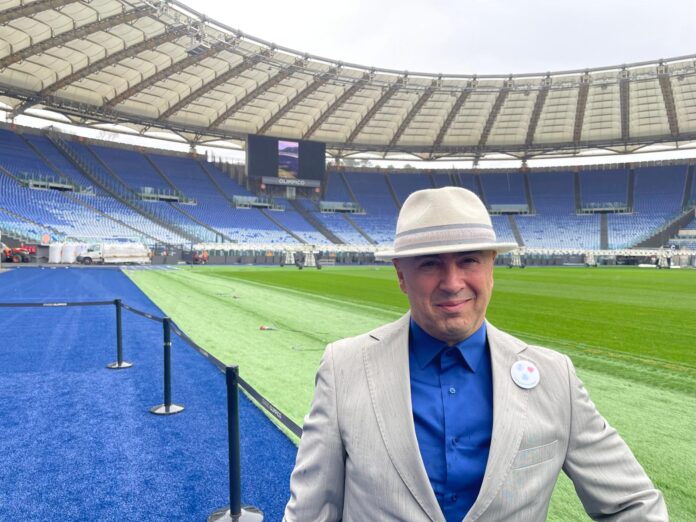
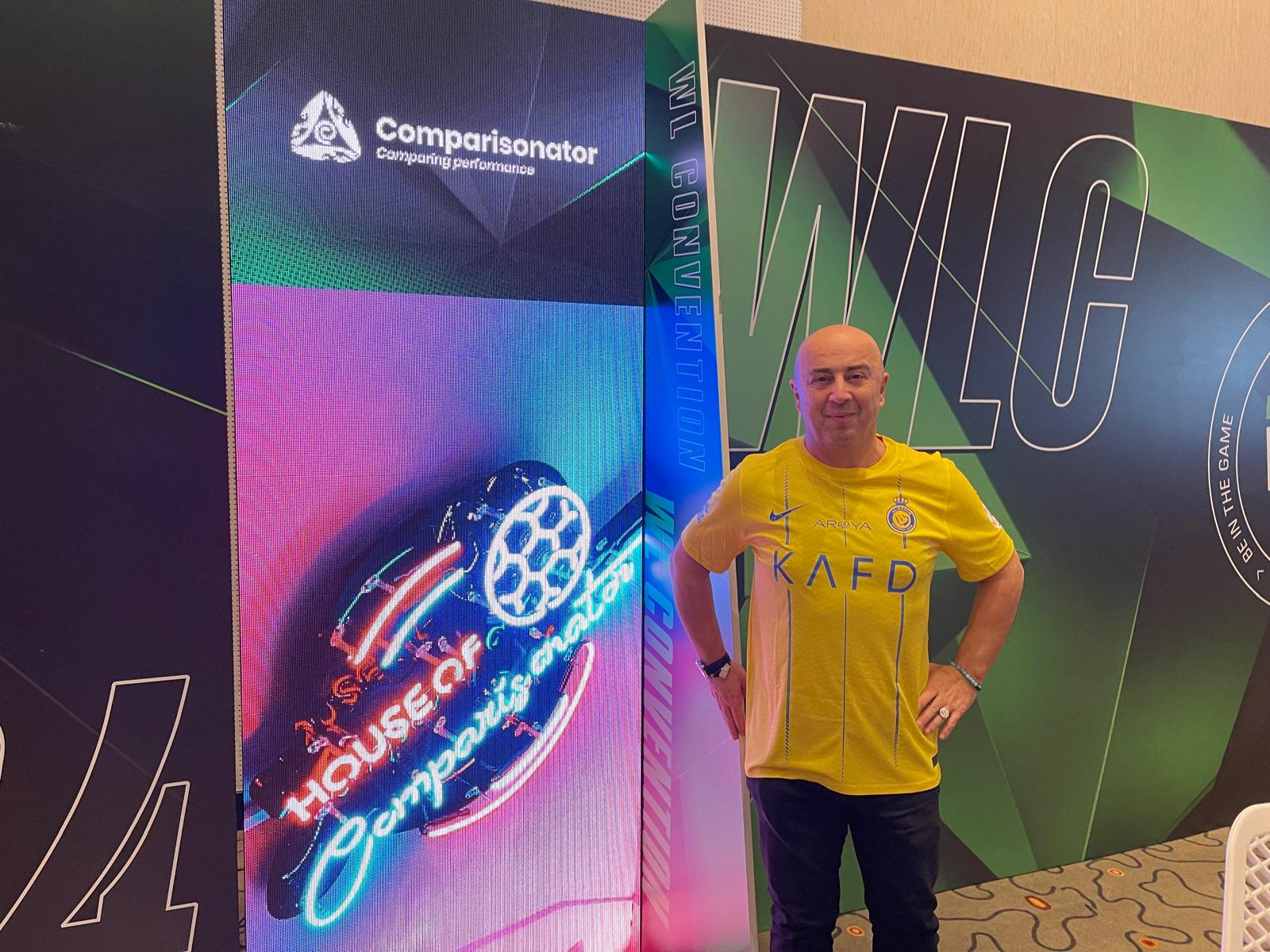
Football data and scouting expert Tarkan Batgun at Stadio Olimpico in Rome, reflecting elite-level decision making and analysis.
Tarkan Batgun pictured at Stadio Olimpico, where elite football environments meet data-driven decision making and modern scouting strategy.

Tarkan Batgün stands out as a pioneering force in the world of football scouting and data-driven talent identification, a professional whose journey has spanned continents, cultures and evolving technologies. Born with dual Australian–Turkish citizenship, Batgün first immersed himself in the footballing landscape of Australia, where he transitioned from player to analyst, gradually decoding the language of the game through video, metrics and match observation.

Returning to Türkiye, he built one of the country’s earliest dedicated scouting enterprises, subsequently launching Comparisonator – an AI-powered platform that doesn’t merely collect data but normalises it, contextualises it and translates it into actionable insight for clubs, agencies and federations worldwide.

Batgün has lived and worked in multiple football cultures – from Australia to Europe, from Türkiye to Saudi Arabia – refining the mantra that “data means nothing without integratable context.” His roles include consulting, lecturing on football analytics, moderating global panels and writing about how scouting must adapt to thousands of variables beyond the pitch.

As CEO of Comparisonator, his mission is to build bridges between football cultures and to enable clubs in lesser-known or undervalued markets to compete on a more level field. Through his website (tarkanbatgun.biz) and his media appearances, he shares his philosophy: that the future of talent identification lies not in replacing the scout, but in empowering the scout with smarter tools.

In this conversation, we step inside Tarkan’s world: the motivations that drive him, the challenges he’s overcome, the evolution of football scouting, and how he sees the next decade unfolding for data, AI and human insight in the game.

Our exclusive interview with Tarkan Batgün

You began your football journey in Australia and later returned to Türkiye before expanding into Europe and the Middle East. Can you walk us through how those diverse cultural and operational environments shaped your philosophy of scouting and what you believe is the “universal language” of talent?

Absolutely. My career has been shaped by geography as much as by football itself.

I began in Australia, which was a very structured and system-driven environment. There, I learned the importance of methodology, discipline, and building processes that could scale. Everything had to be measurable, repeatable, and ultimately justify itself through data. That gave me a foundation for how to look at the game with clarity rather than emotion.

When I returned to Türkiye, I stepped into a completely different football culture — one that is emotional, instinctive, and deeply human. In Türkiye, talent isn’t just evaluated on metrics; it’s understood through personality, psychology, and social context. Here I learned that numbers never tell the whole story. A player’s background, mentality, and environment can transform raw quality into real performance.

Later, as I expanded my work into Europe and the Middle East, I found myself integrating these two worlds. Europe brought a mixture of structure and innovation — a place where analytics, tactical frameworks, and long-term planning drive decisions. The Middle East offered a unique perspective on ambition, rapid development, and how different cultures adapt football philosophy to their own identity.

Through all these experiences, I realised something important: the universal language of talent is adaptability.

A truly talented player can adapt — to different tactical systems, different speeds of the game, different cultures and expectations. Technical quality is everywhere. But what separates a player who succeeds from one who remains a promising name is their ability to adjust, learn, and thrive in new environments.

For me, the global journey taught me to blend three angles:

  • data-driven clarity from Australia,
  • emotional and cultural understanding from Türkiye,
  • and strategic, structured modern football from Europe.

That mixture shapes my scouting philosophy today: talent must be understood holistically — through numbers, through context, and through adaptability.

the universal language of talent is adaptability.

At Comparisonator you’ve emphasised the idea of “contextualised data” – data that is meaningful only when paired with adaptibility, tactics and league-environment. Could you give us a concrete example of a player profile where raw numbers would have mis-led a club, but your platform revealed the true value or risk?

Absolutely — this is exactly why we built Comparisonator. Raw numbers, on their own, can lie. Context tells the truth.

One example I often use is a case of a young winger playing in a league where transitions were extremely fast and defensive structures were very loose. His raw attacking numbers were incredible — dribbles, key passes, shots on target — everything suggested he was a top-level creator.

A club approached us enthusiastic about signing him because, statistically, he looked like the best in his position. But when we ran him through Comparisonator, something different emerged.

When we contextualised his data — adjusting for game tempo, defensive pressure, possession style and league quality — his outputs dropped dramatically. His successful dribbles per 90 were inflated because he had huge space to run into. His passing efficiency looked elite only because opponents pressed less aggressively. And when we filtered his performance against teams with European-level intensity, his effectiveness collapsed by almost 40%.

At the same time, another club was evaluating a central midfielder whose basic numbers looked very average on paper. Nothing special in raw stats. But when we compared him in a like-for-like tactical environment — pace of play, ball recovery patterns, and possession structure of the club scouting him — he suddenly came out as a perfect fit. His interception timing matched the club’s defensive block. His progressive passing under pressure was top percentile only when filtered to high-intensity matches. And his adaptability score — switching leagues — was significantly higher than the more “statistically impressive” players.

If the club had relied solely on raw data, they would have chased the wrong player and missed the one who would actually thrive in their system. This is the core philosophy behind Comparisonator: data becomes powerful only when you place it inside the right football environment. Raw numbers can be misleading; contextualised numbers reveal reality.

Raw numbers can be misleading; contextualised numbers reveal reality.

Technology and AI are transforming football analytics fast. How do you personally balance the human element – instinct, experience, cultural intuition – with algorithmic insight? In your view, what remains the domain of the human scout, even as AI evolves?

For me, technology and AI are not replacing the human scout — they are upgrading the scout. But there is a very important balance, because football is still a human game played by emotional, unpredictable human beings.

AI can process millions of data points, compare players across leagues, and reveal patterns we could never see manually. But AI has no childhood memories of football. It has no smell of the dressing room. It doesn’t feel pressure, momentum, fear, leadership, or cultural belonging. That’s where the human element remains irreplaceable.

My personal balance works like this:

1. AI defines the universe of possibilities; humans define meaning. AI will show you all “players who fit the model.” But a scout’s instinct decides which of those players can survive a derby atmosphere in Türkiye, or adapt to Dutch positional football, or fit the social culture of a club.

2. AI measures actions; humans judge intentions. A dataset knows a player made 12 pressing actions. A scout knows why he pressed, whether he pressed intelligently, whether it came from coaching or from personality.

3. AI compares environments; humans understand environments. Our platform can normalise performance across leagues. But only a human with cultural intuition knows the difference between a player who thrives in chaos and a player who thrives in structure.

4. AI predicts potential; humans evaluate character. Talent is easy to identify. Character, humility, adaptability — these remain human-only domains. No algorithm can tell you how a player will react when benched, or whether he can handle rapid fame, or carry responsibility in a dressing room.

So what remains purely human?

  • Reading body language and personality.
  • Understanding cultural fit.
  • Feeling the rhythm of a game beyond numbers.
  • Predicting emotional growth.
  • Making the “instinct call” when data and context still leave a grey zone.

AI gives us clarity; human scouts give us truth. And when the two work together, that’s when clubs make their best decisions.

Your company (Comparisonator) reaches clubs and markets sometimes overlooked by traditional scouting networks. How do you help those clubs identify talent and mitigate risk – especially when the markets may lack extensive data, high-profile exposure or familiar scouting roads?

This is one of the core reasons we built Comparisonator in the first place — to give every club, regardless of budget or geography, access to the same quality of insight as the biggest organisations in the world.

Comparisonator analytics platform displayed at a football technology event, showcasing advanced data-driven scouting and performance analysis.
Comparisonator’s platform visualises how data, context and performance analysis come together to support smarter football recruitment decisions.

Traditional scouting networks naturally gravitate toward regions that are well-mapped, data-rich, and historically proven. But football is full of hidden talent in places where data is incomplete, visibility is low, or “trusted pathways” simply don’t exist. That’s where we provide two key advantages:

1. We create a standardised football language even when the market isn’t standardised.

If a club is scouting in a region with limited data or inconsistent tracking, our platform normalises the metrics – tempo, physical demands, tactical context, league strength – so the club sees what the player actually is, not just what their environment makes them look like.

This allows a club in, say, Southeast Asia or Eastern Europe to compare a local defender directly against a player from Portugal, Türkiye or Argentina, without distortion.

2. We highlight “risk signals” that might be invisible even to experienced scouts.

In emerging markets, raw numbers may be missing or unreliable. So we focus on patterns:

  • Does the player maintain output in higher-pressure matches?
  • How adaptable is he when facing European-style tempo?
  • Is his performance inflated by environment or role?
  • Does his physical data transition naturally to stronger leagues?

This helps clubs avoid signing players who look excellent locally but won’t survive a tactical or physical jump.

3. We identify undervalued talent by looking at role fit, not reputation.

Many of the clubs we support don’t have the resources for 20 scouts across 10 countries.
So we use AI to match their tactical needs with players who fit their game model — even if the market doesn’t spotlight them.

A club might need a high-volume defensive midfielder, or a winger who excels in transition, or a centre-back who builds from deep. Our system finds that player even if:

  • he’s from a league with limited exposure,
  • he’s never been on a major scouting list,
  • or his team’s style hides his real qualities.

This levels the playing field.

4. We offer clarity in environments where uncertainty is highest.

Raw scouting alone in under-the-radar markets is risky. Data alone is incomplete. But contextualised data + human football expertise is incredibly powerful.

We tell clubs: “Here is the true player — not the league version of him, but the version he would be in your league, your tempo, your system.” That’s where risk turns into opportunity.

5. Ultimately, we give these clubs confidence.

Confidence to sign young players from non-traditional markets. Confidence to compete with bigger clubs using smarter tools. Confidence to trust decisions backed by both science and football sense.

Our mission is simple: make global talent accessible, understandable, and comparable for everyone — not just the elite clubs.

You’ve built a personal brand as an analyst, lecturer and consultant – moderating panels, speaking at forums, writing content via your website (tarkanbatgun.biz) and media outlets. What motivates you beyond the technology – what is the deeper “why” behind your work in football, mentoring, scouting and analytics?

For me, the deeper “why” behind everything I do goes far beyond technology.
What drives me is helping top-level football decision makers make the right choices under massive pressure.

Throughout my career — whether in Australia, Türkiye, Europe or the Middle East — I’ve worked closely with Sporting Directors, Head Coaches, Scouts, and Recruitment Leaders. These people live in a world where every decision is high-risk:

  • Which player to sign?
  • Which talent is ready for a loan?
  • Which club environment actually suits their development?
  • Which profile fits the head coach’s game model today, not theoretically?

These decisions decide seasons. Careers. Budgets. Reputations. And very often, they must make them with incomplete data, limited time, and inconsistent information from different leagues.

That is the real reason I built Comparisonator. Not to create a flashy data tool.
Not to overwhelm clubs with charts. But to give high-level decision makers the clarity they need to act with confidence.

Comparisonator simplifies that complexity by:

  • Normalising player performance across every league in the world so directors can compare apples to apples, not illusions from different contexts.
  • Role suitability algorithms that show which players truly fit the coach’s tactical demands.
  • Loan & Transfer Fit models that help Loan Managers identify the right club, environment and tactical ecosystem for each player’s development.
  • AI Points and Physical Data that instantly reveal whether a player’s intensity and adaptation metrics will translate to a stronger league.
  • CompaGPT that explains insights in clear football language — the way directors actually make decisions.

These tools exist to reduce risk in the most important decisions in football. But the deeper motivation (my personal mission) is human.

I’ve seen brilliant Sporting Directors lose seasons because they trusted incomplete information. I’ve seen coaches get criticised because the squad didn’t match their tactical reality. And I’ve seen young players fail simply because their loan destination didn’t fit their style.

My “why” is to prevent those failures. To give leaders visibility, context, and truth — not noise. Through my lectures, panels, and content, I try to create a global standard for decision-making. Through Comparisonator, I give leaders the tools to apply that standard daily.

At the end of the day, technology is just the delivery. My real motivation is helping football’s top decision makers make smarter, fairer, faster decisions — decisions that can change the future of clubs and the careers of players.

That is why I do this. And that is what keeps me passionate every single day.

Looking ahead over the next five to ten years, what do you see as the biggest strategic shift in talent identification and scouting? And how is Comparisonator preparing to evolve so it remains at the forefront of that shift?

Over the next ten years, the biggest strategic shift in talent identification will be the move from evaluating players to evaluating environments.

Clubs will no longer ask only “Is this player good?” — they will ask:

  • “Is he good for our football?”
  • “Is he good for our league?”
  • “Is he good for our project and timeline?”
  • “Is he good inside our tactical ecosystem?”

This shift changes scouting from judging talent to predicting adaptation.

1. The Future: Live Interaction, AI Dialogue & Holographic Scenario Building

The biggest transformation will be how decision makers interact with scouting tools.
Today, data is static. In the future, it becomes alive.

I envision Comparisonator becoming an AI-driven, live conversational assistant:

You speak to it —

  • “Find me a left-back who fits our 4-3-3 build-up role.”
  • “Show me loan destinations that maximise playing time and intensity.”
  • “List only players adaptable to high-tempo leagues with our physical thresholds.”

Comparisonator will respond instantly, in football language, to Sporting Directors, Head Coaches, Loan Managers, and Recruitment Leaders.

But it goes further:

Holographic Simulation & Tactical Scenarios

Decision makers will visually place a player inside their formation using holographic or spatial interfaces.

Imagine seeing:

  • how a winger behaves in your pressing trigger,
  • how a midfielder receives under pressure in your league’s tempo,
  • how a centre-back builds from the first line in your system.

This turns scouting into interactive decision science, and this is exactly the direction Comparisonator’s evolution is heading.

2. League-to-League Translation Models

The next strategic edge will be predicting how a player’s performances translate across ecosystems.

Comparisonator is pioneering:

  • league-normalisation,
  • adaptation scoring,
  • physical & tactical stress replication,
  • AI Points as environment translators.

This will be the global standard for comparing players from different leagues.

3. Tactical-Fit Matching at Scale

Clubs increasingly ask: “Does he play our football?”

We are evolving Comparisonator to:

  • detect role fit,
  • model phase-of-play actions,
  • evaluate pressing profiles,
  • understand transition behaviours,
  • map build-up involvement and positional tendencies.

This means clubs scout solutions, not just players.

4. Development Forecasting for Loans & Pathways

Loan Managers and Academy Heads need to know: “Where will this player develop fastest and where is the risk?”

Comparisonator is building tools that:

  • evaluate ideal loan destinations,
  • forecast acceleration vs stagnation,
  • quantify environmental risk,
  • match clubs to player development styles.

This will completely reshape talent pathways.

5. Opening Non-Traditional Markets With Confidence

The next talent waves will come from regions with limited exposure and inconsistent data (Southeast Asia, Balkans, North Africa, Middle East, Central America).

Comparisonator’s contextual engine becomes the global access point:

  • normalising performance,
  • revealing undervalued players,
  • reducing scouting risk,
  • expanding market reach for clubs and agencies.

In summary: The future of scouting isn’t finding players, it’s forecasting how they behave in your environment.

By evolving into a conversational, interactive, holographic, and environment-aware decision platform, Comparisonator will stand at the forefront of the next decade of elite football decision-making.

We are not building a tool. We are building the operating system for football decisions.