Home Blog Page 12

The Business of League and Tournament Sponsorships

0
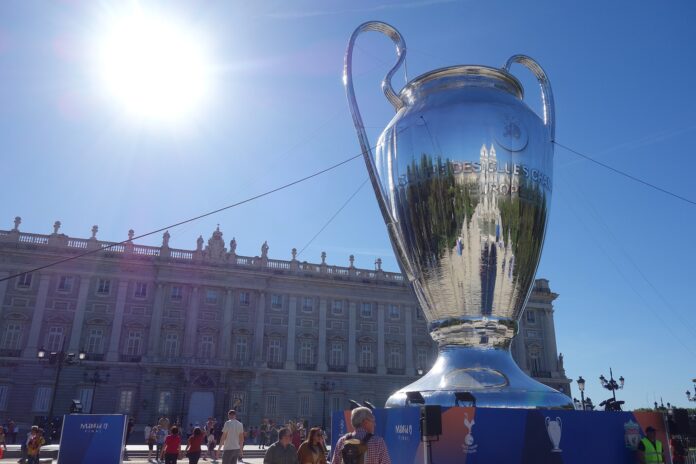
UEFA Champions League trophy display in Madrid ahead of the 2019 final, showcasing the tournament’s global scale and branding power.
Rafael Henrique Serra, CC BY 3.0, via Wikimedia Commons

If you want to understand why “league partners” and “official sponsors” sit at the center of modern sports marketing, look at the scale and certainty they buy. Global competitions deliver guaranteed, repeatable moments where audiences show up in the hundreds of millions, media schedules are locked for years, and brands can plan multi-market storytelling with the rights to the IP fans love. Below is a practical tour of how the biggest football properties structure these deals, who the heavyweight brands are, and why the model keeps growing.

Why brands buy league and tournament rights (not just teams)

  • Mass, predictable reach. Global finals can draw audiences most marketers will never find elsewhere. FIFA says the Qatar 2022 World Cup final reached close to 1.5 billion people worldwide, and five billion engaged with tournament content across platforms, a reminder that a single event can deliver multiple campaigns’ worth of exposure.
  • Category exclusivity. League-level partners typically lock rivals out across an entire competition (beer, payments, airline, gaming, etc.), something club deals can’t guarantee.
  • Ownable IP and assets. Beyond logos on LED boards, partners get marks, player imagery (subject to rights), hospitality, trophy tours, ticketing promotions, and broadcast integrations that can be deployed across dozens of markets over multiple seasons.
  • Cross-property leverage. Increasingly, a single contract spans men’s and women’s competitions, youth tournaments, and community programs—one buy, many platforms. Heineken’s women’s football deal with UEFA (running to 2025) is a good example of that multi-property approach.

How the deals are structured

Although every contract is bespoke, most major competition partnerships share a common architecture:

  • Tiered rights packages. Properties sell a small number of “top-tier” global partners with category exclusivity (e.g., beer, airline, payments), then a second layer of global sponsors, and sometimes regional supporters with rights limited to specific territories. FIFA formalizes this as FIFA Partners, FIFA World Cup Sponsors, and Regional Supporters, a clean model that protects value at the top while allowing local activation below.
  • Multi-year cycles. Rights typically run in 3–4-year cycles (UEFA) or across a World Cup cycle (FIFA), giving brands time to build, test, and optimize platforms, rather than “one-and-done” flights.
  • Integrated asset menus:
    • Global IP and logo lock-ups
    • Broadcast-visible LED and virtual signage
    • Digital content & data rights (e.g., “Official Statistics/Cloud Partner”)
    • Hospitality & ticketing
    • Player/legend access (subject to separate image rights)
    • Grassroots & inclusion programs (increasingly mandatory)
  • Measurement and reporting. Brands demand proof. Most top properties now include independent media valuation, brand lift studies, and digital engagement reporting in their packages, often via official analytics partners.

Case study 1: UEFA Champions League; decades-long brand platforms

For almost three decades, the UEFA Champions League has delivered a stable, premium sponsorship roster. Some of the longest-serving partners are still on the shirt:

  • Heineken (beer & 0.0) has backed the competition since 1994 and renewed through 2027, a rare span for any global platform. The brewer also backs UEFA women’s football to 2025, evidence of the “one portfolio, many properties” strategy.
  • Mastercard has also been a Champions League mainstay since 1994, renewing again through 2027. “Priceless” moments were built for this environment.
  • Other current Champions League partners in the 2024–27 cycle include PepsiCo (Pepsi/Lay’s/Gatorade), PlayStation, FedEx, Just Eat Takeaway, Qatar Airways, Expedia, Crypto.com, and Bet365, reflecting both legacy categories and newer economy entrants.

“UEFA’s format expansion beginning 2024/25 increased total match inventory and created more high-value broadcast windows, sponsorship value tracks the number and quality of moments available to activate.”

Why it works: UEFA’s format expansion beginning 2024/25 increased total match inventory and created more high-value broadcast windows, sponsorship value tracks the number and quality of moments available to activate.

Case study 2: FIFA World Cup; global tiers and global numbers

FIFA’s commercial program is deliberately tiered and global:

  • Top-tier FIFA Partners (e.g., Adidas, Coca-Cola, Wanda Group, Hyundai-Kia, Visa, Qatar Airways) hold rights across all FIFA events.
  • World Cup Sponsors focus on the tournament itself (e.g., AB InBev renewed as beer sponsor for 2026/2030). Regional Supporters then add local reach in host markets.

The prize for brands is unparalleled audience concentration: FIFA’s own reporting places the Qatar 2022 final at ~1.5bn reach and 5bn engaged across the tournament. It also documents social reach and engagements at a scale few other events approach.

Case study 3: Premier League & WSL; category partners with data and purpose

The Premier League moved away from title sponsorship in 2016/17 and now sells a small set of category-defining roles:

  • EA SPORTS FC (lead partner)
  • Nike (official ball)
  • Oracle (official cloud & advanced stats)
  • Budweiser (beer)
  • Hublot (timekeeper)
  • Avery Dennison (name/number & sleeve badges)
  • Barclays (official banking partner)

On the women’s side, Barclays made a landmark bet on the English women’s pyramid, becoming title partner of the Barclays Women’s Super League (and Women’s Championship) in 2019. That commitment has since been extended through 2029, a long runway that has helped fund development across the ecosystem.

“Heineken and PepsiCo are treating women’s rights packages as mainstream platforms, not side projects. That’s where the market is going.”

Earlier reporting pegged the 2022–25 phase as the largest investment in UK women’s sport by a brand, and the newest extension continues that scale.

Entertainment built in: sponsors as showrunners

The line between sport and entertainment keeps blurring, and sponsors are increasingly the producers:

  • PepsiCo will bring pre-kickoff concerts to the UEFA Women’s Champions League finals through 2030, mirroring its men’s final activations and using Lay’s/Gatorade to reach different fan cohorts, proof that rights are now content engines, not just logo placements.

What partners actually buy, and how they activate

  • Cultural moments at scale. With UEFA estimating Champions League final “reach” figures in the hundreds of millions, partners build annual tentpoles: new product drops, brand films, and social challenges all timed to matchdays and draws.
  • Category exclusivity and IP. From pouring rights in fan zones to using the trophy silhouette in packaging, the ability to be the official brand in a category for years is the moat.
  • Data-driven storytelling. Cloud/statistics partnerships (e.g., Premier League x Oracle) give brands persistent on-screen presence while powering second-screen content and fantasy integrations.
  • Purpose & participation. Women’s football packages routinely include grassroots and inclusion programs (e.g., UEFA’s Together #WePlayStrong), aligning brand activity with growth of the game.
  • Multi-market execution. Airlines, payment networks, and beverages can activate in 50+ countries with one creative platform, localized by market—why the Champions League and the World Cup over-index for truly global brands.

How the money flows back into the game

At UEFA level, commercial (media + sponsorship) growth from the 2024/25 format change is designed to lift distributions to clubs across the Champions League, Europa League, and Conference League, proof that better inventory equals better economics for both rights-holder and participants.

In England, Barclays’ long-horizon backing of the WSL/Championship has underwritten visible development: more full-time pros, improved facilities, and stronger marketing that feeds the audience flywheel.

Takeaways for brands

  • Pick platforms that match your footprint. Global networks (payments, airlines, beverages) are built for FIFA/UEFA scale; challenger and DTC brands can win with regional tiers or women’s properties where cut-through is higher per dollar.
  • Buy fewer, do more. The most effective partners (Heineken, Mastercard, PepsiCo, PlayStation) renew through multiple cycles and keep building—consistency beats novelty.
  • Own moments, not just minutes. Data visualizations, pre-match shows, and social-first content are now the real assets, LED is table stakes.
  • Use women’s football as a growth engine, not a CSR line. Heineken and PepsiCo are treating women’s rights packages as mainstream platforms, not side projects. That’s where the market is going.

The bottom line

Leagues and tournaments give brands what few other media investments can: certainty of attention at continental or global scale, protected by exclusivity and delivered through repeatable cultural moments. From UEFA’s decades-long partnerships with Heineken and Mastercard to FIFA’s tiered global program and the Premier League’s data-led roles, the playbook is clear: secure long-term rights, activate relentlessly, measure hard, and keep showing up. The result is a compounding asset for brands, and a funding engine for the sport.

If you’re planning your own approach, start by choosing the stage first (global vs. regional), then the story you can tell year after year. The properties that win for brands are the ones you build with, not the ones you rent for a season.
Who is Elena Fernández?

0
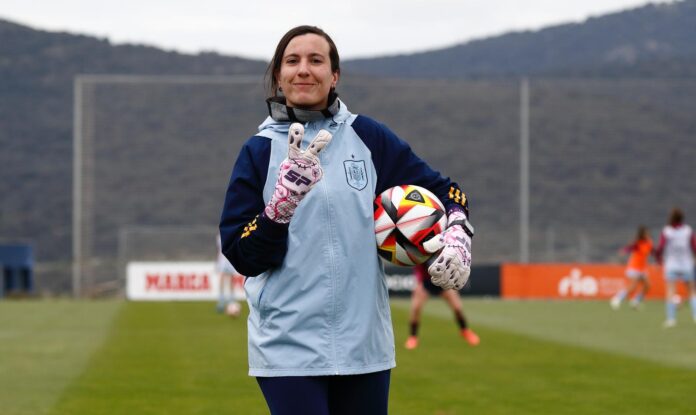
Elena Fernández, Spain’s pioneering goalkeeper coach, during a training session with the national youth team.
Elena Fernández, Spain’s first female goalkeeper coach with a UEFA A licence, continues to inspire a new generation through her work with the national youth teams.

When a young Spanish goalkeeper decided to switch sides of the pitch, she did not just start coaching, she began rewriting football history.

Elena Fernández is one of Spain’s most respected goalkeeper coaches and the only woman in Spain to hold the UEFA Goalkeeper Coach A licence. After an early injury ended her playing career, she became a trailblazer as the first woman to coach goalkeepers in a semi-professional men’s team. She has since worked with Spain’s U17, U19 and U20 national teams, winning European and World Cup titles while continuing to broaden her knowledge of the game. With a degree in Sports Science, a UEFA Goalkeeper Coach A licence and a passion for equality, Fernández represents a new era of intelligence and leadership in football.

“Elena Fernández represents a new era of intelligence and leadership in football.”

Our exclusive interview with Elena Fernández

You started coaching while still playing in Spain’s second division. How did that early experience shape your understanding of goalkeeping and leadership?

That was one of the most important steps in my career. Coaching goalkeepers while I was still training and studying opened up a completely new world for me. It helped me understand the position more deeply and gave me a clearer sense of the reasoning behind every decision made on the pitch. At the same time, facing competitive challenges as a player helped me better understand, as a coach, the specific demands of the position during matches.

At university, I was gaining new knowledge and could immediately apply it in practice, often exchanging ideas with my own goalkeeper coaches. That combination shaped the foundation of the coach I am today.

You became the first woman to coach goalkeepers in a semi-professional men’s team in Spain. What did that milestone mean to you personally and professionally?

When the opportunity came to coach my first men’s team at that level, I was already looking for a way to gain experience in men’s football, but I did not expect it to happen so quickly or in such a competitive environment. It was only a year after finishing university. Although I had coached men before through internships, stepping into that level brought a new sense of responsibility. Still, I knew I was ready for it.

Professionally, it was an incredible journey. Managing the goalkeepers, working closely with the technical staff, and solving challenges together taught me so much. I learned from everyone around me, which made me a better coach and professional. It also brought unexpected visibility. Suddenly, I appeared in newspapers and on television, which opened doors to connect with respected goalkeeper coaches and exchange knowledge.

On a personal level, achieving my first two goals was the most meaningful part: earning the respect of my goalkeepers and the team as a whole. Above all, I could be myself and share my passion for football with people who made me believe that aiming higher was possible.

Working with Spain’s youth national teams, you have won several European and World titles. What makes the Spanish model for goalkeeper development so successful?

The work done with goalkeepers across Spain is outstanding, thanks to the dedication of so many goalkeeper coaches. At national team level, we have seen a huge rise in quality and competition among goalkeepers in recent years, which is fantastic but also makes the selection process more demanding.

Another key factor is participation. More and more girls are playing football in Spain, which means a larger pool of female goalkeepers. We now even have players over 1.80 metres tall, something that would have been almost unthinkable a few years ago.

And finally, what sets Spanish goalkeepers apart is their technical ability with the ball at their feet. The culture of possession football encourages goalkeepers to take part in the build-up, which gives them a strong technical base and a deep tactical understanding of how to find solutions during play.

“The culture of possession football encourages goalkeepers to take part in the build-up, giving them a strong technical base and tactical understanding.”

You have coached in both men’s and women’s football, across academy and elite levels. How do you adapt your methods to different players and environments?

Adaptation begins with understanding context. You cannot train elite players the same way as grassroots players, and you cannot coach men and women in exactly the same way either. Analysing the environment is essential, whether through research, observation or simply asking questions.

My first experience as a goalkeeper coach was at grassroots level while I was studying Sports Science. What I learned helped me structure my methodology to meet the specific needs of my players. Later, when I started working with men, I had to gather more tactical information, as there are small positional differences compared to women’s football.

I sometimes worry when goalkeeper coaches come from men’s football and apply the exact same methods to women. It is not about changing exercises, but about understanding the physical and tactical realities of each player and giving them what they need to grow. For me, coaching always starts with the individual’s current needs, not with old habits or preconceptions.

Education is a key part of your career. How do your academic studies in sports science influence your daily coaching work?

My studies have given me several advantages. First, the ability to manage training loads and GPS data helps me adapt sessions to each player’s physical condition. Second, my background in biomechanics allows me to recognise technical mistakes and correct them more effectively.

Finally, being able to design strength training, both in the gym and on the pitch, enables me to link technical execution with physical efficiency. Every exercise is aimed at improving specific movements that directly enhance performance.

As a UEFA Goalkeeper Coach A licence holder and educator in the Spanish FA’s goalkeeper courses, what advice would you give to young coaches entering the profession?

My main advice would be simple: keep learning. Make mistakes, learn from them, learn from others, and always stay true to yourself. There is a big difference between being a goalkeeper coach and being a goalkeeper coach who truly makes a difference.

The first may train goalkeepers but does not always understand why they do what they do, often copying exercises from others in different contexts. The second knows how, when and why to apply a method. They adapt, personalise, and think critically. Of course, the second path takes more effort, but if you really want to stand out, why stop halfway?

Technology is changing goalkeeper training fast. How do you integrate analysis, data and video tools into your sessions?

Technical and tactical analysis is essential in modern football. Recording sessions allows us to identify details that are almost impossible to catch in real time. This helps us analyse goalkeepers’ decisions and movements from a technical or tactical point of view.

Filming matches can be less detailed, as the camera angle is usually wider, but using a camera behind the goal can give valuable insights. I have seen more goalkeeper coaches doing that recently, even though I have not had the chance to use that exact setup myself.

For me, the most important part comes after analysis. Reviewing match situations with the goalkeeper and using training sessions to reinforce lessons creates a complete feedback process that drives improvement.

After winning world titles and breaking barriers, what are your next goals in football?

I always look ahead. I am not someone who gives up easily once I have a goal in mind, and right now, I am excited by the idea of moving abroad and continuing my development within a new culture.

I would love to keep working with another federation, but I am also open to joining a club team. Both paths offer amazing and very different experiences.

I am even considering returning to men’s football at some point. After six years, I do miss that environment a little. Whatever comes next, I will face it with enthusiasm and an open mind.

The Collective Code: The Brain of the Team

0
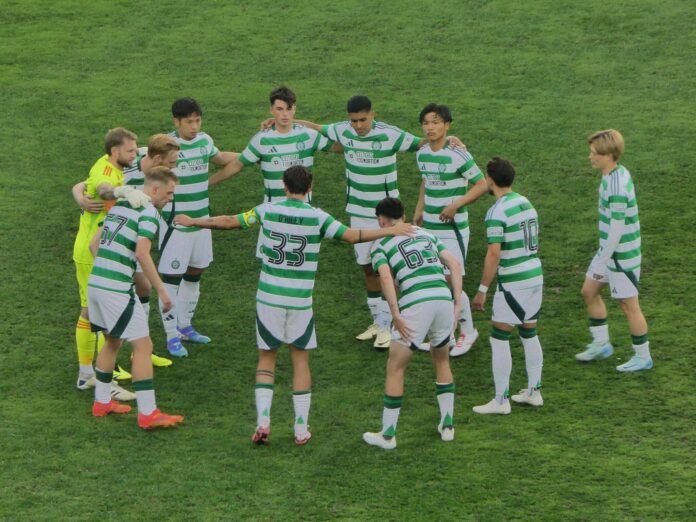
Football team huddling together before kickoff, symbolizing unity, leadership, and collective intelligence on the pitch.
Keiteay, CC0, via Wikimedia Commons

Introduction: The Unseen Intelligence of the Game

Modern football is not won by instinct. It is won by collective intelligence, by eleven players thinking as one. A team can be perfectly organized on paper, but if the mental rhythm between players is not aligned, the system collapses.

Collective intelligence is the ability of a team to act as a single brain. It begins with the coach’s plan and comes to life through the captain’s presence on the field.

The Brain of the Team: Players as the Coach’s Extension

A coach designs the idea. But that idea only breathes when players understand each other. Players are not just individuals in positions. They are the arms, the legs, and the mind of the coach.

When a player understands not only where to pass but why, he becomes part of the system. Collective intelligence is the transformation of individual reflexes into a shared instinct.

“Collective intelligence is the transformation of individual reflexes into a shared instinct.”

The Captain: The Voice of the Collective Mind

A captain is not the one who wears the armband. He is the translator of the team’s mind. He carries the message built in the locker room and delivers it through body language, tone, and timing.

Modern hierarchy in football is not command and control. It is energy transfer. A true captain does not dominate. He regulates. He directs the emotional current of the team. Every great system depends not only on tactics but on communication.

When the Collective Breaks: What Happens When One Stops Thinking Together

A team is like a living organism. Every part must work in sync. When one stops moving with the rhythm, you first try to understand, to guide, to heal, to realign. But if that part refuses to think collectively and continues to move for itself, then you remove it. Not in front of the team, but for the team.

It is not punishment. It is philosophy. Because football is not an individual sport. Those who wish to play alone can choose tennis or boxing. Football is a collective art.

“Every great system depends not only on tactics but on communication.”

The Tactical Layer: The Language of the Collective Mind

Collective intelligence is visible in simple details. The back line moving together. Pressing triggers starting at the same second. Midfield transitions built on silent communication. Immediate reaction after losing possession.

These are not coincidences. They are understood principles. Players know what to feel in every moment. It is no longer about tactics. It becomes shared intuition.

The Emotional Core: Trust, Empathy, and the Silent Bond

A system without emotional trust cannot survive. When one player stops believing in another, the team becomes eleven strangers.

Empathy is the fuel of collective intelligence. Feeling your teammate’s rhythm, his breath, his pressure, his confidence. That is what turns a mechanical system into a living organism.

Modern Leadership: From Control to Connection

Old leadership was about control. Modern leadership is about connection. The relationship between coach, captain, and player must not be vertical but circular. It is not about power. It is about purpose.

Teams today do not follow those who shout the loudest but those who understand the deepest. Collective intelligence is not born from authority. It is born from alignment.

Conclusion: The Collective Code

Collective intelligence is the hidden weapon of modern football. When the coach’s plan, the captain’s voice, and the players’ trust align, the team stops being eleven individuals and becomes one organism. Inside that organism, every part either contributes to the system or gets left behind. Football is no longer the art of playing alone. It is the art of synchronized thought.

When a team stops running separately and starts feeling together, the game becomes more than tactics. It becomes rhythm.

Who is Dr. Erkut Sogut?

0
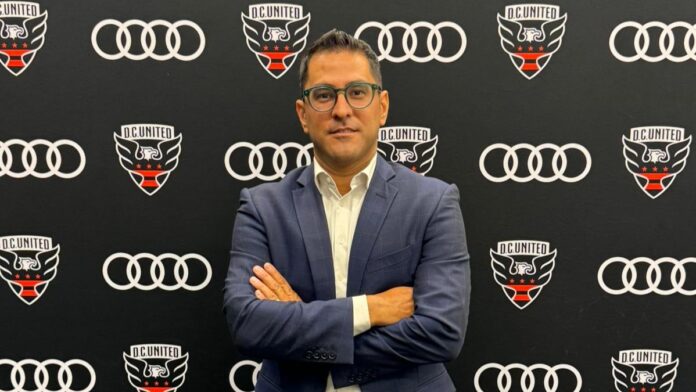
Dr. Erkut Sogut, Managing Director of Soccer Operations at D.C. United, stands in front of the club’s logo backdrop.
Dr. Erkut Sogut, Managing Director of Soccer Operations at D.C. United, brings his global experience as a sports lawyer and agent to reshape the club’s long-term football strategy.

Dr. Erkut Sogut, LLM, is a globally recognized sports lawyer, agent, author, and executive. He is renowned for negotiating some of the largest deals in the industry and for transforming how football professionals are represented, educated, and empowered.

Born in Hanover, Germany, to Turkish immigrants, Erkut’s academic foundation includes a doctorate in sports law and two Master of Laws (LL.M.) degrees, equipping him with unique legal and global perspectives. His career has focused on elite-level football, where he has gained deep expertise in international transfers, contract negotiations, and strategic deal-making within top-tier clubs.

He is also a highly respected educator. As an Adjunct Professor of Sports Law and Management, he has delivered lectures at over 25 institutions around the world. These include Harvard Business School, UCLA, NYU, Bayreuth University, and Istanbul Bilgi University. In addition to his academic work, Erkut is a keynote speaker at international events such as Soccerex, the World Football Summit, and The Football Forum Hungary.

Dr. Sogut is the author of more than 15 publications, including best-selling guides for aspiring football agents, thought leadership books on women’s football and athlete careers, and a gripping trilogy of football-based novels: Deadline, Remember My Name, and Shattered Pitches.

In 2025, he was appointed Managing Director of Soccer Operations at D.C. United. In this role, he leads the club’s player acquisition strategy and supports long-term football development alongside head coach René Weiler. His appointment marks a new strategic chapter for the MLS club.

Fluent in English, German, Turkish, and Spanish, Dr. Sogut brings a global mindset and a purpose-driven vision to every project he leads. Whether educating the next generation, leading football operations at the highest level, or sharing insights through his writing and public speaking, his mission remains consistent: to create value through integrity, knowledge, and connection.

“Whether educating the next generation, leading football operations at the highest level, or sharing insights through his writing and public speaking, his mission remains consistent: to create value through integrity, knowledge, and connection.”

Our exclusive interview with Dr. Erkut Sogut

Who is Dr. Erkut Sogut outside of football?

I’m a teacher at heart. Whether I’m in a lecture hall, mentoring someone one-on-one, or writing a book, I’m always thinking about how we can learn, grow, and pass knowledge forward. Outside football, I’m a husband, a father of two boys, and someone who finds meaning in simplicity: reading, writing, and sharing ideas. I also enjoy exploring different cultures, which has shaped my global mindset and continues to inspire my work.

What led you to transition from being a football agent to taking on an executive role at a club like D.C. United?

After many years advising clubs from the outside, I felt ready to contribute from the inside. D.C. United gave me the opportunity to build something long-term, using both my legal background and my experience in player representation and recruitment. It was a natural progression, moving from deal-making to decision-making at a strategic level. Working alongside René Weiler and a strong leadership team allows me to put ideas into action within a high-performance environment.

You’ve taught at top universities around the world. What do you enjoy most about working with students?

There’s something incredibly energizing about being in a room with curious minds. Students ask questions that challenge your thinking and keep you sharp. I see education not just as sharing information, but as unlocking confidence. I want people to walk out of a session believing they can contribute to football in a meaningful way, whether as agents, executives, lawyers, or leaders.

“I see education not just as sharing information, but as unlocking confidence.”

You’ve published books ranging from legal guides to football novels. What drives your writing?

Writing gives me a different kind of freedom. With my nonfiction work, the goal is to demystify the industry, make it more accessible for those who want to enter or understand it. With my novels, I can explore deeper human stories, including the darker sides of football that people rarely see. Fiction allows me to say things that are emotionally true, even if they’re not literally factual.

Having lived and worked in Europe and the U.S., what differences stand out to you between football cultures?

In Europe, football is deeply woven into everyday life, it’s cultural, political and emotional. In the U.S., it’s growing quickly but with a different energy, it is more structure, more innovation, more space to experiment. What I appreciate about MLS is the ambition to grow responsibly, and the openness to learning from global models while creating something uniquely American.

What values guide you when making difficult decisions in your role?

Integrity is always the starting point. I believe in being honest, even when the message is tough. I also try to think long-term, how does this decision affect people, the club, the culture we’re building? And finally, empathy. Football is a business, but it’s built on human relationships. Understanding people’s motivations and perspectives helps create solutions that work for everyone.

You’ve mentored hundreds of aspiring agents and professionals. What advice do you give most often?

Be obsessed with learning. This industry changes fast, and what worked yesterday might be outdated today. Also, don’t chase success, but chase value. If you consistently create value for others, success will follow in its own way. And finally, protect your integrity. Football is a reference business.

What’s next for you, personally or professionally?

Right now, my focus is fully on D.C. United, building a strong squad, a strong structure, and a culture that can compete at the highest level. Beyond that, I’ll continue writing and teaching whenever possible. I’m passionate about shaping the future of football, through education, creativity, and collaboration.

The New Investment Model for the Women’s Bundesliga

0
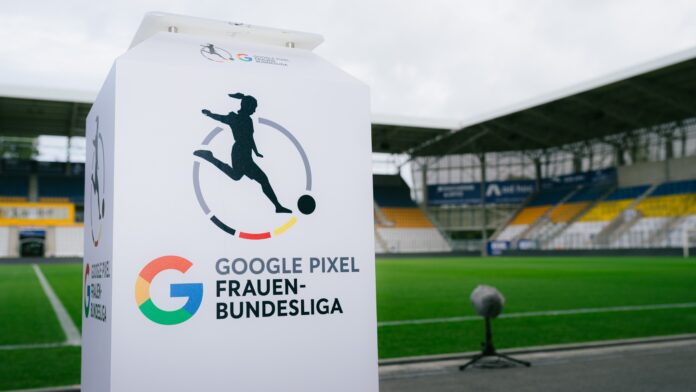
Match ball stand of the Google Pixel Frauen-Bundesliga on display before kickoff at a German stadium.
The Google Pixel Frauen-Bundesliga continues its evolution as the DFB launches a new investment model to professionalise the league. Image courtesy of Hannes Anger/haangmedia.

The German Football Association (DFB) has taken a historic step to elevate women’s football in Germany to a new structural and economic level. Starting in 2026, the Women’s Bundesliga will operate under its own company and will be funded with €100 million over eight years. The DFB aims to professionalise the league, make it internationally competitive, and prevent top players from moving abroad.

The initiative was formally adopted on 7 November 2025 at the DFB Bundestag in Frankfurt am Main. DFB President Bernd Neuendorf described the creation of the new league company as “a strong and courageous signal.” The goal, he said, is for the Women’s Bundesliga, like the men’s league, to rank among the leading competitions in the world. The investment programme will already take effect at the start of the 2026/27 season.

The model envisions a joint company between DFB GmbH & Co. KG and the participating clubs. It will oversee the marketing, organisation, and strategic management of the league. The Women’s Bundesliga will therefore operate as a joint venture, comparable to the men’s DFL structure but with its own focus, budget, and development goals. The working title for the new entity is DFL Frauen.

Growth through Structure and Capital

The foundation of the reform is the DFB study “New Perspectives – The Commercial Future of the Women’s Bundesliga,” commissioned by the DFB and conducted with the sports marketing agency Two Circles. It is part of the FF27 “Women in Football” strategy and, for the first time, provides a comprehensive, data-driven basis on fan potential, target groups, revenue, and growth scenarios for German women’s football. The research was based on national market analyses, a representative survey of over 2,000 people, qualitative interviews with 39 men’s and women’s Bundesliga clubs, and focus groups with media and sponsorship partners.

According to the study, the Women’s Bundesliga is one of the most dynamic growth sectors in European sport. In Germany, 48 percent of all football fans follow both men’s and women’s football, around 19 million people. Another 19 million currently follow only men’s football, and more than half of them have “never consciously followed” women’s football. The untapped fan potential is enormous.

In its optimistic scenario (the High Case), the study projects that by 2031/32, the league could reach a market volume of €130 million per season. By comparison, clubs currently generate less than €20 million in total. By 2026/27, revenue is expected to reach €37 million.

“In its optimistic scenario (the High Case), the study projects that by 2031/32, the league could reach a market volume of €130 million per season.”

The growth assumptions are based on clear economic indicators: increasing reach in free-to-air and pay TV, higher attendances, a growing number of active players, more professional sponsorship structures, and stronger integration of women’s teams into club organisations.

Professionalisation as the Key

Many players in the Women’s Bundesliga still cannot make a full living from football. For this reason, the DFB’s investment focuses on professionalisation. Funds will be directed toward infrastructure, medical care, training standards, digitalisation, marketing, and personnel development. The goal is to establish full-time professional structures across all clubs in the coming years.

Another crucial factor is the integration of women’s football into existing club structures. The DFB study identifies four models of integration, ranging from minimal affiliation to full incorporation. Clubs with a high level of integration achieve significantly better sporting and financial results, as they can utilise resources, expertise, and brand strength more efficiently.

Investment readiness is also increasing. Eighty-two percent of clubs had little to no investment in women’s football five years ago; today, this figure is around half. A third of the clubs plan to invest high to very high amounts within the next five years.

“Funds will be directed toward infrastructure, medical care, training standards, digitalisation, marketing, and personnel development.”

Media Rights, Attendance, and Sponsorship

With the new 2023–2027 media rights cycle, a new phase of visibility has begun. For the first time, all matches will be broadcast live by ARD, ZDF, Sport1, DAZN, and MagentaSport. Annual domestic media rights revenue will increase from €325,000 to €5.17 million, a sixteenfold increase.

The DFB study also forecasts a sharp rise in media reach. By 2032, the average audience per live broadcast on free TV is expected to grow from 150,000 to 750,000. Coverage has already more than doubled since the 2022/23 season, from 138 reports to 306 within the first five matchdays.

Stadium interest is also growing. The current average attendance is under 1,000 per match, but the projection expects 7,500 per match by 2032, a tenfold increase. At least 60 matches per season are expected to attract over 10,000 spectators. This development shows that matchday operations will evolve into an independent economic factor.

Sponsorship remains the primary source of revenue, accounting for roughly half of total income. The study recommends marketing women’s rights independently of the men’s teams, which would make the market value more transparent, open new partner categories, and strengthen clubs’ financial independence.

Forecast Model and Revenue Development

The DFB study’s forecast outlines the Women’s Bundesliga’s path to 2032 in concrete figures:

  • Active players: from 187,000 to 500,000 (+167%)
  • Social media reach: from 146,000 to 900,000 followers
  • DFL clubs with women’s sections: from 8 to 16
  • Matches with over 10,000 spectators: from 0 to 60 per season
  • Live broadcasts with over 1.5 million viewers: from 1 to 10 annually

On this basis, overall revenue is expected to rise from €18 million to €130 million by 2032. The DFB calls this a realistic yet ambitious target corridor.

Looking Ahead

Alongside the new league company, the DFB is planning additional structural reforms. Beginning with the 2027/28 season, a three-tier third division for women will be introduced to strengthen the development pathway between youth, regional leagues, and the Bundesliga, ensuring more effective talent progression.

At the same time, Germany’s bid to host the UEFA Women’s Euro 2029 is expected to provide an additional boost. The tournament would serve as a catalyst for audience growth, sponsorship, and youth participation. The DFB sees enormous potential in the continued expansion of women’s and girls’ football, potential that extends beyond the current FF27 strategy and will be systematically developed in the coming years.

The DFB’s objective is clear: the Women’s Bundesliga should become one of the leading leagues in the world in the years ahead. With the new company structure, long-term investment, and a data-driven growth strategy, the DFB is laying the foundation for Germany’s top women’s league to set international standards, athletically, structurally, and economically.

Casablanca Derby: Passion Beyond the Pitch

0
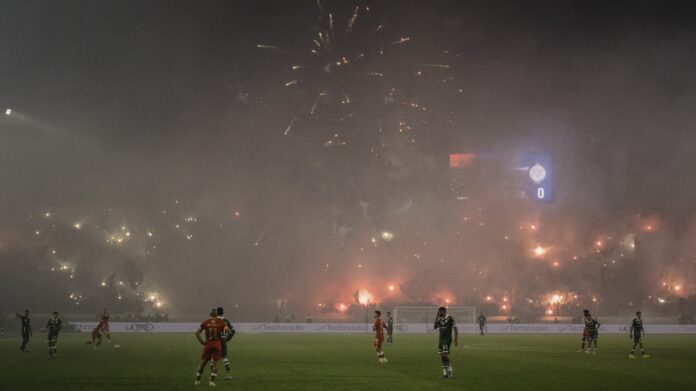
Police officers watch as flares and smoke light up the stands during the Casablanca Derby between Wydad and Raja at Mohammed V Stadium.
Image courtesy of Yassine Toumi.

Wydad vs Raja: A Historic Rivalry

One of the fiercest derbies in world football took place yesterday at the iconic Mohammed V Stadium in Casablanca. Wydad Athletic Club, the hosts, battled Raja Casablanca, hoping to secure the first win over their rivals since 2022. The match ended 0-0, marking the 135th league encounter between the Casablanca giants.

Ranked number one in Africa and the Arab world, and considered one of the top ten derbies globally, anticipation had reached fever pitch, with the stadium selling out within 48 hours of tickets going on sale. However, while the build-up promised fireworks, the 90 minutes of football failed to match the pre-match excitement.

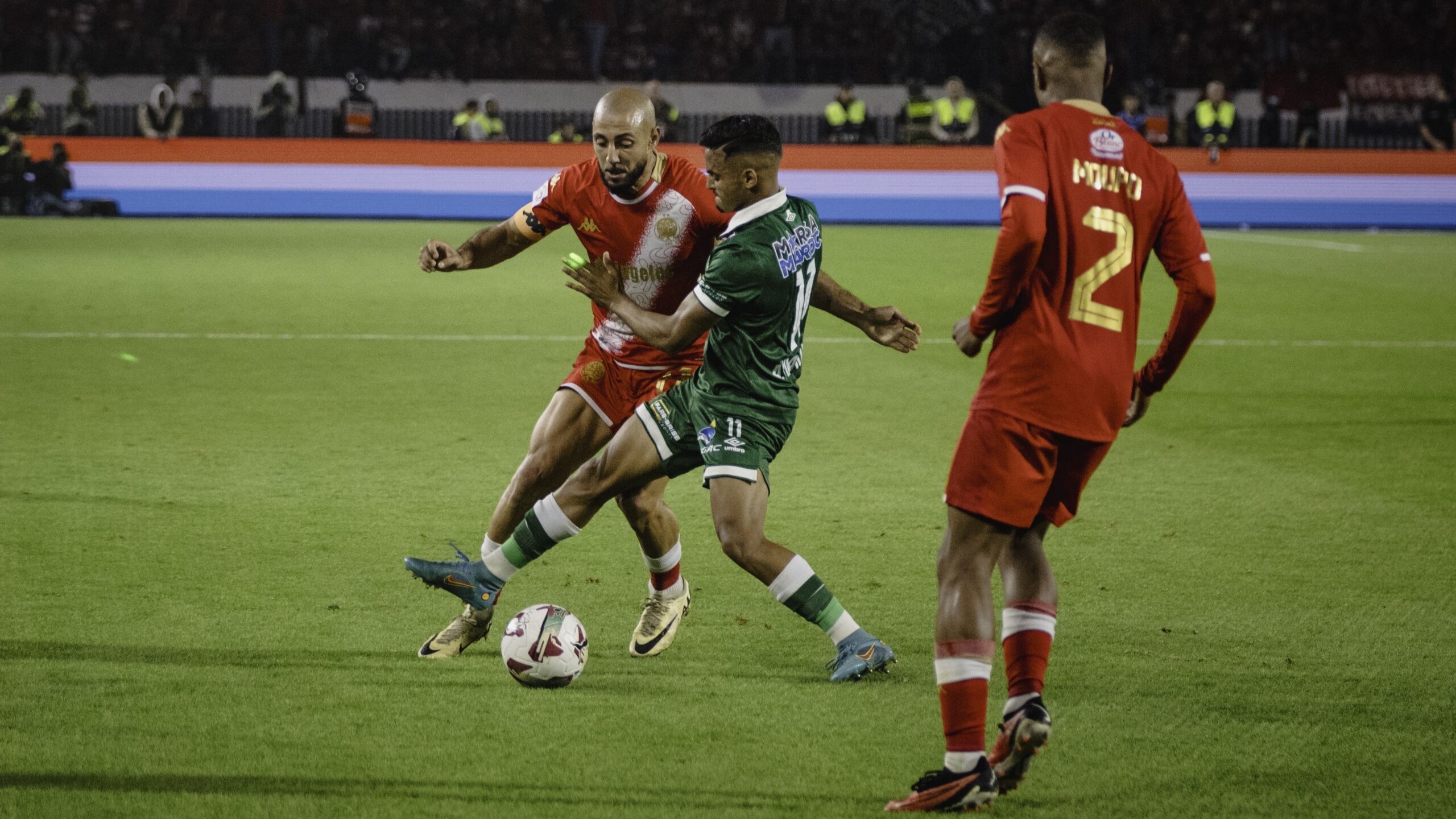
Wydad and Raja players in action during the Casablanca Derby at Mohammed V Stadium.
Image courtesy of Yassine Toumi.

Star-Studded Squads and Lackluster Performance

The game was characterized by cautious play and limited attacking intent from both sides. Raja dominated possession with 56%, Wydad registered 7 shots, there were some intense duels, two one-on-one opportunities from both sides, but overall, neither team could break the deadlock. The match produced more than 100 minutes of often monotonous football.

Despite this underwhelming display, both squads boasted considerable quality. Wydad’s squad features 32 players including 10 foreigners, while Raja’s squad features 3 among its 24-player roster, reflecting a more domestic-focused approach. Amongst the nationalities featuring in yesterday’s derby are South Africa, Brazil, and the Netherlands, showcasing the international flavor of Moroccan football.

The match saw experienced campaigners such as Nordine Amrabat of Wydad, 38, and former Watford, Galatasaray, AEK Athens, and PSV Eindhoven star, alongside upcoming talents like Mehdi Mchakhchakh from Raja, who recently won the African Nations Championship with Morocco.

“The match saw experienced campaigners such as Nordine Amrabat of Wydad, 38, and former Watford, Galatasaray, AEK Athens, and PSV Eindhoven star, alongside upcoming talents like Mehdi Mchakhchakh from Raja, who recently won the African Nations Championship with Morocco.”

Fireworks’ Show: The Real Spectacle in the Stands

Where the players disappointed, the supporters more than compensated. Fans had to turn to the stands to witness a spectacle far more rhythmic, colorful, and enjoyable than the action on the pitch.

Supporters from both camps displayed fiery passion, delivered continuous tifos, and chants were sung almost non-stop throughout the encounter. The atmosphere was so intense that the match was halted multiple times due to thick smoke from flares, as visibility on the pitch became poor. The referee added almost 12 minutes of stoppage time at the end of each half.

This intense rivalry between the two sets of fans has earned global recognition. The incredible atmosphere that Wydad and Raja supporters create has become an attraction in its own right, with the passionate displays in the stands often overshadowing what happens on the field.

“The incredible atmosphere that Wydad and Raja supporters create has become an attraction in its own right, with the passionate displays in the stands often overshadowing what happens on the field.”

The rivalry is accentuated by historical social dimensions, with Wydad being associated with the middle class, while Raja representing the working-class values and populist politics. However, these ideological differences have faded over time, and supporters of both clubs now come from diverse social backgrounds, united only by their unwavering loyalty to their respective teams.

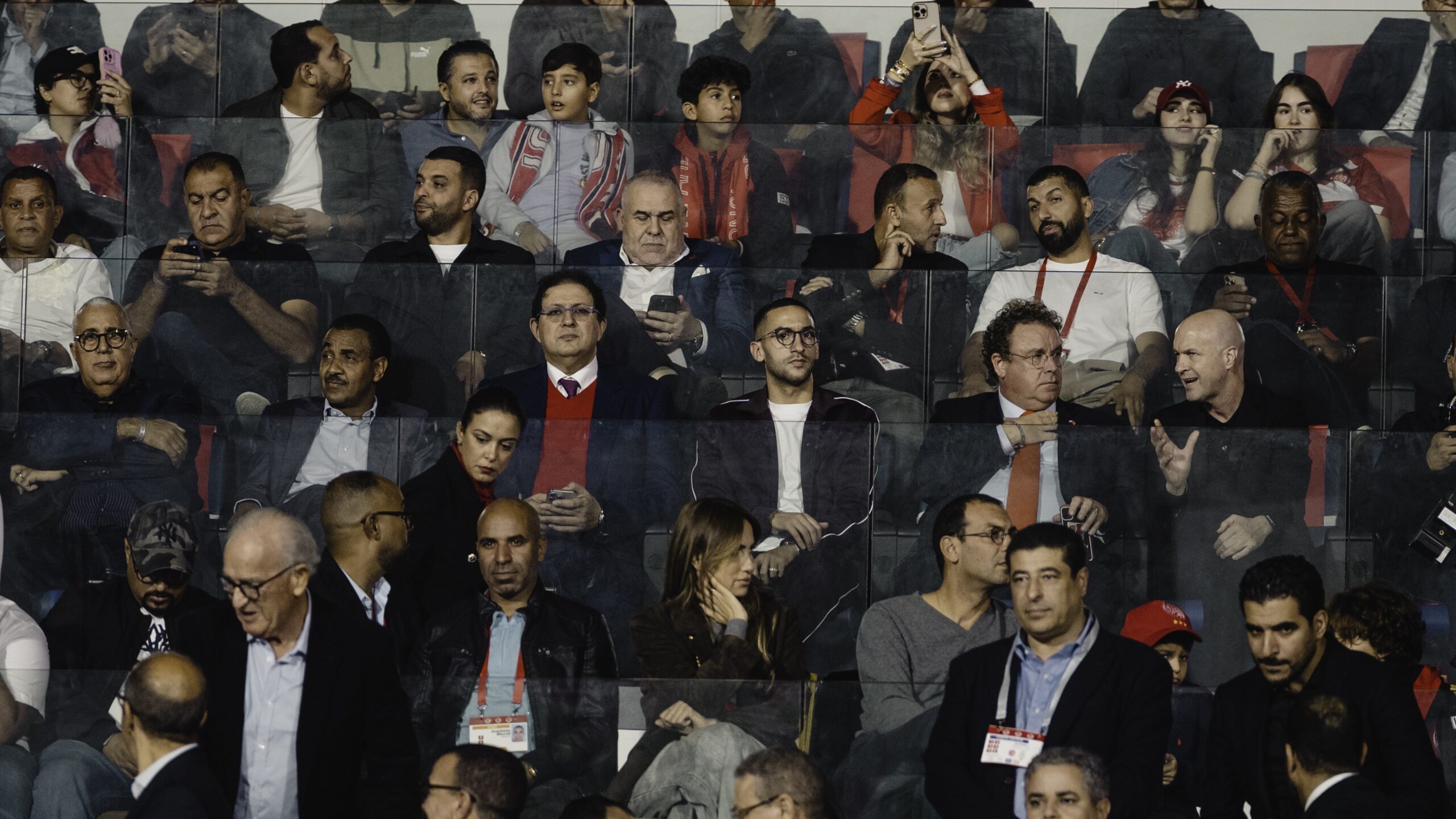
Morocco international Hakim Ziyech watches the Casablanca Derby from the stands at Mohammed V Stadium.
Image courtesy of Yassine Toumi.

Hakim Ziyech: Casablanca’s Newest Attraction

Morocco international Hakim Ziyech, who recently signed with Wydad Casablanca, was present in the stands at Mohammed V Stadium to witness his first derby experience.

The former Chelsea and Ajax Amsterdam star signed as a free agent for Wydad after his contract with Qatari side Al-Duhail expired in the summer. His arrival represents a significant boost for Moroccan football, which continues to attract talented players back to domestic shores.

The move brings one of Morocco’s most decorated current internationals to the Botola Pro at a pivotal moment, enhancing the league’s profile and competitiveness on both continental and global stages.

Looking Ahead: Morocco’s Football Ascendancy

The derby, despite its lackluster on-pitch action, demonstrates how passionate fan culture elevates Moroccan football on the global stage. The incredible atmosphere created by Wydad and Raja fans serves as a powerful advertisement for the country’s football culture and infrastructure.

Morocco is gearing up to host the 2025 Africa Cup of Nations from December 21, 2025, to January 18, 2026, and atmospheres like yesterday’s showcase why the nation is perfectly positioned to deliver a memorable continental tournament. More than 120 construction and renovation projects are currently underway across six host cities as Morocco prepares to welcome Africa’s best teams and fans.

Events like the Casablanca derby prove that when it comes to football passion, spectacle, and creating unforgettable sporting experiences, Morocco is already at the top of its game and ready to shine on the continental stage.

The Strategic Rise of USL Dunkerque

0
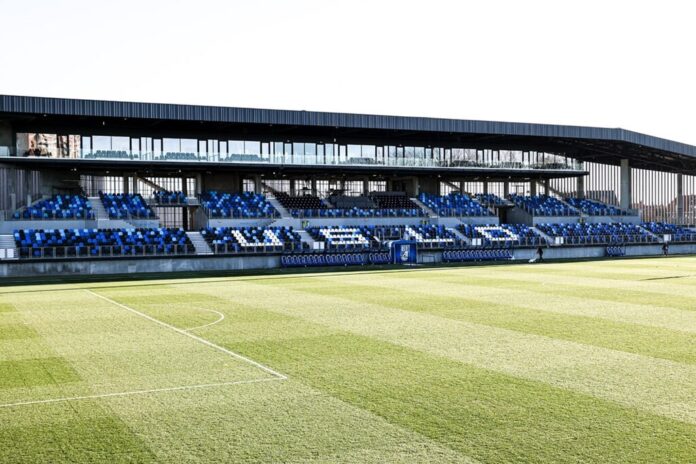
Stade Marcel-Tribut, home of USL Dunkerque, showcasing the club’s modern facilities and growth in French football.
Sajidldg, CC BY-SA 4.0, via Wikimedia Commons

USL Dunkerque’s recent rise reflects a combination of sporting achievement, strategic management, and commercial foresight. Under the new ownership of the Turkish Amissos Group, the club reached the Coupe de France semi-finals for the first time in nearly a century. This achievement, paired with major organizational and financial reforms, has positioned Dunkerque as one of the most professionally managed projects in French football. The following sections analyze the club’s success story through sporting results, youth development, leadership structure, and commercial performance.

Historic Coupe de France Run and Its Impact

The 2024–25 Coupe de France campaign became a turning point in Dunkerque’s modern history. The team captured national attention after eliminating Ligue 1 sides AJ Auxerre and Stade Brestois 29 before facing Paris Saint-Germain in the semi-final. Dunkerque led 2–0 before narrowly losing 4–2, a performance that was widely praised across French media. It was the club’s deepest run since 1929 and brought unprecedented exposure. Increased ticket demand, higher media visibility, and a surge in merchandise sales followed. This visibility strengthened the club’s brand identity and attracted new sponsors, turning a short-term sporting achievement into a foundation for long-term commercial growth.

“The 2024–25 Coupe de France campaign became a turning point in Dunkerque’s modern history.”

Talent Development and the Gessime Yassine Case

Dunkerque’s commitment to youth development and intelligent recruitment is another major factor behind its progress. The best example is Moroccan winger Gessime Yassine, who joined in January 2024 after standout performances in lower divisions. By the end of the season, he was voted the club’s Best Young Player and later helped Morocco win the U20 World Cup. Yassine’s rise illustrates Dunkerque’s model: identify undervalued players, give them first-team exposure, and increase their market value. His current estimated valuation of around €4 million shows how this approach creates both sporting and financial return. Sporting director Demba Ba emphasized that Yassine’s technical ability and early experience make him a model for future signings. This development-first philosophy enables Dunkerque to stay competitive while also producing valuable assets for potential transfers.

Ownership and Organizational Reforms under Amissos

The acquisition of USL Dunkerque by Amissos Group in July 2023 was the catalyst for institutional reform. Led by Turkish businessman Yüksel Yıldırım, who also owns Samsunspor, the group continued to oversee day-to-day operations, while Jasper Yıldırım led an Executive Committee dedicated to investment and strategic planning. Demba Ba joined as sporting director, bringing elite-level football expertise to the structure. The management model combined continuity with modernization, emphasizing financial discipline, data-based scouting, and transparent governance. These changes elevated Dunkerque’s professionalism to the standards of top-tier clubs while preserving its community identity and fan trust.

Federico Palomba: Supporting Dunkerque’s Strategic Growth

Federico Palomba, CEO of the Amissos Group, has been a key supporter of Dunkerque’s transformation. With experience at Juventus, Lamborghini, and in global marketing, he brings strategic focus and professionalism to the club’s operations. Palomba encourages data-driven management, modern sponsorship models, and solid governance to ensure sustainable growth. His leadership helps Dunkerque combine local roots with a more organized, business-minded approach that aligns with international best practices.

Sporting Direction and Culture under Demba Ba

Demba Ba has become a central figure in Dunkerque’s transformation. His leadership integrates sporting expertise with modern management principles. Ba’s philosophy avoids excessive spending, focusing instead on intelligent scouting, analytics, and character-based recruitment. He has expanded Dunkerque’s access to international networks and data platforms to identify and sign players with high potential at reasonable cost. This approach not only improved squad depth but also created a clear footballing identity. Ba also played a crucial role in reshaping the technical staff, supporting the appointment of coach Luís Castro during a challenging phase, which led to improved league form. His vision centers on professionalism, discipline, and aligning club culture with local values. Under his direction, Dunkerque has managed to be both globally connected and locally authentic, a balance that strengthens its image within and beyond France.

“Ba’s philosophy avoids excessive spending, focusing instead on intelligent scouting, analytics, and character-based recruitment.”

Financial and Commercial Strategy

Financial discipline has been a defining aspect of the Amissos era. Dunkerque operates with one of Ligue 2’s leanest budgets, relying mainly on free transfers and loan deals rather than expensive acquisitions. The focus has shifted toward sustainable growth through youth development, performance-based bonuses, and commercial expansion. A milestone came in June 2024 with the announcement of a new technical partnership with Macron, the Italian sportswear company. The deal improved product quality, enhanced merchandising potential, and gave the club a stronger international identity. The club has also diversified its income through improved hospitality, community programs, and digital fan engagement. Transfer revenues from developed players are planned to be reinvested into scouting and infrastructure. This cautious, long-term model prioritizes profitability and stability over risky short-term spending.

Key Takeaways for Similar Clubs

USL Dunkerque provides a blueprint for mid-sized clubs aiming to grow sustainably. Its success rests on several principles. Strong and visionary ownership sets the tone, but operational control remains with professionals who understand both football and business. A measured sporting strategy, emphasizing youth development and data-driven recruitment, reduces risk while creating assets for future revenue. The club also demonstrates that community engagement and commercial partnerships can evolve simultaneously, as shown by the Macron collaboration and increased fan participation. Most importantly, Dunkerque has learned to convert on-field moments into off-field value. The Coupe de France run generated visibility that was immediately leveraged for brand partnerships and sponsorships.

By aligning sporting ambition with business discipline, Dunkerque has established a replicable model of modern football management. It proves that with coherent leadership, strategic investment, and cultural alignment, even smaller clubs can compete with established powers while building a financially sustainable future.

Value Without Victory: What Defines a Football Club

0
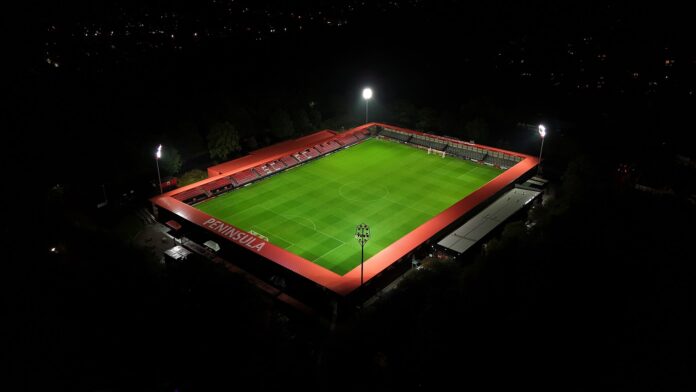
Aerial night view of The Peninsula Stadium in Salford, symbolizing the connection between football, business, and community value.
Emessem T, CC BY-SA 4.0, via Wikimedia Commons

What Defines a Club’s Value?

Value is one of sport’s most elusive currencies. It cannot be seen in a single goal or captured by a single number on a balance sheet. It breathes in reputation, in legacy, in the emotions the sporting club evokes over time. For some, value lies in consistent silverware and domination at the top leagues. For others, it exists in something less tangible: global influence, cultural relevance, and the ability to command attention beyond the ninety minutes on the pitch.

Football has evolved into a theatre where competition meets commerce, where passion and profit share the same stage. Investors and fans alike now ask a question once reserved for economists: what truly determines worth? The sheer passion within a stadium still matters, but so does the magnitude of a brand in markets globally.

You can say the modern club’s value no longer belongs solely ninety minutes on the pitch, rather to a wider ecosystem, one built on narrative, reach, and identity. The game, after all, is built behind sustainability and winning, or what directors of football would call it, branding.

“Value is one of sport’s most elusive currencies. It cannot be seen in a single goal or captured by a single number on a balance sheet.”

The Anatomy of Value

Understanding what gives a football club its value means looking beyond results and trophies. A club is more than a team that plays matches or sells merchandise. It is an organisation built on performance, structure, and reputation. Each of these elements plays a role in shaping what a club is truly worth.

Sporting success remains the most visible source of value. Winning brings prize money, stronger sponsorships, and higher matchday revenue. A history of consistent performance also attracts better players and investors who want stability. Still, results alone no longer determine a club’s financial strength. The modern game rewards clubs that combine strong performance with a clear long-term strategy.

Commercial activity has become equally important. Broadcasting rights, partnerships, and global fan engagement now drive a large share of income. A club’s brand holds measurable financial weight, and the way it is managed off the pitch through marketing, communication, and fan relations can influence its valuation as much as its league position. Napoli’s collaboration with Italian fashion house Armani through the EA7 line is a strong example. The partnership allowed the club to blend sport and fashion, strengthening its global image and proving how identity-based branding can add real commercial value.

Legacy and identity complete the picture. Clubs that maintain a strong connection to their communities and preserve their traditions tend to retain loyal supporters and long-term credibility. When short-term results fluctuate, that stability helps protect value.

A football club’s worth is therefore the result of both sporting and financial strength. The balance between the two determines how sustainable that value is over time.

“The modern game rewards clubs that combine strong performance with a clear long-term strategy.”

The Shift from Pitch to Portfolio

Over the past two decades, football has moved from being a sport driven mainly by competition to an industry managed like an investment portfolio. Clubs are no longer valued only for their results on the field but also for their ability to generate stable and diversified revenue streams. This shift has attracted investors who view football as a long-term asset class rather than a seasonal gamble.

Modern ownership groups now focus on financial sustainability, market expansion, and brand visibility. Private equity firms, sovereign wealth funds, and multinational corporations have entered the game with clear strategies. They look for clubs that can deliver consistent cash flow through broadcasting rights, commercial partnerships, and digital growth. In this model, sporting success is not ignored, but it is treated as one of several performance indicators rather than the only one.

This financial mindset has changed how clubs are managed. Decisions about player recruitment, infrastructure, and marketing are often based on investment return rather than emotion. Clubs develop global academies, build partnerships in new regions, and invest in data analytics to increase operational efficiency. The goal is to make the club less dependent on unpredictable match results and more reliant on steady income.

At the same time, this approach has created tension between tradition and business. Many fans still see football as a community institution, while owners view it as a scalable brand. Balancing these two perspectives has become one of the defining challenges of modern football management. Groups like City Football Group and Red Bull have turned clubs into global networks, using shared resources and scouting to maximise returns. Similarly, Saudi Arabia’s Public Investment Fund’s investment in Newcastle United represents a wider strategy to build both sporting success and national brand influence. The clubs that succeed are those that can grow commercially without losing their identity.

The transformation from pitch to portfolio has made football a global business worth billions, but it has also raised a fundamental question. In pursuing financial stability and international reach, can clubs still preserve the passion and authenticity that made them valuable in the first place?

The Metrics Behind Value

When investors assess a football club, they rely on measurable indicators that go beyond performance on the pitch. Valuation has become a structured process that combines financial data with brand analysis and market potential. Understanding these metrics is essential for anyone studying how clubs build and sustain their worth.

The starting point is revenue. A club’s income typically comes from three main sources: matchday revenue, broadcasting rights, and commercial activity. Matchday revenue includes ticket sales, hospitality, and stadium-related income. Broadcasting remains the largest contributor for most top clubs, especially in leagues with global television deals. Commercial activity covers sponsorships, partnerships, and merchandise areas that depend heavily on a club’s visibility and reputation. The Premier League’s global broadcasting deals are a major reason its clubs dominate revenue rankings, with matches watched across more than 200 countries. Off the pitch, partnerships like Real Madrid’s long-standing deal with Adidas show how brand alignment can significantly increase a club’s commercial value.

Profitability is another critical factor. Analysts often look at operating income or EBITDA (earnings before interest, taxes, depreciation, and amortization) to measure financial health. A club that consistently generates positive cash flow signals efficient management and lower investment risk.

Brand strength adds another layer. This involves metrics such as social media following, global fan engagement, and the value of sponsorship associations. A strong brand increases a club’s bargaining power with sponsors and partners, creating financial stability even when sporting results fluctuate.

Asset ownership also influences valuation. Owning a stadium, training facility, or media subsidiary adds long-term security and reduces reliance on external costs. Clubs with modern infrastructure tend to command higher enterprise values because their assets generate future revenue potential.

Finally, investors consider growth potential. This includes expansion into new markets, digital content strategies, and participation in international competitions. The ability to grow revenue across different regions and platforms often separates elite clubs from those limited to domestic markets. Together, these metrics create a complete picture of value, one that blends sport, business, and strategy. While winning remains central to a club’s identity, its financial sustainability now depends on how well it performs across these interconnected areas.

The Balance Between Performance and Perception

The relationship between sporting success and financial value is no longer straightforward. Performance on the pitch still influences a club’s reputation and revenue, but perception — how the club is viewed by fans, sponsors, and investors — now plays an equally important role. The modern game rewards consistency and visibility as much as it rewards victories.

Sporting performance remains the most direct way to create momentum. Winning trophies and qualifying for major competitions bring immediate financial rewards through prize money, broadcasting bonuses, and higher attendance. Strong results also increase player values and attract commercial partners seeking association with success. However, the financial impact of these gains is often short term. A single bad season or early exit from a tournament can quickly reduce those advantages.

Perception, on the other hand, shapes value over time. A club that communicates a strong identity, maintains global engagement, and invests in community and innovation can sustain its reputation regardless of temporary setbacks. This perception translates into long-term trust from sponsors and investors who see stability and professionalism. It is why some clubs remain among the world’s most valuable even without recent major titles.

Balancing these two elements is the essence of modern football management. Too much focus on performance can lead to financial instability, while prioritising perception without competitiveness risks alienating supporters. Successful clubs combine both. They build credible sporting projects supported by sound financial structures and strong communication strategies.

Ultimately, value today is defined by how effectively a club connects results with reputation. The strongest organisations use their sporting platform to grow their brand and their brand strength to reinforce their sporting ambitions. When both sides work in alignment, value becomes not just a measure of money or success, but of long-term relevance in an ever-changing game.

Conclusion: Defining Value in the Modern Game

The modern football club exists at the intersection of sport, business, and culture. Its value is no longer determined by a single measure but by how well it manages to integrate all three. Performance on the pitch remains the foundation, but the true strength of a club lies in its ability to convert that success into sustained financial growth and global recognition.

Clubs that understand this balance are shaping the future of the game. They invest in their teams, facilities, and data while also building brands that reach far beyond their home cities. They treat financial stability not as a substitute for ambition, but as the structure that allows ambition to last. Bayern Munich and Arsenal illustrate this approach well. Both clubs combine responsible financial management with competitive ambition, showing that success and sustainability can coexist when the long-term vision is clear.

At the same time, value is not purely financial. It reflects how a club represents its community, how it handles challenges, and how it stays relevant in a rapidly changing world. The most successful clubs manage to grow commercially without losing the spirit that made them matter in the first place.

In the end, value in football cannot be reduced to trophies or revenue figures alone. It is defined by endurance, the ability to perform, adapt, and remain meaningful over time. A truly valuable club is one that competes not only for titles, but for purpose.

Who is Sergio Jordan?

0
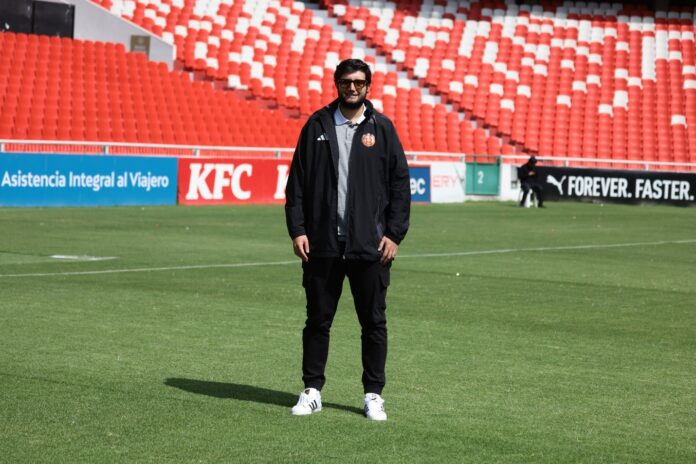
Sergio Jordan, Chief Scout of Fortaleza CEIF, stands on the pitch during a training session in Colombia.
Sergio Jordan leads Fortaleza CEIF’s scouting strategy, focusing on identifying Colombia’s top youth prospects and shaping future professional talent.

Sergio Jordan is the Chief Scout of Fortaleza CEIF, where he leads the club’s talent acquisition strategy with a strong focus on Colombia’s top youth prospects. Since July 2025, his mission has been clear: identify high-performance U-15 to U-20 players with elite potential and build a direct pathway from the academy to the first team.

At Fortaleza, Jordan works across all levels of the club. He aligns signings with the coaching staff’s tactical vision, designs development plans with the Academy Director, and justifies investments to management. His strategy combines long-term youth development with short-term results, targeting profiles that can both impact the pitch and generate financial return.

Before Fortaleza, Jordan spent three years as a Football Scout for adidas in Colombia. He built and managed a portfolio of 70 professional and youth players, while scouting the country’s best “Next Gen” talents. His work paid off at international tournaments: in the 2023 U20 World Cup, 8 of 11 Colombian starters were adidas players, and by the 2025 South American U20 Championship, that number rose to 9 of 11.

Earlier in his career, he was a Football Analyst at Scouting Labs, delivering detailed tactical reports for clubs, academies, and agents using tools such as Instat and Wyscout.

Jordan combines technical scouting knowledge with one of the strongest networks in Colombian football. His experience across academies, professional clubs, and international competitions positions him as a key figure in Colombia’s next generation of football leaders.

“My long-term scouting for the academy is informed by the current and future needs of the first team, creating a seamless pipeline.”

Our Exclusive Interview with Sergio Jordan

What makes the Colombian football market unique when it comes to identifying young talent?

First, Colombia has a wide range of landscapes. Top players don’t just come from a few major cities, they’re found all over, from the mountains to the coasts. This leads to a mix of playing styles. For example, players from the Pacific Coast tend to be bigger and more athletic, while those from the Atlantic Coast are often skilled and good at scoring goals. To find these hidden talents, you have to really understand the country.

Then there’s the grassroots scene. In Colombia, there are numerous strong amateur academies and local clubs that compete directly with professional teams for young players. You need to build solid relationships and a strong network to even get a chance at these players.

Finally, the work goes way beyond just watching a player on the field. Many of these young talents come from humble backgrounds, so their development isn’t just about football skills. A significant part of the job is ensuring they receive the necessary cultural and educational support to develop the fundamental habits and maturity required to succeed in the professional world.

How do you balance scouting for immediate first-team needs with long-term youth development at Fortaleza CEIF?

My approach is built on the understanding that long-term youth development and scouting for immediate needs are two sides of the same coin.

On one hand, there’s the long-term vision, which is the very essence of Fortaleza CEIF’s philosophy. My primary focus is to identify and attract high-potential players from the U-15 to U-20 categories. The goal here isn’t just to fill a roster, but to build a legacy. I’m looking for players with a clear path to becoming elite, who, through our academy and professional environment, can grow into core players for our first team or become valuable assets for future transfers.

On the other hand, there’s the immediate need of the professional team. This involves scouting for players who can fill specific tactical gaps and provide an instant return on investment. This part of my job is very precise. I work closely with the coaching staff, the academy director, and the club president to ensure all our scouting efforts are aligned with the club’s objectives.

The key to balancing these two is to make them work together. My long-term scouting for the academy is informed by the current and future needs of the first team, creating a seamless pipeline. When we have a successful youth pipeline, it reduces our reliance on the transfer market for expensive, high-risk signings. At the same time, finding a high-impact player for the first team provides us with the results and stability needed to continue investing in our long-term vision.

Ultimately, both goals are about building a winning team and a sustainable club. It’s a continuous cycle where the success of the youth academy directly supports the first team, and the success of the first team validates our long-term development strategy.

“What truly matters is forming good people in addition to good players.”

During your time at adidas, you helped shape the careers of many “Next Gen” players. What was the most rewarding part of that role?

Honestly, the most rewarding part of my role at adidas was having the privilege of experiencing the process with young players up close. Seeing them when they were just raw talent, when no one else knew them, and being a part of their journey is what made the work so special. In Colombia, football is often a way out and an opportunity for so many, so being able to play a small part in a young player’s career and seeing their life, and their family’s lives, change is a huge source of pride. The greatest reward was watching those players who were once “wild” talents become figures known to fans and the press, knowing you were there at the very beginning of their story.

Which qualities do you look for in a player that signal they can transition from youth football to the professional level?

What do I look for in a player that tells me they’re ready to go pro? It really comes down to three things:

  • Their mindset: The pro game is tough, and I need to see a player who is mentally strong. Can they handle pressure? Do they bounce back from mistakes? Are they coachable? That grit and a real desire to get better is what separates good players from great ones.
  • Their football IQ: It’s not enough to just be fast or have good skills. I look for players who are smart on the field. Do they know where to be? Can they read the game? That tactical awareness is a huge sign that they can adapt and thrive in a structured professional system.
  • Physical readiness and consistency: The professional level is faster and more intense than anything in youth football. I need to see that a player can physically handle it. But more than that, can they perform their skills at a high level, over and over again, without cracking under the pressure? Consistency is what really counts.

How has technology and data analysis changed your approach to scouting and player evaluation?

Technology has transformed my scouting approach, and its biggest benefit is that it acts as an incredibly powerful filtering tool. It allows us to be more efficient by helping us quickly screen a large number of players, accelerating the initial phases of the process. It’s no secret that these tools are evolving every day, which allows us to decrease the margin of error. However, technology only tells me what a player does; it’s my experience, intuition, and personal contact that tell me who they are. The final decision is always based on human judgment, since evaluating a player’s character and personality is something no data can replace.

Looking ahead, what is your vision for Fortaleza CEIF’s academy and its role in Colombian football?

My vision for the Fortaleza academy is simple: to continue consolidating its position as one of the best youth academies in the country. But for me, success goes far beyond just producing great players.

What truly matters is forming good people in addition to good players. In a country where football is a way out for many, it’s my responsibility to instill values, discipline, and habits that transcend the sport. I look for young talents to become leaders both on and off the field, with a solid foundation that prepares them for any challenge life presents.

My goal is for Fortaleza to continue being a consistent producer of talent that not only helps the first team succeed but also leaves its footprint on professional football, both nationally and internationally.

Regresa El Ascenso y Descenso a La Liga MX

0
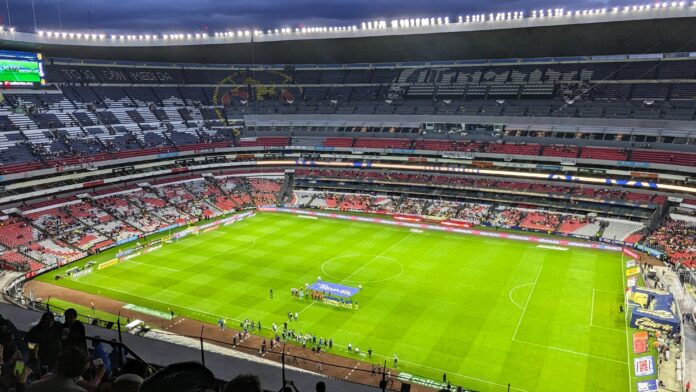
Estadio Azteca during Club América vs. Necaxa match in Liga MX, August 2023.
FromMorningToMidnight, CC0, via Wikimedia Commons

Introducción

Originalmente, la Liga MX (la máxima categoría) y la segunda división de México (ahora llamada Liga de Expansión MX) tenían el sistema tradicional: al final de cada temporada, los equipos con peor rendimiento de la Liga MX descendían y los mejores equipos de la segunda división ascendían.

En 2020, en medio de la pandemia de COVID-19 y sus consecuencias económicas, se llegó a un acuerdo que suspendió los ascensos y descensos durante seis temporadas. El objetivo era dar tiempo a los clubes de ambas categorías para estabilizarse financieramente, construir infraestructura y adaptarse a la incertidumbre causada por la pandemia.

Como parte de este acuerdo, los clubes de la segunda división recibieron apoyo financiero (“estabilización”) y ciertas garantías, aunque con la desventaja de que no podrían ascender a la máxima categoría durante el período acordado.

“El objetivo era dar tiempo a los clubes para estabilizarse financieramente, construir infraestructura y adaptarse a la incertidumbre causada por la pandemia.”

La lucha por recuperarlo

Un grupo de clubes de la segunda división (Liga de Expansión) comenzó a presionar para que se restableciera el ascenso/descenso con anterioridad; argumentaron que la promesa o expectativa era que la suspensión sería temporal y que necesitaban saber cuándo y cómo terminaría para poder planificar (financieramente, en infraestructura, etc.).

El 19 de mayo de 2025, 10 clubes de segunda división presentaron un recurso ante el Tribunal de Arbitraje Deportivo (TAS) contra la Federación Mexicana de Fútbol (FMF), buscando restablecer el ascenso/descenso antes del final del período original de seis temporadas. Algunos de estos clubes se retiraron posteriormente, dejando a seis (Atlético La Paz; Atlético Morelia; Cancún FC; Mineros de Zacatecas; Venados; Leones Negros de la U. de G.) para continuar.

Decisión del TAS

El TAS dictaminó que los ascensos y descensos no volverán en la temporada 2025-26, ya que la FMF había dejado claro en los acuerdos originales (la suspensión de 2020) que la pausa de seis temporadas duraría hasta ese período, finalizando en la temporada 2025-26. El TAS confirmó que los ascensos y descensos deben restablecerse para la temporada 2026-27. Por lo tanto, tenemos certeza: la temporada 2026-27 es la fecha de inicio para el regreso de la liga profesional/relativa.

“El TAS confirmó que los ascensos y descensos deben restablecerse para la temporada 2026-27.”

Condiciones y requisitos clave para el ascenso

Si bien los ascensos y descensos regresarán, es probable que no se vean idénticos a cómo funcionaban antes de la suspensión. Algunos de los requisitos o cambios importantes que se están discutiendo son:

  • Criterios de certificación/elegibilidad: Los clubes de la Liga de Expansión MX que deseen ascender deberán cumplir con ciertos estándares. Históricamente, esto ha incluido aspectos como estabilidad financiera, capacidad adecuada en los estadios, infraestructura adecuada, planificación empresarial, etc.
  • Solvencia financiera: Se informa que los clubes aspirantes necesitarán un respaldo financiero significativamente mayor; por ejemplo, algunas fuentes sugieren requisitos mínimos de capital (activos/patrimonio neto), posiblemente líneas de crédito revolventes y demostrar que pueden mantener operaciones a un nivel superior.
  • Requisitos de infraestructura/estadio: Los recintos deben cumplir con ciertos requisitos de tamaño y estándares (por ejemplo, capacidad e instalaciones) para albergar partidos de primera división. Asimismo, las prácticas organizativas y comerciales podrían ser auditadas.
  • Tamaño y estructura de la liga: Se está discutiendo la posibilidad de ampliar la Liga MX de 18 a 20 equipos, lo que puede afectar la cantidad de equipos que ascienden o descienden, y posiblemente moderar el impacto en los clubes al distribuir el período de ajuste.

Conclusión

La decisión del TAS garantiza el restablecimiento del sistema de ascensos y descensos a la Liga MX para la temporada 2026-27. Sin embargo, no se tratará de una simple reinstauración del antiguo sistema: los clubes de segunda división deberán cumplir con estándares importantes, y habrá cambios estructurales (tamaño de la liga, certificación, requisitos financieros y de infraestructura).

Tras la pausa de 2020, pasando por batallas legales y negociaciones, el panorama está cambiando hacia una versión de ascensos y descensos más regulada y basada en el mérito, pero también más exigente. Clubes, aficionados y federaciones tendrán tiempo en la próxima temporada para prepararse para lo que promete ser un ecosistema del fútbol mexicano más competitivo y dinámico.