

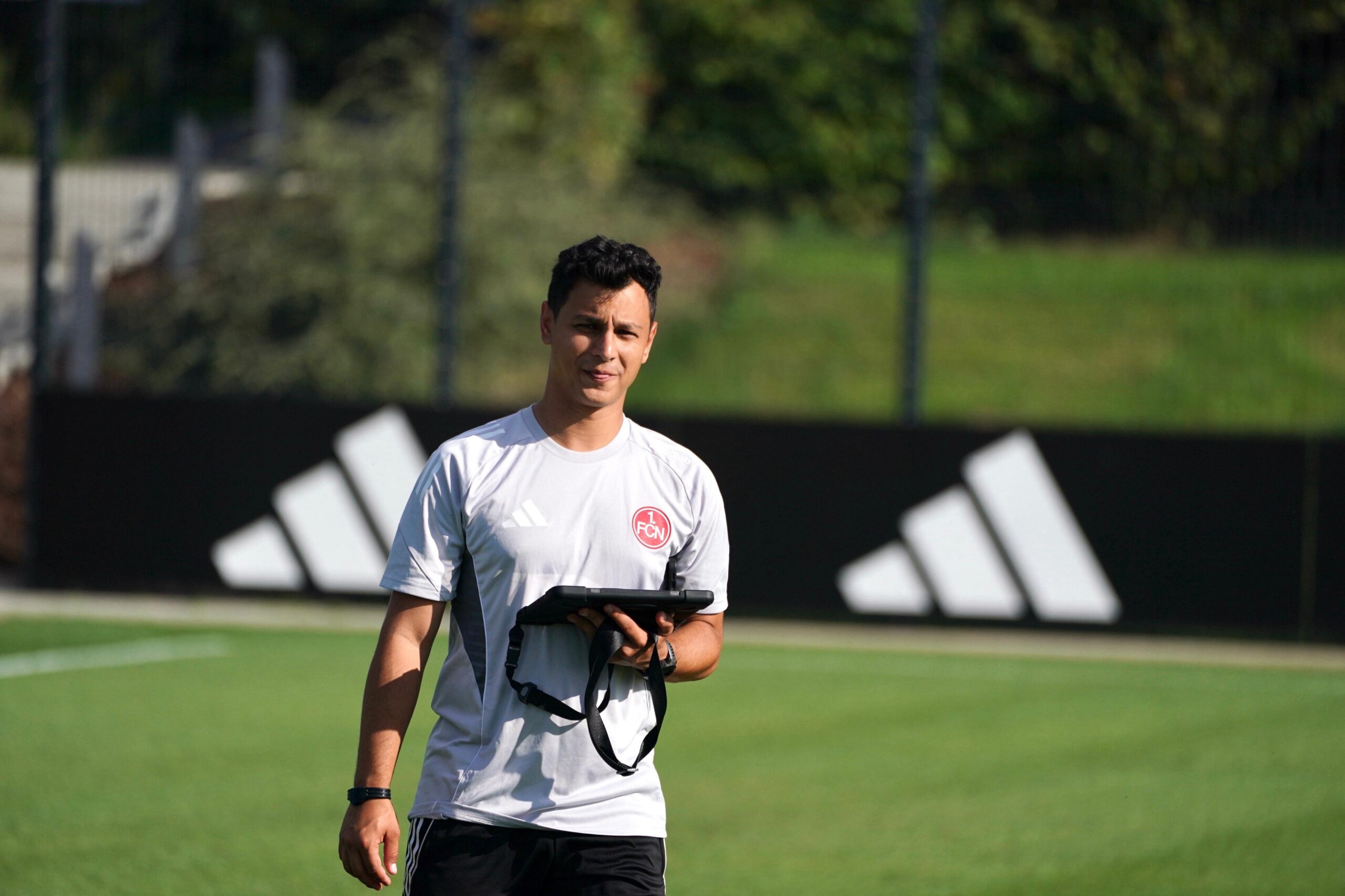
Profile
Role: Reha-Athletiktrainer, 1. FC Nürnberg Women’s Team
Specialisation: Rehabilitation, Athletic Development, Injury Prevention
Experience: Frauen Bundesliga, 2. Frauen Bundesliga, Academy Football
Focus Areas: Load Management, Return-to-Play, Performance Development
Biography
In elite football, the margin between rehabilitation and peak performance is often measured in details. The ability to guide players safely from injury back to competition while simultaneously improving their physical capacity has become a critical component of modern performance environments.
Mohsen Behzadpour works precisely within this intersection of rehabilitation, athletic development, and injury prevention. Currently serving as Reha-Athletiktrainer for the women’s team of 1. FC Nürnberg in the Frauen Bundesliga, he combines applied sport science with practical experience as a former professional footballer. With academic training in strength and conditioning, sport nutrition, and performance rehabilitation, his work focuses on bridging medical recovery and high-performance demands within elite women’s football.
The ability to guide players safely from injury back to competition while simultaneously improving their physical capacity has become a critical component of modern performance environments.
Key Insights
- Rehabilitation, performance development, and injury prevention are fully interconnected processes.
- Load management is central to optimising performance and reducing injury risk.
- Modern return-to-play focuses on performance readiness, not just being pain-free.
Our Exclusive Interview with Mohsen Behzadpour
You are currently working as Reha-Athletiktrainer in the Frauen Bundesliga at 1. FC Nürnberg. How do you define your role within the intersection of medical rehabilitation and high-performance football?
In my role as a rehabilitation performance coach in the Frauen Bundesliga, I operate at the intersection of medical rehabilitation and performance development. My primary objective is not only to guide players safely back from injury, but also to enhance their physical performance and reduce future injury risk.
A key element of this process is load management. By monitoring and adjusting training loads, we aim to optimise performance while simultaneously preventing injuries.
Rehabilitation, performance development, and injury prevention are therefore closely interconnected processes and should not be treated separately.
Rehabilitation, performance development, and injury prevention are therefore closely interconnected processes and should not be treated separately.
Having previously worked in the 2. Bundesliga and academy environments, how does your rehabilitation methodology adapt between youth, transition players, and senior professionals?
Working in both the 2. Frauen Bundesliga and in a youth academy environment has shown me that rehabilitation and performance strategies must be adapted to the player’s stage of development.
In youth academies, the focus is more strongly placed on long-term athletic development, movement quality, and building a strong physical foundation. With senior professional players, the competitive demands are higher and injury risks often increase as players get older and the physical load intensifies.
For this reason, load management strategies and injury prevention programmes must be tailored to the specific demands of each level.
Your academic background includes a Master in Strength and Conditioning for Football and further qualifications in sport nutrition and rehabilitation to performance. How do you translate scientific frameworks into daily on-pitch application?
My academic background in Strength and Conditioning for Football, combined with additional qualifications in sports nutrition and rehabilitation to performance, allows me to translate scientific frameworks into practical work on the pitch.
The key is applying evidence-based principles in a way that fits the daily reality of elite football. Strength training, recovery strategies, and nutrition all play a crucial role in supporting both performance and injury prevention.
Nutrition in particular is often underestimated, but it has a significant influence on both performance levels and the rehabilitation process.
With certification in Blood Flow Restriction training and performance-based rehabilitation models, how do you assess modern return-to-play protocols in elite football?
Modern return-to-play protocols in elite football have increasingly become performance-based. It is no longer sufficient for a player to simply be pain-free. Instead, the objective is to ensure that the athlete is fully prepared for the physical demands of competition.
Blood Flow Restriction training can support this process, particularly in the earlier stages of rehabilitation. It allows us to stimulate muscle adaptations and hypertrophy while working with relatively low loads, which can be highly beneficial following certain injuries or surgeries.
When applied correctly, it can help bridge the gap between rehabilitation and full competitive performance.
It is no longer sufficient for a player to simply be pain-free.
As a former professional footballer, how does your playing experience influence communication and trust during injury phases?
My own experience as a professional footballer strongly influences how I work with players during rehabilitation phases.
Because I come from the game itself, I understand the movements, the demands of the sport, and the psychological challenges players face when dealing with injuries. This often helps to establish a strong level of trust.
Players know that I understand their situation and their desire to return to the pitch as quickly as possible. At the same time, it allows me to communicate exercises and training concepts in a way that is closely connected to the realities of football.
In women’s football, physical load management is evolving rapidly. What structural adjustments must clubs implement to optimise performance while reducing injury risk?
Load management has become one of the most important topics in modern women’s football. To optimise performance while reducing injury risk, clubs need structured monitoring systems and close collaboration between medical, performance, and coaching staff.
Another important factor in women’s football is the consideration of the menstrual cycle when managing training loads and recovery strategies. Integrating these aspects into the overall performance framework can help optimise both performance and injury prevention.
Injury prevention has become a strategic priority in elite women’s football, particularly with regard to ACL risk and load management. How do you design prevention frameworks that go beyond isolated exercises and become embedded within the daily performance culture of a team?
Injury prevention should not rely solely on isolated exercises. Instead, it should be integrated into the daily training culture of a team.
Prevention strategies can be embedded into warm-up routines, strength sessions, and movement preparation. Consistency is essential. When prevention becomes part of the everyday training structure, it is no longer perceived as an additional task but as a natural component of performance preparation.
Beyond structured prevention programmes, how do you educate players and coaching staff to create shared accountability for injury risk management throughout the season?
Education plays a crucial role in this process. Players and coaching staff need to understand why load management and prevention strategies are necessary.
By communicating clearly about injury risks, recovery strategies, and training loads, it becomes possible to create a shared sense of responsibility within the team. When everyone understands the purpose behind these measures, they are far more likely to support and follow them consistently throughout the season.
You have worked within interdisciplinary settings alongside physiotherapists and performance experts. What does effective collaboration between medical, athletic, and coaching departments look like in practice?
Effective collaboration between medical staff, performance coaches, and the coaching staff is essential in elite football.
In practice, this means regular communication, shared decision-making, and clear alignment regarding training loads, rehabilitation progress, and return-to-play decisions.
When all departments work together with the same objective, it ensures that players receive the best possible support both during rehabilitation and in their ongoing performance development.
Looking ahead, what investments are required for Bundesliga women’s clubs to close the performance infrastructure gap compared to top-tier men’s programmes?
To close the performance infrastructure gap between women’s and men’s football, clubs need to invest further in performance staff, medical support, and training infrastructure.
This includes qualified specialists in strength and conditioning, rehabilitation, sports science, and nutrition. Access to modern monitoring technologies and high-quality training facilities is also essential.
These investments are necessary if women’s football is to continue developing sustainably at the highest professional level.
FAQ
Who is Mohsen Behzadpour?
Mohsen Behzadpour is a rehabilitation performance coach working in elite women’s football with 1. FC Nürnberg.
What is his area of expertise?
He specialises in rehabilitation, load management, and bridging injury recovery with performance development.
What is his approach to modern football performance?
His approach integrates rehabilitation, injury prevention, and performance into a single, interconnected framework.