

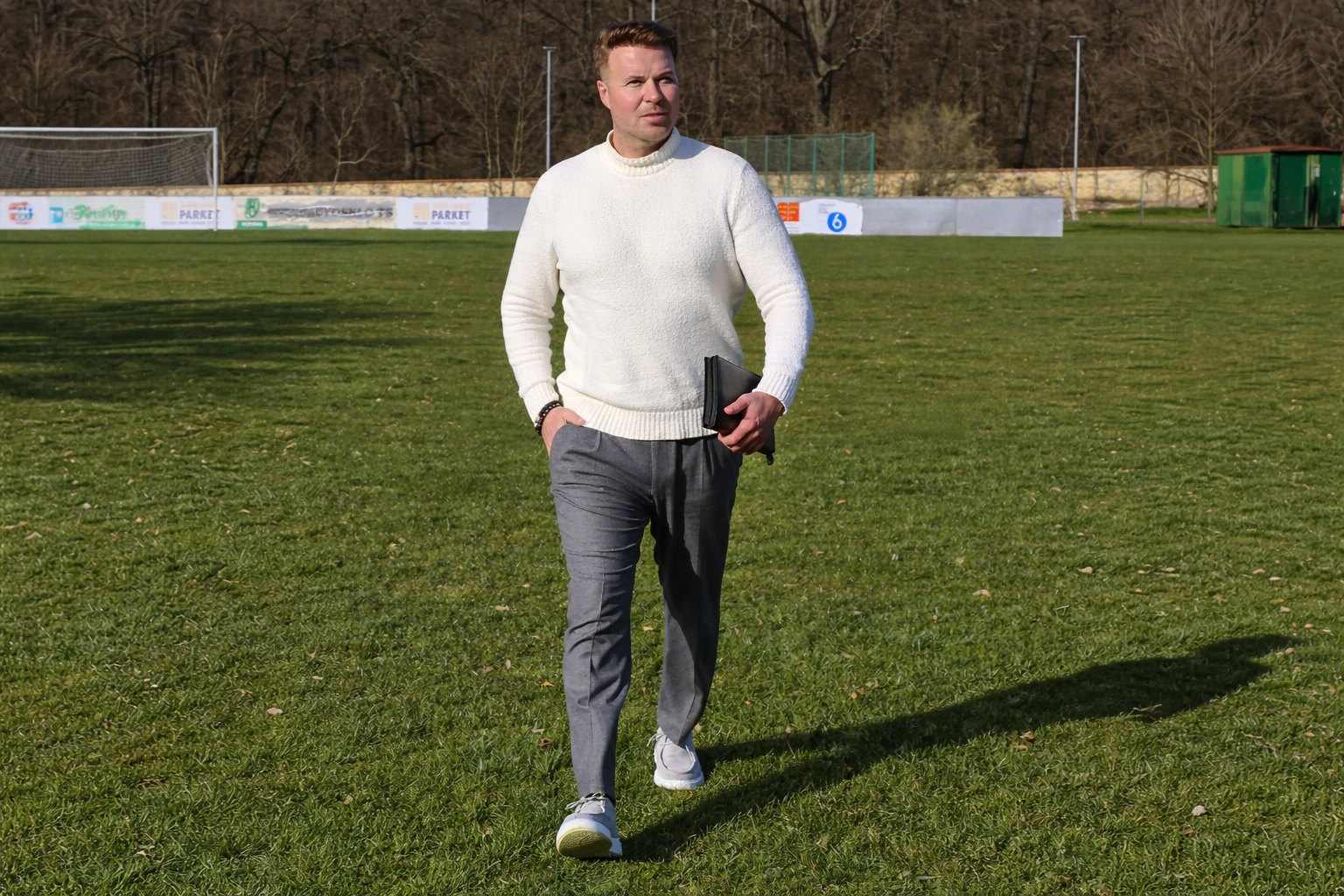
Profile
Role: Scouting and Recruitment Professional
Specialisation: Talent Identification, Recruitment Strategy and Market Intelligence
Experience: Eintracht Frankfurt, AS Roma, LR Vicenza and Udinese Calcio
Focus Areas: European Scouting, Player Projection, Recruitment Processes and Long-Term Squad Development
Biography
Michael Provaznik is a scouting and recruitment professional with more than a decade of experience across top European leagues, known for identifying players early in their development and supporting recruitment decisions with long-term sporting and financial impact.
Born in Prague and raised in Frankfurt, he has developed into a European scouting specialist combining deep knowledge of Western and Eastern European markets with a structured analytical approach and an extensive international network. He has built particular expertise in Central and Eastern European markets, especially the Czech Republic and surrounding regions, where his long-term presence and continuous observation of competitions have enabled early access to emerging talent and reliable local intelligence.
Over more than a decade, he has worked at the highest level of professional football with clubs such as Eintracht Frankfurt, AS Roma (where he operated within the recruitment structure under Monchi and Pasquale Sensibile), LR Vicenza, and most recently Udinese Calcio, where he collaborated within the scouting structure alongside Francesco Vallone, supporting scouting and recruitment processes while contributing market intelligence and player assessments at decision-making level. His tenure at Eintracht Frankfurt between 2008 and 2018 formed the foundation of his professional reputation, contributing to the identification of players with both sporting impact and economic potential and shaping his understanding of how structured recruitment aligns performance with long-term asset development.
What distinguishes Provaznik is his proven eye for talent before global recognition.
What distinguishes Provaznik is his proven eye for talent before global recognition. Across his career, he has been involved in confirmed early-stage scouting recommendations of players such as Declan Rice, Clément Lenglet, Zambo Anguissa, Nordi Mukiele, Alessandro Bastoni, Vladimir Darida, Ritsu Doan, Pervis Estupiñán, Federico Valverde, and Serhou Guirassy at stages when they were still emerging profiles with significant development potential. This track record reflects his ability to combine data, live scouting, and contextual understanding to project future performance and market value with clarity and conviction.
His work is characterised by an exceptionally high level of live scouting activity, regularly attending more than 200 live matches per year across multiple competitions. This volume of direct observation ensures continuously updated market knowledge and reliable first-hand player evaluation. His overall approach combines deep market presence, structured analysis, and long-term projection, with a clear focus on identifying value before it becomes visible to the wider market.
Beyond club responsibilities, Provaznik has contributed to the wider football ecosystem through lectures and analytical projects in collaboration with institutions such as Goethe University Frankfurt, the University of Economics in Prague, and the Lithuanian Football Federation. His work has focused on recruitment strategy, risk assessment, and the economic dimension of football decision-making, reflecting a commitment to both talent identification and the structural development of recruitment environments.
His overall approach combines deep market presence, structured analysis, and long-term projection, with a clear focus on identifying value before it becomes visible to the wider market.
Fluent in multiple languages and proficient in modern scouting platforms such as Wyscout, InStat, and SAP Sports One, he represents the profile of a modern football professional combining analytical thinking, international connectivity, and operational experience. His work consistently focuses on aligning recruitment activity with club identity, financial parameters, and long-term squad planning frameworks.
Equally important is his professional mindset and collaborative approach. Provaznik is recognised for his passion for the football business and cooperative working style, valuing open communication, team-oriented decision-making, and trusted relationships across departments and partners. His positive and approachable character enables him to establish high-quality professional connections and maintain long-term relationships across clubs, agents, and industry stakeholders. His approach combines commitment, reliability, and respect, qualities that support sustainable collaboration within high-performance environments.
Currently, Michael Provaznik is engaged in selected scouting and advisory activities while evaluating his next long-term project at club or organisational level, offering clubs a combination of elite scouting experience, deep market expertise, and a proven track record in talent identification and recruitment strategy. In a football environment increasingly driven by data, networks, and timing, professionals with this profile represent a measurable competitive advantage for clubs seeking to strengthen recruitment structure, market intelligence, and long-term squad development.
Key Insights
- Michael Provaznik combines live scouting, data and contextual analysis to identify long-term player value.
- He has contributed to scouting structures at clubs including Eintracht Frankfurt, AS Roma and Udinese Calcio.
- His philosophy emphasises market understanding, behavioural analysis and trusted football networks.
Our Exclusive Interview with Michael Provaznik
You have worked across different European markets and football cultures for many years. What are the key factors that allow a scout to consistently identify talent that not only performs on the pitch but also generates long-term value for a club?
Consistent talent identification starts with detail-oriented observation. In my experience, behavioural details, not just technical actions, often determine whether a player can generate long-term value.
Many of these indicators become visible through detailed live scouting. I focus closely on behavioural patterns: how a player reacts after scoring, how he responds when the team concedes, and how he handles mistakes. These moments often reveal more about long-term potential than isolated technical actions.
Personality is decisive. Every player goes through difficult phases, but those who remain disciplined, resilient, and team-oriented continue to contribute even below their peak, and these are the players who create sustainable value.
Personality is decisive.
Vladimir Darida is a strong example. What stood out early was not only his football quality, but his mentality, consistency, and commitment to the team. His reactions in both positive and negative moments clearly indicated long-term reliability at a high level.
Ultimately, successful scouting is not only about recognising talent, but about understanding character and behaviour under pressure.
Your track record includes identifying players such as Declan Rice, Clement Lenglet, and Zambo Anguissa before they reached the highest level. What separates a good scouting report from a truly elite talent projection?
A good scouting report describes what a player is today. An elite projection defines what he can become tomorrow. It starts with recognising a player’s abilities and embedding them into a realistic projection of future performance, identifying the level he can reach and whether he can sustain it consistently.
Elite projection also requires contextual thinking. It is not only about identifying strengths, but understanding how those strengths can evolve and how they fit into a specific playing model or club philosophy. Sometimes this means thinking creatively about how a player could be used differently to unlock his full potential.
A strong example is Louis van Gaal repositioning Bastian Schweinsteiger from an attacking midfielder into a deep-lying playmaker. The qualities were always there, the key was recognising how they could be maximised within a new role.
Ultimately, elite scouting is not just observation, it is projection within context.
Ultimately, elite scouting is not just observation, it is projection within context.
Modern scouting is increasingly driven by data and technology. How do you balance data-driven insights with live observation and intuition when making final recommendations?
Data is an excellent tool for market pre-selection. It increases efficiency by helping identify relevant players early and allowing scouting resources to be focused where they matter most. In an environment with limited time and resources, data enables a more targeted and structured scouting process.
Video scouting represents a highly efficient form of observation once players have been pre-selected. It is time, cost, and energy efficient and allows the observation of a large number of players within a short period. It also enables the sharing of visual material within scouting departments, supporting collaborative evaluation and faster decision-making processes.
At the same time, live scouting remains the decisive element. Only live observation provides a full understanding of a player within real game context, including decision-making, behaviour, communication, and reaction under pressure. These elements cannot be fully captured through data alone.
In my approach, data supports and validates individual observations, turning experience-based impressions into measurable facts. The strongest decisions are made when objective data and live and video scouting complement each other, creating a complete and balanced player profile.
As I often summarise it: data tells you what, video and live scouting tell you why.
Data helps reduce uncertainty, but final decisions are made by understanding the player in context.
Having worked with clubs like Eintracht Frankfurt, AS Roma, and Udinese Calcio, what have you learned about how successful clubs structure their scouting departments and recruitment processes?
Successful recruitment should never be a one-man show. It must be the result of structured teamwork, where every member clearly understands his role and responsibility within the process. The strongest departments align individual expertise toward a clearly defined shared objective and a unified recruitment vision.
Efficiency comes from collaboration and clarity. Scouts, analysts, and decision-makers must work in the same direction, combining their strengths to become faster, smarter, and more effective than the competition. Well-defined workflows and accountability structures ensure that information turns into consistent decisions.
Open and constructive communication is the foundation. Ultimately, successful recruitment environments are those where process discipline, trust, and shared responsibility translate scouting insight into long-term squad development.
With your experience founding 4TheTeam, how do you see the role of external scouting and consulting evolving in modern football ecosystems?
In a market with increasing transparency, speed and efficiency have become decisive advantages. Clubs that move faster and more precisely than their competitors gain access to better opportunities. In this environment, external experts with deep market knowledge and strong local networks can make the difference between a successful transfer and wasted time or resources.
Regional expertise is becoming increasingly important. Having specialists in relevant scouting markets improves access to players, reduces operational costs, and allows greater flexibility and faster reactions to opportunities. Modern communication tools enable constant collaboration, meaning communication today is less about proximity and more about organisation and mindset.
However, working with external partners requires clear standards. Integrity, loyalty, and professional excellence are essential, as trust and reliability ultimately determine the value of external scouting and advisory relationships.
Having operated across multiple European football markets, how critical are regional expertise and trusted networks in gaining early access to emerging talent?
Strong local partners are essential for deep player evaluation. Trusted collaboration with experienced insiders allows access to valuable background information that goes far beyond match observation, including family environment, behaviour within the team, mentality, and conduct away from the pitch.
I strongly prefer long-term relationships with a small number of highly reliable insiders, such as coaches, fitness staff, or players, rather than maintaining a large network of superficial contacts. For me, the quality of information is always more important than the quantity of contacts.
The exchange with these trusted partners plays a key role in building a complete picture of a player and supports the overall evaluation process. Trust in their expertise and loyalty is fundamental, as these relationships ultimately help deliver the best possible outcome for the club.
Continuously building and maintaining these trusted networks is therefore a core responsibility of a modern scout.
You are known for maintaining a very high level of live scouting activity across multiple competitions. How important is consistent live presence when building reliable player evaluations and market awareness?
Regular live presence is essential to truly understand player quality within its real context. It is not only about watching players, but about understanding the market itself, its conditions, playing styles, and external factors that influence performance. You have to immerse yourself in the market and truly identify with its characteristics.
For example, when working on the Italian market, I created an intensive observation schedule that allowed me to watch all teams in Serie A and Serie B within six weeks. This enabled an early pre-selection of relevant players. As part of my preparation, I also read Gazzetta dello Sport every morning, and you should know, my Italian is far from perfect. Understanding the football culture and daily discourse was essential to fully understanding the market.
Market context is crucial. In Liberec, for example, pitch conditions in early spring are often very poor due to climate. Technically strong players may appear less effective, and statistics such as pass accuracy can be misleading, as long balls are often the most efficient way to play under such conditions. Without understanding these conditions, it is easy to misjudge a player’s true quality.
More important than understanding a single player is understanding the market environment in which he performs.
Interestingly, some of the players I recommended were seen only briefly live, but in the right context. I remember observing André-Frank Zambo Anguissa for just 15 minutes after he came on as a substitute while I was scouting another player. The impression, combined with strong market knowledge, was enough to recognise his potential.
Reliable evaluation is built not only on observation, but on understanding the environment behind performance.
From your experience, which player ability most clearly separates a good player from a true top-level player, and how can scouts recognise this difference early?
In my view, it is game intelligence that separates good players from true top-level players. Every player has strengths, weaknesses, and individual qualities, but the decisive factor is the ability to apply those qualities in the most effective way within a specific situation.
Top players recognise situations earlier, understand their own capabilities, and choose the best possible solution, not only for themselves, but for the benefit of the team. They consistently make decisions that maximise the impact of their actions.
I often compare a player to a chef. A chef has access to many ingredients, but only the right combination, adapted to the taste of the guest and the character of the restaurant, turns a meal into an experience and defines him as a top chef. In football, it is the intelligent use of available tools that transforms a good player into an exceptional one.
This ability is difficult to measure through data alone. Recognising it early requires the trained eye and experience of a scout who understands decision-making within the game context.
Looking back at your scouting career, is there a particular moment that has stayed with you, and what advice would you give to a sporting director aiming to optimise recruitment?
One moment that has stayed with me dates back to 27 January 2017, when I drove nearly 2.5 hours through London on a Friday afternoon to watch a West Ham U23 match. The setting was modest, entering the stadium through a pub, with around 100 spectators, mostly parents. But during the match, one player in central defence immediately caught my attention.
Every action he made stood out, his timing, composure, and decision-making were exceptional for his age. The two hours passed like a single moment, and I left the stadium with one name clearly fixed in my mind: Declan Rice. Every minute of that journey was worth it.
Experiences like this reinforce an important lesson: sometimes decisive observations happen in modest environments. My advice to sporting directors would be to have the courage to be selective, what we call in Germany “Mut zur Lücke.” Focus resources where conviction exists rather than trying to cover everything. In recruitment, success is not defined by how many players you watch, but by how clearly you understand their future.
I would also strongly encourage more emphasis on training observation, which is often underestimated. In training, you see behaviour, learning capacity, and mentality in ways that matches alone cannot always reveal.
FAQ
Who is Michael Provaznik?
Michael Provaznik is a European scouting and recruitment professional with experience at clubs including Eintracht Frankfurt, AS Roma and Udinese Calcio.
Which players has Michael Provaznik identified early in their careers?
He has been involved in early-stage scouting recommendations of players including Declan Rice, Clément Lenglet, Zambo Anguissa and Federico Valverde.
What is Michael Provaznik’s scouting philosophy?
His scouting philosophy combines live observation, data analysis, behavioural evaluation and deep market understanding to project long-term player value.