Home Blog Page 9

Professional Roles in Elite Football and Mental Performance

Footballer controlling the ball during training, symbolizing focus and mental performance in elite football.
Professional football demands more than technical skill. Clear roles and mental focus help players conserve energy and perform consistently at the highest level. Photo by Nigel Msipa on Unsplash.

In elite sport, football is not a hobby, not a distraction and not a leisure activity. It is a profession. And yet, mentally, we often do not treat it that way.

It is a profession. And yet, mentally, we often do not treat it that way.

Precisely because football is so emotionally charged, because we love it and because it shapes identity, we often lose, in the daily reality of elite sport, a rational view of what it ultimately is: a highly complex working environment with clear performance demands.

I write this text as a football coach and football mental coach, and with experience from the corporate world. Exactly this change of perspective shows me again and again how much mental energy is lost in elite sport because roles, responsibilities and spheres of influence are not clearly defined.

It’s not about emotional intensity. It’s about structural clarity.

Emotions belong in elite sport. They are fuel, motivation and connection. It becomes problematic when emotions replace structure.

In performance-oriented football, players and coaches often take on tasks that lie outside their actual field of work:

  • they evaluate decisions they do not make
  • they analyse external opinions
  • they deal with things they cannot influence
  • they carry responsibility that structurally should not lie with them

From a sport psychology perspective, this is a classic energy drain. Because performance does not arise from maximum emotional commitment, but from clear mental focus.

Performance requires clear roles, not permanent availability.

In the corporate world, it is taken for granted that:

  • tasks are clearly described
  • responsibilities are clearly defined
  • experts are responsible for specialist areas
  • not every person has to do everything

In elite sport, however, mental permanent availability is often confused with professionalism. Those who think everything, feel everything and want to control everything are considered “committed”. In reality, however, this attitude leads to a long-term loss of performance.

This leads to a central question that is asked far too rarely in elite sport:

Have you ever clearly defined your own job description in football?

Not theoretically, but concretely.

Job description in elite sport: an underestimated tool

An honest, sober job description could include questions such as:

  • What is my primary performance task?
  • Which factors can I directly influence?
  • Where does my area of responsibility end?
  • Which topics structurally do not belong to my job?

In practice, it almost always becomes clear:

Players and coaches invest enormous mental energy in areas outside their sphere of influence and then wonder about mental exhaustion, inconsistency or drops in performance.

Not because they want too little. But because they carry too much.

Mental energy is a limited resource in elite sport

From a sport psychology perspective, mental energy is comparable to physical resilience: it is trainable, but limited.

Those who distribute it across side issues, including rumination, justification and attempts at control, have fewer resources for:

  • decision-making quality
  • concentration
  • learning ability
  • emotional stability under pressure

In elite sport, this is exactly what determines consistency at a high level.

What elite sport can learn from modern work structures

Football is highly developed across many areas, including physical, tactical and analytical domains.

Structurally and mentally, however, it often lags behind.

Modern high-performance environments are characterised by:

  • clear role distribution
  • defined responsibilities
  • trust in expertise
  • a focus on processes instead of constant evaluation

Transferred to elite sport, this means:

This is not about less responsibility, but about the right responsibility.

Conclusion: Professionalisation begins in the mind

Elite sport needs passion. But it also needs structure, clarity and mental order.

Those who consistently think of football in elite sport as a profession:

  • protect mental resources
  • increase performance stability
  • reduce unnecessary pressure
  • create space for development

Perhaps the most important question in high-performance football is not how much you invest, but what for.

Perhaps the most important question in high-performance football is not how much you invest, but what for. Because in the end, success is not determined by emotional overload, but by focused professionalism.

FIFA Football Agent Exam 2026 Preparation Guide

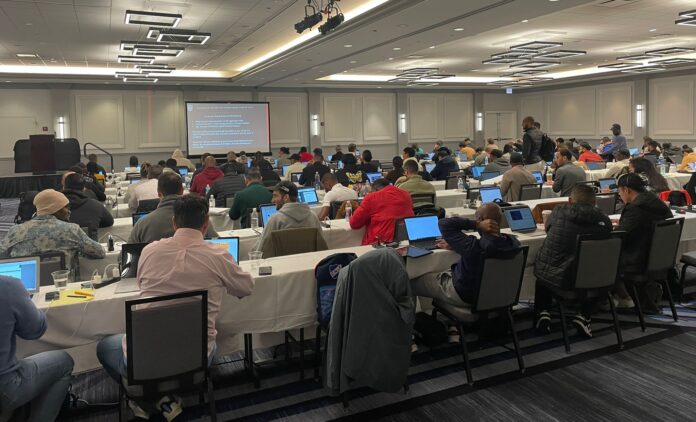
Candidates taking the FIFA Football Agent Exam in Chicago during the 2024 in person exam session.
Candidates sit the FIFA Football Agent Exam during the 2024 in person session in Chicago. Passing the exam is the key step to becoming a licensed football agent under FIFA regulations.

The application window for the FIFA Football Agent Exam 2026 has officially closed. With the deadline passing on 6 March 2026, candidates who successfully submitted their applications are now entering the next phase: preparing for the exam itself.

For aspiring agents around the world, the FIFA Football Agent Exam represents the essential first step toward becoming a licensed football agent and working professionally within the global football industry.

At Sports Agent Academy and The Football Week, our goal is to educate and support the next generation of sports agents and sports lawyers. Below you will find the key information about the 2026 exam, along with a comprehensive list of resources to help you prepare.

Key Dates for the FIFA Football Agent Exam 2026

FIFA has confirmed the following timeline for the upcoming exam:

  • Applications opened: 20 January 2026
  • Applications closed: 6 March 2026
  • Exam days: 28–30 April 2026 (additional sessions may follow)
  • Results announced: 4 June 2026

The exam is conducted through the FIFA Agent Platform and consists of:

  • 60 minutes
  • 20 multiple-choice questions
  • Pass mark: 75%

Candidates must demonstrate a strong understanding of FIFA regulations, particularly the FIFA Football Agent Regulations, as well as other rules governing the football transfer system.

For more information about the licensing process, you can visit FIFA’s official page here.

Preparing for the FIFA Agent Exam

With the application stage now complete, candidates have just over a month to prepare before the exam window opens in late April.

Preparing effectively requires structured study, regular testing of your knowledge, and a deep understanding of the FIFA regulations. Over the past years, many aspiring agents have used resources from Sports Agent Academy and The Football Week to support their preparation.

Preparing effectively requires structured study, regular testing of your knowledge, and a deep understanding of the FIFA regulations.

Below is a complete list of materials designed to help you learn the regulations, practise exam questions, and understand the football agency profession.

Resources to help you prepare

The Agents Week magazine

One of the most effective ways to stay consistent with your preparation is through weekly learning and exam practice.

The Agents Week delivers insights, industry analysis, and mock FIFA agent exam questions directly to your inbox every Friday. Recent editions include questions specifically designed to help candidates test their knowledge ahead of the exam.

Subscribe here.

Online resources

Sports Agent Academy (LinkedIn)

Follow Sports Agent Academy on LinkedIn to stay up to date with:

  • FIFA Agent exam updates
  • Mock exam questions and quizzes
  • Insights into the football agency industry
  • Learning resources for aspiring agents

Follow the page here.

The Agents Week (LinkedIn)

Follow The Agents Week to keep up with the latest developments in the football agency industry, including regulatory updates, market insights, and professional trends.

Follow the page here.

The Football Week

On The Football Week, you can explore articles covering:

  • The FIFA Football Agent Exam
  • Player representation and client management
  • Football business insights
  • Agency strategy and negotiations

Explore the website here.

The Football Week (LinkedIn)

Follow our LinkedIn page to stay connected with the latest industry developments, expert commentary, and educational content.

Follow the page here.

Sports Agent Academy YouTube channel

Our YouTube channel offers in-depth video insights into the football industry, including topics such as:

  • The FIFA Agent Exam
  • Sponsorship and boot deals
  • The role of football agents
  • Negotiation and representation strategies

Subscribe to the channel here.

Books for aspiring football agents

How to Pass the FIFA Football Agent Exam: The Workbook

This workbook is specifically designed to help candidates prepare for the exam with structured exercises and practice material.

Learn more about the workbook here.

How to Become a Football Agent: The Guide (Third Edition)

A comprehensive guide for anyone entering the football agency profession, covering the fundamentals of the industry, regulations, and the realities of representing players.

Learn more about the book here.

DEADLINE

A crime thriller set in the world of football agents that offers a unique perspective on the industry through an exciting fictional narrative.

Discover the novel here.

Professional courses

Football Agent Courses (with The Football Business Academy)

For those serious about entering the industry, these courses offer a structured and professional learning pathway, developed in partnership with The Football Business Academy.

The program explores the business, legal, and strategic aspects of football representation.

Learn more about the course here.

A career in the football agency industry

The role of a football agent is more complex than ever. Agents today must understand:

  • FIFA regulations and governance frameworks
  • Contract negotiations and legal structures
  • Player development and career planning
  • Commercial opportunities and sponsorships
  • International transfer systems

The FIFA Football Agent Exam ensures that licensed agents possess the knowledge and professionalism required to operate in the modern football industry.

The FIFA Football Agent Exam ensures that licensed agents possess the knowledge and professionalism required to operate in the modern football industry.

With the right preparation and resources, passing the exam is an achievable first step toward building a career in one of football’s most dynamic professions.

Final thoughts

With the application window now closed, candidates should now focus entirely on preparing for the April exam sessions.

At Sports Agent Academy and The Football Week, we are committed to helping the next generation of sports agents and sports lawyers succeed.

Explore the resources above, stay consistent with your preparation, and take the next step toward becoming a licensed FIFA football agent.

Good luck to everyone preparing for the FIFA Football Agent Exam 2026.

Who is Murat Korkmaz?

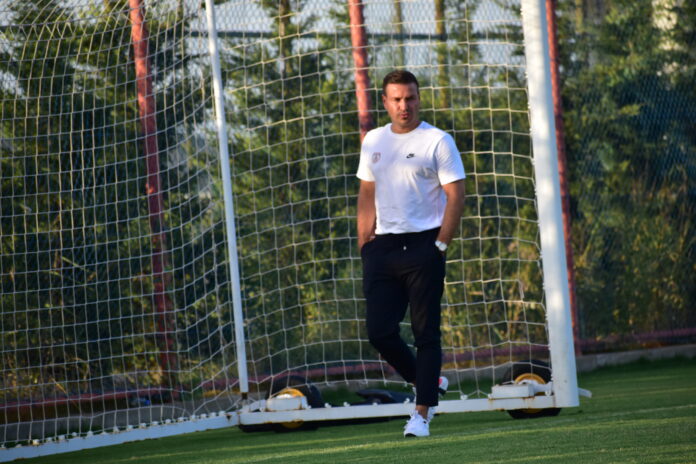
Murat Korkmaz walking beside a goal on a training pitch, reflecting his leadership role in football development.
Murat Korkmaz during a visit to a training facility, embodying his commitment to structured player development and football leadership. His work focuses on building sustainable systems that connect academies with the professional game.

Executive Profile

Murat Korkmaz represents a strategic architect of modern sports organizations, combining infrastructure development, elite talent pathways, international networking, and data-informed leadership into one coherent executive profile. He stands for sustainable system building rather than short-term success, and for creating performance environments that endure beyond individual cycles.

During his tenure as Academy Director & General Manager of VfB Friedrichshafen, Korkmaz carried cross-sport executive responsibility, overseeing strategic operations across multiple disciplines. While the club became German record champion in volleyball and captured the prestigious CEV Champions League title, its impact extended far beyond one sport. Athletes from different disciplines represented at VfB Friedrichshafen went on to compete at the Olympic Games. This multisport-leadership experience strengthened Korkmaz’s understanding of high-performance structures, international standards and the governance models required to sustain excellence.

A key element of his work has been the strategic organization of internationally recognized youth tournaments. At both VfB Friedrichshafen and Altınordu FK, he played a leading role in shaping elite development platforms such as the U15 MTU Cup and the U12 İzmir Cup, tournaments that attract top academies from across Europe and beyond. These events have evolved into respected scouting hubs within global youth football, underlining his ability to build internationally visible football ecosystems.

Korkmaz gained broader international recognition through his executive role at Altınordu FK, one of Turkey’s most structured and development-focused football institutions. The club operates what is widely considered one of the best sports facilities in Türkiye, and during his time there, Altınordu produced 34 national team players, including senior internationals such as Berke Özer, Çağlar Söyüncü, and Cengiz Ünder. For a second-division club, this output represents an exceptional structural achievement rather than coincidence.

Central to this success was the creation of a scalable nationwide development network. Under Korkmaz’s leadership period, Altınordu managed over 200 football schools with more than 22,000 young players between the ages of 9 and 12. This system did not only strengthen the Turkish talent pipeline but also generated financial sustainability and brand identity for the club. It reflected his conviction that modern talent development requires organizational design, long-term planning, and scalable structures rather than isolated recruitment decisions.

Modern talent development requires organizational design, long-term planning, and scalable structures rather than isolated recruitment decisions.

Major international transfers, including the progression of Çağlar Söyüncü to the Bundesliga and Premier League and Cengiz Ünder to Serie A and Ligue 1, were the product of a structured development and positioning strategy. These outcomes illustrate Korkmaz’s ability to connect academy output with global market integration.

His executive profile also integrates technological competence. Korkmaz has hands-on experience with modern scouting and performance platforms such as Wyscout, InStat, Hudl, Catapult, and TransferRoom, demonstrating a leadership style that merges strategic governance with data-driven decision-making.

Academically trained in Football Management and Club Management, with educational exposure to institutions such as Steinbeis University Berlin, VfL Wolfsburg, and the German Football Federation, Korkmaz embodies a new-generation sporting director profile: internationally connected, structurally disciplined, multilingual and development-driven.

In an era where clubs seek leaders capable of aligning sporting identity, financial sustainability, infrastructure, and global competitiveness, Murat Korkmaz stands out as a system builder. His career reflects a consistent pattern: building platforms, strengthening institutions, and transforming talent development into long-term strategic advantage.

Strategy, Structure and Sustainable Sporting Leadership

Our exclusive interview with Murat Korkmaz

You have operated within two structurally different football ecosystems in Germany and Turkey. From an executive perspective, what are the key structural elements that determine whether a football organization becomes sustainable rather than reactive?

Operating in both ecosystems made one thing very clear to me: sustainability is not cultural, it is structural. A club becomes sustainable when three elements are aligned: a clearly defined sporting identity, a transparent decision-making hierarchy and long-term planning embedded into daily operations.

Reactive organizations allow results to dictate strategy. Sustainable organizations protect strategy from short term fluctuations. When structure leads, emotion follows. When emotion leads, structure collapses.

Reactive organizations allow results to dictate strategy. Sustainable organizations protect strategy from short term fluctuations.

As General Sports Director and later Sporting Director, you were responsible not only for performance outcomes but also for institutional architecture. How do you design a sporting structure that remains stable even when coaches, players or short-term results change?

Stability begins with separating identity from individuals. Coaches change. Players change. Results fluctuate. But a club’s philosophy, decision framework and communication structure must remain consistent.

I focus on clear role definitions, a shared development language, defined recruitment alignment, and transparent accountability.

If the system holds the identity, transitions do not create instability. Institutions grow when they are system-led, not personality-led.

Your work at Altınordu FK placed strong emphasis on academy identity and long-term player development. At board level, how should clubs balance immediate competitive pressure with long term asset creation through youth development?

Youth development is not a sentimental project; it is strategic asset management. Boards must understand that long-term player development and competitive success are not conflicting objectives. They only become conflicting when structure is unclear.

Balancing pressure requires measurable development KPIs, alignment between academy and first team playing model, and financial discipline integrated with sporting ambition.

Clubs that panic sacrifice value. Clubs that plan create value.

Organizing internationally recognized youth tournaments require high level coordination, negotiation and stakeholder management. What did those experiences teach you about football diplomacy, global positioning and creating strategic partnerships?

International tournaments taught me that football leadership extends beyond the pitch. Football diplomacy is built on credibility, cultural awareness and disciplined communication.

Strategic partnerships are not created through visibility alone, but through reliability. When stakeholders trust your structure and professionalism, cooperation becomes long term rather than transactional.

Global positioning begins with internal stability.

Modern sporting leadership requires fluency in performance data, recruitment platforms and financial frameworks. How do you integrate data driven decision making with human judgment when constructing squads or building development models?

Data informs, leadership decides. Modern football requires analytical fluency, but sustainable decisions emerge at the intersection of data and experience.

In recruitment and development, I evaluate tactical profile alignment, performance metrics, psychological resilience and cultural adaptability.

Numbers identify patterns. Context determines meaning. The strongest sporting models combine analytical rigor with human understanding.

When stepping into a new project as a Sporting Director or executive leader, what are the first structural indicators you analyze to understand whether the organization is built for growth or stuck in operational inefficiency?

The first indicators I assess are clarity and alignment. I analyze decision making flow, role definition clarity, communication transparency, recruitment alignment with playing philosophy and academy to first team integration.

Operational inefficiency often hides behind unclear accountability. Growth begins when responsibility and authority are aligned.

In today’s global football market, asset management and talent pathways are increasingly interconnected. How do you evaluate a club’s long term competitive model in terms of transfer strategy, academy pipeline and financial sustainability?

A club’s competitive model must connect three pillars: recruitment strategy, academy pipeline and financial governance. The key question is simple: does the club create value or consume value?

Sustainable clubs define recruitment age profiles, structure loan pathways, plan exits strategically and align financial discipline with sporting vision.

Competing intelligently is more important than competing emotionally.

If you were tasked with leading a club entering a transitional phase, whether structural, cultural or competitive, what would be your executive roadmap for the first 12 months?

Transformation begins with clarity.

Months 1 to 3 focus on structural audit and internal alignment assessment.
Months 4 to 6 focus on identity clarification and recruitment recalibration.
Months 7 to 9 focus on academy integration and performance framework stabilization.
Months 10 to 12 focus on long term strategic reinforcement.

True change is not initiated through transfers. It is initiated through structure.

Looking ahead, what type of project or environment would best allow you to apply your experience in academy building, international networking and sporting leadership?

I am most effective in environments that value structure, long term identity and strategic patience. Projects that seek sustainable growth rather than short term reactions allow me to apply my experience in academy integration, international networking and executive sporting leadership most effectively.

My focus has always been clear: build systems that outlast individuals.

Germany Launches New U21 Football Competition

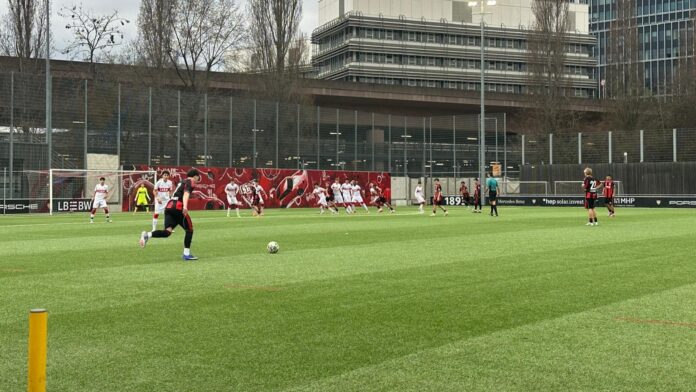
Youth football match at a German training centre highlighting the development pathway from academy football to the professional game.
Germany is introducing a new U21 competition to strengthen the transition from academy football to the professional level. The initiative aims to provide young players with more competitive minutes during a critical stage of development.

German professional football is introducing a new competition designed to address one of the most discussed structural challenges in player development: the transition from academy football to the professional game.

On 3 March 2026, the member assembly of the Deutsche Fußball Liga unanimously approved the creation of a new U21 competition for clubs from the Bundesliga and 2. Bundesliga. The new format will be introduced starting with the 2026/27 season and aims to give young players more competitive match opportunities during the most critical phase of their development.

For years, experts have pointed to a structural gap in German football: talented players often move from academy environments into professional squads but struggle to gain consistent playing time. The new U21 competition is designed to close that gap by creating an additional platform where young players can compete regularly at a high level.

The new U21 competition is designed to close that gap by creating an additional platform where young players can compete regularly at a high level.

Why the New Competition Matters

The initiative follows an extensive review process involving clubs, the German Football Association, and a dedicated expert group established by the DFL. The analysis identified a clear problem: compared with other major European football nations such as England, Italy or Spain, young players in Germany receive significantly fewer minutes in the first four professional divisions.

This lack of competitive exposure during the transition phase can slow development and delay the step into senior football.

DFL managing director Marc Lenz emphasised that improving youth development is essential for the long term competitiveness and attractiveness of the German leagues. According to Lenz, insufficient playing time for talented players has been identified by experts as one of the key challenges within the current system.

The new U21 competition is therefore intended to provide an additional environment where young professionals can gain meaningful match experience while remaining integrated within their clubs.

How the New U21 Competition Works

The competition is designed as a flexible additional platform rather than a replacement for existing league structures.

Participation is voluntary for clubs from the Bundesliga and 2. Bundesliga. Importantly, clubs do not need to create separate teams. Instead, the competition is aimed at players already within the transition phase of existing squads, mainly between the U17 and U21 age groups.

Each team will also be allowed to include up to four older players. This rule allows clubs to reintegrate players returning from injury while maintaining a competitive level within the matches.

The format itself is intentionally compact and flexible.

Two separate series will be played during the season in a league style structure. Not every club will play every opponent. Each team will play between three and six matches per series. The best performing teams from both series will qualify for a final tournament scheduled for the summer of 2027.

During the regular competition phase, matches will typically take place at club training centres or neutral venues such as sports academies. Games will be played without spectators in order to keep organisational and financial demands low. For the final tournament, however, the possibility of opening the event to fans and media coverage is currently being examined.

If the initiative succeeds in providing consistent competitive minutes for young players, it could become a key instrument in ensuring that the next generation of talent is better prepared for the demands of professional football.

A Flexible System for Clubs

One of the key design principles of the new competition is flexibility.

Clubs will be able to register players dynamically within the eligible age groups and schedule matches within defined time windows. This allows the competition to coexist with first team commitments while still providing young players with valuable competitive minutes.

The new competition will not replace existing league systems and does not affect second teams currently competing in Germany’s regional league structure. Instead, it acts as an additional development platform designed specifically for the transition phase between academy and professional football.

A Strategic Step for German Football

The introduction of the U21 competition represents the first concrete measure emerging from the DFL’s broader review of talent development structures. Over the past year, representatives from the league, clubs, federation and external experts worked together to identify areas where German football could improve its development pathways.

With the legal framework now approved, clubs will have until June 2026 to confirm their participation in the inaugural season once the final competition regulations have been completed.

For German football, the new U21 competition represents more than just another tournament. It is an attempt to strengthen the bridge between youth academies and the professional game.

If the initiative succeeds in providing consistent competitive minutes for young players, it could become a key instrument in ensuring that the next generation of talent is better prepared for the demands of professional football.

Who is Mark Carr?

Mark Carr, Director of Recruitment and Scouting at Portland Thorns, a key figure in NWSL talent identification and squad strategy.
Mark Carr leads recruitment and scouting strategy at Portland Thorns, shaping long-term squad development in the NWSL. His work focuses on global talent identification, strategic roster building, and sustainable competitive success in women’s football.

Recruitment leadership shaping elite environments

Elite football environments are rarely defined by individual signings. They are shaped by long-term vision, structural alignment, and recruitment leadership capable of anticipating the next competitive cycle. Mark Carr operates precisely in that strategic space between performance, projection, and global market intelligence.

Mark Carr is Director of Recruitment and Scouting at Portland Thorns, one of the most ambitious and globally recognised clubs in women’s football. With experience spanning US Youth National Teams, NCAA leadership, professional coaching, and recruitment at San Diego Wave, Carr has built a career across development, performance, and talent architecture.

In Portland, he now works at scale, shaping long-term squad strategy within an ownership structure committed to redefining elite standards in women’s sport.

Elite football environments are rarely defined by individual signings. They are shaped by long-term vision, structural alignment, and recruitment leadership capable of anticipating the next competitive cycle.

Our exclusive interview with Mark Carr

What made this opportunity the right next step?

Several factors aligned at the right moment. The history of the club, the ambition of the ownership group, the scale of the fan base, the facilities, and the people involved all resonated strongly with who I am and what I want to be part of.

Portland Thorns represents ambition at the highest level. There is a championship expectation, global visibility, and ownership that is committed to investing in performance and remaining at the forefront of the women’s game.

After working in recruitment at San Diego Wave and coaching across youth national teams, NCAA, and the professional game, stepping into a Director role in Portland allows me to operate at scale and influence long-term systems rather than preparing for the next match.

This transition represents a shift from developing teams to architecting an elite environment. Most importantly, working alongside ownership and football leadership that are committed to building something sustainable and globally competitive made the decision clear.

How has your understanding of talent identification evolved?

Earlier in my career, particularly in the United States, I focused heavily on physical profile and technical quality. Over time, I have learned that elite talent is defined by a combination of technical ability, game intelligence, psychological resilience, and daily professionalism.

The players who separate themselves are consistent. They demonstrate daily commitment to improvement, adaptability, and competitiveness. Having worked across youth international and professional levels, I now evaluate players not only for what they currently are, but for what they can become within a high-performance environment.

Projection has become more important than immediate output.

How do you define an effective scouting strategy in the NWSL?

Clarity and alignment are fundamental. It begins with ownership expectations. In Portland, the ambition is to operate at the cutting edge of women’s football globally. That standard defines everything that follows.

An effective scouting strategy requires deep understanding of playing identity, league profile, roster composition, salary cap dynamics, and competitive window. Recruitment must be intentional rather than reactive.

In a global league such as the NWSL, success depends on combining strong domestic knowledge with international market intelligence while consistently projecting two to three windows ahead.

Strategic recruitment is about anticipation, not reaction.

Strategic recruitment is about anticipation, not reaction.

How does your US Soccer and NCAA experience influence how you assess long-term potential?

Working with US Youth National Teams and at the NCAA level taught me to evaluate trajectory rather than isolated performance. When I reflect on the 2018 U17 World Cup cycle, many of those players are now competing in the NWSL and representing the senior US Women’s National Team. That reinforces the importance of long-term projection.

At the NCAA level, the pressure to win can dominate decision-making. In some environments, results become the sole benchmark, occasionally at the expense of development. That said, there are programmes that successfully balance both.

At youth levels, physical dominance can mask technical or tactical limitations. At professional level, those details are exposed quickly. I assess physical capacity, technical execution, speed of decision-making, tactical adaptability, and resilience under adversity. These indicators tend to predict long-term success more reliably than early accolades.

Transitioning into a professional environment quickly reveals whether those foundations are sustainable.

How do you balance data with live observation?

In Portland, we are data informed. Recruitment decisions are built on a combination of analytics, video analysis, in-person scouting, and collaboration across the professional network.

Data sharpens the lens. It does not replace the eye. Analytics help identify trends, efficiency, and physical outputs. Live observation reveals personality, communication, movement off the ball, and competitive character.

The strongest decisions occur when objective metrics and subjective evaluation align.

How do you ensure alignment between recruitment and club identity?

Alignment begins with ownership. The ambition within Portland extends beyond football. With the Portland Thorns and the Portland Fire WNBA team sharing a state of the art dual sport, women-only training facility, the club has set a new benchmark for investment and infrastructure in women’s sport.

Recruitment must always serve the long-term health of the football club. It must align with the football model and strategic vision. This requires continuous dialogue with the head coach, performance staff, and executive leadership.

In Portland, recruitment is a collective responsibility. Positional profiles are clearly defined both tactically and physically. Performance is monitored consistently.

Every signing must strengthen the club’s identity rather than forcing systemic adaptation. Alignment reduces costly errors and reinforces strategic coherence.

What principles guide you when reshaping a roster?

Every decision is filtered through four pillars: fit, impact, physicality, and asset value. Honesty and timing are critical.

You must understand where the squad is in its competitive cycle, whether it is contending, transitioning, or building. Squad management is dynamic and requires forward planning.

Decisions must balance experience with emerging talent while protecting financial flexibility. Sustainable success requires the courage to evolve before decline becomes visible.

What non-technical qualities do you value most?

The NWSL demands a distinct competitive mentality. Intensity, emotional intelligence, resilience, and daily professional standards are non negotiable.

Elite environments expose weakness quickly. Players who handle pressure, elevate teammates, compete consistently, and remain coachable tend to sustain success.

Talent opens the door. Character ensures longevity.

What markets or pathways will become increasingly important?

The globalisation of women’s football is accelerating. Asia, particularly Japan, continues to produce technically intelligent players. Scandinavian markets provide physical profiles well suited to the NWSL.

South America is developing rapidly, particularly in attacking talent with high ceiling potential. Northern Europe continues to grow in competitiveness.

Domestically, development pathways are also evolving. Boarding academies, hybrid education models, and earlier professional exposure are reshaping the balance between collegiate and professional routes.

The relationship between professional environments and NCAA pathways will continue to influence the next generation.

Biggest challenges and opportunities over the next five to ten years?

The opportunity is clear. Women’s football will continue to expand globally through commercial growth, investment, and rising competitive standards.

In Portland, the player remains central. Our objective is to attract elite talent, support their development journey, provide a stable and high performance environment, and elevate their global profile.

The challenge will be maintaining competitive advantage as investment increases worldwide. Greater parity across leagues will intensify competition for elite talent.

Recruitment leadership must operate strategically, build international networks, anticipate market inflation, and move decisively before markets correct.

Sustained success will depend on foresight, structural alignment, and disciplined execution.

Public Statements Crisis in Football

Professional video cameras filming a football press conference highlighting media scrutiny and public statements
Press conferences place football figures under constant media scrutiny. In the modern game, every statement can be recorded, analysed and amplified. Photo by Fardad sepandar on Unsplash.

In modern football, talent on the pitch is no longer enough. Today, players and coaches must also compete in a different arena: communication. In a world under constant scrutiny from the media and social networks, one poorly phrased sentence — whether in a press conference or a rushed social media post — can ignite a storm that impacts the locker room, the club, and even the fanbase.

The issue isn’t just what is said; it’s how, when, and to whom.

In modern football, talent on the pitch is no longer enough.

The Power (and Danger) of a Statement

A coach, frustrated after a loss, says: “Some players didn’t rise to the occasion.”

A benched player posts: “I deserve more minutes.”

A sporting director comments: “We lacked commitment in the second half.”

On the surface, these sound like common remarks. But in football’s emotionally charged environment full of pressure, egos, and internal struggles, these words can act like fuel on an open flame.

The result? Division in the locker room, loss of trust with the coaching staff, tension with management, or even a rift with the fans.

Real Cases: When Speaking Out Backfires

Messi vs. Abidal at FC Barcelona (2020)

Then sporting director Eric Abidal said, “Many players weren’t satisfied or working hard.”

Messi fired back on Instagram: “Naming names and decisions is the responsibility of the sporting department. If you don’t name them, you’re tarnishing everyone.”

The exchange escalated, exposing internal tensions and leaving the club vulnerable to public backlash.

José Mourinho at Manchester United (2018)

After a Champions League loss to Sevilla, Mourinho remarked, “This is nothing new for the club. They lost to Sevilla before, so it’s not a disaster.”

The implied criticism of the club’s recent history and his own squad didn’t sit well internally. The media ran with it, and relationships with players began to crack.

Neymar at PSG (2019)

Following a Champions League exit, Neymar said: “We should’ve committed a foul before their second goal, but the guys didn’t know how.”

It was perceived as a direct jab at his teammates. The locker room atmosphere became tense, and Neymar later had to clarify his words.

Why Does Communication Hit So Hard in Football?

Many confuse “being honest” with “speaking without a filter.” In the digital age, poorly managed spontaneity can be destructive. The issue isn’t expressing opinions — it’s failing to weigh their consequences.

A seemingly harmless phrase can be: interpreted as a direct attack, spun into a clickbait headline or misunderstood by teammates, fans, or club staff.

In a high-stakes, emotionally charged environment like professional football, both internal and external communication must be handled as tactically as the game itself.

At the highest level, speaking isn’t just an impulse, it’s a strategy.

How to Prevent Communication Meltdowns

Media Training

Players and coaches should be equipped with tools to manage interviews, press conferences, and social media. Knowing what to say, how to say it, and when to stay silent is part of being a pro.

Strategic Spokespersons

Not everyone needs to speak all the time. Clubs should define who communicates and in which moments. This isn’t about censorship — it’s about strategy.

Strong Internal Channels

If players have safe spaces to express concerns privately, the likelihood of public outbursts drops dramatically. Solid internal communication prevents external crises.

Communication Team Involvement

The media department shouldn’t just be there to post photos. They need to work closely with coaching staff and players to anticipate issues and manage critical moments.

Conclusion: Communication is Also Competition

Now more than ever, communication is a competitive advantage in football. A united team that knows how to speak, and when not to, sends a signal of strength. A team with communication gaps invites unnecessary drama, rumors, and crises.

A poorly chosen sentence no longer stays behind closed doors. It spreads, gets amplified, and often does real damage. At the highest level, speaking isn’t just an impulse, it’s a strategy. And like any strategy, it must be trained.

Qui est Amara Merouani?

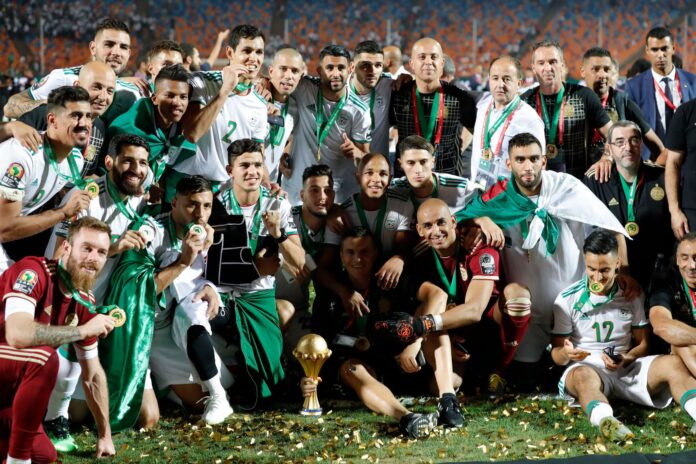
Algeria national team celebrating Africa Cup of Nations victory with staff and players
The Algeria national team celebrates continental success during the period when Amara Merouani served as assistant coach. The triumph reflects the stability, preparation and collective spirit discussed in the interview.

Un entraîneur franco-algérien au parcours international

Amara Merouani, entraîneur franco-algérien: de l’Algérie championne d’Afrique aux projets ambitieux des clubs du Golfe.

Amara Merouani, né en 1978, est un entraîneur franco-algérien au parcours international. Actuellement entraîneur d’Al-Sailiya SC Olympic au Qatar, il débute sa carrière d’entraîneur à l’USM Endoume Catalans à Marseille, où il forge très tôt une culture du travail rigoureuse et une approche pédagogique du jeu, avant de s’orienter vers une carrière au sein de grands clubs du Moyen-Orient et d’Afrique, ainsi qu’auprès de la sélection nationale algérienne.

Pendant cinq années, Amara Merouani occupe le poste d’entraîneur adjoint de l’équipe nationale algérienne, avec laquelle il est vainqueur de la Coupe d’Afrique des Nations 2019 et de la Coupe arabe 2021. Il contribue à la mise en place d’un projet stable et performant, intervenant notamment sur l’analyse des adversaires, la préparation tactique des matchs et la gestion du groupe dans un environnement international à très forte pression.

Très tôt exposé à des environnements footballistiques variés, sa carrière internationale débute en Arabie saoudite dès 2012, en tant qu’entraîneur adjoint à Al-Ettifaq FC, où il accompagne la montée en puissance du championnat et répond à l’exigence immédiate de résultats. Son parcours se poursuit ensuite au sein d’autres clubs de Saudi Pro League, puis en Qatar Stars League. Son passage à Al-Hilal Club Omdurman, au Soudan, constitue une expérience intense, marquée par les compétitions continentales (Ligue des Champions CAF) et la complexité des contextes extra-sportifs. Il remporte également la Super Coupe d’Algérie avec l’ES Sétif, consolidant un profil fondé sur l’adaptabilité et l’expérience du haut niveau.

Aujourd’hui, fort d’un parcours international riche et multiculturel, Amara Merouani met son expertise au service du développement des jeunes talents et de la continuité méthodologique à Al-Sailiya SC Olympic.

Spécialiste de la gestion humaine, de la rigueur tactique, de l’intelligence collective, il affiche désormais une ambition claire: assumer pleinement un rôle d’Entraîneur Principal au sein d’un projet sportif structuré, ambitieux et durable.

« Le football, c’est de la passion canalisée par de la méthode. »

Lisez notre interview exclusive avec Amara Merouani

Qu’est-ce qui vous a inspiré à devenir entraîneur de football, et quelles sont certaines de vos philosophies d’entraînement ?

Ce qui m’a inspiré à devenir entraîneur de football, c’est avant tout ma passion pour le jeu et pour la compréhension de ses aspects tactiques, humains et collectifs. Très tôt, j’ai été attiré par l’analyse du jeu, la gestion d’un groupe et l’idée de transmettre des connaissances afin d’aider les joueurs à progresser individuellement et collectivement. Je me rappelle qu’à mes débuts, lorsque j’étais entraîneur des U17 à l’USM Endoume Catalans, je filmais déjà nos matchs. Chaque mercredi après-midi, j’organisais un petit temps d’échange avec les joueurs autour d’un goûter, durant lequel nous analysions ensemble les images. C’est à ce moment-là que j’ai compris l’importance de la pédagogie, de l’analyse et du partage pour faire progresser les joueurs. Cette approche pédagogique a marqué le point de départ de mon identité d’entraîneur. C’est vraiment comme ça que tout a commencé.

Ma philosophie d’entraînement repose sur le développement du joueur dans sa globalité : technique, tactique, physique et mental. Je privilégie un football structuré, basé sur des principes de jeu clairs, l’intelligence collective et l’adaptation aux profils des joueurs.

J’accorde également une grande importance à la communication, à la discipline de travail et à la création d’un environnement exigeant mais bienveillant, favorisant la performance, la progression et l’engagement de chacun au service du collectif.

Vous avez entraîné à différents niveaux (équipe nationale, football masculin) et dans plusieurs pays. En quoi ces expériences ont-elles contribué à votre évolution en tant qu’entraîneur ?

C’est une excellente question qui touche au cœur de ce qui forge l’identité d’un entraîneur. Mon parcours, marqué par la diversité des contextes et des cultures footballistiques, a été un véritable accélérateur d’apprentissage.

L’adaptabilité culturelle et humaine

Entraîner dans différents pays m’a appris que le football est un langage universel, mais que ses accents changent selon les frontières. En communication par exemple, on ne motive pas un joueur en Algérie de la même manière qu’ailleurs. Il faut comprendre les leviers psychologiques propres à chaque culture.

Cela m’a aussi appris l’humilité : arriver dans un nouveau pays impose d’observer avant d’agir. J’ai appris à intégrer les forces locales dans ma philosophie de jeu plutôt que d’imposer un modèle rigide.

La rigueur de l’équipe nationale

Travailler au niveau international apporte une dimension différente du travail en club. En sélection, l’exigence du résultat immédiat est permanente. Le temps est un luxe que l’on n’a pas. Chaque séance doit être optimisée et la gestion du stress est démultipliée car on représente tout un peuple.

La confrontation avec d’autres nations pousse également à une veille tactique permanente et à une précision extrême dans la préparation des matchs.

La polyvalence tactique

Le passage par le football à différents échelons m’a permis d’enrichir ma « boîte à outils ».

  • Réflexion stratégique : passer d’un football très physique à un football plus technique ou tactique m’a obligé à diversifier mes systèmes de jeu.
  • Gestion de groupe : manager des effectifs aux ambitions variées m’a permis de développer une approche plus fine de la gestion des egos et de la cohésion d’équipe.

En résumé, toutes ces expériences m’ont permis d’évoluer vers une capacité à rester serein face à l’imprévu et à proposer des solutions sur mesure, quel que soit l’environnement.

Vous étiez entraîneur adjoint de l’équipe nationale algérienne pendant cinq années. Quels ont été les principaux facteurs de réussite de l’équipe nationale durant cette période ?

Je dirais que la réussite de l’équipe nationale sur cette période repose sur trois éléments principaux.

D’abord, une vraie stabilité dans le projet et dans le staff, ce qui a permis d’installer une identité de jeu claire et cohérente. Nous avons travaillé avec des principes simples mais exigeants, adaptés aux qualités des joueurs.

Ensuite, la dimension humaine a été essentielle : créer un climat de confiance, responsabiliser les cadres et intégrer progressivement les jeunes a renforcé la cohésion du groupe.

Enfin, il y avait une préparation très rigoureuse des compétitions, avec beaucoup d’analyse des adversaires, un travail précis sur les détails et une gestion optimale de la récupération et de la performance. C’est cet équilibre entre organisation, exigence et confiance qui a permis à l’équipe d’être performante sur la durée.

Vous avez travaillé aux côtés de plusieurs entraîneurs de très haut niveau au cours de votre carrière. Quelles sont les leçons que vous avez retenues de votre collaboration avec Djamel Belmadi et Alain Geiger ?

Travailler avec des personnalités aussi fortes et différentes, c’est comme faire un master accéléré en management humain et en tactique.

Djamel Belmadi : l’amour du maillot et l’exigence absolue.

Avec Djamel, on ne parle pas seulement de football, on parle de mission. Son intransigeance m’a profondément marqué. Un mauvais placement de quelques mètres sur un pressing est une faute grave. Il m’a appris que le haut niveau est une mécanique de précision : si un rouage se grippe, tout le système s’effondre.

Il possède aussi une force mentale remarquable. Sa capacité à transformer un groupe en une véritable unité de combat est exceptionnelle. J’ai retenu que pour gagner, il ne suffit pas d’avoir les meilleurs joueurs, il faut des hommes mentalement solides et une véritable haine de la défaite.

Alain Geiger : le calme et la pédagogie.

Alain, que je surnommais « le vieux sage », m’a appris la maîtrise émotionnelle. Dans des contextes parfois volcaniques comme à la JSK ou à Sétif, il restait imperturbable. Il m’a montré qu’un entraîneur doit être le régulateur thermique d’un club.

Tactiquement, il m’a beaucoup apporté sur l’animation offensive, la fluidité du jeu et l’équilibre entre liberté créative et organisation collective.

Aujourd’hui, ma philosophie est un mélange des deux : la rigueur et l’exigence de Belmadi, associées au calme, à la lecture du jeu et à la gestion humaine d’Alain Geiger.

Vous avez une grande expérience au Moyen-Orient, notamment en Arabie saoudite et au Qatar. Que pouvez-vous dire des systèmes footballistiques qu’ils sont en train de mettre en place ?

Au Qatar, le système est très structuré et centré sur la formation et la continuité méthodologique. Il existe une vraie cohérence entre le football de base, les académies, les clubs et les équipes nationales, avec un accent fort sur l’identification des talents et le développement des entraîneurs.

En Arabie saoudite, l’approche est davantage orientée vers l’élévation rapide du niveau compétitif. Les investissements dans la Pro League, les infrastructures et les joueurs de haut niveau permettent d’augmenter l’intensité, l’exigence et l’exposition internationale, tout en construisant progressivement un système durable.

Dans les deux pays, le défi majeur reste l’équilibre entre performance immédiate et développement des talents locaux.

Vous avez également entraîné au Soudan. Pouvez-vous nous raconter une anecdote de cette expérience ?

Le Soudan est une expérience à part. J’ai eu la chance d’y travailler avec Patrick Aussems et Denis Lavagne, dans un contexte de très forte pression, entre le championnat local et la Ligue des Champions CAF. Nous avons notamment remporté la Super Coupe en 2015.

L’anecdote la plus marquante reste paradoxale : à chaque fois, l’aventure s’est arrêtée alors que l’équipe n’avait perdu aucun match. Nous étions performants, solides, invaincus… et pourtant la collaboration prenait fin.

Cela illustre parfaitement la complexité du football dans certains contextes : la logique sportive ne suffit pas toujours. Je suis reparti avec une grande fierté, celle de n’avoir jamais été battu sur le terrain. C’est rare dans une carrière et c’est ce qui rend cette expérience inoubliable.

« Le talent gagne des matchs, mais la structure et l’esprit de corps gagnent des trophées. »

Quelles sont vos ambitions pour les saisons à venir ?

Mon ambition est simple mais exigeante : diriger un projet sportif ambitieux en tant que Head Coach, où l’exigence du résultat s’accompagne d’un contenu de jeu fort. Après mes expériences en sélection nationale et dans différents championnats, je me sens aujourd’hui prêt à assumer pleinement ce rôle.

Ma philosophie repose sur un équilibre entre rigueur tactique et gestion humaine. Le football moderne se gagne dans les transitions. Je veux des équipes capables de presser haut, mais aussi de rester compactes et solidaires dans les moments difficiles.

Les systèmes comme le 4-3-3 ou le 4-2-3-1 ne sont que des cadres. Ce qui compte, c’est l’animation, l’occupation des espaces et l’intelligence collective.

Je suis très attaché à la construction depuis l’arrière. J’encourage mes défenseurs à jouer, à attirer le pressing pour créer des déséquilibres. Chaque joueur doit être une solution.

Défensivement, je suis très rigoureux. Offensivement, je laisse une grande liberté aux joueurs créatifs. Le talent doit s’exprimer dans la prise de risque.

La gestion du vestiaire est centrale. Un joueur peut accepter d’être remplaçant, mais jamais l’injustice. Je privilégie une communication directe, honnête et permanente.

Je crois profondément à la culture du travail et à l’exemplarité du staff. À l’intérieur du groupe, on se dit les choses. À l’extérieur, le groupe est protégé.

En résumé : transformer un groupe talentueux en une unité de combat structurée, capable de savoir exactement quoi faire du ballon.


The Business of the Badge: Premier League Front of Shirt Sponsorship Deals

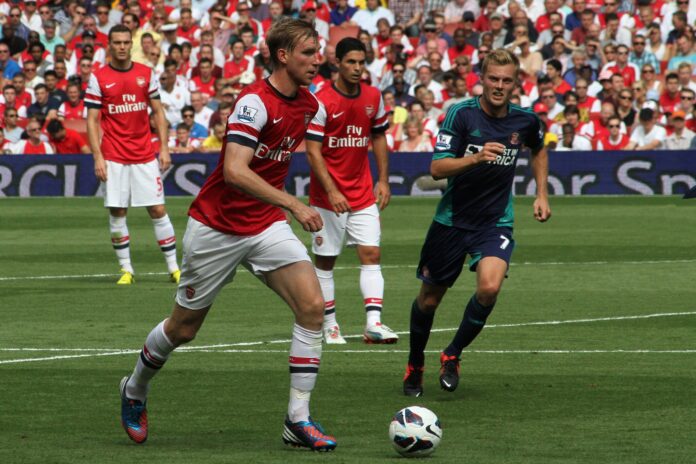
Arsenal players wearing Emirates front of shirt sponsor during Premier League match
Front of shirt sponsorship in action during a Premier League fixture. The sponsor logo remains central to global broadcast exposure, fan identity and the commercial power explored in this analysis. Ronnie Macdonald from Chelmsford, United Kingdom, CC BY 2.0, via Wikimedia Commons

£750 million for a logo on the front of a football shirt? At first glance, the number looks outrageous. But in today’s Premier League, front-of-shirt sponsorships aren’t just advertising. They’re among the most valuable assets in global sport.

A sponsor’s logo on a Manchester United, Arsenal, or Liverpool shirt isn’t confined to 90 minutes on matchday. With Premier League broadcasts reaching over 3.2 billion people in 190 countries, it’s closer to acquiring global TV rights than buying ad space. Every match, every replay, every highlight reel embeds that logo into sporting culture. That’s why brands commit hundreds of millions: it’s guaranteed exposure at the intersection of passion, identity, and global fandom.

They’re among the most valuable assets in global sport.

The Numbers Behind the Shirt

The economics are staggering. Football shirts already generate over $1 billion in worldwide sales annually, but the true value of sponsorship goes far deeper than retail. A logo on the chest is recurring visibility, international reach, and cultural association rolled into a single product.

When Cristiano Ronaldo returned to Manchester United in 2021, $60 million worth of shirts were sold within 10 days. That frenzy didn’t just benefit Adidas, United’s kit partner, it amplified TeamViewer’s logo on every shirt shipped worldwide. Sponsorship, in this sense, is multiplied through emotion. Fans are buying into a story, and the sponsor’s logo is stitched directly into that narrative.

Psychology also plays a role. Studies show that fans feel “temporal dissonance” wearing old kits, making them more likely to rebuy every season. Every new purchase repeats the cycle: the sponsor’s branding re-enters households, schools, pubs, and stadiums around the globe.

Who’s on the Front in 2025?

The graphic tells its own story. Out of 20 Premier League clubs this season:

  • 11 are sponsored by betting & casino brands – showing how dominant the gambling sector has become in football marketing.
  • 2 by financial services firms – looking to align with trust and stability.
  • 2 by airlines – leveraging football’s global reach to promote travel.
  • 2 by entertainment companies – tapping into football as mass culture.
  • 1 by software, 1 by life & health insurance, and interestingly, 1 club with no sponsor at all.

This dominance of gambling sponsors highlights both the money they bring and the challenges the Premier League faces as regulation tightens. By 2026, clubs will no longer be able to display betting brands on the front of shirts, forcing a major shift in the sponsorship landscape. That means opportunities for new sectors, tech, fintech, crypto, and lifestyle brands, to fill the vacuum.

Why It Works

Front-of-shirt deals thrive because they hit three levels at once:

  • Visibility: Live games, highlights, interviews, and even training shots keep the logo in constant circulation.
  • Emotion: The logo becomes part of fan and club identity.
  • Global Reach: A single logo placement in the Premier League delivers a footprint across Europe, Asia, Africa, and the Americas without additional media spend.

It’s a perfect storm of sport, culture, and commerce.

More than ad space, it’s cultural space, worn by millions, remembered forever, and replayed endlessly.

How the Premier League Compares Globally

The Premier League isn’t alone in monetising shirt space, but its scale sets it apart. In LaLiga, giants like Real Madrid (Emirates) and Barcelona (Spotify) also command global mega-deals, yet mid-table Spanish clubs struggle to secure anywhere near the same value. In Serie A, Inter Milan’s front-of-shirt deal with Paramount+ reflects football’s growing overlap with streaming, but overall sponsorship revenues remain a fraction of the Premier League’s. Bundesliga clubs like Bayern Munich (Deutsche Telekom) have long-standing domestic partnerships, though the league’s international broadcast reach limits global exposure compared to England. Meanwhile, MLS in the United States has embraced front-of-shirt deals more recently, often with tech, finance, or healthcare brands, but valuations are smaller, LA Galaxy’s Herbalife deal was once a standout at around $7m annually, dwarfed by the £50m+ deals at the top of the Premier League. The comparison underscores the Premier League’s unique commercial strength: it blends global broadcast dominance with cultural cachet, making its shirt front the most expensive billboard in sport.

The Future of Shirt Sponsorship

As betting logos fade from view, the Premier League may become the stage for a new wave of partners. Real estate giants (like DAMAC and Sobha with Chelsea and Arsenal), digital brands, sustainability-driven companies, and global consumer goods firms will compete for space.

But one thing is certain: the front of a Premier League shirt will remain one of the most powerful pieces of marketing real estate in the world. More than ad space, it’s cultural space, worn by millions, remembered forever, and replayed endlessly.

Algorithmic Scouting and AI Regulation in Football

Football with digital circuit pattern symbolising algorithmic scouting and AI decision making
A visual representation of artificial intelligence embedded within the game. As explored in this analysis, algorithmic scouting is reshaping visibility, opportunity and governance in modern football. Photo by Markus Spiske on Unsplash.

Algorithmic exclusion in football is a structural phenomenon. It does not arise from individual malice but from the computational translation of pre-existing social and informational asymmetries. As clubs, platforms, and agents increasingly rely on artificial intelligence to filter, rank, and project athletes, human decision-making, once central to scouting, has been displaced to the terminal stage of evaluation.

The decisive moment no longer occurs when a coach observes a match, but at the stage of pre-visibility, when an algorithm determines which athletes will even appear on the radar of decision-makers. It is there that careers are silently interrupted, often without awareness or recourse.

The decisive moment no longer occurs when a coach observes a match, but at the stage of pre-visibility, when an algorithm determines which athletes will even appear on the radar of decision-makers.

Transnational Governance and Legal Boundaries

From a legal standpoint, frameworks such as the General Data Protection Regulation (GDPR) and the European Union Artificial Intelligence Act (AI Act) establish substantive standards of fairness, transparency, and meaningful human oversight in automated decision-making. Yet these frameworks are territorially bounded, whereas football operates as a transnational ecosystem governed by a centralized normative authority. The critical legal relationships that shape player development, including registration, eligibility, international transfers, solidarity mechanisms, and licensing, do not originate within a single nation-state but within the FIFA regulatory framework.

Accordingly, no domestic or continental regime can independently guarantee algorithmic justice in football. The only institutional body with systemic regulatory competence to ensure global decisional equality is FIFA, not as a matter of ethical recommendation, but as an imperative of competitive integrity.

The Evolution of Scouting and Structural Exclusion

The historical evolution of scouting reveals a transition from an empirical, intuition-based practice to a data-driven and now AI-driven paradigm. This technological shift not only alters the method of observation but reconfigures the architecture of power that determines who is seen, who is signed, and who remains invisible.

The analysis identifies concrete mechanisms, including underrepresentation, proxy bias, dominant attribute modeling, and automated filtering, through which algorithmic exclusion operates structurally, often without intent yet with profound effects. In response, FIFA should create an advanced normative framework inspired by international best practices in AI governance, proposing a global legal policy under its authority capable of ensuring transparency, human oversight, and equitable access within an increasingly automated scouting ecosystem.

A Proposal for Regulatory Intervention

A proposal for a FIFA Regulation on AI and Algorithmic Fairness in Football Scouting therefore represents a normative turning point. Far from being another bureaucratic instrument, it would translate abstract principles of fairness into disciplinable obligations, integrate transparency and bias auditing into the fabric of sporting compliance, recognize that automated decisions have tangible legal and professional consequences for athletes, and prevent market-driven digital natural selection from determining human opportunity.

Ultimately, algorithmic exclusion constitutes the next frontier of sporting integrity.

Balancing Innovation and Integrity

Without such an instrument, football risks entering an era of statistical exclusion in which multimodal AI systems integrating video, biometric, voice, and behavioral data magnify the reach of silent bias under the guise of objectivity. With proper governance, however, artificial intelligence could be transformed from a vector of unregulated risk into a regulated infrastructure of competitive intelligence aligned with the fundamental purpose of the sport: ensuring that talent has a real opportunity to manifest itself. Ultimately, algorithmic exclusion constitutes the next frontier of sporting integrity. Technology should not be halted, nor would it be desirable to do so, but it must be governed.

The future of fairness in football depends on balancing human subjectivity with algorithmic objectivity, ensuring that historical patterns of bias and discrimination are not reproduced in digital form. Football, as a global normative ecosystem, has already regulated the field, the time, the agents, the transfer windows, and the money. The next step is clear: it must now regulate the intelligence that decides who gets to play.

Who is Can Lukas Bilge?

Can Lukas Bilge during match preparation with coaching staff at CD Mafra
Can Lukas Bilge working closely with staff during match preparation at CD Mafra. His approach bridges detailed analysis with clear on-pitch execution, reflecting the philosophy discussed in our exclusive interview.

Background and Career

Can Lukas Bilge is a modern football coach and analyst whose career reflects an international and multidisciplinary pathway through elite academies and professional environments. Currently working as Assistant Coach at CD Mafra in Portugal, he combines training methodology, match analysis and set-piece development at senior level. His background includes roles within the DFB analysis structure, FC St. Gallen’s U21 setup and several top academies in Germany, most notably 1. FC Köln. Bilge also gained international experience through coaching internships at Cerezo Osaka and Melbourne City FC. His profile represents a new generation of coaches shaped by tactical detail, analytical depth and hands-on work across youth and professional football.

A modern coach bridging analysis and on-pitch execution

Part of a new generation of football coaches, Can Lukas Bilge connects analytical preparation with daily coaching practice on the training ground. His work centers on translating match analysis and tactical principles into clear and applicable solutions for players.

Rather than viewing analysis as a separate discipline, he integrates it directly into training design, match preparation and decision making. Shaped by experiences across different football cultures, his approach is defined by clarity, adaptability and practical impact in both youth and senior football.

I never saw coaching and analysis as separate disciplines, but as complementary tools that support player development and team performance.

Our Exclusive Interview with Can Lukas Bilge

How did your pathway into professional football develop, and which early experiences shaped your transition into coaching and analysis?

My pathway into professional football was driven by curiosity. I always wanted to understand why things happen, not just what happens. That mindset naturally led me into analysis at an early stage. Alongside that curiosity, I developed a strong interest in performance and how small details influence outcomes. Moving into the senior professional level felt like a natural progression.

Towards the end of my time as an opponent analyst for the German National Team, where I built a strong methodological foundation, I quickly realised that daily work on the pitch shaped me the most. Analysis only has value if it helps players perform better in real situations. I understood that quite early on.

This realisation formed my identity as a coach. I never saw coaching and analysis as separate disciplines, but as complementary tools that support player development and team performance.

You have worked across youth academies, national team analysis and senior football environments. How did these different levels influence your understanding of the game?

Each level sharpened a different aspect of my understanding of football. Youth football taught me patience and the importance of teaching rather than simply instructing. Development takes time and it is rarely linear.

Working in opponent analysis for the German National Team demanded efficiency and precision. During major tournaments the time windows are limited, so preparation, clarity and relevance become crucial. Every message has to be precise. You quickly learn to focus only on what truly impacts performance, especially when long working days are the norm. Leading a team of ten analysts also gave me valuable insight into leadership and organisation.

Senior football in a professional league environment brought everything together and added another layer of competitive pressure. Results matter, but so do sustainability, development and a style of football that fans connect with. In the end, it is about balance. Respecting development processes while fully understanding the reality and demands of elite competition.

In your current role, how do you balance hands-on coaching on the pitch with analytical preparation and match analysis?

In my current role at CD Mafra, analysis is not something that happens separately behind a laptop. It is part of the daily coaching process. It directly shapes how we design training sessions, prepare matches and communicate with players.

As the coach responsible for set pieces, my analytical focus is very specific. We start by looking at ourselves through post game set piece analysis. This happens in the group and also in individual meetings. Based on our principles, we assess whether we executed the type of set piece play we aimed for and where we need to improve. After that, I analyse the upcoming opponent and look for recurring patterns. How do they behave in set piece situations, which principles guide their actions, and where are their strengths and vulnerabilities. From this information, always aligned with our own ideas and principles, we develop concrete solutions and translate them into training behaviour.

On the pitch, my responsibility is to coach these ideas with clarity and consistency. The focus is always on execution and decision making rather than on overloading players with information. They should clearly understand their roles and reference points without feeling overwhelmed. Analysis only matters if it helps players make better decisions in decisive moments and feel prepared when it counts.

What role do set pieces and detailed match preparation play in your overall coaching philosophy?

My idea of football is that it should be entertaining and proactive. Defensively, that means applying high pressure and reacting immediately after losing the ball in order to regain control quickly. This approach naturally leads to more actions inside the penalty area, more touches in dangerous zones and a higher number of goal attempts. Playing forward with intent, especially in transition moments, and actively looking for crosses and finishes also increases the number of corners, free kicks and throw ins.

For that reason, set pieces play a central role in our game model. They are not just another way to bring the ball into the penalty area and the so called golden zone, they are also one of the few situations in football where the starting position is fixed and the game becomes slightly more predictable. That makes preparation particularly valuable.

Our approach begins with our own playing principles. We work with a clear structure that provides orientation while still allowing players the freedom to interpret situations. On that basis, opponent analysis becomes part of the preparation. We study how the opponent attacks and defends set pieces, where their strengths and weaknesses lie, and how we can apply our ideas in the most effective way.

In the end, it all starts with a shared culture, including a set piece culture. It has to be lived throughout the club. That is why we invest training time in these situations and look for creative ways to integrate them in a competitive and realistic environment.

Effective coaching begins with understanding people first.

You have gained international experience in Europe, Japan and Australia. What key differences have you observed in football culture, methodology and player development across these regions?

The biggest differences I have observed are not only related to football culture, but to culture and communication in general. Every country has its own values and social norms, and these strongly influence how players train, learn and interact.

In countries such as Germany, Switzerland and Japan, punctuality and reliability play a central role. In parts of southern Europe, for example Turkey or Portugal, daily processes are often approached in a more relaxed manner. Another key difference lies in feedback culture and hierarchy. In Germany, Switzerland or Australia, structures tend to be relatively flat and open dialogue between staff and players is common. In Portugal, Turkey or Japan, coaching staff and senior figures are often treated with greater formality and authority.

These cultural differences directly shape how feedback is delivered and received, how daily routines are structured and ultimately how football culture develops.

One interesting insight from Australia is how young many first teams are. Teenagers regularly accumulate professional minutes. There is a clear intention to develop talents early, either to build long term around academy products or to create opportunities for transfers abroad, as the domestic market offers limited potential for large transfer fees. The geographical distance to other major football nations also means that players who move abroad usually need to stand out clearly in order to justify that step.

In Japan, the passion for football is remarkable. Hundreds of fans attend training sessions. Even after emotionally intense matches or derbies, the atmosphere remains respectful and peaceful. Players show a strong willingness to learn. Video analysis sessions take place daily and can last more than twenty five minutes, yet the players remain focused and engaged.

On the pitch, basic technical skills are developed at a very high level. At times there is slightly less directness in the final third, which is one reason why many attacking roles are filled by Brazilian players who bring creativity and individual quality in decisive areas.

Within Europe, cultural differences are also visible. In Germany and Switzerland, transition moments and vertical play are often emphasised more strongly. In Portugal, the game tends to be more tactical, with many technically outstanding players. This raises the question whether the methodology itself differs significantly. In my view, the broader cultural environment plays a major role. Portugal is a country deeply connected to football. Many hours are spent outdoors and there is a strong tradition of futsal, street football and beach football. These influences naturally contribute to the development of creative and technically gifted players.

Overall, these experiences have reinforced my belief that methodology must always be adapted to the cultural context. There is no universal model. Effective coaching begins with understanding people first.

Looking ahead, what kind of football projects or environments do you see yourself working in, and what motivates you in the next phase of your career?

At the moment, I am working in a very positive environment at CD Mafra. It is a club with strong colleagues, a great atmosphere and an ambitious sporting project. I carry real responsibility, I am able to contribute actively to processes and I have the chance to learn every day. The trusting relationship with my head coach, Orest Shala, with whom I arrived here, is especially important to me. It allows open dialogue and constant development.

I feel strongly connected to this project and, looking ahead, I see myself in environments built on similar principles. I am driven by curiosity and motivated by ambitious challenges that still provide the space to build and develop something in a sustainable way.

Helping players understand the game on a deeper level and seeing teams grow over time truly excites me. International environments continue to inspire me because they challenge habits, broaden perspectives and push you to evolve.

In the next phase of my career, my aim is clear progression. Completing my Pro Licence is an important step. But more than anything, I want to keep improving in my daily work and create a meaningful and lasting impact on teams and the people within them.