Home Blog Page 8

Who is Mohsen Behzadpour?

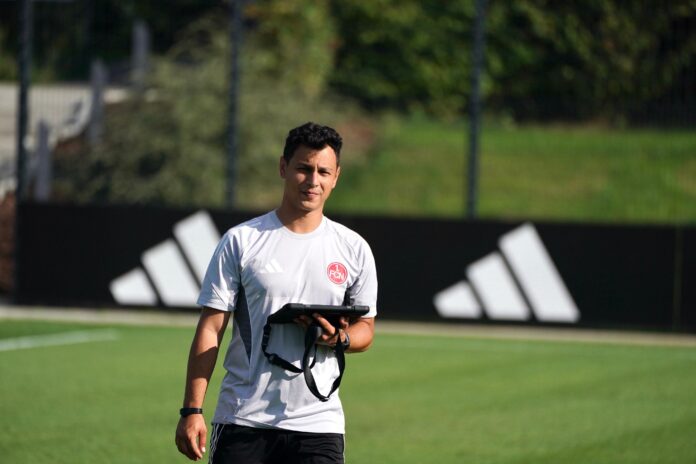
Mohsen Behzadpour during a training session at 1. FC Nürnberg, overseeing rehabilitation and performance work on the pitch.

Profile

Role: Reha-Athletiktrainer, 1. FC Nürnberg Women’s Team

Specialisation: Rehabilitation, Athletic Development, Injury Prevention

Experience: Frauen Bundesliga, 2. Frauen Bundesliga, Academy Football

Focus Areas: Load Management, Return-to-Play, Performance Development

Biography

In elite football, the margin between rehabilitation and peak performance is often measured in details. The ability to guide players safely from injury back to competition while simultaneously improving their physical capacity has become a critical component of modern performance environments.

Mohsen Behzadpour works precisely within this intersection of rehabilitation, athletic development, and injury prevention. Currently serving as Reha-Athletiktrainer for the women’s team of 1. FC Nürnberg in the Frauen Bundesliga, he combines applied sport science with practical experience as a former professional footballer. With academic training in strength and conditioning, sport nutrition, and performance rehabilitation, his work focuses on bridging medical recovery and high-performance demands within elite women’s football.

The ability to guide players safely from injury back to competition while simultaneously improving their physical capacity has become a critical component of modern performance environments.

Key Insights

  • Rehabilitation, performance development, and injury prevention are fully interconnected processes.
  • Load management is central to optimising performance and reducing injury risk.
  • Modern return-to-play focuses on performance readiness, not just being pain-free.

Our Exclusive Interview with Mohsen Behzadpour


You are currently working as Reha-Athletiktrainer in the Frauen Bundesliga at 1. FC Nürnberg. How do you define your role within the intersection of medical rehabilitation and high-performance football?

In my role as a rehabilitation performance coach in the Frauen Bundesliga, I operate at the intersection of medical rehabilitation and performance development. My primary objective is not only to guide players safely back from injury, but also to enhance their physical performance and reduce future injury risk.

A key element of this process is load management. By monitoring and adjusting training loads, we aim to optimise performance while simultaneously preventing injuries.

Rehabilitation, performance development, and injury prevention are therefore closely interconnected processes and should not be treated separately.

Rehabilitation, performance development, and injury prevention are therefore closely interconnected processes and should not be treated separately.


Having previously worked in the 2. Bundesliga and academy environments, how does your rehabilitation methodology adapt between youth, transition players, and senior professionals?

Working in both the 2. Frauen Bundesliga and in a youth academy environment has shown me that rehabilitation and performance strategies must be adapted to the player’s stage of development.

In youth academies, the focus is more strongly placed on long-term athletic development, movement quality, and building a strong physical foundation. With senior professional players, the competitive demands are higher and injury risks often increase as players get older and the physical load intensifies.

For this reason, load management strategies and injury prevention programmes must be tailored to the specific demands of each level.


Your academic background includes a Master in Strength and Conditioning for Football and further qualifications in sport nutrition and rehabilitation to performance. How do you translate scientific frameworks into daily on-pitch application?

My academic background in Strength and Conditioning for Football, combined with additional qualifications in sports nutrition and rehabilitation to performance, allows me to translate scientific frameworks into practical work on the pitch.

The key is applying evidence-based principles in a way that fits the daily reality of elite football. Strength training, recovery strategies, and nutrition all play a crucial role in supporting both performance and injury prevention.

Nutrition in particular is often underestimated, but it has a significant influence on both performance levels and the rehabilitation process.


With certification in Blood Flow Restriction training and performance-based rehabilitation models, how do you assess modern return-to-play protocols in elite football?

Modern return-to-play protocols in elite football have increasingly become performance-based. It is no longer sufficient for a player to simply be pain-free. Instead, the objective is to ensure that the athlete is fully prepared for the physical demands of competition.

Blood Flow Restriction training can support this process, particularly in the earlier stages of rehabilitation. It allows us to stimulate muscle adaptations and hypertrophy while working with relatively low loads, which can be highly beneficial following certain injuries or surgeries.

When applied correctly, it can help bridge the gap between rehabilitation and full competitive performance.

It is no longer sufficient for a player to simply be pain-free.


As a former professional footballer, how does your playing experience influence communication and trust during injury phases?

My own experience as a professional footballer strongly influences how I work with players during rehabilitation phases.

Because I come from the game itself, I understand the movements, the demands of the sport, and the psychological challenges players face when dealing with injuries. This often helps to establish a strong level of trust.

Players know that I understand their situation and their desire to return to the pitch as quickly as possible. At the same time, it allows me to communicate exercises and training concepts in a way that is closely connected to the realities of football.


In women’s football, physical load management is evolving rapidly. What structural adjustments must clubs implement to optimise performance while reducing injury risk?

Load management has become one of the most important topics in modern women’s football. To optimise performance while reducing injury risk, clubs need structured monitoring systems and close collaboration between medical, performance, and coaching staff.

Another important factor in women’s football is the consideration of the menstrual cycle when managing training loads and recovery strategies. Integrating these aspects into the overall performance framework can help optimise both performance and injury prevention.


Injury prevention has become a strategic priority in elite women’s football, particularly with regard to ACL risk and load management. How do you design prevention frameworks that go beyond isolated exercises and become embedded within the daily performance culture of a team?

Injury prevention should not rely solely on isolated exercises. Instead, it should be integrated into the daily training culture of a team.

Prevention strategies can be embedded into warm-up routines, strength sessions, and movement preparation. Consistency is essential. When prevention becomes part of the everyday training structure, it is no longer perceived as an additional task but as a natural component of performance preparation.


Beyond structured prevention programmes, how do you educate players and coaching staff to create shared accountability for injury risk management throughout the season?

Education plays a crucial role in this process. Players and coaching staff need to understand why load management and prevention strategies are necessary.

By communicating clearly about injury risks, recovery strategies, and training loads, it becomes possible to create a shared sense of responsibility within the team. When everyone understands the purpose behind these measures, they are far more likely to support and follow them consistently throughout the season.


You have worked within interdisciplinary settings alongside physiotherapists and performance experts. What does effective collaboration between medical, athletic, and coaching departments look like in practice?

Effective collaboration between medical staff, performance coaches, and the coaching staff is essential in elite football.

In practice, this means regular communication, shared decision-making, and clear alignment regarding training loads, rehabilitation progress, and return-to-play decisions.

When all departments work together with the same objective, it ensures that players receive the best possible support both during rehabilitation and in their ongoing performance development.


Looking ahead, what investments are required for Bundesliga women’s clubs to close the performance infrastructure gap compared to top-tier men’s programmes?

To close the performance infrastructure gap between women’s and men’s football, clubs need to invest further in performance staff, medical support, and training infrastructure.

This includes qualified specialists in strength and conditioning, rehabilitation, sports science, and nutrition. Access to modern monitoring technologies and high-quality training facilities is also essential.

These investments are necessary if women’s football is to continue developing sustainably at the highest professional level.


FAQ

Who is Mohsen Behzadpour?
Mohsen Behzadpour is a rehabilitation performance coach working in elite women’s football with 1. FC Nürnberg.

What is his area of expertise?
He specialises in rehabilitation, load management, and bridging injury recovery with performance development.

What is his approach to modern football performance?
His approach integrates rehabilitation, injury prevention, and performance into a single, interconnected framework.
How Esports is Creating Commercial Opportunities for Footballers

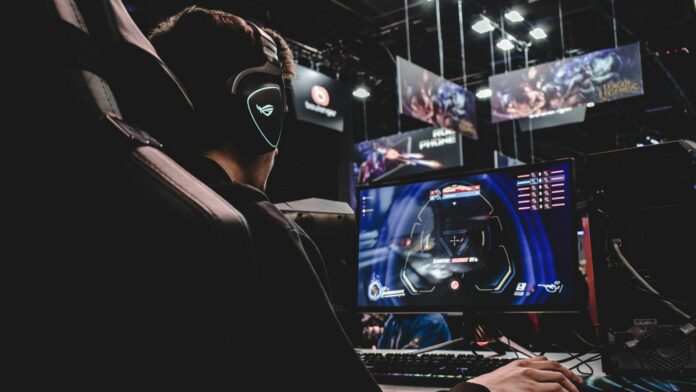
Footballer playing video game with controller, representing esports opportunities in modern football
Footballer playing video game with controller, representing esports opportunities in modern football. Photo by Florian Olivo on Unsplash.

Esports used to feel like a niche offshoot of gaming. Now it’s mainstream sport’s fastest-growing commercial frontier, and top-tier footballers are staking claim. Recent corporate moves show how seriously money is flowing into gaming: Electronic Arts was taken private in a landmark $55 billion deal in 2025, underlining investor belief that sports gaming and esports IPs are strategic, long-term assets. That kind of capital inflow changes the commercial calculus for athletes, clubs and rights-holders: esports is no longer an adjunct to sport but has become a parallel ecosystem offering sponsorships, content, community, and product revenue at scale.

This blog pulls together the commercial opportunities the esports boom creates for footballers, using concrete examples of players who already own teams, and explains why this is a smart, modern diversification for athletes, and how to do it well.

Why now? The economics are real and accelerating

Two things are happening at once:

  • Investor capital is arriving at scale. The EA buyout, backstopped by major investors and sovereign capital, signalled to the market that premium gaming IPs and esports ecosystems are strategic media assets. When gaming publishers are worth tens of billions, the sponsorship, media and IP downstream becomes exponentially more valuable.
  • Market growth is explosive. Recent industry studies put the global esports market in the hundreds of millions to low billions in annual value today, with forecasts showing double-digit compound annual growth through the next decade. Revenues are growing across sponsorship, media rights, merchandise, and in-game commerce. These are all channels footballers can plug into.

At the same time, modern sports titles are massive distribution platforms. The newest editions of football games now feature tens of thousands of athletes, hundreds of clubs, and dozens of stadiums, meaning a player’s presence in-game reaches a global, digitally native audience that watches, plays, and spends.

Esports is no longer an adjunct to sport but has become a parallel ecosystem offering sponsorships, content, community, and product revenue at scale.

Footballers getting in: real examples of player-owned teams

A growing list of active and retired footballers have created or invested in esports organisations. These are not symbolic gestures; they’re strategic plays to capture audience, content and commercial upside.

The late Diogo Jota – LUNA Esports
Jota launched an organisation (initially named after him, now LUNA) focused on EA Sports FC and other competitive titles. The team competes in major tournaments and produces content, bringing Jota’s fanbase into the esports funnel and continues his legacy.

Mesut Özil – M10 Esports
Özil’s M10 started as a branded commercial vehicle and evolved into a competitive esports entity and content platform. It leverages his global profile, particularly in markets where he has strong cultural ties.

Oleksandr Zinchenko – Passion UA
Zinchenko founded Passion UA with a mission-driven angle: supporting Ukrainian esports talent in titles like CS2 and Dota 2. That regional authenticity gives the brand narrative and access to emerging markets of fans.

Sergio Agüero – KRÜ Esports (co-owners include Lionel Messi)
KRÜ has become a major South American esports organisation, competing in multiple titles and attracting co-ownership that amplifies flavour and reach.

David Beckham – Guild Esports (founder/co-owner)
Beckham’s high-profile backing highlighted how legacy athletes can build a branded talent pipeline, although Guild’s public financial path also illustrates the risk and volatility in running a listed esports business.

Players are choosing ownership, equity stakes or presidency roles rather than purely “paid ambassador” relationships, which gives them upside on long-term growth rather than a single cheque.

What commercial opportunities open up for players?

For footballers, esports unlocks several commercial levers that are complementary to their on-pitch careers:

New revenue streams (beyond endorsements and salaries)

Ownership stakes and co-ownership allow players to earn from sponsorship deals, tournament winnings, media rights, merchandise and content monetisation. Rather than trading time for a flat endorsement fee, equity can appreciate materially as the team or organisation grows.

Year-round content and fan engagement

Esports teams produce constant digital content (streams, vlogs, tournaments, player interviews). That content keeps a footballer top of mind during the off-season, strengthens personal brand loyalty, and creates inventory for sponsors looking for frequent exposure.

Cross-platform sponsorship packages

Companies can partner on both the footballer’s career and their esports ventures, a single overlay that spans matchday visibility, in-game presence, co-branded merch, and livestream activations. For brands, that breadth is highly attractive.

Access to younger, digitally native audiences

Esports audiences skew younger and are highly engaged in streaming and social. Players who invest in esports are effectively building relationships with fans who may not watch linear TV, a valuable demographic for sponsors and DTC businesses.

Product and IP extension

Players can co-create merchandise, digital collectibles (including NFTs where appropriate), training apps, and branded in-game items. An exclusive boot or kit in a popular game becomes a new SKU for a player’s brand.

Post-career pathways

Ownership, content and media experience set players up for life after football as executives, investors, streamers, or media personalities. That transition is both commercially and personally stabilising.

From equity upside and perpetual content to sponsor-friendly activation pipelines, esports gives players tools that football alone can’t deliver.

Why teams and brands want player investors

Brands and esports organisations value athlete owners for three main reasons:

  • Built-in audience and credibility. A high-profile player brings social reach, press attention and credibility in a crowded market.
  • Content amplification. Athlete-owned teams get featured in the owner’s channels, creating immediate reach for sponsors.
  • Commercial introductions. Players often unlock sponsor relationships in markets (e.g., Middle East, Turkey, Brazil) that traditional esports teams can’t access easily.

For brands looking to activate via esports, putting money behind a footballer-led team creates a neat story: bridging traditional sport fandom with gaming culture.

Real risks and what players must watch for

Esports is exciting, but it’s not a guaranteed win. Footballers should approach ownership like any professional investment:

  • Operational complexity. Running a competitive team requires experienced management, coaching staff, player contracts and compliance across multiple titles.
  • Financial volatility. Not all esports franchises scale profitably; public examples show sharp swings in valuation and cash-flow pressures.
  • Reputational risk. Poor governance, toxic team behaviour, or controversial sponsorships can harm a player’s personal brand.
  • Regulatory maze. Prize money, player transfers, gambling sponsorships and region-specific laws create legal complexity.
  • Market saturation & selection risk. Some titles are winners, others decline; choosing where to invest matters.

David Beckham’s Guild Esports underscores the point: celebrity backing alone doesn’t guarantee long-term commercial success without strong operational execution and capital discipline.

How players should approach esports ownership strategically

  • Treat it like a business – surround yourself with experienced esports executives and operators, not just friends and influencers.
  • Pick the right titles – match the game to your audience and your strategy: FIFA/EA FC for football fans, CS2/Valorant for competitive viewership, and so on.
  • Integrate content and commerce – use your channels to amplify the team and create products fans want to buy.
  • Protect brand values – choose sponsors and partners aligned with your public image and avoid short-term cash at the cost of reputation.
  • Think global & local – leverage your geographic pull (e.g., Portuguese players in Brazil, Ukrainian players in Eastern Europe) to build authentic footholds.

The bottom line: esports as modern diversification

The rise of esports is a commercial expansion that offers footballers new ways to monetise fame, grow their personal brands, and future-proof their careers. From equity upside and perpetual content to sponsor-friendly activation pipelines, esports gives players tools that football alone can’t deliver.

The EA buyout and fast-rising market forecasts are a clear signal: this space will attract more capital, more mainstream media deals, and more cross-border sponsorships. For players who approach esports with strategy, discipline and the right partners, ownership can be a defining chapter of a modern athlete’s commercial life, not as a detour from football, but as a parallel ecosystem that amplifies their reach, revenue and relevance.

Who is Markus Pflanz?

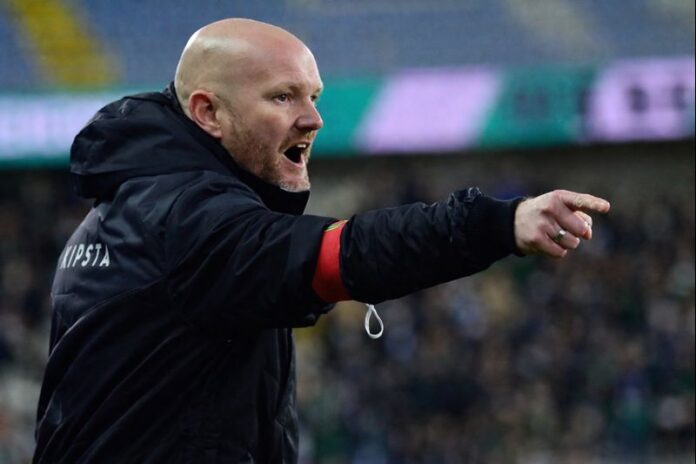
Markus Pflanz giving tactical instructions from the touchline during a professional football match
Markus Pflanz on the touchline, embodying his proactive coaching style and tactical intensity. His approach reflects a strong focus on pressing, leadership and player development.

Profile

Role: Former Head Coach, VfR Aalen

Specialisation: Pressing, Counter Pressing, Player Development

Experience: Germany, Belgium, National Associations and Academies

Focus Areas: Tactical Development, Talent Promotion, Coaching Education

Biography

Markus Pflanz is a UEFA Pro Licensed coach whose career reflects a rare combination of elite-level coaching education, international first-team experience, and deep expertise in talent development. Born in 1975 in Soest, Germany, Pflanz has built a professional path that spans senior football, national teams, academies, and coach education, positioning him as a highly versatile and modern football coach.

In June 2024, he achieved the UEFA Pro Licence, the highest coaching qualification in European football. This milestone complements a long list of advanced certifications, including the UEFA A and B Licences, Elite Junior Licence, Game Analysis and Scouting Certificate, and specialist qualifications as a goalkeeper coach and FIFA 11 Plus instructor. His educational background underlines a coach who values structure, detail, and continuous development.

On the pitch, Pflanz is known for an intense and proactive playing style. His teams focus on pressing and counter pressing with clear triggers, defending forward, and immediate vertical play after regaining possession. His football philosophy is built on the principle of never being passive, always applying pressure, forcing mistakes, and exploiting them quickly. This approach is strongly influenced by his close professional relationship with Alexander Blessin, whom he assisted for 18 months at KV Oostende. During that period, the club rose from the bottom of the table to the play offs, and Blessin was later named Coach of the Year in Belgium.

His football philosophy is built on the principle of never being passive, always applying pressure, forcing mistakes, and exploiting them quickly.

Pflanz has held assistant coaching roles in the Belgian Jupiler Pro League with KV Oostende and Sint Truiden VV, where he was responsible for training design, opponent analysis, set pieces, and individual player development, while also stepping in as head coach for multiple matches. In 2024, he took on the role of Head Coach at VfR Aalen in the German Regionalliga, overseeing the full training process, match preparation, and tactical implementation.

His experience also includes long-term work in elite talent promotion with the German Football Association and Mainz 05 Academy, as well as lecturing and examination roles within the Hessian Football Association. Over the years, he has coached and developed numerous players who later progressed to top European leagues and international football.

Beyond coaching, Markus Pflanz is also an author and football educator. His work Rondos from a Defensive Perspective reflects his analytical approach and his ability to translate complex tactical ideas into practical training concepts.

Today, Markus Pflanz stands out as a coach who combines intensity, modern tactical principles, and educational depth.

Today, Markus Pflanz stands out as a coach who combines intensity, modern tactical principles, and educational depth. His profile suits ambitious clubs and federations seeking a proactive football identity, strong training methodology, and a leader who connects player development with high-performance demands.

Key Insights

  • A UEFA Pro Licensed coach with extensive experience across academies, professional clubs, and associations.
  • Strong emphasis on pressing, counter pressing, and proactive football principles.
  • Combines player development, tactical clarity, and leadership within modern coaching environments.

Our Exclusive Interview with Markus Pflanz


Your coaching career spans elite youth development, professional club football, and association environments. How have these different levels shaped your identity as a modern head coach?

Every stage and every role has shaped me. From each phase, you take both positive and negative experiences, and that is exactly how your toolbox as a coach keeps growing. Over time, you realise that decisions are no longer made purely by intuition. Instead, intuition is built on experience. You subconsciously refer back to situations you have already lived through, which allows you to react faster and with more clarity.

Working with very different people and personalities has influenced me greatly. You learn that there is no universal solution. From positive experiences, you take elements you want to develop further, and from negative ones, you often learn even more. This combination of success, mistakes, and reflection is what defines, for me, the identity of a modern coach.


You are known for an intense, proactive playing style based on pressing, counter pressing, and vertical football. What are the core principles behind this philosophy, and why do you believe it is effective in today’s game?

My playing idea is based on intensity, activity, and courage. I like to call it heavy metal football. Just like music, it has to transport energy, emotion, and dynamism. Data and analysis confirm this approach. Most goals today are scored after transition moments, regardless of the zone in which the ball is won. Around 55 percent of goals come from pressing and counter pressing situations.

At the same time, football is also about entertainment. Spectators want to see a team that plays bravely, stays active, and thinks forward. For me, this does not contradict controlled possession football. Purposeful possession combined with a dynamic rest defence is crucial. Win the ball, transition immediately, and create goal scoring opportunities. This clarity makes the game both effective and attractive.


Working closely with Alexander Blessin had a strong influence on your development. What were the most important lessons you took from that collaboration, and how have they shaped your own leadership style?

Working with Alexander Blessin was my first role in professional football and therefore a defining moment. It was there that I first worked intensively with the concept of pressing, strongly influenced by ideas such as those of Ralf Rangnick. I was immediately convinced by this playing style because it fits me and my character very well.

At the same time, I learned a lot about leadership. For me, leadership means creating an environment where everyone enjoys coming to work and is willing to give their best. Not every day is the same, but the willingness to give one hundred percent must always be there. It is important that everyone feels like part of the bigger picture.

I also learned that you do not have to be perfect at everything yourself. What matters is recognising your own weaknesses and compensating for them by surrounding yourself with experienced and complementary people. Good leadership, for me, is productive leadership. Hard leadership for the sake of hardness achieves nothing. Creating problem cases instead of solving them harms the team. Motivation, trust, and clarity are far more effective in the long term.


You have coached and developed many players who later reached top global clubs. What do you focus on most when developing players to prepare them for the highest level?

For me, it is about preparing players realistically for what awaits them at the highest level. Players need certain skills, but the environment is just as important. The team must be built in a way that allows the best players to show their strengths in their best positions. That requires experience and a strong sense from the coach.

I place great value on supporting players’ development in a holistic way. Every day, I try to give my best myself and set an example. When players see that the coach works with full conviction, their own willingness to improve increases.

Communication is also crucial. Players must understand why they are doing something. If they are convinced that we will be more successful together, they will follow you. In that case, not only individual players improve, but the entire team does as well.


Having recently worked as a head coach and previously as an assistant at top professional clubs, what type of project or environment do you feel best suits your strengths at this stage of your career?

I am very open in that regard and not fixed on one specific path. In the end, I simply want to be on the pitch and work. Despite all the negative aspects of the job, such as limited free time and time away from family, it is still the best profession for me.

Whether as a head coach or an assistant coach, I enjoy both roles. Each has its own appeal and challenges. I also feel very comfortable in youth football, because developing players closely is incredibly rewarding. There are very few things more fulfilling.

A coach must also be willing to embrace major changes, including regional ones. I see enormous potential and many opportunities in the United States, for example. For me, the title of the position is not what matters most, but the opportunity to work, to develop, and to live football.


FAQ

Who is Markus Pflanz?
Markus Pflanz is a UEFA Pro Licensed football coach with experience across professional clubs, academies, and national associations.

What is Markus Pflanz’s coaching style?
He is known for an intense, proactive style based on pressing, counter pressing, and vertical play.

What makes Markus Pflanz a modern coach?
His combination of tactical expertise, player development focus, and leadership approach defines his modern coaching identity.

Multi-Club Ownership and Commercial Risk in Football

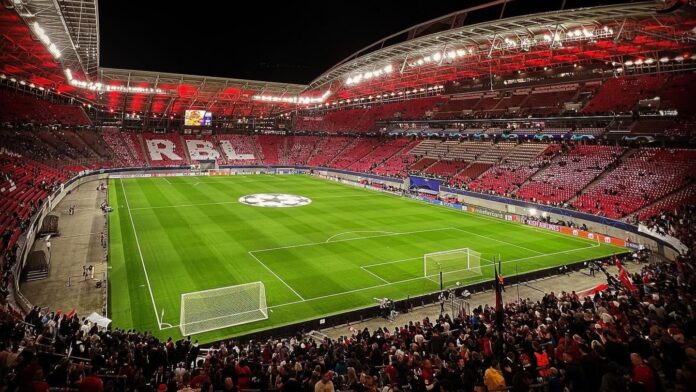
Red Bull Arena in Leipzig during a UEFA Champions League match with illuminated stands and full stadium atmosphere.
Red Bull Arena in Leipzig during a UEFA Champions League night. The Red Bull network illustrates how multi-club ownership can combine brand strategy, global audiences and commercial scale.

An analysis of the commercial logic reshaping multi-club investment in professional football

When reports emerged that Clearlake Capital had explored moving Liam Rosenior within its ownership network, the episode was widely read as a personnel story. It was also something else, a window into how private equity ownership groups now treat football clubs as nodes in an integrated commercial and operational system.

That operational flexibility, the ability to deploy managers, coaches, commercial infrastructure and playing talent across affiliated clubs, is the defining structural feature of the multi-club ownership model. Industry discussion has focused heavily on the player pathway logic, i.e. shared scouting networks, coordinated loan strategies, and the talent pipeline from feeder club to flagship. The commercial dimension has received considerably less attention.

The Volatility Problem

Football clubs face a revenue challenge that would be recognised in few other industries. The primary driver of income, competitive performance, is inherently unstable and largely beyond management control. A single relegation can remove a quarter of a club’s revenue overnight. Matchday income varies with fixture scheduling and cup runs. Transfer proceeds, while increasingly central to financial planning, are episodic by nature. Sponsorship demand tracks closely with media exposure and league position.

Even broadcast revenue, the most predictable income stream at the top level, carries structural uncertainty. The Premier League’s new domestic deal for 2025–29 offers modest growth in domestic rights but no guaranteed uplift for individual clubs. International rights remain the growth story, but are distributed collectively and are therefore insensitive to individual club performance. For clubs outside the established European broadcast markets, for example, MLS, the J.League, or the A-League, the uncertainty is considerably more acute.

Football clubs face a revenue challenge that would be recognised in few other industries.

Currency volatility adds a further planning constraint. Ownership groups operating across multiple jurisdictions must manage exposure to sterling, euro, dollar, yen and other currencies simultaneously. A commercial contract agreed in one currency can look materially different within eighteen months if exchange rates move significantly.

The standard response to this risk profile has been to build revenue diversification at the club level. More commercial categories lead to higher matchday yield, and ultimately, content monetisation. These strategies have real limits. A club’s commercial ceiling is set largely by its competitive position, stadium footprint, and local market. For most clubs in most leagues, those constraints are binding. Multi-club ownership offers a different solution; instead of diversifying revenue within a club, ownership groups diversify exposure across clubs.

The Commercial Architecture of MCO

Centralised Partnership Portfolios

City Football Group’s commercial infrastructure illustrates the model at full scale. CFG, which now operates thirteen clubs across five continents, does not negotiate sponsorships club by club. It goes to market with what it describes as a multinational platform offering year-round competitive action across multiple leagues and time zones.

The group’s partnership strategy team, which CFG’s VP of Partnership Strategy and Operations has described as responsible for creating and maintaining commercial strategy across all clubs, sells global access rather than individual inventory. Partners, including Puma, Etihad, OKX, and, until recently, Nissan, have been structured as group-level relationships activatable across multiple properties. Manchester City’s commercial revenue reached £344.7m in the year to June 2024, making it the highest commercial earner among Premier League clubs; a position the club has now held for four consecutive seasons. That figure reflects not merely the club’s own commercial appeal but the amplifying effect of group-level negotiation.

Red Bull operates on an analogous logic, though driven by brand rather than portfolio scale. A global board oversees centralised HR, finance, marketing and information functions across the group. Each club in the network, RB Salzburg, RB Leipzig, New York Red Bulls, and most recently Omiya Ardija in Japan, carries the Red Bull visual identity and activates the same brand values. The model is structurally different from CFG’s, but the commercial principle is the same: a single ownership group uses multiple clubs to create an audience and inventory base that no individual club could build alone.

A single ownership group uses multiple clubs to create an audience and inventory base that no individual club could build alone.

Risk Distribution and Regulatory Context

The financial sustainability rules now governing professional football in England and Europe make the risk-pooling dimension of MCO more, not less, relevant. Under Premier League Profitability and Sustainability Rules, clubs may not post aggregate pre-tax losses exceeding £105m over a rolling three-year period. UEFA’s new Financial Sustainability and Club Licensing Regulations impose a squad cost ratio, initially set at 90% of revenues in 2023–24, declining to 70% by 2025–26, on football-related expenditure. The Premier League confirmed in February 2025 that PSR will remain in force for the 2025–26 season, with a structural overhaul to Squad Cost Rules deferred to 2026–27.

These frameworks assess financial sustainability at club level. They do not directly regulate commercial relationships between affiliated clubs within the same ownership group. In the Premier League, though, Associated Party Transaction rules, strengthened following the Newcastle United takeover in 2021, require that deals involving connected parties demonstrate fair market value. Manchester City’s protracted dispute with the league over APT rules, recently settled, underlined how much is at stake in the pricing of group-level commercial relationships.

The commercial logic is clear enough: ownership groups that can bundle inventory across multiple clubs can credibly command pricing that reflects aggregate audience reach rather than individual club scale. Whether that pricing consistently passes a fair market value test when the counterparty is affiliated with the ownership group is precisely the question that regulators are now asking.

The question may be less whether MCO improves recruitment efficiency, and more how it redistributes financial and relational risk, and who ultimately bears the cost.

Content and Digital Inventory

Content production offers a further illustration of group-level commercial leverage. Digital media assets, e.g. behind-the-scenes formats, player access content, multilingual social programming, can be developed centrally and distributed across affiliated club channels, lowering per-unit production cost while dramatically expanding the addressable audience.

This matters commercially because partner activations embedded in owned content scale at near-zero marginal cost once the infrastructure is built. A global brand that partners with CFG is not paying for access to a single stadium’s digital audience. It is paying for reach into thirteen fanbases across five continents, served through coordinated content pipelines and local-language channels. The proposition is materially different from anything a standalone club can offer.

Partner activations embedded in owned content scale at near-zero marginal cost once the infrastructure is built.

The Tension at Club Level

The efficiency gains of centralised commercial architecture carry a cost that is easy to understate. Clubs that enter MCO structures do not simply acquire new resources; they also surrender degrees of commercial autonomy.

Local sponsor categories may be constrained by group-level exclusivity agreements. Regional partners that have built long-standing relationships with a club may find those relationships disrupted by group-wide deals that displace them from preferred categories. Supporters, for whom commercial partnerships are often a visible expression of club identity, may experience centralisation as a dilution of something they value.

The Pozzo family’s experience with Watford and Udinese is instructive here. Despite maintaining separate management structures and distinct on-pitch identities, both clubs have faced persistent concerns from supporters about whether individual club interests are subordinated to group-level priorities. The perception that a club exists primarily to service the commercial or sporting needs of a larger ownership structure is difficult to manage and arguably impossible to refute entirely, because in some measure it is true.

MCO groups have navigated this tension with varying degrees of success. Red Bull’s model, which imposes unified branding across the network, accepts the commercial logic at the cost of local identity. This trade-off has generated supporter hostility in Austria, Germany and New York, but has not materially impaired the model’s commercial performance. CFG’s approach has been to maintain distinct club identities beneath the group commercial umbrella, though the boundaries between those identities and the group’s commercial interests are not always visible to supporters.

Scale, Speed, and the Regulatory Horizon

The growth of MCO has been rapid by any measure. From approximately 18 ownership groups globally in 2012, the number had risen to over 120 by 2023, encompassing more than 300 clubs and representing a roughly 400% increase in a decade. As of 2022, some 82 top-division European clubs were part of multi-club investment structures. That figure has since grown.

The pace of expansion is itself a commercial signal. Private equity capital entering football is increasingly structured around portfolio logic rather than single-asset investment. The question for new investors is not whether to acquire one club but where in the value chain to build exposure and what kind of commercial platform to construct around it.

Regulatory frameworks have struggled to keep pace. UEFA’s prohibition on clubs under the same control competing in the same UEFA competition remains the primary structural constraint on MCO expansion, but the definition of ‘control’ has proven elastic. When Brighton and Union Saint-Gilloise, Aston Villa and Vitoria Guimaraes, and AC Milan and Toulouse were all cleared to participate in UEFA competition in 2023–24 despite shared ownership relationships, the regulator effectively confirmed that the commercial and operational integration of MCO groups can advance well ahead of the point at which sporting integrity concerns trigger a structural response.

The Independent Football Regulator, whose legislation passed through the House of Lords in October 2024 and is designed to cover the top five tiers of English men’s professional football, introduces a new layer of oversight. Its focus on financial sustainability, club heritage, and supporter interests may create friction with MCO commercial models that prioritise group-level efficiency over club-level autonomy. How that tension will be managed in practice remains to be seen.

Conclusion: Relocation, Not Elimination

Multi-club ownership does not resolve football’s fundamental commercial challenge. Revenue remains tied to performance, audience, and competitive relevance. Individual clubs within MCO structures still face relegation risk, sponsorship dependency, and the episodic nature of transfer income.

What MCO does is relocate these risks from club to group level and, in doing so, changes who bears them, who benefits from managing them, and at what cost. Ownership groups gain pricing authority, geographic scale, and commercial diversification. Individual clubs may gain resources and financial support, but they do so within a framework where pricing, partner relationships, and commercial identity are increasingly determined by the group rather than the club.

That shift is neither straightforwardly good nor bad for the game. It is, however, fundamental. As MCO structures continue to consolidate and as regulatory frameworks catch up (or fail to), the most consequential questions in football finance will not be about transfer fees or broadcast rights in isolation. They will be about how commercial power is structured, exercised, and distributed across the ownership networks that now sit between the clubs supporters love and the capital markets that increasingly fund them.

Data references: City Football Group filing via Companies House; Manchester City FC 2023–24 financial results; UEFA Club Licensing and Financial Sustainability Regulations; Premier League PSR framework; Norton Rose Fulbright Premier League Ownership Trends Report 2025.

Small Nations Big Minds in European Football

Statue of Liberty monument in Piazza della Libertà in San Marino with the Palazzo Pubblico and national flags in the background.
Statue of Liberty monument in Piazza della Libertà in San Marino with the Palazzo Pubblico and national flags in the background. Photo by Patrick on Unsplash.

Football is often explained through tactics, budgets and trophies. But in micro states, football is psychology.

It is emotion compressed into ninety minutes. It is identity exposed under floodlights.

In Europe, three of the smallest football nations 🇸🇲 San Marino, 🇱🇮 Liechtenstein and 🇦🇩 Andorra reveal how the mental side of the game can be stronger than any scoreboard.

San Marino

San Marino lives with permanent underdog psychology.

With a population of around 34,000, almost every qualification campaign feels like a mismatch on paper.

The players walk onto the pitch knowing the odds. The supporters watch knowing the reality. Yet something powerful happens in that shared awareness: expectation disappears, pride intensifies.

When San Marino scored after eight seconds against England in 1993, the result (7–1) became secondary. The goal became therapy proof that even against giants, a moment of equality is possible.

Yet something powerful happens in that shared awareness: expectation disappears, pride intensifies.

The domestic league is semi-professional. Many players have regular jobs.

That creates a different emotional connection. These are not distant millionaires; they are neighbors, colleagues, relatives.

The country’s most iconic football figure, Massimo Bonini, who won European titles with Juventus, remains a symbol of what is psychologically possible.

In San Marino, football is resilience training for an entire nation.

Liechtenstein

Liechtenstein, with roughly 39,000 inhabitants, carries a different football psychology: controlled realism.

There is no domestic league; clubs compete in Switzerland.

The flagship club, FC Vaduz, represents more than sporting ambition it represents structural intelligence.

The country understands its limits and builds around them.

Psychologically, this creates calm rather than frustration.

Expectations are managed collectively.

When Liechtenstein achieved a 4–0 victory over Luxembourg in 2004, it was not celebrated as a miracle, but as validation of a long-term plan.

The fans in Liechtenstein do not demand domination; they value stability.

Football becomes an extension of national culture: disciplined, organized, measured.

In such environments, pressure is lighter and identity is steadier.

Andorra

Andorra, population around 80,000, presents yet another psychological profile: patient persistence.

Known globally for ski resorts and mountain tourism, football is not the country’s primary sporting brand.

That reduces external pressure but increases internal motivation.

The national team often adopts a compact defensive approach not only tactically, but mentally.

Staying in the game is a psychological objective.

A draw can feel like growth. A narrow defeat can feel like progress.

Long-serving captain Ildefons Lima embodied this endurance mentality for nearly two decades.

Meanwhile, FC Andorra competing within the Spanish pyramid expanded the national imagination.

Exposure changes belief. Belief changes behavior.

In Andorra, football is quiet ambition.

Exposure changes belief. Belief changes behavior.

The Psychology of Small Football Nations

What unites these three nations is a unique emotional contract between team and supporters.

In larger countries, fans often demand entertainment and trophies.

In micro states, fans demand courage.

There is no illusion of global dominance. There is collective acceptance and within that acceptance, extraordinary unity.

Psychologically, losing frequently can either destroy confidence or build character.

In these countries, it builds character.

Every small achievement a goal, a clean sheet, a competitive half becomes meaningful.

Micro successes create macro pride.

Large football nations debate formations and transfer budgets. Small nations debate dignity.

They know the spotlight will rarely shine on them, yet they step into it anyway.

That requires a different kind of bravery not the bravery of favorites, but the bravery of believers.

Lessons from the Smallest Nations

San Marino teaches resilience. Liechtenstein teaches structure. Andorra teaches patience.

And all three teach something deeper: football is not only a competition of talent, but a test of collective mindset.

Because football, at its core, is psychological before it is tactical. And that is why football remains a universal sport. Not because everyone wins. But because everyone dreams.

One ball. One field. One flag.

And in that moment, the smallest nation in the world stands as tall as any giant.

Who is Jens Wedeborg?

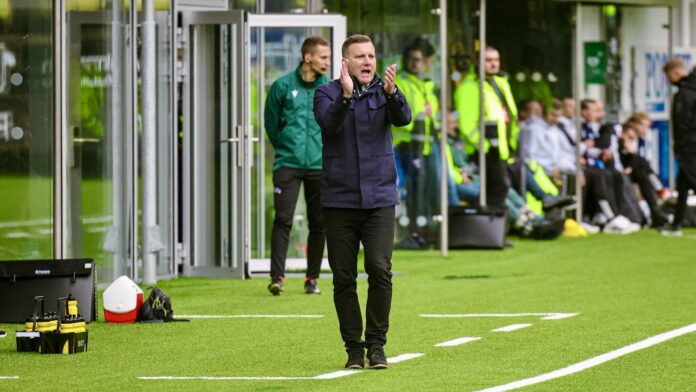
Jens Wedeborg coaching from the touchline during a match, directing his team with tactical instructions.
Jens Wedeborg on the touchline during a match, demonstrating his hands on leadership style. The Swedish coach has built an international career across Scandinavia and Europe.

Profile

Role: Head Coach, Strømmen IF

Specialisation: Coaching, Leadership and Tactical Adaptability

Experience: Sweden, Lithuania, the Faroe Islands and Norway

Focus Areas: Adaptability, Cultural Understanding and Player Development

Swedish Head Coach with International DNA

Jens Wedeborg, born in 1979, is a Swedish head coach at Strømmen IF in Norway’s First Division. He has over 18 years of experience in football and more than 10 years of professional coaching experience across Scandinavia and Europe. Known for his adaptability and cultural awareness, Wedeborg has worked in elite men’s, women’s, and youth football in Sweden, Lithuania, the Faroe Islands, and Norway.

Early international experience at FK Riterias, in first tier Lithuania, helped shape Wedeborg’s approach to leadership in demanding professional environments, sharpening his ability to understand group dynamics and adapt his coaching to different contexts.

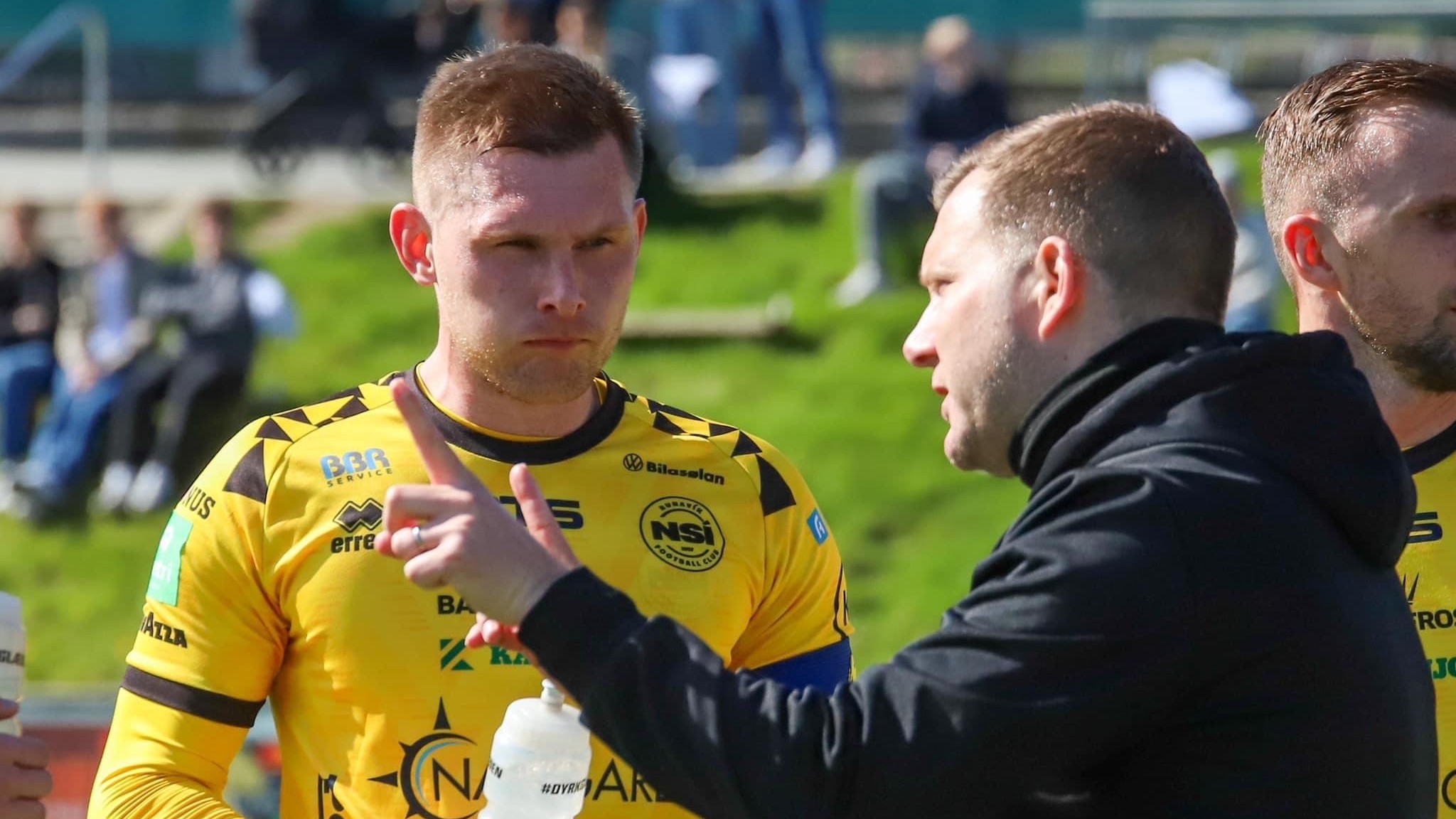
Jens Wedeborg giving tactical instructions to a player during a match.
Jens Wedeborg delivering tactical instructions to a player during a match. Clear communication and adaptability are central to his coaching philosophy.

A defining chapter of his career came at NSÍ Runavík in the Faroe Islands Premier League, where he led the club to European qualification in both of his seasons. Under his guidance, Runavík scored 92 goals in 27 matches, ranking among the most prolific teams in European leagues during that period. The club’s strong winning culture provided a solid foundation, while targeted recruitment and an emphasis on adapting tactics to player profiles proved key to sustained success.

Coaching in the Faroe Islands also required practical adaptability, with climate and local conditions influencing tactical decisions. Wedeborg embraced the importance of understanding both the sporting culture and the people, viewing cultural awareness as a central factor in on-pitch performance.

Alongside his work in men’s football, Wedeborg has coached at the highest level of women’s football, including IFK Kalmar in Sweden’s Damallsvenskan and KÍ Klaksvík Women, one of the most successful clubs in Faroese football. His experience in women’s football further strengthened his ability to work in elite, high-expectation environments with diverse, international squads.

Wedeborg has now begun a new chapter as head coach of Strømmen IF, following the club’s promotion to Norway’s First Division. With Strømmen returning to a fully professional league after challenging seasons, the focus is on stability, continued development, and building on the strong foundation from the previous staff.

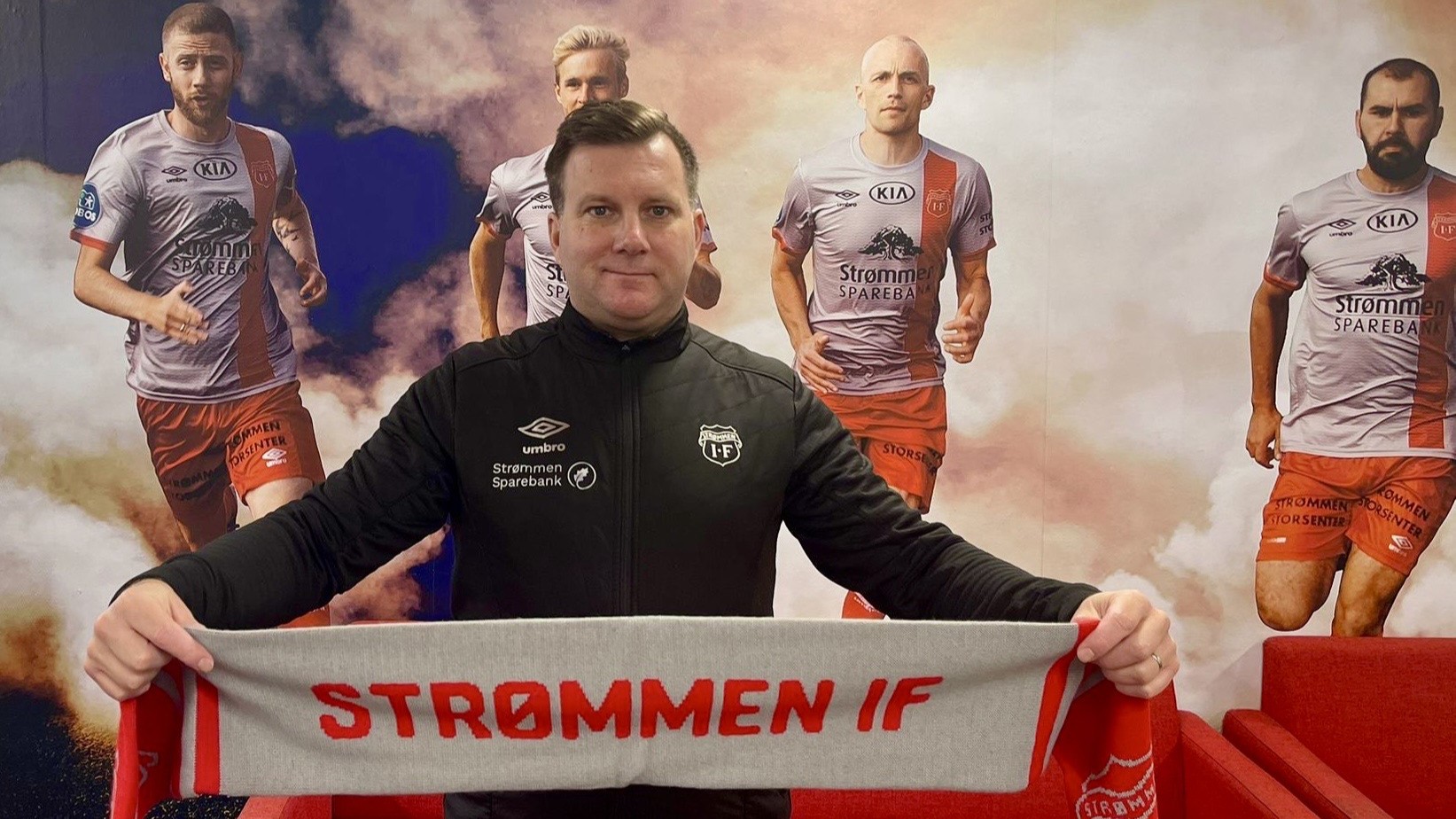
Jens Wedeborg holding a Strommen IF scarf after joining the Norwegian club.
Jens Wedeborg after joining Strømmen IF as head coach. The Swedish coach begins a new chapter in Norway’s First Division.

Across countries, leagues, and football cultures, Jens Wedeborg has built a coaching identity centred on adaptability, cultural understanding, and creating the right conditions for players to succeed.

Key Insights

  • How international coaching experience shaped Jens Wedeborg’s adaptable leadership style.
  • Why cultural understanding and tactical flexibility were central to success at NSÍ Runavík.
  • What Wedeborg aims to build at Strømmen IF after promotion to Norway’s First Division.

Our Exclusive Interview with Jens Wedeborg


What inspired you to become a football coach, and what are some of your coaching philosophies?

I played football with some promise as an academy player, but I didn’t take the final step from U19 to senior level, so I stopped my journey as a professional player. I moved from a smaller town in the south of Sweden to Stockholm and began my studies in Physical Education.

During this time, I studied many different leaders and leadership styles, and I became increasingly interested in football management. In my final years as a semi-professional footballer, I think I was starting to bother my teammates, as I became more and more of a coach on the field. Before I even realized it, I had begun my journey as a coach.


You had a successful spell at NSÍ Runavík in the Faroe Islands Premier League, where the team qualified for European competition. What were the keys to that success?

In both seasons, we were successful and qualified for European competitions. The club was something of a “sleeping giant” that had enjoyed success for many years, so there was already a strong culture and pride connected to winning and competing in Europe. I arrived at a stage where some rebuilding was needed, but we managed to recruit the right player and management profiles to meet that challenge successfully.

Secondly, I have been coaching for 18 years. I worked in Lithuania at Žalgiris Vilnius in a post-Soviet football culture, and more recently in the Faroe Islands. These experiences helped me recognize what each group needs and how to adapt accordingly—whether that means intense defensive pressing, playing in a 4-3-3 or a 5-3-2, or adjusting to the strengths of the players available. Putting players in the right situations for success translated directly into results, including scoring 92 goals in 27 games, making us one of the leading goalscoring teams in European leagues that season.

Putting players in the right situations for success translated directly into results, including scoring 92 goals in 27 games, making us one of the leading goalscoring teams in European leagues that season.

Changing environments and leaving your comfort zone is crucial. Sometimes it’s less about football itself and more about understanding the culture and sporting context, then applying your own style within that framework.


What was the biggest adjustment moving from Swedish clubs to coaching in the Faroe Islands with NSÍ Runavík and KÍ Klaksvík?

The Faroe Islands are located in the middle of the North Atlantic Ocean, so climate and wind are major factors. Wind speeds can reach the equivalent of 20 seconds per kilometer, which makes playing long balls out the back challenging. You have to adapt.

One detail was we decided to work closely with local ferry assistants who understand the weather conditions extremely well. The wind can completely destroy a game if you don’t adjust your approach. There is even a special rule, similar to one in the NFL, where if you can place your finger on the ball without it moving, play can continue.

Beyond the climate, you must also adapt to the people, culture, and sporting mentality. Faroese people are extremely hardworking; many come from fishing backgrounds, enduring harsh conditions at sea for months before returning to land. That resilience is reflected in their football mentality.

Beyond the climate, you must also adapt to the people, culture, and sporting mentality.


You coached IFK Kalmar in the Swedish women’s top tier (Damallsvenskan) and KÍ Klaksvík Women, one of the most successful clubs in Faroese football. How was your experience in those elite environments?

Being part of women’s football was fantastic, you meet incredible sportspeople and professionals. KÍ Klaksvík Women were already very successful before I arrived, so my role was to continue that work and maintain high standards.

Women’s football in Sweden is very well developed. At IFK Kalmar, we had players from many nationalities, including Germany, Slovakia, and the United States, which made the environment highly competitive and culturally enriching.


You recently joined Strømmen IF in the Norwegian First Division. What are your objectives for this season?

We were promoted this season, and there are similarities to my time at Runavík. Strømmen IF had spent many years in the second tier but were relegated in 2021. After a few challenging seasons, the club has finally returned to where it belongs.

In Scandinavia, the top two tiers are fully professional, so the level is high. We are a smaller club in the Oslo region, and our main objective this season is to establish stability in the league while building on the excellent work done by the staff who won promotion the year before.


FAQ

Who is Jens Wedeborg?

Jens Wedeborg is a Swedish head coach at Strømmen IF in Norway’s First Division with experience across Scandinavia and Europe.

What is Jens Wedeborg known for as a coach?

He is known for adaptability, cultural awareness, and creating the right conditions for players to succeed in different football environments.

Which clubs and leagues has Jens Wedeborg worked in?

He has coached in Sweden, Lithuania, the Faroe Islands, and Norway, including roles in elite men’s and women’s football.

Crisis de Declaraciones Públicas en el Fútbol Profesional

Professional video cameras filming a football press conference highlighting media scrutiny and public statements
Press conferences place football figures under constant media scrutiny. In the modern game, every statement can be recorded, analysed and amplified. Photo by Fardad sepandar on Unsplash.

En el fútbol moderno, tener talento en la cancha no es suficiente. Hoy, jugadores y entrenadores también deben jugar otro partido: el de la comunicación. En un mundo hipervigilado por medios y redes sociales, una sola frase mal dicha —en una rueda de prensa o en un post impulsivo de redes sociales— puede desatar una tormenta que atraviese el vestuario, el club y hasta la afición.

Y es que el problema no es solo “lo que se dice”, sino “cómo, cuándo y a quién se le dice”.

El poder (y el peligro) de una declaración

Un técnico que, tras una derrota, lanza: “Algunos jugadores no estuvieron a la altura”.

Un jugador frustrado que escribe en redes: “Merezco jugar más tiempo”.

Un director deportivo que señala: “Nos faltó compromiso en el segundo tiempo”.

En apariencia, frases comunes. Pero en el contexto emocional del fútbol, cargado de presiones, egos y luchas internas, estas palabras pueden actuar como gasolina en una chispa encendida.

En el fútbol moderno, tener talento en la cancha no es suficiente. Hoy, jugadores y entrenadores también deben jugar otro partido: el de la comunicación.

El resultado: división en el vestuario, ruptura de la confianza con el cuerpo técnico, tensión con los dirigentes o incluso una fractura con la afición.

Casos reales: cuando hablar de más cuesta caro

Lionel Messi y Eric Abidal en el Barcelona (2020)

Abidal, entonces director deportivo del club, declaró que “muchos jugadores no estaban satisfechos ni trabajaban mucho”.

Messi respondió públicamente en Instagram: “Nombres y decisiones son responsabilidad del área deportiva. Si no se nombran, se está ensuciando a todos”.

El conflicto escaló, evidenció tensiones internas y dejó al club expuesto ante la opinión pública.

José Mourinho en el Manchester United (2018)

Tras una derrota ante el Sevilla en Champions, Mourinho declaró: “Esto no es nuevo para este club. Perdieron contra Sevilla antes, así que no es una catástrofe”.

La crítica implícita a la historia reciente del club y a sus propios jugadores fue recibida con molestia interna. La prensa lo amplificó, y la relación con varios futbolistas se deterioró.

Neymar en PSG (2019)

Luego de una eliminación en Champions, Neymar dijo: “Teníamos que haber cometido una falta antes del segundo gol, pero los chicos no supieron hacerlo”.

La frase fue interpretada como una crítica directa a sus compañeros. El vestuario se tensó, y el jugador tuvo que aclarar su intención días después.

¿Por qué la comunicación tiene tanto impacto en las personas?

Muchos confunden “hablar con sinceridad” con “hablar sin filtro”. En la era digital, la espontaneidad mal gestionada puede ser letal. El problema no es opinar, sino no medir las consecuencias. Una frase que tal vez parecía “normal” puertas afuera, puede interpretarse como una crítica directa, usarse como titular sensacionalista por la prensa o llegar descontextualizada a compañeros, hinchas o directivos. Y en un ambiente tan competitivo como el fútbol profesional, la comunicación interna y externa debe ser gestionada con la misma precisión táctica que un partido.

Hoy más que nunca, la comunicación en el fútbol es un factor competitivo.

¿Cómo evitar incendios comunicacionales?

Formación en comunicación

Jugadores y entrenadores deben recibir herramientas para gestionar entrevistas, ruedas de prensa y redes sociales. Saber qué decir, cómo decirlo y cuándo callar es parte del profesionalismo.

Vocería estratégica

No todos deben hablar siempre. El club debe definir quién comunica y en qué momentos. No se trata de censurar, sino de ser tácticos.

Canales internos fuertes

Si el vestuario tiene un espacio seguro para expresar inquietudes, se reduce la necesidad de “explotar” en público. La comunicación interna sólida previene crisis externas.

Apoyo del departamento de comunicación

El equipo de prensa no está solo para publicar fotos: debe trabajar junto al cuerpo técnico y los jugadores para prevenir malentendidos y manejar momentos críticos.

Conclusión: comunicar también es competir

Hoy más que nunca, la comunicación en el fútbol es un factor competitivo. Un grupo unido, que cuida lo que dice y cómo lo dice, transmite fortaleza. Un equipo con grietas comunicacionales se expone a conflictos, rumores y crisis innecesarias.

La frase mal dicha ya no se queda en el vestuario: circula, se amplifica y, muchas veces, hiere. Por eso, en el fútbol de alto nivel, hablar no es un acto espontáneo: es una estrategia. Y como toda estrategia, debe entrenarse.

Who is James Hocken?

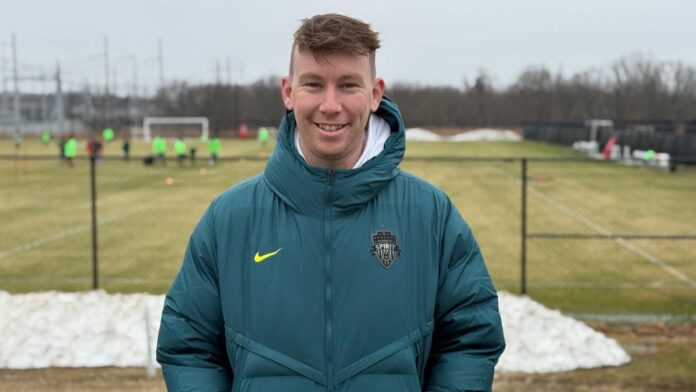
James Hocken, Sporting Director of Washington Spirit, during a training session at the club’s practice facility.
James Hocken is the Sporting Director of Washington Spirit, overseeing recruitment, analytics and long term sporting strategy in the NWSL. His leadership reflects the growing influence of data informed decision making in elite women’s football.

Profile

Role: Sporting Director, Washington Spirit

Specialisation: Analytics, Recruitment and Sporting Strategy

Experience: NWSL, NCAA, English academies and federation environments

Focus Areas: Data-informed decision making, roster construction and long term sporting planning

Biography

In modern football leadership, competitive advantage increasingly lies in how effectively clubs translate information into decisions. As data, analytics and global scouting networks reshape the way teams are built, sporting leaders must balance quantitative insight with football expertise and long term strategic planning.

James Hocken represents a new generation of decision makers operating at this intersection. As Sporting Director of Washington Spirit, he oversees recruitment, roster construction and long term sporting strategy within the complex regulatory framework of the NWSL. With a background spanning analytics, coaching environments, international development structures and professional football operations, his work reflects the growing influence of data informed decision making in elite women’s football.

Key Insights

  • How data and analytics are shaping modern sporting director decision making.
  • Why proactive squad planning is essential in a salary cap environment.
  • How analytics and coaching expertise can complement each other in football leadership.

Our Exclusive Interview with James Hocken


As Sporting Director at Washington Spirit, how do you define the club’s game model and ensure it is consistently applied across recruitment, development and staffing?

Firstly, it is important to recognise that the lens of a club’s game model is not the same as that of a head coach. For us, the club’s game model represents a broader strategic framework that defines how we want to play, how we want to recruit and how we want to develop players. It is clearly documented and defined, but it operates at a different level of detail compared to the coaching staff. For example, the club does not prescribe formations or tactical systems.

Every coach has their own tactical preferences, and it would be both unfair and unproductive to force coaches to conform to a rigid way of coaching. Just like players, coaches need the freedom to express themselves.

That said, the club’s game model and the coach’s game model must be aligned. Our model outlines overarching principles for the different moments of the game. These principles are shaped by our understanding of what is required to be successful in the NWSL, as well as the stylistic vision preferred by our ownership group.

Crucially, these principles are measurable. We use them to create key performance indicators that allow us to evaluate team performance and also help identify potential coaches and players who fit our approach.


The NWSL operates under strict roster and salary cap regulations. What principles guide your succession planning across multiple transfer windows?

Operating within these regulations is both extremely demanding and very exciting. Our objective is to build a team that can compete for championships year after year rather than pursuing a single all or nothing season.

We have invested heavily in building a strong analytics department that helps us identify players globally who can contribute to a sustainably successful team. Our investment in scouting and analytics gives us the confidence to take calculated risks on players that other clubs may not yet feel comfortable pursuing. This allows us to build a squad with both quality and depth.

From there, every decision must take the future into account. The salary cap environment makes reactive decision making extremely difficult if you want to remain competitive over time. As a result, we try to be proactive in how we invest in the future.

Football is unpredictable, but if we can prepare for as many potential outcomes as possible in advance, we spend less time reacting to problems. Ideally, the challenges we face today have already been addressed through decisions made in the past.

Football is unpredictable, but if we can prepare for as many potential outcomes as possible in advance, we spend less time reacting to problems.


You moved from Head of Analytics into a Sporting Director role. How has this background changed the way you approach recruitment and contract decisions?

Coming into this role with a background in analytics has allowed me to advocate strongly for the role that data can play in leadership decisions, particularly in areas where data has traditionally been less present.

I believe it has helped our organisation become more data informed. At the same time, the role has exposed me to many situations where data alone cannot provide the answer.

One thing I am particularly proud of is seeing the proof of concept for how analytics can support recruitment processes. I always believed in its potential, but seeing it operate successfully in practice has been very rewarding.

The biggest learning curve for me has been the importance of relationships. In this position I spend a great deal of time communicating with agents and with recruitment and leadership staff across different clubs. That relational aspect of the role has become a very significant part of the work.


Washington Spirit has embedded analytics deeply into sporting operations. How do you balance data input with coaching expertise and football judgement?

I believe the reason the so called data versus coaching debate has gained so much traction is because there have been too many examples of poor analytics being introduced into football environments.

The problem is not analytics itself but the quality of the analytics being used. Just as there are different levels of coaching quality, there are also different levels of analytical quality.

Bad analytics often result from ignoring context or from misunderstanding and misapplying metrics when making decisions. Frequently this involves relying on overly simple metrics that offer very little value in actually understanding the phenomenon they are supposed to measure.

Having seen poor analytics in action and then comparing that with the work our analytics team has done to understand context and model the variables that influence performance, I am very confident that analytics exists on a spectrum of quality.

At the same time, the insights provided by data and by coaching expertise are fundamentally different and should complement one another. Data can provide information that no individual within the organisation might otherwise possess. It can challenge biases and improve the efficiency of processes.

However, ignoring the insights that come from coaching experience and other forms of expertise would be equally wasteful. The most effective approach is to combine these perspectives. When you listen to the different viewpoints across the organisation and complement them with data informed insights, you create the most complete picture possible.

The most effective approach is to combine these perspectives.


You have led teams across analytics, recruitment and coaching environments. What is your approach to aligning interdisciplinary staff around shared performance objectives?

My approach is largely shaped by trying to replicate the best leadership examples I have experienced.

I was very fortunate to spend many years working under Mark Krikorian, who I believe is one of the greatest leaders in women’s soccer. Anyone who has worked with him would likely say the same.

I also had the opportunity to work with Jonathan Garbar, whose leadership qualities are exceptional. While the college environment is very different from the professional game, his ability to understand and manage the psychological dimension of performance was something I learned a great deal from.

Leadership is still an area I continue to develop. My priority is to ensure that the people I work with feel supported, have the freedom to express themselves creatively, feel ownership of their responsibilities and are recognised for their contributions.

If people enjoy coming to work every day, aligning them around shared objectives becomes the easier part.


You have worked across NCAA, NWSL, English academies and a federation environment. What structural differences stand out most in talent development across these systems?

It is difficult to compare these systems directly because my experience spans different contexts including men’s and women’s football, youth and professional levels, and both England and the United States.

However, one consistent factor in successful development environments is strategic planning around when players interact with different staff members and how those interactions are structured.

Periodising cognitive load in the same way that physical load is periodised is extremely important. Ensuring that the time spent with athletes is targeted and effective helps maximise their development.

Another key factor is the diversity of expertise surrounding the athlete. Having multiple perspectives and areas of expertise involved in understanding a player’s stage of development allows for more comprehensive development plans.

This was something that particularly impressed me during my time working with The FA youth national teams.


Technology and process design are central to your leadership profile. How do you decide which tools genuinely improve decision making?

The starting point is always extensive research. Procurement decisions involve many factors, but one of the most valuable steps is speaking with people who use the tools on a daily basis and can provide an honest assessment rather than a sales pitch.

Every staff member will have preferences based on what they feel comfortable using, and that is an important consideration.

At the same time, I always try to think about the long term question. What decisions will we be happy about three years from now? That perspective often helps guide which tools and processes are worth investing in.


Looking ahead, how do you see the Sporting Director role evolving as women’s football continues to professionalise?

The role of a Sporting Director already varies significantly from club to club within the women’s game. We are starting to see some organisations distribute those responsibilities across several roles.

In the NWSL, many clubs already operate with both a General Manager and a Sporting Director, alongside a CEO or President. That structure differs from many other parts of the world.

Looking ahead, I expect the Sporting Director role to increasingly embrace the use of analytics in decision making. We have already seen this trend develop across American sports over the past decade, and women’s football is likely to follow a similar trajectory.

The extent to which analytics contributes to success will depend heavily on the quality of the models and how they are implemented. However, I do believe that organisations unwilling to engage with data at all will find it increasingly difficult to remain competitive.


FAQ

Who is James Hocken?

James Hocken is the Sporting Director of Washington Spirit in the NWSL, overseeing recruitment, roster construction and long term sporting strategy.

What is James Hocken known for in football leadership?

He is known for integrating analytics, data informed decision making and traditional football expertise into modern sporting operations.

How is analytics shaping women’s football leadership?

Analytics increasingly supports recruitment, performance evaluation and strategic planning, helping clubs make more informed long term decisions.

Capital-Investissement et Acquisition des Clubs de Football

Youth teams line up before a U19 match in Germany, reflecting structured academy football and long-term development pathways.
A U19 youth match setting in Germany, highlighting the organised environments that underpin modern football development. Such structures sit at the heart of governance, investment strategy and long-term club planning.

Bienvenue dans ce quatrième volet de la série “Le capital-investissement dans le football : révolution ou pari risqué ?”. Dans cette partie, nous allons analyser de plus près le processus d’acquisition des clubs de football.

Pour les fonds d’investissement, racheter un club n’a rien d’un achat de prestige : c’est une entrée calculée dans un marché à la fois risqué et potentiellement extrêmement rentable. Alors que les gros titres s’intéressent surtout au montant final ou au nom du club acquis, la réalité des transactions repose sur une combinaison méticuleuse de rigueur financière, de précision juridique et d’intention stratégique.

Ciblage stratégique et analyse de marché

Chaque opération commence par l’identification de la bonne cible. Les fonds d’investissement recherchent des clubs sous-valorisés par rapport à leur potentiel de marque, à leur accès au marché ou à la qualité de leurs infrastructures de développement. Certains fonds privilégient des clubs historiques de premières divisions dotés d’un potentiel commercial encore inexploité, comme l’AC Milan pour RedBird. D’autres se tournent vers des clubs de profil plus modeste, pouvant servir de plateformes de formation ou de développement au sein d’un réseau plus large, à l’image du Toulouse FC pour RedBird ou de Vasco da Gama pour 777 Partners.

Les critères stratégiques incluent souvent:

  • L’empreinte de diffusion et le potentiel en matière de droits médias;
  • La propriété du stade et la qualité des infrastructures locales;
  • Les indicateurs d’engagement des supporters et la présence digitale;
  • L’accès à des centres de formation ou à des marchés de talents sous-exploités;
  • Des clubs financièrement en difficulté mais historiquement solides (par exemple l’Inter Milan avant la prise de contrôle via un prêt par Oaktree);
  • Des clubs sous-performants par rapport à leur potentiel de marque et commercial;
  • Des points d’entrée géographiques dans des marchés clés (par exemple Vasco da Gama au Brésil pour 777 Partners).

Examen préalable et audits financiers

Une fois la cible identifiée, les fonds entament la phase d’examen préalable, un processus minutieux qui combine les audits financiers classiques des entreprises avec les spécificités propres à l’industrie du football. Pour les fonds de private equity, c’est à ce moment que commence réellement le travail : valider la valeur réelle du club, identifier les risques potentiels et définir la structure finale de l’acquisition.

Cette analyse est généralement menée par une combinaison d’experts en fusions-acquisitions, de consultants en finance sportive et de cabinets d’audit du Big Four, afin qu’aucun détail ne soit laissé de côté. Voici les principaux piliers :

Solidité du bilan et exposition à l’endettement

Les fonds examinent les états financiers du club, notamment:

  • La base d’actifs: propriété du stade, contrats de joueurs (traités comme des actifs incorporels), centres et infrastructures d’entraînement;
  • Les passifs: dettes à court et long terme, indemnités de transfert impayées, obligations fiscales;
  • Les covenants de dette: restrictions imposées par les créanciers pouvant limiter l’utilisation des flux de trésorerie.

Les clubs évoluant dans les divisions inférieures présentent souvent des passifs cachés (par exemple des paiements différés), susceptibles d’affecter significativement la valorisation.

Structure de l’actionnariat et gouvernance

Comprendre qui détient quoi est un élément clé, en particulier pour les clubs présentant:

  • Une structure actionnariale éclatée avec plusieurs actionnaires;
  • Un actionnariat familial historique ou des participations détenues par des collectivités publiques;
  • Des droits de vote complexes ou des actions spécifiques (« golden shares »), comme c’est le cas dans certains clubs espagnols ou allemands.

Certains clubs européens, notamment en Espagne et en Allemagne, évoluent dans des cadres de gouvernance particulièrement complexes, intégrant des restrictions de vote et des actions de contrôle spécifiques qui limitent le pouvoir des investisseurs externes. En Allemagne, la règle du 50+1 impose une détention majoritaire par les membres ou les supporters. En Espagne, certains clubs conservent des structures associatives ou des droits historiques qui influencent la prise de décision au niveau du conseil d’administration.

Obligations contractuelles

Cela implique une analyse approfondie de:

  • Les contrats des joueurs et du staff: durée, clauses spécifiques, indemnités de sortie, salaires différés ;
  • Les accords commerciaux: sponsoring, naming du stade, merchandising ;
  • Les accords de diffusion audiovisuelle.

Structure des revenus et des coûts

Les revenus d’un club de football sont par nature volatils et cycliques:

  • Structure des revenus: billetterie (matchday), droits de diffusion, revenus commerciaux;
  • Exposition au risque sportif: promotion/relégation, participation aux compétitions UEFA, ventes de joueurs;
  • Ratio masse salariale / chiffre d’affaires: indicateur clé d’efficacité financière, pour lequel l’UEFA recommande un seuil inférieur à 70 %.

Certains clubs dépendent de manière disproportionnée des droits TV ou du trading de joueurs, ce qui accroît significativement leur exposition à des niveaux de risque élevés.

Conformité juridique et réglementaire

Les clubs de football évoluent dans des environnements réglementaires spécifiques (fair-play financier, règlements des fédérations nationales, etc.), et des contentieux juridiques en cours peuvent avoir un impact significatif sur les transactions potentielles.

Les fonds examinent notamment :

  • Les litiges ou procédures judiciaires en cours;
  • Les risques de sanctions disciplinaires ou réglementaires;
  • Les implications fiscales transfrontalières, en particulier dans le cadre des structures de multi-club ownership (MCO).

Pour les investisseurs en private equity, la due diligence n’est pas un simple exercice de conformité, mais une véritable stratégie de protection de la valeur. Les clubs de football peuvent offrir une forte valeur de marque et une loyauté exceptionnelle des supporters, mais ils présentent également des structures financières souvent opaques, des flux de trésorerie volatils et des contraintes réglementaires complexes. Cette phase est donc déterminante, non seulement pour fixer le prix de l’opération, mais aussi pour identifier les besoins de restructuration.

Pour les investisseurs en private equity, la due diligence n’est pas un simple exercice de conformité, mais une véritable stratégie de protection de la valeur.

Les fonds s’appuient fréquemment sur des équipes de conseil spécialisées dans le sport ou sur des cabinets d’audit de premier plan, tels que les Big Four (par exemple Deloitte Sports Business Group, Football Benchmark Group, etc.), afin de mener cette analyse approfondie.

Structuration de la transaction

Une fois la phase de due diligence achevée, au cours de laquelle les fonds analysent en détail la santé financière du club, ses engagements contractuels et ses perspectives commerciales, l’étape critique suivante est la structuration de l’opération. Cette phase détermine la manière dont l’acquisition est financée ainsi que le niveau de contrôle et d’exposition au risque assumé par l’investisseur. La structure retenue dépend largement de l’appétit pour le risque du fonds, de la valorisation du club et de sa capacité à générer des flux de trésorerie, ainsi que des conditions de marché plus globales.

Voici les formats de structuration les plus courants dans les investissements footballistiques, illustrés par des exemples :

Acquisition en fonds propres (prise de contrôle intégrale)

Il s’agit de la forme de prise de contrôle la plus « pure », dans laquelle l’investisseur acquiert 100 % (ou une participation majoritaire de contrôle) du capital du club, en mobilisant ses fonds propres et/ou ceux de co-investisseurs.

En 2022, RedBird Capital Partners a acquis l’AC Milan pour environ 1,2 milliard d’euros, marquant l’une des plus importantes acquisitions de clubs à 100 % dans le football européen. L’opération a été financée via une combinaison de capitaux propres de RedBird et d’un co-investissement minoritaire de Yankees Global Enterprises, avec pour objectif de valoriser la puissance de la marque Milan et son potentiel de croissance commerciale.

Rachats avec effet de levier (LBO)

Dans ce type de structure, le fonds acquiert le club principalement au moyen de dette. Les revenus futurs du club (droits TV, billetterie, sponsoring) ou ses actifs immobiliers (notamment le stade) sont souvent utilisés comme garanties afin de sécuriser le financement.

Elliott Management a pris le contrôle de l’AC Milan en 2018 à la suite d’un défaut de paiement. Le fonds avait initialement accordé un prêt de 303 millions d’euros à l’actionnaire chinois Li Yonghong pour l’acquisition du club. À la suite de ce défaut, Elliott a repris le contrôle du capital.

En mai 2021, Oaktree Capital Management a accordé un prêt de 275 millions d’euros à Suning Holdings, actionnaire majoritaire chinois de l’Inter Milan, afin de répondre à des tensions de liquidité aggravées par la pandémie de COVID-19.

À l’échéance du prêt en mai 2024, la dette s’élevait à environ 395 millions d’euros, en raison d’un taux d’intérêt élevé et de mécanismes de capitalisation.Suning n’ayant pas été en mesure de rembourser le prêt à maturité, Oaktree a exercé ses droits contractuels et pris le contrôle de l’Inter Milan via des mécanismes d’exécution de la dette. Ces exemples illustrent un LBO de type « distressed », dans lequel un créancier prend le contrôle d’un actif à la suite d’un défaut financier, avant de le restructurer en vue d’une revente.

Dette convertible & paiements conditionnels

Dans les opérations de transition ou plus risquées, les fonds peuvent privilégier des instruments hybrides, tels que la dette convertible (un prêt pouvant être ultérieurement transformé en actions) ou des mécanismes d’earn-out indexés sur la performance, dans lesquels une partie du prix d’acquisition est différée et versée uniquement si le club atteint des objectifs financiers ou sportifs prédéfinis.

Ce type de montage est souvent utilisé lorsqu’un fonds souhaite mettre un premier pied dans le club sans surpayer dès le départ. Il est également fréquent dans les divisions inférieures ou au sein de clubs financièrement fragiles, où la stabilité future reste incertaine. Si ces opérations privées sont rarement rendues publiques dans le détail, plusieurs clubs de League One et de League Two en Angleterre ont ainsi attiré des investisseurs, notamment des groupes américains testant des modèles de conversion du capital indexés sur la performance.

Prises de participation minoritaires

Dans ce schéma, le fonds acquiert une participation non majoritaire (généralement inférieure à 20 %), lui permettant de s’exposer au potentiel commercial du football sans supporter l’intégralité du risque opérationnel.

En 2019, Silver Lake, géant américain du private equity spécialisé dans la technologie, a investi 500 millions de dollars pour une participation de 10 % dans City Football Group, propriétaire de Manchester City et de plusieurs autres clubs. En 2022, Silver Lake a porté sa participation à 18 %, valorisant CFG à environ 4,8 milliards de dollars, l’une des valorisations les plus élevées du football mondial.

L’importance stratégique de la structuration

La structure de l’opération détermine non seulement l’exposition financière de l’investisseur, mais aussi sa flexibilité stratégique. Par exemple:

  • Un rachat avec effet de levier (LBO) offre un effet de levier et des avantages fiscaux, mais accroît la pression sur l’optimisation des flux de trésorerie afin d’assurer le service de la dette;
  • Une prise de participation minoritaire présente un risque plus limité, mais restreint le contrôle sur la prise de décision ainsi que sur le calendrier de sortie;
  • La dette convertible permet de capter un potentiel de hausse tout en offrant une protection à la baisse, une solution particulièrement adaptée aux marchés volatils ou aux clubs en difficulté.

Pour les fonds, l’enjeu ne se limite pas à l’acquisition d’un club de football : il s’agit avant tout de concevoir un véritable véhicule financier, aligné sur leurs attentes en matière de rendement, leurs exigences de gouvernance et leur vision à long terme.

Pour les fonds, l’enjeu ne se limite pas à l’acquisition d’un club de football : il s’agit avant tout de concevoir un véritable véhicule financier, aligné sur leurs attentes en matière de rendement, leurs exigences de gouvernance et leur vision à long terme.

Restructuration après l’acquisition

Une fois l’acquisition d’un club finalisée, la réforme de la gouvernance et la transformation opérationnelle figurent généralement parmi les priorités immédiates. L’objectif est de remodeler l’institution afin de libérer un potentiel de création de valeur et de performance à long terme. Cette phase est déterminante pour aligner le club avec la logique financière du fonds, sa vision sportive et son appétit pour le risque. Cela inclut généralement :

Réorganisation du conseil d’administration et des fonctions exécutives

Les investisseurs en private equity installent fréquemment un nouveau conseil d’administration, remplaçant les dirigeants historiques par des profils issus de la finance, du droit, de la technologie ou du management sportif de haut niveau. Ces nominations ne sont pas symboliques : elles introduisent une gouvernance d’entreprise plus rigoureuse, une prise de décision accélérée et des indicateurs de performance (KPI) plus clairement définis.

À l’AC Milan, RedBird Capital a nommé Giorgio Furlani au poste de CEO après l’acquisition, alignant la supervision du conseil avec une stratégie orientée vers la création de valeur et des expertises issues des secteurs du sport, des médias et du divertissement. Cette approche reflète une culture commerciale largement influencée par les modèles du sport business nord-américain.

Reconfiguration de l’organisation sportive

Les groupes d’investissement remodèlent fréquemment l’organisation sportive, de l’académie à l’équipe première, afin d’optimiser les filières de talents et de réduire les inefficiences. Toulouse FC, sous le contrôle de RedBird depuis 2020, a ainsi nommé un nouveau directeur sportif, modernisé les structures de son centre de formation et intégré la data science dans sa stratégie de recrutement. Les résultats ont été rapidement visibles, avec une montée en Ligue 1 en 2022 suivie d’une victoire historique en Coupe de France en 2023.

Discipline financière & outils budgétaires

Après l’acquisition, les fonds imposent des pratiques budgétaires rigoureuses. Les clubs adoptent des mécanismes centralisés de validation des dépenses, des plafonds salariaux indexés sur les revenus, ainsi que des prévisions de trésorerie à long terme.

Infrastructure de données & intégration technologique

Les fonds de private equity transforment de plus en plus les clubs en véritables “laboratoires” d’innovation en sports tech, en déployant des plateformes dédiées au scouting, à l’optimisation de la performance et à la prévention des blessures. L’investissement de Silver Lake dans City Football Group a notamment permis la mise en place d’une infrastructure de données globale, partagée entre les différents clubs du groupe. Cette mutualisation technologique influence désormais l’ensemble de la chaîne de valeur, des protocoles médicaux aux campagnes marketing, et permet de démultiplier les retours sur investissement à l’échelle du portefeuille.

Conclusion

Du repérage de clubs sous-valorisés à la refonte de leur gouvernance et à leur intégration au sein de portefeuilles plus larges, les investisseurs en capital-investissement apportent une approche structurée et orientée vers la création de valeur dans la gestion des clubs de football. Ces acquisitions sont rarement émotionnelles : elles reposent sur des données solides et s’inscrivent dans une logique de croissance patrimoniale à long terme. Toutefois, le véritable enjeu ne réside pas tant dans la manière dont les clubs sont acquis, mais dans la façon dont la valeur est créée et extraite après la transaction.

À présent que de nombreux clubs sont passés entre les mains d’investisseurs financiers, la question se pose : que se passe-t-il ensuite ? Ces opérations favorisent-elles une stabilité durable, ou se limitent-elles à des stratégies de retournement de clubs, traités comme de simples actifs sur une feuille de calcul ?

Dans le prochain article, nous analyserons la manière dont les fonds cherchent à extraire de la valeur après l’acquisition, à travers la restructuration de la dette, l’optimisation des coûts, la modernisation des infrastructures et les stratégies de recrutement. Nous nous pencherons également sur leurs attentes en matière de rendement, sur la tension entre plus-values financières et héritage sportif, ainsi que sur les risques de transformer les clubs en véhicules financiers de court terme, au détriment de leur âme.

Le modèle économique peut être rationnel, mais est-il réellement bénéfique pour le jeu ?

Who is Mihkel Rääk?

Mihkel Rääk, Sporting Director at Tartu JK Welco and football scout working across Baltic and Nordic football markets.
Mihkel Rääk is a football executive specializing in scouting, recruitment and sporting strategy across the Baltic and Nordic regions. He currently serves as Sporting Director at Tartu JK Welco in Estonia.

Profile

Role: Sporting Director, Tartu JK Welco

Specialisation: Scouting, Recruitment and Sporting Strategy

Experience: Estonia, Finland and Lithuania

Focus Areas: Talent Identification, Player Development and International Recruitment

Background and Career

Mihkel Rääk is a modern football executive whose career reflects a steady progression through scouting, analysis and sporting leadership across the Baltic and Nordic football landscape. Currently serving as Sporting Director at Tartu JK Welco in Estonia, he combines strategic planning, squad building and structural development at club level.

His background includes roles as Talent Scout and Video Analyst at Kauno Žalgiris Football Academy in Lithuania, as well as international scouting responsibilities for HJK Helsinki, Finland’s most successful club. Certified by the International Professional Scouting Organisation and educated in International Business and Sport Management, Rääk represents a new generation of sporting decision makers shaped by talent identification, international networking and hands on recruitment experience across emerging and established football markets.

A modern sporting director shaped by scouting and structure

Mihkel Rääk represents a new generation of football executives who connect hands on scouting experience with strategic sporting leadership. His work focuses on translating talent identification, market analysis and structural planning into clear and sustainable decisions at club level.

Rather than separating recruitment from long term development, he integrates scouting insight directly into squad building, sporting strategy and organizational processes. Shaped by experiences across the Baltic and Nordic football landscape, his approach emphasizes clarity, international perspective and practical impact in emerging and competitive football environments.

Key Insights

  • How Mihkel Rääk built a career across scouting, recruitment and sporting leadership
  • Why Baltic and Nordic football markets still contain undervalued talent
  • How structured development pathways can connect emerging leagues to stronger European competitions

Our Exclusive Interview with Mihkel Rääk


How did your journey into football begin, and which key moments led you from scouting and analysis into a Sporting Director role at a relatively young age?

From an early age, sport has always been part of my life, but football quickly became my true passion. For me, it is more than a game. It is a system built on strategy, talent identification and long term thinking.

For me, it is more than a game. It is a system built on strategy, talent identification and long term thinking.

My professional journey began after completing my military service in Estonia. I moved to Lithuania to study Sport Management, but I was determined to gain practical experience from the start. I contacted clubs across different sports and offered my time, even without financial compensation. At that stage, learning and experience were more important to me than income.

That persistence led to my first role at Kauno Žalgiris as a scout and video analyst. I travelled with the team, filmed matches and began building both expertise and a professional network. Later, while continuing my studies in Finland, I followed the same approach. I connected with people, attended events and made myself useful wherever possible. This opened the door to HJK Helsinki, the most successful club in Finland, where I further developed my understanding of scouting and recruitment. Within a year, through consistent work and dedication, I progressed to Chief Scout.

Building a career in football at a young age requires initiative and resilience. The industry is extremely competitive and opportunities are not given, they are created. Relationships are essential. You must travel, meet people, ask questions and learn from those with more experience. Education provides a foundation, but trust, credibility and daily effort are what truly open doors.


You operate simultaneously as Sporting Director and active Scout. How does working on both the strategic and operational levels influence your decision making in recruitment?

At HJK, my scouting focus lies on specific regions, mainly the Baltic countries and selected parts of Africa. This specialization allows for deeper market knowledge, stronger local networks and more accurate talent identification. Instead of scouting broadly, the work becomes targeted and analytical.

At the same time, I am involved with JK Welco in Estonia, which operates on a different level financially and competitively. Welco is a smaller club, but within the Estonian context it is ambitious and developing structurally, with a strong focus on youth. This creates opportunity.

The combination of both roles allows for a natural development pathway. At Welco, young Baltic and African talents can gain their first professional experience, adapt to European football and develop consistently. With the right progression, the next step can be a move to HJK, where the competitive level is higher and European competitions offer further exposure. It is not about shortcuts, but about structured growth.

In both environments, recruitment must follow a clear philosophy. Decisions cannot be reactive or driven by pressure during transfer windows. We work with defined profiles, data and strong networks. When a need arises, preparation is already done. Suitable players are identified not only from a football perspective, but also in line with the club’s financial and strategic framework.

Decisions cannot be reactive or driven by pressure during transfer windows.


Estonian football functions within a smaller market structure. What competitive advantages must clubs in emerging leagues create to remain internationally relevant?

One of the key factors in developing Estonian football is strong representation in European competitions, even if it begins with qualification rounds. UEFA participation is not only about prize money, but about visibility. Every additional club playing in Europe increases exposure for the entire league.

If Estonia were to lose a European spot due to coefficient changes, the impact would be significant. Fewer clubs in Europe mean fewer international broadcasts, fewer scouts in the stadiums and less visibility for Estonian players. Coefficient rankings are not abstract numbers, they directly affect how often our football is seen on the European stage.

From a scouting perspective, visibility is crucial. Estonia has made important progress in this area. Domestic matches are streamed freely on YouTube, giving international scouts direct access to games. This kind of openness lowers the barrier for discovery and increases the chances of players being monitored abroad.

Strategic cooperation between clubs is equally important. Partnerships should be realistic and based on development pathways, not prestige. Moving directly to top tier leagues is often too big a step for Estonian players. More logical progression markets are countries such as Finland, Slovakia or the Czech Republic. These leagues offer higher intensity and greater exposure, while still providing realistic opportunities for players to gain minutes and grow step by step.


Having worked across Estonia, Finland and Lithuania, where do you currently see undervalued talent markets or structural inefficiencies in the Baltic and Nordic regions?

There is no shortage of talent in the Baltic region or in Finland. I see many underrated players in both markets. The main difference lies in visibility and structural support.

In Finland, young players benefit from clearer development pathways and stronger league exposure. The system connects youth football more consistently to the professional level. In the Baltics, especially in Estonia, talent is present but early identification is limited. International scouts rarely attend younger age groups, and players often gain attention only once they reach youth national teams. By then, some promising talents have already left the game.

Retention is one of the key challenges. Young players, particularly outside major cities, often lack strong developmental environments and visible role models. Without clear infrastructure or belief in a realistic pathway, some choose different careers before fully testing their potential.

Finland has made progress by investing strategically in infrastructure and long term planning. Modern stadiums and training facilities have improved both perception and professionalism. Infrastructure plays a bigger role than many realize. When financial resources are reinvested wisely, it strengthens attendance, commercial growth and player ambition.

In Estonia, there is still room to improve how resources are distributed across the football ecosystem. Strategic investment in facilities and youth development could create a multiplier effect, raising standards, increasing visibility and giving young players a clearer future in the sport.


Looking ahead, do you see yourself more as a long term sporting architect building club structures, or as an international recruitment specialist operating across multiple markets?

I would not limit myself to a single role. My ambition is to build a structured football ecosystem that connects clubs, agencies and academies within one coordinated model.

I see strong potential in creating a functional satellite club system linking the Baltic region, Scandinavia and selected European leagues. The Baltics can serve as a solid development base, competitive and accessible. Scandinavia offers a higher performance level and more international exposure. From there, carefully chosen European leagues can represent the next step. At the same time, emerging markets such as Africa should be integrated as partners in talent identification.

The strength of this model lies in alignment. Player development, recruitment and progression must follow a clear pathway rather than short term opportunities. Clubs gain a reliable recruitment structure, and player movement becomes strategic instead of reactive.

FAQ

Who is Mihkel Rääk?

Mihkel Rääk is a football executive and Sporting Director at Tartu JK Welco in Estonia, with experience in scouting, recruitment and sporting strategy across the Baltic and Nordic football markets.

What clubs has Mihkel Rääk worked with?

Rääk has worked as a Talent Scout and Video Analyst at Kauno Žalgiris Football Academy and has also held scouting responsibilities with HJK Helsinki in Finland.

What is Mihkel Rääk known for in football?

He is known for combining hands on scouting experience with strategic sporting leadership, focusing on talent identification, recruitment and structured player development pathways.