Home Blog Page 10

What is Football Forum Hungary?

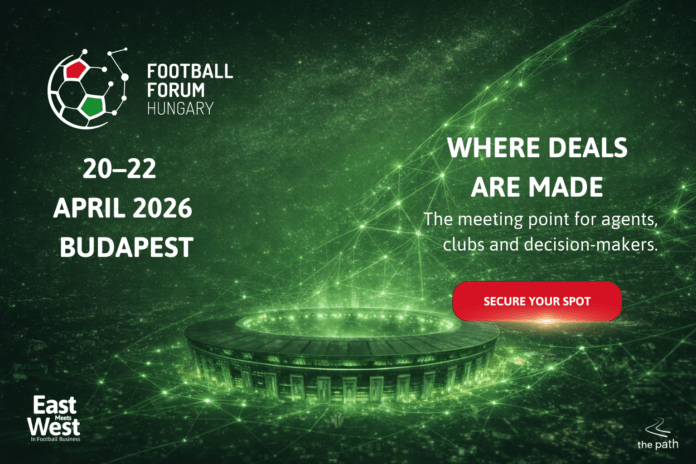
Football Forum Hungary 2026 promotional banner at Puskás Arena in Budapest
Football Forum Hungary 2026 will be hosted at the Puskás Arena in Budapest from 20–22 April. The forum brings together agents, clubs and decision-makers shaping the future of football business.

In the heart of Budapest, one of Europe’s most dynamic capitals for sport and culture, Football Forum Hungary has rapidly emerged as a pivotal event in the global football calendar. Set to take place from April 20 to April 22, 2026, at the iconic Puskás Arena, the forum brings together football executives, club owners, agents, media professionals, scouts, investors and other industry leaders from across Eastern and Western Europe for three days of insight, connection and collaboration.

Hunor Dudás, Founder and CEO of Football Forum Hungary, describes the forum as more than a typical conference: it is a full industry experience designed to spark new ideas, deepen professional relationships and shape the future of the sport. With a programme that blends expert discussions, practical workshops and curated networking occasions, Football Forum Hungary has quickly established itself as a must-attend for anyone operating on the business side of football.

It is a full industry experience designed to spark new ideas, deepen professional relationships and shape the future of the sport.

Leadership With Executive Experience

Hunor Dudás is a former club executive with extensive hands-on experience in football management and strategic operations. Having served at executive level within professional football, he has developed a comprehensive understanding of the decision-making environment in which clubs and federations operate spanning governance, commercial strategy, international positioning, and stakeholder management.

His practical leadership background provides a strong strategic foundation for the Forum, shaping its clear focus on real-world challenges and high-level dialogue. This ensures the event consistently delivers relevant, forward-thinking content tailored to senior decision-makers across the football industry.

A Platform Where East Meets West In Football Business

Football Forum Hungary positions itself uniquely at the crossroads of European football markets. Its mission is to create a space where voices from established Western leagues and emerging ecosystems in Eastern Europe, the Middle East and Africa can share perspectives, best practices and visionary strategies. Participants can expect global decision-makers and regional influencers alike to take part in conversations that stretch beyond sport into business, innovation and cultural significance.

The agenda spans topics shaping the modern football landscape. In 2026, the conference will explore the rise of women’s football, which has seen unprecedented investment, fan engagement and commercial growth. It will also examine club and league models, the transformative role of data and analytics, the power of social media and digital fan engagement, the enduring importance of scouting and talent development, and the growing influence of technology and artificial intelligence in performance, operations and fan experience.

Beyond The Conference Stage: Three Days Of Impact

Rather than focusing solely on sessions, Football Forum Hungary offers a multi-layered experience integrating formal dialogue with informal engagement: The event kicks off with an Elite League Football Tournament, where industry professionals and football enthusiasts compete in a spirited challenge on the pitch. An exclusive welcome party in Budapest brings partners and keynote speakers together in a social setting before the main conference begins. The main conference day features keynote sessions, expert panels and interactive workshops designed to catalyse learning and collaboration.

The evening After Party and Football Shirt Contest celebrates club identity and fan culture, strengthening the community atmosphere. The forum closes with “Extra Time”, an informal networking session allowing professionals to build meaningful connections in a relaxed setting. This blend of professional insight and social experience sets Football Forum Hungary apart from traditional industry gatherings. Emphasising human connection as much as commercial intelligence.

This blend of professional insight and social experience sets Football Forum Hungary apart from traditional industry gatherings.

Learning, Networking And Business Growth

Participants benefit from internationally recognised best practices, actionable case studies and thought leadership that can be applied immediately within their organisations. Whether through emerging trend presentations, expert-led workshops or one-on-one discussions, the event delivers tangible value for those invested in football’s business ecosystem.

Attendees include sporting directors, executives, federations, clubs, academies, agents and scouts, alongside professionals in sports marketing, media, technology and analytics. Football Forum Hungary is also a strategic platform for service providers and brands seeking to expand their footprint in Central and Eastern Europe.

Budapest And The Puskás Arena: A Symbolic Stage

Hosting the event at the Puskás Arena places the forum at the heart of the football world in 2026. This year, the iconic stadium will host the UEFA Champions League Final – the most prestigious club event of the season. This landmark occasion reinforces Hungary’s position as a strategic hub in global football. With international attention on Budapest, the city stands as a meeting point where tradition and forward-looking innovation converge.

A Growth Story And Vision Forward

Founded in 2023, Football Forum Hungary has steadily expanded its international reach and relevance. With a clear focus on bridging geographical markets and fostering shared understanding of football’s evolving challenges, the event continues to attract a growing roster of participants, speakers and partners. Its vision extends beyond annual dates. Aiming to be a platform where ideas translate into action, partnerships evolve into strategies, and insights drive industry progress.

Looking Ahead

Football Forum Hungary 2026 is poised to become a defining moment for the global football business community this spring. With three days combining professional development, cultural exchange and social engagement, the event invites stakeholders across the sport to join a broader conversation about where football is heading and how it will get there together.

Who is Marc Lamberger?

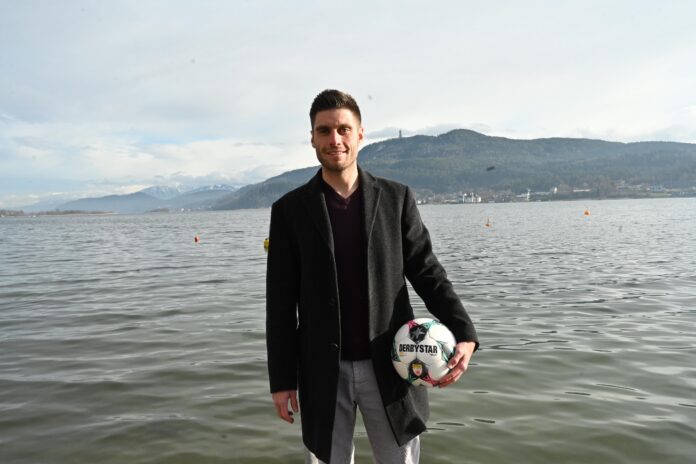
Marc Lamberger first team goalkeeper coach at SK Austria Klagenfurt holding a football by the lake
Marc Lamberger, first team goalkeeper coach at SK Austria Klagenfurt, combines elite performance work with long term goalkeeper development architecture. His methodology is built on structure, patience, and systems that convert potential into professional performance. Credits: Mathias Trenk.

Elite goalkeeper development rarely happens by coincidence. It requires structure, repetition, patience, and a clear methodological identity across every level of a club. Marc Lamberger operates precisely at that intersection between first team performance and long term goalkeeper architecture.

Marc Lamberger is first team goalkeeper coach at SK Austria Klagenfurt, where he also coordinates the academy goalkeeping department and supports the women’s team. With previous leadership responsibility for the entire goalkeeping structure at TSV 1860 München’s academy, national team experience in beach soccer, and active involvement in coach education with the Bavarian Football Association, he combines hands on performance work with long term conceptual development. His approach is defined by structured methodology, trust in process, and a strong belief that sustainable goalkeeper success is built through systems rather than isolated talent.

Elite goalkeeper development rarely happens by coincidence. It requires structure, repetition, patience, and a clear methodological identity across every level of a club.

Our exclusive interview with Marc Lamberger

You are currently working as first team goalkeeper coach at SK Austria Klagenfurt while also coordinating the academy goalkeeping department and supporting the women’s team. How do you structure this multi level responsibility to ensure methodological consistency across performance environments

Creating methodological consistency across several teams and performance levels is demanding, particularly in a smaller club structure. In an ideal scenario, a professional club would employ multiple full time goalkeeper coaches. In clubs operating under tighter financial conditions, however, one full time coach often carries responsibility across multiple environments.

I previously managed a similar structure in Munich as the sole full time academy goalkeeper coach, which prepared me well for this role. In Klagenfurt, my responsibility extends beyond the academy to include both the men’s and women’s first teams. That requires a clear weekly structure and defined training themes to ensure alignment across all levels.

We organise our training week around specific focal points. Every goalkeeper follows a structured mobility and core programme as part of the pre warm up routine. Monday is dedicated to fundamentals and goalkeeper specific athletic work. Tuesday focuses on one versus one situations and short distance actions. Midweek we emphasise space defence. Friday centres on match preparation. Each session begins with a coordinated warm up and short passing sequence, followed by technical work and then a high number of decision making exercises before integration into full team training. This structure ensures clarity for goalkeepers and for the two part time academy coaches working within the same framework.

Having led the entire goalkeeping department at TSV 1860 München’s academy over multiple seasons, what were the key principles behind your long term goalkeeper development model from U9 to professional level

Long term development requires more than one method or one philosophy. It requires a complete toolkit and, above all, patience. Young goalkeepers need time to grow. As coaches, we must trust the development process and provide consistent repetition through structured training. Mistakes are part of learning, both in training and in competition. Children and young players deserve the time and space to develop without premature pressure.

This approach also demands loyalty from the goalkeeper coach. I see development as a long term project. Ideally, you accompany a goalkeeper over many years within one club. When larger academies approach with opportunities, it is important to support the player’s progression while also recognising the club’s role in that development. When structured correctly, this becomes beneficial for both sides.

At 1860, we experienced this with players such as Nahuel Noll, who joined in the U12 and later moved to Hoffenheim before progressing to professional football. Simon Urban transitioned from striker to goalkeeper in U9 and later moved to Mönchengladbach. Others, such as Erion Avdija, developed through the academy pathway into the professional environment. These examples demonstrate that sustainable development structures produce long term outcomes.

Elite development is not accidental. It requires organisational commitment, qualified staff, and structured transition pathways that consistently convert potential into professional performance.

Your career combines academy leadership, professional first team work, and national team experience in beach soccer. How have these different competitive contexts influenced your understanding of goalkeeper performance and adaptability

Working across academy, professional, and national team environments has strengthened both my coaching methodology and my personal leadership capacity. I can operate effectively in professional, youth, women’s, or amateur environments, while adjusting expectations and communication accordingly.

At professional level, speed, precision, and consistency are critical. Exercises are executed at higher tempo and physical demands are significantly greater. Coaching becomes more direct, with strong emphasis on decision making under pressure. In academy environments, while performance is important, the primary focus remains long term development. Winning a youth championship is secondary to preparing players to perform sustainably at the highest possible level.

These experiences reinforced my belief that goalkeeper development must balance immediate performance requirements with long term athletic and psychological growth.

You have consistently combined hands on coaching with conceptual work, including coordination roles and educational responsibilities. How do you approach decision making when balancing individual goalkeeper needs with a club wide or federation wide framework

I believe strongly in avoiding rigid categorisation. Every goalkeeper should be allowed to develop their individual style. Some are naturally aggressive in one versus one situations, others are more positionally oriented. Some defend space higher, others prefer deeper positioning. These differences should not be suppressed.

My responsibility is to provide a clear philosophical framework while allowing individual expression within that structure. Through discussion and scenario analysis, we evaluate different solutions together. The objective is to create an environment that supports personal growth within a shared methodological direction.

As a goalkeeper coach educator for the Bavarian Football Association, what gaps do you currently observe in goalkeeper coach education, and how should licensing structures evolve to meet modern performance demands

The primary structural challenge is the organisation and availability of courses. In entry level licensing courses, participant backgrounds vary widely. Some are former professionals, others are parents with no personal goalkeeping experience who wish to support their children. Addressing this spectrum effectively requires differentiated course design.

In recent years, we have managed this diversity well, but further refinement is possible. One structural improvement could be the introduction of shorter two day courses for grassroots and amateur levels, particularly for parents and lower league coaches. This would allow foundational concepts to be delivered efficiently, while advanced courses could focus more deeply on tactical, technical, and analytical detail.

Modern performance demands require flexible and tiered education structures that address different starting points while maintaining consistent quality standards.

Your academic background includes sport management and applied work on goalkeeping software. How does data, technology, and analytical tooling integrate into your daily coaching and long term planning processes

The primary work remains on the pitch. Technology supports, but does not replace, direct coaching. I document every training session and match through specialised software and provide structured video analysis for goalkeepers after each game.

Pre match preparation includes opponent analysis, particularly set pieces, penalty tendencies, and attacking patterns. Physical performance metrics such as jump height, strength, and speed are monitored and improved progressively. Technology enhances clarity and objectivity, but practical application remains central.

Through numerous national and international coach visitations and congresses, you have been exposed to different goalkeeping philosophies. What criteria do you use to critically assess which concepts are transferable into your own working environment

The most influential factor is the coach’s personality and clarity. I observe how they communicate, how they identify and correct details, and whether they inspire their goalkeepers.

Highly advanced technology or elaborate training setups are impressive, but they must be evaluated against one’s own working environment. I focus on exercises that improve individual technique and decision making, as well as on communication style and integration within the broader coaching staff. It is also important to observe whether the goalkeeper coach contributes to team tactical discussions such as build up play, box defence, or set pieces. Integration within the full coaching ecosystem is essential.

You have also founded and operate an independent goalkeeping school alongside your professional roles. How does this entrepreneurial perspective influence your leadership style and your view on sustainable goalkeeper development pathways

The goalkeeper school was founded in 2019 to support players who lack specialised goalkeeper training in their clubs. In Munich, there is strong motivation among young goalkeepers, yet smaller clubs often lack qualified coaches.

Today, the school is led by one of my former goalkeepers, Maxi Rothdauscher, who remained committed to the project despite personal injury setbacks. I prioritise my professional responsibilities in Austria, but the school continues to support regional amateur structures and provides professional opportunity for its staff.

This entrepreneurial experience reinforces my belief that sustainable development depends on accessible expertise and structured support beyond elite environments.

Looking ahead, your stated objective is to shape goalkeeping concepts and establish goalkeepers for the professional game. From your current vantage point, what structural conditions must clubs create to consistently develop elite goalkeepers rather than individual success stories

Sustainable elite goalkeeper development requires structural investment. A club should ideally employ three to four full time goalkeeper coaches across men’s, women’s, and academy levels, supported by part time staff and dedicated scouting capacity.

Examples such as LASK in Austria demonstrate how coordinated academy development and structured loan pathways can produce professional level goalkeepers. In Germany, clubs such as VfB Stuttgart, Hoffenheim, Freiburg, Mainz, and Nürnberg have implemented comprehensive goalkeeper departments. Young goalkeepers are systematically developed and then placed on loan at nineteen or twenty years old to gain competitive experience in the second or third division before returning to higher level environments.

Elite development is not accidental. It requires organisational commitment, qualified staff, and structured transition pathways that consistently convert potential into professional performance.

FIFA Sustainable Sourcing Code and Football Governance

Forest Green Rovers stadium entrance and ticket office highlighting sustainable football infrastructure
Forest Green Rovers’ stadium infrastructure reflects how governance, procurement and sustainability intersect in modern football. As explored in this analysis, sourcing decisions and operational systems now define institutional accountability across the game. The ticket office at the New Lawn Stadium by Steve Daniels, CC BY-SA 2.0, via Wikimedia Commons.

Modern football extends far beyond the ninety minutes played on the pitch. It is no longer confined to stadiums, scoreboards, or tactical diagrams.

It exists within a global architecture shaped by capital circulation, logistics corridors, infrastructure expansion, and environmental consequence.

Within such a structure, FIFA’s Sustainable Sourcing Code cannot be reduced to administrative procurement guidance. It should be read and understood as an operational governance instrument that defines how football engages with labour systems, ecosystems, and material resources.

It should be read and understood as an operational governance instrument that defines how football engages with labour systems, ecosystems, and material resources.

Human rights and labour compliance as procedural governance

The Code establishes supplier expectations anchored in internationally recognised frameworks such as the UN Guiding Principles on Business and Human Rights and ILO labour standards.

Under its human rights and labour provisions, suppliers are required to demonstrate compliance with non-discrimination, fair working conditions, freedom from forced or child labour, and occupational health protections.

These expectations are not symbolic affirmations.

They are procedural commitments reinforced by due-diligence mechanisms involving documentation, traceability, and audit accessibility shifting responsibility from declarative endorsement to demonstrable compliance.

Alignment with international management systems

Seen through a structural lens, these provisions echo the discipline of institutionalised management systems found in ISO frameworks such as ISO 26000 on social responsibility and ISO 45001 on occupational health and safety.

This alignment signals something deeper than technical convergence: it reflects football governance increasingly speaking the same operational language as global industry a language where accountability is organised, measured, and repeatable.

Environmental management and lifecycle responsibility

From an environmental standpoint, the technical provisions are more explicit than commonly acknowledged.

Suppliers are expected to measure and monitor environmental impacts, implement greenhouse-gas reduction strategies grounded in lifecycle awareness, minimise water and energy use, and reduce waste generation through circular practice. These expectations resonate with the systemic logic embedded in ISO 14001 environmental management systems and the lifecycle perspective of the ISO 14040 series. Sustainability here is not decorative branding it is procedural discipline integrated into production and logistics.

Hazardous materials and ecological stewardship

The Code’s treatment of hazardous materials deserves particular attention. Requirements concerning responsible chemical handling, storage, and disposal are often overlooked within sports governance conversations, yet they sit at the intersection of worker protection, air quality, and ecological stewardship.

Environmental responsibility, in this sense, is inseparable from human wellbeing.

Once again, parallels emerge with ISO-aligned risk and hazard management structures, illustrating how supplier obligations intersect with established industrial safety norms rather than existing in isolation.

Packaging and material management

Packaging and material management expectations further reinforce lifecycle thinking.

Suppliers must reduce unnecessary packaging, prioritise recyclability, and limit single-use plastics where feasible.

This orientation reflects operational parallels with ISO 18601 packaging and environment standards, shifting sustainability away from event-stage optics toward upstream production the place where environmental impact is most decisively shaped.

Governance, transparency and cascading accountability

Equally significant are governance and transparency provisions embedded within the Code. FIFA retains authority to conduct compliance monitoring, request documentation, and terminate relationships when breaches occur. Obligations cascade through subcontractor networks, extending accountability beyond immediate contractual boundaries.

This cascade principle is structurally consequential. It transforms sustainability from bilateral compliance into distributed governance, mirroring traceability and process-control philosophies associated with ISO 9001 quality management systems.

Procurement as measurable ethical positioning

For the football industry, these technical expectations matter because procurement is where ethical positioning becomes measurable reality. Environmental targets, labour protections, chemical safety protocols, and system alignment do not live in mission statements they live in contracts, audits, and sourcing decisions.

Whether they reshape industry behaviour depends not on their articulation, but on enforcement discipline and institutional willingness to prioritise compliance over convenience.

From narrative framing to operational accountability

For those observing the game through The Football Week lens administrators, analysts, decision-makers the implication is clear. Sustainability in football governance is no longer defined by narrative framing or tournament pledges.

It is defined by supplier selection, audit outcomes, material origin, emissions data, and compatibility with internationally recognised management standards. The rhetoric has moved downstream; accountability has moved upstream.

The rhetoric has moved downstream; accountability has moved upstream.

Implementation determines credibility

The Sustainable Sourcing Code represents a meaningful structural step. It positions sourcing not as background administration, but as an extension of institutional identity. Yet credibility will not be secured through policy architecture alone. It will be determined by implementation depth, monitoring persistence, and enforcement consistency. Football has long claimed global influence. Its supply chains and the standards guiding them now determine whether that influence carries responsibility equal to its reach.

Ramadan Football Guide 2026 for Clubs and Players

Traditional Ramadan lantern illuminated at sunset symbolising reflection during Ramadan in football.
A traditional lantern illuminated at sunset, reflecting the spirit of Ramadan. As highlighted in our Ramadan Football Guide 2026, understanding faith, nutrition and performance is key to supporting Muslim players throughout the month. Image by Ahmed Sabry from Pixabay.

Who is Alex Dorado?

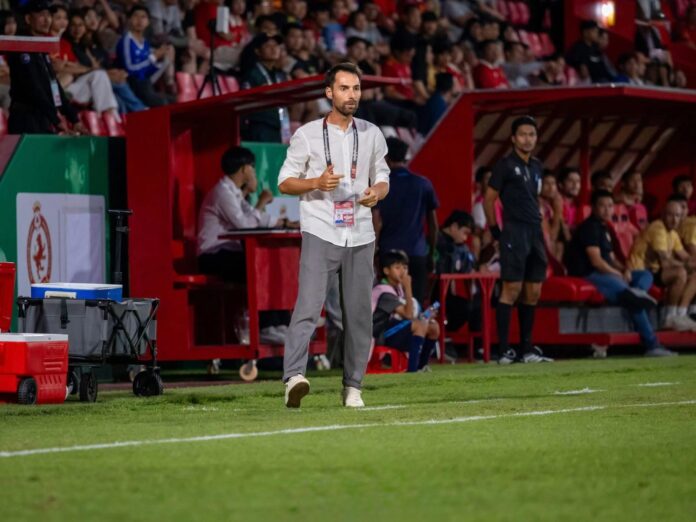
Alex Dorado coaching from the touchline during a competitive match in Cambodia
Alex Dorado on the touchline during a competitive fixture in Cambodia. His hands-on leadership reflects the high pressing, possession-based identity outlined in our exclusive interview.

Alex Dorado has built his career by developing players who now compete in Europe’s top leagues. With over 20 years of technical experience, including six seasons at Real Madrid and work with the Spanish National Team, the Spanish coach combines a strong academic background, a UEFA Pro License, and a Master’s degree in Sports Science with hands-on experience across four continents.

His professional journey includes working alongside Rafa Benítez at Dalian Pro in China, Vesa Vasara at FC Honka in Finland, and Stephen Hart at HFX Wanderers in Canada, before taking on head coach roles in South Africa and, currently, Cambodia. Players developed under his guidance now represent clubs such as Real Madrid, Atlético de Madrid, Sporting CP, Getafe, and Lecce.

Alex Dorado’s philosophy is centered on individual development through a rigorous methodology. A specialist in talent identification and the application of big data to football, he builds teams with a clear offensive identity based on ball possession, mobility, and high pressing, while adapting tactical principles to the characteristics of the available players.

Fluent in Spanish, English, and Portuguese, and currently studying French, Dorado brings multicultural experience that facilitates the integration of South American, African, and Asian players into European contexts. In Cambodia, he leads a competitive team that has surprised local title favorites, reinforcing his track record of delivering results with limited resources.

His stated ambition is to return to Europe, where his technical education began and where he believes his methodology, tested across different continents and competitive levels, can generate sustainable impact.

Our exclusive interview with Alex Dorado

You started coaching at 16. What made a teenager decide he wanted to lead adults on the pitch?

Everything starts with the family environment. I grew up surrounded by football, and I believe that all coaches who reach a certain level share this. A passion that begins in childhood, whether through playing with friends or through family influence. That love for the game leaves a lasting mark.

When, at 16 or 17, you realize that your future as a player will not go much further than playing for passion and enjoyment, you start looking for a more professional path that allows you to stay connected to football for life. That is where this love for the sport takes shape and where that solution emerges. Deep down, it was less a rational decision and more a necessity. I needed to be on the pitch in some way. I discovered that leading, developing players, and building teams fulfilled me just as much as playing would have.

Deep down, it was less a rational decision and more a necessity. I needed to be on the pitch in some way.

Six years at Real Madrid developing generations of players. When you see Gonzalo García at Real Madrid, Pablo Barrios at Atlético de Madrid, or Iván Fresneda at Sporting, what does that represent for you as a developer?

For me, it represents the greatest joy, the greatest of trophies. Seeing players who passed through my hands, whom I worked closely with, achieve success and reach the goals they had set for themselves. But above all, because each of the three you mentioned shares values. Values that represent me as a coach and that represent the vast majority of players I have worked with. The value of hard work, the value of sacrifice, the value of humility.

Players who, from a very young age, were focused on daily improvement and personal growth. They were not the best players in our squads, but they fought to get there, they fought to improve. Seeing them where they are today makes me very happy.

Working with Rafa Benítez at Dalian Pro put you alongside one of the most analytical coaches in modern football. What was the biggest lesson you absorbed from him that you still apply today?

There are two very clear lessons I learned from him that I continue to apply on a daily basis. The first is understanding the environment, and the second is the management or control of everything surrounding a football team.

The first, understanding the environment, comes from a phrase he told me in 2007, during my first visit to England when I visited him in Liverpool. He said that the most important thing when arriving at a new club is to first understand the country, then the city, to understand the club, its surroundings, and what is happening around it. To understand the football culture of that environment. Not necessarily to adapt to it, but to take it into account when making future decisions as a coach.

The second lesson is having an overall understanding of the club for a simple reason. Football is not based solely on what happens on the pitch. It is based on a multifunctional working group, where the results achieved on the field are largely the sum of many other factors. How the player feels, how we behave, how we manage the relationship between player and club. The players’ needs, not only in daily training, but also at home, outside training hours. The player recruitment process, how we handle future contracts, salaries, and contractual decisions.

He is someone who oversees the club as a whole, what in England is referred to as a “manager.” He always made me understand that it was necessary to have awareness of everything happening around the team. Not to control in an authoritarian sense, but to understand what is happening in order to make better decisions or help in difficult moments, or to offer solutions in areas that go beyond football but can still create problems.

You have said it is important to act as both manager and head coach. How do you balance these two roles?

First, by building trusted working groups that have the freedom to carry out their functions, while you provide them with a global vision of what the club wants to be.

The difference between being only a coach and being a manager is understanding that the club is an organism. Marketing cannot work in isolation from scouting. The medical department must be aligned with physical preparation. When you have this global vision, you can anticipate problems before they explode in the dressing room or in the results.

It is not about controlling everything, but about knowing what is happening. That allows you to adjust direction before it is too late.

At Black Leopards, 75% of the squad had never played professionally. In Cambodia, you work with players who had no space at their previous clubs. How do you turn inexperienced players into competitive athletes?

First of all, when we as coaches decide which players should be part of the squad and which should not, the decision is based much more on technical and tactical aspects than on a player’s name or origin.

Both in South Africa at Black Leopards and in Cambodia at MOI Kompong Dewa, when I started selecting the players we would keep, I never considered whether they had played in stronger or weaker competitions. I focused on identifying which players I believed had the potential to be part of the team. In the end, the numbers appeared naturally. Around 70 to 75 percent of those players in South Africa had never played professionally. In Cambodia, most of our current players come from clubs we compete against, clubs where they had no space and were not wanted in the squad. With us, they are performing at a very high level.

I am extremely happy to have selected them and to see how they continue their careers.

We look for specific characteristics in these players, in South Africa, here, and in any future project. Technical qualities, mental strength, attitude. A desire to improve, to progress, to work. The player ultimately positions himself within the squad or moves out of it. In the end, the pitch, the training sessions, and the matches determine who plays and who does not, who evolves and who does not.

We can talk about specific players. Vanda is the perfect example. In pre-season, he was not among the starting players, and today he is the league’s top Cambodian scorer. The pitch decides who plays, not the player’s past.

Fluent in Portuguese, Spanish, and English, you have coached across four continents. How has this cultural versatility changed the way you lead dressing rooms?

At the end of the day, everything is built on the understanding that communication is the most important element in a dressing room. There is no translator filtering intensity or tone. When you correct a mistake in Portuguese with a Brazilian player, for example, the message arrives faster and more deeply.

I experienced this in China with foreign players, acting as the link between Brazilian players and Rafa Benítez. Today, I experience this directly within my own team. I am currently studying French to further expand this capacity for understanding and connection.

Your style is offensive, but you have worked with very different squads. How do you adapt attacking principles when you do not have the “ideal” players?

I believe there are certain principles in football that every player is capable of executing. Defensively, every player can evolve and improve their efficiency. Offensively, this is not always the case. Sometimes technical limitations prevent the creation of certain patterns within the group.

Above all, I try to be efficient as a coach and to ensure the group responds to the game in a way that produces positive results and daily improvement.

What are the key elements of my game model? For me, the main element is pressure. High pressing. Another fundamental point is having the ball or the capacity for ball possession. Not necessarily as a direct offensive tool to score goals, because we know many goals come from very fast transitions, two or three seconds, sometimes four or five at most, with two or three passes. Instead, possession is important to rest, to be well positioned, and to recover the ball as quickly as possible.

I always try to base possession on the players’ characteristics. If they are suited to keeping the ball in the opponent’s half, then we do it there. If not, we find the zones where they can keep possession, rest, and adapt as a group to individual characteristics. This allows each player to grow within the collective and within a game model that can change depending on the moment.

You have proven your methodology in very different contexts. What technical challenge still drives you? What type of project keeps you awake at night?

I have always said that I want to work in the Premier League. And I know that many people tell me no.

When I was 16, my father told me no, you cannot be a coach. At 19, when I arrived at university and said I wanted to coach Real Madrid, some professors told me no, you cannot coach Real Madrid. When I was around 28 and already working at Real Madrid, I said I wanted to work with Rafa Benítez. Colleagues told me no, you cannot work with Rafa Benítez.

I have always received no’s. I have always heard no’s. You will never be a head coach, you will not, you will not, you will not. And I have taken all those no’s, put them into a box, and I use that box as energy. It is my battery.

And I have taken all those no’s, put them into a box, and I use that box as energy. It is my battery.

It is my battery to achieve my goals. And my goal is to coach, to work, and to become a head coach in the Premier League. And I’m certain that very soon, we will achieve it and be working there.

De la Adquisición a la Gobernanza en el Fútbol

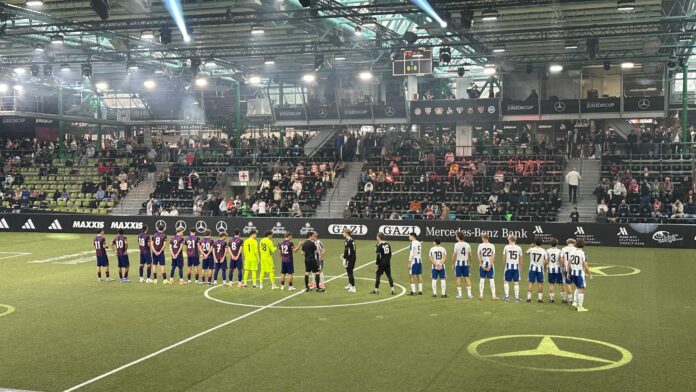
Youth teams line up before a U19 match in Germany, reflecting structured academy football and long-term development pathways.
A U19 youth match setting in Germany, highlighting the organised environments that underpin modern football development. Such structures sit at the heart of governance, investment strategy and long-term club planning.

Bienvenidos de nuevo a la serie «Capital privado en el fútbol: ¿Una revolución o una apuesta arriesgada?». En esta cuarta parte, analizaremos más de cerca el proceso de adquisición de clubes de fútbol. Para los fondos de inversión, adquirir un club de fútbol va mucho más allá de una compra simbólica o de prestigio; representa una entrada calculada en un mercado de alto riesgo y alto potencial de retorno.

Aunque los titulares suelen centrarse en la cifra final o en el nombre de la marca, el proceso que hay detrás de cada adquisición es una combinación cuidadosamente diseñada de disciplina financiera, rigor jurídico e intención estratégica.

Aunque los titulares suelen centrarse en la cifra final o en el nombre de la marca, el proceso que hay detrás de cada adquisición es una combinación cuidadosamente diseñada de disciplina financiera, rigor jurídico e intención estratégica.

Identificación estratégica de objetivos y análisis de mercado

Toda operación comienza con la identificación del objetivo adecuado. Los fondos de inversión buscan clubes infravalorados en relación con su potencial de marca, su acceso a determinados mercados o su infraestructura de desarrollo. Algunos fondos priorizan clubes históricos en ligas de primer nivel con un potencial comercial aún no explotado, como el AC Milan (RedBird), mientras que otros se enfocan en clubes de menor perfil que pueden actuar como plataformas de formación o desarrollo dentro de una red más amplia, como el Toulouse FC para RedBird o el Vasco da Gama para 777 Partners.

Los criterios estratégicos suelen incluir:

  • Huella de difusión y potencial de derechos audiovisuales;
  • Propiedad del estadio y calidad de la infraestructura local;
  • Métricas de engagement de los aficionados y presencia digital;
  • Acceso a academias juveniles o a mercados de talento infraexplotados;
  • Clubes financieramente en dificultades pero con una fuerte historia y legado (por ejemplo, el Inter de Milán antes de la toma de control de Oaktree a través de un préstamo);
  • Clubes con un rendimiento inferior a su potencial de marca;
  • Puntos de entrada geográficos en mercados estratégicos (por ejemplo, Vasco da Gama en Brasil para 777 Partners).

Due diligence y auditorías financieras

Una vez identificado el objetivo de inversión, los fondos entran en la fase de due diligence, un proceso meticuloso que combina las auditorías financieras corporativas tradicionales con las complejidades propias de la industria del fútbol. Para las firmas de private equity, es en esta etapa donde comienza el verdadero trabajo: validar el valor real del club, identificar los riesgos potenciales y definir la estructura final de la adquisición.

Este análisis suele estar liderado por una combinación de expertos en M&A, consultores especializados en finanzas deportivas y firmas de auditoría Big Four, con el objetivo de que ningún detalle pase desapercibido. A continuación, los pilares clave del proceso:

Solidez del balance y exposición al endeudamiento

Los fondos analizan los estados financieros del club, incluyendo:

  • Base de activos: propiedad del estadio, contratos de jugadores (tratados como activos intangibles), instalaciones y centros de entrenamiento;
  • Pasivos: deudas a corto y largo plazo, pagos de traspasos pendientes, obligaciones fiscales;
  • Covenants de deuda: restricciones impuestas por los acreedores que pueden limitar el uso de los flujos de caja.

Los clubes que compiten en ligas inferiores suelen presentar pasivos ocultos (por ejemplo, pagos diferidos), lo que puede afectar de forma significativa a su valoración.

Estructura de la propiedad y gobernanza

Comprender quién posee qué es fundamental, especialmente en clubes con:

  • Múltiples accionistas;
  • Propiedad familiar histórica o participaciones de entidades municipales;
  • Derechos de voto complejos o acciones especiales (golden shares), como ocurre en algunos clubes españoles o alemanes.

Algunos clubes europeos, en particular en España y Alemania, operan bajo marcos de gobernanza complejos, que incluyen restricciones de voto y golden shares que limitan el control de los inversores externos. En Alemania, la regla del 50+1 exige la propiedad mayoritaria por parte de los socios o aficionados. En España, ciertos clubes mantienen estructuras asociativas o derechos históricos que influyen en la toma de decisiones a nivel del consejo de administración.

Obligaciones contractuales

Esto incluye un análisis en profundidad de:

  • Contratos de jugadores y del personal: duración, cláusulas, cláusulas de rescisión (buy-outs), salarios diferidos;
  • Acuerdos comerciales: patrocinios, derechos de denominación del estadio (stadium naming rights), merchandising;
  • Acuerdos de retransmisión audiovisual.

Perfil de ingresos y estructura de costes

Los ingresos de un club de fútbol son altamente volátiles y cíclicos:

  • Composición de los ingresos: ingresos de día de partido (matchday), derechos audiovisuales y ingresos comerciales;
  • Exposición al riesgo deportivo: ascensos y descensos, participación en competiciones UEFA, ventas de jugadores;
  • Ratio masa salarial / ingresos: indicador clave de eficiencia financiera, para el cual la UEFA recomienda un umbral inferior al 70 %.

Algunos clubes dependen de forma desproporcionada de los derechos de televisión o del trading de jugadores, lo que incrementa significativamente su exposición a riesgos elevados.

Cumplimiento legal y regulatorio

Los clubes de fútbol están sujetos a entornos regulatorios específicos (Fair Play Financiero, normativas de las federaciones nacionales, etc.), y los litigios legales en curso pueden influir de manera significativa en las operaciones potenciales.

Los fondos analizan, entre otros aspectos:

  • Litigios o disputas legales pendientes;
  • Riesgos de sanciones deportivas o regulatorias;
  • Implicaciones fiscales transfronterizas, especialmente en el contexto de estructuras de multi-club ownership (MCO).

Para los inversores de private equity, la due diligence no es un simple ejercicio formal, sino una auténtica estrategia de protección del valor.

Estructuración de la operación

Una vez completada la fase de due diligence, el siguiente paso crítico es la estructuración de la operación.

Adquisición total del capital

Se trata de la forma de propiedad más “pura”, en la que el inversor adquiere el 100 % (o una participación mayoritaria de control) del capital del club utilizando recursos propios y/o de co-inversores.

Compras apalancadas (LBOs)

En este tipo de estructura, el fondo adquiere el club principalmente mediante financiación con deuda.

Deuda convertible y earn-outs escalonados

En operaciones transitorias o de mayor riesgo, los fondos pueden optar por instrumentos híbridos.

Inversiones en participaciones minoritarias

En este tipo de estructura, el fondo adquiere una participación no mayoritaria.

Reestructuración post-adquisición

Una vez que un fondo de inversión finaliza la adquisición de un club, la reforma de la gobernanza y la transformación operativa suelen convertirse en las primeras prioridades.

Estas adquisiciones rara vez son emocionales: están respaldadas por datos y diseñadas para generar crecimiento del valor del activo a largo plazo.

Conclusión

Desde la identificación de clubes infravalorados hasta la reconfiguración de su gobernanza y su integración en carteras más amplias, los inversores de private equity aportan al fútbol un enfoque estructurado y orientado a la rentabilidad en la gestión de los clubes.

El modelo de negocio puede ser racional, pero… ¿es realmente bueno para el fútbol?

Who is Hunor Dudás?

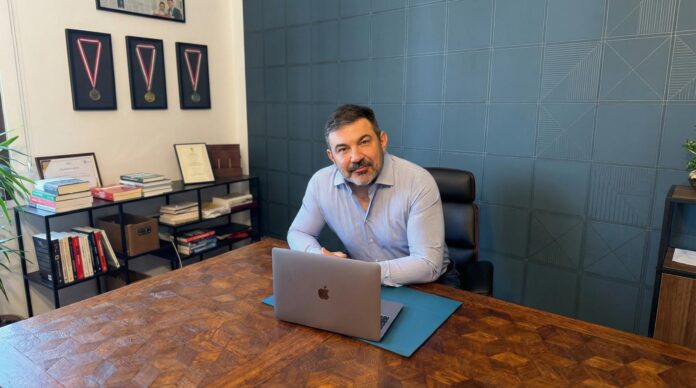
Hunor Dudás in his office discussing football leadership and management strategy.
Hunor Dudás at his office in Budapest, reflecting on leadership, agency work, and the future of Central European football. His career bridges club management, player representation, and international football business platforms.

Hunor Dudás is one of Central Europe’s most versatile and forward-thinking football executives, consistently working to connect club leadership, player management, and international football business into a coherent approach. Based in Hungary, Budapest, his career has moved confidently between boardrooms, the dressing-room environment, and international professional forums. His work is guided throughout by a strong people-first philosophy.

His executive profile gained wider recognition during his tenure as Managing Director of Diósgyőri VTK between 2010 and 2014. He joined the club at the beginning of a rebuilding phase and achieved promotion to Hungary’s top division in his first season. During his time in charge, the club won the Hungarian League Cup, reached the Hungarian Cup final, and competed in European competitions.

Alongside sporting success, significant emphasis was placed on stabilising and professionalising the club’s operations. Strengthening internal structures, commercial foundations, and operational processes resulted in a more sustainable long-term model. This period established Dudás as a leader capable of guiding a historic club through complex challenges under sustained pressure.

In 2016, together with Dr. Péter Pákay and Dr. Csaba Bogdán, he co-founded “The Path Sport Management”, deliberately positioning it as an alternative to traditional, transaction-focused player agencies. The Path was created as a long-term career platform, placing equal emphasis on career planning, mental support, education, and ethical representation alongside contract management. Through his agency work, Hunor Dudás has been involved in numerous international transfers of both Hungarian and non-Hungarian players, consistently structured with long-term value in mind. This approach has supported player development while also delivering clear sporting and financial benefits for clubs, including the successful international transfer of several Hungarian players that generated meaningful value and revenue for their organisations.

Beyond club and agency work, Dudás is an active builder of football industry connectivity in the region through Football Forum Hungary. Hosted at landmark venues such as the Puskás Arena and Ferencváros Groupama Stadium, the event has grown into one of the most significant football business gatherings in Central and Eastern Europe. https://footballforumhungary.hu/en/

The forum brings together club executives, sporting directors, scouts, agents, coaches, marketing and media professionals, federation representatives, university and academy experts, investors, and technology leaders, strengthening the connections between the regional and international football markets.

Alongside his football-related activities, Dudás served as President of the Sports Marketing Department of the Hungarian Marketing Association between 2020 and 2023, where he advocated for higher professional standards, modern sponsorship models, and a stronger market-oriented approach within the sports industry.

Today, Hunor Dudás is characterised by his strategic thinking, connecting role, and human-centred leadership style. His work focuses on building sustainable structures, supporting the people working within football, and creating platforms where knowledge, innovation, and ethics can evolve together. His objective is to help shape a smarter, more connected, and more responsible football ecosystem which is measured not only by results, but by long-term impact and values.

His objective is to help shape a smarter, more connected, and more responsible football ecosystem which is measured not only by results, but by long-term impact and values.

Our exclusive interview with Hunor Dudás

Your career spans club leadership, player representation, and international football forums. How do these different roles influence the way you understand modern football leadership and responsibility?

Modern football leadership, for me, is built on four core pillars: trust, credibility, continuous learning, and cooperation.

Credibility is the foundation of everything. A leader must represent the same values in the boardroom, around the dressing room, and in public. Without credibility, trust cannot be built and without trust, neither clubs nor player careers can be developed sustainably.

Football evolves extremely fast, which means leaders must remain open to learning and to the experiences of others. Finally, cooperation is essential. Modern football is an interconnected system, and responsible leadership today means understanding that we achieve more together than in isolation.

Modern football leadership, for me, is built on four core pillars: trust, credibility, continuous learning, and cooperation.

During your time as CEO of Diósgyőri VTK, you led the club through an important phase of transition. What did that experience teach you about managing pressure, expectations, and long-term vision?

Pressure is a constant in football. Supporter expectations, media attention, ownership dynamics, and internal tensions are all present at the same time. If someone cannot live with that, football is probably not the right environment for them.

At Diósgyőri VTK, I learned that pressure should not be avoided. It must be transformed into energy. A clear long-term vision provides stability, even when results fluctuate or external criticism becomes louder.

As a leader, the most important responsibility is to provide direction and calm for the organisation, even when the environment is noisy. This requires determination, resilience, and genuine self-confidence.

Why did you choose a holistic approach at The Path Sport Management, and why is long-term athlete care becoming essential in modern football?

The philosophy of The Path is simple: a player is not a project, but a person’s entire life journey.

Different phases require different types of support. Youth development, peak professional performance, and the transition into life beyond football all demand distinct approaches.

Mental preparation, education, and a stable background are no longer optional extras; they are basic requirements. Football has become too fast and too exposed for players to be measured purely through contracts.

A true winning mentality is not formed only on the pitch. Learnability, adaptability, and self-reflection are the qualities that make the difference between good players and truly successful ones over the long term. That is why holistic care is not a romantic idea, it creates performance and sustainable value.

Football Forum Hungary has become a key football business event in Central Europe. What was the original vision, and how do you see its role today?

Football Forum Hungary was created because we believed Central Europe needed its own international platform. One where world-class knowledge, decision-makers, and relevant connections could be accessed without having to travel to Western Europe.

Today, the forum functions as a modern agora: a meeting point where knowledge exchange, business, and networking come together. Our ambition is for the region to become not just a follower, but an active contributor to the global football industry.

At the same time, Football Forum Hungary is not just an event: it is a community. A continuously growing “family” built on strong personal relationships. This is what truly differentiates us from competitors: we do not create one-off encounters but focus on building long-term professional and human connections.

How do you see Hungary and Central Europe positioning themselves in the global football industry?

One of the greatest strengths of Hungary and Central Europe lies in talent development. We are an exporting market, and this represents significant strategic potential within the global football ecosystem.

Over the past 15 years, Hungarian football has undergone substantial infrastructural development. New pitches, stadiums, and academies have been built, creating the conditions required to develop and nurture high-level players. These foundations now allow us to work more efficiently and with greater long-term focus.

At the same time, we must be honest: we do not have the same financial resources as the biggest leagues. This means we need to work smarter, more efficiently, and harder to close the competitive gap. Cooperation and connectivity are key and our ability to think in networks and connect both within the region and internationally.

Technology is no longer optional. Data-driven decision-making, artificial intelligence, and digital connectivity are essential to remain competitive in scouting, player development, and club operations.

The early signs of progress are already visible. More Hungarian players are appearing in top European leagues, and while this is encouraging, we are still at the beginning of the journey.

In the long term, success is built on ethical leadership. Trust, transparency, and fair partnerships are the values that give a region real credibility and a lasting position on the international football map

What are you most proud of in your career so far?

As a club leader, I’m most proud that we were able to bring joy to so many people.

From an agency perspective, I’m particularly proud that we have completed many successful transfers involving Hungarian and non-Hungarian players, where the outcome proved beneficial for all sides involved. Seeing players take meaningful steps forward in their careers, while clubs gain reliable, well-prepared professionals, confirms that a transparent and value-driven approach to representation creates real, sustainable success.

And as the founder of Football Forum Hungary, I’m proud that we’ve created a platform in Central and Eastern Europe that impacts so many lives and connects East with West.

Managing Social Media Pressures in Youth Football

Photo by dole777 on Unsplash

In today’s football world, your child’s biggest challenge might not just be the opponent on the pitch, but the spotlight off of it. From Instagram highlights to TikTok match clips, social media is transforming the game. While these platforms open doors to visibility and connection, they also bring new emotional pressures that many young players and their families are still learning to navigate.

As a parent, your voice and presence can be a powerful shield and guide in this fast-paced digital environment.

In today’s football world, your child’s biggest challenge might not just be the opponent on the pitch, but the spotlight off of it.

The New Football Arena: Likes, Comments & Constant Visibility

Social media isn’t just a fun distraction anymore it’s become a scouting tool, a branding platform, and sometimes, a mental minefield. A single post can lead to opportunities… or criticism. A missed goal might turn into a meme. A great play might go viral. The stakes are higher, and they’re public.

In 2026:

  • 71% of youth and amateur football players report checking their social media immediately after games. (2025 Pew Research Center).
  • 1 in 3 say online comments affect their self-esteem more than feedback from their coach. (MDPI, 2025).
  • Professional academies are now offering digital reputation training as part of their programs.

What Can Parents Do?

You don’t need to be a social media expert to support your child. What you do need is a communication approach that balances curiosity, boundaries, and emotional guidance.

Talk with Them, Not at Them

Start with questions like:

  • “What’s your favorite part of sharing clips or posts?”
  • “How do you feel when people comment on your game?”

These questions open the door for connection, not correction.

Help Them Set Boundaries

Work together to define:

  • Screen-free hours (especially after tough matches)
  • Who they follow and engage with
  • How often they review or delete posts

Pro tip: Focus on why boundaries matter — not just rules, but rest, reflection, and mental well-being.

Encourage Identity Beyond the Game

Remind them they are more than just their football profile. Help them explore content and accounts that reflect their whole identity, whether that’s music, causes, humor, or hobbies.

The Bottom Line for Parents

Social media in football isn’t going away. But your guidance can turn it from a source of stress into a space of strength.

Be the sounding board. Be the steady voice. Be the reminder that behind every post is a person and that their worth, win or lose, is never measured by likes.

Be the sounding board. Be the steady voice. Be the reminder that behind every post is a person and that their worth, win or lose, is never measured by likes.

Who is Bai Lili?

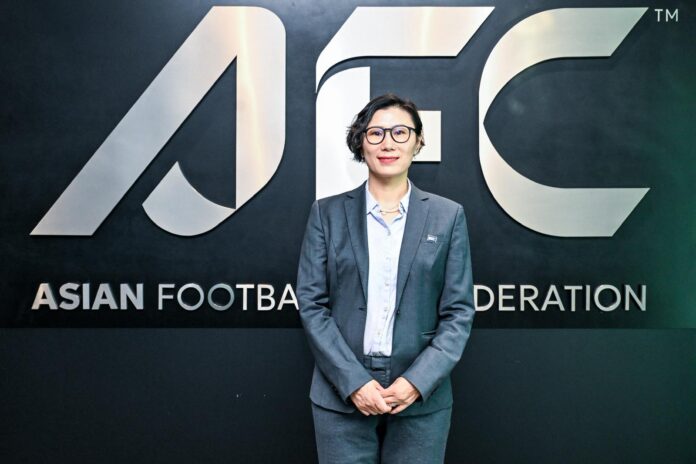
Bai Lili at AFC headquarters discussing women’s football development in Asia
Bai Lili, Head of Women’s Football at the AFC, outlines the strategic direction shaping the women’s game across Asia. From governance to coach education, her work reflects long-term structural ambition.

Across 47 Member Associations, women’s football in Asia is progressing under vastly different structural, cultural, and economic conditions. Steering that complexity requires more than programme coordination. It demands strategic clarity, contextual sensitivity, and long-term governance discipline.

Bai Lili serves as Head of Women’s Football at the Asian Football Confederation, where she oversees the technical direction and structural development of the women’s game across the continent. With experience as an elite player, national federation leader in China, and now a continental decision-maker, she operates at the intersection of policy design, coach education reform, competition architecture, and sustainable pathway development. In this conversation, she outlines the strategic priorities shaping women’s football across Asia and the indicators she considers essential for measuring genuine long-term progress.

Our exclusive interview with Bai Lili

In your current role as Head of Women’s Football within the AFC Technical Division, how do you define the strategic scope of your responsibility across 47 Member Associations, and how do you prioritise impact at such a scale?

Across 47 Member Associations, our focus is on establishing the conditions for sustainable progress. The strategic scope of the role spans governance guidance, programme frameworks, coach education standards, competition structures, and targeted technical support, all adapted to different levels of development across Asia.

Rather than imposing uniform solutions, we always seek tailored approaches that allow flexibility for MAs to develop the game within their own contexts, while still aligning with shared technical priorities.

Rather than imposing uniform solutions, we always seek tailored approaches that allow flexibility for MAs to develop the game within their own contexts, while still aligning with shared technical priorities.

Among the tailored services the Confederation provides, the AFC Women’s Assistance Programme plays a key role. Through regular visits, we work closely with MAs to assess their specific needs and provide guidance aligned with the Women’s Football Strategic Plan, identifying the most suitable and sustainable development pathways.

We also place strong emphasis on visibility and engagement. Initiatives such as the AFC Women’s Football Day, celebrated in conjunction with International Women’s Day, allow each Member Association to mark the occasion in a way that reflects its local context. In addition, the AFC’s It’s My Game campaign, which has a reach of millions, recognises and celebrates the growing contribution of women across Asian football, highlighting success stories from every Regional Association and at all levels of the game.

What principles guide your decision-making when aligning technical standards with highly diverse national contexts across Asia?

When working across Asia, it is important to recognise that no two MAs operate in the same environment. While the AFC establishes clear technical benchmarks, particularly in coach education, youth development, and competition structures, how those standards are applied must reflect local realities such as infrastructure, culture, geography, and available resources.

For me, decision-making is always grounded in realism and long-term sustainability. Development cannot be driven by short-term comparisons or external pressure. Our responsibility is to support steady progression and ensure that each Member Association can move forward at a pace that is both ambitious and achievable.

This also requires strong internal collaboration. Close alignment with our Member Associations Division and the Competitions and Football Events Division allows us to take a more holistic view of development. By understanding where each Member Association stands, we can identify practical next steps that strengthen technical credibility without overlooking local constraints.

How has your experience shaped your approach to building sustainable pathways between grassroots, elite development, and coach education structures?

Having worked across grassroots, youth development, elite football and coach education, I see these areas as one connected ecosystem rather than separate pillars. Sustainable pathways only exist when coaches, competitions and development environments are aligned at every stage.

Sustainable pathways only exist when coaches, competitions and development environments are aligned at every stage.

Coach education, in particular, is the connective tissue of development. Well-educated coaches create better environments at every level, from schools to elite academies. At the AFC, this understanding translates into prioritising coach education reform, tutor development, and alignment between youth competitions, academies, and national team structures.

Your background combines elite playing experience, national team exposure, and senior technical leadership. How does this dual perspective influence how you evaluate development programmes and technical policies today?

Having lived the game as a player and now shaping it from an administrative perspective allows me to evaluate programmes through both a technical and human lens. On paper, a programme may meet all structural requirements, but it is equally important to assess how it impacts the daily reality of players and coaches on the ground.

My playing experience helps me determine whether policies genuinely improve training quality, competitive exposure, and player welfare. At the same time, my administrative responsibilities require consideration of scalability, governance, and long-term sustainability. Balancing these perspectives ensures that technical policies are not only sound in theory, but meaningful and practical in implementation.

Coach education is a recurring pillar throughout your career, from instructor roles to continental programme delivery. How do you assess the current maturity of women’s football coach education in Asia, and where do you see the most urgent structural gaps?

Coach education remains one of the most critical elements in football development, but progress across Asia has been uneven and not all MAs have advanced at the same pace, with limited female representation at elite coaching levels being one example.

To help address this, the AFC joined forces with the Japan Football Association to introduce a Women’s Pro Diploma Course aimed at increasing the number of female coaches holding professional licences.

However, certification alone is not enough. The most urgent gaps relate to retention, mentoring, and practical deployment. Many female coaches complete their qualifications but lack consistent opportunities to coach at appropriate levels.

Strengthening mentoring systems, linking coach education more closely with women’s competitions, and creating clearer professional pathways are critical next steps. Coach education must support long-term career development, with MAs playing a key role in providing meaningful, real-world opportunities.

Looking back at your transition from national federation roles in China to a continental leadership position at AFC, what shifts in leadership mindset were required to operate effectively at confederation level?

The most significant shift was moving from direct implementation to strategic influence. At the national level, familiarity with the culture and operating context allows for more immediate alignment and execution. At the confederation level, progress is achieved less through leading from the front and more through enabling others to succeed.

This transition required greater patience, stronger listening skills, and a broader, culturally informed perspective. Balancing diverse and sometimes competing regional priorities became essential, as did evaluating success through collective advancement rather than individual outcomes. Leadership at the confederation level is ultimately about building trust, maintaining consistency, and empowering MAs to take ownership of their development journeys.

Based on your long-term involvement in women’s football as a player, coach, and administrator, what indicators do you personally use to judge whether women’s football development efforts are genuinely progressing rather than simply expanding in volume?

For me, genuine progress is reflected in quality and continuity. I look at whether girls are staying in the game longer, whether coaching quality is reflected in the game, and whether national pathways are producing players who can transition successfully to higher levels.

Other key indicators include the professionalism of domestic competitions, the presence of qualified female coaches in meaningful roles, and the ability of MAs to independently sustain programmes. Growth in numbers is important, but true development is evident when systems become stable, credible, and capable of producing long-term impact.

FIFA Agent Mock Exam 2

Open books
Photo by Aaron Burden on Unsplash

1. The Court of Arbitration for Sport has issued an award ordering a club to pay you money. However, the club has faced financial problems leading to its bankruptcy. The club subsequently disappeared and was disaffiliated from the relevant national association. A few years later, you discover that an almost identical club has started competing in the same league as the defunct club. Since the defunct club has not paid its debt, may you initiate proceedings against the new club for failing to comply with the aforementioned award by claiming that it is the sporting successor of the defunct club? Select one:

a. Yes, you may apply to submit the matter to the FIFA Disciplinary Committee

b. No, you need to file a new complaint against the new club with the competent body

c. Yes, you may file such an application with the Court of Arbitration for Sport

d. Yes, you may file such an application with the FIFA Football Tribunal


2. In view of some financial hardship, Red FC needs some liquidity to pay players’ salaries and engage new players. For this reason, Red FC contacts an investment fund, which is available to invest in the club. Which of the following solutions is not permitted by the FIFA regulations? Select one or more:

a. Red FC assigning any income deriving from merchandising to the investment fund

b. Red FC assigning any income deriving from ticketing to the investment fund

c. Red FC selling a percentage of a newly engaged players economic rights to the investment fund

d. Red FC assigning any income deriving from broadcasting rights to the investment fund


3. Select the bodies that form FIFA’s judicial bodies: Select one or more:

a. Football Tribunal

b. Disciplinary Committee

c. Ethics Committee

d. Appeal Committee


4. If a player who is a minor is offered a professional contract by a foreign club, when may they be represented by a Football Agent? Select one:

a. Once the player reaches the age of 18, as it is an international transfer

b. Immediately, and no consent from legal guardians is required as a professional contract has already been offered

c. Immediately, if their legal guardians agree to Approach and co-sign the Representation Agreement and the Football Agent has successfully completed the CPD course on minors

d. Once the player reaches the age which is six months younger than the age at which they may sign their first professional contract in the country in which they are domiciled


5. What information must be provided when a coach requests it from their Football Agent? Select one or more:

a. A list of incurred expenses with receipts

b. A legal opinion on the validity of their Representation Agreement

c. A list of all service fee payments in relation to them

d. copy of their Representation Agreement


6. As of when is a claim time-barred before the FIFA Football Tribunal? Select one:

a. If more than two years have elapsed since the event giving rise to the dispute.

b. If more than five years have elapsed since the event giving rise to the dispute.

c. Never, disputes before the FIFA Football Tribunal can always be lodged.

d. If more than three years have elapsed since the event giving rise to the dispute.


7.Joe is a young Football Agent looking to get his first Client. He has identified Roberto, one of the star players at FC Big City, as his best chance of getting his new business off to a good start. However, Roberto is exclusively represented by Mario, a well-known Football Agent, and their Representation Agreement is due to expire in 90 days. What can Joe do to Approach Roberto and offer his services? Select one:

a. Contact FC Big City and indirectly offer his services to Roberto

b. Wait until the Representation Agreement between Roberto and Mario has entered its final 30 days and then Approach Roberto about the possibility of representing him

c. Announce to the local media that he can get Roberto a much better contract and ask him to terminate his Representation Agreement with Mario

d. Contact Mario and offer to buy out Roberto’s existing Representation Agreement with him


8. Who is required to provide a copy of a player’s Representation Agreement when requested to do so by an investigative journalist? Select one:

a. FIFA

b. FIFPRO

c. Nobody

d. Football Agent


9. What is the maximum duration of a representation agreement between a football agent and an individual established in the FIFA Football Agent Regulations? Select one:

a. 2 years

b. 4 years

c. 3 years

d. Unlimited duration but only if both parties explicitly agree.


10. Which of the following is mandatory in order to become a FIFA member association? Select one or more:

a. The association must be responsible for organising and supervising football in all of its forms in its country

b. The association must currently be a member of a confederation

c. Football must be the main sport in the country where the association operates

d. The association must operate in a democratic country


11. As a Football Agent, do you have a duty to report a situation you identify as affecting the wellbeing of a child player? Select one:

a. I have no duty to report

b. Instead of reporting, I should speak directly to the child and fix the problem

c. I have a duty to report, but I may ignore this and stay out of any problems

d. It is my duty to report


12. Deco is 15 and from Peru. He loves to go to school and to play football. All his coaches have told his parents he has a lot of potential and should pursue a career in football. This is why they decided to place him at a private academy in Mexico as they heard it has a good reputation. After a few weeks there, Deco notices that the football part of the academy is well organised but they train in extremely hot temperatures and eat really bad food in small quantities. He is always hungry and thirsty as safe drinking water is rarely provided. They also receive very little education and classes are only delivered in Spanish, a language he does not speak. The teachers are clearly not well prepared, and they do not seem to care. Finally, the dormitories where the boys sleep are overcrowded and very dirty. What type of safeguarding concerns are at stake in this case? Select one or more:

a. Neglect, nutrition and dietary issues

b. Health and safety issues

c. Education and social integration issues

d. There are no concerns


13. What event(s) might trigger training compensation? Select one or more:

a. First registration as a professional

b. Transfer of a player to a category IV club

c. None of the answers listed

d. Transfer of a professional player


14. Based on which amount is a solidarity contribution calculated? Select one:

a. All payments made as part of a transfer, including club-to-player/agent payments

b. Any transfer fee paid from one club to another club

c. The player’s salary

d. The player’s market value


15. May a player enter into an agreement by means of which they are entitled to a percentage of the transfer fee paid for a future transfer? Select one:

a. Yes, as long as this percentage refers to a transfer fee paid for a future transfer of the player entering the agreement

b. Yes, even if the agreement refers to the transfer fee paid for a future transfer of other players

c. No, because this is a third-party ownership agreement which is prohibited by article 18ter of the FIFA Regulations on the Status and Transfer of Players

d. Yes, and the player may then assign this right to their Football Agent


16. A player is a student and moves without their parents to another country temporarily for academic reasons in order to undertake an exchange programme. Which requirements must be fulfilled? Select one or more:

a. The duration of the player’s registration for the new club until they turn 18 or until the end of the academic or school programme may not exceed two years

b. The player’s new club may only be an amateur or semi-professional club

c. The duration of the player’s registration for the new club until they turn 18 or until the end of the academic or school programme may not exceed one year

d. The player’s new club may only be a purely amateur club


17. Ibrahim has been transferred from Green Rangers FC in Uganda to Red Dragons FC in China for a transfer fee of USD 1,000,000. As per his player passport, Ibrahim was previously registered with Blue Academics FC in Uganda for the entire year of his 17th birthday and half of the year of his 18th birthday. What is the amount of solidarity contribution due to Blue Academics from Ibrahim’s transfer? Select one:

a. USD 5,000

b. USD 7,500

c. USD 10,000

d. USD 7,250


18 Two consecutive transfers, whether national or international, of the same player connected to one other and that take place within 16 weeks… Select one:

a. Are always considered to be a bridge transfer

b. Are presumed to be a bridge transfer, unless the clubs and player involved demonstrate the contrary

c. May not be considered to be a bridge transfer if the bridge club is affiliated to the same association as the other clubs involved

d. Are considered to be a third-party ownership agreement


19. What rights for female players are established in article 18quater of the FIFA Regulations on the Status and Transfer of Players when they become pregnant? Select one or more:

a. To continue providing sporting services to their club (i.e. playing and training), following confirmation from their treating practitioner and an independent medical professional (chosen by agreement between the players and their clubs) that it is safe for them to do so

b. None of the answers listed

c. To receive a 10% salary increase after maternity leave

d. To return to football activity after the completion of their maternity leave


20. Which entity is entitled to monitor the compliance of the FFAR? Select one:

a. National courts

b. UEFA

c. Court of Arbitration for Sport

d. FIFA general secretariat


Answers
  1. A
  2. C
  3. BCD
  4. C
  5. ACD
  6. A
  7. B
  8. C
  9. A
  10. AB
  11. D
  12. ABC
  13. AD
  14. B
  15. A
  16. CD
  17. B
  18. B
  19. AD
  20. D

How to Pass the FIFA Football Agent Exam: 2025 Edition.

How did you get on? Still some work to do? You can prepare with the How to Pass the FIFA Football Agent Exam workbook, a practical and comprehensive guide designed to help you master the exam content.

This workbook combines theoretical knowledge, practical cases and mock exams to prepare you in a structured and effective way, based on the latest official FIFA materials.

Follow the Sports Agent Academy on LinkedIn to get the latest exam content, practice questions and successful strategies.