Home Blog Page 48

How Son Heung-min Built a Powerful Personal Brand in Football and Fashion

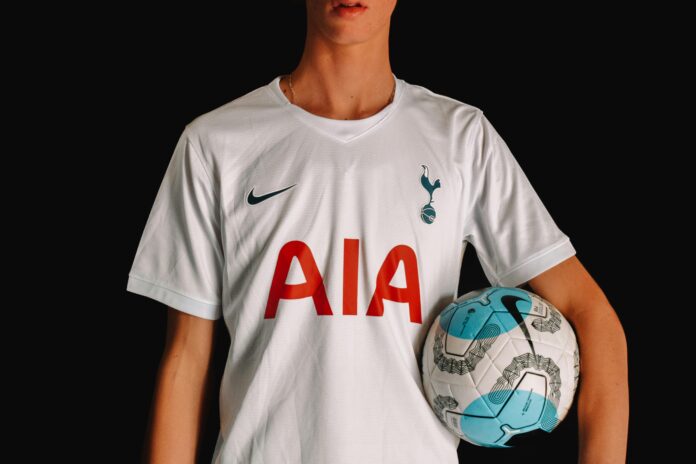
Photo by Kadin Eksteen on Pexels

Son Heung-min’s rise from a promising youth in South Korea to a global football icon has been marked by on-field excellence and a consistently positive public image. A prolific attacker at Tottenham Hotspur and captain of the South Korean national team, Son has collected honours including two Premier League Golden Boots and nominations for the Ballon d’Or as the first Asian player ever. His 2021/22 season saw him top the Premier League scoring charts (sharing the Golden Boot) and surpass 100 combined goals and assists in England’s top flight. UEFA and Asian Football Confederation awards attest to his status: Son was AFC’s International Player of the Year three times, and captained Korea to an Asian Games gold medal (earning a military exemption). These achievements have made him a household name in both Europe and Asia, cementing his reputation as one of the world’s leading forwards.

Off-Field Persona and Cultural Influence

Son’s personal qualities – humility, optimism and a strong work ethic – have further burnished his brand. Teammates praise him for infectious positivity; Gareth Bale once told reporters, “Son is the nicest guy on the planet” who “cheers the room up” with his smile. He leads by example: in 2020 he paid for a chef to cook Korean meals for Tottenham’s backroom staff, and he even mediated a scuffle in an international match as an unofficial peacemaker. Off the pitch, Son is quietly philanthropic and patriotic. He says that when disasters strike his homeland, “it’s something I should do,” donating £100,000 after huge wildfires in 2019 and another £65,000 to COVID-19 relief in South Korea. Such actions – plus lighthearted moments like the viral video of Son holding a “Welcome to Seoul” sign and penning a warm letter to visiting teammates – show a humble, team‑oriented character. Brands value that “clean” image: Son enjoys virtually no scandals or distractions, and fans respect his loyalty (for example, a South Korean news clip noted that fans admired how he politely declined an iPhone for a selfie due to his new Samsung endorsement). In Korea Son is treated like a national hero: his victory goal against Germany at the 2018 World Cup made him a household name across Asia and even won him unexpected affection in Mexico, as Spurs capitalized on that moment to engage Latin American fans. All of this cultural impact – being a role model abroad and “absolutely worshipped in his homeland” – has made Son a powerful ambassadorial figure well beyond the pitch.

Key Sponsorships and Commercial Success

Son’s on- and off-field stature has translated into a lucrative endorsement portfolio spanning sports, fashion, grooming and lifestyle brands. He has been sponsored by Adidas since his early days in Germany – the company even makes signature F50 boots for him – and Gillette features him in regional ad campaigns. In luxury fashion, Son has scored major deals: in 2022 British label Burberry made him a global ambassador following his Golden Boot season, and Son himself said it was “his honour to partner with a brand so rich in British heritage,” noting that Burberry’s emphasis on “imagination and innovation” reflects values he champions. That same summer, he became the face of Calvin Klein Underwear in South Korea; Son quipped that CK has “had a special place in my wardrobe for years” and that it was “exciting and surreal” to star in its fall campaign.

In luxury lifestyle, Son fronts campaigns that blend style and storytelling. The high-end luggage brand Tumi tapped him as a global ambassador, featuring him in travel-themed ads for its 19 Degree Aluminum collection. Tumi’s marketing chief praised Son for bringing “a fresh perspective” to the campaign and “bridging the gap between travel accessories and fashion.” Son has also worked with high-end watch and electronics firm Samsung; in 2023 Samsung announced him as a Galaxy mobile ambassador, lauding how Son “has given so much joy to Koreans via soccer” and showcasing him with their latest foldable phones. Beverage and lifestyle brands seek him too: Heineken’s Tiger Beer signed Son for its Asia-Pacific “Year of the Tiger” campaign (launched Feb 2022), tying his ambition to lift a trophy for Korea with the beer’s bold, adventurous message. And in insurance, pan-Asian underwriter AIA made Son its first Singapore-based ambassador in 2023, with the company calling him “one of the greatest ever football players Asia has produced… an icon and inspiration for many” whose values of “self-improvement, grit and determination” mirror the brand’s ethos.

Brand Industry Role/Scope
Adidas Sportswear Kit and footwear sponsor (global)
Gillette Personal Care Grooming endorser (Asia/Global)
Burberry Luxury Fashion Global brand ambassador
Calvin Klein Apparel (Underwear) Brand ambassador (South Korea)
Tumi Travel/Luggage Global ambassador
Samsung (Galaxy) Electronics/Tech Global brand ambassador
AIA Insurance (Finance) Regional ambassador (Singapore/Asia)
Tiger Beer Beverage (FMCG) Regional ambassador (Asia-Pacific)
What Makes Son a Valuable Brand Ambassador

Son’s appeal to brands lies in his global reach and cross-cultural resonance. He is hugely popular across Asia – a study noted he alone commands the attention of roughly 12 million Koreans – while also being a star in Europe’s flagship league. Fluent in Korean, English and German, he can communicate with diverse fan bases and media. Brands prize his clean, family-friendly image: he is never embroiled in controversy, and even pledged to repay fans’ support after a national tragedy, underscoring his responsibility. His leadership credentials add appeal: Son captains South Korea and is seen as a team player and motivator. In interviews and campaigns he emphasizes hard work, unity and positivity – traits that translate easily to product messages. For example, Adidas’ recent initiative used Son on a youth field to “showcase the positive behaviors athletes need…to believe ‘You Got This’.” All these aspects – immense social media following, multi-market recognition, sportsmanship and personal values – make Son a “prized global asset,” as industry analysts note. Whether bridging East and West for a luxury fashion house or connecting with young fans in Asia, Son embodies a brand-safe image with broad marketability in Asia and Europe alike.

Lessons from Son’s Personal Branding Journey

Athletes and professionals can draw clear lessons from Son’s example:

  • Excel in your core role. Son’s brand rests on genuine performance; delivering on the pitch (or in any field) is the foundation. Achievements like breaking records and earning accolades create the credibility that makes brand partnerships meaningful.
  • Build a positive personal story. Son’s humility, team spirit and fun-loving nature shine through. Embrace authenticity (e.g. Son writing sincere letters to teammates) and stay true to your roots (he launched his own label NOS7 with pride in his Korean identity). People connect with personality as much as with fame.
  • Cultivate a clean, consistent image. Avoid scandals and back charitable causes. Son’s donations to disaster relief (a £100k wildfire contribution and COVID-19 aid) and his role-model conduct only strengthened his public standing.
  • Choose brand partners wisely. Align with brands that match your values and audience. Son partners with global leaders (Adidas, Samsung) and also regional firms (AIA, Tiger Beer) to maximize impact. His deals cover sport, fashion, tech and lifestyle, reflecting both his personal interests and fan demographics.
  • Engage fans worldwide. Be accessible and inspiring across cultures. Son’s multilingualism, social media presence (goal celebrations, funny clips) and goodwill help build international fanbases (even in places like Mexico).
  • Leverage platform for storytelling. Participate in campaigns and media that amplify your narrative. Son’s appearances in documentaries, fashion shoots and digital content make him more than just an athlete – they make him a relatable public figure.

By combining sporting success with authenticity, charity, and strategic partnerships, Son Heung-min has crafted a powerful personal brand. Athletes aiming to grow their own brand can follow his lead: excel at the game, show genuine character, and partner with brands that tell an authentic story about who you are.


Breaking Into the Football Agent Industry: A Graduate’s Guide

Breaking into the football agent industry after graduation can seem like a daunting task. With the competitive nature of the field, it’s crucial to approach your journey strategically, and with an understanding of what it takes to succeed. Whether you’re still in university or have already graduated, the key to entering this industry is to look inward, set clear goals, and take actionable steps toward building your career.

Know Your ‘Why’: Define Your Goals & Purpose

Before you take any steps toward becoming a football agent, it’s essential to first define your career goals and purpose. Ask yourself: Why do you want to pursue this career in football? What would a successful career as a football agent look like to you? Do you have the drive and passion required to work in this fast-paced, high-pressure industry? Reflecting on your motivations and ambitions will help you understand if football agency is the right fit for you. Knowing your ‘why’ gives you the foundation to make more informed, purposeful decisions as you progress.

Understand The Landscape

The football agent industry is vast, with many moving parts. You’ll need to understand who the major players are, where the opportunities lie, and how you can create value. Football agents must be able to spot talent, negotiate contracts, and understand the intricacies of legal agreements. However, football agents don’t all play on the same field; some focus on the women’s game, others stick to domestic deals, while some manage international transfers across multiple markets. Ultimately, it is important to evaluate which environments you can thrive in.

Start by researching agencies, learning about current trends, and understanding the business dynamics within the industry. Understanding the landscape will help you build a strong foundation and give you the context needed for effective decision-making.

Build Knowledge, Get Visible

A football agent is expected to have in-depth knowledge of the sport, the players, and the legalities surrounding transfers and contracts. Whether it’s by gaining certifications, reading books, or attending industry seminars, build your knowledge base to stand out in the field. However, it’s not just about knowledge, it’s about demonstrating it to the world.

Having a visible, well-rounded profile increases your chances of being noticed by potential employers or clients. The most effective method to do so is to create an online presence through social media, share insightful posts about the industry, and engage with football-related content. Showcase your expertise by writing articles or analyses on players, games, or contracts, and get your name known in the community.

Expand Your Network

In football, who you know is often just as important as what you know.  For aspiring football agents, it’s even more important to start building relationships early. Networking opens doors to job opportunities, industry insights, and valuable connections with key people such as managers, scouts, players, and other agents.

To become a football agent, you need to act like one. Show up at your local youth football matches, attend networking events (such as the World Football Summit and Soccerex), and actively engage with people in your field on social media platforms such as LinkedIn or X. When it comes to football, relationships are key, and establishing a broad network can be the difference between securing your first internship or missing out on valuable opportunities that could kickstart your career as an agent.

Step Into the Game: Internships Open Doors

While applying for jobs is an important step, internships offer a far more valuable experience for breaking into the football agent industry. Internships provide hands-on, real-world exposure to the industry, enabling you to gain experience, learn from seasoned professionals, and develop skills that are hard to acquire in a classroom. Remember that, as long as you can keep yourself financially afloat, making money should not be your #1 priority; provide value wherever you go and the money will follow.

Seek internships or assistant roles at established agencies or football clubs. Be proactive and volunteer your time, as this could lead to more permanent opportunities down the line. Real-world experience will help you build a strong foundation, giving you insight into the inner workings of the football industry and making you a more appealing candidate.

Start Small, Think Long

The road to becoming a successful football agent is a marathon, not a sprint. Understand that success in this field takes time and that you’ll need to start small. As you begin, it’s important to remember that you don’t have to go it alone. Building relationships with fellow agents and mentors in the industry can accelerate your progress. Collaborating with others not only gives you access to their expertise but also opens doors that might otherwise be closed. Football is a team sport, and so is being a successful agent.

Final Thoughts

The football industry isn’t just for ex-pros or insiders. With the right mindset, a bit of courage, and consistent effort, graduates can carve out meaningful, exciting careers in the game. Don’t wait for permission, start learning, start contributing, and start building the future you want in football. It’s a journey that demands resilience and patience, but with each step you take, you’ll find that the barriers between where you are now and where you want to be in the industry become smaller. The path won’t always be straightforward, and the competition is fierce, but remember: every experience builds your foundation. Each connection, every skill you develop, and all the knowledge you gain will put you closer to your goals. Football agents are not just middlemen; they’re key players in shaping the future of the sport and the careers of young talent. So, embrace the challenge, stay focused, and be persistent. The opportunities are there for the taking, and with dedication, you can be part of the game in ways you’ve always dreamed of.

2025 FIFA Agent Mock Exam 6

Classroom
Photo by Ivan Aleksic on Unsplash

1. Which of the following answers are correct regarding the extension of sanctions to have worldwide effect? Select one or more:

a. A worldwide extension request will be rejected if extending the sanction would conflict with public order

b. Doping-related sanctions may be extended to have worldwide effect

c. Sanctions related to any infringement may be extended to have worldwide effect

d. FIFA does not have the power to extend a sanction to have worldwide effect ex officio.


2. Which of the following are correct? Select one or more:

a. Players may be considered to be a third party for the purposes of article 18ter of the FIFA Regulations on the Status and Transfer of Players (RSTP).

b. Players are never considered a third party for the purposes of article 18ter of the FIFA Regulations on the Status and Transfer of Players (RSTP)

c. Agents are a third party for the purposes of article 18ter of the FIFA Regulations on the Status and Transfer of Players (RSTP)V

d. Only clubs may be considered to be third parties for the purposes of article 18ter of the FIFA Regulations on the Status and Transfer of Players (RSTP).


3. Laura is a professional football player who has taken maternity leave. Lionesses FC (Laura’s club) wants to temporarily replace her with another player, Coni. Which of the following is / are true?

a. Lionesses FC cannot register Coni until the next registration period opens

b. Lionesses FC can register Coni once Laura has been absent for eight weeks after the birth of her child

c. Lionesses FC can register Coni at any time after Laura leaves for her maternity leave

d. Lionesses FC will need to immediately release Coni once Laura returns from her maternity leave


4. Can a player be sanctioned for a breach of article 5bis of the RSTP? Select one:

a. Yes, article 5bis of the RSTP clearly states so.

b. No, since players are protected by collective bargaining agreements

c. No, article 5bis of the RSTP does not foresee that players can be sanctioned for bridge transfers

d. No. since a player is never a third party


5. A top football club is eager to secure Willy Rodríguez for the upcoming season. His agent proposes to the club an agreement involving a sports investment firm, Top Transfers Ltd, which seeks a share of the compensation payable for Willy’s future transfer to this top club. What do the FIFA Regulations on the Status and Transfer of Players (RSTP) prohibit in terms of agreements with third parties, as exemplified in Willy Rodríguez’s case? Select one or more:

a. A third party participating in the partial compensation for a player’s future transfer

b. Players sharing personal endorsements with third parties

c. Clubs seeking sponsorship deals with third parties

d. A third party participating in the total compensation for a player’s future transfer


6. In what circumstances can a football agent transfer their licence to another agent as per the FIFA Football Agent Regulations (FFAR)? Select one or more:

a. The licence cannot be transferred, but a football agent can temporarily suspend their licence

b. The agent retires.

c. The agent is incapacitated.

d. There are no such circumstances.


7. Which of the following statements regarding the registration of football agents with FIFA are true? Select one or more:

a. As a general rule, football agents should not register separately with each national football association.

b. All of the answers listed are true.

c. As a general rule, a FIFA football agent can operate worldwide

d. As a general rule, football agents must register separately with each national football association.


8. When does a player qualify as an amateur? Select one:

a. When the player is registered for an amateur club

b. When the player is paid less for their football activity than the expenses that they effectively incur

c. When the player does not meet both criteria in article 2 paragraph 2 of the FIFA Regulations on the Status and Transfer of Players (RSTP)

d. When the player is paid less than EUR 200 for their football activity


9. Which of the following answers are correct regarding the extension of sanctions to have worldwide effect? Select one or more:

a. A worldwide extension request will be rejected if extending the sanction would conflict with public order

b. Doping-related sanctions may be extended to have worldwide effect

c. Sanctions related to any infringement may be extended to have worldwide effect

d. FIFA does not have the power to extend a sanction to have worldwide effect ex officio.


10. Robertinho, an 18-year-old player from Brazil, has attracted attention from several European clubs. His current club in Brazil has offered him a new contract. However, Robertinho wants to move abroad. Several football agents are interested in signing a representation agreement. What are the minimum requirements for the contents of this type of agreement? Select one:

a. The parties’ names and signatures and the amount of the service fee due to the football agent.

b. The parties’ names and photos and the amount of the penalty fee due to the football agent.

c. The parties’ names and contact details and the amount of the penalty fee due to the football agent.

d. All of the answers listed.


11. Is the risk of suffering abuse higher for talented/professional players? Select one or more:

a. Yes, and this suggests that what we see in the news is only the “tip of the iceberg”

b. No, the risk is the same for amateur players, because at that level there is less scrutiny

c. No, there is no indication or proof that this is truex

d. Yes, this risk rises as a player progresses up the talent ladder


12. Which of the following types of clauses in contractual agreements are generally considered to be in breach of article 18bis of the FIFA Regulations on the Status and Transfer of Players (RSTP)? Select one or more:

a. A clause allowing a player’s new club to freely negotiate that player’s transfer without any restrictions

b. A clause in a loan agreement that obliges the new club (loanee) to notify the former club (loaner) that the player is injured.

c. A clause allowing a third party to have equal say in the selection of new players for a club

d. A clause prohibiting a player’s new club from transferring that player without the former club’s consent


13. For a national transfer that includes transfer compensation, within how long must an electronic domestic transfer system provide the relevant details to FIFA? Select one:

a. 30 days

b. Never

c. Five days

d. Immediately


14. Which of the following infringements committed by a player carries the highest minimum sanction? Select one:

a. Serious foul play

b. Assaulting an opponent

c. Assaulting a match official

d. Violent conduct


15. Player N has been registered with clubs A, B and C, all of which are affiliated to Member Association X, as follows: Club A: as an amateur, from the calendar year of his 9th birthday until the end of the calendar year of his 11th birthday; Club B: as an amateur, from the calendar year of his 12th birthday until the end of the calendar year of his 15th birthday; and Club C: as a professional, from the calendar year of his 16th birthday until the end of the calendar year of his 20th birthday. Subsequently, Player N is transferred from Club C to Club D under a transfer in exchange for compensation. Club D is in club category IV at the time of the transfer and is affiliated to Member Association Z. In this case: Select one or more:

a. no club will be entitled to training compensation.

b. Clubs A, B and C will be entitled to training compensation and a solidarity contribution.

c. Clubs A, B and C will be entitled to a solidarity contribution.

d. Clubs B and C will be entitled to a solidarity contribution


16. Which of the following statements are true in relation to suspending the implementation of a sanction? Select one or more:

a. It is never permitted.

b. It is not possible if the sanction relates to match manipulation.

c. It is not possible if the sanction relates to a serious offence.

d. It subjects the person sanctioned to a probationary period.


17. A 25-year-old professional player was transferred internationally from Club A to Club B in exchange for payments that are due in three instalments, to be paid on 1 January 2024, 1 January 2025 and 1 January 2026. Electronic player passport (EPP) ZZZZ was duly generated as a result of this transfer and, according to the determination of the EPP notified to the parties on 1 January 2024, Clubs C, D and E are entitled to solidarity contributions. In view of this, which of the following statements is/are true? Select one or more:

a. Club B must upload proof of payment of the entire amount of the transfer no later than 31 January 2026.

b. Club B must pay all three instalments and upload the respective proof of payments within 30 days of the date of approval of the EPP.

c. When duly generated and notified to the parties, the allocation statements relating to EPP ZZZZ will specify the amount to be distributed to Clubs C, D and E

d. If Club B proceeds with the payments and declares the proof of the respective payments on 1 January 2024, 1 January 2025 and 1 January 2026, three allocation statements will be generated.


18. Umberto is an Italian player who was transferred from his hometown club in Italy to the German club FC Fluss on loan at the beginning of the 2024-2025 season. After the loan ends in January 2025, the parent club in Italy wants the player back until the end of the season, i.e. until 30 June 2025. Which of the following statements are correct? Select one or more:

a. The player’s return to his parent club does not count as an additional registration.

b. Umberto may not be registered for more than two clubs during the same season.

c. Umberto is eligible to play for his parent club in Italy

d. Umberto may not play for his parent club in Italy.


19. The international Transfer Certificate (ITC) must be issued: select one or more.

a. Free of Charge and without any conditions or time limits

b. By the player’s former association

c. For all players, regardless of their age and status

d. To allow a player to participate in friendly matches in the context of a trial


20. Which of the following constitute Remuneration under the FIFA Football Agent Regulations? Select one or more

a. A sign-on fee

b. A loyalty or performance bonus

c. A luxury watch of value €8,000 per season for the duration of the player’s contract

d. A percentage of a future transfer fee as agreed and included within a player’s contract

Answers

1. A & B
2. A & C
3. C
4. A
5. A & D
6. A & D
7. A & C
8. C
9. A & B
10. A
11. A & D
12. C & D
13. A
14. C
15. A & D
16. B & D
17. C & D
18. A & C
19. A & B
20. A & B

How did you get on? Still some work to do? Want more questions? Get the How to Pass the FIFA Football Agent Exam: 2025 Edition. Perfect for preparing for the exam.

Who is Jordan Gardner?

Jordan Gardner

Jordan Gardner is an American sports executive and investor whose path from tech entrepreneurship to European football leadership exemplifies a “start small and learn” philosophy focused on culture, stability, and leadership. He founded a secondary ticketing company at UC San Diego and later acquired minority stakes in Swansea City AFC and Dundalk FC (also joining the Irish club’s Board of Directors), gaining grassroots operational experience. In 2019, he became Chairman, Chief Executive, and Managing Partner of FC Helsingør, guiding the club to promotion from the Danish 2nd Division to the 1st Division in 2020 and near Superliga elevation through youth development and community engagement. Since 2022, he has served as an Investment Intelligence Specialist with London based football consultancy Twenty First Group. He has done extensive work for various global investment groups looking at European Football both pre and post acquisition, and his work has also included special projects such a multi-club ownership and women’s football investment strategy.

Early Entrepreneurship & Football Entry

Gardner launched a secondary ticketing platform during his undergraduate years at UC San Diego, operating it for 15 years before exiting to pursue sports investments. His first football investments were minority stakes in Swansea City AFC and Dundalk FC, choosing to get on-the-ground, practical experience rather than impose capital-driven strategies.

FC Helsingør Tenure & Impact

Appointed Chairman, Chief Executive, and Managing Partner in 2019, Gardner rebuilt FC Helsingør’s leadership team, emphasizing collaboration between coach, sporting director, and CEO to reset club culture. Under his stewardship, the club earned promotion to the Danish 1st Division in 2020 and secured back‑to‑back top‑four finishes despite limited budgets. He also led community outreach initiatives and youth academy enhancements that bolstered local support and long‑term talent pipelines.

Culture, Stability & Leadership Framework

Gardner identifies “human capital”—the right people and mindset—as the core driver of success in sports organizations. His three‑pillar framework stresses culture (organic, people‑built environments), stability (consistency in management and finances), and leadership presence (owners and directors consistently engaged with their investment and spending time at their club in person as much as possible). He contrasts this with “vanity project” ownership, advocating for data‑informed decision‑making and internal talent identification rather than agent‑driven signings.

Advisory & Thought Leadership

Since 2022, Gardner has advised Twenty First Group’s Commercial Specialist Group on in‑market intelligence, club valuations, and M&A strategy across Europe and North America. He also consults for Shamrock Capital on sports‑focused private equity and speaks regularly at the FIFA Diploma in Club Management and European Club Association programmes.

Recognition & Future Outlook

Named a finalist for “Best Executive” at the World Football Summit Industry Awards in 2021, Gardner joined the WFS Speakers Bureau, sharing his insights in the WFS Digest. Based in San Francisco and London, he remains active on social media, discussing football governance and investment trends. Gardner continues exploring opportunities to professionalize multi‑club ownership models and drive sustainable growth across emerging football markets.

Our Exclusive Interview with Jordan Gardner

Who is Jordan Gardner outside of football and investment, and what personal values drive your professional decisions?

I’m a pretty easy going guy outside of football. I spend a lot of time traveling the world with my wife, taking boxing classes to stay in shape and walking the dog. My personal values are built around honesty, integrity and trust. When it comes to the football industry, there unfortunately aren’t a lot of those values being put into practice. Even when speaking to new clients or prospective owners, it’s important for me to understand why these folks want to invest in a football club, and if their motivations are genuine. The biggest compliment I’ve received in this industry is when a client said I was a ‘straight shooter’ and how they appreciated my honesty and transparency, something they found lacking in the industry from their experience.

You often emphasize culture, stability, and leadership. How do you evaluate whether a club is ready for long-term investment or strategic transformation?

It’s usually pretty obvious when clubs need help whether they recognize it or not. Many global football clubs are either distressed financially, or are mismanaged in one form or another. You even look at some of the biggest clubs in Europe, and while they may be having success on the pitch, their financial performance is often times quite poor. Every club in the world would love an influx of more long term capital to buy more players and presumably field a better squad on the pitch, but I see less desire to understand how to efficiently use that capital to grow a club and make it more sustainable. My work often comes in at the very end of the process when a club has been relegated or is in deep financial distress and then the changes and strategic transformation is being done by necessity.

What lessons from your time at FC Helsingør do you believe are most applicable to clubs in emerging or under-resourced markets?

We had a bit of a challenging environment during our time in Denmark. We bought the club a few months before the COVID-19 pandemic hit which forced us to drastically change our investment strategy. I learned very quickly that the most important part of football club ownership is dealing with uncertainty and change, and more importantly having an outstanding management team, led by people who you can trust to implement your vision for the club. I was able to surround myself with really sharp and motivated people both on the football and commercial/operations side who shared my vision and passion for the club. I felt it was important that as a club with limited resources, we were making better and more efficient decisions than our competitors. We consistently finished well above our expected place in the table based on wage bill spending, out performing much bigger clubs with more resources. It took good people, a cohesive recruitment strategy, proper club management and a disciplined financial approach for us to have success in Denmark.

How do you approach building a leadership team that balances local knowledge with global business standards?

I’m a firm believer in combining the best sport business and commercial practices from different parts of the world. For example, bringing in North American commercial ideas and cost management strategy into European Football while having a sensitivity to the history, cultural connectivity and intricacies of the sport in Europe. At FC Helsingør, we had a four person management team with two people (myself included) with a North American business background, and two folks with a Danish, football focused background. We would often times have lively debate on strategy and decision making, but at the end of the day this diversity of thought and view point helped me (the chairman and chief executive) make the best decisions for the club. You cannot come into a European Football club as an American and assume it’s just like a NFL, NBA or Major League Baseball franchise, that simply won’t work for a variety of reasons. On the flip side, European football clubs need to modernize and evolve as businesses and the push from North American investment into the sport I think is helping over time the industry progress and eventually become more professionalized and sustainable.

What are the biggest misconceptions you encounter about multi-club ownership, and how do you see that model evolving over the next five years?

I like to say that successfully owning and managing one football club is very difficult, but then building out a multi-club platform where you now have clubs in multiple countries with differing footballing cultures, languages, tax and labor laws makes things infinitely more challenging. I think the perception looking at Red Bull and City Football Group is that it’s generally pretty easy and straight forward to build a MCO and do it successfully. However, people severely underestimate the amount of resources, both in people and money needed to successfully build out the infrastructure to capture the benefits of a MCO. Most groups fail because there’s limited or no integration between the clubs to start, there’s also limited oversight from a holding company and the operational strain is too great. Generally speaking, the groups that have success are disciplined (they do not expand too quickly), they have a proper long term strategy and significant financial backing. In the next five years, I think we are going to see less MCO’s that are strictly focused on men’s football clubs, rather we will see more diversified investment portfolios that may include one men’s football club in Europe, one women’s club in North America, an investment in a sports technology company, maybe an investment in another emerging sport or league, etc. These type of diversified business models help reduce risk and offer greater financial upside in the long run for most investors.

As someone active in both North American and European markets, how do you adapt your strategy to different sporting cultures and regulatory environments?

It’s very important for anyone working in this environment to understand the complexities and challenges in the European versus North American markets. Everything from the supporter culture, to regulatory environment to tax and labor laws vary greatly in different parts of the world. Whether it’s structures in place that are unique to the sport globally such as promotion/ relegation or a financial system that does not have any salary caps or revenue sharing, I spend a lot of time with American investors specifically educating them on this unique environment. European football clubs are entirely different businesses to a NBA, NFL or Major League Baseball franchise and the folks who are successful understand these differences and can learn quickly to adapt their best practices from North American sport and business to the European environment.

What role do non-financial factors such as community engagement or supporter culture play in your investment and management decisions?

I do think fan engagement is an important piece of a successful football club. Owners who understand the importance of communication and transparency are likely to have a positive relationship with their stakeholders and supporters which will often lead to better commercial outcomes (more revenue from tickets, sponsorship, etc.). That being said, management decisions need to be done without influence or pressure from supporters and without the influence of emotion if possible. Unfortunately many clubs are negatively influenced on player signings or spending decisions by supporter pressure which can be detrimental to the overall health of the club.

Looking ahead, what kind of project or club would challenge you in a new way and align with your vision for football’s future?

I’ve turned down several opportunities to jump back into club projects in the last two years. I’m passionate about financial sustainability in European Football and I’d like to find a project where I can build a truly sustainable football club that is not reliant on the owner cutting checks every year or massive player sales to survive. I firmly believe that clubs absolutely can have success on the pitch, show strong financial results and give investors a return on their investment – especially in leagues with massive media rights distributions. There’s no reason Premier League, La Liga or Serie A clubs should be losing money, and I’d love to take on the challenge to prove that.

Tunisian Football, Food and Farming

Tunisian Agriculture & Olive Oil

In the final days of Ramadan 2025, as I sat on the terrace overlooking a panoramic view of the family farm, richly emerald green in springtime surrounded by organic produce of a true sense, 25 km south from the capital of Tunis, the insights came to tell you all what makes a country the size of the state of Wisconsin in the USA, a jewel not in the Nile, but rather a hidden gem immersed in football. It is said that the beautiful game was introduced to Tunisia by Italian migrants and there is a deep rooted love of football which sits within the hearts of nearly every Tunisian household.

Tunisia may not be the largest nation in North Africa but they are always a constant source of high-quality football players. Thanks to a mix of French and Arab influences, football has always been a popular sport in the nation seeing many quality players emerge from the country. Many of their top stars have then ventured across the Mediterranean to find success in Europe with some eventually reaching the Premier League. 7 Tunisian players have featured in the English top flight during the Premier league.

Tunisia is on the Mediterranean coast of North Africa, midway between the Atlantic Ocean and the Nile Delta. It is bordered by Algeria on the west and Libya on the south east and has rich cultural history dating back to when the Romans ruled. Carthage was an ancient city in Northern Africa, on the eastern side of the Lake of Tunis in Tunisia Lake and was one of the most important trading hubs of the Ancient Mediterranean and one of the most affluent cities of the classical world. Tunisia is also famous for Star Wars, with 6 cities being the location for scenes in several Star Wars films.

What is more, Tunisia is globally renowned for its high-quality agricultural products, and is perhaps less known for being home to the world’s finest olive oil (with trees several hundreds of years old).

The country recently saw one of its olive oil brands, Terra d’Elyssa (which is available in the UK), featured on the table of one of the world’s most famous couples: Cristiano Ronaldo and his partner, Georgina Rodríguez. While vacationing over the holidays in Lapland, Finland, the couple gave their millions of followers a glimpse of their festive dinner, with this Tunisian olive oil taking centre stage.

Just this week, Olive oil producers and exporters from Tunisia are participating in the APAS Show retail fair in São Paulo. The companies are featured in two stands organized by the Arab-Brazilian Chamber of Commerce at the event.  You can read more about the show here.

Tunisian Football

The Tunisian National Football team has qualified six times for the FIFA World Cup and twenty-one times for the Africa Cup of Nations (AFCON). It has competed in four editions of Summer Olympics and participated once in the FIFA Confederation Cup. Since 2001, Tunisia’s home stadium is the Hammadi Agrebi Stadium in Radès, Tunis.

The national team controlled by the Tunisian Football Federation (TFF), represents Tunisia in men’s international football competitions. On a continental level, the team competes under the Confederation of African Football (CAF) and is also affiliated with FIFA for global competitions. The team is also member of the Union of North African Football (UNAF) and the Union of Arab Football Associations (UAFA).

Their home kit is primarily white and their away kit is red, which is a reference to the national flag of the country. Tunisia have reached 6 FIFA World Cup Competitions (in 1978, 1998, 2002, 2006, 2018) and more recently the 2022 Qatar World Cup.

Tunisian Club Leagues

The main football leagues in Tunisia are called the Tunisian Ligue Professionnelle 1 (Rabita al Mohtarifa aloola) and Tunisian Ligue Professionnelle 2 (Rabita al Mohtarifa althanee), which are managed by the Ligue Nationale de Football Professionnel (LNFP). The LNFP also oversees the semi-professional Ligue Professionnelle 3 (Rabita al Mohtarifa athalita) and amateur leagues (Alhuwait).

Espérance Sportive de Tunis (EST) Basic Facts: 

  • Founded: January 15, 1919
  • Location: Tunis, Tunisia
  • Stadium: Stade Olympique de Radès (capacity: ~60,000)
  • Team Colours: Red and yellow
  • Nicknames: “Taraji” or “Blood and Gold”
  • Tunisian Ligue Professionnelle 1: 33+ titles (record-holder)
  • Tunisian Cup: 15+ wins
  • Tunisian Super Cup: Multiple wins
  • Continental Titles:
    • CAF Champions League: 4 titles (1994, 2011, 2018, 2019)
    • CAF Super Cup: 1 title (1995)
    • Afro-Asian Cup: 1 title (1995)
  • Youth Academy: Known for producing talented players, and attracting the best African and Tunisian talent who go on to play internationally.
  • Fan Base: One of the largest and most passionate in Tunisia and North Africa.
  • Multi-Sport Club: In addition to football, the club has teams in handball, volleyball, and other sports.

Espérance Sportive de Tunis (EST) also known as Attaraji Attunisie is the top team in the first division. EST is ranked third in the list of the best African clubs of the twenty-first century compiled by FIFA behind Al Ahly SC and TP Mazembe. The 2010–2011 season marked a pinnacle in the history of EST, as they achieved a remarkable treble. The club clinched the 2010/11 Tunisian Ligue Professionnelle 1, the 2010–2011 Tunisian Cup and most notably, the prestigious 2011 CAF Champions League, a triumph that cemented their dominance in African football.

In a major milestone, Espérance Sportive de Tunis became the first Tunisian sports club to be listed on the Tunis Stock Exchange through its parent company, Taraji Holding, on 31 December 2024. This strategic move is expected to diversify revenue sources, promote financial transparency, and support sustainable growth.

Top 3 EST Club Legends

Tarak Dhiab

A central figure in Tunisian football, Dhiab as a midfielder was named African Footballer of the Year in 1977. He played a pivotal role in Tunisia’s first World Cup victory in 1978 and is considered one of the greatest Tunisian players of all time and an icon of Espérance Sportive de Tunis.

Khaled Badra

As a Centre back and star defender, Badra represented Tunisia in the 1998 and 2002 World Cups and was instrumental in the 2004 Africa Cup of Nations, where Tunisia emerged as champions. He was a key player for his club and country, he won the 2004 Africa Cup of Nations with Tunisia and had a strong and consistent presence in Espérance’s defence during its golden era.

Radhi Jaidi (Bolton Wanderers, Birmingham City)

Radhi Jaidi was a player who broke new grounds for many Tunisian footballers during his career and his venture into English football was just one of them. He became the first ever Tunisian player to play in the Premier League in 2004 when he joined Bolton from Espérance Sportive de Tunis. From there, he would become a solid defender for several English club over the next decade. Jaidi’s powerful stature and excellent aerial skills made him a nightmare for strikers to deal with anywhere in the box. He proved this by being a regular for both Bolton and Birmingham for much of the 2000s. His best form came with Birmingham notching up 86 appearances in three seasons and scoring 6 goals.

2025 FIFA Club World Cup

32 Clubs are part of the 8 Groups within the 2025 FIFA Club World Cup in USA starting 14. June 2025. Espérance Sportive de Tunis are one of four CAF teams competing in the 2025 FIFA Club World Cup and qualify as the best-ranked eligible team in the four-year ranking. They are in Group D alongside UK’s Chelsea Fc, Mexico’s Club Léon and Brazil’s CR Flamengo. The Tunisians have won a record 33 league titles in their home country but the club have yet to taste success outside of their domestic dominance and will to take advantage of an unpredictable group.

On EST’s qualification for FIFA World Club Cup we say in Tunisian Arabic: “Nchallah mabrouk! Amalt haja behia.” Congratulations! You did excellent.

Here are some useful Tunisian Phrases to try.

The Art of Development: Core Principles Behind STVV’s Youth Philosophy

More Than Training: A Philosophy of Football Intelligence

At Sint-Truidense VV (STVV), youth development isn’t a checklist of drills—it’s a living philosophy rooted in structure, purpose, and identity. While the Belgian club is best known for its Japanese connection, its most impressive asset may be something far less visible: a principle-driven development model that treats football education as both a science and an art.

“We teach football in its full context,” says Youth Director Mr. Takano. “Every player must understand not just what to do, but why they do it.”

At every level, STVV instills tactical intelligence, focusing on game rhythm, spatial awareness, and decision-making. Core principles—support play, infiltration, pressing, and structured defending—are taught from the earliest age groups and built upon year by year.

The club’s aim isn’t just to produce good footballers. It’s to create players who read the game like a language—players who think.

Discipline Over Flair: A Japanese-Inspired Ethos
While Belgium is the club’s home, many of STVV’s values are influenced by Japanese football culture. “Discipline,” says Takano, “is more important than technical brilliance. That’s the Japanese mentality.”

This is especially evident from U16 upward, where the club shifts its focus away from individual skill and toward mentality. Responsibility, self-control, and humility are non-negotiable traits.

Takano describes his work as artistic. “It’s like being a painter,” he says. “You take a blank canvas—a player—and build layer after layer. But you can’t rush it. Every brushstroke matters.”

A Curriculum of Consistency

From U7 to U23, every coach at STVV follows the same guiding philosophy. This ensures players experience a seamless developmental journey. Transitions between age groups don’t reset the process—they refine it.

“We don’t need a big budget,” says Takano. “We need consistency and football education. That’s what separates us.”

While other clubs may chase trends, STVV follows its own path. Each session is intentional. Each progression is part of a larger structure. Players are taught to respect that process—and to trust it.

No Promises, Just Principles

One of STVV’s most remarkable traits is its refusal to make empty promises. “You cannot break trust,” says Takano. “Not with players, and not with their families.”

The club doesn’t guarantee professional contracts. Instead, it guarantees honesty, clarity, and a commitment to education. And that transparency has built rare loyalty among parents and young players alike.

Even when external clubs offer money for STVV talents—like rising star Jay David Mblanda—the club stays grounded. “We believe in our process. We don’t sell out on principle.”

Conclusion: Structure as Identity

While modern football often obsesses over results, STVV is a quiet reminder that development starts with principles, not pressure. Its youth system thrives not on flash, but on foundation.

With each session, each conversation, and each decision, the club teaches more than football—it teaches identity. In a world driven by short-term gain, STVV is building something far more enduring: players who think, teams who trust, and a philosophy that paints development as the art it truly is.

Den nya strukturen för FIFA:s fotbollsagentexamen

Photo by lilartsy on Unsplash
Format och struktur för FIFA:s fotbollsagentexamen

FIFA har infört stora strukturella förändringar i fotbollsagentexamen som trädde i kraft den 4 mars 2025. Dessa uppdateringar markerar ett skifte från tidigare fysiska prov på särskilda platser till ett helt online-baserat format, med striktare övervakningsprotokoll och reviderade tekniska krav. Förändringarna syftar till att öka rättvisan, transparensen och standardiseringen, så att alla kandidater, oavsett plats, genomför provet under konsekventa och strikt kontrollerade förhållanden.

Under det tidigare systemet krävdes att kandidater skrev provet på plats vid testcenter tillhandahållna av deras nationella fotbollsförbund. Även om detta möjliggjorde kontrollerade provförhållanden, fanns det betydande variationer i miljön, med vissa förbund som erbjöd olika nivåer av tekniskt stöd, internetåtkomst och lokalfaciliteter. Dessutom var reglerna för tillåtna hjälpmedel inkonsekventa, där vissa förbund tillät kandidater att ta med utskrivna studienoter (inklusive personligt annoterade papperskopior), medan andra införde striktare begränsningar.

Nu har FIFA tagit bort alla plats-baserade prov och ersatt dem med ett online-baserat format, vilket innebär att kandidater måste skriva provet i en privat, självstyrd miljö. Denna förändring lägger ett större ansvar på kandidaterna att säkerställa att de har rätt teknik, stabil internetanslutning och en lämplig arbetsyta. Det nya systemet inför även förbättrade säkerhetsåtgärder, inklusive obligatorisk kamera- och mikrofonåtkomst på kandidatens dator, samt sekundär övervakning via en smartphone-enhet. Till skillnad från tidigare, där övervakare fysiskt bevakade kandidaterna, kommer FIFA nu att använda AI-baserade övervakningsverktyg för att spåra beteende och upptäcka misstänkt aktivitet i realtid.

En annan avgörande förändring är borttagandet av alla pauser under den 60 minuter långa provperioden. Tidigare fick kandidater ta toalettpauser under övervakade förhållanden, men detta är inte längre tillåtet. När provet väl har börjat måste kandidater förbli synliga i kameran och sitta kvar tills tiden har gått ut. Om en kandidat lämnar sin plats, tittar bort under en längre stund eller förlorar internetanslutningen, kommer försöket omedelbart att ogiltigförklaras, och de måste ansöka om en framtida provtillfälle.

Dessutom har FIFA infört striktare regler för provfusk. Under det tidigare systemet kunde överträdelser som otillåten kommunikation, åtkomst till externa material eller användning av elektroniska enheter leda till diskvalificering från den sessionen, men kandidater kunde ofta ansöka om nästa tillgängliga provdatum utan ytterligare påföljder. Under de nya bestämmelserna kan allvarliga överträdelser, såsom fusk, skärm dumpar eller delning av provinnehåll externt, leda till avstängning från framtida prov. I extrema fall kan kandidater till och med stängas av permanent från att erhålla en FIFA-agentlicens.

Med dessa uppdateringar strävar FIFA efter att skapa en enhetlig och strikt reglerad provprocess, eliminera inkonsekvenser i provförhållanden och förhindra orättvisa fördelar. Kandidater måste nu vara fullt förberedda, både vad gäller teknisk uppsättning och förståelse av regelverket, eftersom varje misslyckande att uppfylla kraven kan leda till att försöket går förlorat.

Provformat och godkännandekrav

FIFA:s fotbollsagentexamen genomförs nu helt online och ersätter det tidigare plats-baserade, fysiska formatet. Denna förändring eliminerar behovet för kandidater att resa till särskilt utsedda testcenter och lägger ett större ansvar på dem att själva säkerställa att de har rätt teknisk uppsättning och en störningsfri miljö. Provet är fortfarande 60 minuter långt, och kandidater måste uppnå minst 75 % rätt för att bli godkända.

Testet består av flervalsfrågor som utvärderar kandidatens kunskaper om FIFA:s regelverk, inklusive spelarövergångar, avtalsförhållanden, förmedlaransvar och allmän fotbollsstyrning. Frågorna är utformade för att pröva både faktabaserad kunskap och kandidatens förmåga att tillämpa FIFA:s regler i verkliga situationer som agenter kan ställas inför vid representation av spelare och klubbar.

En av de mest betydande regeländringarna är det strikta förbudet mot pauser under provet. Tidigare kunde kandidater begära övervakade toalettpauser, men under det nya systemet tillåts inga avbrott av något slag. Det innebär att när provet har börjat måste kandidaten förbli sittande, synlig i kameran och aktivt engagerad i testet under hela de 60 minuterna. Att lämna provsessionen av någon anledning, vare sig det gäller tekniska problem, personliga behov eller oavsiktlig frånkoppling, leder till omedelbar diskvalificering, och kandidaten måste vänta till nästa tillgängliga provdatum för att göra ett nytt försök.

Mot bakgrund av dessa strängare villkor råder FIFA starkt alla kandidater att förbereda sig noggrant innan provet påbörjas, vilket innebär att säkerställa en stabil internetanslutning, ha all nödvändig utrustning samt en tyst och ostörd plats där testet kan genomföras utan problem.

Tekniska krav och uppsättning

Eftersom provet nu genomförs helt online har FIFA infört strikta tekniska krav för att säkerställa en säker, standardiserad och noggrant övervakad provmiljö. Kandidaterna ansvarar själva fullt ut för att ställa in och upprätthålla sina provförhållanden, detta då FIFA inte tillhandahåller teknisk support under testet.

För att genomföra provet måste kandidater ha tillgång till följande:

  • En laptop eller stationär dator med fullt fungerande kamera och mikrofon, som båda måste vara aktiverade och i drift under hela provet. FIFA:s övervakningssystem är beroende av dessa enheter för att spåra kandidatens beteende och upptäcka eventuella oegentligheter.
  • En smartphone, som kommer att användas för sekundär övervakning. Kandidater kan behöva placera telefonen så att den ger en extra vy över arbetsytan. Telefonen får inte användas till något annat under provet.
  • En stabil och pålitlig internetanslutning. FIFA har tydligt förklarat att alla internetavbrott kommer att ogiltigförklara provförsöket, utan möjlighet att återuppta testet. Om en kandidat förlorar uppkopplingen vid något tillfälle avslutas sessionen, och de måste ansöka om att skriva provet vid nästa tillfälle.

Med tanke på hur avgörande dessa tekniska krav är uppmanar FIFA starkt kandidater att testa sin utrustning, internethastighet och webbkamera i god tid före provdatumet. Om tekniska problem skulle uppstå under provet, oavsett om det gäller internetanslutning, hårdvarufel eller programvaruproblem, kommer kandidaten inte att få extra tid eller möjlighet till omprov i samma session. De måste då vänta tills nästa schemalagda provtillfälle och ansöka på nytt.

Kandidater bör även säkerställa att de har en tyst, väl upplyst arbetsyta fri från störningar, eftersom alla rörelser utanför bild, förlorad synlighet eller misstänkt beteende kan leda till att försöket flaggas för granskning eller diskvalificering.

Provmiljö och uppförande

Även om provet nu genomförs helt online kräver FIFA att kandidaterna fullföljer det i en tyst, privat miljö fri från störningar och extern hjälp. Provförhållandena ska så långt det är möjligt efterlikna en formell provmiljö för att säkerställa rättvisa och integritet för alla kandidater världen över. För att upprätthålla dessa standarder har FIFA infört strikta övervakningsåtgärder för att upptäcka och förebygga alla former av fusk eller regelbrott.

Övervakningssystemet inkluderar följande:

  • Livevideoövervakning via kandidatens laptop- eller datorkamera, som måste vara aktiverad och fri från hinder under hela provet.
  • Sekundär övervakning via den obligatoriska smartphone-enheten, som kommer behöva placeras för att ge en extra vy över kandidatens arbetsyta. Detta säkerställer att provet genomförs utan otillåten hjälp eller externa referensmaterial.
  • AI-baserad beteendespårning som upptäcker misstänkta rörelser, överdrivet ögonvandrande, ovanliga bakgrundsljud eller andra tecken på möjligt otillbörligt uppförande. Om systemet flaggar något för granskning kan kandidatens session utvärderas, vilket kan leda till diskvalificering eller avstängning från framtida prov.

Kandidater måste sitta kvar, vara synliga i kameran och helt engagerade under hela den 60 minuter långa provperioden. Att titta bort från skärmen under en längre tid, kommunicera på något sätt eller försöka använda otillåtna hjälpmedel kan utlösa en automatisk regelöverträdelse. Även mindre förseelser, såsom att justera sin sittställning för ofta eller se ut att prata högt, kan leda till ytterligare granskning och eventuell diskvalificering.

För att undvika onödiga problem rekommenderar FIFA starkt att kandidater förbereder sin provmiljö i god tid, med god belysning, neutral bakgrund och inga möjliga störningsmoment. Alla avbrott som att någon går in i rummet, bakgrundsljud eller internetavbrott, kan leda till automatisk diskvalificering och kräva att kandidaten anmäler sig till nästa tillgängliga provtillfälle.

Tillåtna och förbjudna föremål

FIFA har fastställt tydliga riktlinjer för vad kandidater får och inte får ha i sin provmiljö. Alla otillåtna föremål som upptäcks i arbetsområdet kan leda till omedelbar diskvalificering och, i allvarliga fall, avstängning från framtida provtillfällen.

✔️ Tillåtna föremål

Kandidater får ha följande:

  • Studiematerial, men endast om det är sparat digitalt på kandidatens laptop eller stationära dator. Utskrivet material, handskrivna anteckningar eller externa lagringsenheter med studierelaterat innehåll är strikt förbjudna.
  • Receptbelagda glasögon, om de behövs för synkorrigering.
  • En penna och ett tomt pappersark för anteckningar under provet. Pappret måste dock visas för kameran både före och efter användning för att säkerställa att det inte innehåller förhandsanteckningar.
  • Den inbyggda miniräknaren i FIFA:s online prov-plattform. Externa miniräknare är inte tillåtna.

Förbjudna föremål

Följande föremål är strikt förbjudna under provet:

  • Mobiltelefoner, förutom den som krävs för övervakning. Denna telefon måste placeras enligt instruktioner och får inte användas till något annat under provet.
  • Smartklockor, hörlurar eller andra smarta enheter som kan ansluta till internet.
  • Åtkomst till externa webbplatser utanför den officiella FIFA-provplattformen. Alla försök att surfa på nätet eller öppna otillåtna flikar flaggas som regelbrott.
  • Utskrivna dokument, handskrivna anteckningar eller fysiskt studiematerial. Till skillnad från tidigare prov, där tryckta regelverk ibland var tillåtna, tillåts nu endast digitalt studiematerial på den dator som används för provet.
  • Fysiska miniräknare. Alla nödvändiga beräkningar ska göras med FIFA-plattformens inbyggda räknare.

FIFA har betonat att alla försök att använda otillåtna material, kommunicera med andra eller använda förbjudna enheter kommer att betraktas som allvarliga överträdelser. Kandidater som ertappas riskerar omedelbar diskvalificering och kan utestängas från att delta i framtida prov. För att undvika problem bör kandidater noggrant kontrollera sin arbetsyta före provstart och säkerställa att de följer alla regler gällande tillåtna och förbjudna föremål.

Fusk vid prov och konsekvenser

FIFA har infört en strikt nolltoleranspolicy när det gäller oegentligheter under provet. Kandidater förväntas följa samtliga riktlinjer och regler, och underlåtenhet att göra detta kan leda till allvarliga konsekvenser, inklusive permanent avstängning från framtida prov. Följande beteenden är strikt förbjudna:

  • Fusk: Alla försök att skaffa sig en otillbörlig fördel, såsom att använda otillåtna hjälpmedel, verktyg eller att få hjälp utifrån (oavsett om det kommer från en annan person eller digital källa), kommer att leda till omedelbara disciplinära åtgärder. Detta inkluderar men är inte begränsat till användning av anteckningar, böcker eller obehöriga internet-resurser.
  • Inspelning eller delning av provinnehåll: Det är förbjudet för kandidater att ta skärm dumpar, spela in eller dela något innehåll från provet. Detta inkluderar spridning av information via skärmklipp, videor eller någon form av digital kommunikation. Att dela provmaterial, helt eller delvis, är ett direkt brott mot FIFA:s regler.
  • Otillåten kommunikation: Att tala med någon, vare sig det är fysiskt eller via elektroniska medel (till exempel telefon, chattappar eller sociala medier), är förbjudet under provet. Detta omfattar alla former av kommunikation som kan uppfattas som ett försök att få hjälp eller utbyta information.
  • Att lämna provet utan tillstånd: Kandidater måste stanna kvar i den angivna provsessionen tills den är officiellt avslutad. Att lämna provrummet eller sessionen utan korrekt tillstånd utgör ett allvarligt regelbrott.
  • Personbyte: Alla försök att utge sig för att vara en annan kandidat, eller att låta någon annan skriva provet i ens ställe, kommer att granskas med högsta noggrannhet och bestraffas därefter. Detta gäller både direkt personbyte och samarbete där en kandidat lämnar in prov i någon annans namn.

Om en kandidat befinns ha brutit mot någon av dessa regler har FIFA rätt att stänga av personen från att delta i nästa provtillfälle. I mer allvarliga fall kan ett permanent förbud från framtida FIFA-prov tillämpas. Allvaret i påföljden beror på överträdelsens art, där återfallsförbrytare riskerar hårdare straff.

Därtill har FIFA integrerat avancerade AI-baserade övervakningssystem i provet för att upptäcka misstänkt aktivitet. Dessa AI-verktyg kan identifiera mönster som tyder på fusk eller ohederligt beteende, vilket gör det allt svårare för kandidater att kringgå systemet obemärkt. Denna teknologiska lösning är avsedd att skydda provets integritet och säkerställa en rättvis miljö för alla deltagare.

Kandidater uppmanas starkt att noggrant läsa igenom och följa provreglerna för att undvika komplikationer. Att bryta mot dessa policyer riskerar inte bara provresultatet utan kan även skada kandidatens rykte och framtida möjligheter inom FIFA.Top of Form

Resultat och överklagandeprocess

Kandidater kommer att få sina provresultat via e-post inom 14 dagar efter att testet genomförts. FIFA har även infört en granskningsprocess som gör det möjligt för kandidater att se sina svar och förstå var de gjorde fel. Det är dock inte längre tillåtet att överklaga provresultat.

Om en kandidat underkänns måste denne vänta till nästa tillgängliga provdatum för att göra ett nytt försök. Inga undantag medges, och FIFA kommer inte att erbjuda individuella omprövningar.

Avslutande tankar

De nya reglerna för FIFA:s fotbollsagentexamen markerar ett stort steg mot en säkrare, mer standardiserad och transparent bedömningsprocess. Med striktare övervakning, inga pauser och nolltolerans för oegentligheter måste kandidater vara fullt förberedda innan de påbörjar provet.

För att öka dina chanser att lyckas:

  • Säkerställ att din laptop, smartphone och internetuppkoppling uppfyller FIFA:s krav.
  • Sätt dig in i regelverket genom att använda tillåtna digitala studiematerial.
  • Följ alla uppföranderegler noggrant för att undvika diskvalificering.

Genom att förstå och följa dessa uppdaterade riktlinjer kan kandidater tryggt navigera det nya provformatet och arbeta mot att erhålla sin FIFA-licens som fotbollsagent.Bottom of Form

Who is Hannah Haynes?

Hannah Haynes

At The Football Week, we go beyond titles, we spotlight the individuals shaping football’s future. Today, we meet Hannah Haynes, the newly appointed Chief Strategy Officer at Mercury/13. With a career that bridges law, investment, and elite sports, Haynes is a powerful addition to a multi-club ownership group reimagining women’s football in Europe.

A Strategic Mind at the Heart of the Game

Hannah Haynes steps into her new role with a clear mission: To lead Mercury/13’s investment strategy and corporate development, identifying clubs with the potential to become the super teams of tomorrow. She is tasked with overseeing acquisitions across Europe’s top women’s football markets, ensuring that each move aligns with long-term competitiveness and commercial sustainability.

Her appointment marks a significant moment in Mercury/13’s evolution, one that reflects a shift in how women’s football is being structured, funded, and scaled globally.

From Law to Leadership

Trained as a lawyer with specialisation in sports and media, Hannah’s early career combined legal precision with a love for the game’s commercial side. She spent nearly three years at Falcon and Associates in Dubai, working on global events like the Omega Dubai Desert Classic and the PSA World Series. Her legal and commercial consulting work provided early insight into the ecosystem of global sport, from tournaments and sponsorships to long-term development strategy.

She later became Senior Counsel and then Global Head of Business Strategy at SailGP, where she built the league’s five-year commercial plan, helped achieve record digital growth, and oversaw its women’s pathway programme. Her success at SailGP made headlines: under her leadership, the sport was named the “world’s fastest growing” by YouGov.

Investing in the Future of Women’s Football

Before joining Mercury/13, Haynes worked with Westerly Winds, a venture capital firm with strong ties to sport, media, and technology. Her time in VC honed her understanding of scaling platforms, aligning capital with purpose, and building systems for sustainable growth.

Now at Mercury/13, she’s combining every layer of her background (law, venture and elite sport) into a role that blends strategic thinking with deep industry knowledge.

“My vision is to position Mercury/13 as the benchmark for modern football ownership—grounded in sustainable models, global ambition, and a commitment to advancing the women’s game,” she says.

What Drives Her

What sets Haynes apart is her ability to connect the macro with the micro, investment strategy with grassroots impact. Her leadership is built not just on numbers and models, but on values: Equality, innovation, and accountability.

Colleagues describe her as calm, rigorous, and intellectually curious. She asks the tough questions, then rolls up her sleeves to build answers. Whether it’s designing a league’s growth model or scouting future club acquisitions, Hannah is known for combining analytical clarity with creative boldness.

A New Chapter for Mercury/13

As the women’s football industry scales rapidly across Europe, the challenge is no longer whether the game can grow, but how to grow it well. With Hannah Haynes leading strategic operations, Mercury/13 is positioning itself to set the standard.

Haynes represents a new kind of executive: Part strategist, part builder, and part advocate for a future where women’s football is not just professional but transformational.

Her story is just beginning at Mercury/13, but for those paying attention, it’s already clear she’s one of the key architects of the game’s next era.

Our Exclusive Interview with Hannah Haynes

Can you tell us about your early life and any experiences that shaped your interest in sport, strategy, or leadership?

I grew up with a strong sense of community and an early love of team spirit—those values were forged early on in my education and career, where academic rigour and strong work ethic came hand-in-hand with an almost rebellious belief that the sky really was the limit. That environment taught me resilience, hustle, and the confidence to step into rooms where decisions get made. It’s also where I learned that being underestimated can be a superpower—especially when you have the drive to back it up.

If there’s one influence that drives me more than anything, it’s my daughter. Mercury 13 isn’t just a great business opportunity; it’s a platform that shines a spotlight on a global movement toward gender equity—a world where women and girls live without limits. Where opportunity is given, talent is nurtured, ambition is backed, and progress is inevitable. The chance to help create that world for her motivates me every single day.

There’s a well-known MIT study that found athletes have more cultural influence than politicians—and when you think about what that means, particularly for women’s sport, it’s powerful. At Mercury 13, we’re not just investing in football clubs; we’re investing in stories. We’re building a storytelling platform that shows what happens when gender equity is no longer a debate or CSR initiative, but a reality. We still have a long way to go to reach parity, but if Mercury 13 can play even a small role in accelerating that progress, then that’s success worth chasing.

You’ve worked across elite sports, venture capital, and media, how have these varied experiences shaped your approach to leadership today?

My career has taken me across the full spectrum of sport, law, and business. I trained as a lawyer with the team that now is Northridge Law LLP, where I specialised in sport and media. I pivoted into venture capital partnering with ex BlackRock execs, held roles with broadcasters and governing bodies and also spearheaded the global strategy at SailGP, one of the fastest-scaling sports properties in the world. Think: start-up energy with Olympic-level execution.

That path gave me a unique lens—legal, commercial, financial, and strategic—all working in concert. I’ve seen what it takes to scale a business while maintaining governance, and I know firsthand the pressure of needing to show a clear pathway to profitability. More importantly, I’ve worked across the ecosystem of sport: leagues, broadcasters, investors, clubs, and players. That ecosystem view is vital in women’s football. It’s not about just owning a team—it’s about building an infrastructure that supports sustainable growth from the ground up.

Now, at Mercury 13, I bring that multifaceted experience to the table—leading strategic growth, forming high-value partnerships, and using data to drive innovation across our multi-club ownership model.

What are your top priorities as you step into your new role? What does success look like for you in year one?

I oversee Investments and Corporate Development at Mercury 13—which means I get asked one question more than any other: What clubs are you buying next?

It’s a fair question given our positioning as an MCO and I believe I have the best job in the business. I get to look under the hood of some of the most compelling football clubs around Europe and decide where we invest and operate by following a disciplined investment thesis.

We’re only buying one club per market, and it has to meet some key criteria:

  1. Commercial upside – stadiums, facilities, and a brand that lends itself to storytelling and partner activation. Can we build a prospective club into a commercial engine that drives  significant revenue growth to underpin sustainable business models, fuel on-pitch performance and drive returns?
  2. Deal dynamics – we look for opportunities with room for valuation multiple expansion, the market in Europe is circa 5 years behind the NWSL and we see a huge opportunity to capitalise on a first mover advantage in the heartland of global football before markets froth and multiples expand
  3. Football operations – we want clubs with top-tier performance and strong foundations already in place, e..g a solid academy programme to mitigate the impacts of wage inflation, a focus on performance and strength conditioning to ensure player availability and recruitment capabilities to allocate spend resourcefully
  4. Fandom – we go deep on the locality of our clubs, understanding its people and its community – is there a women’s football culture in that location? What’s the heritage of the club and the appetite of the audience? How do the demographics of that location map to our insights on the growth potential of our fandom?
  5. League maturity – governance, structure, and committed commercial resources matter. We’re underwriting growth in the leagues as much as teams.
  6. Solid financials – we are mapping a pathway to near term profitability acknowledging the need to invest in dedicated commercial resource along the way. We seek clubs that are run like sound businesses, minimal losses or near breakeven.

It’s a strategic puzzle—and when you get it right, you move markets.

Women’s football is evolving rapidly. What excites you most about where the game is headed and what still needs to be addressed?

My vision is clear: Mercury 13 should be the gold standard for modern football ownership. That means being global in ambition but local in execution, and building sustainably while aiming high. Our mission is to create clubs that define leagues and elevate the women’s game—not just for a season, but for the long term.

And yes, we want to deliver outsized returns for our ownership group—but we’re doing that by building something sustainable, investing  in a pathway to solid profitable businesses built to last.

What legacy or impact do you hope to leave? Both at Mercury/13 and in the broader world of sport?

We’re not just acquiring clubs—we’re building a blueprint for how modern women’s football should be owned and operated. In time we’ll have an expanded portfolio and a Mercury 13 club will feel distinct. From matchday to merch, from content to community, our fans and leagues will recognise the experience and values we stand for. Each club will retain a unique identity and local roots—but it will be unmistakably Mercury 13

Who is Çağla Korkmaz?

Çağla Korkmaz

Çağla Korkmaz is a former Turkish-German footballer and current football coach whose career spans both elite-level playing and coaching roles in Germany. With a deep commitment to player development and women’s football advancement, she brings a unique perspective shaped by her dual heritage, extensive playing experience, and leadership within grassroots and competitive football environments.

Education & Early Career

Born on November 14, 1990, in Munich, Germany, Çağla Korkmaz began her football journey in the youth setup of FFC Wacker München. Her early development in Germany’s well-structured football ecosystem helped her build a strong foundation in technical and tactical aspects of the game. After progressing through the youth ranks, she played for clubs such as FC Stern München 1919 and FC Ingolstadt 04, eventually establishing herself as a reliable defender.

Professional Playing Career

Korkmaz’s senior career included stints at prominent clubs such as 1. FC Lübars, VfL Wolfsburg II, TSV Schott Mainz, and SV Meppen. She combined defensive stability with leadership on and off the pitch, often praised for her discipline, game intelligence, and communication skills. Her performances at club level earned her a call-up to the Turkey women’s national team, where she represented the country between 2015 and 2018. During this period, she played in international competitions and qualifiers, contributing to the growing presence of Turkish women’s football on the global stage.

Transition to Coaching

Following her retirement from playing, Korkmaz made a seamless transition into coaching, driven by a desire to mentor the next generation of female players. In 2018–2019, she served as assistant coach for the SV Meppen U17 team, where she focused on youth development, match preparation, and fostering tactical awareness. Since July 2021, she has taken on the role of head coach at her former club FFC Wacker München, becoming one of the few female Turkish-German coaches leading a team in the German football pyramid.

Leadership & Philosophy

Korkmaz’s coaching approach emphasizes discipline, mutual respect, and individual growth within a team-oriented structure. Drawing on her own playing experiences across various competitive levels, she is known for prioritizing player confidence, technical improvement, and emotional intelligence. She advocates for equal opportunities in football and is committed to raising the visibility of women in leadership roles across the sport.

Vision for Women’s Football

As a bilingual professional who navigates both Turkish and German football cultures, Korkmaz serves as a bridge between two systems. She frequently speaks about the importance of institutional support, quality coaching education, and international exposure for young female athletes. Her long-term ambition includes contributing to the development of structured pathways for girls in football and inspiring more women to take up coaching and executive positions in the sport.

Our Exclusive Interview with Çağla Korkmaz

Who is Çağla Korkmaz outside of football?

I’d say I’m the same person on the pitch as I am off it. For me, it’s really important to stay true to who you are in everyday life. If someone were to describe me, I’d say, above all, I’m a mom. I’m deeply family-oriented, I come from a big family, I value harmony, and I love spending time with friends and family doing all sorts of activities. That’s who I am off the pitch, and I try to carry those same values into my game.

What philosophies guide your leadership as a coach?

The coaching philosophy I follow is a fascinating topic because I believe every coach has their own vision of football, their own style and tactical ideas. The real challenge, however, lies in aligning that vision with the qualities of the team. Not every philosophy suits every group of players, and I experienced that firsthand. Over time, I realized my football philosophy is clear, and I am determined to teach it because of my own career. But more importantly, I see coaching as being a figure of respect, someone who pushes players to grow personally as well. If you can get your team to understand and execute your football idea within a framework grounded in strong values and clear communication, that is the ideal match plan. So, in short, my philosophy combines a defined game model with open, transparent, and developmental leadership.

How do you balance short-term match demands with long-term player development?

Balancing short-term game demands with long-term player development is something I find very challenging, especially in the amateur sector. In professional environments, it might be slightly easier, but time is still limited for preparation and reflection. Many decisions need to be made quickly, but I believe having a clear concept and sticking to your principles is key. I always remind my players that a match or a single performance does not define them. Ninety minutes do not determine their value or overall development. It is important to maintain perspective, trust the process, and treat each game or training session as just one moment in a much bigger picture. When players understand that there is a consistent guiding philosophy behind the work, it becomes easier to handle short-term challenges without losing sight of long-term growth – both in football and personal development.

Who has had the biggest influence on your career?

Funny enough, I never planned on becoming a coach, certainly not so spontaneously or so soon after my professional playing career. But that’s how it happened. If I had to pinpoint the reason, I would say it’s my board, both my former and current one, particularly Salih, with whom I still work. We were both in the right place at the right time, and together we made the decision to make that change. He was the one who decided I would become a coach at WACKER. So, I would say Salih has been the biggest influence on my coaching career so far. Looking back, I can say he had a significant impact on my career. As a player, my former coach at BSC in the 2nd league also had a lasting effect. He was a great person who represented the values I want to embody both as a person and as a coach. He was a major influence on why I decided to enter professional football. So, I would say Jürgen Franz also played a key role in shaping my path.

What kind of books or topics do you enjoy in your personal time?

I’m going to be brutally honest – I don’t like reading, so I’m not going to pretend that I read intellectual stuff or anything like that. I just don’t enjoy it. What I do engage with, however, is everything related to sports. I’m really into anything that has to do with sports. I’m also very interested in politics and the economy, especially because my job connects to those areas. I work in the energy sector, and staying informed about global events is essential. Those are the only two areas where I really dive in, but I don’t read in the traditional sense.

What does a typical workday look like during the season?

If I look at a typical Monday, it’s a match day plus, the start of the week. The first thing I do is have a discussion with my coaching colleague about how the weekend went and how the game went. We dive straight into post-match analysis while also preparing for the week ahead and the upcoming match. This includes training preparation, video analysis of the previous game, and opponent analysis for the next match. We also handle all the organizational tasks throughout the week, including filling in forms and having necessary conversations – anything related to the team and the coaching staff. Then, of course, we have the training itself. Often, after training, the day isn’t over; we’ll have internal meetings with the players, talks with the coaching team, or discussions with the club until all the post-training work is done. Only then, if everything goes well, I finally get some sleep. That’s how I would describe a typical workday during the week.

How do you manage team dynamics in a multicultural environment?

I believe there is no right or wrong approach. Everyone has to figure out for themselves, as a coach, how to lead a team. You are in a leadership position, responsible not only for your players but also for your coaching staff and everyone who works with you. For me, it’s quite simple, and that’s why I don’t find it difficult. As I mentioned earlier, I’m very open, communicative, direct, and I clearly represent and stand by my values. If you provide the players with a framework in which they can operate, where they know exactly what is allowed, what they want, and where goals and respect are key, then in the end, it’s all about football. Once everyone speaks the same language, whether young or old, German or not, and understands their roles, it works. We bring humanity into the equation. Transparent and authentic leadership is crucial to creating a connection with the players. At the end of the day, it’s football, but we are still human beings, and with people come conflicts. If you can manage that and earn the respect of your players and coaching team, it works well. It becomes a harmonious leadership. Even though, on the pitch, we speak a different language, not just “please” and “thank you,” if you can distinguish between the human side and the coach side, and make it clear to the team that one is your job and the other is personal, you can navigate those dynamics. If you consistently instill these values and keep reinforcing them, managing the team becomes much easier, even with many different personalities. You can see the result in the loyalty of the team—players who’ve been with you for years—and also in the club’s support, which has been with you for years. That’s a sign you’re doing things right. I can only recommend this approach.

What’s next for you in your professional journey?

I would say that, internally, my goal is definitely to get promoted to the second Bundesliga with my club. That is very clear to me. Personally, my goal is to complete all the necessary licenses I need, including eventually earning the Pro license, if everything goes as planned. My ultimate aim is to reach the Bundesliga, and to achieve that, I want to take it step by step.

Ramadan: Puasa, Makanan & Sepak Bola

Photo by SR on Unsplash

This is a translation of the original article written by Ayesha-A Qadir. Click here to read it in English.

Pada tahun 2022, Dr. Erkut Sogut dan saya mendapatkan kesempatan untuk mempresentasikan berbagai aspek terkait Puasa, Makanan, dan Sepak Bola. Kami berbagi wawasan mengenai Puasa Ramadan dalam konteks olahraga sepak bola yang menyatukan berbagai budaya serta dampak budaya bagi para pemain kepada audiens global.

Ketertarikan saya terhadap topik Puasa Ramadan bagi pesepak bola semakin meningkat pada tahun 2021, ketika untuk pertama kalinya dalam sejarah Liga Premier Inggris, Leicester City dan Crystal Palace sepakat untuk menghentikan pertandingan sejenak saat matahari terbenam di babak pertama guna memungkinkan Wesley Fofana dan Cheikhou Kouyate berbuka puasa.

Pelatih Leicester saat itu memberikan komentar mengenai performa Fofana, dengan menyatakan, “Ini luar biasa. Jika Anda melihat performanya di semifinal Piala FA, dia belum makan sepanjang hari namun masih bisa tampil di level setinggi itu. Saya telah bekerja dengan banyak pemain yang memiliki pengabdian kuat terhadap keyakinan mereka, dan bagi banyak dari mereka, ini justru menjadi sumber kekuatan.”

Secara umum, diharapkan bahwa para pemain akan menjadi lebih lemah saat berpuasa, namun sering kali yang terjadi justru sebaliknya. Banyak pemain Muslim top mengalami peningkatan performa. Sebagai contoh, Karim Benzema mencetak hat-trick sensasional melawan Chelsea dalam kampanye kemenangan Liga Champions Real Madrid tahun 2022, meskipun telah berpuasa sepanjang hari.

Bagaimana Ramadan Meningkatkan Performa Pesepak Bola?

Selama periode ini, para pemain lebih terhubung dengan keyakinan dan spiritualitas mereka, yang menjadi sumber kekuatan utama. Makanan fisik digantikan dengan nutrisi spiritual. Sepak bola bukan hanya soal kekuatan fisik, tetapi juga bergantung pada ketajaman mental pemain. Fokus pada komunitas, berbagi, serta peningkatan konsentrasi sering kali berkontribusi pada peningkatan performa. Namun, strategi nutrisi yang tepat tetap diperlukan untuk mempertahankan performa fisik.

Iftar dan Suhoor adalah dua waktu makan utama selama Ramadan. Mengonsumsi makanan dengan energi yang dilepaskan secara perlahan serta hidrasi yang bertahap sangat penting. Selain itu, penyesuaian jadwal latihan ke pagi hari atau malam hari juga dapat memberikan manfaat besar.

Liga Sepak Bola yang Mengakomodasi Ramadan

Pada tahun 2024, Liga A Australia memperkenalkan jeda khusus dalam pertandingan untuk memungkinkan pemain yang menjalankan ibadah puasa berbuka saat pertandingan berlangsung, mengikuti jejak Major League Soccer (MLS) di AS dan Liga Premier Inggris. Pada musim 2023, Liga Premier Inggris menghentikan total delapan pertandingan untuk memberi kesempatan kepada pemain Muslim berbuka puasa di pinggir lapangan.

Pada tahun yang sama, MLS menerapkan kebijakan serupa, yang memungkinkan jeda dalam pertandingan bagi pemain dan ofisial yang menjalankan puasa Ramadan.

Promosi Ramadan dalam Sepak Bola

Dengan semakin mendunianya sepak bola dan bertambahnya atlet dari berbagai latar belakang, kehadiran pesepak bola Muslim yang menjalankan ibadah puasa semakin meningkat. Pada tahun 2025, berbagai klub sepak bola dari berbagai liga menyambut bulan Ramadan dengan pesan-pesan khusus di media sosial, termasuk Barcelona FC, AC Milan, Bayern Munich, Chelsea, Liverpool, hingga Rangers. Klub-klub ini mengunggah pesan “Ramadan Mubarak” dalam bahasa Arab dan Inggris.

Selain klub, berbagai merek juga turut serta dalam menyampaikan pesan inklusivitas melalui kampanye produk mereka. Salah satu yang paling menonjol adalah kampanye Adidas x Ramadan 2023 yang ditujukan untuk pasar Swedia, negara dengan populasi Muslim sekitar 8% atau sekitar satu juta orang.

Adidas bekerja sama dengan atlet Muslim, termasuk mantan pemain FC Union Berlin, Aissa Laidouni, untuk meluncurkan inisiatif kesehatan selama Ramadan yang berfokus pada nutrisi dan aktivitas fisik. Kampanye ini bertujuan untuk menginspirasi dan memotivasi komunitas Muslim dalam menjaga keseimbangan kesehatan selama bulan suci. Dengan menampilkan kisah-kisah pribadi tentang sahur dan latihan malam hari, inisiatif ini menyoroti pentingnya disiplin selama berpuasa dan berolahraga, serta mendorong pertumbuhan individu dan kolektif.

Aturan FA Terkait Ramadan

Di Inggris, Muslim mencakup sekitar 6% dari populasi (~4 juta orang), dan aturan Asosiasi Sepak Bola Inggris (FA) secara jelas menyatakan bahwa semua keyakinan dihormati.

Aturan FA B5 tentang sepak bola dan ibadah keagamaan menyebutkan bahwa:

a. Seorang peserta tidak dapat dipaksa bermain sepak bola pada kesempatan-kesempatan yang diakui secara sah sebagai bagian dari ibadah agama, kecuali:

  • Peserta telah memberikan persetujuan untuk melakukannya; atau
  • Terdaftar sebagai pemain dalam kontrak tertulis, yang secara otomatis dianggap sebagai persetujuan untuk bermain, kecuali diatur lain dalam kontrak tersebut.

b. Setiap tahun, ketika menyusun jadwal pertandingan, kompetisi harus menetapkan dan menginformasikan tanggal-tanggal yang telah disepakati terkait kesempatan tersebut.

Peran PFA dalam Mendukung Pemain Muslim

Asosiasi Pesepak Bola Profesional (PFA) telah menyelenggarakan lokakarya tentang pertimbangan bagi pemain Muslim selama lebih dari satu dekade. Lokakarya ini dirancang untuk membantu pelatih dan tim multidisiplin dalam mendukung pemain yang berpuasa selama Ramadan.

PFA mengunjungi klub-klub di seluruh liga sepak bola Inggris, dari League Two hingga Liga Premier, untuk memberikan dukungan bagi staf dan pemain. Salah satu klub yang mendapat manfaat dari sesi ini pada tahun 2024 adalah Brentford FC, di mana pelatih Thomas Frank secara khusus meminta lokakarya ini untuk memahami Ramadan lebih dalam dan bagaimana cara mendukung pemainnya selama bulan suci.

Acara Klub Selama Ramadan

Banyak pemain muda dalam akademi sepak bola juga menjalani puasa Ramadan. Puasa dapat dimulai sejak usia 8 tahun, namun lebih umum diterapkan pada kelompok usia 13/14 tahun ke atas.

  • Februari 2025: Akademi Chelsea menyelenggarakan acara Ramadan khusus untuk ketiga kalinya, guna membangun rasa kebersamaan dan inklusivitas.
  • Maret 2025: Ramadan Tent Project (RTP), sebuah organisasi amal pemenang penghargaan, menyelenggarakan iftar terbuka pertama di Kastil Windsor, dihadiri lebih dari 350 orang. RTP juga telah mengadakan acara serupa di Brighton & Hove Albion FC, Chelsea FC, dan AFC Wimbledon, dengan bintang tamu kejutan Mesut Özil.
Panduan Nutrisi Ramadan

Layla Banaras menjadi perempuan Asia Selatan pertama yang mewakili Ramadan di era sepak bola profesional bersama Birmingham City FC. Pada usia 15 tahun, ia bekerja sama dengan ahli gizi klub untuk menyusun Panduan Nutrisi Ramadan bagi atlet, membantu pesepak bola Muslim dalam menjaga performa selama bulan suci.

Layla menyatakan, “Agama dan sepak bola adalah dua bagian besar dalam hidup saya. Saat berpuasa, saya harus siap untuk keduanya. Saya berlatih dan bermain dengan intensitas tinggi, sehingga menjaga energi tanpa panduan profesional sangatlah sulit. Itulah sebabnya saya ingin menciptakan panduan ini, agar atlet Muslim dapat tetap tampil maksimal.”

Kesimpulan

Selama Ramadan, ada empat aspek utama yang perlu diperhatikan oleh pesepak bola:

  1. Nutrisi: Mengonsumsi makanan bergizi dalam porsi kecil dengan energi yang dilepaskan secara perlahan.
  2. Hidrasi: Menjaga keseimbangan elektrolit dan konsumsi air yang cukup.
  3. Tidur: Menyesuaikan pola tidur dengan tidur siang singkat dan lebih banyak waktu pemulihan.
  4. Latihan: Menyesuaikan intensitas latihan, dengan sesi berat setelah berbuka puasa.

Penelitian menunjukkan bahwa puasa dapat memberikan dampak positif bagi tubuh, termasuk regenerasi sel dan peningkatan metabolisme energi. Dengan strategi yang tepat, pesepak bola dapat tetap mempertahankan performa optimal selama bulan Ramadan.