Home Blog Page 37

Who is Nergiz Bulut?

Nergiz Bulut

Nergiz Bulut is an emerging leader in Turkish football administration, with a growing portfolio across women’s football management, academic research, and sports governance. With a foundation in sport management and pedagogy, she brings a multifaceted perspective to club operations, youth development, and gender equity in football.

Education & Academic Contributions

Nergiz holds a bachelor’s degree in Sport Management from Kocaeli University, where she graduated with honors, and is currently pursuing her master’s degree in the same field. Her academic focus includes sports law, sport economics, club governance, communication in sports, and the management of sports organizations. Her undergraduate thesis on aggression and violence in amateur football competitions was presented to the Kocaeli Provincial Sports Security Board, which included the Governor, District Governors, Police Chief, and presidents of 122 clubs.

She has presented and published research on esports and communication skills, as well as social integration in traditional and electronic sports. Her work has been showcased at the 2022 International Congress on Multidisciplinary Approaches in Sports and Social Sciences and is scheduled for publication in a peer-reviewed academic journal in December 2024.

Club & Federation Experience

Nergiz currently serves as the Administrative Manager of the Beşiktaş JK Women’s Football Team, where she contributes to player operations, logistics, matchday coordination, and long-term planning. Prior to joining Beşiktaş, she held the role of Team Administrator for Trabzonspor’s Women’s Football Team, helping to shape the early structure of the club’s women’s football department from December 2021 to June 2022.

Her earlier experiences include internships and assistant roles at institutions such as the Turkish Ministry of National Education, the Ministry of Youth and Sports, and the Faculty of Sport Sciences at Kocaeli University, offering her exposure to administrative procedures and youth development initiatives at various levels.

Content & Editorial Work

In addition to her club roles, Nergiz has also contributed to Turkish sports media as a Content Editor at Sporosfer, where she published analytical pieces on the governance and legal structure of the Turkish Football Federation, particularly emphasizing transparency and centralization. One of her widely circulated pieces, titled “Bir Tiranlık Örneği: TFF’nin Hukuki İşleyişi ve Yönetim Yapılanması,” critiques the federation’s internal processes and was published during her editorial tenure in 2021.

Certifications & Professional Development

She has completed several key industry trainings and certificates, including:

  • TFF Women’s Football Strategy Meeting (2024)
  • DoublePass Football Academy Project (2024)
  • Sports Law Program – Istanbul Bar Association
  • Sport Management and Event Marketing – Sport Center Academy
  • Social Media in Professional Life – Sports Center Academy
  • Sport Management Academy – TÜGVA (2018)
Refereeing & Volunteering

Between 2016 and 2019, Nergiz was a licensed football referee under the Turkish Football Federation, reflecting her firsthand knowledge of the game’s technical and regulatory side. She has also been an active participant in volunteering symposia and civic sports initiatives, reinforcing her commitment to grassroots sports and inclusive development.

Our Exclusive Interview with Nergiz Bulut

Who is Nergiz Bulut outside of football?

I was born in 1998 in Istanbul. I was a girl growing up in a house where football was always talked about and followed, with two older brothers. I think I’ve always felt that football was the sport that brought me the most joy and captured my interest the most. That’s why I focused on football and football management throughout my undergraduate and graduate education. Since 2021, I’ve been actively involved in football management.

I love football, winning in football, and learning while losing. But I know this is my profession, my job, and I frequently remind myself not to become completely consumed by it, to diversify my life outside of football. I care about reading and making time to read. I’m interested in art forms like literature, painting, and music.

I have a curious and questioning personality. I love learning new things and engaging with different fields. My interest in art both inspires and nourishes me. I’m also someone who never gets tired of discovering Istanbul. Amid the flow of daily life, while advancing in my job without losing myself, I try to live a life where I also transform and develop myself by touching on areas beyond football.

In short, Nergiz is someone who can keep up with the pace on the pitch but doesn’t neglect her inner world and truly enjoys living life this way.

What values or philosophies shape your leadership approach in club management and football governance?

I try to integrate being a good and fair person into every part of my life. I often remind myself not to judge when listening to people, to try to understand why someone is following a certain idea, and to consider what in their life and thought shaped that stance.

I constantly remind myself that my colleagues can do their jobs best within their fields because they are the experts, and I take great pleasure in seeing a collective and strong result in the end.

Follow-up and accountability are among the most important criteria for me. I believe that someone who values their work will be sensitive about it. At the same time, I believe that being harmonious and tolerant is extremely important in team-based work, especially in emotionally intense sectors like football. I strive to adhere to these values in my professional life as well.

How do you stay focused on long-term development while navigating the daily demands of working in top-flight women’s football?

This may be the most challenging area for us. Daily tasks often require serious time and energy. However, for the mission we created for Beşiktaş JK Women’s Football Team to truly take root and for our long-term goals to be realized, we need to act not only with today in mind but also with a vision for tomorrow.

As of May 2025, when we finished our league season, we’ve been working even harder than we did during the season to prepare for the new one. We evaluate our shortcomings, determine areas for improvement, and take new steps accordingly.

Additionally, to achieve lasting, economic, and sustainable results in the long term, we place great importance on our youth development. We don’t only focus on the First Team, but also address the needs of the academy players and try to build a strong foundation for them too.

Who has been the most influential figure in your personal or professional journey so far?

One of the most influential people in my personal journey is Prof. Dr. Zekiye Başaran from Kocaeli University’s Faculty of Sports Sciences. My curiosity about life and my profession, my desire to research, and my questioning nature were largely shaped by her guidance. She contributed greatly to me not only academically but also in how I view life.

In my professional life, I always had the support of my former Administrative Director Hasan Sarıgül, with whom I worked shoulder to shoulder for three years and overcame every challenge. Working with Mr. Hasan gave you a sense of confidence that you could overcome any difficulty, no matter how hard it seemed. Our former Sporting Director Olgay Kızılkaplan, with his energy and resilient character, taught me not only work discipline but also many things about life.

The former Board Member of Beşiktaş Football Inc. responsible for Women’s Football, Fırat Fidan, with his visionary approach, gave me the chance to view women’s football from a broader and different perspective. Thanks to him, I learned to evaluate many things from a much wider framework.

And of course, my mother, father, and brothers, with the justice and compassion they embody and the love they carry, raised me, and I’ve always felt incredibly lucky because of that.

Whatever I do today, whatever values I hold on to, all of them are rooted in the influence of these people. I’m endlessly grateful to each of them for transforming and improving me.

What kind of books, topics, or areas do you enjoy exploring in your free time?

I’m very interested in literature and poetry. I especially enjoy reading the complete works of Late Ottoman–Early Republican Era authors. It’s hard for me to put into words how important Yaşar Kemal is in shaping my outlook on life. Experiencing Istanbul through the eyes of Orhan Veli is also a unique pleasure for me. During stressful times, books are the most effective way for me to relax. I believe reading heals me mentally. Zülfü Livaneli has a quote that sums this up beautifully: “A person who reads rests their back on the mind of the world.” That’s exactly how I feel.

Besides that, I follow French and Iranian cinema and am interested in art films. I especially see a strong resemblance between the cinematic language of Iranian director Abbas Kiarostami and the styles of Nuri Bilge Ceylan and Ercan Kesal, and I greatly admire it. I think stories from this region feel more familiar and close to me, which is why I’m more affected and find them more intriguing.

On my days off, I enjoy spending time reading and watching films, discovering Istanbul, exercising, or simply having a fulfilling day with close friends.

What does a typical in-season workday look like for you at Beşiktaş?

This depends on our match schedule and what stage of the season we’re in. I usually work in our office in Fulya. At the start of each week, if we have a home match, I organize safety, private security, protocol arrangements, and medical precautions. If there’s an issue related to the stadium, I deal with it. I also take care of any missing parts of the matchday operations.

If it’s an away game, I handle everything from accommodation to flights, city transportation, and security measures. During transfer windows, I prepare offers for players, manage contract processes, and if the player is international, I handle ITC procedures. If the player is domestic, I take care of the TFF’s internal transfer processes.

In addition, I manage player accommodation, insurance, and health issues, as well as residence permits for foreign players, and direct them to relevant club departments when needed. I follow up on internal club and Turkish Football Federation documentation and assist with the needs of our technical, administrative, and medical teams. If the mid-season break is approaching, I organize the training camp.

While our team is training at the Fulya facilities, I coordinate all these and similar tasks from our administrative office.

Who is Sean Burt?

Sean Burt
Overview

Sean Burt is a leading figure in women’s football recruitment, recognized for his strategic leadership and talent identification expertise at Heart of Midlothian. With a UEFA A License and deep knowledge of the women’s football landscape, he has designed and implemented innovative recruitment and performance strategies that have transformed the club’s trajectory.

Burt’s reputation is built on an ability to combine football intelligence with business acumen, aligning recruitment strategy with club vision, fostering high-performance culture, and attracting top talent through a global network. His tenure at Hearts marked the most successful period in the club’s women’s history, underpinned by a data-driven, people-first philosophy.

Personal Life

Based in Scotland, Sean values inclusivity, community, and development—principles he brings into every role. Away from the pitch, he’s passionate about coaching at all levels, including children and individuals with special needs, reflecting his belief in football’s power to uplift lives. Calm, driven, and collaborative, Sean is also known for mentoring young coaches and professionals across the sport.

Heart of Midlothian FC – Head of Women’s Recruitment

Appointed in 2021, Burt was instrumental in redefining Hearts Women’s football strategy. His leadership secured increased investment, executed a first-ever dedicated recruitment plan, and delivered tangible returns through successful signings and strategic player sales.

Key achievements:

  • Transformed recruitment structures aligned with UEFA/FIFA compliance
  • Strengthened the squad with top-tier talent and development pathways
  • Delivered club-record performance periods and commercial partnerships
  • Built alignment between coaching, performance, and operational departments
Coaching Background

Sean has extensive coaching experience across men’s and women’s football, holding positions at Rangers, Hibernian, St Johnstone, and Glasgow University. His coaching philosophy emphasizes development, tactical awareness, and building environments where players thrive.

What’s Next?

With a track record of results and a reputation for forward-thinking leadership, Sean Burt is positioned to make a major impact at any club or federation aiming to elevate its women’s football operations.

Our Exclusive Interview with Sean Burt

You’ve led one of the UK’s most successful women’s recruitment strategies at Hearts—what was your approach to building a sustainable and competitive squad?

At Hearts, our recruitment strategy has focused on building a sustainable and competitive squad by blending high-potential players with experienced domestic talent. We’re committed to developing players with long-term upside—those who are technically and tactically strong, but also have the hunger and attitude to grow within our environment. Alongside that, we’ve been deliberate in recruiting players with proven experience in the Scottish game—individuals who understand the demands of the league and can provide leadership, consistency, and a benchmark for our younger players. That balance has been crucial. It allows us to compete now while also building a squad with a strong succession plan. We’ve also placed emphasis on character—players who not only fit our footballing style but contribute to a high-performance culture. Ultimately, it’s about cohesion and progression—signing the right people, not just the right profiles.

How do you balance immediate first-team needs with long-term player development and succession planning in recruitment?

Balancing the immediate with the long-term is one of the most important parts of recruitment. Every window, we start with a detailed analysis of the current squad—identifying positional gaps, contract situations, and performance trends. From there, we overlay our long-term planning—looking at where our academy players are in their development, which positions might need succession in 12–24 months, and how individual players are progressing. If we bring someone in, we ask: are they solving a short-term issue, or are they part of the bigger picture? Ideally, it’s both. We’ve found success by recruiting players who can impact the first team now but still have significant upside to grow within the club. At the same time, we’re very mindful not to block the pathway for players coming through. That means careful planning, open communication across departments, and a commitment to making recruitment decisions that serve both today’s team and the future of the squad.

Can you walk us through a recent transfer or signing that reflects your strategic thinking and scouting philosophy?

One recent signing that really reflects our recruitment strategy was a young Scottish player who had been performing well at another SWPL club but hadn’t yet reached her full potential. She ticked all the boxes technically, but what stood out was her mentality—driven, coachable, and hungry to progress. We’d tracked her over multiple windows, built a full profile through live and video scouting, and spoke with people who’d worked with her to understand her off-pitch character. What made the signing strategic was timing—we brought her in at a stage where she could contribute immediately but still had significant upside. She’s since adapted really well, and her trajectory reflects the kind of recruitment we aim for: players who align with our football identity, improve our squad right away, and still have room to grow into bigger roles within the club.

What role does data play in your recruitment decisions, and how do you integrate it with traditional scouting methods?

Data plays a key supporting role in our recruitment process—it helps us work smarter and more objectively, but it never replaces live scouting or our understanding of context. We use data at the front end of the process to identify potential targets, especially when casting the net wider—looking at physical outputs, technical contribution, consistency, and positional trends. It helps us filter and flag players who align with our playing model. From there, traditional scouting takes over—live match observations, character references, and video analysis are all essential. Data might tell you a player completes a high number of passes, but only through watching can you see how and why those passes matter. We also use data retrospectively to benchmark our decisions and track progress. The key is integration—not relying too heavily on either method, but using both to build a complete picture of the player.

How have you built and maintained your global network of agents, clubs, and talent contacts—and how has it impacted recruitment outcomes?

Having a broad and reliable network is crucial in recruitment. Agents, club contacts, and coaches all play a key role in helping us build a complete picture of a player. While data and scouting provide valuable insights into performance, it’s often the information we gather through trusted relationships that makes or breaks a decision. We rely heavily on our network for reference checking—not just to verify what a player is like on the pitch, but to understand their mentality, professionalism, adaptability, and how they respond to challenges. These are aspects that aren’t always visible during a game. Strong, long-standing relationships mean we receive honest, in-depth feedback rather than just surface-level opinions. It also allows us to move quickly and quietly when the right opportunity arises. Ultimately, our network gives us confidence in our decisions—and in a competitive market, that can be the difference.

What are the key differences you’ve observed between working in men’s and women’s football, and how have those shaped your leadership style?

One of the key differences I’ve observed between men’s and women’s football is the strong sense of collaboration and openness that’s present across all levels of the women’s game. There’s a real collective mindset—players, coaches, and staff are all very engaged in building something together. This culture of collaboration has certainly influenced my approach in recruitment. I place a great emphasis on maintaining open communication and building strong relationships, not just with players but with staff, agents, and other key stakeholders. While the men’s game also has these dynamics, the women’s game offers a unique opportunity to shape environments with a shared vision of growth and development. As a leader in recruitment, my focus is on nurturing these collaborative relationships, ensuring we’re all aligned in our objectives, and creating an atmosphere where we can be both ambitious and supportive. The professionalism and competitiveness in women’s football are growing at an incredible rate, and that excites me to constantly adapt and refine our recruitment strategies to meet those demands.

What Makes a Great Football Leader? Lessons for Executives in the Modern Game

Series: Leading the Game: Leadership in Football

A series exploring how football executives can lead with clarity, purpose, and resilience in today’s game.

“The secret is to have a good team spirit and strong leadership. You must lead by example, but you must also listen.”

— Sir Alex Ferguson

Football has never been more complex, more global, or more scrutinized than it is today. Clubs are no longer just sports teams. They are brands, businesses, and cultural institutions. The pressure on executives to lead effectively continues to grow.

In the dressing room, leadership is often visible and celebrated. But in the boardroom, it is harder to define and even harder to develop. What makes a great football CEO? How do sporting directors shape a winning culture? And what separates those who simply react from those who lead with intent?

This article is the first in a weekly series, Leading the Game, where we explore what leadership truly means in modern football. Drawing from real-world examples, leadership research, and the unique demands of the game, I will share insights for football executives who want to lead with greater clarity, resilience, and long-term impact.

Let’s begin with the fundamentals. What makes a great football leader today?

5 Traits of Great Football Leaders

1. Vision

The best leaders in football think beyond the next match. They understand where the club needs to be in five or ten years and make decisions that align with that long-term direction. Leaders like Edwin van der Sar at Ajax helped build a clear philosophy that shaped everything from recruitment to academy development. Without vision, clubs drift.

– A great football leader defines a long-term destination and aligns the entire organisation toward it.

2. Emotional Intelligence

Leadership in football is people-focused. Managing players, agents, coaching staff, and board members requires self-awareness, empathy, and strong communication. Leaders with emotional intelligence, like Carlo Ancelotti, are able to read the room, build trust, and manage pressure calmly.

– Great leaders manage relationships with emotional balance and listen more than they speak.

3. Crisis Management

Football is full of volatility, poor form, injuries, media storms, and financial challenges. Resilient leaders remain composed during chaos. Think of how well-run clubs responded to COVID disruptions or financial scrutiny. Leaders who can make clear decisions under stress create stability when it is needed most.

– Resilient leaders prepare for crisis and respond with clarity, not panic.

4. Culture Builders

Culture is the invisible engine behind every successful team. Strong leaders shape culture through values, standards, and daily behaviours. At clubs like Brighton & Hove Albion F.C. and Brentford F.C., leadership decisions off the pitch created unity, clarity, and overachievement on the pitch.

– Culture is not what you say. It is what you tolerate and what you reinforce, every day.

5. Consistent Communicators

Football clubs are complex systems. Without clear communication, they fracture. Great leaders make communication a habit, not just a reaction to problems. Whether it is setting expectations with staff or aligning departments on strategy, consistency builds trust and performance.

– Leaders communicate early, clearly, and often. Silence creates confusion.

Great leadership in football is no longer a luxury. It is a necessity. Whether you are guiding a global brand or rebuilding a local club, your ability to lead with vision, emotional intelligence, resilience, and clarity will shape everything from results on the pitch to culture behind the scenes.

In the weeks ahead, this series will explore how football executives can lead more effectively in real, practical ways. If you are ready to reflect on your own leadership and take the next step, I invite you to connect. The journey starts here.

The Financial Revolution in Football

Photo by Sajad Nori on Unsplash

Football is undergoing a profound transformation, not only in the pitch, but in the boardroom. As traditional club models struggle under mounting financial pressure, private equity and investment funds are stepping in, redrawing the sport’s economic map. This article is the first part of a series, “Private Equity in Football: A Game-Changer or a Risky Bet?”, exploring how football is becoming less a community pastime and more a financial product, driven by asset valuation, commercial growth, and brand leverage. The implications are vast, raising a central question: is this the future of the game, or the start of a deeper identity crisis?

Football’s Growing Financial Instability

In the past decade, the operating costs for elite European football clubs have skyrocketed. These costs would include player wages and staff salaries, transfer fees, administrative and operational costs, stadium operations and maintenance, matchday expenses, training facilities and youth academy. According to Deloitte’s Annual Review of Football Finance, Premier League clubs’ total wage expenditure increased by 10% and exceeded £4 billion for the first time during the 2022/2023 season. During the same period,  although revenue grew by £603 million, surpassing the £377 million increase in wages, rising salary expenditures and higher amortisation costs still drove a 14% increase in pre-tax losses across Premier League clubs, totalling £685 million. This surge in wages, driven by higher player salaries and lucrative contracts, has been a key factor in the escalating costs faced by clubs. Also, Premier League clubs saw their operating profits (excluding player trading) decline by 18% to £393 million, as overall operating costs rose to approximately £1.6 billion, partly due to inflation. Meanwhile, net debt increased by £473 million, rising from £2.7 billion to £3.1 billion in 2022/23, as a result of ongoing investment in infrastructure projects.

Additionally, transfer fees have also seen a dramatic rise. For example, the record transfer fee for a player in 2022 was £200 million, paid by PSG for Neymar Jr, highlighting the ever-increasing amounts clubs are willing to pay for talent. This inflation in transfer fees raises concerns about the financial sustainability of clubs. The gap between leagues is widening, with clubs in the English Premier League enjoying significantly greater financial resources than many of their European counterparts.

Moreover, the COVID-19 pandemic triggered a severe economic downturn for many football clubs, particularly in terms of matchday revenues. UEFA’s Financial Report revealed that the combined net losses of European clubs exceeded €7 billion (£5.95 billion) during the COVID period (2020 and 2021), with clubs in Serie A and La Liga experiencing some of the largest deficits. The main factors behind this significant loss include a sharp decline in matchday revenue due to empty stadiums, resulting in an estimated €4.4 billion (£3.74 billion) shortfall, alongside reduced commercial and sponsorship income, projected to fall by €1.7 billion (£1.45 billion). Broadcast rights were also slightly affected, contributing to nearly €1 billion (£850 million) in additional losses. The COVID-19 pandemic also affected national associations, as UEFA allocated €236.5 million (£201 million) to support its 55 member associations in overcoming the challenges brought about by the pandemic.

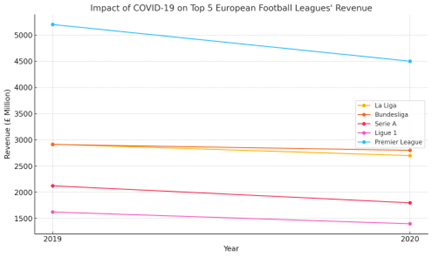
During the 2019/20 season, the financial impact of COVID-19 hit Europe’s top football leagues hard. According to Deloitte, Premier League revenues dropped by 13%, from £5.2 billion to £4.5 billion, leading to significant projected losses. Germany’s Bundesliga saw a more modest 4% decline, falling to £2.8 billion. In Spain, La Liga revenues decreased by 8% to £2.7 billion. France, which cancelled its season entirely, recorded a 16% drop to £1.4 billion. Meanwhile, Italy’s Serie A experienced the sharpest fall, with an 18% reduction in revenue to £1.8 billion.

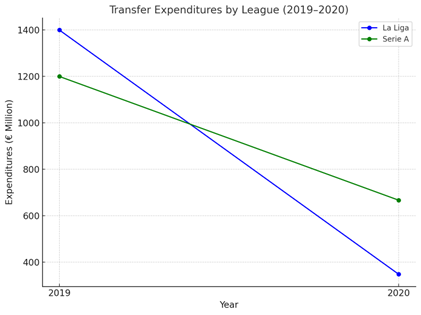
This crisis also impacted the 2020 summer transfer window where clubs in Serie A and La Liga dramatically reduced their expenses on the market. As per CIES Football Observatory, La Liga’s expenditures went from €1.4 billion (£1.19 billion) in 2019 to €348 million (£296 million) in 2020, whereas Serie A’s expenditures declined from €1.2 billion (£1.02 billion) in 2019 to €667 million (£567 million) in 2020.

These financial challenges questioned the business models of football clubs. It forced many of them to seek new sources of capital, and private equity funds increasingly saw football as a lucrative, albeit risky, opportunity. Historically, football clubs were often financially self-sustaining, relying on revenue from matchdays, local sponsorship deals, and fan ownership models. However, the rise of elite clubs with billionaire owners and global sponsorship deals has placed increasing pressure on traditional clubs. The ability to compete at the top level now requires significant capital injection, something community-based models can no longer support at the highest levels of competition.

Emergence of Investment Funds as new power players

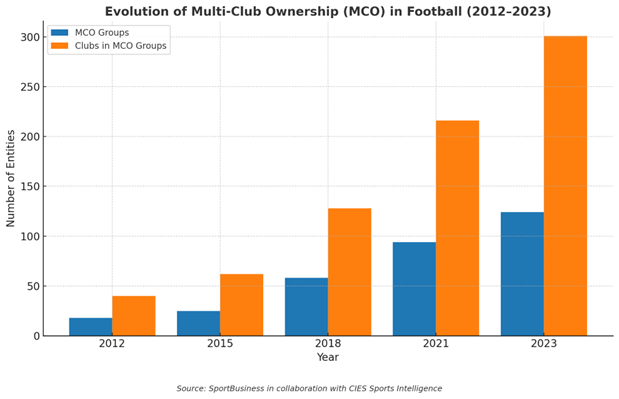
Private equity firms have become key players in the global football market. For instance, RedBird Capital Partners, CVC Capital Partners, Silver Lake, and 777 Partners have all made significant investments in football clubs across Europe. These new players of the game are defined as Multi-club Ownership (MCO). UEFA distinguishes between multi-club ownership, where a single entity exercises control or decisive influence over multiple clubs, and multi-club investment, which involves financial stakes without direct operational control. In recent years, the expansion of multi-club networks has accelerated dramatically.

Multi-club ownership is not a recent innovation. As early as the 1990s, ENIC (English National Investment Company) began acquiring stakes in clubs like Tottenham Hotspur, Rangers FC, Slavia Prague, and AEK Athens, viewing football primarily as an investment vehicle. Then the model evolved further with Red Bull’s acquisition of multiple clubs as a marketing strategy, and later with the emergence of City Football Group (CFG), widely seen as the first structured and strategic example of modern MCO. CFG’s global portfolio now spans 13 clubs across five continents.

What began as a niche investment strategy has evolved into a global phenomenon, with over 125 active MCO groups now overseeing approximately 380 clubs and more than 13,000 players worldwide. The growing trend of multi-club ownership is one of the key strategies private equity firms are using to maximize returns. This highlights the growing presence of funds in football and their consideration of this industry as a strong financial asset.

What This Means for the Future of the Game

Shift from Community-Driven to Capital-Driven Football

The influx of private equity into football is shifting the sport from its traditional roots of community-based clubs to a more capital-driven model. Investment funds are less concerned with preserving local identity and more focused on financial returns. This has led to the professionalization of club operations, but it also raises concerns about the loss of the community spirit that football once embodied.

MCO models often reduce historic clubs to assets within a broader commercial portfolio, clashing with traditional values of community, identity, and local heritage. Football clubs were founded to serve local communities, not as vehicles for franchising or profit maximization. Moreover, the financial return on MCO investments remains questionable. Developing effective player pathways across clubs is rare, and maintaining competitiveness demands substantial ongoing investment. For many, the model’s long-term sustainability remains uncertain.

Optimized Management and Operations

European professional sport finds itself at a structural crossroads. Football clubs are cultural cornerstones, deeply rooted in their communities, yet many remain persistently unprofitable. In most industries, unviable companies are allowed to fail; in football, emotional attachment makes failure almost unthinkable. This sentimental value, however, hides a troubling economic reality.

In 2022, more than 55% of European clubs recorded net losses, even amidst a post-pandemic rebound. The multi-club ownership (MCO) model introduces a rational business structure, by applying the classic private equity strategy. This framework consists of:

With private equity in control, clubs have become more professionally managed, with a greater emphasis on optimizing revenue streams and controlling costs. This includes cutting unnecessary expenses, maximizing commercial partnerships, and focusing on financial return. The implementation of data-driven decision-making has also become more prevalent, as investors push for better tracking of financial performance, KPI’s and revenue maximization. More than a growth engine, this approach is increasingly seen as a lifeline for long-term sustainability.

Potential Risks

The key risk in this transition is the potential for football clubs to lose their core identity. It might prioritize shareholders over supporters. The community-driven aspect of football, where supporters’ passions and traditions partially influence club’s decision-making, may be replaced by a financial model where profit maximization is the main objective. This could result in a short-termist mentality, where clubs prioritize quick returns rather than long-term success, potentially harming the sporting side of football.

Despite its financial appeal, the multi-club ownership model presents significant structural and cultural challenges. Clubs under shared ownership may struggle to preserve their individual identity, risking a dilution of heritage and fan loyalty. The challenge lies in balancing the competitive ambitions, history, and identity of each club within the group. It is imperative that each club within the group remains ambitious, both to support player development at the highest level and to ensure fans continue to see the best version of their team.

Conclusion

Looking ahead, the rise of multi-club ownership is set to accelerate, as more investors aim to diversify their assets and exploit operational synergies across affiliated clubs. However, this growing concentration of ownership is already drawing scrutiny from governing bodies like UEFA, particularly around issues of competitive integrity and potential conflicts of interest. However, if this model is successful, it might not remain exclusive to football, it could pave the way for broader adoption across other professional sports as part of a global multi-sport ownership trend.

Is the increasing influence of private equity in football inevitable, or are we witnessing the beginning of a dangerous revolution that could undermine the sport’s heritage? This question remains central as football continues to evolve under the pressure of financial imperatives. In the next article, as part of this series about private equity in football, we will take a closer look at the emergence of MCO’s and examine how they view football as a vehicle for long-term value creation, brand expansion, and strategic portfolio diversification.

Who is Katharina Kiel?

Katharina Kiel

Katharina Kiel, born on May 2, 1992, in Northeim, Germany, is a distinguished football executive and former professional player. Standing at 1.75 meters, she played as a midfielder in the Frauen-Bundesliga before transitioning into football management.

Playing Career

Kiel’s football journey began in the youth ranks of 1. FFC Frankfurt, where she progressed to the second team, making 32 appearances and scoring seven goals between 2008 and 2013.

In 2013, she briefly played for SC 07 Bad Neuenahr and its second team. Later that year, she  joined TSG 1899 Hoffenheim, where she played until 2016, including 25 appearances for the  first team in the Bundesliga. Her playing career was marked by resilience, overcoming a  cruciate ligament injury that sidelined her for a significant period.

Transition to Management and Entrepreneurship 

After retiring from professional play, Kiel pursued a career in sports management and  innovation. In 2019, she founded talentZONE GmbH, a sports tech startup specializing in  analyzing and evaluating running movements to enhance athletic performance. Her  entrepreneurial venture reflects her commitment to integrating technology and sports  science to advance athlete development.

Educational Background 

Kiel holds a First State Examination in Teaching for Gymnasia, specializing in Sports and  Spanish, from Johann Wolfgang Goethe University Frankfurt (2015–2019). She furthered her  expertise by completing the Executive Program “Management in Professional Football”  offered by the Deutsche Fußball Liga (DFL) between 2021 and 2023, which included  practical work shadowing experiences.

Role at Eintracht Frankfurt 

In November 2022, Kiel was appointed as the Technical Director of Eintracht Frankfurt  Women. Her responsibilities encompass overseeing first and  second team operations, strategic planning, infrastructure projects, and youth  development programs. Under her leadership, the club has emphasized long-term growth  and sustainability, aligning infrastructure and strategic vision with the evolving demands of  modern football. In recognition of her impactful work, she extended her contract with  Eintracht Frankfurt until June 30, 2028.

Involvement in Football Governance 

Beyond her club duties, Kiel actively contributes to football governance at national and  European levels. She serves as an elected member of the European Club Association (ECA)  Women’s Football Working Group, collaborating with representatives from top clubs to  shape the future of women’s football in Europe.

Advocacy and Vision 

Kiel is a vocal advocate for gender equality in football management. Her vision includes fostering inclusive leadership and leveraging innovation to drive the growth of women’s football.

Conclusion

Katharina Kiel’s multifaceted career from professional athlete to entrepreneur and executive, demonstrates her dedication to advancing football through innovation, strategic leadership, and advocacy for inclusivity. Her contributions continue to shape the landscape of women’s football, both in Germany and across Europe.

Our Exclusive Interview with Katharina Kiel

What was your first memory of football and how did it shape your passion for the game?

My first memory of football is the image of it happening outside a front door: goals made from school satchels, a soccer ball from the petrol station, and a handful of boys from the neighborhood playing with a lot of fun and passion. I joined in and was accepted without any resentment because there seemed to be only one rule that mattered: performance. The boys rang my doorbell every day to pick me up for football, so I must have performed pretty well. This environment not only ignited my passion but also shaped who I am today. This sport is more than a passion to me. It is a calling.

When did you first realize that you wanted to work in football professionally, not just as a fan or player, but as a leader?

On May 19, 2012, during the Champions League final between FC Bayern Munich and Chelsea FC. Chelsea won on penalties with Didier Drogba. One of the club’s leaders was Marina Granovskaia. She was regarded as the Iron Lady, the mastermind behind the scenes, and one of Chelsea FC’s most important managers. That moment deeply impressed me and proved that it is absolutely possible to work as a woman in professional football and to do so very successfully. She became my role model and inspired my ambition to work in football at the highest level.

What personal qualities do you believe helped you the most on your path to becoming a technical director?

 In addition to ambition and discipline, I believe my courage played the biggest role.  I never question whether I can do something. I simply do it. I do not try to convince  people with words. I convince with actions. I do not focus on problems. I focus on  finding solutions. I also believe in the strength of a good team. I have no difficulty  delegating responsibility, as long as roles are clearly defined and aligned with the  bigger picture.

Who or what had the biggest influence on your journey, inside or outside football?

There have been several people who supported and encouraged me. One of them is my father, who gave me confidence and courage from an early age. When I was 12, I  had to move cars and equipment on his farm, without any formal qualifications like a  driving license. He told me to watch him once and then do it myself. That taught me  to take action without overthinking. I also learned a lot from Christian Seifert, who  became a strong motivator in my football career. He remains a close advisor who  always sees the big picture while never losing sight of the individual. Markus  Krösche is another key influence. He includes me in his work but always gives me  the freedom to follow my own path.

What drives you every day in your current role? What is your why?

I work in an industry that does not yet stand on its own. Women’s football still operates in many ways as a dependency of men’s football. My greatest drive is to  develop this sport into a self-sustaining, independent ecosystem. I love creating  something new. My current role allows me to do just that. It is not just a personal  mission. It is a privilege.

What does success mean to you, both professionally and personally?

For me, success means contributing to the creation of something meaningful. That might be winning titles or building a professional environment where football can  thrive. I want to create spaces and moments that leave a lasting impression. Success  means improving every place I work in and leaving it better than I found it. In my  personal life, I feel successful when I have people beside me who share the journey  and can look back with pride and joy.

How do you personally deal with pressure, setbacks, or criticism in a high-performance environment?

I go all in. It can be painful, but it is a valuable process. I never act without a solid  basis for my decisions, which helps me accept the outcomes more easily. I am direct

and tough, but I also move on quickly and try to take lessons from each experience. You have to suffer through difficult situations a few times to build that resilience. Repeating that process makes you more thoughtful and calm. In this context, time and maturity are valuable allies.

What has been your proudest moment in your football journey and why?

Helping to lead a club community at a higher level and contributing to transforming the women’s football landscape in Germany stands out the most. This journey is more meaningful than almost anything else I have done. It is a creative mission that can influence future generations. Being part of it and leading the way is an incredible honor.

Where do you see yourself in five to ten years and what legacy would you like to leave in women’s football?

I see myself in a place where creativity and design are at the forefront again. I want to leave behind a legacy of meaningful change, independence, and professionalism in women’s football. I hope to help build a structure that others can benefit from for years to come.

Finally, what is something people would be surprised to learn about you?

Before my football career, I was a successful figure skater. That experience shaped me deeply and gave me tools I could not have learned in team sports.

The Ultimate FIFA Agent Exam Checklist: 10 Steps to Boost Your Chances of Success

Checklist
Photo by Glenn Carstens-Peters on Unsplash

With less than two weeks to go until the next FIFA Football Agent Exam, we’ve prepared the ultimate preparation checklist to make sure you maximise the time you’ve got left. Whether you’re doing this for the first time or aiming to improve on a previous attempt, this list will help you get both your revision and exam-day setup absolutely right.

The Ultimate FIFA Football Agent Exam Checklist

1. Check Your Tech Setup – Now, Not Later

This exam is fully online and heavily monitored, so your tech setup must be flawless.

  • Laptop or Desktop Computer with working camera and microphone
  • Smartphone for secondary monitoring
  • Strong, stable Wi-Fi connection (any drop means instant disqualification)
  • Quiet, well-lit private space, no noise, no interruptions, no distractions

Test your full setup early. You won’t be given a second chance if your internet drops or your camera fails mid-exam.

2. Know the Exam Format Cold

You’ll face:

  • 20 multiple-choice questions
  • 60 minutes total
  • A 75% pass mark

That’s about 3 minutes per question, so there’s no time to be hunting through PDFs aimlessly. Prep accordingly.

3. Get Familiar with the Regulations (Yes, All of Them)

The exam pulls questions from FIFA’s official study documents, including:

  • FIFA Football Agent Regulations (FFAR)
  • Regulations on the Status and Transfer of Players (RSTP)
  • FIFA Code of Ethics
  • FIFA Disciplinary Code
  • FIFA Statutes
  • Clearing House Regulations
  • Procedural Rules of the Football Tribunal
  • FIFA’s Child Safeguarding toolkit and policy

Tip: Use the PDF versions during your prep, no printed copies are allowed on exam day.

4. Build a Fast Navigation System

It’s an open-book exam, but digital only. That means you’ll need to:

  • Highlight your PDFs effectively
  • Create shortcuts and summaries for key sections
  • Learn how to search the docs using keywords
  • Know your table of contents for each document

If you can’t find an answer in 3 minutes, you’re losing time.

5. Do Mock Exams Under Real Conditions

Don’t just read, practice like you’ll play.

  • Attempt the official FIFA mock exam on the Agent Platform
  • Time yourself: 60 minutes, no interruptions
  • Review what you got wrong and why
  • Work on your time management under pressure

Aim to simulate exam-day conditions as closely as possible.

6. Take a Course or Join a Study Group

You don’t have to do this alone.

  • Consider a reputable course with experts like Daniel Geey or Dr. Erkut Sogut, their programme has an 86% pass rate.
  • Join peer study groups. Talk through topics. Share notes. Test each other.

Sometimes explaining a regulation to someone else helps it stick better in your own head.

7. Master Time Management

You’ve got 3 minutes per question.

  • Don’t rush, but don’t get stuck.
  • If you’re unsure, mark it and move on.
  • Come back later with a fresh mind and extra time.

Practice keeping to time using mock questions.

8. Practice Smart Reading

Always read each question carefully.

  • Watch for keywords like “NOT,” “EXCEPT,” or “one or more”, they change the entire meaning.
  • For multi-answer questions, you must get every correct option to earn the mark. One mistake = zero points.

Slow down just enough to avoid easy losses.

9. Be Crystal Clear on What You Can (and Can’t) Bring

✔️ Permitted Items:

  • A pen and one blank sheet of paper (must be shown to camera before and after)
  • Prescription glasses
  • Digital versions of FIFA Study Materials on your exam laptop
  • The built-in calculator in the exam platform

❌ Prohibited Items:

  • Printed or handwritten study notes
  • External websites or apps
  • Smartwatches, headphones, or second laptops
  • Any physical calculator
  • Using your smartphone for anything except monitoring

Violations = instant disqualification. FIFA’s system will catch it.

10. Stay Calm and Trust Your Prep

When it’s game time:

  • Stick to your system
  • Eliminate obviously wrong answers
  • Use logic, then cross-check in the docs if needed
  • Don’t panic if a tough question shows up
  • Keep going, even one question can be the difference between pass and fail

Remember, this is just one hour that could open doors for your whole career.

Final Thought

Success in the FIFA Football Agent Exam is about discipline, preparation, and execution. You’ve got the tools. You’ve got the time. Now it’s about using them wisely in these final days.

Good luck, we’ll see you on the course next week and then on the other side.

Who is Marwin Bolz?

Marwin Bolz

Marwin Bolz is a rising German football coach, known for his modern tactical mindset and rapid ascent within women’s football. Born on February 7, 1998, in Hamburg, Bolz began his football journey as a youth player, developing through the academies of clubs such as FC Eintracht Norderstedt, FC St. Pauli, Eintracht Braunschweig, and Niendorfer TSV. As a player, he primarily featured as a centre-back and occasionally as a right-back, bringing physical presence and positional discipline to the backline.

His senior playing career included stints at regional clubs like TSV Sasel and Eimsbütteler TV, competing in Germany’s lower divisions. His coaching journey began with Hamburger SV’s women’s team, where he made an immediate impact. Under his leadership, the team achieved promotion to the 2. Frauen-Bundesliga, showcasing a playing style defined by structured buildup, high pressing, and positional discipline. He also contributed to the club’s broader success with a promotion to the 1. Bundesliga, further highlighting his role in HSV’s development and competitiveness.

Bolz quickly earned recognition for his analytical approach and ability to develop players in a professional environment, bringing a fresh and organized identity to the team. In May 2025, he took the next major step in his career, becoming the head coach of SC Braga’s women’s team in Portugal. At just 27 years old, he now leads one of Portugal’s most ambitious women’s clubs, with a clear mandate to elevate the team’s domestic performance and compete for UEFA Women’s Champions League qualification.

His appointment marks a new chapter not only for SC Braga but also for Bolz, as he brings his blend of German structure and tactical innovation to the Southern European stage. Known for his dedication to continuous improvement, multilingual ability, and capacity to lead with clarity and conviction, Marwin Bolz represents a new generation of football coaches who combine on-field experience with sharp tactical acumen and a deep understanding of the women’s game.

Our Exclusive Interview with Marwin Bolz

Who is Marwin Bolz outside of football, and how have your personal experiences shaped your path as a coach?

I have always been someone you can count on. For me, this has been one of the most important values in life. Science has also consistently played a role in my journey. After graduating from school, I began studying biology, focusing on the tiniest molecules to understand life. In this field, I concentrated on plant viruses and how they infect plants. This period taught me discipline and persistence. I often had to repeat experiments more than a hundred times, continuously optimizing the process until it produced consistent results. It required precision and a deep love for detail, qualities that now drive me as a coach to achieve the goals and results we aim for, time and time again.

What drew you to coaching women’s football, and what have you learned from working with female athletes?

When I started coaching, I was fortunate that someone from the federation where I earned my license had the idea to appoint me as an assistant for the U14 girls’ selection team in Hamburg. That was the beginning of the journey. Several players from that group went on to play professional football, and some of them later became part of my teams in Hamburg. That group left a lasting impression on me and shaped how I see women’s football.

What stood out was their quality, passion, and the way we trained and spoke about the game. I have always felt that we can achieve meaningful things in women’s football. In Hamburg, we were able to work with great detail on principles and how we wanted to play. I appreciated the ambition of the players and their desire to understand every aspect of the game. Emotion has always been the driver of energy, and that energy has consistently been present in the women’s teams I have coached.

Your teams are often praised for their tactical discipline. What do you look for when building a game model?

At first, the core of the game model reflects who I am and what matters to me as a person and as a coach. I value clarity and directness. I like to be straightforward about our goals and avoid wasting time. I prefer a style of play that uses one or two touches to overcome the opponent, while changing the rhythm at the right moment to create one-on-one situations in specific zones.

Equally important is how we work without the ball. I want the team to be well-prepared to defend with intensity, using an aggressive and active approach. Preparation is something I value deeply, and defensive organization has always been important to me, likely influenced by my experience as a defensive player.

Ultimately, I focus on the people around me. I look at the demands and strengths of the players and staff, and I ask which spaces and situations help them perform at their best. Training is about building connections. These connections evolve over time. New players and staff join the group, and the network shifts. The game model must stay fluid, adapting to the changes within the team.

How do you approach leadership in a dressing room, especially with players from different backgrounds and cultures?

Every team has its own culture, and it is the responsibility of everyone to uphold its values within the dressing room. I believe in listening to players and empowering them to contribute to our shared culture. We must embrace each individual’s perspective while pushing together in the same direction. The big picture matters most. The team comes first, but every person plays an important role.

What excites you most about this new chapter at SC Braga, and what kind of identity do you hope to build there?

When I arrived in Braga, I felt that we could achieve something meaningful here. We have the foundation for high-level performance and the structure to work in a truly professional environment. I believe we can instill a winning mentality. We want to be highly professional while also finding joy both on and off the pitch. Alongside our playing style and collective mindset, I also want to push every player on an individual level, both as athletes and as people. In the end, individual growth will lead to the team’s overall improvement.

Looking ahead, what personal goals do you still have in football, and where do you see yourself growing next?

Braga is a great club. I want to develop our own unique style of play and instill a winning mentality. With this attitude and ambition, we aim to prepare ourselves to win titles. The road ahead will be challenging, but that’s exactly what I’m looking for: challenges.

Who is Camilla Prando?

Camilla Prando

Camilla Prando is a Brazilian football executive whose career spans club internationalization, institutional relations, technical management for professional football, and global football business development. With a background as a former player and over a decade of experience across South America, Europe, and the Middle East, she has worked in senior roles for São Paulo FC, the Brazilian Football Confederation (CBF), TransferRoom, and Saudi Media Company (SMC). Her career reflects a blend of strategic thinking, cross-cultural leadership, and deep industry knowledge.

Early Life and Education

Prando’s academic path reflects a strong and early commitment to football. She studied Social Sciences in high school, with a specialization in; economics and football, already focused on the broader social and economic dynamics that would later shape her career in the football industry. After earning her Bachelor’s degree in Latin American Studies at Stockholm University, an interdisciplinary program covering the region’s politics, geography, economies, history, and culture she pursued her first football specialization in ”Technical Management for Football Clubs”, at the Universidade do Futebol. Over the years, she complemented her education with several courses in scouting, performance analysis, and marketing, while maintaining a clear emphasis on management. She completed a ”Technical Club Management” course at CONMEBOL Evolución and is currently finalizing her Sports Management Diploma with the same institution. Additionally, she completed the Master FPF program, organized by the Federação Paulista de Futebol in partnership with LaLiga Business School. These experiences have equipped her with a multidisciplinary understanding of governance, leadership, and global football ecosystems.

Professional Experience

In 2024, Camilla Prando joined the Brazilian Football Confederation (CBF) as Special Executive Advisor to the President, where she oversaw international affairs, advised on domestic football matters, and helped lead strategic modernization efforts. By the end of the year, she chose to step away from the role to pursue new opportunities more closely aligned with her values and long-term vision.

Before that, she worked at Saudi Media Company (SMC) in Riyadh, as Head of Sports, Prando led the Sports Department delivering commercial strategies and building partnerships across the sports and media landscape. She contributed to sponsorship deals for Lega Serie A in the MENA region, collaborated with the Saudi Arabian Football Federation (SAFF) and Globe Soccer Awards, and was actively involved in event operations at Alawwal Park, home of Al-Nassr FC.

In a pivotal stage of her international career, she worked as Senior Business Development Manager at TransferRoom, where she spearheaded the platform’s expansion in Brazil, Argentina, Portugal, and Saudi Arabia. She played a central role in securing the first Saudi Pro League partnership and managed relationships across the Middle East. As the company has a portfolio of over 800 clubs and 400 agencies globally, the platform provided a dynamic environment that significantly supported her daily work and further enriched her own professional network. Known for her cultural fluency and deep understanding of transfer dynamics and player profiles, she was frequently approached by clubs, agents, and colleagues seeking her insight and support in navigating complex international markets and building strategic connections.

Her earlier roles included supporting the management restructuring of UD Almería with the Belgian company Double Pass and serving as Senior Executive Manager at São Paulo FC, where she led the International Relations Department. In that role, she was instrumental in driving the club’s internationalization strategy, securing strategic partnerships, including a USD 1.7 million fan token campaign with Socios.com, in which all 800,000 tokens were sold in less than two hours and representing the club at major football summits across Europe and Latin America. She also led the negotiation and closure of the first-ever agreement between a Brazilian Série A club and a Chamber of Commerce: the Arab Brazilian Chamber of Commerce. This groundbreaking partnership aimed not only to strengthen institutional ties but also to lay the groundwork for mid- and long-term business deals and operations with the Middle East and potential investors. Additionally, Prando worked closely with São Paulo’s legal department to explore and optimize the club’s entitlements under FIFA’s solidarity mechanism, a strategic move considering her relationship with football clubs worldwide and the significant number of players the club has exported globally.

A curious full-circle moment in her career: SMC, the Saudi company Prando would later join in Riyadh, recently acquired Spanish club UD Almería—where she had previously worked (2019) during the club’s early transformation under its former Saudi owner, H.E. Turki Al Sheikh, in collaboration with Double Pass.

Football and its really round coincidences.

Institutional Engagement and Thought Leadership

Prando is widely recognized for her expertise in navigating institutional relations with FIFA, CONMEBOL, UEFA, national federations, and football clubs around the world. Her work focuses on building trust across borders and uncovering new revenue streams for clubs. Although she has made several public appearances speaking at events such as the World Football Summit in Riyadh, Jeddah, and Madrid; the Social Football Summit in Rome; the Thinking Football Summit by Liga Portugal in Porto; and TransferRoom summits and innovation forums in São Paulo and Rio de Janeiro, she prefers a more low-key role, often working behind the scenes. Despite this, her early prominence as a young woman in a predominantly male industry brought her recognition and respect for her expertise and ability to navigate complex international markets. She has also contributed her insights on global football developments and business through podcasts and interviews.

Philosophy and Values

Her work is guided by a collaborative, global approach to football, grounded in communication, cultural fluency, and strategic alignment with diverse stakeholders. She is deeply committed to advancing governance standards, professionalizing football institutions, and fostering long-term growth through data, education, and international cooperation. With a strong ethical foundation, she thrives in fast-paced environments while maintaining a mindful balance to manage her natural workaholic drive. Knowing from an early age the path she wanted to follow—and the challenges she would face as a young woman in a male-dominated industry—she has broken countless barriers throughout her career. Her journey is fueled by an unwavering conviction that with focus, persistence, and resilience, any goal can be achieved. Multilingual and holding dual citizenship, she leverages her global mobility to serve as a powerful connector across diverse football markets.

Current Focus

Now based in Brazil and embracing international opportunities, Prando continues to make a significant impact on the football world through consulting, visionary project development, and strategic partnerships. Fluent in six languages and supported by a vast global network, she is uniquely positioned to unite the realms of sport, business, and diplomacy, earning her recognition as a trusted and influential leader on the global stage.

Our Exclusive Interview with Camilla Prando

Who is Camilla Prando outside of football, and how have your personal experiences shaped your approach to leadership?

Outside of football, I am a person driven by purpose and a constant desire for growth. I enjoy learning, observing human behavior, and understanding what truly motivates people. My personal experiences have taught me that leadership is not about imposing, but about inspiring. I have been in situations where I needed to balance firmness with empathy, and this shaped my leadership style: I am strategic, yet human. I believe that attentive listening, recognizing individual talents, and having clear objectives are fundamental pillars for creating a high-performance environment both on and off the field. Additionally, I carry with me the conviction that leading is, above all, serving the collective—building bridges and cultivating trust. It is this vision that drives me daily, with courage and responsibility, in everything I choose to build.

What core values guide your work across international football institutions and projects?

The values that guide me are consistency, respect, and a systemic vision. In any project, regardless of the country or culture, I believe that trust is built through alignment between words and actions. Respect for cultural diversity, individual journeys, and different perspectives on the game is fundamental when working in international contexts. Additionally, I have a strong commitment to the sustainable development of football, which means thinking about solutions that have a technical, human, and structural impact in the long term. I believe that when we work with a clear purpose and collective responsibility, we can align performance with legacy and that is what I strive to bring to every institution or project I engage with.

How do you approach building trust and effective relationships with clubs, federations, and stakeholders across different regions?

The foundation of any lasting relationship is active listening and genuine respect for local realities. When approaching clubs, federations, and stakeholders in different contexts, I first seek to understand each culture, their challenges, and specific objectives. I believe trust is built through consistent delivery, transparency in processes, and true presence in the day-to-day of the project. I also highly value clear communication being objective but empathetic and always striving for collaborative solutions where all parties feel heard and represented. My experience in people management enables me to identify talents, align expectations, and build healthy work environments where every professional feels valued and motivated. Ultimately, my focus is on creating bridges, not just temporary partnerships, which requires leadership that is firm in values but flexible in approach.

What was the most challenging and rewarding project you’ve led so far in your career?

Leading the unprecedented partnership between São Paulo Futebol Clube and the Arab-Brazilian Chamber of Commerce was undoubtedly one of the most challenging and impactful experiences of my career. In a context where women in executive roles still face resistance, especially in football taking the lead in an international negotiation required not only technical expertise and strategic vision but also resilience in the face of structures that still need to evolve in terms of representation and inclusion.

More than an institutional agreement between two entities, this initiative represented a real step forward in the internationalization of Brazilian football. Our sector still lacks a consolidated culture of international relations both in management and in forward-looking vision and this project helped break that pattern, demonstrating that football can (and should) connect with new markets and cultures in a structured and strategic way.

The most rewarding part was seeing the reach of this initiative: just a few months later, the Government of the State of São Paulo signed an agreement with the Chamber of Commerce and Industry of Sharjah, in the United Arab Emirates, signaling that the seed planted in football bore fruit in other institutional spheres. The project began to inspire not only other clubs but also public bodies and entities interested in exploring new forms of international cooperation.

Leading this process as a woman, in a space still undergoing transformation, reaffirms for me that it is possible to occupy these positions with authority, competence, and a global vision. More than that, it shows that football can be a real driver of diplomacy, development, and innovation for the country.

In your view, what are the key steps clubs must take to successfully internationalize their operations and brand?

For a club to successfully internationalize its operations and brand in a consistent and sustainable way, it is necessary to approach this process with a solid technical strategy and a long-term vision. First, the club must consolidate its institutional identity, ensuring that its values, mission, and culture are clearly defined and aligned with its global objectives. This foundation is essential to communicate authentically and create genuine connections in other markets.

Next, the organizational structure needs to be prepared to operate internationally, with professionals specialized in governance, international relations, communication, and sports business. Building strategic partnerships should go beyond immediate commercial interests, seeking cultural alignment and shared goals, which strengthens trust and ensures sustainability.

Furthermore, it is crucial that the club develops cultural intelligence to understand the particularities of external markets, adapting its approach without losing its essence. Internationalization is, above all, about building bridges that promote genuine exchange, respect, and mutual learning.

Finally, this process must be continuously evaluated and adjusted, with clear metrics to measure sporting, institutional, and brand impact. Only then will the club be able to expand its global presence in a structured way, inspiring other institutions and contributing to the evolution of football as a global business and culture.

You’ve worked in Brazil, Europe, and the Middle East. How do cultural differences influence football governance and business development?

Cultural differences are a central element that profoundly shapes governance and business development in football across each region. In Brazil, for example, the passion for football is intense and part of the national identity, but we still face challenges related to the professionalization of management, formalization of institutional processes, and a culture of immediacy that often hinders the implementation of long-term strategies.

In Europe, there is a more consolidated structure, with clear rules, transparency, and strong governance, creating a more predictable and regulated business environment.

In the Middle East, football is seen both as a tool for social development and a strategy for international projection, with robust investments and a focus on innovation, but with cultural and political dynamics that require sensitivity and adaptation.

Working in these distinct contexts has taught me that effective governance depends on balancing respect for local particularities with the application of universal principles of transparency, ethics, and sustainability. In business development, understanding culture is fundamental to building trustful relationships, aligning expectations, and creating lasting partnerships. This cultural intelligence is, therefore, a strategic asset essential for those working in international football.

What advice would you give to young professionals looking to build a career in international football management?

For those looking to build a career in international football management, my advice is to invest in a solid combination of technical knowledge, strategic vision, and, above all, cultural intelligence. The global football market is complex and dynamic, and professionals who understand cultural differences, regulatory aspects, and the particularities of each market have a significant competitive advantage.

Additionally, it is essential to cultivate resilience and adaptability. The career can be challenging, with many obstacles and moments of uncertainty, but perseverance and a constant pursuit of learning are what set apart the professionals who truly make a difference.

Never underestimate the power of human relationships; building a global network of contacts based on trust, ethics, and transparency is as essential as mastering the technical aspects of the sport and business.

Finally, stay curious and open to opportunities. Seek international experiences, learn other languages, and always be ready to step out of your comfort zone. International football management requires passion, preparation, and a keen eye on the transformations within the sport and the world.

What’s next for you, and how do you envision contributing to the evolution of global football in the coming years?

In the coming years, I intend to deepen my work in the technical management of professional and youth football, using the solid experience I have built in Europe as a foundation to implement international standards of excellence in Brazilian football. The professionalization of the sport in Brazil depends on incorporating these established practices that ensure efficiency, governance, and consistent results.

Moreover, my experience in the Arab world has allowed me to understand the specific needs of this region, which is at a crucial moment of development and seeking modernization in football management. I want to contribute to implementing technical and strategic knowledge, helping to build solid structures that drive the sustainable growth of the local sport.

My mission is to be a strategic bridge between Europe, Brazil, and the Middle East, promoting the exchange of knowledge and best practices, and driving the advancement and sustainable development of football worldwide.

How to a deal in Zimbabwe

Two football players challenge for the ball during a match on an artificial pitch, highlighting youth competition and intensity.
Photo by Jannik on Unsplash

Transferring a soccer player in Zimbabwe involves navigating a structured process governed by the Zimbabwe Football Association (ZIFA) and aligned with FIFA regulations.

Background

Biggest Clubs:

  • Dynamos: 22 Titles
  • Caps United: 5 Titles
  • Highlanders: 7 Titles

The dominance of Dynamos has been significant in history, especially during the late 80s, 90s, and early 2000s.

Football News in Zimbabwe

The Premier Soccer League (PSL) is the top tier of football in Zimbabwe, consisting of 18 clubs. Traditional clubs like Dynamos, Highlanders, and CAPS United still have large followings, but newer clubs such as FC Platinum and Chicken Inn have been performing well in recent times.

Lower league competitions under the PSL (Division One, Two, and Three) are organized by regions, but face challenges such as lack of funding and insufficient professionalism.

National Team (Warriors)

The national team, the Warriors, has talent but has faced challenges in international competitions. Zimbabwe qualified for the AFCON tournaments in 2017 and 2019, but political issues and leadership challenges have affected progress.

Zimbabwean Players Abroad

Zimbabwe has produced notable players such as:
• Khama Billiat (formerly with Kaizer Chiefs, South Africa, now with Scotland FC Zimbabwe)
• Marvelous Nakamba (Luton Town, England)
• Knowledge Musona (formerly with Anderlecht and Al-Tai)
• Marshall Munetsi (Wolverhampton Wanderers, English Premier League)

Legends

Peter Ndlovu

In 1991, Peter Ndlovu became the first African player to play in the English Premier League! He played over 150 games for Coventry and scored many memorable goals.

Benjani Mwaruwari

Benjani started his professional career at Jomo Cosmos in South Africa, where he showed his goal-scoring abilities. In 2001, he moved to Europe to play for Grasshopper Club Zürich in Switzerland.

That same year, he signed with AJ Auxerre in France, where he gained considerable recognition. In 2006, he transferred to Portsmouth in the English Premier League for £4.1 million, managed by Harry Redknapp. During his time at Portsmouth, Benjani became a fan favorite, known for his hard work and goal-scoring ability.

In January 2008, he moved to Manchester City for £3.87 million, which could rise to £7.6 million with performance incentives. He made an immediate impact, scoring the winning goal in a Manchester derby against Manchester United shortly after his move.

Transfer Process – Key Points

1. Check Player Status and Obtain Clearance

Before starting a transfer, do the following:

  • Contract Status: Check if the player is still under contract or is a free agent.
  • Clearance Letter: If the player is transferring from another club, obtain a letter confirming they no longer have a contract with that club. This avoids registration issues.

2. Use an Intermediary Registered with ZIFA

  • The transfer must be conducted with the help of an agent registered with ZIFA.
  • According to FIFA and ZIFA regulations, the agent’s fee should not exceed 10% of the player’s signing-on fee.
  • Be cautious of agents who may attempt to mislead you or demand excessive, illegal fees.

3. Use the Zimbabwe Connect System

  • For international transfers, ZIFA recommends using the Zimbabwe Connect system:
  • International Transfer Certificate (ITC): Ensure you request an ITC from the relevant association.
  • Registration: Register the player on Zimbabwe Connect for smooth processing.

4. Follow Transfer Fee and Compensation Regulations

  • ZIFA has set compensation fees based on the player’s age and the purchasing club’s league:
  • 18–23 years: $2,300 if the club is in the Premier League.
  • 23–28 years: Fee increases to $3,200 as it is the “prime age.”
  • 28+ years: The fee decreases.

This ensures that smaller clubs don’t exploit players without proper compensation.

5. Resolve Contract Disputes Properly

If there is a disagreement between the player and the club:

  • ZIFA recommends negotiating and resolving the issue before going to court.
  • Registration during Dispute: ZIFA can register the player with another club while the issue is being resolved.

6. Comply with FIFA and Zimbabwe Laws

  • Third-Party Influence: FIFA prohibits third-party ownership of clubs.
  • National Law: ZIFA must follow both Zimbabwe’s laws and FIFA’s regulations.
Final Tips
  • Documentation: Keep all records of contracts and communications.
  • Thorough Research: Ensure the agent you are using is properly licensed.
  • Stay Informed: Keep an eye on ZIFA announcements to stay updated on new regulations.

By following these guidelines, you can legally and properly conduct soccer transfers in Zimbabwe.

In Conclusion

The future of football in Zimbabwe depends on several key factors. First, significant investment is needed in youth development and the promotion of football schools and youth programs across the country.

Clubs must improve their organizational practices, including good leadership, sound financial management, and player welfare. Developing infrastructure, such as stadiums and training facilities, will be crucial for nurturing talent and hosting top-level competitions.

At the same time, football leaders must prioritize integrity, good governance, and attracting financial sponsors to ensure the sport remains sustainable.

Rebuilding trust with fans and strengthening community engagement will also help grow support for football. If these factors are addressed, Zimbabwe has a strong chance of becoming a football powerhouse in Africa in the coming years.

2002 World Cup: When Asia Dared to Dream

It wasn’t just a football tournament. It was a cultural awakening. A shared heartbeat. And a moment when two nations opened their arms—and the world listened.

When South Korea and Japan co-hosted the FIFA World Cup in 2002, it marked the first time the tournament was held in Asia. But more importantly, it was the first time the world truly saw what football meant to the East.

 Two Nations, One Stage

The decision to split hosting duties between South Korea and Japan was met with skepticism. Political tensions ran deep. Logistics were complicated. But when the tournament kicked off, those doubts melted into scenes of joy, unity, and pure footballing magic.

From the high-tech stadiums of Yokohama and Sapporo to the electric streets of Seoul and Daejeon, football didn’t just arrive in Asia—it exploded.

“We wanted to show the world our passion. Not just for football, but for coming together. And we did.”
Koji Nakata, Japan defender

The hospitality was unmatched. The choreography in the stands, the smiling volunteers, the pride in every banner and anthem—it was a tournament that felt personal.

The Miracle of Seoul

No story captured hearts quite like South Korea’s.

Grouped with Portugal, Poland, and the United States, few gave them a real chance. But under the guidance of Guus Hiddink—a coach who demanded belief—they didn’t just aim to participate. They aimed to shock.

  • 1–0 vs. Poland – A dream start.
  • 1–1 vs. USA – The belief grows.
  • 1–0 vs. Portugal – A seismic moment: Korea top the group.

Then came the knockouts.

Against Italy in the Round of 16, Ahn Jung-hwan’s golden goal etched itself into history. Against Spain, the penalty shootout turned millions of Koreans into lifelong believers.

“It wasn’t just about football. We felt like we were carrying the entire country on our backs.”
Park Ji-sung, South Korea midfielder

In the semi-final against Germany, the dream finally ended. But the legacy had already been written: South Korea became the first Asian team to reach the World Cup’s final four.

“The streets of Seoul weren’t just red. They were alive.”
BBC Commentator, June 2002

Japan’s First Steps into the Light

For Japan, the 2002 tournament was also historic. After years of building the domestic game through the J.League, this was their chance to prove they belonged.

And they did.

A confident 2–0 win against Tunisia and a thrilling 1–0 against Russia saw Japan top their group—another first. Junichi Inamoto emerged as a star, and Nakata showed his class on home soil.

Although they bowed out in the Round of 16 against Turkey, the feeling was clear: Japan was no longer a footballing outsider.

“You could feel it in the air—we were building something. The next generation watched us and believed.”
Hidetoshi Nakata, Japan midfielder

A Shift in Global Perception

Before 2002, Asian football was often overlooked. The technical ability was there, but the results weren’t. That changed forever in those four summer weeks.

European clubs began to scout Asia with new eyes. Players like Park Ji-sung, Shunsuke Nakamura, and later Keisuke Honda and Shinji Kagawa would make their mark in top European leagues—following the path opened by this tournament.

“After 2002, the phone didn’t stop ringing. Clubs wanted to know about Korea. About Japan. About our players.”
Asian football agent, speaking anonymously

Asia was no longer just a host. It was a footballing force.

 Legacy in Words and Memories
  • The stadiums: Still iconic, still used.
  • The moments: Still replayed, still unforgettable.
  • The impact: Still felt, especially among a generation of Asian kids who watched in awe and dared to dream.

“It was more than just football. It united our people. Everyone in Korea believed we could do something impossible.”
— Park Ji-sung, FIFA.com Interview

Final Whistle, Eternal Impact

The 2002 World Cup wasn’t perfect. There were controversial refereeing calls. There were giants who fell early. But above all, there was heart. There was energy. There was hope.

In Seoul and in Saitama, in Gwangju and in Yokohama, something unforgettable happened.

Asia didn’t just host the world. It reminded the world why football matters.

And it all started with a ball, a dream and the roar of two nations united.