Home Blog Page 27

Who is Mehmet Bulduk?

Mehmet Bulduk was born on October 20, 1969, in Istanbul. His football journey began at Sarıyer SK, where he was part of the first-team squad during the 1988–89 and 1989–90 Turkish Süper Lig seasons. This period saw Sarıyer field one of its strongest lineups, and Bulduk trained and played alongside several national team players, gaining invaluable experience and insight into top-level football.

Following Sarıyer, he transferred to İstanbul Büyükşehir Belediyespor (now Başakşehir FK), and continued his professional career with Bandırmaspor, Adıyamanspor, Amasyaspor, Kasımpaşaspor, Lüleburgazspor, Yıldırım Bosnaspor, and Nişantaşıspor. After a well-rounded playing career, he retired with deep insight into the Turkish football system across various tiers.

A Decade of Impact in Beşiktaş Youth Development

In 2003, Bulduk began his coaching career at Beşiktaş Football Academy under the mentorship of Serpil Hamdi Tüzün, one of Turkish football’s most influential youth developers. He coached every age group from U10 to U21, and achieved significant success as a head coach:

  • 2006–07 U16 Turkish Champions
  • 2008–09 U14 Turkish Champions
  • 2009–10 U15 Turkish Runners-up

More importantly, he played a key role in the development of many youth players who would go on to professional careers:

  • Necip Uysal (1991): Worked with him in U13, U16, and U19 squads
  • Atınç Nukan (1993): Joined Bulduk’s U13 team, later transferred to RB Leipzig for €5 million
  • Bülent Uzun (1990): Continued at Sakaryaspor
  • Tayfun Akdoğan (1996): Progressed to Adana Demirspor
  • İlyas Kubilay Yavuz (1994): Went on to Batman Petrolspor
  • Muhammed Demirci (1995): Played for Balıkesirspor
Relentless in Growth: Coaching Education and Methodology

Bulduk has invested in his continuous development by completing numerous coaching courses and seminars:

  • TFF A License Course (2003)
  • TFF Coaching Seminar (July 2004)
  • TFF Academy League Coaching Program (August to October 2008)
  • UEFA A License Course (May 2010, Antalya)
  • TFF International Coaching Seminars (January 2015 and May 2018)
  • UEFA Pro License Course (2024–2025)
  • UEFA Pro Student Exchange Program (March 2025, Geneva)

He prioritizes technical, mental, and social development in his players and has consistently applied modern methodologies shaped through education and experience.

Strategic Scouting and Club Building at Beşiktaş

In 2012, Bulduk joined the foundation team of Beşiktaş’s professional scouting department. During the club’s “FEDA” era, he contributed significantly to shaping a young, dynamic squad. His scouting efforts helped bring in and integrate key players such as Oğuzhan Özyakup, Atiba Hutchinson, Olcay Şahan, and Veli Kavlak.

He was part of the planning team behind Beşiktaş’s Süper Lig titles in 2015–16 and 2016–17. During this period, he worked closely with Samet Aybaba, Slaven Bilić, Şenol Güneş, and Sergen Yalçın. In the 2020–21 season, he collaborated with assistant coach Gürsoy Yalçın on the team’s tactical restructuring.

Global Talent Spotter: Identifying Future Stars

Throughout his scouting career, Bulduk traveled extensively, particularly in Europe and South America, identifying promising talents who would later achieve international success:

  • Anderson Talisca (Bahia, 2013)
  • Manuel Lanzini (River Plate, 2013)
  • Rodrigo De Paul (Racing Club, 2013)
  • Gustavo Gómez (Lanús, 2016)
  • Miguel Almirón (Lanús, 2016)
  • Darwin Núñez (Almería, 2019)
  • Andrew Robertson (Dundee United, 2013)
  • Rasmus Højlund (Copenhagen, 2021)

These players, scouted early by Bulduk, went on to elevate their clubs both competitively and financially.

Footballing Philosophy and Long-Term Vision

Bulduk defines himself as both a developmental and competitive coach. His philosophy focuses on building committed, energetic, and tactically sharp teams. He values:

  • Relentless teams that play with belief and determination
  • A style that entertains both players and spectators
  • Teams that never accept defeat until the final whistle
  • Units that cover for each other on the pitch
  • A consistent playing identity regardless of home or away matches

For Bulduk, football’s unpredictability is its most fascinating aspect. To reduce that uncertainty, he emphasizes modern preparation tools, opponent analysis, and mental readiness.

Looking Ahead: A Global Mission

With four decades of experience as a player, coach, developer, and scout, Bulduk is now focused on applying his knowledge globally. He is open to working in Turkey or abroad, including Europe, the Americas, Asia, or Africa, wherever football is taken seriously and developed professionally.

His ultimate ambition is to lead a team built on his philosophy and win a major international tournament. Whether it is the UEFA Champions League, Europa League, Copa Libertadores, AFC Champions League, or Copa Sudamericana, he aims to represent Turkish coaching at the highest level and inspire football communities around the world.

Our Exclusive Interview with Mehmet Bulduk

Who is Mehmet Bulduk outside of football?

I believe life is incredibly similar to football and throughout our lives we encounter all kinds of situations such as joy, sadness, surprises, disappointments, and moments of great happiness. I always try to live with faith, persistence, determination, and enthusiasm together with my family while staying true to universal principles.

For me, earning the trust of the people around me is the most important value. Learning, renewing oneself, being open to growth and knowledge, sharing, showing empathy, and treating people with dignity are all deeply meaningful to me.

I love reading, especially personal development books. I enjoy discovering new places, meeting new people, and researching different cultures. Above all, gaining the trust of those around me, offering them the right guidance, and earning their confidence are things I truly care about.

What lessons from your playing career have shaped your approach to coaching and player development?

My football career took place across various regions of my country, including Eastern Anatolia, the Black Sea, Marmara, the Aegean, and Thrace. This gave me the opportunity to get to know and understand the people of my country very well.

Through the game, I experienced winning, losing, becoming a champion, being relegated, receiving red cards, dealing with injuries, being left out of the squad, and serving as team captain. Living through all these emotions has greatly contributed to my ability to find solutions as a coach when I encounter similar situations. It has helped me understand when, where, and how to act.

These experiences have allowed me to develop open communication, build empathy, and create methods to deal with the challenges that arise in such situations.

How did you support the early careers of players like Necip Uysal and Atınç Nukan, and what do you remember most about their development?

I worked with Necip in the U13 and U16 teams, as well as in the PAF League that was active at the time. In our youth team, Necip played in every position except goalkeeper. He always fulfilled the tactical roles assigned to him, never avoided responsibility, was confident, and had big dreams. These qualities made all of us in the academy coaching staff stand behind him and support his journey. What stands out in my memory about Necip is that he was intelligent, hardworking, patient, goal-oriented, and constantly striving to improve himself.

With Atınç, I had the opportunity to work in the U13 team. When he joined, his game understanding, physical condition, confidence, and competitive spirit were not yet developed since he came from an amateur-level team. However, he had a strong desire to work hard, was open to learning, and quickly absorbed and applied what he was taught. He loved improving himself and went through very difficult periods but never gave up and eventually earned his place.

We especially focused on individual training with Atınç regarding his defensive stance and tactical positioning. His belief, willingness to work, and character opened the doors of the Beşiktaş professional team for him. What I remember most about Atınç is his strong character, belief in himself, work ethic, and respect for his coaches.

You scouted talents like Talisca, De Paul, and Darwin Núñez before they became international stars. What stood out to you about them at such an early stage?

When I watched these players live, what impressed me most and helped me notice them were their exceptional football intelligence, ability to interpret their positions accurately, composure under pressure, and willingness to take responsibility.

When scouting players for a club like Beşiktaş, the first qualities I look for are a high level of football intelligence, advanced game awareness, and the ability to interpret their role with ease. Most importantly, they must be able to make and execute the right decisions comfortably under pressure.

What did you learn from working with figures like Serpil Hamdi Tüzün, Şenol Güneş, and Sergen Yalçın?

Coach Serpil is one of the most valuable technical figures in Turkey in terms of tactical, personal, and mental development methods for youth and academy players. His thoughts on the game, the way he educated young players, his communication with them, and the methods he used in their development were all deeply impressive. He always believed that football could be played better.

Şenol Güneş stood out with his experience, work ethic, and his effective methods of managing top-level players.

Sergen Yalçın impressed with his incredible football intelligence, quick decision-making, confidence in himself and his team, and his firm stance on staying true to his principles.

All three coaches played a significant role during the time I worked with them. Their philosophies helped me define my own path, confront my own truths, and shape my understanding of football. I will always aim to stay true to myself and move forward with the playing style and football principles I believe in.

What is your long-term vision as a football coach and leader?

I want to be a coach who both competes and develops players, who communicates openly, empathizes with his team, instills his football philosophy, stands firmly behind it, and builds teams that play enjoyable football without the fear of losing.

I want to bring these ideas to life in an environment that believes in me, trusts me, and values respect and fairness. My goal is to become a sought-after coach, not just in my country but also in Europe, Asia, and America, to achieve successes that have never been reached and to win trophies that have never been won.
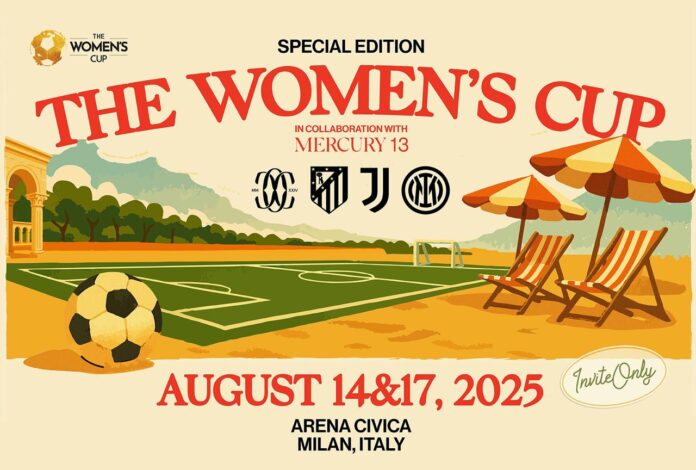
Elite Football, Elevated: The Women’s Cup Lands in Milan With Mercury 13 Special Edition

Juventus, Inter, Atlético de Madrid, and Como Women compete in a redefined women’s tournament.

A private-format tournament featuring Europe’s finest,  streamed globally from the iconic Arena Civica and available for free in the US exclusively on VIZIO WatchFree+.

London, UK – This August 2025, Milan becomes the epicenter of innovation in women’s club football as The Women’s Cup introduces a redefined competition experience, one designed to reshape how women’s sports are experienced, shared, and celebrated.

Bringing together three powerhouses of European football — Juventus, Inter Milan, and Atlético de Madrid, & newcomer F.C. Como Women — this exclusive edition marks the tournament’s highly anticipated debut on Italian soil. It’s more than a tournament; it’s a concept crafted to elevate the global game while spotlighting Italy’s vibrant football heritage and Mercury 13’s flair for the unexpected.

A Game-Changer in Format and Vision

In collaboration with Mercury 13, this special edition of The Women’s Cup will introduce an innovative format designed for the future-facing fan.  A global audience will tune in to a broadcast that goes beyond the match itself, delivering storytelling, access, and spectacle like never before.

Held at the historic Arena Civica, nestled in the heart of Milan’s Parco Sempione, this unique showcase brings together champions past and present. Atlético de Madrid, TWC 2023 titleholders, return to challenge Italy’s best, including Juventus, reigning champions of both Lega Serie A and The Women’s Cup 2024. Inter Milan, Serie A runners-up, and F.C. Como Women, the first club in Mercury 13’s portfolio, round out the lineup in a contest where legacy meets ambition.

Pushing Boundaries, Building Bridges

“Bringing The Women’s Cup to Italy in this new format is more than an expansion — it’s a reinvention,” said John Paul Reynal, President and CEO of The Women’s Cup. “This edition reflects a bold step forward, not only in how we present the game, but in how we partner with clubs and audiences to shape its future.”

Victoire Cogevina Reynal, Co-Founder and Co-CEO of Mercury 13, emphasized the long-term vision: “This event is a reflection of our commitment to designing premium experiences around women’s football, especially for a global and diverse female fanbase. It’s also a huge milestone for F.C. Como Women as we look ahead to what’s next for our growing network of clubs.”

TWC Special Edition in Collaboration with Mercury 13 – Milan, Italy 2025
All matches at Arena Civica, Milan (local time / ET)

August 14

  • Semifinal 1: Juventus vs F.C. Como Women– 6 PM local / 12 PM ET
  • Semifinal 2: Inter Milan vs Atlético de Madrid – 9 PM local / 3 PM ET

August 17

  • Third Place Match – 5 PM local / 11 AM ET
  • Final – 8 PM local / 2 PM ET

Viewers in the United States can watch the Women’s Cup LIVE and for free exclusively on VIZIO WatchFree+

The Women’s Cup is thrilled that VIZIO WatchFree+ will be the free, exclusive streaming partner in the United States to watch the Women’s Cup Tournament in Milan, Italy, August 14 – 17.  As recently announced, VIZIO will also be the exclusive destination for the Women’s Cup Brazil Tournament in July.  Last year’s TWC marked the first-ever live sporting event hosted exclusively on the WatchFree+ platform and this year the partnership returns with two exciting International Tournaments that make up the Global Series Summer 2025 games.

Eight games will be available exclusively on VIZIO WatchFree+ on a dedicated pop-up channel (ch. #1301), available from July16th to 26th aligned with the Brazil tournament and then again from August 13th to 19th when the Women’s Cup takes place to Italy.  The channel will also feature archival games from previous tournaments, game highlights, interviews, and more – enhancing the viewing experience for fans.

To watch The Women’s Cup on VIZIO WatchFree+, select channel #1301 from the electronic programming guide (EPG), or access directly from the VIZIO Home Screen. In addition, The Women’s Cup Channel will be available on the VIZIO mobile app, available to anyone.  Both VIZIO TV owners and those that do not have a VIZIO TV can download the free VIZIO mobile app to their mobile device, click on the WatchFree+ button in the bottom row menu, and tune-in to the The Women’s Cup Channel #1301.

For more information about WatchFree+, visit www.vizio.com/en/watchfreeplus.

CLUB STATEMENTS:

Inter Milan Head Coach, Gianpiero Piovani

“This is a prestigious tournament involving three big clubs that, as well as ourselves, performed well in their respective leagues last season. We really want to do well, and we’ll try to show our quality. We want to continue our development. We’ll go into the tournament with a lot of enthusiasm; we can’t wait to test ourselves against these sides. It’ll definitely be a good experience for us ahead of the start of the season.”

Juventus Head Coach, Massimiliano Canzi

“We’re excited to be invited back to the Women’s Cup, after last year’s edition in Louisville. It will be a great chance for us to play some high-quality games against strong teams like Inter, Atlético Madrid, and Como Women, and get an early feel for the new season”.

F.C. Como Women Head Coach, Stefano Sottili

Matches like these allow us to concretely assess the team’s level of preparation by immediately testing ourselves against top-tier opponents. Juventus, Inter, and Atlético Madrid are elite clubs, used to playing to win — facing them in such a competitive context is a key step in our development”.

Atlético de Madrid Head Coach, Victor Martin

“I believe that this type of tournament allows us to fine-tune our preparation ahead of the start of the competitions. Facing opponents like Inter, Juventus, and Como forces us to compete at the highest level. It’s a demanding challenge, and it also gives us the valuable experience of traveling and spending a few days together as a team — something that will greatly help us build the foundation for what we hope will be a very successful new season.”

About The Women’s Cup

THE WOMEN’S CUP: EXPANDING THE GAME, ELEVATING THE SPORT

The Women’s Cup (TWC) was established in 2021 as an annual professional soccer tournament in the United States, with its first editions hosted in Louisville (2021, 2022). Since then, the tournament has evolved into the world’s premier women’s club soccer competition, expanding globally under the TWC Global Series, with events in Madrid (2023), Cali (2024), Kansas City (2024), Louisville (2024), and now arriving in São Paulo (2025).

An exclusive invitation-only tournament, TWC brings together elite clubs from all five continents, offering them a unique opportunity to compete on a global stage. More than 20 clubs have participated, with past champions including Racing Louisville FC (2021), OL Reign (2022), Atlético de Madrid (2023), NY Gotham FC (2024), Juventus (2024), and Kansas City Current (2024).

TWC has become the preeminent women’s soccer invitational tournament in the world, not only showcasing the highest level of competition but also serving as a platform for advancing key initiatives that drive the growth of women’s soccer. By creating first-class events that combine sporting excellence with international visibility, TWC supports clubs in extending their global footprint, increasing brand exposure, and strengthening their network within the game.

More than just a tournament, The Women’s Cup is about growing the beautiful game. By connecting players and teams from all continents, TWC contributes to the expansion of women’s soccer worldwide, creating new opportunities for female athletes and reinforcing the sport’s presence in every region. The arrival of TWC in Brazil underscores the organization’s commitment to fostering growth in Latin America and beyond, ensuring that women’s soccer continues to thrive on a truly global scale.

https://thewomenscup.world/

Media Contact
Alejandra S Depalma
CCO / Mercury 13
press@mercury13.com

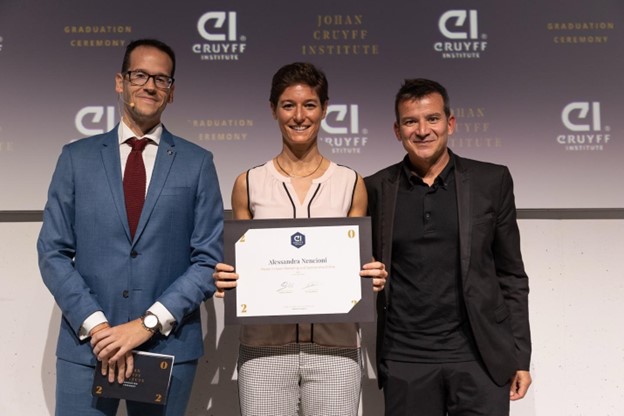
Who is Alessandra Nencioni?

Alessandra Nencioni is a former professional footballer with a strong background in marketing, communication, and sports management. Football has shaped her life from an early age, offering both personal growth and professional direction. During her playing career, she competed in Italy’s top leagues with clubs such as ACF Firenze, Fiammamonza, Inter Milan, Florentia, Napoli Calcio Femminile, and Venezia FC. Internationally, she represented Italy at the U-17 and U-19 levels and also played in the U.S. WPSL for Issaquah SC, AC Seattle, and OSA XF, where she served as captain.

Beyond the pitch, Alessandra has been proactive in building experience across various club operations. She began at OSA Seattle FC, playing a key role in the club’s foundation and growth, later serving as Team Manager, Players Coordinator, and Responsible for Marketing and Communication. She continued combining her on-field and off-field contributions at CF Florentia and later held roles with Severino Becagli s.r.l., FC Como Women, Genoa CFC, and currently serves as Club Manager at Napoli Calcio Femminile.

To complement her hands-on experience, Alessandra pursued academic training in sport business. She holds a Master in Sport Marketing and Sponsorship from the Johan Cruyff Institute in Barcelona, a Postgraduate Diploma in Sport Marketing, and completed a course in Digital Marketing in Sport. She also earned certifications in sport management and team coordination from SDA Bocconi and CONI.

Fluent in English, with working knowledge of Portuguese and German, Alessandra brings a dynamic, solution-oriented approach to her work. She is skilled in digital tools, social media, and design platforms. Her leadership, communication, and adaptability, shaped by her playing days, continue to define her career off the field.

Alessandra is passionate about creating long-term value in the world of sport, especially in advancing women’s football. Whether managing operations, leading communication strategy, or supporting club growth, she brings vision, energy, and commitment to every role.

Our Exclusive Interview with Alessandra Nencioni

Who is Alessandra Nencioni outside of football? How would you describe yourself beyond your professional and athletic identity?

Outside of football, I’m someone who’s deeply curious, empathetic, and committed to personal growth. I enjoy exploring different cultures, learning languages, and challenging myself in new environments, both personally and professionally. I’ve always believed that life is about evolving, and for me, that means continuously developing new skills, seeking meaningful relationships, and staying grounded in my values. Football has shaped so much of who I am, but beyond the sport, I’m passionate about music, cinema and books, discovering new countries and food.

How do you see the current state of women’s football in Italy, and what steps do you believe are needed to support its growth?

Women’s football in Italy has made significant strides, especially in the last five years, with increasing visibility, investment, and professionalization. However, we still face structural and cultural challenges, especially in the South. There’s a need for more sustainable development models, greater media coverage and – I do think – stronger grassroots programs to fuel long-term growth.

What I believe is most important for the growth of the movement is to break away from the men’s model, not economically nor financially, but conceptually. Women’s football is a different story, and it should not simply follow the path carved out by the men’s game. By nature, men and women are different, physically, psychologically, and consequently in how they experience things, therefore the sport. That’s why, in my opinion, it is essential we build our own journey, guided by our values, without constant comparison to the men’s side.

We also could use greater female representation in leadership roles, people with real expertise, passion, and commitment, both on and off the pitch. And crucially, we must invest in marketing and storytelling to establish women’s football as a central part of Italy’s sporting culture. The potential is there—we just need to nurture it with vision and consistency.

You’ve worked across various departments from communication to team management. Which role challenged you the most and why?

Every role I’ve taken on has been a challenge in its own way, because I’ve learned by doing. I didn’t start with all the answers, instead, I grew through hands-on experience, supported by colleagues and supervisors who believed in me and helped me develop along the way.

That said, the last two years in Naples — as team manager first and then as club manager — have probably represented my biggest phase of personal and professional growth. The environment we work in is complex and demanding, and I’ve come to realize that what you learn in theory, such as during my studies at the Johan Cruyff Institute, rarely matches the reality on the ground.

This job requires constant adaptation. It’s full of unexpected situations, and you need to be able to learn something new every day and quickly apply it in future challenges. It’s a continuous process of evolving and refining your approach.

What makes the football atmosphere in Naples unique, and how does it influence your work at Napoli Calcio Femminile?

Naples is a city that lives and breathes football, it’s more than just a game here: it is culture, identity, and emotion. That passion can be overwhelming, but it’s also incredibly powerful. Working at Napoli Femminile means being part of a community that deeply cares, and that fuels a sense of responsibility and pride in what we do.

I first learned all of this years ago, when I played here. I am from Florence, but right away I felt the weight of the responsibility that comes with wearing these colors and representing this jersey. But I did accept it with both pride and a certain sense of reverence.

Even more now that I am a manager: this atmosphere pushes me to always strive for excellence, not just in results but in how we represent the club, engage with fans and grow the women’s game in a city with such strong traditions. It’s about honoring the passion of the people while building something that reflects the future of football in Italy.

How has your international experience, both as a player and professional, shaped your approach to club management?

Living and playing abroad, especially in the U.S. broadened my perspective. I was exposed to different models of sport organization, fan engagement and club culture. Being part of multicultural teams taught me adaptability and the value of inclusive leadership.
Having gone through it myself, I gained firsthand insight into the challenges players face when transitioning to a new country, culture and environment. Experiencing it personally made me deeply aware of how important it is to properly welcome international players, helping them feel comfortable from the very beginning, so they can settle in and perform at their best.

What are your future goals in football and beyond, and where do you hope to make the most impact moving forward?

My first and main goal is to contribute meaningfully to the growth of Napoli Femminile. I truly believe my work here isn’t finished yet. Through this, I also hope to play a role in advancing women’s football more broadly, especially in Italy. I want to help build environments where players and professionals feel valued, supported, and empowered, places where they know they belong, and where they have the opportunity to grow and learn every single day.

In the long term, I hope to become a key reference point in the world of women’s football, but only after I’ve further expanded my expertise and deepened my understanding of areas I’m still exploring. I believe that real impact comes with knowledge, experience, and a continuous willingness to learn. That’s why my current focus is on growing as a professional, broadening my perspective, and building the skills needed to contribute meaningfully to the development of the game, both on and off the field.

Beyond football, I have a wide range of interests and remain open to pursuing a completely different career path, perhaps in the food industry, for example.

The Players Week – Edition #23

Welcome to the 23rd edition of The Players Week, your essential guide to the insights and strategies shaping every step of a footballer’s journey.

This week we explore:

Data Analysis: From Academy to First Team
Less than half of academies have a formal pathway to the first team. We unpack the latest data on coaching alignment, youth transitions, and support for released players.

Dealing with Criticism
From fans to coaches, criticism is part of the game. Learn how to filter feedback, stay mentally strong, and turn negativity into growth.

Building a Powerful Network as a Footballer-Business Angel: Part I
Start planning for life after football. This guide explains how to shift your mindset, find the right events, and use your network to become a smart investor.

The Always‑On Game: How Football’s Endless Calendar Is Eroding the Sport’s Soul

Football once followed a familiar annual rhythm: a season of high-stakes drama winding down in May, followed by a summer lull for rest and reflection, before pre-season buzz reawakened the sport. That cycle, essential to the game’s emotional texture, is disintegrating. In June 2025, rather than introspection, players and fans have found themselves caught in the whirlwind of a newly expanded 32‑team Club World Cup, European qualifiers, and mounting fixture backlogs. For many, the traditional off-season has effectively vanished, raising urgent questions about the soul of the game.

Calendar Compression: A Permanent On-Screen Presence

The recent football calendar defies expectations. The 2024–25 domestic seasons concluded in early June, and barely a week later, the Club World Cup erupted across U.S. cities, running from June 14 to July 13. This was not a standalone anomaly. League administrators are already prepping for the 2026 World Cup, set to begin in the summer, reshaping domestic schedules and compressing the calendar further. When domestic, continental, and international fixtures collide, elite clubs are now playing 60–80 matches annually, a burden that far exceeds past norms.

Player Welfare Under Strain: Burnout Beyond the Obvious

The human consequences of this relentless schedule are palpable.

Barcelona’s Raphinha delivered a searing critique, telling Reuters that players had been “forced to forgo their vacation” for the Club World Cup and branded the lack of consultation “unfair,” especially for those still grappling with Champions League finals and Super Cups that follow almost immediately. His concerns echo deeper worries from FIFPRO, the global players’ union. Its Player Workload Monitoring (PWM) data reveals that, by April 2025, just 13% of players in Europe’s top five leagues received the recommended 28-day off-season break. Astonishingly, some players logged up to 5,971 minutes, nearly 100 hours, before even boarding flights to the Club World Cup in the United States.

FIFPRO’s concerns mirror earlier findings: during the mid-season World Cup in 2022, almost half of players reported mental fatigue, and a worrying 31% exceeded 55 annual appearances, with many under their 20s facing back-to-back weeks of double fixtures. David Aganzo, FIFPRO’s former president, described this as reaching “dangerous levels of fixture congestion” and warned it threatened physical and mental wellbeing.

At June’s Financial Times Business of Football Summit, FIFPRO’s Alexander Bielefeld issued a stark assessment: visiting locker rooms internationally yielded the same refrain, workload and calendar issues dominated concerns.

Even seasoned players, including Harry Kane, have publicly supported limits, advocating for a cap around 60 matches per season.

Heat, Scheduling, and the Club World Cup Saga

Beyond match volume, the scheduling and environments of fixtures amplify the pressure. The Club World Cup’s mid-June schedule, a climate akin to midsummer U.S. heat, added insult to injury. During matches like PSG vs Atlético Madrid, record temperatures exceeded 32 °C with up to 70% humidity, prompting FIFPRO to call for enhanced cooling breaks and revised kick-off timings. PFA CEO Maheta Molango labelled the tournament a component of a “never-ending football calendar,” warning its implications for player burnout and broader welfare.

FIFA responded defensively, insisting their timing aligns with the International Match Calendar and that the Club World Cup occupies a mere 1% of the global schedule, claiming FIFPRO was consulted. But legal challenges and formal complaints by FIFPRO Europe, European Leagues, LaLiga, and the World Leagues Association to the European Commission argue otherwise: FIFA’s unilateral expansion of high-stakes tournaments violates EU competition law and ignores social partners.

This pushback poses a critical question: if the controlling bodies insist the calendar suits everyone, why are so many players, unions, and leagues increasingly alarmed?

Beyond Health: The Cultural Toll of Over-Scheduling

The ledger of consequences goes beyond injury risk and emotional fatigue. With matches back-to-back and seasons merging, the rituals that define football, winter slumps, spring title pushes, summer vacations, have dissolved.

Fan engagement shows signs of fatigue. Data from clubs and media outlets indicate that even traditional powerhouses are experiencing dips in viewer interest and stadium attendance, particularly during overloaded periods. Retiring pundit John Giles warned that the sport risks becoming “hard work” for fans when fixtures lose their scarcity and edges.

For clubs, the relentless schedule strains preseason strategy, disrupts youth integration, and complicates player recruitment. The notion of a restive, reflective off-season is disappearing, replaced by logistical scramble and overlapping commitments.

Seeking a New Balance: Future Pathways for Football

Amid mounting pressure, stakeholders are proposing concrete reforms. In June 2025, FIFPRO released a study, endorsed by 70 medical and high-performance experts, calling for mandatory safeguards: at least four weeks off-season, two of them complete blackout; weekly rest days during the season; one-week mid-season breaks; and structured rest after long-haul travel.

These proposals are not niche or outlier suggestions, they reflect baseline standards in other high-performance sectors around the world. And FIFA’s critics argue these measures should be embedded in the International Match Calendar itself, not manual afterthoughts.

With legal action now in play, the coming months may define football’s future trajectory: Can global bodies recalibrate, valuing not just profitability but sustainability? Or will they allow an ever-crumbling calendar to strip away the sport’s rhythm, meaning, and human cost?

Conclusion: The Final Whistle Has a Deadline

Football’s emotional power lies in its rhythms: anticipation, climax, resolution, hiatus. But when every week brings elite football, when summer no longer means pause or renewal, those cycles collapse. Scarcity becomes a memory, reflection a luxury, downtime a relic. As the sport hurtles into perpetual motion, the essential question emerges: If the final whistle never arrives, what are we truly playing for?

Who is Bernhard Peters?

Bernhard Peters (born April 5, 1960) is a renowned German sports coach and director who made a rare and highly successful transition from field hockey to football management. Best known in football circles for his strategic roles at TSG 1899 Hoffenheim and Hamburger SV, Peters’s career is marked by innovative youth development philosophies and cross-sport expertise. He first rose to prominence as an elite field hockey coach, guiding Germany’s national team to world titles, before bringing his winning mindset and scientific approach into German football. This biographical article chronicles Peters’s journey, from his early hockey triumphs to his influential tenure in football, highlighting the milestones, philosophies, and impact that have made him a respected figure in both sports.

Early Career and Field Hockey Achievements

Bernhard Peters’s coaching career began in the world of field hockey. In the early 1980s, he started out coaching youth and junior teams, quickly building a reputation for developing talent. His success with Germany’s junior national squads, whom he led to several European championships, paved the way for a bigger role. In December 2000, Peters was appointed head coach of the German men’s national field hockey team after serving as assistant coach under Paul Lissek. It did not take long for Peters to achieve historic success: he led Germany to the 2002 Hockey World Cup title and later to a bronze medal at the 2004 Athens Olympics. Under his guidance, the German team became a dominant force, even winning the 2003 indoor hockey world championship. Peters capped his hockey coaching career by winning a second Hockey World Cup in 2006, successfully defending the title on home soil in Mönchengladbach.

These accomplishments made Peters one of the most decorated coaches in field hockey. He was known for instilling discipline, tactical acumen, and a culture of fitness in his teams. His unconventional background and consistent results attracted attention beyond field hockey’s borders. In early 2006, just months before the FIFA World Cup in Germany, national football coach Jürgen Klinsmann surprised the German football establishment by identifying Bernhard Peters as his preferred candidate for a newly created German Football Association (DFB) sporting director role. Although Klinsmann’s attempt to bring Peters into the DFB setup ultimately did not materialize, it underscored the growing respect for Peters’s methods. Even German team manager Oliver Bierhoff endorsed the idea, pointing out that the role did not require a traditional football background and praising Peters’s brilliant results as a coach.

Transition to Football: Joining Hoffenheim

After the 2006 World Cup triumph in field hockey, Bernhard Peters made the bold switch to football that would define the next chapter of his career. Stepping away from hockey at the peak of his success, he accepted a position at TSG 1899 Hoffenheim in October 2006. Hoffenheim was then a modest club in Germany’s third division but with ambitious plans fueled by the investment of SAP co-founder Dietmar Hopp. Peters was appointed Director of Sport and Youth Development at Hoffenheim, tasked with professionalizing the club’s sporting structure and nurturing its talent pipeline.

Peters’s decision to move into football was driven by a desire for a new challenge and the chance to apply lessons from hockey to a bigger stage. At Hoffenheim, Peters quickly got to work implementing modern training methodologies and long-term developmental concepts. He emphasized individual technical skills, game intelligence, and sports science in training. He introduced cutting-edge tools like the Footbonaut to sharpen players’ ball control and decision-making. He also brought a strong focus on coaching education, once stating that training the club’s own coaches would be the future of sustained success.

The results at Hoffenheim were extraordinary. Working alongside manager Ralf Rangnick and others, Peters was a key architect of Hoffenheim’s meteoric ascent. In less than two years, the once regional club achieved back-to-back promotions and reached the Bundesliga in 2008. By the 2008–09 season, Hoffenheim was not only competing with the traditional powerhouses but impressing observers with its youthful, fearless team. Within the club, his contributions were widely lauded. Dietmar Hopp praised Peters as the figurehead of the club’s youth development system, commending his creativity, concepts, and passion. Over his eight-year tenure at Hoffenheim, Peters established an academy and scouting structure that produced a pipeline of players and a sustainable sporting model. Hoffenheim’s evolution from a village club to a Bundesliga mainstay owed much to the foundations Peters helped lay.

Sporting Director at Hamburger SV

By 2014, Bernhard Peters’s success at Hoffenheim had made him one of the most respected sporting minds in German football. In July 2014, he took on a new challenge by joining Hamburger SV as Director of Sport, focusing on youth and talent development. Hamburg, a storied club and the only team never relegated from the Bundesliga at that point, was in crisis after narrowly escaping relegation. The club’s board sought to revamp its sporting direction and viewed Peters as an ideal figure to lead a long-term rebuild.

Peters began his role at HSV on August 1, 2014, initially tasked with overarching control of the youth academy and integration of academy prospects into the professional team. Rather than being a direct replacement for the outgoing general manager, his position was tailored to what he did best, building a comprehensive support framework from youth to professional level. Peters himself described his mission as giving HSV a strong identity and philosophy developed from the youth to the professional area.

During his four years in Hamburg, Peters worked to modernize the club’s youth setup by implementing the kind of progressive training curricula and scouting networks he had championed at Hoffenheim. He oversaw the development of HSV’s new youth academy campus and was proud of shaping talents, playing ideas, coaches, and the HSV academy. Hamburg, however, continued to face tumultuous times at the senior level. The club underwent frequent coach and personnel changes and in 2018 suffered its first-ever relegation from the Bundesliga. Amid the shake-up, Peters’s role was gradually altered. In October 2018, Hamburger SV and Bernhard Peters mutually agreed to part ways, ending his stint as sporting director.

Philosophies, Legacy, and Impact on German Football

Bernhard Peters’s foray into football brought a fresh perspective that has had a lasting impact on how German clubs approach player development and sporting management. Coming from an outside sport, Peters was never afraid to challenge conventions. He treated talent development as a science, advocating for structured curricula, psychological and intellectual growth of players, and evidence-based training methods. As a lecturer at the DFB’s Hennes-Weisweiler Academy, he spoke on topics like coaching communication and planning, stressing the intellectual development of players as part of training.

In 2008, Peters co-authored a book on leadership and team-building that reflected on his experience bridging two sports. More recently, he released a second book titled “TWO VERSUS ONE – Strong Decision-Makers on the Pitch,” co-written with Andreas Schumacher. The book focuses on offensive playing ideas, real decision-making under pressure, and sustainable talent development. It presents practical training formats that help build intelligent, attacking players through game-realistic 2v1 situations in all areas of the pitch. The book has been endorsed by top coaches such as Julian Nagelsmann, Hansi Flick, and Jürgen Klinsmann, further solidifying Peters’s reputation as a thought leader in player development.

In 2020, Peters co-founded BPTC Sports alongside Ole Jan Kappmeier and Jan Peters, establishing an internationally active consultancy aimed at supporting clubs, associations, executives, and coaches in professionalizing structures and processes for sustainable success. BPTC specializes in executive search and strategy consulting, offering services from the strategic placement of key personnel to the design and implementation of holistic sporting models across all levels. Their client base includes major organizations such as FC Bayern Munich, Eintracht Frankfurt, St. Louis CITY SC, Hamburger SV, and SV Elversberg. In partnership with figures like Thomas Hitzlsperger and Joachim Hilke, BPTC is also involved in SSE22, an investment platform dedicated to responsible club ownership, talent development, and strategic football investments. Their acquisition and transformation of Danish club Aalborg BK exemplifies their hands-on approach. In 2021, Peters and his partners expanded their vision by launching the High Performance Sports Institute (HPSI), which delivers educational programs for sports executives and coaches. HPSI’s High Performance Sports Certificate and Coaching Certificate bring together professionals from football, handball, basketball, volleyball, and hockey to foster cross-sport learning and leadership development. This initiative supports over 80 executives and numerous academy and professional coaches, including names like Fabian Hürzeler. In response to growing demand, the coach development division was spun off in 2024 as Raíz Sports, a consultancy dedicated to holistic support for coaches across disciplines.

Above all, Peters is celebrated for his work in youth academy architecture. Many of the principles he championed have become standard aspirations for clubs aiming to build sustainable success. When St. Louis City SC was assembling its leadership in 2020, they sought out Peters for his expertise. Since 2020, Bernhard Peters has served as a senior consultant for St. Louis City SC, working alongside sporting director Lutz Pfannenstiel to develop the club’s youth academy and high-performance structure.

Bernhard Peters’s career is a testament to the value of cross-pollinating ideas between sports. He carried the hallmarks of German field hockey’s excellence into football, and in doing so, he influenced a generation of football managers and sporting directors. German football in the late 2000s was undergoing a renaissance in youth development, and Peters became an important part of that movement. He also co-authored a book in 2008 about leadership and team-building, in which he reflected on his experiences bridging two sports.

Now in his mid-60s, Bernhard Peters continues to be involved in sports consulting and education, remaining passionate about fostering talent and strong team cultures. His legacy in German football is visible in the youth academies he helped shape and the careers of players and coaches who developed under his guidance. Peters often emphasizes the human aspect of coaching, believing that personal emotional relationships are key to building a strong team. From lifting world championship trophies in field hockey to building Bundesliga academies, Bernhard Peters’s journey is unparalleled. In a football world often insular in its thinking, he proved that a great coach is defined not by the sport, but by the vision and values they impart.

Our Exclusive Interview with Bernhard Peters

Who is Bernhard Peters beyond the training ground and the sporting director’s office? How would you describe yourself outside the world of elite sport?

I’m married to Britta, a very strong woman, and together we’re the proud parents of four grown-up children. Family and clear values have always played a central role in our lives, especially in how we raised our kids.

Outside the world of sport, I have a strong interest in politics and history. I like to travel and I find real peace and energy in nature. You could definitely call me an outdoors person. That’s where I recharge.

Your move from field hockey to football was unconventional. What inspired you to take that leap, and how did your background shape your approach in a new sport?

I’ve always been a fan of Borussia Mönchengladbach and Hennes Weisweiler. That passion started early. For over 40 years, I’ve compared football and field hockey. There are so many similarities, especially in the 11-vs-11 structure on almost the same size pitch. The tactical elements are surprisingly close.

From early on, I used to analyze situations in both sports and built training sessions for my youth teams based on those comparisons.

In 2004, Jürgen Klinsmann approached me and asked if I would help him and his team with my experience in building high-performance environments and leading teams. He actually wanted me to become sporting director at the DFB, but luckily I ended up joining TSG Hoffenheim.

At that point in my life, after over 20 years of coaching, I knew I wanted to move into a different role within sport. Becoming a sporting director felt like the right challenge for the next phase of my career, something I had envisioned for myself around the age of 40 to 50.

You co-authored a book on leadership and team-building. What ideas or experiences were most important for you to share through that project?

I coached at every level in hockey, from youth to the very top of the world stage. Over time, I moved from being a purely analytical, technically-focused coach to embracing a more holistic view of each player as a person.

A coach is also an educator, someone who should lead with values and integrity. In the book Führungsspiel (The Leadership Game), I tried to reflect honestly on my own development as a coach. I described ten principles of emotional leadership, based on my own experience – things like individualizing, motivating, guiding change, building trust, emotionalizing, analyzing, planning and truly accompanying players on their journey.

You’ve led performance environments across different sports and cultures. What core principles guide you when creating a high-performance structure from scratch?

It always starts with responsibility and initiative from each individual. How do we help every player reach their optimum across all performance factors? Whether in hockey or football, the key is clarity. Between players and staff, everyone needs to know what is expected and what needs to be delivered.

The training and match process should be player-centered, efficient, focused and completely geared toward maximizing performance, always with a clear goal in mind.

You’ve worked in both Europe and the U.S. through your role with St. Louis City SC. How would you compare the football development ecosystems in these two contexts?

The U.S. is on a really good development path. The structures in MLS and the academies have improved massively over the last few years.

That said, there’s still room to grow when it comes to the number of top-level young athletes, mainly because football has to compete with so many other sports, unlike in Europe.

Another challenge is that many grassroots clubs, especially those accessible to kids from less privileged backgrounds, are still missing from the system.

We also need smoother, more individualized transitions between academy levels and all the way up to the first team. And across all performance areas, the coaches and experts need to be led with excellence. That’s the responsibility of the sporting leadership group.

Looking forward, what excites you most about the future of football development, and where do you see your own role in shaping that next chapter?

I’m fascinated by the development of cognitive speed, quick perception and decision-making in tight spaces.

Leadership skills in coaches are becoming more and more essential. Mental strength in key moments can make all the difference.

I’m also passionate about the individualization and intelligent structuring of the training process. That’s where real development happens.

Going forward, I see my role in coaching and mentoring coaches, as well as helping teams and leaders reflect and grow.

We also want to continue improving and deepening the work of our High Performance Sports Institute. A key question is: what will this look like in five to ten years?

The Agents Week – Edition #73

Welcome to the 73rd edition of The Agents Week, your trusted source for the latest insights, challenges and updates in the world of football agency.

This week we explore:

Football Breakdown: How to Find Your Niche as an Agent
Whether it’s players, coaches, or clubs, identifying your ideal niche is crucial. This guide walks through how to assess your skills, knowledge, and network to stand out in a competitive field and succeed by focusing deeply.

Who is Maxim Evstigneev
A former player turned agent, Evstigneev blends academic insight, club-side experience, and data-driven methods to navigate Russia and Cyprus. He shares lessons on trust, patience, and building meaningful deals in complex markets.

Mental Health Mastery: Stay Sharp, Not Wired
Being constantly connected is not sustainable. Learn how excessive phone use affects your thinking and discover simple strategies to improve focus, emotional clarity, and decision-making.

Test Your Knowledge
Put your FIFA agent exam preparation to the test with scenario-based questions that build your legal and ethical instincts.

Who is Emir Samancı?

Emir Samancı is a multilingual sports executive, strategist, and consultant with a rare blend of corporate leadership, sports industry experience, and global perspective. Born and raised in Istanbul, he now lives in Geneva, Switzerland, where he has spent more than 13 years. His academic background includes an Abitur diploma from Deutsche Schule Istanbul, followed by a degree in International Trade and an MBA from Boğaziçi University.

Emir’s connection to football is deeply personal. A devoted Fenerbahçe fan since childhood, he found comfort and energy in the stadium after losing his father. That passion later shaped a bold career move. After 15 years mainly at Procter & Gamble, where he held regional and global roles across five continents, he joined Fenerbahçe SK in 2019 as Chief Revenue & Marketing Officer. Reporting directly to the club president, he led commercial and marketing operations at one of Turkey’s most complex multi-sport institutions.

At P&G, he gained end-to-end business management experience, led major brand transformations, and worked on high-profile ventures including an in-house innovation project in Silicon Valley. His time there shaped his approach to leadership, brand strategy, and operational excellence.

Following his time at Fenerbahçe, Emir moved back to Geneva and took on a central executive role at United World Group, a multi-club ownership group with investments in clubs across England (Sheffield United), Belgium (K. Beerschot V.A.), France (LB Châteauroux), the UAE (Al Hilal United), and India (Kerala United). As Group Director and Head of Commercial and Marketing, he managed the full off-the-pitch strategy and operations for all clubs, reporting to the Group CEO. His work there demonstrated the value of a “center of excellence” in a multi-club structure.

Among his key achievements are delivering double-digit yoy revenue growth across portfolio, establishing a shared strategic direction among clubs (incl. KPIs) and the creation of a unique group-wide technical kit partnership with Erreà. This first of its kind partnership doubled the commercial value of individual club deals and led to record top- & bottom-line performances at clubs’ retail. He is a strong advocate for scalable, long-term sponsorships and believes that strategic alignment between clubs and brands creates more value than one-off deals. His approach favors fewer but deeper partnerships that reflect mutual values and long-term goals.

Emir’s leadership style is defined by clarity, collaboration and resilience. He believes that people commit more when they are part of building something. His motto, “act with passion but ration,” captures his belief that success comes from balancing emotional drive with logical decision-making. He leads by involving others, staying hands-on, and empowering teams to grow through shared ownership and clear direction.

He speaks Turkish, English, German, and French fluently, which has been a key asset throughout his international career. At LB Châteauroux, where staff communication was mostly in French, Emir’s language skills helped him manage operations, including planning a full matchday experience for a French Cup game against Paris Saint-Germain in early 2023. For him, language and cultural fluency are essential tools for building trust and leading effectively in diverse environments.

What makes Emir unique in the football industry is his ability to navigate between traditional club structures and modern business frameworks. As football clubs face increasing influence from private equity and regulatory pressure from financial fair play, Emir has positioned himself as a bridge between the sporting and business sides of the game. He understands the challenges from both perspectives and is able to build alignment in and outside of the Boardroom.

He has also played a leading role in media and communications. At P&G Türkiye, he was the Director of Media, managing celebrity partnerships, agency relationships, and media strategy. At United World, he oversaw public messaging and shaped high-priority announcements. He recently participated in a football business panel and gave an interview about how brands can adapt to the rapidly changing football ownership landscape.

Emir is currently developing his own consulting practice. His mission is to help sports organizations modernize their revenue generation and commercial strategies, support brands in building meaningful partnerships, and create long-term value across the wider sports ecosystem. His framework focuses on brand equity, audience expansion, and strategic marketing across all touchpoints, from digital content to matchday experiences.

He believes that long-term planning is essential for short-term decision-making. Raised in a culture of internal talent development, he supports building pipelines and promoting from within, except in cases where key expertise must be brought in. For him, sustainable growth is tied to strong internal structures, forward-looking strategies, and continuous learning.

Emir also sees sporting success and commercial revenue as connected but not dependent on each other. He uses the analogy of flying a plane, where headwinds (poor results) and tailwinds (good results) affect speed and fuel use, but the pilot’s preparation and adaptability determine the outcome. He believes that commercial teams should not rely solely on sporting success and that football departments should be held accountable for the financial impact of their decisions, especially in player recruitment.

In his view, the future of football revenue will depend on long-term thinking, better fan segmentation, and innovative solutions that reflect changing fan behavior. As casual fans grow in number and lifelong loyalty declines, clubs will need to become smarter in retaining attention and converting passion into value. Emir emphasizes the importance of building fan loyalty early and delivering on expectations through intentional engagement strategies.

Through all his work, Emir brings a mix of strategic depth, operational excellence, emotional intelligence, high-integrity and passion. Whether leading a club’s commercial strategy, building a multi-market partnership, or advising on structural reform, he stays focused on creating sustainable, fast and high-quality growth. His ability to connect, adapt, and deliver across cultures and industries positions him as one of the most versatile professionals in modern football.

Our Exclusive Interview with Emir Samancı

Who is Emir Samancı outside of sports and business? How would you describe yourself beyond your professional identity?

I spend most of my leisure time with my family. To reenergize myself, I mostly read books, play football with my veteran team, and meet my dearest friends. Beyond that, I enjoy exploring new experiences and sharing my professional knowledge with younger generations.

How did leading multiple clubs across different countries shape your understanding of football’s global business landscape?

‘Football is never just football.’ Sports and football are among the most powerful global forces that unite people of all cultures, serve the well-being of communities, and boost the economy. Leading clubs across cultures has increased my overall awareness in life and sharpened my judgment as a professional executive.

What cultural changes do you believe are most urgent for clubs aiming to transform themselves?

What brought them here won’t take them there. Clubs need to embrace change, create genuinely inclusive management cultures, recruit experts to build new capabilities, and empower them to create high-performance organizations. Clubs that develop traits aligned with the needs of the times will thrive, while others will fall behind despite having abundant resources.

What are your long-term goals moving forward within the sports industry?

I want to be recognized as a change agent who leads with the heart of a fan and the mind of a new-generation professional, delivering sustainable growth on and off the pitch. Going forward, I look forward to helping more MCOs or sports clubs become faster, better, and stronger together.

The Student Athlete – Edition #53

The Student Athlete magazine cover with stadium background and text reading "for student-athletes".

Welcome to the 53rd edition of The Student Athlete, your digital source for the latest and most impactful stories in the life of student-athletes.

This week we dive into:

Inside the Journey: JJ Johnson at Utah
Meet the coach behind Utah’s alpine skiing dynasty, building champions on and off the slopes with a winning culture, discipline, and development.

Toolkit: Team Group Chats, Decoded
Your team’s chaotic, meme-filled group chat actually keeps everyone on track. Learn how to read between the lines and stay in sync.

Mental Health Mastery: The Parent Effect
Research shows supportive parenting shapes athlete wellbeing and resilience. Discover how presence matters more than pressure.

How to find your niche as a Football Agent

Introduction

In the ever-evolving world of football, standing out as a football agent can be a daunting task. With countless agents vying for attention, finding your niche is crucial to differentiate yourself from the competition. Whether your skills, knowledge, network, and interests are best placed to represent player clients, coaches, or clubs, the key is to identify and focus on a specialised market. Specialising in a niche market, such as representing only certain kinds of players, specific positions, coaches, or even clubs, can be a fundamental platform and game-changer for your career. In this blog we aim to explain how you can determine your ideal niche and carve out a unique space in the football industry.

Assessing Your Skills and Knowledge

First and foremost, you should assess your skill set, network and knowledge base in detail. This introspective step will help you determine which niche may best suit you. Assessing your skills and knowledge is crucial in determining your ideal niche within the football industry. Being adept at player development and career progression, or possessing a deep understanding of coaching techniques, team dynamics, and club operations, can significantly influence your niche selection. The rest of this blog will outline the differences and key components of representing different clients and help you to understand how to match your skills and knowledge to the right niche effectively.

Representing Players

When it comes to representing players, negotiation is a cornerstone skill. Effective negotiation is crucial when securing contracts, transfers, and endorsements for players. Mastering various negotiation tactics, such as BATNA (Best Alternative to a Negotiated Agreement), anchoring, and framing, can ensure that you secure favourable terms for your clients. Additionally, career management is a critical component. Guiding players through their careers involves strategic planning and long-term vision, requiring you to develop career plans that encompass training, development, and post-retirement opportunities. This ensures players maximise their potential and earnings. Another vital skill is a deep understanding of player development. Insight into how players grow and progress is essential for spotting and nurturing talent. Staying updated on the latest training methods, psychological support strategies, and performance enhancement technologies allows you to provide comprehensive support to your clients.

Knowledge in this area is equally important. Being well-versed in player market values helps you make informed decisions during negotiations. Utilising tools like Transfermarkt and other market analysis platforms enables you to keep track of current trends and player valuations. A solid grasp of contract law is also necessary, ensuring that your players’ agreements are legally sound and advantageous. Studying sports law and working closely with legal experts helps you draft, review, and negotiate contracts effectively. Additionally, understanding performance analysis is crucial. Analysing player performance aids in advocating for higher wages and better contracts. Using performance analysis software and collaborating with sports analysts to gather and interpret data can give you a competitive edge.

The advantages of representing players are significant. You have the opportunity to directly impact and shape the trajectory of your clients’ careers, providing a sense of fulfilment and achievement. Furthermore, the potential for high earnings through player transfers and endorsements is substantial, making this niche both rewarding and lucrative.

Representing Coaches

Representing coaches requires a unique skill set that includes a profound understanding of coaching methodologies and team management. Effective negotiation skills are just as crucial in this niche, particularly when it comes to managerial contracts and job transitions. A deep understanding of coaching trends, team dynamics, and the intricacies of managerial contracts is essential. This knowledge allows you to provide valuable insights and support to your clients, helping them navigate the complexities of their careers.

In terms of knowledge, staying abreast of the latest coaching trends is vital. Understanding the evolving strategies and techniques in football coaching enables you to advise your clients effectively. Familiarity with managerial contracts and their specific clauses ensures that you can negotiate favourable terms for your clients. Knowledge of team dynamics is also important, as it helps you support your clients in their roles and interactions within their teams.

The advantages of focusing on coaches include the potential for longer-term relationships. Coaches often have longer careers than players, with fewer transfers, leading to more stable and lasting client-agent relationships. This stability can result in a more predictable and steady income stream. Additionally, working with coaches can be intellectually rewarding, as it involves engaging with the strategic and tactical aspects of the game.

Representing Clubs

Representing clubs involves a different set of skills and knowledge. Organisational skills, strategic planning, and financial management are paramount. You need to be adept at managing various aspects of a club’s operations, from financial planning to marketing and branding. Strategic planning skills are crucial for helping clubs achieve their long-term goals and navigate the competitive landscape of football.

Knowledge of club operations is essential. Understanding how clubs function, from their administrative processes to their financial regulations, allows you to provide comprehensive support. Familiarity with marketing and branding strategies is also important, as clubs need to maintain a strong public presence and attract sponsorships.

The advantages of representing clubs include the potential for more stable and long-term contracts. Working with clubs often offers more stability compared to representing individual players or coaches. Additionally, you get to be involved in the broader aspects of the game, from financial planning to marketing and branding, which can be intellectually stimulating and rewarding. Engaging with the strategic and operational aspects of clubs can provide a diverse and fulfilling career path.

Leveraging Your Network

Your existing network can significantly influence your choice of niche within the football industry. Evaluating your current contacts is essential to determine the most advantageous path. Understanding whether your connections are predominantly with players, coaches, or club executives will help you identify where you can leverage your relationships most effectively, providing invaluable opportunities and insights.

Players

If your network primarily includes connections with scouts, youth academies, and existing players, this can offer a substantial advantage in representing player clients. These contacts provide immediate access to emerging talent, making it easier to identify and sign potential clients. Scouts and youth academies are often the first to spot promising players, and having established relationships with them means you can be among the first to approach these players and offer your representation services. Furthermore, connections with current players can lead to referrals and recommendations, expanding your client base more organically.

Coaches

For those with strong links to coaching academies, experienced coaches, and club management, focusing on representing coaches may be the most suitable niche. This network provides numerous opportunities to represent coaches at various levels, from youth teams to professional leagues. Coaching academies are breeding grounds for future coaching talent, and being involved here allows you to identify and nurture upcoming coaches. Experienced coaches and club managers can also provide insights and introductions, helping you establish credibility and trust within the coaching community. This can lead to long-term relationships with coaches, who often have more stable career paths compared to players.

Clubs

If your connections are primarily with club owners, directors, and administrative staff, then representing clubs could be the ideal niche. Relationships with club executives can open doors to consulting roles and long-term partnerships with clubs. These relationships allow you to be involved in broader aspects of the game, such as financial planning, strategic development, and marketing efforts. Working with clubs often provides more stability compared to representing individual clients, as clubs have ongoing needs and projects that require continuous management and support.

Example: Specialising in Coaches

One effective way to create a distinct niche in the football industry is by specialising in representing coaches. This area, often overlooked by many agents, can be incredibly rewarding both personally and professionally. Coaches require representation for a variety of reasons, including contract negotiations, career advice, and transition management. By focusing on coaches, you can establish yourself as the go-to agent for coaching talent, offering services tailored specifically to their unique needs and challenges.

Specialising in representing coaches comes with several significant benefits. Firstly, there is less competition in this niche. Fewer agents concentrate exclusively on coaches, which allows you to dominate this segment of the market more easily. This can help you build a strong reputation and attract a steady stream of clients. Secondly, coaches tend to have longer careers and fewer transfers compared to players. This results in more stable and lasting relationships, providing a consistent and reliable income stream. Long-term relationships with clients also foster trust and loyalty, making your job more rewarding.

Moreover, representing coaches offers diverse opportunities. Coaches move across various leagues and levels, from youth teams to professional clubs, giving you the chance to work with a wide range of clients. This diversity not only keeps the work interesting but also expands your experience and expertise in different aspects of football coaching. Whether you are negotiating contracts for a youth coach moving to a premier league team or helping a seasoned coach transition to a managerial role, the opportunities for growth and professional development are plentiful.

Conclusion

To summarise, ultimately it is up to you which avenue you would like to go down as an agent. This blog has hopefully shown that finding your niche as a football agent is not just about identifying a gap in the market; it’s about aligning your skills, knowledge, network, and interests to create a unique offering. Whether you choose to represent players, coaches, or clubs, specialising in a niche market can help you stand out from the crowd. By focusing on a specific area, such as representing coaches, you can build a strong reputation and establish yourself as a leader in that niche. Embrace your unique strengths, leverage your network, and follow your own specific interests to achieve a successful career as a football agent.