Home Blog Page 18

The Art of the Deal: 2025 Summer Transfer Window

0
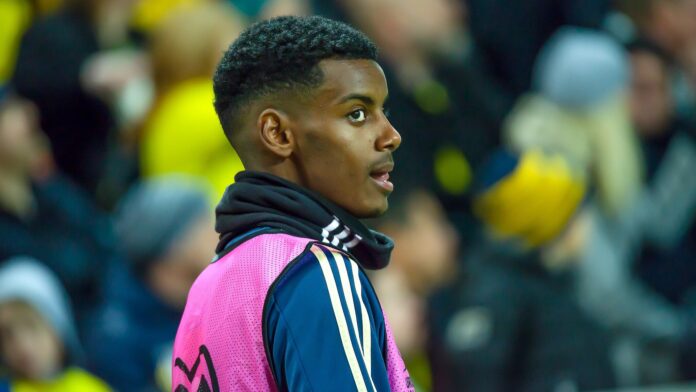
Alexander Isak during Sweden’s UEFA EURO 2019 qualifier, later becoming one of the standout transfers of the 2025 summer window.
Rolandhino1, CC BY-SA 4.0, via Wikimedia Commons

Introduction

The summer of 2025 will be remembered as a record-breaking window – not just for the money spent, but for the way deals were done. This was a market defined by creativity and constraint in equal measures: loan-to buy obligations, intricate sell-on clauses, and players signing under multi-club ownership? All whilst the pressure of the 2026 World Cup rises on the horizon. Could that have shifted decision-making?

It may have felt chaotic, hard to follow and understand, but that is exactly what makes the transfer window so special. In this article I will look to break down exactly what happened and answering the question: Why?

The new trend? Loan with obligation-to-buy: sharing risk and reward

One of the clearest examples of a shift in deal structures was the increasing usage of a loan-to buy obligation. So, the question is why? Let’s unpack a deal and understand the benefits of this deal structure.

Rasmus Hojlund from Manchester United to SSC Napoli

  • Season-long loan from Man United to Napoli
  • €6 million paid upfront (Loan fee)
  • Obligation to buy clause €44 million

The most important thing to understand about a loan with obligation to buy clause is that an obligating event is necessary for the clause to activate.

In this case the obligating event in the deal is:

  • Napoli qualifying for the Champions League
  • Hojlund reaching a minimum number of appearances

Initially it is easy to see the deal and assume that the main purpose behind this type of deal structure is something to do with PSR. However, I believe there are reasons behind these type of deals that are far more beneficial than PSR numbers.

  • Clubs are able to share the large portion of risk when making a transfer.
  • Napoli aren’t fully committing to a full transfer fee upfront. They are striking the deal on the basis of success. This helps them manage risk if their vision for success is not achieved with the player.
  • Man United are given a loan fee (early compensation) + wages being covered. This provides them with financial incentive in the short term of losing the player.

It guarantees the player a stability

If the deal is made on obligation causes it reassures the player and clearly helps them to understand what they need to produce to secure the move themselves. If the deal is on an option to buy for example, it is hard to feel you have a place in your new team that is guaranteed. Hard to feel settled about your own future. Especially with Man United bringing in a new striker (Benjamin Sesko) with such a high transfer fee and a young profile, for Hojlund it makes sense to not risk going back to Manchester United through an option-to buy as the long-term position to be the striker for Manchester United looks to be cemented.

The impact of a €85 million release clause active from 2027

Once/if Hojlund’s move to Napoli becomes permanent, his contract includes a release clause of €85 million active from summer 2027.

This allows Hojlund future guarantees and success for both buying and selling clubs. Hojlund understands that if he succeeds at Napoli any club that is interested in him from the summer of 2027 can buy him at €85 million. This is clear and an obligation. This brings success to both Man United & Napoli as well. If the player is sold for €85 million then Napoli makes a profit from their initial permanent transfer fee of €44 million. Man United also then have a 5% sell on clause, making them some more money back.

This could be the explanation for why there were over 47 loans with obligation to buy deals this summer.

Nicholas Jackson from Chelsea FC to FC Bayern Munich

  • Initial loan fee: €15 million (€3 million contributed by the agent)
  • Obligation to buy clause €80 million package and sell on clause

In this case the obligating event of the deal is:

  • 40 appearances

However, Jackson’s agent Ali Barat has said: “They have a mandatory purchase option (of €80 million) if he plays 40 games, but they also have a €65 million option (if he plays fewer than 40 games).”

Why this deal doesn’t follow the principles of an obligation to buy clause

A quote from Bayern’s Honorary President, Uli Hoeneß:

“Jackson’s obligation to buy will ONLY be activated if he starts 40 games… it’s IMPOSSIBLE.”

The quote shows the intent of the deal. With high condition triggers, it’s hard for the deal to provide any long-term guarantees for the player. Even minor rotation or injury could put the deal in jeopardy or make it impossible to complete.

However, with there still being a fixed price option of €65 million (if less than 40 games are played) this still maintains Jackson’s incentive to continue playing and to give reasons for Bayern to consider paying the €65 million potentially in the summer.

Therefore, the structure of Jackson’s deal may not fully align with the principles of a loan with an obligation-to-buy, as the difficult obligation trigger offers the player little certainty about his long-term future. However, the inclusion of a reduced fee if he plays fewer than 40 games still leaves the door open, giving both player and club a platform to share success.

Signing to two clubs at once?

‘Julio Enciso deal sealed by BlueCo group’ was the headline. However, what did this deal truly look like beyond the headline?

  • Initial transfer fee: €16 million + €2.5 million add-ons
  • Contract with Strasbourg: 4 years

With the structure of this deal, it is important to understand that a contract has been signed with Strasbourg. Regardless of media reports about joining Chelsea in 2026, it is legally not guaranteed—only a potential, albeit a highly likely one. The player would still be required to negotiate a contract with Chelsea if the conditions for a move in 2026 are to be met.

But what is the purpose of such a structure?

  • It guarantees the player experience and playing time within Europe.
  • With Chelsea currently being a highly competitive team, it is hard to see how Julio Enciso would have fit in the team immediately. Instead by going to Strasbourg he is able to gain experience and showcase his talent.
  • With a World Cup summer on the horizon Julio Enciso will know he needs to be match fit to make the squad for Paraguay. Having a larger chance of acquiring minutes for Strasbourg in Ligue 1 could have been a deciding factor behind the move.
  • With the player understanding the multi club ownership, he will know what is required of him on the pitch to earn his move to Chelsea as the deal may be ‘pre-agreed but contingent on formalities’.

Who holds the cards? Players vs clubs

The summer transfer window arguably saw some controversial moves by players. And the question is often raised: do the players have too much power, or is it justified?

Alexander Isak from Newcastle United to Liverpool FC

  • Conditions of the deal: £125 million fixed fee

Isak leveraged his position to force a move out of Newcastle from early in the transfer window. His absence from pre-season training and early league matches indicated a clear intent to leave. While Newcastle stayed firm on their position on not selling until ‘conditions were met’ through finding a replacement striker, Isak escalated the tension between him and the fans through a social media post after the PFA’s.

So, let’s understand the position and power both club and player asserted:

  • Isak refused training, with no aspiration or intent of joining back with the Newcastle first team in the long term. This meant Newcastle United would find it hard to keep onto a player with such a value, sitting outside of the squad.
  • However, Newcastle also had leverage. With the 2026 World Cup coming up and Gyokeres being fierce competition for the starting striker position, it would have been hard for Isak to make the World Cup squad while absent from his club.

While this may have given Newcastle United some leverage, two factors prevented them from fully asserting their power:

  • Newcastle would be having a £125 million player not in their matchday squad which could be reinvested into a new striker.
  • Newcastle United needed a striker with Isak’s intent of not wanting to play. If funds opened up through a transfer they could acquire a replacement, as seen in the transfer of Woltemade.

The reasonings are further seen in the statement which was released by Newcastle United. As Newcastle emphasized the need for conditions to be met in order for a deal to be completed:

“As explained to Alex and his representatives, we must always take into consideration the best interests of Newcastle United, the team and our supporters in all decisions and we have been clear that the conditions of a sale this summer have not transpired. We do not foresee those conditions being met.”

Therefore, it is hard to answer whether the club or player possesses more power as it can be dependent case by case. The balance of power can shift depending on a player’s value and the remaining length of their contract.

An example of a club extorting its maximum power can be seen in the treatment of Raheem Sterling and Axel Disasi. Both left out of the squad and training at different times compared to the senior team. It is important to remember when a club feels a player no longer possesses value to the club the shift in power can change quickly and drastically.

Conclusion

The summer transfer window of 2025 was an example of how football continues to evolve. The transfer window is where money, strategy, and timing come together in creative yet unexpected ways. From loan-to-buy obligations carefully structured to manage risk, to multi-club ownership deals designed to develop talent, and high-stakes power plays between clubs and players, the window reflected both the creativity and complexity of modern football transfers.

World Cup years only up the stakes, influencing clubs and players to make calculated moves that take into account both immediate performance with long-term career and financial goals. Ultimately, whether it’s the structure of a contract, the activation of a release clause, or the negotiation of power between player and club, this summer transfer window reminds us that football transfers are more than transactions—they are strategic chess games played on the global stage.
Who is Martin Przondziono?

0
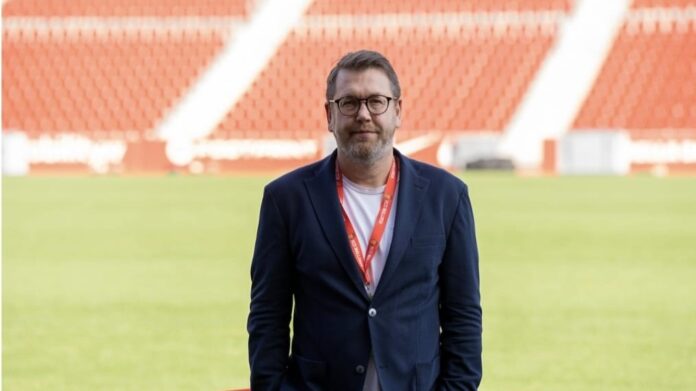
Martin Przondziono, football executive and former Bundesliga player, standing in a stadium during his career as a sports director and consultant.
Martin Przondziono, experienced football executive and sports director. Image courtesy of The Football Week.

Martin Przondziono is a highly experienced football executive and former professional player with more than 35 years in the game. Born in Salzgitter in 1969, he built a career that combines extensive on-field experience with senior leadership roles across German and international football.

As a player, Przondziono featured in over 350 professional matches between 1990 and 2004, representing clubs such as Werder Bremen, 1. FC Nürnberg, SpVgg Greuther Fürth, VfL Osnabrück, Preußen Münster, and VfB Lübeck. His long playing career laid the foundation for his transition into football management and scouting.

After retiring from playing, he entered the business and management side of the sport. He founded and managed SPORTTRADE GmbH, working as a player agent and athlete marketer across football, tennis, and golf. He later co-led EUMAGO GmbH, publishing Golf Region magazine and organizing tournaments and events, showcasing his versatility in sports management.

Przondziono then moved into leadership positions within top German clubs. At 1. FC Nürnberg, Hannover 96, and SC Paderborn 07, he established scouting departments, implemented data-driven recruitment tools such as Wyscout and Impect, and led squad planning from academy to first-team level. His tenure at Hannover 96 and SC Paderborn included promotions to the Bundesliga in 2018 and 2019 respectively, underlining his impact on team building and strategic development. At Paderborn, he also served as Managing Director of Sport, overseeing budget planning, squad construction, international partnerships, and investor relations.

Most recently, as Head of Football and Development at Capelli Sport Europe (2021–2023), he advised clubs and academies worldwide, executed transfers, expanded networks and scouting structures in the USA, and built synergies across Capelli’s global football portfolio.

In 2023, Przondziono began working as a freelance consultant, advising associations on structures, investors and investments, international cooperation and networking, as well as national and international squad analyses. Since 2025, he has served as Sports Director at Dare 2 Dream Sports Management, where he is leading the establishment of a comprehensive academy network in Nigeria. The project aims to provide young players with professional football training while ensuring access to structured school education.

Przondziono also holds a UEFA B coaching license, which complements his management and scouting expertise with technical knowledge of player development.

With a career that spans professional playing, coaching, scouting, executive leadership, and international sports business, Martin Przondziono has established himself as a football strategist who bridges on-field experience with modern management and global networking.

Our Exclusive Interview with Martin Przondziono

You played over 350 professional matches before moving into management. How did your playing career shape your approach to scouting and football leadership?

During my 15 years as a player, I gained enough experience to develop my strategy. I was fortunate to work with many different personalities, both players and officials. I learned a lot and always try to incorporate that experience. Of course, over time you develop your own way of thinking, but experience is definitely an advantage in our business. I have held several positions as an official, so I can draw on that experience enormously in my decisions and discussions.

At Hannover 96 and SC Paderborn, you were part of teams that achieved promotion to the Bundesliga. What were the key decisions or strategies behind those successes?

The most important decisions are always in the area of squad planning. Of course, the financial aspect plays a major role, but in Paderborn in particular, we put together a great squad with a very small budget. The strategy should always be tailored to the club. Our idea was to score as many goals as possible. We always stuck to that. Too many changes in direction not only cost a lot of money, but also credibility with fans, sponsors, and investors. And, of course, with employees. Squad planning is a very detailed process in which sporting goals, finances, and, of course, the sustainability and value enhancement of the players play a major role. In doing so, we must not lose sight of the integration of young players from our own youth academy. We have been very successful in this regard in Hanover and Paderborn.

You built scouting departments and introduced data-driven tools like Wyscout and Impect early on. How do you see the balance between traditional scouting and analytics today?

That’s a very interesting question. The two different approaches to scouting have now become very intertwined. Without data analysis, it is almost impossible to do the preliminary work and pre-selection of players, especia

La preparación de El Salvador ante Inter Miami y Messi

0
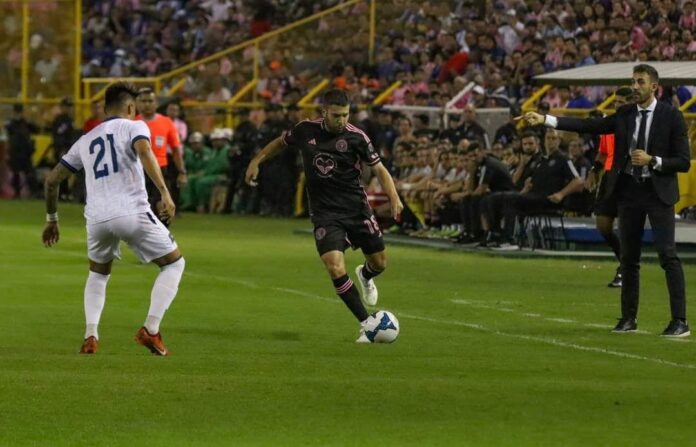
David Dóniga Lara coaching on the sidelines during El Salvador’s match against Inter Miami, with Jordi Alba controlling the ball.

La preparación de El Salvador ante Inter Miami y Messi

19 de enero de 2024. San Salvador. El estadio Cuscatlán está prácticamente lleno para ver a la selección nacional jugar su primer partido del año… ¡Y para ver a Messi!

El Inter Miami, en su preparación para la temporada 2024, ha diseñado una pretemporada que pasa por la capital del país centroamericano en un periplo de partidos por todo el continente americano. La expectación es mayúscula para ver al mejor jugador del mundo por primera vez en tierras cuscatlecas.

Pero yo no tengo tiempo para efemérides o festividades: hace diez días fui presentado, en la primera semana pude entrenar dos días con los jugadores locales y, previo al partido en el que debuto como seleccionador nacional ante mi gente, frente a Messi, Suárez, Busquets, Alba y compañía a cargo del Tata Martino, solo he podido hacer 3 sesiones con los jugadores que he podido recuperar del total disponible.

El Salvador 0- Inter Miami 0 y el partido acabó con un balón al larguero de la portería del equipo americano. La preparación express del partido, la que exige una selección, ha funcionado (no por el resultado, pues se podría haber ganado): el equipo, en cinco sesiones, ha conseguido ser lo que se había propuesto. ¿Cómo se hace eso?

La semana pasada te hablaba de los tres puntos clave para dar inicio a un proyecto deportivo con bien pie aplicado a la realidad de la competición. Hoy vamos a ahondar un poco más en la preparación concreta de los partidos. Las claves para llegar al encuentro en condiciones de competir y superar al rival.

El sistema de trabajo para elegir a los jugadores

Una de las cosas por las que quería marcar diferencias en El Salvador era por la creación de una base de datos completa de todos los jugadores seleccionables.

Mi experiencia previa a la hora de elegir a los jugadores que me iban a acompañar, por ejemplo, con la Selección de Panamá en 2022 al Torneo Maurice Revello, me hacía conocer la dificultad de poder llegar a todos los jugadores del espectro del país. Mi complicado trabajo manual de búsqueda de los mejores sub 21 panameños, unido al día a día con la selección absoluta con las mismas dificultades, me dejó claro que cuando volviera a una selección, la creación de la base de datos sería la primera piedra del proyecto. Y así hice.

En menos de un mes, junto a mi equipo de informáticos y scout propio, habíamos alcanzado al total de salvadoreños profesionales, a gran parte de los jugadores hasta catorce años, y a un grupo de jugadores con opciones de nacionalizar. Esta lista pasaba a formar parte de una base de datos que alimentaba un software para el manejo del dato, la creación de listas de seguimiento mensual, informes de los jugadores escautados y organización de las listas de convocatoria.

Con toda esta información, clasificada por notas y colores, el diseño de las convocatorias podría estar más o menos acertado en función de los gustos, pero tenía una estructura de base sólida: todos los jugadores potencialmente convocables habían sido valorados. Para poder preparar el partido hay que elegir a los jugadores que conformen el mejor equipo posible.

Los modelos de convocatoria donde la selección tiene prioridad

Aún a riesgo de insistir y repetirme, pues fue uno de los puntos clave de la semana pasada, en la preparación de los partidos me parece imprescindible tenerlo en cuenta igualmente. Quiero que quede claro porque aprovechar esta característica estructural es vital para sacar ventaja.

Entre la ventana de noviembre y la de marzo, el calendario internacional no prevé partidos de selecciones. Como la gran mayoría de jugadores de la selección de El Salvador estaban en la liga local, utilizar de tres a seis semanas de entrenamiento entre enero y marzo para practicar el sistema de juego y las interacciones dentro del modelo era un gran avance.

Las semanas FIFA tienen una duración de 10 días, y los jugadores que juegan en el extranjero suelen tardar en llegar (salvo excepciones); si además han jugado la jornada previa en su liga, prácticamente los tres primeros días están perdidos.

Llegar con los locales con los deberes hechos ayuda a que los de fuera se unan a la dinámica con más facilidad, pues que diez sigan a quince en tareas y objetivos conocidos es más práctico que casi treinta sin poder entrenar y con los conceptos nuevos por explicar y aplicar.

Como además los periodos de selecciones suelen contar con dos partidos, la adaptación más lenta de los de fuera se compensa si en el primer partido juegan los que conocen el modelo, dejando el segundo para los primeros.

La planificación es esencial y se traduce en una periodización óptima (marcando claramente los “periodos” competitivos del año natural, cinco en mi perspectiva) y una programación específica (cada microciclo de cada periodo debe atender lo máximo posible a los factores determinantes en la preparación del equipo para competir, huyendo de trabajos inocuos o de relleno que no sumen minutos de juego). Es en el microciclo donde se materializa lo concreto.

El microciclo

Defiendo el microciclo como piedra angular del proceso.

Porque la planificación pone sobre la mesa la perspectiva general del año y los periodos marcan objetivos parciales. Pero lo que se quiere del equipo solo se puede lograr entrenando, y los microciclos son la herramienta para ello.

En este caso, en los microciclos locales recibíamos a los jugadores una vez acabada la jornada de liga (domingo por la noche) y se entrenaba de lunes a miércoles, volviendo el mismo miércoles a sus clubes.

Recuperación aplicando ideas tácticas de la convocatoria anterior, sobre todo a través de vídeo y tareas livianas en campo, para los lunes; aspectos defensivos los martes y de ataque los miércoles. Apareciendo el 11 contra 11 o algún partido amistoso era la forma de organizar estos encuentros con locales.

Para las ventanas FIFA, el inicio era el mismo pero incluía, habitualmente, un partido oficial a mediados de semana (miércoles o jueves) y un partido al final (entre sábado y lunes), antes de devolver a los jugadores a sus clubes.

Quédate con estas ideas: especificidad máxima, 11 contra 11 el mayor tiempo posible y organización sin balón, con balón y en balón parado sobre nuestra idea. Repetir para afianzar, con el conocimiento claro de cómo nuestro juego puede dañar al rival en los puntos débiles que conocemos.

La información al jugador: clara y concisa. La transferencia al juego: completamente específica. La mejora: en la repetición de las tareas y el trabajo por objetivos, transformando las conductas conscientes en hábitos.

Morocco Secures First African 2026 World Cup Spot

0
Prince Moulay Abdellah Stadium in Rabat illuminated at night with light beams, symbolizing Morocco’s modern football infrastructure and 2026 World Cup ambitions.
Prince Moulay Abdellah Stadium, Rabat. Image courtesy of Abdelmajid Rizko.

World Cup qualification, stadium’s opening and an emphatic victory. Three elements that made Moroccan fans’ first game night in the newly inaugurated Prince Moulay Abdellah stadium, a day to remember.

The Atlas Lions delivered a commanding 5-0 victory over Niger, becoming the first African nation to secure a spot for the 2026 FIFA World Cup.

The game was more than a celebration for Moroccans. In fact, it was a symbol of the country’s football renaissance, marked by sporting excellence and a culmination of architectural prowess.

New stadium, 100% made in Morocco

The game marked the inaugural fixture at the completely redeveloped Prince Moulay Abdellah Stadium, in Rabat, capital of Morocco.

The original venue, built in 1980, was demolished late in 2023, with construction beginning immediately from the ground up.

This ambitious rebuild, which was completed in 18 months, was crowned by a Royal opening ceremony, led by Crown Prince Moulay El Hassan, the day before the inaugural game.

The state-of-the-art facility anchors Morocco’s football vision, and represents a significant investment in the country’s sporting infrastructure.

It features four FIFA-standard locker rooms and Africa’s first hybrid pitch with LED grass-growth technology. The latter is an innovation that Morocco plans to implement across other venues for the 2030 World Cup, which the country will co-host with Spain and Portugal.

The venue can accommodate 68,700 spectators, and it features 110 VIP & VVIP boxes, five premium lounges with over 5,000 exclusive seats, and extensive disabled facilities.

Also inside the venue, a purpose-built media center, which can host up to 1800 journalists.

This architectural gem is destined to stage the 2025 Africa Cup of Nations final, and will feature prominently in the 2030 World Cup.

Sporting performance backed by infrastructure investment

Morocco’s recent investments in football infrastructure are beginning to yield results.

Friday’s dominating victory was in fact an indicator, as Achraf Hakimi’s teammates secured the first African spot for the 2026 FIFA World Cup, with three fixtures remaining.

The Atlas Lions maintained an impressive perfect record in their qualifying campaign: 7 consecutive wins so far.

A sporting achievement and a demonstration of their growing stature in international football, following their captivating World Cup campaign in 2022 in Qatar, which have set new standards for African football on the global stage.

Fan support and commercial demand

The excitement surrounding Morocco’s qualification campaign reached fever pitch, with all tickets selling out in just 24 hours.

The Atlas Lions played in front of a packed stadium, where the electric atmosphere perfectly reflected the historic significance of the night.

Supporters lined up at various official FRMF (Federation Royale Marocaine de Football) retail points throughout the venue, including actual stores and kiosks.

According to organizers on-site, around 80% of the available merchandise was sold during the event. This surge in fan engagement extended far beyond match day.

For the first time ever, the FRMF launched official boutiques dedicated to the national team, part of a broader retail expansion rolled out in record time: less than two weeks.

The initiative was bolstered by a new e-commerce platform launched last November. The project was developed in collaboration with a leading American agency, enabling fans both locally and abroad to access national team merchandise, alongside items made by local creators.

The sight of attendance proudly wearing the team’s colors, underscored not only the commercial success of the campaign, but also football’s power to unite and inspire national pride.

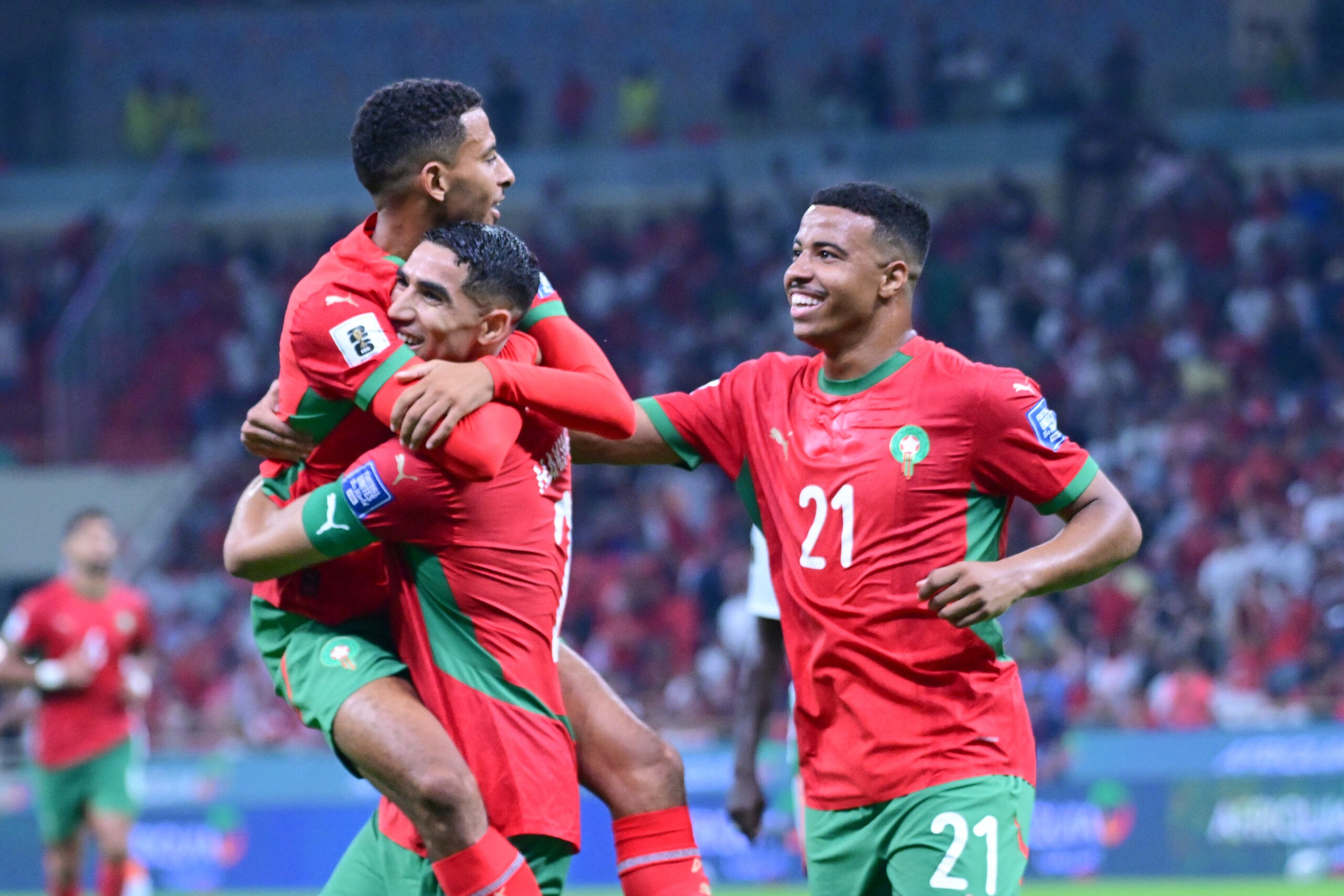
Moroccan national team players celebrating a goal during their 5-0 victory over Niger, securing qualification for the 2026 FIFA World Cup.
Morocco celebrate during the 5–0 win over Niger. Image courtesy of Abdelmajid Rizko.

Established stars and home-grown excellence

Morocco’s success story extends beyond immediate results to encompass long-term player development and youth investment.

The qualification campaign has showcased the depth of Moroccan talent, with several home-grown players making significant contributions in the seven-won games.

Established star players, such as Achraf Hakimi, Yassine Bono and several home-grown talents, featured have made significant contributions in this journey. Notably, Hamza Igamane, the former AS FAR forward, and Youssef Belammari of Raja Casablanca, contributed in 4 out of the 5 goals of the game.

This blend of experienced internationals and home-grown talents demonstrates the country’s appeal to players of the Moroccan diaspora, and its commitment to developing elite players through its domestic academies and leagues. A strategy that ensures a pipeline of talent for future tournaments and continued success on the international stage.

Conclusion

Friday night at Prince Moulay Abdellah Stadium showcased Morocco’s football vision in action.

Passionate fans, world-class infrastructure, and on-field excellence demonstrates how an existing sporting culture combined with strategic investments are yielding results.

With their 2026 World Cup spot secured and modern venues ready for major tournaments, Morocco has positioned itself as a continental football powerhouse, setting the foundation for continued success for the upcoming challenges through 2030.

MLS’s Path to the Top: Building MLS2 and a True Promotion–Relegation Pyramid

0
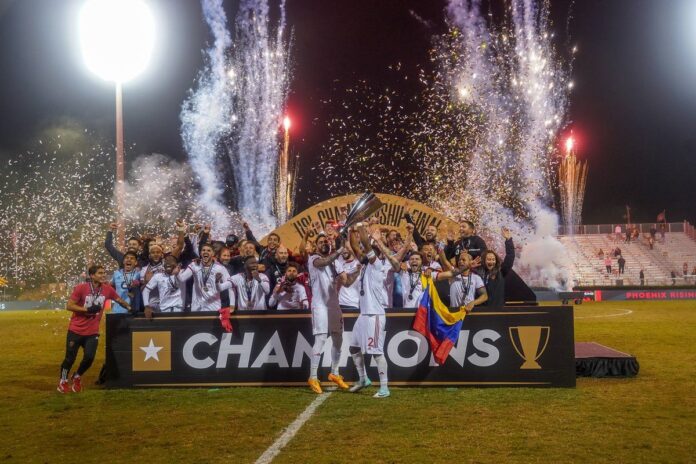
Phoenix Rising players celebrate their 2023 USL Championship victory with the trophy, fireworks, and confetti on the pitch.
MintyFresh201, CC0, via Wikimedia Commons

USL Acquisition and Unified Governance

The first bold step for MLS should be to acquire USL in its entirety and manage professional soccer under a single governing body.

  • Today, USL exists as an independent structure, disconnected from MLS.
  • A unified model would centralize financial power, standardize infrastructure requirements, and create predictability for investors.
  • Most importantly, football decisions must be guided by football intellect. Investors provide resources, but the game itself must be directed by those who understand it.

Today, Liverpool’s club valuation stands at around £6 billion. Real Madrid and Bayern Munich are equally among the most valuable clubs in the world. Yet even these giants can be relegated if they fail on the pitch. No club is truly safe. This is precisely why European football has become the most competitive sports ecosystem globally—because nothing is guaranteed. MLS must adopt this same competitive spirit.

Structuring MLS1 and MLS2

Within a five-year strategic plan, MLS should quickly expand to 32 clubs:

  • Eastern Conference: 16 clubs
  • Western Conference: 16 clubs

In parallel, MLS2 should be established:

  • Eastern Conference: 16 clubs
  • Western Conference: 16 clubs

This creates a total of 64 clubs within a single pyramid. MLS2 would largely be composed of USL clubs, provided they meet infrastructure and academy standards. The message must be clear: if you want to be part of this league, you must meet a certain level of quality.

Promotion–Relegation Model

By the fifth year, a promotion–relegation system should be introduced:

  • MLS1 East & West: The bottom club from each conference is relegated (2 total).
  • MLS2 East & West: The champion of each conference is promoted to MLS1 (2 total).
  • Optional: A playoff between the second-to-last MLS1 club and the runner-up in MLS2.

This guarantees at least four clubs change divisions every year, keeping the league vibrant and competitive.

Five-Year Roadmap

  1. Year 1 – Acquire USL, bring all professional soccer under MLS governance.
  2. Year 2 – Standardize infrastructure, academies, and financial regulations.
  3. Year 3 – Expand MLS to 32 clubs (East 16 – West 16).
  4. Year 4 – Officially launch MLS2 (East 16 – West 16).
  5. Year 5 – Implement promotion–relegation.

Strategic Benefits

  • Competitive Integrity: No club can feel safe; every point matters.
  • Football Quality: Competition attracts better players, better coaches, and larger crowds. Quality is never a coincidence.
  • Investor Protection: A financial safety net reduces losses for relegated clubs.
  • Global Image: MLS positions itself alongside the world’s most competitive football leagues.
  • Long-Term Sustainability: U.S. soccer evolves from a development league into a truly global football destination.

For me, football is not just about the 90 minutes on the pitch. When structured properly, it has the power to reshape a nation’s sporting culture and give young players the platform to achieve their dreams. The potential of soccer in the United States is enormous, but it requires bold decisions to unlock it.

If MLS takes this step within the next 5–10 years, it can shed the label of being a “retirement league” and instead become one of the most competitive stages in world football. My vision is to be part of this transformation—guided by football intellect, opening pathways for young players, and nurturing the quality that only true competition can deliver.

Quality is never a coincidence.

Who is Brandon Hervey?

0
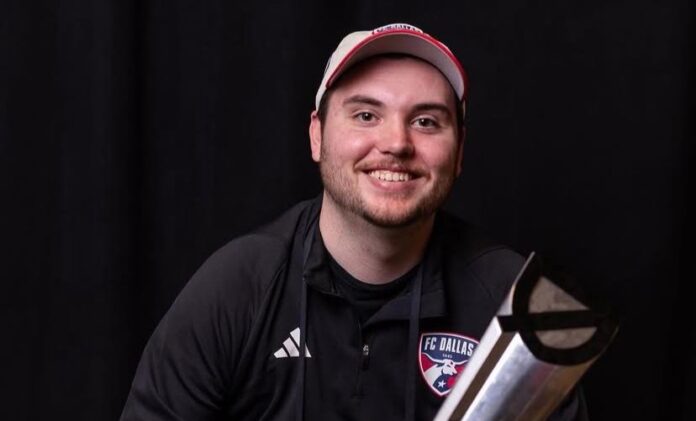
Brandon Hervey, FC Dallas scout, smiling while holding a trophy, wearing FC Dallas team apparel.
Brandon Hervey, FC Dallas scout, has built his career from college internships to key scouting roles shaping American football talent.

Brandon Hervey is a Texas native who began his football journey while still in college, where he balanced his studies in Marketing with early roles in the professional game. His first opportunity came at FC Dallas as a front office intern, working on the business side of the organization. That experience sparked his transition into scouting, which quickly became his main focus.

During his college years, Brandon took on his first scouting role with Sheffield Wednesday, covering North America and select European competitions. He remained in that position through graduation, gaining valuable international experience and building a strong foundation in talent identification.

After college, Brandon joined LA Galaxy as a first team scout, where he expanded his coverage globally, focusing on international scouting while continuing to monitor the domestic leagues. His time at LA Galaxy helped broaden his understanding of global football markets and player development systems.

Brandon later returned to FC Dallas in a new capacity as a domestic scout. In his current role, he oversees scouting efforts across the U.S. for the club’s first team, second team (North Texas SC), and academy, playing a key role in shaping the club’s player recruitment strategy across all levels.

Our Exclusive Interview with Brandon Hervey

Who is Brandon Hervey outside of football, and how have your personal experiences influenced your path in scouting?

Outside of football, I spend a lot of my free time watching and participating in other sports. When I was young, I played a wide range of sports along with football and many of my closest friends are people that I met through these experiences, so hanging out with my friends often involves something sports-related. Sports have been my main passion in life for as long as I can remember, and I imagine that will always be the case.

Outside of sports, my other main interests are music & film. Music was a major interest of mine from an early age as well, and I became very intrigued by the process of producing and recording music, which led me to taking up music production as a hobby and working on my own musical projects over the years. I also became heavily interested in film during my teenage years. When I was first starting out in scouting and started working in football part-time, I worked for a video production company which allowed me to explore and learn more about this industry as well. So I think it’s safe to say that if I wasn’t working in the sports industry, I would be doing something related to music and/or film.

Looking back, what first drew you to the world of football scouting, and did you ever imagine building a career in it so early?

I actually knew that I wanted to be a scout pretty early on in life. Growing up, my dream job was always to be a professional athlete, but I knew that very few people are actually able to turn that dream into reality, and if they do, careers as professional athletes don’t last forever. So it led me to consider, how can I still be involved in sports in a fulfilling capacity apart from playing the game? For me, scouting was the answer. I was enamored by the idea of working to build championship winning teams, and what takes place behind the scenes to make that happen. As part of a technical staff for a professional club, I’m able to use my knowledge and passion for the game to contribute to winning trophies and helping our squad compete at the highest level, which has been something I dreamed about doing for a long time.

What has been the most rewarding or eye-opening part of your journey through clubs like LA Galaxy and FC Dallas?

I would say the most rewarding aspect of working in professional football is being a representative of your fanbase. The greatest feeling of pride I have as a scout is when the supporters are able to show up and see their team dominate on the field. The community aspect of football is one of the things that drew me to the game in the first place, and I love to see our stadium full of supporters that are willing to take the time out of their lives to share their passion with us. In return, I make it my mission to help put together a team that they can be proud of, and that’s what continues to drive me every day.

How do you personally define talent identification, especially in a sport where context, culture and development environments vary so widely?

I really like the phrasing of this question because it exemplifies how nuanced talent identification can be. In many cases, you aren’t just looking for the most “talented” players, but also players that fit a certain system or characteristics that you have already laid out before actually watching a game. I think building a team is a puzzle, and you have to consider not only how players perform individually, but how they fit together as a unit.

When I’m watching games, I usually already have an idea of the types of players that I’m looking for, and this changes all the time. For each team in our organization, we have different needs for positions, experience levels, physical attributes, mentalities, and so much more that have to be carefully considered during each stage of the scouting process. Like you said, context matters in these situations.

Sometimes, I see players that I believe are very talented players, but may not be the right fit for our specific team at a certain time. At some point, maybe your needs change, and you come back to that player again. Timing is extremely important in talent identification and it forces you to be well-rounded as a scout to adapt to the constantly changing needs of your squad.

It’s also important to point out how different cultures and environments shape the development of different players. The structure and focus of player development is varied from region to region, and within that even club to club. Understanding the patterns and differences that come with different environments is crucial as a scout.

There are some qualities that I look for in every player, mentality being the main component. We always want players that have outstanding work ethics and provide a positive attitude in the locker room. However, beyond that, there are so many different qualities and attributes that can make a player stand out. So I think the best way to define talent identification in football is not only searching for the best players you can find, but also evaluating how players will impact the group you already have.

You have worked across both international and domestic markets. What perspective or change are you most proud of bringing into your current role?

Working in both the domestic and international market has been very beneficial in my current role. Like we discussed earlier, different environments have their own distinct styles of football so becoming more acquainted with football on a global scale has greatly improved my vision as a scout.

In my current role, I have been able to work in the most broad scope up to this point in my career, working with the academy all the way up to the first team. Working across different age groups and experience levels means you have to take a unique approach to each team, and having a wider range of experience is a tremendous advantage for this.

I have been able to see how strategies differ from market to market, and use this knowledge to bolster my own scouting strategy. Having a key understanding of the pathways from youth to professional football in different countries and regions is essential to optimizing the best pathway for your own environment, and developing this knowledge over the years has prepared me to work in the extended capacity that I’m able to experience today.

What qualities do you believe young scouts need today to thrive in a fast evolving football ecosystem?

The best piece of advice that I can share for young scouts today is to focus on exposure and learning how to market yourself. When I was beginning my career, I didn’t have any connections at professional clubs and didn’t really know how to get my foot in the door. I reached out to hundreds of clubs across the world offering my services as a scout so that I could learn and build a network, and the biggest mistake I made was not including samples of work that I had done independently.

Today, there are countless young scouts that are looking to work their way into a role at professional clubs, and it’s become extremely difficult to stand out amongst the rest of the crowd. When I was sending messages to scouts at different clubs, I didn’t realize that my messages were probably becoming lost in a sea of hundreds of other messages flooding their inbox saying exactly the same thing.

The biggest change came when I started completing scouting reports in my free time, and then sharing them online for others to see. For a lot of these reports, I’m sure very few people actually saw them, but it allowed me to build a portfolio of work that I could share with other scouts, and over time you started to see some of these players that I mentioned in the reports grow in reputation and become more well-known. This was a good way to prove my ability to identify players and illustrate the value I was able to bring to a scouting department.

Finally, once I had a portfolio of work to show off, I started receiving interest from clubs and was able to land my first scouting roles. It was an important realization that I didn’t become a football scout when I landed my first role, but when I published my first scouting report, even if it was just for my own personal use. In a way, it’s similar to how you would find opportunities as a player. As an unknown player, it’s going to be near impossible to find opportunities with clubs unless you can provide some sort of highlight tape or proof of your ability as a player as clubs have a never-ending supply of players that want to play for their squad. The same goes for scouts, find a way to show off your ability and be creative with it.

Mercury13 Acquires Bristol City Women Majority Stake

0
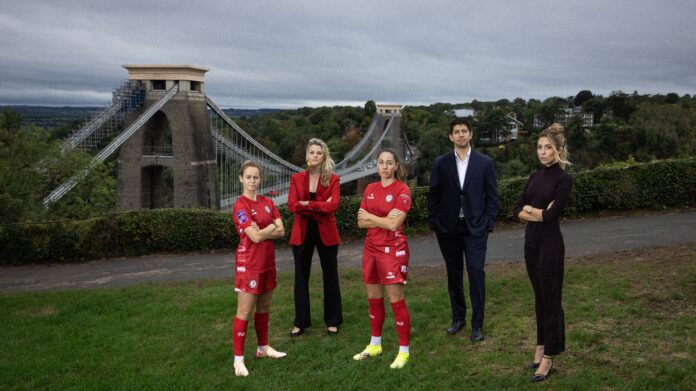
Emily Syme, Hannah Haynes, Vicky Losada, Mario Malavé, and Victoire Cogevina Reynal stand in front of the Clifton Suspension Bridge in Bristol, marking Mercury13’s acquisition of Bristol City Women.
Mercury13 acquire a majority stake in Bristol City Women on September 18, 2025 at Clifton Suspention Bridge in Bristol, England. (Photo by Rogan/Bristol City)

The first deal of its kind in England, this landmark transaction establishes a new model for women’s football: combining an integrated club structure with commercial independence to grow Bristol City Women into one of the country’s leading clubs.

Bristol, September 17th, 2025 — Mercury13, the multi-club ownership group dedicated to the advancement of women’s football, has entered into an agreement to acquire a significant majority stake in Bristol City Women. This marks the group’s second investment in European football, following its entry into the Italian Serie A with the acquisition of F.C. Como Women in 2024. Founded and led by Victoire Cogevina Reynal and Mario Malavé, Mercury13 is building a portfolio of clubs with the ambition of redefining the landscape of the women’s game through strategic investment, competitive ambition and fan-focused growth.

Bristol City Women club crest displayed alongside Mercury13 logo, symbolizing the landmark majority acquisition and new era for the team.
Bristol City Women join the Mercury13 portfolio in a landmark deal for English women’s football.

Stephen Lansdown CBE, co-founder of the financial services firm Hargreaves Lansdown, has been involved with Bristol City for more than three decades, and as such is one of the longest serving owners of a professional football club. The Bristol-born owner has invested significant sums into the club, including a £50m redevelopment of its stadium, Ashton Gate to provide a facility fit for the top flight and a multi-million-pound build of the Robins High Performance Centre –a training base and headquarters for the women and men’s first teams.

Bristol City Women was identified early in Mercury13’s market mapping as a club of significant potential with the infrastructure, legacy and fanbase to evolve into one of the leading names in English women’s football. The acquisition reflects Mercury13’s belief that the women’s club represents a unique opportunity to unlock commercial growth, elevate sporting performance and deepen the cultural footprint of the women’s game in a city that has already shown its support by twice selling out England’s Lionesses matches in recent years.

Under Mercury13’s stewardship, the women’s club will call Ashton Gate Stadium its home having agreed a long-term arrangement that reflects a commitment to building fan engagement and matchday excellence as well as continuing to train at the Robins High Performance Centre.

On the pitch, with Head Coach Charlotte Healy taking charge and 13 new players signed, Bristol City Women are targeting a return to the Women’s Super League. With increased investment across the WSL2 and more at stake than ever, this season is expected to be one of the most competitive in recent years.

Mercury13 will continue to invest in the club’s Tier 1 Academy serving a wide catchment across the South West and Wales, and the new ownership structure brings renewed focus to its growth and potential. With a strong legacy of producing international calibre talent  — the Academy will be developed to ensure a clear and competitive pathway from youth to first team.

The deal

After more than a decade of investment, the Lansdown family is handing over stewardship of the women’s side of Bristol City to Mercury13 and will retain a minority shareholding. The transaction aims to usher in a new era of dedicated investment, infrastructure, and commercial innovation in the women’s side, setting a benchmark for integrated football club ownership.

Completion of the deal is subject to league approval.

Mercury13 was advised by Northridge Law LLP and Deloitte.

Upcoming fixtures

Bristol City Women’s first game at Ashton Gate this season is on Saturday 27 September, with a 6pm kick-off set to follow a live screening of the Rugby World Cup Final in the stadium’s Independence Sports Bar, creating a celebratory double event for fans.  All league matches will be streamed live on YouTube, with selected fixtures also broadcast on Sky Sports.

Stephen Lansdown CBE said: “My family and I have watched and supported the women’s team for nearly two decades. From the early days when they competed as Bristol Academy and were transitioning from amateur to semi-pro and playing at SGS College, to our decision to fully fund and integrate the club into Bristol City as a whole, with the move to the Robins High Performance Centre and supporting them into the professional era as part of our sporting group.

“We are proud to have helped be a part of growing the women’s game. Watching that Champions League match in 2014, when as Bristol Academy they beat Barcelona in one of their first games at Ashton Gate, in front of just a few hundred fans; to today, calling Ashton Gate their home, breaking club records for attendances and selling out the stadium when we’ve hosted the Lionesses.

 “The growth in women’s football is astounding. We have always said we would look at investment if it was the right partner at the right time, and I believe now is that time for City Women. Mercury13’s ambition for women’s football matches our own; their dedicated investment and focus on women’s football will accelerate Bristol City Women’s growth and I look forward to seeing what the club can achieve in the years to come.”

Bristol City Women Chair and Bristol Sport CEO Gavin Marshall, who led the acquisition process, added: “This is a pivotal moment for Bristol City Women and we are excited about the next chapter in the club’s story.  Mercury13 have been excellent to work with throughout the acquisition and have the commitment and capability to drive Bristol City Women forward and continue our proud history as a progressive, innovative and community-focussed club. I am confident that the guardianship of the club is in excellent hands.”

Mario Malavé, Co-Founder and Co-CEO of Mercury13, said: “Bristol City Women represents everything we look for in a club: a rich history, a track record of performance, world-class infrastructure, and incredibly loyal supporters. Our entry into the English football pyramid is a major milestone for Mercury13, and one we approach with deep respect and responsibility. We’re honored by the Lansdown family’s trust and are committed to building something special alongside the Bristol community.”

Hannah Haynes, Chief Strategy Officer at Mercury13, who led the acquisition for Mercury13’s added:  “We are proud to have reached this agreement between the many stakeholders and are committed to driving the growth of this distinctive and ambitious club during a pivotal time for women’s football in England. Working closely with the wider ecosystem —from broadcasters to commercial partners—we aim to build on strong foundations, enhance the matchday experience and establish the club as a competitive force and a household fixture in the South West.”

About Bristol City Women Football Club & Bristol Sport Group

Bristol City, formerly known as Bristol Academy WFC, was a founding member of the Women’s Super League in 2011.The team reached two Women’s FA Cup Finals (2011 and 2013), finishing runners-up in the WSL in 2013, and competing in the UEFA Women’s Champions League (2011 and 2014), including reaching the quarter-finals in 2014 and playing Barcelona in the Champions’ League.

As the game began to professionalise, integration into Bristol City FC in 2014 and the Bristol Sport Group founded by Steve Lansdown CBE, allowed for further growth and the team became a fully professionalised outfit by 2018.

After relegation in 2020/21, it took the team just two seasons to get promoted back to the WSL in 2022/23. Whilst the 2023/24 season saw the team relegated, off the pitch the season was a catalyst for growth at the team’s Ashton Gate home with an average attendance of 6,987 – the fifth highest in the WSL. In 2024/25 City Women finished sixth in Barclays Women’s Championship (WSL2) before a summer of recruitment under new Head Coach Charlotte Healey ahead of the 2025/26 WSL2 season.

The Bristol Sport Group was founded by Steve Lansdown in 2012, and includes Bristol City Men and Women’s football teams, Bristol Bears Men and Women’s rugby teams, Bristol Flyers basketball, the clubs’ respective charitable foundations and Ashton Gate, a 365 multi-use stadium hosting 600 events a year with a footfall of more than one million.

About Mercury13

Mercury13 is a multi-club ownership group focused on acquiring majority stakes in professional women’s football teams across Europe. The vision of the group is to become the benchmark in the women’s club ownership industry by identifying and investing in the clubs of the next decade, while enhancing their commercial capabilities to engage a large but historically underserved audience of women’s football fans.

The group’s acquisition strategy is founded on a core principle: women’s football is a different game, and fans seek a distinct experience. Mercury13 is led by executives with proven track records in sports, investment, and technology. The founding team brings together unique expertise, skills, and perspectives that position them to become a leading operator in this sector.

Media Contact
Alejandra S Depalma
CCO / Mercury 13
press@mercury13.com

World Football Summit Hong Kong 2025 Unites Global Football Leaders and Fans

0
World Football Summit Hong Kong 2025 banner with the slogan “Enter the Next Era of Football” at the AsiaWorld-Expo venue.
World Football Summit Hong Kong 2025.

The two-day event showcased Hong Kong as Asia’s premier football hub, driving collaboration and growth across the region

Hong Kong, September 4, 2025 — The highly anticipated World Football Summit Hong Kong (WFS Hong Kong) officially made its landmark debut, transforming Asia World-Expo into a dynamic hub for the global football industry. Running from September 3-4, 2025, this inaugural Hong Kong edition brought together an unprecedented gathering of over 3,600 attendees, including senior executives from leading football organizations and businesses, football legends, investors and innovators driving industry transformation, and passionate fans from across Asia and beyond.

Organized by WFS and ASIA PARTNERS IFBD (the owner of the IP of the CR7® LIFE Museum and CR7® LIFE stores), with the support of The Football Association of Hong Kong, China (HKFA) and featuring the active participation of FIFA and the Asian Football Confederation (AFC), the event reinforces Hong Kong’s status as a world-class destination for major sporting events.

The summit officially opened with inspiring remarks from Marian Otamendi, CEO of WFS, Datuk Seri Windsor John, General Secretary of the AFC, Charles Cheung, General Secretary of The Football Association of Hong Kong, China, and Saoud Maherzi, Head of Business Strategy APAC of Asia Partners. Otamendi emphasized Hong Kong’s role as a bridge between East and West in the football world, stating: “Football is evolving faster than ever, and Asia is at the heart of that transformation. By bringing global leaders together here in Hong Kong, we’re forging partnerships, inspiring innovation, and setting the stage for the next decade of growth in the game.”

“This event is a powerful declaration of Hong Kong’s global standing in sports, culture, and business,” add Filipe Gonçalves, Chairman of Svenska Capital, the parent company of Asia Partners IFBD Limited. “With the invaluable support of the Hong Kong Tourism Board and The Football Association of Hong Kong, China, we are not merely staging a conference; we are actively building a lasting legacy that harnesses football’s unique power to unite communities and unlock global opportunities right here in Asia.”

Over two days, WFS Hong Kong explored critical topics including international expansion, Asia’s growing influence in the global game, youth development, grassroots pathways, digital transformation, investment, technology, AI, sustainability, and community impact. Senior representatives from AFC, FPF (Portuguese Football Federation) Chelsea FC, FIFA, LALIGA, UEFA, Hong Kong Football Club, Kitchee SC and many more are in attendance, contributing to a rich exchange of ideas. More than 30 booths showcased innovations and initiatives aimed at fostering cross-border collaboration and unlocking new opportunities for football’s growth across Asia.

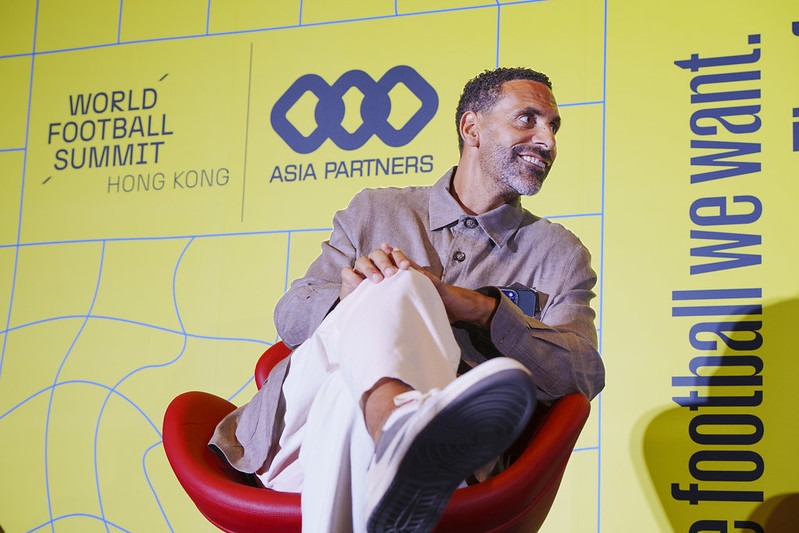
Former professional footballer speaking at the World Football Summit Hong Kong 2025, seated on stage with the Asia Partners logo in the background.
Rio Ferdinand speaks at the World Football Summit Hong Kong 2025, sharing his perspective on the future of global football.

The agenda featured prominent discussions and insights from an extraordinary lineup. Key highlights include:

  • Pierluigi Collina, Chairman of the FIFA Referees Committee, offered unparalleled insights into the crucial role of officiating, the challenges faced by referees, and the future of fair play in the global game.
  • Sarah Walsh, Chief Operating Officer of the AFC Women’s Asian Cup 2026 Local Organising Committee, highlighted strategies for expanding and professionalizing women’s football across the globe.
  • John Sharkey, CEO of Kai Tak Sports Park, and Michel Chertouh, Managing Director of The Regent Hotel Hong Kong, grounded the conversation in the practical strategies for developing integrated sports and tourism ecosystems that drive economic growth and enhance urban appeal.
  • Rio Ferdinand, former England & Manchester United Captain, explored how athletes are leveraging media and content creation to build their brands and connect with fans in new ways.

Rosanna Law, Secretary for Culture, Sports and Tourism of the Government of Hong Kong Special Administrative Region; Eric Fok, Chairman of The Football Association of Hong Kong, China; and Jan Alessie, Co-founder & Managing Director of the World Football Summit, led the closing ceremony, discussing Hong Kong’s strategic role in the development and growth of football across Asia.

About World Football Summit

World Football Summit is the global platform connecting the football industry’s most influential leaders to shape the future of the game. Since 2016, WFS has hosted over 39,000 attendees from more than 100 countries, with editions in Spain, Mexico, Saudi Arabia, Morocco, and now Hong Kong.

About Asia Partners IFBD Limited

Asia Partners IFBD Limited is a leading investor in intellectual property (IP) in the global football industry. Known for its innovation and strategic acquisitions, it holds exclusive rights to brands such as CR7® LIFE Museum, CR7® LIFE Stores, CR7® LIFE Merchandise, World Football Summit, Beach Soccer World Cup, Football Wall of Fame, and Footlab. Under its parent company Svenska Capital, it also manages IP for renowned football figures including Bernardo Silva, Alex Balde, Vitinha, João Félix, Aitana Bonmati, and José Mourinho. With recent acquisitions like the Globe Soccer Awards (Asia) and SIF Sports Investment Forum, it drives sports, entertainment, and investment growth.

Who is Kat Smith?

0
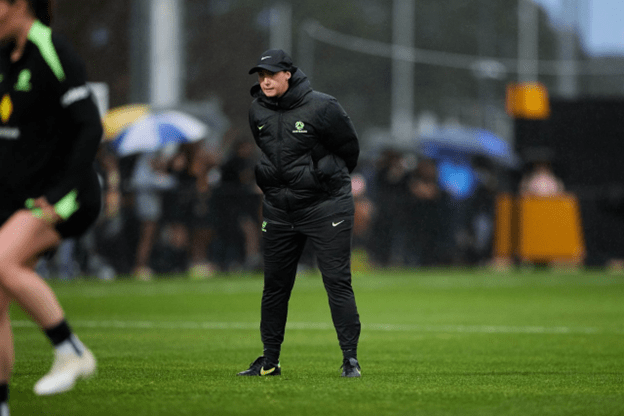
Kat Smith coaching on the training pitch in wet conditions, showcasing her role as a leading figure in Australian women’s football.
Kat Smith, head coach and former Matildas analyst, bringing her expertise in science, education, and leadership to women’s football.

Kat Smith is a highly respected football coach, educator, and performance analyst with over two decades of experience across all levels of the game, from grassroots development to elite club competition and international tournaments. She currently serves as the Head Coach of Western United in the A-League Women’s competition, where she is leading one of Australia’s newest professional clubs through a period of rapid growth and competitive success. Her coaching journey includes notable roles as Head Coach of Western Sydney Wanderers and Assistant Coach at Melbourne Victory, where she contributed to multiple championship-winning campaigns and helped shape the club’s identity in the women’s game.

Kat’s coaching philosophy is deeply rooted in science and education. She holds a Bachelor of Applied Science in Human Movement from Deakin University and a Graduate Diploma in Secondary Education from RMIT University. Her academic grounding in exercise physiology, biomechanics, and pedagogy has enabled her to build integrated high-performance environments where physical preparation, tactical clarity, and player well-being are all aligned. This approach reflects her belief that elite performance is the product of both on-field precision and off-field development.

In addition to her club roles, Kat has played a vital part in Australia’s national team structures. She has served as Assistant Coach and Opposition Analyst for both the Matildas and Junior Matildas at major FIFA tournaments, bringing strategic insight and analytical rigor to the international stage. Her ability to read the game, prepare teams with detail, and nurture young talent has made her a trusted figure in the evolution of women’s football in Australia. Through every role she has taken on, Kat has demonstrated a commitment to developing not just better footballers, but better people.

Our Exclusive Interview with Kat Smith

Who is Kat Smith beyond football? How would you describe yourself outside the technical area and the professional game?

At my core, I’m a sports lover, a lifelong learner, and someone who finds energy in community and connection. Away from the pitch, you’ll usually find me soaking up fresh air in nature, enjoying a chai latte, spending time with our dog, or sharing moments with my partner and family. I value balance, growth, and the little things that bring joy, whether it’s a walk in the sunshine, a good conversation, or helping someone take a step forward. Kindness, hard work, and staying grounded guide everything I do.

Your journey into football coaching is rooted in both science and education. What initially drew you to combine those disciplines within the sport?

My academic background in Human Movement and Education gave me a natural lens to see football not just as a game, but as a holistic system of performance, development, and learning. I was fascinated by how people move, how they learn, and how environments shape behaviour. Coaching became the perfect intersection where I could apply both the science of performance and the art of education to help players thrive.

From leading clubs like Western United to working with the Matildas at FIFA tournaments, what has been the most defining challenge or turning point in your coaching career so far?

One of the most defining moments was stepping into national team environments where margins are so fine and the stakes are global. It forced me to evolve, not just technically or tactically, but in how I lead people under pressure. It reinforced the importance of clarity, alignment, and care. Those experiences sharpened my leadership and reaffirmed my purpose as a coach: to build environments where players can be their best, not just in football, but in life.

You’ve helped shape performance environments at both club and national levels. What philosophies or principles do you consistently rely on when building a team culture?

Clarity, connection, and consistency. I believe in setting clear expectations, connecting with people authentically, and being consistent in behaviours and standards. A strong culture is built when people feel safe, valued, and challenged. I also lean heavily on collaboration—players and staff are more invested when they feel ownership in the process.

Having observed women’s football both in Australia and internationally, how would you compare the environments, and where do you see the biggest gaps or opportunities for growth?

Internationally, we’re seeing investment and infrastructure grow at a rapid rate, particularly in Europe and parts of Asia. Australia has unique strengths: our athletes are resilient, adaptable, and bring a strong work ethic. But to keep pace globally, we need deeper alignment across development pathways, more consistent access to high-quality coaching, and stronger support structures around players, both in youth and professional levels. The opportunity lies in creating long-term strategies that prioritise people, not just performance.

Looking ahead, what excites you most about the evolution of women’s football in Australia, and what role do you hope to play in that journey?

What excites me most is the momentum we’re seeing, more visibility, more role models, more young girls dreaming big. I want to play a part in ensuring that this momentum leads to sustained change: better pathways, more female coaches, stronger leadership. My goal is to help build environments—at club and national level—that champion both excellence and wellbeing, and that continue to push the game forward with integrity.

Celebrity Football Club Owners and the Commercial Power They Unlock

0
Liverpool fans holding scarves aloft at Anfield, symbolizing the global reach and commercial impact of celebrity owners like LeBron James.
Photo by Ahmet Kurt on Unsplash

In the past, football club ownership was largely the domain of local business magnates, lifelong fans, or international investors seeking prestige and profit. Today, that landscape is changing. Increasingly, famous athletes, Hollywood stars, musicians, and influencers are becoming part of the ownership groups behind football clubs, bringing with them not just capital, but commercial clout.

These high-profile figures don’t just sit in the boardroom. They unlock a new level of visibility, global reach, and brand potential that traditional owners often can’t match. In an age where attention is currency, that’s a powerful asset.

Here’s how and why it works.

Star Power That Translates to Sponsorship

When a globally recognised personality invests in a football club, sponsorship conversations change overnight. Brands aren’t just associating with a team anymore, they’re tapping into the media profile, personal following, and influence of a household name.

These celebrity investors help clubs punch above their weight in the commercial market. Shirt sponsors, kit manufacturers, and even local partners benefit from the added global interest. The club suddenly becomes a more appealing proposition, not just for fans, but for brands who want relevance, reach, and pop culture cachet.

Let’s look at some real-life examples.

Real-World Examples of Famous Ownership and Their Impact

Ryan Reynolds and Rob McElhenney – Wrexham AFC

The gold standard of modern celebrity football ownership. Since acquiring Wrexham in 2021, Reynolds and McElhenney have transformed the club into a global phenomenon. The FX/Hulu documentary Welcome to Wrexham reached millions and turned a small Welsh club into a worldwide brand.

Commercial impact:

  • Gained global sponsors like Expedia, Vistaprint, and TikTok
  • Attracted sold-out U.S. summer tour fixtures
  • Massive merchandise boom, including U.S. distribution deals
  • New shirt deals and sponsorship valuations that far outstrip the club’s league status

Tom Brady – Birmingham City

In August 2023, NFL legend Tom Brady became a minority owner in Birmingham City through Knighthead Capital. His role includes leadership in health, nutrition, and recovery programs—but commercially, the announcement alone drove media coverage far beyond what the club had seen in years.

Impact:

  • Global headlines and media coverage
  • Attracted interest from brands aligned with Brady’s personal image (e.g. wellness, performance tech)
  • Elevated the club’s visibility in the U.S. and Asia

Luka Modrić – Swansea City

In a surprise 2024 move, Real Madrid star Luka Modrić joined the ownership group at Swansea City, a club seeking to return to the Premier League. Modrić’s involvement sparked immediate buzz and speculation around future Croatian sponsorship opportunities and partnerships in La Liga and the Balkans.

Impact:

  • Reinforced the club’s credibility and ambition
  • Opened doors to new markets
  • Made Swansea more attractive to European sponsors and player talent

JJ Watt – Burnley FC

The former NFL defensive star, along with his wife Kealia Watt (a former U.S. women’s national soccer team player), invested in Burnley FC in 2023. The club, returning to the Premier League at the time, used the buzz to increase U.S. media presence and attract American sponsors.

Impact:

  • Partnership with U.S. lifestyle brands and broadcasters
  • Surging U.S.-based social media engagement
  • Enhanced club narrative around elite performance and athleticism

Rihanna and A$AP Rocky – Tranmere Rovers (Rumoured)

While not yet confirmed, rumours of Rihanna and A$AP Rocky showing interest in investing in Tranmere Rovers sparked significant speculation. The idea alone generated a flurry of media coverage and trended across social platforms, proof that even rumour of celebrity involvement can lift a club’s visibility.

Potential impact:

  • Connection to fashion and music brands
  • Social media reach in the hundreds of millions
  • Positioning the club as culturally relevant, not just athletically competitive

Gareth Bale – Plymouth Argyle (Rumoured)

Another rumour circulating is that Welsh icon Gareth Bale could become involved with Plymouth Argyle. His existing endorsements and national hero status in Wales would create strong alignment with regional sponsors, while also raising Plymouth’s visibility across Europe.

LeBron James – Liverpool FC (England)
In 2011, NBA superstar LeBron James purchased a 2% stake in Liverpool FC through a partnership with Fenway Sports Group. While initially worth around $6.5 million, his stake has appreciated dramatically alongside Liverpool’s rise in global stature, reportedly valued at over $50 million in recent years. LeBron has also featured in Nike x Liverpool crossover campaigns, aligning two powerful global brands.

Will Ferrell – Los Angeles FC (USA)
Actor and comedian Will Ferrell is one of several high-profile investors in MLS side LAFC, alongside other names like Magic Johnson and Reddit co-founder Alexis Ohanian. LAFC’s celebrity-backed ownership has helped the club generate some of the highest commercial revenues in the league, with a strong fan culture and consistent social media engagement.

Naomi Osaka – North Carolina Courage (USA)
Tennis champion Naomi Osaka became part-owner of NWSL club North Carolina Courage in 2021. Her involvement drew attention to women’s football in the US and helped expand the club’s appeal, especially among younger and international fans.

Patrick Mahomes – Sporting Kansas City (USA)
NFL MVP and Super Bowl-winning quarterback Patrick Mahomes became a minority owner of MLS side Sporting Kansas City in 2020. His involvement boosted the club’s profile regionally and nationally, and he’s also actively participated in matchday events and fan outreach.

Tony Parker – Olympique Lyonnais Féminin (France)
Former NBA player Tony Parker joined the ownership group of Lyon’s women’s team, one of the most successful in the world. His involvement aligns with his long-term interest in sports ownership and has helped bring additional visibility to women’s football in France and beyond.

David Beckham – Inter Miami CF (USA)
Though not a minority investor, Beckham’s founding role in Inter Miami is perhaps the most high-profile example of celebrity influence in club ownership. His star power helped attract global names like Lionel Messi and Sergio Busquets, as well as major commercial partners including Adidas, Apple TV+, and Chase Bank.

Ronaldo Nazário – Real Valladolid (Spain)
The Brazilian World Cup winner purchased a controlling stake in Real Valladolid in 2018. Since then, he’s helped modernise the club’s commercial operations, bring global attention to a modest La Liga side, and launch new international branding initiatives.

Gerard Piqué – FC Andorra (Spain)
Former Barcelona defender Gerard Piqué’s company, Kosmos Holding, acquired FC Andorra in 2018. Under his leadership, the club rapidly progressed through the Spanish football pyramid and became a testbed for modern sports business ideas, including content production, fan engagement, and unique partnerships.

Ryan Babel – Eyüpspor (Turkey)
Dutch international Ryan Babel became a shareholder in Turkish second division side Eyüpspor in 2023. His goal was to contribute both as a player and investor, helping to elevate the club’s commercial profile and on-field performance.

How These Deals Are Structured

When celebrities invest in football clubs, they’re rarely buying controlling stakes. Instead, these deals are typically structured around minority ownership, often below the 10% mark. But what they lack in equity, they make up for in strategic influence and media value. Clubs aren’t just selling shares, they’re bringing in partners who come with ready-made global audiences, personal brands, and built-in PR engines.

These ownership roles often come with brand ambassador responsibilities baked into the agreement. That might mean participating in digital content campaigns, lending their face and voice to club marketing initiatives, or making high-profile appearances at key events. In many cases, these individuals aren’t just passive investors, they’re active contributors to the club’s public image.

Some are also given board-level involvement, either formally or in advisory roles, especially in areas where they have unique expertise. Tom Brady, for example, contributes to Birmingham City’s performance and nutrition strategy. JJ Watt is vocal about club culture and fan engagement at Burnley. These roles allow celebrities to add value beyond publicity, helping clubs build long-term strategy in areas like international growth, player wellness, or community relations.

There’s also a strong focus on activation during marquee moments, season launches, kit reveals, major sponsorship announcements, and international tours. Having a famous owner attend or feature in such moments dramatically increases their reach and commercial value.

In short, the structure is rarely about decision-making control. Instead, it’s a strategic partnership where a small equity stake unlocks enormous media pull, global reach, and brand elevation. For clubs, especially those outside the top tier, this is often a highly efficient trade: a modest slice of ownership in exchange for influence, attention, and opportunity.

What Clubs Gain (Beyond the Obvious)

The commercial upside of celebrity ownership goes far beyond simple name recognition. These partnerships can unlock tangible financial and strategic benefits that help clubs grow their brand, attract better sponsors, and scale their operations faster.

Sponsorship Upside

One of the clearest benefits is the ability to attract more prestigious, premium sponsors. Brands are drawn to stories, visibility, and alignment with influential figures. A club that previously struggled to secure high-profile sponsorships can suddenly become a more desirable commercial partner simply because a global icon is now on the ownership team. Sponsorship values often increase because campaigns featuring the celebrity owner carry broader reach and stronger engagement.

Global Fan Growth

Celebrity owners help clubs tap into entirely new fanbases, often across different countries and demographics. Ryan Reynolds and Rob McElhenney turned Wrexham into a U.S. fan favourite. JJ Watt brought NFL fans into Burnley’s orbit. This globalisation expands the club’s relevance well beyond matchdays, it fuels merchandise sales, digital content engagement, and international sponsorship opportunities.

Cultural Relevance

In the modern attention economy, football clubs are competing not just with other teams, but with Netflix, TikTok, fashion brands, and lifestyle content. Celebrity owners give clubs access to pop culture moments, helping them stay visible on social media, appear in lifestyle publications, and trend in unexpected places. That kind of relevance helps clubs stay front-of-mind for younger audiences and non-traditional fans.

Media Coverage

The ripple effect of celebrity involvement leads to exponentially greater media exposure. Publications like Forbes, GQ, ESPN, and Variety, which don’t typically cover lower-league or mid-table clubs, start paying attention. Every transfer, sponsorship, or strategic update becomes a potential story. That constant media presence builds brand equity and reinforces the club’s commercial appeal.

Merchandise Boom

Lastly, fanwear and merchandise benefit massively. When a celebrity is photographed wearing club colours or even just associated with the club, demand spikes. Shirt sales increase. International orders grow. Even accessories like scarves, training kits, and limited-edition collaborations see elevated interest. Beyond basic fandom, it becomes fashion and lifestyle.

Final Thoughts: The ROI of Fame

For clubs outside the elite European tier, the pathway to growth often hinges on storytelling, visibility, and community. Celebrity involvement supercharges all three.

These partnerships form smart commercial strategies beyond simple PR stunts. A-list names give clubs access to brand dollars, new fanbases, and storytelling platforms that used to be out of reach.

In a modern football economy where media relevance often trumps on-pitch success, a strategic celebrity owner can do more for a club’s sponsorship potential than promotion ever could.

The lesson is that in today’s game, fame isn’t just a side effect of football, it’s part of the business model.