Home Blog Page 17

Tough Love at Florida Wolves FC

Player taking a penalty at night during football training, capturing speed, precision and focus in youth development.
Photo by Jannes Glas on Unsplash

The hard way: a standard, a culture, a reality

In football, the road to the top does not begin under bright lights. It begins where no one is watching — in empty fields, early mornings, late nights, and in moments of silence where discipline speaks louder than motivation.

Today, many young players say they want to be professionals. Very few are willing to live like professionals.

If you want to be the best, you must first become the person capable of entering the world of the best.

There is no shortcut. Hard work wins, consistency endures, and character separates.

The hard way is the only way.

The power of silent work

When everyone trains, training is normal. When everyone is tired, but you stay longer — that is when separation begins.

A player who trains twice a day, and while friends go out at night chooses to run, lift, stretch, recover, visualize: lives in a different world.

Football is fair in the long run. Work reveals itself. Nobody cheats consistency.

Our academy philosophy: not sparks, but steel

At Florida Wolves FC, we do not chase short-term talent flashes. We build long-term professional habits.

We develop players who stand strong under pressure, respect teammates and coaches, keep balance in life and football, lead by example, and commit to long-term improvement.

Football may leave you one day. Injury, life, opportunity — things change. Our players do not collapse — they adapt and succeed.

We do not just build footballers. We build minds, discipline, character, and leaders.

Real results in 1.5 years

  • David Rodríguez — Florida Wolves to First Division Colombia, now Qatar with Colombia U17 National Team
  • Tony Jr. González — Full scholarship to Benfica Academy at age 14
  • Abdoul Abonso — UPSL to Slovakia 2nd Division, now playing for RedFox FC
  • Four players currently playing college football

These results are earned through discipline, accountability, and real struggle.

The American gap

UPSL in Florida is competitive. But moving from UPSL to the professional level is like jumping three to five levels at once.

The jump requires mental strength, physical standards, emotional maturity, and family alignment.

One wrong friend or wrong relationship between ages 14–18 can end a career in one moment.

We prepare the player and the environment.

Professional standards

Sending a player to a professional trial is not a favor — it is our reputation. Sometimes it takes months to convince a club scout, director, or coach.

Standard required before trial consideration:

  • Five training sessions per week
  • No missed sessions except illness/emergency
  • No missed games

In 60 days:

  • Thirty extra runs
  • Seven miles total
  • First four miles under twenty‑four minutes

We do not send words. We send work ethic.

Character first

A player who fights teammates, disrespects coaches, or argues with referees cannot represent us at a professional club — regardless of talent.

Football is skill. Professionalism is character.

Why tough love

Tough love is preparation, not punishment.

Our players will go farther than us — that is the mission. We already made mistakes. They should not repeat them.

Planning for today saves the day. Planning for tomorrow builds a life.

Final word

Champions are built when nobody is watching. Shaped by routine, discipline, and resilience.

At Florida Wolves FC, we do not sell dreams. We build reality. We build character. We live tough love.

Those who walk through the fire earn the right to rise.

Who is Marcel Schulz?

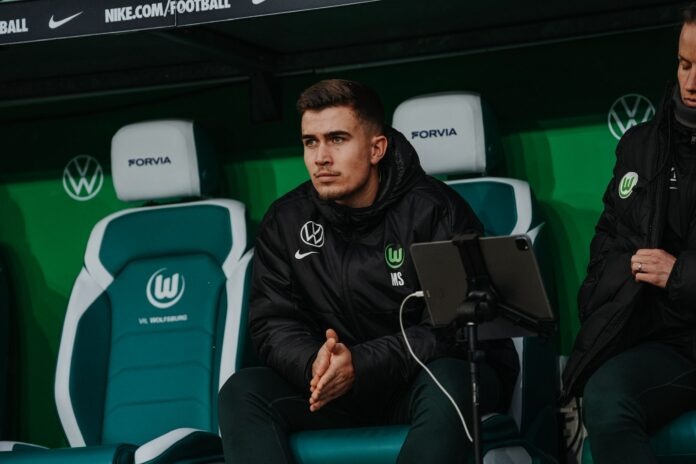
Marcel Schulz seated on the VfL Wolfsburg bench during a Frauen-Bundesliga match, focused and analysing play.
Marcel Schulz, one of Europe’s youngest elite goalkeeper coaches, brings sharp focus and innovation to the VfL Wolfsburg Frauen bench.

A rising figure in elite goalkeeper coaching

When a 15-year-old goalkeeper from Düsseldorf was told he would one day become a great coach, he didn’t realise his mentor was predicting the future, but he proved him right faster than anyone expected.

Marcel Schulz is one of the youngest established goalkeeper coaches in European football. At just 25, he has coached at SGS Essen, Eintracht Frankfurt and VfL Wolfsburg Women, working with top German goalkeepers including Merle Frohms, Stina Johannes and Anneke Borbe. Before entering the Frauen Bundesliga, he spent several years with the DFB youth national teams and supported the German men’s national team as a goalkeeper analyst during the preparation for the UEFA EURO 2021.

Holding the DFB Goalkeeper A Licence, Schulz is known for his detailed, modern and individualised approach to goalkeeper development. His coaching philosophy is rooted in precision, tactical understanding and a strong focus on decision-making, reflecting a new generation of German goalkeeper coaches.

Our exclusive interview with Marcel Schulz

You are only 25 but already an established goalkeeper coach in the Bundesliga. How did your coaching journey begin, and what inspired you to specialise in goalkeeping so early?

I started at Fortuna Düsseldorf in the youth teams. When I stopped playing at the highest level, I focused on earning my coaching licences. The biggest influence was my former goalkeeper coach Christian Lasch. When I was 15, he told me that I would become a good coach one day and that I should start getting my licences early.

He was also the one who hired me as a goalkeeper coach at the academy when I was 16. Thanks to him, I learned everything about goalkeeping from the youngest age groups onwards and gained the confidence to coach at an NLZ at such a young age. Many people who know us both still say they recognise his influence in my coaching style today.

Since I had always been a goalkeeper, specialising in this position felt natural. My motivation has always been to make goalkeepers better and help them reach a higher level. When I was 18, I met Silke Rottenberg, who introduced me to women’s football.

The biggest influence was my former goalkeeper coach Christian Lasch. When I was 15, he told me that I would become a good coach one day and that I should start getting my licences early.

You spent four years as a goalkeeper coach with the DFB youth national teams and also worked as an analyst during the buildup to EURO 2021. What experiences from that period have most influenced your current coaching philosophy?

I am very thankful for the opportunity the DFB gave me. Most of my time there was spent with the youth national teams, which gave me a deep understanding of the developmental pathway on the men’s side.

Supporting the men’s team as a goalkeeper analyst during the preparation for EURO 2021 was a very special experience. It allowed me to study elite male goalkeepers closely, and afterwards the differences between men’s and women’s goalkeeping became even clearer.

In women’s football, we need to invest much more time in technical and tactical precision. Every step, angle and movement towards the ball has to be extremely efficient. Female goalkeepers generally need to make even more accurate decisions. Techniques and starting positions also differ. That experience shaped my understanding of what elite women’s goalkeepers truly need.

At SGS Essen, Eintracht Frankfurt and now VfL Wolfsburg, you have worked within very different club cultures. What did each station teach you about elite goalkeeper development?

All three clubs were completely different experiences.

In Essen, we had very limited financial resources. It was all about connection, unity and a family environment. For me, it was the perfect introduction to women’s football. I enjoyed going to work every day, developed myself and gained a real understanding of the game.

Frankfurt was a major step towards professionalism. The department was newly founded, and we were able to build structures from scratch. Working with Merle Frohms had a big impact on me. Seeing how precisely she worked on even the smallest details showed me what world class mentality looks like.

Wolfsburg was the step to top international level. The ambition of the club is visible every day. You give everything to achieve your goals. During this period, I learned a lot about the tasks of a goalkeeper coach off the pitch, including analysis, preparation and scouting.

You have worked with top goalkeepers such as Merle Frohms and Anneke Borbe. What defines a modern goalkeeper in your eyes, both technically and mentally?

Working with world class keepers is always special because each of them is unique. You cannot compare them. Every goalkeeper has her own style, and the key is to work with individual strengths.

With Merle Frohms, who uses her feet extremely well, we worked on understanding when to use hands instead of feet while keeping the elements that made her world class.

With Anneke Borbe, who came from eight years at Werder Bremen and moved into a top international environment, we worked primarily on her presence and confidence. But also in all other goalkeeping areas: low pushes, crosses, and high balls. Her development was extremely fast and she eventually became the number one.

At elite level, individualisation is everything. What separates the top goalkeepers I have worked with is their mentality. They want to improve every day, stay after training and even work on days off. Sometimes I had to slow them down to manage the load.

My philosophy is to train as you play. Sessions build towards realistic match scenarios, ending with a situation they have faced or might face in a game. The final part is about decision making. Afterwards, we analyse those decisions together at eye level. I want to convince them with arguments, but I am open to individual solutions if they are equally effective.

At elite level, individualisation is everything. What separates the top goalkeepers I have worked with is their mentality.

Technology and data play an increasingly important role in goalkeeper coaching. How do you combine analysis and intuition in your daily work?

A lot depends on your coaching style, but for me the most important tools are match video analysis and identifying situations we can solve better in the next game.

Being a goalkeeper coach involves far more than what happens on the pitch. I analyse the opponent’s goalkeeper before every match to help our strikers, using match sequences and statistics, for example for penalties.

On the pitch, intuition becomes more important. Data helps you understand tendencies, but you cannot individualise training if you focus only on statistics. The feeling for the situation always comes first.

Having coached in both men’s and women’s football, what are the key differences in approach, communication, and player development?

There are clear differences, especially when comparing men’s youth football with the pathway young goalkeepers experience in women’s football.

In boys’ academies, players often have professional structures from a very young age. By the time they are 15 or 16, many already have access to top facilities and daily high performance training. When they reach a first team environment, they have had around ten years of elite coaching. The work focuses on decision making and tactical refinement.

In women’s football, young goalkeepers often do not have this level of structure early on. When they reach the first team, they are usually far from their maximum potential. You have to develop them in every aspect: professional habits, technical foundations and tactical movements.

The biggest development step usually happens in their first year with the first team, when they train daily in a high performance environment for the first time.

You hold the DFB Goalkeeper A licence and continue to work in high performance environments. How important is structured education for young coaches entering the profession?

Coaching licences are the foundation of your career. As a young coach, you do not have the long playing career or experiences that older coaches often rely on. You need strong technical, tactical, psychological and athletic knowledge.

To be a high level coach at a young age, you have to be a “nerd” in every detail. You need to absorb information constantly. You convince goalkeepers through knowledge and methodology, not through your past as a player.

Looking ahead, what are your long term ambitions in football, and how do you see the future of goalkeeper coaching evolving?

In women’s football especially, I see a bright future for goalkeeper coaches. The game is developing quickly around the world and there are more opportunities than ever to experience different countries and cultures.

For me personally, it is about taking the next steps. I want to earn more licences and continue developing as a coach. I do not set long term goals because I like to enjoy the moment and focus on helping the goalkeepers I work with improve and hopefully have a positive impact on their careers.

Chelsea FC and the Muslim Supporters Group

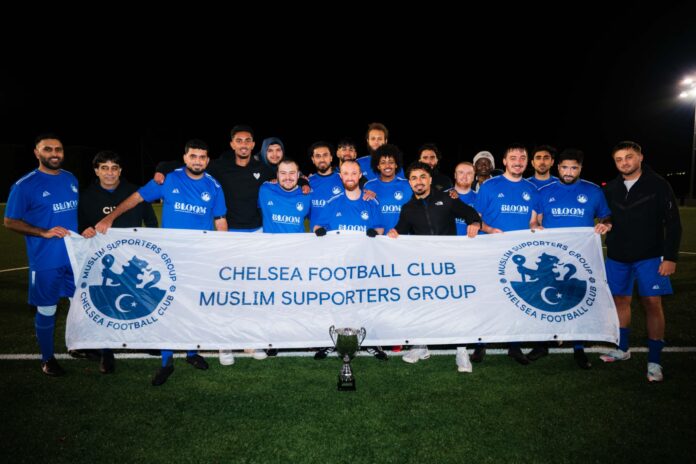
Chelsea Muslim Supporters Group team holding banner on pitch after a match under floodlights.
Chelsea FC Muslim Supporters Group gathers post-match with their banner, proudly representing inclusion and unity in football.

Chelsea FC are one of the most successful football clubs in England’s history dating back 120 years, when brothers Henry ‘Gus’ Mears and Joseph Theophilus birthed the idea of creating Chelsea Football club in 1904. They obtained the deeds for Stamford Bridge looking to turn the athletics venue into a football stadium, but failed to secure a tenant. Instead, the Mears brothers opted to form their own football club and settled naming their club after the adjacent borough of Chelsea on 20th April, 1905.

More recently, the Blues have enjoyed rich success having secured domestic and European titles. Chelsea is also the first club in Premier League history to host an Open Iftar event in 2023, having launched Chelsea FC’s Muslim Supporters Group (CFCMSG). We meet with its founder Zoheb Gaj to find out more on how this story unfolded.

Chelsea 3-0 vs. Barcelona, with one of football’s favourite recipes on the menu

Remember, Remember the 5th of November, when fireworks ignite the UK’s night skies? This year it’s not just the 5th Nov, but also the 25th of November to remember, when more than just fireworks erupted in celebration at Stamford Bridge. Enzo Maresca’s attacking side looked at their true dynamic best again after matchweek 5. In their 100th Champions League home game, the blues gave their fans the gift of a 3-0 victory against Barcelona.

The victory was sealed by 18-year-old ‘wonderkid’ Estêvão Willian, who lit up the atmosphere for all fans, saying “It was definitely the best moment of my career so far. I want to score many more for many years. I’m so grateful that my family were here watching me.” The fans also voted him Player of the Match and with community player ratings of 9.2 (rated EXCEPTIONAL). The young, gifted Brazilian player has become one of “football’s favourite recipes” (using commentator Clive Tyldesley’s words) fitting for the Nutritionist in me!

Who is Zoheb Gaj?

This monumental event takes us back to the 5th of November itself, when I spoke with Zoheb Gaj, who has revolutionised the fan footprint in the Premier League, as founder of the Chelsea Football Club Muslim Supporters Group.

Zoheb, who is of Zambian heritage, describes himself first and foremost as family-orientated, and it’s evident that he is ambitious, highly driven, and entrepreneurial. He is also quite the polymath, having been recognised among the Top 50 Influential Muslims across Europe for two consecutive years – both in 2024 and now in 2025. Alongside his career in Corporate Finance at KPMG, he is also the proud owner of a children’s nursery and is the first person in the UK to establish a faith-based supporters’ group for fans of a Premier League football club.

Four generations of Zoheb’s family have supported Chelsea FC, but his is the generation paving its way in the history books.

Four generations of Zoheb’s family have supported Chelsea FC, but his is the generation paving its way in the history books.

Three years ago, Zoheb responded to an advert seeking representatives for ethnicity and diversity at the very club he grew up admiring. He submitted the application and thought little more of it, but in 2022 Chelsea FC recognised his potential. They invited him to the club, and he became the individual selected to represent Chelsea FC at board meetings focused on culture, ethnicity, and diversity.

What are the pillars of DEI in football?

DEI (Diversity, Equity and Inclusion) in football aims to ensure fair access, representation, and a welcoming environment for everyone, regardless of their background, ability, or identity.

Key initiatives include developing strategies to boost representation, creating inclusive cultures that challenge discrimination, implementing policies to support diverse groups, such as disability football, women’s football, and ethnic minorities. This focus helps to make football more accessible, strengthens community connections, and unlocks talent across all levels of the game. Moreover, The FA describes faith and football as being ‘intrinsic’.

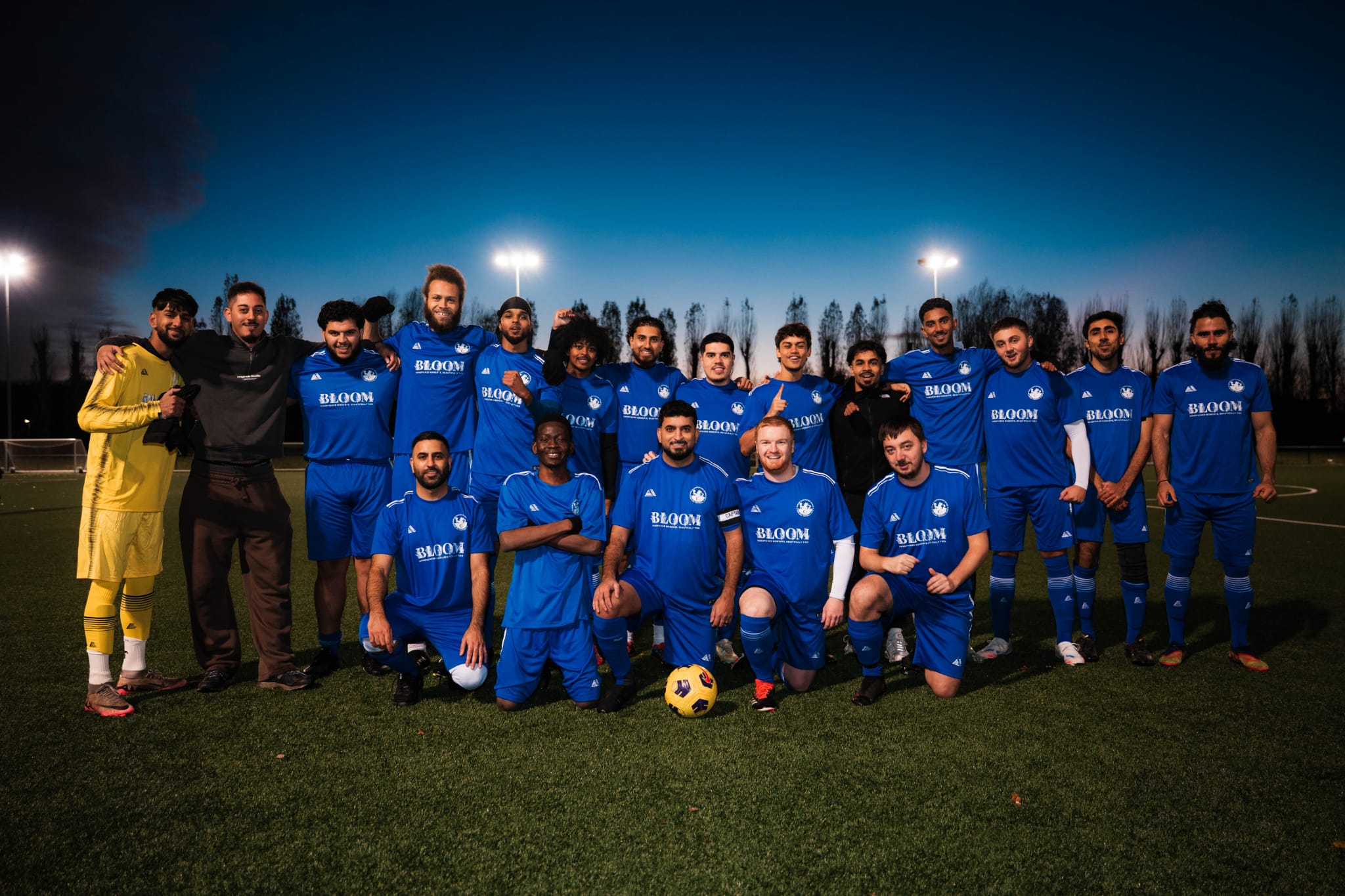
Chelsea Muslim Supporters Group team in blue kits posing together under evening sky.
The CFCMSG squad lined up ahead of the tournament: a collective of supporters, athletes and advocates for inclusion.

Chelsea Football Club Muslim Supporters Group

Chelsea FC already had initiatives to address the match day experience for fans with disabilities, fans aged 60+, so why not a Muslim fan? This is where Zoheb’s M&A (Mergers and Acquisition) skills allowed him to ‘pitch’ a strategy on how to improve the match day experience for Muslim fans.

The Muslim Demographic: Islam as a faith is the second largest religion in the UK and according to the Muslim Council of Britain, the Muslim population increased by 1.2 million between 2011 and 2021. This demographic could be key to improve Chelsea’s fan base and Chelsea FC saw the business benefit.

6 months later, the Chelsea FC Muslim Supporters Group came to fruition as an official group, coinciding with the start of the holy month of Ramadan. Gaining official recognition means that Chelsea FC also sets aside funding for events for the Muslim Supporters Group.

At the heart of creating the group was to build inter-faith coalitions to combat inequality, particularly through the No to Hate campaign.

At the heart of creating the group was to build inter-faith coalitions to combat inequality, particularly through the No to Hate campaign.

Zoheb says “I’ve founded this group as I envision a vibrant community where our devotion to faith and our club intertwines seamlessly. Together, we celebrate the triumphs on the pitch and uphold the principles of diversity and unity off it – creating a legacy of inclusivity and passion for generations to come. This is an exciting journey for all, and we look forward to welcoming new members to the group with hope that we will provide a voice for Muslim fans all over the world.”

First Eid event on the grounds of a Premier League club

In March 2023, Chelsea FC became the first club to host an ‘Open Iftar’ at a Premier League Stadium, at Stamford Bridge itself. More than 500 attendees joined alongside the Ramadan Tent Project (RTP). The Iftar was open to the local community and supporters. It was also part of Chelsea’s commitment to inclusivity and the “No to Hate” campaign.

In 2024, the Muslim Supporters Group, in partnership with Chelsea Football Club and Chelsea Foundation, convened for their first official event to commemorate Eid. Both Muslims and Non-Muslims attended the family event in equal proportion.

The event featured insights from Zoheb, who expressed the group’s mission to forge stronger bonds between faith and football. Chelsea Foundation trustee Louise Jacobs remarked: “At Chelsea, we believe football has a unique power to educate, motivate and inspire. It brings people and communities together across races, genders, creeds and religions – uniting us all in our common love for the game.”

Zoheb emphasised his vision as “a vibrant community where our devotion to faith and our club intertwines seamlessly… creating a legacy of inclusivity and passion for generations to come.”

Eid continues to be celebrated at the club year-on-year, including recognition of Eid ul-Adha.

Player and player care impact

Centre-back Wesley Fofana describes Chelsea as his “dream club.” He also made history in the Premier League when a match was paused so he could break his Ramadan fast while at Leicester City. Wesley fully supports the Muslim Supporters Group and said “I’m so happy about this opportunity for Chelsea’s Muslim community to connect and celebrate their faith as well as their fandom.”

This year in March, Chelsea Academy’s Player Care Team organised a special gathering for Academy players and their families during Ramadan. The Muslim Supporters Group also played a role, providing a Ramadan Gift box for players and their families.

During Ramadan, the group helps players practice their faith, including by navigating a Prayer Room for 1st Team players. It has become a platform for player support and a sounding board for Muslim players across all age groups.

Zoheb shares that “Through faith and football, we build bridges, break barriers, and celebrate togetherness.”

Who owns Chelsea’s pitch?

In the 1980s, Chelsea supporters became owners of Stamford Bridge. Chelsea Pitch Owners PLC (CPO) owns the freehold of the stadium and the club’s name. It is the only pitch in English football to be owned by 13,000 fans worldwide. Famous shareholders include Tuchel, Lampard, Mourinho, John Terry and more.

Zoheb says that attracting Muslim supporters is part of the pitch ownership legacy too.

Social media following

November is Islamophobia Awareness Month and Premier League clubs are making identity and football coexist. Chelsea’s Muslim Supporters Group leads in this space and has mentored similar groups at other clubs, including Manchester United.

CFCMSG and MUMSC have over 160,000 followers combined on social media. Chelsea’s group alone has 85,000, with United and Arsenal also growing fast.

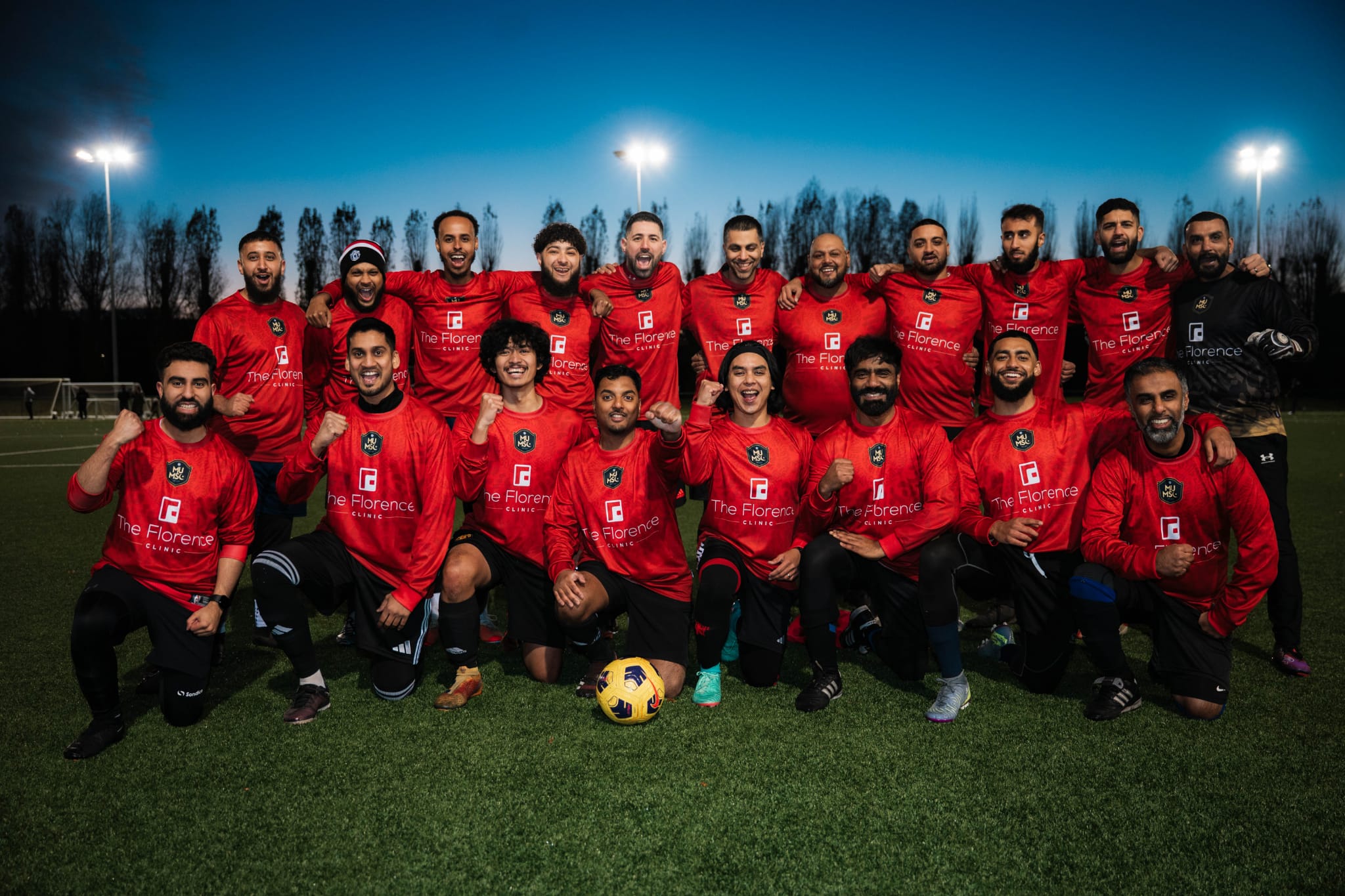
Football team in red kits from the Chelsea Muslim Cup tournament posing together on the pitch.
One of the visiting teams at the Chelsea Muslim Cup, highlighting the spirit of competition and togetherness.

Chelsea FC Muslims vs Man Utd FC Muslims

On 29 Nov 2025, Chelsea’s Cobham Training Ground hosted a charity match between Chelsea and Man United Muslim supporters. The event went viral with 47k likes. Chelsea won 7-3, with Zoheb likely playing for the squad too!

What does the future hold for the CFCMSG?

Zoheb says the focus is on long-term, quality initiatives, bigger events, and Ramadan/Eid support. “There is plenty more to come for 2026 and beyond for Chelsea’s Muslim Supporters Group and across the Premier League!”

Read more: Chelsea FC’s Muslim Supporters Group

Napoli Women Launches Gap Year Program

Napoli Women official club logo on a blue gradient background, representing the Serie A women’s football team.
The Napoli Women logo represents a club at the forefront of women’s football development in Italy. Its new Gap Year Program welcomes international student athletes into a professional environment rooted in passion and progress.

Napoli Women proudly presents the Napoli Women Football Lab Gap Year Program, a nine-month immersive development experience designed to open the doors of a top-level women’s football club to aspiring student athletes from around the world.

Opening elite club access to young players

As the first professional women’s club in Italy to create such an initiative, Napoli Women offers participants unique access to the inner workings of elite women’s football. Under the Gap Year Program athletes benefit from high-level technical training, educational sessions and full integration into the daily life of the club.

Under the Gap Year Program athletes benefit from high-level technical training, educational sessions and full integration into the daily life of the club.

“The Napoli Women Football Lab was created to share our world with talents ready to grow both on and off the pitch” said Alessandra Nencioni, Club Manager Women’s Football at Napoli Women. “With the Gap Year Program we offer structured training, football education and cultural immersion inside a Serie A Women club environment.”

Combining football, academics and cultural experience

The program combines training sessions with professional Italian coaches, academic and football-industry education, and real-life club experience inside the heart of Naples. Participants will gain insights into club methodologies, professional routines and the cultural identity of one of football’s most passionate cities.

Participants will gain insights into club methodologies, professional routines and the cultural identity of one of football’s most passionate cities.

The Napoli Women Football Lab positions itself as a strategic pathway for ambitious players seeking to elevate their game, broaden their international outlook and prepare for future steps in women’s football.

More information

More information about the Gap Year Program is available at:

https://napolifemminile.it/napoli-women-football-lab

Media Contact

Napoli Women
info@napoliwomen.it
www.napolifemminile.it

Who is Fredi Bobic?

Fredi Bobic speaking during an interview at a restaurant, reflecting on his football and executive career.
Fredi Bobic opens up about his journey from Bundesliga striker to top-level executive in European football. His strategic mindset continues to shape modern football leadership.

From Bundesliga striker to football executive

Fredi Bobic is one of German football’s most recognizable figures — both on the pitch and in the boardroom. Born on October 30, 1971, in Maribor, he became known as a powerful striker, playing 285 Bundesliga matches for clubs such as VfB Stuttgart, Borussia Dortmund, Hannover 96, and Hertha BSC. He won the European Championship with Germany in 1996, finished as the Bundesliga’s top scorer that same year, and added a DFB-Pokal title (1997) as well as a Bundesliga championship (2002) to his résumé.

After ending his playing career in 2006 at Croatian club HNK Rijeka, Bobic transitioned into football management. His first executive role came as CEO of FC Chernomorets Burgas in Bulgaria. In 2010, he returned to Germany to become Sporting Director at VfB Stuttgart, where he later also served on the club’s executive board and oversaw major squad development initiatives.

In 2016, Bobic joined Eintracht Frankfurt as an Executive Board Member. His tenure included several high points, most notably the 2018 DFB-Pokal triumph and strong Europa League performances.

He later became Executive Board Member at Hertha BSC, though his time there ended abruptly in January 2023. Additionally, he served on the Supervisory Board of the Deutsche Fußball Liga (DFL) from August 2022 to February 2023, gaining experience in league governance.

In 2025, Bobic took on a new challenge as Head of Football at Legia Warsaw in Poland.

Renowned for his eye for talent, negotiation skills, and his ability to build sustainable sporting structures, Bobic remains an influential figure in world football. His journey from “magical striker” to high-level executive showcases both his passion for the sport and a sharp, strategic mind.

Our exclusive interview with Fredi Bobic

Fredi, you were born in Maribor, Slovenia, and moved to Germany at a very young age. How was that transition, and how did you get into football?

My parents were already living and working in Germany, so integrating was quite easy for me. Football always played an important role in my childhood. My friends and I played every day on concrete pitches in our neighborhood. We didn’t join a club until we were seven years old — it was something we decided together.

You enjoyed a prolific playing career across the Bundesliga and abroad. Looking back, which phase shaped you the most as a footballer and why?

Especially in the 1990s, football was already going through major changes. I found myself right in the middle of a generational shift, as the sport became more diverse and areas like marketing, merchandising, and entertainment grew in importance. This long transformation process fascinated me — and made that period the most exciting for me, both as a player and as a person. It was during those years that I already decided I wanted to become a club executive one day.

This long transformation process fascinated me — and made that period the most exciting for me, both as a player and as a person.

You were part of Germany’s EURO 1996 winning squad. How did that experience influence your mindset and leadership later in football management?

As a young player, I learned a lot from winning the title in England. Our motto was: “The star is the team.” Everyone acted accordingly — on and off the pitch. The energy of subordinating everything to the team and to a common goal was extraordinary. That feeling still connects all of us to this day, and we remain in close contact.

As a leader today, it’s important to me to bring everyone along. You can achieve something on your own — but the greatest successes only come when you do it together.

You can achieve something on your own — but the greatest successes only come when you do it together.

At VfB Stuttgart, you were part of the famous “Magisches Dreieck.” How did that partnership influence your development on and off the field?

When people understand each other almost “blindly,” trust each other, and are loyal, things like the “Magical Triangle” with Élber and Balakov can happen — it was a special period at Stuttgart. Even in my current roles, the people around me who share sporting values and objectives are crucial. I’ve been fortunate to work with many outstanding players and later outstanding staff members who all pulled in the same direction.

Your time at Eintracht Frankfurt is widely seen as one of your greatest successes as an executive, culminating in the 2018 DFB-Pokal win. What key decisions or strategies made that project so successful?

My philosophy is leading by example. I can only demand everything from players, coaches, and staff if I demand everything from myself. The progress we made in scouting with Ben Manga, the development in analysis and research with Sebastian Zelichowski, the medical department’s evolution with Bruno Hübner, and the cooperation with the Supervisory Board were crucial.

And the mutual trust with both head coaches — Niko Kovač and later Adi Hütter — took us to another level. It was a collective team effort, and I had the privilege to lead it.

You have held leadership roles at Stuttgart, Frankfurt, and Hertha BSC. How would you describe your philosophy as a sporting director, and how has it evolved?

My goal is always to empower the key people in a team to make decisions independently and to react effectively to change. People management and solving problems quickly to keep moving toward our goals must always be at the core of a manager’s responsibilities.

Modern football places huge emphasis on data, scouting networks, and long-term roster planning. Which areas do you think are most critical for clubs today?

Data is an extremely important tool in scouting today. Every club must decide which data points are relevant for its strategy. Data is very helpful in identifying players, but one thing must never be forgotten: the conversation with the player.

His behavior, character, mentality, and whether he fits the team — data cannot measure those things. The right balance between both approaches leads to the right decisions. Short- and medium-term squad planning is absolutely vital.

Next year, the World Cup will take place in the United States. During your time at Eintracht Frankfurt, you opened an office in New York. How do you see the development of football in the U.S., and could you imagine taking a step into MLS?

I’ve been traveling in the U.S. for 30 years, visiting many MLS clubs, universities, and also teams from other major sports like the NFL, NBA, and NHL. The insights into their data usage, medical structures, and athletic development have always helped me implement ideas in my own clubs. Of course I can imagine working in this growing league one day. In 2015, I had very intensive discussions with the Philadelphia Union, and I’ve stayed in touch with other clubs in recent years. You never know what the future holds — I always let things come to me. The global world of football has always fascinated me.

Football and Christmas: A Powerful Commercial Match

Manchester United Christmas ornament hanging on a tree with festive lights in the background.
A Manchester United Christmas ornament captures the festive spirit of football’s commercial season. Clubs often embrace the holidays through branded merchandise and themed campaigns that connect emotionally with fans. Photo by leyvaine Davids on Unsplash

Christmas has long carried cultural and consumer significance in many parts of the world, and when football intersects with that season, the commercial impact is magnified. The combination of festive sentiment, leisure time, gift-giving, family gatherings and increased media consumption makes the Christmas period especially valuable for football brands, players, sponsors, broadcasters and advertisers.

For football clubs and players, the festive fixture schedule often means multiple games in a short period; more matches, more exposure, more storylines, and more emotional resonance with fans. For brands, this provides a high-impact environment in which to run seasonal campaigns, position themselves around holiday themes, and tap into a ready-made audience primed for consumption, community and celebration.

Why Christmas Amplifies Football’s Commercial Value

Firstly, Christmas gifts a break from normal work schedules for many fans; holidays, time off, and family gatherings mean people have more leisure time. This increase in free time generally translates into more football watching, more social media engagement, and greater appetite for content, merchandise and festive promotions. For sponsors and advertisers, that’s a ready-made captive audience.

For sponsors and advertisers, that’s a ready-made captive audience.

Secondly, the festive period often coincides with a busy match schedule, historically Boxing Day, the days between Christmas and New Year, and sometimes New Year’s Day itself have delivered high volumes of matches across leagues. That flood of live football, sometimes with multiple games per week, increases broadcast volume, media coverage, and the chance for brands to attach messages to the emotional highs and lows of the season. Even for clubs or leagues with fewer matches, the proximity to Christmas gives a natural storytelling moment: holiday content, gift-themed campaigns, player-fan interactions and community outreach become more resonant.

Thirdly, the emotional and cultural weight of Christmas gives marketing campaigns greater potency. Themes such as family, giving back, community, goodwill and togetherness tend to perform strongly at this time of year. When footballers, who already carry cultural influence, align with these themes, the narrative becomes even more powerful. By blending their sporting identity with festive or charitable messaging, athletes and clubs can connect at a deeper emotional level with fans and consumers.

Finally, for broadcasters and media-rights holders, Christmas football has traditionally delivered high viewership. Because many people are off work or school, and often gathering indoors with family or friends, a high-volume schedule becomes attractive for streaming platforms, subscription services and pay-TV networks alike. This creates incentive for broadcasters to bid high for rights for holiday match rounds or invest in promotional campaigns around festive football.

How Players and Brands Have Leveraged Christmas Campaigns

Footballers have become a central part of the modern Christmas advertising landscape, especially in the UK, a market where festive adverts attract Super Bowl-level attention. Brands increasingly use players to connect holiday sentiment with sporting culture, blending emotional storytelling with the star power of elite athletes.

One of the strongest recent examples is Marcus Rashford’s partnership with McDonald’s in its “Raise Your Arches” Christmas campaign. Rashford has previously fronted McDonald’s charity-led work, and although he did not star in the 2023 Christmas ad, he appeared in surrounding festive activations that positioned him as a symbol of community support during the holiday season. The brand used his public goodwill and national credibility to enhance its Christmas messaging.

Another example is Tottenham’s Heung-Min Son, who featured prominently in AIA’s global Christmas campaigns across Asia. In 2022, Son took part in AIA’s “Healthier Christmas Together” campaign, blending festive storytelling with fitness, wellness and family-focused content, perfectly aligned with both the insurer’s positioning and Son’s own reputation for professionalism and positivity.

Even retired stars are valuable in the Christmas advertising space. David Beckham has repeatedly appeared in festive campaigns for brands like Haig Club, where Christmas-themed content, warm visual aesthetics, family gatherings, gifting moments, plays into Beckham’s lifestyle-driven identity. His 2021 holiday campaign helped spike Haig Club’s seasonal sales, with Diageo reporting significant December uplift across multiple global markets.

On the pure retail side, footballers have also been central to high-street Christmas adverts. In 2023, Sports Direct launched its “Give Me Football” Christmas campaign featuring Bukayo Saka, Jack Grealish, Mason Mount and Emma Hayes, blending football culture with holiday nostalgia in one of the UK’s most-watched festive sports ads. The video surpassed 20 million online views in its first month, proving how footballers can dominate the Christmas advertising ecosystem.

For players, Christmas ads offer a rare chance to expand their narrative: family life, heritage, celebration, generosity. Fans are already in an emotionally receptive state, meaning the player’s personal brand benefits from being associated with warmth, humour and tradition. When the festive storytelling resonates, the long-term commercial impact can be substantial.

Fans are already in an emotionally receptive state, meaning the player’s personal brand benefits from being associated with warmth, humour and tradition.

How Media Rights Holders and Streaming Platforms Capitalise on Boxing Day & Holiday Fixtures

For broadcasters, Boxing Day football is one of the most commercially valuable assets in the sporting calendar. The Premier League’s festive schedule consistently produces some of its largest domestic and global audiences due to family gatherings, increased free time and a cultural tradition of watching football on 26 December.

The most prominent example is Amazon Prime Video, which secured exclusive rights to a full round of Premier League fixtures every December from 2019 to 2023. The move was strategic: Amazon knew that the holiday window was ideal for driving Prime subscriptions, with the platform reporting a surge in sign-ups during its first Boxing Day broadcast. According to UK media analysts, Amazon’s football coverage contributed to a 53% year-on-year increase in Prime sign-ups across December 2019.

Amazon doubled down on Christmas content, offering multi-game interactive features, alternate commentary streams and behind-the-scenes documentary-style extras, all designed for fans relaxing at home during the holidays. Their Boxing Day coverage became a cornerstone of Prime’s annual subscription push.

Traditional broadcasters also benefit enormously. Sky Sports regularly sees December viewership spikes, with Boxing Day fixtures often ranking among the season’s top five most-watched matches. BBC Sport uses the holiday period to amplify highlight shows like Match of the Day, which historically sees uplifts in viewership due to families being gathered at home.

Streaming platforms beyond football have taken notice of this trend too. Netflix, for example, times many of its sports documentary releases for December, such as Sunderland ‘Til I Die and its Drive to Survive-style formats, because Christmas binge-watching spikes demand for sports storytelling. While not live rights, it positions Netflix firmly in the holiday football ecosystem.

For rights holders, the Christmas period is a perfect storm: huge captive audiences, strong advertiser demand, and culturally embedded fixtures that require no additional marketing to generate excitement. For brands, it’s an unmatched window to integrate holiday messaging with live sport. And for players, it ensures high visibility, at exactly the time when brands are investing heavily in seasonal campaigns.

Considerations, Risks and Changing Traditions in Modern Scheduling

However, the combination of football and Christmas is not without complications. Fixture congestion can strain players physically, especially in packed December and January schedules. Recent seasons have seen traditional Boxing Day “wrap-around” fixture lists altered or scaled down due to broadcast commitments and fixture congestion. For example, in a recent season, the top-flight league scheduled just a single fixture on Boxing Day, a break from the norm, citing expanded European competition obligations and the need to balance rest and broadcast demands. That change, though exceptional, signals how modern football’s commercial and logistical pressures can challenge long-standing festive traditions.

For brands and sponsors, that unpredictability can be a risk. An overly dense schedule might lead to player fatigue, injuries or lower on-pitch quality, factors that can make festive campaigns feel disjointed. There is also the moral dimension: players may be expected to participate in holiday promotions and public appearances at a time when fans expect them to rest, reflect, or be with family, over-commercialisation during a traditionally personal period can backfire if not handled sensitively.

From a fan perspective, there is sometimes resistance to seeing Christmas become over-commercialised, or to changes in traditional match schedules. When holiday fixtures are moved or trimmed, fans often lament the loss of historic rituals like Boxing Day full card matchdays. This tension between commercial benefit and tradition is growing sharper as leagues juggle broadcast deals, player welfare, fixture congestion and revenue priorities.

Why Christmas-Football Remains a Strategic Moment for Brands, Clubs, Players and Rights-Holders

Despite the challenges and the evolving landscape, Christmas remains a uniquely strategic window for football commercialisation. For brands, it offers emotional leverage, heightened engagement, and a seasonal backdrop that amplifies messaging. For players, it’s a chance to humanize their personal brand, reach beyond athletic identity, and connect with fans on values like family, generosity, joy and solidarity.

For clubs and leagues, the festive period, when managed properly, can deliver boosted match-day revenue, increased broadcast value, and a global audience tuned in for both the sport and the celebration. For media rights holders and streaming platforms, holiday fixtures continue to present enormous value through subscriptions, ad revenue, and content differentiation.

In short: Christmas and football, when aligned strategically, create a multilayered commercial ecosystem, one that blends emotion, tradition, entertainment and business in a way few other combinations can match.

For those in sports marketing, athlete representation, media, or brand management, the festive season remains a valuable period of the year, but only if deals, scheduling and campaigns respect both the spirit of the holidays and the demands of modern football.


The Art of Space in Modern Football

Football pitch highlighting space and positioning during a youth match under clear skies.
A wide view of the pitch illustrates how space shapes decision-making, positioning, and tactical understanding in modern football.

Modern football does not belong to the team that touches the ball more, but to the team that controls space. Possession has lost its supremacy. Space is the new domination currency. The ball is temporary, space is strategic. The ball can be lost and won again. Space cannot be surrendered. When space collapses, structure collapses. When structure collapses, control disappears. The foundation of modern play is simple. You may lose the ball. You may not lose space.

The highest level of the game is no longer physical control of the field but cognitive control of territory. Space is not grass. Space is decision time, breathing room, direction of movement and psychological clarity. The team that manages these dimensions dictates the match rhythm and emotional temperature.

The ball is temporary, space is strategic.

Space Creation

Space is not found. Space is manufactured. Space is not a gift. It is a construction of intention and deception. Space is created through coordinated movement, timing discipline and collective intelligence. A run is not simply a sprint into open field. A run is a message. A run moves defenders. A run bends the mental map of the opponent. Space expands before feet move.

Space creation tools

  • Boş alan koşuları runs that create lanes rather than demand passes
  • Delayed arrivals that destabilize defensive timing
  • Blind side entries that attack zones outside the opponent’s awareness
  • Positional stretching to force the opponent into horizontal and vertical dilemmas

The game rewards those who understand that sometimes the most dangerous action is not arriving early but arriving when the opponent believes danger has passed. Space creation is layered thinking. First move the mind. Then move the body. Then move the ball.

Positional Deception

Modern football is no longer fixed position structure. It is functional identity and role transformation. A fullback may become an interior playmaker. A midfielder may stretch wide to open the half space. A forward may not move at all in order to freeze the back line and then appear at the perfect second.

Positional deception forces defenders into questions rather than answers. Should they follow or hold? Press or protect? Shift or stay? Every hesitation is space won. Every doubt is time gained. And in elite football time is the rarest resource. The field is never only physical. It is mental geography. When the opponent reads the wrong map you already own the territory.

Vertical Intention

Vertical play is not speed. It is decision violence. It is the ability to break time. A vertical pass forces the opponent to retreat compress and panic. When the opponent runs backwards the psychological balance flips. Space expands in midfield. Defensive lines stretch. The rhythm of the match changes instantly.

Lateral passes are not inherently wrong. But lateral passes without vertical threat are oxygen for the defending team. Threat forward and the opponent suffocates. Threat sideways without purpose and you suffocate yourself. Vertical intention means the game is always one heartbeat away from acceleration.

Space Protection

To defend space is not to run backwards. To defend space is to manage density. At times compactness is the answer narrow lines suffocating zones denying central access. At other moments controlled expansion wins the moment staying wider at the first second after losing the ball to kill the opponent’s first pass option.

Modern defending is not one shape. It is intelligent shifting of collective mass. Close when danger grows. Open when pressure invites the opponent into a trap. The purpose is not survival. The purpose is regaining initiative.

Psychological Space

Space is not only what the opponent sees. It is what the opponent fears. If a team fears the run behind they defend deeper. If they fear the ball inside they narrow. If they fear the midfielder stepping, their playmakers turn backwards. Fear shapes geometry. Fear creates or destroys access. The team that controls the opponent’s emotional geography controls the field even without the ball.

The team that controls the opponent’s emotional geography controls the field even without the ball.

Conclusion

Space is the essence of modern football. It is structure, breath, rhythm and certainty. Teams that understand space do not chase the ball. They prepare the environment. They dictate the terms. They remove options. They create doubt. And doubt is defeat.

The rule remains clear. The ball is temporary. Space is destiny. Lose the ball if you must. Never lose space.

Breath Coherence: The Next Frontier in Team Performance

Football team huddle before kick off, players linked arm in arm to build focus, unity, and collective mindset on the pitch.
A team huddle captures the power of shared intention, calm focus, and emotional alignment before competition. Moments like this reflect how collective mindset and breath control shape performance under pressure. Photo by Omar Ramadan on Unsplash

In the high-stakes world of professional football, leaders are constantly seeking the edge, whether through data analytics, tactical innovation, or sports psychology. But there’s a dimension of performance that remains largely untapped: breath coherence.

What Is Breath Coherence?

Breath coherence is the alignment of breath, emotion, and intention across a team. It’s not just about individual calm; it’s about collective rhythm. When players breathe in sync, they enter a state of physiological and emotional alignment that enhances decision-making, resilience, and flow.

It’s not just about individual calm; it’s about collective rhythm.

Why It Matters

Recent observations in elite teams suggest that emotional connectors, players who naturally harmonize the field, are crucial to maintaining team coherence. When these connectors are absent, as seen with Liverpool’s Diogo Jota, the team’s performance can fragment even if tactics remain unchanged.

The Science Behind It

Research shows that coherent breathing (slow, rhythmic, and intentional) can

  • Reduce cortisol levels
  • Enhance heart rate variability (HRV), a marker of resilience
  • Improve focus and emotional regulation

When applied collectively, these benefits scale across the team, creating a field of coherence that supports peak performance.

A Case in Point

Consider Mo Salah’s recent emotional outburst. While it may appear as frustration, it could also be the visible expression of an internal struggle to carry the emotional weight left by a missing connector. This highlights the need for teams to not only replace skills but to rebuild emotional coherence.

The strongest teams aren’t just the most talented, they’re the most connected.

How to Implement It

Pre-Match Breath Rituals: Introduce 3 to 5 minutes of coherent breathing before matches to align the team’s emotional state.

Connector Mapping: Identify players who naturally stabilize the team’s emotional field and ensure they are supported.

Emotional Debriefs: After matches, include breath-based reflection to process emotional highs and lows.

Conclusion

In football, as in life, the strongest teams aren’t just the most talented, they’re the most connected. Breath coherence offers a practical, science-backed way to enhance that connection.

For leaders ready to explore this frontier, the question is not whether your team can breathe, but whether they can breathe together.

Who is Gianni Piccatti?

Gianni Piccatti standing with folded arms in a black Como Women polo during his profile interview for The Football Week.
Gianni Piccatti of Como Women during his feature interview for The Football Week. His insights shed light on coaching identity, development, and the modern game.

He sold lawn mowers before he ever scouted footballers, returned to school when the system offered him no path forward, and built a football career without having played the game professionally. Today, Gianni Piccatti is one of the most intriguing young minds in European women’s football.

Gianni Piccatti is the Scouting Manager at FC Como Women, where he plays a central role in player evaluations, transfer operations and international recruitment. Known for his multilingual background, analytical mindset and unconventional path into the sport, he has developed a unique perspective on how clubs operate, how departments interact and how talent is identified. His experience ranges from event management to coaching, from data and analysis to adaptive sports environments such as Atalanta For Special and the Luxembourg Paralympic Committee.

What makes Piccatti stand out is not only his football competence, but the resilience and curiosity that define his career. From a hardware store apprenticeship at age 15 to scouting in Serie A Femminile, his journey reflects an industry increasingly shaped by diverse skill sets and multidimensional leaders.

“You can learn anything if you really want to.”

Our exclusive interview with Gianni Piccatti

You are currently Scouting Manager at FC Como Women. What are your main responsibilities in this role, and how does your approach to scouting differ in women’s football compared to men’s?

As a Scouting Manager, my primary responsibility is to identify and assess talent that can improve our current squad. I have the privilege of working directly with our Sporting Director, supporting him in evaluating players, communicating with agents, taking part in transfer negotiations and welcoming new players to the club.

Since I speak five languages, I naturally build and maintain international relationships. Beyond that, I do much of what you expect from a scout: watching football and spending a lot of time in spreadsheets.

The main difference compared to the men’s game is that you operate in a much faster changing environment with fewer available resources. Federations professionalising leagues, new clubs entering the women’s game or increased investment can drastically change the scouting landscape from one transfer window to the next.

Information about contracts, statistics or even video footage is not always as easily available as on the men’s side, but that is also what makes the job dynamic and enjoyable.

You have already gained experience across several areas of sport, from event management to coaching and analysis. How have these different roles shaped your perspective on football management?

I always aimed to work in a managerial role in sports, so I wanted to understand the different realities within different organisations. Today, people are expected to specialise in one specific field. Specialists are essential, but relying too much on them creates blind spots across an industry.

Sports is already a niche, and football within it is another niche that we further break down into highly specialised departments. Working across different functions allowed me to understand how a decision in one department can affect many others. The lack of cooperation can create tension and misunderstandings.

A specialist view is usually narrow. My broader background helps me see the full picture and stay open to alternative perspectives.

For example, scouts often ignore the commercial value of a signing because they focus on evaluating qualities on the pitch, which is absolutely their main job. But when you understand the impact a player can have on sponsorship, visibility or brand recognition, you cannot ignore that aspect completely. A commercially valuable signing can increase revenues, which then benefits the scouting department in the long run with more resources and a stronger pull for future targets.

Your professional journey was not a typical one, from working in a hardware store as a teenager to returning to school later and eventually building a career in football. How did these experiences influence your work ethic and your view on opportunity in sport?

When I was 15, I failed in school and was left with no option but to start an apprenticeship at a hardware store because I was denied the chance to continue the education I wanted.

Working there taught me valuable lessons that have carried me to where I am today. I knew nothing about the equipment we were selling, yet I figured it out. You can learn anything if you really want to. Today, I work in football even though I never played competitively. Because I was able to sell lawn mowers without ever having mown a lawn, I firmly believed that I could work in football without being able to control a ball.

After finishing the apprenticeship, I contacted the director of my local high school and asked for permission to return to education. There was no clear path to what I wanted, so I created one myself. She accepted my request, and I entered a program where I studied alongside people four years younger than me.

It took me four more years to finish the degree, with no special treatment. That qualification allowed me to pursue higher education in International Sports Management and Business. I walked a path that technically did not exist in our system.

People doubted me and support was limited, but I believed in my own direction. That experience shaped me. I now see barriers as hurdles to jump over.

“If you are willing to give, you will be able to receive.”

At Atalanta For Special and the Luxembourg Paralympic Committee, you worked in inclusive and adaptive sports environments. What have these experiences taught you about leadership and motivation?

Both experiences shaped me in different ways.

At the Luxembourg Paralympic Committee, I met high performance athletes with visible disabilities. Seeing a shot putter compete without an entire leg changed how I think about sport. It taught me to focus on what can be done, not on what cannot.

For example, when I played badminton competitively, I had a major foot injury and was out for six months, but I never missed a training session. I came back stronger because I adapted sessions by sitting or standing differently. If an athlete can train without a leg, I can train with a foot injury.

Atalanta For Special taught me something else. When I moved to Bergamo, I wanted to get involved in football somehow. Despite not speaking Italian at the time, the project welcomed me. I gave everything to the players, but they gave me even more. For a full year, they were my only constant in Italy. Volunteering there helped me learn Italian and take my first steps on the pitch.

The lesson is simple. If you are willing to give, you will be able to receive.

Having lived and worked in Luxembourg, the Netherlands and now Italy, you bring a strong international background to your career. How has this multicultural experience influenced your communication and decision-making in football?

Speaking several languages and living in different cultures broadened my perspective. I always adapt my communication to the environment. In some cultures, you get straight to business. In others, you need a conversation over coffee first.

Language shapes thinking. Some terms are so powerful they travel across languages, like “Raumdeuter” becoming common in English after Thomas Müller popularised it. Speaking many languages allows me to understand different interpretations of the game.

I am open to how other cultures think, understand their reasoning and apply it to my life and work. For example, I started sleeping on the floor to fix back pain after learning it is common in many cultures. My friends thought I was crazy, but it worked.

Every culture has something to offer. Being open minded gives you more tools to solve problems. If your own culture does not offer a solution, another one might.

FC Como Women is a growing name in Serie A. What excites you most about contributing to the club’s project and long-term vision?

I have followed Italian football with passion my whole life. Being part of this environment sometimes still feels unreal.

FC Como Women’s unique position as a women-only club without decades of history makes us an underdog, a position I am very comfortable in. I am excited to see where Mercury 13 will take the multi-club ownership model and how the acquisition of more clubs will shape our reality in Italy.

With the potential promotion of Como 1907’s women’s team, a local rivalry could grow. Competition would increase, but it is also an opportunity to distinguish ourselves as the reference for women’s football in Italy. And who does not love a derby?

Looking ahead, what are your long-term goals in football? Do you see yourself continuing in scouting and coordination, or moving into a broader sporting director role?

My ultimate goal is to become a Sporting Director. I believe I have built a strong foundation for that role. My profile is unique because I do not have the traditional football background, so I still need to position myself correctly in the industry and jump over another hurdle.

Right now, I focus on learning, helping the club grow and developing as a professional. There is no rush as long as I am learning, enjoying myself and moving in the right direction.

Lowri Roberts Appointed Bristol City Women Interim CEO

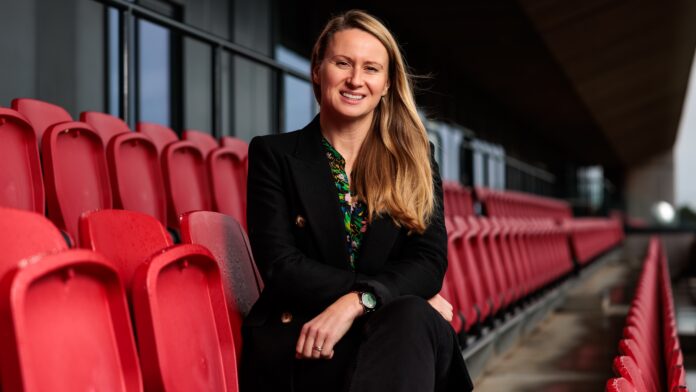
Lowri Roberts sits in the stands at Bristol City Women after being appointed Interim CEO under the new Mercury13 ownership.
Bristol City Women announce Lowri Roberts as Interim CEO on October 29, 2025 at the Robins High Performance Centre in Bristol, England. (Photo by Rogan/Bristol City)

Bristol City Women has appointed Lowri Roberts as Interim Chief Executive Officer.

Following the formal approval by WSL Football of the acquisition by Mercury13 of a majority stake in the club, Roberts formally takes the reins of the Robins as they push for promotion from the Barclays WSL2 back to the WSL.

Roberts brings 17 years of experience of working in the elite women’s game, including five years as Head of Women’s Football at the Football Association of Wales and five years at the English FA, working across marketing and commercial roles building visibility and fandom for the Lionesses and the Barclays Women’s Super League.

She has a lot of experience in women’s elite sport and will provide head coach Charlotte Healy with the support she needs to take us back into the top flight.

Chief Strategy Officer at Mercury13 Hannah Haynes, who led the acquisition, added: “We are delighted that Lowri is now leading Bristol City Women following formal approval of the acquisition by WSL Football. She has a lot of experience in women’s elite sport and will provide head coach Charlotte Healy with the support she needs to take us back into the top flight.”

Roberts returns to the Robins 15 years after she started as a coach in Bristol City Women’s Centre of Excellence and progressed to running all marketing and communications, match operations, and commercial partnerships.

Bristol City Women Board Director Lisa Knights added: “Throughout her time away from us Lowri has always remained in touch and an advocate of Bristol City Women. She led the consultancy work on our three-year strategy launched last October and she is ideally placed to step into this role. I look forward to her working with the Board, Mercury13 and the wider team at the Robins High Performance Centre and Ashton Gate Stadium, as we move into an exciting new era for the women’s club.”

Lowri Roberts returns 15 years after beginning her journey at Bristol City Women, now stepping in to lead the club into a new era.

The first deal of its kind in English football is the second investment in European football by Mercury13, the multi-club ownership group dedicated to the advancement of women’s football. This follows its entry into the Italian Serie A with the acquisition in 2024 of Como Women, who are currently in second place.

About Mercury13

Co-founded by Victoire Cogevina Reynal and Mario Malavé, Mercury13 is a multi-club ownership group focused on acquiring majority stakes in professional women’s football teams across Europe. The vision of the group is to become the benchmark in the women’s club ownership industry by identifying and investing in the clubs of the next decade, while enhancing their commercial capabilities to engage a large but historically underserved audience of women’s football fans.

The group’s acquisition strategy is founded on a core principle: women’s football is a different game, and fans seek a distinct experience. Mercury13 is led by executives with proven track records in sports, investment, and technology. The founding team brings together unique expertise, skills, and perspectives that position them to become a leading operator in this sector.

Media Contact
Alejandra S Depalma
CCO / Mercury 13
press@mercury13.com