More
    Home Blog

    Who is Ben Manga?

    0
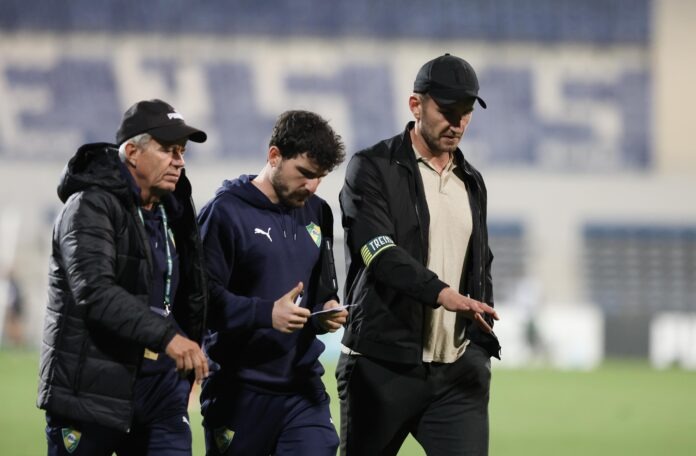
    Ben Manga standing in a stadium hallway, reflecting his role as one of European football’s leading scouting and talent directors.
    Ben Manga has shaped clubs across Europe through his eye for talent and strategic recruitment leadership. His journey continues to influence modern scouting.

    Ben Manga has built a reputation as one of European football’s most astute talent spotters and squad architects, carving out a career defined by sharp eye for potential, meticulous scouting networks, and an ability to transform undervalued players into major assets.

    After ending his playing days as a midfielder with clubs such as Fortuna Düsseldorf and Karlsruher SC, he shifted seamlessly into the world of scouting and youth development, beginning at Alemannia Aachen, where he coached across age groups from U11 to U23. This early grounding in player development laid the foundation for the career that followed.

    His rise through Germany’s football landscape included scouting roles at TSG Hoffenheim and VfB Stuttgart, but it was at Eintracht Frankfurt where Manga became widely recognised. Serving as Director of Professional Football and Head of Scouting from 2016 to 2022, he played a decisive role in assembling the squads that delivered the DFB-Pokal title in 2018 and the historic Europa League triumph in 2022, with a semi-final run in 2019. His global scouting network unearthed talents such as Sébastien Haller, Luka Jović, Evan Ndicka, Daichi Kamada, Jesper Lindstrøm and Randal Kolo Muani: players who arrived for modest fees and later generated enormous sporting and financial value for the club.

    After Frankfurt, Manga moved to England to become Technical Director at Watford, bringing his recruitment methodology to the Championship. Most recently, he served as Director of Professional Football and Head of Scouting at FC Schalke 04, where he was tasked with rebuilding sporting structures and strengthening the club’s talent pipeline.

    Across more than two decades in coaching, scouting and front-office leadership, Ben Manga has developed a profile built on global scouting expertise, multicultural fluency and a proven track record of constructing competitive teams. Today, his name is synonymous with smart recruitment, strategic squad planning and the ability to create significant value while maintaining a clear footballing identity.

    His global scouting network unearthed talents who arrived for modest fees and later generated enormous sporting and financial value for the club.

    Our exclusive interview with Ben Manga

    Ben, before we talk about your impressive football career, who are you as a person outside of sport? What drives you, and what values are particularly important to you in everyday life?

    I am a very calm, down-to-earth and honest person for whom values continue to play a major role. Friendships, loyalty and respectful coexistence are particularly important to me in everyday life. No matter what it is, I always want to give 100 per cent. This expectation of myself drives me and has brought me to where I am today.

    You played professional football yourself and then started a career as a scout and later as a manager. What motivated you to stay in football after your active career – but in a completely different role?

    When I had to end my active career due to serious knee injuries, it was immediately clear to me that I definitely wanted to stay in football. My passion for the sport was too great. Jörg Schmadtke opened the door for me at the time: he gave me the opportunity to start as a youth coach and at the same time build up a complete scouting system. That was something that didn’t exist in that form at the time. That’s how my journey began after my playing career.

    You took on responsibility early on with your first steps as a youth coach and scout at Alemannia Aachen. What experiences from this phase shaped you and influenced your view of talent development?

    After my active career, I started from scratch and had to work hard for everything. That had a lasting impact on me. Back then, we coaches put together our squads entirely on our own. That was my introduction to scouting. I was personally responsible for how my team looked. This taught me early on to take responsibility and not look for excuses when something didn’t work out (grins). That period had a big impact on me.

    You often say, “Mentality beats talent.” What does this guiding principle mean to you personally – and how do you recognise players who have exactly this mentality?

    Fredi Bobic and I used to say this to each other all the time: there are an incredible number of talented players, but only those who also have the right mentality will really make it to the top in the end. That’s exactly what this sentence is meant to express. I myself was always obsessed with being successful, subordinated everything else to that goal and wanted to constantly improve. That probably set me apart from players who had more talent than me but didn’t have the same inner drive.

    There are an incredible number of talented players, but only those who also have the right mentality will really make it to the top.

    Your network and your eye for talent are considered exceptional. How do you combine intuition, experience, global contacts and analytics to discover players early on?

    Thanks to my long career in the business and the many different positions I have held, I am now able to put myself in anyone’s shoes. This helps enormously when searching for and evaluating players or coaches. I speak German, Spanish and English and can also get by in Portuguese and Italian. This makes it easier to connect with people on a personal level. For me, people always come first. If you can win them over, you’re already well on your way. Over the years, I have built up a large network because I am open, honest, friendly and courteous.

    During your time at Eintracht Frankfurt, you played a key role in building a team that won the Europa League and achieved significant increases in value. What do you think was the decisive factor for success during this phase?

    For me, success comes from working together, mutual trust, loyalty and hard work. These are precisely the values that Eintracht Frankfurt embodied during this phase. With Fredi Bobic as sporting director, Bruno Hübner as sporting director and our coaches Niko Kovac and later Adi Hütter, we were a real team. Even in difficult times, we always stuck together. This team spirit was the key to our success.

    With positions at Watford, TSG Hoffenheim, VfB Stuttgart and other clubs, you have gained a wide range of experience. Which of these positions has had the greatest influence on you as a manager – and why?

    Every single position has helped me progress. Aachen was the beginning, later Hoffenheim, Stuttgart, Frankfurt and Watford were added. I was able to learn everywhere and had very good superiors from whom I learned a lot. My experience in England was particularly formative, as it was the first time I worked with a club owner. That was new to me and very instructive in terms of day-to-day operations. In Germany, many people are often involved in decisions, so a lot depends on the personality of the boss. I was fortunate to have strong superiors at my various positions who took responsibility.

    You are one of the first African managers in German professional football. What message would you like to give to young Africans who dream of making their way in European football – whether as players, scouts or managers?

    I came to Germany as a small child with my parents and my sister. We had to work very hard and fight for our way. I want to show that anyone can do it: with commitment, discipline, willpower and professional competence. I want to be a role model and encourage others. Unfortunately, there are not yet many African officials in German football, which is precisely why my path should show that it is possible.

    Looking ahead to the next five to ten years, what developments in professional football would you like to be actively involved in, and what are your personal goals?

    I love football and in the coming years I want to pass on my experience, my ideas and my perspective to people who are open to them. I don’t have any big personal goals. For me, the focus is on doing a good job for the club I work for and helping it to be successful.

    How Football Clubs Monetise Sponsorship Inventory

    0
    Deutsche Bank Park stadium lit in red at night showcasing prominent naming rights branding above the main entrance.
    Deutsche Bank Park illuminated on matchday, highlighting one of football’s most recognisable naming rights partnerships. A strong example of how stadium branding shapes the modern sponsorship landscape.

    In today’s sports business landscape, the commercial department of a football club isn’t just focused on selling shirt deals or stadium seats. Modern clubs operate like media and marketing companies, turning every touchpoint, screen, and strip of grass into potential sponsorship inventory.

    From training ground naming rights to who sponsors the fourth official’s board, there’s now a marketplace for nearly every aspect of the matchday and club ecosystem. And for brands, these opportunities offer targeted access to highly engaged, loyal fanbases that span global markets.

    The Expanded Sponsorship Ecosystem

    Here’s how clubs are maximising revenue through a diverse and detailed inventory of sponsorship assets:

    Kit & Apparel Inventory

    • Front-of-Shirt: The most valuable single asset, typically reserved for a primary global partner. (e.g. TeamViewer at Man Utd, Emirates at Arsenal)
    • Sleeve Sponsors: Introduced in the Premier League in 2017; brands like No Room For Racism, Cazoo, and eToro have taken these spots.
    • Shorts Sponsors: Gaining traction, especially in La Liga and Serie A.
    • Training Kits: Often have separate sponsors from match kits. These deals can fetch millions per year (e.g. AXA on Liverpool’s training gear).
    • Warm-Up Bibs & Benchwear: A relatively new but growing area, especially during televised warm-ups and Champions League fixtures.

    Stadium & Facility Assets

    • Stadium Naming Rights: Major deals such as the Etihad Stadium and Spotify Camp Nou can bring in £20-£50 million+ annually.
    • Stadium Zones: Clubs often sell naming rights for individual stands, lounges, hospitality suites, and VIP boxes.
    • Training Ground Naming: Growing in popularity, Liverpool’s AXA Training Centre and Manchester City’s Etihad Campus are prime examples.
    • Tunnel Cam & Dugout Branding: High-visibility zones for brands as players enter the pitch or during manager close-ups.
    • Fourth Official’s Substitution Board: Sponsored in many leagues (e.g. EA Sports or Hotels.com) and broadcast globally.
    • Corner Flags & Ball Plinths: Small details, big visibility, especially in stills and slow-motion replays.
    • Advertising Hoardings: Sold in rotating LED panels, these can be geo-targeted to show different brands in different broadcast regions. Clubs like Man City use Virtual Replacement Technology to display different ads to fans in Asia vs. Europe during the same game.

    Advertising hoardings can be geo-targeted to show different brands in different broadcast regions.

    Digital & Media Rights

    • Website & App Partners: Clubs often sell homepage takeovers, matchday banners, or even naming rights to digital platforms.
    • Matchday Social Media: Brands can sponsor goal GIFs, final whistle graphics, fan polls, or line-up announcements.
    • Email Marketing & CRM: Sponsored newsletters and direct communication channels to season ticket holders and fans.

    Matchday & Fan Experience

    • Official Matchday Programmes: Often include partner logos, interviews with sponsored players, and branded content.
    • Ticket Backs & Season Cards: Another physical space that reaches core fans.
    • Half-Time Games or Challenges: Sponsored activations like the “Car Challenge” or “Crossbar Challenge” hosted during the break.
    • Fan Zones & Pre-Match Entertainment: These can feature product sampling, branded booths, or interactive displays.

    Category Exclusivity & Official Partnerships

    Most clubs carve their sponsorship portfolio into categories and offer “official partner” rights with exclusivity. These often include:

    • Banking – e.g. Barclays, Standard Chartered
    • Airlines – Emirates, Etihad, Qatar Airways
    • Cars – Audi, Hyundai, Nissan
    • Travel – Expedia, Trivago
    • Fashion & Apparel – Hugo Boss, Levi’s
    • Cyber Security – Acronis, Norton, Kaspersky
    • Crypto & Web3 – Socios, OKX, Bitget
    • Beer, Water, Energy Drinks – Heineken, Coca-Cola, Red Bull
    • Gaming & eSports – EA Sports, Konami, Xbox
    • Clubs offer these brands use of IP (logo, kits, stadium visuals), player access for campaigns, co-branded merchandise opportunities, and priority for digital content.

    The Financial Impact

    Top-tier clubs can generate £100-£250 million per year from commercial income, and a large portion comes from diversified sponsorship assets.

    For example:

    • Manchester United made £302 million in commercial revenue in 2023, including over £150 million from sponsorships.
    • Barcelona’s commercial earnings topped €350 million in their last pre-pandemic peak, driven by tiered sponsors across different rights packages.
    • Brentford FC, despite a smaller fanbase, signed their largest-ever deal with Gtech for naming and partnership rights — a game-changer for long-term growth.
    • For smaller or mid-table clubs, the trick lies in slicing the sponsorship inventory into many smaller, affordable deals, building a broader ecosystem of aligned brands.

    The trick lies in slicing the sponsorship inventory into many smaller, affordable deals.

    Final Thoughts: A Club Is a Platform

    Modern football clubs are no longer just sports teams. They are global entertainment platforms with powerful media distribution, hyper-loyal audiences, and layered brand ecosystems. Every detail of the matchday and fan journey, from the tunnel camera to the Instagram goal graphic, can be turned into meaningful commercial value.

    The clubs who succeed commercially are those who:

    • Identify undervalued inventory
    • Align sponsorships with brand values
    • Protect the authenticity of fan experience
    • Build long-term, layered partner relationships, not just transactions

    In today’s game, you’re not just playing on the pitch. You’re playing across every platform, every second, and every surface, and the commercial scoreboard is more competitive than ever.

    Al Ettifaq and the Rise of Saudi Talent Development

    0
    Brightly lit football pitch at night with empty goals and training equipment, creating a focused and modern development atmosphere.
    A night-time view of a modern football pitch under bright floodlights, reflecting the infrastructure that supports long-term player development. Image by StockSnap from Pixabay

    As obviously known, usual many arguments raised toward Saudi Pro League post it’s tremendous global transformation in 2023 that led them to successfully attracts countless global mega stars. One of the most famous question marks is related to possible affection on local youngsters’ talent growth due to such foreigner domination on majority of the squads (8+2) that generated limited spots for locals.

    Strongly proven by analyzing playing minutes of Saudi Arabia U20 NT squad players with their clubs, who also participated in 2025 AFC Asian Cup campaign in China. But In-spite of the young ‘Falcons’ reached the final and secured a place in the FIFA U20 World Cup, the data shown an average of just 146 playing minutes that obviously in-sufficient for any concrete progress.

    However, in the middle of such challenge, a solid local benchmark is proudly stand-out as Al-Ettifaq FC is uniquely evolved an alternative competitive model around local talents development. 1st Saudi invincible 1983’ is oppositely shaping club’s DNA around strong relying on Saudi youngsters, paralleled with clear academy vision of develop national-team players across all age groups. Proven by continuous involvement in age groups national teams’ squads throughout last decade, starting from Saudi Arabia U20 strong come back to podiums in 2016 U19 AFC Asian Cup’.

    Keeping strong links to football #Vision2030 local professional standards by elevating the model off-the pitch, selling players at their peak moments in further stages to #top4 and restart the cycle of recruiting another talented replacement. Which been very popular European model that followed at famous academies in likes of Ajax FC in Netherlands and KRC Genk in Belgium!

    Such amounts not only enabled Al Ettifaq to become one of few SPL’s clubs that achieved an overall transfer-profit in the last 2 seasons, but also allow them to meet-up league massive requirements in elevating foreigner’s players quality recruitment.

    Reflected by brilliant R.O.I benchmark in National Team quadrable (Saad Al Mousa and Faisal, Ahmed, Hamed Al Ghamdi) that staging club’s unique scouting system while all been recruited at the academy level, backed by additional strong monitoring of abroad Saudi youngsters (Ahmed Al Ghamdi from Pacific FC ‘Canada’ and Al Mousa from Manchester City academy). Later on, while all of them got produced at several National Team phases, and sold to Al-Ittihad separately between (2023-2025) for total of 35.5M€, without forgetting a 3M€ deal of current U20 NT forward transfer Thamer Al Khaibary to NEOM last summer.

    Such amounts not only enabled Al Ettifaq to become one of few SPL’s clubs that achieved an overall transfer-profit in the last 2 seasons, but also allow them to meet-up league massive requirements in elevating foreigner’s players quality recruitment.

    The Safe Hub for Local Players

    Furthermore, the club’s expanded their professional national-focus recruitment to senior squad transfers that positioned them as safest-hub for local players, proven by signing 6 ex-national team players in the last 2 years 5 of them was part of the FIFA 2022 WC squad, beside existed opportunities to youngsters either from club academy in like of mentioned names or even from other clubs as Ziyad Al Ghamdi (U20 NT Starter) has joined on loan from Al Ahli, seeking for more playing minutes.

    Coaching Methodology and Legacy

    Extending local excellence to coaching methodology where the club introduced recent two continental age-groups champions for the country (2019 U-19 AFC Asian Cup-Khaled Al Atwi) and (2022 U23 AFC Asian Cup-The mastermind Saad Al-Shehri) who actively on charge. Leading club’s local strategy himself since middle of the last season, saved the club from series of bad results under Steven Gerrard management. Obtaining ‘Al Dahnaa Knight’ unique local distinction, as an extension of deep legacy of providing local heroes to Saudi Football, incepted since legendary Khalil Al Zayani ‘Coach’ and Saleh Khalifa ‘Starter 11’ of Saudi Arabia 1984 AFC Asian Cup Champions squad.

    Extending local excellence to coaching methodology where the club introduced recent two continental age-groups champions for the country.

    Vision 2030 Alignment

    Such model is not only shapes brand values for the club, but also provide massive on-pitch benefits to the whole local eco-system in sense of applying #Vision2030 main principles at its finest, by staging local talents excellence across several levels in their core community eco-system ‘particularly Football in our case’.

    The Art of Set Pieces in Modern Football

    0
    Coach giving tactical instructions to a young player during a training session for LASK, emphasizing positioning and movement.
    The coach provides detailed tactical guidance to a LASK player, highlighting the importance of clarity and precision in set-piece preparation.

    Introduction

    In modern football, the smallest details decide the biggest games, and few areas illustrate this better than set pieces. Once seen as isolated moments, they have become a tactical science capable of shaping entire seasons. From data models and player profiling to deception and design, the world of set pieces has evolved into one of football’s most innovative frontiers.

    About the Interview Guest

    Our interview guest for this feature is Philipp Aigner, one of the rising minds in Austrian football. At just 25 years old, he serves as Video Analyst, Set-Piece Specialist and Assistant Coach at LASK Linz, where he connects tactical structure, data insight and on-field execution. Before joining LASK, he gained experience with the Austrian FA’s futsal national team and the AKA St. Pölten academy, where he led match analysis and player development. His multidisciplinary background and analytical precision represent a new generation of coaches who treat football as both an art and a science.

    Coach on the sideline directing his team during a match, emphasizing organisation and structure in set-piece situations.
    Focused on structure and execution, the coach communicates adjustments from the touchline to support his team’s tactical consistency.

    The Foundation – Understanding the Role of Set Pieces

    From Situational Moments to Strategic Identity

    In modern football, set pieces have evolved far beyond their reputation as isolated moments. They have become an essential part of a team’s tactical identity. As the game grows more structured and data-driven, creating chances from open play is becoming increasingly difficult. Set pieces, by contrast, offer repeatability and measurable value. For many clubs, they now represent a strategic department capable of delivering between ten and fifteen goals a season – often the difference between mid-table and success.

    Set pieces, by contrast, offer repeatability and measurable value. For many clubs, they now represent a strategic department capable of delivering between ten and fifteen goals a season.

    Principles of the Elite

    Elite teams no longer rely on rehearsed patterns but build around clear, principle-based systems. Training focuses on spacing, sequencing and timing, allowing players to adapt intelligently rather than follow a script. Attention to micro-details has become decisive: positioning, body orientation and movement cues determine the smallest margins. Many modern teams draw inspiration from other sports, integrating screening and blocking concepts from basketball or misdirection from American football to gain subtle but crucial advantages.

    Structure Meets Creativity

    Ultimately, the success of a set piece lies in the balance between structure and creativity. The structure provides coordination, timing and clarity of roles, while creativity transforms those elements into unpredictability, allowing players to disguise intentions and exploit defenders in real time. As Philipp Aigner explains, both must coexist. Structure ensures clarity and control, but creativity brings disguise, adaptability and freedom. The best teams find harmony between the two, building systems that are stable enough to provide order yet flexible enough to unleash individual flair and surprise.

    The best teams find harmony between structure and creativity, building systems that are stable enough to provide order yet flexible enough to unleash individual flair and surprise.

    The Process – From Analysis to Execution

    From Data to Design

    The process behind a well-designed set piece begins long before matchday. Aigner and his staff start with comprehensive video analysis, examining their own tendencies and the opponent’s defensive setup. They look for patterns, weak zones or behavioral cues that can be exploited. Once the analytical groundwork is complete, the design phase begins – crafting routines that align with team principles and player profiles while keeping space for variation. Visual tools such as clips and drawings help transform ideas into clear, trainable concepts.

    Turning Theory into Practice

    Communication is at the heart of successful execution. New routines are first presented in team meetings, where the rationale and objectives are explained in simple, actionable terms. The move from theory to practice takes place step by step on the training ground. Early sessions focus on understanding roles, timing and spacing, while later ones simulate real match intensity. As repetitions increase, movements become automatic and decisions more instinctive. By matchday, the players not only know their cues and triggers but also understand the logic behind every movement. This transforms the routine from a memorized pattern into a living, adaptable part of the team’s game model.

    Defending the Details

    Defensive preparation follows a similar approach, built on structure and adaptability. Each player’s role is defined in detail — who marks, who screens, who guards the first and second ball — but within this framework there must be flexibility. Aigner emphasizes the need for dynamic reactions: players must recognize screens, switch marks when necessary and adjust positioning based on movement. The goal is to remain organized without becoming rigid, ensuring that the team can neutralize creativity with discipline.

    The Human Element

    Player profiling adds an essential human layer to the process. Understanding the unique attributes of each player (aerial dominance, blocking ability, delivery precision or timing) allows coaches to assign roles that maximize individual strengths. Yet the underlying structure stays consistent so that anyone can step in without confusion. This approach combines tactical stability with personalization, ensuring that the team’s system adapts to its people, not the other way around.

    Measuring What Matters

    To measure efficiency, LASK uses a Set Piece Effectiveness Index (SEI) that evaluates accuracy, success rate, goal involvement and secondary actions. Hidden indicators such as the quality of first contacts, control of second balls and even the opponent’s reactions provide deeper insight. When a rival team changes its setup or overloads certain areas, it signals that the concept is working.

    The Evolution – The Future of Set Pieces

    A New Standard in Modern Coaching

    The growing presence of set-piece specialists across professional football reflects a larger evolution. What was once a niche role is now recognized as an integral part of performance staff. As Aigner points out, the competitive gain is too significant to overlook – adding ten to fifteen goals per season is the equivalent of signing a top striker.

    Innovation Through Influence

    Recent trends show a shift from fixed routines to flexible, principle-based structures that empower players to make real-time decisions. Arsenal’s approach, for example, highlights this evolution: routines triggered by the goalkeeper’s positioning rather than prearranged signals create unpredictability and tactical freedom. Cross-sport influences continue to enrich the field, with ideas from basketball, handball and American football refining how teams use movement, deception and coordination.

    Technology and the Next Generation

    Technology is set to push this evolution even further. Advanced tracking systems and predictive data models will allow coaches to simulate routines and anticipate defensive reactions. Artificial intelligence will assist in identifying opponent tendencies, freeing analysts and coaches to focus more on creative design.

    For Aigner, the next generation of players will grow up viewing set pieces as a natural part of the game. They will understand manipulation, timing and deception as intuitively as pressing or build-up play. In his words, “The artistry of set pieces will soon be as defining for a team’s identity as its passing style or defensive structure.”

    Who is Arantxa Mandiola?

    0
    Arantxa Mandiola smiling in front of the World Football Summit backdrop while spinning a globe-themed football.
    Arantxa Mandiola, a leading voice in sustainability and social impact in football, at the World Football Summit headquarters. Her work continues to drive ESG, inclusion and purpose-driven leadership across the global game.

    When a young film producer from Bilbao realised that storytelling could spark social change, she never imagined that the same tools would one day guide her work in global football.

    Arantxa Mandiola is the ESG and Impact Strategy Manager at World Football Summit, where she has spent the past years embedding sustainability, equality and inclusion into one of the most influential platforms in the football industry.

    Her background spans UNESCO, award winning impact production, digital education and international community projects across Africa, Europe and the United States. Today, she uses this cross sector expertise to shape how football organisations understand their responsibility and cultural power. With a film producer’s eye, a strategist’s mindset and a deep belief that football can drive societal transformation, Arantxa represents a new generation of leaders building a more inclusive future for the global game.

    With a film producer’s eye, a strategist’s mindset and a deep belief that football can drive societal transformation, Arantxa represents a new generation of leaders building a more inclusive future for the global game.

    Our exclusive interview with Arantxa Mandiola

    You have been ESG and Impact Strategy Manager at World Football Summit for over a year. How would you describe your role and the kind of impact you aim to create within the global football industry?

    At World Football Summit, my role is to integrate equality, sustainability, social inclusion and governance into both the structure of the Summit and the programme on stage. I co create the agenda for each event, making sure ESG is not a side topic but central to panels, workshops and activations. From the ESG department, we also design and implement our own initiatives, including the Female Leaders Program and The Most Inclusive Match.

    My goal is to connect high level strategy with community impact, ensuring that discussions lead to action. We focus on three pillars: equality, inclusion, and environmental sustainability. In terms of equality, this means elevating women in leadership and creating spaces for emerging female talent to connect. The aim is to ensure women are not only visible on the pitch but present in decision making environments shaping the future of football.

    On inclusion, we place strong emphasis on accessibility. We work to design events and football spaces where everyone feels represented and welcome, and we develop community activations that leave a legacy in each host city. For environmental sustainability, we aim to link football’s cultural influence with meaningful climate action. Responsible event operations and educational legacy initiatives are key. For example, in Hong Kong we organised bamboo planting sessions and environmental workshops with children. I truly believe football has the power to be a global force for positive change, and my work is focused on using its platform to inspire more equal, inclusive and sustainable societies.

    ESG has become an essential topic in modern sport. What do you see as the biggest opportunities for football organisations to drive meaningful environmental, social and governance progress?

    Football has a cultural reach that can shape behaviours worldwide. ESG in football is not only an opportunity, it is a necessity if the industry wants to remain responsible, relevant and forward looking. Clubs, leagues, players and organisations can lead by example through sustainable stadium operations, responsible travel and ethical merchandise practices, while creating legacy programmes that educate and involve communities.

    Socially, football can advance inclusion, education and gender equality. Women’s football is already showing strong leadership here, with values rooted in community and authenticity. The greatest opportunity lies in becoming a catalyst for larger societal conversations. Much like the impact work I did on The Silence of Others, football can bring grassroots stories into mainstream spaces, influencing culture, education and civic engagement.

    WFS brings together leaders from across the global game. How do you ensure that sustainability, inclusion and social impact are not only discussed on stage but embedded into the event itself?

    We integrate ESG principles from the very beginning of the planning process. I work closely with both the content and operations teams to ensure that panels, workshops and activations reflect sustainability, inclusion and social responsibility. Gender inclusion is central to this. Through the Female Leaders Program and our commitment to a minimum of 30 percent female speakers, we highlight women’s leadership across the entire industry. Environmental initiatives are also built into our legacy approach. In Hong Kong, for example, we taught children how to plant and care for bamboo, combining environmental action with hands on learning. Community activation is equally important. Projects like The Most Inclusive Match or La Menina Tour create spaces for participation, celebration and visibility, leaving a tangible legacy that continues after the Summit ends.

    Community activation is equally important. Projects like The Most Inclusive Match or La Menina Tour create spaces for participation, celebration and visibility, leaving a tangible legacy that continues after the Summit ends.

    Your professional background spans UNESCO, creative production, digital education and award winning impact campaigns. How has this cross sector experience shaped your approach to ESG strategy in football?

    It allows me to combine creativity with measurable impact. Film taught me how storytelling can spark conversations and drive change. If cinema can do that, football’s potential is enormous. At UNESCO, I worked with community radios in Namibia, Lesotho and South Africa, integrating social issues such as tuberculosis prevention, HIV awareness and gender equality into radio soap operas. Media gave a voice to underrepresented communities and strengthened local identity, something football can also achieve.

    In impact production, I developed the campaign for The Silence of Others, co creating an educational guide with Amnesty International to bring lessons from the film into schools. It showed how storytelling can foster civic dialogue. This is a perspective I now apply directly to football, using the sport to inspire discussions around inclusion, leadership, sustainability and equality. Digital education has helped me scale knowledge, designing practical ESG learning frameworks for clubs, federations and associations. And throughout it all, football has been part of my life. I have always played, watched and supported the sport. It has taught me values, belonging and community. My approach to ESG in football is therefore not only professional, it is deeply personal.

    You have managed and coordinated international projects in Africa, Europe and the United States. What have these multicultural environments taught you about building effective impact initiatives in sport?

    The most important lesson is that meaningful impact must be rooted in context. Listening is essential. Every community has its own culture, needs and expectations, and initiatives succeed when they are co created with local stakeholders. At WFS, I apply this through a dual approach: engaging high level leaders in strategic ESG discussions while developing local activations such as environmental workshops and inclusive football events that leave a visible legacy. This ensures that global strategy is shaped by local realities and that grassroots initiatives gain recognition and support across the wider football ecosystem.

    You specialise in long term impact production and community driven narratives. From your perspective, what does authentic and measurable impact look like in football?

    Authentic impact begins with communities. It must be meaningful, participatory and sustainable. Projects like The Most Inclusive Match show inclusion in action, using football to inspire awareness and learning. Similarly, The Silence of Others demonstrated how community driven narratives can spark broader societal conversations. In football, creating spaces for women players and leaders to be visible can influence culture, shift social norms and strengthen engagement. What is not seen does not exist, so visibility is essential. Measurable impact requires combining qualitative insights with quantitative indicators. Monitoring and evaluation are crucial, ensuring that football initiatives do not remain symbolic but produce lasting change.

    Working with federations, leagues, clubs and brands requires strong alignment and trust. How do you help organisations turn ESG commitments into concrete action?

    Concrete action requires clarity, structure and facilitation, as well as honesty. It is important to define priorities, build partnerships and create frameworks that make ESG actionable and measurable. At WFS, we create spaces where leaders from federations, leagues, clubs and brands can collaborate, exchange best practices and commit to meaningful initiatives. By connecting organisations with programmes like Common Goal, environmental initiatives or mentorship schemes for women leaders, we help turn commitments into operational reality. My role is to bridge strategic ambition with practical execution so that ESG becomes an ongoing, measurable practice rather than a one time discussion.

    Looking ahead, what is your vision for the future of ESG in football, and how do you see your own role evolving as the industry continues to grow?

    I imagine a future where ESG is fully integrated into football’s identity, operations and cultural influence. Sustainability, inclusion and gender equality will be embedded at every level, while the football community, particularly women in leadership, will continue shaping broader social trends. Football will serve as a catalyst for conversations far beyond the game. My role will evolve alongside this, connecting high level strategic leadership with grassroots initiatives and crafting narratives that amplify football’s ability to drive responsible, inclusive and sustainable change.

    Be Like Water: The Modern Football Manifesto

    0
    Calm reflective water surface mirroring distant hills, symbolising fluidity and adaptability in the modern game.
    Photo by Toksot on Unsplash

    Foreword: The Era of the Mind Has Begun

    This text is not a system, a formation, or a tactical template. This is the mental revolution of modern football. The question is no longer:

    “Which formation?” but “Which flow?”

    Power used to rule. Today, flow rules. And only those who become like water can command the flow. Water waits. Water adapts. Water accelerates. Water reshapes. It finds space, expands, collapses, seeps, and eventually breaks through.

    Modern football is the same:

    Not fixed but fluid.

    Not memorized but intuitive.

    Not form but transformation.

    Water waits. Water adapts. Water accelerates. Water reshapes.

    Introduction: Formations Ended. The Mind Began.

    3-5-2, 4-3-3, 4-2-3-1…

    No drawing wins a match anymore.

    The game is not played on paper … it lives in rhythm, flow, speed, perception.

    A formation is a photograph. The match is a film. And the film is always moving.

    Modern question:

    Can you change as the opponent changes? Can you accelerate when the game accelerates and stay calm when it slows?

    If yes, you are modern.

    If not, you disappear.

    Be Like Water: Command the Flow

    A water-like team:

    • Does not resist pressure, it redirects
    • Finds space, creates space, kills space
    • Compresses without suffocating
    • Expands without breaking shape
    • Waits without sleeping
    • Attacks without rushing

    Football now rewards flow and stability, not force. It is not power that breaks the stone, but the persistence and flow of water.

    Football now rewards flow and stability, not force. It is not power that breaks the stone, but the persistence and flow of water.

    Space Engineering: Football Is a Space Game

    The ball is lost. Space cannot be.

    Creating space:

    • Pull opponent into the wrong zones
    • Stretch wide, control half-spaces
    • Invert fullbacks, overload midfield
    • Turn the center-back into a carrier threat
    • Run not for the ball, but for space

    Denying space:

    • Anti-compact start: wide stance, kill the first passing lane
    • Compact lock: close the danger zone
    • Horizontal shift + vertical squeeze: guide, trap, punish

    He who understands space, commands the match.

    He who commands space, decides the result.

    Verticality: Break Time

    Possession is not a tactic. Threat is. If you do not threaten, you help the opponent rest. Verticality is not aggression, it is intention + accuracy + time rupture.

    • Prepare with patience
    • When the line appears, break it instantly
    • Force retreats, split defensive blocks
    • Win second balls, attack again
    • Lose the ball? Collapse the space immediately

    The most valuable currency is time. Break time, break the match.

    False Roles: Steal the Opponent’s Mind

    Football is no longer positional. It is functional. Inverted fullback. Half-space eight. False nine. Overlapping center-back. These are not names, they are tools of psychological manipulation.

    If the opponent starts thinking, they start losing.

    Runs:

    • Sometimes for the ball
    • Sometimes to move defenders
    • Sometimes only to create fear

    Formula: Run + Patience + Timing = Lethal difference

    Transition Reflex: Don’t Think, Feel

    Transition is no longer a tactic. It is pure reflex.

    Upon loss:

    • Collapse and suffocate
    • Or stay wide and kill the first pass

    Upon regain:

    • 3 seconds
    • Decision + speed + vertical threat
    • Play forward, cover behind

    Those who think arrive late. Those who feel dominate.

    Why 3-5-2? A Mental Model, Not a Shape

    3-5-2 is not a formation. It is a code of flow.

    • Space supremacy
    • Central authority
    • Transition dominance
    • Constant shape evolution

    From 3-5-2 you become:

    • 4-3-3
    • 3-2-5
    • 5-3-2
    • 2-4-4

    And you never lose identity.

    3-5-2 did not return. 3-5-2 never left.

    Finishing: The One Thing You Cannot Teach

    You can teach defending. You can teach pressing, angles, pressing triggers. You can teach positioning. But finishing? It is born. Calmness is not a muscle.

    It is a nervous system. This is why the world produces many defenders, but so few true finishers. Everyone defends. Few finish.

    Final Message: This Is a Civilization

    This era asks: Not “How strong are you?” but “How fluid are you?” The age of formations is gone. The age of the mind begins.

    Discipline. Flow. Intelligence.

    Be like water. And rewrite football.

    WFS Riyadh Returns To Shape Football’s Future

    0
    Delegates and speakers gathered in a circular auditorium during the opening ceremony of the World Football Summit in Riyadh.
    The World Football Summit in Riyadh brought together global football leaders, executives and innovators for its opening ceremony. The round auditorium setup reflected the event’s focus on connection, collaboration and strategic dialogue across the industry.

    Saudi Arabia is transforming through sport and that transformation is redrawing football’s global map. As part of Vision 2030, the Kingdom is using football as a driver of social development, economic diversification, and international connection, with the 2034 FIFA World Cup as a defining milestone. Massive investment in infrastructure, talent development, and the professionalisation of the local industry is reshaping the balance of power across the international game.

    On December 10-11, over 2,500 attendees from 80+ countries will gather at Misk City for WFS Riyadh — the platform where Saudi Arabia’s football leadership connects directly with the global industry. Taking place one year after the Kingdom was awarded the 2034 FIFA World Cup, WFS Riyadh 2025 arrives as this vision continues to accelerate. From the Saudi Women’s Premier League launch to the privatisation of three clubs opening doors to global investment, the past year has seen significant progress. The event will explore what this means for clubs, leagues, federations, brands, and investors worldwide.

    On December 10-11, over 2,500 attendees from 80+ countries will gather at Misk City for WFS Riyadh.

    WFS Riyadh 2025 is backed by regional and international football properties, with the Saudi Pro League as Institutional Partner and LALIGA among the event’s Corporate Partners.

    Over two days, the agenda will explore the evolution of Saudi football, the long-term impact of hosting the 2034 FIFA World Cup, the growth of international club partnerships, innovation in technology, and the role of inclusion and sustainability in the game’s future.

    The event will be hosted by Mo Islam, presenter of The Mo Show, a popular podcast known for interviewing the key figures driving the social and economic transformation of Saudi Arabia. The agenda will address football’s most relevant topics through panel discussions, roundtables, and fireside chats — connecting business growth with long-term purpose:

    • Governance & Leadership: Football’s evolving models of management and ownership.
    • Growth & Investment: Capital, infrastructure, and the business of the game.
    • Media, Content & Fan Engagement: Broadcasting, storytelling, and the digital transformation of fandom.
    • Performance & Development: Talent, academies, and pathways ahead of 2034.
    • Innovation & Technology: Data, AI, and smart stadiums shaping performance and fan experience.
    • Culture, Community & Purpose: Inclusion, education, and legacy.

    The agenda will explore the evolution of Saudi football and the long-term impact of hosting the 2034 FIFA World Cup.

    Confirmed speakers include: Khalid Alaraifi (Chief Experience Officer, Misk City), Saleh Alshehri (Footballer, Al-Ittihad), James Bisgrove (CEO, Al Qadsiah), Esteve Calzada (CEO, AL Hilal), Adlene Guedioura (Former player and football expert), Ben Harburg (Owner, Al-Kholood Club), Peter Hutton (Board Member, Saudi Pro League), Magda Pozzo (Chief Commercial Officer, Udinese Calcio), Ralf Reichert (CEO, Esports World Cup Foundation), and Javier Tebas (President, LALIGA), among many others.

    WFS Riyadh will take place at Misk City. As the first nonprofit city of its kind, Misk City is a vibrant, human-centric hub where young and creative minds live, learn, share, and grow. Its state-of-the-art facilities and purpose-built design provide an inspiring setting for WFS Riyadh 2025, where leaders and innovators come together to shape the future of football.

    Jan Alessie, Co-Founder & Managing Director of World Football Summit, said: “WFS Riyadh has become a must-attend event for football professionals worldwide. This edition feels especially significant — it’s been a year since the 2034 World Cup was awarded, and the progress across the Kingdom has been remarkable. WFS Riyadh gives that progress a global stage while creating real opportunities for dialogue and partnership between regional leadership and international expertise.”

    About World Football Summit

    World Football Summit is a leading international organization that connects and empowers the global football industry through world-class events, expert content, and purpose-driven initiatives that shape a more sustainable and inclusive game.

    About Mohammed Bin Salman Nonprofit City “Misk City”

    The first nonprofit city of its kind, founded to host the ecosystem of Mohammed bin Salman Foundation “Misk”. It is a vibrant and innovative ecosystem within a human-centric city focused on youth. Here, young and creative minds live, learn, share, and progress towards a sustainable tomorrow. Misk City is a purpose-built destination that aims to contribute to the growth, development, and prosperity of Saudi youth, aligning with the goals of Misk.

    For more information: www.miskcity.sa

    How Nigerian Academies Can Reach European Standards

    0
    Nigerian national team players celebrating together during a World Cup match, symbolising the nation’s football talent and potential.
    Кирилл Венедиктов, CC BY-SA 3.0 GFDL, via Wikimedia Commons

    In June 2024, I was part of a football scouting trip to Kaduna, in northern Nigeria, where several football academies turned up with players who all had a dream of playing professional football in Europe.

    There was no shortage of talent among the hundreds of players who played the tournament at the Ahmadu Bello Stadium. They had passion and energy. And they all had hope of being picked.

    But there was something missing. The game is changing and European teams want players who understand tactical systems, not just those who can dribble or run fast.

    One player met the criteria out of more than 150. This is the problem that Nigerian football faces.

    One player met the criteria out of more than 150. This is the problem that Nigerian football faces.

    An untapped goldmine

    Nigeria has never had a talent problem. From the street pitches of Akure to the dusty fields of Kano, young boys and girls play football with a mix of joy, skill, and improvisation that has produced global icons like Jay-Jay Okocha, Nwankwo Kanu, John Obi Mikel, and, most recently, Victor Osimhen.

    Yet, for every Osimhen who makes it to Europe, hundreds of equally gifted players fall through the cracks. The reason? A developmental gap that separates Nigerian football academies from the systems European clubs rely on to groom, evaluate, and export talent.

    As the game becomes more global, Nigerian academies stand at a crossroads: either evolve into structured, data-driven talent incubators developing poorly-formed players.

    Across the country, hundreds of football academies have sprung up in every major city. Many of these academies are driven by passion rather than profit, providing crucial access to training and competition for young players.

    Training sessions often lack modern facilities, recovery programs, and tactical drills. Match footage and data, key tools for global scouts, are rarely available. Worse still, the absence of a well-organized youth league system means many players develop without consistent, competitive football.

    The world of football is the worse for it

    Victor Osimhen’s recent Champions League performances for Galatasaray have been the best advertisement for Nigerian footballers. His raw, tireless energy and eye for goal were all formed in Nigeria.

    But he has been refined by the structures in place when he first moved to Europe at Wolfburg when he turned 18. He had further stints at Lille and Napoli, where I watched a few of his matches on the way to winning the Scudetto after three decades.

    Osimhen’s rise shows us that there is more to the Nigerian football space that needs a deliberate structure in order to get the best. Nigeria can start with a competitive national youth league that combines data with talent scouting, better trained youth coaches, physical therapists and player welfare.

    And I must add, proper playing facilities. A dearth of good playing places makes it difficult for talent to to shine when they arrive on proper pitches.

    There is a lot of talent that falls through a poorly organised system. Unless Nigeria improves, the football world will continue to be denied an opportunity to see more Osimhens.

    Unless Nigeria improves, the football world will continue to be denied an opportunity to see more Osimhens.

    Who is Mark Cartwright?

    0
    Mark Cartwright walking through a stadium hallway in a suit, reflecting his role as a leading modern sporting director.
    Mark Cartwright arrives at the stadium with the calm confidence that defines his work as a modern sporting director. A leader known for transforming recruitment models and driving long term football development.

    Mark Cartwright is a Welsh sporting director and former professional goalkeeper who has emerged as one of the most influential executives shaping modern football infrastructure in both Europe and the United States. He has experienced the game from every angle as a player, agent, Technical Director in the Premier League with Stoke City, Chief Sporting Director for the United Soccer League (USL), and most recently, Sporting Director at Huddersfield Town. Cartwright is known for transforming recruitment structures, embedding high-performance cultures, and redefining how clubs create value through talent development.

    Capped at U21 level for Wales and a former Division Three title-winner with Brighton & Hove Albion, Cartwright transitioned off the pitch into agency, successfully negotiating contracts and transfers before being appointed Technical Director at Stoke City in 2012. There, he reduced transfer spending by 96% while increasing the squad’s asset value by more than 300%, helping the club secure multiple top-nine Premier League finishes.

    In 2021, he became the first-ever Chief Sporting Director in USL history, where he implemented a new transfer ecosystem that resulted in record-breaking fees, a six-fold rise in sustainable transfer revenue, and a landmark wave of USL talent moving to MLS and European clubs.

    Recognised by FIFA, The FA, and the UAE Pro League as a consultant and mentor to executives around the world, Mark Cartwright is widely regarded as a modern sporting director who blends negotiation expertise, elite recruitment models, and a people-first approach to leadership.

    Our Exclusive Interview with Mark Cartwright

    Personal & Leadership Philosophy

    Family and friends, I have a wonderfully supportive wife and two amazing children.

    Who is Mark Cartwright outside of football, and what keeps you grounded away from the pressures of the game?

    Family and friends, I have a wonderfully supportive wife and two amazing children, they understand the stresses of the game and my focus here is to make sure we all laugh and enjoy our time together. To clear my head, I find walking and working out helps me find the clarity I need away from the game. And of course, a good group of friends that come from different angles of life that can share love and laughter. I’m blessed in this department having lived in the US and UK and journeyed around Europe I have a diverse array of friends and confidants both home and abroad that can share a variety of discussions and perspectives and I can lean on for advice.

    You’ve seen football from almost every angle as a player, agent, Technical Director, league executive and now Sporting Director. How has that shaped your view of leadership in football?

    I’ve been incredibly lucky to have not only worked with but also met and befriended many inspiration leaders in the world of football, from that angle I have been able to absorb all manners of high performing leadership and along with my personal values and skills, I’ve developed my own style that has helped me throughout my journey

    What personal values have anchored you through each transition in your career?

    Hard work, a never give up attitude, I was told on my 17th birthday I would never play football again but through sheer hard work and tenacity I managed a 10-year professional career, I took this into the next stages of my career. Honesty and humility.

    From Goalkeeper to Deal Maker

    You went from earning a scholarship in the U.S. and playing professionally to becoming a licensed agent. What lessons from your playing days helped you most during negotiations and talent representation?

    As a player that had always negotiated his own contracts, I knew the importance of preparation, planning and even manipulating the conversation so that what the manager said was exactly what I had wanted him to say.

    As an agent, what did you learn about the human side of transfers that sporting directors sometimes overlook?

    I know the tricks of the trade on the agency side, so I have always been able to “call people out” when I knew they weren’t correct, but always in a manner where they knew it was because I was “poacher turned gamekeeper”. It helps that I can see and understand their viewpoints and be able to either agree or disagree in a productive manner. I also believe that the majority of Sporting Directors won’t fully understand the relationship an agent has with their players and families and that it goes far beyond just doing a deal, therefore you need to use your emotional intelligence and be considerate of how deep this goes for the player and his family.

    Stoke City Era: Reducing Spend, Increasing Value

    I built a very good recruitment department with key personnel who I can proudly say moved on to bigger and better positions.

    During your time at Stoke City, you reduced transfer spending dramatically while increasing squad value by over 300%. What were the key principles behind that strategy?

    I built a very good recruitment department with key personnel who I can proudly say moved on to bigger and better positions, then clarity of exactly what we were trying to achieve in terms of net spend, squad valuation and then most importantly the ability to trade for a profit, so all the usual player KPI’s but also future value.

    How do you build a recruitment model that outperforms budgets?

    As above but adding in different marketplaces to match our budgets.

    What does a good academy-to-first team pathway look like in your eyes?

    First, let’s be honest luck is a huge factor in a pathway, avoidance of injuries, staying grounded, families giving the right leadership all help determine the future of a potential player. From there, it is building the right sequence of events of events to push the player through, that could be loan opportunities, it could be determining that the player already has the right physicality and mentality to be pushed up through the levels. I stay open minded as to what the pathway can look through understanding of the individual needs and the pace the individual is developing both as a player and person.

    Redefining the USL: Transfer Culture & League Identity

    You were the USL’s first-ever Chief Sporting Officer. What was your vision when you took that role?

    These clubs are incredibly sophisticated on the business side, commercial, ticketing, marketing for example. My aim was to bring the Sporting side onto the same levels of sophistication and development and to help them understand contracts, how to build and keep value in a player and then most importantly to open the world to them and help them bring a player trading model into their clubs.

    You helped USL players move to MLS and European clubs at record fees. What changed in the ecosystem to allow that?

    Through education, player values, multi-year contracts, understanding of the FIFA rules and regulations, realising that a 1-year contract gave you little to no value in a player, education around player pathways and recruitment, education on squad building and ultimately by helping them be recognised on the global scale through my connections across the globe

    Huddersfield Town: Culture Reset & Long-term Vision

    You’ve spoken about resetting the culture at Huddersfield Town. What does a “high-performance culture” mean in practical terms?

    There are many ways to look at this, but in reality, it is about providing the right environment and the right team around the team, to be able to deliver the highest level of quality to a strategically recruited team of players. It can be implemented across the whole club so that every single person in the business knows that what they do can help on a match day, that commercial bringing in extra revenue to help fund a purchase, it’s media showcasing the player in the best manner to the fans and the list goes on!!

    When you’re tasked with rebuilding a club’s sporting identity, where do you start? People, processes, or philosophy?

    You must start with the vision from the owner, then break it down into the philosophy of how you will implement the plan of action, understand what you already have and don’t have, strengths and weaknesses in the building and then put the correct processes into place making sure you have “the right people with the right knowledge in the right positions”. All moving in the same direction -the direction you want them moving in!

    Modern Sporting Director: Skills & Future

    What do you believe the next generation of Sporting Directors need to understand that perhaps wasn’t necessary 10 years ago?

    Social media for sure, and because of this the future generation need to understand the resilience they will need under the ever-increasing scrutiny. They need to be far more front facing and media trained than ever before. Players are also far more aware of their mental health and it’s importance, maybe 10 years ago players had to “just get on with it” but now emotional intelligence and awareness of mental health is a huge topic for SD’s.

    With transfer values rising globally, how important is it for clubs to develop internal valuation models instead of just reacting to market price?

    It’s vitally important that clubs can decipher current trends around the varying markets and have internal processes that can help determine a valuation of a player to a marketplace that not only brings in the highest value but also the highest possibility of the player succeeding – given the amount of add on clauses and sell on % this is hugely important.

    You’ve advised FIFA, The FA and leagues abroad, what trends do you see coming in global football governance that clubs must prepare for?

    Looking Ahead

    With experience across Europe and the U.S., do you believe talent migration trends will change over the next decade?

    I don’t see many trends changing in terms of player migration, where I do think it will change is coaches pathways and migration, I see that the best young coaches here in the UK need to look abroad and open their eyes to the different styles and approached worldwide, this will give them a more holistic view.

    Finally, what legacy do you want to leave in any club or league you work with?

    For me it’s about progress and development of not just the club but the people within it, can you leave the infrastructure, the processes, the people in a better place than when you arrived.

    Torhüter Im Offensivspiel Ausbilden

    0
    Goalkeeper in motion passing the ball during build-up play, highlighting modern offensive responsibilities in football.
    Photo by Edoardo Busti on Unsplash

    Den Torwart im Offensivspiel gemeinsam ausbilden

    Ein Artikel von Christian Krüger für The Football Week

    Der Torhüter als erster Offensivspieler

    Im modernen Fußball ist der Torhüter längst mehr als nur der letzte Mann. Er ist der erste Offensivspieler, oft derjenige, der den Rhythmus des Spielaufbaus vorgibt. In der Spielphilosophie vieler Trainer ist er ein zentraler Bestandteil des Aufbauspiels. Kaum ein Scout oder Trainer spricht heute über Torhüter, ohne die Fähigkeit zu betonen, „Fußball spielen zu können“.

    Wenn wir diese Eigenschaft als entscheidend ansehen, stellt sich die Frage: Wer trägt die Verantwortung für ihre Entwicklung? Liegt sie ausschließlich beim Torwarttrainer – oder sollte der Mannschaftstrainer stärker eingebunden sein, um die geforderten Fähigkeiten gezielt zu fördern?

    Im modernen Fußball ist der Torhüter längst mehr als nur der letzte Mann. Er ist der erste Offensivspieler.

    Technische Ausbildung als Basis

    Das Torwarttraining ist zweifellos ein wichtiger Schlüssel zur Ausbildung und Weiterentwicklung, sowohl im Bereich der Tor- und Raumverteidigung als auch im Offensivspiel. Ein elementarer Baustein dabei ist die Spielnähe.

    Doch wie lässt sich diese Spielnähe im Offensivspiel herstellen? Welche Voraussetzungen braucht es, und wo liegen die Grenzen?

    Eine Verbesserung des Offensivspiels kann im Torwarttraining natürlich erreicht werden – insbesondere in der technischen Ausbildung. Passspiel, Flugbälle, Beidfüßigkeit, Abwürfe oder Hüftdrehstöße können isoliert trainiert und so gezielt weiterentwickelt werden.

    Mehrere Passübungen mit direktem Passspiel, mit zwei Kontakten oder variierenden Distanzen und Winkeln, lassen sich in methodischen Reihen gestalten, um über hohe Wiederholungszahlen technische Sicherheit zu gewinnen.

    Spielnähe schaffen durch Reize und Druck

    Durch das Integrieren von visuellen und auditiven Reizen in das Training können spielähnliche Situationen geschaffen werden. Mündliche Anweisungen trainieren die akustische Wahrnehmung und Reaktionsfähigkeit. Farbige Flats oder Markierungen sprechen den visuellen Sinn an und fördern das Scannen sowie die Vororientierung.

    Auch Zeit- und Gegnerdruck können gezielt eingebaut werden – etwa durch Zeitvorgaben oder durch das aktive Anlaufen und Zustellen von Passwegen durch andere Torhüter oder Trainer. Je nach Leistungsstand der Spieler kann man mehrere Reize kombinieren, um die Entscheidungsfindung zu fordern und die Handlungskomplexität zu erhöhen.

    Diese Trainingsform kann, insbesondere in jungen Jahren, zu einer deutlichen Weiterentwicklung beitragen. Mit zunehmendem Alter und wachsendem Erfahrungsniveau stoßen solche Übungen jedoch an Grenzen.

    Spielnähe braucht Mit- und Gegenspieler

    Ab einem bestimmten Punkt lassen sich Fortschritte im Offensivspiel nur noch erzielen, wenn der Torhüter aktiv und regelmäßig ins Mannschaftstraining eingebunden wird.

    Denn eine wirklich spielnahe Situation entsteht erst, wenn mehrere Mit- und Gegenspieler beteiligt sind. Das Scannen, das Erkennen freier Räume, das richtige Passtiming und das Gefühl für Zeit und Raum werden nur im Zusammenspiel mit anderen Spielern maximal realistisch trainiert.

    Geeignete Trainingsformen sind beispielsweise gezielte Rondoformen in Spielrichtung oder Spielformen auf Tore, bei denen der Torhüter aktiv am Spielaufbau beteiligt ist. Durch Zeit- und Gegnerdruck entsteht eine deutlich höhere Komplexität, die Handlungsschnelligkeit und Entscheidungsverhalten intensiv schult.

    Performance schlägt Technik

    Am Ende entscheidet nicht die beste Technik, sondern die beste Performance in der jeweiligen Spielsituation. Deshalb sollten Trainer versuchen, so viele echte Spielsituationen wie möglich zu schaffen. Spielähnliche Übungen sind wertvolle Bausteine, aber sie dienen nur der Vorbereitung auf reale Spielszenen und Entscheidungen unter Druck.

    Wenn ein Cheftrainer also einen Torhüter fordert, der „gut Fußball spielen kann“, trägt er selbst Verantwortung dafür, diese Qualität auch zu fördern. Denn letztlich entscheidet er über Trainingsinhalte und Spielformen – und kann damit den größten Mehrwert für das gesamte Team schaffen.

    Am Ende entscheidet nicht die beste Technik, sondern die beste Performance in der jeweiligen Spielsituation.

    Somit ist es elementar für Cheftrainer zu verstehen, dass Torhüter – zur Weiterentwicklung ihrer offensiven Fähigkeiten – auf den Mannschaftstrainer und dessen Förderung in diesem Bereich angewiesen sind. Der Mannschaftstrainer wiederum benötigt den Torhüter, um seine Spielphilosophie umsetzen zu können.

    Gemeinsame Verantwortung für Entwicklung

    Für die Weiterentwicklung des Torhüters im Offensivspiel ist die Zusammenarbeit zwischen Torwarttrainer und Mannschaftstrainer entscheidend. Nur im abgestimmten Zusammenspiel beider Trainerbereiche kann der Torhüter individuell gefördert und das Team als Ganzes weiterentwickelt werden.

    Sätze wie „Der Torhüter macht mir meine Rondoform kaputt“ oder „Ich kann die Torhüter in meiner Ballhalteform nicht gebrauchen, sie verlieren zu viele Bälle“ sollten der Vergangenheit angehören.

    Der cleverste Mannschaftstrainer ist derjenige, der erkennt, dass auf dem Feld elf Spieler stehen und dass der Torhüter ein zentraler Teil dieses Teams ist.