
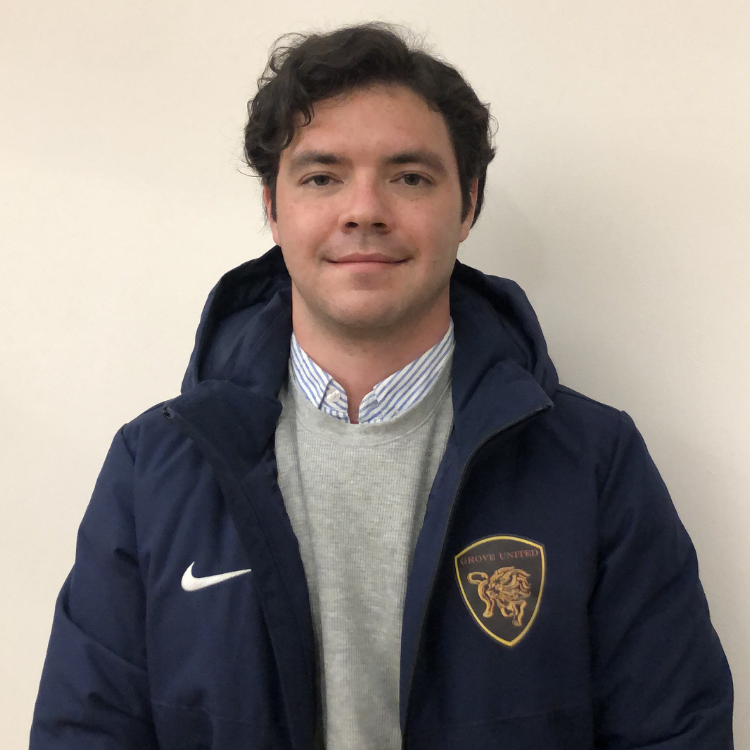
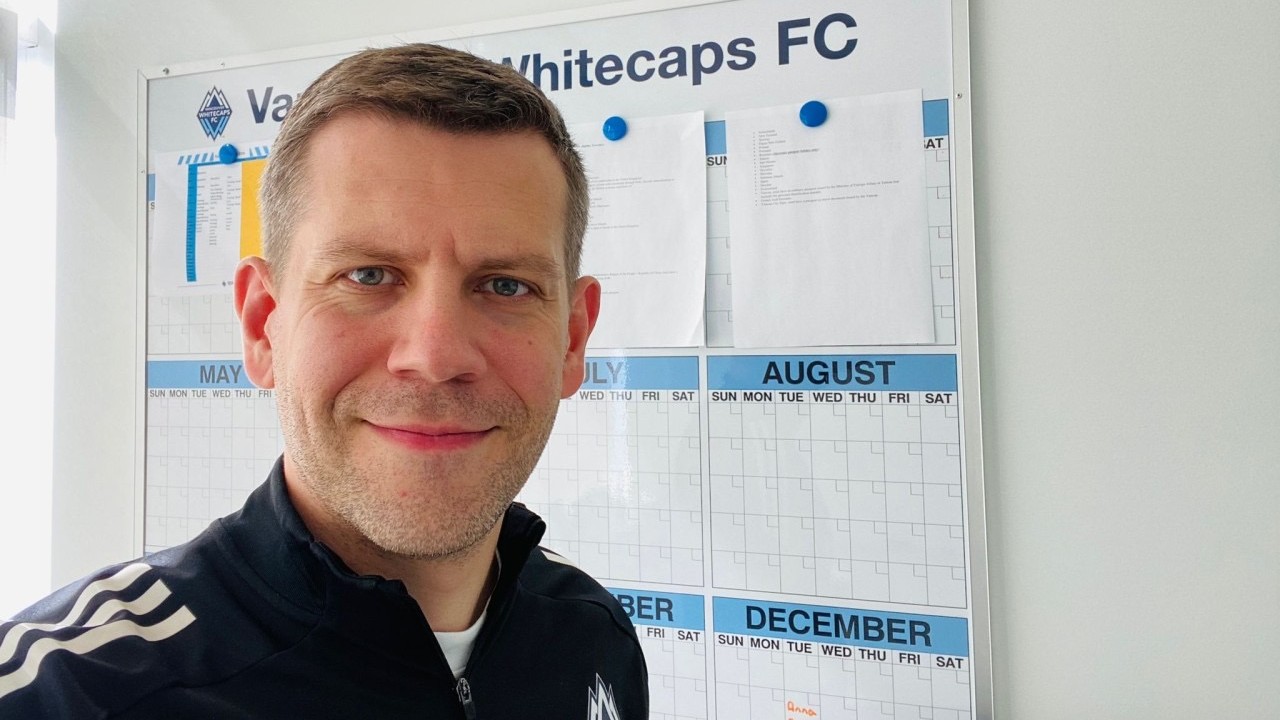
Profile
Role: Chief Scout at Vancouver Whitecaps
Specialisation: global player identification and data-supported recruitment
Experience: Poland, England, Denmark, the Netherlands and Canada
Focus Areas: player identification, recruitment strategy, undervalued markets and sustainable scouting models
Biography
Bartosz Barnaś (born 1988, Tarnów, Poland) is the Chief Scout at Vancouver Whitecaps, overseeing global player identification in Major League Soccer. His work combines data-supported recruitment with traditional scouting, operating within MLS’s complex system of salary caps, trades, and multiple acquisition pathways.
Before joining Vancouver, Barnaś worked as Chief Scout for Raków Częstochowa, helping build the club’s scouting structure during a period in which Raków won the Polish league and competed in Europe. Notable recruitment successes included Ante Crnac, signed for €1.3 million and later sold for €11 million, along with key players such as Stratos Svarnas, John Yeboah and Gustav Berggren.
His work combines data-supported recruitment with traditional scouting, operating within MLS’s complex system of salary caps, trades, and multiple acquisition pathways.
Earlier, Barnaś spent five years scouting for Willem II, identifying talent early and exploring undervalued markets such as the lower tiers of German and Spanish football. The club signed young talents including Vangelis Pavlidis, Mike Trésor and Derrick Köhn before they became widely recognised, while also qualifying for European competitions. He credits much of his development to working with Gerard Wielaert, a Willem II legend and mentor.
Today, Barnaś focuses on identifying emerging global talent and building sustainable recruitment models to help Vancouver Whitecaps compete for major honours. He has also expressed admiration for the football philosophy of Ajax Amsterdam.
Key Insights
- Bartosz Barnaś leads global scouting at Vancouver Whitecaps in MLS.
- His career spans multiple countries and recruitment models across Europe and North America.
- He combines data, video and live scouting to build sustainable player recruitment systems.
Our Exclusive Interview with Bartosz Barnaś
You’ve worked in several countries and clubs. How did your journey into football scouting begin?
It started with curiosity. I wanted to understand why some players succeed while others don’t. As a teenager, I was already watching games from different levels, making notes on players and trying to figure out what made them good or not. That curiosity eventually became my profession.
Before I turned 20, I was already contacting Ekstraklasa clubs offering help, even as a volunteer, because professional scouting barely existed in Poland at that time. One day, the sporting director of Cracovia answered my call – and that moment changed everything.
That curiosity eventually became my profession.
You transferred from Cracovia in the Ekstraklasa to scouting youth football for Tottenham Hotspur. How was your experience joining a big institution like Tottenham? What was your recruiting strategy?
I met Tottenham’s academy director at a youth tournament, and shortly afterwards I joined the club as a scout for Eastern Europe. It was my first experience inside a truly elite football organisation.
Working for such a large club gives you perspective. When you are one of many scouts worldwide, the visible outcome of your work may appear only once every few years, and only exceptional players eventually progress to the first team in the Premier League.
At academy level, recruiting is all about projection. Physical advantages can be misleading, so we prioritised football intelligence, learning capacity, and mentality. The key question was always: what will this player look like in five years within an elite environment?
You then made the move to FC Copenhagen, who are known for their heavily data-focused recruiting strategy. What did you learn during your time there?
FC Copenhagen was my first real exposure to a data-supported recruiting model. I was responsible for scouting markets such as Poland, Czechia and Slovakia, while recommended players were later evaluated internally through deeper analytical assessment.
At that time, it was still a part-time role alongside a regular job, but shortly afterwards I joined Willem II full-time, which became a major milestone in my career.
You then went on to scout for Willem II for five years. What were the biggest challenges and lessons during your time there?
At Willem II we had one of the smallest budgets in the Eredivisie, but limited resources force smart decisions. We simply had to identify talent earlier and explore undervalued markets, such as lower German or Spanish leagues.
We signed players like Vangelis Pavlidis, Mike Trésor and Derrick Köhn before they became widely known, while qualifying for European competitions – a huge achievement for a club of Willem II’s size.
I was also fortunate to work closely with Gerard Wielaert, a club legend and my mentor, who had a massive influence on my professional development and remains an inspiration to this day.
limited resources force smart decisions.
Raków Częstochowa is one of Poland’s biggest clubs. How did it feel to return to Poland and how has the Ekstraklasa improved over the years?
Returning to Poland was very rewarding because I could apply my experience from international markets at home. Raków had a clear ambition: to win the league for the first time in the club’s history and compete in Europe – and we achieved it.
It was also my first role as Head of Scouting, where I was responsible for building structures and improving recruitment processes. We signed key players such as Stratos Svarnas and Gustav Berggren, while the transfer of Ante Crnac showed how smart recruitment can quickly bring results and return on investment.
The Ekstraklasa has improved significantly in terms of professionalism, infrastructure, and openness to analytics in recent years, which is reflected in UEFA rankings and stronger performances of Polish clubs in European competitions.
You are now at the Vancouver Whitecaps. What makes scouting for MLS different from scouting for European leagues? What motivated your move to Canada?
MLS is growing rapidly. It is no longer a retirement league but a global talent market where you can find players with enormous potential from all over the world. Players like Sebastian Berhalter, Édier Ocampo and Kenji Cabrera are great examples within our squad.
Vancouver presented a clear sporting vision built around smart recruitment and long-term sustainability. The hiring process was extremely professional, and the opportunity to work with sporting director Axel Schuster and technical director Quinn Thompson was very attractive. They have built a strong international team with ambitious people across the organisation.
MLS recruitment operates within very specific mechanisms – salary caps, roster rules, trades, and multiple acquisition pathways, including college soccer. For someone coming from Europe, it can honestly feel overwhelming at first. You realise very quickly that understanding the league rules is almost as important as identifying the right player.
How do you filter thousands of players to find the right profile for your club? How do you balance statistics and watching the player live?
Everything starts with clarity about the club’s identity and positional profiles. Once you know exactly what you are looking for, data reduces the pool, video builds context, and live scouting confirms the decision.
Our data science team developed powerful analytical tools that support the scouting process. We strongly believe in our methodology and process while constantly working to improve it.
Once you know exactly what you are looking for, data reduces the pool, video builds context, and live scouting confirms the decision.
What are your ambitions for the upcoming seasons?
My ambition is clear – to help Vancouver compete for trophies while building a sustainable recruiting model.
After losing both the MLS Cup and CONCACAF Champions Cup finals last season, we are extremely motivated to take the next step. I believe we are creating a unique project in North America and proving that a well-managed underdog can compete with bigger clubs.
On a personal level, one of my long-term dreams would be to work for Ajax Amsterdam – a club I have supported since childhood. I have always admired its identity and history, and I hope to see Ajax return to Europe’s elite in the near future.
FAQ
Who is Bartosz Barnaś?
Bartosz Barnaś is the Chief Scout at Vancouver Whitecaps, overseeing global player identification in Major League Soccer.
Which clubs has Bartosz Barnaś worked for?
He has worked for Cracovia, Tottenham Hotspur, FC Copenhagen, Willem II, Raków Częstochowa and Vancouver Whitecaps.
What is Bartosz Barnaś known for in football recruitment?
He is known for combining data-supported recruitment with traditional scouting and identifying talent in undervalued markets.