

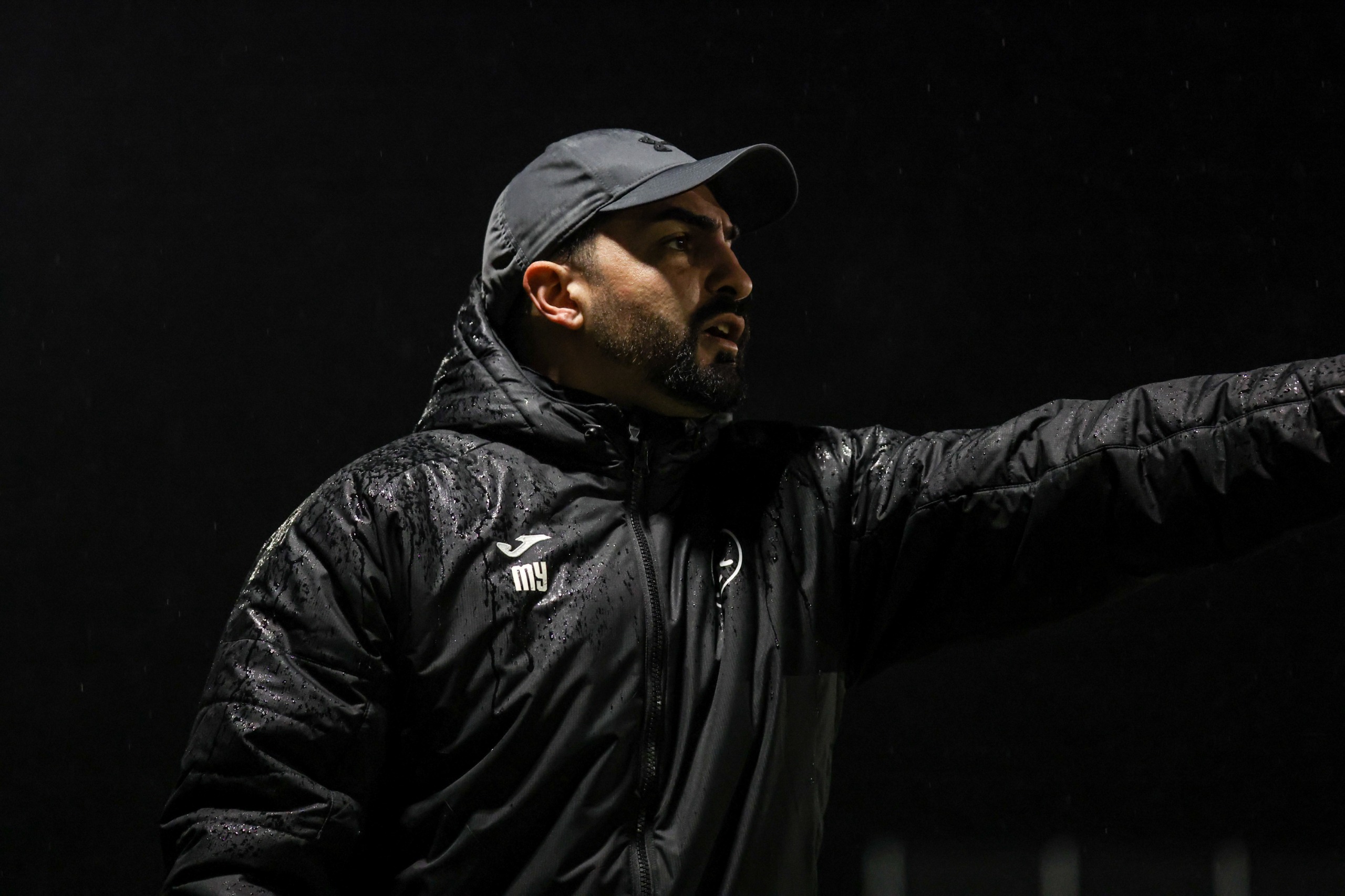
Profile
Role: Head coach of the U19 at Ludwigshafener SC
Specialisation: Youth coaching, player development and talent identification
Experience: Ludwigshafener SC, Wormatia Worms, Karlsruher SC and SAP
Focus Areas: Trust, structure, accountability, scouting and long-term development
Biography
Marco Yurtseven is a youth coach whose work begins where easy development stories usually end: in environments without ideal conditions, without inherited pathways, and with players who often need more than just football. He sees youth coaching as the task of giving young people clarity, belief, structure, and responsibility, because performance grows most sustainably when players feel seen, challenged, and guided.
That belief defines his leadership. Yurtseven stands for clear standards, structured daily work, and relationship-based coaching. His focus is not early labeling, but long-term development. Especially in demanding environments, he sees the coach’s role not only in improving players on the pitch, but in creating trust, orientation, and accountability. His conviction is simple: development is human before it becomes athletic.
His conviction is simple: development is human before it becomes athletic.
Currently head coach of the U19 at Ludwigshafener SC in the Regionalliga Südwest, Yurtseven has shown what that philosophy looks like in practice. In the 2024 to 2025 season, he led the youngest squad in the league to 7th place, with an average of eight younger-year players in the starting eleven. In a club whose senior side competes only in the eighth tier, two players moved into the Oberliga and three into the Verbandsliga, while the club retained all younger age groups internally.
His current challenge underlines his profile even further. He took over what was described internally as the weakest age group in 24 years, a team that had previously finished 9th in the U17 Verbandsliga Südwest and had come close to relegation. Under his leadership, that same core now competes in the U19 Regionalliga Südwest and has established itself in mid-table through internal development rather than external recruitment.
The same pattern runs through his entire pathway: taking over difficult starting points, building stability, and moving players and teams forward. At Wormatia Worms, he led the U17 from 13th place with four points after five matchdays to 8th place with 41 points and 1.96 points per game by the end of the season, while also winning the regional cup. Before that, he coached the U15 in the Regionalliga Südwest, winning the Verbandspokal in 2022 to 2023, reaching the Meisterrunde twice, and helping multiple players transition either into NLZ environments or directly into older elite youth teams. Across those years, he contributed to six NLZ moves and multiple internal promotions between age groups.
Alongside his coaching work, Yurtseven has also built experience in talent identification as a scout for Karlsruher SC across southern Germany and Hessen, recommending players before moves into academy and performance environments, including pathways toward Hoffenheim, Mainz 05, Greuther Fürth, and 1. FC Köln.
His profile is reinforced by a strong academic and professional background beyond the pitch. Yurtseven holds a Master’s degree in Business Management and works professionally as a Senior Consultant at SAP, where he manages complex projects, stakeholder structures, workshops, and process design. This gives him an unusual combination of football expertise and organizational competence, one that is increasingly valuable in modern academy environments. He also continues to invest in his development as a coach and is part of the DFB A+ Licence cohort for 2026, notably as the only participant entering directly from youth amateur football after just five years as a head coach.
Marco Yurtseven represents a modern development coach with a clear identity: structured, reflective, demanding, and deeply committed to building people as well as players. His work is not based on ideal starting points, but on the ability to create progress where others see limitation. As he prepares for the next step in his career, he offers ambitious clubs a profile shaped by development, intensity, and a clear sense of responsibility.
His work is not based on ideal starting points, but on the ability to create progress where others see limitation.
Key Insights
- Marco Yurtseven’s coaching identity is built around clarity, structure, trust, and accountability.
- His work has focused on creating progress in demanding youth football environments without ideal conditions.
- His background combines youth coaching, scouting, business management, and organizational competence.
Our Exclusive Interview with Marco Yurtseven
You have repeatedly taken over teams in difficult starting positions and managed to create stability, development, and results. What is your first priority when entering an environment that needs to be rebuilt rather than simply maintained?
My first priority is always to create clarity as quickly as possible. In challenging situations, players need orientation, reliability, and an environment where they clearly understand their role and expectations. At the beginning, it is not only about on-pitch content, but primarily about establishing standards, defining roles, and creating a clear daily working culture.
I try to understand early on what a team truly needs at that moment. Sometimes it is more structure, sometimes more trust, sometimes more responsibility, or simply greater stability in how players interact with each other. Sustainable development can begin only when this foundation is in place.
For me, rebuilding always starts with creating an environment where performance is able to grow again. That is a central part of my role as a youth coach.
Your coaching philosophy seems deeply connected to trust, structure, and accountability. How do you build relationships with young players in a way that helps them grow both as footballers and as people?
I believe that development always begins with the person. Especially in youth football, it is not only about improving players, but also about giving young people stability, orientation, and honest feedback.
For me, trust is not created through softness, but through authenticity. Players need to feel that the coach truly sees them, challenges them, and genuinely cares about their development. That is why I aim to build relationships that are both clear and consistent. I want to be approachable, but at the same time I demand standards.
For me, trust is not created through softness, but through authenticity.
Young players do not need constant protection. They need clarity, consistency, and the feeling that someone truly believes in them. When that connection is established, performance usually improves on the pitch, while confidence, maturity, and responsibility grow off the pitch.
At Ludwigshafener SC and previously at Wormatia Worms, you achieved visible player progression under challenging structural conditions. What do you believe is the key to developing players in environments that do not have the resources of a top academy?
For me, the key is understanding that development does not depend on perfect conditions, but on the quality of daily work. Of course, strong infrastructure, larger staff, and more resources can help. But ultimately, players develop when they work every day in a clear, demanding, and supportive environment.
In such settings, coaching must be even more intentional. You need to see players more individually, take greater responsibility, and approach development with consistency and conviction. It is about not judging potential too early, but unlocking it through repetition, trust, and high standards.
When an environment lacks certain resources, the coach must provide even more orientation, quality, and energy on a daily basis. I believe this is exactly where my strength lies, developing real progress from difficult starting points.
You combine youth coaching, scouting experience for Karlsruher SC, and a professional background at SAP. How do these different perspectives influence the way you assess talent, communicate, and lead teams today?
These different perspectives have been extremely valuable because they have broadened my view while also sharpening it. Through scouting, I learned to assess talent in a more differentiated way, not only based on current performance, but also on potential, mentality, learning capacity, and environment.
I do not only look at what a player is today, but what he needs to become in order to take the next step in the future.
My professional background outside of football has also shaped my leadership style. At SAP, I work with complex structures, clear communication, responsibility, process thinking, and different stakeholder expectations. I transfer all of this into football.
I prefer to work in a structured way, communicate clearly, and create an environment where everyone understands their role. For me, football expertise and organizational competence are not separate. In modern high performance football, they strongly complement each other.
You are part of the current DFB A+ Licence cohort and have built your pathway from youth amateur football into elite youth competition. What has this journey taught you about ambition, patience, and the standards required to keep moving forward as a coach?
This journey has taught me that ambition only has value when it is combined with daily work, patience, and a genuine willingness to learn. Development, even as a coach, is never linear. You need conviction, but also the ability to constantly reflect, improve, and work on details.
I have also learned that high standards are not a short term concept. It is not enough to be ambitious occasionally. What matters is consistency over years, how you deal with setbacks, and whether you continue to follow your path even in difficult phases.
For me, it was important not to wait for ideal conditions, but to deliver the best possible work in every environment. That mindset has shaped my journey and strengthened my identity as a coach.
As you look ahead, what kind of football environment would best match your coaching identity, and what should a club expect from Marco Yurtseven both on a daily basis and over the long term?
My coaching identity fits best within an environment that truly values development. A club that does not only focus on short term results, but is committed to improving players, teams, and structures in a sustainable way.
I perform best in environments with clear ambition, where working with young players is a priority, and where daily quality, accountability, and responsibility are appreciated.
A club can expect me to bring clarity, structure, and high standards into everyday work. I am relationship oriented, but also very consistent and demanding. My goal is not only to improve players on the pitch, but to guide and challenge them in their overall development.
In the long term, a club can expect me to help build an environment where progress becomes visible at every level: within individual players, within the team, and within the club’s overall performance culture.
FAQ
Who is Marco Yurtseven?
Marco Yurtseven is a youth coach and head coach of the U19 at Ludwigshafener SC in the Regionalliga Südwest.
What is Marco Yurtseven’s coaching focus?
His coaching focus is built around clarity, structure, trust, accountability, and long-term development.
What experience does Marco Yurtseven have in football?
He has coached at Ludwigshafener SC and Wormatia Worms, and has also built experience in talent identification as a scout for Karlsruher SC across southern Germany and Hessen.