

.jpg)
Introduction
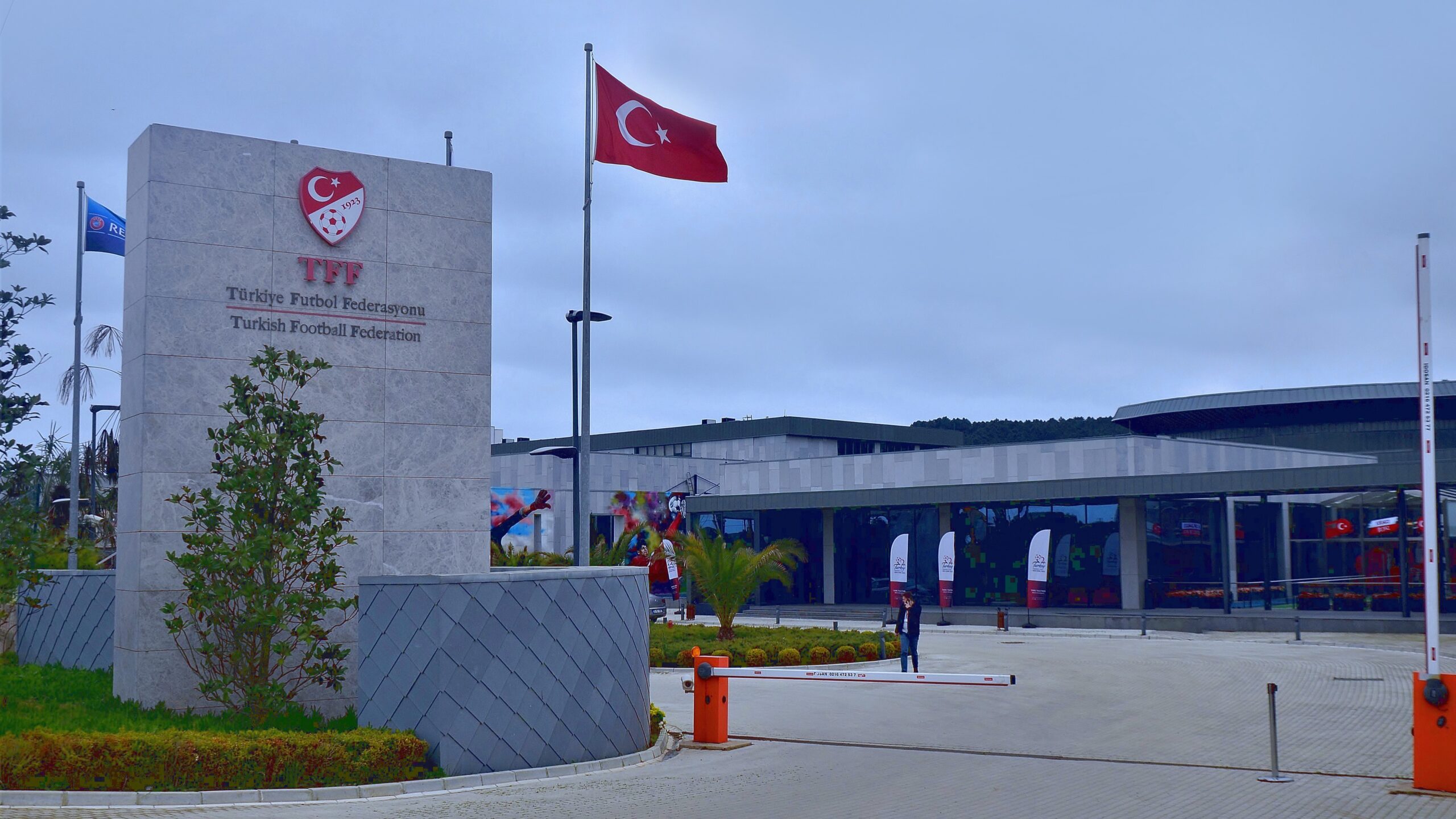
In Turkey, disputes arising out of professional football are resolved within a distinct legal framework shaped by federative regulations, the need for swift sports adjudication, and the influence of international rules. At the center of this framework is the Dispute Resolution Board (UÇK), which serves as one of the first-instance legal boards of the Turkish Football Federation (TFF) pursuant to Law No. 5894 on the Establishment and Duties of the TFF. The working principles of this chamber are determined in accordance with the TFF Statute and the UÇK Instruction. Therefore, the UÇK should not merely be considered an intra-football arbitral tribunal, but rather a specialized first-instance adjudicatory mechanism within the Federation, operating under predetermined rules and subject to review by the TFF Arbitration Board.
However, in recent years, a significant transformation has occurred regarding the UÇK’s jurisdiction and its constitutional basis. The primary catalyst for this shift is the Constitutional Court’s (AYM) decision dated 18.01.2018, numbered E.2017/136, K.2018/7. Following this decision, the former approach which dictated that all football related disputes must compulsorily be resolved before federation boards is no longer sustainable. Consequently, in disputes of a contractual and financial nature, the mutual consent of the parties, written acceptance, and the right of access to a court have regained prominence.
The primary catalyst for this shift is the Constitutional Court’s (AYM) decision dated 18.01.2018, numbered E.2017/136, K.2018/7.
The Current Status and Institutional Structure of the UÇK
Pursuant to the fourth paragraph of Article 5 of the current Law No. 5894, first-instance legal boards are composed of members elected by the Board of Directors. Following the enactment of Law No. 7405, the same provision stipulates that the term of office for these boards is four years, independent of the Board of Directors’ term. It also regulates the implementation of guarantee mechanisms regarding independence and impartiality, as well as the recusal regime in cases involving a conflict of interest. Thus, the primary impact of the post-7405 reform was not necessarily altering the electing body but rather strengthening the boards’ term of office and their foundation of independence.
Reading Article 55 of the TFF Statute and Article 3 of the UÇK Instruction together reveals that the UÇK consists of a chairman, six principal members, and six substitute members, all elected by the Board of Directors. It is mandatory for the board members to be legal professionals. The UÇK Instruction further requires the chairman, as well as the principal and substitute members, to have at least ten years of professional experience, an archived criminal record certificate, a declaration of wealth, and to meet specific independence criteria. Individuals actively employed in clubs, professional football players, coaches, medical staff, football agents, and those serving in other boards and organs of the TFF cannot serve as UÇK members.
The conclusion drawn from this structure is as follows: The current design of the UÇK is a first-instance legal board model that is institutionally situated within the TFF, yet its judicial appearance has been fortified through tenure security, a recusal regime, and declarations of independence. For this reason, when evaluating the UÇK’s structure, it is more accurate to analyze the debate on independence through the lens of tenure security, the prohibition of conflicts of interest, and the autonomy of the decision-making process, rather than focusing solely on the electing body.
Jurisdictional Regime: Contractual Disputes, Exclusive Areas, and the Post-2018 Constitutional Landscape
Pursuant to Article 56 of the TFF Statute and Article 2 of the UÇK Instruction, the UÇK examines and resolves all contractual disputes relating to football among clubs, players, coaches, and football agents, provided that the parties accept its jurisdiction. This provision clearly indicates that in the current system, the general rule for contractual disputes is the mutual consent of the parties. In other words, for contractual claims such as salaries, bonuses, termination compensation, representation fees, or similar items, the UÇK’s jurisdiction does not arise automatically as a rule but rather based on written consent.
the general rule for contractual disputes is the mutual consent of the parties.
However, the same normative texts also state that disputes concerning sporting sanctions and training compensation shall be resolved exclusively before the UÇK. The explicit wording of the positive TFF legislation remains in this direction today. Yet this topic is a highly debated area that requires careful interpretation on a constitutional level. This is because the Constitutional Court, in its decision 2018/7, emphasized that the mandatory arbitration regime set forth in Article 59 of the Constitution only holds valid constitutional grounds for decisions regarding the management and discipline of sports activities by sports federations, whereas receivables and financial rights arising from contracts fall outside this core area.
Therefore, in a definitive legal assessment, two separate planes must be considered simultaneously. The first plane is the current wording of the TFF Statute and the UÇK Instruction; these texts maintain the formula of exclusive jurisdiction regarding sporting sanctions and training compensation. The second plane involves constitutional review and the right of access to a court; the AYM decision established that the scope of mandatory arbitration cannot be limitlessly expanded by the federation’s sub-regulatory norms.
Why the AYM Decision No. 2017/136 E., 2018/7 K., Dated 18.01.2018 is a Turning Point?
The Constitutional Court’s decision dated 18.01.2018 annulled the section of Law No. 5894 that delegated the determination of the jurisdiction of first-instance legal boards to the TFF Statute and other TFF instructions and regulations. The significance of the decision goes beyond merely reiterating the limits of Article 59 of the Constitution. The Court also explicitly stated that leaving the scope of disputes to sub-regulatory norms, which can be altered by the TFF at any time, is incompatible with the principles of the rule of law and legal certainty; it renders individuals unable to foresee which disputes are closed to judicial review, thereby undermining the right of access to a court.
the scope of mandatory arbitration cannot be expanded in an ambiguous manner through sub-regulatory acts.
In particular, the Court assessed together the principle of the rule of law under Article 2, the requirement under Article 13 that fundamental rights may be restricted only by law and in a proportionate manner, the right to seek legal remedies under Article 36, and the sports arbitration regime under Article 59 of the Constitution. According to the Constitutional Court, the scope of mandatory arbitration cannot be expanded in an ambiguous manner through sub-regulatory acts. This approach shows that the UÇK’s jurisdiction over contractual and financial disputes can only be recognized on a more predictable, limited, and consent-based legal foundation.
The point to note here is this: The AYM decision did not render the UÇK dysfunctional; rather, it put an end to the notion that the UÇK is the automatic and mandatory authority for every football-related dispute. The primary impact of the decision has been to redraw the constitutional boundaries of federative dispute resolution and to bring written consent and the right of access to a court back to the forefront in the contractual domain.
Formal Requirements for Application, Written Consent, and Transitional Regime Processes
Article 6 of the UÇK Instruction details the mandatory elements of an application petition. The petition must include the parties’ details, the relief sought, the material facts, the evidence, the amount in dispute, and a signature. Additionally, a receipt showing the payment of the application fee and an agreement indicating the acceptance of the UÇK’s jurisdiction must be submitted. This systematic approach indicates that the UÇK’s jurisdiction in contractual disputes is essentially established based on written consent.
An important point here is that written consent is not necessarily required to be in the form of a separate agreement executed after the dispute has arisen. The Instruction utilizes the phrase “an agreement indicating the acceptance of the Dispute Resolution Chamber’s jurisdiction.” Therefore, consent can arise either from an explicit jurisdiction clause within the principal contract or from a separate arbitration agreement concluded after the dispute. Hence, a narrow interpretation suggesting that only post-dispute agreements are valid does not strictly align with the current text.
Regarding the transitional regime, Provisional Article 2 of the UÇK Instruction is of significance. Accordingly, if disputes relating to contracts signed before 02.03.2019 are brought before the UÇK after this date, and the respondent fails to object to the UÇK’s jurisdiction within seven days from notification, they are deemed to have accepted the chamber’s voluntary jurisdiction. This provision illustrates that an explicit tacit acceptance mechanism has been normalized specifically for a certain transitional period. Consequently, this tacit acceptance regime should not be presented as a universally applicable and unlimited rule for all cases automatically.
Procedural Rules
As a rule, UÇK proceedings are conducted based on the case file. However, if deemed necessary, the chamber may request information and documents, conduct further examinations, and hold a hearing; it may also decide to conduct the hearing via video conference, teleconference, or other methods. Decisions are taken by an absolute majority of the attending members; abstention is not permitted. The UÇK must render its reasoned decision within four months at the latest from the date of application; in the presence of justifiable reasons, this period may be extended for one-month intervals.
Another topic as crucial as procedural economy is the notification regime. According to Article 14 of the UÇK Instruction, the statement of claim is primarily sent to the respondent’s e-mail address or fax number registered in the TFF records. Notifications sent to the e-mail address are deemed to have been served at the end of the fifth day following the date of dispatch, regardless of whether the recipient has read it. This rule makes tracking deadlines extremely critical in football disputes. Furthermore, the failure of the parties to report changes in their contact information creates an additional risk of forfeiture of rights.
As regards the costs regime, the correct term is “application fee”, not “court fee”. According to Article 19 of the UÇK Instruction, in monetary disputes, a 3% application fee based on the value of the claim must be paid in advance. If the dispute has no monetary value, a fixed application fee determined at the beginning of the season is applied. This distinction shows that the UÇK system operates within a federative application regime that differs from the classical judicial fee logic.
The Arbitration Board, Finality, and Annulment Proceedings
The period for appealing against UÇK decisions is seven days from the notification of the decision to the parties. This appeal is made before the TFF Arbitration Board. UÇK decision becomes final either if it is not appealed to the Arbitration Board in due time or upon the Arbitration Board rendering its decision. This stage represents the completion of internal federative review; however, in terms of legal consequences, not every Arbitration Board decision can be said to possess the same degree of finality.
Pursuant to the sixth paragraph of Article 6 of Law No. 5894, the decisions of the Arbitration Board regarding the management and discipline of football activities are final. In contrast, decisions outside this scope may be subject to an annulment lawsuit filed within one month from the notification of the decision, pursuant to Article 439 of the Code of Civil Procedure (HMK) No. 6100. This distinction is extremely important. Because in the federative structure, the statement “The Arbitration Board is the final authority” does not yield the same outcome in every case file; the nature of the dispute, specifically whether it falls under the management-discipline domain or the contractual-financial domain, determines whether judicial review is closed or open.
International Scope: The Boundary Between the TFF System and the FIFA System
When a dispute involves a foreign element or is connected to an international transfer structure, the issue cannot be evaluated solely on the plane of TFF boards. In FIFA’s current structure, the Football Tribunal consists of three distinct chambers: the Dispute Resolution Chamber (DRC), the Players’ Status Chamber (PSC), and the Agents Chamber.
Employment disputes of an international dimension between a club and a player, as well as training compensation and solidarity contribution disputes between clubs affiliated with different federations, fundamentally fall within the jurisdiction of the DRC. Employment relationships with an international dimension between a club and a coach or a federation and a coach, along with certain inter-club disputes, are examined by the PSC. The Agents Chamber may also step in concerning the portions of football representation agreements that entail specific international elements.
This landscape is highly significant in practice. Because not every foreign element automatically establishes FIFA jurisdiction; conversely, the mere fact that one of the parties is Turkish does not lock every dispute into the TFF system either. The parties to the dispute, the subject of the contract, the international nature of the transfer transaction, and the applicable FIFA regulations must be evaluated collectively. Particularly, if the boundary between the jurisdiction of the UÇK and the chambers of the FIFA Football Tribunal is not accurately delineated, applying to the wrong authority can result in serious procedural setbacks, missed deadlines, and loss of time.
Conclusion
The current legal landscape indicates that the UÇK can neither be evaluated as a purely mandatory arbitral tribunal in the classical sense nor as an ordinary internal administrative board. The UÇK is a specialized, first-instance legal board situated within Law No. 5894 and the TFF Statute, operating under unique procedural rules. However, following the Constitutional Court’s decision No. 2018/7, the constitutional boundaries of this structure have become more visible; particularly in contractual and financial disputes, the mutual consent of the parties, written acceptance, and the right of access to a court have gained decisive importance.
In this context, a sound legal conclusion must be drawn as follows: The UÇK’s jurisdiction in current positive TFF texts and the boundaries set by constitutional review must be read together. Although TFF texts maintain the exclusive jurisdiction formula regarding sporting sanctions and training compensation, an automatic and boundless concept of mandatory jurisdiction in the contractual sphere is no longer defensible. Likewise, it cannot be said that all decisions of the Arbitration Board are absolutely closed to judicial review. On the contrary, failing to correctly identify the nature of the dispute can lead to erroneous conclusions regarding both jurisdiction and legal remedies.
For this reason, UÇK cases are won or lost not merely at the statement of claim stage; but much earlier, while the contract is being drafted, when the jurisdiction clause is being written, as notice processes are being designed, and when determining whether the dispute is national or international. In football law, a precise jurisdictional analysis is often just as decisive as the substantive right itself.
Bibliography
- Law No. 5894 on the Establishment and Duties of the Turkish Football Federation.
- Statute of the Turkish Football Federation.
- Dispute Resolution Board Instruction.
- Judgment of the Turkish Constitutional Court dated 18.01.2018, Case No. 2017/136, Decision No. 2018/7.
- TFF UÇK Frequently Asked Questions Document.
- FIFA Football Tribunal webpage and relevant current publications.