
Home Blog Page 82

The Best Footballer in the World: Ballon d’Or Vs FIFA’s Best

Photo by Ank Kumar (https://www.flickr.com/photos/nomad_gsx/) on Flickr (licensed under CC BY 2.0)


Introduction

At the end of every footballing year, there are two major individual awards that claim to recognise the World’s best footballer for that year, the Ballon d’Or and The Best FIFA Men’s Player. These awards can produce different and inaccurate winners and have been subject to significant criticism in the footballing world. In this blog, I will consider which award has the most credibility and recognition amongst football fans and how there might be a solution to the problems identified with them.

The History

The Ballon d’Or is the longest established award; recognising the best footballer in the world since 1956 when England’s Stanley Matthews was named as the very first winner. The award is translated into English as ‘The Golden Ball’ and was created by the French sports news magazine France Football. However, the award was only for European players up until 1995 when it was made global.

In 2016, on the 60th Anniversary, the magazine decided to conduct an international reconsideration of the almost 40 years of only-European winners. On completion of this it was decided that Pele would have been awarded the Ballon d’Or seven times, equalling the record currently held by Lionel Messi and closely followed by Cristiano Ronaldo with five wins.

Up until 2006, the Ballon d’Or was voted for by international journalists alone. Since then, managers and international team captains have also been given a vote. Each voter nominates their top ranked footballers of the year, their ranking is scored as points which are then added together to eventually award the Golden Ball to the player who receives the most voting points. There are almost 150 journalists from different countries that are given the right to vote as well as the managers and players.

The Best FIFA Men’s player, formerly known as the FIFA World Player of the Year, was established in 1991 as a direct competitor to the Ballon d’Or. However, it also claims to take into consideration on and off field behaviour and conduct, as well as footballing performances. Ronaldo, Cristiano Ronaldo, Zinedine Zidane and Ronaldinho are amongst the names with multiple FIFA World Player of the Year titles. As well as naming an individual as the best footballer on the planet for that year, they also choose the FIFA’s Best XI team as part of the ceremony.

The voting system for FIFA’s award differs from the Ballon d’Or as it includes the opinions of the fans. Whilst the media, national managers and national team captains comprise 25% each of the votes, global football fans have a 25% stake in the voting system. The fans have been given this right to vote since 2016. It is also done on a nomination basis and then uses a points-based ranking system to determine the winner.

The awards have not always been separate. Between 2010 and 2015, an agreement was made upon a single award, known as the FIFA Ballon d’Or. A partnership between France Football Magazine and FIFA meant that for these years, a single player was announced as the world’s best. Then again, since 2016, the awards were split into two and became competitors once more.

The Issues

There has been considerable criticism aimed towards both of these awards. Some football media have even claimed that the Ballon d’Or no longer matters. It seems a shame that, especially in the era of the Ronaldo versus Messi rivalry, there is not a respected and advocated award objectively recognising the greatest footballer of the year. So why is it that the Ballon d’Or and the Best FIFA Player awards have been criticised so widely?

One of the biggest criticisms of these awards is that it seems to be significantly biased towards attacking players, especially in recent years. The closest a defender has come to winning the Ballon d’Or in the last decade was Virgil Van Dijk who actually had more first place rankings than the winner Lionel Messi, but lost out on the award based on the points system. This seems unfair to lean towards attacking players as the world’s best footballers each year and plays a part in the lack of respect that these awards are given.

This situation is worsened by the strange voting that is released to the public each year. The public are able to see a breakdown of who votes for which players and often there are many confusing rankings. This has led to criticism and accusations of the awards as corrupt and inaccurate.

The inaccuracy of awarding the ‘world’s best footballer’ can be demonstrated by looking at the 2018 winner of the Ballon d’Or, Luka Modric. 2018 was a damaging year for the reputation of the award as quite obviously, Modric was not the best player in the world that year. It seems that he was given the award based on his role as captain of the Croatia team that reached the world cup final, and his input into the Champions League winning Real Madrid side. The same can be said in 2021 with Jorginho coming third for the award by being part of Chelsea and Italy whilst Mohamed Salah came seventh and Lewandowski failed to win it, despite his 41 goals in 29 league games. These awards are individual awards and should not be based on simply being a part of a successful team. In 2018, Modric scored a measly 2 goals in 43 matches for Madrid.

In 44 matches, Ronaldo scored 44 goals and Messi had 65 goal involvements in 54 games, yet Modric was the best player of the year according to the Ballon d’Or voters.

It seems to be self-explanatory why the Ballon d’Or and the Best FIFA Player award are not respected as they seem to produce the obviously wrong results. Awards that claim to recognise the best player in the world that is then so widely disagreed upon, will struggle to establish great credibility amongst the footballing world.

To make matters worse, the 2020 Ballon d’Or was cancelled due to the COVID-19 pandemic. There was a considerable outcry from the rest of the footballing world who believed that Robert Lewandowski was an obvious winner of the award. This created further criticism of the award as being unfair and corrupt. Even with the input of national team captains in recent times, there have been issues with fairness and bias. Ronaldo has never once voted for Messi despite voting for himself, whilst Lionel has only voted for his rival twice. This makes these awards very subjective rather than objective. Ronaldo and Messi are voting tactically rather than for who is actually the best player in the world. This is why objective awards are respected more than the Ballon d’Or and the Best FIFA Player. Accolades such as the golden glove and golden boot in the Premier League are more respected by football fans as there is no room for subjectivity and corrupt or tactical voting, it is simply given to the player with the most goals or the goalkeeper with the most clean sheets.

The Best FIFA Men’s Player epitomises the bias present in the subjective individual awards by their selections for their Best XI. This year, the best XI played a bizarre formation of 3-3-4, which many claimed was simply to ‘make room’ for Cristiano Ronaldo alongside Haaland, Lewandowski and Messi. It was a clear demonstration of the favouritism that these awards show towards attacking players. For either the Best FIFA Player of the Ballon d’Or to be considered as meaningful, credible and respected awards there must be a system devised that makes the winner a more objectively agreeable selection, regardless of their position on the pitch.

A Potential Solution

In my opinion, there is no better group of people to accurately decide and vote for the best players in the world than the players themselves. They understand the game and the ability of their opposition or teammates to the greatest extent possible. An award could be created which allows the votes of all professional footballers to decide who is the best footballer on the planet. I believe this award would carry more credibility and produce more accurate results than the current awards.

There would, of course, be issues with this award. Players would once again be accused of voting tactically or with a bias towards their teammates and friends. However, a system could be implemented that includes the use of data and potentially

incorporating a method of nullifying the possibility of bias and instead, would produce more objective results.

Conclusion

Unfortunately, there may never be an award for the best player in the world that can be given objectively. The media, teammates, fans and coaches will always have subjective, and potentially biased opinions of who deserves the award. Even if data was used to decide the winner, someone then has to decide what data deserves more recognition and will struggle to compare goalkeepers to strikers for example.

It is important to recognise individual talent and awards like the Golden Glove and Boot are good ways of doing this. Perhaps it is best to keep awards for best players separate on a positional basis rather than an award that could be seen as favouring certain positions over others, such as attackers versus defenders.

The important aim for these awards is to aim to be as objective and agreeable as possible. The shortcomings of the Ballon d’Or and the Best FIFA Men’s player are currently the lack of respect and credibility that they are given by the footballing world. They risk becoming totally meaningless and irrelevant if they continue to be swamped with criticism and results that are quite obviously wrong.

Africa United: The Importance of AFCON for Football


Introduction

            From January 9th to February 6th, 2022, five cities in Cameroon will host the 2021 African Cup of Nations, which had been postponed due to the COVID-19 pandemic. There has been controversy around the competition in the news, firstly with the decision to go ahead with the event, despite the ongoing Omicron variant and a security threat in Cameroon. Further issues have risen following Emmanuel Dennis’ absence from the Nigeria side as he will instead stay and play for Watford as he was ‘threatened’; Senegal also accused the Premier League club of refusing to release Ismaili Sarr for the tournament. Due to the lack of media coverage, promotion of players into ACFON and hype surrounding the competition, Arsenal legend, Ian Wright, labelled the Premier League’s and the clubs’ attitudes towards AFCON as “embedded with racism”. This was reinforced by Crystal Palace manager, Patrick Viera, who tried to emphasise the value of AFCON.

            This is what I will focus on in this blog. Despite the negativity surrounding this year’s tournament, AFCON holds significant sentimental, financial and cultural value for the nations, players, governing bodies and fans that are involved. I will assess the importance of this competition.

Back in 1957, three nations, Egypt, Sudan and Ethiopia competed in the inaugural African Cup of Nations (AFCON). Since then, it has been held every two years and is now comprised of 24 African nations competing to be the best footballing country on the continent. Egypt boasts the best record having won the competition seven times.

Value

            I will present the value of AFCON in two categories, the socially and economically beneficial impacts of the competition. There are problems dispersed across different areas of the continent of Africa; extreme poverty, high infant mortality rates, government corruption, violence and insurgency and poor healthcare affect many areas. AFCON can go some way in helping to tackle these problems through raising awareness and boosting economic investments, even in its current form and has the potential to be even more of a beacon of hope and unity against political, social and economic issues.

            Socially and culturally, AFCON can play an important role in highlighting prevalent issues on the continent. For example, all the way back in its very first year in 1957, the tournament was supposed to involve a fourth team, South Africa. However, in a football and AFCON-led stand against the Apartheid regime in the country and their insistence on only white players being part of the team, South Africa were banned from competing. They would also be served a 10-year ban from the tournament in the eighties and were only allowed to enter once again after the Apartheid era was ended. AFCON has also created global attention and awareness for other problems that damage the continent such as civil wars, other dictatorships and insurgencies. Issues with animal poaching and threats to species are also brought into the spotlight of a world audience to help prevention as well as helping to tackle human poverty in African countries by promoting humanitarian charities throughout the tournament.

            On a problematic, but beautiful continent, AFCON seems like the perfect model to celebrate the brilliance that Africa has to offer whilst helping the rest of the world to become aware of how they might be able to help the areas that need it. For the people of Africa, it is uniting, it brings them together for a month of celebration of the best footballing talent that the continent offers. The average attendance in the 2019 edition of AFCON was 18,136 per match and brought together football fans from across the continent, increasing the income from tourism, hospitality, entertainment and investments into the areas surrounding the venues. Whilst these attendance figures could be significantly higher, it is important to recognize the competition for its social benefits.

            The tournament has considerable economic benefit too, especially in the host country. This is why the rights to host AFCON are so sought after and campaigned for. After Cameroon were unable to host the 2019 competition due to the threat of extremism, Egypt managed to generate an estimated revenue of $83million which was a similar figure to that generated by the host nations, Equatorial Guinea and Gabon in 2015 and 2017 respectively. This allows the countries to invest into their infrastructure before and after the tournament, boosting their economies and improving the quality of life and financial situations of the population.

            In 2016, the petrol company, Total, signed an eight-year primary sponsorship package deal estimated to be worth around $250million for the naming rights of the tournament. The company will support 10 Confederation of African Football (CAF) competitions, including the Women’s and Youth AFCON tournaments. They join the likes of secondary sponsors, Orange Mobile, Yamaha and Visa in supporting and boosting the revenue generated by AFCON. The tournament has also boasted previous sponsors such as Pepsi, Samsung and Adidas. Lucrative sponsorship deals can only be of benefit to African football, the CAF governing body and the nations involved in the tournament. The prize money in 2019 was higher than ever as a result; $4.5million for the winning nation, $2.5m for the runners-up, $2m for the other two semi-finalists and $1m for those who reached the quarters. The minimum sum of money that any of the 24 competing nations received for their participation in the tournament was $600,000. These are vital sources of revenue for the African nations that can be reinvested into the development and improvement of their football team and society.

Issues

            There are underlying issues that present obstacles for AFCON to overcome in order to be seen as a flawless football competition. As a result of poorly educated and underpaid footballers and staff coupled with corrupt governments or even football governing bodies, AFCON has struggled to avoid controversy. Groups from the global North have been known to offer life-changing sums of money to vulnerable players in return for match-fixing commitments such as the allegations for the Mali vs Benin game in 2008. This also filters into campaigns for hosting the tournament being thwarted with accusations of bribery and foul play. Even when countries are given the rights to host the tournament this doesn’t always guarantee they will be able to follow through with it. Countries like Libya and Cameroon in recent times have been deemed unable to host AFCON safely despite being awarded the tournament due to civil war, political problems and security threats.

            Despite all of this, one of the biggest concerns for AFCON is the respect that it is shown around the world. If we consider how much publicity and hype the Euros are given, it creates the impression that AFCON is not as important or respectable. This is further demonstrated through the reluctancy of certain European clubs in letting their players go mid-season in order to represent their countries in the competition. Some of the best players in Europe currently; Mohamed Salah, Sadio Mane, Edouard Mendy, Riyad Mahrez and Achraf Hakimi compete in AFCON.

The issues lie in the discouragement of playing in AFCON. It is a massive honour for these players to represent their home nation and their participation boosts the attractiveness of the tournament as a spectacle which would draw the eyes of the footballing world to some of the best players on the planet. On top of this, the greater the audience for AFCON, the greater the exposure for African football and their emerging talent. The dream of most young African footballers is to find a lucrative move to the European leagues which has the added benefit of bringing in revenue for African football from their transfers. However, if the competition is not given the respect and global recognition that it deserves then these rising stars are not given the exposure and opportunities that they deserve, despite what they might be capable of. The problem is exemplified in the volume of players at European clubs that sense the lack of respect and recognition that AFCON is given and so instead opt to represent different countries they are eligible for rather than their African roots. Premier League superstars such as N’Golo Kante and Antonio Rudiger could have played for Sierra Leone and Mali respectively. This is further demonstrated by the Boateng brothers, Jerome and Kevin Prince, one of whom chose to play for their home of Ghana whilst the other found the opportunity of capitalizing on his German eligibility more appealing.

Solutions

            There are many aspects in which AFCON could be improved. It holds the potential to be an iconic biannual football event that celebrates not only the footballing talent of the African continent but the magnificence of the continent itself. In short, I believe that AFCON needs to be appropriately respected, governed and funded.

            European clubs and the rest of the footballing world need to understand the importance and value of AFCON in providing the opportunity for players to represent their country as well as its role as a display of the football talent the continent has to offer. The tournament deserves greater media exposure and positive publicity in order to demonstrate its worth. Players should be celebrated and congratulated for playing in the tournament rather than held back or seen in a negative light by not committing to their club. Once the tournament is given the respect that it deserves, it will be able to flourish and fulfil the potential that it has as a celebration of African football.

Football is an integral part of African culture and AFCON is an opportunity to promote and improve it. The governing bodies across CAF have a duty to come together and ensure the tournament is given the support it deserves. If these football organisations are able to properly market the tournament, attract sponsors and spend the investments wisely, the potential of AFCON could be fulfilled. Furthermore, there is a need to create a safe and accessible environment at the events so that fans and sports tourism can thrive and bring further benefits to the host country. With players as world-class as Mohamed Salah playing in the tournament, stadiums should be sold out and bringing fans to support their countries should be a priority of CAF. This can be done by sensibly pricing tickets and travel arrangements to lower the obstacles that are posed to fans.

There also needs to be a deliberate and sustained effort to protect the integrity of the competition, preventing the influence of corruption in any form, from bribery to match-fixing. It could be seen as a duty for FIFA to intervene here by creating projects and providing sufficient funds for AFCON to support the education and fair treatment of players in African nations to discourage and prevent integrity issues. This will increase the global respect for the tournament and the extent to which it is appreciated across the footballing world. If these issues are resolved and a strategy is put into place that will market and advertise the competition sufficiently, then I have no doubt that AFCON will fulfill its limitless potential as a celebration of the continent that has produced some of the best footballing talent seen in Europe in recent years. It is time to ensure that the African players and their countries are given the respect that they deserve.

Major League Soccer, Major Potential


Introduction

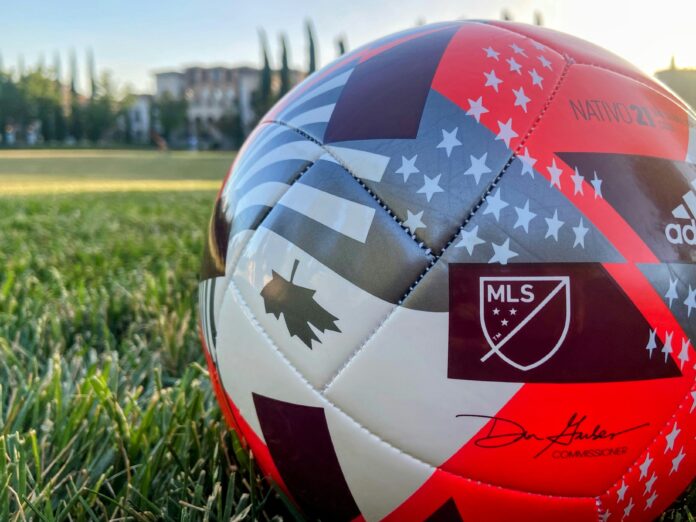
            Back in 2011, the commissioner of Major League Soccer (MLS), Don Garber, claimed that the US football league would be one of the best in the world by 2022. He repeated his claims in 2013 and 2015 and his views were echoed by other significant figures in the league including the Inter Miami co-owner who believed its status would surpass European leagues such as Serie A.

            As 2022 approaches, this blog will explore how the MLS has fared against these bold predictions made a decade ago. I will first explain the current status and development of the MLS and the signs of hope for the future as well as the obstacles it faces as a fledgling league.

In the Beginning

            The USA prepared to host the 1994 FIFA world cup without an established elite national soccer league. This forced the United States Soccer Federation (USSF) to create the MLS in 1993, although the first season of the league did not occur until 1996. The first season consisted of just 10 teams and was won by DC United.

            Rather than traditional teams as per the European football leagues, the MLS consists of franchises. The most successful franchise to date is LA Galaxy, based in Los Angeles, California, claiming five MLS titles since its formation.

            The MLS has come to be seen as something of a ‘retirement home’ for some big names in football towards the back end of their career. Superstars such as Wayne Rooney, David Beckham, David Villa, Frank Lampard and Zlatan Ibrahimovic have graced the league with their presence. I will analyse the implications of this reputation in the next sections of the blog.

Can It Really Compete as a Top Football League?

            Now in 2021, the number of franchises in the MLS has risen to 27. Charlotte FC are the most recent addition to the league and paid an admission fee of $325million. This shows the increasing monetary value of being a part of the MLS as back in 2013, New York City FC broke the record for a franchise admission cost when they paid just $100million to be a part of the league.

            There are several other areas where the MLS has experienced significant financial growth. The league is in its final year of a five-year media and broadcasting rights contract with ESPN, Fox and Univision to televise matches. The deal has been worth $90million annually since 2015 but the hope is the next year the new deal with be considerably higher and perhaps might add to the argument that the MLS will soon be competing with the best leagues in the world. They have also signed a major sponsorship partnership with Procter and Gamble worth somewhere between $80m and $100m for the next five years. Major investments such as this will assist in propelling the MLS towards fulfilling its potential and make positive movements towards Don Garber’s mission to be one of the best global football leagues. The value of individual franchises is also on the rise. The rapper, Yo Gotti, recently invested into DC United after their valuation projection was reported as $730million, demonstrating the potential for the MLS’ franchises to become football powerhouses.

            The fanbase of the MLS continues to rise. Although there has only been a small rise in average game attendance since the inaugural MLS season, from 17,400 in 1996, to 21,900 in 2021, this is partly due to an increase in the number of franchises funnelling soccer fans to different games. The overall number of those attending MLS games is undoubtedly rising. A major factor in the growth of soccer in the United States is the growth in the Hispanic population which is expected to make up 28% of the national demographic by 2060 and consequently will cause a significant further growth in the popularity of the MLS. The expansion of the MLS fanbase, media coverage, social media presence and investment opportunities all provide an excited foundation to help a league grow and fulfil its potential.

            One of the most important opportunities for the MLS to utilize if it is ever to reach the claims that it will become one of the world’s best leagues, is the 2026 FIFA World Cup which returns to the states for the first time since 1994. When the world cup last came to the US, the MLS didn’t exist so there was no league to promote and place into the global spotlight. This time, it is imperative that the World Cup is used as a vital opportunity to promote and demonstrate the potential of the MLS by boasting its impressive stadiums and devoted fanbase. If the rest of the world is able to see the MLS as the global competing league that it is hoped to be, it stands a better chance of reaching these heights.

Obstacles

            The US is not known for the MLS and ‘soccer’ as the primary national sport. Basketball, American Football, Baseball and Ice Hockey all compete alongside soccer for the sporting spotlight in the States. This could be part of the reason for lower attendances as sports fans divide their time between other sports. In the UK for example, football is by far the most popular sport ahead of cricket and rugby. This has allowed the Premier League to become such a successful competition with huge financial and commercial value.

            One of the biggest constraints that the MLS faces is its enforcement of a salary cap. This means that franchises are unable to pay the wages demanded of the best footballing talent. The average player in the Premier League is paid over £3million per year, the MLS is far behind with players earning an average of just $312,000 annually.  The league is therefore less likely to attract the biggest names in the game at the peak of their career and instead offers them a final couple of years at the end of their career, as was the case for the names I previously mentioned. However, whilst it is a benefit that ‘legends’ of the game eventually end up in the MLS, there is an argument to be made that this actually provides another difficulty for its growth. 57% of players in the MLS are foreign, perhaps this high statistic prevents home grown players breaking into the league and competing at the highest level. For those that are good enough, such as Chelsea’s Christian Pulisic, they are more likely to move to a better league rather than helping to raise the standard of the MLS.

            One way in which the MLS would be a more attractive option for home grown talent is for it to have a greater financial and commercial value. The league currently lacks significant investments. This is demonstrated by the fact that the television and broadcasting rights of $90million annually is under half of what NBC pay to show the English Premier League games in the US. It is also problematic that shirt sponsor deals are only worth around $4million in the MLS compared to over $20million for most of the top European clubs. Finally, the overall market value of the league shows there is a long way to go to compete as a world-leading league. TransferMarkt values the MLS at £905million whereas the Premier League is £8.17billion.

Summary

            In the final section I have demonstrated that there is a large gulf between the MLS and the best current global football leagues. There are obstacles that are restricting the ability of the league to fulfil its potential. However, I have also shown that the MLS is not without hope. The claims that it will one day be one of the best leagues in the world are ambitious but not completely unrealistic.

            If the league is able to attract greater financial investment and grow its fanbase, the MLS will go some way in fulfilling the potential that it has. The World Cup in 2026 is a fantastic opportunity for the US to show the world that football has a strong foothold as a leading sport in the country. It is vital that the league capitalizes on this opportunity and reap the rewards of having the eyes if the football world on them.

            In my opinion, I project that the MLS will indeed compete as one of the best three leagues in the world by 2026, after the Premier League and possibly on a par with La Liga.

How to Own Football Clubs: The Intricacies of Club and Multi-Club Ownership


Introduction

            7th October 2021 was an exciting day for Newcastle United. After over a year of negotiations and obstacles, the club’s ownership was taken over by a Saudi Arabian public investment fund. The saga sparked debates throughout the world of football and divided opinions. Owning a football club is an important responsibility; owners have a large influence in manager appointments, transfers and other significant decisions for a club and are able to have shares in more than one.

There are several rules and regulations surrounding football club ownership and multi-club ownership. In this blog I will analyse how these regulations are implemented and explain their importance in protecting the integrity of football.

The Importance of Regulations

            The governing bodies of football have a duty to protect the integrity of football as a competitive sport. Upholding the core values and principles of competition is vital, and regulating club ownership is imperative for doing so.

            In a world where a multi-billionaire could own majority stakes in several football clubs, inevitably the integrity of competition will be undermined, especially if the clubs compete in the same competition. This was the case in 2000 when ENIC, an investment company, had shares in six European football clubs including 42% of AEK Athens and 96% of Slavia Prague who were both in the European cup competition. This was prohibited under UEFA club ownership laws and ENIC took legal action, claiming that the regulations restricted investment into football. However, their appeals were rejected on the grounds that the regulations were in place to guarantee integrity and fair competition.

            What would have happened if, for example, there were no rules preventing ENIC from owning more than one club and Athens and Prague were drawn in the same group? The impact could go even further and one of the clubs may have been needing a victory against the other for qualification whilst the game had no consequences for the other team. In this situation, ENIC, who have decision-making influence over both clubs could ensure that the club that was able to qualify would win. This undermines the core principles of competitiveness in football and in sport and demonstrates why there is a need for rules that regulate club ownership and prevent instances like this.

The Current Situation

            In 1998, UEFA implemented the Integrity of UEFA Club Competitions legislation. The key clause within this was that no two clubs can be directly or indirectly controlled by the same entity or person to the point where they have ‘decisive influence’. National football associations and governing bodies use the ‘interest in another club’ guidelines outlined by UEFA in order to adapt and stipulate their own national rules around multi-club ownership.

            Interest in another club is defined by three main points; having majority voting rights in two or more clubs, having the right to appoint or remove board members and authoritative figures in two or more clubs, such as a manager or sporting director and finally, owning shares in two or more clubs competing in the same competition. These guidelines aim to prevent and prohibit a conflict of interest, potential corruption or undermining of the core values of the sport and competition and increase transparency.

            Most governing bodies and football associations ensure that potential club owners are inspected and investigated to determine whether they are prohibited from buying the club due to interest in other clubs. For the English FA, there is also a ‘fit and proper person’ test that has been used since its creation in 2004 to assess prospective club owners. The fit and proper person test looks at criminal records, financial situations and other relevant information but it also accounts for any shares that the interested buyer might have in other football clubs. The FA has banned multi-club ownership of over 30% in a second club.

            The Royal Spanish Football Association (RFEF) and the English FA have the strictest regulations for multi-club ownership. However, there is considerable disparity in the regulations around club ownership in different national associations. For example, the UEFA laws allow 100% ownership in one club and up to 50.1% in a second club after the Court of Arbitration for Sport (CAS) implemented the 50.1% rule. The Premier League only allows for 30% in a second club. There are differences throughout global football and localized regulations means that countries and football clubs are operating under varying regulations which is problematic. If an independent regulator such as FIFA created a set of laws regarding club ownership that are enforced globally then discrepancies and disputes would be avoided or at least mitigated.

The City Group and Other Multi-club Owners

            An interesting case to think about when discussing football club ownership is the Abu Dhabi United consortium, better known as The City Group, and Sheikh Mansour who have majority ownership in 10 football clubs globally, all of which have been legal. Their biggest team is Manchester City, but they have expanded their portfolio to New York, Melbourne, Japan, Uruguay, Belgium, China, India and extends as far as ES Troyes in the French second division. They have interest and stakes in the biggest key football markets in the world and have been very successful. The teams exchange players and play friendlies against each other but they avoid conflicts of interest and therefore the multi-club portfolio is permissible under regulations.

            The City Group isn’t the only multi-club investor into football. The energy drink company, Red Bull, currently owns four football clubs globally, RB Salzburg (Austria), RB Leipzig (Germany), New York Red Bulls (US) and RB Bragantino (Brazil). The company has a major influence in each club which extends as far as naming rights on the clubs’ stadiums; Salzburg, Leipzig and New York play at the Red Bull Arena.

Below is a list of the most well-known multi-club owners in the world of football:

  • The Pozzo family own Watford and Udinese and sold Granada (Spain) in 2016.
  • Atletico HoldCo are the owners of Atletico Madrid and purchased Atletico San Luis who often loan players from their parent Spanish club. They previously owned Atletico de Kolkata in the Indian Super League.
  • The King Power group acquired Leicester City in 2010 and then further invested into Oh-Leuven (Belgium) in 2017.

The prevalence of multi-club ownership in football seems commonplace and widely accepted, However, all of these examples will have been scrutinized to ensure that no unethical conflict of interest or undermining of the principles of competition occurs.

The Benefits of Multi-Club Ownership

            There are three main reasons why multi-club ownership is an attractive option for those that are fortunate enough to be able to afford it. The major advantage is that the owners have such an influence over these clubs that they can avoid big transfer fees. This occurs by ‘parking’ players at their feeder clubs before signing them for small amounts. For example, Red Bull Salzburg are a feeder club for RB Leipzig and also use a pilot club in the Austrian league for young, developing players before they are able to play at the highest level.

            Loans are also made easier by having stakes in different clubs. This is a popular system at Manchester City who loan young or unproven players to Girona to develop their skills before moving back to Manchester without any obstacle or negotiating difficulties.

            Another benefit of having control of the financial situation at several clubs is that players can be paid from different club accounts to avoid financial fair play infringements. However, football governing bodies have recognised this as a potential shortfall of FFP regulations and are trying to create legislation that prevents this.

Conclusion

            Owning a football club is often a dream for individuals or companies that are wealthy enough to be able to afford one. It is also an exciting and popular business venture. However, it is clear that problems can arise if prospective club owners are not thoroughly assessed or if they have interest and influence in another club.

            The most important element of regulating football club and multi-club ownership is that the integrity of competition and the core values and principles of football are upheld and guaranteed. This does not mean that multi-club ownership is completely eradicated as a possibility, but it ensures that it is done in a fair and non-conflicting way, such as with the City Football Group.

Know Your Worth: The Value of Valuating Football Players


Introduction

In episode three of this series, I focused upon the growing use of data analytics in, how agents can use this data and the prospects for a future of purely data-driven football. In this episode I will be looking at how data is also used, in increasingly complex and intricate ways, to determine the value of an individual player and client.

In 2000, a German agency founded, what is now the most complete hub for football statistics and news, Transfermarkt. It began as a forum to track and monitor players and transfer targets. It is now the first point of call for agents, scouts, players, coaches and football fans when researching and investigating players, clubs and football news or rumours.

More recently, other platforms have emerged, such as Transferforum, which now claims to have developed the most accurate ‘expected transfer value’ (xTv) system. The system creates a predictive model for a player’s transfer value using a vast array of parameters and tries to determine the value of the player in the most objective way possible. Rather than subjective opinions on the estimated worth of a player and discussions of how much they should be transferred for, these systems provide concerned parties with a useful benchmark to work around that is not based upon personal opinion. The system also increases the transparency of the football market, making this information readily available to fans across the world.

How to Determine the Value of a Player

            In football, players are essentially commodities, bought, sold and traded between clubs. They become assets at the club that purchases them and their value rises and falls the same as any other asset in business. This new way of valuating players allows the world of football and particularly interested clubs and agents to monitor the worth of any player.

            The process looks at an enormous variety of parameters in order to provide the most accurate valuation. According to the leading platforms in the valuation systems, whilst footballing ability and performance are significant contributors, there are far more specific and intricate details that influence the expected transfer value of an individual player. Below are the most important parameters that are looked out but this is far from an exhaustive list:

  1. Skill, performance and ability: Of course, this is a major factor in determining how much a player is worth to a buying club. Clubs are willing to pay large amounts for the best players on the planet!
  2. Age: Almost everyone would agree that Jack Grealish is not as good of a footballer as Cristiano Ronaldo. However, Grealish was just bought for £75million more than him. Grealish’s transfer value will be a lot higher than Ronaldo’s as he is only 26, is continuing to get better and has plenty of years left in his career if he remains uninjured. Ronaldo, on the other hand, is now 36 and may not be sold on from United until he finishes his career. Therefore, his expected transfer value will be far lower, despite his superiority in ability.
  3. Contract length: As a player nears the latter stages of their existing contract, their transfer value will decrease. This is because the selling club are less likely to demand a large transfer fee as this will risk no willing buyers coming forward and the player may leave on a free at the end of their contract instead.
  4. Selling club circumstances: The selling club may be in a position where they are financially secure and doing well so will not have any intention of selling the player unless a large sum is offered. This will increase the expected transfer value of a player. This is also the case if the player is a prized asset of the club such as with Harry Kane at Tottenham. There is also the other side of this, where a club may be performing poorly or is financially struggling. In order to raise funds to improve this situation or too have enough money to bring in another player, they are more willing to sell players and so the transfer value may be lower.
  5. Position on the pitch: It is well known that forward players are usually always valued higher than defensive players. This is because they are the most sought-after assets for a football club.
  6. Resale value: As mentioned with the Cristiano Ronaldo case, Manchester United are unlikely to be able to sell him on for a healthy fee. His resale value is minimal and therefore his original transfer value is lower.
  7. Cashflow generation and off-field value: This may be a surprising factor in assessing the value of a transfer target but it plays an increasingly significant role. When clubs bring in superstars, they are willing to pay a premium on the transfer as bringing in a player of such stature will benefit them financially off the field through attracting major sponsors and boosting shirt sales. This correlates with a boost in the player’s expected transfer value.

There are many more minute details and analytics that influence and altar a player’s expected transfer value. It is also important to consider the situation of world football when making player valuations. For example, during the COVID-19 pandemic and the aftermath, expected transfer value for every player will have lowered as football has been impacted financially.

It is important to note that whilst this aims to be a predictive valuation and considers the future of the players, it is not entirely accurate. For example, it cannot consider future injuries or drops in performances and therefore, the expectations and judgements made around age, ability and performance may not come to fruition. However, for many parties in football, this is still the most accurate and valuable data statistic for assessing players and their value.

The Benefit for Agents

            For agents, accurate player valuations are an important tool to aid them in negotiations. Forums, such as Transfermarkt, that provide information on player contracts, statistics and other pieces of information are useful, but a set figure on how much a player is worth is a crucial advantage for the agent in negotiations.

            Agents use the estimated value of their clients or target clients as a benchmark which they can negotiate around. The value is used by the agent to inform themselves of the kind of transfer fee that they can expect for their client. Knowing the expected transfer value of a client leverages the agent’s ability to either achieve a higher valued new contract with the player’s current club, or to know which clubs are suitable to pursue and the minimum transfer fee that would be expected.

            Expected transfer value allows the agents to improve in their roles as matchmakers. Knowing the worth of a player enables them to narrow down the list of potential buying clubs and match the player to a suitable customer and for the right amount of money that reflects the value of the asset.

            An agent marketing their client is able to present the value of their client to buying clubs and to prospective brand endorsements. It is important for an agent to be able to effectively market their players to negotiate the most lucrative deals for the client themselves. The data point of expected transfer value is the simplest way of unbiasedly demonstrating the worth of their client in the football world.

Conclusion

            In this blog I have shown that, through the power of data analytics, platforms are able to estimate the expected transfer value of a player with increasing accuracy. It is a meticulous process that considers a large amount of data sets that influence the value of a player.

            Providing an estimate for the expected value of an asset helps clubs, agents and other parties in their negotiations and seeking of suitable candidates. It sets a benchmark for agents that can be worked around and aids their negotiations in securing lucrative deals and transfers.

Family Affairs: The Problem of Nepotism in Football


What is Nepotism and Favouritism?

            The Oxford Dictionary defines nepotism as a noun referring to the practice of giving unfair advantages to your own family if you are in a position of power, especially by giving them jobs.

            Nepotism has been a widely recognised and problematic aspect of society since the beginning of humankind. Whilst it is seen as an issue, it remains visible and pertinent throughout almost every industry, from banking to education to the army. Favouritism is a similar concept but involves friends being placed into positions or benefitting in a different way, rather than family.

Importantly, both concepts are common within football. Many significant figures in the world of football, from sporting directors, agents, coaching staff, scouts and even players are able to benefit from relatives and are placed into roles as a result of their family’s influence over clubs. In this blog I will first present a brief outline of nepotism and favouritism that occurs within football before exploring the motivations, legality and ethical implications of the concepts.

Examples

            There are many examples of Nepotism and Favouritism in modern football. From Zinedine Zidane signing his son as a player to Carlo Ancelotti employing his son as his assistant coach at Everton, Real Madrid and Bayern Munich to former Arsenal chairman, David Dein, helping his son sign players like Thierry Henry and Cesc Fabregas!

            One notable serial-offender of nepotism is the all-time great, legendary Manchester United manager, Sir Alex Ferguson. He begun by signing his son, Darren, for four years at United. He then placed his brother, Martin, into the role of Chief European Scout for the club, despite having no previous scouting experience. Despite Sir Alex’s public dislike of agents, labelling them the biggest problem in football, he then helped Darren’s twin Jason in sports media before becoming an agent and, at one time, managing 13 Manchester United clients. Darren then benefitted again from his father’s power as manager of Preston and Peterborough as his father loaned him many young talents and boosted his financial prospects.

            Nepotism happens across the world of football, regardless of the country or the league. At Bayern Munich, the President, Karl Heinz Rummenigge’s brother and son both operate as agents. Uli Hoeness, another club official at Bayern has also helped his brother, Dieter, as an agent and Dieter’s son, Sebastian, become a Bayern Munich youth coach and Hoffenheim manager.

            Roberto Mancini epitomised nepotism when he signed his sons, Andrea and Filippo, for Manchester City and neither of them played a game whilst collecting their wages. The same with Tony Pulis, who signed his son, Anthony, at three of the clubs he managed, Portsmouth, Plymouth and Stoke. Again, Pulis’ son featured minimally for each team and twice in four years for Stoke!

Why does it happen?

            Of course, a natural instinct for humans is to protect and help your family and friends. Lots of the motivation for acts of nepotism in football come from this. Many benefit from the power of relatives and friends and are able to be put into positions they would otherwise not have been able to obtain.

            Not all of it is about family love. A lot of nepotism is incentivised by financial reasons. Direct and indirect kickbacks are commonplace through nepotism. Club officials, such as Sporting Director’s may have family or friends in agency and will either give information to them about a certain player who the club may want to sign or sell and will involve the relative or friend in the deal. They will then be entitled to some of the remuneration that their friend or relative receives and benefit financially from the process.

            Sometimes, it is even more direct. A club official will point a player in the direction of a certain agent or connect the player’s agent with a family member or friend that will then off them a split in the deal, made attractive by the inside information the relative or friend may have been given to help involve themselves in the transaction. Once again, eventually, the club official ends up receiving kickbacks from the deal whilst also helping their family or friends.

What’s the problem and is it legal?

            In the UK and European countries, nepotism is currently not illegal under present legislation laws. However, in the US, it is a punishable criminal offence. Just because it is legal, does not mean that it is ethical.

The problem with nepotism lies in the immorality of gifting a person a role or financial benefit despite them not warranting it by their own merit. For example, if a manager signs his son instead of a more talented youth player, the opportunity is unfairly taken away, despite having better capability and potential than the son. There is never a fundamental issue with a family member or friend gaining employment for a significant role if they are qualified and successful enough to have earned the job based on merit. If a family member is given a job in a club, one must question whether they have deserved this employment through their own aptitude or whether they benefited from the power of a relative in being able to gift them the job.

It is clear that nepotism in general, and specifically in football, is an unethical practice. So, we can question why there has not been legislation created to prevent it. Football governing bodies should consider nepotism a significant enough problem in football that they should invest in policies of minimizing or eradicating it. Regardless of national legislation, football could have its own rules around investigating and monitoring the relationships between family members and friends at football clubs and in powerful roles.

Whilst it is certainly a difficult task to control as it could be subjective whether a family member or friend is good enough for the role they obtain within a club, it is important that others are not deprived of opportunities in football because of nepotism allowing underserving candidates to succeed ahead of them. It is a consideration that will improve the morality of the football world.

Conclusion

            I have shown in this blog that nepotism is a very relevant issue in the football world. At the highest level, from the Premier League to La Liga to the Bundesliga, nepotism is rife throughout even the top clubs.

            Nepotism allows individuals, families and friends to benefit financially and in their careers through the power of their close circle in being able to place them into important positions such as scouts, club officials, players, coaches and agents.

            I have also explained that nepotism and favouritism, whilst not illegal, is an unethical practice. It is difficult to legislate against and attempts to prevent it from occurring must be considered thoughtfully and cautiously. However, it is vital that, in order for football to become more morally endearing, nepotism should be minimized by football governing bodies and their own laws.

Women’s Football: The Next Big Thing


Introduction

            As is the case in many sports, the women’s game is on the rise. Since the establishment of fully professional leagues across the world, including the Women’s Super League in the UK in 2010 and the increasing popularity of the US national team, the game has changed dramatically.

            These changes have created an exciting opportunity for football agents to venture into a different world that demands a slightly different approach to men’s football. Some agencies have established themselves with the sole focus of embracing the women’s game and a handful of women have entered the currently male-dominated field of football agency.

In this blog I will firstly detail the extent of the expansion that the women’s game has endured before exploring the attractiveness of the industry to football agents. I will finish the blog by outlining the continuing disparity with the men’s game and the issues this might cause for agencies, particularly those that only work in women’s football.

The Growth

            One of the key drivers for the rise in popularity and financial growth in women’s football is the improvement in governing body recognition. This has enabled the establishment of properly managed and marketable leagues that began to attract a wider fanbase as well as appealing to sponsors and broadcasting services.

            An example that demonstrates how far women’s football has come is the Women’s Super League (WSL) in England which, since its establishment in 2010, has been fully professional and now includes 12 teams. The WSL now offer player salaries between £20,000-200,000 per year. Having an entirely professional league consequently improves the overall standard of football and improves the game in its entirety. Even the league below, the Women’s Championship, is mostly professional with only a handful of players at the lower end needing supplementary jobs for income.

            Part of the professionalism of the women’s game extends to the football clubs as well as the players. Teams now employ full-time and several coaching staff, medical teams and background staff as well as investing in better infrastructure and facilities. The improvement in the standard of women’s football is reflected by the increasing attendances at games and the growing number of sponsors investing into the sport.

            In 2019, the WSL signed a three-year sponsorship deal with the British bank Barclays that has been valued at around £10million, including a £500,000 prize money pool for the league champions. BT Sport and the BBC have also taken on broadcasting duties and have played a role in extending the reach of women’s football to wider, global audiences. Selected games are now shown in over 12 countries and BT Sport pledged to show games in over 1000 pubs in England. Wider external investment has boomed. Companies can see the growing popularity in women’s football and see an opportunity to boost their visibility to the market whilst identify a chance to improve the company’s claim of inclusivity, diversity and equality. Women’s football has become very appealing to the innovative brand marketing strategies used by big sports sponsors.

            The external and internal investment in marketing, sponsorship, commercialisation and promoting the women’s game has paid dividends. Since 2017, the average attendance of top-level women’s football games have tripled to around 3000 with the big names attracting far more. Atletico Madrid vs Barcelona attracted a crowd of 60,000 to set a new attendance record for the women’s game. The impact has also been seen on a global level with the 2019 Women’s world cup final recording global viewing figures of 11.7million – this is a monumental increase from the 1.7million who watched the 2011 version! FIFA also doubled the prize money for the competition to $60million in recognition of the increased financial viability of the game.

            Viewing and attendance figures are also an interesting reflection on how the women’s game has improved. The UK is different in that 60% of crowds are men at women’s game whilst in the US the gender split is even and in Europe it is mostly female. The growth of women’s football and the status and popularity of the players has had a profound ‘role-model’ impact on young girls and women globally. This can only benefit the sport in years to come as more and more females become involved in football and help grow the game further.

What All of This Means for Agents

            In 2020, the Danish forward, Pernille Harder, broke the world transfer record for a woman with her £200,000 transfer to Chelsea. Salaries are also ever-increasing and provides an exciting prospect for agents. Women’s football is still viewed as a growing and developing entity. It’s an industry that could offer lucrative rewards for football agents as it continues to expand. Beyond the money, it is also providing an exhilarating challenge to agents. The role of an agent in women’s football requires a slightly different skillset and application to the men’s game.

            Agents venturing into women’s football must provide a full 360°, holistic service to their clients. Their responsibilities go far beyond just negotiating a football contract. The branding and marketing of a client is absolutely imperative. The agent must be able to utilize their client’s commercial potential and help them create a marketable ‘identity’. This varies from finding a suitable sponsorship path such as with clothing brands or big boot deals. Most importantly, the agent needs to make their clients self-aware about their status as role models for young girls and women.

            The current generation of women’s footballers and the ones to come are technically and media-savvy. Social media has enabled them to directly access fans and brands to leverage themselves above purely being just a footballer. Agents have an important role to play in guiding their commercial success and properly utilizing the digital age. Any agents venturing into the women’s football market should have an effective understanding of the power of social media and how to grow the presence of their client to generate sponsorships, media publicity, revenue and to create a personal, globally-appealing identity.

            An example of how a female footballer can do this is epitomized by the US forward Alex Morgan. Alongside her agent, she has established partnerships and contracts with more than a dozen corporate business partners and sponsors including global industry powerhouses Coca-Cola, Nike and Volkswagen and amassing an annual income of several million dollars. It is important to note that her salary from football alone is a fraction of her overall income at $460,000. Agents must understand that their clients, whilst it is important that they are successful on the pitch, utilize this position to generate additional income streams as there is greater opportunity and money beyond just the football.

The Issues

            I have explained that the women’s game has experienced significant growth in popularity which is coupled with a rise in external investment, player wages, sponsorships and broadcasting. However, there is still an enormous gulf and disparity between women’s and men’s football. WSL players earning an average of £30,000 per year is an encouraging rise and now fully professional but is completely overawed by the £3million average wages for a Premier League footballer. Other statistics such as attendances and record transfer fees are also belittled by the men’s game. There is a long way to go in the women’s market being as attractive of an option to agents as the men’s game.

            Better player care, increased publicity, improved infrastructure and pioneering marketing will all help women’s football grow but a key aspect that agents might be able to influence is the contract system that is in place. Currently, one-year contracts are a popular approach amongst professional women’s squads. This is because there is a lot of, and regular, change in personnel at clubs and players are often moved season by season. This poses a problem. If a player is only contracted for a year, then there is no reason for a club to pay a large transfer fee to bring her to their club. Instead, they can wait until they are out of contract at the end of the season and sign them on a free.

            If this does not change then it is less likely that agents will be needed as much as they are in men’s football. It should be an aim to change this standard of contracts and make longer-term contracts more regularly used. This will mean there is greater financial security in women’s football and agents have a role to play in this. Once the football side of things is improved there will also be a greater scope to utilize the off-pitch business which offers such an attractive supplementary income for female footballers.

Conclusion

            In conclusion, women’s football is rapidly growing. It is a market that will continue to increase in popularity and attractiveness to football fans, sponsors, broadcasters, investors, media and on a global scale. For agents it’s an exciting industry for them to challenge themselves and their skillsets and apply them in a slightly different way to optimize the on and off-field potential of their clients.

            However, in the near future its seems that there will remain huge disparities in the financial positioning of the women’s and men’s game. This means that it will be a secondary option for agents that are already established in men’s football. For those agencies who venture into the market with the sole focus on women’s football, they may be challenged in generating enough revenue to make it a viable option.

Moneyfootball: The Importance of Data and Analytics for Agents


Data in Football

The iconic Moneyball film (2003) was a major contributor to the ‘data revolution’ that has been seen in sports across the world in the 21st century. It popularized the idea of collecting, analysing and using data to gain an advantage over opponents. Lots of books have also been written about the importance of the data concept and the place that it has within sport.

Football has adopted data analysis. Clubs, managers, scouts, players, financial departments and physios all use statistics to increase efficiency and performance within the football environment. In recent years, significant sums of money have been invested into the data sector of football clubs who employ an ever-increasing team of analysts.

One of the many ways in which data can be used in football is in player recruitment, Clubs such as Brentford and Leicester have reputations for ‘smart-scouting’; identifying players who’s underlying stats and performances are of considerably higher value than their cost. This kind of recruitment allows clubs to increase transfer returns, buying top class players cheaply before they fulfil their potential and then selling them for large profits. One of the best examples of this is Leicester’s acquisition and selling of Riyad Mahrez. Using data in this way and for digital scouting means that clubs that may not have the budget of some of the biggest clubs can still compete at the highest level through smart, data-driven business.

Football can produce almost an infinite number of data sets. Both in training and in games, a player can be scrutinized based on the data they produce such as distance covered, expected goals, threat, interceptions and anything else one might want to analyse. Data is objective and measurable which is why it is such a useful tool in football.

Whilst it is possible to explore the vast array of data usage in football, in this blog I will focus upon the ways in which data can be used by agents within their field of work and the future of data usage in transfers and contract negotiations.

How Can Data be Utilised by Agents

            The value of data analytics is not lost on football agents. Agents going into negotiations with a football club over a player would automatically be disadvantaged if they didn’t have access to the data that clubs have. Clubs assess and use data to recruit players, so an agent needs the same data to keep up. In order to give themselves an edge in negotiations they must have a detailed understanding of data and what it means. Raw data is pointless but once it is interpreted and analysed it becomes actionable and helps agents make better decisions.

There are four main ways in which data can be used by agents:

  1. Agents can use data to help them in scouting and recruiting new clients. By analysing statistics they can identify players with the potential to be a success in the highest level of football. Lots of agents use digital data and analytics in their recruitment processes.When working with their clients, agents also use data to improve the standard of the service they provide. They use data analytics to help improve their client on and off the field from match performance to social media outreach.
  2. In transfers, agents must use data to present a persuasive case around the value of their client to prospective clubs.
  3. For brokering deals for clubs, agents use available data to find the right fit for the buying or selling club. Analytics help agents make decisions on players and targets as well as evaluating the best monetary solutions for transfer fees and wages.

            The number of data platforms available for football agents has grown substantially in the 21st century. Wyscout, Instat, SciSports, Statsbomb, Analytics FC and other well-known platforms all offer a range of services for agents to subscribe to. They use this data to gain insights into the underlying statistics of their clients and other players or even potential new clients. By comparing and contrasting statistics with other players, agents are able to determine the ‘worth’ of their player. They use this knowledge in negotiations to leverage their client and demonstrate to the club the value that they will add to the team. This means they are at an advantage in seeking higher salaries, bonuses and other fees.

Data is now considered essential in a transfer or contract negotiation. Agents should have a sufficient understanding and knowledge of data in order to improve the work they do for their clients. The statistics allow agents to see if the objective data matches their general feelings about a player and helps a club understand what they are paying for. If the data does not match, then the agent can use other statistics to solve the discrepancies and present a powerful negotiation to a club.

The Future of Data for Football Agents

            The data revolution in football is set to continue. Digital scouting is become a preferable option over physical scouting, especially since the COVID-19 pandemic and as the quality and range of statistics available continues to improve, the use of data analytics will also rise.

            It is expected that the ongoing development of data collection and interpretation will include algorithms and tools to predict the future success of players and clubs with increasing accuracy. These predictive models also turn data into practical guidance for future decisions. Agents can use this to their advantage to project their client’s influence upon a club and the contributions they are expected to make to the future success of the team. This provides agents with even more leverage in negotiations, transfers and for finding new clients with big potential. It should also bridge the gap between agents, analysts and coaches as the understanding of data usage widens across the industry.

            The future of data will hopefully allow agents to make better and more informed decisions on behalf of their players.

But what if the need for agents is removed by data analysts?

Manchester City’s Kevin De Bruyne’s recent contract negotiation was well publicized as he didn’t use an agent to secure his £83million, 4-year deal. Instead, he employed data analysts to present to the club to show how vital he was to the future success of the team and compare his worth with other superstars in the Premier League. They also used data to then predict KDB’s value which allowed him to negotiate such a lucrative deal.

Conclusion

            It is clear that data plays a now-essential role in football and is continuing to grow. The expansion of data usage and increase in available platforms and data sets will be significant in the future of football agents.

            Agents must learn to work with and understand the invaluable insights that data can give them into their client’s performances and worth to a club. Statistics will benefit the quality of work that agents do for their players and assist them in dealings with clubs.

Mental Mentors: The Role of Football Agents in Mitigating Mental Health Issues


Mental Health & Football

In recent times, mental health has become a part of everyday discussion which has raised awareness of how mental illnesses such as depression can affect people from all walks of life. Whilst some may think that it is impossible for multi-millionaire, famous footballers to suffer from bad mental health; examples like Gary Speed, Gianluigi Buffon, Andres Iniesta and Michael Carrick show that this assumption is far from reality. A FIFPRO study estimated that approximately 43% of all professional footballers will experience mental illness at some stage in their career or after retirement. This is becoming a more recognised issue, demonstrated by Tottenham Hotspur becoming the first club to employ a dedicated mental health and emotional wellbeing manager, perhaps setting an example to other football clubs.

            Mental highs and lows are inevitably a part of football. Losing in a cup final, not being picked for the national squad or missing a penalty can all be detrimental to the mental health of a player. More recently, the COVID-19 pandemic and lockdowns has also added a new dimension to the mental dangers for footballers. However, there are four major events or times in a footballer’s career during which they may be more susceptible to poor longer-term mental health. These are summarised below:

  1. The football academy system: Academies are high-pressured, intense, high-performance environments. Coupled with the expectations of families, this creates conducive conditions for mental illness. Youth players that are released may also find themselves with no option other than football and struggle to cope with the failure of not becoming a professional.
  2. Injury:  Studies have shown that severely injured players are more than twice as likely to succumb to mental illness.
  3. Relocation: With players being treated like commodities and traded between countries, cultures and language barriers at short notice, this can have a negative impact on their mental health.
  4. Retirement: The loss of routine, adrenaline rushes and dieting can have a huge impact.

It is possible to write an entire book on these issues so in this blog, I will view mental health issues through the lens of a football agent. I will focus on the four main areas that I have outlined here but it is vital that everyone is aware that mental illnesses can arise in anyone and any footballer, regardless of their circumstances.

In this, I will consider the importance of the roles and responsibilities that an agent has in protecting a client’s mental wellbeing and whether they can prevent it completely or at least help to mitigate its impact and the player’s mental vulnerability.

Youth Players

            Whilst the agent cannot be paid until the player is 18, often a relationship begins to build from an earlier age when the player is identified as having the potential to become a successful professional. The relationship between an agent and an aspiring academy player should take the format of a bridge between the player, his family and the club. The agent should be the trusted link between the three parties and someone who the player can confide in.

            The pressures on a youth player don’t only come from themselves but also from family expectation. It is not uncommon for players to be watched by numerous family members each weekend as they rise through the ranks of football. Consequently, they feel an overwhelming sense of responsibility to succeed as a professional footballer. Their family may desperately need the financial support that a professional football career would provide, or they may just long to see their child in the spotlight. Either way, it is the child who has to handle this weight of pressure, and, at a young age, this can be difficult to cope with in the face of failure.

            The role of the agent is to protect their client from this pressure. Although it may not be possible to eradicate it completely, especially if the player sets big goals and expectations of themselves, the agent should make sure they are aware of the dangers of reality in football and try to help them aim towards challenging but realistically achievable goals. Part of this service is preparing the player for failure. This begins by ensuring that the family and the player themselves are acutely aware of the likelihood of making it as a professional that earns the millions of pounds they may be hoping for.

            Agents regularly start to build a relationship with a promising player aged around 15 or 16 as they begin to develop physically and show real signs of potential. Often, they would have entered into an academy system at the age of 9. Even at the point where they are now succeeding at a higher level, the agent’s role is creating a less-pressurised environment by helping the player and family realise that a professional contract is far from guaranteed. In fact, only 0.5% of players that join academies aged 9 will go on to get a professional contract at any level. That’s one in every 200 kids. If their dream is of playing at the highest level, then the statistics are even more damning. Only 0.012% of youth footballers will ever play in the Premier League. The football industry is cruel. At any point they can experience an injury which they never recover from, or they are simply deemed not good enough to make it professionally.

            By working with the academy to make the family and the player aware of the reality of professional football, the agent can ease the expectations on the teenager. They should then use this realisation to encourage the player to continue to work hard and pursue an education route as another option. Rather than advertising an academic route as a ‘failure’ of making it as a professional footballer, it should be proposed as simply ‘another path’ that the player can choose to take. This remains a relevant responsibility of the agent throughout a footballer’s career as I will explain more.

            The concept of a second option can prevent tragedies such as the death of Jeremy Winsten in 2020, a former Manchester City academy player who never signed a professional contract. ITV estimates that 90% of academy players that are released after the age of 15 experience clinical depression. The agent may no longer benefit from their player once they have failed to make it as a professional footballer, but they should have encouraged their client throughout the relationship to put in the foundations of a good education or work experience. This may not completely eliminate the disappointment of not making it at football, but it can go a significant way in preventing mental illness as the player does not have a complete dependency on a football career. The agent has ensured they have a second option and can move forward with their lives in another career.

Injury and Retirement

             Those that do make it in football become accustomed to strict routines, high-performance environments, clean diets and rushes of adrenaline that are completely unique to the sport. Eventually, their career will finish. The worst-case scenario is when it is forced upon the player such as a career ending injury or being dropped from a team such as in the recent case of Jack Wilshere who has openly spoken about his mental health difficulties. For the rest it happens when they choose that it is the right time to retire.

            The sudden loss of this lifestyle can have a huge adverse impact on the mental health of an ex-professional. It can affect everything from financial problems to low self-esteem. It is often said that the feeling of scoring a goal in front of crowds of people and the highs of adrenaline that comes with playing professional football can’t ever be replicated by anything in the outside world. This can partly explain the worrying list of footballers that have turned to drugs, alcohol and other bad habits after their careers have ended in a search for a rush.

            Agents should take on the responsibility of mitigating this decline. Hugo Scheckter, founder of the player care group and the former head of player care at Southampton and West Ham, speaks of creating a ‘dual career’ for footballers. In other words, agents should provide a holistic service to their clients that incorporates creating a second career alongside football so that when the day comes where they have to hang their boots up, they are already set to continue another life. This is a similar but more advanced approach to encouraging education in academy players.

A starting point for footballers can be smartly investing the money they have earned into property or similar. The agent can also help them find the best career option for after football, encouraging them to upskill themselves and explore careers outside of the world of sport. In some cases, footballers can continue in the industry through punditry or coaching but many will have to find other options. Some may have earned enough money to be financially secure for life, but the sudden loss of adrenaline and routine can lead to boredom, isolation, divorces and mental illness. The agent should ensure their player has something to go to once they have exited football to look after their mental wellbeing.

Unfortunately, when it comes to replicating the rush and feelings of being a footballer, an agent cannot help. Players often long for the adrenaline they would experience during games, and it can be difficult for them to cope with this mentally, especially in the first few years after their career. The role of an agent in this is simply checking up on them and monitoring their mental state. This may lead to seeking professional help or can involve trying to find ways to keep the ex-professional busy and their mind occupied.

Relocation

            Last week saw the end of the 2021 summer transfer window. Every year, dozens of players are exchanged internationally during these windows. They are faced with the challenge of relocating to a completely new city that may have an entirely new culture or language, unknown to the player. Some of these players have families which creates difficulties and tension between wives and children who are either left behind or forced to relocate with the player. The added responsibilities of finding new schools, houses, cars, friends, language lessons and more is where the agent can step in to help. Part of the service provided by the agent to protect the mental wellbeing of the player should be to help with the relocation process.

            Agents can use their contacts and help with research to help the family and their player settle into the new environment. By working in partnership with the clubs and their player liaison officers, this can make the transition between clubs and countries far easier for a client. Without this help, they may experience loneliness and a struggle to cope with a new life, which is of detriment to their mental health. An agent should ensure that their client is able to focus on football; all other worries should be alleviated to be conducive for optimal performance. Added pressure, isolation and mental lows can cause long-term mental illness battles.

Conclusion

            Mental illness has a widespread presence throughout football. There are many stages and events during a player’s career where they are particularly susceptible to poor mental wellbeing.

            An agent can provide a holistic service that not only focusses on contract negotiations but also on protecting the mental wellbeing of their client. Their role is to be aware of the mental dangers that football can create and find methods of mitigating their impact.

            Agents have a part to play in reducing the problem of mental illnesses in academy players, injured players and retired players. They must also be aware that mental problems can affect anyone. Players that may seem absolutely fine on the surface, are playing at their peak, earning millions and aren’t injured can still be affected. The agent should continually check in with and assist their players in speaking about and protecting their mental health, particularly after low moments in their career.

When the Fun Stops, Stop Letting Betting Companies Sponsor Football

The Presence of Betting

For anyone who has ever watched live football on Sky, you will be familiar with the slogans used in every betting advert that appears on your screen.

When the fun stops, stop.

&

Be Gamble Aware.

            This is aimed at raising awareness to the viewer of how sports betting and gambling can become an addiction, just like an illegal drug. So why are betting companies allowed to be so visible and prevalent across the footballing world? They can be seen from advertising hoarding in stadiums to front-of-shirt sponsors to TV commercials to the naming rights of the English Football Leagues, sponsored by Sky Bet.

         According to the investigation in Channel 4’s documentary, Gambling’s Football Addiction, they discovered that in most televised football games, the logos of gambling companies can appear more than 700 times in a match. That equates to 6 appearances per minute. 17 out of the 20 clubs in the Premier League and 17 out of the 24 teams in the Championship are linked with Official Betting Partners. In the 2020/21 season, only Chelsea, Liverpool and Sheffield United were not partnered with one.

            Betting companies can dominate football clubs. In the example of Stoke City, not only are they owned by Bet365, whose CEO sits as their vice-chairman, but their stadium is even named after the company.

            Sportsradar estimates that football accounts for 70% of the annual worth of sports match betting revenue which is estimated to be between $700bn to $1tn from legal and illegal activity. Bookmakers produce odds on a total of approximately 55,000 football games globally, every year.

Betting and gambling are extraordinarily and indisputably entrenched into football. In this blog I will assess why companies are at the forefront of so many sponsorship deals, the impact and wider consequences on football that this causes and finally, whether there is a solution to these issues.

Do Football Clubs Need Betting Companies?

            There is an important consideration to be made in this debate in identifying the considerable attraction of betting companies to football clubs, broadcasters and fans. These companies provide lucrative sponsorship deals and are often willing to pay more than most other industries with the sole exception of airlines perhaps.

            Betting companies contribute significant totals to the financial wellbeing of football. Clubs in the English Football League received approximately £100million annually. West Ham’s shirt sponsor, Betway, is the most lucrative deal between a betting company and a club and is worth an estimated £10million per year. Broadcasters receive a total of around £200million from companies such as William Hill, Paddy Power and Sky Bet, which explains why there are so many gambling adverts during the half time break and build up.

When I consider the issues and solutions below in this blog, it must be noted that it is important to justify any restrictions or ‘blanket bans’ upon gambling company sponsorship because of the obvious financial advantages and benefits to football that it provides.

The economic boosts that betting companies provide with their sponsorship are particularly welcomed since the difficulties that the Covid-19 pandemic created for the leagues and clubs. If the EFL lost their partnership with Sky Bet, this alone would cost the league £40million which, during times like these, is not financially viable. The influence of betting companies on football extends far beyond adding a bit of excitement for fans.

Match betting, in its simplest form, is designed to enhance the experience of the fan watching the game. Whether you support a team playing or not, the vast array of markets and odds to bet on create added excitement around all aspects of the game such as corners, throw ins, yellow cards, shots on target and even transfers. If used correctly and safely, it is possible that betting enriches football as a spectacle and increases the volume of interest into any football game, regardless of a fan’s team allegiance. However, this is often not the case and does not have the desired effect.

The Problems

            The issue with the prevalence of betting in football lies in its addictive nature and the immorality of financially exploiting vulnerable football fans. Whilst it may financially benefit football, it is ignorant of the wider negative impact it has on the wellbeing of the most important people, the fans.

Betting companies are very cleverly marketed. During football games, ‘odds boosts’ and ‘free bets’ for new customers are promoted everywhere. This entices fans to register and begin match-betting on a website. This is often the first step on the slippery slope which goes beyond football and can push them down the even more addictive hole of Casino gambling on the same platforms.

            With 9% of the UK population estimated as participating in sports betting, gambling addiction has been a significant problem with around 245,000 people in the UK now classed as ‘problem gamblers’. The EFL attempted to mount a defense against blanket bans of gambling company involvement in football and estimated that between 2010 and 2018, the percentage of problem gamblers has halved. Whether this investigation was subject to bias in an effort to defend sponsors or not, the research admitted that even after halving, problem gambling still stands at 3%. The relentless exposure of fans, clubs, children and even the players to betting company sponsorships and promotions during their experience of watching or attending a football game inevitably plays a part in this statistic.

            One of the most troubling statistics is from a Gambling Commission audit in 2018 that recorded 55,000 children aged between 11 and 18 that were classified in the ‘problem gambling’ category. More of these children admitted to betting than they did to drugs or alcohol. These child victims will have contributed to the £14.4billion that was lost through betting across the UK in 2019, imagine how many lives this would have ruined!

            For football players, betting is a minefield. In recent times, gambling has overtaken drugs and alcohol as the biggest addiction problem for professionals. They are lured by the hype and exposure to betting and fall victim to the trap.

            Match-fixing and inside information is a dreaded problem for the integrity of football. The most recent well-known scandal was in March of 2020 when the ex-Liverpool player, Daniel Sturridge, was banned for 4 months and fined £150,000 which resulted in a termination of his contract at the Turkish club, Trabzonspor. He was accused and found guilty of leaking inside information regarding transfers to friends and family though he maintained it was always spoken of in an innocent manner in normal conversation. He was unaware that some of the people he told would then place bets on that information.

            There have been many cases throughout the history of football documenting various match-fixing scandals and the involvement of gangs, officials, clubs and players in undermining the integrity of the sport. The issue became almost laughable in 2017 when the goalkeeper for Sutton United ate a pasty whilst filmed by the cameras during their David vs Goliath FA Cup tie with Arsenal. The whole event was done in jest of the fact that a bookmaker had offered odds of 8-1 on him to appear on camera, eating a pie. It was deemed that the goalkeeper had unfairly ‘influenced’ the betting market and he was banned for two months.

            In the most extreme cases of match fixing, those involved will receive lifetime bans from football. Football associations and organisations around the world have clear regulations regarding betting for individuals that are professional involved in football. The rules prohibit these people from indirectly or directly betting upon any footballing activity around the world. Even if betting companies were banned from being involved directly in football through sponsorship or otherwise, there will still be a demand for match betting and therefore a risk of match fixing or inside information damaging the integrity of football.

What Can Be Done?

            After 1986, FIFA banned the acceptance of sponsorship deals from the Tobacco industry. Throughout all sport this became the norm as several major players in the Tobacco industry who had previously had their names etched all over sports events, became invisible. This went a long way in showing that smoking and the addiction to the habit was condemned within the sporting world but did not eradicate smoking in its entirety.

            Dealing with gambling in football is a similar story. Wholly effective solutions to the problems that betting creates are almost impossible. However, mitigation is important and steps such as banning sponsorship would certainly decrease the exposure to and prominence of betting companies in the same way that banning Tobacco companies did. Globally, football governing bodies should consider a way of removing betting companies out of the spotlight in football.

            For example, the UK government has recently revisited the 2005 Gambling Act and considered introducing a blanket ban upon any sponsorship deals with betting companies in sport. There have been defiant objections from the EFL and the clubs themselves. As shown earlier, if this were to be implemented the game would suffer financial losses and would be forced into finding alternative sources of sponsorship revenue that are supposedly unlikely to be as highly valued as partnerships with betting companies. Especially during the pandemic, clubs are reliant upon lucrative deals and will inevitably oppose any proposals to prohibit the major source of income provided by betting companies.

            In my opinion, this is morally wrong. Clubs should prioritise the mental and financial wellbeing of their fans and aim to protect them from the dangers of betting by making it taboo. The football world has already half-accepted the wrongness of betting sponsorship by banning the logos from appearing on children’s football shirts. But the same children watch the adults play week in week out, bombarded with over 700 sightings of betting logos per game. Gambling becomes subconsciously ingrained into their naïve minds and increases the likelihood of them participating in betting in the future and potentially causing themselves psychological and monetary problems.

            Simply ending an advert with when the fun stops, stop, and telling fans to be ‘aware’ is not enough to overcome the problems that betting causes football and football fans. More must be done to minimize the exposure to betting companies that the football world is currently subject to. Governing bodies, clubs and broadcasters should implement restrictions on the involvement of betting companies in football. This could include limiting the number of gambling adverts seen during a game, minimizing the size of betting sponsors or making their presence more discrete.

            However, I would argue that as we emerge from the Covid-19 pandemic, clubs will be able to find suitable alternatives for sponsorship if they are forced to try hard enough. Betting companies are not the be-all and end-all for their sponsorship revenue. If rules are brought in banning sponsorship from betting companies, then the clubs will have no other choice but to replace them and I am confident they would be able to do so.

            Italy and Turkey have already taken the lead in banning shirt sponsors donning the logos of betting companies and La Liga is expected to continue the trend next season. Teams in these leagues are still able to survive financially and find alternative sponsorship options so I see no reason why these restrictions would not be feasible globally.

            Even the gambling companies themselves have acknowledged the deeply-ingrained problem and the parent company of Ladbrokes and Coral have taken it upon themselves to withdraw their sponsorship from football. Their chief executive publicly stated that the industry was threatening football and that the relationship between gambling and football needs to be looked at.

Summary

            In conclusion, the main argument for allowing betting companies to sponsor clubs and leagues is because of the revenue that it generates. For me, this is not a sufficient reason to negate the wellbeing of the fans of football. They are the victims in this as they are mercilessly exposed to enticing adverts for betting websites and drawn into a world that is dangerously addictive.

            There should be a ban placed upon the prominent involvement of betting companies in football in an effort to reduce the numbers of ‘problem gamblers’ and to mitigate the consequences that gambling has upon football.