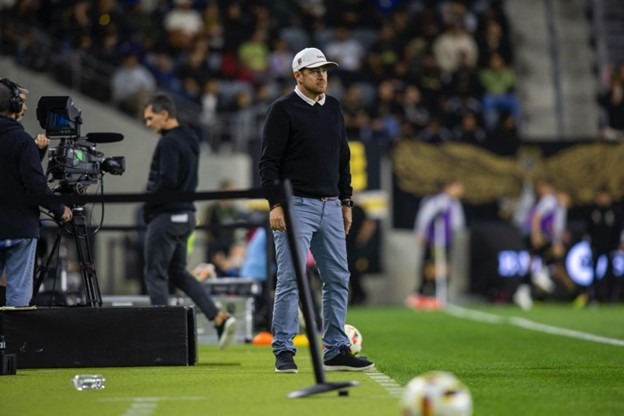
Ryan Martin, Loudoun United’s head coach, has built a reputation as one of North America’s leading developers of young football talent.
Ryan Martin’s coaching career isn’t defined by trophies; it’s defined by the players and people he’s helped shape. A UEFA A and USSF Pro Licensed Head Coach, he’s spent the past five years turning Loudoun United FC into one of the most respected player development programs in North America. Since taking the helm in 2019, his focus on resilience, preparation, and individual growth has launched 19 players into the MLS, earning nine D.C. United Homegrown contracts, sent multiple players to top European leagues, and saw four of his former players compete at the Paris 2024 Olympics. Along the way, he’s coached talents like England international Jack Harrison, U.S. Men’s National Team winger Kevin Paredes, and rising star Griffin Yow.
Before Loudoun, Martin rebuilt the D.C. United Academy as its Director, driving more than $10.5 million in academy player sales and creating a clear path from youth soccer to the pros. His journey has taken him through some of the top environments in North American soccer, with roles at FC Cincinnati, Columbus Crew SC, Toronto FC, and Wake Forest University, where he helped guide the team to the 2007 NCAA Championship.
What sets Martin apart is how he blends the tactical with the personal. He’s as invested in a player’s mindset as their first touch, and he designs training and video sessions that meet each player where they are. His impact goes beyond players too; with staff he’s mentored (like Luis Guevarra) going on to win Olympic gold with the U.S. Women’s National Team. Whether preparing a teenager for their pro debut or leading a team into a big match, Martin’s goal stays the same: help people reach a higher level in the game and in life.
Our Exclusive Interview with Ryan Martin
Who is Ryan Martin outside of football, and what experiences have shaped the way you lead?
I am a new father to a three-month-old and live with my wife Zoë and dog in Washington, D.C. We enjoy cycling, golf, traveling, live sports, and cooking when we can.
It’s hard to pinpoint one or two key experiences for me but I try to take leadership ideas from various coaches, business leaders, books, podcasts and anywhere I can.
Personally, I think leadership starts with my personal values, so my first objective is to live according to those. I have also gained leadership experience from actions and reflections, these lessons have come from wins and losses, dealing with locker room issues, managing up, individual conversations, and clarity of communication.
When I look back at my leadership five years ago, it’s incredible how far I have developed and grown. I believe it all stems from a desire to grow, reflecting on experiences, and living with my personal values.
How did your journey in coaching begin, and what were the key moments that set you on this path?
My journey in coaching began from day one—I grew up with a coach—my father Jay Martin. He coached both soccer and lacrosse at the time at Ohio Wesleyan University. Fast forward to 2025 and he just retired as the all-time winningest coach in college soccer history.
I grew up always knowing I wanted to coach and play for as long as I could but was limited physically. As I grew up, I would always ask my dad about how he made team selections and his game plans. I was fortunate to play one season in Salt Lake, and I would always write down the training sessions after and reflect on what I liked and didn’t. So, from an early age I was always preparing to coach.
I started coaching full time in 2007 when I joined the staff at Wake Forest. Thankfully, the journey has brought me to the Columbus Crew, FC Cincinnati, D.C. United, and Loudoun United. I have also been fortunate to visit many countries for the game. I have been quite lucky, but I also believe I have made my own luck by working hard and always looking for ways to improve.
What was your vision when you took over at Loudoun United FC in 2019, and how has it evolved over time?
When I started in 2019, I was coming in from the Academy Director at D.C. United and Loudoun were just starting as the second team to D.C. United. So, this was my opportunity to really take the top players from the Academy and help them get to D.C. United. It was the opportunity to bridge the gap in development between youth and first team football.
Then in 2024, a new majority owner took over Loudoun and there is now more of a balance between winning and development. This season we are currently in third place and have three talented players under 22 that we think have bright futures, so we are on the right path.
Which players or success stories stand out most to you from your years in player development?
I have been fortunate to have played a role in several players’ journey including Kevin Paredes (Wolfsburg), Griffin Yow (Westerlo), Bryang Kayo (OH Leuven), Matai Akinmboni (Bournemouth) and Ted Ku-Dipietro (Colorado Rapids) to name a few.
The thing that sticks out the most to me and probably the most important is the relationship I still have with all of them. In the past two months everyone I listed above have come back to attend a Loudoun game and stayed after to say hello. For me, this is the special part of helping a young player’s journey!
Who have been the biggest influences on your coaching philosophy, and what lessons have they passed on to you?
I have taken something from almost everyone I have worked with but have been fortunate to have four fantastic mentors in my journey.
The first is my father, Jay Martin, who is the all-time winningest coach in college soccer history. He coached for 45+ years at Ohio Wesleyan University, and I took a lot from him on how to build a culture and how to incorporate mental training to help individual players’ mindsets.
Second would be the Head Coach of the University of Pittsburgh, Jay Vidovich, who I coached at Wake Forest with for nine years. We recruited Jack Harrison and won the National Title in 2007. With him it was where the building blocks of my game model training, and coaching methodology started and the importance of supporting the individual to help improve team performance.
The Third is former U.S. international John Harkes, who I worked with at FC Cincinnati. We built the team from scratch to finish third in the inaugural season. I learned a masterclass on man management, how important time with each player is, and how to have hard conversations.
Lastly, and most recently is Cody Royle, who is an author but is really my coach or “second set of eyes” (as his book is called). He helps me from everything on my processes and structures, speaking and presenting to the team, helping with the leadership group, and helping me be my best self on game day. He does this by helping me control the narrative and plan recovery so I can be my best self.
Looking ahead, what are your goals for the next stage of your coaching career?
In the short term I would love to help Loudoun make the playoffs and a run at a trophy, which we are currently on a path for. In the long term my dream would be to coach abroad. I did my UEFA A with the FAI, I am currently learning a second language, and just focusing on growing as a coach and person, and hopefully some doors will open!
En el fútbol actual, donde los resultados se miden al instante y cada decisión es analizada al detalle, hay una verdad que sigue vigente: un club que se comunica con honestidad construye fortaleza a largo plazo.
Los clubes ya no son unicamente equipos de fútbol. Son comunidades vivas donde jugadores, aficionados, empleados, medios y socios comerciales esperan transparencia, claridad y coherencia. La comunicación es mucho más que un área dentro del club; es una herramienta de liderazgo. Y en el centro de esa herramienta está la honestidad.
Cuando un club elige hablar con la verdad, incluso si el mensaje no es popular, está sembrando confianza, credibilidad y resiliencia. Estas son cinco razones por las que esta práctica es más necesaria que nunca:
1. La confianza: base de toda relación
El fútbol se alimenta de emociones, pero se sostiene sobre la confianza. Ya sea para explicar una venta de acciones controvertida, un ajuste financiero o una mala racha, la honestidad es una muestra de respeto hacia todos los actores del club.
Los clubes que comunican de forma proactiva y transparente evitan malentendidos y rumores. Los aficionados valoran que se les hable con madurez. El personal interno se siente más comprometido. Y la imagen institucional se mantiene protegida ante posibles crisis.
2. Reputación y credibilidad institucional
En un entorno mediático instantáneo, controlar el relato es clave. Pero ese control no se logra maquillando la realidad, sino contando la verdad.
Un club que alinea sus palabras con sus actos genera credibilidad, no solo entre los hinchas, sino también con periodistas, patrocinadores y organismos rectores. Ese capital reputacional marca la diferencia al momento de negociar acuerdos, defender decisiones o construir alianzas duraderas.
3. Vinculación genuina con la comunidad
La transparencia activa la participación. Cuando un club explica el contexto detrás de una decisión, como una reestructuración financiera, un fichaje estratégico o una apuesta por la cantera, invita a su comunidad a sentirse parte del proceso.
No se trata de divulgar cada detalle, sino de comprometerse con una comunicación sincera, oportuna y empática. Los aficionados bien informados son más leales, los equipos internos trabajan más alineados y la percepción pública evoluciona del escepticismo al respaldo.
4. Prevención de crisis y gestión de expectativas
Ningún club está exento de los desafíos: lesiones, derrotas, restricciones de presupuesto o cambios internos son parte del día a día. La verdadera pregunta es: ¿está tu equipo de comunicación preparado para abordarlos con honestidad?
La comunicación transparente actúa como un escudo. Disipa rumores, evita especulaciones y demuestra liderazgo en momentos complejos. Un club que reconoce errores y explica sus decisiones suele ser recibido con más comprensión que uno que calla o evade responsabilidades.
5. Un nuevo estándar de liderazgo
Hoy los hinchas no son espectadores pasivos, y su voz se escucha en todo el mundo (podemos culpar a las redes sociales). Ellos preguntan, exigen rendición de cuentas y se relacionan a través de múltiples canales. Para prosperar en este contexto, los clubes deben dejar atrás los discursos cerrados y apostar por el diálogo auténtico.
Hablar con honestidad no es debilidad; es fortaleza. Demuestra madurez, genera confianza y define cómo quiere posicionarse el club ante el mundo.
Liderar con integridad tiene recompensa
El legado de un club se mide en trofeos, pero aún más importante, en los valores que representa. La comunicación honesta construye una cultura organizacional más fuerte, una institución más resiliente y vínculos más profundos con todos los que visten sus colores.
Porque cuando un club lidera desde la verdad, gana más que partidos: gana respeto, lealtad y futuro.
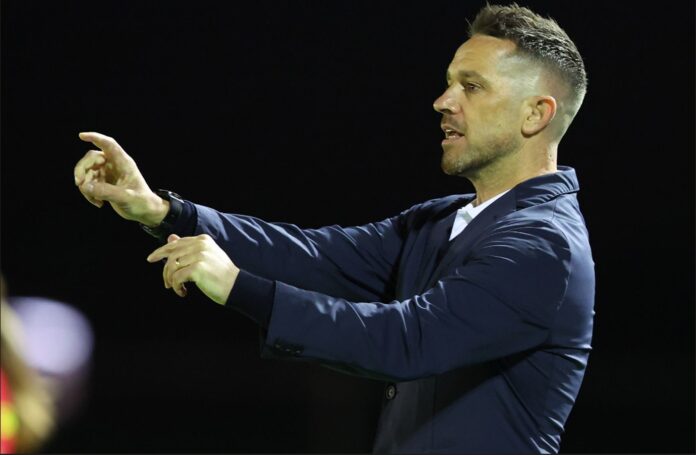
Paul Temple, one of New Zealand’s most influential coaches, bringing leadership and tactical clarity to the pitch.
Paul Temple is a British football coach with over 20 years of experience working across New Zealand’s football landscape, both at the club and international levels. Most recently, he served as Head Coach of the Wellington Phoenix Women in the A-League Women’s competition, where he implemented a performance-driven culture built around tactical intelligence, player development, and professional standards. Prior to this role, Temple led the club’s academy program, establishing one of the most productive youth systems in the country. Under his leadership, the academy produced several players who went on to earn international caps and secure professional transfers, strengthening the club’s reputation as a development hub.
Temple has coached at five FIFA World Cups, working with New Zealand’s national youth teams in both men’s and women’s football. These experiences on the global stage enhanced his expertise in preparing squads for elite competition, with responsibilities ranging from tactical preparation and match analysis to managing high-pressure tournament environments. He is widely recognized for his ability to simplify complex systems into clear tactical frameworks, allowing players to perform confidently with defined roles and responsibilities.
His coaching philosophy centers on a player-first approach, where individual growth is seen as integral to team success. Temple emphasizes leadership, accountability, and long-term development, and is known for creating environments that challenge athletes to take ownership of their progress while fostering trust and collective identity. His values-led leadership has earned the respect of both players and colleagues across the football community.
With a proven track record of building high-performance teams, advancing young talent into senior football, and navigating the demands of international competition, Paul Temple stands out as one of the most influential coaching figures in New Zealand football. His long-term impact continues to be felt through the players he has developed, the systems he has built, and the culture of professionalism he has instilled at every level.
Our Exclusive Interview with Paul Temple
Who is Paul Temple outside of football?
Firstly, I’m a dad and husband, I have two daughters who are very sporty so taking them to practices and watching them compete with my wife is a big part of the week. As a family we like to get outside and explore as much as possible, we’re an active family.
What has been the most defining moment of your coaching career so far?
I’d say there have been two defining moments for me, firstly being named Head Coach for NZ at the 1st ever Women’s World Cup in 2008, New Zealand was hosting so the media spotlight was huge and I was only 26yrs old, it gave me a taste of football at a whole new level, when we won out last group game that will be remembered forever.
Secondly would be the 2021 U20 Men’s World Cup in Argentina. We (New Zealand) played Argentina the hosts and to be on the sideline to witness the level of play was just incredible. We had a good team and had gotten through the group stage but seeing the differences when you play against the World’s best players was eye-opening in a positive way. The first and only game I enjoyed losing.
How has living and working in a multicultural football environment like New Zealand shaped your coaching perspective?
Drastically, I’m English born but consider myself a kiwi. I love New Zealand, the Maori culture is woven into its people in so many ways. I think the direct translation into my coaching would be humbleness and kindness. I’ve become a lot calmer when coaching and pay much more attention to human interaction. There is a Maori saying “He aha te mea nui? He tangata, he tangata, he tangata” which means “What is the most important thing, it’s the people, the people, the people.”
What is your core philosophy when it comes to developing young players?
We play a team sport, and everyone has an important role in the team but when developing younger players, it’s about understanding how individual journeys look so different and progress at different times. So, you must treat each player as an individual on their own personal journey, be patient with them and never presume it will go a certain way. The art of coaching is knowing when to push hard, when to ease off and when an arm around the shoulder is needed.
What have been the biggest challenges and lessons from leading both academy and senior teams?
The biggest challenge in coaching senior teams is the result at the weekend defines everything and how you are perceived. It’s a harsh environment because you could have a great culture and the players are improving a lot, but all most people look at is what happened in the game, you feel as a coach you’re constantly trying to justify what’s happening with results which is a challenge.
With the Academy the biggest challenge is timing. You can have an educated guess when a player is ready to progress into the 1st team but sometimes the timing doesn’t feel right, they might be injured, might be lacking confidence and off form but then you can’t control when they may be needed and the circumstances above them dictate when they make a debut or not. Ideally you want them to be feeling confident, playing well and be ready for a 1st team debut but in my experience, it doesn’t work like that very often so that is a challenge because it’s their dream and opportunity to establish a career.
What are your future goals and plans in football?
I find coaches have similar goals to players, I want to coach at the highest level possible, I want to work with the best players and the best management teams. I’ve built myself to be adaptable to any environment. I’d be happy to work within Men’s, Women’s or Youth. I just want to feel excited by the project I’m involved in and enjoy working with the people around me.
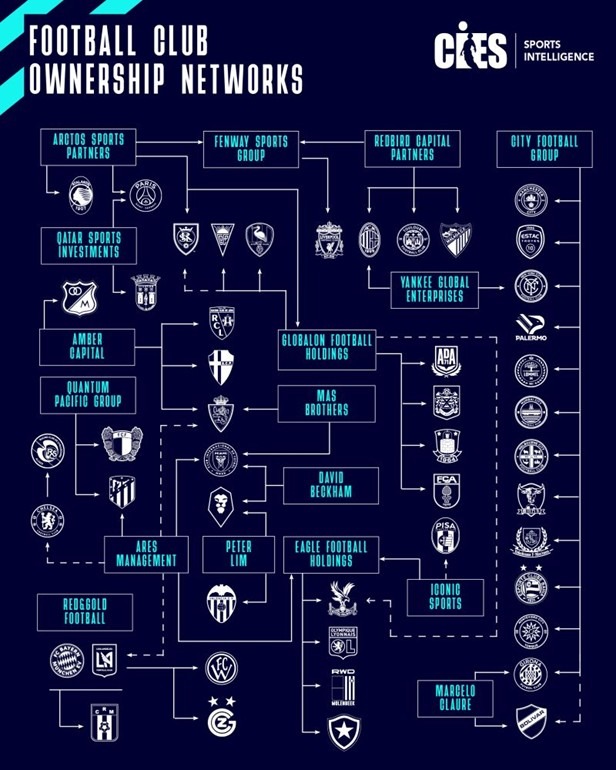
As European football undergoes an unprecedented financial transformation, private equity and investment funds are no longer peripheral actors, they are becoming central architects of the sport’s future. This article is the second part of the series “Private Equity in Football: A Game-Changer or a Risky Bet?”, exploring how private equity is reshaping the football landscape, injecting capital and redefining club ownership with both transformative potential and significant risk. In Part 1 of this series, we explored how the financial instability and post-pandemic football opened the door for new types of owners in the football industry. Now, in Part 2, we dig deeper: Who exactly are these investment funds? What are their strategies, their portfolios, and their ambitions in football? From RedBird Capital’s transatlantic empire to CVC’s groundbreaking deals with entire leagues, this article maps the key players reshaping football, not as fans, but as financiers.
We’ll uncover how these funds view clubs as assets within a broader investment portfolio, the logic behind multi-club ownership, and what this means for governance, performance, and long-term sustainability. Whether you’re an investor, club executive, or a fan trying to make sense of it, this piece will give you the financial blueprint behind football’s new era.
Overview of key players
Over the last decade, a wave of investment funds and private equity firms has entered the football industry, seizing opportunities across clubs, leagues, and media rights. Unlike traditional owners, often wealthy individuals or local business figures, these entities operate with a different logic: financial return, strategic asset acquisition, and global brand leverage.
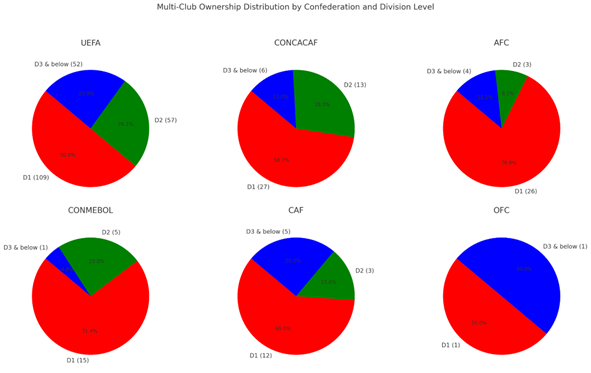
As explained in the first of this series, there are now 125 active MCO groups overseeing approximately 380 clubs worldwide. While the term “multi-club ownership” evokes images of vast football conglomerates, the reality is far more fragmented. The majority of ownership groups operate just two clubs, and fewer than 40% control three or more. This reveals a highly diverse and still maturing ecosystem, ranging from small cross-border partnerships to global investment platforms. Europe remains the strategic core, but MCOs now span every continent and division level, reshaping football’s geography and economic framework. As the model evolves, the next chapter may not be expansion, but consolidation.
Source: Profluence Sports
While many MCOs operate on a small scale, a handful of major players are building expansive, interconnected networks across global football. These groups, often backed by private equity or institutional capital, are reshaping the industry through strategic acquisitions, centralized management, and long-term brand building. Below are some of the principal actors driving this transformation with key information:
Fund Name
Clubs/Assets Owned
Estimated Assets under Management (AUM) ($)
Strategic Focus
RedBird Capital
AC Milan (Italy), Toulouse FC (France), minority in Liverpool FC (FSG)
~ $12B
Equity, media (Skydance), brand building, sports infrastructure
777 Partners / A-CAP*
Genoa (ITA), Standard Liège (BEL), Vasco da Gama (BRA), Hertha BSC (GER), Red Star FC (FRA), Sevilla FC (minority)
~ $12B
Multi-club strategy, player trading, undervalued assets
CVC Capital Partners
LaLiga (8% stake in media revenues), Ligue 1, IPL (Cricket), Six Nations (Rugby)
~ $223B
Media rights monetization, long-term league partnerships
Silver Lake (18%) / Newton Investment and Development LLC
City Football Group including Manchester City, Girona FC, SK Lommel, Palermo FC, New York City FC, Melbourne City FC, ESTAC, Yokohama F. Marinos, Montevideo City Torque, Mumbai City FC, Bahia, Shenzhen Peng City FC, Club Bolivar (Partner club)
~ $100B (Silver Lake) / N/A (Newton Investment and Development LLC)
Tech-driven branding, data optimization, global sports investments, urban development, brand expansion
RedBull GmbH
Red Bull Salzburg, RB Leipzig, New York Red Bull, Red Bull Bragantino, RB Omiya Ardija, Leeds United and Paris FC (minority stake)
N/A (private company)
Brand integration, infrastructure investment, strategic market entry with growth potential
Saudi Public Investment Fund (PIF)
Newcastle United and Saudi clubs; Al-Hilal, Al-Nassr, Al-Ittihad, Al-Ahli (League restructuring)
~ $941B
High-growth sectors such as entertainment, sports, technology, and infrastructure (Vision 2030)
Ineos Group
Manchester United (minority stake of 28% with operational control), OGC Nice (17%), Lausanne-Sport (19.9%)
N/A (private company)
Diverse sports portfolio (football, F1, cycling, etc.), brand visibility, community engagement
FC Internazionale (majority via debt default in 2024)
~ $203B
Distressed assets, strategic control via debt leverage
Pacific Media Group/NewCity Capital
Barnsley FC, FC Thun, KV Oostende, AS Nancy Lorraine, Esbjerg fB, FC Den Bosch, FC Kaiserslautern
N/A (private football consortium)
Undervalued clubs in second-tier or struggling leagues by acquiring majority stakes
Global Football Holdings
Crystal Palace FC, Real Salt Lake, Augsburg, SK Beveren, Brøndby, ADO Den Haag, Estoril Praia
~ $12B
Development of sports franchises and infrastructure, technological innovation, venture capital
*Amid a fraud investigation, 777 Partners has had its assets transferred to A-CAP. Many of the clubs under their control are now pursuing new ownership.
The rise in popularity of multi-club ownership (MCO) is becoming increasingly evident across European football. In the 2023–2024 season, minority and majority ownership stakes in clubs from the Big Five leagues climbed to 41.7%, 40 out of 96 clubs, up from 36.7% the previous year. UEFA reports that the number of clubs under MCO structures has skyrocketed from just 40 in 2012 to 180 by 2022, highlighting a transformative shift in the sport’s ownership landscape.
Source: CIES
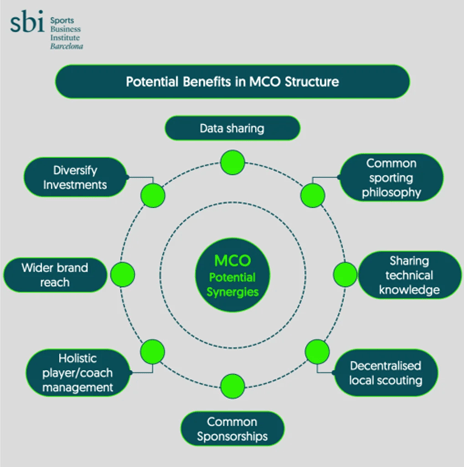
A key driver behind the appeal of multi-club ownership is its capacity to generate synergies, an approach inspired by private equity models of acquisition and value creation. These synergies manifest in various ways, including joint sponsorship deals, streamlined movement of players and coaches, unified scouting operations, enhanced global brand presence, consolidated financial management, and shared data systems leveraging GPS tracking and advanced tactical analysis tools.
What Is the Investment Logic Behind Football?
Multi-club ownership models typically revolve around a ‘flagship club’ competing in one of the more lucrative top-tier leagues, while the remaining holdings consist of satellite clubs operating in smaller, less commercially dominant competitions. At the portfolio level, MCO groups can achieve a higher overall valuation by creating synergies between their clubs, through shared resources, strategy, and operations. This often allows the parent company to command a premium compared to simply adding up the value of each club individually, much like the ‘buy-and-build’ approach used in private equity.
This setup is also designed to minimize conflicts of interest between affiliated clubs that might compete against each other, while the private equity-backed framework aims to replicate the success of the flagship model across the weaker clubs in the portfolio.
Football clubs, especially those in top European leagues, are increasingly being viewed as undervalued global entertainment assets. The logic for funds is rooted in several key pillars:
Asset Appreciation & Long-term value creation
Many historic clubs suffer from poor management but hold immense brand value. Investment funds seek to buy low (during crises or undervaluation), restructure operations, and grow the asset’s worth over time, either to hold or exit. This strategy includes:
Enhanced Club Valuations Through Synergies: MCO groups benefit from synergies, operational efficiencies, shared resources, and strategic coordination that make the collective portfolio worth more than the sum of individual clubs. This “premium” effect leads to higher valuations for each club, as investors value the benefits of integration and growth potential.
Player Asset Value Growth: Players are major club assets, and their market value often appreciates through strategic talent development and transfers within the MCO network. By nurturing young players in satellite clubs and eventually transferring or promoting them to flagship teams, MCOs maximize player valuations and generate profitable transfer fees.
Improved Financial Performance: Cost savings from centralized operations and increased revenues from diversified income streams (broadcasting rights, sponsorships, merchandise, digital content) contribute to healthier balance sheets and cash flows, which positively influence club valuations over time.
Strategic Capital Investments: MCO owners often invest in infrastructure upgrades, stadiums, training facilities, and technology that enhance the club’s competitive edge and market value. These tangible asset improvements support sustained appreciation and attract further investment.
Market Dynamics and Football’s Growing Popularity: The global popularity of football continues to rise, increasing demand for club ownership stakes. This macro-level trend drives overall asset price inflation, benefiting well-positioned MCO groups with diverse portfolios.
Synergies through Multi-Club Ownership (MCO)
As explained previously, RedBird, RedBull and many other groups are pioneering network strategies, building ecosystems of clubs across countries. These synergies allow:
Risk Diversification: By owning clubs in different leagues, countries, or competitive levels, MCO groups can offset poor performance in one market with success in another, reducing overall financial risk.
Economies of Scale and Operational Synergies: Centralizing functions like finance, HR, scouting, marketing, and player development allows MCO groups to reduce costs and improve operational efficiency. Shared resources create cost savings and better negotiating power with sponsors and partners.
Talent Development and Flow: MCO structures enable seamless player loans, transfers, and development pathways across clubs. Young talents can be nurtured in smaller clubs before moving to flagship teams, maximizing player value and career growth.
Brand Expansion and Commercial Growth: Owning clubs in diverse regions broadens the group’s global footprint. This increases sponsorship opportunities, fanbase reach, and merchandising potential, leading to increased revenue streams.
Data and Analytics Integration: Centralized data systems, including GPS tracking and tactical analytics, help optimize performance and scouting, providing a competitive edge.
Replication of Successful Models: Private equity-style ‘buy and build’ strategies are applied by replicating successful operational frameworks and branding across all clubs, enhancing overall valuation beyond the sum of individual parts.
Content and Audience Engagement: Control over content and narratives across platforms boosts fan engagement and commercial appeal, adding intangible but valuable assets to the group’s portfolio.
Source: Sports Business Institute Barcelona
Football as a Diversification Tool
In recent years, private equity and venture capital firms have increasingly viewed football clubs as valuable diversification assets within their broader investment strategies. This reflects a shift beyond traditional industry sectors into sports, which offers unique characteristics that complement and enhance portfolio resilience and growth.
Non-Correlated Asset: Football clubs operate in a sphere that is largely uncorrelated with traditional financial markets such as equities, bonds, or commodities. This means that the financial performance of a club, driven by ticket sales, broadcasting rights, sponsorships, and player trading, does not always move in tandem with stock markets or economic cycles.
Cultural and Political Footprint: Football clubs carry significant cultural and political influence, particularly in emerging markets and regions where the sport is deeply embedded in social identity. Ownership of a football club offers investors access to local political networks and societal goodwill, which can be leveraged for business expansion or soft power. In countries like the United States, India, or China, where football is growing rapidly, clubs serve as platforms for cultural diplomacy and brand penetration.
Example: City Football Group’s ownership of Mumbai City FC in India has helped them tap into one of the world’s largest and fastest-growing sports markets, gaining both commercial and cultural influence.
Technology and Media Innovation: Football clubs are increasingly used by PE and VC firms as living labs for cutting-edge technologies, including biometric analytics, AI-powered scouting, fan engagement platforms, and digital content monetization. Clubs provide a controlled environment to pilot innovations that can later be scaled across other portfolio companies or industries.
Conclusion
Investment funds and private equity firms have rapidly become key players in European football, shifting the sport’s ownership landscape from traditional local to global, financially driven entities. These funds operate multi-club ownership (MCO) models, with a flagship club in a major league supported by satellite clubs worldwide, creating valuable synergies like shared resources, talent development, and expanded brand reach. This strategy drives long-term asset appreciation, risk diversification, and operational efficiencies, transforming football clubs into high-value entertainment assets. Their growing influence not only reshapes club governance and performance but also leverages football’s cultural and technological potential as a unique, non-correlated investment.
Next in this series, we will take a detailed, step-by-step look at how investment funds acquire and manage football clubs, covering due diligence, financial audits, deal structuring, and governance reforms that shape the new era of football ownership.
Suriname, 7 June 2024. Second match of the second round to qualify for the final play-offs for the three direct places and two play-offs for United 2026. After the draw on the first day, and with the maths in hand, we have to win to remain in contention for qualification. Today marks exactly two years since the Salvadoran national team’s last victory. If we haven’t won in two years and only a win will do, we can safely say that the situation is extremely complicated. It’s 40 degrees at 4 p.m., with 90% humidity, the pitch is burning hot, and only a rain shower before the warm-up suggests that we won’t be burning up. The players with the most international caps and the captains remain on the bench. It is time for two forwards aged 18 and 20, a recent debutant and a league goalscorer who, for various reasons, has been unable to attend matches since I arrived. The rest of the team consists of players at their peak performance alongside a couple of veterans who give the group confidence. And on the bench, alongside the two captains, a total number of international caps that exceeds those on the pitch. Match strategy.
The match starts with a goal in our favour. We are in complete control and the plan is executed to perfection. But before half-time, they equalise from a corner.
It’s time for calm in the dressing room. There’s no need for shouting and recriminations. In the silence, recovery; and after three minutes, I give my diagnosis. Maintain the same pressure and subdue them even more with the ball, transitioning from long possession to a more aggressive style after breaking through their first line. To do this, our 34-year-old playmaker, who was decided not to start due to the adverse weather conditions (he plays in the Scandinavian league), was going to take control of the game with a more tired opponent and in a more favourable context. A few minutes later, the first goal came. The young players gave way to the captains, who came on to finish the game. A third goal ten minutes from the end gave us a victory that was not enough; we deserved more goals.
Two years later, El Salvador won another game. And qualified for the World Cup.
After two weeks of talking about preparing the team, we can only conclude with the decisive factor: the match. The competition. What you train for. The ultimate goal of preparation. After two, three or six sessions, more than three video sessions, individual talks and sketches of set pieces, it is the player’s moment.
The die is cast… Or is it?
Well, no. The die is not cast. First, because I am not in favour of talking about luck to justify what I do not know. I take full responsibility for what happens to me. And for them, I structure the microcycle as we discussed last week. In the recovery session, we focus on video and on the pitch on what we understand to be trainable in reduced conditions based on what we can improve and repeat; on defence day, we look at the opponent’s attack and our defensive performance; the opposite when we train attack. And set pieces are practised every day in different ways. If we add individual or group talks, templates in the dressing room to see the position in set pieces, plus analysis of our opponents, what else can be added? Many things. And my responsibility is to be at the service of the players before we go out so that everyone is clear about the plan, their starting positions and set pieces, and that my confidence is theirs. Once on the pitch, with the ball rolling on the grass, I have to be focused on seeing what is working in our favour and what is not, and how to give the players ideas so that they continue to insist on what is working and make what is not working work.
The initial ideas
The initial ideas were more about how to surprise the opponent, since my team always played for the same objectives from the same basic positioning at key moments in the game. From there, the game opened up, and our knowledge of the opponent was useful in exploiting their weaknesses through our dynamics. As our idea was not going to change in essence, but was open to specific modifications, the tools at my disposal to help the player focused mainly on two things:
Player modifications: while maintaining the same system, a player with different characteristics could change the course of the game.
Tactical variation: the team started with a 1352 base formation trained from day one, to which a player from the 5 line could be added to the forward line, turning it into a 1343. With that single modification plus the changes in player characteristics, the different combination of variations was enormous, and it did not affect the dynamics of the game patterns or the trained habits in the slightest.
Variations and changes. Anything else?
If the match does not change due to tactical modifications or new players, there are many other complementary factors that the coach can influence to help the team achieve the desired result.
With five substitutions per match under the Qatar World Cup rule, there are many possibilities for giving the team a boost. Five players are half the team. One half could be worn out in the first half and have practically a new team in the second half. Intelligent management of this resource can be crucial to the result.
Hydration breaks allow us to modify aspects of the game that are becoming entrenched. To do this, we must be very clear about the concept we want to convey because there is hardly any time.
Knowing the opponent is crucial so that the changes that can turn the game around are ours. Against poison, an antidote. We must be prepared with all possible options for change, including those of the opponent!
Above all, convey an image of confidence and calm. Confidence, first and foremost, because each player’s self-confidence stems from the confidence of the person who puts them on the field, and if that person conveys that they are confident in them, the focus of attention shifts away from the outside world and, when it shines, it reassures; and calm, because in an environment where the players are at their peak, the coach, from the outside, can only help by making decisions with a cool head, even if his heart is boiling.
Vural Durmuş, a leading athletic performance coach for Galatasaray and the Turkish National Team, has built a career shaping elite players’ fitness and development.
Vural Durmuş is an experienced athletic performance coach and respected figure in Turkish football. With nearly 15 years at the top level, he has consistently worked at the intersection of physical performance, injury prevention, and elite player development. He currently serves full-time with Galatasaray’s first team and supports the Turkish National Team during camps and tournaments.
Durmuş began his professional journey in 2013 at Galatasaray’s academy, before quickly moving up to the first-team staff under Roberto Mancini. Over the following five years, he worked with leading coaches such as Cesare Prandelli, Hamza Hamzaoğlu, Mustafa Denizli, Jan Olde Riekerink, Igor Tudor, and Fatih Terim. During this period, he contributed to winning two Süper Lig titles, two Turkish Super Cups, and four Turkish Cups. After leaving Galatasaray in 2018, he joined Kasımpaşa as performance coach, and later worked privately with professional footballers during the pandemic, focusing on injury recovery and return-to-play programs.
In 2021, he was invited by Hamit Altıntop to join the Turkish National Team staff under Stefan Kuntz, later continuing under Vincenzo Montella. In addition to his work on the pitch, he was entrusted with leading the National Team’s Athletic Performance Department, further establishing his reputation as a key figure in Turkish football’s modern training methods. In 2024, after the European Championship, he rejoined Galatasaray, now working within Okan Buruk’s coaching staff.
Durmuş holds a UEFA A License and the TFF Athletic Performance Coaching diploma, as well as a Master’s degree in Movement and Training Sciences. His career reflects a deep commitment to professionalism, collaboration, and the long-term development of players at the highest level of the sport.
Our Exclusive Interview with Vural Durmuş
Who is Vural Durmuş?
After a background as an amateur footballer, I completed my university studies in Sports Sciences and began my career as an athletic performance coach. For nearly 15 years, I have been working with top-level professional football teams. I currently serve full-time with Galatasaray’s first team and collaborate with the Turkish National Team during international camps.
During my student years, I coached at amateur clubs across all age groups and levels. After graduating, I joined Galatasaray Football Academy in 2013 as an athletic performance coach through a project led by a highly respected professor of mine. About six months later, during Roberto Mancini’s tenure, I was integrated into the first-team staff, marking my first steps into professional football. Over the next five years, I served as an athletic performance coach for Galatasaray’s senior team.
In this period, I worked alongside renowned coaches such as Roberto Mancini, Cesare Prandelli, Hamza Hamzaoğlu, Mustafa Denizli, Jan Olde Riekerink, Igor Tudor, and Fatih Terim. Together, we celebrated two Süper Lig championships, two Turkish Super Cups, and four Turkish Cups.
Following the championship at the end of the 2017–2018 season, I left Galatasaray and continued my career at Kasımpaşa, working within the technical staffs of Mustafa Denizli and Tayfur Havutçu.
At the onset of the pandemic, I focused exclusively for a year and a half on private training sessions with professional players, particularly in injury rehabilitation and return-to-play programs.
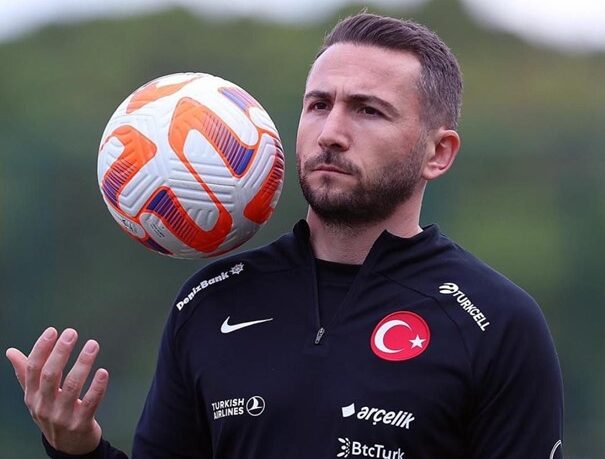
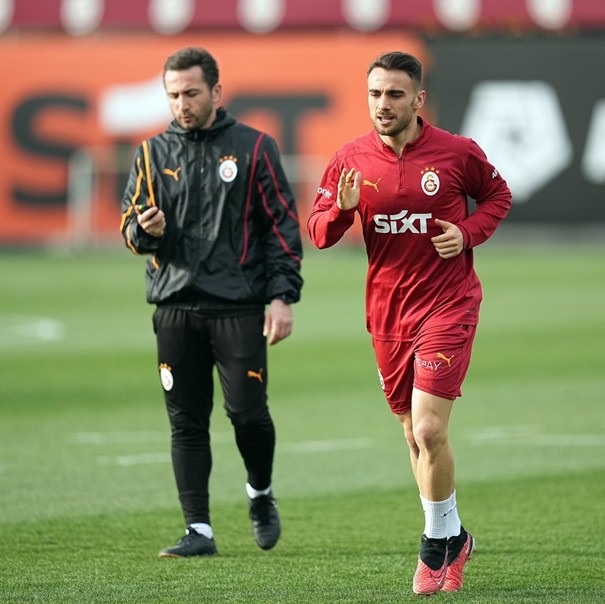
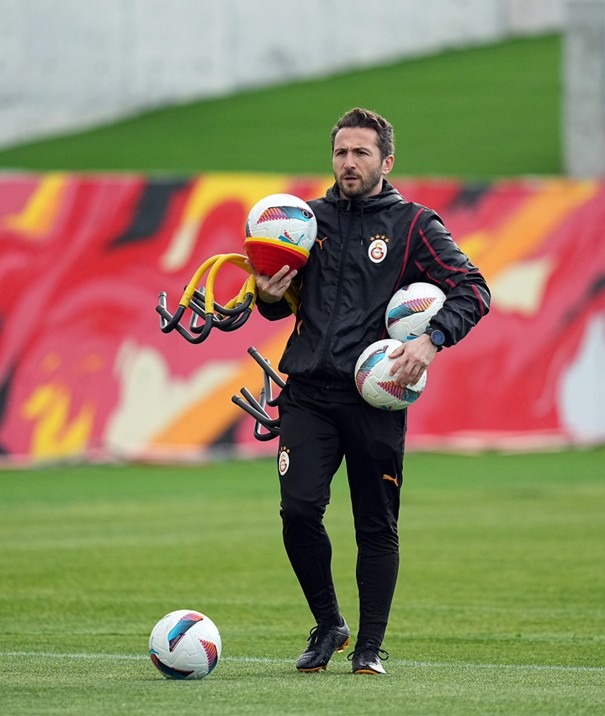
Durmuş closely tracks players’ physical performance, combining science and coaching to maximize results.
In October 2021, I was invited by Hamit Altıntop, then Head of National Teams, to join the Turkish National Team staff under head coach Stefan Kuntz. I continued my work with the arrival of Vincenzo Montella and his team, taking on not only the role of Athletic Performance Coach for the National Team but also the responsibility of heading the National Teams’ Athletic Performance Department.
After the 2024 European Championship, I accepted an offer from Galatasaray and rejoined the first-team staff under Okan Buruk, where I continue to serve today.
I hold a UEFA A License and the TFF Athletic Performance Coaching Diploma. In addition, I have completed a Master’s degree in Movement and Training Sciences.
What Does It Feel Like to Work with the National Team?
Serving with the National Team is an experience that words can hardly capture – it carries so many profound emotions and represents one of the greatest honors of my career. From the very beginning of my professional journey, working with the National Team was among my highest aspirations. The moment that dream came true remains one of the most unforgettable memories of my life.
I still remember my first call-up. Upon arrival at the National Teams Training Center in Riva, I was given a private room. Waiting there for my equipment, I felt a wave of anticipation. When I finally put on the training gear and looked at myself in the mirror, the magnitude and meaning of the responsibility ahead struck me deeply. That moment will stay with me forever.
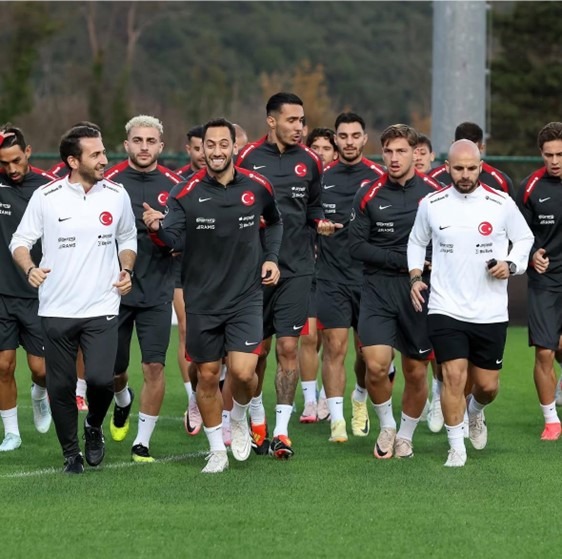
In high-level preparation training with Hakan Çalhanoğlu and the National Team
For me, this role is not merely a professional achievement but also a tremendous honor and responsibility. To share the field with players who wear the crescent-and-star emblem, to breathe that atmosphere, provides an indescribable source of motivation. Each training camp is both physically and emotionally demanding, and being part of a structure that represents the nation gives every single task we perform an added layer of meaning. With this awareness, I strive to give more than what is expected, to fulfill my duty in the best possible way.
The National Team is not only about the players; the technical and support staff are also among the very best in their fields. Working with the top Turkish players – those who carry our passport and compete at the highest level – raises the bar in every respect. This is a unique environment where every player wants to be, and where every moment feels valuable.
And I cannot help but add this: for the first time in our history, we qualified for the European Championship as group leaders. During the 45-day preparation camp, not once did I feel tired. Walking toward a shared goal with a young, highly talented, and deeply connected group of players gives you an extraordinary sense of strength and motivation.
Thank you for sharing this valuable and unifying information. However, from the outside, criticism sometimes arises, particularly the perception that players who have argued with each other during the season cannot be successful with the National Team. What is your opinion on this?
First of all, it must be stated very clearly that the National Team environment is far removed from the competitive rivalries or personal disagreements at club level. It is a very special structure where everyone comes together for the country and all stakeholders serve a common goal. During the club season, competition is natural, and tensions may occasionally occur on the pitch. However, professional-level players have the maturity and awareness to make this distinction and manage these processes in the best possible way.
Taking all this into account, we as the technical staff know and observe our players’ individual characteristics and their behavior both on and off the pitch very closely. Every player who joins the camp arrives not with the mindset of the club jersey they wear, but with the awareness that they are there to fight for the jersey with the crescent and star. In fact, what we call the culture of the National Team is built precisely on this awareness.
Of course, problems can sometimes arise within the team. This is inevitable and applies to every team in the world. In a group of about 60–70 people, including a 35-player squad along with the technical and administrative staff, it is not possible for everyone to like each other, but it is absolutely possible to show respect and move toward the same goal. The important thing is how you manage this group made up of differences.
Good leadership is decisive on the road to success. All of our players are very talented and have the potential to perform at the highest level. But talent alone is not enough; adapting to the dynamics of the team, embracing the environment, and feeling a sense of belonging are just as important as technical ability. Once this sense of unity is created, true cohesion and organization emerge on the pitch, and success follows naturally.
You work simultaneously at Galatasaray and with the National Team. How do you manage these two major responsibilities and ensure coordination between them?
Being active in two major, high-level organizations is both a serious responsibility and a very special experience. The most important elements here are time management, planning, and communication. I work full-time at Galatasaray and take part in the National Team during camp periods.
Both organizations operate with a very high level of professionalism, which makes my work easier. Communication channels are open, needs are clear, and roles are well defined. When I am with the National Team, I remain in constant contact with the club side.
To be honest, working between these two setups can sometimes be tiring, but the professional satisfaction is very high. Being able to work with the country’s top athletes, coaches, and professionals on both sides makes a big difference in many respects. Being in such an environment is very valuable for both my development and my career steps. I try to act with full awareness of the responsibility of being worthy of these roles.
During the intense pace of the season, I always feel the support of my club, which allows me to carry out my duties with the National Team smoothly. The technical staff I work with at the National Team also shows great respect for this matter, and by ensuring mutual coordination, we work without problems. When I received the offer from Galatasaray, I made it clear that I wanted to continue my involvement with the National Team, and Okan Buruk welcomed this, which was one of the decisive factors in my final decision. Vincenzo Montella and his staff also made it clear that, as long as there were no issues on the club side, they wanted to continue with me.
The National Team processes fall at specific times of the season, usually in the form of short camps lasting 8–10 days. Before each camp, the Turkish Football Federation sends an official notice to the clubs. While I continue my duties at the club, my colleagues provide great support in my absence, and when needed, I continue to support the players remotely.
The most critical point is this: both at Galatasaray and with the National Team, there are established systems that function under the leadership of the head coaches. Thanks to this strong coordination, it is possible to work efficiently with both sides.
You not only work with players based in Turkey but also with those playing for some of Europe’s biggest clubs, such as Hakan Çalhanoğlu (Inter), Kenan Yıldız (Juventus), and Arda Güler (Real Madrid). Do you see significant differences between these players and those competing in Turkey?
This is actually one of the questions I am asked most often. I consider working with players from Europe’s elite clubs to be a very valuable and special experience. These players have reached a certain level not only in terms of technical and tactical ability but also in mentality and work ethic. However, this does not mean that one can make a blanket statement such as “those playing in Europe are better.” In Turkey as well, we have players who have reached a very high level both physically and tactically, who take great care of themselves, and who maintain a high degree of professionalism. From a physical perspective, I do not see significant differences between the players you mentioned and those competing in the Turkish league in similar positions. Of course, the systems and game plans in European clubs can raise players to different levels.
In recent years, under the influence of quality foreign coaching staffs and elite-level players coming to our country, both the game quality and the professional approach of players competing in the Turkish league have improved considerably. If we look back about 15 years, there were indeed clear differences between Europe and Turkey. But in recent years, thanks to these high-quality foreign players and coaches, Turkish football has advanced significantly both in terms of play and professional standards.
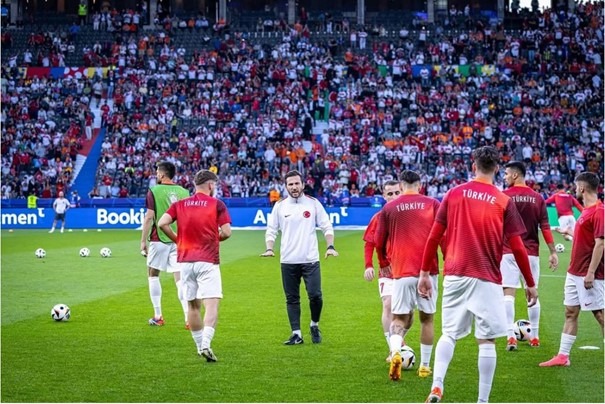
Vural Durmuş guiding the Turkish National Team during pre-match preparations, blending discipline and energy on the international stage.
This development has not been limited to player quality; the level of awareness among Turkish coaches has also risen. Since modern training techniques often require extra work before or after training, our players have now become more conscious and more open in many respects compared to the past.
To give a simple example, when a player competing in Turkey meets another playing in Europe during a National Team camp, they naturally exchange experiences and knowledge. They discuss how their teams work, their travel arrangements, and camp organizations, which raises the overall level of awareness.
Looking back on my time at Galatasaray, I had the opportunity to work with many top-level coaches. The training systems and working methods they implemented introduced structures that were not very common in Turkish football at the time. When we applied these systems and achieved positive results, we began to embrace them ourselves. Similarly, the individual training approaches and habits brought in by some players from Europe also served as examples for us, which naturally improved our own coaching practices.
In recent years, with the updated coaching education programs jointly organized by UEFA and the Turkish Football Federation, the coaching approach in Turkey has also become significantly modernized. Training systems have come very close to European standards. However, it is important not to overlook cultural differences at this point. We have certain habits that are innate or shaped by our environment, and sometimes it is difficult to break these patterns. So while the content and intensity of training may resemble those in Europe, the off-field cultural aspects can make the process a bit more challenging.
The more contact we have with countries that play good football and have strong organizational structures – whether through coaches, player transfers, or data exchange – the more positively it affects the organizational framework of our league. From youth academies up to the Süper Lig, the more correctly this structure is built, the further we can advance as a country. However, it should also be noted that this organizational structure is still in a phase of development. Consequently, while one area improves, it is possible that another may remain lacking.
How do you manage your cooperation with the head coach, assistant coaches, and the medical staff? In your opinion, what is the role of building a common language and trust in a performance-oriented environment? You have also worked with head coaches of very different characters. How did you manage this diversity?
In modern football, success is no longer determined solely by the performance of the eleven players on the pitch, but by the harmony and coordination of all the units working under the umbrella of a club or the national team. In this sense, the communication structure and coordinated work between the head coach, assistant coaches, performance staff, analysts, medical teams, and support staff are absolutely critical and decisive.
In my own field of work, I always prefer to share information objectively, prioritize open communication, and maintain a transparent approach. Topics such as correctly evaluating performance data, planning player workloads, managing injury risk, and overseeing return-to-play processes all require a shared understanding. This is only possible through mutual trust and a common language. Once a trust-based bridge is established between us and the technical staff, decision-making processes become much healthier and sustainable.
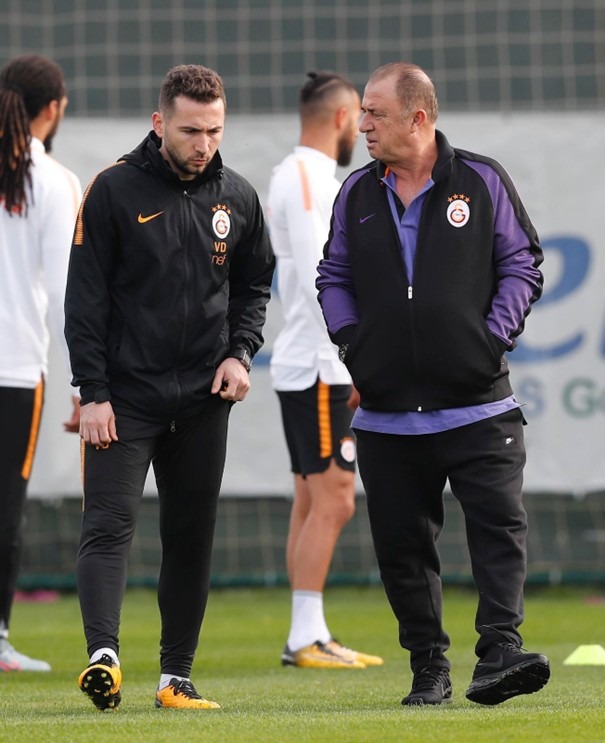
Vural Durmuş working alongside legendary coach Fatih Terim during his early years with Galatasaray.
From Roberto Mancini to Fatih Terim, from Prandelli to Igor Tudor, and currently with Okan Buruk and Vincenzo Montella, I have worked with head coaches of very different characters and philosophies. These experiences gave me the chance to encounter many different approaches. The lessons I took from these processes are extremely valuable to me – almost like a handbook you should always keep by your side. Each coach has a different football philosophy, communication style, and set of expectations. Being able to adapt to these differences and work together opens new perspectives and opportunities for growth in many ways.
The functioning of technical staffs usually follows a defined system. Assistant coaches in particular play a role just as important as the head coach. They are the key figures who reduce the workload of the head coach, ensure organization with other departments, and manage communication both within the staff and with the players.
As for the structure of the medical team, it generally consists of a chief doctor leading physiotherapists and masseurs. As a unit, they play a critical role in ensuring that players are optimally prepared for training and matches. They provide the technical staff with continuous updates on issues such as identifying players at risk of injury, implementing preventative programs, treating injuries, and carrying out regeneration work.
For example, in the return-to-play process after an injury, we plan in advance with the assistant coach which parts of the training a player will participate in and which parts will be done individually. At this point, cooperation with the medical team is also of great importance.
For this process to run smoothly, communication within the staff is vital. Without fast, transparent, and professional collaboration, it is not possible to expect efficient outcomes from these transitions. A similar structure exists within the National Team as well, although camp periods there are shorter, which means that action plans must be implemented more quickly.
I have worked with many different head coaches, each with their own style, and each one has given me different perspectives. Successfully managing these differences is possible by adapting to the team culture and being flexible in your communication style according to the situation. This is a skill that develops over time.
How is the training organization at Galatasaray structured? Can you describe a typical daily training session for us?
The training organization operates according to a specific system and order. The medical and performance teams first evaluate the condition of the players. The technical staff then comes together to analyze the programs prepared for that day. Based on the information provided by the medical team, the training session is designed. While preparing this structure, factors such as the content of that day’s session, the workloads from the previous day, the physical condition of the players, injury risks, and the upcoming match schedule are all taken into account.
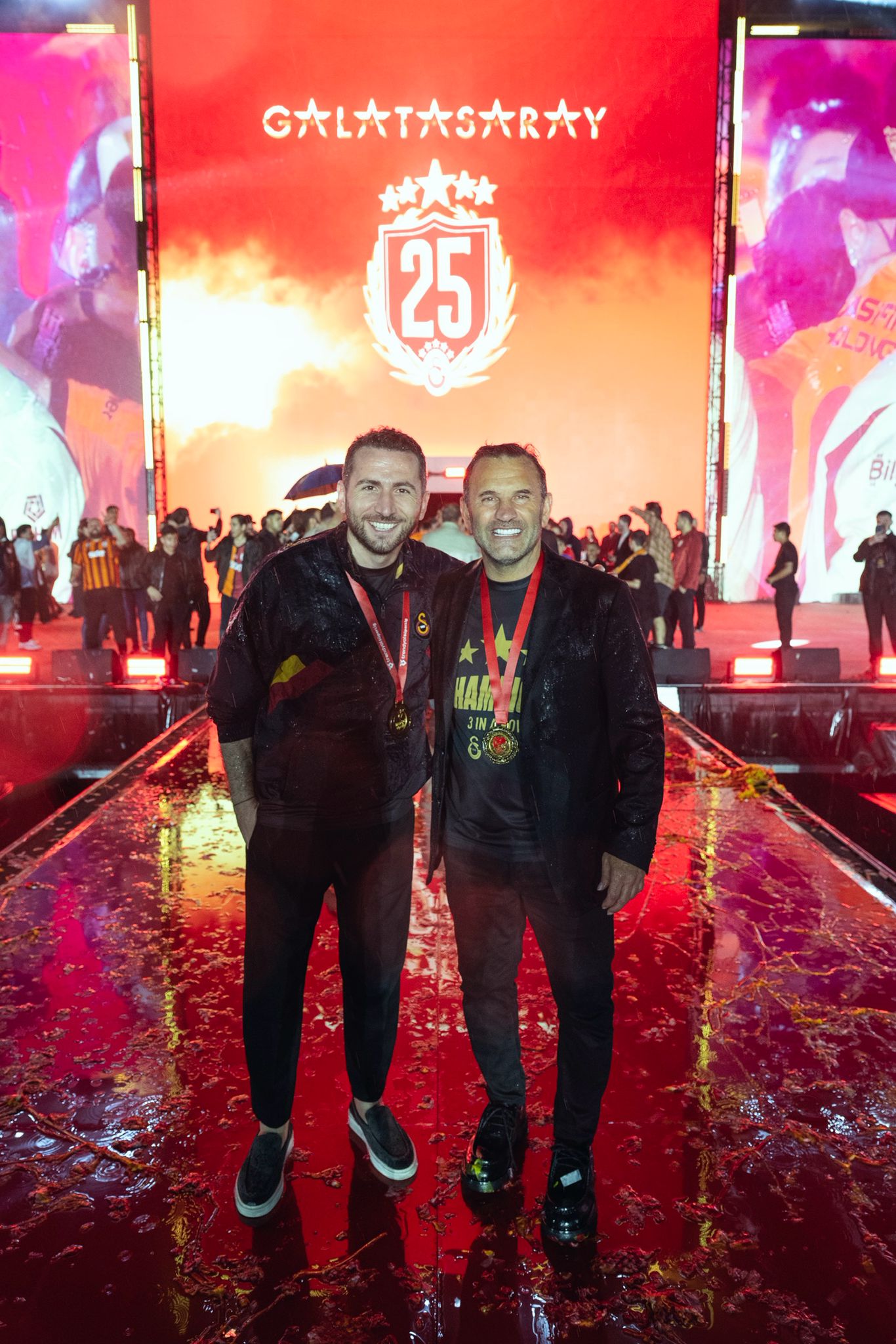
Vural Durmuş shares a proud moment with Okan Buruk as Galatasaray celebrates another Süper Lig title.
Before the official training session begins, players start their preparation processes in the fitness area and treatment room.
Once the on-field program is completed, players with individual programs continue their work either on the pitch or in the gym. Those who finish their training move on to recovery applications.
Throughout this entire process, the performance team, medical staff, and technical staff remain in constant communication. Every workload is planned and monitored in real time, the data from the training sessions is analyzed, and the plans for the following days are shaped accordingly. In other words, every exercise you see on the field is backed by thorough planning and coordinated teamwork.
Do you have a particular message or principle that holds special meaning for you in high-performance sports? How do you convey this perspective to athletes and future coaches?
The world of high performance is unique and intense. You cannot survive here with ordinary effort; it requires serious dedication, consistency, and commitment. If I were to define this field in a single word, it would be “devotion.” Because you are taking on a heavy load, both physically and mentally. While trying to balance your personal life, you must also meet the high demands placed upon you.
I always emphasize to the athletes I work with: in this profession, both good performances and bad performances are part of the journey, and the transition between the two can happen very quickly. We are all human; sometimes we make mistakes, sometimes we perform above expectations, sometimes below. What matters is being able to accept and manage these ups and downs in a healthy way. Staying grounded when you are at the top and being able to rise again after a setback requires real discipline and mental maturity. In both cases, being objective with yourself is of great importance.
For me, the essence of this profession is: “Goal = Work.” Thoughts like “It doesn’t matter if I skip this exercise today” or “It won’t hurt if I eat this dessert” may seem harmless in the short term, but in the long run they take you away from your goals. At the same time, overdoing everything is not sustainable either. The key is adopting a balanced, systematic, and consistent lifestyle. This is particularly evident in individual sports. Take tennis players, for example: sometimes they play matches that last five hours. This cannot be explained by physical endurance alone. Those extraordinary comebacks are the result of mental and emotional resilience combined with strategy.
The clearest message I want to give to future coaches and young athletes is this: if you truly love this profession, you must embrace sacrifice, disciplined living, and consistency as guiding principles. Success is not only about talent; it is about a philosophy of life that makes that talent sustainable.
How important is education, especially for young coaching candidates? Do you still continue to develop yourself?
It is absolutely vital. I still actively pursue education and try to draw from as many different fields as possible. Generations change; people change, the profile of footballers changes, coaches’ expectations and players’ approaches are constantly evolving. Therefore, we also need to keep ourselves continuously updated.
It is impossible to move forward today with the same knowledge we acquired ten years ago. Being open to processes of change and development is always important, but this change should be managed with patience and not with haste. Learning, reading, researching, and investing in yourself is a never-ending journey. Football cannot be limited to “90 minutes, 11 against 11.” Beyond tactics, it also involves managing a group of 30–35 individuals, each with different personalities, perspectives, and experiences. You cannot approach every player in the same way; this is why you must constantly review your perspective and routines.
Beyond tactics, Durmuş plays a key role in organizing and preparing high-performance training sessions for Galatasaray.
I do not limit myself to football-related courses or training. I read about art, draw valuable lessons from biographies, and sometimes even get inspired by acting performances in cinema. I try to extract meaning from every detail, often asking myself: “What can this add to me?” Because what I tell players also applies to us: if we are to serve in top-level clubs, we must be ready not only in terms of knowledge but also in vision.
One of the most critical skills in coaching is process management. Every player has a different worldview, dreams, perceptions, experiences, and ways of reacting. Therefore, you cannot approach everyone in the same language. The ability to understand different profiles, analyze them, and respond appropriately at the right time is one of the most important qualities of a good coach.
What role does learning languages play in this process?
For me, language is something I would call an absolute “must.” To be honest, I am very critical of myself in this area. I wish I had invested more time and effort into it earlier. My English is at a certain level now, but because it is not more advanced, I occasionally face difficulties, and that bothers me. That is why I continue to work on it whenever I find the opportunity.
Moreover, I recommend not only learning English but, if possible, also a second language. This is a major advantage when it comes to understanding different cultures, following scientific research and current publications, and integrating more easily into social life. I have a very clear piece of advice for young coaching candidates: in addition to English, make sure you learn another foreign language.
We give the same advice to young players. Almost every player dreams of playing abroad. But without knowing the language, without engaging in social life, and without understanding the culture of the country they live in, achieving success is nearly impossible. And it is not just about failure – this process can also cause serious psychological harm to the player. That is why early language education is a major investment, both for sporting and personal development.
How do you evaluate the development of athletic performance in Turkey? Especially regarding youth academies, what structural changes would you like to see in the coming years?
This question should really be divided into two parts. Starting with the first-team level, I can say that in the past ten years there has been significant progress. In many areas such as equipment, training monitoring, and performance analysis systems, we have come very close to European standards. Especially at the Süper Lig level, clubs now work in a data-driven way, implement individualized training and workload plans, and prefer to use advanced analytical tools.
However, when it comes to youth setups and academies, the picture is unfortunately not as bright. Particularly after the pandemic and the economic downturn that followed, many youth organizations were deeply affected. From training conditions to coaches’ salaries and social security, many fundamental issues face serious challenges. The physical infrastructure is also insufficient; for example, there are clubs where four or five different teams have to use the same pitch simultaneously. In such an environment, it is of course very difficult to talk about the development of quality individuals, athletes, and coaches.
Another important issue is the mismatch between children’s school hours and training schedules. Families are faced with the question: “Should this child go to school or focus on football?” Yet there is no guarantee on either side. As a result, many young talents end up caught in between, unable to fully dedicate themselves to either path, and are ultimately lost.
Especially in big cities, while there are many clubs, the level of facilities and infrastructure is quite inadequate. This means that the trajectory of youth academies needs to be examined in much greater depth and redesigned according to actual needs. From time to time, different clubs have developed model projects, but unfortunately, they have not been sustained in the long term. Looking at the overall picture, it is fair to say – albeit with regret – that we still have a long way to go in this area.
At the level of youth national teams, we participate in many international tournaments, often outperforming strong opponents and achieving victories. However, in the continuation of the process, while players from rival countries go on to play at higher levels, the proportion of our players who reach that stage remains unfortunately very low. I believe we need a sustainable football academy structure that not only produces talent but also supports their development in the long term.
If this system were in your hands, what would you change?
First of all, I would try to solve the issue of “physical space,” which is one of the biggest obstacles to investment and development in youth academies. Today, especially in big cities, even a small piece of land is extremely valuable, so instead of building sports facilities, other types of projects are often preferred. This seriously disrupts the creation and development of the kind of ideal youth football infrastructure that is needed.
Even our country’s biggest clubs, which are supposed to be the cornerstones of Turkish football, unfortunately do not have facilities that meet the ideal standards for their academy teams.
At this point, I believe the state’s sports policies have a decisive role to play. In recent years, many of our clubs have been provided with modern stadiums, which was a very important step. But we also need to implement a similar approach for facilities that can be used by youth academies.
This could be achieved through nationwide initiatives at a mobilization level, with projects that raise awareness and make youth academies a priority in sports facility planning. In this way, the foundation of our football – young players – would be given much healthier environments in which to develop.
If these problems are not resolved, we will continue to struggle with developing our talented players properly. Therefore, change must not only be technical and tactical but also systemic and structural, starting from the grassroots.
Do you think youth academies should be moved outside the big cities because of these challenges?
Yes, it is difficult to say a definite “yes” to this, but I believe there will be a tendency in that direction. The very high land costs in big cities make the sustainability of youth projects extremely difficult. For this reason, it is becoming inevitable for some clubs to move toward more cost-effective areas.
Perhaps new, highly functional training and academy centers could be established in regions close to major cities. Players could develop there up to a certain level and then be integrated into top-tier clubs that meet specific criteria. Such a system would not only support player development but also reduce the density within the cities.
However, for all this to become a truly efficient system, more radical decisions must be made. The establishment of youth development standards within a defined framework, and the strict monitoring and support of these standards, is critically important for the long-term success of our football.
Finally, is there anything you would like to add, or a message you would like to give to young footballers and aspiring coaches?
Whether you are a footballer or a coach, whatever role you take on, attaching yourself passionately to your work, fulfilling its requirements, working extra hours when needed, and making sacrifices are all natural parts of this journey. When you eventually see the results of these efforts, you realize much more deeply how meaningful this profession truly is.
I will never forget the feeling of receiving my first winners’ medal. The effort throughout the season, the challenges faced, the sacrifices made, and then the success at the end… being part of that achievement, being within a story that brings joy to millions of people, is truly invaluable. Or when you see the progress of a player you have worked closely with all season, the breakthrough he makes, his return to the National Team, or his receipt of a good transfer offer… these are just some of the outcomes of the details you have touched and the stories you have contributed to.
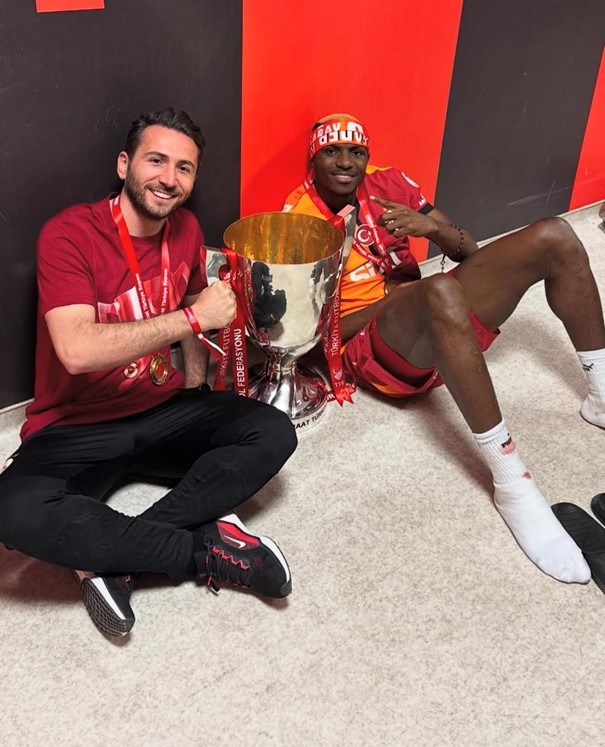
Vural Durmuş celebrates Galatasaray’s title triumph in the dressing room, sharing the moment with players and the coveted trophy.
I am someone who grew up with the dream of becoming a footballer but, for various reasons, had to move away from that dream. Perhaps I was not guided properly at the time, or perhaps I did not act with enough awareness myself. But that process became my greatest source of motivation to begin my path as a coach. Now I ask myself this question: “If I could not become one, if I could not achieve it, how can I support those who can?” That is the mindset I carry with me. Wherever I made mistakes or experienced shortcomings, I try to pass these lessons on to the next generation of coaches or young players so they do not lose valuable time.
Because when we bring together people who do their work correctly, who are ethical, and who are open to growth, we create value not only for individuals but also for our country and even for the world. With this belief, I wish for everyone who puts in the effort to have a clear path ahead of them.
Whether you are a young player or a young coach, make your work meaningful. Because success is not just about financial rewards or lifting trophies – it is about leaving a mark.
So far, I have experienced Turkish League, Super Cup, and Turkish Cup victories. I have served with the National Team and had the chance to represent our country in an international tournament like the European Championship. Looking back, from my student days onward – every sleepless night, every moment of fatigue, every sacrifice, every instance where I never stopped – I feel it was all truly worth it.
My hope is that everyone – whether a footballer or a coach – will one day have the chance to experience these feelings. Because living that feeling becomes one of the most meaningful moments of your life, beyond your profession itself.
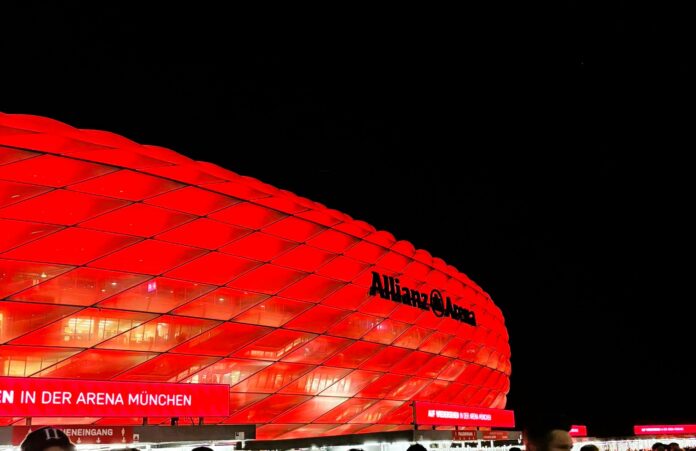
The Allianz Arena lights up Munich’s night sky, a modern icon of world football.
أضحى ”النجاح“ في كرة القدم، في العشرية الأخيرة، مصطلحا يقترن بعوامل عدة، تجاوزت عامل الأداء الرياضي فقط.
حيث أصبحت قدرة الفريق فيتحقيقإيراداتخارجالملعب، خاصة بالنسبة للاندية الأوروبية، تحظى بنفس أهميةالنجاحداخله.
وتعد ”حقوق تسمية الملعب“، إحدى الوسائل التي اطلعت بها الأندية مؤخرا بهدف تحقيق إرادات خارج المداخيل التقليدية (حقوق البث، إعلانات، بطائق الاشتراك، عائدات بيع اللاعبيين…)، وهي بالأساس صفقة تجارية تدفع فيهاالشركاتالعالميةمبالغكبيرةلتكونأسماؤها مرتبطة بملعب نادي معين.
ورغممايمكنأنتضخهذهالاتفاقياتمنملايينالدولارات في خزينة النادي،ممايوفردخلاًإضافيًايكملالمداخيلالتقليديةالسالفةالذكر،تفضلالعديدمنالأنديةعدماتباعالهاجسالمادي،متمسكةبالحمولةوالقيمةالتاريخيةللتسميةالأصليةلملاعبها.
جاذبيةحقوقتسميةالملاعب
يمكن ذكر المكانة، الهيبة، التأثير، التفاعل مع الجمهور، كبعض من المزايا المستهدفة من حقوق تسمية الملاعب، سواء بالنسبة للنادي أو المستشهر.
تشيردراسةإلىأنالأنديةالكبرىفيأوروبايمكنأنتجنيمايصلإلى 303 مليونيوروسنويًامنخلالحقوق التسمية. علىرأسهذهالأندية،تأتياستاداتمثلسانتياجوبرنابيولريالمدريد،الذييُقدّرقيمته ب29.7 مليون يورو، ثم الكامب نو معقل نادي برشلونة ب20 مليون يورو.
تشير المعطيات الحالية إلى إقبال حذر من طرف الأندية،ممايؤشرإلىتوازندقيق حتى في المستقبل القريب..
ستواصلالأنديةفي التطلع إلىحقوقالتسمية وقياس مدى توافق جماهيرها مع خطواتها في هذا المسار.
ومعذلك،قدتقاومالملاعبالتاريخيةالتغييرالكاملفيالتسمية،مفضلة نماذج هجينة، وستستمر المعركة بين الربح التجاريوالتراثالثقافي،رغم وجودملاييناليوروهاتفيالميزان.
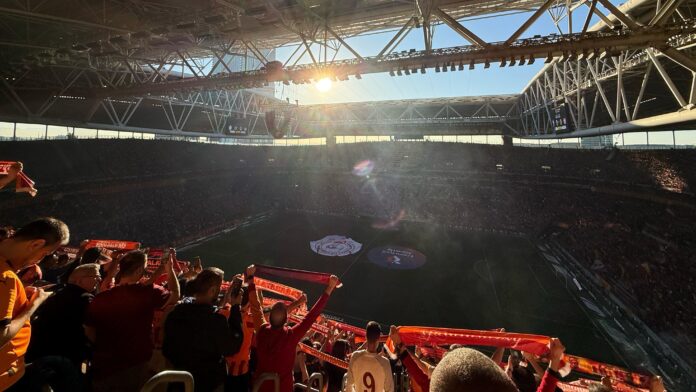
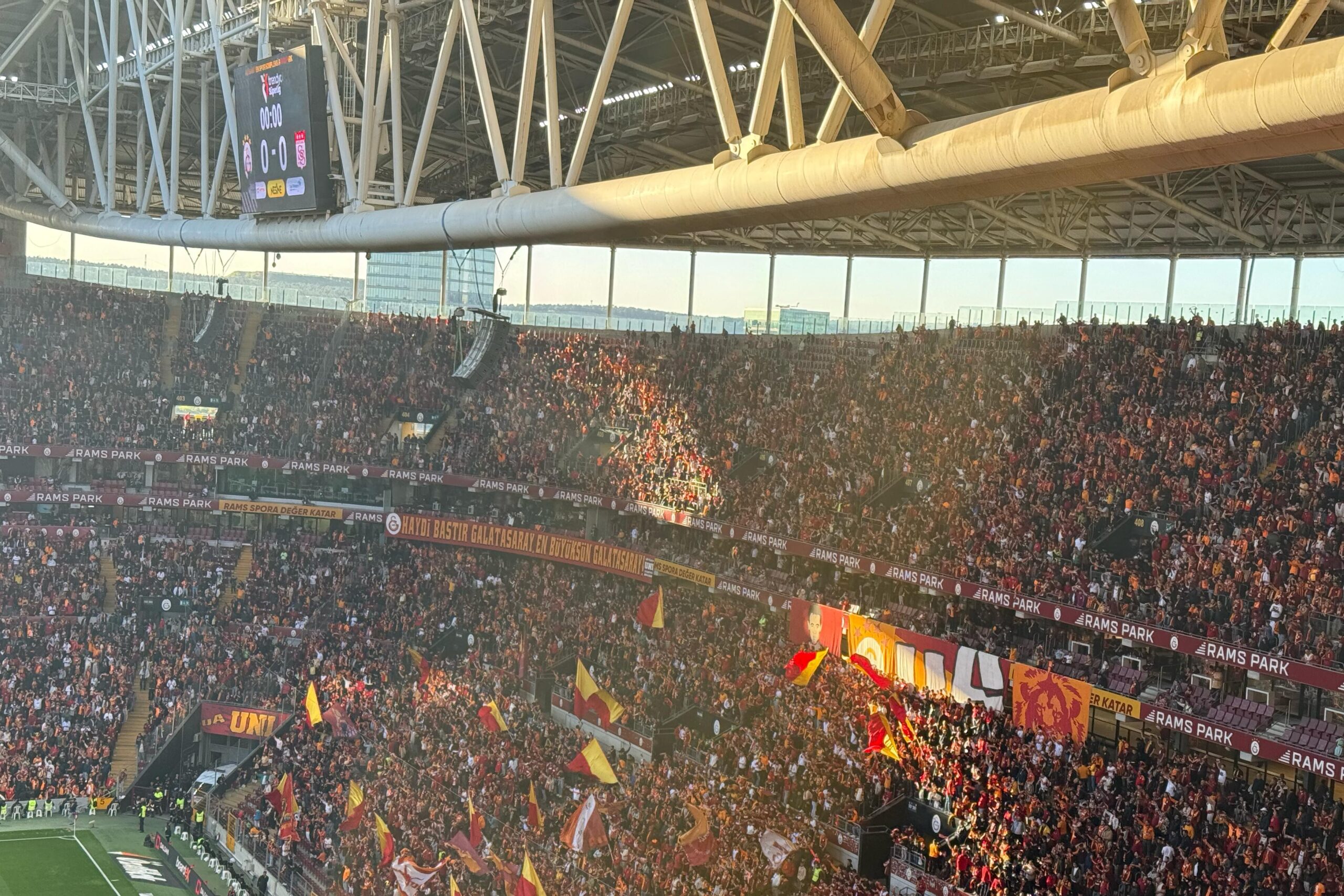
Galatasaray fans fill Rams Park, creating a dramatic backdrop as the club embarks on a new era of record signings.
When Galatasaray announced the signing of Victor Osimhen for €75 million, the deal instantly rewrote the history of Turkish football. The Nigerian striker’s arrival from Napoli, alongside further big money moves for Uğurcan Çakır and Wilfried Singo, has transformed Galatasaray’s squad into one of Europe’s most expensive projects. Just days later, Fenerbahçe countered with a headline signing of their own: Manchester City’s long-serving goalkeeper Ederson, who joined for £12 million after eight years in England.
In the space of one transfer window, the Süper Lig has positioned itself at the center of the European football conversation. The sheer scale of investment is eye-catching, but the bigger story lies in what these moves mean for the future of Turkish football: its competitiveness, sustainability, and global standing.
Galatasaray’s Bold Gamble
The passion of Galatasaray’s supporters remains a driving force behind the club’s bold ambitions in Turkish football.
For Galatasaray, this window has been defined by ambition on a scale rarely seen outside Europe’s financial superpowers. Osimhen, still in his prime at 26, is not the profile of player usually associated with the Turkish league. The same can be said of Uğurcan Çakır, prised away from rivals Trabzonspor for €33 million, and Monaco’s Wilfried Singo, whose €30.8 million fee further underlines the club’s intent.
This recruitment drive signals more than just a desire to dominate domestically. Galatasaray clearly sees itself as capable of competing again in Europe, where Turkish clubs have struggled to make a consistent impact since the early 2000s. With Osimhen leading the line, the club’s attack carries the kind of global profile that can alter perceptions of the league itself.
Yet ambition has a price. Galatasaray’s spending dwarfs its revenue streams, and while Turkish clubs benefit from passionate fan bases and strong commercial pull, the financial risks are substantial. UEFA’s Financial Fair Play regulations may no longer carry the bite they once did, but the sustainability of such investment will remain under close scrutiny.
Fenerbahçe’s Strategic Response
Fenerbahçe, unwilling to let their rivals dominate the headlines, made their own statement by signing Ederson. The Brazilian goalkeeper arrives with a trophy cabinet that includes six Premier League titles and a Champions League medal, instantly raising the team’s credibility both on and off the pitch.
Unlike Osimhen, Ederson is nearing the later stages of his career. But at 32, he still offers several years at the highest level. His signing is about more than ability; it’s about leadership, mentality, and the kind of international recognition that boosts a club’s brand value. Reports that he will earn €11 million annually highlight the financial weight behind the move, but Fenerbahçe appear to be banking on the commercial and sporting uplift that comes with adding a player of his stature.
The contrast between Galatasaray and Fenerbahçe’s approaches is striking. One has invested heavily in future resale value, the other in proven experience. Both strategies bring risk, but together they set the stage for a Süper Lig season of unprecedented intensity.
A League of Financial Contradictions
To understand the significance of these transfers, they must be placed against the broader financial backdrop of Turkish football. Transfermarkt figures show Süper Lig clubs spent €79.4 million this summer while recouping €34.5 million, a net deficit of roughly €45 million. That is less than the €104 million deficit recorded last season but still points to a league living well beyond its means.
Turkey’s economic climate has not been kind to its football clubs. High inflation and currency instability erode the value of broadcasting and sponsorship deals, making it difficult for clubs to balance books already strained by years of heavy borrowing. Against that reality, splashing tens of millions on new signings may appear reckless.
However, there is another way of looking at it. For clubs like Galatasaray and Fenerbahçe, the only viable path to renewed financial strength might be through sporting success. Stronger squads mean deeper European runs, higher prize money, and greater visibility for sponsors. The risk, then, is calculated: spend now, in the hope of building momentum that generates returns.
Regulation and the Local Talent Question
Overlaying these financial considerations is the Turkish Football Federation’s recent move to restrict the number of foreign players. Since 2024-25, squad limits have been reduced, and clubs are required to field and develop more locally trained talent. This creates a tension between marquee international signings and the long-term health of the national game.
On one hand, bringing players of Osimhen and Ederson’s quality to the Süper Lig raises standards for everyone around them. Young Turkish players training alongside such figures are exposed to higher benchmarks of professionalism and performance. On the other, excessive reliance on foreign stars risks stunting pathways for homegrown talent, especially if short-term pressure to deliver results outweighs development priorities.
How clubs navigate this balance will be central to the league’s future identity. Are these transfers catalysts for growth, or distractions from the structural reforms Turkish football has long needed?
Beyond the Transfers: What’s at Stake
The stories of Osimhen and Ederson are about more than two footballers changing clubs. They reflect a broader attempt to redefine the Süper Lig’s position in the global football hierarchy. For years, Turkey has been viewed as a league of fading stars and passionate crowds rather than a genuine destination for top-tier talent. These transfers challenge that perception, at least symbolically.
If Galatasaray and Fenerbahçe succeed, the ripple effects could be significant. Sponsorship deals may increase in value, broadcasting rights could attract wider audiences, and other clubs may find themselves pressured to follow suit. But if results do not match expectations, or if financial strains overwhelm the rewards, the fallout could deepen existing vulnerabilities.
Conclusion: Record Spending, Record Stakes
The Turkish Süper Lig has always thrived on passion and spectacle. This summer, it has added unprecedented ambition. By signing Osimhen and Ederson, Galatasaray and Fenerbahçe have raised the ceiling of what is possible in Turkish football, but they have also raised the stakes.
The coming season will not just be a test of two clubs’ competitive strength, it will be a test of the league’s financial resilience, regulatory framework, and capacity to sustain momentum in a global football landscape defined by inequality.
In the end, these transfers will be remembered not only for the names involved, but for what they represent: a gamble on the idea that Turkish football can, once again, punch above its weight.
Çağla Korkmaz, Galatasaray’s Assistant Coach and Head of Girls Academy, bringing experience and vision to the future of Turkish women’s football.
Çağla Korkmaz is a former Turkish-German footballer and current coach. Since August 2025 she has been part of Galatasaray, where she works as Assistant Coach of the women’s first team and Head of Girls Academy. A former Turkey international, she brings the experience of playing at the highest level, the structural discipline of German football, and the ability to translate both into her daily coaching work. With a worldwide network in women’s football and a deep commitment to player development, she combines international expertise with a clear vision for building sustainable pathways for girls and women in the game.
Education & Early Career
Born on November 14, 1990, in Munich, Germany, Korkmaz began her football journey in the youth setup of FFC Wacker München. Her early development in Germany’s well-structured football ecosystem gave her a strong foundation in technical and tactical aspects of the game. After progressing through the youth ranks, she played for clubs such as FC Stern München 1919 and FC Ingolstadt 04, eventually establishing herself as a reliable defender.
Professional Playing Career
Her senior career included stints at 1. FC Lübars, VfL Wolfsburg II, TSV Schott Mainz, and SV Meppen. Korkmaz combined defensive stability with leadership on and off the pitch, which earned her a call-up to the Turkey women’s national team, where she represented the country between 2015 and 2018.
Transition to Coaching
After retiring from playing, Korkmaz quickly moved into coaching. In 2018–2019 she served as assistant coach for SV Meppen U17, focusing on youth development and tactical preparation. From 2021 to 2025 she worked as head coach at her former club FFC Wacker München, becoming one of the few female Turkish-German coaches leading a senior team in the German football pyramid. In August 2025 she took the next step by joining Galatasaray as Assistant Coach of the women’s first team and Head of Girls Academy, combining day-to-day elite coaching with long-term academy development.
Leadership & Philosophy
Korkmaz’s coaching philosophy emphasizes discipline, mutual respect, and individual growth within a team-oriented structure. Drawing on her own playing career, she prioritizes player confidence, technical improvement, and emotional intelligence. She advocates for equal opportunities in football and is committed to raising the visibility of women in leadership roles.
Current Role at Galatasaray
At Galatasaray, Korkmaz supports first-team preparation and match analysis while overseeing the Girls Academy. She integrates the discipline and structures of German football into the Turkish environment and uses her international network to create new opportunities for players and staff. Her remit includes methodology design across age groups, coach education, and talent identification. The ambition is to align academy principles with senior-team demands and to establish a transparent pathway from grassroots to the first team.
Vision for Women’s Football
As a bilingual professional navigating both Turkish and German football cultures, Korkmaz serves as a bridge between two systems. She speaks often about the importance of institutional support, quality coaching education, and international exposure for young athletes. Her long-term ambition remains contributing to structured player pathways and inspiring more women to pursue coaching and leadership roles.
Our Exclusive Interview with Çağla Korkmaz
Who is Çağla Korkmaz outside of football?
I’d say I’m the same person on the pitch as I am off it. For me, it’s really important to stay true to who you are in everyday life. If someone were to describe me, I’d say, above all, I’m a mom. I’m deeply family-oriented, I come from a big family, I value harmony, and I love spending time with friends and family doing all sorts of activities.
You recently joined Galatasaray as Assistant Coach of the women’s first team and Head of Girls Academy. What convinced you about this step?
The Galatasaray project offers the chance to combine elite football with long-term development. For me it was important to find a place where I could bring all of my experiences together – my years in German football with its structures and discipline, my international perspective as a Turkish national team player, and my passion for building environments where girls see a clear pathway. Galatasaray is a big club with strong traditions and ambitions, and being able to help shape both the first team and the academy was a unique opportunity.
What excites you most about shaping the Girls Academy at such a big club?
The academy is where the future of women’s football begins. What excites me is creating a structure where young players clearly see their next steps – from grassroots to the first team. At Galatasaray, we have the resources and visibility to make that pathway tangible. For me it’s about more than just training sessions: it’s about preparing girls technically, tactically, and mentally to perform in a professional environment.
Your playing and coaching journey spans both Germany and Türkiye. How do you combine those influences in your daily work?
I was educated as a player in Germany, where discipline, structure, and detailed methodology are central. At the same time, representing Türkiye at international level gave me a deep understanding of different football cultures and the importance of adaptability. In my daily work, I try to combine both: the structural and disciplined approach from Germany with the passion, energy, and resilience that are very present in Turkish football. It’s a mix that I think players respond well to.
You are known for having a strong international network. How does that benefit your work at Galatasaray?
Football is global. Having a wide network means access to knowledge, exchanges with other coaches, opportunities for friendly matches, and also visibility for our players. It allows us to benchmark ourselves against international standards and bring in fresh ideas. For the girls in the academy especially, knowing that they are part of a wider football world can be very motivating.
What philosophies guide your leadership as a coach?
My philosophy is built on discipline, respect, and clarity. Players should always know what is expected of them and why. At the same time, I believe coaching is not only about tactics but also about developing people. My aim is to create an environment where players grow in confidence and character. When you combine a clear game model with open and authentic communication, the results come naturally.
How does your daily routine look inside a top-club environment like Galatasaray?
The rhythm is very intense. Mornings usually start with staff meetings and video analysis of the previous match or the next opponent. Then we move into planning and delivering training sessions. Afternoons are often filled with individual talks with players, academy coordination, and organizational work. The day doesn’t end after training; there are always discussions, feedback, and preparation for the next session. It’s a lot of responsibility, but the professionalism of a club like Galatasaray provides a strong structure that makes the work effective and rewarding.
Who have been the biggest influences on your career?
There are two. First, Salih from my time at Wacker – he played a decisive role in my transition from player to coach, and without him I might not have taken this path so early. Second, my former coach at BSC in the 2nd league, Jürgen Franz. He embodied values that I want to carry forward: integrity, discipline, and humanity. Both shaped me as a coach and as a person.
What are your goals at Galatasaray in the short and medium term?
In the short term, I want to help the first team compete successfully and implement a clear playing identity. At the same time, I am focused on building the foundations of the Girls Academy: methodology, coaching education, and a clear pathway for players. Medium term, the goal is to see academy players regularly making the step into the first team. Personally, I want to continue developing myself, complete further coaching licenses, and contribute to raising the standards of women’s football in Türkiye and beyond.
The new season has begun. For some players, it brings a new club, a new coach, or a reshaped team. Sometimes it’s just one small change: a new signing, a tactical tweak and suddenly you’re no longer in the starting lineup. Instead, you find yourself spending more time on the bench.
It’s a tough reality. Players often feel overlooked, underappreciated, or start to question themselves. These feelings are natural, and they affect not only young talents but also established professionals at the very top of the game. The real question is: how do you respond?
Start with Self-Reflection
Before looking outward, turn the focus inward. Ask yourself honestly: What am I doing well? Where do I need to improve? Writing down strengths and weaknesses provides clarity. With clarity comes direction, and direction keeps you from getting stuck in frustration.
Understand the Reasons, Don’t Search for Excuses
Why am I not playing? The answer is rarely simple. It could be performance, fitness, mentality, or even nutrition. Often, it’s a combination of factors. Everything is connected. Only by understanding the reasons can you address them. Blaming others won’t change anything, taking responsibility will.
Feedback: The Coach Holds the Key
The most direct way forward is through a conversation with your coach. Honest feedback brings clarity: What’s going well? What do I need to improve?
The key is to listen, take notes, and then put in the work. Coaches quickly recognize who accepts feedback and who is willing to grow.
Learn from Others
Your network is a powerful resource. Through your agent or personal contacts, seek out conversations with experienced players who have been through similar phases. Their advice is often the most valuable: practical, grounded, and delivered with the benefit of hindsight.
Mentality: Be Ready When the Chance Comes
Not playing doesn’t mean standing still. On the bench, stay engaged. Follow the game closely, analyze situations, and train as if you’ll play tomorrow. The mindset must be: I’m the next one who will be needed.
And there are countless examples to prove it. Every level, every league, every season produces stories of players who bided their time, stayed mentally strong, and never gave up. The season is long. Opportunities always come. The ones who are prepared, seize them.
Patience, Persistence, and Character
Change doesn’t happen overnight. Expecting everything to be different in a week only leads to disappointment. What’s required is patience and persistence. At the same time, character matters: give maximum effort in training, support your teammates, and set the tone with your attitude. Even without minutes on the pitch, you can earn respect and trust – often the very foundation for your next opportunity.
Parents as Supporters
For parents, this is also a difficult phase. The key is not to add pressure or shift blame onto the coach. Instead, offer patience, encouragement, and steady support. Help your child shift focus away from “not playing” and toward growth.
Take Responsibility and Follow Up
Ultimately, your development is in your own hands. After four to six weeks, go back to your coach for another conversation. Show that you’re committed, proactive, and serious about improvement.
Conclusion
Not playing is a test: emotional, physical, and mental. But it’s also part of the game at every level. These periods shape players, teaching resilience, patience, and the ability to prepare for opportunities before they appear.
In the end, one truth remains: Sitting on the bench is not defeat. It’s a test. Pass that test, and you’ll be ready the moment your chance arrives.