Home Blog Page 17

صعود تعدد ملكية الأندية في كرة القدم

0
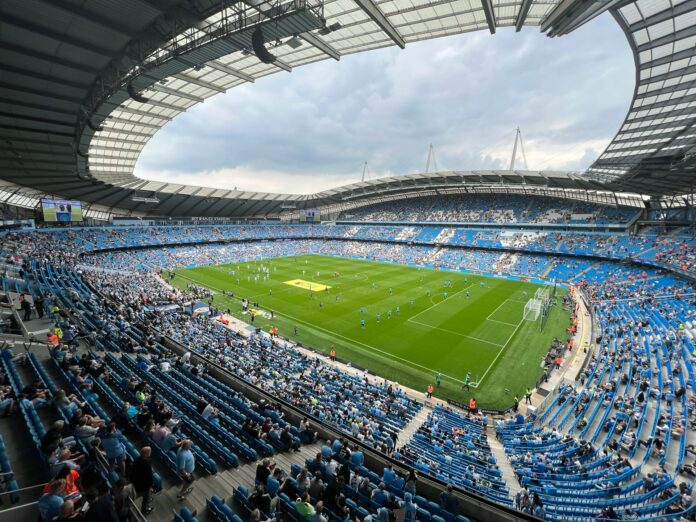
Etihad Stadium, home of Manchester City and flagship club of City Football Group, a leading example of multi-club ownership in football.
Photo by Jonny Gios on Unsplash

تشهد كرة القدم الأوروبية حالياً تغيّراً مالياً كبيراً، لم تعد فيه صناديق الاستثمار وشركات المال مجرد أطراف ثانوية، بل أصبحت تلعب دوراً رئيسياً في تشكيل مستقبل اللعبة.

هذا المقال هو الجزء الثاني من سلسلة “رأس المال الخاص في كرة القدم: تغيير كبير أم مخاطرة محسوبة؟”. نسلط فيه الضوء على كيف بدأت هذه الصناديق في إعادة تشكيل عالم كرة القدم، من خلال ضخ الأموال وتغيير مفهوم ملكية الأندية، بكل ما يحمله ذلك من فرص ومخاطر.

في الجزء الأول، شرحنا كيف فتحت الأزمات المالية بعد الجائحة الباب أمام نوع جديد من المستثمرين في هذا المجال.

أما في هذا الجزء، فسنتعمّق أكثر: من هم هؤلاء المستثمرون؟ ما هي خططهم؟ كيف يختارون الأندية؟ وما طموحاتهم في هذا السوق؟

من شركة RedBird Capital حتى صفقات CVC الكبيرة مع الدوريات، سنتعرف على أهم اللاعبين الذين يصنعون التغيير في كرة القدم، لا من منظور مشجعين، بل من زاوية استثمارية بحتة.

سنتعرّف أيضاً على كيف يرون الأندية كأصول استثمارية ضمن محفظتهم، وما هو سبب انتشار نموذج تعدد الملكية، وماذا يعني ذلك من ناحية الإدارة، الأداء، والاستدامة.

سواء كنت مستثمراً، مدير نادي، أو حتى مشجعاً يحاول فهم ما يحصل، فهذا المقال يقدّم لك رؤية مالية واضحة لعصر كرة القدم الجديد.

1.1 نظرة عامة على الجهات الفاعلة الرئيسية

على مدى العقد الماضي، شهدت صناعة كرة القدم موجة دخول من قبل صناديق الاستثمار وشركات رأس المال الخاص، حيث اغتنمت هذه الكيانات الفرص المتاحة على مستوى الأندية، والدوريات، وحقوق البث الإعلامي.

وعلى عكس المالكين التقليديين — الذين يكونون غالباً أفراداً أثرياء أو شخصيات تجارية محلية — فإن هذه الجهات تعمل بمنطق مختلف: تحقيق العائد المالي، واقتناص الأصول الاستراتيجية، واستغلال العلامة التجارية على نطاق عالمي.

كما أوضحنا في الجزء الأول من هذه السلسلة، يوجد اليوم 125 مجموعة نشطة تعتمد نموذج تعدد ملكية الأندية (MCO)، وتشرف على نحو 380 نادياً حول العالم. ورغم أن مصطلح “تعدد ملكية الأندية” يستحضر في الأذهان صورة تكتلات كروية ضخمة، إلا أن الواقع أكثر تشرذماً وتعقيداً.

فأغلب مجموعات الملكية لا تملك سوى ناديَين فقط، وأقل من 40٪ منها تتحكم في ثلاثة أندية أو أكثر. هذا يعكس نظاماً بيئياً شديد التنوع لا يزال في طور النضج، ويتراوح بين شراكات عابرة للحدود بسيطة، ومنصات استثمار عالمية متكاملة.

تبقى أوروبا هي المركز الاستراتيجي لهذا النموذج، إلا أن تعدد الملكية أصبح الآن يمتد إلى جميع القارات وجميع درجات المنافسة، مما يعيد تشكيل الجغرافيا الكروية والإطار الاقتصادي للعبة.

ومع تطور هذا النموذج، قد لا تكون المرحلة القادمة هي التوسع، بل مرحلة الدمج وإعادة الهيكلة.
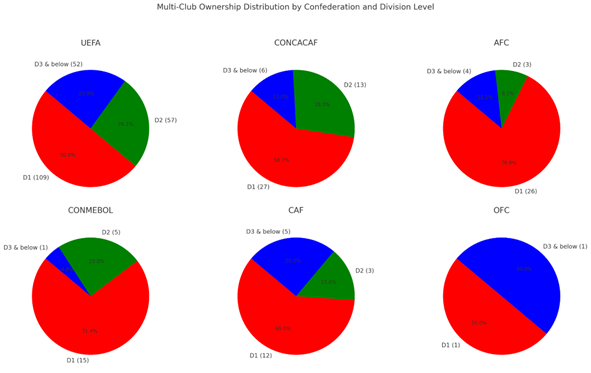
Source: Profluence Sports

رغم أن العديد من مجموعات تعدد ملكية الأندية (MCOs) تعمل على نطاق محدود، إلا أن قلة من الجهات الكبرى تقوم ببناء شبكات مترابطة وواسعة النطاق في عالم كرة القدم العالمي.

هذه المجموعات، التي تحظى غالباً بدعم من صناديق رأس المال الخاص أو مؤسسات مالية كبرى، تعيد تشكيل صناعة كرة القدم من خلال الاستحواذات الاستراتيجية، والإدارة المركزية، وبناء العلامة التجارية على المدى الطويل.

فيما يلي نظرة على بعض أبرز الفاعلين الذين يقودون هذا التحول، مع أهم المعلومات حول كل منهم :

اسم الصندوق الأندية / الأصول المملوكة القيمة التقديرية للأصول تحت الإدارة  ($) التركيز الاستراتيجي
RedBird Capital AC Milan, Toulouse FC, minority in Liverpool FC (FSG) ~ $12B الملكية (حقوق الحصص)، الإعلام (سكاي دانس)، بناء العلامة التجارية، البنية التحتية الرياضية
777 Partners / A-CAP* Genoa, Standard Liège, Vasco da Gama, Hertha BSC, Red Star FC, Sevilla FC (حصة أقلية) ~ $12B استراتيجية تعدد ملكية الأندية، تجارة اللاعبين، الأصول ذات التقييم المنخفض
CVC Capital Partners LaLiga (حصة بنسبة 8٪ من عائدات الحقوق الإعلامية), Ligue 1, IPL (الكريكيت), Six Nations (الرغبي) ~ $223B تحقيق العائد من حقوق البث، شراكات طويلة الأمد مع الدوريات
Silver Lake (18%) / Newton Investment and Development LLC City Football Group بما في ذلك Manchester City, Girona FC, SK Lommel, Palermo FC, New York City FC, Melbourne City FC, ESTAC, Yokohama F. Marinos, Montevideo City Torque, Mumbai City FC, Bahia, Shenzhen Peng City FC, Club Bolivar (Partner club) ~ $100B (Silver Lake) / N/A (Newton Investment and Development LLC) بناء العلامة التجارية المدفوع بالتكنولوجيا، تحسين استخدام البيانات، الاستثمارات الرياضية العالمية، التنمية الحضرية، وتوسيع نطاق العلامة التجارية
RedBull GmbH Red Bull Salzburg, RB Leipzig, New York Red Bull, Red Bull Bragantino, RB Omiya Ardija, Leeds United and Paris FC (حصة أقلية) N/A (شركة خاصة) دمج العلامة التجارية، الاستثمار في البنية التحتية، والدخول الاستراتيجي إلى الأسواق ذات إمكانات النمو
Saudi Public Investment Fund (PIF) Newcastle United and Saudi clubs; Al-Hilal, Al-Nassr, Al-Ittihad, Al-Ahli (إعادة هيكلة الدوري) ~ $941B القطاعات عالية النمو مثل الترفيه، والرياضة، والتكنولوجيا، والبنية التحتية (رؤية 2030)
Ineos Group Manchester United (حصة أقلية بنسبة 28٪ مع السيطرة التشغيلية), OGC Nice (17%), Lausanne-Sport (19.9%) N/A (شركة خاصة) محفظة رياضية متنوعة (كرة القدم، الفورمولا 1، ركوب الدراجات، وغيرها)، وضوح العلامة التجارية، والتفاعل المجتمعي
BlueCo Chelsea FC, RC Strasbourg Alsace N/A (ائتلاف كروي خاص) تعدد ملكية الأندية، تطوير المواهب الشابة، الاستدامة المالية


Eagle Football Holdings Olympique Lyonnais, Botafogo FR, RWD Molenbeek, Crystal Palace (حصة أقلية), FC Florida ~ $0.9B الاستراتيجية المالية: نموذج الحساب الموحد، واستهداف الأندية ذات التاريخ العريق وإمكانات النمو المستقبلية
Pachuca Group C.F. Pachuca, Club León, Real Ovedio, Everton de Viña del Mar, Club Atlético Atenas, Coyotes de Tlaxcala N/A (شركة خاصة) تعدد ملكية الأندية، تطوير المواهب الشابة، الاستثمار في البنية التحتية
Oaktree Capital FC Internazionale (حصة الأغلبية من خلال تعثّر الديون في عام 2024) ~ $203B أصول متعثرة، وسيطرة استراتيجية من خلال الرفع المالي (الاستدانة)
Pacific Media Group/NewCity Capital Barnsley FC, FC Thun, KV Oostende, AS Nancy Lorraine, Esbjerg fB, FC Den Bosch, FC Kaiserslautern N/A (ائتلاف كروي خاص) أندية منخفضة التقييم في الدوريات الثانوية أو المتعثرة من خلال الاستحواذ على حصص أغلبية
Global Football Holdings Crystal Palace FC, Real Salt Lake, Augsburg, SK Beveren, Brøndby, ADO Den Haag, Estoril Praia ~ $12B تطوير الامتيازات الرياضية والبنية التحتية، الابتكار التكنولوجي، ورأس المال المغامر

*في ظل تحقيق جارٍ بتهمة الاحتيال، تم تحويل أصول شركة 777  Partnersإلى شركة A-CAP، في حين بدأت العديد من الأندية الخاضعة لسيطرتها في البحث عن ملاك جدد.

تشهد كرة القدم الأوروبية تزايداً ملحوظاً في شعبية نموذج تعدد ملكية الأندية (MCO). ففي موسم 2023–2024، بلغت نسبة الأندية التي تمتلك فيها جهات خارجية حصصاً (سواء أغلبية أو أقلية) ضمن الدوريات الخمسة الكبرى 41.7٪، أي 40 نادياً من أصل 96، مقارنة بـ 36.7٪ في الموسم السابق.

وتُظهر تقارير الاتحاد الأوروبي لكرة القدم (UEFA) أن عدد الأندية التي تعمل ضمن هياكل ملكية متعددة قفز بشكل هائل من 40 نادياً فقط في عام 2012 إلى 180 نادياً بحلول عام 2022، مما يعكس تحولاً جذرياً في خريطة ملكية الأندية داخل اللعبة.
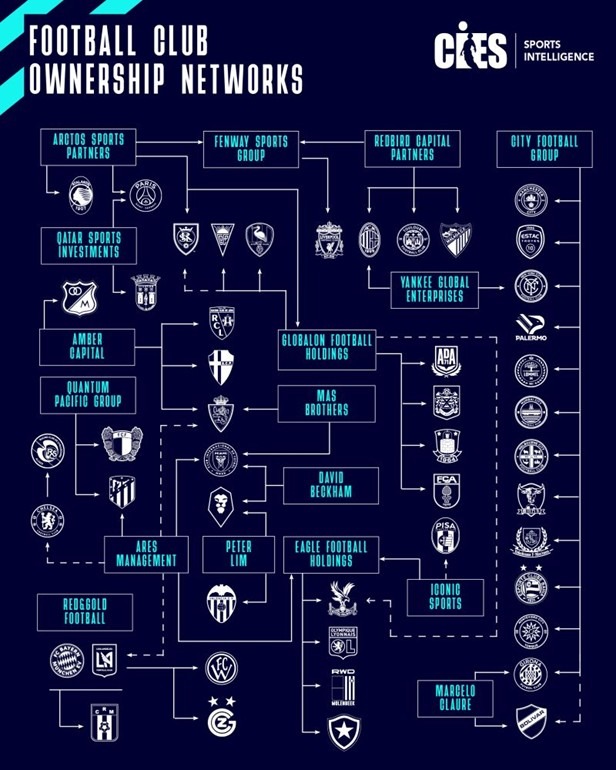
Source: CIES

يُعتبر أحد المحركات الأساسية لجاذبية نموذج تعدد ملكية الأندية هو قدرته على خلق تآزر فعّال بين الكيانات المختلفة، وهو نهج مستمد من نماذج الاستحواذ وخلق القيمة التي تعتمدها صناديق رأس المال الخاص. وتظهر هذه التآزرات في أشكال متعددة، من أبرزها توقيع اتفاقيات رعاية موحّدة، وتسهيل حركة اللاعبين والمدربين بين الأندية التابعة، وتوحيد عمليات الكشافة لاكتشاف المواهب، إلى جانب تعزيز الحضور العالمي للعلامة التجارية، وتكامل الإدارة المالية، فضلاً عن تبادل أنظمة البيانات المتقدمة التي تعتمد على تقنية التتبع عبر GPS وأدوات التحليل التكتيكي الدقيقة. كل هذه العناصر تُسهم في تحسين الكفاءة التشغيلية، وتعزيز العائد الاستثماري، وخلق منظومة متكاملة تتجاوز البُعد الرياضي التقليدي.

1.2 ما هو المنطق الاستثماري وراء كرة القدم ؟

عادةً ما يتمحور نموذج تعدد ملكية الأندية حول نادي رئيسي (flagship club) يشارك في إحدى الدوريات الكبرى ذات العوائد المالية المرتفعة، في حين تتكوّن باقي الملكيات من أندية تابعة تنشط في مسابقات أصغر وأقل جذباً من الناحية التجارية.

وعلى مستوى المحفظة الاستثمارية، تستطيع مجموعات تعدد الملكية تحقيق تقييم إجمالي أعلى من خلال خلق تآزر بين أنديتها، عبر تبادل الموارد، وتوحيد الاستراتيجيات، ودمج العمليات التشغيلية. هذا التكامل يتيح للشركة الأم فرض قيمة مضافة تتجاوز مجموع القيم الفردية لكل نادٍ على حدة، وذلك على غرار نموذج “الشراء والبناء” (buy-and-build) الشائع في قطاع رأس المال الخاص.

وقد تم تصميم هذا النموذج أيضاً لتقليل تضارب المصالح بين الأندية التابعة التي قد تتنافس فيما بينها، خاصة في المسابقات الأوروبية أو المحلية. وفي الوقت ذاته، يسعى الإطار المدعوم من صناديق رأس المال الخاص إلى نقل نموذج النجاح المعتمد في النادي الرئيسي إلى باقي الأندية الأضعف ضمن المحفظة، من خلال تطبيق نفس المعايير الإدارية والفنية والتجارية.

تُعتبر أندية كرة القدم، وخصوصاً تلك التي تنشط في الدوريات الأوروبية الكبرى، أصولاً ترفيهية عالمية منخفضة التقييم بشكل متزايد في نظر      المستثمرين. ويرتكز منطق الاستثمار بالنسبة لصناديق المال على عدة ركائز أساسية:

1.2.1 نمو قيمة الأصول وخلق القيمة على المدى

تعاني العديد من الأندية العريقة من سوء الإدارة رغم امتلاكها لقيمة علامة تجارية هائلة. ولهذا تسعى صناديق الاستثمار إلى الشراء بسعر منخفض (خلال الأزمات أو في حالات التقويم المنخفض)، ثم إعادة هيكلة العمليات الإدارية والتجارية بهدف رفع قيمة الأصل تدريجياً، سواء من أجل الاحتفاظ به على المدى الطويل أو لتحقيق الخروج بربح مستقبلاً.

وتتضمن هذه الاستراتيجية ما يلي:

ارتفاع تقييم الأندية من خلال التآزر:  تستفيد مجموعات تعدد ملكية الأندية من التآزرات، والكفاءات التشغيلية، والموارد المشتركة، والتنسيق الاستراتيجي، بحيث تصبح قيمة المحفظة ككل أعلى من مجموع قيم الأندية الفردية. هذا «الأثر الممتاز» يؤدي إلى ارتفاع تقييم كل نادٍ على حدة، إذ يُقدِّر المستثمرون فوائد التكامل وإمكانات النمو المستقبلي.

نمو قيمة اللاعبين كأصول استثمارية:  يُعدّ اللاعبون من أهم الأصول التي تمتلكها الأندية، وغالباً ما تزداد قيمتهم السوقية من خلال تطوير المواهب بشكل استراتيجي وتنفيذ انتقالات مدروسة داخل شبكة MCO. من خلال رعاية اللاعبين الشباب في الأندية التابعة ثم نقلهم أو ترقيتهم إلى الفرق الرئيسية، تتمكّن مجموعات تعدد الملكية من تعظيم قيمة اللاعبين وتحقيق أرباح مجزية من رسوم الانتقال.

تحسين الأداء المالي:  تُساهم وفورات التكاليف الناتجة عن العمليات المركزية، إلى جانب تنويع مصادر الدخل (مثل حقوق البث، والرعاية، وبيع المنتجات، والمحتوى الرقمي)، في تعزيز الميزانيات العمومية والتدفقات النقدية للأندية. هذا التحسّن المالي المستمر ينعكس إيجاباً على تقييم الأندية على المدى الطويل.

الاستثمارات الرأسمالية الاستراتيجية: يقوم مالكو مجموعات تعدد ملكية الأندية غالباً بضخ استثمارات في تحديث البُنى التحتية، مثل الملاعب، ومرافق التدريب، والتكنولوجيا، بهدف تعزيز القدرة التنافسية للنادي ورفع قيمته السوقية. وتُساهم هذه التحسينات الملموسة في الأصول في تحقيق نمو مستدام في القيمة، كما تُساعد في جذب استثمارات إضافية مستقبلاً.

ديناميكيات السوق وتزايد شعبية كرة القدم:  تشهد شعبية كرة القدم العالمية نمواً مستمراً، مما يؤدي إلى ارتفاع الطلب على حصص ملكية الأندية. ويساهم هذا الاتجاه على المستوى الكلي في زيادة أسعار الأصول بشكل عام، وهو ما يعود بالفائدة على مجموعات تعدد الملكية ذات المحافظ المتنوعة والموقع الاستراتيجي الجيد في السوق.

1.2.2 التآزر من خلال نموذج تعدد ملكية الأندية

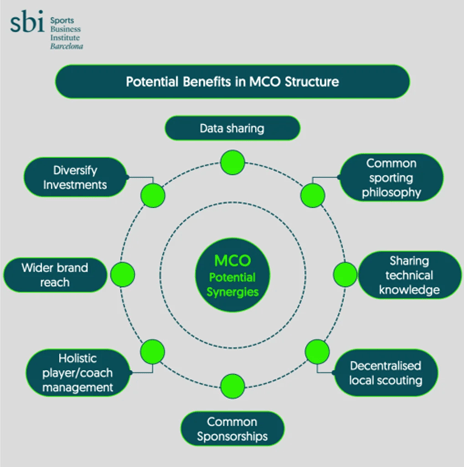
كما أوضحنا سابقاً، تقوم مجموعات مثل RedBird وRedBull وغيرها من الجهات الرائدة في هذا المجال بتطوير استراتيجيات شبكية من خلال بناء منظومات مترابطة من الأندية في بلدان مختلفة.

وتُتيح هذه التآزرات ما يلي  :

تنويع المخاطر: من خلال امتلاك أندية في دوريات وبلدان ومستويات تنافسية مختلفة، تستطيع مجموعات تعدد ملكية الأندية تعويض الأداء الضعيف في سوق معيّن بالنجاح في سوق آخر، مما يُسهم في تقليل المخاطر المالية الإجمالية وتعزيز استقرار المحفظة الاستثمارية.

اقتصاد الحجم والتآزر التشغيلي: إن توحيد الوظائف المركزية مثل الشؤون المالية، والموارد البشرية، والكشافة، والتسويق، وتطوير اللاعبين، يُمكّن مجموعات تعدد ملكية الأندية من خفض التكاليف وتحسين الكفاءة التشغيلية. كما أن استخدام الموارد المشتركة يساهم في تحقيق وفورات مالية، ويُعزز من قوة التفاوض مع الرعاة والشركاء التجاريين.

تطوير المواهب وتدفقها:
 تُتيح هياكل تعدد ملكية الأندية (MCO) تسهيل إعارات اللاعبين، وانتقالاتهم، ومسارات تطويرهم بين الأندية المختلفة ضمن الشبكة نفسها. ويمكن رعاية المواهب الشابة في الأندية الصغرى قبل انتقالها إلى الفرق الرئيسية، مما يُساهم في تعظيم قيمة اللاعب وتعزيز تطوره المهني.

توسيع العلامة التجارية والنمو التجار: يسهم امتلاك أندية في مناطق جغرافية متنوعة في توسيع الحضور العالمي للمجموعة. ويؤدي ذلك إلى زيادة فرص الرعاية، وتوسيع قاعدة الجماهير، وتعزيز إمكانات البيع التجاري والتسويق، مما يفتح المجال أمام تنويع مصادر الإيرادات ورفع العوائد المالية.

دمج البيانات والتحليلات:
 تُسهم أنظمة البيانات المركزية، بما في ذلك تتبّع المواقع عبر GPS والتحليلات التكتيكية، في تحسين الأداء والكشافة، مما يمنح الأندية ميزة تنافسية واضحة ضمن نموذج تعدد الملكية.

تكرار النماذج الناجحة:
 تُطبَّق استراتيجيات “الشراء والبناء” المستوحاة من عالم رأس المال الخاص من خلال تكرار الأطر التشغيلية والعلامات التجارية الناج حة عبر جميع الأندية ضمن الشبكة، مما يُسهم في رفع القيمة الإجمالية للمجموعة إلى ما يتجاوز مجموع قيمة الأندية الفردية.

المحتوى وتفاعل الجماهير:
 يُتيح التحكم في المحتوى والرواية عبر المنصات المختلفة تعزيز تفاعل الجماهير وزيادة الجاذبية التجارية، مما يضيف أصولاً غير مادية ولكن ذات قيمة عالية إلى محفظة المجموعة الاستثمارية.
Source: Sports Business Institute Barcelona

1.2.3 كرة القدم كأداة لتنويع الاستثمارات

في السنوات الأخيرة، بدأت شركات رأس المال الخاص ورأس المال المغامر تنظر بشكل متزايد إلى أندية كرة القدم على أنها أصول استراتيجية لتنويع المحافظ الاستثمارية ضمن خططها الأوسع.

ويعكس هذا التوجّه تحولاً يتجاوز القطاعات التقليدية نحو قطاع الرياضة، لما يتميّز به من خصائص فريدة تُسهم في تعزيز مرونة المحافظ الاستثمارية وتحقيق النمو، مما يجعل كرة القدم مكمّلاً فعّالاً للاستثمارات في بيئات مالية متقلبة.

أصل غير مرتبط بالأسواق التقليدية:     
تعمل أندية كرة القدم ضمن منظومة اقتصادية مستقلة نسبياً عن الأسواق المالية التقليدية مثل الأسهم والسندات والسلع. وهذا يعني أن الأداء المالي للنادي، الذي يعتمد على إيرادات التذاكر، وحقوق البث، والرعايات، وصفقات انتقال اللاعبين، لا يتحرّك بالضرورة تماشياً مع تقلبات أسواق الأسهم أو الدورات الاقتصادية.

هذا الفصل النسبي يمنح أندية كرة القدم ميزة كـ أصول استثمارية غير مترابطة، تُسهم في تنويع المحافظ وتقليل المخاطر المرتبطة بتقلّبات الأسواق التقليدية.

الأثر الثقافي والسياسي:
 تحمل أندية كرة القدم تأثيراً ثقافياً وسياسياً كبيراً، لا سيما في الأسواق الناشئة والمناطق التي تُشكّل فيها اللعبة جزءاً عميقاً من الهوية الاجتماعية. ويمنح امتلاك نادٍ كروي المستثمرين مدخلاً إلى شبكات النفوذ السياسي المحلي ورصيداً من القبول المجتمعي، يمكن استثماره في توسعة الأعمال أو في ممارسة نوع من “القوة الناعمة”.

في دول مثل الولايات المتحدة والهند والصين، حيث تشهد كرة القدم نمواً سريعاً، تُستخدم الأندية كمنصّات للدبلوماسية الثقافية والتغلغل التجاري.

مثال: ملكية مجموعة City Football Group لنادي Mumbai City FC في الهند، مكّنتها من الدخول إلى واحد من أكبر وأسرع الأسواق الرياضية نمواً في العالم، مما منحها نفوذاً تجارياً وثقافياً متزايداً.

الابتكار في التكنولوجيا والإعلام:
 تُستخدم أندية كرة القدم بشكل متزايد من قبل شركات رأس المال الخاص ورأس المال المغامر كمنصات حيّة لاختبار أحدث الابتكارات التكنولوجية، مثل التحليلات البيومترية، والكشف عن المواهب باستخدام الذكاء الاصطناعي، ومنصات التفاعل مع الجماهير، واستثمار المحتوى الرقمي.

وتوفّر الأندية بيئة محكومة ومناسبة لاختبار هذه الابتكارات في نطاق عملي محدود، مما يسمح لاحقاً بتوسيع نطاق تطبيقها على شركات أخرى ضمن المحفظة الاستثمارية أو حتى في قطاعات مختلفة.

1.3 الخاتمة

أصبحت صناديق الاستثمار وشركات رأس المال الخاص بسرعة من الفاعلين الرئيسيين في كرة القدم الأوروبية، حيث غيّرت مشهد ملكية الأندية من كيانات محلية تقليدية إلى كيانات عالمية تُدار بمنطق مالي بحت.

تعتمد هذه الصناديق نموذج تعدد ملكية الأندية (MCO)، من خلال نادٍ رئيسي ينشط في دوري كبير، مدعوم بشبكة من أندية تابعة منتشرة حول العالم. يخلق هذا النموذج تآزراً قيّماً يتمثل في تقاسم الموارد، وتطوير المواهب، وتوسيع نطاق العلامة التجارية.

وتُسهم هذه الاستراتيجية في تحقيق ارتفاع طويل الأمد في قيمة الأصول، وتنويع المخاطر، وتحسين الكفاءة التشغيلية، مما يحوّل الأندية إلى أصول ترفيهية عالية القيمة.

ولا يقتصر تأثير هذه الصناديق على حوكمة الأندية وأدائها الرياضي، بل يمتد إلى توظيف البعد الثقافي والتكنولوجي لكرة القدم باعتبارها فرصة استثمارية فريدة وغير مرتبطة بتقلبات الأسواق التقليدية.

في الجزء التالي من هذه السلسلة، سنقدّم نظرة مفصلة وخطوة بخطوة حول كيفية استحواذ صناديق الاستثمار على أندية كرة القدم وإدارتها، وذلك من خلال استعراض مراحل الفحص النافي للجهالة، والتدقيق المالي، وهيكلة الصفقات، والإصلاحات في الحوكمة التي تُساهم في رسم معالم عصر جديد في ملكية الأندية.
Women’s Football Gold Rush: Brazil 2027

0
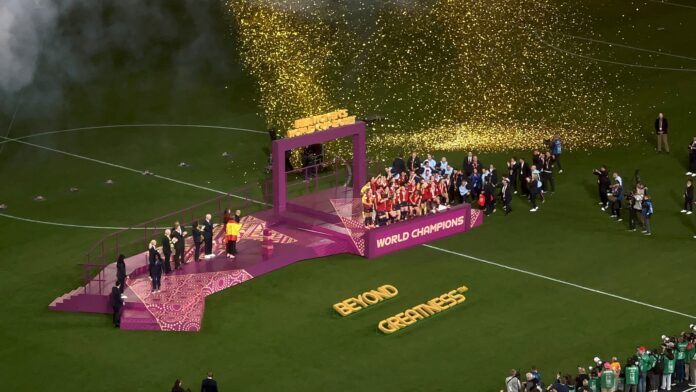
Celebration at the 2023 FIFA Women's World Cup Final as champions lift the trophy with golden confetti at the stadium.
Storm machine, CC BY-SA 4.0, via Wikimedia Commons

Women’s football is undergoing an unprecedented transformation, evolving from a marginalized sport to a business that is rapidly approaching the billion-dollar mark. Global revenues for women’s sports surpassed US 1.28 billion in 2024, with football accounting for approximately US 555 million of that total. This consolidates the sport as a significant economic force and establishes a solid foundation for even greater growth in 2025. This analysis examines how women’s football has transformed from the “little sister” of the men’s game into an independent and highly profitable business segment.

The turning point: impressive numbers

The revolution in women’s football can be measured in concrete data that reflects a fundamental shift in the sport’s perception and valuation. This exponential revenue growth is evident as the top 15 women’s teams registered a 35% revenue increase in the 2023/24 season, surpassing the €116 million mark for the first time.

Arsenal Women recorded significant growth, with matchday revenues increasing by 64% and commercial revenues growing by 48% in the 2023/24 season. Meanwhile, Barcelona Femení jumped from €7.7 million in 2022-23 to €17.9 million in 2023-24, representing a growth of over 130%.

The English Women’s Super League (WSL) reported revenues of £65 million in the 2023/24 season, a 34% increase, with Deloitte projecting it to reach £100 million in the 2025/26 season. The 2023 Women’s World Cup final between Spain and England reached a peak of 12 million viewers on BBC One, with a combined total of 14.8 million in the UK when including other broadcasters, breaking previous women’s football viewership records.

Furthermore, a 2024 study ranked women’s football as the fifth most-attended sport in the United Kingdom.

Women’s football is no longer the “little sister” of the men’s game — it is a powerful business in its own right.

The OL Lyon case: lessons in transformation

The fascinating case study of OL Lyon’s transformation into OL Lyonnes reveals the complexities of repositioning a historic brand in the modern women’s football market. The arrival of Michelle Kang as the majority investor in 2023 marked a turning point, bringing a vision to transform the club from a “little sister” into an independent benchmark.

The change in visual identity and name to “OL Lyonnes,” announced in May 2025, was a declaration of commercial independence. The strategy faced initial resistance from traditional fans but gained support from international players and new audiences.

The Lyon case highlights crucial aspects of the business model, such as moving from the training center, which has a capacity of 1,500, to the main Groupama Stadium, with its 59,186-seat capacity. This represents a strategic investment in the fan experience, along with accessible ticket prices ranging from €5 to €30. Thus, while the club maintains accessibility, it educates the market on the product’s value, moving beyond the old culture of free invitations.

The new economy of women’s football

Deloitte’s analysis shows that in the WSL, commercial revenues accounted for 40% of the total in 2023/24, with a growth of 53%, followed by broadcast and matchday revenue. Ticket revenue grew by 73%, reaching £12 million. This reveals the growing importance of partnerships and sponsorships specifically tailored to the sport.

The “unbundling” trend, the separation of women’s commercial deals from men’s, is creating more targeted investment opportunities. Only seven of Europe’s top clubs negotiate their women’s team shirt sponsorship separately, but 38% of all professional women’s clubs already have an exclusive main sponsor.

The success of this approach is visible in cases like American star Alex Morgan, who earns approximately US$ 7.1 million per year, with US$ 800,000 from her NWSL salary and US$ 6.3 million from commercial contracts, demonstrating the potential for individual monetization in the sport.

The Brazilian market: a strategic opportunity for 2027

Hosting the 2027 FIFA Women’s World Cup in Brazil is a unique opportunity to unlock one of the world’s largest emerging markets. FIFA is targeting US 1 billion in revenue for the 2027 tournament, a significant jump from the US 570 million generated in the 2023 edition. The lessons learned in Europe are directly applicable to the Brazilian landscape:

  • Market Potential and the SAF Law: Brazil has an immense football tradition (representing 0.72% of the national GDP) and a new regulatory framework with the SAF Law, which creates a secure legal environment for investors. This positions the country to attract dedicated global capital, similar to investments from groups like Mercury/13 in Europe.
  • Applying the European Model: Brazilian clubs can use “unbundling” to create specific value propositions for their women’s teams, attracting sponsors who want to align with the sport’s values of progress and diversity. The OL Lyonnes case serves as a playbook, creating a strong, independent brand identity can attract new audiences and partners who might not connect with the traditional men’s football brand.

Challenges and opportunities

Despite the growth, financial sustainability remains a fundamental challenge. The Lyon case, which registered a loss even with significant investments, highlights that the industry is in a high-investment phase that precedes profitability. This reinforces the need for committed investors like Michelle Kang and innovative business models.

Engaging young athletes is also crucial. Keeping girls in the sport during adolescence (between 12 and 14 years old) is a decisive moment for the future of the modality.

The billion-dollar future of women’s football is no longer a promise — it has already begun.

Conclusion: the game changer

Women’s football is not just growing, it is reinventing itself as an independent and thriving business. The sport has proven it can generate significant commercial value when treated as a premium product. Clubs like OL Lyonnes, with their bold rebranding strategy, and investors like Michelle Kang, are writing the manual on how to monetize and professionalize women’s football.

For investors, brands, and managers in Brazil, the 2027 World Cup represents a unique moment of opportunity. Women’s football offers something increasingly rare in the saturated sports market: the chance to be a pioneer. The question is no longer if you should invest in women’s football, but how and when to make this strategic move. The billion-dollar future of women’s football has already arrived.

Reference: This article was based on analyses from the Deloitte Sports Business Group, UEFA, FIFA data, FBA course and case studies from OL Lyonnes.

Clasificación de El Salvador hacia el Mundial 2026

0

Surinam, 7 de junio de 2024. Segundo partido de la segunda ronda para pasar a la eliminatoria final por las tres plazas directas y dos repescas para United 2026. Tras el empate de la primera jornada, y con las cuentas en la mano, estamos obligados a ganar para poder seguir optando a la clasificación.

Hoy se cumplen exactamente dos años de la última victoria de la selección salvadoreña. Si no se ha ganado en dos años y solo vale ganar, estamos en condiciones de afirmar que la complicación es máxima. Hace cuarenta grados de temperatura a las 16:00, un 90% de humedad, el terreno de juego arde y solo una lluvia previa al calentamiento augura que no vayamos a salir ardiendo.

Los jugadores con más partidos internacionales y capitanes se quedan en el banquillo. Es el momento de dos delanteros de 18 y 20 años, un recién debutado y un goleador de la liga que por causas diversas lleva desde que llegué sin poder acudir a los partidos. El resto del equipo, una media de jugadores en su pico de rendimiento junto a un par de veteranos que dan confianza al grupo. Y en el banquillo, junto a los dos capitanes, una suma de partidos internacionales que supera a los que hay en el terreno de juego. Estrategia de partido.

El partido inicia con gol a nuestro favor. El control es absoluto y la idea se ejecuta a la perfección. Pero, antes del descanso, empatan en un córner.

Es momento de calma en el vestuario. Sobran los gritos y los reproches. En el silencio, la recuperación; y tras tres minutos, doy mi diagnóstico. Mantener la misma presión y someterles con balón más aún, transitando de una posesión larga a una más agresiva tras romper su primera línea.

Para ello, nuestro organizador, de 34 años, y que se decidió que no iniciara por las condiciones climáticas en su contra (jugador de liga escandinava), iba a poner el control de juego con un rival más cansado y en un contexto más favorable. A los pocos minutos llegó el primer gol. Los jugadores jóvenes dejaron su lugar a los capitanes, que salieron a rematar el partido. Un tercer gol a diez minutos del final nos dio una victoria que quedó en poco, habíamos merecido más goles.

Dos años después, El Salvador volvía a ganar un partido. Y de clasificación para el Mundial.

Después de dos semanas hablando de preparar a la selección, no podemos sino terminar con lo determinante. El partido. La competición. Aquello para lo que se entrena. El fin último de la preparación. Después de dos, tres o seis sesiones, más de tres sesiones de vídeo, charlas individuales y croquis de acciones de balón parado, es el momento del jugador.

La suerte está echada… ¿o no?

Pues no. La suerte no está echada. Primero, porque no soy partidario de hablar de suerte para justificar lo que desconozco. Asumo la responsabilidad íntegra de lo que me pasa. Y para ellos estructuro el microciclo como hablamos la semana pasada.

En la sesión de recuperación se incide en vídeo y en campo sobre lo que entendemos entrenable en condiciones disminuidas en base a lo que podemos mejorar y repetir; el día de defensa se ve al rival en ataque y nuestro desempeño defensivo; al revés cuando entrenamos ataque. Y el balón parado es objeto de práctica todos los días en diferentes formas.

  • Charlas individualizadas o por grupos
  • Plantillas en vestuario para ver la posición en las acciones desde parado
  • Análisis de los rivales

¿Qué más se puede aportar? Muchas cosas. Y mi responsabilidad está en estar al servicio del jugador antes de salir para que todo el mundo tenga claro el plan, sus posiciones de partida y el balón parado, y que mi seguridad sea la suya. Una vez sobre el terreno, echado a rodar el balón sobre el césped, debo estar concentrado en ver qué parte de lo que sucede nos favorece y cuál no, y cómo darle ideas al jugador para que siga insistiendo sobre lo que funciona y haga que funcione lo que no.

Las ideas iniciales

Las ideas iniciales estaban más en relación con cómo sorprender al rival, puesto que mi selección siempre jugaba por los mismos objetivos desde un posicionamiento de base igual en los momentos clave del juego. A partir de ahí, el juego se abría, y el conocimiento del oponente nos era útil para, a través de nuestras dinámicas, incidir en sus debilidades.

Como nuestra idea no iba a cambiar en esencia, pero sí estaba abierta a modificaciones puntuales, las herramientas a mi disposición para ayudar al jugador se centraban, sobre todo, en dos:

  • Modificaciones de jugadores: manteniendo el mismo sistema, un jugador de características diferentes podía cambiar el desarrollo del juego.
  • Variante táctica: el equipo partía de un 1-3-5-2 de base entrenado desde el primer día al que se podía añadir un jugador de la línea de 5 a la delantera, convirtiéndolo en 1-3-4-3. Con esa única modificación más los cambios en las características de los jugadores, la combinación diferente de variantes era enorme, y no afectaba en lo más mínimo ni a la dinámica de los patrones de juego ni a los hábitos entrenados.

Las variantes y los cambios. ¿Algo más?

Si el partido no cambiara por la modificación táctica o por los jugadores incorporados, hay muchos más factores complementarios en los que el entrenador puede incidir para ayudar al equipo a sacar el resultado adelante.

  • Con cinco cambios por partido tras la regla del Mundial de Qatar, las posibilidades de suministrar “oxígeno” al equipo son múltiples. Cinco jugadores son la mitad del equipo. Una mitad podría desgastarse en una mitad y tener prácticamente un equipo nuevo en el segundo periodo. La inteligente gestión de este recurso puede ser crucial en el resultado.
  • Las pausas de hidratación nos permiten modificar sobre la marcha aspectos del juego que se enquistan. Para eso hay que tener muy claro el concepto a transmitir porque apenas hay tiempo.
  • Conocer al rival es determinante para que los cambios que puedan dar la vuelta al partido sean los nuestros. Ante un veneno, un antídoto. Hay que llevar preparadas todas las opciones de cambio posibles, ¡y las del rival!

En un entorno donde los protagonistas están a sus máximas pulsaciones, el entrenador solo puede ayudar si sus decisiones nacen de una cabeza fría, aunque el corazón hierva.

Y sobre, todo, transmitir una imagen de seguridad y de calma. Seguridad, ante todo, porque la confianza de cada jugador en sí mismo parte de la confianza del que le pone, y si el que le pone transmite que está seguro de ellos, el foco de la atención se olvida del exterior y, cuando alumbra, tranquiliza; y de calma, pues en un entorno donde los protagonistas están a sus máximas pulsaciones, el entrenador, desde fuera, solo puede ayudar tomando decisiones si las decisiones están en una cabeza fría, aunque el corazón hierva.

Winning or Developing in Football?

0
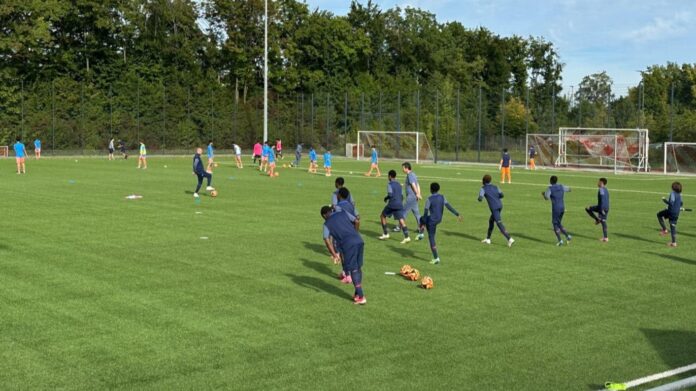
Young football players in training on a green pitch, practicing warm-up drills under coach supervision.
Youth players during a training session, highlighting the balance between development and discipline in football.

The Answer: Both.

Football is not just a game played on the pitch. Football is life itself. Just as we have goals in life, we also have goals on the field. Just as we fight through challenges in life, we also fight on the field. Football is the rehearsal of life, teaching discipline, patience, focus, and the ability to make the right decisions under pressure.

Football is the rehearsal of life, teaching discipline, patience, focus, and decision-making under pressure.

Priorities at young ages

Until the age of 15, what matters most is not tactics, but psychological and physical preparation.

  • Psychological: learning to focus, building confidence, developing resilience.
  • Physical: proper running technique, strength development, flexibility, and injury prevention.

Of course, tactical knowledge should be introduced, but the foundation must be built on character and physical readiness. Without that base, even the best tactical plan will fail in the long run.

The 1% reality

We all know the truth: only about 1% of kids who start playing football ever make it to the professional level. That is a harsh but real statistic.

But that doesn’t mean the other 99% are wasting their time. Every player who grows through football with the right guidance becomes a more disciplined, responsible, and resilient person — qualities that serve them for life.

At the same time, if you want to be in that top 1%, discipline is non-negotiable.

  • The chance of reaching the top is perhaps 1%.
  • But without discipline, the chance of failure is 99%.

Coaches: the other 1%

It’s not only the players who face this reality. We as coaches must also aim to stay in the top 1%.

  • If we want our players to push their limits, we must push ours first.
  • If we expect discipline from them, we must model it ourselves.
  • If we want them to believe in the plan, we must first believe and invest in it.

Being a coach is not just about knowing tactics — it’s about being a leader. A leader who constantly learns, adapts, and motivates. Because if we as coaches stop growing, we can never help our players grow.

Being a coach is not about tactics alone, but about leadership, growth, and inspiring others to believe in the plan.

Parents and the “investment” illusion

One of the biggest issues in American soccer is that many parents see the money they spend on clubs as an investment. They expect immediate returns. The mindset often becomes: “If I’m paying, my child must play, and he must succeed.”

But this approach creates pressure at every level:

  • Children stop enjoying the game and play under constant stress.
  • Coaches lose the freedom to make objective decisions.
  • Clubs shift focus from development to “customer satisfaction.”

In the end, the child’s love for the game is sacrificed for financial expectations. Talented players stop being creative individuals and start moving like robots, afraid to take risks or make mistakes.

The “robot player” problem

Players raised under pressure become:

  • Afraid to make mistakes.
  • Afraid to take risks.
  • Afraid to play with freedom.

This strips away the creativity and joy that football is supposed to give. True potential is never revealed in a robotic environment.

Winning or developing?

So here’s the big question: Is winning more important, or is developing?

The answer is simple: Both.

Because you cannot win without development, and you cannot truly develop without learning how to win.

  • Short-term victories achieved through pressure often kill long-term growth.
  • Players who don’t enjoy the game cannot learn.
  • And players who don’t learn will never grow.

Football is a profession

We must never forget: football is a profession.

  • When done right, it brings huge rewards.
  • But just like every well-paid profession, it comes with equally high pressure.
  • Learning to manage that pressure is the only way to survive at the professional level.

And that ability to manage pressure begins at a young age. The discipline seeds we plant today may grow into multimillion-euro footballers tomorrow.

Football should not only aim to produce winning teams — it should also produce confident, disciplined, and resilient human beings.

As coaches, our responsibility is even greater:

  • To guide children with patience and belief, not with pressure and fear.
  • To constantly improve ourselves, so that we remain in the top 1% of coaches, capable of leading the next generation.

Maybe we cannot guarantee that every player will make it into that top 1%. But we can guarantee this: those who learn discipline, focus, and resilience at a young age will succeed — on the pitch or in life.

Because in football, just like in life, true success is never built on pressure alone — it is built on joy, discipline, leadership, and growth.

YouTube Football and Baller League’s Rise

0
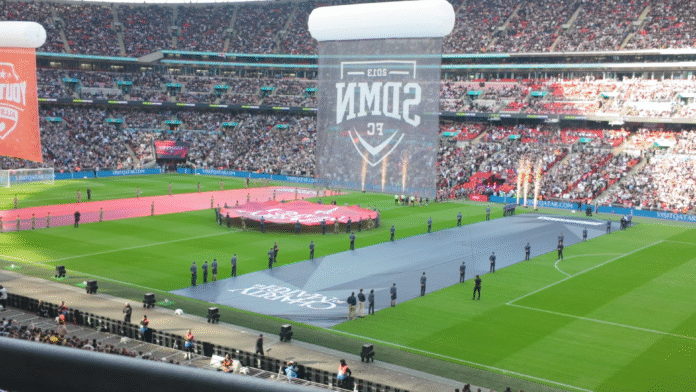
Packed Wembley Stadium during the opening ceremony of the Sidemen Charity Match 2025 with banners and fans filling the stands.
JamPak, CC BY 3.0, via Wikimedia Commons

Football is changing, and fast.

For decades, commercial revenue in the sport was largely dominated by traditional routes: shirt sponsorships from betting companies, broadcast rights sold to TV giants, and big-name brand endorsements centred around elite clubs and superstar athletes.

But the rise of YouTube football and leagues like Baller League UK are rewriting that script. Built around digital creators, direct-to-fan engagement, and viral storytelling, these new models are turning entertainment-first football into serious business, and bringing in serious sponsors.

Despite accusations of this being a gimmick or publicity stunt, the reality appears to be the start of a new era in football commercialisation.

The Digital Football Boom

Leagues like Baller League UK and events like the Sidemen Charity Match are attracting millions of views online, filling major stadiums, and offering brands something increasingly rare in modern sport: cultural relevance, audience loyalty, and immediate digital impact.

“YouTube football has transformed sponsorship into storytelling, offering brands reach and cultural capital traditional sport struggles to deliver.”

Unlike traditional leagues that rely heavily on linear TV deals and heritage fanbases, these creator-led formats thrive on digital platforms like YouTube and Twitch, where monetisation happens in real time, community feedback is instant, and content lives far beyond the 90 minutes of play.

The commercial response has been significant.

The Sidemen Charity Match: Sponsored Like a Premier League Fixture

The 2025 Sidemen Charity Match which took place at Wembley Stadium on 8th March 2025 was backed by high-profile sponsors including Footasylum, who confirmed their role as one of the headline partners.

Their branding appeared on the official Sidemen shirts, around the stadium, and across digital content filmed on the day. Brands like Footasylum are investing in storytelling, content capture, and access to an audience they cannot reach through traditional sport or advertising.

This kind of activation reflects how YouTube football properties offer exciting commercial platforms as well as entertainment. And unlike traditional sport, they come with built-in reach, content strategy, and cultural capital.

Baller League UK: Powered by Brands, Fueled by Engagement

Perhaps the most ambitious project to date is Baller League UK, a slick, competitive, creator-led football league launched in partnership with Virgin Media O2.

O2, the league’s headline sponsor, plays a central role. Their branding is visible across all touchpoints, but they’ve gone further, offering exclusive match tickets and VIP perks to their customers via the O2 Priority app. This is a great example of integrated brand utility beyond a simple sponsorship package.

The league also boasts a roster of other sponsors including:

  • CUPRA, the automotive brand, which aligns with Baller League’s challenger positioning, appealing to younger audiences.
  • Grenade, the nutrition brand, who turned games into sampling opportunities and created activations in the fan zone.
  • Shikenso Analytics, bringing data-driven insights to measure sponsor value and engagement.
  • Pepsi, Nike, Philips, Head & Shoulders, who all backed the debut season, showing mainstream confidence in the format.

International expansion is already underway. In Germany, XING, the professional networking platform, serves as a main sponsor, connecting with working professionals in a fresh setting.

Content, Community, and Commercial Scale

One of the key reasons brands are turning to YouTube football is control. These leagues understand content, and they deliver it daily. Players are mic’d up, behind-the-scenes stories are filmed, special guests are part of the programming.

In Baller League UK, YouTuber Chunkz and broadcaster Olivia Buzaglo host the matches, with celebrity appearances from figures like Will Smith and professional footballer Kevin Danso. These integrations give fans a reason to tune in beyond just the final score.

“Baller League UK combines football, entertainment, and digital-first storytelling to engage fans and brands like never before.”

The entire league is broadcast for free on YouTube and Twitch, pulling in huge audiences and giving sponsors unmatched digital visibility. Even Sky Sports showed the first season on Sky Sports Mix under a one-year deal, with more rights talks already in progress.

Why It Works, And What It Means for Football

These new formats succeed because they do three things exceptionally well:

  • They make football entertaining again – lighter tone, relatable players, and viral content that blends competition with creator culture.
  • They put fans at the centre – interactivity, fan votes, and campaigns that make supporters feel like participants.
  • They offer measurable, agile marketing – sponsors can track real-time data, making investments easier to justify.

Traditional football will always have a place, but its pace and structures are slow compared to the agility of YouTube football and creator-led leagues.

The Future: Creator Presidents and Global Growth

The model is going global. A US edition of Baller League is launching soon, with YouTuber iShowSpeed announced as its President. This shows how creator-led sport is embedding itself in entertainment and commercial landscapes.

As these leagues grow, expect to see:

  • Bigger brand integrations
  • Expanded global editions
  • Co-branded merchandise and digital assets
  • Sophisticated media partnerships
  • Athletes who think like creators, not just players

Final Thought

YouTube football and leagues like Baller League UK are far more purposeful than simple viral sideshows. By mixing the structure of elite sport with the flexibility of digital content, they offer brands, fans, and players a new playbook for value creation.

The real game has only just begun.

Who is Can Özata?

0
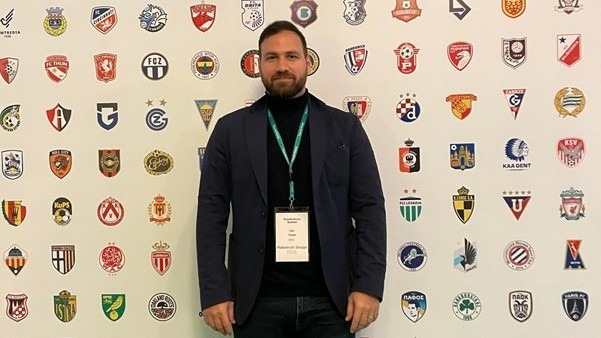
Can Özata standing in front of football club logos at an industry event.
Can Özata, CEO and Chairman of FK Rabotnicki, pictured at a football industry event highlighting his active role in the global game.

Can Özata is a Turkish football executive known for his rapid rise from player agency to club management. He was born on February 14, 1990, and holds dual citizenship in England and Turkey. Özata currently serves as the Chief Executive Officer (CEO) and Chairman of FK Rabotnicki, a top-division football club based in Skopje, North Macedonia. He is also currently studying masters in football business at University of East London. His career in the football industry has spanned player representation, club administration, and strategic development, making him a notable figure in modern football management.

Early life and education

Can Özata was born into a family of Turkish heritage and raised in England, cultivating a passion for football from a young age. He pursued higher education in the United Kingdom, attending the University of Bolton to build a foundation in sports and business. Equipped with a formal education and bilingual fluency in English and Turkish, Özata was well-positioned to navigate the international football landscape. His multicultural background and education would later prove valuable as he engaged in cross-border football ventures.

Early career in football representation

After graduating, Özata began his professional journey in the football industry as a licensed football agent (intermediary). Operating out of London, he spent several years representing players and negotiating transfers in the English football system. By January 2022, he was officially registered with the English FA as an intermediary, reflecting his active role in player management.

“I used to think being a football agent was stressful” — an experience that gave Özata a strong grounding in contract negotiations and talent management.

This period of working closely with players and clubs honed his understanding of the sport’s commercial and sporting aspects, and he built a network of contacts across Europe. His agency work, including collaboration with firms like Pitchside, allowed him to develop expertise in scouting and talent identification, skills he would carry into his later roles.

Transition to club management

In 2023, Can Özata made a significant career transition from player agency to club management. He became instrumental in the acquisition and restructuring of FK Rabotnicki, one of North Macedonia’s most storied clubs. As part of a new ownership initiative, Özata helped oversee the takeover of Rabotnicki and was subsequently appointed CEO on August 1, 2023. At just 33 years old, he assumed leadership of a club that is the second most successful in Macedonian football history. Alongside the CEO title, he also took on the role of club Chairman, making him the top executive responsible for both the sporting and business operations of Rabotnicki.

Stepping into this position, Özata was aware of the club’s proud history and the high expectations from its supporters. “Managing Rabotnicki over the past year has been both challenging and immensely rewarding,” he reflected after his first year in charge, noting the rich history of the team and the drive to surpass past achievements.

Leadership of FK Rabotnicki: achievements and initiatives

Under Can Özata’s leadership, FK Rabotnicki has undergone a notable resurgence. In the 2023–24 season, his first at the helm, the club stabilized its performance in the Macedonian First League. By the following 2024–25 season, Rabotnicki made a significant leap up the standings, finishing third in the league after back-to-back eighth-place finishes in the two years prior. This top-three finish marked the club’s best league result in nearly a decade and qualified Rabotnicki for European competition qualifiers.

“We’ve focused heavily on our youth academy, which consistently produces top-tier talent.”

Özata also launched a comprehensive plan to modernize the club’s infrastructure and operations, investing in upgraded training facilities, expanding scouting networks, and developing youth players as part of a long-term sustainable model. His international approach broadened Rabotnicki’s reach, with scouting in Africa and the Caribbean, and use of transfer platforms like TransferRoom.

Contributions and style

Can Özata’s approach to football management combines business acumen with a deep understanding of the game’s grassroots development. Having been an agent, he brought negotiation skills and a network of contacts in the global football market to his role as CEO. Internally, colleagues describe Özata as a forward-thinking executive who is hands-on with all aspects of club operations, from budgeting to youth training.

Personal and professional legacy

Though still in the midst of his career, Can Özata’s trajectory offers a compelling story of a new generation of football executive. He bridges multiple cultures — Turkish, British, and now Macedonian — and multiple facets of the sport, from player representation to club leadership. This well-rounded background has enabled him to make thoughtful contributions to the clubs and people he works with.

In summary, Can Özata’s biography reflects a dynamic career devoted to football. From his early days in England learning the ropes of the business to guiding a Balkan club to renewed success, Özata exemplifies the modern football industry professional who wears many hats. As FK Rabotnicki’s CEO and chairman, he has already achieved notable milestones in club performance and youth development, and he continues to push for innovation in scouting and club management.

Our exclusive interview with Can Özata

Who is Can Özata outside of football? What motivates you personally and how do you unwind from the demands of the sport?

Outside of football, I’m above all a family man. My family keeps me grounded and constantly reminds me of what’s truly important in life…

Who are the most influential figures in sports who have shaped your thinking or inspired your approach to leadership?

Muhammad Ali has always inspired me… In football, Sir Alex Ferguson has been a major influence…

FK Rabotnicki made a significant jump in league performance under your leadership. What were the key changes behind this turnaround?

The turnaround began with embedding a new culture across the entire club… A key factor was the mindset shift…

You’ve emphasized youth development and scouting in emerging markets. What do you look for when identifying talent for a club like Rabotnicki?

At Rabotnicki, we look for more than just raw talent… In emerging markets, there’s often untapped potential…

Running a club in North Macedonia comes with financial constraints. How do you balance competitiveness with sustainability?

The key is having a clear strategy and staying disciplined… We’ve built a model that prioritises sustainability…

What are your future plans and goals, both personally and professionally within the football industry?

Professionally, my long-term goal is to become a Technical Director at the highest level… Personally, I aim to keep learning and growing…

Concussions in Football: Risks and Recovery

0
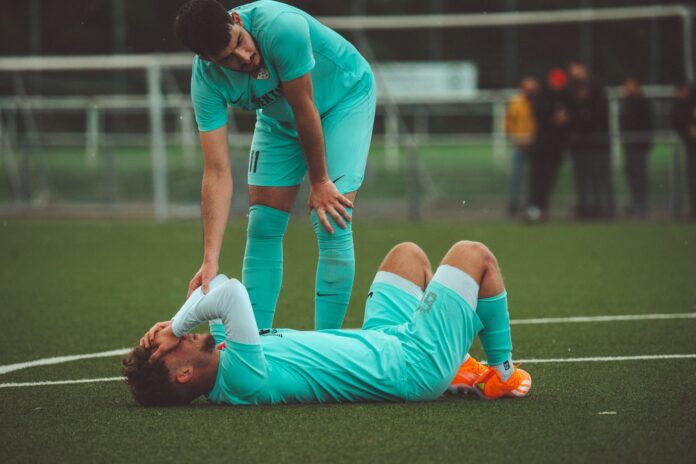
A football player lies on the pitch holding his head after a collision while a teammate checks on him, highlighting the risks of concussions in football.
Photo by Omar Ramadan on Unsplash

Concussion in football players is a significant concern due to the nature of the sport, which involves high-impact collisions, tackling, and heading the ball. While football is often viewed as less physically violent than American football, the risk of concussion remains high, and its consequences can be long-lasting. The incidence of sport-related concussion (SRC) has been increasing in different sports and its impact on long-term cognitive function is increasingly recognized.

What is SRC/ Concussion?

A concussion is a mild traumatic brain injury (TBI) that occurs when a blow or jolt to the head causes the brain to move rapidly within the skull. This can lead to a temporary loss of brain function. Concussions can affect a player’s physical, cognitive, and emotional state and may result in symptoms like headaches, dizziness, confusion, memory issues, or sensitivity to light and sound.

Repeated concussions are associated with an increased risk of several neurologic diseases and long-term cognitive deficits. To improve cognitive outcomes in athletes with SRC, standardized guidelines for the assessment and management of SRC are vital. However, current concussion management guidelines lack procedures for rehabilitating acute and long-term cognitive symptoms.

“Concussions are invisible injuries, but their impact on a player’s health and career can be devastating.”

Increased awareness for the management and rehabilitation of cognitive symptoms in SRC is needed by all clinical neurologists treating professional and amateur athletes. Cognitive training as a ‘prehabilitation’ tool can be used to alleviate the severity of cognitive symptoms and as a rehabilitative tool to improve cognitive recovery post injury.

Risk factors in football

  • Heading the ball: Although heading a ball may not cause a concussion in every instance, repeated headers over time have been associated with brain injury, including concussions and chronic traumatic encephalopathy (CTE).
  • Collisions and tackling: Direct impacts, like being tackled or colliding with other players, can lead to a concussion. This is especially prevalent in more physical positions, such as defenders or forwards.
  • Goalkeeper risk: Goalkeepers are at an increased risk of concussion, particularly from collisions with opposing players or the goalposts, or from powerful shots to the head.
  • Foul play or accidents: Intentional fouls (like elbows or head clashing) or accidental impacts (such as a knee to the head during a tackle) can result in concussions.
  • Underreporting: Players, coaches, and even medical staff might downplay the symptoms, leading to concussions not being properly diagnosed or treated.

FIFPRO’s stance

FIFPRO is at the forefront of addressing the issue of concussion. SRC is a serious health concern for players, but it still lacks proper awareness in the football industry. Adequate health and safety protocols, as well as industry-tailored approach to research, are still missing. FIFPRO’s Chief Medical Officer Dr Vincent Gouttebarge states:

“It is essential to improve the recognition and management of concussion in professional football so that the players’ health can be protected on the short- and long-term.”

Diagnosis

Concussions are usually diagnosed based on symptoms, the mechanism of injury, and a neurological examination. A player who shows signs of concussion should be removed from the game immediately. Medical professionals may use the SCAT5 (Sports Concussion Assessment Tool) to assess the severity of the injury. In some cases, imaging like an MRI or CT scan may be used to rule out more severe brain injuries.

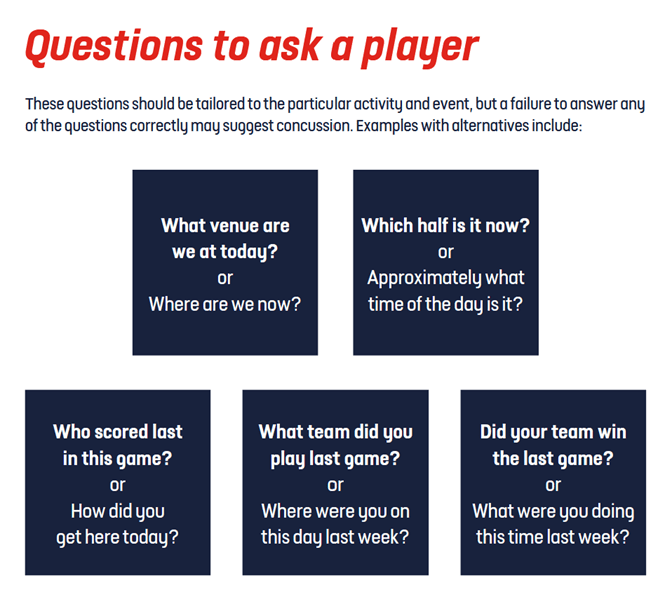
The FA has published a guide for concussion, with the strapline “If in doubt, sit them out.” Below are some questions to ask a player if concussion is suspected. An incorrect answer to these questions may suggest concussion. Video footage of the incident may also assist in identifying visible signs of whether concussion has occurred, along with the severity of the injury.

Protocols

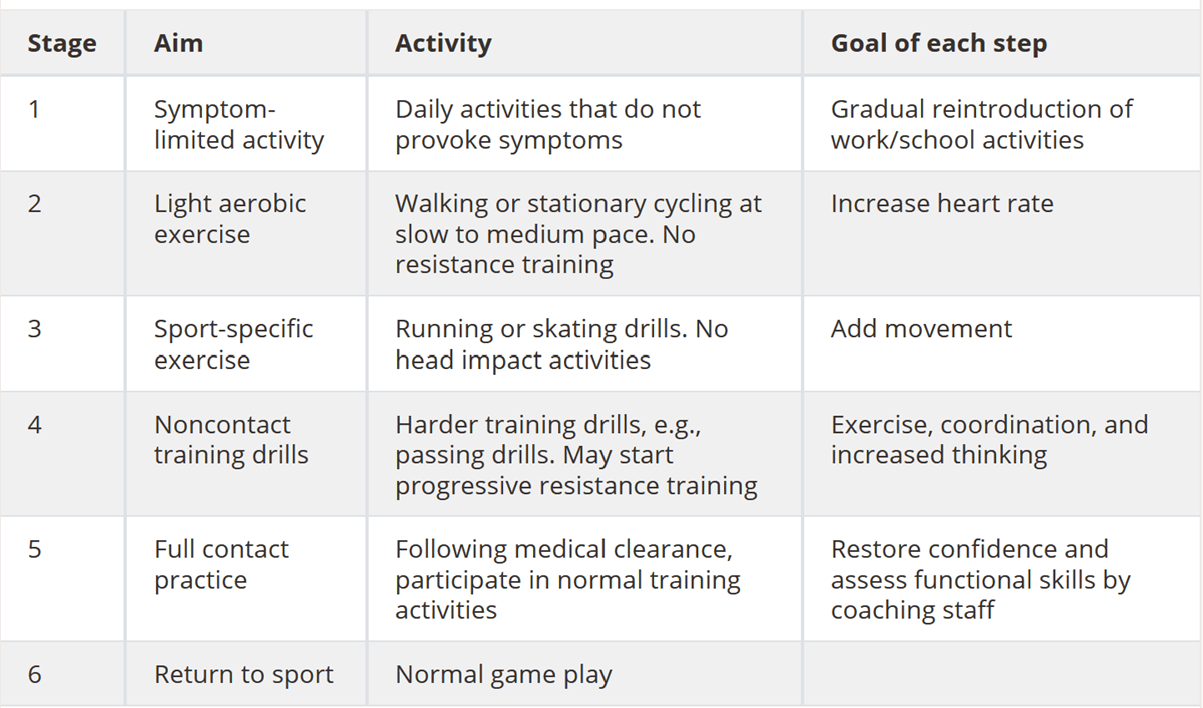
For SRC, most sporting bodies now follow specific management guidelines published by the Concussion in Sport Group table below.

After an initial 24–48 hours of rest, a concussed player can begin a graded return to sport. The guidelines suggest a minimum of 24 hours between each stage, which in theory could result in a concussed athlete returning to play within a week. These guidelines reduce the immediate likelihood of sustaining an additional concussion, which is vital, given that further concussion during this acute phase can exacerbate the neuropathophysiological cascade.

“If in doubt, sit them out.”

Prevention strategies

Preventing concussions is challenging, but there are several strategies to reduce the risk:

  • Proper technique: Players should be taught proper techniques for heading the ball, tackling, and protecting themselves during physical encounters. Teaching safe playing habits from an early age is critical.
  • Protective equipment: While helmets and other protective gear are common in American football, in football, the focus has been more on minimizing impacts rather than using head protection. Some research suggests that ‘headgear’ could potentially reduce the risk of injury, but it’s not universally recommended at all levels.
  • Rule changes: Many professional leagues have implemented rules to minimize risky behaviour, such as restricting heading in youth football or limiting the number of headers allowed in practice. Other regulations, like automatic substitutions or removal from play following suspected concussions, are becoming more common.
  • Education and awareness: Educating players, coaches, and parents about the signs and symptoms of concussion can lead to better reporting and treatment. More awareness around the importance of rest and recovery is critical to prevent long-term issues.
  • Concussion baseline testing: Some teams conduct baseline testing of athletes’ cognitive function before the season starts. This provides a reference point to assess how a player’s brain function has changed post-concussion.

Nutrition for brain health in Contact Sports

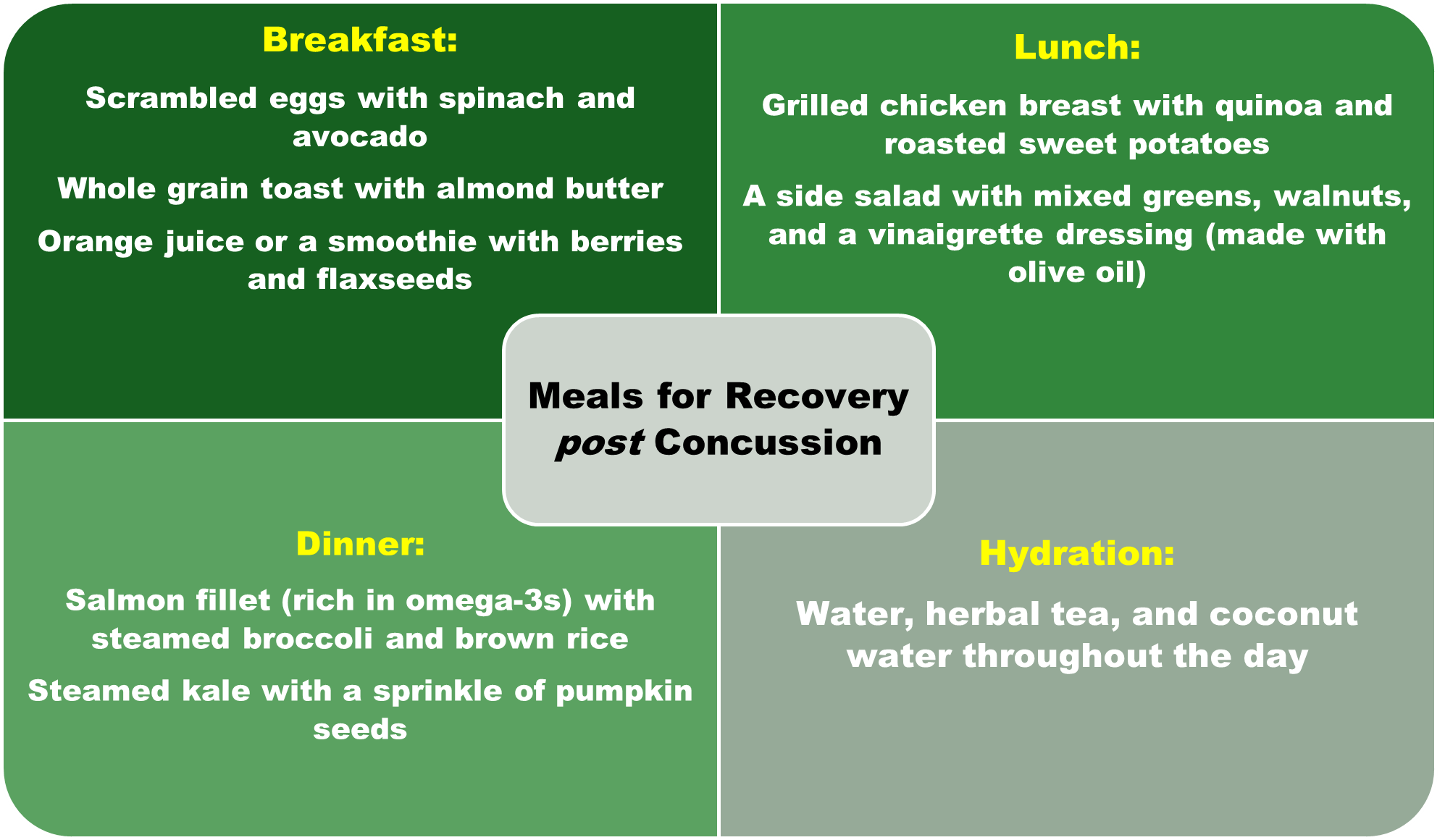
Nutrition plays a crucial role in supporting recovery after a concussion, especially for football players. Concussion can cause inflammation in the brain and impact cognitive function, so a nutrient-dense eating method can help repair brain tissue, reduce inflammation, and support overall recovery. A well-balanced diet focusing on anti-inflammatory foods, antioxidants, brain-boosting nutrients, and proper hydration can significantly aid in concussion recovery. Additionally, working with a Nutritionist overseen by Medical Doctors, is essential to tailor a nutrition plan to the individual’s needs and ensure optimal recovery.

“A well-balanced diet can aid brain recovery after a concussion.”

10 key nutritional factors and foods which may be beneficial for SRC

Omega-3 fatty acids

  • Why: Omega-3s (particularly DHA and EPA) are essential for brain health. They have anti-inflammatory properties and can help repair brain cells.
  • Sources: Fatty fish (like salmon, mackerel, sardines), walnuts, flaxseeds, chia seeds, and algae-based supplements.

Antioxidants

  • Why: Antioxidants protect the brain from oxidative stress and inflammation, which can be heightened after a concussion.
  • Sources: Vitamin C: Oranges, strawberries, bell peppers, and broccoli. Vitamin E: Almonds, sunflower seeds, spinach, and avocados. Polyphenols: Dark chocolate, berries (blueberries, strawberries), green tea.

Protein

  • Why: Protein helps with tissue repair, including brain tissue. It also helps maintain muscle mass, which is important for athletes during recovery.
  • Sources: Lean meats (chicken, turkey), fish, eggs.

Magnesium

  • Why: Magnesium is involved in nerve function and may help reduce brain inflammation.
  • Sources: Dark leafy greens (spinach, kale), almonds, pumpkin seeds, black beans, and avocados.

Vitamin D

  • Why: Vitamin D plays a role in neuroprotection and may help reduce brain inflammation after a concussion.
  • Sources: Fatty fish, plant-based milk, and exposure to sunlight.

B vitamins

  • Why: B vitamins, especially B6, B12, and folate, support brain function and may help with cognitive recovery.
  • Sources: Eggs, poultry, whole grains, beans, and leafy greens.

Hydration

  • Why: Staying hydrated is essential for maintaining cognitive function and reducing symptoms like headaches, which are common after a concussion.
  • Hydration Tips: Drink plenty of water, and consider coconut water for electrolytes. Avoid sugary drinks or excessive caffeine.

Curcumin (Turmeric)

  • Why: Curcumin has potent anti-inflammatory and antioxidant properties, which can help with brain healing.
  • Sources: Add turmeric to meals or consider turmeric supplements (with black pepper for better absorption).

Zinc

  • Why: Zinc is important for neuroprotection and can aid in the healing process of the brain.
  • Sources: Shellfish (especially oysters), pumpkin seeds, cashews, chickpeas, and beans.

What would a Recovery Meal Plan for a Football Player Post-Concussion look like?

Player story: Gustav Sandberg Magnusson

Gustav Sandberg Magnusson is a former Swedish footballer who played for IF Brommapojkarna for most of his career. In the 2024 season, he suffered five concussions, forcing him into early retirement. The former defensive midfielder now works as a director at his former club.

What happened?

  • During the 2024 season, he suffered five concussions over a relatively short period.
  • After the fifth concussion, medical advice and his own assessment led him to retire from playing.
  • The last concussion was caused by what appeared to be a fairly light head impact, but it had large consequences. He reportedly had each concussion closer together in time; the recovery windows shortened, symptoms intensified, and the impact of even minor knocks worsened over time.
  • Memory loss: He lost memory of the incidents in several of the concussions. In at least two or three, he could only piece together what happened by watching video.
  • Symptom severity: The last concussion left him much worse than previous ones- in a darkened room, unable to do basic daily things, indicating more than just pain but neurological impact.
  • Psychological / behavioural changes: He notes that even in everyday life (e.g. playing with children), he now reacts differently being more cautious about head impacts.

Gustav reflects on his concussions a year on from his retirement, relaying his story for FIFPRO:

“I suffered five concussions in my final season as a player. It turned out to be an unacceptable amount in such a short timeframe and I had to retire from playing. I’ve asked myself so many times if there’s something I could have done differently, if there was a way these injuries could have been avoided. I don’t think I have an answer.

I’ve always had a rough playing style. I go for everything 100 percent and I guess that makes me more susceptible to a concussion than others. But five? You’d be unlucky to tally that amount in a season even in rugby or American football…

When I suffered my last concussion, I knew something wasn’t right. I didn’t feel good. All I could do was lie in a darkened room. I couldn’t even go to the playground with my kids.

In football, 33 is quite old. But as a person and a father, I had so much time ahead of me and I wanted to feel fit and healthy for as much of it as possible. When three doctors advised me to stop playing, it was tough to hear. But they were telling me something I already knew: it was time to hang up the boots. In the end, it was a relief not to have to make that decision on my own.

I still have a scar from last season’s first concussion. It was a bad one. I don’t have any memory of the incident, and it was only when I looked back at the video that I saw what had happened and it was a hard knock.

The rehab served as a ladder to recovery. First, you have to lie in a dark room until you have no symptoms. Then you can go for a walk, then you can practice with the ball and so on. You can only move forward when you are completely ready. Then, you suddenly find yourself on the pitch again.

The recovery time was different with each concussion. After the second one I was back playing after a week. The only problem was that a third concussion followed just three games in.

They were now coming much closer together than before. By the fourth concussion I was scared. Like with the first three, I had no memory of the event and had to watch it back to see what had happened.

While I was aware of the risks of concussions, at the time I didn’t understand just how much worse it could be the more you suffered them. It’s not as though I didn’t have them before when I was younger; I likely suffered a handful up until that point.

There is always going to be some element of danger when playing elite sports. Your whole body is open to injury and there’s no way to totally eliminate that.

I think the concept of a 10-minute concussion review is a great step to take, as it gives doctors the time they need to assess the situation and not take any risks. In my case, the doctors forced me off the pitch each time, and I’m grateful that the power lay with them – it was the right decision.

It should never be up to the player or coaches because you can’t be truly objective in that situation. Players want to win games and you’ll do anything to do that, even if it means continuing when you shouldn’t. It’s also difficult for players to make a sound judgement on how serious the injury is at that point in time.

Physically, I’m fine now. I got out at the right time, but my experiences have left an impact on me. It’s the little things, such as my seven-year-old climbing on my back which makes me immediately move my head out of the way, like I’m subconsciously avoiding any possible chance of it happening again.

All I can say is that you’ve got a long life to live after football, so make sure you leave the game with every capacity to make the most of it.”

“All I can say is that you’ve got a long life to live after football, so make sure you leave the game with every capacity to make the most of it.”

Takeaways

Concussion in football players is a serious issue and requires careful management to ensure proper recovery and minimize long-term consequences. Prevention, early diagnosis, and proper treatment are key to protecting players from the effects of brain injuries. With more attention being paid to concussion protocols and player safety, there is hope these injuries can be better managed moving forward.

References / Useful Links

  1. Neurology Journal
  2. FIFPRO
  3. FA Concussion Guidelines

Football and Technology: Finding the Balance

0
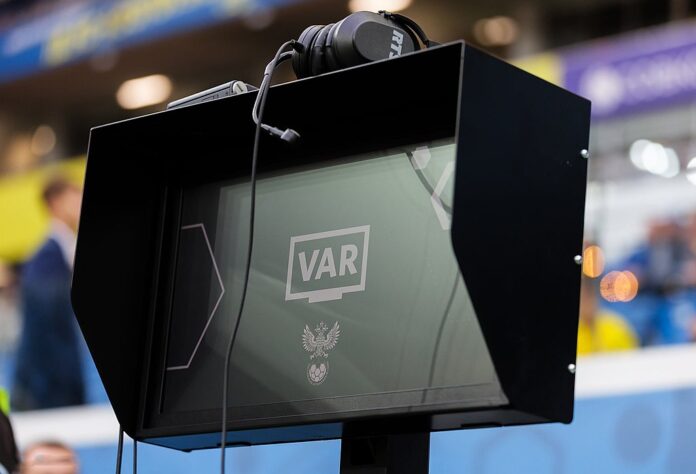
VAR monitor on the sidelines during a football match in Russia, used for video assistant referee decisions.
Артем Гусев, CC BY-SA 3.0 GFDL, via Wikimedia Commons

For generations, football has thrived on its unpredictability. It has never been about perfection, but about passion, the drama of mistakes, the thrill of surprises, and the raw emotions that make the game a global obsession.

Yet, as technology has advanced, football has found itself under increasing scrutiny. Matches are now monitored by dozens of cameras, each angle dissecting every move. A goal is no longer just a goal—it’s a frame by frame investigation, with millimetric offside lines and endless debates over whether the ball brushed a blade of grass.

The impossible standard for referees

Referees must make decisions in real time, within seconds. When a whistle blows or a card is shown, it is part of the natural rhythm of the game. But in the age of slow motion replays and multiple perspectives, referees are judged against an impossible standard of perfection.

Even with all the technology, experts still cannot agree after watching an incident repeatedly. And yet, it is the referee who ends up in the firing line.

“Referees are judged against an impossible standard of perfection.”

The VAR dilemma

The introduction of VAR was supposed to fix this. It promised fairness, consistency, and fewer errors. Instead, it has often delivered frustration.

  • Goals ruled out by margins invisible to the human eye
  • Long pauses breaking the tempo of matches
  • Spontaneous celebrations muted as fans wait for confirmation

Rather than bringing clarity, VAR has fueled more controversy than it has solved.

“Rather than bringing clarity, VAR has fueled more controversy than it has solved.”

Technology as support, not control

This is not to say technology has no place in football. When used sparingly, it can enhance fairness without damaging the game’s soul.

Goal-line technology is a prime example: simple, quick, decisive. Similarly, systems designed to prevent dangerous fouls can protect players without disrupting the flow. These tools support the sport; they don’t suffocate it.

The soul of football

Because football is not mathematics—it is human. The referee’s error, the striker’s missed pass, the goalkeeper’s instinctive save, the roar of the crowd… together, these imperfections form the magic of the game.

Strip away the errors in pursuit of robotic accuracy, and what remains may be technically correct but emotionally empty.

“Football’s beauty lies not in flawlessness, but in unpredictability, humanity, and chaos.”

Looking ahead

It is time for FIFA and UEFA to reflect on where the game is heading. Technology is valuable, yes—but its limits must be respected.

Football’s beauty lies not in its flawlessness, but in its unpredictability, its humanity, its chaos.

So the real question becomes: do we truly want a fairer game? Or are we unknowingly trading the soul of football for a sterile, soulless version of the sport we love?

Who is Tiago Pereira?

0
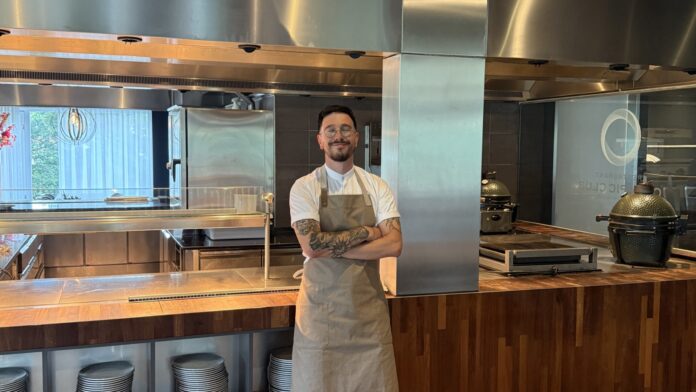
Tiago Pereira, performance chef for London City Lionesses, standing confidently in a professional kitchen.
Tiago Pereira blends culinary expertise with sports science to fuel elite athletes. As Team Performance Chef for the London City Lionesses, he is redefining nutrition in football.

Tiago Pereira is proving that success on the football pitch often begins in the kitchen. As a performance chef, he has carved out a unique career blending culinary arts with sports science to help athletes reach peak performance. From the Premier League environment of Southampton FC to the emerging heights of the London City Lionesses, Pereira’s path showcases how expert nutrition and cooking can support winning teams. He currently serves as the Team Performance Chef for the London City Lionesses, designing and preparing meals that fuel the squad through training and competition, and also lends his expertise to a professional cycling team, YETi Cycles. Along the way, he has augmented his hands-on experience with formal training at FC Barcelona’s renowned Innovation Hub in sports nutrition, positioning himself at the forefront of a new generation of performance-focused chefs.

Early ambitions: from business school to the kitchen

Pereira’s journey is grounded in a drive to continually improve and adapt. He first entered the catering industry in 2017, joining Southampton Football Club as a Kitchen Porter. That role gave him his first taste of the fast-paced environment inside a professional football club and laid the foundation for his culinary career.

From kitchen porter to performance chef, Pereira’s rise reflects resilience, adaptability and a passion for fuelling athletes the right way.

In 2018, he expanded his experience by working as an events chef, preparing food for large-scale functions such as weddings and corporate gatherings. This broadened his repertoire beyond football, teaching him how to deliver high-quality meals at scale, from canapés to multi-course dinners.

By 2019, Pereira had progressed to Chef de Partie within Southampton FC’s catering team. This position allowed him to apply his growing expertise at one of England’s top clubs and served as a springboard into performance cooking.

At the same time, he was pursuing a Business Management degree at Solent Southampton University (2019 to 2022). Although his contract was technically a 0-hour agreement, he worked full-time hours most weeks at Southampton FC. Balancing university coursework with the demands of a professional kitchen taught him discipline and time management. In his own words, that period helped him develop essential skills such as leadership, organization, communication, reliability, adaptability, and the ability to work under pressure. Juggling academia and a culinary career gave Pereira a head start in handling the kind of multitasking required in elite sports environments.

Cooking for the Saints: Southampton FC experience

Working at Southampton FC (2017 to 2025) gave Pereira his first taste of the elite sports world from inside the kitchen. Employed as a Chef de Partie through catering partner Gather & Gather (CH&CO), he was entrusted with running the directors’ room on match days, where the club’s executives and VIP guests dined in style. Week in and week out at St. Mary’s Stadium, he orchestrated fine dining experiences during the intense atmosphere of Premier League fixtures. From coordinating pre-match luncheons to post-game dinner functions, Pereira learned to deliver under pressure and meet the high standards expected in a top-flight football club.

“If the best players in the world have their own performance chefs then maybe I should have one” is a mindset now spreading across football clubs.

During his Southampton stint, Pereira also seized opportunities to expand his horizons. The catering group’s network saw him work at notable venues and events beyond the Southampton kitchens, including stints at London’s Olympia exhibition centre and assignments at Watford Football Club. These experiences polished his adaptability as he adjusted to different facilities and clientele while maintaining excellence. By handling everything from intimate boardroom meals to large corporate events, Pereira refined the craft of making nutritious food taste truly enjoyable, a balance that became crucial in athlete-focused meal preparation.

Equally important, his time with “the Saints” gave him insight into sports nutrition needs. Even though his primary duties were hospitality-focused, being embedded in a professional club environment meant he saw firsthand how diets were managed around training and matches. It’s no surprise that modern football clubs integrate chefs into their performance teams. Sports nutritionists work closely with club chefs to ensure players eat optimally throughout the day. Pereira’s on-the-job observations at Southampton fueled his curiosity about the science of nutrition and laid the groundwork for the next phase of his career.

Embracing sports nutrition science

Recognizing the growing importance of specialized nutrition in sport, Pereira decided to deepen his expertise through formal education. In 2024 he enrolled in the Barça Innovation Hub’s Professional Diploma in Sports Nutrition, an intensive 10-month program run by FC Barcelona to train professionals in the latest sports science of diet and performance. This course provided comprehensive knowledge on how to optimize athletic performance and recovery by applying advanced sports nutrition, from designing personalized meal plans to managing supplements and hydration strategies. Under the guidance of expert sport scientists and nutritionists, Pereira learned to translate lab-based insights into practical meal plans. He essentially learned to fuel athletes with science-backed precision.

This additional qualification, completed in 2025, equipped Pereira with the credentials and confidence to transition fully into a performance chef role. In elite football, the value of a chef who understands nutrition cannot be overstated. Clubs now insist on tailored diets as much as tailored training for their players. In fact, many top players credit personal performance chefs for prolonging their careers and boosting their form. Superstars like Cristiano Ronaldo and Lionel Messi, who dominated the Ballon d’Or awards for a decade, have both attributed part of their success to having dedicated chefs ensuring every meal maximizes their performance. As one performance catering expert put it, most chefs can cook delicious food, “but not many think about tailoring that food to meet the precise requirements players need.” By mastering sports nutrition, Pereira set himself apart as exactly that kind of chef who crafts cuisine to meet athletes’ exact needs.

With his new diploma in hand, Pereira was ready to apply his expanded skill set back into football. He didn’t have to wait long for the opportunity.

Leading performance nutrition at London City Lionesses

In early 2025, Tiago Pereira stepped into the role of Team Performance Chef for the London City Lionesses, an ambitious club in women’s football. The Lionesses were competing in the FA Women’s Championship (the second tier) at the time, with sights set on reaching the top division. Pereira immediately got to work implementing a professional nutrition program for the team. He planned all menus and personally cooked meals for the first-team players, coaches, and staff at the training ground on a daily basis. Every breakfast, lunch, and snack was carefully designed to support the squad’s training load, from high-protein options for recovery days to carbohydrate-rich choices for intense practice sessions.

On match days, Pereira’s responsibilities extended beyond the training ground kitchen. He would travel with the squad to away games, ensuring that players had the right pre-match fuel and post-match recovery meals wherever they went. This could mean whipping up an energizing high-carb meal a few hours before kickoff or preparing a protein-packed dinner after a tough game to kick-start muscle repair. By controlling the quality and timing of the players’ food intake, Pereira helped the Lionesses maintain consistency in their diet, which is crucial for performance. As sports nutrition research shows, the coordination between training, match schedules, and nutrient intake can give athletes a competitive edge in stamina and recovery.

Pereira’s culinary and organizational leadership quickly became part of the club’s fabric. That year, the London City Lionesses achieved promotion to the Women’s Super League, the top tier of English women’s football, for the first time in their history. It was a milestone that came from talented players and staff all pulling in the same direction. Behind the scenes, Pereira’s work in the kitchen was one of the supporting pillars of that success. As the Lionesses prepare to face top-flight competition, having a performance chef to fine-tune nutrition is an asset. It ensures that players go into each fixture as well-fueled as possible and recover faster afterward. Weekly fixtures against the country’s best teams demand peak fitness. “If the best players in the world have their own performance chefs then maybe I should have one” is a mindset spreading through football. Clubs like London City are embracing it fully by employing experts like Pereira.

Beyond football: expanding to cycling with YETi

While football remains Pereira’s primary arena, his expertise has proven valuable in other sports as well. In 2025 he also took on a role with YETi Cycles, serving as a performance chef for the company’s professional mountain biking teams. In this position, Pereira travels on the international circuit with YETi’s downhill and endurance racers, completing the 2025 season across Europe with the squad. The shift from football to cycling showcases his versatility. He must adjust menus to meet the demands of athletes who tackle intense downhill runs and grueling multi-stage endurance races. For example, downhill mountain bikers might need quick bursts of energy and excellent focus, whereas endurance riders require sustained fuel and impeccable recovery nutrition after long hours on the bike. Pereira draws on his broad knowledge to balance carbohydrate loading, lean proteins, and micronutrient-rich ingredients to suit each scenario. Just as he does with footballers, he works closely with coaches and athletes in cycling to ensure that what they eat optimally supports their training and race schedules. This foray into another sport not only underscores the adaptability of his culinary skills but also reinforces a core principle of performance nutrition: whether on two wheels or two feet, the right food can be a game-changer.

A leadership recipe: skills behind the stove

What sets Tiago Pereira apart is not just his ability to cook or his knowledge of nutrition, but the leadership and professionalism he brings to the role of performance chef. Running a kitchen for an entire team requires more than chopping and stirring. It demands planning, teamwork, and clear communication. Colleagues who have worked with Pereira often note his strong team leadership and organizational prowess in high-pressure situations. He is the kind of chef who can coordinate multiple diets and dishes simultaneously without missing a beat, ensuring that each athlete’s needs are met on time. This skill was honed from early on when he was managing a full-time job and university studies concurrently. That experience taught him how to prioritize, multitask, and stay calm under stress.

Communication is another key ingredient in Pereira’s success. In the melting pot of a football club, he interacts with a diverse group of people: players from different cultural backgrounds, coaches and fitness staff, nutritionists, and kitchen assistants. Being trilingual (fluent in English, Portuguese, and Spanish) has been a valuable asset, allowing him to break language barriers with international players and colleagues. Whether he’s explaining the contents of a recovery shake to a curious player or coordinating meal plans with the team’s sports dietitian, Pereira leverages his communication skills to educate and build trust. His approachable demeanor in the kitchen encourages players to ask questions about their nutrition, turning meal times into informal learning opportunities about performance fueling. This strong rapport helps ensure athletes actually enjoy the food and understand its benefits. It’s a factor that can improve nutritional adherence and ultimately performance on the field.

Pereira also exemplifies professionalism and a positive attitude in his work. Former supervisors have praised his reliability and problem-solving mindset. If a last-minute schedule change requires an adjustment in meal timing or a specific dietary request comes from a player, he is quick to adapt the menu without compromising quality. His background in business management likely contributes to his strategic approach. He not only cooks, but also handles budgeting for ingredients, inventory management, and the logistics of feeding a whole squad day in and day out. In essence, he operates with the precision of a manager and the creativity of a chef.

Blending culinary arts and athletic performance

Tiago Pereira’s career is a testament to the evolving nature of backroom staff in football. In an era when no stone is left unturned in the pursuit of athletic excellence, roles like performance chefs have emerged as indispensable. Players like Gareth Bale have raved about the impact of personal chefs, saying “It’s like going out for a meal every night… [he] makes sure I eat all the right stuff”. Such endorsements underscore why clubs are investing in professionals who can deliver “science to plate” – exactly what Pereira offers. By marrying gourmet cooking with sports science, he provides athletes not only with delicious meals but with a competitive edge. Every protein pancake or recovery smoothie comes with the intent to improve a player’s stamina, strength, or healing. Every menu is aligned with training periodization, meaning the right nutrients at the right time. Whether it’s extra electrolytes after a humid training session or collagen-rich broth to help with injury rehabilitation, the goal is always performance.

For the London City Lionesses, having Pereira in the kitchen has meant peace of mind that nutrition is handled as meticulously as coaching or medical care. It’s a reflection of a broader trend. Football organizations are recognizing that championships can be influenced by diet as much as by tactics. The value of a performance chef is visible in the consistent energy levels of players and the quicker turnarounds between games. As the Lionesses embark on their first season in the top flight, Pereira’s menus will be one of the secret weapons helping them compete against more established clubs. And as Tiago Pereira’s story shows, the pathway from the kitchen to the pitch, once an overlooked journey, is now an exciting frontier in the sports industry.

In the end, Tiago Pereira exemplifies the modern performance chef: part nutritionist, part master chef, part leader. His ability to fuel athletic performance through culinary excellence makes him an integral player behind the players. With his background and passion, Pereira has not only built a remarkable career for himself, but he is also helping to redefine how football clubs think about food, performance, and the link between them. He is truly fueling the game one meal at a time.

Our exclusive interview with Tiago Pereira

Who is Tiago Pereira outside of football? What values or experiences shape how you approach your work with athletes?

Outside of football, I value personal balance and continuous growth. I enjoy running because it keeps me disciplined and offers a glimpse into an athlete’s mindset, developing resilience and focus. Traveling is another passion of mine; it allows me to explore different cultures and places, which inspires me both personally and professionally. Gathering new perspectives helps me create innovative menus and dishes that are culturally rich and creative.

In my work, I bring structure and professionalism but also creativity and adaptability. I believe nutrition is about more than just fueling performance—it’s about supporting the whole person. My own values of growth, balance and curiosity help me connect with athletes on a deeper level, enabling me to tailor my approach and foster trust. Overall, I aim to support athletes not only in their performance but in their overall well-being and personal development.

How did working at Southampton FC influence your understanding of performance and professionalism in elite sport?

Southampton FC was my first real working opportunity after leaving Portugal and it shaped my career and my mindset. I started there as a kitchen porter and worked my way up to the point where I was cooking for the owners of the club on matchdays. This journey has taught me the true meaning of professionalism, consistency, discipline and attention to detail.

More than anything, certain people at SFC showed me the importance of hard-work, resilience and teamwork; values I still carry with me every day.

What are the key principles you follow when planning nutrition for professional footballers?

  • Every meal and snack is designed to support training, recovery and match-day performance. That means balancing the macronutrients to provide sustained energy, aid muscle repair and optimize recovery.
  • Nutrition changes depending on whether it’s a training day, match day, recovery day or during travel. Periodisation is key.
  • There is more to food than just being functional, when players enjoy their meals compliance and performance improves.
  • Explaining the “what” and “why” behind food choices helps players not only to understand the importance of fuelling correctly but to learn how to themselves.

How did the Barça Innovation Hub’s Sports Nutrition diploma impact your approach to fueling athlete performance?

The Barça Innovation Hub’s Sports Nutrition Diploma completely changed my perspective on fueling athletes. Before, my knowledge was practical but limited — I understood how to cook for performance, but not the science behind it. The course gave me a deeper understanding of periodisation, energy balance and the specific nutritional demands of elite athletes across training, recovery and competition. It helped me from simply preparing meals to designing strategies with purpose, where every plate supports performance, recovery, and long-term health. That education gave me the confidence to combine science with creativity in the kitchen.

What moment in your career best reflects the value you bring to a football team’s performance setup?

The proudest moment of my career was when I joined the London City Lionesses project. Having started as a kitchen porter, to then be trusted with fueling professional footballers at such a high level showed the progression of my skills and the value I could bring. The feedback I received from players and staff confirmed that my attention to detail, nutritional knowledge, and commitment directly impacted performance and recovery. Also, supporting Yeti Cycles on their world tour has reinforced my ability to adapt to different environments while maintaining the highest performance standards.

What are your long-term goals within football and the wider world of sports performance?

My long-term goal is to continue developing as a performance chef and to work at the very highest levels of elite sport, ideally within a top football club or national team. I want to keep bridging the gap between nutrition science and food that athletes genuinely enjoy and trust. Beyond football, I’m also interested in applying my skills to other sports such UFC, where performance nutrition is equally critical. Ultimately, I see myself not just as a chef but as part of a multidisciplinary performance team, helping athletes reach their maximum potential through the power of food.

I’ve supported SL Benfica ever since I was born, so working for the club or for the athletes would probably be a dream come true.

El auge de la propiedad multiclub (MCO) en el fútbol

0
Etihad Stadium, home of Manchester City and flagship club of City Football Group, a leading example of multi-club ownership in football.
Photo by Jonny Gios on Unsplash

A medida que el fútbol europeo atraviesa una transformación financiera sin precedentes, los fondos de capital privado y de inversión ya no son actores periféricos: se están convirtiendo en arquitectos centrales del futuro del deporte. Este artículo es la segunda parte de la serie “Private Equity en el Fútbol: ¿Una Revolución o una Apuesta Arriesgada?”, que explora cómo el capital privado está remodelando el panorama futbolístico, inyectando capital y redefiniendo la propiedad de los clubes con un potencial transformador, pero también con riesgos importantes. En la Parte 1 de esta serie, analizamos cómo la inestabilidad financiera y el fútbol post-pandemia abrieron la puerta a nuevos tipos de propietarios en la industria. Ahora, en la Parte 2, profundizamos aún más: ¿Quiénes son exactamente estos fondos de inversión? ¿Cuáles son sus estrategias, sus carteras y sus ambiciones en el fútbol? Desde el imperio transatlántico de RedBird Capital hasta los acuerdos revolucionarios de CVC con ligas enteras, este artículo traza el mapa de los actores clave que están transformando el fútbol, no como aficionados, sino como financieros.

Descubriremos cómo estos fondos consideran a los clubes como activos dentro de una cartera de inversión más amplia, la lógica detrás de la multipropiedad de clubes y lo que esto implica para la gobernanza, el rendimiento y la sostenibilidad a largo plazo. Ya seas un inversor, un directivo de club o un aficionado que intenta entender esta evolución, este artículo te ofrecerá el plano financiero de la nueva era del fútbol.

Descubriremos cómo estos fondos consideran a los clubes como activos dentro de una cartera de inversión más amplia, la lógica detrás de la multipropiedad de clubes y lo que esto implica para la gobernanza, el rendimiento y la sostenibilidad a largo plazo.

Resumen de los actores clave

En la última década, una ola de fondos de inversión y firmas de capital privado ha irrumpido en la industria del fútbol, aprovechando oportunidades en clubes, ligas y derechos mediáticos. A diferencia de los propietarios tradicionales, a menudo individuos adinerados o empresarios locales, estas entidades operan con una lógica distinta: retorno financiero, adquisición estratégica de activos y aprovechamiento de marcas globales.

Como se explicó en la primera parte de esta serie, actualmente existen 125 grupos activos de multipropiedad (MCO) que gestionan aproximadamente 380 clubes en todo el mundo. Aunque el término “multipropiedad de clubes” evoca imágenes de grandes conglomerados futbolísticos, la realidad es mucho más fragmentada. La mayoría de los grupos poseen solo dos clubes, y menos del 40 % controla tres o más. Esto revela un ecosistema altamente diverso y aún en proceso de maduración, que va desde pequeñas asociaciones transfronterizas hasta plataformas de inversión globales.

Europa sigue siendo el núcleo estratégico, pero los MCO se extienden hoy por todos los continentes y niveles de competición, transformando la geografía y la estructura económica del fútbol. A medida que el modelo evoluciona, el próximo capítulo podría no ser la expansión, sino la consolidación.

Source: Profluence Sports

Aunque muchos MCO operan a pequeña escala, un puñado de actores principales está construyendo redes amplias e interconectadas en el fútbol global. Estos grupos, a menudo respaldados por capital privado o institucional, están transformando la industria mediante adquisiciones estratégicas, una gestión centralizada y la construcción de marcas a largo plazo. A continuación, se presentan algunos de los principales actores que impulsan esta transformación, junto con información clave:

Nombre del fondo Clubes/activos en propiedad Activos bajo gestión estimados ($) Enfoque estratégico
RedBird Capital AC Milan, Toulouse FC, participación minoritaria en Liverpool FC (FSG) ~ $12B Capital, medios (Skydance), construcción de marca, infraestructuras deportivas
777 Partners / A-CAP* Genoa, Standard Liège, Vasco da Gama, Hertha BSC, Red Star FC, Sevilla FC (Participación minoritaria) ~ $12B Estrategia multiclub, compraventa de jugadores, activos infravalorados
CVC Capital Partners LaLiga (Participación del 8 % en los ingresos por derechos audiovisuales), Ligue 1, IPL (Cricket), Six Nations (Rugby) ~ $223B Monetización de derechos audiovisuales, asociaciones a largo plazo con ligas
Silver Lake (18%) / Newton Investment and Development LLC City Football Group incluyendo Manchester City, Girona FC, SK Lommel, Palermo FC, New York City FC, Melbourne City FC, ESTAC, Yokohama F. Marinos, Montevideo City Torque, Mumbai City FC, Bahia, Shenzhen Peng City FC, Club Bolivar (club asociado) ~ $100B (Silver Lake) / N/A (Newton Investment and Development LLC) Branding impulsado por tecnología, optimización de datos, inversiones deportivas globales, desarrollo urbano, expansión de marca
RedBull GmbH Red Bull Salzburg, RB Leipzig, New York Red Bull, Red Bull Bragantino, RB Omiya Ardija, Leeds United and Paris FC (Participación minoritaria) N/A (empresa privada) Integración de marca, inversión en infraestructuras, entrada estratégica en mercados con potencial de crecimiento
Saudi Public Investment Fund (PIF) Newcastle United and clubes de Arabia Saudita; Al-Hilal, Al-Nassr, Al-Ittihad, Al-Ahli (restructuración de la liga) ~ $941B Sectores de alto crecimiento como el entretenimiento, el deporte, la tecnología y las infraestructuras (Visión 2030)
Ineos Group Manchester United (participación minoritaria del 28 % con control operativo), OGC Nice (17%), Lausanne-Sport (19.9%) N/A (empresa privada) Portafolio deportivo diversificado (fútbol, F1, ciclismo, etc.), visibilidad de marca, compromiso con la comunidad
BlueCo Chelsea FC, RC Strasbourg Alsace N/A (consorcio privado de fútbol) Multipropiedad de clubes, desarrollo juvenil, sostenibilidad financiera
Eagle Football Holdings Olympique Lyonnais, Botafogo FR, RWD Molenbeek, Crystal Palace (Participación minoritaria), FC Florida ~ $0.9B Estrategia financiera: modelo de cuenta única, enfoque en clubes con gran legado e importante potencial de crecimiento
Pachuca Group C.F. Pachuca, Club León, Real Ovedio, Everton de Viña del Mar, Club Atlético Atenas, Coyotes de Tlaxcala N/A (empresa privada) Multipropiedad de clubes, desarrollo juvenil, inversión en infraestructuras
Oaktree Capital FC Internazionale (mayoría obtenida tras un impago de deuda en 2024) ~ $203B Activos en dificultades, control estratégico mediante apalancamiento de deuda
Pacific Media Group/NewCity Capital Barnsley FC, FC Thun, KV Oostende, AS Nancy Lorraine, Esbjerg fB, FC Den Bosch, FC Kaiserslautern N/A (consorcio privado de fútbol) Clubes infravalorados en ligas de segunda categoría o en dificultades mediante la adquisición de participaciones mayoritarias
Global Football Holdings Crystal Palace FC, Real Salt Lake, Augsburg, SK Beveren, Brøndby, ADO Den Haag, Estoril Praia ~ $12B Desarrollo de franquicias deportivas e infraestructuras, innovación tecnológica, capital de riesgo

*En medio de una investigación por fraude, 777 Partners ha transferido sus activos a A-CAP. Muchos de los clubes bajo su control están ahora en búsqueda de nuevos propietarios.

El auge de la multipropiedad de clubes (MCO) es cada vez más evidente en el fútbol europeo. En la temporada 2023–2024, la participación, mayoritaria o minoritaria, en clubes de las cinco grandes ligas alcanzó el 41,7 %, es decir, 40 de 96 clubes, frente al 36,7 % del año anterior. Según la UEFA, el número de clubes bajo estructuras MCO se disparó de apenas 40 en 2012 a 180 en 2022, lo que pone de manifiesto un cambio transformador en el panorama de la propiedad dentro del fútbol.

Source: CIES

Uno de los principales factores detrás del atractivo de la multipropiedad de clubes es su capacidad para generar sinergias, un enfoque inspirado en los modelos de adquisición y creación de valor del capital privado. Estas sinergias se manifiestan de diversas maneras, incluyendo acuerdos de patrocinio conjuntos, una circulación más fluida de jugadores y entrenadores, operaciones de scouting unificadas, una mayor presencia global de la marca, una gestión financiera consolidada y sistemas compartidos de datos que aprovechan el seguimiento por GPS y herramientas avanzadas de análisis táctico.

¿Cuál es la lógica de inversión detrás del fútbol?

Los modelos de multipropiedad de clubes suelen girar en torno a un club insignia que compite en una de las ligas de élite más lucrativas, mientras que las demás entidades del grupo son clubes satélite que operan en competiciones más pequeñas y con menor peso comercial. A nivel de cartera, los grupos MCO pueden alcanzar una valoración global más elevada al generar sinergias entre sus clubes mediante el uso compartido de recursos, estrategias y operaciones. Esto permite con frecuencia a la empresa matriz obtener una prima de valoración, en lugar de limitarse a sumar el valor individual de cada club, siguiendo un enfoque similar al modelo de “buy-and-build” utilizado en el capital privado.

Esta estructura también está diseñada para minimizar los conflictos de interés entre clubes afiliados que puedan competir entre sí, mientras que el modelo respaldado por capital privado busca replicar el éxito del club insignia en los clubes más débiles del portafolio.

Los clubes de fútbol, especialmente los que compiten en las principales ligas europeas, son cada vez más percibidos como activos globales de entretenimiento infravalorados.

Revalorización de activos y creación de valor a largo plazo

Muchos clubes históricos sufren una mala gestión, pero poseen un enorme valor de marca. Los fondos de inversión buscan comprar barato (durante crisis o periodos de infravaloración), reestructurar las operaciones y aumentar el valor del activo con el tiempo, ya sea para conservarlo o para salir con ganancias. Esta estrategia incluye:

  • Revalorización del club gracias a las sinergias: Los grupos MCO se benefician de sinergias, eficiencias operativas, recursos compartidos y una coordinación estratégica que hacen que el valor del portafolio colectivo supere la suma de los clubes individuales. Este “efecto prima” conlleva valoraciones más altas para cada club, ya que los inversores valoran los beneficios de la integración y el potencial de crecimiento.
  • Aumento del valor de los activos-jugadores: Los jugadores son activos clave de los clubes, y su valor de mercado suele apreciarse mediante una gestión estratégica del talento y transferencias dentro de la red MCO. Al formar a jóvenes promesas en clubes satélite y posteriormente transferirlas o promocionarlas a los equipos insignia, los MCO maximizan la valoración de los jugadores y generan ingresos rentables por traspasos.
  • Mejora del rendimiento financiero: El ahorro de costes gracias a operaciones centralizadas y el aumento de ingresos por fuentes diversificadas (derechos televisivos, patrocinios, merchandising, contenidos digitales) contribuyen a balances más sólidos y mejores flujos de caja, lo que mejora con el tiempo la valoración financiera del club.
  • Inversiones estratégicas de capital: Los propietarios MCO suelen invertir en infraestructuras, estadios, centros de entrenamiento y tecnología que aumentan la competitividad y el valor de mercado del club. Estas mejoras tangibles apoyan una revalorización sostenida y atraen nuevas inversiones.
  • Dinámica de mercado y crecimiento de la popularidad del fútbol: La popularidad mundial del fútbol sigue creciendo, lo que incrementa la demanda de participación en la propiedad de clubes. Esta tendencia a nivel macro impulsa la inflación del precio de los activos, beneficiando a los grupos MCO mejor posicionados con carteras diversificadas.

Sinergias a través de la multipropiedad de clubes (MCO)

Como se explicó anteriormente, RedBird, RedBull y muchos otros grupos están a la vanguardia de estrategias en red, construyendo ecosistemas de clubes en distintos países. Estas sinergias permiten:

  • Diversificación del riesgo: Al poseer clubes en diferentes ligas, países o niveles competitivos, los grupos MCO pueden compensar el bajo rendimiento en un mercado con el éxito en otro, reduciendo así el riesgo financiero global.
  • Economías de escala y sinergias operativas: Centralizar funciones como finanzas, recursos humanos, scouting, marketing y desarrollo de jugadores permite a los grupos MCO reducir costes y mejorar la eficiencia operativa. El uso compartido de recursos genera ahorros y una mayor capacidad de negociación con patrocinadores y socios.
  • Desarrollo y circulación del talento: Las estructuras MCO facilitan cesiones, traspasos y trayectorias de desarrollo fluido entre clubes. Los jóvenes talentos pueden formarse en clubes más pequeños antes de pasar a los equipos insignia, lo que maximiza su valor y crecimiento profesional.
  • Expansión de marca y crecimiento comercial: Poseer clubes en diferentes regiones amplía la presencia global del grupo, lo que aumenta las oportunidades de patrocinio, el alcance de la afición y el potencial de merchandising, generando nuevas fuentes de ingresos.
  • Integración de datos y análisis: Los sistemas de datos centralizados, que incluyen seguimiento GPS y análisis tácticos, ayudan a optimizar el rendimiento y el scouting, proporcionando una ventaja competitiva.
  • Replicación de modelos exitosos: Las estrategias de capital privado tipo “comprar y escalar” se aplican replicando modelos operativos y de marca exitosos en todos los clubes, lo que eleva la valoración general más allá de la simple suma de sus partes.
  • Contenido y compromiso con la audiencia: El control sobre el contenido y las narrativas en múltiples plataformas potencia el compromiso de los aficionados y el atractivo comercial, aportando activos intangibles pero valiosos al portafolio del grupo.
Source: Sports Business Institute Barcelona

El fútbol como vehículo de diversificación

En los últimos años, las firmas de capital privado y capital de riesgo han comenzado a considerar cada vez más a los clubes de fútbol como activos valiosos de diversificación dentro de sus estrategias de inversión más amplias. Esto refleja un desplazamiento más allá de los sectores industriales tradicionales hacia el ámbito deportivo, que ofrece características únicas que complementan y fortalecen la resiliencia y el crecimiento de las carteras.

  • Activo no correlacionado: Los clubes de fútbol operan en un entorno en gran medida no correlacionado con los mercados financieros tradicionales, como las acciones, los bonos o las materias primas. Esto significa que el rendimiento financiero de un club, impulsado por la venta de entradas, los derechos de retransmisión, los patrocinios y la compraventa de jugadores, no siempre evoluciona al ritmo de los mercados bursátiles ni de los ciclos económicos.
  • Huella cultural y política: Los clubes de fútbol tienen una fuerte influencia cultural y política, especialmente en mercados emergentes y regiones donde el deporte está profundamente arraigado en la identidad social. Ser propietario de un club puede dar acceso a redes políticas locales y a una buena imagen social, que pueden aprovecharse para expandir negocios o ejercer un tipo de poder blando (soft power).

    En países como Estados Unidos, India o China, donde el fútbol está creciendo rápidamente, los clubes sirven como plataformas de diplomacia cultural y penetración de marca.

    Ejemplo: La propiedad del Mumbai City FC en India por parte del City Football Group les ha permitido acceder a uno de los mercados deportivos más grandes y de mayor crecimiento del mundo, ganando influencia tanto comercial como cultural.

  • Innovación tecnológica y mediática: Los clubes de fútbol son utilizados cada vez más por firmas de capital privado y de riesgo como laboratorios vivos para probar tecnologías de vanguardia, como el análisis biométrico, el scouting impulsado por inteligencia artificial, plataformas de interacción con aficionados y monetización de contenido digital. Los clubes ofrecen un entorno controlado para experimentar e implementar innovaciones que luego pueden escalarse a otras empresas o sectores del portafolio.

Conclusión

Los fondos de inversión y las firmas de capital privado se han convertido rápidamente en actores clave del fútbol europeo, transformando el panorama de la propiedad de clubes de un modelo tradicional y local hacia entidades globales impulsadas por la lógica financiera. Estos fondos operan con estructuras de multipropiedad de clubes (MCO), con un club insignia en una liga principal respaldado por clubes satélite en distintas partes del mundo, generando sinergias valiosas como el uso compartido de recursos, el desarrollo de talento y la expansión de la marca.

Esta estrategia impulsa la revalorización de activos a largo plazo, la diversificación del riesgo y una mayor eficiencia operativa, convirtiendo a los clubes en activos de entretenimiento de alto valor. Su creciente influencia no solo está transformando la gobernanza y el rendimiento deportivo, sino que también aprovecha el potencial cultural y tecnológico del fútbol como una inversión única y no correlacionada.

Esta estrategia impulsa la revalorización de activos a largo plazo, la diversificación del riesgo y una mayor eficiencia operativa, convirtiendo a los clubes en activos de entretenimiento de alto valor.

En la próxima entrega de esta serie, analizaremos paso a paso cómo los fondos de inversión adquieren y gestionan clubes de fútbol, abordando aspectos clave como la due diligence, auditorías financieras, estructuración de operaciones y reformas de gobernanza que están dando forma a esta nueva era de propiedad en el fútbol.