
Profile
Role: Director of Scouting at Phoenix Rising FC
Specialisation: Scouting, recruitment, analysis, and football leadership
Experience: Phoenix Rising FC, Dinamo București, Oțelul Galați, FC Rapid 1923, Universitatea Craiova, FC Voluntari, AFC UTA Arad, Romanian Football Federation and Romania U21 National Team
Focus Areas: Scouting, analysis, education, leadership, sustainable sporting projects and international scouting networks
Biography
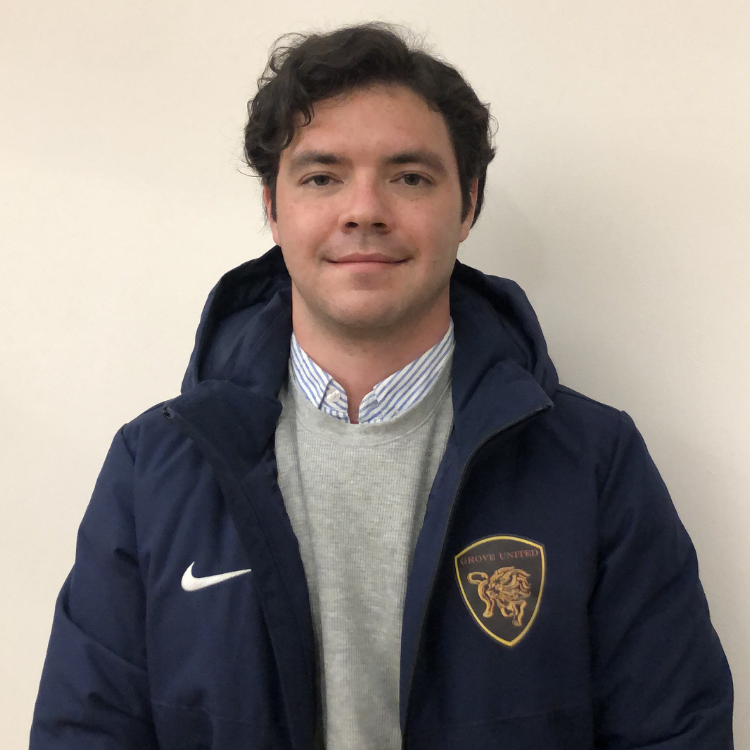
Gabriel Glăvan is a Romanian football executive currently serving as Director of Scouting at Phoenix Rising FC. Formerly Director of Football at Dinamo București, he has built a career centred around scouting, recruitment, analysis, and football leadership.
In 2025, he took the next step in his international career by joining Phoenix Rising FC as Director of Scouting, where he launched the club’s global scouting department and helped create “Rising Scout,” a project designed to build an international scouting network and create opportunities for the next generation of scouts.
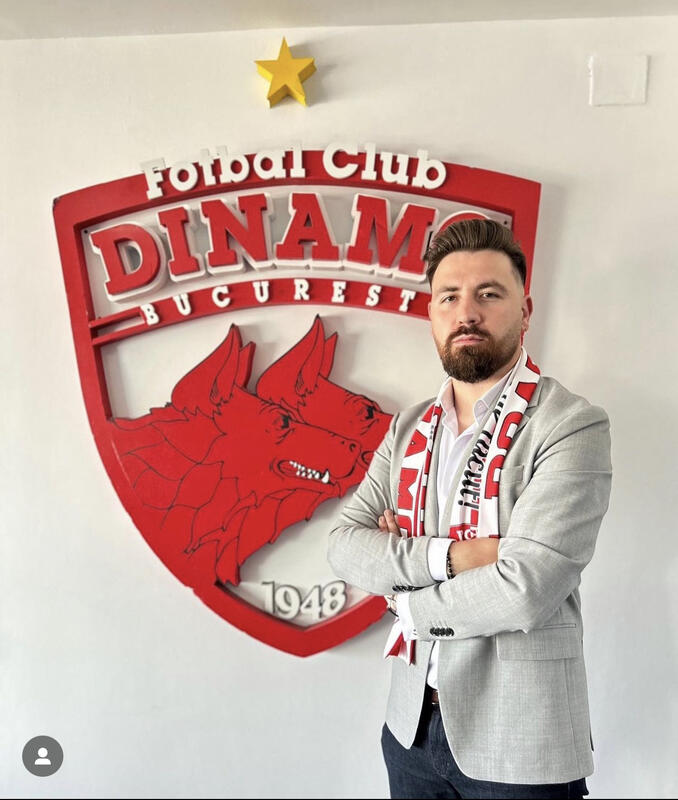
In 2023, Glăvan became Director of Football at Dinamo București during one of the most difficult periods in the club’s history. With financial instability, debts, and a transfer ban, he rebuilt the squad under major restrictions, helped secure promotion, and brought stability back to the club in the Romanian SuperLiga. During his time at Dinamo, he also created one of Eastern Europe’s largest scouting departments, managing over 60 scouts and a database tracking more than 12,000 players weekly.
He began his career in Romanian football in 2014 as a scout, working with clubs including Oțelul Galați, FC Rapid 1923, Universitatea Craiova, and FC Voluntari. Throughout his recruitment career in Romania, Glăvan helped sign players who later generated more than €10 million in profit despite operating without transfer budgets. Among the most notable were Aissa Laidouni, Jefte Betancor, Philip Otele, Josué Homawoo, Jugurtha Hamroun, and Denis Politic. He later joined AFC UTA Arad, where he built a scouting department of 40 scouts while leading first-team video and data analysis.
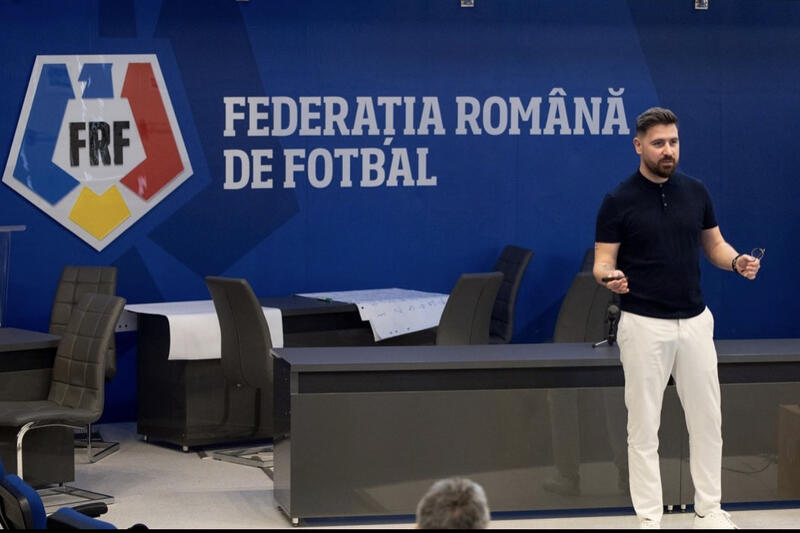
Alongside his club work, he serves as a Lecturer for the Romanian Football Federation, teaching scouting and analysis within UEFA B, A, and Pro Licence courses, helping modernise football education for coaches in Romania.
Throughout his career, Gabriel Glăvan has combined scouting, analysis, education, and leadership to modernise football structures and build sustainable sporting projects both in Romania and internationally.
Throughout his career, Gabriel Glăvan has combined scouting, analysis, education, and leadership to modernise football structures and build sustainable sporting projects both in Romania and internationally.
Key Insights
- Gabriel Glăvan has built a career across scouting, recruitment, analysis, education and football leadership.
- He helped rebuild Dinamo București during one of the most difficult periods in the club’s history.
- At Phoenix Rising FC, he launched a global scouting department and helped create “Rising Scout.”
Here’s Our Exclusive Interview with Gabriel Glăvan
How did your football journey begin?
When I was 16, growing up in Romania as a Dinamo București fan and playing Football Manager with my friends, I dreamed of becoming a scout and sporting director. Of course, nobody really believed in me at the time, but it took me 20 years to turn that dream into reality.
Of course, nobody really believed in me at the time, but it took me 20 years to turn that dream into reality.
I started my career in 2014 as a scout for a club in Romania, and after more than a decade working in scouting, I progressed into sporting director roles. Along the way, I worked for the Romanian Football Federation and with the Romania U21 National Team as Head of Preparation and Analysis. I have also been involved in coach education, teaching scouting and analysis courses for UEFA A, B, and Pro Licence coaches.
In addition to my practical experience, I completed several educational programs focused on scouting, performance analysis, football management, and sporting leadership, including an MBA in Football and a Sporting Director certification.
Today, I help others follow the same pathway through individual scouting and analysis courses delivered in partnership with the Romanian Football Federation. During my time at Dinamo București, I managed a network of more than 60 scouts, and today 25 of them are working in Romanian football. The current sporting director of Dinamo București is also one of my former scouts.
You’ve moved from grassroots scouting roles to Director-level positions, what were the key turning points that accelerated your rise?
Networking, being present, and always available are essential in football. A lot of people say that working in scouting roles is difficult because, especially at the beginning, you are often not paid. But the reality is that those opportunities allow you to prove yourself in a professional environment. To stand out, you need to be present at all times, show your willingness to work hard, and demonstrate that you can be useful to the club and coaching staff.
When I started as a scout, not many people in Romanian football truly understood the value of scouting. In many cases, coaches were the ones making decisions about transfers and squad selection, and they did not fully trust scouts. Because of that, I decided to develop my skills in video and performance analysis as well. I wanted to show coaches that my work could directly help them.
Instead of only recommending players, I supported my reports with detailed analysis and performance data. This allowed coaches and management to better understand the players being proposed. Over time, this helped build trust and credibility in my work.
For example, at UTA Arad, a new coach wanted me to continue working with him because he already knew the quality of my work. My condition, however, was to create my own scouting department within the club, at no additional cost for the club, and to build a scouting database covering multiple championships and leagues.
As Director of Football at Dinamo București, you worked under financial constraints, what was the hardest decision you had to make during that period?
The hardest decision of my career was leaving Dinamo București.
The hardest decision of my career was leaving Dinamo București.
When I joined the club, it was during the worst period in Dinamo’s history. The club had just been relegated for the first time, there was over €8 million in debt, no ownership stability, very few players, and a transfer ban was approaching. I only had 10 days to build an entire squad.
Fortunately, because of my previous scouting work at UTA Arad, I already knew many players and markets well. I recruited players from the fourth and fifth divisions in France and Spain, while also keeping some existing players at the club. Despite the difficult situation, we managed to build a competitive team.
At the same time, I also began restructuring the academy. We introduced new coaches, methodologies, philosophies, and organizational standards across the department. From the beginning, this was never intended to be a short-term project, it was a 10-year plan.
The first two years focused on rebuilding the club from the inside: creating departments/ implementing strategies and methodologies/ improving recruitment processes/ educating and mentoring staff/ building a professional structure throughout the club.
One of the key ideas behind the project was recruitment, not only of players, but also of staff. Instead of hiring people already deeply rooted in the traditional Romanian football mentality, I chose younger and more open-minded professionals who could grow within the structure we were building. One of those people is now the current sporting director of Dinamo București, someone I personally mentored and developed within the club.
In our first season, we achieved promotion back to the first division. New owners then arrived and saw the structure and long-term plan we had implemented. One important example was the coaching recruitment process. We conducted multiple interviews for coaching candidates, something very uncommon in Romanian football at the time. The media even joked that we were doing “castings” at the club because they did not understand that we were introducing a professional, corporate-style decision-making process.
Even after promotion, however, the club was still under a transfer ban. Once the owners paid the €500,000 in debt, I was able to sign additional players, although we still had major financial limitations and one of the lowest salary budgets in the league.
The biggest challenge was that there was no alignment between the reality of the club’s situation and the expectations attached to the Dinamo name. Despite all the financial restrictions and instability, the owners and fans still expected the club to win every match immediately. Coaches were dismissed after only a few months, new ones arrived, and gradually the owners began questioning the process and structure we had put in place.
At one point, the owners no longer wanted to continue with several of the key employees and department leaders we had promised long-term positions to. That was a major issue for me because I had personally convinced many of those people to join the project based on trust and vision.
I told the owners clearly, if they did not continue with the people and structure we had built, then I would leave the club as well.
I gave them two options, either pay the remainder of my contract in full, or allow me to leave without compensation while keeping the staff and departments we had created in place.
It was the hardest decision of my career because Dinamo București was the club I had supported my entire life. But it was also the only decision I could make because I believed in protecting the project, the people, and the long-term vision we had built together.
Today, the club is doing well again. The structure, processes, and long-term plan we implemented are still producing results, and Dinamo has once again become a respected club.
You’ve built multiple departments from scratch, how do you ensure alignment between scouting, analytics, and coaching staff?
As a sporting director, being central to the sporting vision means understanding how the team should play while staying aligned with the coach. However, one of the biggest challenges in other departments, such as scouting, analysis, and volunteers, is keeping people motivated from both sides.
For example, coaches sometimes do not fully trust people who have never worked in football before, while those people may feel that their work is undervalued, especially when they are contributing for free. Because of this, the idea is to create collaboration between departments so that staff members can see the value of each other’s work and understand that their contributions are being recognised.
The same process applies when building the departments, with the mentorship program being at the centre of it all. With the people I work with, we provide continuous education and development opportunities. Every two weeks, we organise meetings with lecturers from all over the world. We also run training programs, online Zoom meetings, discussions about different aspects of football, and collaborative player analysis sessions. In addition, we hold 1-on-1 calls with scouts and analysts to support their individual growth.
The alignment comes from supporting the coach while simultaneously building the motivation of the staff by ensuring their work is seen and appreciated. At the same time, this process helps build the coach’s trust in the sporting department.
You are a lecturer for the Romanian Football federation, what are the biggest misconceptions coaches have about scouting and analysis?
The biggest misconception is that coaches already know everything and do not need any help because they have played football and have seen enough of the game. However, I believe coaches still need people around them to support the process, not only through observation and recruitment, but also through reporting, database management, and analysis.
One of the challenges is that coaches are not always open to this support, especially when it comes from people they do not know personally or from individuals without a traditional football background. Because of this, building trust becomes essential.
The role of the sporting department is to show that scouting and analysis are not there to replace the coach, but to support them. By providing organised reports, structured databases, player analysis, and recruitment insights, the department can help coaches make better-informed decisions while staying aligned with the club’s football vision.
The role of the sporting department is to show that scouting and analysis are not there to replace the coach, but to support them.
As Director of Scouting for Phoenix Rising’s new scouting department in the USL Championship, what are your ambitions for this season, and what challenges have you faced so far?
My biggest ambition is to continue developing the program. We created a separate entity called Rising Scout, where new scouts can apply. It currently works alongside Phoenix Rising, but our goal is to collaborate with other clubs as well during the upcoming season. The vision is to build a larger scouting department capable of following even more players globally and creating a platform that can provide value to multiple clubs.
A key part of expanding the project is motivating the scouts we work with by creating opportunities for them to be remunerated for their work. If we want to collaborate with more clubs, we need to restart preparations in June so we can provide live feedback on players as the season begins.
The biggest challenge, however, is keeping people motivated. The scouting department originally started with around 80 scouts, but about 20 dropped off because they had different priorities. For example, when a scout has been following a league or championship for five weeks and then stops, another scout has to take over their responsibilities, which effectively doubles their workload.
Even though there is already a precedent of people progressing into full-time roles within clubs, everyone has different personal plans and commitments. At times, the workload can become too demanding for them. Because of this, I would say that maintaining motivation and consistency within the scouting department is the biggest challenge.
FAQ
Who is Gabriel Glăvan?
Gabriel Glăvan is a Romanian football executive currently serving as Director of Scouting at Phoenix Rising FC.
What role did Gabriel Glăvan have at Dinamo București?
In 2023, Glăvan became Director of Football at Dinamo București during one of the most difficult periods in the club’s history.
What is Rising Scout?
We created a separate entity called Rising Scout, where new scouts can apply.