
Why Strategic Conferences Are Reshaping the Industry and Why Baku Matters.
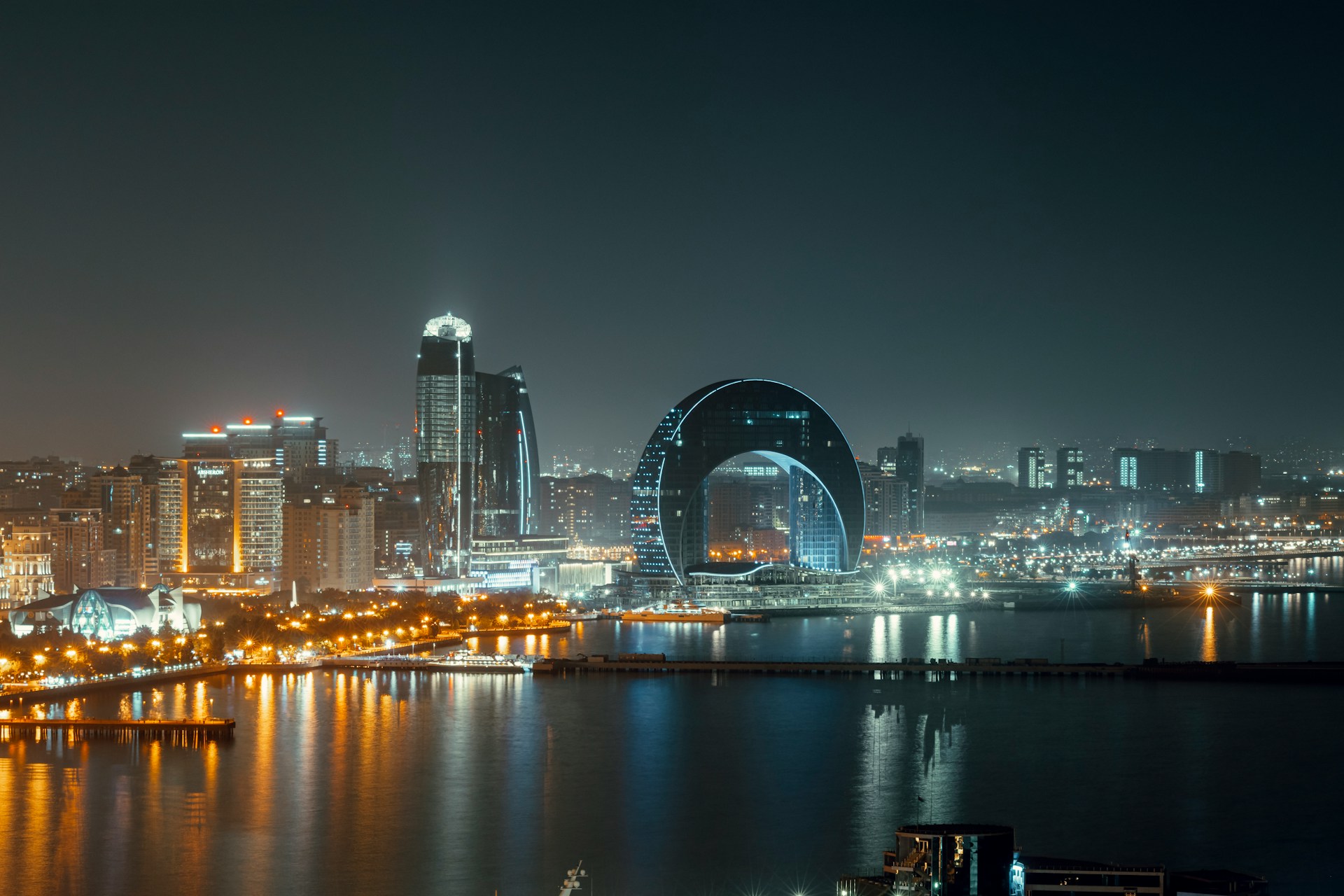
On 6 June 2026, Baku hosted one of the most geographically ambitious football gatherings of the year. Over two days, voices from UEFA’s regulatory architecture, FC Barcelona’s development tradition, the Turkic football world, the Caucasus, and emerging Gulf and Central Asian markets will share the same stage. This is not symbolism. This is where football’s strategic conversation has moved.
The most consequential football conversations of this decade are no longer happening exclusively in the cities most people would name. They are increasingly being held in Baku, Budapest, Riyadh, and Doha. The professional class building football’s next chapter is not waiting in London, Madrid, or Zurich for permission to convene. It is convening on its own terms, in places that did not appear on the strategic map a decade ago.
This is not symbolism. This is infrastructure and most of the industry has not noticed yet.
This is not symbolism. This is infrastructure and most of the industry has not noticed yet.
Why the Old Channels Are No Longer Enough
For most of the past three decades, football’s strategic thinking flowed through three channels: the boardroom, the academic journal, and traditional sports media. Each had its own pace, its own gatekeepers, its own ceiling.
Traditional sports media has fragmented beyond recognition. A long-form analytical piece in The Athletic reaches a different reader than a tactical video on TikTok. Neither reaches the federation president making the actual decision. Football journalism, once the connective tissue of the industry, has split into micro-audiences that no longer talk to each other.
Academic publishing operates on a longer timeline. By the time a peer-reviewed paper on multi-club ownership appears in a sport management journal, the practice it analyzes may have gone through several new iterations. The research is rigorous and remains essential for long-term understanding. But for the professional needing to make a decision this season, the cycle is too slow.
Internal club knowledge stays trapped. The most valuable insights in football about scouting systems, sponsorship activation, player development, regulatory navigation are rarely shared between organizations, because every club perceives knowledge as competitive advantage. The result is collective stagnation in markets where collaboration would benefit everyone.
In this gap, conferences have grown and they are doing something the old channels never could.
What Conferences Actually Do
A well-designed sports conference performs four functions that no other channel performs together.
It compresses time. A sporting director who would otherwise need six months to gather perspectives from a UEFA technical advisor, a Latin American scouting director, and a Central Asian federation strategist can gather them in two days. The cost of knowledge declines dramatically.
It generates trust through proximity. A handshake in a hotel lobby produces a level of professional confidence that fifty LinkedIn messages cannot. Conferences are, fundamentally, trust-building environments.
It surfaces tacit knowledge. The most valuable insights in football are not the ones written down. They live in side comments, off-record observations, and the “between us, here is how we actually decided that” moments. Conferences make this tacit knowledge briefly accessible.
It creates shared reference points. When fifty professionals from twelve countries spend two days hearing the same panels, a common vocabulary emerges. Six months later, when they negotiate or collaborate, they share a foundation that did not exist before.
The Football Week’s coverage of recent events TGG Live, Football Forum Hungary, Agents Week Summit already documents this pattern. Each conference creates an aftermath that extends far beyond the event itself.
Conferences are no longer where you go to learn. They are where you go to be heard.
Conferences are no longer where you go to learn. They are where you go to be heard.
The Roster Tells the Story
Consider the speakers gathered for Football Conference Baku II in June 2026:
- Frank Ludolph, UEFA Technical Advisor and former Head of FIFA Player Status, four decades inside the regulatory architecture of the modern game
- Jordi Gratacos, former Sports Director at FC Barcelona Academy, the development model that produced Xavi, Iniesta, and Messi
- Dr. Erkut Söğüt, Managing Director at D.C. United, FIFA-licensed agent, and architect of one of the most influential agent education programs in the world
- Dr. Mustafa Eröğüt, former Vice President of the Turkish Football Federation and former executive at İstanbul Başakşehir FK
- Aktuğ Sönmez, Türkiye Market Leader at Sport Republic, the multi-club ownership group behind Southampton, Göztepe, and Valenciennes
- Tarkan Batgün, CEO of Comparisonator, one of the leading voices on data-driven scouting, and author of the newly launched The Book of Scouting
And these are only some of the names. The full programme brings together an extraordinary group of professionals from across the football industry federation strategists, club presidents and general directors, sporting directors, scouting heads, FIFA agents, academic researchers, data analysts, marketing leaders, and broadcast executives. Each of them brings a distinct perspective from their own market, and together they form the kind of cross-regional dialogue that rarely happens elsewhere. The conversations they will lead on governance, scouting, multi-club ownership, regional cooperation, athletic performance, and the future of the game make this one of the most layered programmes of the year. The complete speaker list and full programme are available here: https://qolat.com/en/event-detail/16/programs/
This is not a list. This is a map.
It is a geographic and functional cross-section of where football’s strategic conversation has moved. Few Western European conferences currently produce a roster that crosses this many regions in two days.
The Map Is Moving
For most of the past decade, the strategic conferences that mattered happened in three cities: London, Madrid, and Zurich. The conversations were European, often Anglophone, and concentrated within an established professional class.
That geography is no longer accurate.
A growing number of football’s most consequential conferences are now being held in places that did not appear on the strategic map a decade ago. Budapest. Riyadh. Doha. Baku. These are not symbolic gestures. They are real shifts in where the industry’s intellectual gravity is forming.
This matters because infrastructure follows conversation. The cities that host today’s strategic conversations become tomorrow’s commercial centers. London did not become London simply because of its clubs and stadiums. It became London because the conversations about those clubs and stadiums happened there first. The same dynamic is now beginning elsewhere.
The map of football is being redrawn not by transfers, but by conferences.
The map of football is being redrawn not by transfers, but by conferences.
Case Study: What Baku II Reveals
Football Conference Baku II is not the largest sports conference of 2026. It is not the most expensive. It is not in the most established market. But it is one of the most structurally interesting and worth examining closely because of what it reveals about where the industry is heading.
Consider what it does in 48 hours.
It bridges UEFA and the Turkic World. A single panel Football in the Region places leaders from Uzbekistan, Kazakhstan, Georgia, and Azerbaijan on the same stage. These are markets that rarely converge in Western European conferences. The professional networks formed in this single room could shape the next decade of regional football cooperation.
It connects regulation and operation. Frank Ludolph (UEFA Technical Advisor, former Head of FIFA Player Status) and Dr. Erkut Söğüt (D.C. United, FIFA agent, agent educator) discussing transfer governance in the same panel is not symbolic. It is the kind of conversation that reshapes professional practice. The regulator and the operator, in dialogue rare, and valuable.
It points toward a more integrated marketing future. This edition is being promoted primarily through LinkedIn and Instagram the foundation channels for a professional sports audience. But the longer ambition is broader. Future editions are being designed to expand into a fully integrated marketing architecture, where LinkedIn, Instagram, WhatsApp networks, podcast partnerships, regional media, and academic engagement work as a single coordinated system. The next two years it might determine how quickly that vision becomes reality and how much it influences how other regional conferences market themselves.
It positions Baku as a regional hub. Azerbaijan sits at a structural crossroad UEFA territory, Turkic linguistic affinity, Caspian energy economy, growing football investment. Football Conference Baku is not a one-off. It is the early infrastructure of a city positioning itself as a regional convening center for the decade ahead.
Why This Matters for the Professional Class
For the football professional reading this agent, sporting director, marketing lead, federation strategist, academic researcher, brand partnership manager the implication is direct.
The professional advantage of the next five years will not come primarily from depth of knowledge in any single market. It will come from bandwidth of connection across markets. A sporting director who understands only the Süper Lig will compete with sporting directors who understand the Süper Lig and the Saudi Pro League and the Uzbek emerging market. A federation strategist who only follows UEFA will compete with strategists who follow UEFA and CAF and AFC.
The conferences that bring these geographies together are no longer optional. They are where the bandwidth is built.
The cost of attending a strategic conference measured in two days of time and a registration fee looks expensive only until it is compared to the cost of not attending: a year of catching up to peers who attended, conversations that never happened, partnerships that did not form, signals that were missed.
In 2026, the football executive who attends strategic conferences regularly is making a different career than the one who treats them as optional.
A Note for Organizers
If conferences are becoming infrastructure, then the responsibility of conference organizers is shifting too.
It is no longer enough to fill a room with speakers. The questions organizers must now answer are structural:
- Does the speaker composition reflect the actual map of contemporary football, or does it reproduce the old geography?
- Does the program design encourage tacit knowledge to surface, or does it stay safely within prepared statements?
- Does the post-event architecture data preservation, relationship continuity, content repurposing treat the conference as a one-time event or as an annual node in a longer system?
- Does the marketing infrastructure operate as an integrated system across all channels, or as a fragmented set of parallel campaigns?
The conferences that survive the next decade will be the ones that take these questions seriously. The ones that treat themselves as events will be remembered as events. The ones that treat themselves as infrastructure will accumulate institutional weight that compounds over time.
Football Conference Baku II is, in this sense, an early test of a longer ambition. The conferences that follow it in Baku and beyond will tell us whether the test succeeded.
Closing Thought
Football’s strategic conversation has always existed somewhere. It used to exist in boardrooms that the rest of the industry could not access. Then it existed in academic journals that the industry did not read. Today, it is moving into a public, professional, multi-geographic space that did not exist before.
Sports conferences are how this conversation is being held.
For the professionals who recognize this shift early, the next decade will be different from the last. For those who continue to treat conferences as peripheral, the conversation will simply happen without them.
The infrastructure is being built now. The question is whether you are inside it or outside it.