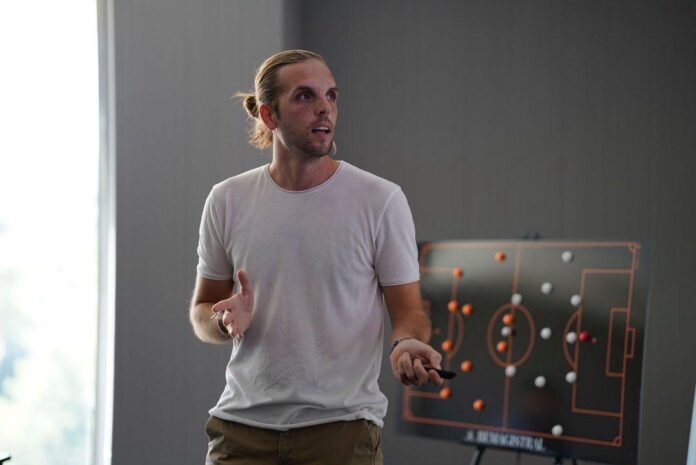
WFS Madrid 2025 brought together leaders and visionaries from across global football for its largest event to date.
After three years away, World Football Summit returned to Madrid and it did so in record-breaking fashion.
With more than 2,500 attendees, 120 speakers, 35 panels and sessions, and 45 exhibitors, this year’s edition became the largest WFS event to date, reaffirming Madrid’s role as a global capital for the football industry.
Over two days, WFS Madrid gathered senior leaders from across the ecosystem to address both headline issues and long-term challenges. The debate around LaLiga’s proposed match in Miami sparked contrasting views on the globalization of domestic competitions, while other sessions focused on how to keep football competitive in an era of accelerated change and increasingly fragmented audiences.
Among the prominent voices shaping the discussion were Fernando Carro (CEO, Bayer Leverkusen), Peter Moore (former CEO, Liverpool FC), Rafael Louzán (President, Royal Spanish Football Federation), André Amaral (CEO, Liga Portugal), Chris Davis (CMO, New Balance), Luca Percassi (CEO, Atalanta BC), Lise Klaveness (President, Norwegian FA), and Nadine Kessler (Director of Women’s Football, UEFA).
Together, they explored how innovation, inclusivity, and a renewed focus on the fan experience can ensure that football remains both a thriving business and a powerful cultural force.
World Football Summit also reaffirmed its global commitment to gender balance and representation, surpassing its long-standing pledge for at least 30% of female speakers (a goal achieved and exceeded at WFS Madrid, where women represented 32% of all speakers).
Beyond the debates and networking sessions, the summit also featured cultural and social highlights, including the WFS Industry Awards, celebrating excellence and leadership across global football, and an exclusive photography exhibition by renowned artist Madeleine Penfold, capturing the beauty, emotion, and diversity of the game.
The World Football Summit always strives for more. With Madrid setting a new benchmark, they’re already gearing up for our next chapter — WFS Riyadh, taking place on December 10–11 in Saudi Arabia.
Berivan Çolak has helped shape global football from grassroots to Olympic leadership. Her journey reflects purpose, passion and progress in women’s sport.
Berivan Çolak is an accomplished Event Director and football professional whose career bridges international sports management, event production, and the advancement of women’s football. With over a decade of experience managing large-scale projects across Europe and beyond, she has built a reputation as a dynamic leader dedicated to inclusivity, innovation, and growth in sport.
Currently, Çolak serves as Founder and President of Women Football Club Worldwide (since 2014), a global NGO established in five countries and ten cities. Through this initiative, she has spearheaded events, tournaments, partnerships, and grassroots development programs, all with the aim of creating opportunities for women and girls in football. She also founded Girl Up WFC Istanbul under the United Nations Foundation in 2024, furthering her commitment to gender equality and empowerment through sport.
Her experience in elite sporting events includes her role as Football Training Venues Senior Manager for the Paris 2024 Olympic Games, where she oversaw venue operations, team logistics, media services, and stakeholder coordination. From 2022 to 2023, she worked with UEFA on managing football training sites in Paris for the Olympics, ensuring operational excellence and international standards.
Alongside her event leadership, Çolak has hands-on experience in football coaching and administration. She has coached youth teams at PSG Academy and ES 16 Paris, and currently serves as Commissioner on both the Women’s Football Committee and the Football Feminization Committee of the Paris Football District. She also works with Futebol da Força as a consultant, coach, and ambassador, mentoring young female players.
Before transitioning fully into sports, Çolak held senior roles in international event management and media production. She served as Project Director at Elite Model Look in Istanbul and Barcelona, overseeing sponsorships, budgets, and global productions. At Acun Medya Global, she managed television formats and international productions in Latin America and Turkey. She also directed large-scale concert projects for Fever, handling venues, communications strategies, and event execution across multiple European cities.
A graduate of EDC Paris Business School in International Management and IAE Bordeaux in Management, Çolak also holds a Double Master in Marketing. Multilingual in French, Turkish, Spanish, and English, she operates comfortably in diverse international environments. Her certifications include a UEFA B License (2024) and a Football Coach Certificate from Força Foundation (2023).
At every stage of her career, Berivan Çolak has combined her expertise in event management with a deep passion for football and social impact. Whether leading global projects, coaching the next generation, or building platforms for women in sport, she continues to shape a more inclusive and forward-looking future for the game.
Our Exclusive Interview with Berivan Çolak
Women Football Club Worldwide has grown across several countries and cities. What motivated you to start this project, and what impact are you most proud of so far?
My own story is at the origin of the project actually. As a little girl, my mom didn’t let me play football, so I always had to find myself spaces to play, or create them where they didn’t exist. But the idea of the project was born in Barcelona, where I played in an amateur league and created a team with some girls I found on Facebook. I realized how the competition, the scores, were pressuring the women who only wanted to enjoy the sport and have a good time. This is how WFC was born in 2014 in Istanbul, when I realized such a platform was needed.
This went from 1 person’s dream, to a dream shared with more than 900 women Worldwide!
The impact I am very proud of is first of all to see how many women were in search of women empowerment and found it through the club. This went from 1 person’s dream, to a dream shared with more than 900 women Worldwide! The second is the impact we have in women’s lives, and how we became role models for kids with our stories.
You were part of the Paris 2024 Olympic Games, managing football training venues at a global event. What lessons did you take from that experience that you now apply to your work in women’s football?
It was very interesting for me to see how each national team that I was receiving there has its own organization, way of work, training etc. I was able to see at a big scale how the budget invested on the team was changing everything: material, number of staff etc.. And how it had an impact on the players. This is why it’s very important that the football industry stop seeing women’s football as a social investment and really see its real worth and impact. The more investment will be made, the better the sport will become.
It’s very important that the football industry stop seeing women’s football as a social investment and really see its real worth and impact.
Also, as a woman in charge, being able and having the power to say no to very big names for some privilege they wanted to have, I realized how some countries were taking me seriously and everything was smooth, and how I had to fight with others. In comparison, I can say that when men are used to seeing more women in football management, they will normalize it. It’s not something we should wait for from them, we should go for it and take it ourselves!
You combine event management and coaching in your career. How does your experience on the pitch influence your work off the pitch, and vice versa?
Event management is a crazy job (and I love it). You cannot do it if you are not passionate about it, because your working hours don’t exist, you are constantly in a rush, and you can feel the pressure every single day. You have to love contact with people, be in constant negotiation, crisis management, and look for perfection for every single step of the project.
All this organization skills and the skills I developed about my approach toward people really helped me as a coach and as an NGO president. I am trying to run the NGO as a company and really construct something stable. And as a coach, I know how to balance being a coach and make my players respect me, but also make them see me as a reference, someone they can talk to, a role model.
As a commissioner in the Women’s Football and Football Feminization Committees in Paris, what changes do you believe are most urgent for the future of women’s football in Europe?
As I mentioned earlier, it’s important that women’s football is seen as a real sport, with its full potential, and given the same place and space as men’s football. For that, it needs to enter the same circle with men’s football: make it a popular sport, talk about it and give it importance in the media, push the companies/sponsors to invest in it, take care of the women’s leagues and make them grow asap, give space/fields to women teams just like it’s done for men’s teams.
Also, the federations should push each and every single club to have a women’s football team, this should be mandatory.
Women’s football is not a social project, it is a part of the sport, just like for any other sport.
Your career spans international projects in sport, media, and events. What challenges have you faced as a woman leader in these industries, and how have you overcome them?
I think I am lucky to have a strong character that I built with time and experience. I have the courage to go ahead and fight for my work.
Everybody would be expecting me to say that I had to face men in these industries but the most I had to face were and still are women, and this is sad to say.
But I have 15 years of experience and never speak about something I don’t know, so when we are talking about something related to my job, I never hesitate to speak out loud and defend my opinion. At the same time, I am open to listen to others and am the first one to accept if someone else’s vision is better than mine.
Looking ahead, what is your vision for Women Football Club Worldwide and for the broader development of women’s football globally?
As I always say, I will not stop until we give the opportunity to women in each and every single country to discover the beautiful game and play.
I also hope that we will be able to change the vision of the big structures like federations and make them understand our impact on the sports and benefits. And eventually get accepted and even have licences for our players.
Lindeman and Arveladze: A partnership built on alignment, clarity, and shared ambition.
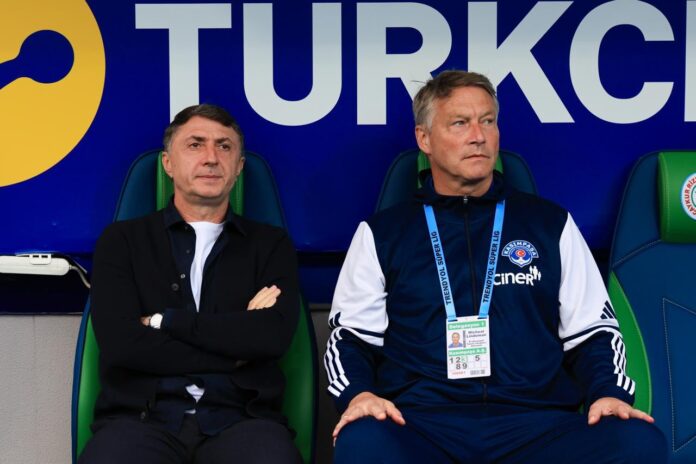
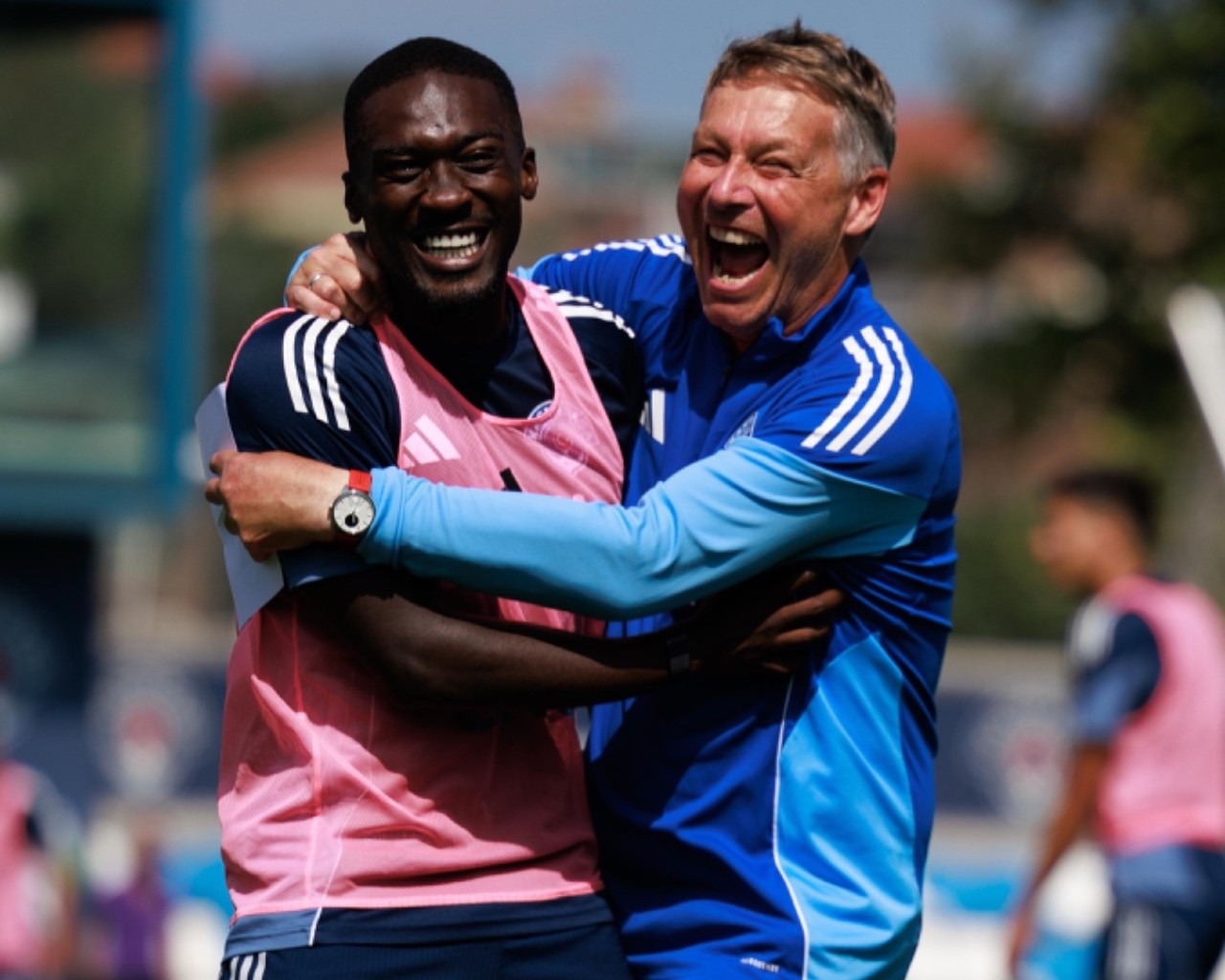
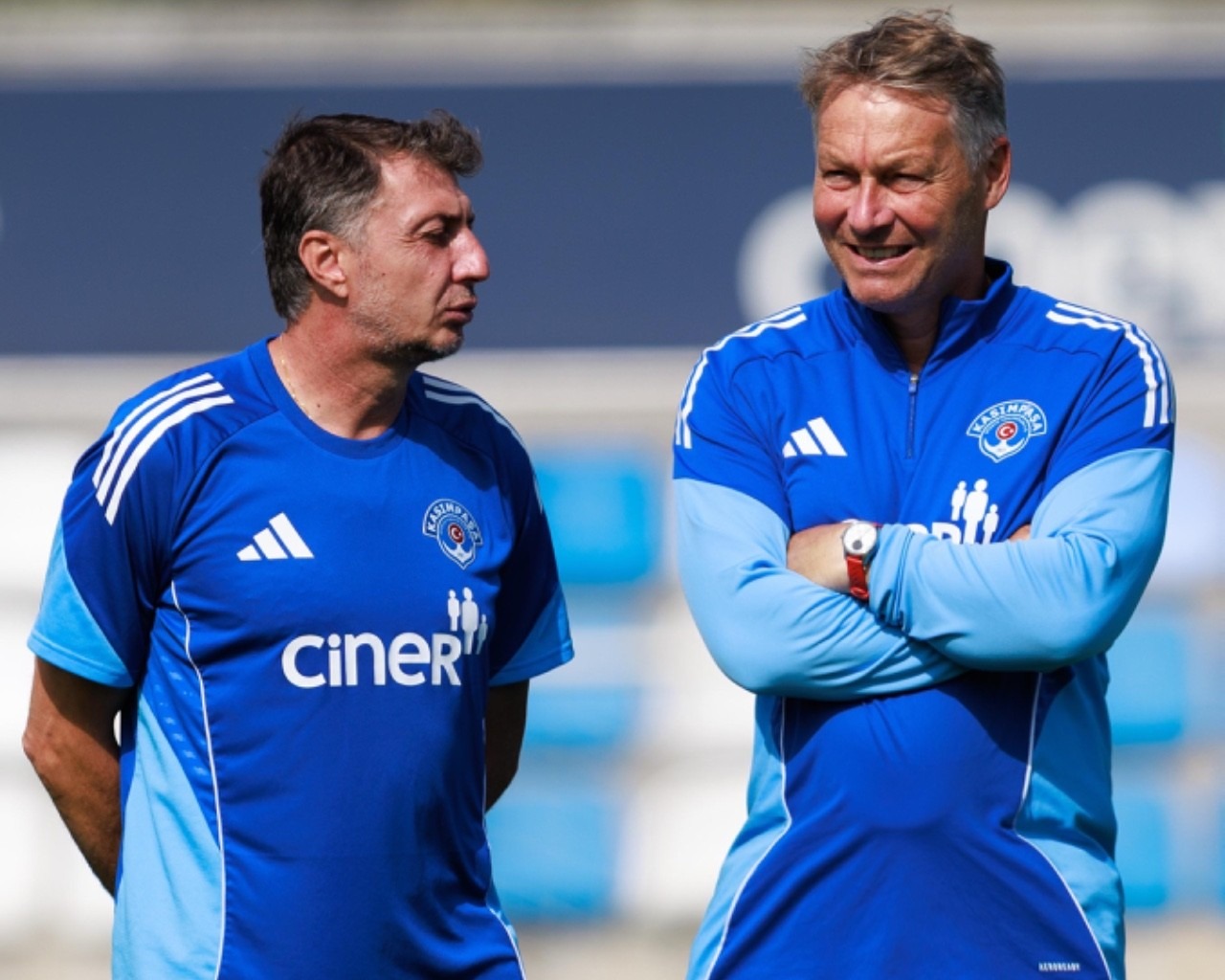
In modern football the role of an assistant manager often remains unseen, yet it can define the heartbeat of a team. At Kasımpaşa SK, Michael Lindeman works closely with head coach Shota Arveladze to build not just a competitive squad but a culture of trust, identity and resilience in one of Europe’s most unpredictable leagues.
A new chapter in Istanbul
“Football is about relationships and timing,” Lindeman begins. “I was introduced to Shota through a top agent, and from the first conversation there was an immediate sense of alignment in values, in work ethic and in ambition.”
For Lindeman, joining Kasımpaşa was not just about returning to the Süper Lig. It was about helping shape something meaningful. “What attracted me here was the chance to build a team with identity, resilience and courage. The margin for detail can make the difference, and that’s exactly what this project is about.”
Building a new identity
Kasımpaşa faced one of the biggest rebuilds in recent years, with a completely new squad entering the season. For Lindeman, such transitions are not only about signing players but defining culture.
“When you rebuild a squad, you are shaping a culture based on key points and values,” he explains. “The biggest challenge is creating instant chemistry in an environment that usually takes months or years. We started with clarity: clear tactical roles, clear behavioural standards, clear communication. Once players feel that clarity, trust follows and identity emerges.”
He smiles and adds, “Identity is not a slogan on the wall. It’s what players do under pressure in the 90th minute. Culture is what exists when the boss isn’t around.”
Making ambition count
Operating with a smaller budget than many Süper Lig clubs, Kasımpaşa’s ambitions rely on creativity rather than resources. “Constraints can be powerful; they force creativity,” Lindeman says. “We look not only at talent but at fit: mentality, adaptability and hunger. I always say a player must have a FACE. If I mention his name, you should be able to list one or two traits immediately – speed, composure, leadership, aggression. Planning means maximising every detail: training efficiency, recovery and role definition. Success is not about the size of the budget but the size of the vision.”
The connector behind the coach
As an assistant, Lindeman sees himself as the link between the head coach’s vision and the players’ execution. “An assistant is a connector,” he explains. “I translate the head coach’s vision into daily reality on the pitch, in analysis and in player interactions. My role is part tactical, part organisational and part human. I spot details before they become problems and create space where players can express themselves fully while respecting the team framework. I see myself as both an architect and a bridge.”
Trust as the invisible contract
Trust, Lindeman believes, is what holds everything together. “Trust is the invisible contract that makes everything possible,” he says. “Between Shota and me, it means alignment without needing constant explanation. With players, it means they know I have their back even when I demand the highest standards. With the club, it means consistency – that what we say is what we do. Without trust, tactics collapse. With trust, even the impossible becomes achievable.”
“Trust is the invisible contract that makes everything possible”
He reflects for a moment. “Trust connects to dignity and responsibility, which go beyond the pitch. When trust is broken, between player and coach or between sport and society, the entire system suffers.”
Turning ideas into habits
Lindeman’s coaching philosophy blends structure with psychology. “Principles only live if they are trained every day,” he says. “A principle like pressing high is not just theory; it’s repetition, correction and reinforcement until it becomes instinct. Training is where the blueprint turns into behaviour, and that transformation is my responsibility.”
He often uses a framework to guide his players’ learning. “Some players are unaware and incompetent , they don’t even know what they are doing wrong. Then we make them aware and incompetent , we explain what has to be improved. Next comes awareness with competence , they remember to apply it. Finally they reach the stage of unconscious competence, where it becomes instinctive. That’s the goal.”
Science meets management
Lindeman’s scientific background still shapes how he sees the game. “It gave me a double lens,” he says. “I see football both through the tactical eye and through the body’s capacity. I understand how to push without breaking, how to optimise recovery and how to individualise within a collective. I’ve worked with player DNA testing and I keep that mindset of measuring, evaluating and adjusting. But science alone is never enough; it’s when science becomes human that performance truly evolves.”
Leadership without the spotlight
For Lindeman, leadership as an assistant means presence without ego. “I want players to see me as approachable for support but also as someone who enforces standards,” he says. “It’s a balance between empathy and firmness. Players respect consistency when they know what to expect from you. But you must stay authentic. Players know within five minutes if you’re acting or being real.”
He adds that leadership also means protection. “Players need to feel respected and safe, regardless of background or gender. As assistants we have a duty to uphold that environment.”
Lindeman believes footballers are humans before athletes and connection is key to performance.
The human side of football
Beyond tactics, Lindeman insists on keeping the human side alive. “Footballers are not machines; they have families, pressure, emotions,” he says. “Sometimes the best coaching is just a conversation. Mental readiness is about creating an environment where players feel safe to give everything, knowing that mistakes are part of growth. Fun is a huge factor we implement daily.”
He continues, “Players are humans before athletes. Supporting them means inclusion, well-being and respect. Human rights in sport start with daily human care.”
Looking ahead, Lindeman sees football as a platform for both performance and dignity for all players.
Looking forward
As for the future, Lindeman’s ambitions remain both grounded and expansive. “My goal is always to add value where I am,” he says. “Right now that means helping Kasımpaşa succeed and helping Shota realise his vision. Of course I see myself leading a team one day, but it’s difficult to enter the UEFA Pro Licence pathway as it often favours younger coaches over experience.”
He looks beyond the touchline. “I’ve worked across Egypt, Germany, Libya, Switzerland, England, the Netherlands, Turkey and the Emirates. I’ve seen how football can unite people. Long term I want to help create environments where both performance and human dignity thrive, for boys and girls, men and women alike.”
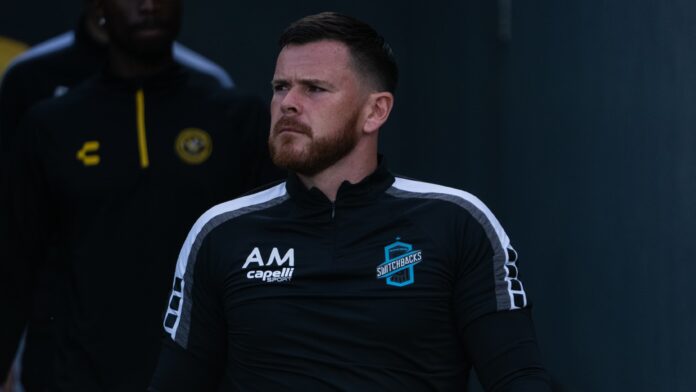
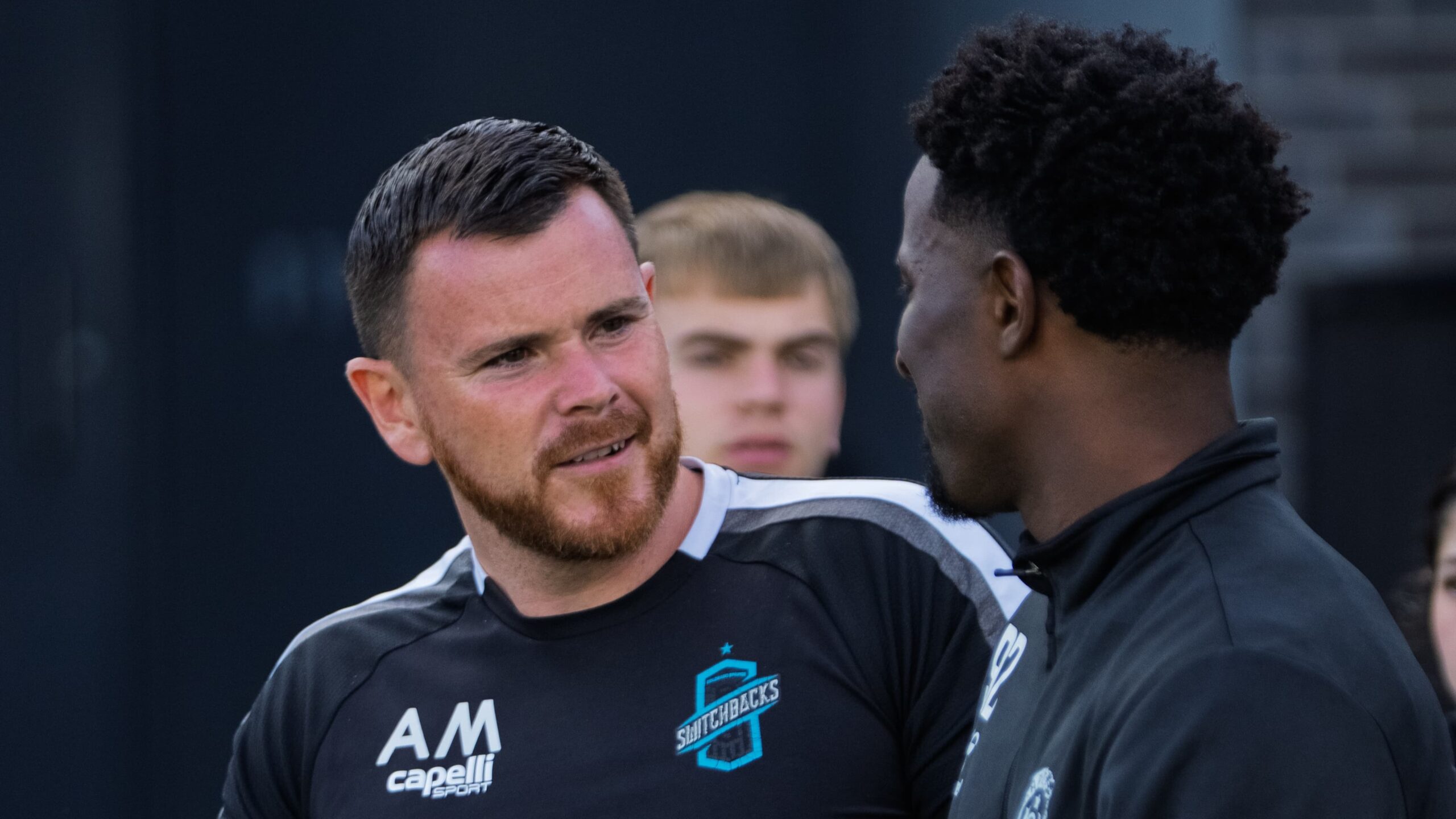
Alan McCann, Technical Director at Colorado Switchbacks, brings Irish intensity to the heart of American football development.
From Dublin’s schoolboy leagues to shaping the future of the Colorado Switchbacks, Alan McCann’s journey blends Irish grit with American ambition.
As Technical Director and Assistant Coach at the Colorado Switchbacks, McCann oversees everything from player performance and recruitment to the implementation of the club’s new Switchbacks II program, a reserve side designed to bridge academy and first-team football.
“It’s about building a consistent environment,” he explains. “Players moving up to the first team should land into familiar drills, vocabulary, and approaches. That gives them a ‘soft landing’ into the professional environment, and it helps our coaches grow through the same pathway.”
Previously, as Director of Sports Performance, McCann focused on ensuring the team could physically sustain its high-pressing, transition-heavy style. “We wanted the group to peak physically from March to November,” he says. “That meant blending the football side into everything, from warm-ups to testing.”
Shaping a Club for the Long Term
McCann believes the USL Championship is evolving fast. “Everything is exploding into bigger opportunities day by day,” he says. “The level has become a lot more competitive, especially since MLS second teams moved into MLS Next Pro.”
For Colorado Springs, growth starts at home. “Launching an academy and expanding the stadium are the big next steps,” he notes. “The club already has a huge impact on the city, and those projects will only strengthen that for generations.”
“Players moving up to the first team should land into familiar drills, vocabulary, and approaches. That gives them a soft landing into the professional environment.”
From Dublin to the Dugout
Before arriving in the U.S., McCann came through one of Ireland’s most competitive youth systems. He played for Home Farm FC and Belvedere FC, represented the North Dublin Schoolboy League (NDSL) in the Kennedy Cup, and later captained the Dublin District Schoolboy League (DDSL), competitions often scouted by English and Scottish clubs.
“It was extremely competitive,” he recalls. “At 16, a lot of lads were heading abroad to sign for Premier League or Scottish sides.” His next step was St. Patrick’s Athletic, where he began the U21, Reserve, and First Team pathway in the League of Ireland.
Building a Coaching Identity
McCann’s coaching philosophy draws from mentors across three countries. “My father was the first coach I learned from, he knew how to bring a dressing room together to win trophies,” he says.
In Ireland, he worked with Paul Osam, Maurice O’Driscoll, Harry McCue, Gino Brazil, and Johnny McDonnell, while later in the U.S., Paul Conway, Brendan Burke, and Jim Curtin shaped his thinking. “All those experiences blended into how I approach the game now,” he says.
As a Head Coach in USL League Two, McCann learned the full spectrum of leadership: recruitment, tactics, player management, and helping college players transition into the professional ranks. “That time taught me a lot about man-management and pathways,” he explains. “It’s helped me the most in my current role.”
Scouting, Data, and the Human Side
McCann’s background in scouting runs deep, he served as a Director of Scouting across multiple regions in USL2, developing a network that now fuels Switchbacks recruitment. “We currently have 14 players in the 2025 squad who came through USL2 or college soccer,” he says.
While the club has embraced analytics, McCann insists that human connection remains central. “We’re big believers in going to watch a player in person, and meeting them,” he emphasizes. “Each player responds differently, so there’s no one-size-fits-all approach.”
“We’re big believers in going to watch a player in person and meeting them. Each player responds differently, so there’s no one-size-fits-all approach.”
“Every player responds differently,” says McCann, who believes in combining data with strong personal connection.
The U.S. Pathway: Room to Grow
For McCann, one of the greatest strengths of American soccer lies in its flexibility. “If a player doesn’t break through an academy at 18, they still have a second chance through college or USL2,” he says. “In most countries, it’s an academy or nothing.”
He sees potential for the USL Academy system to take the next big step. “If USL Academy can build a truly competitive, nationwide structure, the potential is endless,” he says. “You’re already seeing players choose USL over MLS for more first-team opportunities.”
Learning Every Day
Even as he leads one of the USL’s most forward-thinking projects, McCann approaches each day as a student of the game. “If I can become sharper every day, then the likelihood of impacting players and teams for the better increases,” he says.
Football, he adds, “has given me everything.” His motivation is to return that through developing others, and winning. “Helping people achieve their goals and better their lives is a main driver,” he says. “Doing that through winning trophies is the ultimate compliment.”
His message to young Irish players and aspiring coaches? “Be ready to sacrifice a lot. Trust yourself, work relentlessly, and take your opportunity when it comes.”
Our exclusive interview with Alan McCann
You were born and raised in Ireland, can you tell us about your early footballing experiences there?
It was training twice a week and a game on the weekend. All of it was run by volunteer coaches doing it because they loved it up until about U16. I played for Home Farm FC and Belvedere FC in the youth system. While at Home Farm I also represented the North Dublin Schoolboy League (N.D.S.L.) in the Kennedy Cup and then captained the Dublin District Schoolboy League (D.D.S.L.). These were the teams and games scouts from English and Scottish Premier League teams would watch so it was extremely competitive at the time, with many lads going abroad to sign once they turned 16. I then moved to St. Patrick’s Athletic and began into their U21, Reserve and First Team pathway in the League of Ireland.
Could you share some of the lessons that shaped you during your time as a player in the Irish system?
It might seem like a very basic detail but being vocal on the pitch was a must growing up. Every team I played in growing up had a majority of the team that was vocal on pitch, even at the younger ages. My experience now coaching is that it is the polar opposite in many youth environments. Aggression, standing up for yourself and your teammates along with taking on responsibility on/off field were things I noticed coming to the US that made an Irish footballer have big impacts on environments.
When you began coaching, what philosophy or style did you want to build around? How much of that came from your own playing days vs coaches you observed?
I was lucky to have had great examples of coaches to steal all of their best traits from when I was a player. In Ireland, my father was the first I got to learn from. Bringing a dressing room together to fight for each other and bring out each other’s best abilities to win trophies, year after year was a huge early lesson. Coaches such as Paul Osam, Maurice O’Driscoll, Harry McCue, Gino Brazil and Johnny McDonnell were all coaches I learned from as I got into my late teens. In the USA, as a player, I have been able to learn the most from Paul Conway, Brendan Burke and Jim Curtain. Then in Sweden the coaching was brilliant although my time there was short. All of those experiences really blended all together to form an approach when I first began.
You’ve held different roles (manager, assistant manager, match analyst) before your current role at Colorado Switchbacks. How did those earlier roles prepare you for each new challenge?
Each role had its own lessons that I was then able to fall back on for the current role. As a Head Coach in USL2 it was recruitment, man managing of players, tactical approach to different opponents, delegating roles to staff, planning and implementing training on the football side. The unique side to USL2 is helping the college level players transition up into the professional game. So that meant speaking to agents, coaches at different clubs and helping advise each player to the best possible pathway to give them the best possible chance at having a career. All of that has helped me in the current role the most.
What are your priorities as Technical Director and Performance Manager? How do those roles differ from being on-the-touchline assistant manager?
In the previous role of Director of Sports Performance it was more of a focus and specialization on the physical side for the team. Ensuring they can physically peak for games was the sole focus. The individual load management of each player throughout the training week should then tie into the team’s physical goals. During that time we were a high pressing, transition based team so ensuring the team was physically capable and durable to do that from March-November was the focus in that role. As it was a dual role as Assistant Coach, incorporating the football side into any warm up or physical testing helped to blend it all together.
As Technical Director, it is more a focus on the bigger picture impact that you can have on the club. The biggest one of that being the implementation of our Switchbacks II program. It serves as a reserve team to the first team with the capacity to build a Switchbacks Academy underneath also. Ensuring that the concepts and principles being taught at Switchbacks II level are matching with the first team through communicating with the coaches running it on the day to day. This allows players moving up to the first team land into familiar training drills, coaching vocabulary, and approach. This serves as a potential ‘soft landing’ into the professional environment and in theory gives us a greater chance of graduating an academy player into a fulltime professional. It also allows our coaches at that level the chance to move up in the system also.
The team plays under the USL Championship. How would you describe the level, competitiveness, and infrastructure in the USL, and what opportunities do you see for growth at Switchbacks?
It seems as though everything is exploding into bigger opportunities day by day in USL. The level has become a lot more competitive in the past few years, in particular with the movement of the second teams into MLS Next Pro. The Western Conference in particular seems to be everyone capable of beating everyone on their day. It will be very interesting to see how promotion and relegation gets implemented in the next couple of years.
The growth in the current league infrastructure is firstly the launching of an academy. The club has had a hugely positive impact on Colorado Springs as a city and this would only help to keep that growing for generations to come. The expansion of the stadium is most likely the more immediate opportunity applicable to the future league infrastructure as the USL starts to identify different tiers within the promotion and relegation system. Identification of talent that can progress onto the bigger world football and international football stage is likely another opportunity within the next few years.
Can you walk us through your process for identifying and developing talent within the club? How do you integrate analytics, scouting, and coaching for player development?
During my time in the USL 2 as a Head Coach, I also served as a Director of Scouting for various regions throughout the time there. This has allowed me to grow a network throughout the USL 2 and collegiate game that has proven dividends throughout the years. We currently have 14 players in the 2025 squad that came through either the USL 2 or collegiate system. The data side has also been introduced in the more recent times to compliment our process within the club. We are big believers in physically going to watch a potential player and then meeting them as a person also.
On the coaching side, understanding that each player/person is different is key. This means they may respond to the same experience a million different ways. Having a one size fits all approach most likely will not work but most definitely will not bring out the peak of each individual and as a result, the team. Learning what each person responds to, how they take in information, how they physically respond to training load, while bringing that altogether to fit team goals is the approach.
What do you believe are the strengths of the U.S. pathway for young players? Where do you see the most obvious areas for improvement?
The strength of the US pathway that I have the most experience with is that if a player has not been able to break through the traditional academy to professional route; they then have a second chance almost through the collegiate and USL 2 system. In many other countries the pathway within that country’s system is either academy into professional or nothing. Different players can peak at different ages and different stages of their growth. The US system allows another chance for those late developers or slow to peak talents.
Within our USL system, at academy level, there is a huge chance to grow it as the progression into the first team for the right talents can happen quicker compared to that at MLS. If USL Academy can grab a hold of the stakeholders at each club and create a viable, competitive system, country wide, then the potential for growth is endless. There is also a growing trend of players leaving the collegiate system, starting to choose USL over MLS options as they can see a greater chance for first team football exposure.
What motivates you most day-to-day? What are the values you want your teams to represent?
Continuing to learn more everyday sounds a bit cliché but it is a genuine approach. If I can become sharper in different aspects each day, then the likelihood of effecting players and teams for the better increases by the day. This sport has given me everything I have in life and changed it dramatically for the better. Being in a position to help others achieve their goals and better their lives is a main driver. That process being done through winning trophies is the ultimate compliment in my opinion.
What advice would you give young Irish players or young coaches who want to follow a path similar to yours?
Be prepared to sacrifice a lot if choosing this route. It definitely is the road less traveled so there have been a lot of ups and downs along the way. There’s been a lot of patience needed throughout the years of going through an undergrad and two master degrees. Trusting yourself as long as you can compliment it with genuine unrelenting hard work and then it’s about taking your opportunity when it comes your way.
For decades, football was built around the myth of talent. A player’s natural touch, instinct, or harmony with the ball was seen as a destiny-defining gift. But modern football has quietly destroyed that illusion.
Today, success is no longer the result of natural ability but of sustainable habits. It is not about how you play on match day, but how you prepare every single day.
Talent is a spark. Discipline is what keeps that spark alive.
Talent is a spark.
Discipline is what keeps that spark alive.
The reality of modern football: Routine over brilliance
The biggest weakness in football today is the lack of routine coaching. Most academies develop technique, but not habits. Many young players become “good” with a few extra sessions, but only those who work with the same consistency every day become “professionals.”
There are thousands of talented 17-year-olds. But only a few wake up at the same hour, eat with the same discipline, and train with the same focus every single day. Those are the ones who make the difference.
“Talent wins games. Discipline builds careers.”
The science of discipline: How habits shape the player
The human brain rewards repetition. After 21 days of continuous practice, a behavior becomes a habit. Football is no different.
The player who warms up the same way, plays the same precise passes, and focuses on small details every single day is unconsciously writing his character into muscle memory.
Discipline is not an act. It is an identity. And it reveals itself in the final minutes of the game.
The coach’s role: From motivation to architecture
A modern coach is no longer just a motivator. He is an architect of habits. Discipline cannot be forced. It must be designed.
Telling a player to “be more focused” is easy. Building a system that structures his sleep, nutrition, repetition and mindset, that is real coaching.
True discipline is not created through pressure but through purpose. A player will not believe in something he does not understand. That is why great coaches do not teach discipline, they make their players feel its value.
Mental resilience: When character outruns talent
At the highest level, success is no longer defined by how you strike the ball, but by how strong your mind is. Making the right decisions when you are tired, staying professional under criticism, and standing back up after every failure, these are not natural gifts, they are learned reflexes.
Sometimes the talented player signs the first contract. The disciplined one signs the fifth.
The new standard: Discipline as a skill
Once, the word “hard-working” was used to cover a lack of talent. Now it defines excellence. Modern football revolves around the idea of the hard-working talent. Because technical quality can only survive through discipline.
Talent might win you a match. But discipline builds a career, leaves a legacy, and sustains success.
Discipline is no longer a virtue. It is the new talent.
Conclusion: The modern player’s code
In today’s game, success is not a destination. It is a process. The small things repeated every day create the big differences that define a career.
“Talent opens the door. Discipline keeps it open.”
In the modern era, it is not the most talented who survive, but the most consistent. And the future of football will be written by those who master the art of discipline.
Professional football has long been seen as the golden ticket, a path to fame, fortune, and global recognition. For many young athletes, a professional contract represents the realization of childhood dreams. Yet behind the glamorous headlines of multimillion-pound contracts and record-breaking transfers lies a sobering truth: far too many footballers end their careers broke, adrift, and unprepared for life after the game. Studies show that between 40% and 60% of former Premier League players declare bankruptcy within just five years of retirement. In France, half of professional footballers are financially ruined within the same timeframe. The paradox is painful: how do individuals who earn more in a week than many do in a year end up with nothing?
The answer lies in the fragile foundations of a football career: short spans, sudden wealth, poor financial advice, and a lack of education. While football demands total commitment on the pitch, neglecting education off the pitch can prove catastrophic. Education, academic, financial, and personal, is not just a fallback option; it is a critical tool for resilience, empowerment, and long-term success.
The Harsh Reality of Life After Football
The professional football career is startlingly short. The average top-division career in France lasts around four years. Injuries, dips in form, or failed contract renewals can cut careers even shorter. Each summer, up to 25% of players find themselves without a club.
For many, the financial fallout is devastating. Research by XPro revealed that 60% of former Premier League players went bankrupt within five years of retiring; updated estimates put the figure closer to 40%. In France, unemployment rates among ex-footballers exceed 15%. Players who once enjoyed wealth and fame find themselves struggling with debt, job insecurity, and identity loss.
The stories are as dramatic as they are tragic. David James, the former England goalkeeper, reportedly earned around £20 million across his career, yet filed for bankruptcy in 2014, auctioning off memorabilia to pay debts. Lee Hendrie, a former Aston Villa midfielder, lost an estimated £10 million through failed investments and overspending, leading to depression and bankruptcy. Ronaldinho, once one of the world’s most marketable footballers, allegedly had just £5 left in his bank account despite career earnings in the tens of millions. Even Diego Maradona, widely considered one of the greatest players of all time, died with modest savings and significant tax debts.
The financial collapse is often compounded by mental health struggles. Studies show that more than a third of active players experience symptoms of depression. For retired athletes, the risk is even higher, with many citing financial worry as the primary factor impacting their mental health. Some turn to destructive coping mechanisms: gambling, alcohol, and substance abuse. The end of a career can mean not just financial ruin but also a profound personal crisis.
The end of a career can mean not just financial ruin but also a profound personal crisis.
Why Education Matters
Against this backdrop, education emerges as a critical safeguard. It provides footballers with the tools to navigate life both during and after their playing days.
Earning millions means little without the knowledge to manage it.
Financial literacy as protection
Earning millions means little without the knowledge to manage it. Many bankruptcies stem from disastrous investments, failed tax schemes, or reckless spending. Education in basic finance, taxation, investments, and budgeting can shield players from exploitation and ensure that short-term wealth translates into long-term security.
Career transition and identity
A footballer’s identity is often tied exclusively to the sport. Yet the majority of players admit they do not know what they will do after retirement. Education broadens horizons, offering pathways into coaching, management, business, or entirely new fields. It builds confidence that life after football can still be fulfilling and purposeful.
Mental resilience
Players who invest in education are often better prepared for the inevitable transition. Athletes with higher education levels are less prone to depression during career changes. Education fosters adaptability, critical thinking, and a sense of control, essential buffers against the psychological toll of retirement.
Empowerment and independence
An educated footballer is less dependent on agents, advisors, or entourages. With knowledge comes the ability to scrutinize deals, make informed decisions, and resist predatory schemes. Education provides agency, the capacity to shape one’s destiny rather than being shaped by circumstance.
Lessons from Global Programs
While the statistics are grim, several countries and organizations are pioneering solutions by embedding education into football culture.
The Netherlands: The CFK Bridging Scheme
Dutch footballers benefit from a unique pension system where a portion of their salary is saved into the CFK fund during their playing years. On retirement, they receive annuity payments, providing financial stability while they transition into new careers. Crucially, the scheme is complemented by educational support from the Dutch players’ union, ensuring athletes can pursue diplomas and vocational training while still playing.
Denmark: Spillerforeningen’s 4player Program
The Danish players’ union offers holistic support through 4player, guiding athletes from their early careers through retirement. Services include career counselling, education planning, job placement, and mental health resources, even an anonymous helpline for those struggling.
United Kingdom: The PFA (Professional Footballers’ Association)
In England, the PFA provides one of the most comprehensive player support systems worldwide. Each member has a lifetime education allowance of up to £7,500, which can fund degrees, vocational training, or coaching qualifications. The PFA also runs a 24/7 confidential counselling helpline and provides financial planning advice, understanding that sudden wealth often leads to poor financial decisions. For those released from contracts, extra funding and outplacement programs are available, softening the blow of career interruptions.
FIFPRO Global Initiatives
As the world players’ union, FIFPRO has launched projects like Mind the Gap, which equips players with tools for career transition. It also partners with universities to create tailored academic programs, such as the HBO Academy in the Netherlands, offering part-time business degrees designed for active athletes.
Football Academies: Setting Standards Early
Several clubs have embedded education into their academies. Sporting CP in Portugal maintains a Psychopedagogical Department ensuring youth players achieve academic success rates above 90%. Benfica runs a school department with tutoring and study centers, integrating education into daily training. FC Porto provides subsidies and tutoring for players from disadvantaged backgrounds, while SC Braga even built its own on-site school. Outside Europe, Altınordu FK in Turkey blends academics with life skills like farming and languages, while Ecuador’s Independiente del Valle opened a bilingual high school within its training campus.
These initiatives demonstrate that football and education need not be in conflict. With the right structures, young players can excel both on the pitch and in the classroom.
Case Studies of Success vs. Failure
The contrast between failure and success in football careers is stark. Ronaldinho and Maradona, despite immense earnings, serve as cautionary tales of unchecked spending and lack of planning. Their stories underscore how fame and fortune can vanish without financial literacy or discipline.
On the other hand, players like Rio Ave’s captain Vítor Gomes embody the benefits of prioritizing education. Gomes completed both a university degree and a master’s while still playing professionally. His journey shows that academic achievement is not only compatible with a football career but can enhance it, providing stability, balance, and options for the future. Other success examples include former elite athletes like Juan Mata, who cofounded CommonGoal, or Esteban Grandero, who founded Olocip.
The message is clear: education is the difference between becoming a tragic headline and a role model for sustainable success.
Building a Culture of Dual Careers
The challenge lies not just in offering educational opportunities, but in embedding them into football culture. For too long, the narrative has been that football demands total commitment, leaving no room for studies. This false dichotomy has cost countless players their futures.
Instead, education must be normalized as part of the football journey. Academies, clubs, and unions must work hand in hand with schools and universities to provide flexible, accessible learning pathways. Success should not be measured solely by trophies but also by the number of players who transition into stable, fulfilling lives after retirement.
Moreover, players themselves must see education as an investment, not a distraction. The mindset shift, from football or education to football and education, is vital. Programs like those in Portugal, Denmark, and the Netherlands show that this cultural change is possible and profoundly impactful.
Conclusion
Football is more than a game; for many, it is a livelihood. Yet without education, that livelihood is perilously short-lived. The statistics of bankruptcy, unemployment, and depression among retired footballers are not accidents. They are the predictable outcome of a system that prioritizes short-term performance over long-term well-being.
Education offers the antidote. It equips players to manage wealth, transition careers, and sustain mental health. It empowers them to take charge of their destinies, ensuring that the end of a football career does not mean the end of stability or dignity.
For clubs, unions, and governing bodies, investing in education is not charity, it is a necessity. By embedding dual-career pathways into football, the sport can protect its players and preserve its integrity. For players themselves, embracing education is the most powerful way to ensure that the glory of today does not become the regret of tomorrow.
Football will always be about goals, but perhaps the most important one is scored off the pitch, in the classroom, where the game of life is truly won.
Football has always been rich in spectacle. From acrobatic goals to packed stadiums, the game thrives on emotion, drama, and identity. But in recent years, there’s been a subtle but significant shift, players are no longer just celebrated for their performances, but also for how they celebrate.
What once began as spontaneous expressions of joy are now becoming valuable intellectual property. Goal celebrations are being trademarked, licensed, and used as the foundation for commercial deals, personal branding, and merchandise. It’s a new frontier in the commercialisation of football, where even the way you celebrate can become a business asset.
Trademarking Celebrations: From Playful to Profitable
Players are increasingly moving to trademark their signature goal celebrations. These are not just symbolic gestures anymore, they’re becoming part of a broader strategy to build personal brands and unlock new revenue streams.
Cole Palmer, for example, has filed to trademark his “cold” celebration, a simple yet memorable gesture. It has become an iconic image across social media and football broadcasts. By trademarking it, Palmer can now control how the gesture is used commercially, whether on t-shirts, in adverts, or video games. It also prevents companies from profiting off the celebration without permission.
Other examples of trademarked or commercially leveraged celebrations include:
Cristiano Ronaldo’s “Siuuu” jump and spin, instantly recognisable and now used by brands and broadcasters around the world. EA Sports and Nike have used the celebration in advertising, and Ronaldo’s team carefully controls its usage across media platforms.
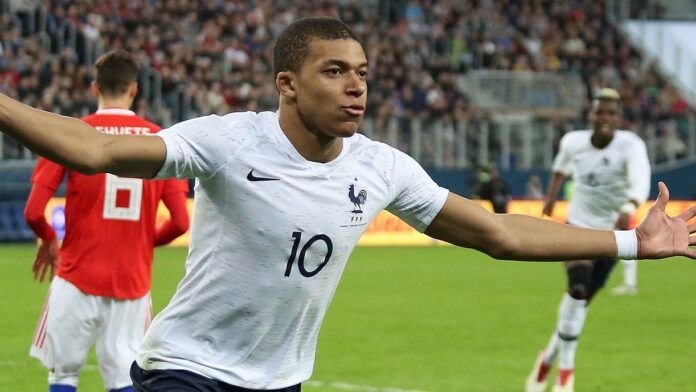
Kylian Mbappé’s folded arms celebration, inspired by his brother and quickly adopted into video games and merchandise. Though not officially trademarked, it has become a symbol of Mbappé’s brand identity.
Antoine Griezmann’s dances, including the “Take the L” Fortnite dance, which he brought to football. The crossover between gaming and sport was so effective that Griezmann capitalised on this image in marketing and brand partnerships.
Jesse Lingard’s “J-Lingz” hand gesture, later tied into his clothing line and overall branding strategy. The celebration helped embed his logo in fans’ minds and became a central feature of his merchandise.
Erling Haaland’s “Zen” pose, calm and focused amidst chaos, it’s been used in Nike campaigns and social media graphics as a symbol of composure and power.
New Arsenal signing Viktor Gyökeres’s mask celebration, fingers interlocked to form a mask across his face, has become one of the most distinctive in modern football. While fans and media have speculated that it draws inspiration from Bane in The Dark Knight Rises, Gyökeres has playfully denied every theory, fuelling intrigue with each goal. The mystery surrounding the gesture has only added to his personal brand, creating a unique visual identity that sets him apart on and off the pitch. In an era where image matters, Gyökeres has leaned into mystique as a marketing tool, turning a simple celebration into a conversation starter, a meme, and perhaps soon, a monetisable symbol of his growing influence.
Goal celebrations were once fleeting flashes of joy. Today, they’re strategic assets, capable of generating headlines, followers, merchandise sales, and legal disputes.
By creating celebrations that are visually distinct and emotionally resonant, players can turn a moment of joy into a long-term commercial opportunity.
Intellectual Property and Imitation: The Legal Grey Zones
Trademarking a celebration offers legal protection, but only to a point. It doesn’t stop other players from mimicking a gesture on the pitch, nor does it prevent fans from copying it in tribute. What it does protect is the commercial usage of that gesture.
If a company wants to use a player’s celebration on a product, in an advert, or within a commercial context, they must now seek permission. That’s where disputes can arise.
Take Morgan Rogers, for instance, who also performs a similar “cold” celebration to Palmer’s. If Rogers can prove he was using the gesture first, and that it had some level of commercial or public recognition, he could potentially challenge Palmer’s trademark claim. These situations become more complex when legal teams get involved, and while many cases don’t end up in court, they can cause friction between players and clubs.
In most cases, imitation is harmless, it becomes part of football culture, something fans and players engage with for fun. But the moment money is involved, particularly when a celebration appears in licensed merchandise, digital content, or promotional material, trademark protection becomes critical.
Branding vs Authenticity: Has Football Lost Its Spontaneity?
For all its commercial upside, the monetisation of celebrations raises questions about the changing nature of the game. Celebrations were once raw, emotional, and improvised. Now, with cameras trained on every movement and the potential for marketing spin around every gesture, the line between authenticity and performance is increasingly blurred.
Are players celebrating for their teammates, or for the branding clip that might go viral? Are moments of joy now rehearsed, curated, and copyrighted?
This is the new reality of modern football. Players are more than athletes, they are media assets and personal brands with intellectual property to protect.
Football’s Expanding Commercial Landscape
The rise of celebration branding is part of a broader trend: football is no longer confined to the pitch. The sport now intersects with entertainment, gaming, fashion, and lifestyle in a way that opens new commercial opportunities at every turn.
Celebrations offer high visibility moments that can be clipped, shared, and monetised. They connect fans to players on an emotional level, and, if done right, they become symbols that outlast the match itself.
The Future of Celebrations: What Comes Next?
As footballers become more aware of their image rights and commercial value, expect more legal protections, more curated gestures, and more cross-industry collaborations. We may see celebrations integrated into player-led product launches, used in augmented reality campaigns, or even tied to NFT releases and fan engagement platforms.
In short, the celebration has become a message. And in today’s football economy, messages have value.
Conclusion
Goal celebrations were once fleeting flashes of joy. Today, they’re strategic assets, capable of generating headlines, followers, merchandise sales, and legal disputes. As players become increasingly brand-conscious, the celebration has emerged as one of the most powerful pieces of real estate in the modern game.
ForeFront Football blends Barça heritage with science, emotion and intelligence to build a smarter, modern game.
ForeFront Football helps clubs, coaches, and players improve their performance by adapting FC Barcelona’s methodology and the “Location Game” to each project’s unique context and needs, while maintaining a science-backed approach to modern football training, emotional intelligence, and decision-making.
ForeFront Football: The Future of Coaching and Player Development
In an era when football is more data-driven than ever, ForeFront Football is taking a different route, one that blends science, methodology, and emotion to develop football clubs’ structures, smarter players and transformational coaches.
Founded in 2022 by Marc Quintana and Xavier Damunt, two former leaders from FC Barcelona’s La Masia, ForeFront brings over a decade of elite-level experience to clubs and coaches worldwide. Their mission: to help football institutions build a strong, adaptable game identity that endures beyond any one manager or generation.
At the core of their philosophy lies the “Location Game,” a modern evolution of Barça’s legendary Position Game. It’s a dynamic, ball-oriented system designed to keep players connected, enhance decision-making, and maintain collective control. Built on the principles of Complex Systems Theory and Neuroscience, this method nurtures adaptive intelligence, players learn to read the game, manage emotions, and make better decisions under pressure.
From the philosophy of Cruyff and Guardiola to modern neuroscience, ForeFront Football is turning knowledge into a new kind of performance, one where the beautiful game becomes even smarter.
Unlike traditional football consultancies, ForeFront works holistically, aligning every department, from scouting to sports science, around a shared philosophy. When advising clubs, the company’s approach ensures that knowledge and identity remain part of the club’s DNA.
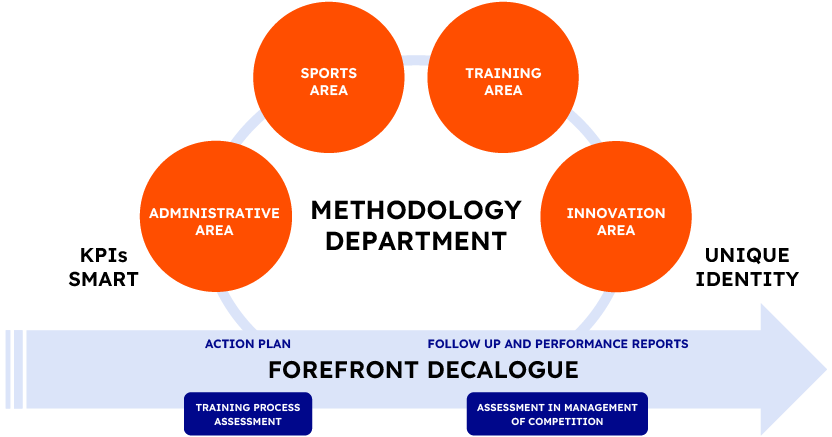
ForeFront Football’s Methodology Department aligns all areas of a club’s structure through a unified process: from training and innovation to performance metrics.
Through their ForeFront Method Development Program, coaches gain access to the same methodology that powered La Masia’s success, complete with video analysis, interactive lessons, and practical tools to apply on the pitch.
Looking to the future, ForeFront predicts that personal tactical analysts will soon become as vital to elite players as fitness trainers or sports psychologists. The company’s guiding idea is simple but revolutionary: emotions, intelligence, and methodology must coexist for football to truly evolve.
The company’s guiding idea is simple but revolutionary: emotions, intelligence, and methodology must coexist for football to truly evolve.
From the philosophy of Cruyff and Guardiola to modern neuroscience, ForeFront Football is turning knowledge into a new kind of performance, one where the beautiful game becomes even smarter.
Click here to learn more about about ForeFront Football.
Our exclusive interview with ForeFront Football
How did ForeFront Football begin? Who are the founders? What is the core mission of ForeFront Football today?
ForeFront Football was founded by Marc Quintana and Xavier Damunt in 2022, after meeting and working together for more than 10 years at FC Barcelona. With all the knowledge acquired and developed during this time, especially in the methodology department leading La Masia, with Paco Seirul·lo and Isaac Guerrero at the helm, we decided to put it at the service of other Clubs and coaches who are interested in this game idea and training method.
What differentiates ForeFront Football from other football/coach development consultancies?
The main difference is our way of understanding the methodology. It is often associated with the methodology department as those who designate, in the club, a way to play and train. This being true, we believe that the work of this department goes much further. It is also necessary to create a structure that allows the game idea to be developed and enhanced. And this happens mainly to align all the departments of the club in such a way that they understand that, although they may have their own objectives, they must also assume those related to their contribution to realize the idea of the game. The performance department, the scouting department, the medical department, the data science department or the communication department, to name a few examples, must align with a certain way of training and playing. This means that it is necessary to agree with the scouting department which player profiles are most interesting, which physical parameters the performance department should particularly monitor, or which game data we are interested in analyzing.
The methodology department must also be responsible for making this game idea more resilient, so that players and coaches can pass through the Club, but the idea must remain. Therefore, we are the ones who ensure the line to follow in the middle term, something important in the immediacy of the result in the match. This is interesting in the Clubs we advise, because the company ensures that it maintains the same philosophy, even though it may change the technical director or the coaches.
Another important point is to maintain and give value to the guiding framework of the club, which must be the game idea. It is important that, in order for the maximum number of players to reach the first team, or at least to other professional clubs (with the financial benefit that comes with it), that the players in all categories have the same game idea. This does not mean that all coaches do the same tasks and play exactly the same, this would not be functional or good for the development of the players. We mean that the coaches give value to certain intentions, that is to say, that they promote shared affordances, which support the game idea. This respects the particularities of each coach, which give richness and experience to the players, as well as the different abilities of each player, given that the set of intentions that shape the game idea can be carried out in multiple ways. In this way, we move away from more rigid game models, which are not flexible enough to foster the improvement of players’ decision-making, nor to adapt to the specific needs of each match in order to win it.
The methodology department must also be responsible for making this game idea more resilient, so that players and coaches can pass through the Club, but the idea must remain.
All this is achieved with a good welcome to the new professionals who enter the club, a training plan in this game idea or the new coaches, by making flow and ensuring the traceability of the information that the coach possesses, and with the management of the knowledge so that it remains in the entity; so it is not affected by when a coach leaves the club.
A key example of this is the generation of potential profiles: we analyze the most talented players in the club to find out their strengths and what they need to optimize, to generate a training action plan. The methodology department accompanies throughout the process, but both the analysis and the implementation of the plan are carried out by the coach. But this support ensures that the plan has consistency over the years, in addition to extracting the information from the coach and keeping it within the organization.
All of this makes no sense if, in the club where the game idea is implemented, the club’s own idiosyncrasy, philosophy, and values are not respected — understood as those of its supporters, players, directors, and the social environment around it. Therefore, it is not simply that the game idea must adapt to the reality of where it is applied; rather, because it is a flexible idea and not a rigid game model, these values will inevitably shape the club’s game idea. At the same time, this ensures that it can be implemented successfully in clubs all around the world.
You emphasize the “Location Game” as central to your game idea. Can you explain what it is, and why you believe it works?
The Location Game is known as the evolution of the Position Game. It is the game idea developed at FC Barcelona, especially from Guardiola’s time with the first team.
The Location Game is known as the evolution of the Position Game. It is the game idea developed at FC Barcelona, especially from Guardiola’s time with the first team. It is an associative and proactive style of play that organizes players around the ball, maintaining short relational distances across two contour lines. This organization on the field is optimal for carrying out, at all times, the two fundamental intentions: to maintain possession and to disorganize the opponent. When the team does not have the ball, the goal is to recover it as quickly as possible, and the organization around the ball allows for this to happen effectively.
Because the main organizational reference is the ball itself—as the team structures itself based on where the ball is, which is constantly moving—the game becomes less positional and much more dynamic and relational. From this short-distance organization emerges a multidirectional style of play that enables control over both the ball and the tempo of the match. Players have multiple passing options because they are all relatively close to one another and positioned on two levels or height lines, thus constantly forming dynamic associative triangles.
The genesis of this, as we have said, is FC Barcelona, but we have taken care to be able to understand this idea from a scientific perspective, basing ourselves above all on the Complex Systems Approach, understanding the team as a dynamic and adaptive complex system, in relation to its context. We also consider motor Praxeology important to optimize motor communication between players, which is basic in this sport, and more so if you play in short contact distances. Based on what science tells us, we can better understand our game idea and understand why it is functional. And, above all, it allows us to know what the key points are to implement it in any team. As you can see, this proactive and associative game idea is no longer the unique heritage of FC Barcelona, and we can assure you that it can be implemented in any club.
There is another important aspect: since it is an associative game idea, it keeps players in constant contact with the ball and allows them to make continuous decisions during training. This provides an ideal framework for player development in the formative stages.
In your “pedagogical exchange” approach, how do you see the role of the coach changing (from transactional to transformational leadership)?
The pedagogical exchange, understood as everything the coach does to optimize the player’s development, is closely connected to the game idea. It’s obvious: we train the way we want to play. Therefore, within task design, there are various rondos, position games, and situation games. However, the coach’s role goes far beyond that.
Pedagogy and neuroscience show us that some ways are better than others when it comes to promoting motor learning in players. Coaches must act in ways that support this natural learning process; which, from a complex systems perspective, is the player’s ability to adapt to the context through the multiple possibilities for action available to them.
We understand this as being closely related to transformational leadership, which helps players develop by designing game contexts where they can explore solutions, by engaging with them to understand what they think and why they act in a certain way on the field, and by helping them find their own responses based on what happens in play.
Transactional leadership, on the other hand, does not aim for this. It focuses on explaining how things should be done based on an ideal game model or a motor pattern, paying little attention to the player’s individuality or to the real situation. Likewise, training design under this approach seeks to achieve predefined objectives set by the coach.
We avoid seeing this as black or white, but we believe that in formative stages, transformational leadership is essential, whereas in performance teams, a transactional style may sometimes be necessary due to the demand for immediacy. However, even then, it should maintain a transformational vision that allows players to internalize and evolve the game idea over time. Success in football does not come from reaching a theoretically perfect state of play, but from developing a functional game that evolves continuously. The moment you fixate on one specific way of playing, the opponent can identify and counter it. The way to reach and stay at the top is, paradoxically, to promote change while remaining within the basic principles and intentions of your game idea.
You mention “emotions and decision making” in players. How do you practically integrate that in training (vs. purely technical/tactical work)?
The question we should ask ourselves is why, traditionally and even today, emotions have often been overlooked, when they are an inherent part of the player and, as neuroscience shows us, essential for decision-making.
We propose training players naturally, which means taking their emotions into account. They are not machines or pawns that the coach moves around the field. Players make decisions on the field, and these decisions are partly influenced by their emotional state. Emotional management is crucial. A transformational leader, using the pedagogical tools provided by our training, can create game contexts where players are able to make decisions, regulate their emotions, and together extract conclusions and receive feedback to optimize the process. Optimizing this is inseparable from optimizing both the game and the player.
Not only that. The brain’s mechanism for unconscious decision-making uses the emotions generated by the perception of the context and the player’s own bodily state. Decision-making is emotional. Therefore, our approach goes beyond simply respecting and including emotions in training. This has implications for how training sessions are designed and which emotions players are expected to experience in game contexts, guiding them toward specific decisions.
For example, we propose conducting training with an emotive-volitional preference, following the line of Preferential Simulation Situations and Paco Seirul·lo’s player structures. This means training game contexts with a focus on emotional and motivational aspects.
Can you walk us through a typical “coach consultancy” engagement? What are the steps, tools, deliverables?
We adapt to the needs of the coaches. Basically, there are two groups of needs. The first group includes coaches who want to deepen their understanding of the training method and the game idea we propose, and then they adapt it to the reality of their own team.
The second group consists of those who also want us to analyze their matches and/or training sessions to monitor the implementation of the method. Often, coaches from the first group eventually move into the second. In some cases, we end up acting as analysts and advisors to the staff of that team.
How do you do the player consultancy?
To help professional players improve their performance, we start with an initial analysis of the player, primarily based on the intentions they express in their play. In this case, we focus on their individual intentions, even though these are likely related to collective intentions. We limit ourselves to the individual ones because our advisory work is directed at the player, and we do not want to interfere with the team’s coach’s work. What we do is provide the player with tools to respond effectively to the contexts they face during the match.
The next step is to agree on an action plan with the player. By combining our observations with the player’s self-awareness, we identify the intentions to optimize and enhance. It is important to understand that we optimize or enhance intentions that the player is already expressing and that align with the needs of the team. We can also propose introducing intentions that the player is not currently expressing in the action plan, provided the player agrees and they fall within the valid range of intentions for the type of game the team plays.
The player’s subsequent matches are analyzed, and video feedback is provided based on their performance in relation to the agreed action plan. The action plan is adjusted after certain matches depending on how the player’s performance develops.
Throughout the process, our approach to contextual decision-making with an emotional component remains central.
What is the “ForeFront Method Development Program”? What do coaches undergo, and what outcomes do you hope for?
All our services are related to club consultancy. When advising a coach, we provide access to the training method and the game idea that we have studied extensively over the years in FC Barcelona. Player consultancy involves adapting the potential profiles we developed for future La Masia stars.
The same applies to the development program. The courses are designed to be available to the coaches of the clubs we advise, but they are also open to any coach who wants to further their education.
These courses explain our method: the Location Game, how to train the Location Game, and how to optimize the player within this method. Within the courses, coaches find texts, match videos, interactive resources, and they can also complete activities that we use to provide feedback.
How do you measure progress and success (KPIs, metrics)?
In the case of clubs, we establish objectives at the start of the project. From these objectives, specific actions are defined, which can be measured using KPIs. We strive to make our work objective and transparent, which is why we measure the impact of the proposed actions and provide the club’s board with an application that shows the current status of the actions, the KPI values, and the acceptance criteria that have been determined. The KPI acceptance criteria are adjusted according to the club’s initial situation in relation to the goal to be achieved. This is another example of the necessary adaptation of the method to the reality of the club where it is implemented.
At the same time, all this information allows us to monitor the action plan and redefine it if necessary.
In the case of advising players and coaches, the action plan itself determines the current status of the project and which objectives need to be further pursued.
What do you see as the future of coach/player development over the next 5–10 years?
In the current context of data and information overload, the coach does not need more data but rather a synthesis of it; in other words, they need quality information. This analysis of data and gameplay can be carried out by the coaching staff themselves, or it can also be understood that part of this staff is ForeFront Football. As mentioned, coaches are increasingly accustomed to sharing and growing together, and it is not unusual to have external advisors and/or game analysts.
The same applies to high-level players. Many already have their personal strength and conditioning coach and trusted physiotherapist. Some have their own psychologist. They increasingly understand that they need to invest in themselves to remain competitive. A personal analyst, who helps the player make better decisions on the pitch and with whom they agree on improving certain individual intentions to practice during team training, is gradually finding a place within the professional player’s staff. We believe that in the coming years, this will become increasingly common.
What philosophical or theoretical influencers have shaped ForeFront’s approach (in football, education, psychology, leadership)?
We always want our actions to be explainable through science. During the time at FC Barcelona, we wanted to nurture people who would help us to be able to explain what we were already observing, rather than the traditional vision, expressed by decontextualized or defragmented models of play or training.
We have the influence of the complex systems group at the University of Barcelona, formed, among others, by Natàlia Balagué, Carlota Torrents, Ángel Ric or Rafel Pol, currently PSG’s assistant coach.
Thanks to coordinating the FC Barcelona Masters for a few years, conducting the Coach Academy at the Barça Innovation Hub, or organizing internal training for the Masia coaches, we were able to contact and share with other experts, of whom we highlight Duarte Araujo, or the neuroscientist David Bueno. We have also read a lot from the neuroscientist Antonio Damásio, with reference to emotions in decision-making, Pierre Parlebas and his motor praxiology, or Gabriele Wulf and Nick Leithwaite and their optimal theory.
In a more footballing field, we have the influence of Paco Seirul·lo and Isaac Guerrero, through whom we have been able to understand the evolution of this idea of play, from Johan Cruyff to Luis Enrique, via Guardiola.
The official logo of Women Football Club, symbolising strength, diversity and global unity through football.
When French Turkish entrepreneur Berivan Colak founded the Women Football Club (WFC) in Istanbul in 2014, it started as a simple but powerful idea: create a safe and inclusive space where women could enjoy football freely. What began as Turkey’s first leisure female football team has since grown into a global network that connects women across cultures and continents.
From a Dream to an International NGO
Registered as a non profit organization in France, WFC quickly became more than just a football team. With the vision The Sky is the limit and the motto Our Differences Our Strengths, the club positioned itself as a platform for diversity, equality, and empowerment. Today, WFC has an active presence in Turkey, France, Spain, the UAE, and the UK, with more expansion on the horizon.
Over the last decade, more than 700 women from at least 12 nationalities have worn the WFC shirt. Ages range from teenagers discovering football for the first time to women in their fifties keeping their love for the game alive. There are no barriers of entry – no matter one’s background, skill level, or profession, everyone is welcome.
The Social Dimension of Sport
The most powerful aspect of WFC lies beyond the pitch. While football is the unifying activity, the deeper purpose is to create a community where women can support and uplift each other in all areas of life.
For many members, WFC is the first space where they feel completely accepted – regardless of their background, culture, or experience in sport. It is a place where newcomers to a city can immediately find a network of friends, where job opportunities are shared, and where members help one another with challenges such as balancing family responsibilities or adapting to a new culture.
This social fabric is strengthened by WFC’s commitment to inclusivity. Members actively learn from one another’s differences, whether in beliefs, traditions, or lifestyles. The club shows how diversity is not an obstacle but a source of strength. On the pitch, this translates into teamwork and resilience. Off the pitch, it creates friendships and solidarity that extend far beyond the game.
WFC also partners with other non governmental organizations to broaden its social impact. Its members regularly contribute to animal shelters in Turkey and France, take part in community projects, and organize events with local institutions. These activities underline that football is not just about competition – it is a vehicle for civic engagement and positive social change.
The stories of individual members highlight the transformative power of this community. Some women join WFC after years of being told that football was “not for them” and rediscover their confidence by kicking a ball for the first time. Others use the club as a way to cope with loneliness in a foreign country, finding companionship and emotional support in their teammates. For many, WFC has become a second family – one that celebrates victories together, but also stands side by side in times of difficulty.
By giving women a safe and empowering space, WFC tackles some of the most persistent challenges in women’s sports: lack of visibility, stereotypes, and limited access to inclusive structures. In doing so, it shows that the social dimension of sport is not secondary, but central to building healthier, more resilient, and more connected communities.
Visibility and Recognition
WFC has not gone unnoticed. The club has been featured on international media outlets like TRT World and has played a visible role in major events, including representing women’s football at the UEFA Champions League Festival in Istanbul in 2023. Partnerships with institutions such as consulates and brands like Petrol Ofisi have further amplified its profile.
These appearances highlight WFC’s dual role: promoting women’s participation in football while also serving as a model of diversity and inclusion in sport.
A Unique Community
What makes WFC stand out is the way football becomes a bridge across cultures and lifestyles. Members include students, professionals, and unemployed women alike, all united by their shared love of the game. The club has created an environment where women of different religions, beliefs, and life paths learn to respect one another, collaborate, and build lasting friendships.
The emotional impact of this cannot be overstated. For many, WFC is not only about sport but also about confidence, belonging, and empowerment. Joining the club means stepping into a space where they can show up as their true selves, without judgment or expectation. On the field, women find freedom, joy, and strength; off the field, they find a support system that helps them through everyday challenges.
The sense of solidarity is especially meaningful in a world where women’s opportunities in sport have historically been limited or overlooked. WFC gives its members more than just a chance to play football – it gives them visibility, recognition, and a voice. It proves that women’s football is not just about competition but about creating safe spaces where women can thrive, inspire one another, and redefine what inclusion in sport really means.
In this way, WFC is not only building teams but also shaping a new culture of togetherness. Each training session, each match, each shared moment strengthens the idea that diversity is a resource, not a barrier. By embracing differences, the community shows that unity does not mean uniformity – it means building strength from individuality.
The message is clear: women’s football is not just a game. It is a movement for equality, respect, and empowerment, and communities like WFC show that when women are given the chance to come together, they do not just play – they change the game for everyone.
The Road Ahead
The road ahead for Women Football Club is both promising and challenging. The organization is preparing to expand further, with new chapters opening in Paris, Marseille, Barcelona, and Madrid. These developments mark the next stage of growth, turning WFC into a truly pan European movement. Each new team means more women gaining access to football, more opportunities for empowerment, and more communities built on respect and diversity.
At the same time, the journey of WFC reflects the broader path of women’s football worldwide. While the women’s game has made remarkable progress in recent years, it still faces structural challenges. Compared to men’s football, resources remain limited, visibility is lower, and investment is only slowly catching up. Grassroots initiatives like WFC therefore play a crucial role: they build the foundations where professional structures are still developing and show that the demand and enthusiasm for women’s football is real and growing.
Support is needed on many levels – from local communities providing safe spaces to train, to brands and institutions willing to invest in women’s teams, to media outlets ensuring fair coverage. Every step of backing helps women’s football gain stability and legitimacy. Organizations like WFC demonstrate that the sport can thrive when inclusion, passion, and purpose drive development.
Looking ahead, WFC aims to be more than just a football club. It wants to stand as a symbol of what the future of women’s football can look like: diverse, accessible, and socially impactful. The expansion into new cities is not simply about fielding more teams, but about cultivating ecosystems where women are given the chance to play, to lead, and to inspire.
If women’s football is still building its foundations on the global stage, WFC is one of the architects laying the bricks. And with every new member who joins, every match played, and every community supported, the organization proves that football has the power to change not only the game but also the lives of those who play it.
Andrés García, Atlético Madrid Women’s scouting lead, shares his tactical vision during a coaching session.
In 2010, an injured 17-year-old Spaniard sat on the sidelines of a high school field in Michigan. What he saw there – dozens of girls’ teams playing with skill and passion – changed his life.
“I left Spain with almost no notion of women’s football and came back with the feeling I had discovered something that didn’t exist in my country,” recalls Andrés García.
Andrés García (born 1992 in Madrid, Spain) is a leading professional in women’s football. He currently serves as Head Scout and Player Recruitment Lead at Atlético de Madrid Women, where he is responsible for identifying, recruiting, and integrating top-level talent into one of Spain’s most competitive squads.
His career at Atlético de Madrid spans multiple roles – from youth coach to methodology coordinator, scouting coordinator, and now first-team head scout. Beyond the club, García has gained international experience in the United States, Canada, and the United Kingdom, coordinating football camps and supporting player development across borders. He is also the founder of Madrid Norte CFF, a project designed to promote women’s football and create competitive opportunities for female players in Spain and abroad.
With a UEFA A coaching license and a degree in education, García combines analytical expertise with empathy and pedagogy. He is widely recognized for his ability to build trust with players and families, to identify emerging talent, and to introduce innovative methodologies in player development. His career reflects the rise of women’s football in Spain, which has grown into one of the global leaders of the game.
Our exclusive interview with Andrés García
You have been involved in women’s football for over a decade. What first drew you to the women’s game, and how did those early years shape your philosophy as a coach and scout?
I discovered women’s football in 2010 when I was 17 and studying in Michigan. Because of a long-term injury, I couldn’t play, but I observed. What struck me was how many girls were playing, and their level of skill and tactical awareness. Imagine dozens of natural-grass fields, games on every pitch, parents sitting in chairs, and me, a Spanish teenager, amazed by what I was seeing. Back in Spain, women’s football was practically invisible. That contrast motivated me to recreate what I had seen: a methodical, analytical way of working, built on patience and strong technical foundations. These principles have guided me ever since, both in coaching and scouting.
That contrast motivated me to recreate what I had seen: a methodical, analytical way of working, built on patience and strong technical foundations.
You’ve held several positions at Atlético, from youth coach to Head Scout. Which role challenged you the most, and how has each step prepared you for your current position?
Every role has been demanding. Coaching players in the academy was never just about football, it was about instilling values and representing Atlético in the right way. Scouting, by contrast, meant finding outside what we lacked inside. It is a 360-degree process: analyzing a player, talking to her, convincing her to join, and then ensuring her adaptation in the first year. Both experiences have been essential. They complement each other and prepared me for the position I hold today as Head Scout of Atlético de Madrid Women.
When scouting, what qualities do you prioritize beyond technical ability? How do you balance potential versus immediate performance?
When analyzing players, we always follow three principles. First, the technical-tactical and physical aspects, to compare with our current squad. Second, the performance aspect: how long do we believe the player will need before contributing at the required level? And third, the cultural aspect: once convinced by the first two, we interview the player and gather references to ensure she fits our team culture.
As a Methodology Coordinator, you worked on implementing playing models across different age groups. What is your vision for developing players in a consistent yet individualized way?
The challenge was often to break away from what seemed logical. Two examples stand out:
Competing against boys: Our academy teams often played against boys from U-10 to U-14, because at that stage mixed football is still allowed. This gave the girls the intensity and competition they needed.
Street Football: Inspired by conversations with our current first-team coach Víctor Martín Alba and Pep Guardiola’s “let the child play” philosophy, we created 3×3 games without coaching feedback. Players had to make their own decisions, resolve conflicts, and develop personality. Watching these sessions was fascinating, because you could see players growing in decision-making, resilience, and game intelligence. Both approaches encouraged consistency across age groups while respecting individuality.
Watching these sessions was fascinating, because you could see players growing in decision-making, resilience, and game intelligence.
You describe yourself as proactive and reflective. How do these qualities influence the way you lead teams, interact with families, and make recruitment decisions?
Empathy is essential. Families often make extraordinary sacrifices – driving hours to training or even relocating – just because we showed interest in their daughters. In my position, I sometimes had to step in and prevent these decisions, because the player’s well-being is more important than ambition. Inside the club, I’ve always tried to remain approachable. Even now, focused on the first team, I maintain contact with players, staff, and families from the academy. Development is about people and relationships, not just performance.
You have worked in Spain, the USA, Canada, and the UK. How have these different football cultures influenced your approach to scouting and player development?
I have gone through different phases in my career. At the beginning, I valued the methods abroad more than those in Spain, because women’s football here had so few resources. Now, I’ve built what I call a “cocktail” of ideas. From the U.S., I adopted the “one ball, one player” model to strengthen fundamentals. But I also realized that American and Spanish players have different profiles, and in Spain more emphasis is placed on tactical intelligence and decision-making.
Working in Canada and the UK also added perspectives. In Canada, I saw how grassroots football provides pathways for participation on a massive scale. In the UK, I experienced the academy culture, which focuses heavily on structure and long-term planning. These reflections have evolved alongside the growth of women’s football in Spain, both nationally and at club level. Today, Spain is one of the top three countries in the world, and I’m proud to have contributed to that progress.
What are your long-term ambitions in women’s football? Do you see yourself continuing in scouting and recruitment, or moving back into coaching and methodology?
What I know for sure is that I want to remain in women’s football. I enjoy challenges, and I’m fortunate to work closely with Patricia González, our Sporting Director, who has taught me a great deal about building processes and managing a professional sporting department. Looking ahead, I see myself in a leadership role – perhaps as head of an academy or sporting director – where I can continue contributing to the growth of players and the club.