
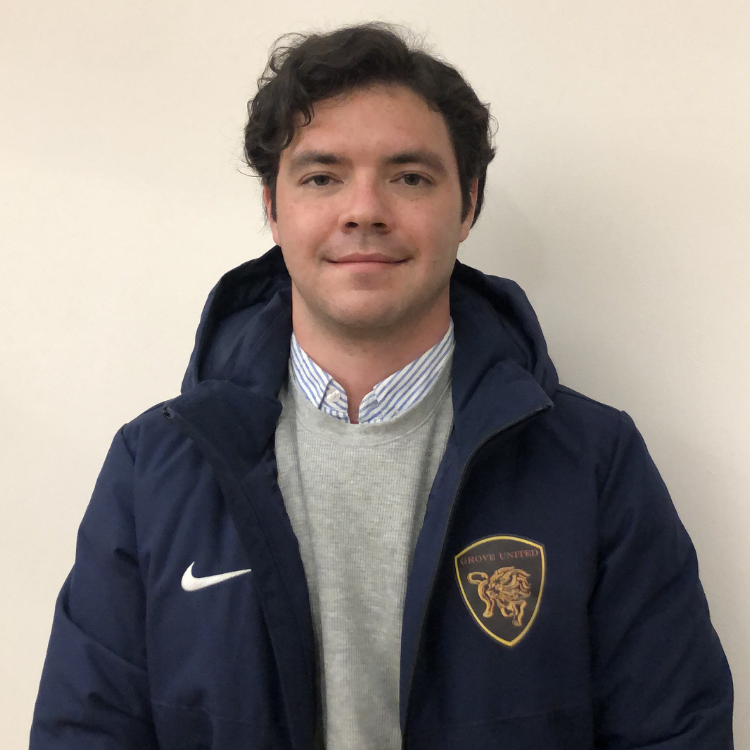
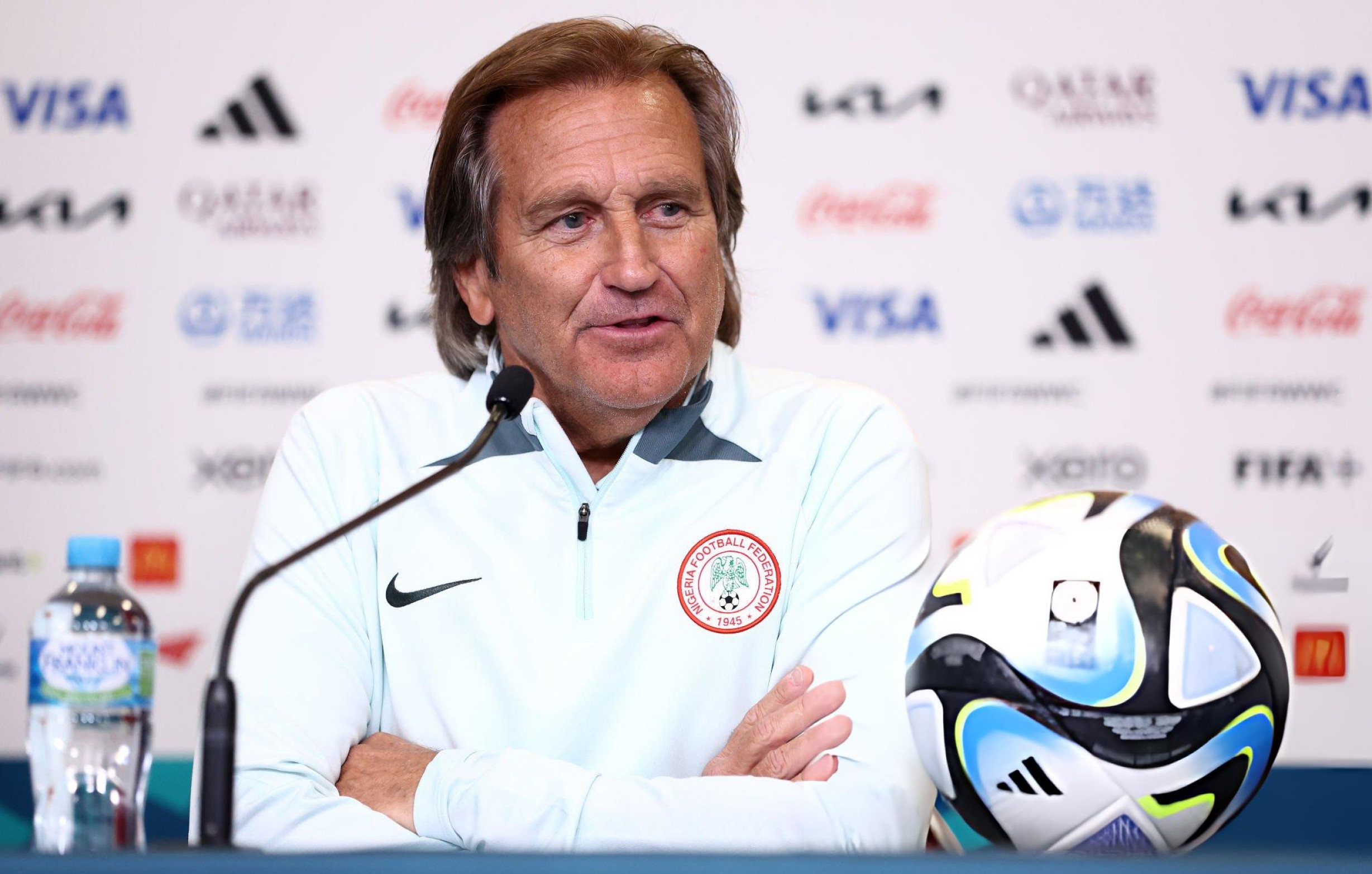
Profile
Role: Technical Director at the University of Pittsburgh
Specialisation: Women’s soccer, player development, recruiting, program building and international coaching
Experience: University of Pittsburgh, Nigeria, Notre Dame, Houston Dash, Trinidad and Tobago, Baylor University, University of Tulsa and U.S. Soccer Federation
Focus Areas: Recruiting, roster management, NIL strategy, player development, women’s football and national team coaching
Biography
Few American coaches have shaped women’s soccer across college, professional, and international levels like Randy Waldrum. Currently the Technical Director at the University of Pittsburgh, Waldrum rose from modest beginnings in the U.S., where soccer had little mainstream presence, to lead Nigeria at the FIFA Women’s World Cup and Olympics, building a career defined by adaptability, innovation, and a relentless passion for developing the game.
Few American coaches have shaped women’s soccer across college, professional, and international levels like Randy Waldrum.
Born and raised in the U.S., Randy Waldrum progressed through the high school and collegiate ranks before playing professionally for the Los Angeles Skyhawks. In 1981, Waldrum transitioned into coaching, leading both the men’s and women’s teams at the University of Tulsa while also serving as a coaching instructor for the U.S. Soccer Federation.
In the mid-1990s, Waldrum shifted his focus to women’s soccer, recognising its potential for growth and innovation. After a successful spell at Baylor University, he took over at Notre Dame in 1999 and built one of the most dominant eras in NCAA history. Across 13 seasons, Notre Dame reached eight Final Fours, appeared in five national championship matches, and won two NCAA titles, while also coaching the U.S. U23 women’s national team in 2012-2013.
Waldrum later moved into the professional game as head coach of the Houston Dash from 2014 to 2017 during the formative years of the NWSL. Despite limited resources, he coached several world-class players, including Carly Lloyd, Janine Beckie, and Erin McLeod. Alongside his club responsibilities, he also led the Trinidad and Tobago women’s national team, further strengthening his international reputation before being appointed head coach of Nigeria in 2020.
With Nigeria, Waldrum guided the Super Falcons to the Round of 16 at the 2023 FIFA Women’s World Cup, qualifying past the Group of Death including Canada and co-hosts Australia, before narrowly losing to England on penalties, all with just 10 days of pre-World Cup preparation. He then led Nigeria to qualification for the 2024 Paris Olympics, securing the nation’s first appearance in women’s football in sixteen years.
He then led Nigeria to qualification for the 2024 Paris Olympics, securing the nation’s first appearance in women’s football in sixteen years.
Since 2018, Waldrum has built Pitt University’s women’s soccer program into a nationally competitive team through domestic and international recruiting. As Technical Director, he oversees recruiting, roster management, NIL strategy, and the long-term direction of the program.
Across more than four decades, Randy Waldrum has played a major role in the growth of women’s football in the United States and internationally. His career reflects not only tactical success, but also his ability to develop players, build programs, and adapt to the changing landscape of the modern game.
Key Insights
- Randy Waldrum has shaped women’s soccer across college, professional and international levels.
- He led Nigeria at the FIFA Women’s World Cup and helped secure qualification for the 2024 Paris Olympics.
- At the University of Pittsburgh, his role combines recruiting, roster management, NIL strategy and long-term program direction.
Here’s Our Exclusive Interview with Randy Waldrum
Tell us about your soccer journey?
Back then in the US, it was a bit different than in Europe and other parts of the world. We didn’t have soccer in our community, so I started later, at the age of 12. I had never really heard much about it until a Swedish gentleman, Eric Nordstrom, moved to our city and started a league.
I went the normal path of a US player, through the high school and university system, and was eventually drafted into the professional game through the American Soccer League (ASL), which was connected with the NASL era and teams like the Cosmos. I was drafted by the Los Angeles Skyhawks, but after a season or two the league folded financially.
My family owned a business manufacturing signs for hotels, restaurants, and other businesses, and most of my family worked in that business. But I wanted to stay involved in soccer somehow, so I got my degree in education. Back in the States in the mid-to-late 80s, about the only way you could make a living in football was by coaching at high schools or universities. We didn’t have youth clubs like we do now where you could build a career.
So in 1981, I took my first coaching job at a high school, coaching boys soccer, and I did that for about five years. I had ambitions to coach at a higher level, not that there’s anything wrong with high school football, but it wasn’t my long-term aspiration. I wanted to work in the college and national team system.
That led me to my first university job at Tulsa, where I coached both the men’s and women’s teams at the same time. That was my first real experience with women’s soccer. Through the university system, I connected with mentors who had ties to US Soccer. The federation thought I was doing a good job, so I was brought onto the technical staff, where we taught coaching licenses, the A, B, and C licenses. In parallel with my university work, I spent around 20 years as an instructor for US Soccer.
That opened more doors within the federation, and I started assisting with youth national team camps. Then in the mid-90s, I had to make a big decision about whether I wanted to stay in the men’s game or move into the women’s game, which was really exploding in the US at the time.
I felt the opportunities and pathway to the national team and professional level were stronger on the women’s side. In the men’s game, even back then, it often seemed like big European coaches were given priority and recycled through different jobs. In women’s soccer at that time, there weren’t many highly experienced coaches yet. I also really enjoyed working with female athletes because they were eager to learn and eager to be coached. So I made the move into women’s football in the mid-90s.
I took a job at Baylor University coaching the women’s team, and that’s when more doors started opening for me with the national team system. From there, things really grew. I then went to Notre Dame, where I spent 13 years. During that time, we reached eight Final Fours, played in five championship games, and won two national championships.
Then the NWSL started, and a franchise opened in Houston, near my hometown of Dallas, Texas. One of my goals had always been to coach professionally, so I accepted the head coaching role with the Houston Dash. I was there for about three or four seasons, and during that time another opportunity opened up, coaching the Trinidad and Tobago national team. At the time, they didn’t have the funding for it to be a full-time role, so I was able to combine it with my work at Houston.
During my time with Trinidad and Tobago, we came heartbreakingly close to qualifying for the 2015 Women’s World Cup. We drew Ecuador away, and at home we lost in the 92nd minute to a free-kick goal. Ecuador ended up being the final team to qualify. Around that same period, I was also called onto the coaching staff of the US U23 national team.
After those experiences, I knew I wanted to work more in the national team and professional environments.
After leaving Houston, I actually returned to the college game because, in the early days of the NWSL, the college system was far more stable and better resourced than the professional league. At Houston Dash, I didn’t even have a full-time assistant coach. Some academy coaches would come in and help. We didn’t have a physio, sports scientist, training field, or even proper office space. It was a startup league at the time.
So I decided to return to something more stable, which led me to Pitt about eight years ago. But along the way, the Nigeria opportunity came up.
After leaving Houston, I spent about four or five months out of coaching, taking a breath, recharging, and figuring out my next step. Around that time, Sunil Gulati, who was the president of US Soccer and someone I had built a strong relationship with during my years with the federation, called me one summer to ask if I’d be interested in the Nigeria head coach job. I told him I was interested, and then we hung up. After that, I didn’t hear anything more.
Then about a month later, I woke up one morning and my phone was exploding with messages from people congratulating me on becoming the new Nigeria head coach. I started seeing media headlines in Nigeria announcing it, and the funny thing was, I had never actually spoken to anyone from the Nigerian federation.
For about three months, I was constantly trying to contact the federation president to get details about the role, the contract, and the expectations. During that period, I was also offered the position at Pitt, so eventually I accepted it. I emailed the Nigerian federation president explaining that I had to take the Pitt job because there had been no communication for three months. As soon as I sent that email, he responded saying they were still interested, but by then it was too late because I had already signed with Pitt.
Nigeria then hired Thomas Dennerby, who coached them through the 2019 World Cup. He left midway through 2020, during the Olympic qualification cycle, and that’s when Nigeria contacted me again and asked whether I would reconsider the role.
I told them the only way I would do it was if I could keep my position at Pitt. I had a very good setup there, and fortunately they agreed. So I took the Nigeria job in 2020 and coached the team for four years, leading them through the 2023 Women’s World Cup in Australia and the 2024 Olympics in Paris before stepping down after the Olympics in September.
Because I spent so much time away with Nigeria, my role at Pitt evolved over time, with my son taking on most of the day-to-day coaching responsibilities. Since returning, we’ve officially moved him into the head coach role, while I’ve shifted more into a technical director position at the university.
At this stage of my career, if the right professional or national team opportunity came along, I would definitely take it. I really enjoyed the national team environment with Nigeria. There were many difficult moments, but there’s nothing quite like coaching at a World Cup or the Olympics, and I would love the opportunity to experience that again.
There were many difficult moments, but there’s nothing quite like coaching at a World Cup or the Olympics, and I would love the opportunity to experience that again.
You are currently technical director at Univ of Pittsburgh, what does your role consist of?
So what has happened in college athletics over the past few years is that a number of lawsuits were filed by student-athletes against universities. The athletes argued that universities were making huge amounts of money, especially from American football and basketball through television contracts and sponsorships, while the players themselves were receiving nothing, even though they were the ones performing and driving the business.
Long story short, about a year ago those lawsuits were settled, and now college sports in the US are changing dramatically. Universities can now, if they choose to, although it’s not mandatory, raise and distribute up to around 20 million dollars directly to athletes. Because of that, the system is becoming much more professional. It’s no longer really amateur athletics.
Some of the top athletes in college basketball and American football are now making anywhere from half a million to two million dollars a year. It’s starting to trickle down into our sport, football (soccer), as well.
So my role has changed quite a bit. My job now involves managing our roster, overseeing all of our international recruiting, and working with NIL deals, which stands for Name, Image, and Likeness. It’s similar to the professional game, where players can earn money from the rights to their image, endorsements, and sponsorship opportunities.
Schools can now facilitate those opportunities for athletes, so in many ways the role has become similar to that of a General Manager in professional sports. I’m still coaching every day and helping with the team on the field, but we also have other assistants who handle domestic recruiting, travel logistics, hotels, and operational details.
My role is more on the technical and strategic side now, managing budgets, scheduling opponents, overseeing recruiting, and helping guide the overall direction of the program.
What is your recruitment strategy (domestic and international) for a top University soccer program?
At the youth level in the U.S., recruiting starts incredibly early. Beginning June 15 before a player’s junior year of high school, college coaches are allowed to directly contact prospects and even make scholarship offers. That means many athletes are committing to universities while they still have two full years of high school remaining.
When we arrived at Pitt in 2018, the program wasn’t yet nationally competitive. In its 22-year history, the team had only experienced two winning seasons. We knew that if we relied solely on traditional domestic recruiting, it would take several years before we could attract elite American talent. Recruiting cycles were already two years ahead, and we couldn’t afford to wait.
So our approach was: build for the future domestically while immediately raising the level of the team through international recruiting.
Early on, we brought in players from Canada, Germany and Spain because we needed to become competitive right away. At the same time, we slowly established our recruitment within the U.S.. Initially, the top domestic players weren’t choosing Pitt because the program simply hadn’t proven itself yet.
Within five years, though, the transformation was dramatic. We reached the NCAA Tournament and advanced to the Round of 16, placing us among the top programs out of roughly 350 Division I universities. The following season, we reached the Elite Eight. In a relatively short period of time, Pitt evolved from an underperforming program into a consistent Top 25–30 team nationally.
In a relatively short period of time, Pitt evolved from an underperforming program into a consistent Top 25–30 team nationally.
Our recruiting philosophy has always been to pursue the best domestic players possible while simultaneously building strong international pipelines. My experience coaching Nigeria has been especially valuable in that regard. Over the past three years, we brought four Nigerian players to Pitt, including Debby Abiodun, who has since gone on to play professionally for the Washington Spirit in the NWSL. The other Nigerian players remain key contributors to our current squad.
We’ve developed recruiting networks across the world. Canada has been a natural connection given Pittsburgh’s proximity to Toronto, only about a four-hour drive away. We’ve also recruited players from Iceland, France, Morocco, and elsewhere. In fact, I recently returned from a recruiting trip to Sweden about a month ago. At this point, our recruiting operation is global.
How was your experience coaching the Huston Dash?
Like I mentioned earlier, this was during the very early years of the NWSL, and the league was nowhere near what it has become today. Now clubs have dedicated stadiums, full professional staff, and much stronger infrastructure. Back then, though, things were still developing.
My time in Houston was still a great experience because we had some of the best players in the world on the roster. We had Carly Lloyd, Janine Beckie, Erin McLeod from the Canadian National Team, and several Brazilian internationals as well. The talent level within the starting group was excellent.
The challenge was that we were an expansion team, and some of the organisational decisions lacked experience. We weren’t able to build enough depth throughout the squad. As a result, while our starting eleven was very strong, every international window would hit us hard because we could lose seven top players at once to national team duty. Those early years involved a lot of learning lessons for everyone involved in the league.
Even with those challenges, I really enjoyed the experience. At the time, we were owned by the Houston Dynamo, but the women’s team didn’t yet have access to the same level of facilities. We trained at a public park with fifteen other fields around us and people walking by. I didn’t even have an office, so individual player meetings often happened sitting on a bench beside the field.
There were many things we lacked that made the job difficult, and honestly that played a role in my decision to return to the college game. In the college environment, especially at major American universities, the structure, staffing, and facilities are often comparable to top professional clubs.
That said, the NWSL is in a completely different place today than it was back then. The investment, professionalism, and resources have grown tremendously. Because of that, I would absolutely consider returning to the professional game in the future.
Leading Nigeria to the Women’s World Cup and Paris Olympics involved high pressure; what was your mindset in those tournaments and what were the most rewarding and challenging aspects?
I think everyone is at least somewhat aware of the challenges that come with coaching in Africa. But one thing I always believed was that Nigeria had an enormous amount of talent. Watching them in previous World Cups, I felt the ability was clearly there, what they lacked was organization, structure, and consistency. Once I got involved with the program, I quickly understood why those issues existed.
I don’t think we ever had a single international camp where all the players I wanted were actually present. There were always visa issues, travel delays, or administrative problems. Sometimes clubs weren’t contacted in time, flights weren’t booked early enough, or key players simply couldn’t arrive. So for the first two and a half years, a huge part of the job was simply figuring out who our best team actually was.
We initially brought a lot of domestic Nigerian players into camp, but once training started, we realized many weren’t yet at the international level required to compete against top nations. Along the way, I started focusing heavily on identifying players with Nigerian heritage who had grown up or were playing abroad. That became a major turning point for us.
A perfect example came during the U.S. Summer Series in Houston in 2021, hosted by the U.S. Women’s National Team. We were scheduled to play Jamaica, Portugal, and the United States, but when we arrived, we only had about twelve players available because several others couldn’t make the trip. At that point, I started calling every coaching contact I had in the U.S. asking if they knew of Nigerian players competing at a high level.
Fortunately, the Houston Dash had two Nigerian practice players who weren’t under contract, and their coach assured me they were good enough to compete internationally. I also contacted a friend at Cal who connected me with another former Nigerian player competing abroad. Some of those last-minute additions eventually became some of the biggest stars in Nigerian football. Esther Okoronkwo, now playing for AFC Toronto in the Canadian Northern Super League, became a key player in Nigeria’s AFCON championship run. Ifeoma Onumonu, who recently retired from international football, also played in that World Cup squad. Michelle Alozie from the Houston Dash and Tony Payne, who grew up in the United States, were other important examples of dual-national talent we were able to integrate into the team.
Preparing for the 2023 Women’s World Cup was another major challenge. Most national teams spend five or six weeks together before a World Cup, holding camps and playing multiple friendlies. Our plan was to spend three weeks in Nigeria and another two to three weeks in Australia preparing properly. In the end, all of that fell apart, and we only had ten days together before the tournament started.
To make things even more difficult, we were drawn into what many considered the “Group of Death” alongside Canada, the defending Olympic gold medalists, Australia, the host nation and a top-10 team, and Ireland, who were ranked around 21st in the world. Nigeria was ranked around 45th or 46th at the time. With only ten days to prepare and no proper exhibition games, I honestly worried we could suffer some heavy defeats.
Because of that limited preparation time, we had to be realistic about our approach. Against Canada, I knew we weren’t going to dominate possession or play expansive soccer. So for ten straight days, we focused almost entirely on defensive structure. We organized ourselves into a disciplined defensive block and built our game plan around our strengths, athleticism, speed, and transition play.
The players executed the plan brilliantly. Canada had most of the possession, but we stayed compact and organized. Our goalkeeper, Chiamaka Nnadozie, who I genuinely believe is one of the best young goalkeepers in the world and now plays for Brighton, saved a penalty from Christine Sinclair. That moment was huge emotionally for the group, and we earned a 0–0 draw that immediately gave the players confidence.
Against Australia, we adjusted tactically again. Their attacking players, Sam Kerr, Caitlin Foord, Cortnee Vine, were incredibly dangerous in open space, so we dropped our defensive block deeper to avoid exposing space behind us. Australia scored right before halftime, which could have been demoralizing, but the team responded immediately and equalized in stoppage time before the break. That completely shifted the momentum.
I remember looking at my assistant coach, Kyle Quigley, late in the match with about eighteen minutes left while we were leading 3–1. We knew Australia would throw everything at us. There ended up being eleven minutes of stoppage time, and honestly those felt like the longest eleven minutes of my life. Australia scored one late goal, but we held on and won.
If you had asked me honestly before the tournament started, I would have said our chances of losing those matches were probably higher than winning them. But the players completely bought into what we were trying to do. Our staff developed game plans that maximized our strengths in transition and counterattacking situations, and the players executed them with incredible discipline and belief.
Going into the final group game against Ireland, we knew a draw could potentially qualify us depending on the other result between Australia and Canada. With about fifteen minutes remaining, we learned Australia was leading Canada comfortably, meaning we were likely advancing on goal difference regardless. We pushed for the win but ultimately drew the match and finished second in the group.
That set up a Round of 16 matchup against England, the reigning European champions. England had switched systems during the tournament and were playing exceptionally well with a back three. I told Kyle before the match that nobody expected us to get out of the group anyway, so instead of sitting deep defensively, let’s attack them and surprise them.
We pressed England aggressively with our front three while our attacking midfielders locked onto their holding midfielders. The idea was to deny service to players like Lauren James, Rachel Daly, and Lauren Hemp. I actually drafted Rachel Daly when I was with the Houston Dash, so I knew how dangerous she could be if given space and service.
The plan worked remarkably well. We outshot England, hit the post twice, and honestly I think many people, including some of the English players afterward, felt we were the better team that day. The match finished 0–0 and eventually went to penalties, where we were eliminated. Rachel Daly even came over after the game and told me we had completely caught them off guard and that they hadn’t expected us to play so aggressively.
It felt like one of those rare moments where everything aligned and we truly had a chance to beat one of the world’s best teams. Of course I was disappointed to lose, but I was incredibly proud of the players. We didn’t lose a single match in regulation time during the tournament. We kept clean sheets against Canada, Ireland, and England, all after only ten days of preparation.
It felt like one of those rare moments where everything aligned and we truly had a chance to beat one of the world’s best teams.
I think Nigeria is now in a very good position moving forward. The players have confidence and truly believe they can compete with anyone in the world. It was an amazing group to coach, and I give them tremendous credit for fully committing to what the staff was asking them to do and then executing it under enormous pressure. It was a fantastic World Cup experience.
And beyond the World Cup itself, qualifying Nigeria for the Olympics, the country’s first Olympic qualification in sixteen years, was another major accomplishment and something I’m extremely proud of. Overall, they were two incredible experiences with the Nigerian national team.
What are your ambitions for the upcoming season?
Our team here at the University of Pittsburgh is in a strong position to make another run to the NCAA Tournament and compete deep into the playoffs. Last season was a little more challenging for us, but we’ve brought in several very talented young players who we believe can make an immediate impact.
The expectations within the program are high, and that’s exactly where we want them to be. Over the past several years, we’ve established a standard of competing among the top programs in the country, and our goal is to get back to that level consistently. We’re excited about the balance of experience we have returning along with the quality of this new recruiting class, and we feel confident that the group has the potential to achieve something special this season.
FAQ
Who is Randy Waldrum?
Randy Waldrum is the Technical Director at the University of Pittsburgh and a coach with experience across college, professional and international women’s soccer.
What did Randy Waldrum achieve with Nigeria?
Randy Waldrum guided Nigeria to the Round of 16 at the 2023 FIFA Women’s World Cup and qualification for the 2024 Paris Olympics.
What is Randy Waldrum’s role at the University of Pittsburgh?
As Technical Director, Randy Waldrum oversees recruiting, roster management, NIL strategy, and the long-term direction of the program.