

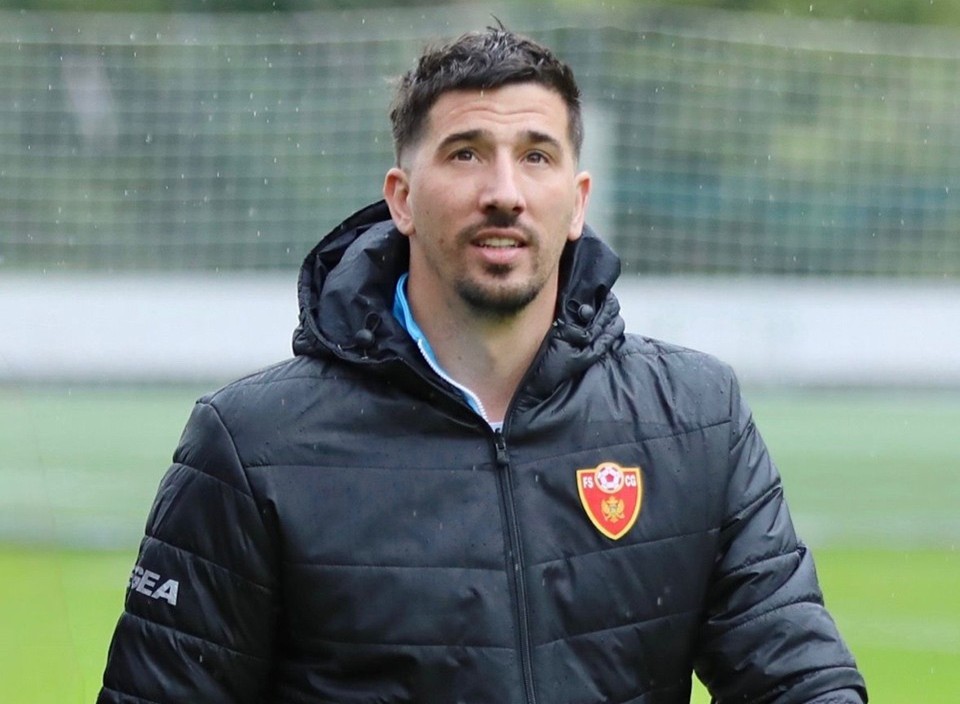
Profile
Role: UEFA Pro Licence Coach
Specialisation: Attacking Football, Player Development and International Coaching
Experience: Montenegro, China, women’s international football and senior men’s environments
Focus Areas: Trust, Tactical Flexibility, Player Development, Women’s Football and Long-Term Football Culture
Biography
A coaching career spanning two continents. Ivan Tatar has done more with less than most coaches and he does not measure success in trophies alone. He measures it in careers built, confidence restored, and players who leave his environment better than when they arrived.
Holding a UEFA Pro Licence and bringing a relentless attacking philosophy honed across women’s international football and senior men’s environments, he has turned Montenegro WU19 into a team that European nations respect and prepare carefully for.
Ivan Tatar has done more with less than most coaches and he does not measure success in trophies alone.
Three Elite Round qualifications and a consistent record integrating players into senior international football tell only part of the story. The rest is found in the culture he builds, the standards he sets, and the belief he instils in every squad he works with.
Ivan is precisely the kind of coach that forward-thinking clubs and federations should be searching for.
Key Insights
- Ivan Tatar has built a coaching career across Montenegro, China, women’s international football and senior men’s football.
- His coaching approach focuses on trust, clarity, tactical flexibility and player development.
- He believes women’s football development in Montenegro needs stronger infrastructure, grassroots investment and coaching education.
Our Exclusive Interview with Ivan Tatar
You’ve coached across very different places Montenegro and China often navigating language barriers and completely different cultures. When words fail a coach, what do they fall back on? And did those experiences ultimately change the way you communicate, even in your own language?
When language becomes a limitation, football itself becomes the language. Body language, energy, consistency, and daily behaviour matter far more than long tactical speeches. Players recognize authenticity quickly. When they see your actions match your words, trust begins to grow even without perfect communication.
Working across different cultures completely changed the way I communicate. I became more precise, calmer, and more aware that simplicity is often stronger than complexity. Today, even in my own language, I try to communicate with greater clarity and intention because footballers respond best to messages, they can truly feel and understand.
Trust is central to everything you speak about, but international football gives you very little time to build it. When players arrive in camp for only a few days, how do you create genuine trust quickly enough for it to matter once the match begins?
In international football, time is the biggest challenge. You cannot force trust, but you can create the conditions where it develops faster. The first thing is honesty. Players immediately feel whether a coach is genuine.
The second is clarity. Players need to understand exactly what is expected of them and feel that everyone is treated fairly.
I also believe small details matter. Listening to players, respecting their club workload, and creating an environment where they feel safe to express themselves all make a difference. When players feel respected as people first, trust develops much quicker, and that becomes visible once the match starts.
When players feel respected as people first, trust develops much quicker, and that becomes visible once the match starts.
At U19 level, one conversation can stay with a player forever, telling them they’re not ready, not selected, or no longer progressing. How do you handle those moments with honesty while still protecting their belief, and do you ever wonder afterwards whether you got it wrong?
Those are probably the hardest moments in coaching because words at that age can stay with players for many years. My responsibility is to be honest without destroying belief. I always try to separate the current moment from the player’s long-term potential.
Not being selected today should never feel like the end of the journey. I try to give players clear reasons, concrete areas for improvement, and hope grounded in reality. And yes, every coach reflects afterwards. Sometimes you wonder if you judged too early or communicated imperfectly. That self-reflection is necessary because young players deserve responsibility and care from their coaches.
I have examples of this not from the U19 environment but from the senior national team. When players were left out of the Western Australia national team squad, I spoke with them individually and worked to help them rebuild their self-confidence.
Your football demands courage, intensity, and tactical discipline. But in international football, you sometimes have only a handful of days with players before a competitive match. Realistically, how much of your philosophy can you truly implement in that time, and what parts of your football inevitably have to remain unfinished ideas?
In international football, you cannot build everything. There simply is not enough time. The core principles become the priority: mentality, organization, intensity, and collective behaviour. You focus on giving players a clear structure they can quickly understand and execute under pressure.
Some deeper tactical ideas inevitably remain unfinished. Complex automatisms and long-term positional details require daily club work. So international coaching becomes a balance between ambition and realism: implementing enough identity to compete while accepting that perfection is impossible in such short periods.
You mention tactical flexibility and the ability to play multiple formations. How do you decide when to adapt your system mid-season or mid-game without losing the team’s identity?
Formations can change, but identity should remain stable. For me, identity is defined more by behaviour than by numbers on paper. Courage, intensity, discipline, and collective responsibility are what truly matter.
Formations can change, but identity should remain stable.
Adaptation depends on the characteristics of the players, the opponent, and the moment within the season or match. But if the team still recognizes itself through its mentality and principles, then changing structure does not mean losing identity. Modern football demands flexibility, but flexibility must serve the team’s core values, not replace them.
What is the biggest structural gap you see in women’s football development in Montenegro, and what would you change if you had the resources?
The biggest challenge is long-term infrastructure for player development. Talent exists in Montenegro, but players need more consistent environments: better youth competitions, more qualified coaches, improved facilities, and stronger support systems around the game.
Clubs also need to become more involved in women’s football. If resources were available, I would invest heavily in grassroots development and coaching education. Sustainable progress starts with young players having quality training environments from an early age. That creates not only better footballers, but also a healthier football culture overall.
You’ve worked across women’s international football, senior men’s domestic football, which gives you a perspective very few coaches have. What do you think men’s football still fundamentally misunderstands about coaching women, and how much do those misconceptions still affect the respect and resources the women’s game receives?
One misconception is that coaching women requires lower tactical or competitive demands. Players respond to high standards when they are communicated properly and supported correctly. Women’s football is evolving rapidly, and professional expectations continue to rise.
Another misunderstanding is that emotional intelligence and communication are somehow less important in elite football. In my experience, understanding people deeply is essential regardless of gender, but it is often more openly valued in the women’s game. These misconceptions still affect respect and investment levels, although the situation is improving globally. The growth of the women’s game is proving many outdated assumptions wrong.
The new generation entering your U19 squad has grown up watching a very different women’s game bigger clubs, greater visibility, and real professional pathways. Has that changed what players expect from you as a coach, what they’re willing to sacrifice, and what they now believe is possible for themselves?
The new generation has grown up seeing possibilities that previous generations did not have. They watch elite competitions, professional clubs, and players building real careers in football. Naturally, their expectations are higher. Players today ask more questions, want more feedback, and think more seriously about their future in football.
I have many examples of my U19 players seeking advice about their futures. At the same time, they understand that professionalism requires sacrifice and discipline. As a coach, this pushes you to constantly improve because players now expect a much higher standard in every aspect of preparation.
At youth international level, success is difficult to measure. It often centres around development, progression, and the hope that players eventually reach senior football, with silverware almost seen as a bonus. In a sport obsessed with instant results, how do you stay committed to a process that can take years to truly prove itself?
Youth football teaches patience. Results matter, of course, but development is the real mission. Success at this level is often invisible in the short term because the true outcome may only appear years later when players reach senior football.
What keeps me committed is knowing that our daily work can shape careers and lives. When I coached the boys U17 team, I worked with some highly talented players, and one of them is now at Inter Milan, which fills me with genuine pride.
The same feeling comes when a girl from the U19 setup becomes an important part of the senior national team. If players leave the national team environment more prepared, more confident, and closer to senior football, then progress has been made even if trophies do not immediately follow.
What keeps me committed is knowing that our daily work can shape careers and lives.
From the outside, youth international football can look polished and glamorous UEFA branding, media coverage, elite facilities. But for a smaller federation, the reality behind the scenes is often very different. What does tournament preparation actually look like for your staff, and how much improvisation goes unnoticed?
From the outside, international tournaments can look very polished, but smaller federations often work under significant limitations. Preparation requires creativity, flexibility, and a lot of unseen effort from the staff.
Coaches and support staff frequently manage multiple responsibilities at once, covering logistics, analysis, scheduling, communication, and player welfare.
Improvisation becomes part of the process. But sometimes those challenges also create stronger unity because everyone understands that success depends on collective commitment and passion, not only resources.
FAQ
Who is Ivan Tatar?
Ivan Tatar is a UEFA Pro Licence coach with experience across Montenegro, China, women’s international football and senior men’s environments.
What is Ivan Tatar’s coaching philosophy?
His coaching philosophy focuses on attacking football, trust, clarity, tactical flexibility, player development and strong team identity.
What has Ivan Tatar achieved with Montenegro WU19?
He has helped Montenegro WU19 earn three Elite Round qualifications and integrate players into senior international football.