

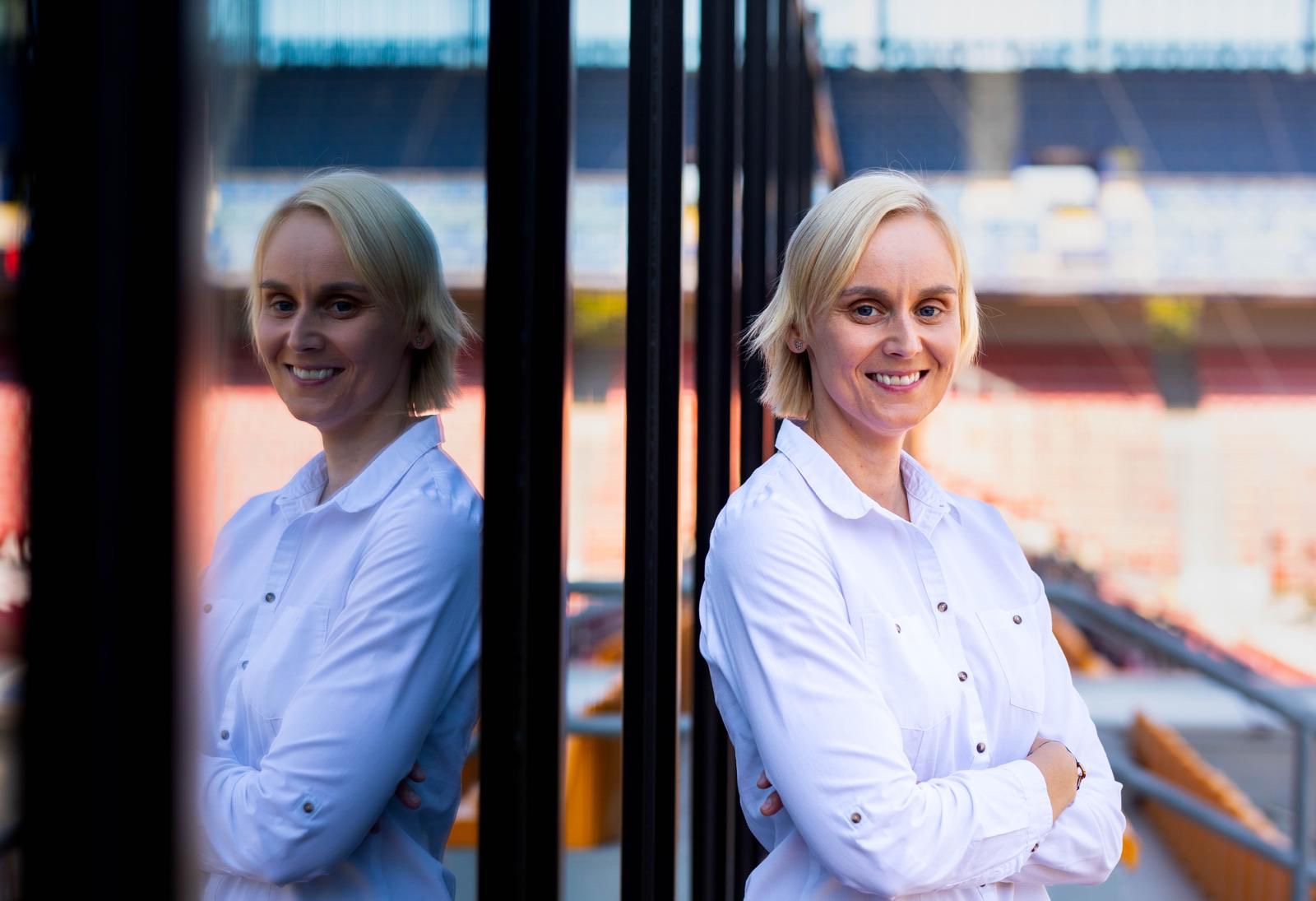
Profile
Role: Head of the Women’s Section at AC Sparta Praha
Specialisation: strength and conditioning coach, academic researcher, and leader
Experience: nearly a decade at Sparta
Focus Areas: elite sport, progressive thinking, performance, structure, and women’s football development
Biography
She has a doctorate, a UEFA licence, and a list of certifications that reads longer than most coaches’ entire careers. But what defines Mgr. Pavla Satrapová is not what is on paper, it is what she is building on the pitch.
As Head of the Women’s Section at AC Sparta Praha, Satrapová sits at the intersection of elite sport and progressive thinking. A strength and conditioning coach, an academic researcher, and a leader. She has spent nearly a decade at Sparta quietly reshaping what women’s football in the Czech Republic can look like. Her early research into the use of virtual reality to enhance performance revealed a clear capacity for innovation and forward-thinking something her work since has consistently reinforced, establishing a sustained record of creativity and intellectual curiosity.
She has spent nearly a decade at Sparta quietly reshaping what women’s football in the Czech Republic can look like.
This is a woman who studied the sport, then went out and changed it!
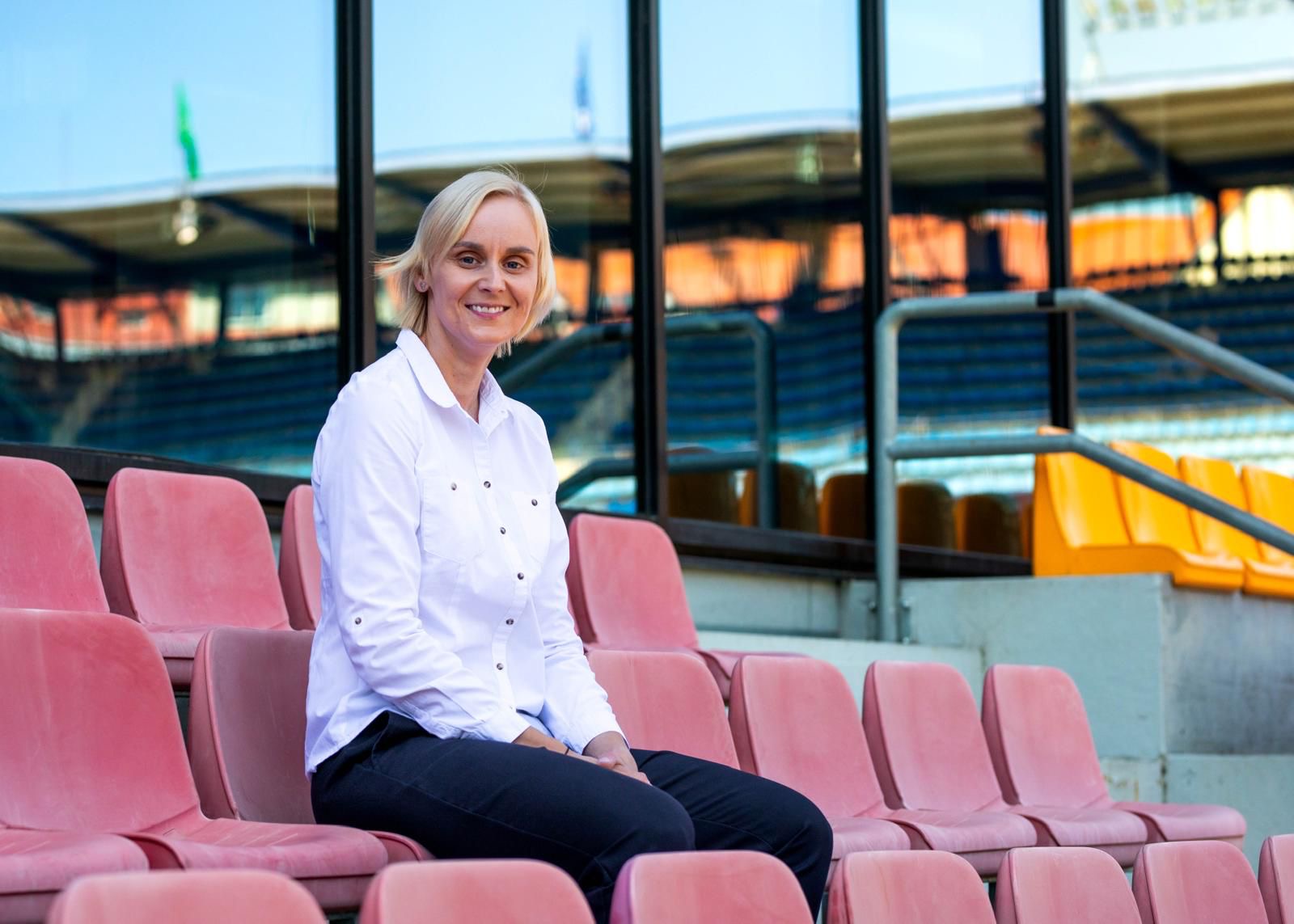
Key Insights
- Pavla Satrapová leads the women’s section at AC Sparta Praha across performance and structure.
- Her background combines elite sport, academia, rehabilitation, and leadership.
- She focuses on long-term development, innovation, and systemic growth in women’s football.
Our Exclusive Interview with Mgr. Pavla Satrapova
You are Head of the Women’s Section at AC Sparta Praha. How do you define your mandate, and what defines success in this role?
My role is role is to oversee the full structure of the women’s section, ensuring it remains competitive at both domestic and international levels over the long term. That responsibility lies and spans into the sporting direction, staffing, and the connection between each age group, from the academy through to the first team. The majority of my work centres around the first team where I contribute to building the playing identity, squad composition, and the functioning of the coaching staff, alongside the day-to-day operations and communication both inside and outside the club.
Though I do not define solely by league position. What matters the most is the ability to develop capable of performing at the highest level for top level football, consistently bringing them through into the first team, and sustaining both performance and a high-quality environment over time.
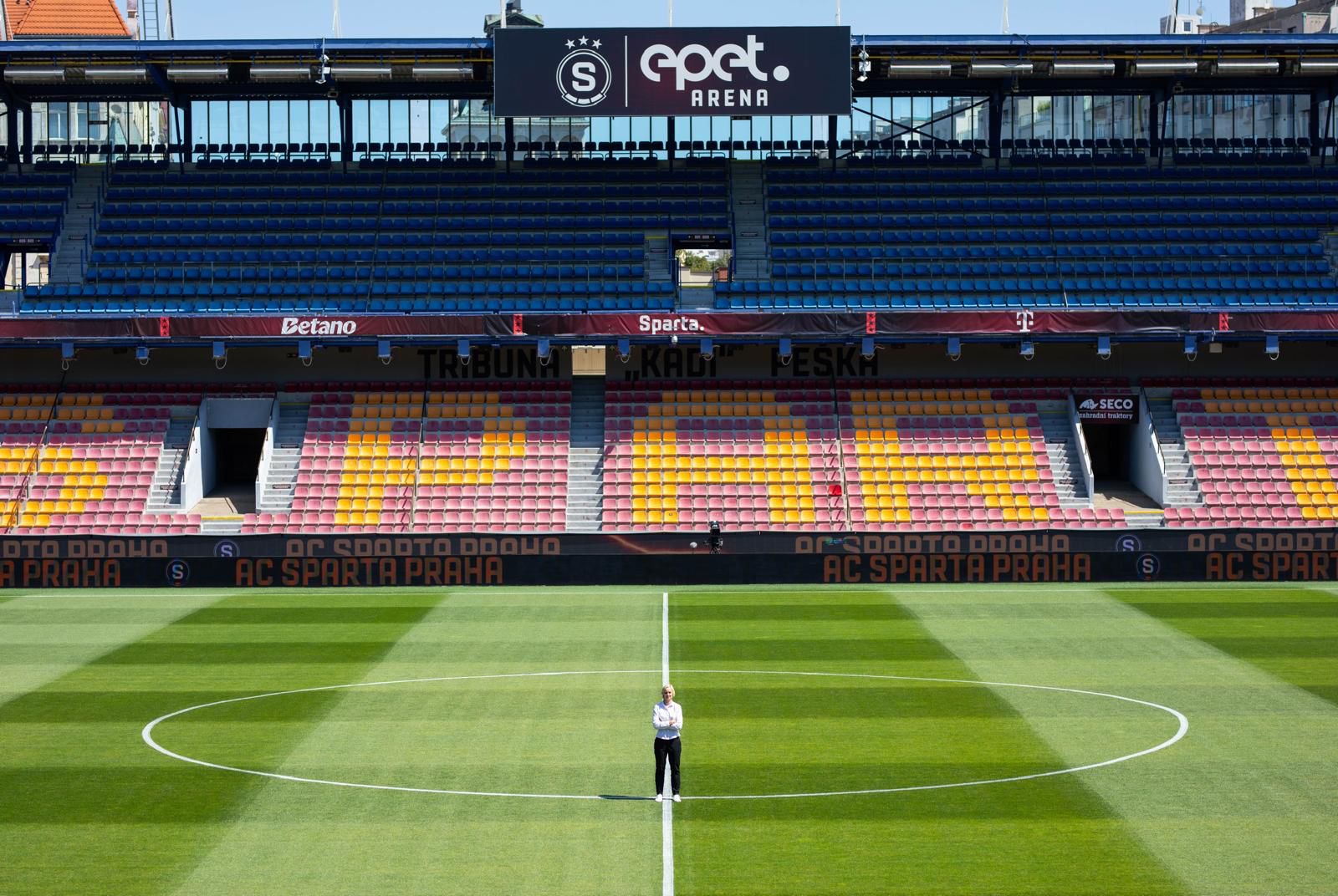
Your career began in physical education and rehabilitation. How has this pathway shaped your perspective as a coach and as a leader?
My education and early application have built a strong foundation across several areas that are pivotal and the centrepiece of my work today. Understanding how the body functions, injury prevention, load management and the psychological components and areas of working with athletes. It has also taught me and shaped my approach to planning, communication, motivation, explain goals and inspire others. I believe that these experiences gained during these early years fed directly and were later applied.
You worked across multiple age groups at Sparta as both S&C coach and assistant coach. What did this experience teach you about player development and structural needs in women’s football?
I am truly grateful for the experience, going through the entire structure of Sparta’s women’s section and getting to know the environment and the daily needs of players, coaching staff, and parents. I am not someone who makes decisions from behind a desk, but someone who knows the practice and is often still part of it.
I am not someone who makes decisions from behind a desk, but someone who knows the practice and is often still part of it.
I place emphasis on meeting with players and staff in their natural daily environment in order to better understand the overall functioning and the challenges they face.
From a sporting standpoint, I came to understand just how critical continuity is to player development
Each age category has its specifics, its own demands and it is crucial that the individual phases is built logically.
Working with girls and young women has made me aware that their mental and emotional needs require specific attention. Working with girls and young women also brought a particular awareness, that their mental makeup requires specific attention.
It is partly why we introduced mental coaches across all categories at Sparta, supporting not only the players but the parents as well. At the same time, I realized how important a systemic setup of the entire club is. Everyone working at Sparta should identify with this system and uphold the values we stand for.
Your background spans elite sport, academia, and leadership. How has this shaped your approach to building a women’s football program?
At first glance, these topic look very different or like they don’t belong together but is quite the opposite. The academic environment gave me theory and an evidence-based perspective. Managing people and teams within academia built my managerial skills. Elite sport showed me the practical side. Together, they led me to one belief I will always stand by.
Theory is valuable and necessary, and we should rely on it, whether that data analysis in women’s football, injury and rehabilitation, or data within scouting.
However, practice is often different as a result of many variables and that is why understanding the details, the daily challenges, and adapting everything to the real environment and the club is essential. At the end of the day, we work with people, not machines or theory.
At the end of the day, we work with people, not machines or theory.
You hold a doctoral background and extensive qualifications in performance and sports science. How do you translate this knowledge into practical decision making, and where is the gap between research and coaching practice?
In certain areas, I try to make decisions based on data and verified information areas. It gives me a solid foundation for further steps. But the gap between research and practice often comes down to application.
Not everything from science translates easily into daily training and finding that balance matters. In practice, ideal conditions simply do not exist, whether it’s the environment, available equipment or match conditions. The pitch will never be perfect, the grass perfectly cut, the ideal weather, or the balls correctly inflated. In a squad of twenty-eight players, not everyone will have slept well, feel fully prepared, or be at one hundred percent in every respect.
As mentioned, before you work with people. For players, that means accounting for mental state, circadian rhythms, mood, and personal life. For staff, it is much the same. People often carry difficult situations with them, and part of the job is supporting them through that.
I am a strong advocate of science, and we should absolutely rely on it. But we must never lose sight of practice, common sense, and humanity.
You have researched virtual reality in performance development. How transferable are these insights to women’s football, and what role will technology play in player development?
Virtual reality holds genuine potential in football, especially in improving decision-making, understanding and interpreting game situations, and analysing as well as evaluating tactics. It is a useful tool for developing the cognitive component of performance, particularly for injured players, who can continue to train their “brain.” This can be a game changer when it comes to returning from injury. Our club emphasizes the development of cognitive abilities and neurotraining as part of a broader framework. In women’s football, virtual reality is not yet widely used, but it could play an important role going forward. Several studies have already been carried out across football as a whole, although it remains an area that requires further exploration.
You are responsible for both performance and structure at Sparta. What does building a high-performance women’s program require in practice?
It demands daily hard work, passion, sharp communication, decisive thinking, and the ability to anticipate what comes next. Complacency is not an option. You can never slow down too much or stop, the season never truly stops.
It is like a train that never stops; it only slows slightly in the off-season, but you hardly notice it. Central to building such an infrastructure are the people around you. Surrounding yourself with individuals who inspire and challenge one another and have driven and determination to constantly become industry, this is a non-negotiable players coaches and staff have to be alike.
That collective drive to improve, combined with strong communication and cooperation across the entire club, is what sustains a winning environment. Sparta is an environment set up for success and growth. Its values are tradition, ambition, courage, and respect. These are also the values I uphold in my position and instil across the women’s section.
ACL injuries remain a major challenge in women’s football. In your view, is this primarily a knowledge issue, a resource issue, or a structural problem?
That is a great question. I addressed this topic in both my bachelor’s and master’s theses. I had the opportunity to observe over several years and have followed closely as research and understanding have developed over the years.
several risk factors and areas influencing ACL injuries in girls and women have been identified. At the same time, I have personally witnessed these injuries in players who did not show or meet these risk factors and yet the injury still occurred. It is never one thing in isolation, but a combination of factors. At our club, rather than focusing primarily on identifying risk factors, we focus on prevention. Strength training is an essential part of that.
When we still see the absence of strength training and the persistent myth that children should not do it, I truly do not understand it. We also emphasize nutrition, load management, and mental well-being. We regularly educate fitness coaches, physiotherapists, and coaches. ACL injuries have been, are, and will continue to be a reality in women’s football. We have to accept that. But accepting it does not mean resigning to it. It means doing everything possible to reduce the risk.
How do you build a competitive and sustainable program within the financial realities of Central European women’s football?
Two years ago, we transitioned the first team into a professional structure. That means more than just salaries, it encompasses infrastructure, facilities, and the right people supporting the squad day to day.
Alongside that, we continue to invest heavily and emphasize the robustness of the academy, with a clear focus on developing our own players. None of this would be possible without the backing of the club’s management and owner.
This season, the new UEFA Women’s Europa Cup has given us an important benchmark. We have confirmed that our players can compete at a European level, against a range of clubs from across the continent.
Whether signing new players or developing academy talent, we offer genuine career progression, a clearly defined plan, and a gradual pathway into the first team, with each step naturally leading to the next.
The proof is already on the pitch. Our regular starting goalkeeper is a 17-year-old academy product. Another 17-year-old is pushing for a place in the starting lineup. Those are the moments that mean the most and truly makes us happy
Looking ahead, what should a world-class development pathway look like, and how can clubs like Sparta Praha shape that future?
I do not think I am fully competent to define a single clear pathway or say how it should be. It largely depends on the club’s philosophy, the direction it chooses, and the path it takes.
As I mentioned earlier, we focus on developing our own players. This also involves strong regional scouting within the Czech Republic and identifying talent. It is then our responsibility to further develop that talent and potential.
As Sparta, we can therefore offer a pathway for development and progression in a player’s career.
FAQ
Who is Mgr. Pavla Satrapova?
Mgr. Pavla Satrapová is Head of the Women’s Section at AC Sparta Praha, with a background in coaching, sports science, and leadership.
What is Pavla Satrapová’s role at AC Sparta Praha?
She oversees the full structure of the women’s section, from the academy through to the first team, while supporting performance, staffing, and sporting direction.
What areas does Pavla Satrapová focus on in women’s football?
Her work focuses on player development, performance, structure, innovation, and creating a high-quality long-term environment.