

An analysis of the commercial logic reshaping multi-club investment in professional football
When reports emerged that Clearlake Capital had explored moving Liam Rosenior within its ownership network, the episode was widely read as a personnel story. It was also something else, a window into how private equity ownership groups now treat football clubs as nodes in an integrated commercial and operational system.
That operational flexibility, the ability to deploy managers, coaches, commercial infrastructure and playing talent across affiliated clubs, is the defining structural feature of the multi-club ownership model. Industry discussion has focused heavily on the player pathway logic, i.e. shared scouting networks, coordinated loan strategies, and the talent pipeline from feeder club to flagship. The commercial dimension has received considerably less attention.
The Volatility Problem
Football clubs face a revenue challenge that would be recognised in few other industries. The primary driver of income, competitive performance, is inherently unstable and largely beyond management control. A single relegation can remove a quarter of a club’s revenue overnight. Matchday income varies with fixture scheduling and cup runs. Transfer proceeds, while increasingly central to financial planning, are episodic by nature. Sponsorship demand tracks closely with media exposure and league position.
Even broadcast revenue, the most predictable income stream at the top level, carries structural uncertainty. The Premier League’s new domestic deal for 2025–29 offers modest growth in domestic rights but no guaranteed uplift for individual clubs. International rights remain the growth story, but are distributed collectively and are therefore insensitive to individual club performance. For clubs outside the established European broadcast markets, for example, MLS, the J.League, or the A-League, the uncertainty is considerably more acute.
Football clubs face a revenue challenge that would be recognised in few other industries.
Currency volatility adds a further planning constraint. Ownership groups operating across multiple jurisdictions must manage exposure to sterling, euro, dollar, yen and other currencies simultaneously. A commercial contract agreed in one currency can look materially different within eighteen months if exchange rates move significantly.
The standard response to this risk profile has been to build revenue diversification at the club level. More commercial categories lead to higher matchday yield, and ultimately, content monetisation. These strategies have real limits. A club’s commercial ceiling is set largely by its competitive position, stadium footprint, and local market. For most clubs in most leagues, those constraints are binding. Multi-club ownership offers a different solution; instead of diversifying revenue within a club, ownership groups diversify exposure across clubs.
The Commercial Architecture of MCO
Centralised Partnership Portfolios
City Football Group’s commercial infrastructure illustrates the model at full scale. CFG, which now operates thirteen clubs across five continents, does not negotiate sponsorships club by club. It goes to market with what it describes as a multinational platform offering year-round competitive action across multiple leagues and time zones.
The group’s partnership strategy team, which CFG’s VP of Partnership Strategy and Operations has described as responsible for creating and maintaining commercial strategy across all clubs, sells global access rather than individual inventory. Partners, including Puma, Etihad, OKX, and, until recently, Nissan, have been structured as group-level relationships activatable across multiple properties. Manchester City’s commercial revenue reached £344.7m in the year to June 2024, making it the highest commercial earner among Premier League clubs; a position the club has now held for four consecutive seasons. That figure reflects not merely the club’s own commercial appeal but the amplifying effect of group-level negotiation.
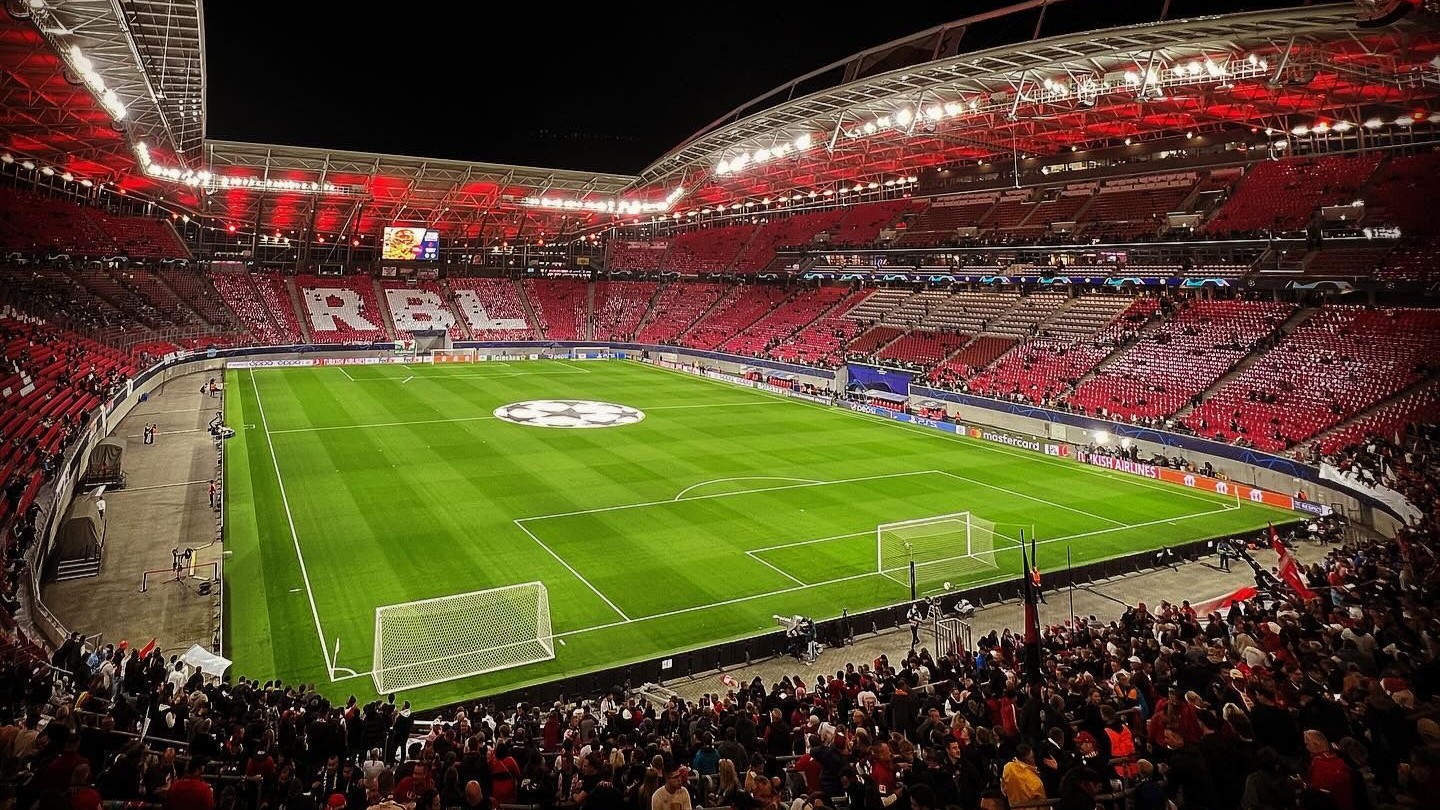
Red Bull operates on an analogous logic, though driven by brand rather than portfolio scale. A global board oversees centralised HR, finance, marketing and information functions across the group. Each club in the network, RB Salzburg, RB Leipzig, New York Red Bulls, and most recently Omiya Ardija in Japan, carries the Red Bull visual identity and activates the same brand values. The model is structurally different from CFG’s, but the commercial principle is the same: a single ownership group uses multiple clubs to create an audience and inventory base that no individual club could build alone.
A single ownership group uses multiple clubs to create an audience and inventory base that no individual club could build alone.
Risk Distribution and Regulatory Context
The financial sustainability rules now governing professional football in England and Europe make the risk-pooling dimension of MCO more, not less, relevant. Under Premier League Profitability and Sustainability Rules, clubs may not post aggregate pre-tax losses exceeding £105m over a rolling three-year period. UEFA’s new Financial Sustainability and Club Licensing Regulations impose a squad cost ratio, initially set at 90% of revenues in 2023–24, declining to 70% by 2025–26, on football-related expenditure. The Premier League confirmed in February 2025 that PSR will remain in force for the 2025–26 season, with a structural overhaul to Squad Cost Rules deferred to 2026–27.
These frameworks assess financial sustainability at club level. They do not directly regulate commercial relationships between affiliated clubs within the same ownership group. In the Premier League, though, Associated Party Transaction rules, strengthened following the Newcastle United takeover in 2021, require that deals involving connected parties demonstrate fair market value. Manchester City’s protracted dispute with the league over APT rules, recently settled, underlined how much is at stake in the pricing of group-level commercial relationships.
The commercial logic is clear enough: ownership groups that can bundle inventory across multiple clubs can credibly command pricing that reflects aggregate audience reach rather than individual club scale. Whether that pricing consistently passes a fair market value test when the counterparty is affiliated with the ownership group is precisely the question that regulators are now asking.
The question may be less whether MCO improves recruitment efficiency, and more how it redistributes financial and relational risk, and who ultimately bears the cost.
Content and Digital Inventory
Content production offers a further illustration of group-level commercial leverage. Digital media assets, e.g. behind-the-scenes formats, player access content, multilingual social programming, can be developed centrally and distributed across affiliated club channels, lowering per-unit production cost while dramatically expanding the addressable audience.
This matters commercially because partner activations embedded in owned content scale at near-zero marginal cost once the infrastructure is built. A global brand that partners with CFG is not paying for access to a single stadium’s digital audience. It is paying for reach into thirteen fanbases across five continents, served through coordinated content pipelines and local-language channels. The proposition is materially different from anything a standalone club can offer.
Partner activations embedded in owned content scale at near-zero marginal cost once the infrastructure is built.
The Tension at Club Level
The efficiency gains of centralised commercial architecture carry a cost that is easy to understate. Clubs that enter MCO structures do not simply acquire new resources; they also surrender degrees of commercial autonomy.
Local sponsor categories may be constrained by group-level exclusivity agreements. Regional partners that have built long-standing relationships with a club may find those relationships disrupted by group-wide deals that displace them from preferred categories. Supporters, for whom commercial partnerships are often a visible expression of club identity, may experience centralisation as a dilution of something they value.
The Pozzo family’s experience with Watford and Udinese is instructive here. Despite maintaining separate management structures and distinct on-pitch identities, both clubs have faced persistent concerns from supporters about whether individual club interests are subordinated to group-level priorities. The perception that a club exists primarily to service the commercial or sporting needs of a larger ownership structure is difficult to manage and arguably impossible to refute entirely, because in some measure it is true.
MCO groups have navigated this tension with varying degrees of success. Red Bull’s model, which imposes unified branding across the network, accepts the commercial logic at the cost of local identity. This trade-off has generated supporter hostility in Austria, Germany and New York, but has not materially impaired the model’s commercial performance. CFG’s approach has been to maintain distinct club identities beneath the group commercial umbrella, though the boundaries between those identities and the group’s commercial interests are not always visible to supporters.
Scale, Speed, and the Regulatory Horizon
The growth of MCO has been rapid by any measure. From approximately 18 ownership groups globally in 2012, the number had risen to over 120 by 2023, encompassing more than 300 clubs and representing a roughly 400% increase in a decade. As of 2022, some 82 top-division European clubs were part of multi-club investment structures. That figure has since grown.
The pace of expansion is itself a commercial signal. Private equity capital entering football is increasingly structured around portfolio logic rather than single-asset investment. The question for new investors is not whether to acquire one club but where in the value chain to build exposure and what kind of commercial platform to construct around it.
Regulatory frameworks have struggled to keep pace. UEFA’s prohibition on clubs under the same control competing in the same UEFA competition remains the primary structural constraint on MCO expansion, but the definition of ‘control’ has proven elastic. When Brighton and Union Saint-Gilloise, Aston Villa and Vitoria Guimaraes, and AC Milan and Toulouse were all cleared to participate in UEFA competition in 2023–24 despite shared ownership relationships, the regulator effectively confirmed that the commercial and operational integration of MCO groups can advance well ahead of the point at which sporting integrity concerns trigger a structural response.
The Independent Football Regulator, whose legislation passed through the House of Lords in October 2024 and is designed to cover the top five tiers of English men’s professional football, introduces a new layer of oversight. Its focus on financial sustainability, club heritage, and supporter interests may create friction with MCO commercial models that prioritise group-level efficiency over club-level autonomy. How that tension will be managed in practice remains to be seen.
Conclusion: Relocation, Not Elimination
Multi-club ownership does not resolve football’s fundamental commercial challenge. Revenue remains tied to performance, audience, and competitive relevance. Individual clubs within MCO structures still face relegation risk, sponsorship dependency, and the episodic nature of transfer income.
What MCO does is relocate these risks from club to group level and, in doing so, changes who bears them, who benefits from managing them, and at what cost. Ownership groups gain pricing authority, geographic scale, and commercial diversification. Individual clubs may gain resources and financial support, but they do so within a framework where pricing, partner relationships, and commercial identity are increasingly determined by the group rather than the club.
That shift is neither straightforwardly good nor bad for the game. It is, however, fundamental. As MCO structures continue to consolidate and as regulatory frameworks catch up (or fail to), the most consequential questions in football finance will not be about transfer fees or broadcast rights in isolation. They will be about how commercial power is structured, exercised, and distributed across the ownership networks that now sit between the clubs supporters love and the capital markets that increasingly fund them.
Data references: City Football Group filing via Companies House; Manchester City FC 2023–24 financial results; UEFA Club Licensing and Financial Sustainability Regulations; Premier League PSR framework; Norton Rose Fulbright Premier League Ownership Trends Report 2025.