

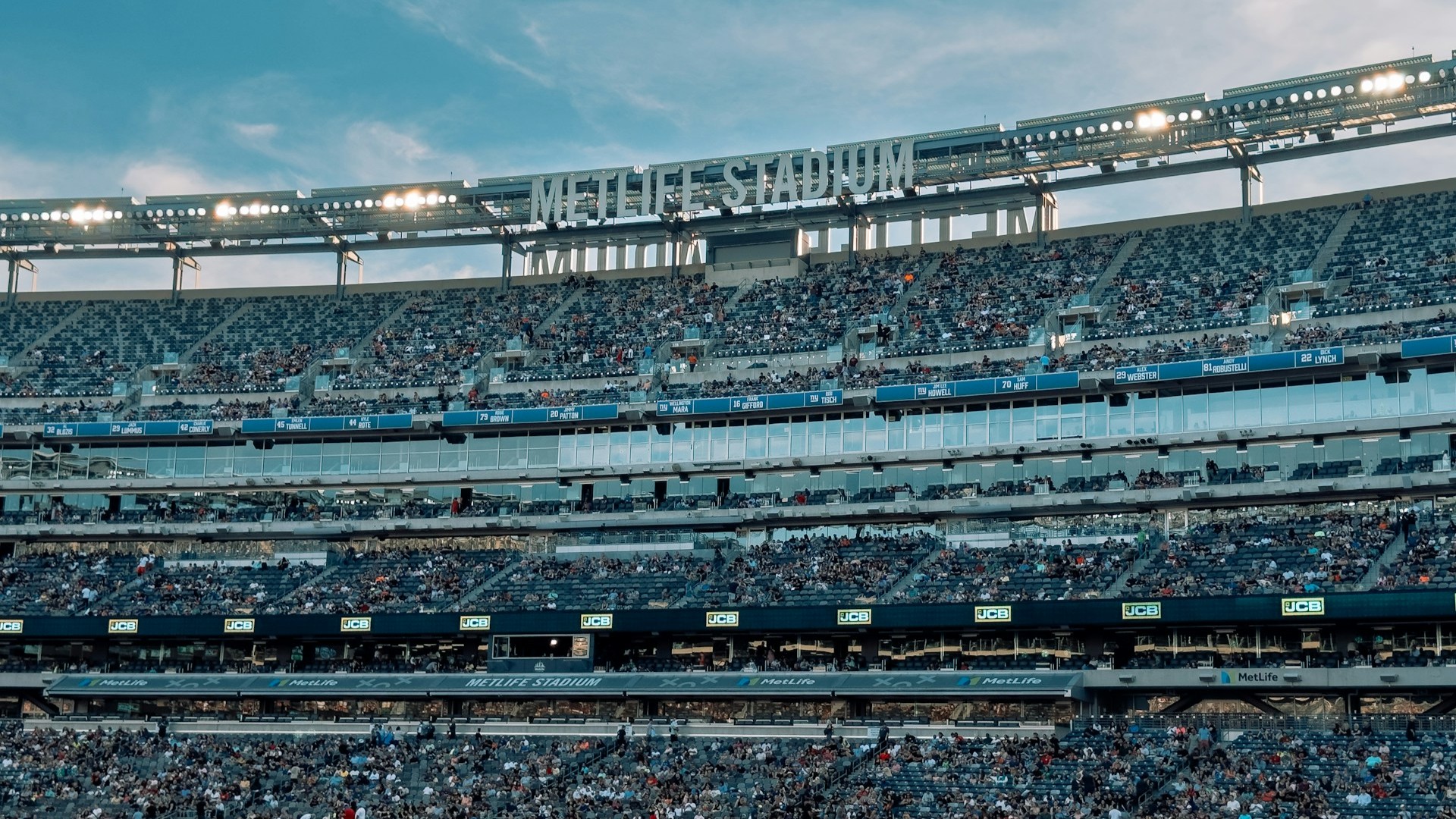
At every World Cup, some of the best known stadium names seem to disappear. MetLife becomes New York New Jersey Stadium. Hard Rock becomes Miami Stadium. AT&T becomes Dallas Stadium.
At first glance, that can look like a simple branding choice. It reflects a wider legal and commercial structure through which FIFA protects tournament rights, preserves sponsor exclusivity and manages a commercially clean event environment.
Beyond Ordinary Branding
A World Cup venue does not operate under ordinary domestic naming-rights logic during the tournament. Once a stadium becomes part of the World Cup, it is absorbed into FIFA’s own event ecosystem, with its own official language, sponsor hierarchy and protected commercial structure.
That is why FIFA’s 2026 materials refer to New York New Jersey Stadium, Dallas Stadium and Miami Stadium, rather than the corporate names supporters use for those venues during the rest of the sporting calendar.
The legal and commercial logic behind that approach is straightforward. FIFA’s brand protection framework states that its intellectual property forms the foundation of its commercial programme and that official sponsors invest on the basis that they receive exclusive rights of association. If anyone were free to use or benefit from that tournament association, the value of official sponsorship would be weakened.
Once a stadium becomes part of the World Cup, it is absorbed into FIFA’s own event ecosystem, with its own official language, sponsor hierarchy and protected commercial structure.
What FIFA Is Really Protecting
At one level, FIFA is protecting familiar intellectual property assets: official words, marks, symbols and tournament identifiers. But the framework goes beyond classic trademark control. The FIFA World Cup 26 IP Guidelines are built around preventing unauthorised commercial association and make a clear distinction between legitimate editorial use and commercial activity that creates an impression of endorsement or affiliation without permission.
The same guidelines also make clear that they are not the whole legal framework in themselves and expressly reserve FIFA’s rights.
In sports law and sports marketing literature, that broader problem is commonly described as ambush marketing. FIFA itself uses that term in its brand protection materials and defines it as prohibited marketing that seeks to take advantage of the event’s profile by creating unauthorised association and or unauthorised promotional exposure. It also identifies ambush marketing as a priority risk because it can directly devalue official sponsorship.
That is the key conceptual point in this article: when a World Cup venue stops using its ordinary corporate name, the issue is not merely stylistic.
Venue neutralisation helps reduce the risk that a non-authorised commercial actor will receive official-looking tournament exposure through the venue itself. In practical terms, it is one way of controlling association.
The Clean Venue Logic
The phrase clean venue is often understood too narrowly. FIFA’s official materials describe Clean Zones around stadiums and event sites as part of its wider brand protection model.
These zones are legally supported boundaries intended to restrict unauthorised commercial activities on matchdays and in the days leading up to matches.
FIFA gives concrete examples, including nonsponsor promotional teams, flyer distribution, counterfeit sales and unauthorized ticket activity.
This is also where the ambush marketing issue becomes more visible.
In legal commentary, a distinction is often drawn between ambush by association, where a brand tries to imply a connection to the event, and ambush by intrusion, where a brand seeks physical or broadcast visibility in or around the event space.
FIFA’s own framework does not rely on those sublabels as formal categories, but the distinction is still useful here: stadium name neutralisation speaks more directly to association, while clean-zone enforcement often deals with intrusion into the event environment.
FIFA’s published approach also makes clear that clean zone protection is not framed as a total shutdown of local commerce.
Its official brand-protection material refers to a business as usual principle under which permanent local businesses may continue their ordinary core activities, provided they are not specifically targeting the event for undue promotional gain.
That matters because it shows the model is presented, at least officially, as a balance between event rights protection and ordinary local business activity.
Venue neutralisation helps reduce the risk that a non-authorised commercial actor will receive official-looking tournament exposure through the venue itself.
When Naming Rights Collide with Tournament Rights
Naming rights become sensitive because the commercial logic of an ordinary stadium season is not the same as the commercial logic of a World Cup.
During the regular season, a venue sponsor pays for the right to attach its mark to the stadium’s public identity.
During the World Cup, however, that same visibility can conflict with FIFA’s own exclusive sponsorship structure if the stadium sponsor is not part of the tournament’s authorized rights program.
In effect, continued official use of the domestic corporate venue name could hand World Cup level exposure to an unauthorized brand. Generic naming helps prevent that conflict. Seen that way, names such as New York New Jersey Stadium and Dallas Stadium are not awkward placeholders. They are part of a rights management solution.
The venue remains recognisable and the city remains identifiable, but the tournament’s official language is detached from a private commercial mark that sits outside FIFA’s authorised sponsorship structure. That is why the renaming works best when understood as venue neutralisation, not merely as a cosmetic edit.
Direct Precedents: Munich 2006 and South Africa 2010
There is a direct historical precedent for this approach.
In 2006, Munich’s Allianz Arena was temporarily transformed into FIFA World Cup Stadium Munich for the tournament.
The stadium’s own official historical account states that, from 25 May 2006, Allianz Arena underwent a transformation into FIFA World Cup Stadium Munich and that only official FIFA partners were allowed to advertise inside the venue during the tournament period.
That is the clearest precedent for venue neutralisation in a World Cup context.
A different, but still useful, precedent came at the 2010 World Cup in South Africa, where women wearing orange dresses linked to Bavaria beer were removed from a match amid allegations of ambush marketing.
Reuters reported at the time that FIFA viewed the stunt as an ambush-marketing exercise linked to a rival of an official tournament sponsor.
While the Munich case serves as a primary example of mitigating ambush by association through venue neutralisation, the 2010 South Africa incident illustrates strict enforcement against ambush by intrusion within the event environment.
The name changes because the rights environment changes.
The Legal Machinery Behind the Model
The legal basis for this system does not rest on FIFA guidance alone.
The enforceable structure is broader and more layered than the IP Guidelines by themselves.
In practice, the model rests on at least three levels:
- Intellectual property and unfair association protections. FIFA’s official brand protection framework states that its rights are protected through copyright, trademark and related legal doctrines, including unfair competition and passing off, together with other relevant legislation.
- Local laws and regulations supporting clean zones. FIFA’s official materials state that Clean Zones are prescribed by local laws or regulations, which adds a public law enforcement layer around stadiums and event sites.
- Binding host side commitments. FIFA’s 2026 bidding process guide referred expressly to the role of government guarantees, showing that host-side commitments form part of the event delivery structure from an early stage.
Official municipal records from the City of Santa Clara, including the document titled “Summary of Terms – Proposed FIFA World Cup 2026 Documents”, make that host side layer especially clear.
They state that the Bay Area Host Committee would assume obligations set out in the Stadium Agreement originally entered with U.S. Soccer and later tied to FIFA’s World Cup framework.
Related Santa Clara assignment materials also contain a specific “Clean Zone/Ambush Marketing Provisions” clause, providing that FIFA’s proposed clean-zone and ambush-marketing standards may require additional local regulations and that city staff may meet with the host committee and or FIFA on the form of such regulations, subject to federal and state law.
That matters because it shows that the World Cup clean venue model is not merely aspirational.
It is operationalised through a combination of tournament rights, local legal support and binding host-side commitments.
That does not mean every naming outcome is spelled out word for word in a single public clause.
It does mean the broader legal and contractual machinery required to support venue neutralisation and clean-zone enforcement is very much real.
Why the Generic Names Matter
Once that structure is visible, the generic names stop looking odd and start looking coherent.
During the World Cup, the venue is no longer functioning only as the home of a club or NFL franchise.
It becomes part of a protected tournament environment with its own vocabulary, rights structure, sponsor hierarchy and event space controls.
Neutral naming supports that structure by removing official tournament communications from the orbit of non-authorized commercial marks.
This is precisely why Allianz Arena became FIFA World Cup Stadium Munich in 2006, and why MetLife becomes New York New Jersey Stadium in 2026.
The name changes because the rights environment changes.
Once the tournament begins, the venue is no longer presented only as a local commercial asset; it is presented as part of FIFA’s protected event space.
Final Whistle
So why do World Cup stadiums use different names? Because venue naming during the tournament is part of a broader legal and commercial model built around brand protection, anti-ambush principles, clean-zone controls and binding host-side commitments.
The familiar corporate name may continue to exist outside the tournament, but once the World Cup begins, the venue is recast as part of FIFA’s protected event space.
The generic name is not an accidental label. It is a visible sign that the rights environment of the tournament is different from the rights environment of the ordinary sporting calendar.
Bibliography
- FIFA, Stadium Information – FIFA World Cup 2026
- FIFA, New York New Jersey Stadium to Host FIFA World Cup 2026 Final
- FIFA, Brand Protection
- FIFA, FIFA World Cup 26 IP Guidelines (version 2.0, June 2024)
- FIFA, Guide to the Bidding Process for the 2026 FIFA World Cup
- Allianz Arena, Allianz Arena becomes FIFA World Cup Stadium Munich
- Reuters, Ambush Marketing Top Concern for Sports Officials
- City of Santa Clara, Summary of Terms – Proposed FIFA World Cup 2026 Documents
- City of Santa Clara, Final FIFA World Cup 2026 Assignment and Assumption Agreement