
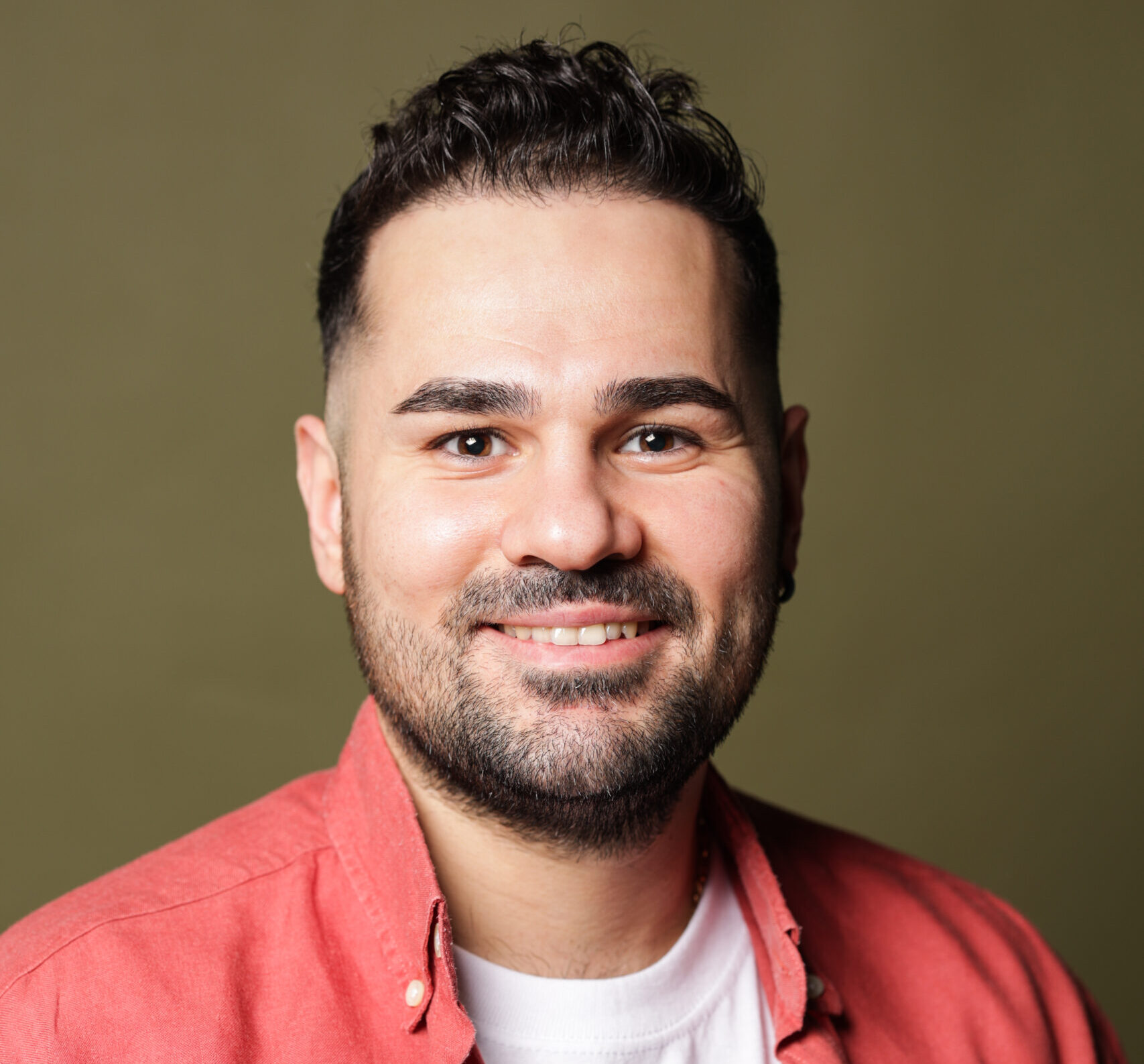
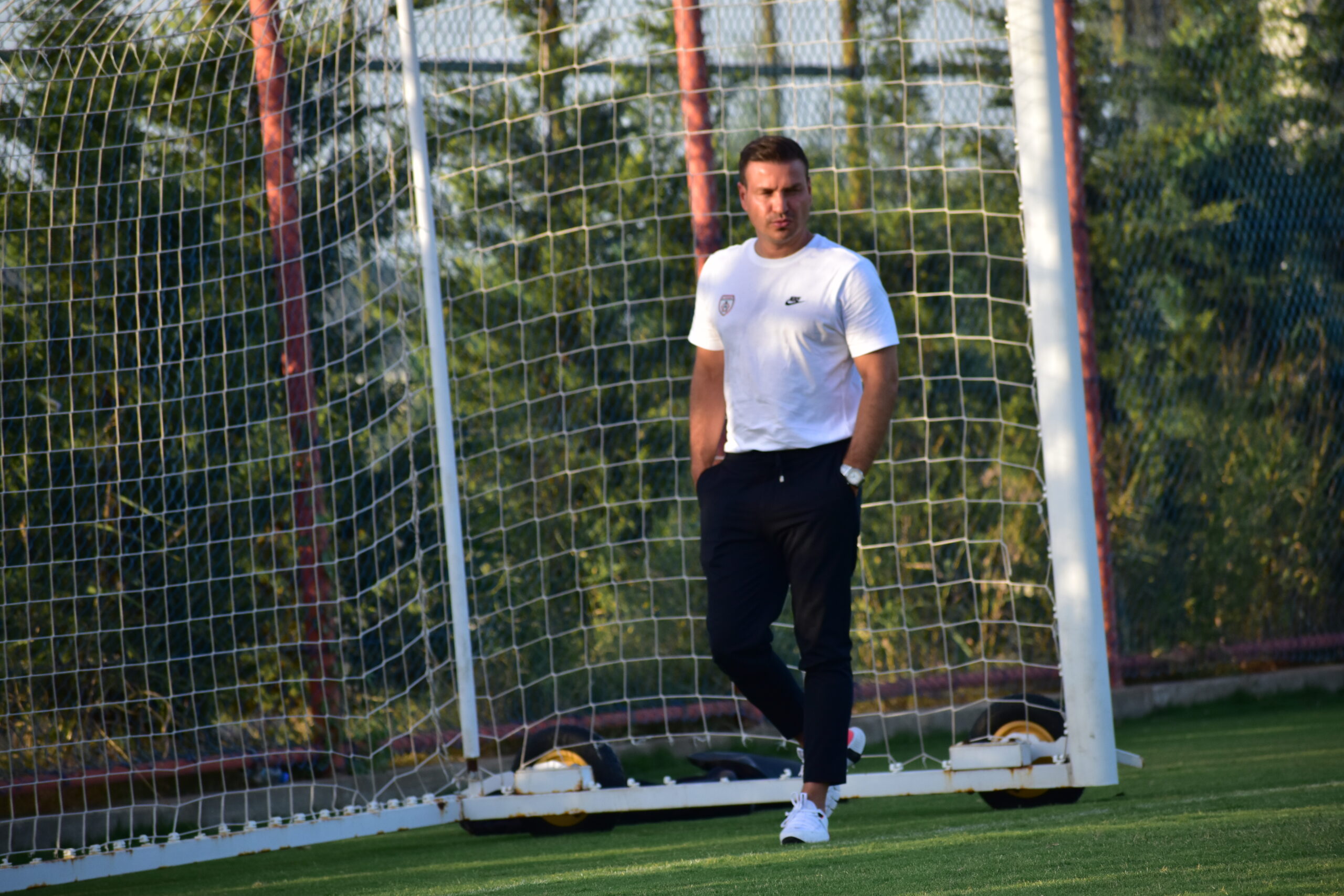
Executive Profile
Murat Korkmaz represents a strategic architect of modern sports organizations, combining infrastructure development, elite talent pathways, international networking, and data-informed leadership into one coherent executive profile. He stands for sustainable system building rather than short-term success, and for creating performance environments that endure beyond individual cycles.
During his tenure as Academy Director & General Manager of VfB Friedrichshafen, Korkmaz carried cross-sport executive responsibility, overseeing strategic operations across multiple disciplines. While the club became German record champion in volleyball and captured the prestigious CEV Champions League title, its impact extended far beyond one sport. Athletes from different disciplines represented at VfB Friedrichshafen went on to compete at the Olympic Games. This multisport-leadership experience strengthened Korkmaz’s understanding of high-performance structures, international standards and the governance models required to sustain excellence.
A key element of his work has been the strategic organization of internationally recognized youth tournaments. At both VfB Friedrichshafen and Altınordu FK, he played a leading role in shaping elite development platforms such as the U15 MTU Cup and the U12 İzmir Cup, tournaments that attract top academies from across Europe and beyond. These events have evolved into respected scouting hubs within global youth football, underlining his ability to build internationally visible football ecosystems.
Korkmaz gained broader international recognition through his executive role at Altınordu FK, one of Turkey’s most structured and development-focused football institutions. The club operates what is widely considered one of the best sports facilities in Türkiye, and during his time there, Altınordu produced 34 national team players, including senior internationals such as Berke Özer, Çağlar Söyüncü, and Cengiz Ünder. For a second-division club, this output represents an exceptional structural achievement rather than coincidence.
Central to this success was the creation of a scalable nationwide development network. Under Korkmaz’s leadership period, Altınordu managed over 200 football schools with more than 22,000 young players between the ages of 9 and 12. This system did not only strengthen the Turkish talent pipeline but also generated financial sustainability and brand identity for the club. It reflected his conviction that modern talent development requires organizational design, long-term planning, and scalable structures rather than isolated recruitment decisions.
Modern talent development requires organizational design, long-term planning, and scalable structures rather than isolated recruitment decisions.
Major international transfers, including the progression of Çağlar Söyüncü to the Bundesliga and Premier League and Cengiz Ünder to Serie A and Ligue 1, were the product of a structured development and positioning strategy. These outcomes illustrate Korkmaz’s ability to connect academy output with global market integration.
His executive profile also integrates technological competence. Korkmaz has hands-on experience with modern scouting and performance platforms such as Wyscout, InStat, Hudl, Catapult, and TransferRoom, demonstrating a leadership style that merges strategic governance with data-driven decision-making.
Academically trained in Football Management and Club Management, with educational exposure to institutions such as Steinbeis University Berlin, VfL Wolfsburg, and the German Football Federation, Korkmaz embodies a new-generation sporting director profile: internationally connected, structurally disciplined, multilingual and development-driven.
In an era where clubs seek leaders capable of aligning sporting identity, financial sustainability, infrastructure, and global competitiveness, Murat Korkmaz stands out as a system builder. His career reflects a consistent pattern: building platforms, strengthening institutions, and transforming talent development into long-term strategic advantage.
Strategy, Structure and Sustainable Sporting Leadership
Our exclusive interview with Murat Korkmaz
You have operated within two structurally different football ecosystems in Germany and Turkey. From an executive perspective, what are the key structural elements that determine whether a football organization becomes sustainable rather than reactive?
Operating in both ecosystems made one thing very clear to me: sustainability is not cultural, it is structural. A club becomes sustainable when three elements are aligned: a clearly defined sporting identity, a transparent decision-making hierarchy and long-term planning embedded into daily operations.
Reactive organizations allow results to dictate strategy. Sustainable organizations protect strategy from short term fluctuations. When structure leads, emotion follows. When emotion leads, structure collapses.
Reactive organizations allow results to dictate strategy. Sustainable organizations protect strategy from short term fluctuations.
As General Sports Director and later Sporting Director, you were responsible not only for performance outcomes but also for institutional architecture. How do you design a sporting structure that remains stable even when coaches, players or short-term results change?
Stability begins with separating identity from individuals. Coaches change. Players change. Results fluctuate. But a club’s philosophy, decision framework and communication structure must remain consistent.
I focus on clear role definitions, a shared development language, defined recruitment alignment, and transparent accountability.
If the system holds the identity, transitions do not create instability. Institutions grow when they are system-led, not personality-led.
Your work at Altınordu FK placed strong emphasis on academy identity and long-term player development. At board level, how should clubs balance immediate competitive pressure with long term asset creation through youth development?
Youth development is not a sentimental project; it is strategic asset management. Boards must understand that long-term player development and competitive success are not conflicting objectives. They only become conflicting when structure is unclear.
Balancing pressure requires measurable development KPIs, alignment between academy and first team playing model, and financial discipline integrated with sporting ambition.
Clubs that panic sacrifice value. Clubs that plan create value.
Organizing internationally recognized youth tournaments require high level coordination, negotiation and stakeholder management. What did those experiences teach you about football diplomacy, global positioning and creating strategic partnerships?
International tournaments taught me that football leadership extends beyond the pitch. Football diplomacy is built on credibility, cultural awareness and disciplined communication.
Strategic partnerships are not created through visibility alone, but through reliability. When stakeholders trust your structure and professionalism, cooperation becomes long term rather than transactional.
Global positioning begins with internal stability.
Modern sporting leadership requires fluency in performance data, recruitment platforms and financial frameworks. How do you integrate data driven decision making with human judgment when constructing squads or building development models?
Data informs, leadership decides. Modern football requires analytical fluency, but sustainable decisions emerge at the intersection of data and experience.
In recruitment and development, I evaluate tactical profile alignment, performance metrics, psychological resilience and cultural adaptability.
Numbers identify patterns. Context determines meaning. The strongest sporting models combine analytical rigor with human understanding.
When stepping into a new project as a Sporting Director or executive leader, what are the first structural indicators you analyze to understand whether the organization is built for growth or stuck in operational inefficiency?
The first indicators I assess are clarity and alignment. I analyze decision making flow, role definition clarity, communication transparency, recruitment alignment with playing philosophy and academy to first team integration.
Operational inefficiency often hides behind unclear accountability. Growth begins when responsibility and authority are aligned.
In today’s global football market, asset management and talent pathways are increasingly interconnected. How do you evaluate a club’s long term competitive model in terms of transfer strategy, academy pipeline and financial sustainability?
A club’s competitive model must connect three pillars: recruitment strategy, academy pipeline and financial governance. The key question is simple: does the club create value or consume value?
Sustainable clubs define recruitment age profiles, structure loan pathways, plan exits strategically and align financial discipline with sporting vision.
Competing intelligently is more important than competing emotionally.
If you were tasked with leading a club entering a transitional phase, whether structural, cultural or competitive, what would be your executive roadmap for the first 12 months?
Transformation begins with clarity.
Months 1 to 3 focus on structural audit and internal alignment assessment.
Months 4 to 6 focus on identity clarification and recruitment recalibration.
Months 7 to 9 focus on academy integration and performance framework stabilization.
Months 10 to 12 focus on long term strategic reinforcement.
True change is not initiated through transfers. It is initiated through structure.
Looking ahead, what type of project or environment would best allow you to apply your experience in academy building, international networking and sporting leadership?
I am most effective in environments that value structure, long term identity and strategic patience. Projects that seek sustainable growth rather than short term reactions allow me to apply my experience in academy integration, international networking and executive sporting leadership most effectively.
My focus has always been clear: build systems that outlast individuals.