

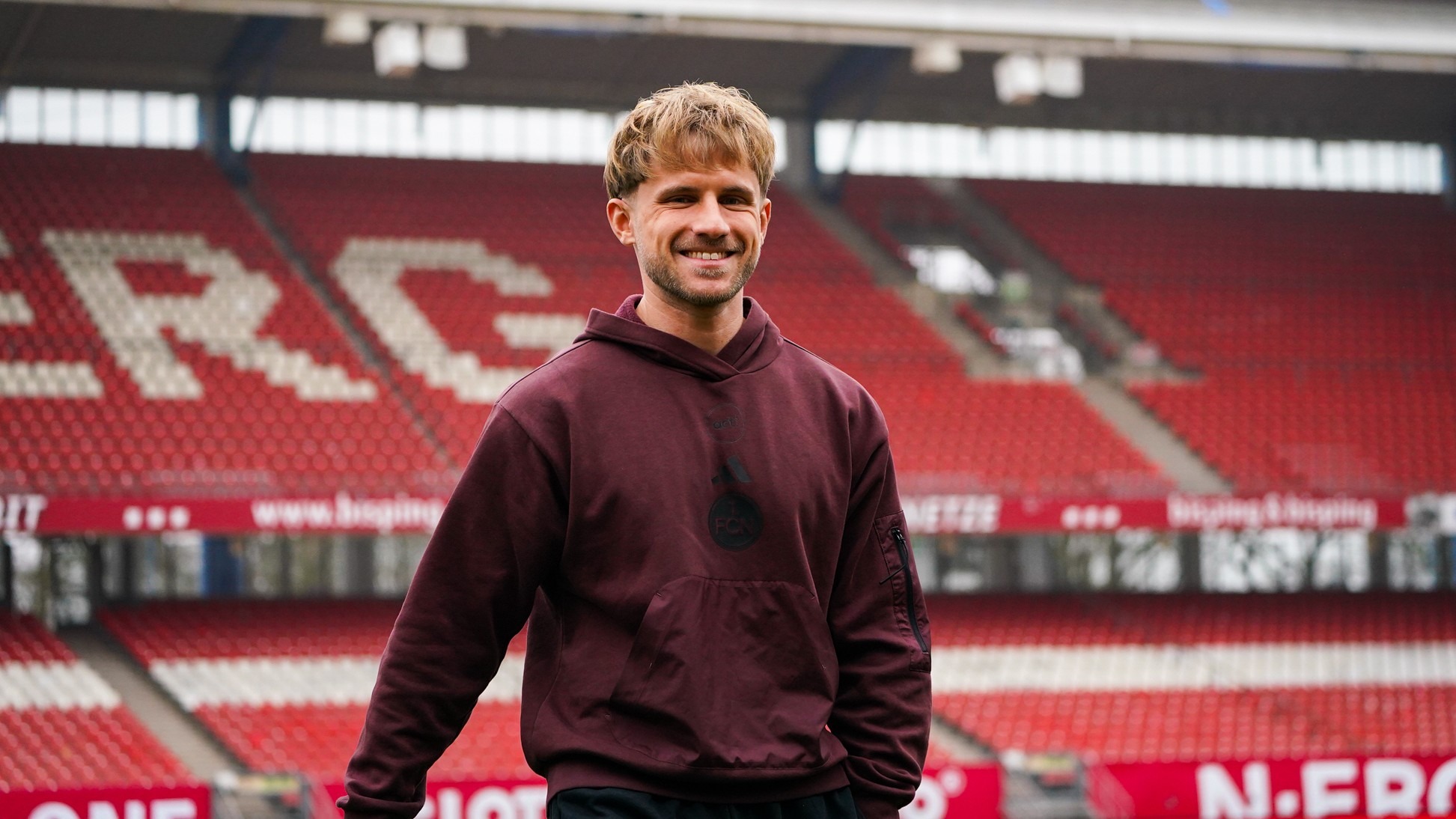
In modern women’s football, goalkeeper development is no longer about reacting to shots alone. It is about decision-making, anticipation, leadership and the ability to perform under constant pressure. Johannes Stadler represents a new generation of goalkeeper coaches who combine data, structure and human connection to unlock potential that often remains unseen.
In modern women’s football, goalkeeper development is no longer about reacting to shots alone. It is about decision-making, anticipation, leadership and the ability to perform under constant pressure.
At just 26, Stadler is already working at the highest domestic level as a goalkeeper coach at 1. FC Nürnberg, with a clear reputation for developing goalkeepers in a systematic, performance-driven and highly individualised way. His work stands out for its holistic approach, integrating technical excellence, mental development and data-based analysis. Cases such as the rapid development of Larissa Rusek, who progressed from a regional environment to a move to Juventus, underline his ability to identify underrated talent and guide goalkeepers toward elite performance pathways.
Our exclusive interview with Johannes Stadler
You are currently working as a goalkeeper coach at 1. FC Nürnberg, with a strong focus on developing female goalkeepers. How would you describe your role and responsibilities within the club environment?
I understand my role as a goalkeeper coach at 1. FC Nürnberg in a very holistic way. A central focus lies on the individual development of our goalkeepers, technically, tactically and athletically. This includes position-specific training, match preparation and detailed analysis of training sessions and match situations.
In addition, I see myself as a trusted contact and mentor, as I believe it is essential in football to support goalkeepers not only from a sporting perspective, but also mentally.
Another key part of my work is close collaboration with the coaching staff, the athletic performance and physiotherapy departments, as well as the analysis team, to ensure the best possible development of each individual player.
Overall, my goal is to create an environment in which our goalkeepers can develop in a performance-oriented, confident and sustainable way. I am also responsible for the team’s defensive set pieces. I plan and implement structures for corners, free kicks and other dead-ball situations, analyse opponents’ patterns and work specifically on organisation, communication and decision-making.
Your pathway includes experience as a team coach in the junior sector as well as goalkeeper coach across women’s, men’s and youth football. How has this broad background shaped your understanding of goalkeeper development today?
My pathway across different areas of football has strongly shaped my perspective on goalkeeper development. My time as a head coach in the youth sector, in particular, helped me to understand the game and the work within a complete team context. I learned how individual positions, units and personalities interact, and how communication and role distribution influence overall performance.
This experience allows me to develop the goalkeeper position not in isolation, but always in connection with the team, the game model and the demands of the coaching staff. As a result, I can align my work as a goalkeeper coach with the needs of the entire team while strengthening the goalkeeper’s role within it.
My experience in women’s, men’s and youth football has also shown me that while the framework conditions may differ, the principles of goalkeeper development remain universal. Continuous improvement requires an individual approach that considers performance level, personality and physical characteristics. These experiences enable me to structure training content around clear development steps and help goalkeepers progress both athletically and mentally.
One recent example of your work is the development of Larissa Rusek, who progressed significantly within a short period and later moved on to Juventus. What does this case say about your approach to identifying and unlocking potential?
The example of Larissa illustrates very clearly how I approach goalkeeper development in my daily work. From the beginning, the focus was on identifying her potential, developing her strengths in a targeted way and simultaneously working on areas with room for improvement. This requires an individual approach, clear development goals and a close integration of training, analysis and match practice.
Her rapid progress within a relatively short period of time was no coincidence, but the result of consistent, structured work combined with her own strong willingness to improve every day.
At the same time, it was important for me to give her confidence and provide mental support so that she could act courageously and take responsibility. Her rapid progress within a relatively short period of time was no coincidence, but the result of consistent, structured work combined with her own strong willingness to improve every day. Her subsequent move to Juventus confirms how effective a clear, individually tailored development strategy can be within a trusting and performance-oriented environment.
You are known for discovering underrated goalkeepers and recognising qualities others may overlook. What specific indicators do you look for when scouting goalkeepers beyond obvious performance metrics?
When scouting goalkeepers, I look far beyond classic performance metrics such as save statistics. Mental and personal qualities are particularly important to me. How does a goalkeeper react under pressure? How does she communicate with the defensive line and take responsibility during the game? How committed and eager to learn is she in training?
In addition, technical and athletic aspects such as movement efficiency, anticipation of game situations and the ability to read and control the game from the back are key elements of my scouting process. Learning ability, adaptability and the capacity to learn quickly from mistakes are also crucial indicators. Often, it is these hidden qualities that make the long-term difference and turn a good goalkeeper into an outstanding one.
Data plays an increasingly important role in modern goalkeeper scouting and development. How do you integrate data analysis with on-pitch observation and coaching intuition in your daily work?
In my daily work, I see data analysis, on-pitch observation and personal coaching intuition as complementary pillars. Data provides objective insights into areas such as playing behaviour and save percentages, helping to identify patterns and make development measurable.
At the same time, direct observation on the pitch remains essential, as it reveals technical details, movement patterns and mental reactions that cannot be captured by numbers alone. My coaching intuition connects these two levels. I use data as a foundation, place it within the context of the game and base targeted training and individual development decisions on it. This creates a holistic approach in which each goalkeeper is optimally supported.
Your training philosophy follows the principle of “fördern durch fordern”. How do you balance high demands with creating an environment in which goalkeepers feel valued, confident and supported?
My training philosophy of “challenging in order to develop” means setting clear, high expectations while creating an environment in which goalkeepers feel safe and valued. High demands encourage development, concentration, commitment and personal responsibility, without applying pressure that inhibits performance.
To maintain this balance, I individualise each training session, make progress visible and use positive feedback in a targeted way. Mistakes are viewed as learning opportunities rather than criticism, and goalkeepers know that I support them throughout their development journey. This creates an environment in which they act courageously, make confident decisions and continuously develop their abilities.
You structure your goalkeeper training around the WASIC model with a strong focus on situational decision-making. Why is this situational component so central to your development philosophy?
The WASIC model provides a highly structured yet flexible foundation for goalkeeper development, as it covers all relevant training phases, from warm-up and analytical training to situational and integrated training, followed by cool-down. The situational component is particularly central for me, as goalkeepers do not operate in isolation during matches but must constantly make decisions under changing conditions.
Situational training therefore goes beyond pure technique and focuses on decision-making processes, anticipation and game understanding in realistic, match-related scenarios. This approach prepares goalkeepers optimally for real game situations and ensures that learned skills transfer seamlessly into match performance.
Beyond classic goalkeeper technique, you place emphasis on strength training, coordination, mobility, load management and video analysis. How important is this holistic approach in preparing goalkeepers for top-level football?
A holistic approach is essential to preparing goalkeepers for the highest level. While classic goalkeeper technique forms the foundation, it is not sufficient on its own to meet the demands of the Bundesliga. Strength training, coordination, mobility and targeted load management ensure physical stability, injury prevention and sustained performance.
At the same time, video analysis and reflective feedback allow for targeted development of decision-making, game understanding and anticipation. Only when technique, athleticism, mental strength and tactical understanding work together can a goalkeeper fully realise her potential and perform consistently at the highest level.
At just 26, you already hold multiple licences across coaching, athletic training, nutrition and recovery. How does continuous self-optimisation influence the way you lead and coach your goalkeepers?
Continuous self-optimisation is not only a personal mindset for me, but a central element of my work as a goalkeeper coach. Ongoing education allows me to constantly expand my knowledge and keep my methods up to date.
I pass this mindset directly on to my goalkeepers by demonstrating the importance of learning, reflection and continuous development. At the same time, my broad expertise enables me to identify individual needs early and implement tailored development measures. This combination creates an environment in which goalkeepers are motivated to continuously maximise their potential.
Looking ahead, what is your long-term vision as a goalkeeper coach, and how do you want to be perceived within elite women’s football in the years to come?
My long-term vision is to develop goalkeepers at the highest level and help them realise their full potential. I want to be perceived as a coach who not only strengthens players on the pitch, but also supports them in the long term, inspires them and helps shape them into confident personalities.
My goal is to contribute to elite women’s football by building sustainable development pathways and by being known for producing goalkeepers who are technically strong, mentally resilient and prepared for the demands of top-level competition.