


Introduction
Four weeks of African football, a triumph in chaos and a controversial aftermath, Those were the headlines of the 2025 Africa Cup of Nations, which took place in Morocco from December 21st to January 18th.
The Kingdom welcomed Africa’s finest teams across six cities, delivering world-class infrastructure, seamless coordination, and a genuine hospitality that drew praise from CAF leadership and international observers alike.
The tournament shattered commercial records and proved Morocco’s readiness to host the 2030 FIFA World Cup. Yet the celebration has been overshadowed by the dramatic chaos of the final between Morocco and Senegal, followed by substantial disciplinary sanctions
Despite falling short of lifting the trophy and facing penalties for the final’s incidents, Morocco achieved something more enduring: it demonstrated Africa’s capacity to deliver high-level international sporting events on par with international standards.
Despite falling short of lifting the trophy and facing penalties for the final’s incidents, Morocco achieved something more enduring: it demonstrated Africa’s capacity to deliver high-level international sporting events on par with international standards.
Infrastructure Proving Morocco’s Global Credentials
Morocco’s infrastructure readiness emerged as the tournament’s most compelling validation.
The six host cities, Rabat with its four stadiums, Casablanca, Tangier, Marrakech, Fez, and Agadir, operated with precision that matched international standards, seamlessly managing massive crowds and complex logistics throughout the competition.
State-of-the-art stadiums provided venues capable of hosting any major tournament, while Al Boraq, Africa’s only high-speed rail service, efficiently connected major cities.
Extensive airport networks ensured smooth international travel for tens of thousands of visitors.
Also, security coordination was praised by international observers, including FBI delegations who monitored Morocco’s crowd control systems and capabilities.
On the other hand, five of the six stadiums designated for the 2030 FIFA World Cup were successfully tested during AFCON, demonstrating Morocco’s readiness for football’s biggest stage.
The Kingdom compressed what would typically require a decade of development into just twenty-four months, showing that it can host global sporting events at the highest level.
A Commercial Revolution For African Football
AFCON 2025 transformed African football’s commercial landscape, generating unprecedented revenue growth that positioned the tournament alongside the premier sporting events.
The number of commercial sponsors tripled compared to recent editions, attracting major international brands from Turkey, the United States, China, Japan, and the European Union.
Long-term partners renewed their commitments while new entrants recognized the growing opportunity in African football.
Perhaps most significantly, CAF ventured into digital territory through eAFCON, partnering with Konami’s eFootball to mark the confederation’s first entry into eSports and engage younger, tech-savvy audiences worldwide.
This commercial success demonstrated that when properly managed and strategically positioned, African football can command serious attention and investment from the global sports industry.
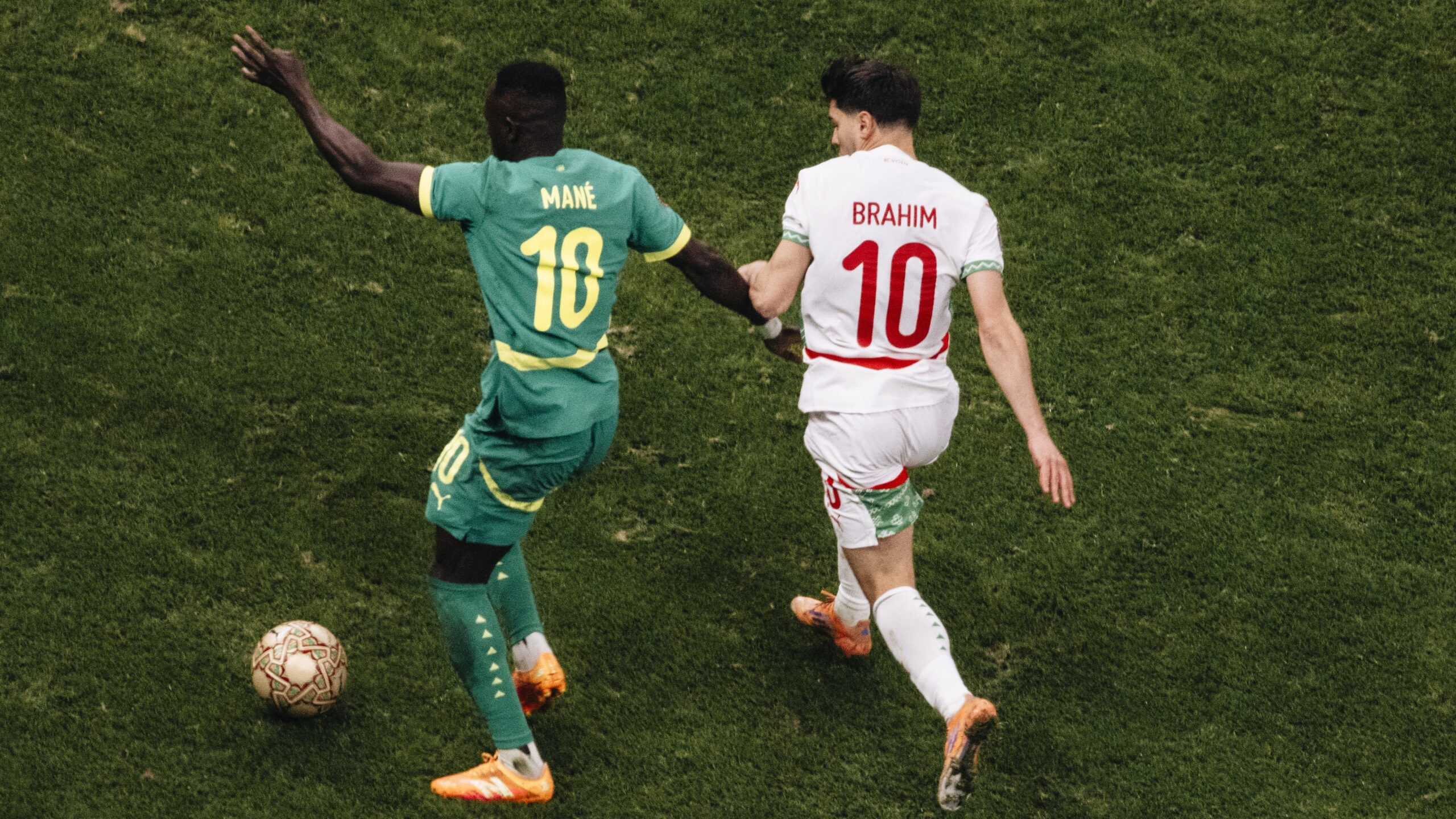
The Final: Chaos On The Pitch
The final between Morocco and Senegal became one of the tournament’s most controversial moments.
The match was disrupted when the referee called a foul that canceled a Senegal goal in the stoppage time. Shortly after, he pointed to the penalty spot after Senegal’s El Hadji Malick Diouf pulled down Morocco’s Brahim Díaz in the box.
Senegal’s coach instructed his players to leave the field in protest, halting play for ten minutes while security managed disturbances in the stands. During the interruption, Moroccan staff members entered the VAR review area to contest decisions, while ball boys allegedly delayed returning the ball to Senegalese players.
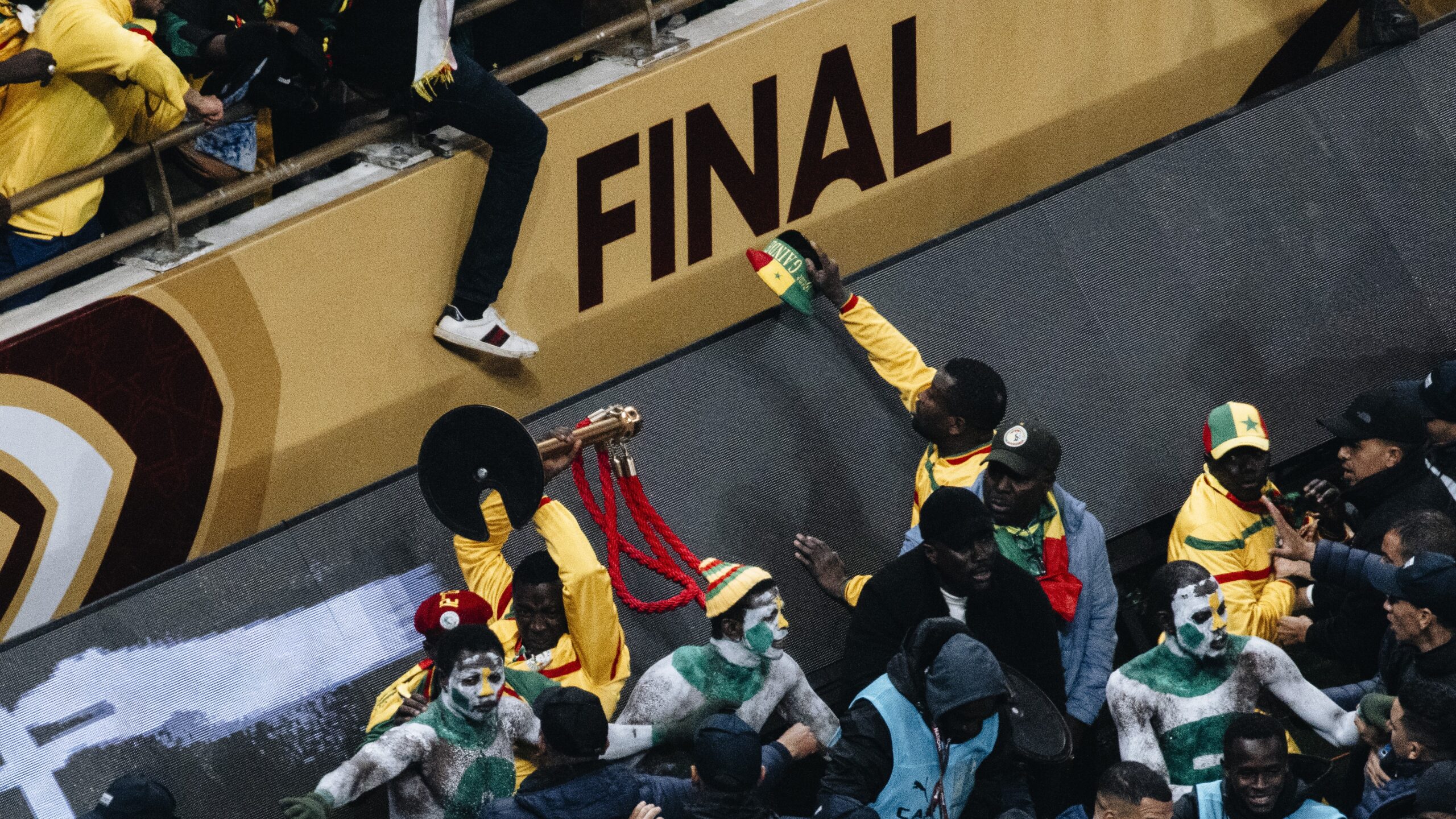
When the match resumed, Díaz attempted a panenka and missed the penalty. In the extra time, Senegal’s Pape Gueye scored the winning goal to secure the title. FIFA President Infantino condemned the incidents, and Morocco filed a formal complaint with CAF regarding Senegal’s walkoff and other alleged violations. The final highlighted tensions that would later result in disciplinary action against both federations.
The tournament shattered commercial records and proved Morocco’s readiness to host the 2030 FIFA World Cup.
CAF’s Verdict: Heavy Sanctions On Both Nations
Ten days after the final, CAF’s Disciplinary Board imposed significant financial penalties and suspensions on both federations.
Senegal received substantial fines for supporter misconduct, unsporting conduct by players and staff, and accumulated cautions during the match.
Pape Thiaw, Senegal’s head coach was also fined and suspended for five official CAF matches and fined, while other players received two-match bans for their behavior toward match officials.
Morocco, on the other hand, faced considerable fines for inappropriate conduct by ball boys, players invading the VAR area to obstruct the referee’s work, and laser use by supporters.
Captain Achraf Hakimi received a two-match suspension, while midfielder Ismaël Saibari was handed a three-match ban and a usd 100.000,00 fine.
CAF rejected Morocco’s formal protest against Senegal, closing the book on the tournament’s most contentious chapter.
The sanctions sparked debate in both nations about the proportionality and consistency of CAF’s disciplinary standards.
Economic Impact And Enduring Legacy
Beyond the drama and sanctions, AFCON 2025 delivered tangible economic benefits that will reshape Morocco’s development trajectory.
The tournament generated significant multiplier effects across the economy, contributing to robust GDP growth and creating tens of thousands of jobs.
Domestic consumption surged during the competition as visitors filled hotels, restaurants, and shops across host cities.
International football stars, including Egypt’s Mohamed Salah, publicly commended Morocco for delivering the best-organized competition they had experienced in Africa.
The Kingdom’s tourism infrastructure proved capable of absorbing the surge in arrivals, positioning Morocco to achieve its ambitious visitor targets for the coming decade.
AFCON 2025 validated Morocco’s broader development model: strategic infrastructure investment, professional event management, and leveraging sports to enhance global reputation and attract sustained international attention.
Conclusion: Losing The Trophy, Winning The Future
Morocco’s AFCON 2025 journey ended without the trophy the nation desperately sought, and the subsequent sanctions on both federations added an unwelcome postscript.
Yet the Kingdom accomplished something potentially more valuable: it demonstrated that African nations possess the vision, capacity, and sophistication to deliver sporting events that meet the highest global standards.
The tournament’s commercial success, operational excellence, and infrastructural readiness created a new template for what’s possible when strategic planning meets sustained investment.
Morocco proved that African nations can set their own standards.
While Senegal claimed the championship, Morocco’s organizational achievement resonates far beyond the final score. The blueprint for African sporting excellence now exists, written across six Moroccan cities through meticulous preparation and flawless execution.
Morocco proved that African nations can set their own standards. The Atlas Lions may not have lifted the trophy, and the financial penalties serve as a reminder of work still to be done. However, Morocco elevated something more significant: it raised the continent’s ceiling of possibility and established itself as the standard-bearer for African ambition on the world stage.