
Background and current roles
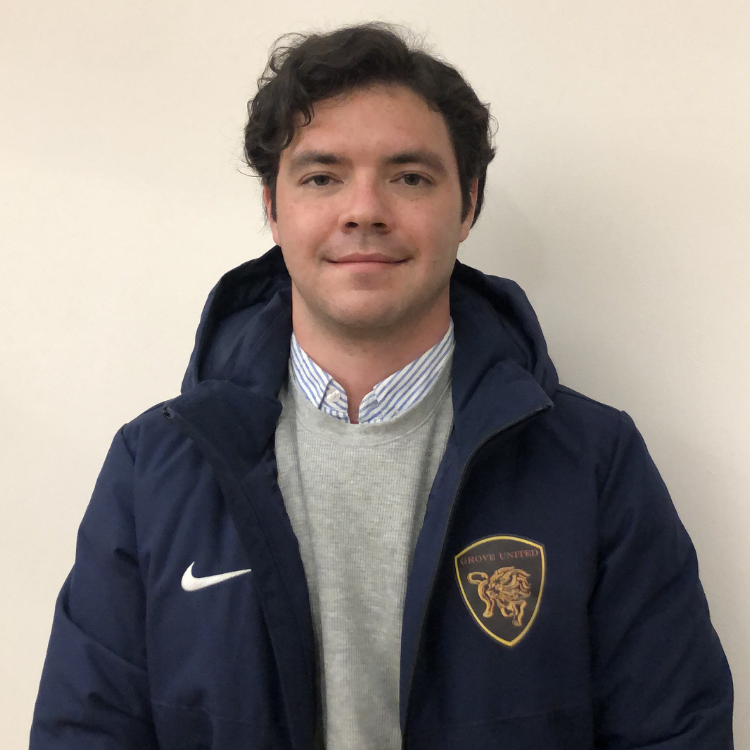
Sergio Almenara is a Spanish professional football coach recognized for his expertise in set pieces, tactical organization, and performance development. He currently works as Assistant Manager and Set-Piece Coach at FC Copenhagen and serves as Set-Piece Coach for the Finland national team.

Since joining FC Copenhagen in 2025, Almenara has operated in a high-intensity, results-driven environment with matches every three days. His role demands fast and precise analysis, clear communication with staff, and the ability to deliver detailed tactical solutions under pressure. His focus is on helping FCK compete for domestic titles while maintaining a consistent presence in the UEFA Champions League.
At international level, Almenara provides Finland with a structured and principle-based set-piece framework. With limited international windows, he prioritizes clarity, organization, and adaptable decision-making, giving players the freedom to apply creativity within a clear strategic system.
Coaching journey and methodology
Almenara’s coaching journey spans Spain, Finland, South Africa, and Denmark, across roles including video analyst, head coach, director of methodology, and scouting. These experiences have shaped his tactical depth and strong analytical foundation. He previously worked as Assistant Manager and Head of Scouting at FC Inter Turku, and later contributed significantly to a successful period at Orlando Pirates as Assistant Manager and analyst, capturing four major trophies.
His set-piece philosophy blends structure, precision, and adaptability. Viewing each routine as a tactical puzzle, he designs strategies tailored to player strengths and match demands while preserving the team’s identity. Supported by data-driven insights and close collaboration with staff, he aims to expose opponent weaknesses through well-timed, high-execution solutions.
A modern and forward-thinking coach, Sergio Almenara leverages international experience, analytical rigor, and innovative methodology to consistently deliver competitive advantages for both club and country.
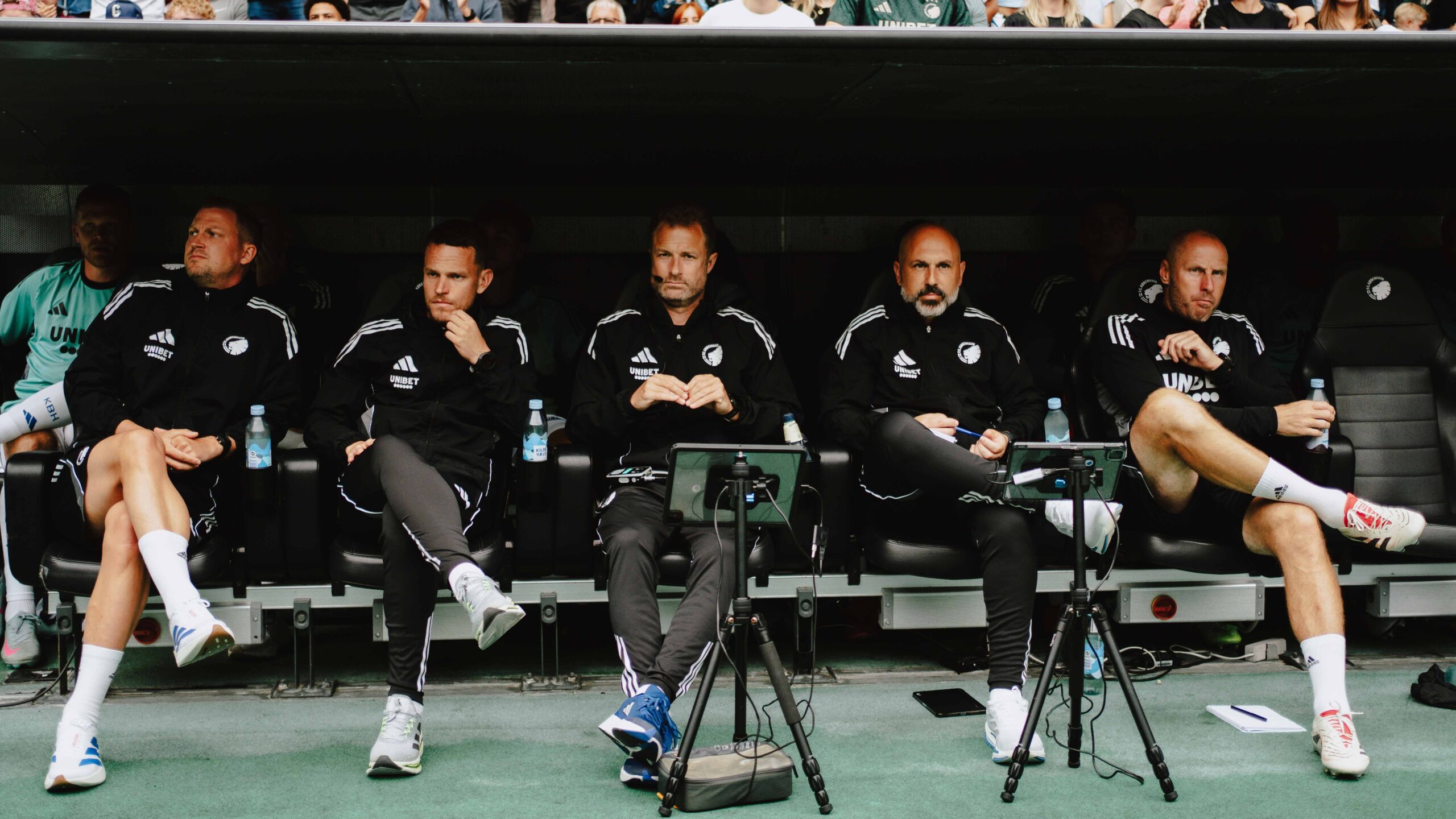
Our exclusive interview with Sergio Almenara
As of 2025 you joined FC Copenhagen as assistant manager and Set Piece Coach. What is the current day-to-day like? What attracted you to this project, and what are your personal ambitions with the club?
The day-to-day is hectic, with games every three days. There isn’t much time to reflect, mostly to execute. FCK is the biggest club in the Nordic countries, and the fan base, the stadium, and the environment made the decision very easy.
My ambitions are simple: to coach at the highest possible level in European football and, with FCK, to win titles and play in the Champions League every year.
My ambitions are simple: to coach at the highest possible level in European football and, with FCK, to win titles and play in the Champions League every year.
As set piece coach for the Finland national team, how do you structure your set-piece training, and what do you prioritize: creativity, organization, or adaptability?
Adaptability is the key word. With national teams, training time is very limited, so you can’t go too deep into details. Structure and organization are the priorities. Then creativity comes from the players, what they see and what they can execute. At club level, you have far more time to develop the set-piece phase.
During your time as assistant coach at Orlando Pirates, the club won multiple trophies. What were the key factors behind that success?
We had great and very creative players who, as much as their intuition allowed, followed the organization, structures, and game plans laid out by the three Spanish coaches who went there to improve the team’s performances from previous years.
You have coached in Spain, Finland, South Africa, and now Denmark. How have your methods adapted to different leagues?
Adaptation is the most important process. Adjusting to the country, the league, the club, the coaching staff, and the players’ context is what allows you to implement new ideas while respecting what was already working before you arrived.
How did you first get into coaching, and what motivated you to leave Spain for roles abroad?
I was 16, playing for my neighborhood club in Valencia, when they asked me to coach the U8 team where my little brother played. The motivation to coach had always been there, but the lack of opportunities in bigger clubs made me realize that if I wanted to become a professional, I would have to leave the country.
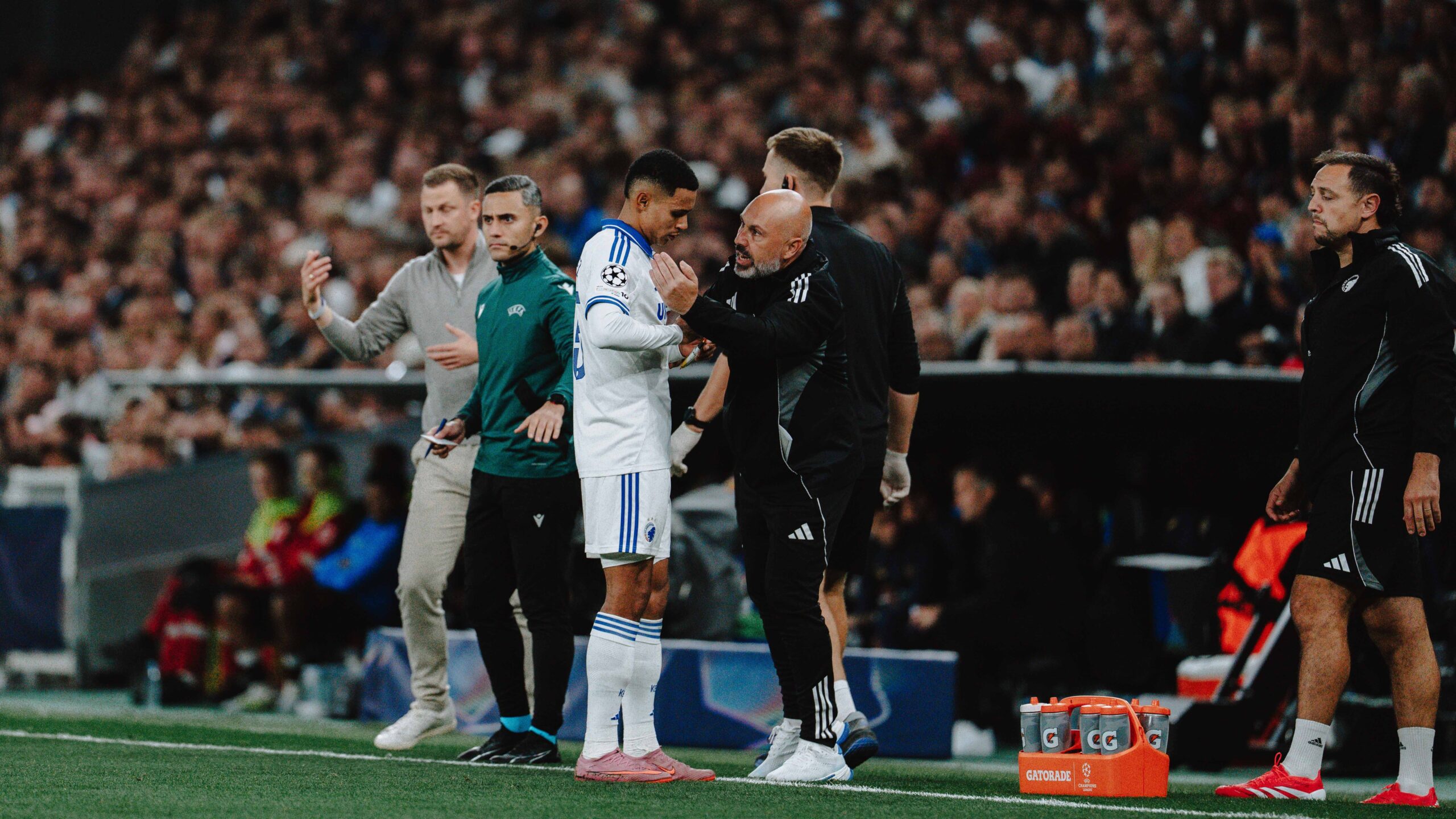
Your coaching résumé is quite varied, from video analyst, youth academy manager, assistant coach, to head of scouting and technical coach. How did these diverse roles shape your football philosophy?
I worked with small coaching staffs who pushed me to learn analysis and scouting processes, as well as how to use the software and platforms required to perform at a high level. Those roles broadened my understanding of the game and shaped my overall perspective.
How would you describe your overall philosophy toward set pieces?
The philosophy is simple: develop principles that make us feel strong and safe, while also allowing us to threaten opponents with our routines and individual skills.
The philosophy is simple: develop principles that make us feel strong and safe, while also allowing us to threaten opponents with our routines and individual skills.
What do you prioritize when analyzing an opponent’s defensive setup on corners and free kicks? How do you identify vulnerable zones?
We look at where our routines can hurt them the most with minimal changes to our usual behaviors. Sometimes, if we see a big opportunity, we make small adjustments – like the goal we scored against FC Basel in the Champions League.
We identify vulnerable zones through detailed discussions with our set-piece analyst, Nikolai Grum, balancing what is best for us with how much it compromises our structures. If the compromise is too big, I share it with the coaching staff and we find an agreement. With the national team, I analyze alone, but if something important comes up, I share it with the staff.
Can you walk us through your process for creating a new offensive or defensive set-piece routine?
- Analyze the strengths and weaknesses of my players.
- Review previous routines that were effective before my arrival.
- Check whether my ideas align with the players’ strengths.
- Design and practice the routine.
- Gather feedback from analysts, coaches, and players.
- Modify it into the final version.
- Review possible adaptations based on improvement areas or opponent weaknesses.
How often do you introduce new routines, and how do you balance novelty with consistency?
We don’t introduce too many completely new things. We work from the principles we agree on with the players at the beginning of the season, and those principles sustain our organization and performance.
Occasionally, we design something new for a specific opponent, but never at the expense of our principles and structures.
Do you customize routines to specific player strengths, or design systems that any player can fit into?
Yes, we customize. As I always tell the players: creating a set-piece routine is like assembling a puzzle. Every game you may have one, two, or three new players, and you must make them all fit within the same principles and structures. Sometimes the strategy changes so we can get the most out of whoever is on the field.
What is your preferred approach for defending corners: zonal, man-marking, hybrid, or does it depend on the opponent?
It depends on the spaces you want to protect and on balancing the players you have with their specific skills. Hybrid is the most common approach for us.
How can a team exploit defensive set-piece recoveries to launch quick transitions?
By positioning rebound players in starting zones where they can immediately challenge the opponent and create dilemmas for them.
How heavily do you rely on data and video tools when preparing set-piece strategies?
We use data as much as we can. For example, in the last derby against Brøndby, we targeted a specific area because the data showed they were very strong in the central zone. It didn’t work as expected, football is a continuous learning process, and we always try to learn from our mistakes. In other games, however, the data has helped us succeed.