

Working behind the scenes in football operations
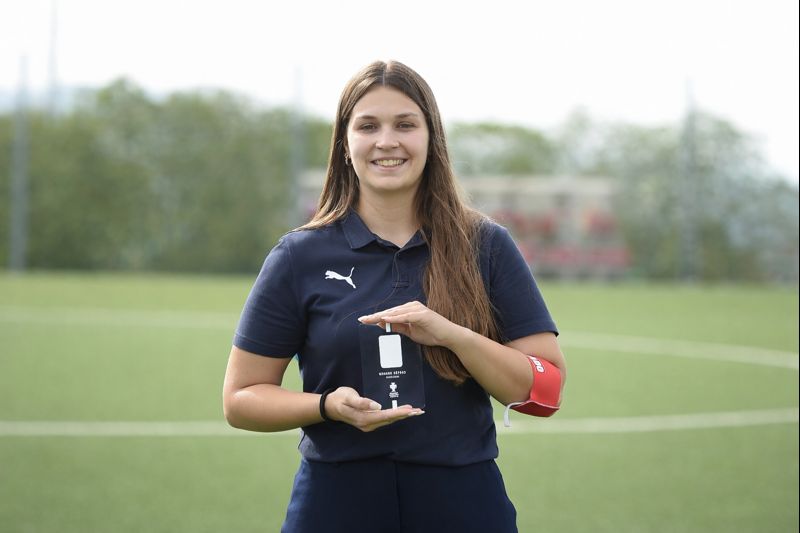
Catarina Martins works in the spaces most people never see. Planning sessions. Travel logistics. Safeguarding protocols. Daily routines that rarely make headlines, but determine whether a team functions or not.
Catarina Martins works in the spaces most people never see.
As Team Manager of SC Braga’s U19 Women, she operates at the core of the club’s performance environment. Her background combines hands on football operations, academic research in football business, safeguarding expertise, and international exposure through UEFA events.
Beyond her operational role, she contributed to the wider women’s football discourse by translating The Women’s Game: More Than Just a Game into Portuguese.
Her work reflects a belief that development is not driven by talent alone, but by structure, responsibility and consistency.
Development is not driven by talent alone, but by structure, responsibility and consistency.
Our exclusive interview with Catarina Martins
You are currently Team Manager of SC Braga’s U19 Women. What does your day to day work look like, and how do you ensure that players and staff have everything they need to perform at their best?
My day to day is centred around planning and coordination, making sure every detail of the team’s routine is aligned. I manage training schedules, additional gym sessions, treatment and rehab appointments for injured players, and transportation to and from training.
I work closely with the medical department, performance staff, physios, kit staff and the technical team to ensure everyone is informed and operations run smoothly.
Player support is a central part of my role. I do regular check ins, both on the pitch and individually, so I can anticipate needs, address issues early and ensure recovery and nutrition plans are being followed.
I am the main point of contact for the squad, whether the issue is logistical, practical or personal.
Matchdays add another layer. I manage travel and accommodation for away games, coordinate equipment and materials, and ensure home match logistics are fully prepared. I also handle communication and planning around national team call ups.
Ultimately, my role is about clear communication, proactive organisation and being someone players and staff can rely on so they can focus fully on performance.
Your experience ranges from Team Liaison Officer at O Sports to operational roles across several Braga squads and volunteering at UEFA events. How have these environments shaped your understanding of elite football operations?
Working across different contexts taught me flexibility and the importance of systems. At O Sports I learned high volume event coordination and stakeholder management.
Within Braga, I experienced how tight daily routines and attention to detail directly affect performance. At UEFA events, I observed best practices at an international level.
Bringing these perspectives together helped me understand how to combine rigorous processes with a people centred approach that works across youth and elite environments.
You have worked with both senior teams and youth squads at SC Braga. How do you adapt your leadership and communication to different age groups and levels of maturity?
With youth players, my approach is educative and supportive. I focus on clear guidance, structure and encouragement that gradually builds independence.
I place strong emphasis on instilling the club’s values while maintaining enjoyment, fun and a positive learning environment.
With senior players, communication becomes more collaborative. I respect their routines and experience while ensuring the operational framework supports their needs.
Across all age groups, I prioritise respect, honesty and timely communication, adapting my tone and level of detail to what each group requires.
You hold a Professional Master in Football Business and a Master in International Business, with a thesis focused on player transfers in Portuguese women’s football. How does this academic foundation influence your work as a team manager?
My academic background shapes how I think, plan and evaluate decisions in football. Studying football business and international business trained me to work with structure, evidence and long term planning rather than relying solely on intuition or short term solutions.
As a team manager, this allows me to design processes that are efficient, scalable and aligned with broader club objectives.
I analyse systems, identify inefficiencies and propose solutions that improve both performance and sustainability.
It enables me to operate comfortably between the sporting and organisational sides of the club, ensuring daily operations align with long term vision.
Safeguarding is becoming increasingly important in global football, and you hold multiple UEFA certifications in this area. How do you apply safeguarding principles in daily team operations and player support?
Safeguarding is non negotiable for me and is embedded into daily operations rather than treated as a separate process.
It starts with clear codes of conduct, accessible reporting channels and regular staff training so everyone understands their responsibilities.
Players know who to speak to and trust that confidentiality, respect and protection are guaranteed.
Operationally, this includes proactive risk assessments for travel, secure transport and accommodation, and close collaboration with medical, performance and technical staff to identify concerns early.
Safeguarding creates an environment where players feel safe and supported, which is essential for wellbeing and performance.
Before fully entering football, you worked in business development in the metal exports industry. Which corporate skills have proven most valuable in your football career?
Business development gave me a strong foundation in negotiation, partnership building and stakeholder management, all of which translate directly into football operations.
Managing complex timelines and logistical constraints mirrors the pressure of export operations, where solutions must be found quickly and collaboratively.
That experience strengthened my ability to stay calm under pressure, adapt to changing circumstances and make informed decisions.
Above all, it taught me resilience and attention to detail, qualities that are essential in football’s fast paced and unpredictable environment.
You recently translated The Women’s Game: More Than Just a Game. What motivated you to take on this project, and what did you learn from the process?
What motivated me was the lack of accessible, high quality content on women’s football for Portuguese speaking audiences.
I saw the translation as a way to contribute beyond my operational role by bringing international perspectives and debate into a national context where resources are still limited.
Working line by line with contributors from different countries highlighted how varied the realities of women’s football are in terms of funding, governance, culture and development stages.
It reinforced how important language and context are in shaping how the game is understood and discussed.
Is there a particular theme from the book that resonated strongly with your experience in Portuguese football?
The theme that resonated most with me was that structure determines opportunity, not just talent.
In Portugal, I have seen capable players and coaches constrained by inconsistent pathways, fragmented youth structures and limited resources.
Without coherent systems, even strong individual potential struggles to translate into long term development.
Alignment between youth and senior football, sporting vision and operational decision making, and short term performance and long term planning is essential for sustainable progress.
As someone committed to the development of women’s football, what should Portugal prioritise over the next years to elevate the game nationally?
Portugal must prioritise building a sustainable ecosystem for women’s football, with the right people, skills and qualifications in the right positions.
This includes investing in structured youth academies for girls, professionalising club operations and ensuring players have stable contracts and clear career pathways.
Clubs and institutions also need targeted commercial strategies to attract sponsors and media visibility, alongside leadership development programmes that increase female representation in coaching, management and executive roles.
Meritocracy, supported by strong safeguarding and player welfare education, must be central.
Looking ahead, what are your long term aspirations in football, and how do you see your role evolving?
I want to continue growing within football operations and gradually move into more strategic roles, such as Head of Team Operations, Director of Women’s Football, or positions focused on academy structures and long term development models.
I am particularly interested in roles at the intersection of player care, club management and governance, whether at club, federation or association level.
My goal is to help build environments where talent can genuinely thrive and where women’s football is treated with long term investment, planning and respect.