

Executive Summary: The Mandate for Systemic Reform
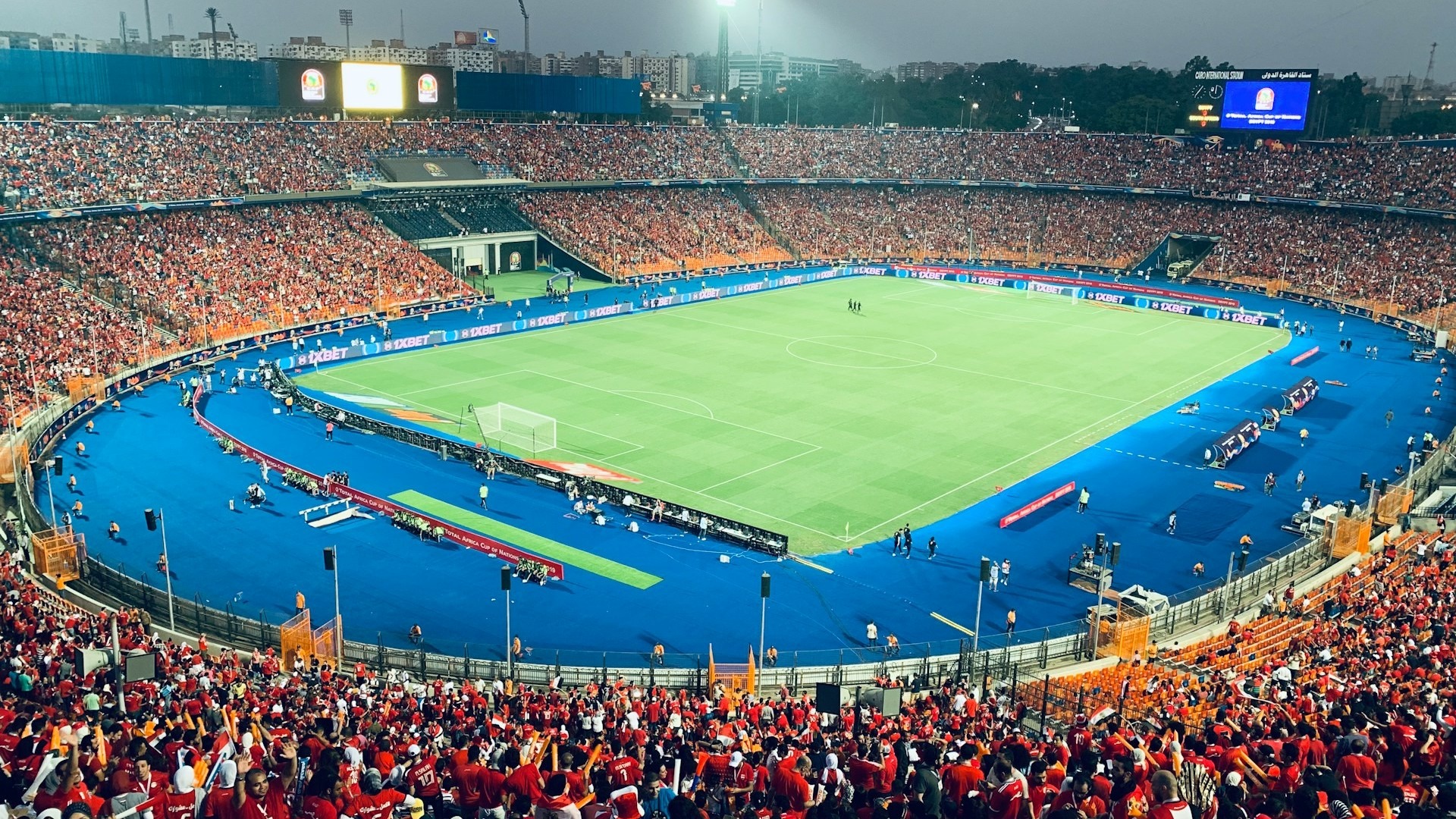
Egypt boasts an unparalleled legacy in African football, having secured a record seven Africa Cup of Nations (AFCON) titles, including an unprecedented consecutive hat-trick of victories between 2006 and 2010. However, this historical continental dominance is currently masking profound structural deficiencies that prevent the national team, the Pharaohs, from achieving sustained global competitiveness.
The Egyptian Football Association (EFA) must transition rapidly from a reactive administrator to a proactive, regulatory, and developmental institution.
The recent, highly successful strategic model implemented by the Royal Moroccan Football Federation (FRMF) provides a clear comparative blueprint. Morocco’s centralised, state-backed investment in world-class infrastructure, systematic professionalisation of coaching, and aggressive integration of its diaspora talent pool has yielded phenomenal results, including a FIFA World Cup semi-final appearance in 2022, an Olympic medal match in 2024, and a historic FIFA U-20 World Cup title in 2025.
The Egyptian Football Association (EFA) must transition rapidly from a reactive administrator to a proactive, regulatory, and developmental institution. This investigative article delivers a prioritised strategic roadmap outlining both immediate, high-impact policy quick wins (1–3 years) and crucial long-term structural transformations (5–10 years) necessary to institutionalise excellence and achieve success on the world stage.
Section I: The Paradox of Egyptian Football: Diagnosing Structural Challenges
Historical Strength Versus Foundational Weakness
Egypt’s historical success, highlighted by its record seven AFCON titles and numerous podium finishes, has established a competitive expectation that the current developmental pipeline struggles to meet consistently. The nation has also experienced isolated successes, such as winning the 2019 U-23 Africa Cup of Nations, which secured qualification for the 2020 Tokyo Olympic Games. However, achievements at the senior level now rely heavily on a small core of internationally experienced players rather than a continuous stream of elite talent emerging from the domestic system.
Analysis of resource allocation confirms that investment is skewed toward physical facilities, often neglecting the crucial aspect of human capital. Data shows that $6,650,000, representing 100% of the committed funds under the FIFA Forward Programme in Egypt, has been dedicated solely to infrastructure improvements. This focus on “hardware”, such as developing stadiums and clubs, without parallel investment in technical staff training, governance systems, and coaching education, generates a structural weakness. The period of continental dominance between 2006 and 2010 created a sense of complacency within an “AFCON Bubble,” allowing foundational deficiencies in succeeding youth pipelines to persist unaddressed. This reliance on an established generation masked systemic underinvestment, and these structural flaws are now evident in the inconsistent performance of younger national squads in global competitions.
This reliance on an established generation masked systemic underinvestment, and these structural flaws are now evident in the inconsistent performance of younger national squads in global competitions.
The Failure of the Talent Pipeline: Economic Barriers and Development Ceilings
The EFA faces two critical, interconnected failures in its talent pipeline: an economic filter imposed at the entry level and a competitive ceiling imposed at the professional level.
According to recent data from the Central Agency for Public Mobilisation and Statistics (CAPMAS), Egypt’s sports sector has experienced a significant decline, with registered athletes dropping 32% from 920,000 in 2013 to 623,000 in 2023, primarily due to a 58% reduction in participants at rural youth centres amid chronic underfunding. Interviews with centre managers reveal meagre annual budgets of around 5,000 EGP per facility, rendering many centres ineffective for talent scouting and development, particularly in rural areas, historically key talent pools for Olympic disciplines like weightlifting.
This erosion of public infrastructure exacerbates class inequality, as state-supported private clubs charge exorbitant fees, up to 250,000 EGP annually, far exceeding the average per capita income of 165,000 EGP, effectively barring low-income youth from access. While private clubs have grown by 13% with a 28% increase in players, overall sports facilities have not kept pace with a 22% population rise, underscoring a systemic shift toward elite, fee-based models over inclusive development. This trend directly impacts football, as outlined in the strategic roadmap for Egypt’s youth football development.
The pervasive “pay-to-play” model mirrors the exclusionary economic barriers identified in the CAPMAS data, limiting access for talented youth from lower socio-economic backgrounds, particularly outside Cairo and Giza, thus shrinking the national talent pool. This highlights how this economic filter, coupled with underfunded youth centres, stifles the domestic pipeline, a critical issue when compared to Morocco’s Mohammed VI Football Academy, which prioritises talent over wealth. Furthermore, the decline in rural participation aligns with the concern about a “domestic retention crisis,” where limited infrastructure and resources hinder the export of players to elite European leagues, capping their competitive growth.
Adopting the proposed EFA reforms, such as banning youth fees and establishing a National Football Development Complex (NFDC), could reverse this trend, ensuring broader access and aligning Egypt’s football system with a sustainable, inclusive model for global success.
The Crisis of Pay-to-Play (P2P)
The primary barrier to maximising Egypt’s vast youth potential is the pervasive “pay-to-play” (P2P) model employed by many domestic clubs and academies. This system operates as an exclusionary economic filter, restricting access to development opportunities based on a child’s family wealth, rather than their merit or innate ability. Evidence indicates that youth teams, including those associated with prominent clubs and “investment clubs,” charge substantial mandatory fees, sometimes reaching up to LE30,000 per season.
This commercialisation of youth football, driven by clubs viewing young players as immediate revenue sources, constitutes a severe national talent drain. By imposing economic barriers, the system systematically excludes talented children from lower socio-economic backgrounds, particularly those residing outside the wealthy centres of Cairo and Giza. This outcome fundamentally contradicts the goal of maximising the national talent pool, despite the acknowledged high passion and large youth population in Egypt. Conversely, successful merit-based organisations like the Right to Dream Academy operate on a fully-funded scholarship model, identifying talent solely based on potential and aptitude. This demonstrates that meritocratic, non-profit pathways are viable and necessary to unlock the nation’s full potential.
The Domestic Retention Crisis
Once a player manages to enter the professional system, their development often hits a competitive ceiling imposed by the domestic retention culture. The financial dominance of the two Cairo giants, Al Ahly and Zamalek, who historically retain the vast majority of championships and league revenue, incentivises clubs to aggressively retain their best young players to maintain short-term domestic supremacy.
This protectionist behaviour inhibits the crucial technical, tactical, and psychological growth achieved through exposure to elite competition. Managers and national figures, including Mohamed Salah and Ibrahim Hassan, have highlighted the detrimental effects of the shrinking number of Egyptian players participating in top European leagues.
Highly rated prospects have remained entrenched domestically despite documented interest from multiple European clubs, including those in the Premier League. The Egyptian Premier League, despite its local prestige, functions as a development ceiling. By discouraging or refusing the export of highly-rated U-21 players, the EFA system limits the collective quality and readiness of the senior national squad, preventing players from experiencing the tactical innovation and mental toughness required for sustained global competition. This club-centric priority, valuing domestic success over player revenue maximization and national team development, actively caps the potential of Egyptian football.
Governance and Regulatory Deficits
Compounding the pipeline issues are fundamental governance deficits that undermine the EFA’s credibility on the international stage. The International Federation of Professional Footballers (FIFPRO) issued a formal warning to foreign players, advising against signing with Egyptian clubs due to frequent allegations of contractual disputes, abusive behaviour, passport confiscation, and forgery.
Furthermore, the EFA’s own internal dispute resolution bodies have been criticised for lacking the impartiality and independence required by international standards. These institutional shortcomings actively damage Egypt’s global reputation. Reputable international scouts, agents, and investment partners are discouraged from long-term engagement with the Egyptian ecosystem, slowing the necessary infusion of foreign capital and modern coaching expertise required to elevate standards across the board. Legal transparency and contract integrity are essential, non-negotiable prerequisites for the EFA’s future professionalisation.
Section II: The Moroccan Blueprint: Centralised Strategy and Sustainable Success#
Morocco’s recent trajectory in football, culminating in the historic 2025 FIFA U-20 World Cup title and the 2022 World Cup semi-final run, offers a compelling, executable roadmap for the EFA. The success is rooted in a highly centralised, state-driven, and long-term strategic vision.
Royal Vision, Centralised Funding, and Infrastructure Excellence
Morocco’s football revolution stems from a holistic, strategic vision defined by King Mohammed VI, beginning with the Skhirat Symposium. This approach ensured systemic continuity and insulation from short-term club politics or volatile financial cycles.
The most visible symbol of this strategy is the Mohammed VI Football Academy (AMF), inaugurated in 2010. Conceived as a national asset to reshape Moroccan sports, the AMF is a sprawling, world-class complex spanning 18 hectares, initially financed through state commitment and private sector investments from major corporations and financial institutions. It represents a significant investment, with the core facility budget valued at approximately 140 million Moroccan Dirhams (MAD). Critically, the AMF recruits players based on technical and physical potential, implementing a rigorous “sport-study” curriculum that guarantees high-level academic education alongside elite training. This integrated model ensures graduates are prepared for careers in professional football or higher education. The AMF’s success is evident in its ability to consistently produce top international players, including Youssef En-Nesyri and Nayef Aguerd, and its pivotal role in youth success, contributing seven players to the U20 Africa Cup of Nations final squad.
The centralisation of investment underpins quality control and longevity. By funding this critical infrastructure as a national priority, similar to essential government spending like health and education, the system is dedicated purely to merit-based talent development, effectively eliminating the commercial pressures that fuel Egypt’s P2P problem.
Technical Professionalisation and Quality Control
The FRMF recognised that infrastructure must be complemented by world-class technical expertise. FRMF President Fouzi Lekjaa emphasised facilities, talent, and qualified personnel as the three key elements of success.
The federation mandates rigorous coaching standardisation, including licensing courses (A, B, and Pro licenses) in collaboration with FIFA and CAF, ensuring technical staff are equipped with modern knowledge in video analysis, sports nutrition, and youth development. This commitment to building qualified human capital ensures ideological continuity and technical alignment across all age groups, allowing domestic coaches, such as U-20 World Cup winning manager Mohamed Ouahbi, to thrive. Furthermore, the National Technical Directorate (NTD) runs mandatory, centralised scouting and orientation programs for specific age groups to objectively assess and direct talent to either federal training centres or partner clubs. To sustain these regional development efforts, a National Football Training Fund has been created via a public-private partnership with entities like the OCP Group, pooling resources and skills to professionalise training centres and promote young talent.
Diaspora Integration Strategy: The Competitive Edge
A key differentiator for Morocco is its proactive, successful policy of integrating high-quality dual-national players trained in Europe. This strategy, championed by Coach Walid Regragui, was vital to the 2022 World Cup success, where the squad featured 14 foreign-born players from European leagues.
Morocco operates on a robust, dual-track mechanism: leveraging highly standardised, homegrown talent from academies like the AMF, while simultaneously utilising the tactical and technical maturity of players forged in elite European competitive environments. This blended approach provides superior national team depth and immediate competitive readiness, affording Morocco an advantage over nations that fail to tap this rich expatriate talent pool.
Section III: Prioritised Strategic Solutions: Short-Term Imperatives (1–3 Years)
The EFA must prioritise immediate regulatory and technical reforms to stabilise governance and remove talent barriers, thereby preparing the ground for major long-term structural investment.
Policy Quick Wins: Eliminating Barriers and Enforcing Professionalism (Year 1)
Priority 1 (Critical): Anti-Pay-to-Play Mandate. The EFA must immediately impose strict regulations prohibiting youth registration or training fees for all age groups (U10 to U16) in academies affiliated with Premier League and Second Division clubs. Youth football must be legally redefined as a non-profit, developmental service, separating it entirely from commercial club operations. This direct action immediately tackles the most corrosive element of the system, forcing clubs to shift to merit-based scouting and vastly expanding the accessible talent pool nationwide.
Priority 2 (Critical): Governance and Integrity Overhaul. The EFA must establish an independent Integrity Unit (IU) dedicated to enforcing FIFA/CAF Club Licensing compliance and addressing the serious allegations concerning contract forgery, abusive behaviour, and passport confiscation reported by FIFPRO. The EFA must demonstrate that its dispute resolution mechanisms are impartial, independent, and compliant with international standards to repair its damaged global reputation and guarantee the rights of professional players.
Priority 3 (High): Financial Fair Play (FFP) Enforcement. Rigorous implementation and monitoring of Financial Fair Play rules, as committed to by the Ministry of Sports, are essential. FFP stabilises club budgets, prevents financial manipulation of the competitive landscape, and limits the ability of corporate-affiliated clubs to distort the youth development market by using youth sections purely for short-term profit.
Technical Uplift and Capacity Building (Year 1–3)
Priority 4 (High): Mandatory Coach Re-Education and NTD Standardisation. The National Technical Directorate (NTD) must be empowered to mandate intensive, short-term re-certification and licensing programs (CAF A/B/Pro licenses) for all youth and senior domestic coaches (U16–U23). The curriculum must be modernised immediately, integrating modules on performance science, video analysis, psychological development, and data-driven training methodologies. This replicates the FRMF’s focus on rapidly building qualified human capital and standardises technical instruction across the country, combating the outdated, traditional methods that currently inhibit elite player growth.
Priority 5 (Medium): Centralised Digital Talent Identification System (TDS). The EFA must rapidly deploy a unified, technologically advanced national scouting database, leveraging global initiatives like the FIFA Talent Development Scheme. This system must systematically track and evaluate performance data for all players aged 15-20 across domestic competitions and the diaspora pool. The resulting database will introduce objective, merit-based selection protocols, providing essential transparency and ensuring that no talented player is overlooked due to localised influence or economic status.
Priority 6 (High): Integrating Performance and Pitch Intelligence Systems. To complement the technical uplift, the EFA should partner with technology-driven performance and pitch intelligence providers such as Turfcoach, whose advanced data analytics platforms support real-time turf monitoring, player load management, and environmental performance optimization. Integrating such systems within national training centres and club academies would create safer, more consistent playing surfaces, reduce injury rates, and provide objective environmental data for coaching decisions. This fusion of sports science and pitch technology ensures that Egypt’s football ecosystem evolves into a data-informed, performance-driven model aligned with international best practices.
Incentivising Player Exportation (Year 2–3)
Priority 7 (High): The “European Gateway” Incentive Policy. The EFA must introduce regulations that reframe player export as a crucial national development strategy. This involves implementing financial incentives (e.g., tax breaks, streamlined solidarity and training compensation procedures) for clubs when they sell U-21 players to top European leagues. Critically, the EFA should establish mandatory policies requiring domestic clubs to accept offers for U-21 players from top-tier European leagues if those offers meet an EFA-determined objective valuation benchmark. This regulatory intervention addresses the core structural issue of domestic retention, defining player movement as necessary for achieving the national team’s competitive maturation.
Section IV: Long-Term Structural Transformation (5–10 Years)
These solutions require sustained, high-level governmental commitment and capital investment, replicating the foundational state support that drove Morocco’s structural reform.
Centralised Hub Development (The EFA National Football Development Complex)
Priority 8 (High): Establishment of the NFDC. The EFA must secure dedicated state funding, possibly through a national development fund or specialised budget allocation, to design and construct a state-of-the-art National Football Development Complex. This complex should exceed the size and capacity of the 18-hectare Mohammed VI Academy, serving as the centralised, permanent, integrated camp for all national teams (U16–U23) and the hub for coach education and performance science.
The NFDC must strictly enforce the integrated sport-study curriculum, ensuring that elite players receive a comprehensive education alongside their training, mitigating the risks associated with prioritising sports over academics. This complex would serve as the National Quality Benchmark (NQB), standardising high performance, technical methodology, and holistic player development across the entire country, regardless of the individual resources of the clubs they represent.
Formalising Diaspora Engagement
Priority 9 (Medium): Proactive Dual-National Scouting and Integration Program (ISO). A dedicated EFA International Scouting Office (ISO) must be established in key European hubs (e.g., France, the Netherlands, Germany) to systematically identify, engage, and recruit talented Egyptian dual-nationals training in top European academies. This ISO should manage a cultural integration program featuring regular, mandatory contact points with the NTD and invitations to non-FIFA friendly camps to instil national identity and commitment. This initiative provides the fastest route to dramatically raise the technical and tactical ceiling of the national teams by integrating high-quality, European-trained professional talent.
Decentralisation and Competitive Rebalancing
Priority 10 (Medium): Mandatory Club Academy Professionalisation and Regional Enhancement. The EFA must introduce and strictly enforce licensed standards for all Premier and First Division club academies (U16–U23). These standards must mandate minimum requirements for facility quality, certified coaching staff, and holistic player support, subjecting them to regular NTD audits. Furthermore, the EFA must restructure youth and lower-division competitions to eliminate the current practice of manipulating regional group placement to favour politically or commercially connected corporate teams. Active support and promotion of high-standard regional development hubs outside of the immediate Cairo area are necessary to ensure competitive depth and broad geographical access to quality training across the nation.
Conclusion: Transforming Potential into Systemic Excellence
Egypt possesses the cultural passion and demographic volume necessary for sustained football excellence. However, this potential is being severely undermined by a fragmented, economically restrictive, and governance-deficient system. The strategic blueprint presented mandates a fundamental reorientation of the EFA from a reactive entity to a proactive, meritocratic, and professionally regulatory body.
By swiftly implementing the prioritised short-term reforms, particularly the abolition of the P2P system and the enforcement of contractual integrity, the EFA can immediately unlock the nation’s true talent base. The long-term success, however, hinges upon securing dedicated state commitment for the creation of a National Football Development Complex (NFDC) and actively integrating the highly valuable diaspora talent pool. The adoption of the Moroccan model’s centralised structure and holistic developmental philosophy is essential for the EFA to transcend its current competitive ceiling and achieve sustained, institutionalised success on both the continental and global stages within the next decade.
The journey to international success is not quick, and it is not linear. But the foundation is being laid. A modern youth system will not only help the national team win matches. It will give young Egyptians a chance to dream, to grow, and to represent their country with pride. It will build careers, inspire communities, and strengthen the sporting fabric of the nation. If Egypt stays the course and sees youth development not as a short-term project but as a national mission, the next generation of football stars may shine even brighter than those of the past.