

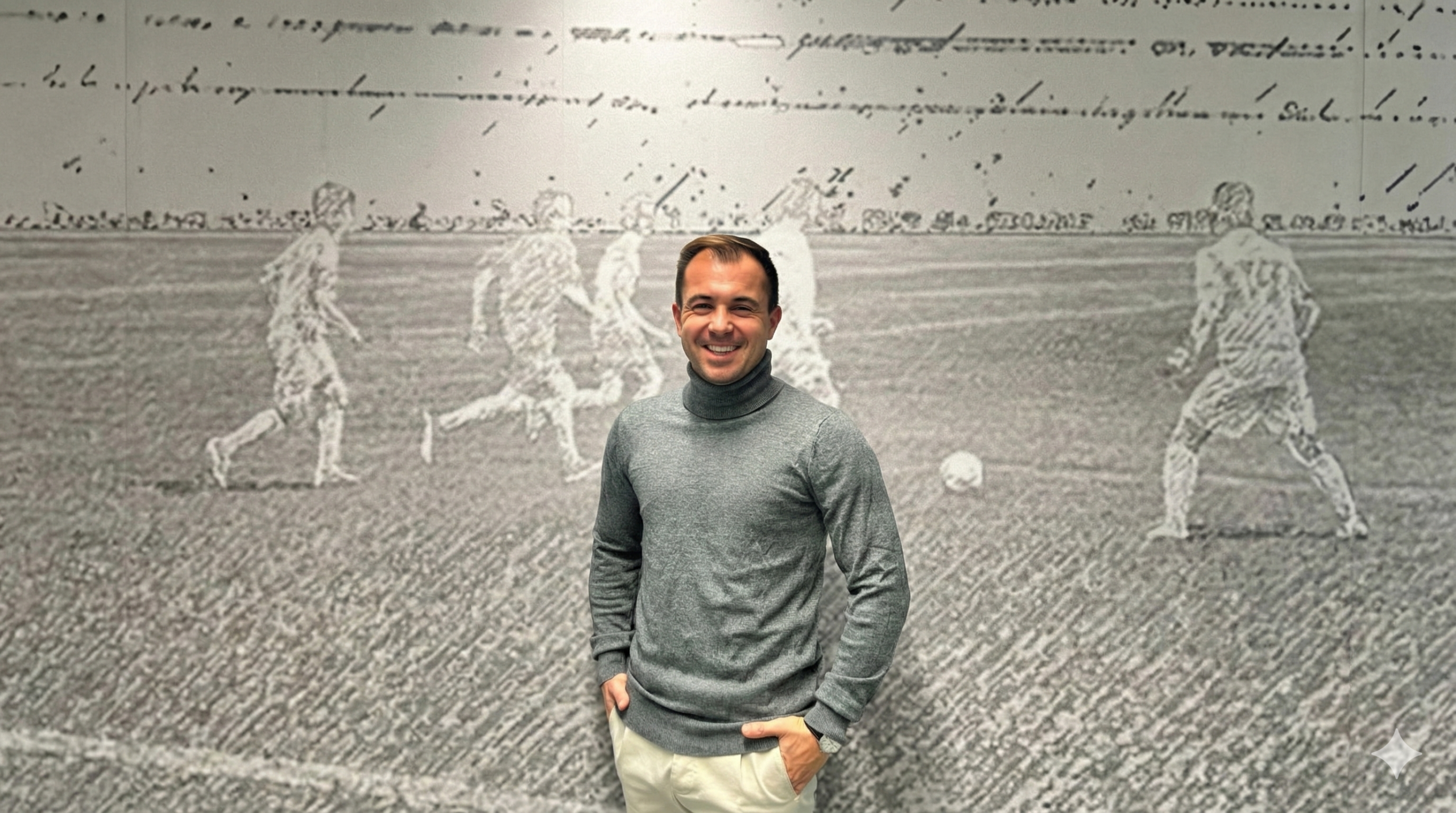
Early Career and Background
Kevin Cauet is an experienced football manager and scouting professional with a diverse career that bridges coaching, international management, and global talent identification. Currently serving as Scouting Manager for adidas Football, he plays a vital role in connecting the brand’s scouting network with player development and strategic partnerships across Europe and beyond.
Fluent in French, English, Italian, and Spanish, Cauet brings a multicultural understanding to his work, shaped by his time living and working in France, Italy, China, Bulgaria, and Saudi Arabia. After earning a Bachelor’s degree in Economics and Management from the Catholic University of Milan and a Master’s degree in Training and Sports Performance Optimization from the University of Toulon, he obtained both the UEFA A and B Licences as well as the Advanced State Diploma in Football Performance.
His journey began at Accademia Inter, where he coached several youth teams before joining FC Internazionale Milano as Academy Manager for Inter’s projects in Shanghai and Nanjing. These experiences inspired his book Un Mister in Cina, reflecting on cultural adaptation and youth development abroad. He later served as Assistant Head Coach at Botev Vratsa in Bulgaria, winning the league title, and at US Concarneau in France’s National 1.
Alongside his coaching career, he became a familiar face on Italian sports television, appearing regularly as a pundit and co-commentator on Sportitalia TV and Telelombardia.
Today at adidas, Kevin Cauet merges on-field expertise with a holistic, human-centred vision of scouting and development, connecting football’s technical demands with the emotional and psychological foundations that shape tomorrow’s professionals. Across his global career, Kevin has cultivated a leadership approach grounded in empathy, cultural awareness, patience, and deep respect for diverse football environments.
Alongside his coaching career, he became a familiar face on Italian sports television, appearing regularly as a pundit and co-commentator on Sportitalia TV and Telelombardia.
Our exclusive interview with Kevin Cauet
You have coached and managed academies before stepping into scouting with adidas. How has your experience on the pitch influenced the way you identify and evaluate young players today?
My coaching and academy management experience has deeply shaped how I scout today. Being on the pitch with young players taught me to look beyond skills and highlights to spot those with mental strength, humility, and the willingness to improve quietly every day. Scouting isn’t just about instant talent; it’s about recognizing players with the mindset and character to grow into professionals over time.
All my previous roles, across different countries and levels, reinforced a key lesson: scouting is about character, resilience, and adaptability just as much as technique. The ability to handle challenges, adapt to new environments, and keep pushing forward is what separates future pros from others. This perspective guides me now in identifying players who not only have talent but also the mental tools to succeed in football and life.
What are the key characteristics you look for when scouting talent for adidas, and how do you balance technical ability with mindset, personality, and off-field behavior?
When scouting talent for adidas, I don’t just focus on technical ability. Although that remains fundamental. I also look closely at a player’s intelligence on the pitch: their decision-making, awareness, and ability to read the game. A player who understands the tactical side and can adapt quickly is hugely valuable. Physical qualities matter, too. Athleticism, endurance, speed, and strength all play a critical role in how a player performs and develops over time.
Beyond these, what really sets a player apart are their mindset, attitude, and professionalism off the pitch. Discipline, coachability, resilience, and a positive outlook are essential. Scouting globally means I evaluate how these traits align with adidas’ values like respect, teamwork, and commitment. It’s about seeing the complete player – the technical skills, tactical intelligence, physical abilities, and character together – that ultimately defines who will succeed at the highest levels.
You have worked and lived in multiple countries like France, Italy, China, Bulgaria, and Saudi Arabia. How have these cultural experiences shaped your approach to leadership, communication, and understanding different football environments?
Living and working in France, Italy, China, Bulgaria, and Saudi Arabia has been an incredible journey that’s really opened my eyes to how diverse football and people can be around the world. Each place has its own way of doing things, different traditions, ways of communicating, and expectations. That experience taught me that leadership isn’t about applying the same approach everywhere; it’s about listening, adapting, and finding what works best for each group and culture.
I learned to be patient and flexible, to pay attention not just to words but to what’s behind them. The values, emotions, and experiences that shape how people behave and respond. It made me more empathetic and aware that what motivates or inspires someone in one country might be different in another. Understanding these differences has helped me connect better with players and colleagues, build trust, and create a positive environment where everyone feels respected.
Ultimately, these experiences taught me that football is a universal language, but the way it’s spoken can vary a lot. For example, how teams train, how players behave on and off the pitch, coaching methods, communication styles, and even how success is defined can vary widely. Being open to learning from different cultures means recognizing and respecting these differences rather than expecting everyone to do or think the same way. This openness enriches you because it broadens your perspective, makes you more flexible, and helps you connect better with people from diverse backgrounds.
Football is a universal language, but the way it’s spoken can vary a lot.
Your book Un Mister in Cina offers an inside look into your time coaching abroad. What inspired you to write it, and what lessons from that period still influence your work today?
The inspiration to write Un Mister in Cina came from a deep desire to share the unique experience I lived coaching in China during a pivotal time for football there. I wanted to provide an honest and personal account of what it truly means to establish and run a football academy in a country with a vastly different culture, language, and football infrastructure than Europe. The book highlights both the significant challenges such as cultural barriers, communication differences, and adapting training methods and the exciting opportunities for growth and mutual learning.
Writing the book was also about conveying the importance of tolerance: learning to respect and understand different ways of working, different attitudes toward football and life, and bridging those gaps through empathy. It explores how football serves as a universal language that connects people across cultures despite differences.
The lessons I took from that period (openness to new ideas, patience in the face of complexity, tolerance for diversity, and adaptability) are essential guiding principles in my work today. They remind me to approach every project and player with a broader perspective and a willingness to learn from every situation, especially in multicultural environments.
You’re also known to many fans through your TV appearances on Sportitalia TV and Telelombardia. How do you view the role of media in modern football, especially when it comes to education, perception, and scouting transparency?
My TV appearances on Sportitalia TV and Telelombardia have been a humble chance to share my love for football with fans, especially commentating on Primavera TIM matches since 2018 it’s rewarding to connect with people who follow the game as passionately as I do. I see modern media as a vital bridge between pros and supporters, educating on the game’s nuances like tactics and player growth without pretending to know it all, while highlighting the real human stories behind the scores.
For education, media can break down complex topics like scouting or academy work, explaining why a young talent needs time to develop just as I learned from years on the pitch. It’s not about lecturing from a pedestal; it’s about inspiring kids to grind with humility, showing that true success comes from daily resilience, clear long-term project and not spotlight moments. Fans’ feedback from those broadcasts has even helped me reflect and grow, keeping me grounded.
On perception, media shapes how people view players and coaches, building heroes or sometimes unfairly judging, but when handled honestly, it sparks meaningful dialogue that humanizes the sport. For scouting transparency, I never spill trade secrets, but I openly discuss values like character and adaptability that I seek for adidas, making the process feel less opaque and more relatable. It’s a delicate balance, one I’m grateful for, as it lets me give back to the football community that shaped my own journey.
adidas is well known for its athlete development initiatives. Can you share how you contribute to programs or projects designed to support athletes in their growth, both on and off the pitch?
At adidas, I take great pride in contributing to the Elite Camps initiative, which is designed to support young athletes’ growth far beyond technical training. These camps integrate a strong focus on mental health, soft skills, and emotional intelligence, recognizing that true athletic performance is deeply intertwined with overall well-being and personal development. This is not simply a brand day or a commercial activity; it is a carefully structured program that we have been organizing for two consecutive years now, demonstrating adidas’ real commitment to athlete development.
Emotional intelligence, understanding and managing one’s own emotions as well as empathizing with others is a foundational pillar of our approach. We believe that players who develop emotional intelligence can better cope with the pressures and setbacks inherent in professional football, improve their communication and teamwork, and make sound decisions under stress. Teaching young athletes these skills empower them not only in football but also in life, fostering holistic resilience, leadership, and self-awareness.
In practice, our programs include workshops and mentoring sessions that encourage players to reflect on their emotions, set personal goals, and build healthy relationships on and off the pitch. This comprehensive development equips athletes to perform consistently at their best, maintain mental balance, and navigate challenges with confidence. By nurturing both the athlete and the person, adidas aims to create future professionals who are as strong emotionally and mentally as they are physically and technically.
With technology and analytics becoming more prominent in scouting, how do you balance data-driven evaluation with the intuitive “eye” of an experienced football mind?
In the modern game, technology and analytics have become indispensable tools that provide objective, quantifiable insights into player performance such as physical data, positional heatmaps, and statistical trends. These tools significantly enhance scouting accuracy by highlighting patterns and potential that may be difficult to detect with the naked eye alone. However, technology cannot replace the nuanced understanding that comes from years of direct observation and football experience.
The intuitive “eye” of an experienced scout remains critical in interpreting data within the broader context of the player’s environment, mentality, and potential for growth. For example, numbers might show a player’s speed or pass completion rate, but only a trained eye can judge leadership, creativity, decision-making under pressure, and emotional resilience. I blend these insights by first using data to identify promising profiles, then applying detailed visual and situational analysis to assess intangible qualities like mental toughness, adaptability, and football intelligence.
This balanced, hybrid approach ensures the scouting process is both evidence-based and human-centered. It allows us to make informed decisions that respect measurable performance while valuing the unique traits that statistics cannot capture but ultimately define a player’s success on and off the pitch.
Having worked with both youth and professional players, what advice would you give to young footballers dreaming of a professional career today?
My advice to young players dreaming of a professional career is to stay humble and grounded, no matter how talented you feel. Talent alone won’t carry you through the inevitable difficulties you need dedication, discipline, and above all, resilience to bounce back from setbacks. It’s really about patience, too. Football is a long journey with no shortcuts; sometimes progress is slow, and it’s important to trust that steady work behind the scenes will pay off in time.
I encourage young players to work quietly, without the need for constant recognition or validation. Focus on learning every day, whether it’s from coaches, teammates, or even your mistakes. See challenges not as roadblocks but as opportunities to grow stronger mentally and technically. Always respect the people around you: coaches who guide you, teammates who push you, and the broader football community that supports you. And remember, developing your personality, your mindset, your attitude, your values is just as important as perfecting your skills. This balance will help you not just become a better player, but a better person.
Looking ahead, what do you believe will define the next generation of scouts and how is adidas preparing to adapt to those changes?
Football is changing so quickly. For the next generation of scouts, being adaptable is essential. It’s not just about spotting who has great skills today; it’s about understanding how the game is evolving tactically and physically, and who will thrive in that future. Scouts need to be curious and open-minded, always learning and updating their way of thinking to keep up with new styles of play and different cultures.
When it comes to first-team players, it’s crucial to fully understand the club’s needs, the tactical system in place, the coach’s philosophy, and the overall club DNA. A player can be exceptional individually, but if they don’t fit into these elements, their impact can be limited. This is why scouting goes beyond ability; it’s about finding the right player for the right environment at the right time.
A good example is how some very talented players sometimes struggle or don’t perform well after moving to a new country or club. This shows how much mindset, cultural adaptation, and mental resilience matter alongside technical ability. Scouts must be able to identify players who have not only the physical and technical gifts but also the mental strength and personality to succeed in different environments.
I think the best scouts will be those who combine their knowledge of the game with a real sense of people who can see not only what a player does on the pitch but who they are off it. It’s about reading mindset, attitude, and character just as much as stats and physical numbers. And of course, being comfortable with technology and data is important, but it can’t replace the gut feeling you get from watching a player’s passion and determination in real life.
In the end, scouting is still very much a human craft and the scouts who succeed will be those who blend all these aspects naturally and genuinely, helping football grow in new and exciting ways.