

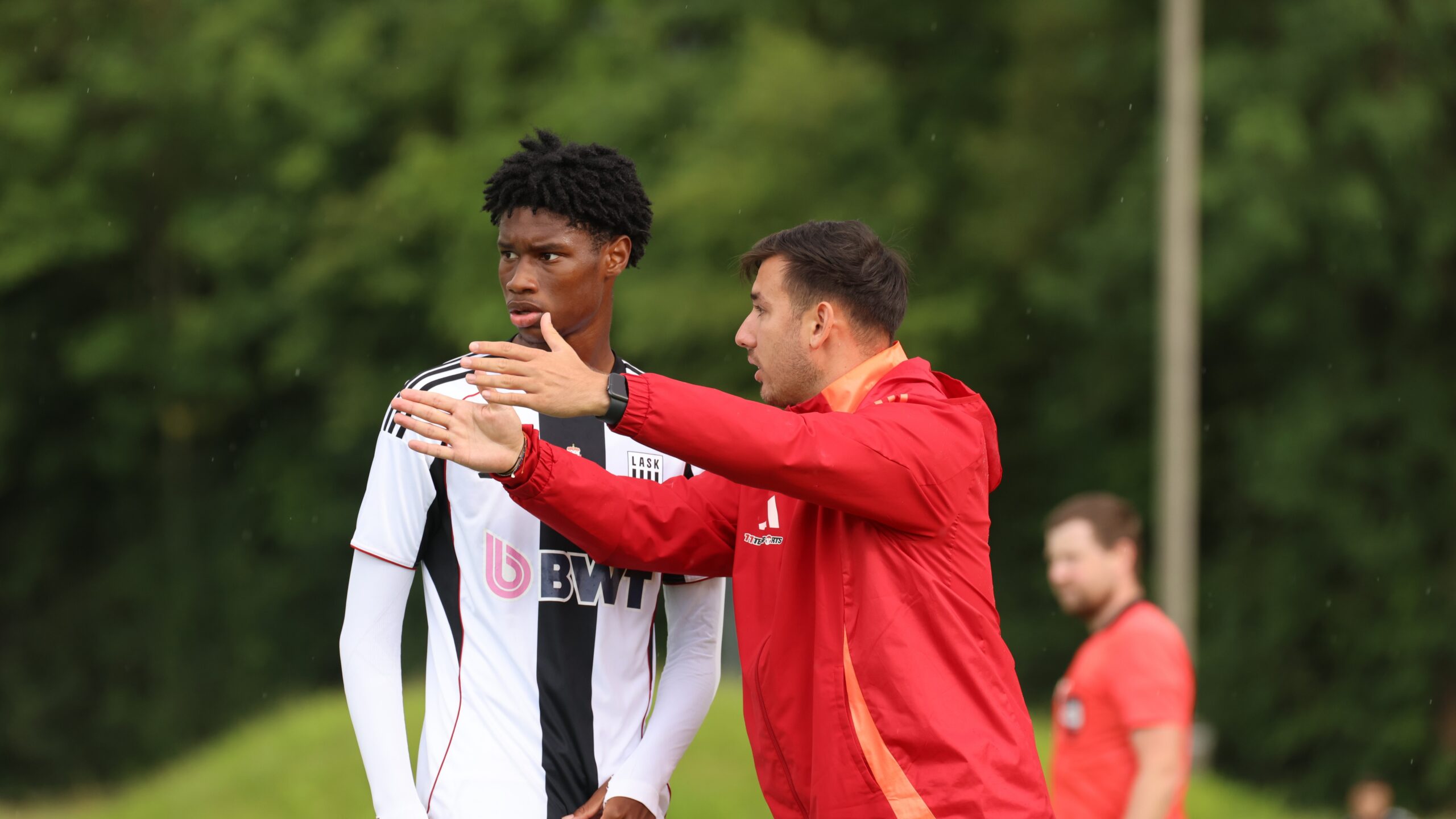
Introduction
In modern football, the smallest details decide the biggest games, and few areas illustrate this better than set pieces. Once seen as isolated moments, they have become a tactical science capable of shaping entire seasons. From data models and player profiling to deception and design, the world of set pieces has evolved into one of football’s most innovative frontiers.
About the Interview Guest
Our interview guest for this feature is Philipp Aigner, one of the rising minds in Austrian football. At just 25 years old, he serves as Video Analyst, Set-Piece Specialist and Assistant Coach at LASK Linz, where he connects tactical structure, data insight and on-field execution. Before joining LASK, he gained experience with the Austrian FA’s futsal national team and the AKA St. Pölten academy, where he led match analysis and player development. His multidisciplinary background and analytical precision represent a new generation of coaches who treat football as both an art and a science.
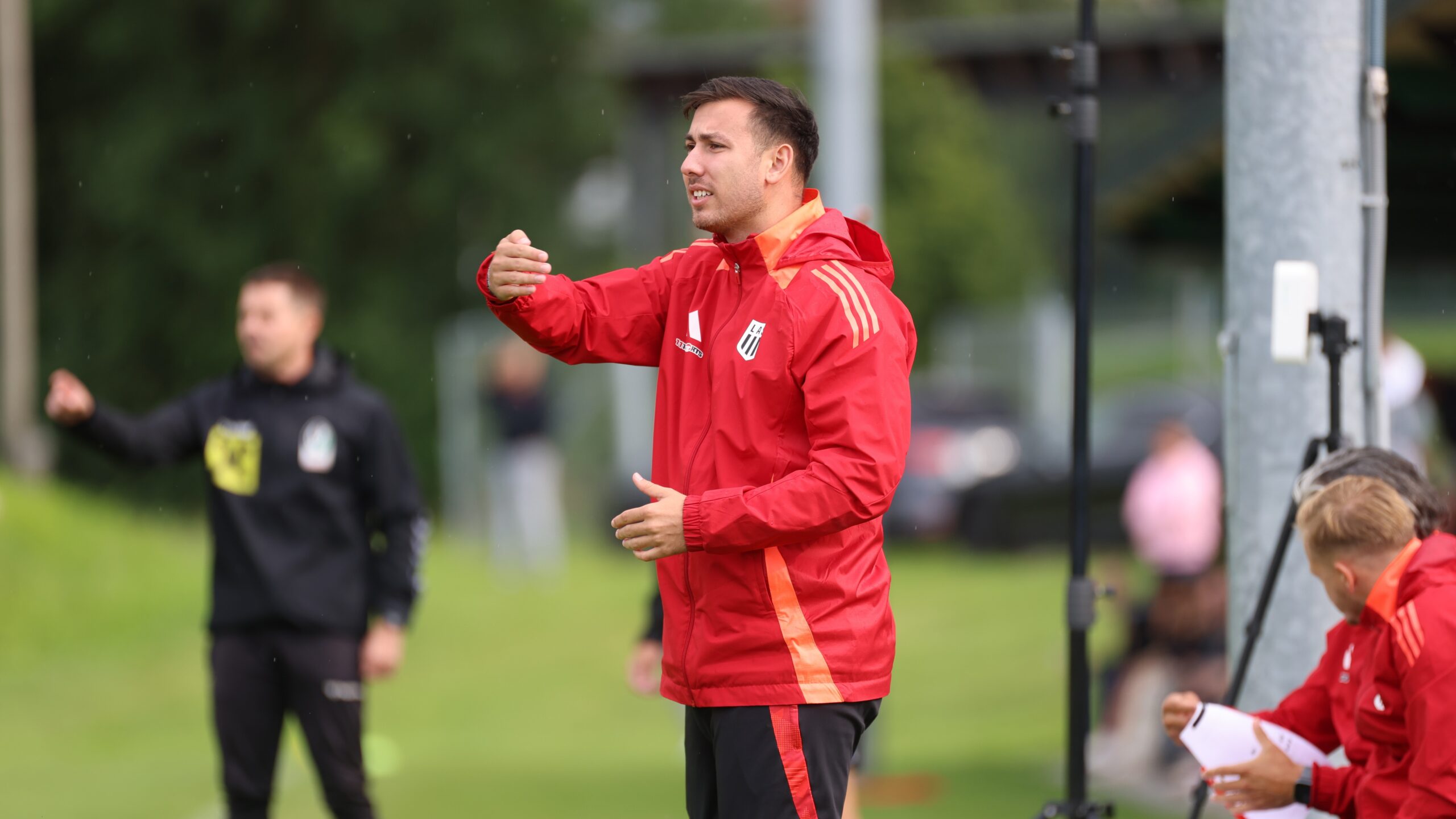
The Foundation – Understanding the Role of Set Pieces
From Situational Moments to Strategic Identity
In modern football, set pieces have evolved far beyond their reputation as isolated moments. They have become an essential part of a team’s tactical identity. As the game grows more structured and data-driven, creating chances from open play is becoming increasingly difficult. Set pieces, by contrast, offer repeatability and measurable value. For many clubs, they now represent a strategic department capable of delivering between ten and fifteen goals a season – often the difference between mid-table and success.
Set pieces, by contrast, offer repeatability and measurable value. For many clubs, they now represent a strategic department capable of delivering between ten and fifteen goals a season.
Principles of the Elite
Elite teams no longer rely on rehearsed patterns but build around clear, principle-based systems. Training focuses on spacing, sequencing and timing, allowing players to adapt intelligently rather than follow a script. Attention to micro-details has become decisive: positioning, body orientation and movement cues determine the smallest margins. Many modern teams draw inspiration from other sports, integrating screening and blocking concepts from basketball or misdirection from American football to gain subtle but crucial advantages.
Structure Meets Creativity
Ultimately, the success of a set piece lies in the balance between structure and creativity. The structure provides coordination, timing and clarity of roles, while creativity transforms those elements into unpredictability, allowing players to disguise intentions and exploit defenders in real time. As Philipp Aigner explains, both must coexist. Structure ensures clarity and control, but creativity brings disguise, adaptability and freedom. The best teams find harmony between the two, building systems that are stable enough to provide order yet flexible enough to unleash individual flair and surprise.
The best teams find harmony between structure and creativity, building systems that are stable enough to provide order yet flexible enough to unleash individual flair and surprise.
The Process – From Analysis to Execution
From Data to Design
The process behind a well-designed set piece begins long before matchday. Aigner and his staff start with comprehensive video analysis, examining their own tendencies and the opponent’s defensive setup. They look for patterns, weak zones or behavioral cues that can be exploited. Once the analytical groundwork is complete, the design phase begins – crafting routines that align with team principles and player profiles while keeping space for variation. Visual tools such as clips and drawings help transform ideas into clear, trainable concepts.
Turning Theory into Practice
Communication is at the heart of successful execution. New routines are first presented in team meetings, where the rationale and objectives are explained in simple, actionable terms. The move from theory to practice takes place step by step on the training ground. Early sessions focus on understanding roles, timing and spacing, while later ones simulate real match intensity. As repetitions increase, movements become automatic and decisions more instinctive. By matchday, the players not only know their cues and triggers but also understand the logic behind every movement. This transforms the routine from a memorized pattern into a living, adaptable part of the team’s game model.
Defending the Details
Defensive preparation follows a similar approach, built on structure and adaptability. Each player’s role is defined in detail — who marks, who screens, who guards the first and second ball — but within this framework there must be flexibility. Aigner emphasizes the need for dynamic reactions: players must recognize screens, switch marks when necessary and adjust positioning based on movement. The goal is to remain organized without becoming rigid, ensuring that the team can neutralize creativity with discipline.
The Human Element
Player profiling adds an essential human layer to the process. Understanding the unique attributes of each player (aerial dominance, blocking ability, delivery precision or timing) allows coaches to assign roles that maximize individual strengths. Yet the underlying structure stays consistent so that anyone can step in without confusion. This approach combines tactical stability with personalization, ensuring that the team’s system adapts to its people, not the other way around.
Measuring What Matters
To measure efficiency, LASK uses a Set Piece Effectiveness Index (SEI) that evaluates accuracy, success rate, goal involvement and secondary actions. Hidden indicators such as the quality of first contacts, control of second balls and even the opponent’s reactions provide deeper insight. When a rival team changes its setup or overloads certain areas, it signals that the concept is working.
The Evolution – The Future of Set Pieces
A New Standard in Modern Coaching
The growing presence of set-piece specialists across professional football reflects a larger evolution. What was once a niche role is now recognized as an integral part of performance staff. As Aigner points out, the competitive gain is too significant to overlook – adding ten to fifteen goals per season is the equivalent of signing a top striker.
Innovation Through Influence
Recent trends show a shift from fixed routines to flexible, principle-based structures that empower players to make real-time decisions. Arsenal’s approach, for example, highlights this evolution: routines triggered by the goalkeeper’s positioning rather than prearranged signals create unpredictability and tactical freedom. Cross-sport influences continue to enrich the field, with ideas from basketball, handball and American football refining how teams use movement, deception and coordination.
Technology and the Next Generation
Technology is set to push this evolution even further. Advanced tracking systems and predictive data models will allow coaches to simulate routines and anticipate defensive reactions. Artificial intelligence will assist in identifying opponent tendencies, freeing analysts and coaches to focus more on creative design.
For Aigner, the next generation of players will grow up viewing set pieces as a natural part of the game. They will understand manipulation, timing and deception as intuitively as pressing or build-up play. In his words, “The artistry of set pieces will soon be as defining for a team’s identity as its passing style or defensive structure.”