
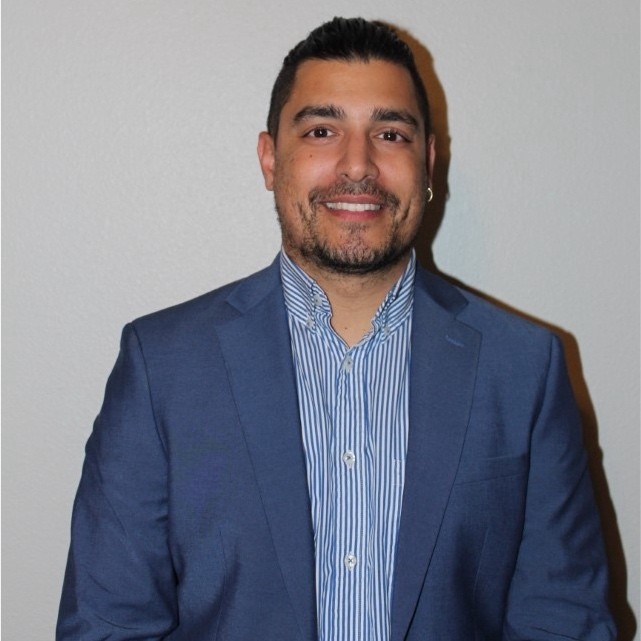
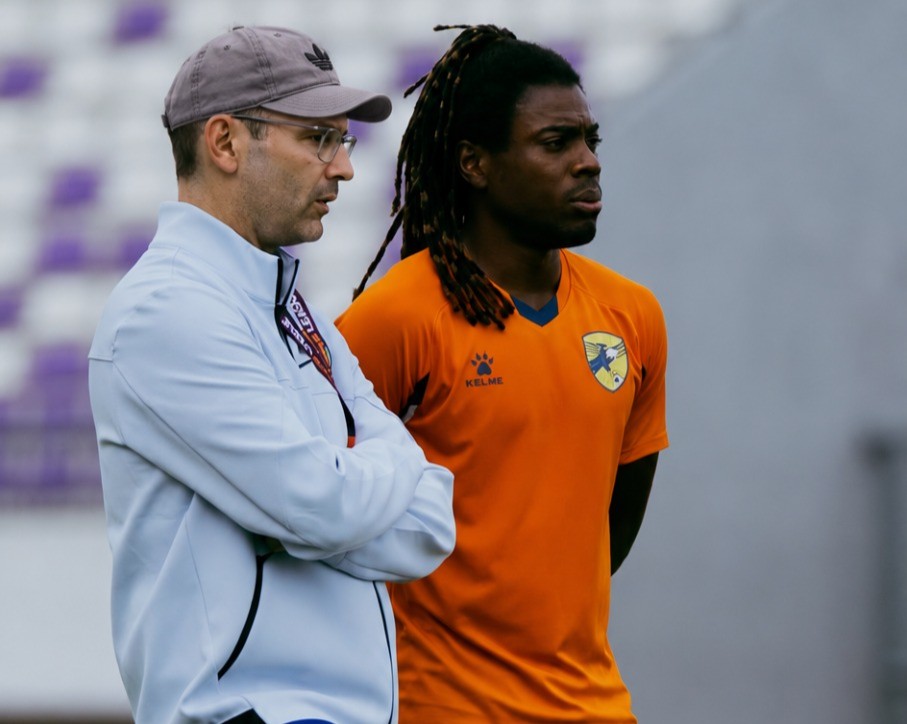
Profile
Role: Head coach, Tainan City
Specialisation: Coaching, analysis, tactics and performance
Experience: Benfica youth school in Jaén, Atlético Jaén, Begíjar CF, Real Jaén, Jimena, Atlético Mancha Real and Tainan City
Focus Areas: Coaching methodology, tactical understanding, observation, data, leadership and communication
Biography
For Carlos García Fernández, football has always been about more than what happens on the pitch. Born in Jaén, Spain, García grew up in a football culture where the game was woven into everyday life, from playing in the streets with friends to developing as a coach in one of southern Spain’s competitive youth environments.
His coaching journey began with the Benfica youth school in Jaén before taking him through a variety of roles that would shape his approach to the game. He worked as an analyst with Atlético Jaén, coached at Begíjar CF and Real Jaén, and later took charge of Jimena and Atlético Mancha Real. That path gave García experience not only as a head coach, but also as an analyst and assistant, allowing him to develop a deeper understanding of tactics, performance and the use of data. He holds a UEFA Pro Licence.
In 2025, García took his career into a completely different environment, joining Tainan City in Taiwan. Initially arriving as an assistant, he was appointed head coach in November 2025. His first season in charge proved to be a memorable one, as Tainan City won the Taiwan Football Premier League. The move to Asia has given García the opportunity to work with players from different countries and cultures while experiencing a football environment very different from Spain. Yet his philosophy remains rooted in the belief that football can transcend language and cultural barriers.
In this conversation, García reflects on growing up in Jaén, the different roles that prepared him for management, the growing influence of data in football, the evolution of the Asian game, the coaches who have influenced him and why Japan is a league he would love to experience next.
Key Insights
- Experience in analysis and assistant roles helped García develop the tactical perspective he uses as a head coach.
- Effective coaching combines a clear methodology with leadership, communication and strong human relationships.
- García values data in context and hopes to continue his coaching journey in Asia, particularly Japan.
Our Exclusive Interview with Carlos García Fernández
You were born in Jaén, and much of your early football journey was built around that part of Spain. What does Jaén mean to you today, and what did growing up there teach you about football, people and life that you still carry with you?
Jaén is in the south of Spain, and when we were growing up, we spent a lot of time playing football in the streets. We did not really have the infrastructure that exists today, but now you have school teams, football fields and much more access to organized football. Social life was also intertwined with football. We played with our friends on the weekends, and it was simply part of our lives.
When I started coaching, there was a Benfica school in Jaén, and that was where I really started my coaching career. The level of the youth teams there was very high. We were competing in the second division of youth football, and you had strong teams throughout the southern part of Spain, including Málaga, Granada, Sevilla, Almería and others. Starting my coaching career in that environment was great because the level was high and demanding. It taught me a lot and gave me a strong foundation as a coach.
Football has taken you from Jaén to Lisbon and eventually all the way to Taiwan. When you look back at that journey, are there some things that stand out, some moments that you will never forget?
There are definitely interesting differences. When you coach kids who speak the same language as you, the experience is very different from coaching in Asia, where you do not speak the language. Then you also have different habits, traditions and cultures to understand.
Yet his philosophy remains rooted in the belief that football can transcend language and cultural barriers.
Last season in Taiwan, for example, we had players from all around the world and many different cultures coming together. But football is a universal language, so I did not find that to be a huge obstacle. In many ways, the game gives you a common language even when you do not share the same spoken language.
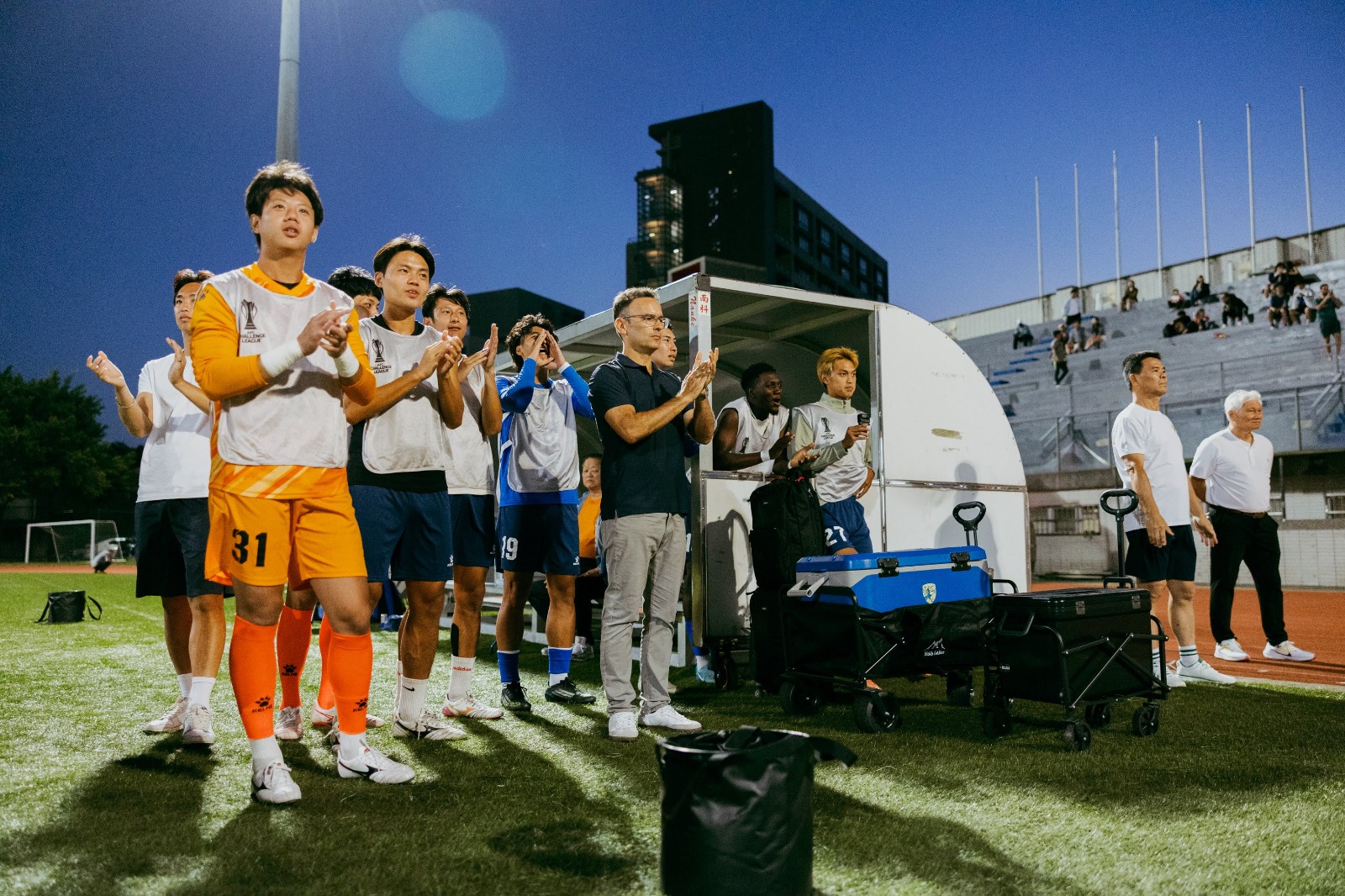
There is a big difference between being a coach on paper and actually carrying the responsibility of a dressing room. What do you think is one of the most challenging parts of being a coach?
I believe you have to have a deep understanding of the game: the different phases, performance, tactics and how you predict what might happen during a match. You have to understand how you want your team to approach the game, how the positions work and, most importantly, you need a strong methodology to teach all of that to the players.
At the same time, you have to maintain a good balance in your relationships with everyone around you: your staff, management, ownership and players. Sometimes you have to be a little bit of everything. You are dealing with people, so at different moments you can be dealing with human resources, psychology, leadership and communication. Being a coach is much broader than simply understanding what happens on the pitch.
You experienced football from several different angles, including youth coaching, analysis and assistant roles before taking the top job. What did being the person behind the head coach teach you that you might never have learned by becoming a head coach immediately?
Those different roles definitely helped prepare me for becoming a head coach, especially the analyst roles. When you analyze a game at a deep level, you start building a different lens through which you see football. As a head coach, you may not always have the same amount of time to develop that lens, so being able to develop it through those other roles became like muscle memory for me. It is something I know I will always need.
You may have heard the story about Jürgen Klopp, where he talked about watching many games back-to-back and how that became part of the foundation for who he eventually became as a coach. I can relate to that idea because spending so much time analyzing games helps you understand football from different perspectives.
Then there is the data. Data has changed everything in football. Being able to work with data, but also understanding it within the proper context, is key to making informed decisions. The deeper you understand the data, the better you become at making decisions.
Those different roles definitely helped prepare me for becoming a head coach, especially the analyst roles.
It can also help you when communicating with the team. When data is used properly and objectively, it can create alignment because you are giving players something tangible to understand and discuss. For me, the combination of tactical understanding, observation and data is very important.
Everyone always thinks Europe when you say football, but Asia has amazing up-and-coming leagues and talent within those leagues. What can you tell us about Asian football?
Football is seriously growing in Asia, especially in countries like Japan and Korea. The way they understand and approach the game can be very different from country to country. China has its own way of understanding the game, while Korea has a more physical type of football, and that naturally creates a different player profile.
In Spain, there is more emphasis on positional play, controlling the game and building attacks. In England, you see a more direct and high-paced style. Every football culture has its own characteristics.
Asia is improving and growing, and I particularly love what Japan is doing today. They are operating at a very high level, and I really appreciate the way they are developing their football environment.
There are many coaches in the world, but is there one who inspires you more than others?
Yes, Pep Guardiola. When he started coaching, he understood football through positional play, and he also utilized data very early on and found ways to optimize his squad. In many instances, he was ahead of the game.
These days, Luis Enrique is another coach who has inspired me a lot. I also have to mention Vicente del Bosque. Not necessarily because of his tactics, but because of his ability to build human relationships and manage a group. He is amazing in that area. Of course, there are many other coaches who inspire me, but those three are the first names that come to mind.
Was there someone who inspired you to get involved in football?
It is interesting because when I was young, I was actually not that interested in football. My younger brother was the one who really introduced me to the game. What particularly intrigued me was the tactical side and understanding the game differently. That is what really caught my attention and eventually pushed me toward football.
What is next for Carlos? Could you share some of your aspirations and plans for the future?
I want to continue to grow in Asia. If I can be completely transparent, I would love to go to Japan. That is a league I have my eyes on because I would really like to coach there and become part of the football culture they are building.
Of course, I would also love to coach in Spain again. That may be more difficult, but it is something I would consider. My wife is from Taiwan, so Taiwan will always have an important place in my life as well. Korea would also be an interesting place for me, so I would certainly consider that opportunity too.
Rapid Fire
City life or countryside?
City life.
Talent or mentality?
Mentality.
Sea or mountains?
Sea.
Sunrise or sunset?
Sunrise.
Summer or winter?
Summer.
Early bird or night owl?
Early bird.
Plan everything or go with the flow?
Plan everything.
Call or text?
Calling.
Win ugly or lose beautifully?
As a coach, you have to say win ugly, but I’ll go with losing beautifully.
The perfect pass or the perfect tackle?
The perfect pass.
Jaén or Lisbon?
Lisbon.
Barcelona or Real Madrid?
I follow Real Madrid, but I have to say Barcelona. They are playing amazing football.
FAQ
Who is Carlos García Fernández?
Carlos García Fernández is a Spanish football coach from Jaén who holds a UEFA Pro Licence and became head coach of Tainan City in Taiwan in November 2025.
What experience shaped Carlos García Fernández’s coaching approach?
His background includes youth coaching, analysis, assistant roles and head coaching in Spain and Taiwan. He combines tactical understanding, observation and contextual data with leadership and communication.
Where would Carlos García Fernández like to coach next?
García wants to continue growing in Asian football and is particularly interested in coaching in Japan. He would also consider opportunities in Spain and Korea.