
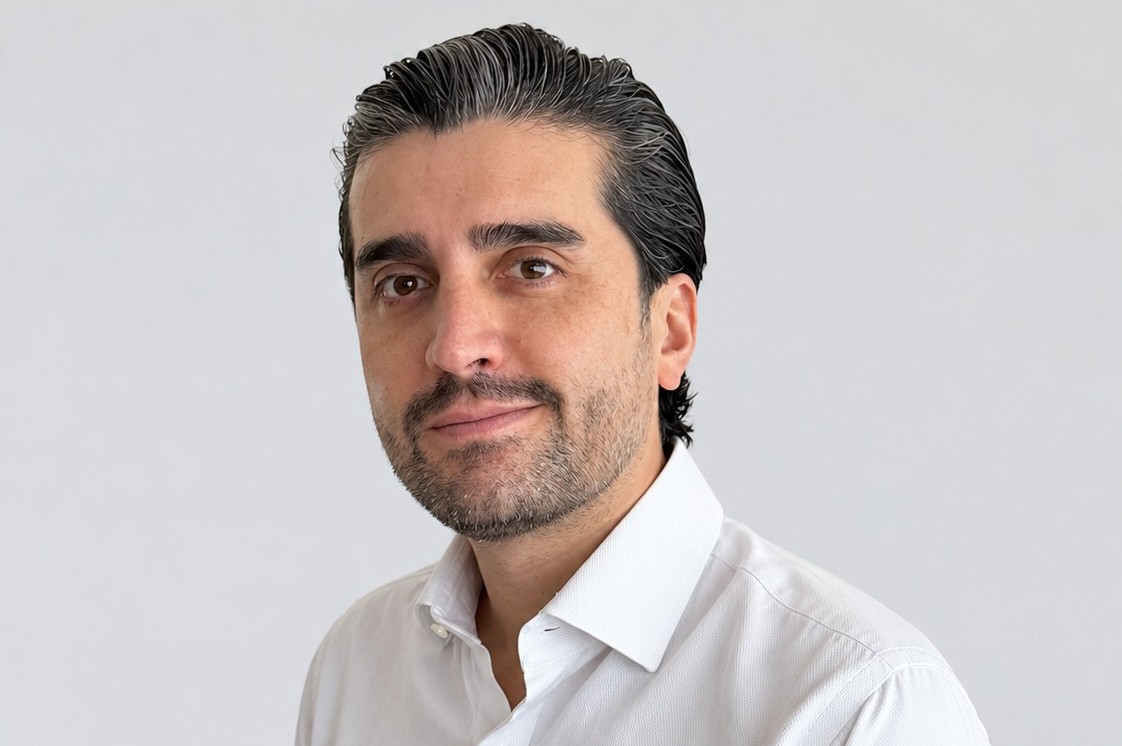
Eduardo Saracho built his reputation in Liga MX as a sporting director who treats player trading as a sporting strategy, delivering record sales at Club Puebla and Pumas UNAM and play-off football on one of the league’s smallest budgets.
Profile
Role: Sporting Director, Football Executive
Specialisation: Sporting direction, player trading and transfer negotiation, recruitment model design
Experience: Close to a decade in Liga MX sporting departments at Club Puebla and Pumas UNAM, with transfers negotiated in more than 20 international markets
Focus Areas: Sporting strategy, recruitment models, player trading, scouting networks, squad planning, sports intelligence systems, academy integration, multi-club environments, reporting to owners and boards
Eduardo Saracho is a Mexican sporting director and football executive whose career in Liga MX has been built on recruitment, sports intelligence and player trading. Across Club Puebla and Pumas UNAM he has designed recruitment models, negotiated transfers in more than twenty football markets and generated more than US$50 million in player sales.
His route began in Puebla’s sporting operations, supporting the club’s sporting vice president on strategic initiatives and developing its sports intelligence system. That period produced the biggest sale in the club’s history, Lucas Cavallini to Vancouver Whitecaps. He went on to lead Puebla’s market strategy as Director of Trading, coordinating the acquisition and sale of players internationally and generating more than US$30 million in sales, before overseeing football operations, recruitment and squad building as Director of Football. In that spell Puebla reached seven consecutive liguillas with the league’s seventeenth budget, including a Liga MX semi-final.
At Pumas UNAM he took responsibility for the men’s sporting structure as Sporting Director, covering recruitment, sports intelligence and the integration of the club’s academy with the first team. Pumas reached the Liga MX semi-finals, had two top 4 finishes, completed the biggest sale in the club’s history with Gabriel Fernández to Cruz Azul, saw seven players called up to national teams in a single year, won the Liga MX Under-21 title The club also welcomed international names such as Aaron Ramsey and Keylor Navas during his time leading the sporting department.
Saracho’s market reach is unusually broad for a Liga MX executive. He has negotiated and executed transfers with Mexico, the United States, Canada, Brazil, Argentina, Bolivia, Paraguay, Chile, Peru, Colombia, Uruguay, Spain, Italy, England, Wales, Belgium, Greece, Australia, Japan and Thailand, across five continents.
He holds an MBA in Football Industries from the University of Liverpool and a Bachelor of Science in Communication Sciences from ITESO in Guadalajara, and works in Spanish and English at full proficiency, with advanced Italian and elementary Portuguese. That combination of a communications background, a football business education and a trader’s instinct for value gives him a profile that travels well beyond Liga MX, and leaves him well positioned for his next challenge.
Key Insights
- Recruitment and sports intelligence should reflect a club’s identity, game model and measurable objectives.
- Focused player trading and scouting can support financial health and competitiveness on a modest budget.
- Academy alignment and a clear sporting project help connect player development with first-team ambitions.
Our Exclusive Interview with Eduardo Saracho
At Club Puebla you started in sporting operations, supporting the sporting vice president and developing the club’s sports intelligence system. How do you build a sports intelligence system that the people making decisions at a club genuinely trust and use?
It has to be measurable, not just something that sounds new and exciting.
Whether it is to compare sporting performance or to keep a positive balance between purchases and sales, you have to be measuring it for it to make sense.
Nine years ago, sports intelligence was nowhere near the level of detail we see today, but I was lucky enough to start with a blank sheet.
For me, the foundation is clarity about your club: its identity and its game model. From there, you have to understand that data and analytics are a must when it comes to filtering, but they are only one part of the decision to bring someone in.
It has to be measurable, not just something that sounds new and exciting.
There is still a human process behind it.
Puebla later gave you a job title with “trading” in it, a word more familiar on a financial desk than in a football club. How does treating player trading as a sporting strategy change the way a club recruits in the first place?
It was a visionary move at the time, because that figure barely existed in Mexican club structures. What it gives you is the freedom to focus on key relationships and to be entirely dedicated to negotiating the best deals possible.
The biggest competitive advantage is that the scouting department can concentrate on scouting in line with the game model and philosophy, while the trading director concentrates on gathering relevant information, spotting opportunities and getting the best balance between buying and selling, which at a small club is key to financial health.
In Europe, titles like loan manager or pathways manager were more common, but today you see more and more trading directors with that kind of focused role.
Lucas Cavallini’s move to Vancouver Whitecaps became the biggest sale in Puebla’s history. What does it take to build a player’s value in Liga MX to the point where an MLS club pays a record fee?
At Puebla we had to scout early and try to sell at peak value. The key, as always, is to have a shop window that shines.
In that period Club Puebla went from a team focused on avoiding relegation to a club known for smart scouting of players and coaches, and one that was challenging for the play-offs. That gave our players a special value, and Lucas was an example of it.
When he reached the sporting vice president’s desk he stood out for his physical qualities, and we concluded that in football terms he could fit our game model. He is also Canadian, which helped a lot in his move to Vancouver.
Puebla reached seven consecutive liguillas with the seventeenth budget in Liga MX. Which of the principles behind that run could another club with a modest budget realistically apply?
The main principle is congruence. Spend smart, invest heavily in scouting and don’t be afraid to be wrong sometimes. Set yourself realistic goals, especially in your style of play.
Money buys quality, and people expect that to translate automatically into beautiful football. If you are on a low budget, you have to ask yourself how you can be more competitive, and most of the time it will not be by playing tiki-taka.
Once you start being competitive and staying close to your philosophy and game model, you begin to narrow the advantages that money gives.
From Puebla you moved to Pumas UNAM, one of the biggest clubs in Mexico. How different was that challenge, and how do you look back on your time there?
It was a different animal in terms of pressure. You always know the club is big, but once you are inside you realize it is massive.
The ambition to win was there, and our job was to build the structure to match it. We implemented a three-year strategy to bring the team back to fighting for titles.
Overall, I am satisfied with the job: we clarified the player profiles, built a competitive squad and had a team that was always in the play-offs, with two top-four finishes and three Concacaf Champions League qualifications.
It was a different animal in terms of pressure.
Eventually came a Liga MX final six months after our departure, with 90% of the squad we had built and the coach we brought.
Pumas UNAM has one of the strongest academy traditions in Mexican football, and during your time as Sporting Director the Under-21 side won the Liga MX title. How did you integrate the Under-21s with the first team, and what did that alignment look like day to day?
When Efraín Juárez, our last coach, arrived, we set up a plan to make the Under-21s a mirror of the first team: same methodology, same measurement, same training sessions.
One of the most interesting ideas was to make the Under-21s the team that concentrated the best of the academy, so a 15-year-old could be training with that group and playing at the weekend, and the level would bring out the best in everyone. It was risky, but in the end it worked fantastically and even delivered sporting results, like the Under-21 title.
During your time leading the sporting department, Pumas welcomed international names such as Aaron Ramsey and Keylor Navas. How do you sell a sporting project to an established international player who has options elsewhere?
I believe players of that caliber appreciate arriving at a place with a clear project and ambition.
With Keylor the chemistry was fantastic. Even though he is a renowned world-class player, he was familiar with Mexico, knew a lot about the league and jumped straight at the chance to join a historic club.
Aaron had a clear plan: get fit again, compete and reach the 2026 World Cup. In cases like these you need both the directors and the coach to be at the level that signings of this kind demand. On top of that, the club’s infrastructure is world class, and that helped too.
Your MBA in Football Industries at the University of Liverpool sits alongside a background in communication sciences. How do those two disciplines shape the way you align a sporting plan with what owners and boards expect from it?
I think my background, alongside my playing days (I wasn’t a professional), gives me a very broad profile. At the end of the day you are managing people, and you sit in the middle of the many interest groups that interact in a football club.
But you also need football sensibility when it comes to big decisions that will have an impact on the pitch. And last but not least, the MBA gives me a clear view of how much finance matters in football, and makes me comfortable proposing solutions that work on the pitch and, more importantly, are financially real.
With experience in sporting direction, player trading and academy integration in Liga MX, and transfers negotiated across five continents, what kind of project and mandate would you want to take on next?
After many years without a single week off to reflect, this space was more than necessary. Thanks to those years and to the many markets I had the opportunity to work in, I have built a great network, and I have enjoyed helping clubs on the advisory side over these months.
But I miss the day-to-day, and eventually I will be back. I would love to be part of a project where all the key actors are aligned, with a vision and enough structure to challenge for its goals.
Mexico? Of course, it is the natural fit, but I have been also close to MLS (I hold a US passport), and Europe is always my ultimate dream. But right now I am very open and happy. November and December should be fun.
FAQ
Who is Eduardo Saracho?
Eduardo Saracho is a Mexican sporting director and football executive with experience in recruitment, sports intelligence and player trading in Liga MX.
Which clubs has Eduardo Saracho worked for?
He has worked in the sporting departments of Club Puebla and Pumas UNAM, including roles as Director of Trading, Director of Football and Sporting Director.
What qualifications does Eduardo Saracho hold?
He holds an MBA in Football Industries from the University of Liverpool and a Bachelor of Science in Communication Sciences from ITESO in Guadalajara.