
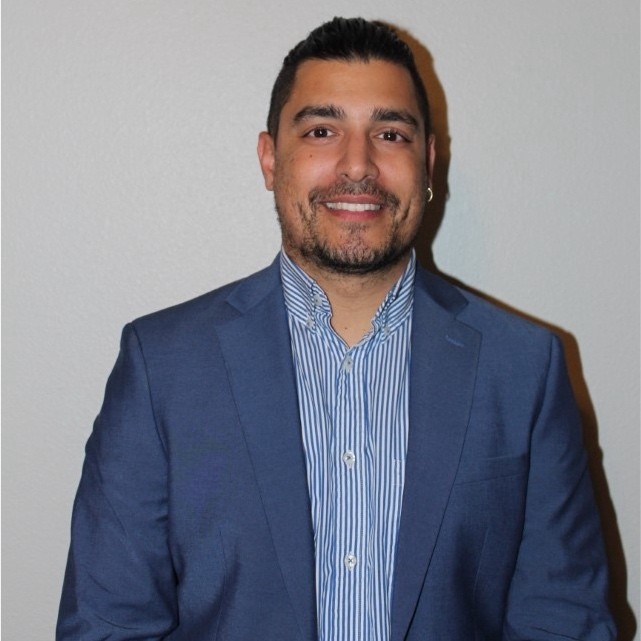
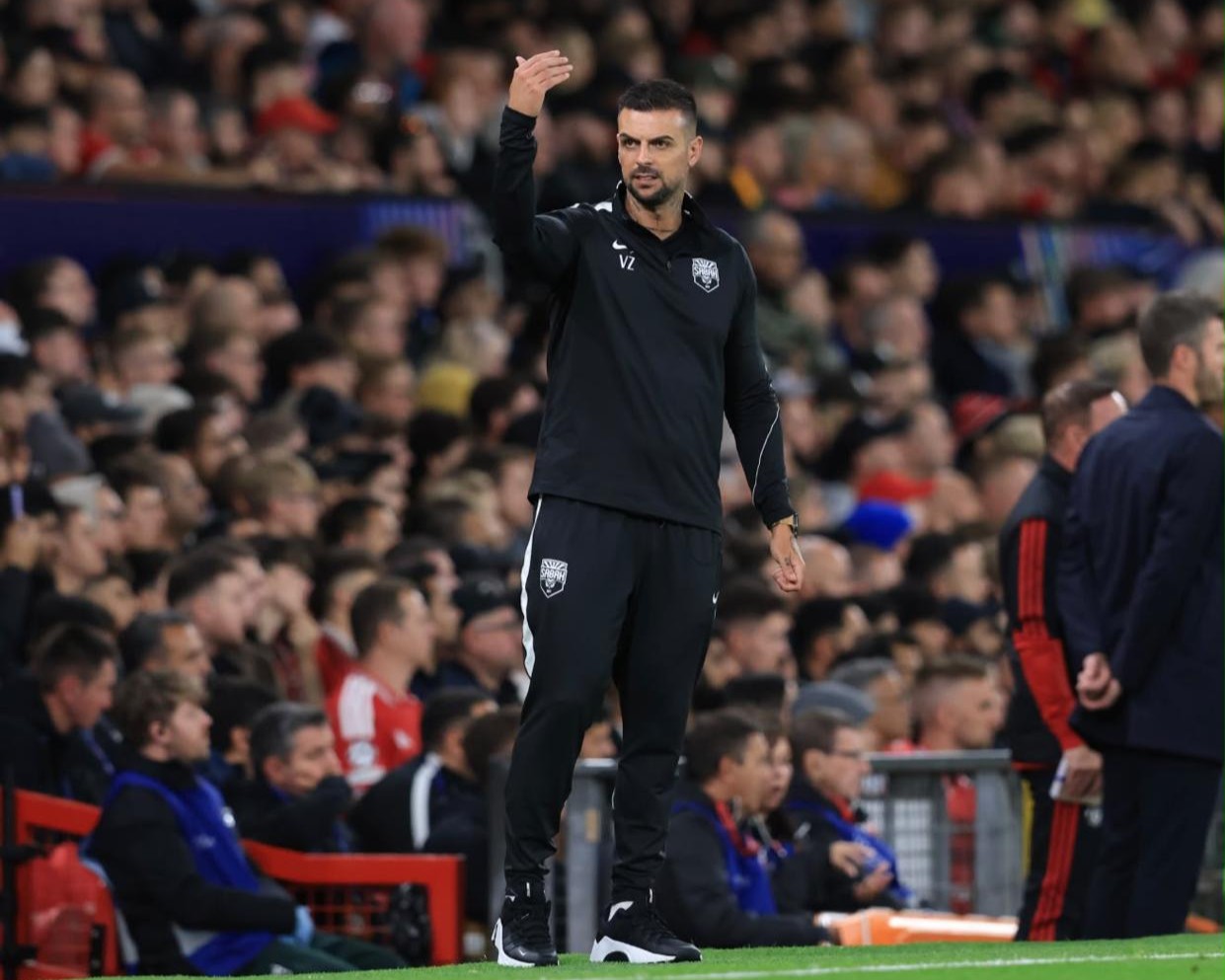
Profile
Role: Assistant manager at Sabah FC
Specialisation: Coaching, tactical preparation, communication and proactive problem-solving
Experience: 10 years as an assistant across 10 countries, working with 16 different managers
Focus Areas: Adaptation, staff coordination, team needs and preparation for a head-coach role
Valerio Zuddas has built a coaching career defined by movement, adaptation and a willingness to learn. Born in Rome in 1989, the UEFA A Licensed coach has worked across Europe, gaining experience in Italy, Georgia, Romania, Hungary, Cyprus, Croatia, Scotland, Moldova, Serbia and now Azerbaijan. His career has included roles with clubs such as Reggina, Budapest Honvéd, Pafos, Hajduk Split, Hibernian, FC Sheriff Tiraspol, FK Partizan and Diósgyőri VTK.
Along the way, Zuddas has collected significant experience in different football cultures and competitive environments. He was the assistant manager for the following teams where he has accomplished remarkable milestones; Budapest Honvéd where they won the Hungarian Cup in 2019/20 and the FC Sheriff Tiraspol that won the Moldovan league and cup double in 2022/23. He later joined Partizan Belgrade before linking up again with Valdas Dambrauskas at Diósgyőri VTK and, in 2025, at Sabah FC.
At Sabah, Zuddas has become part of one of the most remarkable stories in Azerbaijani football. The club won its first Azerbaijani Premier League title in 2025/26 and, in 2026, reached the UEFA Champions League Phase for the first time in its history. Zuddas has won 5 major trophies; Hungarian Cup with Honved, Moldavian League champions and cup winner with Sheriff Tiraspol and Azerbaijan League champions and cup winner with Sabah FK. Zuddas has therefore added another layer to an already unusually international coaching journey, working in European competition while continuing to develop his own philosophy and preparing for what he sees as the next step: becoming a head coach.
In this conversation, Zuddas discusses what constantly moving between countries has taught him about life, why a coach must sometimes put his own ideas aside for the good of the team, the value of having worked alongside so many different managers, the changing football landscape in Azerbaijan, and what he believes separates a good assistant coach from a great one. He also reflects on the importance of solving problems before they reach the head coach and explains why he believes his time as an assistant has prepared him for his own opportunity in the dugout.
Key Insights
- Working across different football cultures has taught Zuddas to adapt quickly and understand his environment.
- Effective coaching requires honest self-assessment and the flexibility to put the team’s needs ahead of personal ideas.
- A strong assistant anticipates problems, supports communication and resolves situations before they reach the head coach.
Our Exclusive Interview with Valerio Zuddas
You have worked in a remarkable number of countries and football cultures. What has all that moving around taught you about yourself and about life that you probably wouldn’t have learned if you had stayed in Italy?
Definitely, I learned how to adapt quickly to a new environment and how to respect the place where I go. This is not only about the football environment; it is also about life in general.
Of course, it also comes from my life background because football and life are not really separated. I believe that what you become in football is strictly related to what you have done in life and to who you are as a person. For sure, the ability to adapt quickly is something you need in every environment, whether it is a work environment, a social environment or anywhere that requires you to connect with people. I think that is the main point, even before talking about football tactics, organization and those things. You have to be aware of what is around you and where you are.
With all the moving around and arriving in different parts of the world, was there ever a place where you arrived and immediately felt at home?
Look, after all these years, it becomes almost automatic. Because of the rhythm of the games, the league and the training, you don’t even notice it anymore. You just go there and it is like being in a washing machine; you just keep going.
You lose a little bit of that feeling of discovering something new, a new country or a new culture, because everything happens so quickly and is so result-oriented. That is one of the beautiful things about this job is being able to enjoy new places, new countries and new cultures. Sometimes we are so focused on what we are doing that we lose a little bit of what is happening around us. But I think that almost everywhere I have felt at home. That is simply because of who I am. I don’t need to have my own environment around me to feel comfortable. Of course, I bring who I am and some of the characteristics of my country with me wherever I go, but I can feel at home almost anywhere. That is just the way I am.
You have said that over the years you have become more practical and learned to let go of your ego when your own ideas may not always work. Can you remember a situation where you had to abandon something you believed in because the team needed something different?
I think this is the core of coaching. You come in with your own ideas, of course, because as a coach you have your own philosophy. Then suddenly you enter an environment, a team or a situation where you realize that your idea is not going to work. You need to recognize that very quickly, and you need to be honest and critical with yourself. You have to ask, “Is this really what the team needs? Do we really need this?”
Sometimes we fool ourselves and try to manipulate the situation in our own minds. We try to force things to work in the way we imagined them when we were at home preparing our ideas. But that doesn’t necessarily mean it is what the team actually needs.
You don’t have a lot of time to figure out whether something is going to work. You need to be fast in understanding that. This is one of the problems most coaches face. We keep telling ourselves, “Believe, believe, we need time, we need time,” and sometimes you continue doing something that is simply never going to work. That is the reality. You have to be able to ask yourself, “Do we need this, or maybe is this team made for something else?”
You have spent much of your career as an assistant, working closely with different head coaches and seeing the game from inside that inner circle. When you become a head coach, what part of that experience do you think will be your greatest advantage, and what do you think will be the biggest test?
I am actually happy that I didn’t jump into the head-coach role earlier. I could have done it, but I wanted to wait because of this reason. I have made a really long journey across 10 countries and worked with 16 different managers. Every manager has his own way of managing football, managing the daily routine, approaching the sport, leading the dressing room, communicating and doing things.
You need to recognize that very quickly, and you need to be honest and critical with yourself.
At the same time, I have been part of the technical staff in almost every role because sometimes you need to cover different responsibilities. So I have experienced the point of view of almost every member of the staff. I know how things work from the other side, from when I was playing and from when I was part of the staff. What I am missing now is the perspective of being up there as the head coach or manager. But for sure, I think all these experiences will make my life much easier once I am in that position. I know what is happening on the other side. I know the feelings, I know the problems and I know how you can handle situations and become more effective in your communication.
At the end of the day, so much of it comes down to communication.
You are currently in Azerbaijan. For people who may not know much about the football culture there, how would you describe the league, the clubs, the fans and the overall environment from your experience?
The league has been growing in recent years because the government is helping the clubs a lot with their development. You can find great stadiums, there are many clubs, and some are building new stadiums. Most of the clubs are based in Baku, which is the capital and a really beautiful city. The government is helping the clubs with funding and with developing their infrastructure. There are three or four clubs now with really impressive facilities, and clubs from other parts of Europe even come to visit them. People are often surprised by the country and by the quality of the facilities. There are also two or three historical clubs competing to consistently achieve European places. The football is growing, and to be fair, the level is rising.
It is not only about the FIFA ranking or what you see on paper. It is also about the players who come here and the quality they bring. The quality of the football is not only represented by the Champions League. This season we are in the Champions League League Phase, and last season Qarabağ were also there. They have consistently participated in the Europa League or Champions League. It is good for the country that there are always one or two teams competing for European places.
As an assistant manager, there are obviously many responsibilities. But if you had to choose one thing that an assistant has to get right, something that is non-negotiable, what would it be?
I think it is solving problems before the problems happen.
Many times the head coach has to manage the whole scenario: relationships with management, managing the squad, managing the staff and sometimes already thinking about the next game. So the assistant needs to be really fast and understand what is happening in each environment. It can be something tactical, something organizational or something related to the overall perspective. The main skill is being able to read what the problem is and solve the situation before it reaches the head coach.
That is also what I would expect from my own assistant if I were a manager. I would want someone who solves the problem proactively and filters it for me. Don’t come to me and say, “Coach, there is a problem.” If you are only bringing me the problem, then you haven’t really done your job. You need to create a really big filter between the head coach and everything happening around the team, and fix situations before they become problems.
Someone I asked this question previously described it as “getting rid of the noise” for the head coach. Would you agree with that?
Yes, exactly. That is a very good summarization.
Looking ahead, what is next for Valerio? Where do you see yourself in the near future?
I definitely see myself as a head coach. I don’t know where, but for sure it will be a place where I am allowed to be myself. It sounds obvious, but it is not always so obvious when you go somewhere for a job or sit down for a conversation with a club. Through that conversation, you can feel whether it is the right environment for you in terms of ambition.
I think it is solving problems before the problems happen.
Are the ambitions the same? Do you fit with what they want to do? Do you agree with the way the management wants to manage the team? What kind of message do you want to send? What kind of football do you want to play?
All of those things need to fit with the club and with the football culture of the country. There are clubs and football cultures that have historically played a certain kind of football, so if your ideas don’t fit, that is already a warning point. I think I will figure all of that out naturally. I don’t want to force things just for the sake of taking a head-coach role.
For now, I will enjoy this experience in the Champions League because I really like learning. I love to learn every time. Even preparing for a Champions League game, you learn from the opponent and you learn from the preparation of the game.
This experience is giving me a lot, and I think it can be one of the final steps that completes me before I start as a head coach. I think it can happen really soon because I feel that it is time. I have been an assistant for 10 years in 10 countries, worked with all these different managers, and experienced European competition across the Champions League, Europa League and Conference League. I think I will be ready to manage a club in the coming years.
Rapid Fire
City life or countryside?
City life. I was born in Rome. I cannot stay away from it.
Sea or mountains?
Sea. Before you even finished the sentence, I already knew the answer. I cannot stay far away from the sea.
Sunrise or sunset?
Sunset.
Summers or winters?
Summers.
Early bird or night owl?
Early bird.
Call or text?
Call. It is faster.
Plan everything or go with the flow?
Plan everything. Everything needs to be organized.
Talent or mentality?
Mentality always wins.
Win ugly or lose beautifully?
Win ugly. Always. No matter what. I have never met a fan who says, “We will be unhappy because we won a game 1-0 under the rain.” But as a fan myself, if I go out and say, “Beautiful game, but we lost 5-4,” the other fans might be happy, but the fans of your own team are not happy to lose 5-4. Believe me, it is not about how beautiful the game was. Winning truly matters at the end.
A great tackle or a great pass?
Great pass.
Go back to the past or see the future?
See the future, but don’t forget the past.
FAQ
Who is Valerio Zuddas?
Valerio Zuddas is an Italian UEFA A Licensed coach working as an assistant at Sabah FC in Azerbaijan, with experience across multiple European football cultures.
What does Valerio Zuddas consider essential for an assistant manager?
He emphasises anticipating problems, resolving situations proactively and reducing the demands reaching the head coach.
What is Valerio Zuddas’ next career ambition?
He aims to become a head coach at a club whose ambitions, management approach and football culture align with his own.