

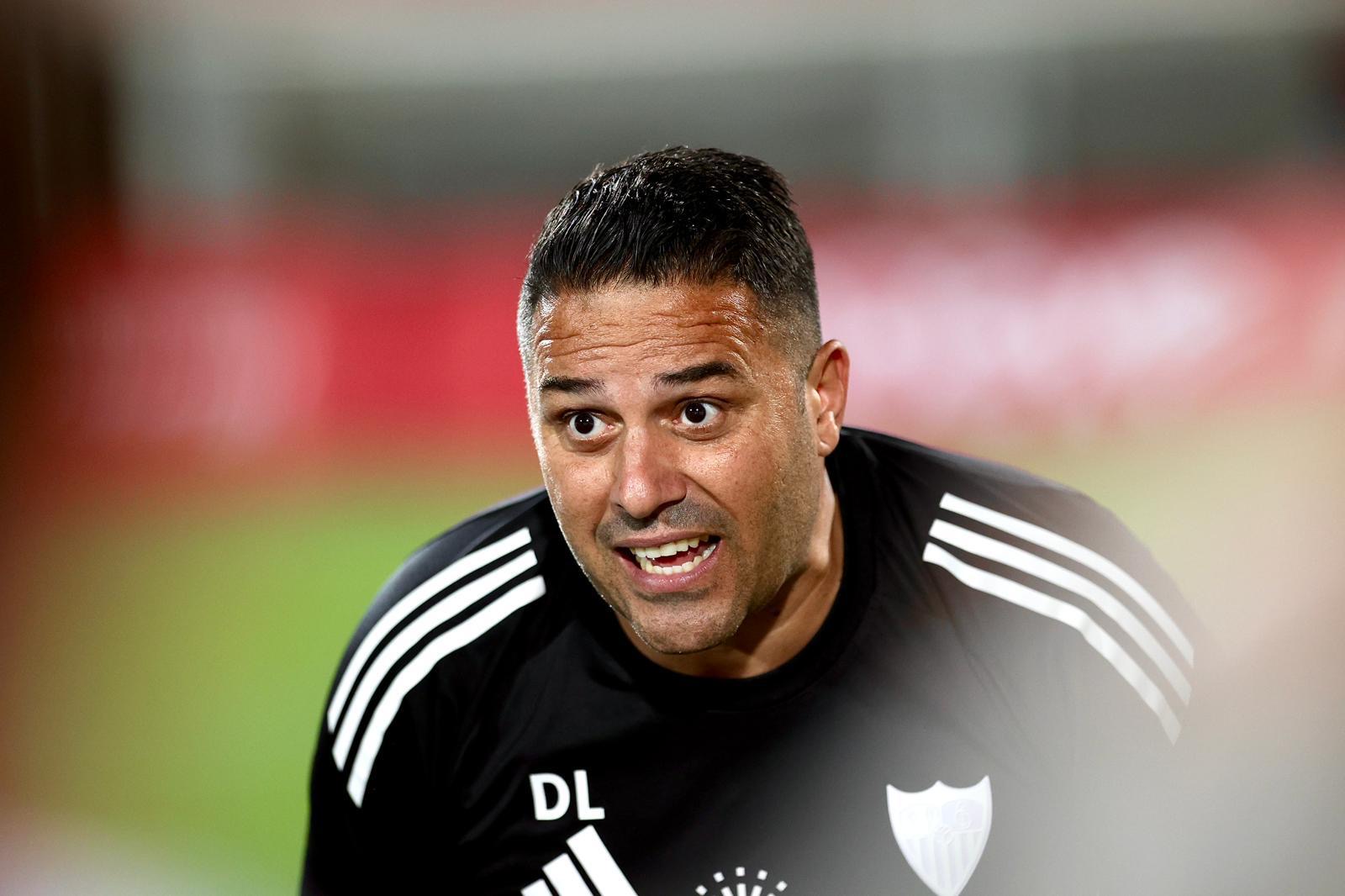
Profile
Role: Head Coach of Sevilla FC Femenino
Specialisation: Coaching, youth development, talent identification and scouting
Experience: Sevilla FC’s women’s football structure since 2018; Women’s Academy Coordinator; Head Coach since 2024; two years at RR Soccer Management Agency
Focus Areas: Leadership, tactical adaptability, academy development and the transition to professional football
Building a competitive football team requires more than tactical expertise. For David Losada Andana, leadership means understanding people, developing young talent and creating a culture in which adaptability and competitiveness go hand in hand. At Sevilla FC, his approach reflects a clear conviction: sustainable sporting success depends on the ability to develop players while meeting the demands of professional football.
Introduction
David Losada Andana is a Spanish football coach and UEFA Pro Licence holder who has been part of Sevilla FC’s women’s football structure since 2018. After several years as Women’s Academy Coordinator, where he oversaw youth development and talent identification, he became Head Coach of Sevilla FC Femenino in 2024. With a background in scouting and an MBA in Sports Management, Losada combines tactical expertise with an understanding of club operations and long term player development. In this interview, he discusses leadership, Sevilla’s football identity, the transition from academy to senior football and the structural challenges facing Spanish women’s football.
Key Insights
- Leadership combines empathy, resilience and daily commitment to the group.
- Sevilla’s competitive mentality is supported by tactical adaptability and purposeful possession.
- Academy progression requires patience, regular exposure to senior football and careful management of young players.
Our Exclusive Interview with David Losada Andana
You have been part of Sevilla FC’s women’s football project since 2018. How has your understanding of leadership and club development evolved during that time?
Previously, I associated leadership purely with technical or tactical performance. Today, however, I understand that leading is about serving the group, remaining resilient during difficult times and setting an example through daily hard work for both the coaching staff and the players.
In terms of the club’s development, I would say that the greatest progress has been in our everyday working conditions. At Sevilla FC, players genuinely feel they are working in a fully professional environment, both in terms of facilities and human resources.
I could give numerous examples of how the club has developed, but to highlight just one, I would point to something as simple as having exclusive access to a gym and a natural grass pitch. This is absolutely essential for a player’s development.
Today, however, I understand that leading is about serving the group, remaining resilient during difficult times and setting an example through daily hard work for both the coaching staff and the players.
We might assume this is standard across Spain, but unfortunately, it is not.
After several years as Women’s Academy Coordinator, you became Head Coach of Sevilla FC Femenino in 2024. What was the biggest adjustment when moving into senior football?
The biggest adjustment was how I managed the dressing room.
When you coach very young players in the academy, they need someone to guide them and show them the right path. However, when you manage a professional senior team, the players no longer need that kind of guidance to the same extent.
In my opinion, they need someone empathetic who supports them and walks alongside them. Someone who understands the different situations they experience and, above all, recognises that the players are the real protagonists.
Sevilla FC has a strong football identity and tradition. How do you translate that identity into the playing philosophy and culture of the women’s first team?
Since its inception, Sevilla FC has always been a club that lives by its motto: “Never Surrender.”
Throughout its history, its teams have been fiercely competitive, often seeking to dominate through a vertical attacking style. That is why I believe it is essential to understand who we want to be while remaining realistic about who we can be.
This is the philosophy I try to instil in my players. I want them to recognise our strengths so we can continue developing them, while also identifying our weaknesses. However, there is one thing that is completely non-negotiable at this club and within its teams: a competitive mentality.
Regarding our tactical model, contrary to what many coaches believe, I do not want my team to have one single, rigid identity. I want us to be capable of managing any scenario, adapting like chameleons. In short, I want a team with a high degree of tactical adaptability.
Defensively, I like to alternate between high pressing situations, where we are proactive, and phases where we are comfortable without possession, remaining compact in a medium or low block and looking to launch counterattacks.
In attack, I want us to control the ball through combination play, but always with a clear intention to threaten the opposition’s goal.
I want us to be capable of managing any scenario, adapting like chameleons.
I do not like passing simply for the sake of keeping possession without creating anything. I appreciate possession football, but it must have a purpose: progressing forward and exploiting the spaces left by the opposition’s defence.
Having worked extensively in youth development, what qualities do you look for when deciding whether a young player is ready for professional football?
During my time as Academy Coordinator, I was also responsible for scouting young talent.
I recruited several highly talented players for Sevilla FC, some of whom are now well known, including Rosalía Domínguez, who went on to FC Barcelona and was named MVP of the most recent U20 World Cup, as well as Julia Torres, now at FC Barcelona, and Alba Cerrato, now at ACF Fiorentina. All three were part of the team that won that tournament.
When assessing whether a young player is ready for professional football, the first thing we must have is patience.
Players need time to adapt to the speed of the game, which is one of the main differences between competitive levels, as well as the intensity of the workload and the overall tempo.
Another crucial factor is their ability to win duels and, above all, their strength of character. Once a player can consistently meet these demands over time, I believe they are ready to take the next step.
I am a coach who trusts academy talent. A player’s date of birth does not influence my decision to include them in the starting lineup.
However, we must remember that we have a very delicate asset in our hands. If we do not manage their development correctly, we risk creating frustration and losing talented players along the way.
You previously coached girls’ teams competing in boys’ competitions. What did those experiences teach you about player development and creating competitive environments?
That experience was absolutely fundamental. Football is very much like fashion. Trends from the past constantly return.
Today, the game is becoming increasingly demanding from a physical perspective. It requires players who not only possess technical quality but are also genuine athletes.
Aggressiveness and a highly competitive mentality are essential.
Competing against boys’ teams has been instrumental in helping us develop that competitive edge.
How do you balance the pressure to achieve immediate results in Liga F with the long term development of young players?
Within our project, we consistently have four or five young players training with the senior first team on a daily basis. This allows them to gradually adapt to the demands of professional football that I mentioned earlier.
However, these players are available from the outset whenever we need them.
In fact, this season, 17-year-old Mabel Sierra has already made her debut, while 18-year-old Xenia Barrios has become a regular presence in our lineups and matchday involvement.
Furthermore, Julia Torres made her debut during the 2024/25 season at just 15 years old, as did Andrea Gálvez at 17.
They are here to help the team, and if they are training with us, it is because they are ready to contribute.
Before joining Sevilla FC, you worked in talent identification and scouting. How has that experience influenced your approach to squad building and recruitment?
Yes, I worked for two years at RR Soccer Management Agency, run by the highly successful agent René Ramos, brother and agent of Sergio Ramos, whom I consider arguably the greatest centre back in football history.
During that period, I worked alongside former international player Jesús Capitán Prada, known as “Capi.”
I attended countless academy matches in person, scouting players from leading clubs across Andalusia and Spain. This experience gave me a genuine understanding of the demands and challenges that players face in elite football environments. Consequently, it helped me develop a clear understanding of the attributes that potential elite players must possess to compete at the highest level.
These include decision making, speed of play, strong technical ability, spatial awareness and physical qualities.
Liga F has undergone significant changes in recent years. Where do you see the greatest progress in Spanish women’s football, and which areas still require structural improvement?
In recent years, Spanish women’s football has been experiencing a significant loss of talent. I believe this is primarily due to insufficient financial investment from clubs, particularly when it comes to player salaries.
To some extent, this lack of funding is understandable, given that governing bodies and institutions do not appear to fully support the Spanish women’s football model either.
Without investment, teams cannot raise their standards.
The leading clubs that continue to invest year after year simply become stronger, which significantly widens the sporting gap and reduces the overall competitiveness of the league.
You hold both a UEFA Pro Licence and an MBA in Sports Management. How has combining coaching education with management knowledge shaped your approach to leading a professional team?
I believe managing a team involves far more than designing training exercises and selecting starting lineups. Coaches and coaching staffs must be multidisciplinary and possess a broad range of skills.
At Sevilla FC, we have a Sporting Director, Amparo Gutiérrez, who does an excellent job leading the entire women’s football structure. My MBA background has helped me better understand and empathise with Amparo and the responsibilities of her role.
I know firsthand how challenging it is to manage a professional football club during the financially difficult times we are currently experiencing.
I believe managing a team involves far more than designing training exercises and selecting starting lineups.
That education was also extremely valuable during my time as Academy Coordinator, when I was directly responsible for managing all matters related to the academy.
Looking ahead, what would meaningful success for Sevilla FC Femenino look like beyond league positions and results?
Unfortunately, elite football is primarily judged by league standings and results.
However, I believe a significant achievement would be seeing our academy players establish themselves in the first team, allowing us to build a squad with a strong foundation of homegrown talent.
Sevilla FC has always been, at its core, a club that places great importance on its academy and firmly believes in developing its own young players.
FAQ
Who is David Losada Andana?
David Losada Andana is a Spanish football coach who became Head Coach of Sevilla FC Femenino in 2024 after serving as Women’s Academy Coordinator.
What qualifications does David Losada Andana hold?
He holds a UEFA Pro Licence and an MBA in Sports Management.
What is David Losada Andana’s coaching philosophy?
His approach combines empathetic leadership, a competitive mentality, tactical adaptability and trust in academy talent.