

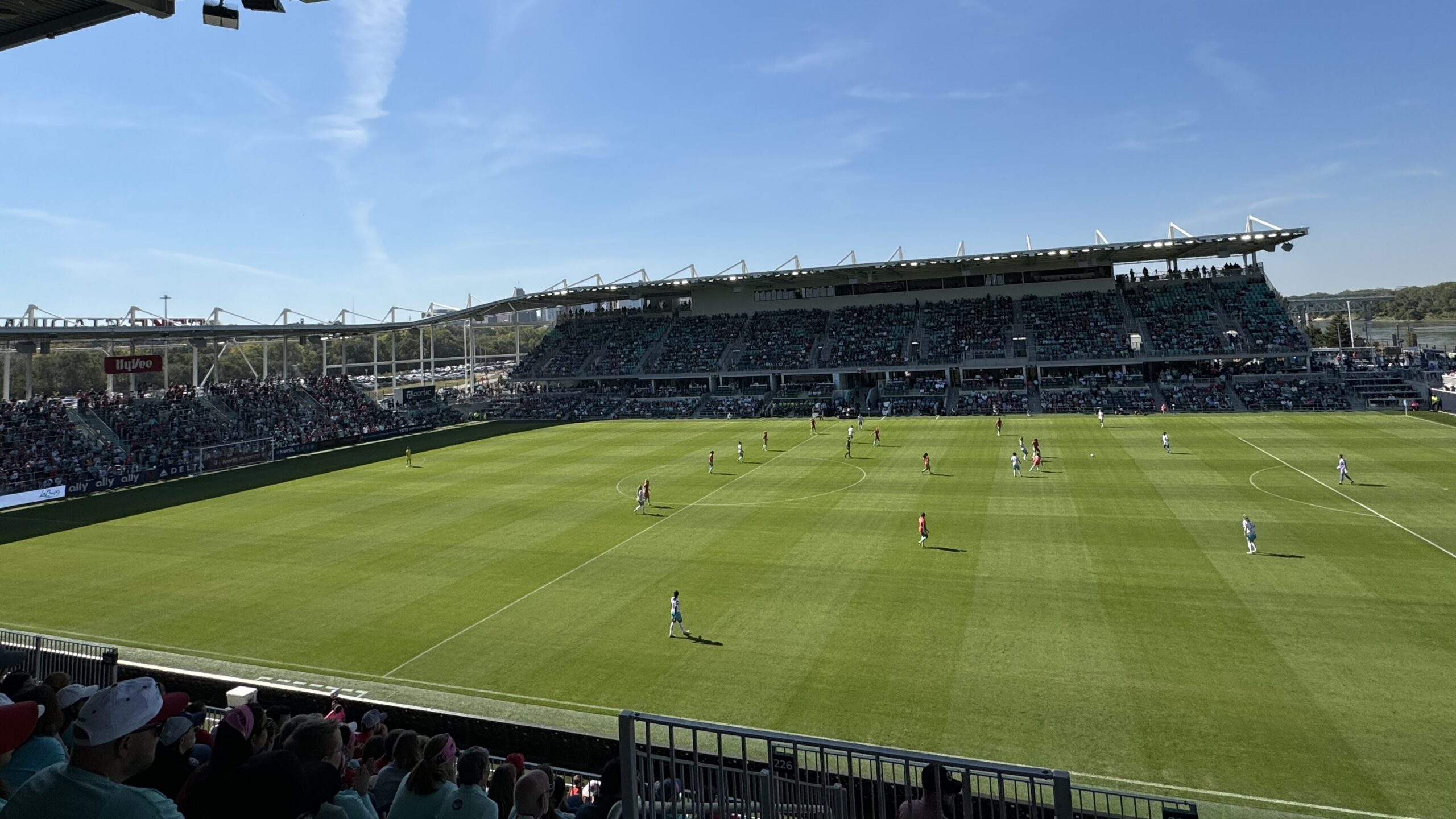

The venue question is not simply about capacity. It is about who controls the schedule, the experience, the data and ultimately the revenue.
Recently, there has been considerable debate about which stadiums women’s football teams should play in: the men’s main stadium offers scale, visibility and access to an established fan base, a smaller ground promises atmosphere and a better fit for current demand. One can look ambitious but feel empty. The other can feel full but impose a ceiling on growth.
Both sides of the debate have merit, but they often miss a more important question: how much control does the women’s team have over the venue and the value created inside it?
A stadium is not simply a container for demand. It determines when a team can play, which tickets it can sell, what data it can collect, how sponsors can activate and how the product appears on television. It also determines whether the team can learn from one match and improve the next.
Earlier this year, I explored part of this question in an analysis published by The Breakaway, Women’s football in men’s stadiums: when brand spillover works, and when it does not. I argued that moving a women’s fixture into a larger venue only creates lasting value when the club also has a plan for audience design, data capture, identity and conversion. The stadium is a platform, not the strategy itself.
The next question is what happens when the women’s team gains greater control over that platform.
This is why venue strategy should be treated as business strategy.
The cost of being second priority
Many women’s football teams operate as tenants. Some rent smaller stadiums away from their home city. Others use the men’s stadium for selected fixtures, subject to pitch availability and the men’s calendar. Some move between venues during the same season.
These arrangements provide a pitch and seats, they do not necessarily provide control.
A tenant may receive less attractive kick-off times, have limited access to ticketing data, lose part of its food and beverage income and operate without permanent retail or sponsor inventory. Existing naming rights and supplier agreements may already cover the building. The women’s team is present, but much of the commercial value generated around the match belongs elsewhere.
There is also a product cost. A fixture played at an inconsistent time, in a venue with someone else’s colours and little permanent identity, is harder to turn into a ritual. Supporters have to relearn the journey, the ticketing process and sometimes even the location.
The stadium is a platform, not the strategy itself.
At the women’s sport conference RAISE held in London, WSL’s chief executive Nikki Doucet described the importance of “stadium primacy”. If the women’s team is always third or fourth in the queue, it cannot fully control how its product reaches the market.
Brighton is changing the question
Brighton & Hove Albion’s proposed women’s stadium offers one of the most interesting responses in European football.
The club plans to build a purpose-built venue with a minimum capacity of 10,000 next to the Amex Stadium, at a reported cost of approximately £80 million. Subject to planning approval, it is expected to open by the 2030/31 season. A physical link between the two grounds would allow the club to share selected infrastructure while giving the women’s team a permanent home.
This is not simply a smaller version of the men’s stadium. Brighton’s philosophy is “built for her”. The playing surface, changing rooms and recovery areas are being considered through the needs of female athletes. The concourses, social spaces, catering and access are being designed around a supporter base that includes more families and first-time attendees.
When I heard Brighton chief executive Paul Barber discuss the project at RAISE, some of the most revealing examples were also the most practical. Where will families leave pushchairs? Can bags be stored easily? Does the catering reflect what this audience wants to buy? These details may sound operational, but together they determine whether attending a match feels simple enough to repeat.
The capacity decision is equally important. Brighton believes 10,000 seats are ambitious without being disconnected from realistic demand. For exceptional matches, the 31,000-seat Amex remains next door.
This creates a two-venue strategy: a right-sized home for frequency, identity and atmosphere, supported by a larger stadium when demand justifies it. It avoids the false choice between limiting ambition and pretending every match is already a major event.
Control creates commercial options
A recent report by Populous and Ariel Investments’ Project Level argues that the difference between being a tenant and controlling a venue is structural, not incremental.
Its illustrative model, based largely on NWSL economics, compares annual revenue of approximately $17 million for a typical tenant team with between $32 million and $42 million in a purpose-built venue scenario. The additional value comes primarily from sponsorship, ticketing and ancillary matchday revenue.
These figures are not forecasts for Brighton and should not be transferred directly to European football. Construction costs, league structures, attendance and ownership models differ. But the commercial mechanisms are relevant across markets.
Venue control can create naming rights and permanent sponsor inventory. It allows a club to design ticketing, hospitality and food and beverage around actual demand. It can provide dedicated retail space and opportunities for non-matchday events. Crucially, it also enables the club to own more of the supporter journey and the resulting data.
A fan can discover the team, buy a ticket through the club’s system, attend an experience designed for the audience and receive a relevant reason to return. The club can see that journey, learn from it and improve it.
That is very different from simply counting attendance.
Kansas City shows what becomes possible
The Kansas City Current provides the clearest existing example. CPKC Stadium opened in 2024 as the first stadium built specifically for a professional women’s football team.
According to the Populous and Project Level report, the Current generated an estimated $10.1 million in revenue in 2023. In the first season at CPKC Stadium, revenue increased by 260 per cent to approximately $36 million. The club sold out every regular season home match in 2024 and repeated the achievement in 2025.
The stadium alone did not cause every part of that growth. Kansas City combined infrastructure with strong ownership, a distinctive brand, sporting performance and deliberate community building. But the venue gave those elements somewhere to come together and gave the club more ways to capture the value they created.
An 11,500-capacity stadium filled consistently also creates energy, scarcity and a clear signal of demand. A much larger stadium with thousands of empty seats may produce a higher attendance figure while creating a weaker experience.
Bigger is not automatically better. Better aligned is better.
Control does not always require ownership
It would be unrealistic to conclude that every women’s football club needs an £80 million stadium. Most do not have the capital, land or expected demand to justify one. Nor does greater control always require outright ownership.
A club may negotiate priority over key dates, direct access to ticketing data, permanent branding areas, participation in food and beverage income, dedicated retail space or the right to sell sponsorship assets specific to the women’s team. A shared stadium can work if the women’s team is treated as a strategic tenant rather than a temporary guest.
Bigger is not automatically better.
The same principle applies to a purpose-built stadium. A new building does not create demand by itself. It creates the conditions in which demand can be cultivated, understood and monetised more effectively.
The next phase of women’s football infrastructure should therefore not be judged only by the number of new stadiums announced or the size of their construction budgets.
The better questions are more practical. Can the team choose when it plays? Does it know who buys tickets? Can it shape the experience around its audience? Does it retain the revenue generated inside the venue? Does the stadium make supporters more likely to return?
Not every club needs to copy Brighton. Every club does, however, need a venue strategy.
Women’s football does not simply need more seats. It needs greater control over the conditions that turn seats into supporters, supporters into communities and communities into sustainable value.
Women’s sport is not a copy of the men’s game
The Breakaway helps clubs, leagues, federations, brands and investors rethink women’s sport on its own terms, turning momentum into sustainable commercial value.