
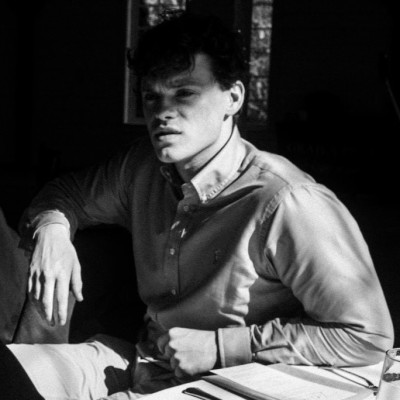
The Quiet Builder: Shaun Brooks
Profile
Role: Player, coach and academy builder
Specialisation: The Brooks Method
Experience: Crystal Palace, Leyton Orient, Bournemouth, Dorchester Town, Portsmouth, Southampton and Albion SC in Nashville
Focus Areas: Awareness, movement, football intelligence, the relationship between a coach and the player
He grew up in football’s back rooms, learned the game from future Tottenham and England manager Terry Venables, and worked on the groundwork at a club that would one day reach the Premier League. Along the way, he crossed paths with a teenaged Gareth Bale and a young Luke Shaw. Shaun Brooks has spent a lifetime in the parts of the game the cameras never find.
Shaun Brooks was too young to have ever watched his father play. But football was the family’s whole world regardless. The ball was forever at his feet, talk of the game was always in the air and the locker room was never far away. His father was Johnny Brooks, a gifted inside-forward who played for Tottenham and pulled on the shirt of the Three Lions.
For a lot of footballers’ sons, a famous name is a burden they can never live up to. But for Brooks it was an open door into the only world he ever wanted. “I was always around the ball, around the locker rooms. It was the full culture,” he says. It was, he insists, “far more of a pleasure than any kind of pressure or burden.”
The locker room is where the story started, and where it’s still being written. Brooks would spend the next half-century there as a player, a coach, an academy builder, and eventually one of the unseen hands helping turn AFC Bournemouth into a club English football came to admire.
Key Insights
- Brooks’ playing career shaped his approach to coaching and player development.
- The Brooks Method embeds real match situations into training and puts the connection with the player first.
- His work spans Bournemouth’s academy and infrastructure development and youth development in the United States.
Our Exclusive Interview with Shaun Brooks
An apprenticeship in four clubs
On paper, his playing career records a tidy list of clubs. It was also an education in football, and he can still tell you exactly what each one taught him.
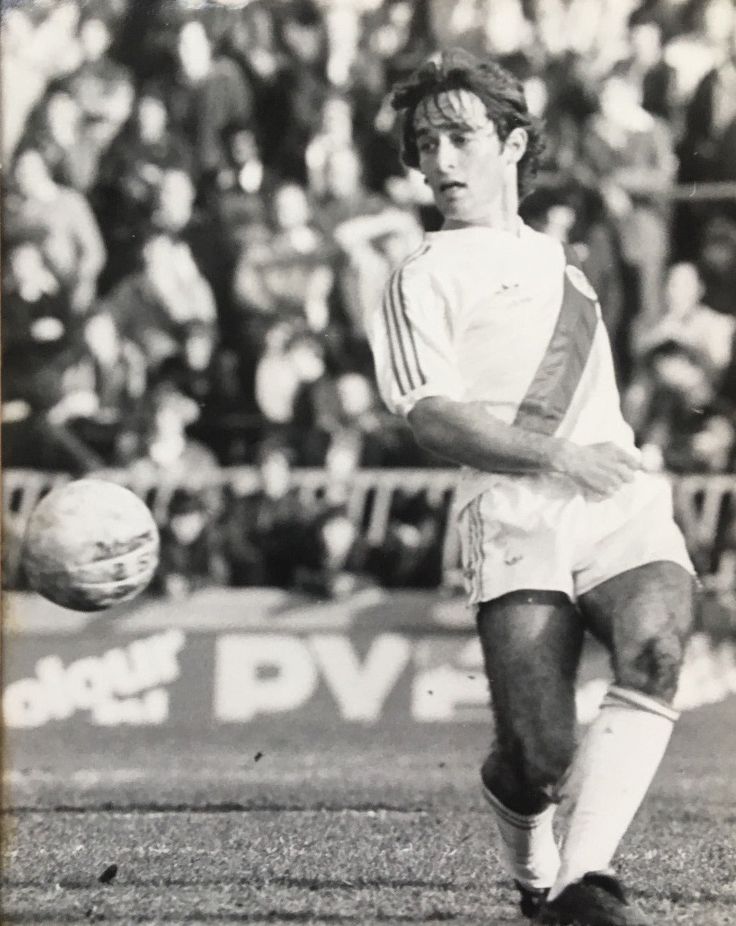
His real football education began at Crystal Palace, where he came through under Terry Venables, widely regarded as the most forward-thinking English coach of his generation, and a man whose imprint you can still hear whenever Brooks talks tactics decades later. “He was the best coach at that time,” he says. “He had a real impact on the way I looked at the game.”
He tells one story that captures the man. The manager’s office at Palace looked out over the training-ground pool, so the staff could see you coming. One cold morning, Brooks walked in and the message was waiting: Terry wants you in his office. His stomach dropped. What had he done? Not played well, not trained well? He had just come back from the England Schoolboys, he was in the youth team, on the cusp of a contract. He braced for the worst. Instead, Venables handed him some money and told him to go and buy himself a proper coat from the shops. A small act of kindness, dressed up as a summons.
If Venables shaped how he thought, his senior debut was a blunt awakening of how far he had to travel. Thrown on against Leeds United as a teenager, Brooks still marvels at the speed. The men’s game arrived faster than he was ready for, a blur of bodies and noise. It took weeks before the action slowed down enough for him to read.
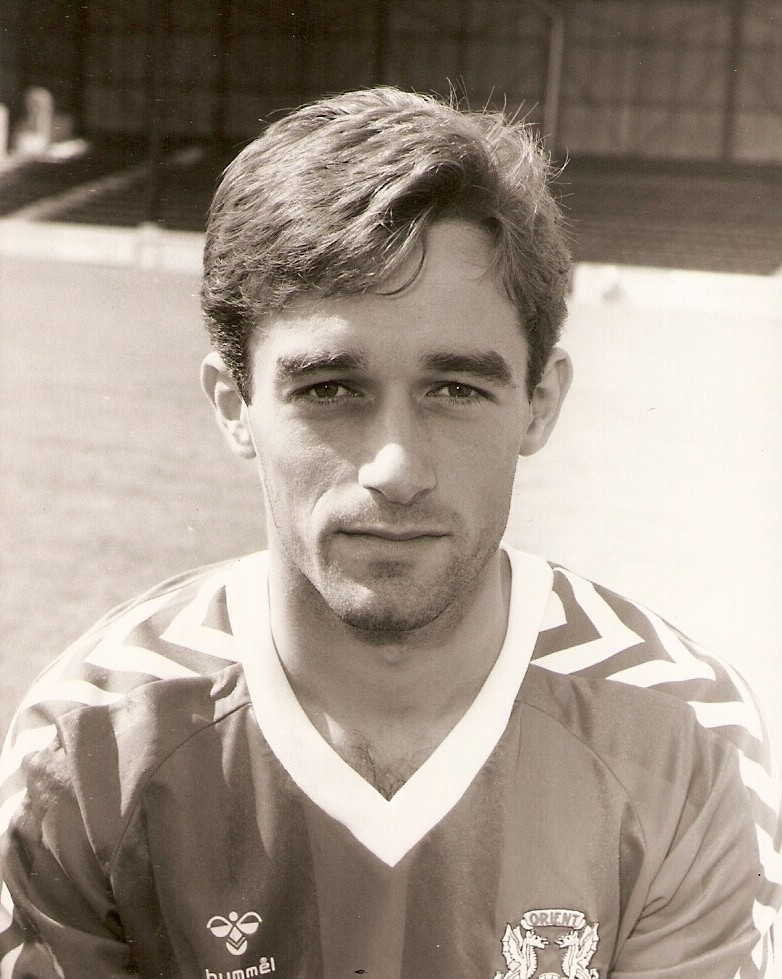
It was Leyton Orient, in the end, that set him free. Under Frank Clark, a European Cup winner with Nottingham Forest who intimately understood his players, Brooks was handed a roving role on the right of midfield and a licence to play. They were among his happiest years as a player. “It was like a breath of fresh air for me, because I needed a chance,” he says. Palace had wanted him scrapping for second balls; Orient “saw me for what I could do” in the final third, and let him do it.
A small act of kindness, dressed up as a summons.
Bournemouth, under Harry Redknapp, was where he finally found a true home. He scored early, settled on the south coast, and grew into a club and a town that simply fit him, moving in a Redknapp orbit thick with football knowledge. He could not have known then how deeply that attachment would run, or how much it would one day cost him.
And non-league Dorchester Town, near the end, gave him back the thing professional football slowly drains out of you: the joy. “We trained twice a week, played at the weekend, played for the love of it,” he says. “Some of my fondest memories.” After years of being analysed, managed, marinated in expectation, there was something cleansing about playing on a Tuesday night for nothing but love of the game.
Taken together, those four clubs were a kind of curriculum: Venables giving him a model to chase, Orient the freedom to express it, Bournemouth a sense of belonging, and Dorchester the reminder of why he’d started in the first place. It was the making of the coach he was about to become.
The coach who wanted every drill to feel like a game
When Brooks moved into coaching, including academy work at Portsmouth, Southampton and Bournemouth, a philosophy emerged that in retrospect was a decade ahead of its time. It was in the Southampton academy that he first worked around a teenaged Gareth Bale, and later a young Luke Shaw. Both went on to become the sort of players a coaching life gets remembered for.
He had no time for academy football as a parade of pretty passing patterns, the tidy drills that look good to a watching parent and teach a player nothing. He wanted game scenarios embedded in everything. “Every drill had an element of the game,” he says: a touch onto the back foot, a cross-step to scan the next pass, movement to receive, driving with the ball. He didn’t want to shape players who could complete an exercise. He wanted to school them to see, move, and decide. “We wanted to see the players play with their head up,” he says, building “around awareness, movement and technique.”
Over the years, that thinking hardened into something Brooks now calls the Brooks Method: a coaching philosophy in which every rondo, every square, every small-sided game is engineered to hold a slice of the real match inside it.
And beyond tactics, he came to a deeper conviction over time. Young coaches obsess over session design; older ones learn that the player is a person first. “The five or ten minutes before training, where you engage a player, ask about his family, his schooling, how he’s feeling, I think that’s the real magic of it all,” he says.
One name that runs through much of this story is Dean Wilkins. The two go back decades, and Brooks counts him among the biggest influences on his career, a mentor and a sounding board at almost every stage of it.
The call-up, with eight games to steady the ship
The critical test arrived in March 2012, when Bournemouth sacked manager Lee Bradbury with nine games of the League One season left. Brooks, then head of youth at the Centre of Excellence, was pulled out of the academy and handed the first team alongside youth-team manager Paul Groves. They were joint caretakers, with no window, no honeymoon, just eight matches and a disillusioned dressing room to manage. They saw the season out in mid-table.
What he and his staff did next is the part that never made the back pages, but it is the part that lasted. That summer, with Groves now permanent manager and Brooks his assistant, new ownership money began to move through a club whose ambitions were suddenly outrunning its infrastructure. They set about building the things a serious club is supposed to have. They put the analysis and data departments in place and built out the processes behind them, organising and recruiting as they went. In came Dan Hodges, who would go on to run Bournemouth’s sports science and now works as Eddie Howe’s head of performance at Newcastle United. They also built a development group.
Brooks talks about building a “session library” for the coaches, a shared language threaded through every age group, forging an identity you could recognise at a glance. “You want all the teams in the academy to look alike,” he says. “Almost like if you just saw the silhouette of a team, you’d know, ‘that’s one of our teams.’”
That’s the language of a man designing a club, chasing consistency in how players are coached, how they take in information, how they press and build and move, so that a 12-year-old and a reserve end up with the same footballing fingerprints. Every session was built to hold a tactical, technical and physical layer at once.
The first team, though, never gave him that kind of time. After a bleak start to the 2012-13 season yielded only one win by October, Groves and Brooks were relieved of their duties as first-team staff.
Progressive clubs do not switch on overnight. They are built in layers of people, departments, processes and standards, stacked patiently over years. Brooks worked the bottom layer, the one that disappears from the story the moment the trophies and the television cameras arrive. He helped lay foundations solid enough that Eddie Howe, and later Andoni Iraola, could come in and build on them with ideas of their own.
Sacked by the club he loved
What still sits heaviest with Brooks isn’t the results or what went wrong. It’s that Bournemouth was never just a payslip to him. It was the club he loved, the place he’d made his home, and being let go cut deeper for it. “It felt so personal for me,” he says. He still lived in the town. He still walked the same streets, shopped in the same shops, saw the same faces. “You don’t really want to be seen. You feel you let a lot of people down at that time.”
For all of that, he asks for almost nothing in return, only that, one day, his quiet work might simply be remembered.
A happy ending, and overdue credit
If the sacking hurt, the years since have brought some closure. The club he loved didn’t just survive; it has become one of the most admired sides in England. Under Andoni Iraola, Bournemouth finished the 2025–26 Premier League season sixth, the highest league finish in the club’s history, and qualified for the Europa League for the first time ever, off the back of an 18-game unbeaten run.
That is a long way from a disillusioned League One dressing room with eight games to save a season. The groundwork Brooks helped lay was an early part of that story, and he deserves credit for the part he played. The tactics that win matches today are someone else’s. His contribution was the footballing intelligence, the methods and the unglamorous work behind the scenes. Eddie Howe and Andoni Iraola built brilliantly on top, with ideas of their own. But somebody had to lay the bottom layer first, and Shaun Brooks had a part to play in that.
The Brooks Method, an ocean away
The English years built his reputation. In America, he’s putting it to work.
These days Brooks is in the United States, at Albion SC in Nashville and increasingly working with players in Tampa Bay, chasing the same things as always: awareness, movement, football intelligence, the relationship between a coach and the player. He sees enormous talent in American soccer but a culture that too often rushes kids toward winning before they have learned the game. It is trophies at ten years old and development be damned.
Set against that, the Brooks Method has become a counter-argument. His job, as he sees it, is to take players and coach them into NCAA athletes, and in time, he hopes, professionals. In Tampa Bay in particular, he now works with a cohort of players who arrived nowhere near a professional or D1 pathway and are now stepping onto one.
He wanted to school them to see, move, and decide.
“The connection comes first,” Brooks likes to say, “then the content, then how you deliver it.” It is that, as much as any small-sided game, that opens the door to the rest. When a player believes his coach can see him properly, he will let that coach change him.
It is the same instinct that produced a session library at Bournemouth, a “silhouette” you could recognise at a glance, an academy that would one day feed a Premier League team, now transplanted onto American grass and pressed into service on a new generation of players.
From a cold morning in the manager’s office at Crystal Palace to the training fields of Tampa Bay, the Brooks Method is the throughline: what he first learnt under Venables has become the thing he now teaches, half a century and an ocean away.
FAQ
Who is Shaun Brooks?
Shaun Brooks is a former footballer, coach and academy builder whose career includes playing for Crystal Palace, Leyton Orient, Bournemouth and Dorchester Town.
What is the Brooks Method?
The Brooks Method is a coaching philosophy that embeds real match situations into training, developing awareness, movement, technique and decision-making.
Where does Shaun Brooks coach in the United States?
The article places Brooks at Albion SC in Nashville and describes his increasing work with players in Tampa Bay.